Tag: Adventure in Pokhara

  • Top Day Hikes Around Pokhara with Epic Mountain Views

    Top Day Hikes Around Pokhara with Epic Mountain Views

    Top Day Hikes Around Pokhara with Epic Mountain Views

    Often referred to as the “gateway to the Annapurna region,” Pokhara is more than a launch site for multi-day treks; it is a day-tripper’s dream destination to get the best of Himalayan views with a minimal commitment (well relatively speaking if you think of 5-6 hour day hike as minimal!). If you do not have time for such an adventure, or prefer not to commit to not a multi-day trek but you are in Pokhara, want to hike in a day with amazing mountain views while enjoying some cultural interaction and beautiful hiking trails, this is it!
    Below are my recommendations for day-hikes near and around Pokhara where you can enjoy amazing snow capped peaks of the Annapurna and Dhaulagiri range without too far from Pokhara city.

    1. Sarangkot Sunrise Hike

    Sarangkot is widely known as one of the most famous sunrise viewpoint in Nepal, which is no surprise because the sunrise hike to Sarankot has amazing view of the Annapurna and Dhauligiri ranges. The hike begins a short drivable distance from Lakeside Pokhara, and is a uphill hiking experience from Gurung villages through terraced fields and beautiful hiking trail through rural landscapes. People who wake early get a magical sunrise, repainting the snow-clad ridges of Machapuchare, Annapurna South and Dhaulagiri in warm golden colours.

    Tadapani to Poon Hill is a moderately easy walk without any technical climbing required done by able agents. Lots of people when their sunrise experiences are over walk down the mountain along a different side, through forests and unspoiled villages. Thus, it would be a great half day trip combining natural beauty, culture and mountain vistas without much time spent away from the city.
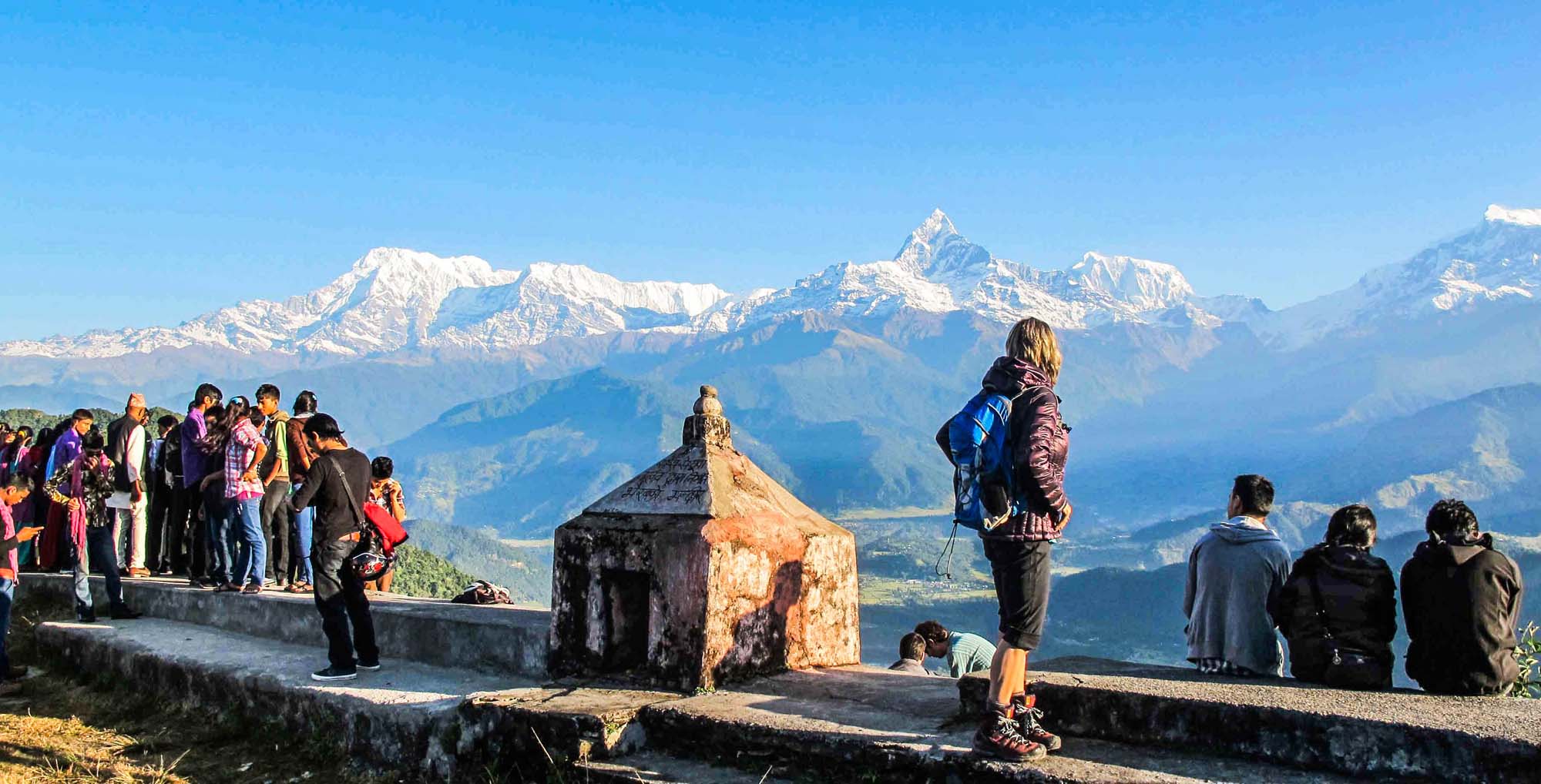
    tourist viewing the mountain on their way to Sarangkot Sunrise Hike

    Highlights:

    Close to Lakeside

    The hike begins with a taxi or local bus ride of only 20-30 mins from central Pokhara, it’s very convenient especially if you are trying to catch a sunrise trail and you need to stay on schedule. You can walk to the top and return down in time for breakfast. No long travel, no permits, just an early start and you are on your way.

    Gurung village trails

    On the trail, you walk through friendly Gurung villages. Be sure to take your camera to capture the stunning houses of stone, and the daily lives of warm-hearted people in beautiful rural settings. Moments with children waving hello, and local Gurung’s sweating in the fields provided genuine interactions even if they were brief. This was a great way to immerse yourself into trekking and the local community.

    Terraced farmland views

    The trail wanders across a wonderful, lush steppe farming hillside. The terraced farmland views are an amazing foreground for your Himalaya photos. You will certainly reflect on how the farmland changed color depending on the season – brilliant green in the growing season, and then shades of gold in the harvest season. This is such a classic image of a Nepali landscape, and will stick with you for a long time.

    Loop-back forest hike

    After sunrise, lots of hikers take the loop-back forest route to return. The loop back trail allows a different kind of descent in a forest, less people, while having shade that is sometimes completely in the shade. Depending on which direction you approached Phewa Lake from, you will have gotten to see things, like bird species, butterflies, or taken a beautiful pine scented forest-downhill path. It sums the experience nicely as a full circle, rather than another loop, and it gives your hike some variety.

    2. World Peace Pagoda hike

    The World Peace Pagoda hike covers lake cruising, forest hiking trail, and hilltop views into one of the most scenic bundles where it all begins with an easy boat ride on Phewa Lake. You boat in one way, then after looping the other side of the lake this should be an easy climb, as you go up the hill trail where you hike through shaded forest paths and make moderate climbs while observing monkeys and birds seeing small shrines between trees. Once at the top, the brilliant white stupa emerged announcing its amazing views of Pokhara Valley swooping down to Phewa Lake and the Annapurna range, of course.

    The surrounding is serene and calming and it was easy to feel the symbolism of a Buddhist shrine added to the hilltop’s spiritual experience, making it as much a spiritual journey as a beautiful scenic. You can either turn back and hike down the same way you approached or make the World Peace Pagoda hike extended as a loop, by continued to descend toward Pumdi village for a longer hike.
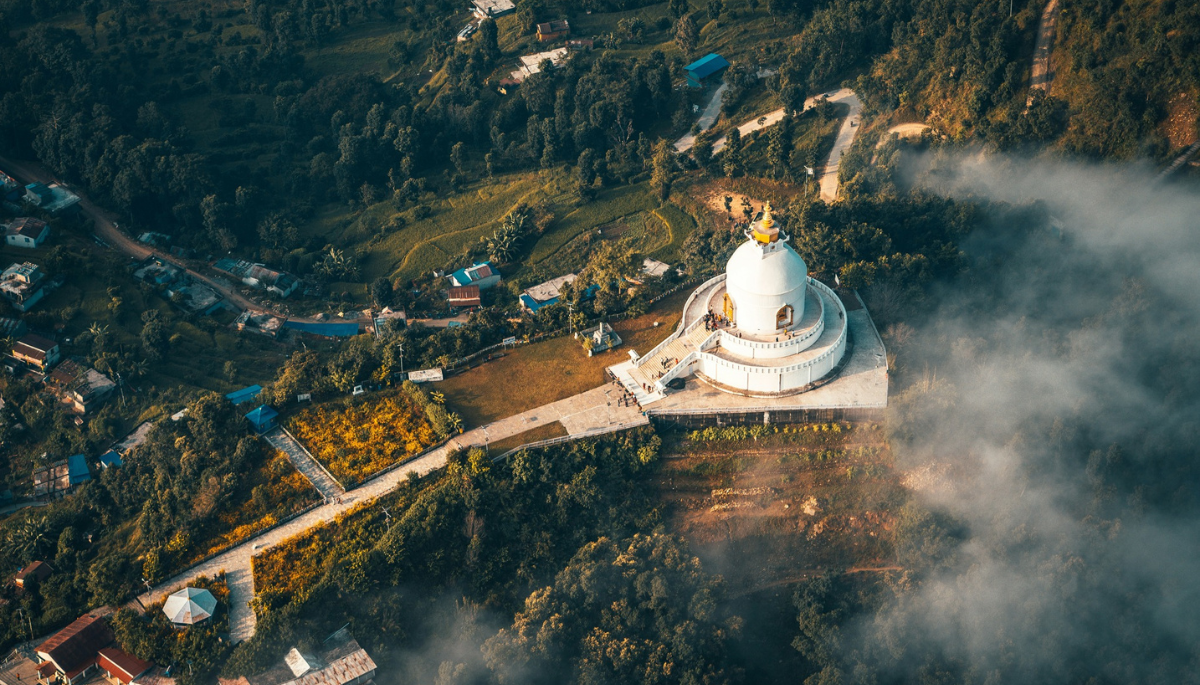
    Panoramic view of World Peace Pagoda hike

    Highlights:

    Viewpoint of Pokhara Valley

    Being at the remarkable viewpoint takes in the view of Pokhara city, Phewa Lake, and the distant snow-capped mountains above. This raised location gives you a complete view in every direction. It is to be one of the best areas to appreciate Pokhara’s geography. The view at sunrise or sunset can be especially magical.

    Boat ride across Phewa Lake.

    The hike commences with a paddle or rowing trip across Pokhara’s iconic lake. You will row past Tal Barahi Temple and beautiful waters reflecting the vast blue sky above. It is certainly a calming and beautiful prelude to your hike. Many people often say this was the highlight of their day, before beginning the trail.

    Lush forest trail with wildlife.

    The path winds up from the lake, and ascends at a steady pace through lush forest, filled with birds, butterflies, monkeys. The shade from the trees and the company of chattering birds makes this hike relatively cool and quite meditative. Occasionally, you may encounter stone steps or shrines which add a cultural component to the trail.

    Peaceful spiritual setting at the stupa

    The World Peace Pagoda is a Buddhist structure meant to promote world peace. It is a serene area for contemplation, prayer, and quiet views. Buddhist flags wave in the wind, providing color and an atmosphere of peace.

    Optional Extension to Pumdi village

    Adventurous hikers may want to hike from the pagoda on the extension to Pumdi village, creating a longer loop traversal. In doing so, you can enrich the hike with more rural, fewer people, tranquillity.
    You’ll see local homes, farm animals, and natural landscapes.

    3. Dhampus Village Hike

    Dhampus is a picturesque Gurung village set at 1,750 meters and provides one of the most accessible access points to the Annapurna area. The trek begins in Phedi (a short drive from Pokhara) follows trails through forest, ascends stone staircases, and passes terraced farming area. Throughout the trek while you gain elevation be prepared to be constantly blown away with amazing views of Machapuchare (Fishtail), Annapurna South, and Hiunchuli that join together and provide a stunning Himalayan backdrop whilst you are walking.

    This trail is good for new trekkers or trekkers short on time, who want to experience a little taste of real mountain village life. The village consists of the typical collection of stone houses, nest in cultivated fields, and is teeming with happy locals going about their daily lives. Many trekkers will simply arrive and enjoy a few calming hours in the village before retracing their steps, others will continue onto Australian (or Guarai) Camp for a day hike, or stay the night at an open air lodge in Dhampus.
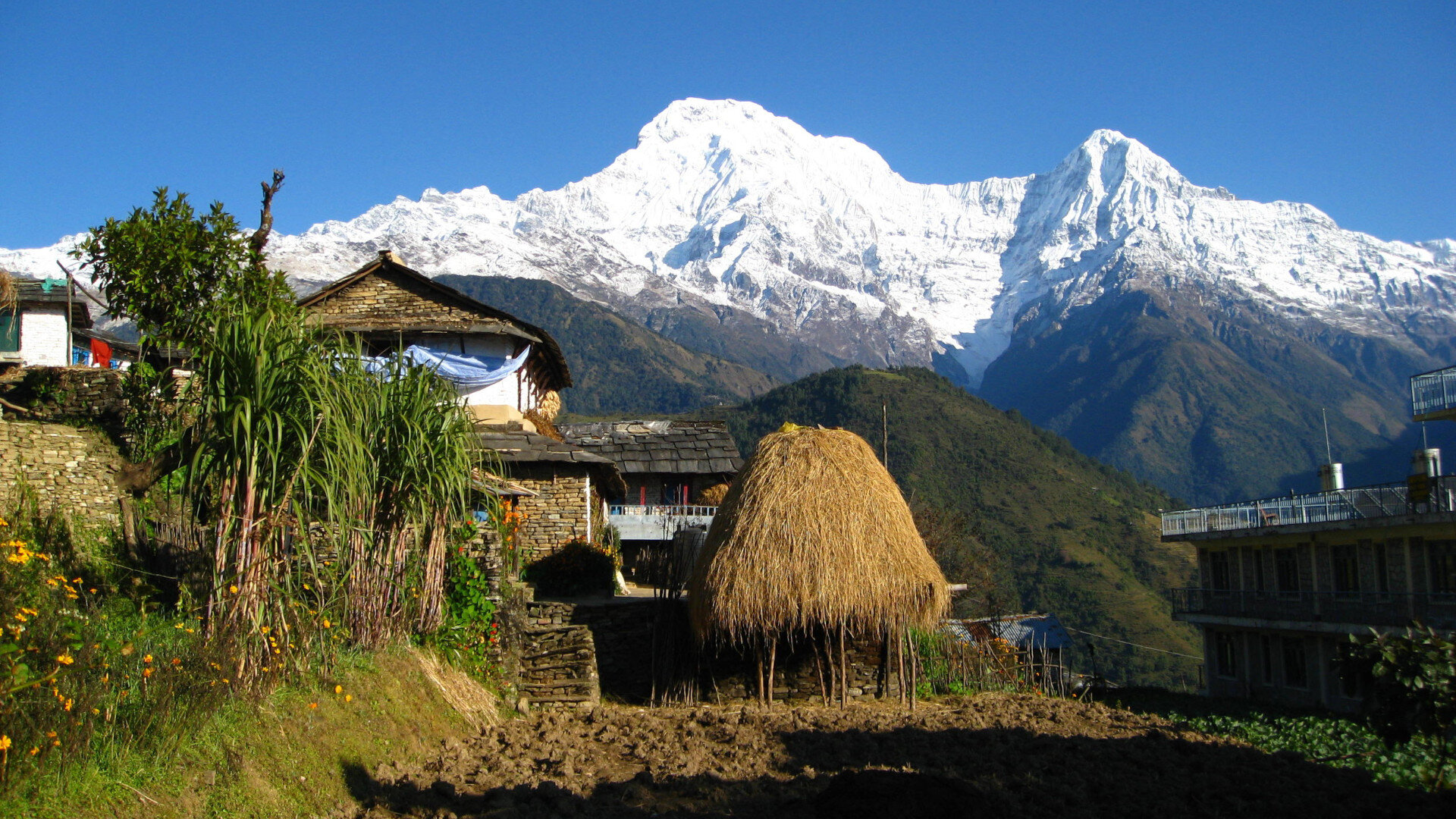
    Mountains and old traditional house in Dhampus Village

    Highlights:

    Gurung cultural experience

    Dhampus offers insight into the daily life of the Gurung people—one of Nepal’s most welcoming ethnics group. Along the trail and within the village, you will see traditional houses, women weaving, and children playing on hillside trails. The genuineness of the village’s friendliness provides a huge depth to the trek.

    Panorama mountain views

    The view of the sunrise and sunset from Dhampus is extraordinary, with the views of the entire Annapurna range glowing in pastel colors in the morning and evening. It is so nice that you could just sit and appreciate the view for hours as the clouds slowly rise and fall below the peaks.

    Terraced landscape and forest trail

    The trail takes you through beautiful subtropical forests and layered terraces of millet, rice, vegetables and more. The different patterns of farmland with their changing crops in the seasons added to the color and texture of the journey.

    4. Australian Camp Hike

    Australia Camp (2,100m) lies on a grassy hilltop looking over the Pokhara Valley. From Australia Camp you can see the Three Ranges: Annapurna, Machapuchare, and Lamjung Himal – weather permitting. The usual Australian Camp trek starts from Kande (1 hour by taxi from the Pokhara), where it climbs steadily through rhododendron forests and through some steep winding stone steps to the grassy hills of “Australia Camp” where you’ll stumble across a beautiful and open grassland.

    After making it to this amazing hilltop you’ll experience some of the best and stunning 360′ views of Himalayan skyline as well as some beautiful valleys at your feet. The open grassland will allow you to stop and rest, walk, meditate, have a packed lunch, or stay overnight in one of its few nice and comfortable lodges in the backdrop of the Himalayas. It is a great destination for kids, couples, and single travelers to explore and disconnect into nature.
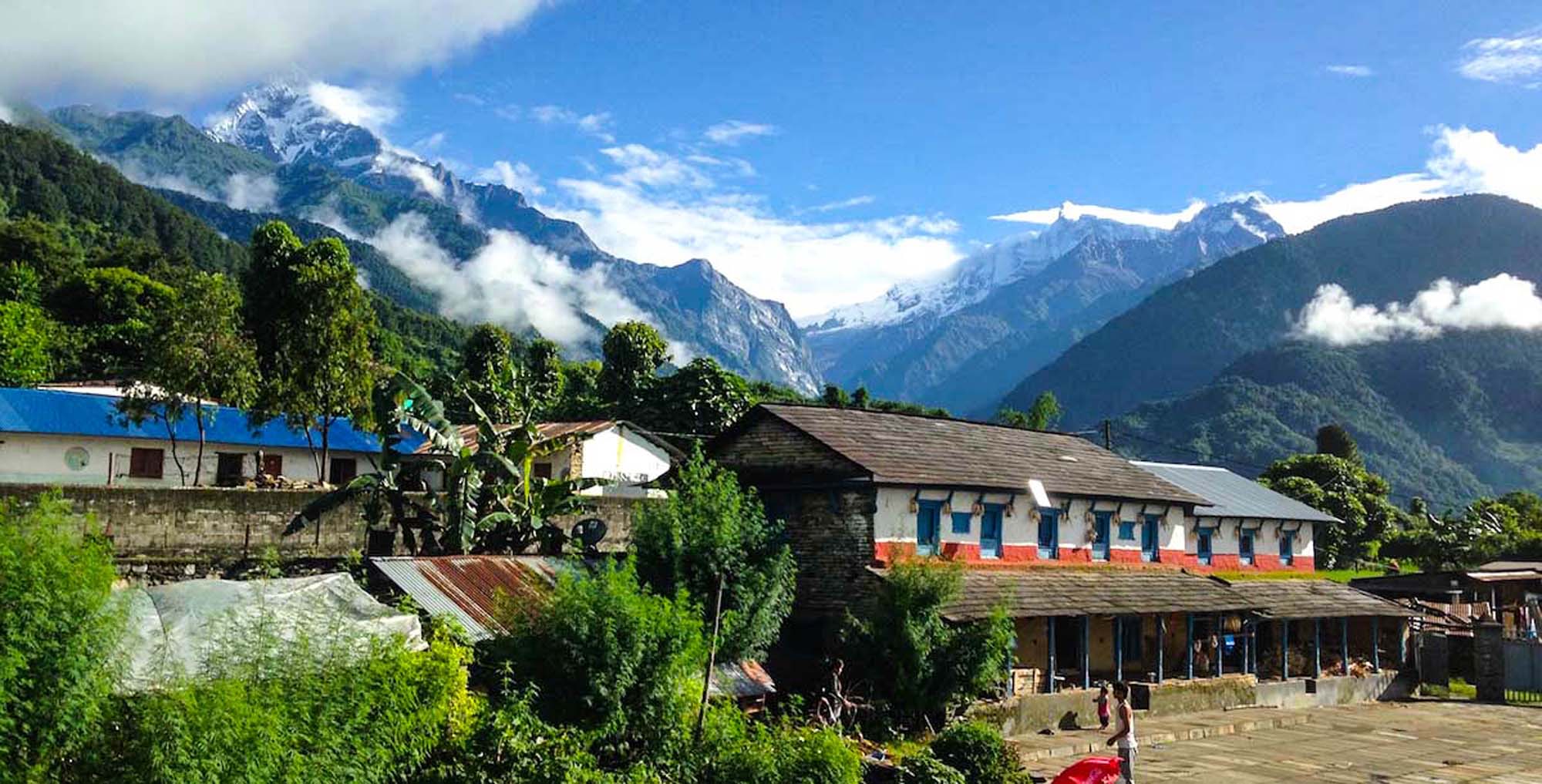
    Vibrant traditional house and village view on the way to Australian Camp Hike

    Highlights:

    Easy forest hike from Kande

    The hike is short and easy, suitable for beginners. The shady forest trail is lovely on warmer days and come spring, with rhododendrons in bloom, this trail is in full color.

    Grassy hilltop with 360 views

    Australian Camp feels like a natural amphitheater to see the Himalayas. On a clear day, an exhilarating panorama greets you as the Annapurna Massif unveils itself before your eyes. The soft grass underfoot makes it ideal to lounge about or take pictures.

    Wonderful for sunset or overnight

    Well, if your schedule allows you to, I recommend staying the night to experience the sunset and sunrise – simply enchanting! I will never forget the vibrant orange and buttery yellow shades coloring the sky above the mountains, and the peaceful embrace of the stars, from this magical hilltop.

    Tips for Day Hiking Around Pokhara

    1. Go Early: The best time mountain views are in the early morning

    The best time of day to begin your hike is in the morning. Early in the morning, specifically just after sunrise is ideal. Technically, the skies are often clearest in the morning in the Himalayas, and that’s when the views will be of Mt. Machapuchare, Annapurna, and Dhaulagiri are best. In the afternoon, skies and clouds will engulf the mountains and great views, and sometimes great photography opportunities are lost. Further, going early will often help you avoid both high temperatures from the sun in the middle of the day, and the congesting of the afternoon traffic with other hikers that you may not want to share a trail with. Enjoying a peaceful, rewarding hike on your own or with just your hiking partners will more than not just be more rewarding.

    2. Go Light: Water, snacks, sunscreen, hat, and light jacket

    These hikes are planned in single day outdoor experiences “day hikes”, so neither of us needs to carry heavy “internal pockets” of sleeping bags, tents, and cooking gear, but you do need to bring along some essentials for proper hiking. Please plan to carry not less than 1 liter of your own drinking water. You will want to have fruits, dired fruits, nuts, and/or granola bars to eat for energy.
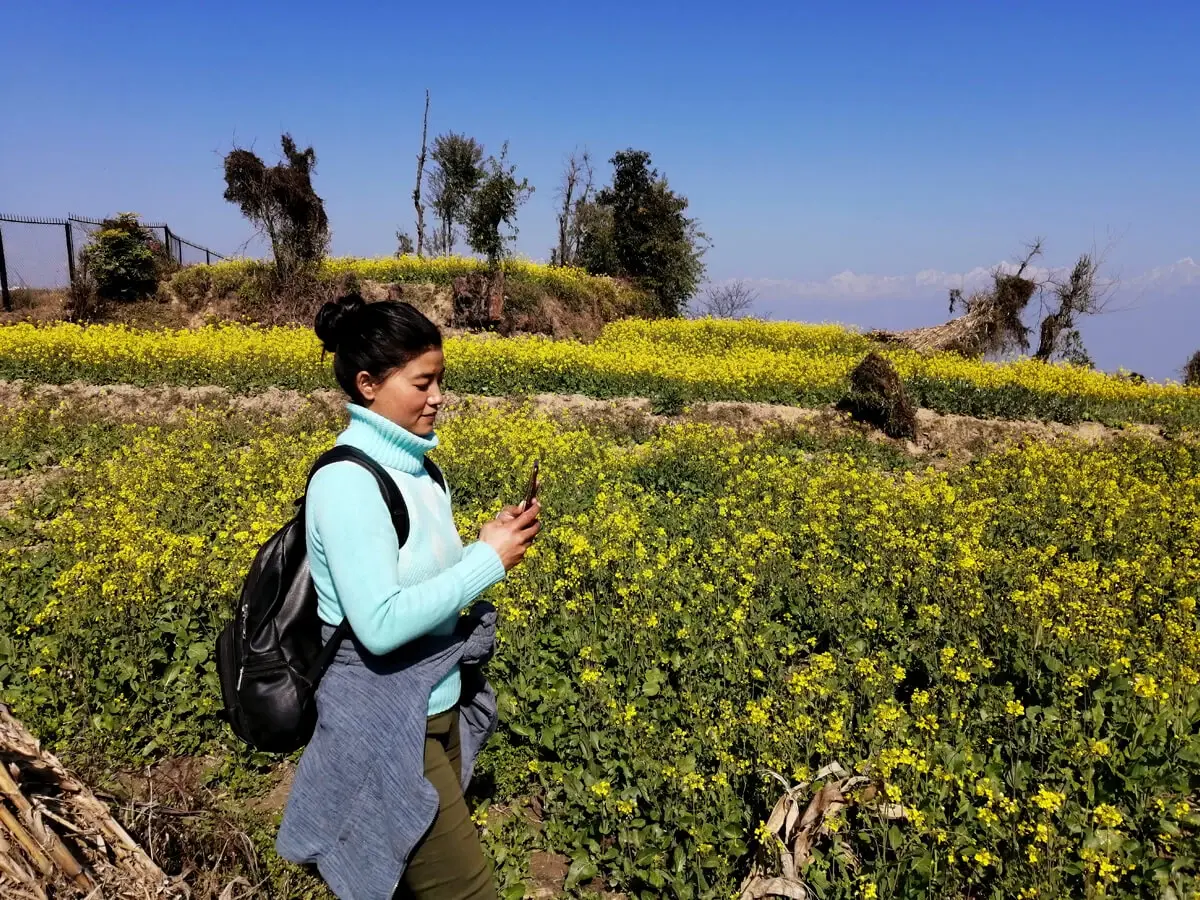
    Girl taking picture of sunflower

    3. Footwear

    Proper footwear is very important for both comfort and safety – it can be slippery on the trails Good footwear is an important component for comfort and safety especially for a hike. The trails around Pokhara can be rocky with rough stone steps or dirt path and/or wooded sections that can be muddy or slick especially during monsoons or rain. Because of this, you should wear boot type footwear with good ankle stability and midi tread soles to avoid slipping and use less energy. Light weight boots or trail runner shoes will serve you well for short to moderate hikes.

    4. Local guide (optional)

    Hiring a local guide is helping the local community and can contribute to having a cultural experience. While most day hikes around Pokhara are likely walkable independently, hiring a local guide can enhance your experience. A local guide will not only provide definitive wayfinding, but can give the context of local culture, plants/habitat, temples/religious sites, and the villages you walk through, which you might miss otherwise. In hiring a local guide you also provide direct income to the local economy, and support responsible tourism. This is a way to have deeper connections to the people and place you will encounter.

    5. Weather Check: Always check the weather forecast before you go

    Make it a habit to check the local weather conditions before heading out on your hike. Even on very short hikes, weather can change quickly and rain, wind or fog has the potential to degrade visibility, trail conditions, and your enjoyment of the hike. Obviously, it’s not wise to hike in the rain or during thunderstorms – especially in densely wooded areas or when hiking in very steep areas where you could experience landslides or have to contend with leeches. The weather creates enough uncertainty in your hike, so it is always advisable to check to be better prepared when you go out; whether to take rain gear or to shelve the hike until a sunnier day.

    Why do day hikes around Pokhara make the most sense?

    Pokhara is a unique place where the peace of nature, richness of the culture is well-balanced and highly accessible, making this one of the best locations in Nepal for scenic day hikes. Surrounded by gentle hills, beautiful panoramic ridgelines, and traditional villages, Pokhara has so many of these hikes which not only feel manageable but also very rewarding. Unlike multi doing multi-day treks where you typically need permits and porters and have complex logistics to navigate, these hikes can be done on a whim – with nothing more than a decent pair of shoes, water bottle and three or four hours of your free time.

    tourist taking picture of cloud view

    These day hikes are an excellent option for busy travelers, or travelers who may not have a lot of time, but would still like a taste of the amazing Himalayan views of Nepal. The hikes in Sarangkot, World Peace Pagoda, and the Australian Camp surround you with the views of amazing snow capped giants, the Machapuchare and Annapurna that you will be staring at within only a few hours of hiking, and not far from Pokhara. Whether it is just you, you and your kids, or you and your partner, these hikes have options, require little gear, and most importantly allow you matake part in adventure and variety and all without exhausting you.

    Great fit for different styles of travel:

    For the Time Limited Traveler

    Not all travelers do not have the luxury of spending days trekking, and that is what makes Pokhara’s day hikes so appealing. Not only can you experience a Himalayan sunrise over Pokhara, you can see temples and local villages and it only requires you to walk 2-6 hours from your accommodation. This is a good compromise to satisfy your desires to sightsee and spend time in the outdoors.

    Light Adventure Seeker

    Do you love nature but don’t want to have the experience of enduring and suffering? Day hikes can take you naturally and can be full or challenging without the excessive cardiovascular. For the most part, the elevation changes around 400m which is gradual and consistent, and trails are clearly marked so you can certainly have an element of exploration and challenge your self to the money without any consideration for your level of fitness.

    Cultural Explorer

    Most of our hikes will take you through Gurung and Magar Villages so most likely you will encounter a handful of nice locals typically happy to say hello and welcome you to their village or possibly even share a story or two. Just be prepared to see literally hundreds of prayer flags, hillside farm sprinkling, and Buddhist shrines and tons of tea houses – all of which will provide insight of people’s living traditions in an isolated rural region of Nepal.

    Nature/photography

    You may just notice the varietal colourful birds, butterflies, and wildflowers in and amongst the forests, rice terraces, and tall ridgelines. You may end up taking some fun pictures with marginally distant snow capped peaks (when they are visible) at sunset or sunrise.

    For Peace and Calmness

    These walks typically have plenty of room and quiet, and won’t be flooded with tourists in the same capacity that you may experience at every turn in Lakeside. You will find quiet places to meditate, grassy places to picnic, temples that foster quietude, all steps away from the busy Lakeside.

    Final Thoughts

    Pokhara is not just a playground for long and multi-day treks, but terrain for day hikes with unrivalled scenery. It’s almost like a day hike giving you the essence of the Himalayas without weeks of planning and acclimatizing, or different levels of trekking permits. With the sheer volume of mountains, and pristine trekking just outside the city, don’t think twice, put on your boots, grab your camera and get out there! You will be simply amazed at the mountain magic you can achieve in just one day. Contact us today at Happy Mountain Nepal, Facebook, Instagram, or TikTok. 

  • Kathmandu Pokhara Chitwan Tour: Discover Nepal

    Kathmandu Pokhara Chitwan Tour: Discover Nepal

    Kathmandu, Pokhara, Chitwan Tour: Discover the Golden Triangle of Nepal

    As varied as Nepal’s culture is, its geography. Thousand-year-old cities and a thousand temples, peaceful lakes, and uncharted jungles for all the trekking folks here, too. Kathmandu Pokhara Chitwan Tour, or simply referred to as Nepal’s Golden Triangle, is Nepal’s gem and Nepal’s most diversified tour package. Kathmandu, Nepal’s capital city, is the destination point; Pokhara and the hills, and Chitwan National Park, are interesting short travel itineraries.

    This is the most favorable tour package for all those visitors who desire to witness the nature, culture, and wildlife of Nepal in a single tour. In this blog, we are discussing a 7-day tour package, all the attractions and activities of these three locations, and why these three locations are interdependent and can be combined and organized to create a thrilling tour in Nepal.

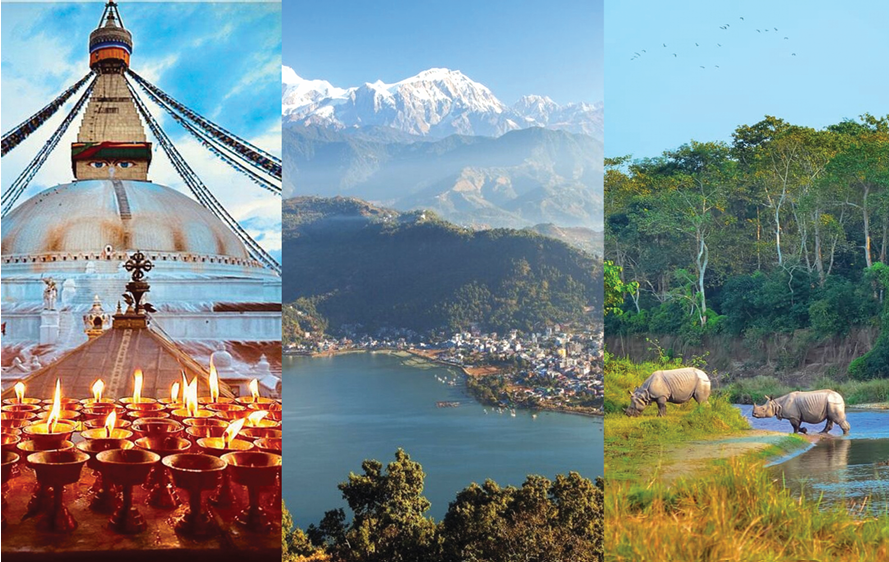
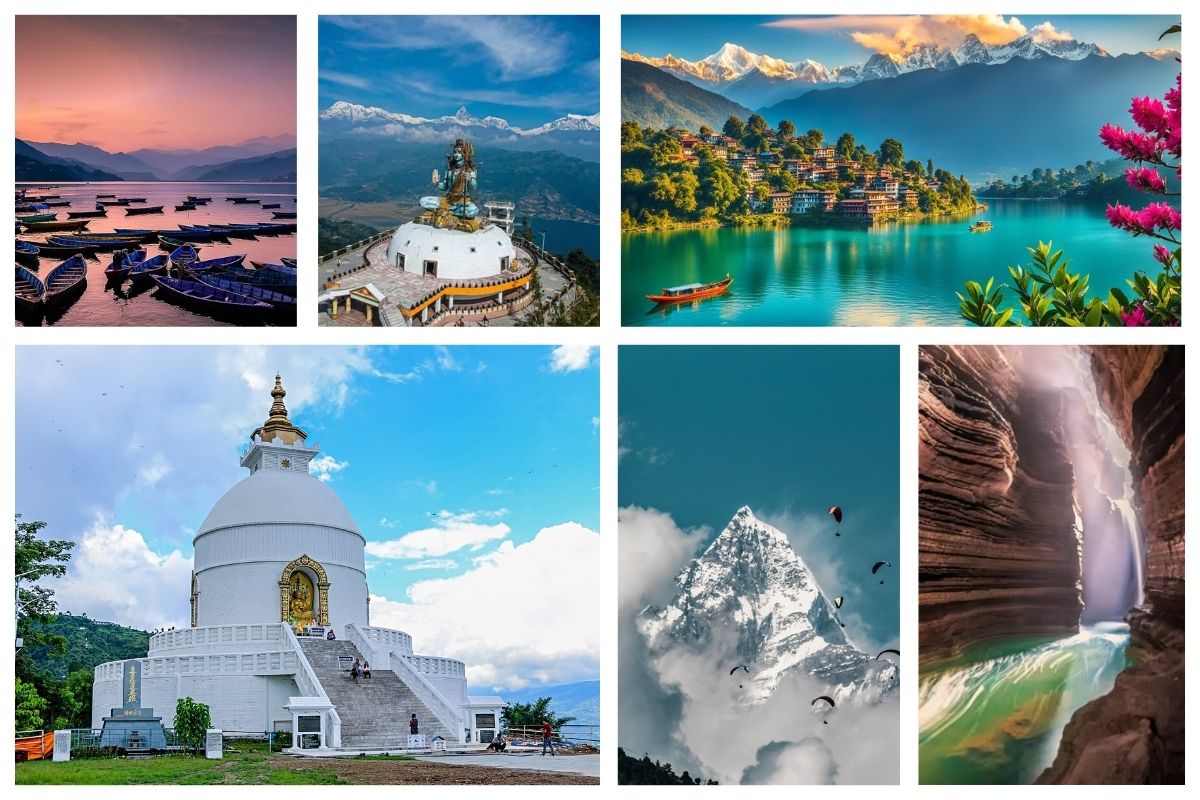
    kathmandu chitwan pokhara tours major highlights in the picture like Fewa Lake, Pumdikot shiva statue, Annapurna Himalayas, World Peace Stupa, Fishtaim & Devis water falls.
    Highlights of Pokhara

    Source- Google

    What Is the Kathmandu Pokhara Chitwan Tour?

    Kathmandu Pokhara Chitwan Tour is Nepal’s traditional back journey and presents the travelers with three completely different faces of Nepal. Each one generates its own individuality — city life and culture of Kathmandu, hill and scenery of Pokhara, and jungle and wildlife safari of Chitwan. The three combined offer the essence of a back journey.

    Highlights of the Kathmandu, Pokhara, Chitwan Tour are:

    1. Kathmandu – The Living Heritage City

    Kathmandu, the capital of Nepal, is a special living heritage city with ancient monuments all around. Shrines and old temples are observed in city streets, nearly in every square and corner. Kathmandu’s Durbar Square, Pashupatinath temple, a sacred Hindu temple, and Swayambhunath (the Monkey Temple) and Boudhanath, a Buddhist stupa, are heritage sites. The roads shake, the temples reach for the skies, and city sounds fight the air – chanting, clanging bells, and pilgrimages in sheer abundance. Thamel is the tourist slum, and rainbow shops and cafes’ center and cultural festivals. Kathmandu is religious and heritage saturated as well, something which will surprise the visitor amongst Nepal facts. The city tour is, therefore, an excellent idea to start your Nepalese experience.

    Kal Bhairab Statue in kathmandu durbar square with golden skies
    Kal Bhairab with Golden skies

    Source- Google

    Key attractions in Kathmandu:

    1. Kathmandu Durbar Square

    Situated in the very heart of the old city is the Kathmandu Durbar Square, one of the finest sites of the royal palaces of the Kathmandu Newar architecture and art. The temples, palaces, and courtyards of the square tell tales of the glories of the past of the kingdom, some parts of the structures having been constructed during the times of the Malla kings, the long-lost rulers of the Valley of Kathmandu. Among the most famous landmarks and monuments of the square are the gigantic Hanuman Dhoka Palace, Kumari Ghar (residence of the living goddess), and Taleju Temple. Although most of the structures were severely damaged in the record earthquake of 2015, it is still a hub of culture and spirituality deeply embedded in the city and the nation’s history and heritage, along with Nepal’s architecture and art.

    2. Swayambhunath (Monkey Temple)

    Swayambhunath (Nepali Monkey Temple) is Nepal’s and Kathmandu’s oldest and most historic sacred place, and one of the most lively.

    The Buddhist stupa temple is located on a hill, and from there, there is a great view of the Valley of Kathmandu. The white great dome, golden spire, and all-seeing eyes of the Buddha represent enlightenment. Though it’s the only religion to worship before the stupa, Hindus also pray there, and pilgrims in thousands daily have a procession lighting the butter lamps, rotating the prayer wheels, and donating a small amount of money. It is on the religious harmony backdrop amidst tabloid hysteria, so it’s a ‘hot’ place to gain enlightenment.

    3. Pashupatinath Temple

    Pashupatinath Temple is Nepal’s most sacred Hindu temple, which is dedicated to Lord Shiva in the guise of Pashupati: The animal protector.

    It looms over the Bagmati River, a holy river and center of which is a gigantic temple, ashram, and ghat complex. Pashupatinath is also renowned for its street cremation pyramids; Hindu death rites are performed daily on the Bagmati ghats. Although non-Hindus are forbidden within the temple grounds, witnessing the ceremony as part of the procession around the grounds is an excellent glimpse into Nepalese spirituality, rituals, and respect for death.
    The trip will be remembered for the next few decades.

    4. Boudhanath Stupa

    Boudhanath Stupa is one of the largest and most stunning of the stupas, as well as a Nepalese Buddhist pilgrimage, you visit in the world.

    The stupa itself is an enormous white monolithic dome topped by an enormous golden spire surmounted by the enlightened eyes of the Buddha, symbolizing loving kindness and wisdom. It is encircled by a circular square in the center of which Tibetan monasteries, shops, and restaurants are found. Buddhists pray by circumambulating clockwise around the stupa with rotating prayer wheels and mantras. It’s particularly busy on Buddhist festivals, but Boudhanath is a peaceful, if very spiritually intense, place.

    5. Thamel

    Thamel is the most popular tourist destination in Kathmandu and has everything anyone might ever want.

    It is never quiet and boasts vibrant streets lined with restaurants, shops, guesthouses, plenty of trekking shops, art galleries, music shops, and boutiques.
    It is Kathmandu’s tourist center, frequented by tourists weekly or fortnightly, and more seasoned trekking tourists constructing the Himalayas. While unlike the omnipresence of contemporary tourism, remnants too exist of older understandings of existence in temples, cloth-draped and behind doors, in local restaurants. Thamel is where live music, street life, souvenirs, and tourism in general occur.

    2. Pokhara – a tranquil Himalayan stunning nature retreat

    Pokhara is a laid-back lakeside resort town surrounded by massive Annapurna (Himalaya) mountains, and where not only is it possible to leave the madness of Kathmandu far, far behind you, it’s actually quite literally an option. It is renowned in itself for its own natural beauty, and it has the stunning Phewa Lake, which guests visiting tourists boat across as they just sit and look up in awe at the white snow-capped Machapuchare (Fishtail) mountain.

    Sunrises are stunning. Sarangkot sunrise places are a dreamer’s paradise, and in the daytime, you get a glimpse of the World Peace Pagoda, a view of the peaceful beauty of Devi’s Fall, and looking down at the world under the shadow of Gupteshwor Cave. And if one is adventurous, there is paragliding, zip-flying, and trekking through the hills of the city. Pokhara is the perfect place for relaxation, de-stressing, and soaking up the Nepalese countryside and Himalayan views.

    Fewa Lake, Pokhara Valley & World Peace stupa seen from Pumdikot Shiva Statue Pokhara.
    Fewa Lake, Pokhara Valley & World Peace stupa seen from Pumdikot Shiva Statue Pokhara.

    Source- Google

    Key Attraction

    1. Phewa Lake

    Phewa Lake is a peaceful paradise that surrounds the town with its lake shores. You can have peaceful water or stunning views of mountains; on most average days, you can promise yourself to get to catch a view of the lovely Machapuchare (Fishtail Peak) and marvel at the face of the lake.

    You can actually boat, kayak, and paddle inside the lake and even visit the Tal Barahi Temple, a small religious Hindu temple, which is revere on the boat, located in the middle of the lake. And to nature’s calmness, Phewa Lake is just that, either to view sunset at the lake boulevard or paddle quietly inside the lake.

    2. Sarangkot

    Sarangkot is the most crowded hilltop tourist spot, near the Pokhara city center. Sunset, especially on Annapurna and Dhaulagiri summits, is world-renown for being spellbinding as much as appearances go. They like to reach late night so that they could get the very first ray of sun to kiss the hill tops so that they shine as they are getting golden, light, and white.

    Not only sunrise location but also Nepal’s best paragliding location where paraglider will be flying over the lake and Pokhara and hills will be your background. Nature clad and mini adventure sport, wonder Sarangkot is viewpoint en route to Pokhara.

    3. World Peace Pagoda

    World Peace Pagoda is a stunning white, glittering stupa monument far back on a ridge in Pokhara Valley. It is construct by Japanese Buddhists as a war memorial of peace and glows with stunning 360-degree views of Phewa Lake, Pokhara city, and the Himalayas. And while the Pagoda itself is simple and room is allowed to walk and take it in, there is also fun to the extent of visiting the monument as close as you can walk, drive, or boat, and trek to the point on the ridge.

    4. Devi’s Fall and Gupteshwor Cave.

    Devi’s Fall, or Patale Chhango as it is known to locals, is a spook waterfall where the falls drop down into a gigantic underground tunnel. Devi, religiously speaking, was a guest who was unwillingly drag away, and that is refer to as the fall. Its opposite is the Gupteshwor Cave, the most visited underground cave in Nepal. Inside the cave lies a Lord Shiva temple and the breathtaking view of Devi’s Fall once more, as it leaps onto the rock below. It is myth and nature, and enigma, covering its face and presenting tourists with two but not one view.

    5. Mountain Museums

    Pokhara International Mountain Museum provides an abundance of Nepal’s mountaineering history, Himalayan culture, and natural history. History of ascending Mount Everest, display of Nepalese traditional clothing and equipment, model Himalayan Mountain landscape display, Nepalese ethnic community and way of life depictions, i.e., Sherpas, Gurungs.

    Ease of learning Nepalese mountaineering history, what it did not achieve, and what it did. There are one or two other local museums, such as the Gurkha Museum, um with some of the local and military history of the region. Always tranquil, always serene, and scenic views. You can get your city and local shoot done, or me time. Whatever you spend doing in the Pagoda or otherwise, there is that spiritual bonding and connection with nature.

    3. Chitwan – Jungle Adventures and Wildlife Wonders

    The truly sub-tropical lowland of Chitwan of Wild Nepal shelters the beautiful Chitwan National Park, a World Heritage Site, that abounds with wildlife. Tourists can also go for jeep safari or boat cruises to jungle safaris provided to them in Chitwan, which provide sites to see highly endangered animals such as the one-horned rhinoceros, Bengal tiger, sloth bear, crocodiles, and over 500 birds! One can visit the Tharu villages and Tharu on a cultural village tour and get familiar with the culture of one of the oldest members of Nepali society. And if elephant breeding camps, jungle treks, and sunset over the river are not enough, Chitwan provides the hard-and-harder tourist’s alternative for the final day of a tour.

    Rhinos at chitwan national park
    Chitwan & Rhinos

    Chitwan attractions:

    1.Jungle Safaris

    There can’t be any Chitwan vacation without traversing the Chitwan National Park jungle safari.
    That’s why we’ve reached Nepal’s subtropical jungle!

    On either a jeep safari or the quietness of a canoe tour across the peaceful Rapti River, you see animals where they are suppose to be. Chitwan National Park is a sanctuary for the near-extinct one-horned rhino and the reclusive Bengal tigers— you catch sight of sloth bears, wild elephants, and sun-basking gharials in the wetland! Such are the experiences when you hike through the grasslands and sal forests that the experience is the best, at a time when you are searching for such elusive species that it’s paradise for nature enthusiasts.

    2. Elephant Breeding Center Sauraha

    One of the breeding centers of a conservation project, the Elephant Breeding Center Sauraha is involve in breeding and conserving domesticated elephants of Nepal.

    Tourists are able to view elephants of all ages safely and responsibly, even naughty young calves. The Elephant Breeding Center not only informs tourists of the life, habitat, and social life of elephants but also the public (and tourists)about best practices in wildlife management. It’s an eye and heart experience for children and nature lovers.

    3. Bird Watching

    Apart from safe and prudent animal migration, Chitwan is a paradise for bird watching. Over 500 species of birds have been found there, and some birds within this region are simple world-famous; i.e., the kingfishers, queen of birds, hornbills, herons, and egrets.

    Some migratory birds like the Bengal florican are vagrants. They also offer some guided early morning bird walks with local naturalists, which take you to the riverbanks, wetlands, and forest edges where birds are most active. Birding is not only an explosion of color but a hair-tingling sound and spectacle too. Birding can be one that is laid back, where you just chill as an experience of unparallel biodiversity. Even a temporary halt, and the most enthusiastic bird enthusiast can’t help but long for bird watching.

    4. Tharu Culture

    Tharu Culture is a more culturally enrich and richer experience of one of the Nepalese tribal traditional ways of living. Tour of Tharu village, mud-plastered houses, wall paintings, local natural surroundings, and fruits. Cultural evening shows, some dynamo Tharu stick dance, and people’s songs educate them about their life, their history, and about culture. People all around you, people’s culture known, and off the beaten path, it is a wonderful cultural experience and a richly enriching learning experience about culture and indigenous people.

    5. Rapti River Sunrise.

    River Rapti is precisely such a lovely spot to unwind at nightfall after a day of trekking in the forest. It would be about dusk time, and hence the river would be bathed in golden sunlight as it winds its way out towards bathing pachyderms and birds descending to roost.

    It’s a relaxing cruise to unwind, and one finds peace most deeply through gigantic throngs of tourists visiting here to soak in the quiet of riverbanks or town cafes with a hot cup of local tea and peaceful, unhurried canoeing. The sort of everyday scenery in your sight becomes attuned to the body and turns out to be an otherworldly and peaceful build-up of Chitwan’s land safari.

    Suggested 7-Day Itinerary for Kathmandu Pokhara Chitwan Tour

    Day 1: Arrive in Kathmandu

    You will be greet at Tribhuvan International Airport by your guide or hotel representative. Rest if needed, and hotel transfer. Maybe walk to Thamel, the tourist hub of Kathmandu. Thamel is well serve by restaurants, cafes, shops, and even cultural sites to visit. Depending on the time, can view live cultural show in the evening with Nepali traditional dinner.

    Day 2: Kathmandu Culture Tour

    Day two starts with day guided tour of the UNESCO World Heritage Kathmandu Valley. The day starts with Swayambhunath Stupa (Monkey Temple), an old Buddhist temple where you walk among the remains of a Buddhist sacred place and are treat to sights of Kathmandu. Then, Pashupatinath Temple, Nepal’s most sacred Hindu temple, is where you can witness holy cremation before Lord Shiva and the Bagmati River. Then on to the Next Boudhanath Stupa, the world’s largest stupa and the Tibetan Buddhism capital of Nepal. And last but not least, you will visit Patan Durbar Square, such as an ancient temple, a century-old red brick, and a masterpiece.

    Day 3: Drive or Fly to Pokhara

    Fly or drive from Kathmandu to Pokhara, lake town of Phewa Lake and entry point of the Annapurna Himalayas. Drive via scenic roads (6 – 7 hours depending on road conditions) or hop on a short domestic flight (25 minutes). Check-in at your hotel and enjoy the evening strolling along Lakeside Pokhara with its relaxed cafes, earthy shops, and Phewa Lake views.

    Day 4: Pokhara Tour

    This would be looking forward to starting your day with an early morning trek to Sarangkot at about sunrise time to witness sunrise over the picturesque Annapurna, Dhaulagiri, and Machhapuchhre (Fishtail) ranges from a vantage point atop a hill overlooking Pokhara.You would have a day’s city sightseeing Pokhara city tour of Devi’s Fall, Gupteshwor Mahadev Cave, and the International Mountain Museum detailing Nepal’s mountaineering history. You may choose to boat Phewa Lake and reach the Barahi Temple island in the afternoon. If an adventure sort, there is paragliding, zip line, or even an ultralight plane flight if adventure beckons!

    Day 5: Chitwan Tour and Tharu Culture

    Drive from Pokhara to Chitwan, 5–6 hours of lowland jungle through hill country. Arrive at Chitwan and drive to your jungle lodge or an ecotel-style eco-lodge. Evening Tharu village tour and view the local aboriginal natives, and end with a Tharu cultural dance to represent music and lifestyle culture.

    Day 6: Jungle Tour of Chitwan National Park

    You will be out all day on a tour of Chitwan National Park. A World Heritage Location, Chitwan is a game park paradise. You ride out in a jeep or elephant-back safari and can spot all manner of wildlife. You will witcness one-horned rhinoceros, sloth bear, wild boar, and, if extremely fortunate, a Royal Bengal tiger. Or paddle down the Rapti River and watch for crocodiles and water birds. And then followed by an Elephant Breeding Centre tour and a half-hour jungle trek with an introduction to bird life and forest vegetation.

    Day 7: Return to Kathmandu

    You will be drive back to Kathmandu today, or fly back to Kathmandu. At Kathmandu, you can spend your last day at the capital city either shopping for souvenirs in and around Thamel, or simply relaxing before departure. Here, your Golden Triangle Tour ends with memories in your heart.

    How These Kathmandu Pokhara Chitwan Tour Connect

    Kathmandu–Pokhara–Chitwan tour is a loop experience tour of Nepal. This showcases the geographical, cultural, andexperientiale richness of Nepal in a composite way. The three places are near to each other so that one may be transform to the other in a short period of time. These are ecologically and culturally unique from each other. They may provide the tourists diversified experiences in a short period of time.

    As might be anticipate, Kathmandu to Pokhara to Chitwan starts with Kathmandu. In Nepal’s cultural capital center, royal courts and ancient temples, religious heritage, and institutions of culture are an appropriate acclimatization to Nepal’s longer culture. After a series of rounds of all the interests of Kathmandu. The tourists can fly or drive west to Pokhara. The lakeside town of peace, renowned for mountain vistas, lots of adventure sports, and simple rhythm. Following the street life of busy and congested Kathmandu. Pokhara is a state of peace, which the tourists will need to acclimate to.

    The tour takes south of Pokhara to Nepal’s jungle frontier of Chitwan, jungleland. Pokhara offers contrast to Nepal’s Terai lowland state: riverine landscape and wildlife, closed forest. As the traveler goes through the transition from Himalayan foothills to tropical jungle. He/she is struck by the diversity of Nepal’s biological diversity. The complete city tours, natural peace, and unspoil adventure.

    Each segment of the tour balances against the others. Kathmandu history and religion.Pokhara scenery and R&R, and Chitwan straight-up, no-nonsense adventure. Collectively, they provide a good but quality dose of Nepal. It is good for first-timers and for others who will get an overview of lots of things about the country in general.

    Kathmandu Pokhra Chitwan in one frame
    Bouddhanath, Lakeside Pokhara & Chitwan National Park

    Best Time for Kathmandu, Pokhara, and Chitwan tour.

    Best time for Kathmandu Pokhara Chitwan Tour is October to April. Weather and sky clear and you have green wildlife scenery in these months. Summer monsoon months June to September are and largely leech infested in Chitwan. Meanwhile May-June summer months are hot and fiery at lower altitude.

    Conclusion of Kathmandu, Pokhara, and Chitwan tour.

    Kathmandu Pokhara Chitwan Tour is a seven-day, whole circuit tour of Nepal. An experience that opens the spiritual heart of the country, unfolds its natural beauty, and invites you to pristine nature. You are in the city on a weekend getaway, honeymoon, or family vacation. The Golden Triangle Kathmandu Pokhara Chitwan Tour has diversity, relaxation, and adventure that you’ll be discussing for years to come. In case you have to view everything that can be view under one tour, then here it is! Contact us today at Happy Mountain Nepal, on Facebook, Instagram, or TikTok

  • Kathmandu Pokhara Chitwan Tour

    Kathmandu Pokhara Chitwan Tour

    Kathmandu Pokhara Chitwan Tour: Discover the Golden Triangle of Nepal

    Nepal can technically be referred to as the land of Everest and Himalayas, but in actuality, there has to be something behind the peak to be discovered. For the traveler who would rather be informed about the nature, wildlife, and culture of Nepal without having to endure day-long trekking activities, the answer lies in the Kathmandu Pokhara Chitwan Tour.

    This trip is also referred to as Nepal’s Golden Triangle—A combination of Kathmandu city, countryside around Pokhara, and Chitwan jungle. A combination of the three destinations gives a balanced and varied experience characteristic of the best of Nepal.

    We will provide you with the full picture of all the destinations, show you the crème de la crème, provide you with the ideal itinerary, inform you when to travel and assist you in planning your once-in-a-lifetime journey.

    Why go on a Kathmandu, Pokhara, and Chitwan tour?

    Pokhara Chitwan vacation is perfect for:

    • First-time travelers to Nepal,
    • Families and seniors,
    • Couple birds and honeymooners,
    • Culture lovers, wildlife buffs, and nature enthusiasts.

    An excellent blend of activity in this fest where, incredibly, you find time for some sightseeing as well:

    • UNESCO World Heritage Sites,
    • Himalayan vistas,
    • Waterfalls, caves, and lakes,
    • Wildlife safari and viewing endangered species,
    • Villages and people,
    • No trekking anything and climbing steep mountain peaks,
    • Short local flying option and lots of inexpensive places to stay ranging from budget guest houses to luxury resorts.

    Part 1: Kathmandu Tour– Nepal’s Cultural Capital

    Kathmandu Valley is the cultural and spiritual heart of Nepal. For more than 2,000 years, Kathmandu Valley is center of politics, culture, and religion has only grown with time. Smitten by the majestic Himalayas, it has turned into a melting pot of Hinduism, Buddhism, and indigenous practices.Located in the center of Nepal, the spectacular Kathmandu Valley takes tourist through a cultural past through temples and the royalty’s palaces.

    This valley alone is popular for its assortment of heritage and tourists are privileged to view some of the best temples, palaces, and monuments in the South Asia region.

    kathmandu tour

    What to Expect in Kathmandu:

    • Altitudes: ~1,400 meters (4,600 ft)
    • Best for: Temples, heritage sites, art, spiritual vibes, local cuisine
    • Duration: Spend at least 2–3 days

    Top Attractions in Kathmandu:

    1. Kathmandu Durbar Square

    The palace square, temples, and the courtyards are all located at the heart of the old city and were constructed by Malla kings. Don’t forget to visit Kumari Ghar, where the living goddess Kumari is housed.

    It is a public courtyard in the middle of Kathmandu and the old palace of the King of Nepal where the king was crowned and other ceremonial activities reportedly have been done. It does have some huge temples, palaces, and courtyards. They are Hanuman Dhoka Palace and Kumari Ghar. It is the residence of the goddess Kumari who is described as a living goddess.

    2. Swayambhunath Stupa (Monkey Temple)

    At the top of a hill, this stupa provides a good view of the valley below. It is Hindus’ and Buddhists’ sacred place as well as renowned for the keen eyes painted on all four sides of the stupa. Swayambhunath Stupa, or Monkey Temple, is Kathmandu Valley’s most visited tourist spot. The stupa sits on a hill and offers the best view of the entire Kathmandu valley. It is more than 2000 years old, and the temple has been holy to Buddhists and Hindus.

    3. Pashupatinath Temple tour

    A very renowned Hindu temple along River Bagmati, Pashupati temple is a highly spiritual temple complex with cremation ghats, sadhus (holy men), and cultural rituals. It is a Lord Shiva temple and situated on the river Bagmati bank. It is not just a religious temple, but religion is being practiced here, i.e., cremations. So, the temple is ready to welcome any type of visitor who would like to witness the history and practices of the religious temple.

    4. Boudhanath Stupa tour

    One of the largest stupas in the globe in Buddhism. Its peaceful ambiance and the nearby Tibetan monasteries are the crème de la crème. This large stupa forms part of an extremely concentrated spot where numerous Tibetan Buddhist monasteries have been clustered together to form a peaceful but chaotic hub for spirituality.

    5. Thamel tour

    Shopping district in Kathmandu. Thamel is suitable for souvenir shopping, eating at Nepali restaurants, or just hangin’, with shopping streets, cafes, and trekking shops.

    Day trips outside of Kathmandu:

    Patan and Bhaktapur: Go see these two old towns just outside of Kathmandu. Bhaktapur is especially renowned for containing some unspoiled Newari architecture.
    Nagarkot: Hill resort town east of Kathmandu, renowned for Himalayan sunrise views.

    Part 2: Pokhara  Tour– Gateway to the Annapurnas

    Relax a dose of culture in Kathmandu with a trek west to Nepal’s coolest and most romantic city, Pokhara. Pokhara, where Himalayan view-ppectaals and peaceful lakes offer their antithesis to the capital, cleaner, less tourist-grained, and naturally nestled, is where to unwind, trek, or get an adrenalin hit.

    Pokhara is resort town of Central Nepal, trek and climb base, and home to Annapurna Himal. Himalayan vista, lakeshore stroll, adventure sport – they’re here and much more.

    lakeside tour


    Things To Do and See in Pokhara

    Altitude: Around 800 meters (2,600 feet)

    Best For: Himalayan landscape, lakeshores, paragliding, relaxation

    Recommended Stay: 2 to 4 days

    Top Places to Visit in Pokhara Tour

    1. Phewa Lake

    Pokhara’s gem, Phewa Lake, is the place to unwind. Paddle a boat along its shore, take a boat ride to Tal Barahi Temple on an island in Phewa, or just hang around for a sunset stroll along Lakeside Road, lined with boutiques and cafes.

    2. Sarangkot Viewpoint

    It is at top with stunning sunrise panoramic view of Annapurna and Dhaulagiri mountains. One of the easiest take-off places in the world and has some tourist groups visit each year.

    3. World Peace Pagoda tour

    White Buddhist stupa at summit of hill below tip of southern tip of lake. Enjoyable views from World Peace Pagoda of Pokhara, lake, and mountains. Drive or trek.

    4. Davis Falls & Gupteshwor Cave tour

    Davis Falls, huge underground plunge, disappears into thin air. Gupteshwor Mahadev Cave, holy Shiva temple, and eerie cave formations, is an easy walk along the route.

    5. International Mountain Museum

    It is clammers’ heaven. The museum swings wide in welcome to Himalayan mountaineering history and equipment of historic climbs and vomits out local mountain immigrants.

    Pokhara Adventure Activities

    Paragliding: Paragliding over Phewa Lake and bird’s eye view of the Annapurna ranges

    Zip-lining at Sarankot: longest and highest zip-lining in the world

    Ultralight flying: to view the city and nearby hills like a bird

    Trek: Short trekking to nearby villages like Dhampus and Australian Camp

    Part 3: Chitwan Tour– Wildlife and Jungle Experience

    Drive south to Chitwan, where Nepal’s best wildlife treasure—Chitwan National Park—is waiting for you. It is a World Heritage Site and one of the best places to see endangered species in their natural surroundings throughout Asia.

    Chitwan National Park is situated in Sothern Nepal’s physically higher zone of lowland subtropical vegetation with forest, grass land and rivers covering an area of 932 sq.km.

    It shelters one-horned rhinoceros, tiger, leopard, wild boar, and birds etc., making it an ideal location for wildlife spotting and exploration ; Nepal’s Terai.

    chitwan national park tour

    Activities to do at Chitwan Tour:

    Altitude: ~150 meters (490 ft)
    Best for: Jungle safaris, rhino spotting, birding, cultural festivals
    Duration: Stay 2–3 days

    Must-See Attractions in Chitwan National Park

    1. Jeep Safari

    This is the most suitable since, by doing it this way, you will have the opportunity to cover vast reaches of the park and spot wildlife at ease. Elephant Safaris: One of the closest ways of tiger, rhino, and other game trail tracking. These provide one with a bird’s eye view of how the park is in terms of seeing, but in the recent past, man has introduced so many problems on the animal rights side of such tourism.

    Drive through thick sal forests and grasslands in an open jeep. Sight:

    • One-horned rhinos,
    • Spotted deer and sambar,
    • Wild boars,
    • Sloth bears,
    • Marsh mugger and gharial crocodiles,
    • If lucky Bengal tigers and leopards can also be sppoted.

    2. Canoe ride on the Rapti River

    It is a quiet place to wade into the water dwellers residing in the park, and they are birds, freshwater dolphins, and crocodiles.
    Nature Walks: Highly unique nature walks conducted by professionals that offer more than one opportunity to see broader perspectives of plants and animals that can be observed as the pathways are at the command of the given forest terrain.

    A peaceful experience of seeing crocodiles, turtles, and birds. Bird-watching is best in the early morning.

    3. Elephant Breeding Center

    Make a comfortable experience of rearing and nourishing elephants. You can see the baby elephant and mother. Even get an opportunity to feed them grass and fruits. In the same way, you would have a natural experience with the elephants as well.

    Cost for the Elephant Breeding Center

    • Foreigners: 100 NPR (approx.)
    • Nepalese: 50 NPR (approx.)
    • SAARC: 50 NPR (approx.)

    Thing to take care at the Elephant breeding center

    • Take proper care of the health of the elephants.
    • Do not disturb the privacy of the elephants.
    • Do not cause noise.
    • Do not employ flash for taking photos.
    • Observe elephant conservation work. It is one of the very few in Asia.

    4. Tharu Cultural Program

    Tharu Village will expose you to the long history and tradition of Nepal’s multi-ethnic people. You have an opportunity to learn and emulate the tradition and history of the Tharu people.

    • Don’t leave anything behind in a Tharu Village.
    • Bring a respectful attitude.
    • Ask first before taking the picture.
    • Quiet travel.
    • Support local economy.

    Enjoy an evening of stick dance of the traditional Tharu life in the night after dinner after a visit to a Tharu village.

    5. Birdwatching

    Chitwan is bird paradise with a grand total of over 500 bird species such as kingfishers, hornbills, storks, and eagles.

    There are more than 500 species of birds at Chitwan National Park. You will be a bird enthusiast if Chitwan is your heaven, where you get to watch right from parakeets whose colors differ in the rainbow to huge eagles. You will remain speechless witnessing the varieties of birds.

    Points to carry during bird watching

    • Do not forget to bring your binoculars and cameras
    • Do not touch them
    • Keep silent and avoid noise
      Use camouflage-colored outfits

    Suggested Itinerary: 9-Day Kathmandu Pokhara Chitwan Tour

    Here’s a sample itinerary that balances sightseeing, travel time, and relaxation:

    Absolutely! Here’s a detailed day-by-day itinerary for the Kathmandu Pokhara Chitwan Tour, written in paragraph format to provide a clear picture of what to expect each day.

    Day 1: Arrival in Kathmandu

    Your adventure really starts when you land at Tribhuvan International Airport in Kathmandu, where you will be greeted by your representative or guide and escorted to your hotel, which is usually situated in the center of or just outside the city center in the lively Thamel district. Once you arrive and have settled into your room, you can take your own time to view a tour along Thamel Street restaurants, shopping streets, and communal living along its entire length. The best now is to view a glimpse of a Nepali dinner and settle into new surroundings before looking forward to a good next day’s run.

    Day 2: Kathmandu Valley tour

    The cultural tour of Kathmandu begins after breakfast in the morning. You’ll start at Pashupatinath Temple, one of the most sacred Hindu temples in South Asia, located on the banks of the Bagmati River. Here, you’ll witness religious rituals, cremation ceremonies, and the spiritual atmosphere that defines the temple complex. Next, you’ll visit the serene Boudhanath Stupa, a UNESCO World Heritage Site and an important center of Tibetan Buddhism. Afternoon outing to Swayambhunath Stupa (Monkey Temple), one of the only Buddhist temples that houses both Hindu and Buddhist symbols. City panoramas are viewed from the top of the temple hill. The final visit today on tour is Kathmandu Durbar Square, a collection of old palaces with wooden temples and courtyards adorned with intricate carvings. The tour of the day concludes in the evening with a cultural performance or an evening dinner at the hotel.

    Day 3: Drive or Fly to Pokhara

    You leave the Kathmandu Valley today and drive to Pokhara, the peaceful lake town at the base of the Annapurna range of mountains. You can fly for just 25 minutes or drive 6–7 7 hours through Nepal’s hills, forests, and villages. Upon arrival, you will stay overnight at one of the lakeside hotels and enjoy a leisurely boat ride on Phewa Lake in the afternoon, visit Tal Barahi temple on an island in the lake, and see how the mirror-like surfaces on Phewa Lake reflect the fnnapurna mountain range. The rest of the day is at your leisure to walk through the quaint cafes, restaurants, and neighborhoods around Lakeside Pokhara.

    Day 4: Sarangkot Sunrise and Pokhara Tour

    Wake up early in the morning and drive to Sarangkot, a resort hill that offers a panorama of the Dhaulagiri and Annapurna range. It is famous for its sunrise, which is truly breathtaking. Sit back and relax as the first sun rays touch the tip of the snow peak, one of Nepal’s sacred experiences. Return to the hotel at dawn for breakfast and continue with the tour of Pokhara today. Visit Davis Falls, a powerful waterfall that runs underground, and cross the road to Gupteshwar Cave, a temple containing a holy Shiva temple within. In the afternoon, visit the World Peace Pagoda, a white Buddhist stupa on a hill overlooking the city, lake, and mountains. If time allows, take a trip to the International Mountain Museum to discover Himalayan mountaineering history and nearby ethnic villages. Dinner in the evening and relaxation at Lakeside.

    Day 5: Free Day or Optional Half-Day Hike in Pokhara

    Free day. Choose your own activity and time. Take it easy in the morning by the lake environment, or get pampered with a massage, go handicraft shopping, or just relax and read in one of the few tiny, cozy cafes. For the adventurous type and one who would like to bite into something brief, a day hike with short duration to the Australian Camp or to Dhampus Village is waiting, and both of these come with them the drama of the countryside around as much as the village life of the locals. Or paraglide, zip-line, or fly ultralight and have the best view of Pokhara and the surrounding Himalayas from above the same. Free evening at leisure to have local Nepali or international dinner at one of the many restaurants of lake belt.

    Day 6: Drive to Chitwan National Park Tour

    You are now leaving the mountains and driving south into Nepal’s subtropical lowlands of Chitwan, which harbor Nepal’s most famous wildlife reserve. This is a 5–6 hour drive along the transforming Terai landscape. Arrive in Chitwan and check into a jungle resort or lodge close to the Chitwan National Park. Afternoon village walk to visit the nearby Tharu village and observe their traditional houses, way of life, and farming. Dinner and Tharu traditional music and dance performance—a wonderful way to learn about and witness the local indigenous culture around you.

    Day 7: Jungle Adventure and Wild Safari Tour

    It’s a wild safari day today. Early morning breakfast and then jeep safari at Chitwan National Park where you get to view the one-horned rhino, deer, wild boar, and if luck is with you, the very rare Bengal tiger. Apart from these, you also get to view a very high density of birds from autumn to winter. Enjoy the exhilarating canoe trip on the Rapti River, where you will see marsh mugger and ghariyal crocodiles basking in the sun on the riverbank. You will also go on a visit to the Elephant Breeding Centre, where you will learn how to conserve and protect elephants. If you have time, we can organize a jungle walk, where you yourself get to experience the jungle at its most populated during a morning. Lunch at the lodge and share the wildlife experience of the day. Day 8: Return to Kathmandu

    Day 8: Breakfast, and back to Kathmandu.

    Drive (approximately 5–6 hours) or return back by short domestic flight. You will be welcomed and taken to your hotel upon arrival, and the rest of the afternoon is free to relax or see whatever you had no time for upon arrival in the capital. It is also a period to shop late nights in Thamel, visit an art gallery, or eat on rooftops with the city view as background.

    Day 9: Kathmandu departure

    Last day of the tour. Breakfast in the morning, according to your flight timings, you are on your own and can relax and spend the last few moments in Nepal. Your guide or hotel will book a Tribhuvan International Airport pickup to leave there and catch your back flight with the memories of Nepal’s golden triangle—Kathmandu, Pokhara, and Chitwan—in your heart forever.

    Best Time to Visit the Kathmandu Pokhara Chitwan Route

    Autumn (September–November)

    • Best weather for clear skies and mountain views
    • Major festivals of Dashain and Tihar

    Spring (March–May)

    • Warm weather, rhododendron in bloom on the hillside.
    • Best time for spotting animals in Chitwan.

    Monsoon (June–August)

    • Heavy rainfall makes overland travel inconvenient.
    • Slippery trails and leeches in Chitwan.

    Winter (December–February)

    • Mornings and evenings are cold in Kathmandu and Pokhara.
      Chitwan is warm and pleasant.

    Travel Tips for Hitch-Free Travels

    Transport: A Tourist car or bus can be rented for hitch-free traveling. Townsend’s domestic flight is hassle-free.
    Permits: A Permit for the journey is not needed. Fee at the entry of Chitwan Park.
    What to Carry:
    – Light clothing set for climatic fluctuations
    – Sunscreen and insect repellent for Chitwan
    – Hiking boots for trekking
    Health: Personal medication is to be carried. Only bottled water is to be consumed.
    Connectivity: Wi-Fi is available everywhere, and SIM cards are cheap.
    Respect the Culture: Dress properly and modestly when going to temples and respect the culture.

    Conclusion

    The Kathmandu, Pokhara, Chitwan tour is the best means to see the beauty of the Nepal’s diversity without going through the hassle of a trek. From Kathmandu to Chitwan, or remote locations such as this tours are sure to provide nice scenery, comfort, and an experience of a lifetime. This tour is perfect for an individual with tight schedules but willing to take a glimpse of Nepal’s natural wonder. Contact us today at Happy Mountain Nepal, Facebook, Instagram, or TikTok. 


  • Things To Do in Pokhara .

    Things To Do in Pokhara .

    Things To Do in Pokhara.

    Pokhara is definitely one of Nepal’s jewels, which ideally mixes tranquility, adventure, and culture in one bowl. Lying about 200 km west of Kathmandu, it is the ultimate haven for those tourists who aim at the tranquility of nature along with some adventure sports activities.

    pokhara


    Herein, a deeper look into six of the best things to do when one visits the city of Pokhara.

    1. Phewa Lake: A Haunt of Serenity

    Fewa, or Phewa Lake, is the second largest lake in Nepal and undeniably the heartbeat of Pokhara. Its shining blue waters, surrounded by lush green hills and snow-capped mountains, present an inspiring sight and are surely a photographer’s dream.

    Tal Barahi

    • Boating on Phewa Lake: You can hire brightly painted wooden boats-called dungas-or take a canoe. There are various rentals, depending on whether you paddle yourself or hire a boatman.
    • Tal Barahi Temple: At the middle of the lake, this pagoda-style two-tiered temple stands great in memory of Durga, a Hindu goddess. Since this site is accessible only by boats, it’s recommended for people on spiritual retreats.
    • Pro Tip: The timing can get you the best reflections of the Annapurna ranges on the lake during early morning and late afternoon.

    2. Sunrise in Sarangkot

    It is a small hill village 10 km away from the city of Pokhara, famous for its magnificent sunrise viewed worldwide. You can have the best sunrise experience the peaks of Annapurna, Dhaulagiri, and Machhapuchhre or Fishtail Mountain gradually turn gold as the morning sun slowly rises over the horizon.

    Sunrise in Sarangkot

    • Apart from the sunrise, Sarangkot is also a very apt place for paragliding.
    • Taking a jump from here, one is enabled to fly above the valley and witness unimaginable and amazing aerial views of the city with its surrounding beauty.
    • One can drive to or walk to the viewpoint. It’s a rather very beautiful walk from the main town, takes 2-3 hours approximately as it takes through villages and forests.

    3. World Peace Pagoda: Beacon of Tranquility

    world peace pagoda

    The Shanti Stupa or the World Peace Pagoda, atop a hill overlooking Phewa Lake, is one of the 80 peace pagodas built in different parts of the world for the motive of creating peace and harmony.

    • Architectural Beauty: Amidst all the prayer flags and greenery, it is a white dome-shaped structure for peace and unity.  From here, you can have stunning views of the Annapurna range, Phewa Lake, and the valley below.
    •  It can be reached by a short trek or the drive partway up. Most tourists love to cross Phewa Lake by boat and then trek uphill, which takes approximately an hour.
    • The best time to visit is during the late afternoon to watch the sun setting-the experience is magical.

    4. Thrilling Adventures

    Pokhara is a heaven for all those adrenaline junkies. Following are some of the best things one must do:

    • Paragliding: One of the best paragliding experiences in the world is available in Pokhara. These start at Sarangkot and end near Phewa Lake. Tandem flights with experienced pilots make this quite a safe sport even for a complete beginner.

    Thrilling Adventures, pokhara

    • Bungee Jumping: A 70-meter plunge at Hemja can be quite an experience.

    Bungee Jumping pokhara

    • Zip-Lining: One of the most extreme and longest in the world, the Pokhara Zip Flyer runs 1.8 km at a speed of 140 kph.
    • Ultralight Flights: View the Himalayas from an ultra-light flight for an unforgettable experience.

    5. Gupteshwor Cave and Davis Falls

    Gupteshwor Cave and Davis Falls are situated close to each other, these two places can be covered in one trip.

    • Davis Falls:  This is also famously known among the locals as Patale Chhango – a pretty weird waterfall that disappears into an underground tunnel. It looks fabulous during the time of the monsoon period because the volume of water is just so high.
    • Gupteshwor Cave:  It’s a limestone cave housing some beautiful rock formations and a highly regarded Shiva temple. Part of the cave leads to a viewpoint of Davis Falls from underground.
      Pro Tip: Wear comfortable shoes since the cave is slippery.

    gupteswor cave, Pokhara

    6. Plunge into Cultural Richness: Pokhara

    The cultural richness of Pokhara is as varied as its natural beauty. Following are the highlights of it:

    • Old Bazaar:  This is a crowded marketplace selling traditional Nepali handicrafts, spices, and commodities. The buildings reflect the Newari heritage of the place.
    • Bindhyabasini Temple:  Hindu temple dedicated to the goddess Bhagwati, considered a center of pilgrimage, commanding a breathtaking view of the surroundings.
    • International Mountain Museum: Understand the chronicles of mountaineering, culture of the communities living in the Himalayas, and the biodiversity of this area.

    Accommodation Alternatives in Pokhara

    Pokhara offers a perfect range wherein all categories can comfortably stay:

    • Lakeside Hotels: Ideal to stay around Phewa Lake with restaurant, shopping, and nightlife amenities around.
    • Boutique Resorts: To add some luxury, the resorts stand a little apart from the main city to give panoramic mountain vistas.
    • Budget Guesthouses: These are for backpackers, cheap, and usually homely.

    Best Time to Visit Pokhara in 2025

    Spring-March to May: This is the best time for trekking and sightseeing because of clear weather with skies, rhododendrons bloom, and comfortable temperatures.

    Autumn-September to November: The post-monsoon season offers crisp views of the mountains and pleasant weather.

    Conclusion

    It is a place that stays in one’s mind long after the journey is over. Be it tranquil lakes, cultural monuments, or a number of adventurous activities-it has got something for everybody.
    Plan your Adventure to Pokhara for 2025 and discover yourself why this city remains a frontrunner among the places to visit in Nepal. Contact us today at Happy Mountain Nepal, Facebook, Instagram, or TikTok. 

    FAQs

    1. What is the best time to visit Pokhara?

    The best time to visit Pokhara is during spring (March to May) and autumn (September to November) when the weather is clear, and the views of the Himalayas are breathtaking.

    2. How do I get to Pokhara from Kathmandu?

    You can travel to Pokhara from Kathmandu by:

    • Flight: A 25-minute domestic flight.
    • Bus: A 6–8 hour scenic drive by tourist or local bus.
    • Private Car/Jeep: More comfortable but slightly expensive.

    3. What are the must-visit attractions in Pokhara?

    • Phewa Lake & Tal Barahi Temple
    • Sarangkot for sunrise & paragliding
    • World Peace Pagoda
    • Davis Falls & Gupteshwor Cave
    • International Mountain Museum

    4. Is Pokhara good for adventure activities?

    Yes! Pokhara is Nepal’s adventure capital. You can enjoy:

    • Paragliding over the valley
    • Bungee jumping from a 70-meter platform
    • Zip-lining at high speeds
    • Ultralight flights for aerial mountain views
    • Trekking to Annapurna Base Camp or Ghorepani Poon Hill

    5. Where should I stay in Pokhara?

    • Lakeside hotels for a lively atmosphere
    • Boutique resorts for luxury and scenic views
    • Budget guesthouses for affordable stays

    6. What local foods should I try in Pokhara?

    • Dal Bhat (Nepali thali)
    • Momo (dumplings)
    • Thakali cuisine
    • Fresh fish from Phewa Lake

    7. Is Pokhara safe for tourists?

    Yes, Pokhara is considered one of the safest places in Nepal for travelers. However, basic precautions like securing valuables and avoiding isolated areas at night are advised.

    8. Can I rent a bike or scooter in Pokhara?

    Yes, bikes and scooters are available for rent at Lakeside. Rates depend on the type and duration of rental.

    9. How many days are enough for Pokhara?

    A 2-3 day trip covers major attractions, but for adventure sports and trekking, 5-7 days is ideal.

    10. Do I need a permit to visit Pokhara?

    No permit is needed for Pokhara city, but if you’re planning a trek in the Annapurna region, you’ll need TIMS and ACAP permits.