Tag: Annapurna

  • Why Annapurna Circuit is Nepal’s Best All-Round Trek

    Why Annapurna Circuit is Nepal’s Best All-Round Trek

    Why Annapurna Circuit is Nepal’s Best All-Round Trek

    The Annapurna Circuit is more than a trek; it is a life-changing experience. It is widely considered one of the world’s most famous treks. The combination of stunning natural beauty, incredible cultural diversity and physical challenge makes it one of the most unique adventures on Earth. With an impressive array of ecosystems and landscapes for many of us, the region takes you on the path of discovery, with every step of the trek, leading to the unique experience of the Annapurna Circuit: a trek of a lifetime. In this trek, you will walk from regal rainforests to bone-dry high dessert, and nothing about it will leave you without something epic to take in and blown away by the beauty of it all.
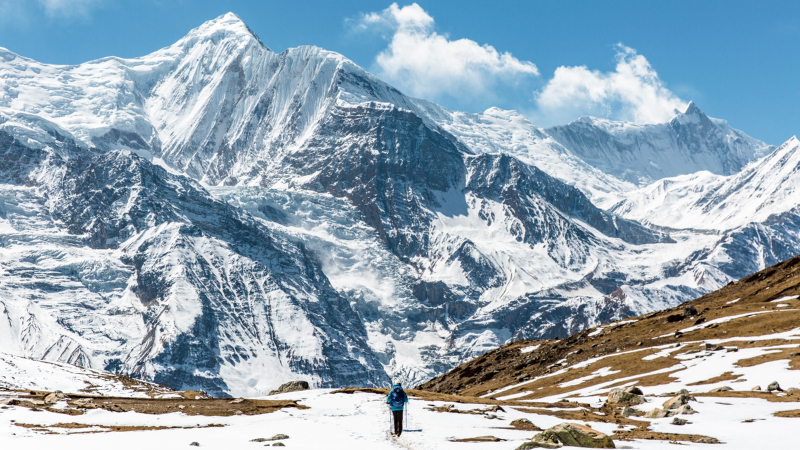
    Annapurna Circuit solitary figure stands on a rocky, snow-dusted path, gazing up at a majestic, towering snow-capped mountain range under a clear sky

    Because of the level of adventure, from a seasoned explorer to a first-time trekker, and accessibility, the Annapurna Circuit is one of the best blends of adventure for all levels of adventurers. The terrific vistas and rich and colourful culture and blend existing infrastructures for a good level of comfort, make it one potentially the best balanced and enjoyable trek for most adventure seekers to have. You have more than enough reason to see why this trek is the included invitation to provide the best overall trekking experience in Nepal.

    1. Unmatched Geographical Diversity

    Since trekkers move through so many ecosystems and climates, the Annapurna Circuit enables trekkers to be in the wilderness and experience an impressive variety of ecosystems and climates… you start trekking from either the low elevations of about 760 meters at Besisahar or Jagat, through terraced fields and dense forest to alpine meadows and snow-covered mountain passes, you continue north from the lush valley below, then trek through the dramatically different terrain of the dry, windy valleys of Upper Mustang that provide trekkers a whole new world. This is fun and beautiful and imagery that lasts a lifetime.

    In an extremely short space of time, trekkers go from one altitude (approximately 760 meters) at the one end of the Annapurna track, to heights over 5,400 meters at Thorong La Pass; therefore, through the process of climbing to this height in a relatively short amount of time tourists have the option to go through an unparalleled number of ecosystems. If trekkers go up slowly, they appreciate the gradual changes to the flora and fauna then the changes in the weather conditions. This natural diversity also makes the Annapurna Circuit a great experience for photographers, a nature lover or simply a person wants to experience different components of the Himalayan ecology.
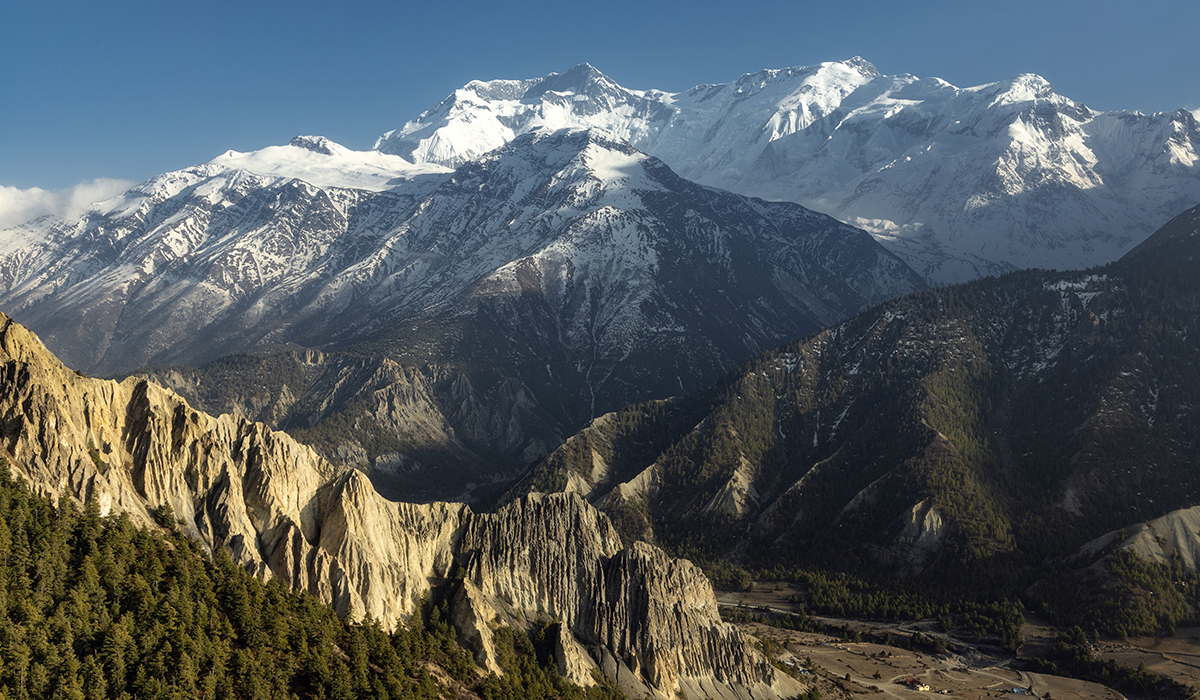
    Annapurna Himalayas seen from Brakha village near Manang
     

    Major Highlights:

    Marshyangdi River Valley: With its terraced rice fields and flowing waterfalls, the lush and vibrant valley provides an ideal warm-up for the trek.

    Pisang: Set in fragrant pine forests, Pisang is a lovely alpine village that offers stunning mountain views and an authentic Himalaya experience.

    Manang Valley: A semi-arid area, Manang provides wide-open views, variety of vegetation unusual to the region, and a great place for acclimatization.

    Thorong La High Pass (5,416m): The highest point on the circuit, where you cross into the Mustang region to continue your trek while surrounded by stunning views in all directions.

    Kali Gandaki Gorge: The deepest gorge in the world, and most dramatic, a canyon that cuts through and the mountains making for an exceptional natural environment along the trail.

    2. Amazing Himalayan Views

    The Annapurna Circuit has a number of great reasons to trekking it, one of the strongest is the consistently breathtaking views of the mountains. You’ll have line of site to some of the most incredible mountain views in the Himalayas, including Annapurna I, Dhaulagiri and Machhapuchhre (Fishtail) while on the trail. The mountains will provide a stunning backdrop that changes in color and depth with the day’s light, but especially at dawn and dusk.
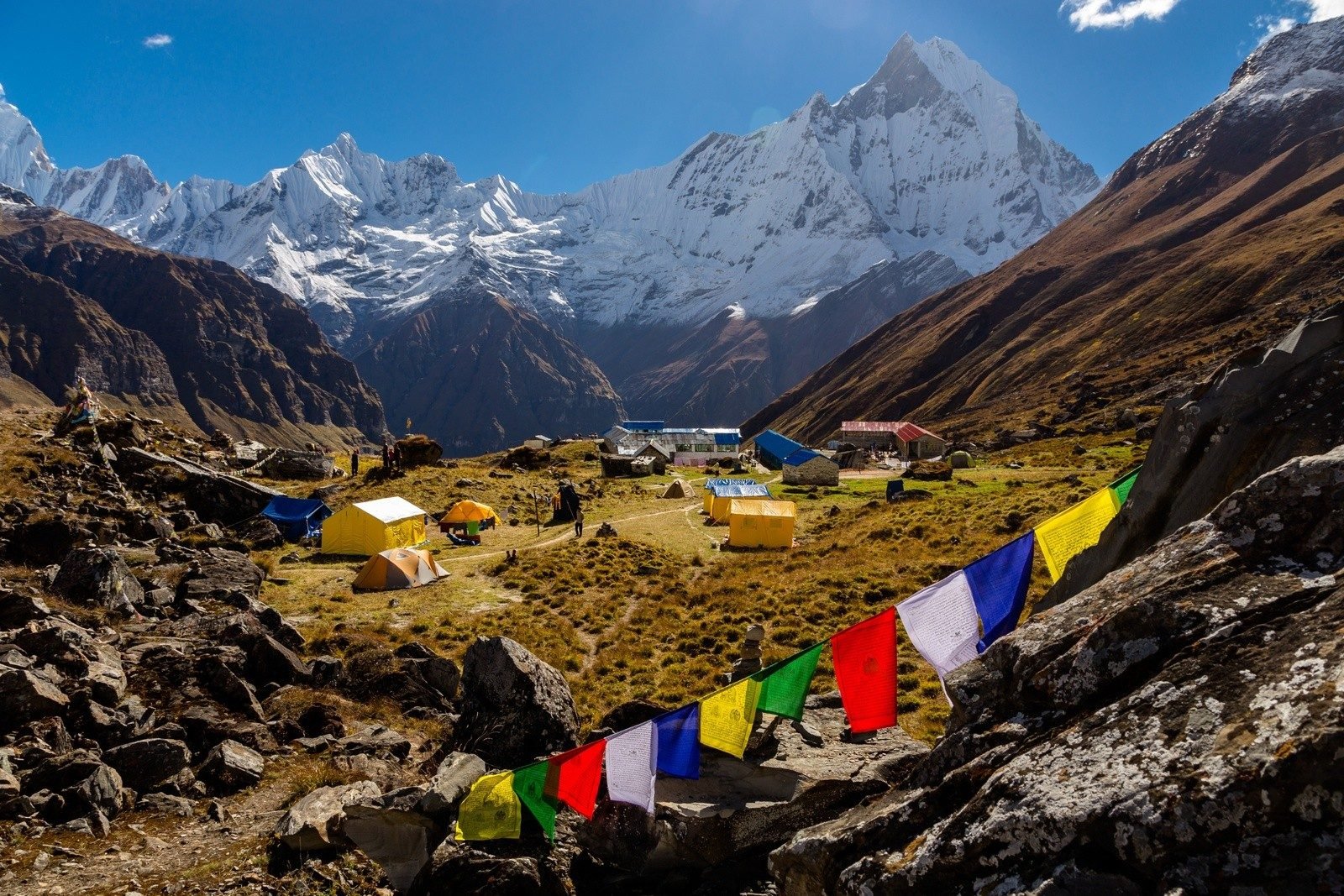
    As you ascent the trail, the sense of sheer scale expands too. When you reach Manang and the surrounding area, you will feel diminutive under the enormous snow capped peaks that create profound feelings of awe and modesty. The 360 degree views create fantastic photo opportunities and shall often stand as the emotional apex of a trek, as they will establish a personal relationship to the raw power, beauty and unrelenting might of the Himalayas.

    Annapurna Base Camp with view of Fishtail & Base Camp itself

    Major Highlights:

    Annapurna II (7,937m): When we arrived at Chame and Upper Pisang, this mountain became the centrepiece, every time we stopped to look at its size and bright beautiful ice ridges would compel us to gaze back again and again.

    Gangapurna + Glacier Dome: This is a bit of an icing smudge on the map. But out of Manang, its placement and the great framing of the glacier that fed the rivers makes it a beautiful view.

    Tilicho Peak: Mentioned because of the side trip to Tilicho Lake, it is a stunning peak that complements the emergence of being on one of the highest lakes in the world.

    Dhaulagiri (8,167m): Muktinath and Jomsom were perfect locations for Dhaulagiri. Being the seventh highest mountain in the world, you will nominate it for ruling the western landscape.

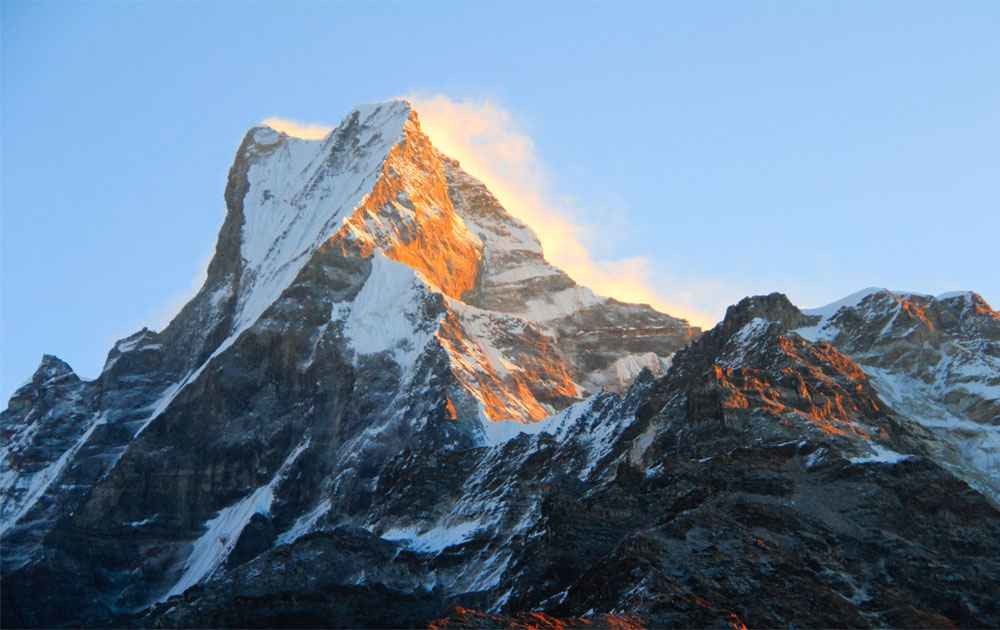
    Machhapuchhre (Fishtail Mountain): When we think about Annapurna region mystique, this is the mountain that usually comes to mind. The sharply pointed profile of this mountain is iconic and probably the first featured in someone’s postcard photo.

    3. Rich Cultural Experience

    The Annapurna Circuit is not just another nature trek; it is a way to appreciate the full extent of the Nepalese culture. Trekkers not only see breathtaking views, but they also see many different ethnic peoples of Mongolian origin, like the Gurung, Magar, Thakali, and others with Tibetan influences in Mustang. Each cultural community is separate, with their own distinct languages, practices, and building styles; this type of variation provides richness, and is a true experience to complement the trekking landscape and even contribute to travelers’ cultural education.

    Trekkers will experience a living culture not only through the breathtaking scenery, but through many things such as if they are lucky enough to engage with members of the community providing tours on “daily solar” community members effortlessly spinning prayer wheels; ancient monasteries that are there for hundreds of years with monks not changed through the decades; village celebrations that are welcoming in the New Year. You will have a chance to stay in teahouses run by local families, where you have a chance to engage with members of the community, hear their stories, experience their food and hospitality, and see the daily lives of the community. These cultural experiences give you an additional highly valued and rewarding layer to your physical trekking adventure.

    Major Highlights:

    Braga Monastery: It is an active Tibetan Buddhist monastery, 500 years old, Situated just outside of Manang a more quiet spiritual destination with murals and ritual,

    Ghyaru and Ngawal: These are legit villages with Tibetan architectural style still in tact, so you can see living traditions of local Himalayan communities.

    Muktinath Temple: It is a sacred pilgrimage site for Hindus and Buddhists famed with their natural springs and natural religious belief.

    Marpha Village: If you visit Marpha known for its apple orchards, and traditional Thakaly culture connect yourself with nature and your heritage.

    Kagbeni: It is called the gateway to Upper Mustang, and is called a medieval village with old fortifications with a nice lovely, timeless feeling.

    4. Balanced Challenge and Accessibility

    The Annapurna Circuit offers a moderate amount of challenge making it an ideal trek for almost everyone. The gradual ascent allows trekkers to naturally acclimatize, clearing the risks of altitude threats for as long as possible. Regardless of the excitement of the climb to Thorong La Pass, it may seem daunting, but can be achieved by anyone who is fit to trek and can put their own pace together. The trek can be be as challenging as it is without anything dangerous.

    The abundance and size of teahouses on the trek allows you to have warm food, a bed and break without dragging the heavy weight of camping gear. When you add in to the fact that many of the camping gear can be rented or hired, the trek is solely because of solo trekkers and guided groups. This balanced contrast between challenge and camaraderie is one of the many aspect of the trek that makes it so popular.
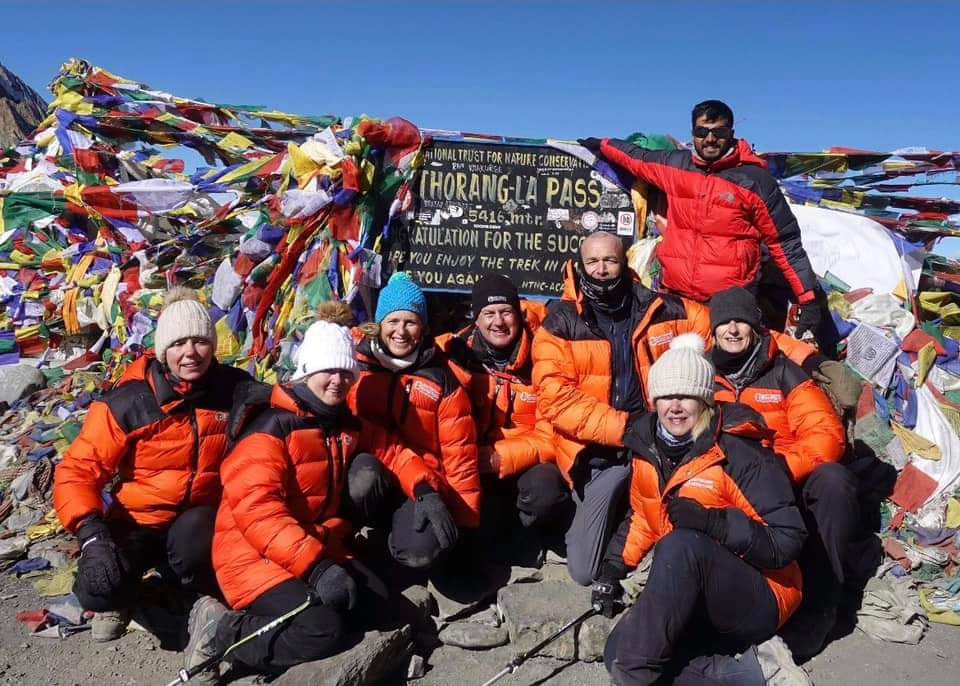
    taking a Group picture at the top of Thorang La 5416m in sunny & cold day

    Major Highlights:

    1. Thorong La Pass (5,416m): This is the highest and most epic part of the circuit, and trekkers can’t help but receive unbelievable views, with a truly unrestricted feeling of having accomplished a great achievement.

    2. Yak Kharka & Thorong Phedi: You will need these breaks. These towns are good places to not only rest before the pass, but they were also rest towns for those acclimatizing and obtaining gear & supplies for the climb/summit.

    3. Tilicho Lake Side Trip: Anonymous optional side trip to a very high elevation for trekkers to arrive at one of the highest alpine lakes in the world.

    4. Pisang to Manang: You are gaining altitude (not too much really) but the views and scenery are beyond amazing and provide a much needed acclimatization break in between a very grueling trek and before the next stressful hike.

    5. Descent from Muktinath: Back to Muktinath after crossing over the Thorong La pass then only one side trip from the town of Muktinath and again this is a steep descent but it feels sort of fun to do and you not only see some varied landscapes, you can see many historical and cultural places of importance to stop and explore.

    5. Excellent Trekking Infrastructure

    The infrastructure supporting the Annapurna Circuit is arguably the strongest aspect of this trek, and overall, it has been designed to support trekkers. Infrastructure is in place to support teahouses, guesthouses, and hotels, so there are places to tend to the needs of trekkers. As a result, trekkers now have more choice over their trip activities knowing that if a trek is remote or dirt cheap, there will always be somewhere for them to rent a room that is clean, eat a hot meal, and get a clean supply of drinking water.

    The trail infrastructure is including many modern conveniences. For example, in villages like Manang and Jomsom (to name a few), trekkers can now find solar-powered showers, Wi-Fi access, bakery’s producing fresh bread, and places to hire mountaineering gear. Trekkers can keep in touch with a cell phone signal and regain peace of mind knowing immediate evacuation services are close by (far enough to avoid compromising the ‘ad-hoc ruggedness’ of the trek). This infrastructure limits distractions and allows you to spend your focus on what your trek is really all about: the adventure.
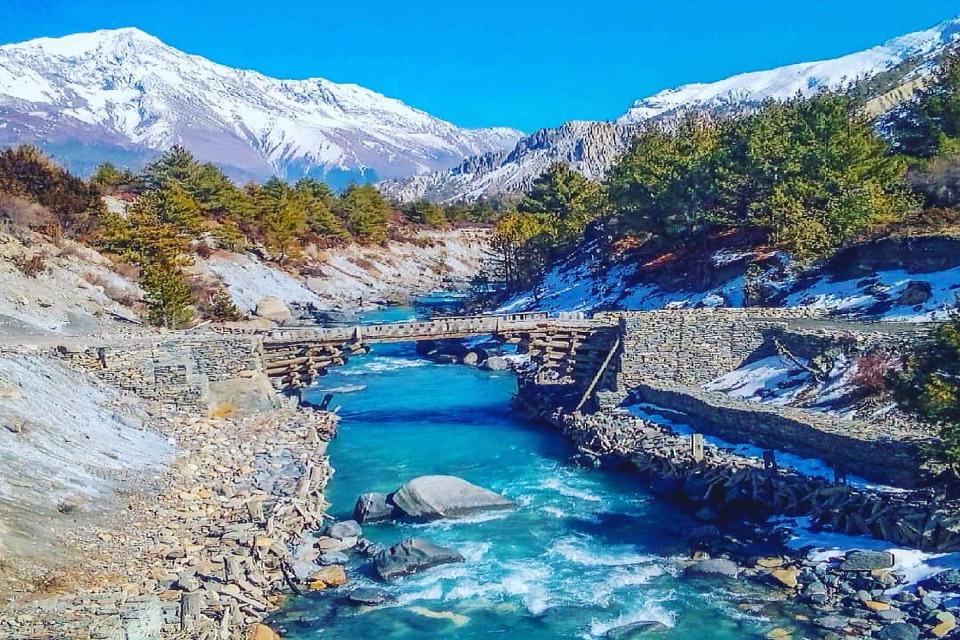
    a bridge on the way to Upper pissang from Dhukurpokhari & shantidada seen in the background
    A Bridge before upper pissang

    Major Highlights:

    Manang: A bustling (for some) trekking destination with bakeries, clinics, guesthouses and gear shops it is a nice stop to refuel and recharge.

    Jomsom: The only place in the entire region with an air port, the transport hub for the region.

    Chame: Chame has many lodges, close to natural hot springs, so a great place to hit a restorative stop early in the trek.

    Tatopani: Famous for the natural hot springs, a great place to heal your sore muscles after all the trekking.

    Thorong Phedi Base Camp Lodge: The last high altitude destination before the high point of the trek, great place to take a rest and acclimatize!

    6. Flexible Route and Side Trips

    The Annapurna Circuit accommodates trekkers’ ability to vary the trek according to the number of days they can be on trek, their fitness level, and personal interests. Whether trekkers complete the circuit, include parts of it, or avoid all parts of the circuit treks, there are a multitude of points where trekkers can beg travel or end travel on a trekking route. Alternative routes, and in some cases jeep road, can even bypass or allow trekkers to travel on an alternative route, which increases trek variety and flexibility.

    For instance, there are many side trips possible, which can eat into a trekker’s time, but may enhance their main trekking experience. A diversion to Tilicho Lake, one of the highest freshwater lakes in the world, will offer good weather trekkers some serene but dramatic alpine scenery. Ice Lake near Manang and the sunrise viewpoint at Poon Hill are popular side trips that serve to enhance the main route. The option to add these side trips into the main trek similarly adds to the appeal of the circuit for trekkers of all types from novice to advanced.

    While nothing may compare to the elite hiking on the Annapurna Circuit, here are reasons that are unique to it:

    Major Highlights:

    1. Tilicho Lake – this most stunning high-altitude lake, at 4,919 meters is definitely an exciting place for any trekker with some adventurous spirit.

    2. Ice Lake – an alpine lake accessed from Manang, it could not be more beautiful or peaceful.

    3. Poon Hill (3,210m) – the most photographed viewing area for sunrise panoramas of Annapurna & Dhaulagiri.

    4. The Upper Pisang Route – This route is not only much less travelled, but it also has far superior scenery than the main lower trail, plus solitude.

    5. Jharkot – a beautiful place that has an intact relevant culture, that is walking distance from Muktinath, a traditional town.

    7. The safest, and natural acclimatization

    In terms of safe, and natural acclimatization, the gradual increase in altitude on the Annapurna Circuit is very well thought out. There are planned rest days, and hikers who will have the chance to acclimatize to thinner air, in important villages like Manang and Yak Kharka will have very restful opportunities. In addition, for hikers on rest days, optional, side hikes that could be completed on their acclimatizing day, for hikers to acclimatize but also to have some memorable experiences.

    Due to the gradual ascent, high level of local and health services support, the circuit is within the reasonable range for a first-time high-altitude trekker to undertake. The route structure and design provide more safety, making it easier for trekkers to enjoy the stunning experience while also learning apart from the day to day trek itself.
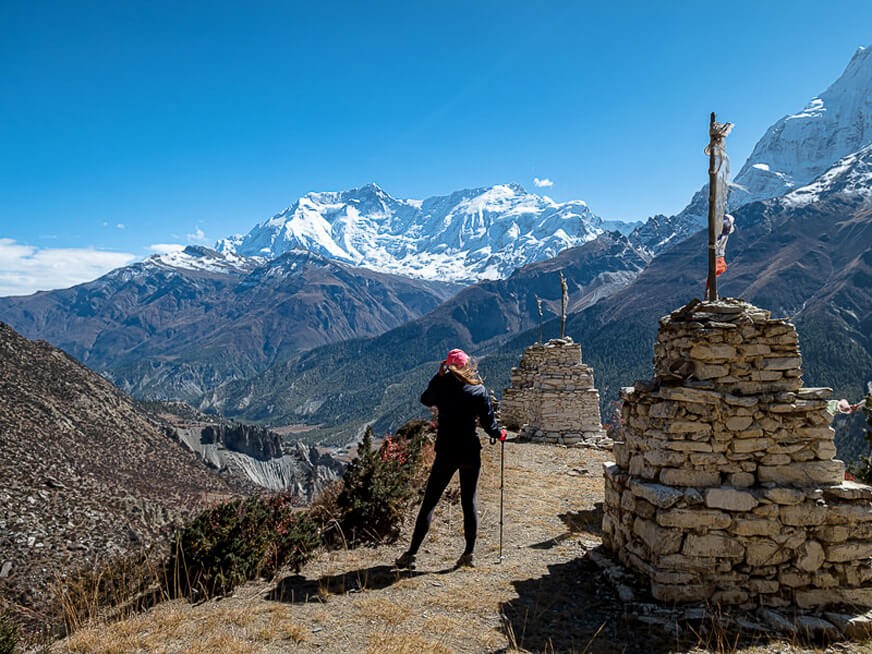
    View of Annapurna 2 & 4 seen from Nagwal village with Humde valley

    Major Highlights:

    Acclimatization day hikes in Manang: It is recommended to experience day hikes to either Ice Lake or Gangapurna Lake. You can acclimatize and enjoy views of some really stunning lakes, and be out in a unique environment.

    Yak Kharka: A quiet little village, it offers a nice, much-needed peaceful and quiet rest stop before continuing up to a higher altitude thorong phedi.

    Thorong Phedi: An important last overnight acclimatization stop before crossing the pass.

    Braga village: A slight climb with a cultural experience at the historic monastery.

    Tilicho base camp: It can be sparked as the last high-altitude stop before the trek to Tilicho lake.

    8. Year-Round Trekking Potential

    Expect best trekking seasons in spring and autumn, but with some careful planning the trail can be trekked any time of the year. The rain shadow effect protects northern regions, such as Mustang, from the monsoon, allowing trekkers into the region while much of Nepal experiences rain. Winter allows trekkers solitude, beautiful clear skies for multiple days, and a view of the mountains from a different perspective.

    Trekkers, with the right knowledge and equipment can experience the magic of the Annapurna Circuit in a multitude of ways. Trekkers should expect coldness and snow-weather preparedness in winter’s approach, but be rewarded with postcard-perfect views with hardly another person in sight. The ability to visit the Circuit is diverse enough in terms of weather conditions, which adds up to endless variety for trekkers from all walks of life, and we hope this benefits a wide array of tourists and travellers, to trek, work, and explore respectively, and at different times of the year.

    Major Highlights:

    Muktinath and Mustang Region: These dry high-altitude places can even be accessed during the monsoons.

    Lower Annapurna Villages: The good weather of winter makes these an ideal trekking option.

    Jomsom Flights: These operate as a regular service, unless the weather conditions, prohibit them. Hence, provide an effective entry to the region.

    Tatopani: A warm relaxing place to experience hot natural springs during the colder months.

    Marpha: A pleasant environment in both low and high seasons, particularly bustling during the apple harvest.

    9. Affordable, but Rewarding

    Compared to many primary international treks around the world, the Annapurna Circuit is a surprisingly affordable option. Your daily expenditure which includes, accommodation, food, and permits plus basic equipment, almost invariably falls between $25 to $50 USD. Even including guides or porters, it remains an affordable trail accessible to a wide range of adventure seekers from students and backpackers.

    For the little expense you incur, the reward is tremendous. Trekkers access some of the most extraordinary views, colourful culture and reasonable physical challenge. The affordability and valuable rewards of the trek are principal reasons for the continuous success of the trek.

    Major Highlights:

    TIMS and ACAP Permits: Inexpensive permits that allow access to protected areas and support conservation.

    Homestays: Inexpensive lodging and cultural exposure, while receiving local hospitality.

    Discounts: Discounts for permits and some lodges, for organized treks.

    Low cost food: A traditional dal bhat meal provides lots of nutrition for minimal cost, available throughout the trail.

    Teahouses: Affordable teahouses in simple rooms to lodges at various price points.

    Conclusion: The Ultimate Himalayan Experience

    The Annapurna Circuit is unrivaled when it comes to trekking in Nepal. It is the best overall trekking experience because of its stunning topography, unique culture, specific challenge, and ample infrastructure. It challenges every aspect of your heart, body, and soul like few other adventures to be taken.

    Whether you are seeking solitude, adventure, or cultural interaction the Annapurna Circuit will provide an unforgettable trek each step of the journey. The trek passes through the snowy heights of Thorong La, and the warm welcomes of mountain villages, which truly epitomizes the spirit of trekking in the Himalayas. It is easy to see why the Annapurna Circuit is still is the best all round trekking experience in Nepal. Contact us today at Happy Mountain Nepal, Facebook, Instagram, or TikTok

  • Mardi Himal Trek: Short & Sweet Trek Near Pokhara

    Mardi Himal Trek: Short & Sweet Trek Near Pokhara

    Mardi Himal Trek: Short & Sweet Trek Near Pokhara

    If you like a Himalayan trek with nice mountain scenery but not too many tough, hard, difficult days in the higher hills, then the Mardi Himal Trek is your trek! Mardi Himal Trek in Nepal’s Annapurna region is a quiet trek but a trek with independent walking on the trail, stunning views of the Annapurna Himalayas, and a feeling like one is completely alone in the hills. Since the Mardi Himal Trek is relatively new for all the trekkers, the view of this trek is stunning. The view includes Mardi Himal (5,587m), Machapuchare (Fishtail), Annapurna South, and Hiunchuli.

    mardi himal trek

    Mardi Himal ascent is a wonderful and satisfying sanctuary from Pokhara, Nepal’s lake district, and the departure of many of Nepal’s renowned treks. Mardi Himal provides an ideal experience for novice climbers as well as seasoned mountaineers who would prefer it off the beaten track and a peaceful trek.

    Why Hike to Mardi Himal?

    Mardi Himal is simple; it’s unique because it’s not easily accessible, in a virgin region of the world where there are less tourists. You won’t have to deal with so many tourists at Annapurna Base Camp or Everest Base Camp, and that equals less craziness, more real human interaction and more harmony with nature.

    Key points are:

    • Panoramic ridge-line trek with panoramic views of the surrounding peaks
    • Rhododendron forests and alpine high grassland at high altitude
    • Leisurely teahouse trek without any tourist trail crowd
    • Recommended highly as a short trek (4-6 days) from Pokhara
    • Moderate level of difficulty – ideal for first timers with good physical fitness.

    Location and Accessibility

    The trek starts a couple of hours’ drive from Pokhara; hence this is one of the most accessible treks in Nepal. Timings, all the treks start from Kande or Phedi, whichever and theya reachable within an hour by private cars or local buses.

    It is so near to you that you don’t need flying and long buses to access the trek, so the trekkers can stay near the hills for more hours than the drive.

    Itinerary for Mardi Himal Trek

    The following is a representative example of 5 trekking itinerary of the Mardi Himal Trek:

    Day 1: Pokhara – Kande – Deurali (2,100m)

    Trek Time: 4-5 hours
    Highlights: Walking in the forest, ridge view, village views

    Description

    Your trek begins with a short 1-hour, stunningly beautiful drive from Pokhara to Kande. Scenic drive through hills, villages, and paddy fields. Then from Kand (1,770m), you trek directly by ascent to the Australian Camp (2,050m), where you can pause for a couple of minutes and admire the sight of the Manaslu and Annapurna ranges in the distance in a natural, panoramic-colour landscape.

    This, trek along cobblestone roads and rhododendron forests to Pothana (1,950m), where you also receive your trekking permits. Another short trek, and you arrive in Deurali, a ridge forest village with wonderful views of Dhaulagiri, Annapurna South, and Machapuchare (Fishtail). Teahouse overnight at Deurali.

    Day 2: Deurali – Forest Camp (2600m)

    Trek Time: 6-7 hours
    Highlights: remote forest, untried terrain, less crowded track

    Description:

    This new trek is the multi-direction path of a more populated Annapurna Base Camp trekking trail and continues in this manner towards the East side of Mardi Himal, trekking through dense and quiet oak, maple, hemlock, and rhododendron forest. Hereby, by trekking, you experience a feeling of solitude of trekking in a back-in-time manner with fewer tourists and a green-dense birds’ life.

    It’s a quiet, unyielding climb of moss-shrouded trees and even forest dells. It’s cold and spooky to catch a glimpse here the further down you go! Forest Camp (or Kokar) is a few dozen teahouses in a clearing of wooded landscape. Mountain Views here are a treat, but the peacefulness, the warm flame glow of teahouse fires, and the soft forest breeze made this one-nighter an insider’s tip.Forest Camp overnight stay.

    Day 3: Low Camp to High Camp Trek (3,550m)

    Trek Time: 6-7 Hours
    Highlight: Good Machapuchare Views first time, Ridgelines, High Alpine Panorama.

    Description:

    You leave mysterious, green, dense jungle, trek to Low Camp (3,050m), where your views begin to open up and the majestic, towering mountains begin to be visible. The view of the Machapuchare (Fishtail) panorama at Low Camp is immense. And from far back of Low Camp, the trail ascends on a series of grassy ridges to High Camp; here you’re now in roughly inverted conditions when you climb: spindly alpine scrub of patches is over snaky jungle green, exposed ridges and plenty of scenery in mountains.

    High Camp is beneath Mardi Himal Viewpoint, and we can view Annapurna South, Hiunchuli, and Machapuchare with colors due to sunset from High Camp. The teahouses are not fancy at High Camp (we are up high, anyway), but good views and a decent meal make up for it. It is a good place to acclimate and stay at High Camp.

    Day 4: Mardi Himal Viewpoint (4,200m) – Siding or Low Camp: 1,850m

    Trek time: 7–8 hours
    Key Features: Sunrise at Viewpoint, breathtaking mountain faces, an awfully long, steep drop

    Explanation

    The trek highlight today. Dawn—or even earlier—your early departure gets you underway with the hope of catching sunrise at Viewpoint Mardi Himal (4,200m). The rock, your steep downhill is secure, but there are dangers on the trek, as you now find yourself below a ridge between white peaks. By the time you reach the top, you’ll be stunned by the 360° view. Mardi Himal rises rough and giant above you, and Machapuchare is impossibly near—you feel you could reach out and touch it.

    Then you have the view from the top before beginning the return ascent down to High Camp for breakfast and the arduous re-ascent upwards. Trekkers will more traditionally make the journey back to Low Camp or Siding Village on a longer, longer route through forest and small Gurung villages. Siding Village, option two, is much more cultural with homestays and time to explore these irrigated fields and emerald, green hills. Overnight at Low Camp or Siding, depending on your time and energy.

    Day 5: Siding – Lumre – Pokhara

    Trek Time: 3–4 hours walking + 2 hours transport
    Key Highlights: Village life, fields, and easy walking

    Description:

    The final day is an easy downhill walk-through farmland, rice paddies, and villages. You will pass through traditional Gurung villages, buffalo sheds, and children playing. The return walk from Lumre is straightforward and easy and the time to relax and enjoy the trek. A jeep or hired car will be waiting for the return journey from Lumre to Pokhara.

    mardi himal trek

    Trail Experience

    Terrain: Ridge walking, rock hopping, and some forest tracks
    Weather: Spring flowers from March to May, and sunny weather from September to November are perhaps the best times
    Altitude: Highest point at around 4200,m which means that your chances of suffering altitude sickness are minimal
    Accommodation: Teahouses with basic rooms, local food, and friendly service

    And with so many paths, you cannot just sit amidst locals, watch yaks grazing along the mountain ridge, and hear the wind whistling rather than the voice of the crowd.

    The Scenic Reward in Mardi Trek

     1. Stunning Close-Up Views of Machapuchare (Fishtail Mountain)

    One of the highlights of the Mardi Himal Trek is probably one of the highlights of being so close to Machapuchare, or Fishtail Mountain, as it is popularly referred to because of its 2 distinct twin summits. The unclimbed and holy 6,993-meter-high mountain towers over the landscape for most of the trek. Among Nepal’s most stunning are the vistas from High Camp and especially Mardi Viewpoint. Pinky and golden rimmed blueness mountains alive in early morning and late afternoon sun, so close to the reach they feel, a marvel to behold, and worth a Trip of a Lifetime.

    2. Walk Along a High Mountain Ridge

    And though your gorge hike crossing the river-spanned by a slope, is a counterpoint, Mardi Himal is a ridge line hiking challenge trek throughout. Your walking squad will enjoy 360-degree viewpoints – a rock gorge sloping precipitously away into something unimaginable within one horizon, and white-tipped peaks rising to jut out aggressively. The Badal Danda to High Camp ridge trek is the pearl of the entire trek. Open trail scenery offers total abandonment in the midst of panoramic mountain views. Unbroken but exhilarating experience and destination.

     3. Quiet Trails & Less Crowded Route

    Mardi Himal is a less-crowded trail for a person who seeks sheer wilderness and solitude without even a glimpse of Annapurna Base Camp or Everest trekkers. The trek was popular in recent years but poorly planned, off-the-beaten-path, and serene environments, secondary to trekking tourism. You can hike for days and never encounter another group of tourists, particularly during shoulder peak season. Physical space solitude benefit offers sufficient space for nature and culture immersion that is vibrant. The hike is an ideal challenge for hiking, photography, or even daydreaming.

    4. Rich Biodiversity in Rhododendron Forests

    Trek time is spent hiking beneath gigantic rhododendron forests, oaks, maples, and moss trees!

    While traversing through the spring season (March-April), your rainbow steps would cover tramping above blooming red, pink, and white shades of rhododendrons. Flora and fauna in the Himalaya, including the Danphe (national bird of Nepal), langurs, and other wildlife, inhabit the forests. The terrain is conducive for visualizing fairy-tale, storybook ages in the early half of the trek. It is an easy, pleasant walking climate to acclimate you.

    mardi

     5. Authentic Teahouse Experience in Mardi Trek

    Mardi Himal teahouses are Nepali in character and less “touristy” than open trails.

    They are locally constructed home lodges with basic accommodation, hot food, and warm hospitality.
    Well-cooked and well-prepared dal bhat, fried rice, and ginger tea, with a smile. In the evening, you would be invited to sit around the fire and chat with the host or other travelers. Such a lack of form is all part of the attraction, and you can receive loads of Nepali hospitality at human as well as food level, not always necessarily on the menu. It’s homey, simple, and it’s worth skipping.

    6. Mardi Trek Viewpoint (4,200m)

    Trekking elevation is how much higher it is to get to in order to try to climb up to the Mardi Himal Viewpoint, the stunning 4,200 meters. Panoramic sight of summits like Machapuchare, Annapurna South, Hiunchuli, and far, far in the distance, the Dhaulagiri summit, whose peak always seems ever so slightly just out of reach in shape, not unlike Everest. Sunrise in the Himalayas is one never to forget. Altitude achievement is within the grasp of any prospective trekker without the necessity for technical climbing equipment. The trek stands at the threshold of being a climb up, but the payoff is just too enchanting.

    7. Short, Accessible, Yet Rewarding Trek

    What Mardi Himal is actually about is that it is short, but with such great drama happening in the Himalayas. The trek is quite easily accomplished in 5 – 7 days and is best suited to short trekkers. The trek is also relatively short driving distance from Pokhara and does not entail serious acclimatizing or high-altitude gear. It contains everything from cresting alpine ridges, great mountain vistas, forest, and cultural villages. This trek provides you with everything that you’d like to achieve from a Nepalese trekker’s vacation without traveling to more demanding treks.

    8. Cultural Insight into Gurung Villages

    The downhill trek goes through typical Gurung villages like Siding, Lwan, and Landruk. Both villages will give you some idea of country village life, where houses consist of stone houses with a few tiers of farm terracing built around the house, and the surrounding villagers have a very high percentage of friendly residents. Most of the natives will have farmhouses with animals, and some even have homestays or teahouses where you can overnight. You are able to see the natives in their natural surroundings, living in harmony with nature, share some meals, and receive welcoming treatment from the natives. The return journey gives you a peaceful end to your trek with an added experience from viewing local culture.

    mardi

    Budget and Cost Breakdown of Mardi Trek

    The Mardi Himal Trek is also budget-friendly compared to other high-altitude treks. Here’s a general breakdown:

    1. Permits

    Annapurna Conservation Area Permit (ACAP) and Trekkers’ Information Management System (TIMS) card are two official government climbing permits to summit Mardi Himal. They may be reserved at the government representative (s) or at the Nepal Tourism Board in Pokhara and Kathmandu. ACAP will be USD 30. The TIMS card will be USD 20. Both can be made possible by splitting the cost between protection and conservation by keeping an eye on the trekkers during the trekking season. Both these permits, person-wise, will be USD 50 to accept whoever is arriving from outside the trek, and to welcome them to the trek.

    2. Accommodation

    You will be staying in extremely basic teahouses while on the Mardi Himal Trek. They are very basic mountain teahouses with twin beds and blankets, and shared toilet facilities. The accommodation is very basic but clean and cozy. Bed arrangements in the teahouses range from USD 5–USD 10 a night, depending on the season and altitude. You’re shelling out USD 30–40 altogether for sleeping, on a 4-day trek. Some teahouses will give you free accommodation for the night if you eat all meals there.

    3. Food and Drinks

    Trek food is nutritious, but it costs more as you ascend higher. Dal bhat (lentils and rice) and noodles will be served to you as lunch and dinner options, which will be ladled over with soups, momos (dumplings), and porridge. Breakfast would cost you USD 4-6, lunch USD 5-7, and dinner USD 6-8. Hot beverages like tea, coffee, or ginger lemon honey tea will cost you USD 1-3 per serving. Snacks or water bottles would be extra. On average, you would spend something like USD 15-25 a day, so your whole trek would cost you USD 75-125. It is cheaper and gives you most of the calories to eat the local food, such as dal bhat.

    4. Guide and Porter

    You can trek to Mardi Himal on your own; however, it is recommended that you hire a guide and/or porter to accompany you for advice, safety, and cultural exchange. A registered guide will cost you USD 25-30 per day, and a porter (who will carry up to 20kg) will cost you USD 20-25 per day. Your guide and porter for a 5-day trek will cost you USD 225-275. If you are traveling in a group, you can split the expenses. Your guide will be with you along the trail, book your lodging, and apprise you of some useful facts regarding the hills and geography, and you can let the porters carry your packs while you trek on your own.

    5. Transport

    The trek begins at Kande and ends at Lumre or Siding, either of which you can conveniently access from Pokhara. The cost will be approximately USD 15–20 by taxi or jeep ride from Kande to Pokhara and vice versa. You can take jeepneys or jeeps in a shared ride at a lower price if you don’t mind spending too much. The cost of the round trip to ride back will typically be USD 30–4,0, depending on the type of vehicle needed and how good you are at bargaining.

    6. Miscellaneous Expenses in Mardi Trek

    You will not have many expenses to incur, which together will be some money. You will spend USD 1-2 on the electricity bill for charging your devices in teahouses; Wi-Fi (if available), USD 1-3. Toilet, snack, drinks, and a village souvenir will be some extra expenses. Don’t forget to add tips to the list. Guides and porters will cost between USD 20-40 combined, depending on the service and the number of groups. Another USD 30-50 odds and ends will come close to what is a reasonable expense to swallow, appalling but inevitable cost.

    Total Estimated Cost

    The total cost of the Mardi Himal Trek is going to be quite different depending on whether (or not) you will be in a position to cope with a porter and a guide. And if you are hanging by your nails at being entirely independent, then your cost is going to be in the ballpark of USD 250-300, and that’s for accommodation, dining, permits, and transportation. And with a guide and a porter, that’s at most USD 500-600. But Mardi Himal is still a shoestring trek, as it is, with some excellent mountain scenery interspersed with some reality-to-life cultural interaction.

    What to Keep in Mind for a Mardi Trek

    Keep your items light-:

    • Layering, rain shells, and sunscreen are essentials.
    • Pack a water filter or purification tablets.
    • Don’t hurry on a brief hike to get used to and enjoy the panorama.
    • Respect the local culture, Ask before you click, and follow teahouse etiquette.
    • Using a guide will be most effective if out of season or backpacking alone.

    Who Should Do Mardi Trek?

    • Freshers seeking a simple walk in the Himalayas
    • Busy tourists who lack the time for that complete Himalayan experience
    •  Families or groups with a regular level of fitness
    • Trekkers seeking an off-the-beaten-tourist-road, remote trek

    Conclusion

    Mardi Himal Trek bypasses Everest or Annapurna Base Camp elevation but why do you have to do it all. Enjoy peaceful Himalayan trekking in limited time. Scenic landscape, bypassed trails, and popularity of culture – Mardi Hills is certainly among Nepal’s nice short treks.

    So if you are in Pokhara yearning for the Himalaya but don’t have a fortnight to spare, this trek will do more than adequately. It’s short, it is beautiful, and it will be in your memory forever. Contact us today at Happy Mountain Nepal, Facebook, Instagram, or TikTok. 

  • The History of Nepal’s Trekking: How It All Began

    The History of Nepal’s Trekking: How It All Began

    The History of Nepal’s Trekking: How It All Began

    Introduction Nepal’s Trekking.

    Nepal’s, the home of the world’s highest peaks, has been a haven for adventurers for centuries. From Modern Day Trekking Mania to Ancient Trade Routes, the Nepalese trails have traveled a long way to be trekkers’ heaven. But where and how did it all start? Trekking in Nepa.

    In this blog, we will discuss how trekking started in Nepal and evolved from the ancient methods of traversing over mountains to modern-day trekking.

    trekking

    The Origin of the Word “Trek”.

    The term “trek” has  its derived position in the vocabulary from Boar language which means, tiresome and difficult travel as per spoken by Dutch colonists of South Africa. It was adopted from the Dutch term “trekken” to pull or haul. The very essence of trekking  aligns in the lap of the Nepalese Himalayas, where every traveler has a challenge to encounter to have the drizzle of the Himalayan almighty.

    Ancient Trails and Trade Routes.

    Even two or three generations back, decades back, long before trekking had ever been thought of as a sport, they were major trade routes in Nepal. Himalaya treks linked Tibet, India, and Nepal through the trade of salt, gold, and clothing. For centuries local traders and caravan travelers trekked the dangerous routes, cutting trails that would later become the trekking trails we use today, walked by thousands of trekkers.

    Along these very same highways, the pilgrims traveled, to such sacred shrines as Muktinath, Gosainkuda and the Everest monasteries. It wasn’t tourism initially, however, but religion, commerce, and survival, mankind’s source of travel in Nepal’s range.

    The Opening of Nepal’s Trekking to the World (1949 – 1950s)

    Nepal’s frontier opened only in 1949 when trekking and climbing were feasible. In eight years‘ time they ascended ten of the 14 peaks above 8,000 meters in elevation. First to be climbed in 1950 was Annapurna (8,091m), followed by Everest (8,848m) and Nanga Parbat (8,125m) in 1953.
    All 14 peaks above 8,000 meters were ascended by 1964, the final one being Shisha Pangma (8,046m) climbed by Chinese.These ascents were rapidly eclipsed by Nepal’s climbing history. First foreigner known to trek in Nepal was British explorer Bill Tilman, whose permission had been secured by King himself in 1949. He was trekking in Helambu and Everest, Kali Gandaki districts. 
    Maurice Herzog was another of the colossal handful of early travelers and his 1950 ascent of Annapurna in France. Trekking gradually came into vogue with initial efforts at the foot of Mount Everest, an American expedition in 1950, and the British expedition in 1951.

    The Birth of Modern Trekking (1960s – 1970s)

    Colonel Jimmy Roberts is regarded by most as the father of trekking in Nepal as a planned activity. He was a retired British Gurkha officer who was a Military Attaché to the British Embassy in Kathmandu. He was already trekking the Nepalese hills for years. After he introduced Tilman on his first trek, he believed that trekking could turn tourism into a money earner for the adventure seekers.

    Roberts established Mountain Travel, Nepal’s first trekking company, in 1964, and commercial trekking came into being. His dream of tented treks with Sherpas and cooks brought the foreigner to the Nepalese mountains. His first guests, a group of American women whom he described as “a sporting trio of enthusiasts,” arrived in early spring 1965.

    Roberts later worked Mountain Travel with Mike Cheney and Dawa Norbu Sherpa. United States’ Barry Bishop and Allen Steck and Warwick Deacock of “Ausventure” in Australia were his first foreign business partners. They made sure to have individuals from their own country on their trips all the time, and they established Mountain Travel and encouraged other people to set up their own adventure and trekking company.

    And that was the era when treks like the Annapurna Circuit and the Everest Base Camp trekking trail were the most sought after. And then came that hippie culture, free-spirited travelers in quest of spirituality flocking to Nepal’s hilly terrain.

    The Trekking Boom Nepal’s Trekking. (1980s – 2000s)

    Trekking in Nepal had become a commercial enterprise by the 1980s. There were tea houses and lodges on established trails as well, and trekking was made convenient. The Nepalese government utilized national park legislation to conserve the environment as well as control tourism. In 1986, there was established the Annapurna Conservation Area, a giant step towards sustainable trekking.

    By the 1990s and early 2000s, trekkermen tourism flourished in Nepal. Stimulated by road infrastructure investment, improved road links and worldwide demand for adventure tourism. Trails among grew highly popular with trekking visitors who sought challenge through varied terrain and cultural experience were scarce around Langtang Valley, around Manaslu and Upper Mustang.

    Modern Nepal’s Trekking and Sustainable Tourism.

    (2010s – Present)

    Nepal trekking is still a relaxed exercise for contemporary travelers with trekkers from all over the world showing up to take a stroll. Over-tourism, deforestation & climate change has led to the government & residents to implement sustainable tourism.

    Eco-lodges, proper waste disposal and walking on the busiest trails reduce trekkers’ impact on this sensitive region in Nepal. Trekking has also been made easier for more people by glamping and luxury trekking.

    And technology innovation — GPS, mobile phone coverage and an internet system for geology-based trek permits — has made it convenient and safer to trek. Nepal trekking experience is the same in exchange of all, an experience one never forgets in a life time one, trekking in the midst of the natural beauty and rich culture of Nepal.

    Benefits of Nepal’s Trekking.

    From the traveler’s and from the the Nepalese economy and citizens’ point of view, there’s a long list of advantages of trekking in Nepal:

    • Health and Wellness – Trek is an excellent way to exercise, improving cardiovascular health, stamina and mental well-being.
    • Cultural Exchange – Trekkers get a chance to enjoy Nepal’s multicultural cultures and also learn about Nepali and also local citizens and spend some time living in the Himalaya regarding acclimatization.
    • Biodiversity trekking – The trekkers are usually able to catch glimpses of a whole lot of plants and animals in an area seemingly covered with Rhododendron and red pandas and snow leopards patrolling the edgescapes.
    • Big Adventure and self-expansion types — The demanding climate tested adventurers to test their mettle, toughening their characters more resourceful and self-conscious.

    trekking

    Economic Impact of Nepal’s Trekking.

    Trekkers earn millions of dollars and local employment in:

    • Employment – Dozens of people are finding work in the trekking business like porters, guides, hoteliers (lodge owners), and travel agents (tour operators).
    • Income to Local Communities – Trekkers are respectful guests to the locals’ economy (tea houses, transport operators, and handicraft sellers).
    • Foreign Exchange Receipts – Treks are accountable for attracting numerous foreign travelers to Nepal which are the source of foreign exchange in the form of hard currency to the Nepalese economy.
    • Better Infrastructure – Due to increased tourism new roads, telecom cables, & health centres have reached rural parts of Nepal.

    We prefer sustainable tourism policy and responsible practice in the perspective of keeping Nepalese nature and culture intact for future generations along with preferable living since there is economically but also there is economic gain.

    Conclusion in Nepal trekking.

    After all, Nepal’s trails have had time to develop, too, from the ancient trade routes to more recent successful treks. Trekking is a lifestyle in Nepal, and Nepal’s geography has history, nature and adventure all jumbled together. Trekking is easier on the body than climbing and involves something more than the mere thrill of adventure and because of this trekkers are superior to climbers in Nepal nowadays.

    Sir Edmund Hillary has quoted, “Nepal is the only country in the world, which is, in my view, half-way between the world trekking oases and besides it is indeed an awe-inspiring trekking country in the world.” From the merchant’s cart of old to the modern-day conqueror, trekking in Nepal is an indeed a distinctive experience. Contact us today at Happy Mountain Nepal, Facebook, Instagram, or TikTok. 

    FAQs

    1. What is the history of trekking ?

    Trekking was incorporated as a business enterprise in the 1960s when the very first Nepali trekking business, Mountain Travel, was initiated by Colonel Jimmy Roberts. However, even in the early centuries, there existed pilgrims, merchants, and tourists who trekked over the trails of Nepal.

    2. Who was the earliest foreigner to trek Nepal?

    It was in 1949 that the British climber Bill Tilman first foreigner to enter Nepal. He trekked to places like Helambu and Everest after obtaining permission from the king of Nepal.

    3. Why the significance of trade routes in trekking history?

    The traditional trade routes joined Nepal to India and Tibet, and salt, gold and cloth were exchange on the routes. The same routes were subsequently used by present day trekkers as trekking trails.

    4. What was the earliest company in Nepal trekking?

    Mountain Travel was the earliest trek company in Nepal, founded by Colonel Jimmy Roberts in 1964. It was the earliest to market porters, Sherpas, and tented camping as led treks.

    5. How did trek become popular in Nepal?

    The conquest of Everest and other Himalayas in 1953 put the rest of the world on Nepal’s trail. The 1960s counterculture and adventure travel in the 1980s boosted trekking tourism.

    6. What are the most popular trekking trails of Nepal?

    Most popular trails are: Everest Base Camp Trek, Annapurna Circuit, Langtang Valley Trek, Manaslu Circuit and Upper Mustang Trek.

    7. How has trekking affected Nepal’s economy?

    Trekking is also one of the nation’s biggest earners, with guide, porter, and lodge work all tracking directly back to it keeping Nepal’s tourism economy going.

    8. What are the threats in Nepalese trek?

    Some of the likely threats to Nepal’s trekk routes through environmental degradation are climate change, over-tourism, deforestation, litter and trash pollution. Among them is the Annapurna Conservation Area Project (ACAP) that prevents them from doing so.

    9. How has technology revolutionized in Nepal trekking?

    This is the way technology has revolutionized Nepal trek:

    GPS, mobile network connectivity, and internet-based permit systems enable the new trek.

    10. The future of Nepal trekking: What next?

    Planning of green tourism, ecotourism lodging, and policy-based trek to conserve Nepal’s natural and cultural resources.