Tag: bhaitika

  • Mha Puja and Bhaitika Celebration in Nepal

    Mha Puja and Bhaitika Celebration in Nepal

    My Mha Puja and Bhaitika Celebration in Nepal as an International Traveller

    When I first traveled to Nepal, I had no idea how beautiful a festival could be. I knew Tihar was the festival of lights, but I didn’t quite understand that it was. Until I was immersed and enjoying the event. Entering this amazing festival truly felt like a dream was brought to life filled with warmth, colors, and love. It was so much more than lighting lamps; it was lighting the soul – feeling so honored to remember Mha Puja and Bhaitika is something I will never forget.
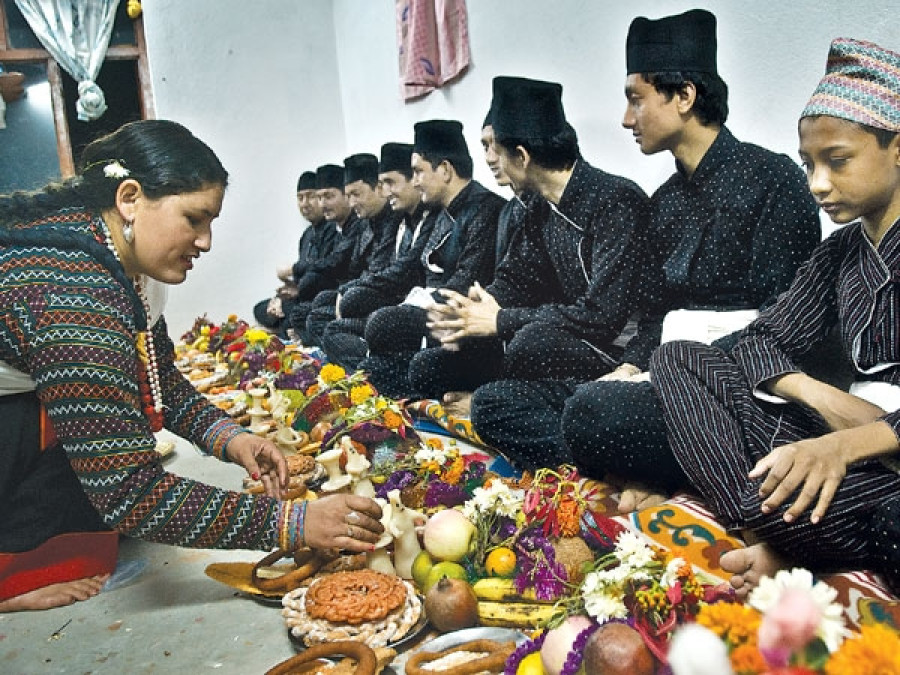
    Mha puja  ceremony where several people, some in traditional clothing, are sitting on the floor around a large arrangement of food offerings and other items. The person in the foreground is reaching for something in the arrangement.

    Celebration That Feels Like Home

    Tihar is spread over five wonderful days in Nepal; with each day having its purpose and each day celebrated praying an animal or a deity. You can literally feel the joy and celebration from the moment. You step onto the street, with each house glowing with thousands of tiny lights and a marigold garland. Everyone smiled to the beat of traditional music.

    I remember strolling through a small lane in Patan, where children were coloring lovely mandalas on the road. Throughout the indoor community environment, the easygoing atmosphere of incense blended in with the scent of sel roti cooking. They were very hospitable and invited me to join their festival. At that point I felt no loneliness, no outsider.  

    Of the 5 days of Tihar, two of the experiences were distinctly Nepalese experiences: Mha Puja, which is an honoring of yourself/soul; and Bhaitika, which is honoring the love between your brother and sister.  

    Mha Puja

    On the fourth day of Tihar, I was welcomed to the home of a Newar family in Patan. To participate in Mha Puja (Mha Puja), and I did not know what to expect. However, as I walked into the courtyard of the home, I did feel a little more comfortable. The ground of the courtyard was beautifully covered with rice mandalas of each family member representing their spirit, and with small oil lamps glowing. It was traditional, and shining so much!

    I was gently asked to sit in front of my own mandala. The family explained that Mha means “self,” and Puja meaning “to worship.” It was a ritual of passage of my own honoring. Something I never had before; a reminder to honor the divine that lies within each of us. I felt tears sting my eyes as the elder woman of the family placed a small tika upon my forehead. And lit the little lamp in front of my mandala.
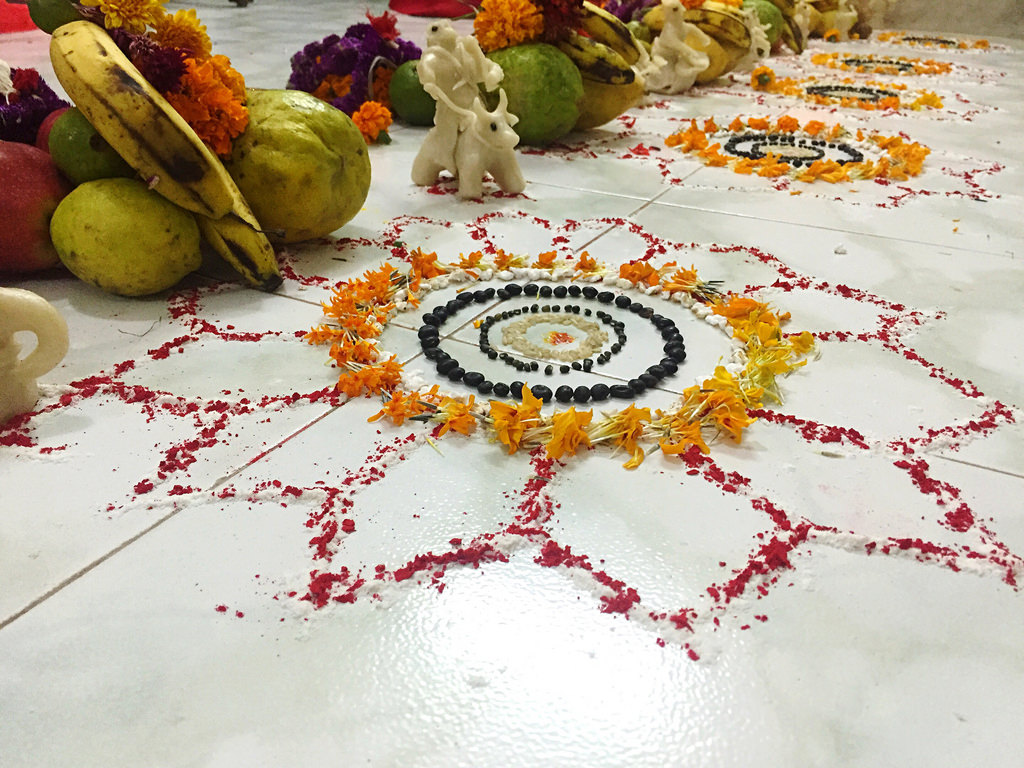
    a picture of a rangoli or mandala on a white floor. The decoration is made with red powder, yellow marigold flowers, and black seeds. In the background of the picture on the screen, there are fruits, including guavas and bananas, and more marigold flowers.

    I intended to tackle on something that was incredibly simple, but so meaningful. While the world teaches us to love others, what I experienced was to love oneself. For the first time in years, I felt I made a connection with myself. That flickering light was not only in front of me, but also in me. That evening while eating food, conversing and laughing with the family. I started to see that spirituality in Nepal was about so much more than that you gods and temples, and puja. It was about the human spirit and the still peace.

    Bhaitika

    The fifth day of Tihar is called Bhaitika, which started the next morning. I had heard Bhaitika was the most emotional day of the festival and indeed it was. A friend I met during my time in Nepal, asked me if I wanted to go with her to do the ceremony with her brother who lives in Bhaktapur. When I got there, her house was beautiful with flowers and lights and decorations. In the center of the room was a mandap with many offerings of foods, fruits, sweets and garlands.

    Once her brother sat down in front of her and the entire room went silent. She placed a colorful tika on his forehead with great love in her eyes. Each color of the tika represented blessings and protection, receiving garlands, food and presents, special love and there was red, yellow, orange, green, blue, violet and white in the tika. 
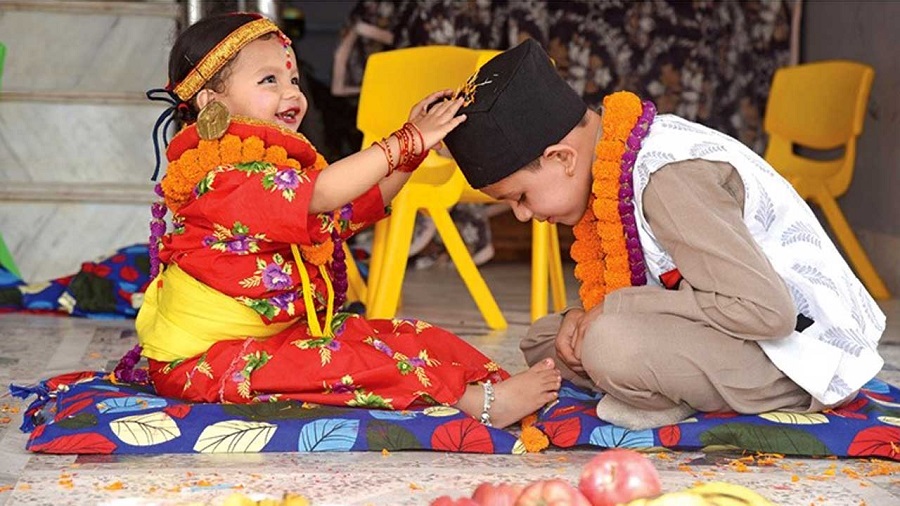
    young boy and girl in traditional celebrating Bhaitika.Nepali attire, both wearing marigold garlands. The girl, in a red and orange dress, is smiling and has her hand on the boy's head. The boy is wearing a white vest, brown pants, and a black Dhaka Topi.

    In the exact moment she was also saying a prayer for her brother’s long life. After that she brought her brother’s hands together, made a small prayer bow, placed his thoughts on her feet, and presented her gifts. The depth and connection felt so genuine and clear, I felt sad and tearful inside, even though I do not belong to their family in blood. 

    When the sister noticed me sitting quietly watching, she made eye contact with me and said, “This is for the love of siblings today. But it is also about the things that are special and people in our life.” I remembered what she said, because at that moment I remembered that family does not have to mean biological. Sometimes family is reserved for those hearts, that choose to care and love one another.

    Eventually, they placed a tika on my forehead. They requested me to sit with them; they presented to me fruits and sweets, and proclaimed, “Now you are part of us.” I beamed with joy and felt tears welling in my eyes. As,i had arrived in Nepal as a visitor, but that day I was no longer a tourist. I belonged. 

    Tihar: A Festivity of Learning to be Grateful

    Through Mha Puja and Bhaitika I began to understand what Tihar was about, the celebration of each and every relationship. It begins with Kaag Tihar, a day to feed crows, the messengers of the gods. Then it is Kukur Tihar, dedicated to honoring and worshiping dogs for their loyalty to humans and love. Then there is Gai Tihar, recognizing cows and their role in sustaining life. After Gai Tihar is Mha Puja, a day to worship oneself; then Bhaitika, love from brother to sister. 

    Every day teaches you. It teaches you how to be grateful for each moment, how to honor the life of every living beings and notice divinity all around you. It is not merely a religious festival from an ancient culture; it is how you should live. 

    As I looked around the city that night that sparkled with a thousand lamps, I understood how beautifully the Nepali embrace light: not merely as light but as enlightement. Each diya whispered that even in darkness there are always things to be grateful for.

    What to Experience in Tihar in Nepal

    If you happen to be in Nepal during Tihar, this is an experience not to miss! It occurs anywhere from late October to early November and there is so much to see and do. 
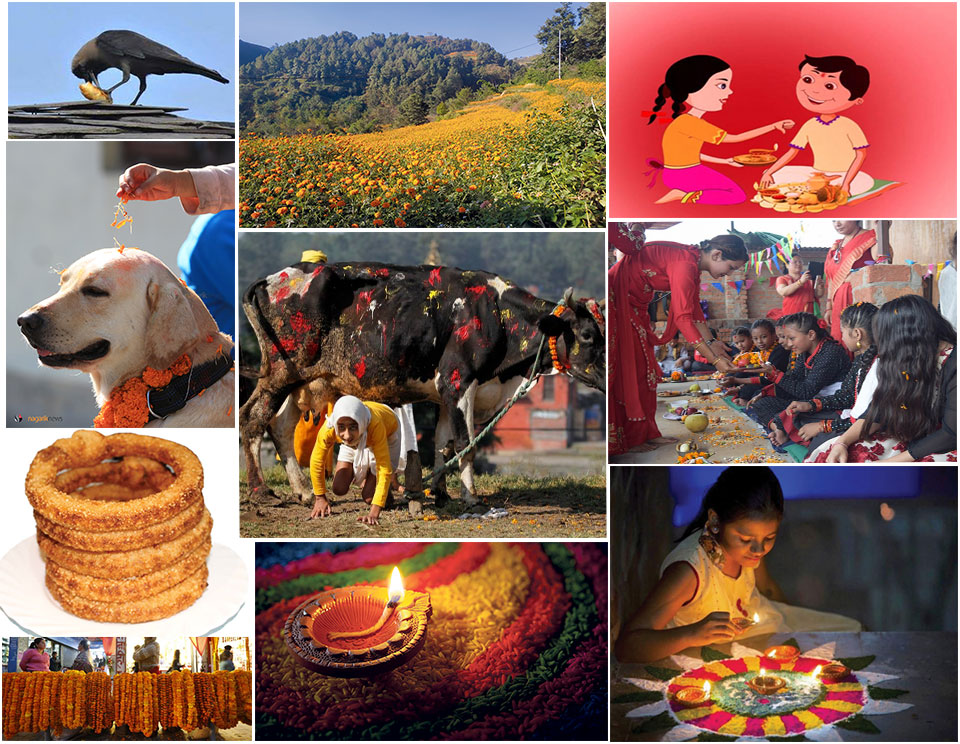
    This scene is part of the Tihar festival, which is celebrated in Nepal. Tihar is a five-day festival of lights, where different days are dedicated to honoring various animals. The third day, known as Gai Tihar, is dedicated to the worship of cows, which are considered sacred in Hinduism and are seen as a symbol of the goddess of wealth, Lakshmi.

    1. Access Family Time 

    Nepali families are incredibly hospitable! If you find the opportunity to be a guest in a family’s home please do. This will be your favorite part of your trip. 

    2. Explore Old Heritage Towns

    Patan, Bhaktapur and Kathmandu are alive and personified living museums; lights in every courtyard, flowers everywhere and music in the streets. 

    3. Bolster Your Traditional Food Experiences 

    Tihar is also that time when sel roti, anarsa, laddu and sweets made for you by mom or grandma literally also symbolize love and sharing.

    4. Respect the Practices

     Please always take off your shoes before entering the holy space, and always walk quietly while making pictures. Even something small shows such respect does wonders for expressing deep faith.

    5. Bring Your Own Diya

     Even if you are not at home, just lighting a little lamp will make you feel apart of something eternal. It is not just a flame; it is a wishing that floats and speaks to the universe.  

    A Journey That Changed Me For Life

     As I sat by my window reflecting on my time in Nepal coming to an end. Watching the last of the Tihar lights glimmer in the late evening sky. I was surrounded by the laughter, incense, and the memories of the tika on my forehead.

    Mha Puja taught me that self-love is sacred and Bhaitika taught me while love knows no bounds. Together they reminded me the holidays are not about tradition but a feeling, a connection to the way light can come into our lives through every person we meet.

    I came to Nepal to see its beauty, but I left feeling it in my heart. The kindness of the people, the depth of their culture, and the warmth of their traditions changed the way I see the world.Tihar is not only a festival that lights the streets of Nepal. It is a festival that lights the soul.

     

  • Visiting Nepal During Tihar: What Can I Expect

    Visiting Nepal During Tihar: What Can I Expect

    Visiting Nepal During Tihar: What Can I Expect

    As a traveler, you will surely have the opportunity to take part in one of the greatest celebrations. And compassionate highlights of your experience in Nepal, Tihar (the Festival of Lights). Tihar is a five-day celebration that occurs sometime in late October to early November, often coinciding with a full moon. Tihar is the second largest celebration in Nepal, following Dashain, and is essentially a national holiday. The feeling of Tihar is one of joy and excitement. 

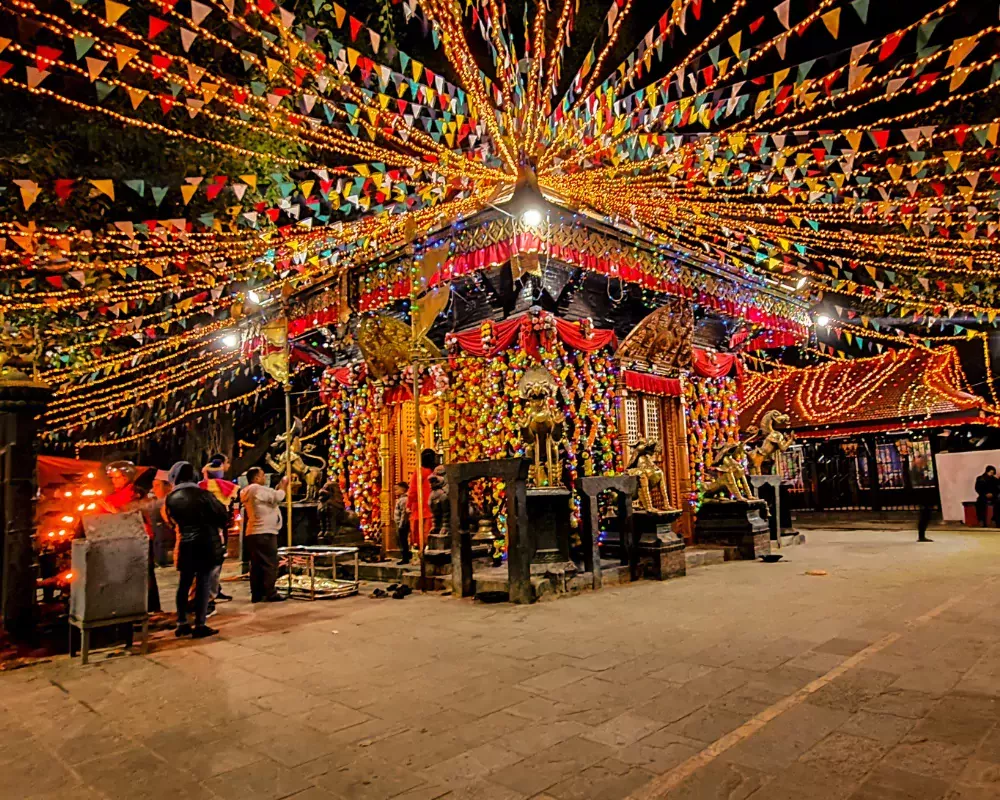
    Maitidevi temple decorated with light and flower during tihar

    Participants during Tihar will celebrate the gods and goddesses, animals, and the relationship between brothers and sisters. The streets, temples, and homes will be aglow and bright with oil lamps and candles, but it will also be brighten in bright colors, too. Altogether, it will change the visual landscape of the towns and villages, and during Tihar, the towns and villages will be fascinating displays of joy and bright lights.

    What is the Meaning and Spirit of Tihar

    Tihar is also known as Deepawali in Nepal, is the celebration of the victory of light conquering darkness, and knowledge overcomes ignorance. It is a time for people to thank the Lord for the happiness of life, to live sustainably, and to reflect on the relationships that bring meaning through life. Tihar is different from most festivals because it ties spirituality to our daily lives. Tihar also conveys a sense of regard for all living beings, domesticated animals, and prioritizes family relationships. The festival is warm and emotional. During Tihar, you will be shown the generous, loving spirit of the Nepalese people. Travelers who happen to be connecting Nepal during Tihar will not be observers but part of a nation-wide festival focused on love and light. 

    The Five Days of Celebration 

    Tihar is celebrated for 5 days, each with its own object, purpose, traditions, and moments of enthusiasm.

    Day 1: Kaag Tihar (Day for Worshipping Crows )

    Kaag Tihar is the first day of Tihar, the day of crows. In Hindu belief, crows are the symbol of Yama, the god of death, and on this day rice, treats, and grains are set outside or on top of roofs for crows to find in their honour. Many will view this as yet another gesture of bringing to life positive energy instead of negative energy. In the morning, crows caw in the air, and small food plates are laid out in each direction. It is within this quiet richness that visitors begin to explore, really getting familiarized with the deep connection between Nepali culture and nature.

    Day 2: Kukur Tihar (Worship of the Dog)

    Day two, Kukur Tihar, is possibly one of the most gracious festivals that anybody could participate in. This is a day of celebrating dogs – the most loyal and true companionship one can have. On this day of appreciation, all dogs, from community city dogs to love family dogs, are celebrate. Similarly, in that they receive bright flower garlands around their neck, tika from the red powder upon their heads, to food from their owners.

    Is there anything more simply sweet than seeing dogs walking around with garlands hanging from their neck, wagging their tails? For many travelers, this is the favorite day of the festival, out of kindness and compassion, and respect for all life.

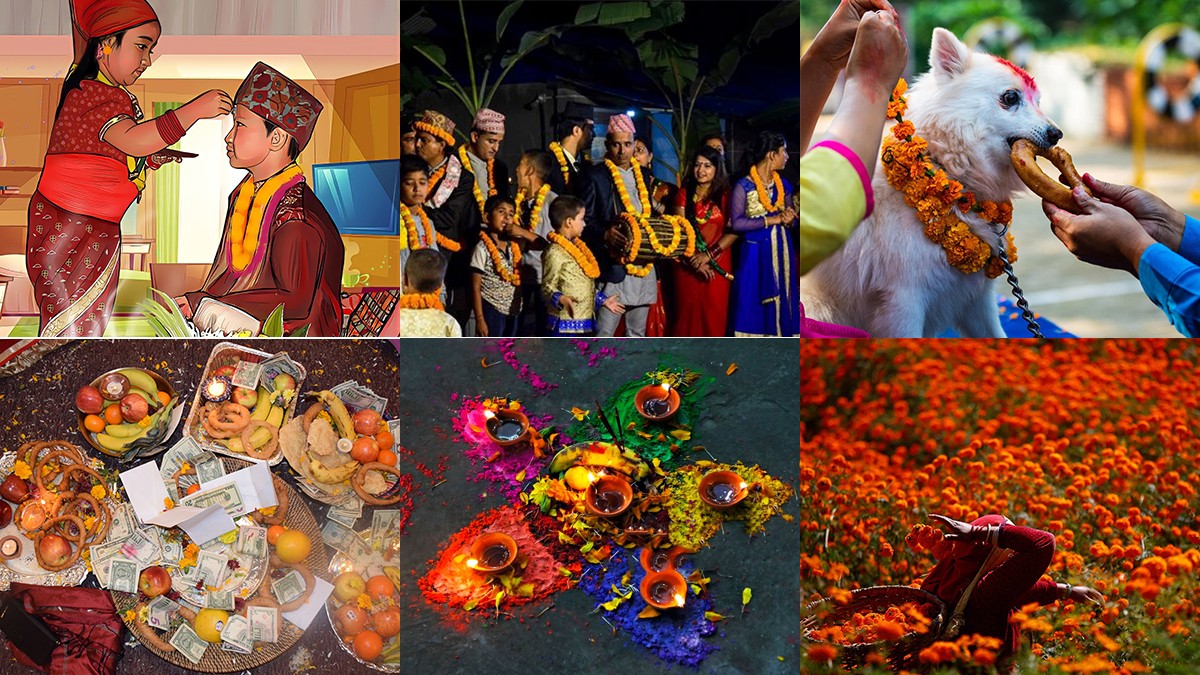
    The image is a collage of six photos depicting various aspects of a Hindu festival, likely Tihar, celebrated in Nepal. It includes suster putting tika to her brother, playing deusibhaiol, rangoli and flowers

    Day Three: Gai Tihar and Laxmi Puja

    The third day is definitely the biggest celebration. In the morning, cows are worship because they represent pure animals and indicate wealth. During this time of year, cows are commonly fed grass, fruits, or flowers with the intention of wishing/prospering the cows or anybody nearby. The evening is when this celebration begins with the sparkling festival of goddess Laxmi, goddess of wealth, good fortune, and abundance. Every household will show up with their houses cleaned with all lights, marigold garlands, and rangoli creations to signify the wealth of goddess Laxmi for this festival.

    Seeing the whole neighborhood with outside houses adorned with rows of glowing diyas and twinkling lights is stellar. You can hear clusters of children and youths who will wink be singing traditional Deusi-Bhailo songs in exchange for some sweets and maybe a penny or two! 

    Day 4: Govardhan Puja and Mha Puja 

    The fourth day can hold different meanings across Nepali culture. In many Hindu households, families will have worship oxen and observe Govardhan Puja to honor nature and agriculture. While the day can also be known as Mha Puja in the Newar community as a sacre ritual for honoring and purifying the self.

    The Newar culture is known for creating exquisite mandalas on the ground using powders and flowers. These mandalas are often equipped with offerings, done to instill the spirits of self-respect and balance within the creator. Tourists who find themselves in Kathmandu, especially in Bhaktapur or Patan, will see these quite interesting Newar traditions, not the least of which involves an elaborate meal that memorializes balance and renewal.

    Day 5 – Bhai Tika (Prayer for Brother)

    The fifth and final day of Tihar is Bhai Tika, the most sentimental day because it’s just heartwarming. Sisters will put a seven-colored tika on their brother’s forehead, and they will give their brothers candy (sweets), dried fruit, and nuts. Sisters will be praying for their brother in terms of wealth, success, and longevity. Brothers will also engage and get gifts for their sisters. Brothers will also start to prepare to protect their sister as they travel. Bhai Tika is a day for families in not only Kathmandu’s valley but across Nepal to emphasize the fraternity ties of family. Family is abundant, and love and laughter fill the homes.

    For tourists who are staying with a family, this is a great day to see real Nepali love and the importance of relationships in daily life.

    The Magical Atmosphere During Tihar

    Tihar creates a glorious ambience in Nepal. Once evening falls, the brilliant lights of thousands of oil lamps shine brightly from windows, yard corners, and temple doors. Many streets are decorate with familiar fairy lights and paper lanterns hanging down, while the evening air has a fragrance of incense and music. Children full of festive spirit will be going from house to house singing the Deusi and Bhailo songs. Early evenings in the narrow way of Kathmandu, Patan, or Bhaktapur, it begins to feel like a Fairy Tale. In Pokhara, the lights mirrored in Phewa Lake are truly out of this world. Warmth and kindness can feel benevolent. Many times, visitors take part in the singing, dancing, and merriment, and make memories for a lifetime at the same time

    Traditional Foods for Tihar

    No formal celebration in Nepal would be without traditional foods, and Tihar is a very special occasion for that type of homemade food. The most famous food, a ring-shaped, sweet, crispy bread staple made of rice flour, called Sel Roti. 

    Some other well-known kinds of sweets are anarasa, barfi, and laddu, made of rice flour, coconut, and ghee. Families prepare special meals, fruits, and snacks to offer their guests, gods, and animals. Traveling, during Tihar, to either homes or homestays gives travelers a reason to enjoy and engage in sharing traditional tastes and practices that symbolize community and gratitude.

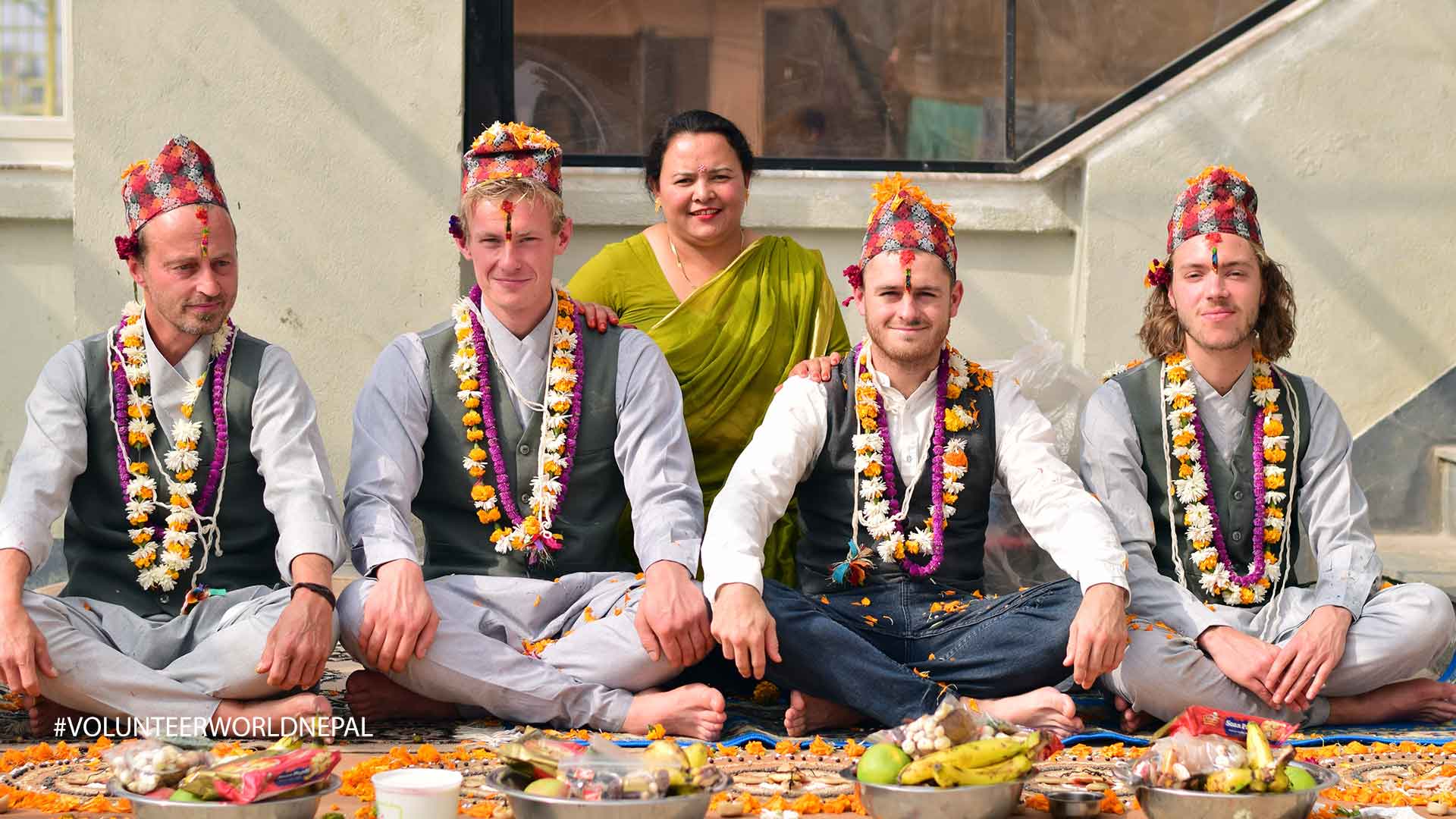
    An image of five people, four men and one woman, sitting on the floor during what appears to be a religious ceremony. They are all wearing garlands of flowers and traditional hats. The woman is wearing a green sari during bhaitika in Nepal

    Best Places to Experience Tihar in Nepal

    Overall, Tihar will be celebrate all over the country; however, there are great places that will present unique, lovely experiences. The Kathmandu Valley, with its ancient temples and Newar community, is a uniquely full-color experience of any festival. Bhaktapur or Patan will host Deusi-Bhailo events, where people dance in well-decorated courtyards of homes. More lakeside experiences with fire taking place at another during Tihar is a great overall experience in Pokhara, where there are beautiful reflections of lights on the water. Villages like Bandipur and Gorkha offer a different candlelight experience of more traditional and communal gatherings of families, comprising a feeling of music and food going from one to another while celebrating together. No matter where you are, Tihar is in the air, and there is a spirit of love and connection that shines through.

    Travel Tips for Visiting Nepal During Tihar

    Your trip to Nepal will be a fantastic experience during Tihar – with a little preparation, your trip will run smoothly. With this being a major holiday, experts recommend booking flights, bus trips, and accommodation ahead of time. Many local businesses and government offices will close for several days, and you should make your travel decision around this holiday. It’s also a good reminder that you should carry some cash because ATMs could become busy, and small shops may or may not accept cards.

    Again, out of respect to the people of Tihar, when you observe rituals, ask first if you can take a picture of someone’s home. Please dress appropriately, especially if you are near someone’s home or a temple. Finally, (and best of all) be open to the experience of participation. Most people will be exceedingly friendly and may ask you to join in the festivities for their song and dance. 

    Conclusion

    During Tihar if you visit Nepal you will feel as though you are experiencing the true culture of  Nepal. During Tihar, devotion and happiness fill the heart of the country, turning into something meaningful. It runs the range from honoring animals to honoring the gods to honoring family. On the newly lit streets of old town Kathmandu, as you stare at reflections on a lake in Pokhara, or share some Sel Roti with friends in a small village, Tihar will revive the heart with brightness.  Tihar is a celebration of abundance and prosperity, but ultimately tells us that good deeds, love, and respect are where brightness will always give us life.

    This is not just what nepal offers, Dashain is another festival celebrat by the majority on what you want to experience. Nepal has got you cover, from hiking in the nagarjuna (one of the easier hike) to (nepal’s hardest hike), from climbing the Everest (to the top of the world) to experiencing the deep Arun Valley in the world, you can experience the best.