Tag: Bhaktapur

  • Cultural Immersion in Nepal

    Cultural Immersion in Nepal

    Cultural Immersion in Nepal: What I Experienced and What You Should Not Miss

    Experiencing Nepal is as if you stepped into a dynamic book. Every temple is a prayer, every mountain is an older story than time, and every smile is a warmth to your heart much like the sun. When I think of Nepal, I always carry the amazing mountains and lakes. But greater than that, are the people, the traditions, the spirituality and the love that every hour and every day is. My experience in Nepal wasn’t about sights and being part of a culture. My experience restored soft reminder of possibility. I recall the time I landed in Nepal, certainly with some thought of what I would be arriving to see.

    A group of people, including five tourists and several local guides, stands together outside a small shop with colorful prayer flags and goods hanging overhead. The tourists are wearing hiking gear and holding trekking poles. The group is holding a white banner that reads "HAPPY MOUNTAIN NEPAL" with a purple logo.

    To me, my experience was not simply seeing sights of Nepal connecting with this culture. I felt a sense of relief about the endlessness of possibility. When I first arrived in Nepal, I had some sense of what I was going to see. Temples and stupas and treks. But I did not expect how it was going to touch my heart. Every day meant something; it was a ritual that had softened over generations. The act of kindness from strangers made me feel like family. The festival that infused an entire town with life. Nepal is a place that creates relationships that last forever and never leave you after. 

    First, my first impressions of Kathmandu moved from the poetic beauty of Patan, to the feeling of being in the medieval age in Lumbini. And to the epic space of views in Pokhara, and the wonderful feeling in Bandipur

    These are places that do more than show you Nepal, they take you there.

    The center of Nepal, Kathmandu

    Kathmandu is a city full of contrast next to busy traffic. And ancient temples are located right next to cafes. It can be loud, religious, colorful, and simply fantastic all at once. Each day, I could enjoy narrow back streets. And allow myself to be taken in by the sights and sounds of colorful prayer flags in the wind. The sound of a street vendor negotiating a price on a small token. And in the background, bells are ringing from somewhere far away. Many of the times when caught up by this cloud of smell was floating in from a group of tea drinkers enjoying the masala tea. 

    To begin my journey, I visited the Swayambhunath Stupa, which obviously strives to make its way into heaven. At a high elevation overlooking the valley below, proudly displaying its presence on the skyline. As I slowly made my way up the long steep stairway. I could hear prayer wheels spinning and monks chanting serious prayers. At last, I reached the top, and I could see the domed stupa structure, white, and oval-shaped. With the eyes of Buddha looking in 4 different directions.

    Golden skies, Kal Bhairab statue at Kathmandu Durbar Square

    The sun was starting to rise and as it was breaking the horizon to begin the day. It was wrapping her arms around the city of Kathmandu. In the morning cool, the prayer flags were flying in the air. Something here touched me and gave a feeling of peace and grounding in that beautiful and fragile lives are cherished as human beings. I started my trip at Swayambhunath Stupa, which clearly tries to rise up into heaven. 

    So simple, yet so powerful. Later that same evening, I attended Pashupatinath Hindu temples in Nepal. As night fell, priests were observing the ‘aarti’ night service on the Bagmati River. Around the priests were thousands of devotees, holding lamps, singing and dancing. It is an incredible sight to see people surrender everything they believe in. 

    Up high, it looks down upon the valley below and is proud of being within the skyline. After walking for a bit up the very long steep steps, I could hear prayer wheels, and monks chanting very serious prayers.Tears rolling down their chins. They prepared to raise their necks to view and to pray with joined palms. Faith here was not simply a type of expression; faith is a type of living.

    The following day, I explored Kathmandu Durbar Square. It is the old royal palace and pagoda temples still reveal the architectural beauty of Nepal. Children ran around the grounds chasing pigeons while other sat on wooden steps. Discussing politics, religion, and family. When you are in Kathmandu, there is always some form of movement. However, there is a sort of rhythm behind the noise. 

    Things to do in Kathmandu

    • Get up early and go to Swayambhunath Stupa for sunrise
    • Experience the calm of early morning prayers
    • Attend the aarti at Pashupatinath in the evening – it will be amazing
    • Visit Kathmandu Durbar Square and try local Newari food; preferably Bara and Samay Baji

    Patan: The City of Art and Soul 

    Just a short ride from Kathmandu took me to Patan, which has a feeling of being an open gallery. Known as Lalitpur, “City of Beauty,”. Patan possesses a magic with fine arts, graceful temples, and warm people. Here, tradition and creativity go hand in hand. As one can see in the images below of temples and intricate designs.

    I spent some time at Patan Durbar Square watching. The Krishna Mandir stood in the middle, surrounded by beautifully carved windows and clay-red courtyards. Every carving, every angle, is full of history. 

    Inside the Patan Museum, I sat in front of sculptures of ancient people or metal statues carved from copper made over centuries with patience and spiritual love. Each work in the museum rang with the idea of nothing being made for gain. The silence allowed me to be connected to the creators generations before me who devoted their lives to bring pieces of art to life. Not for fame, but for God. 
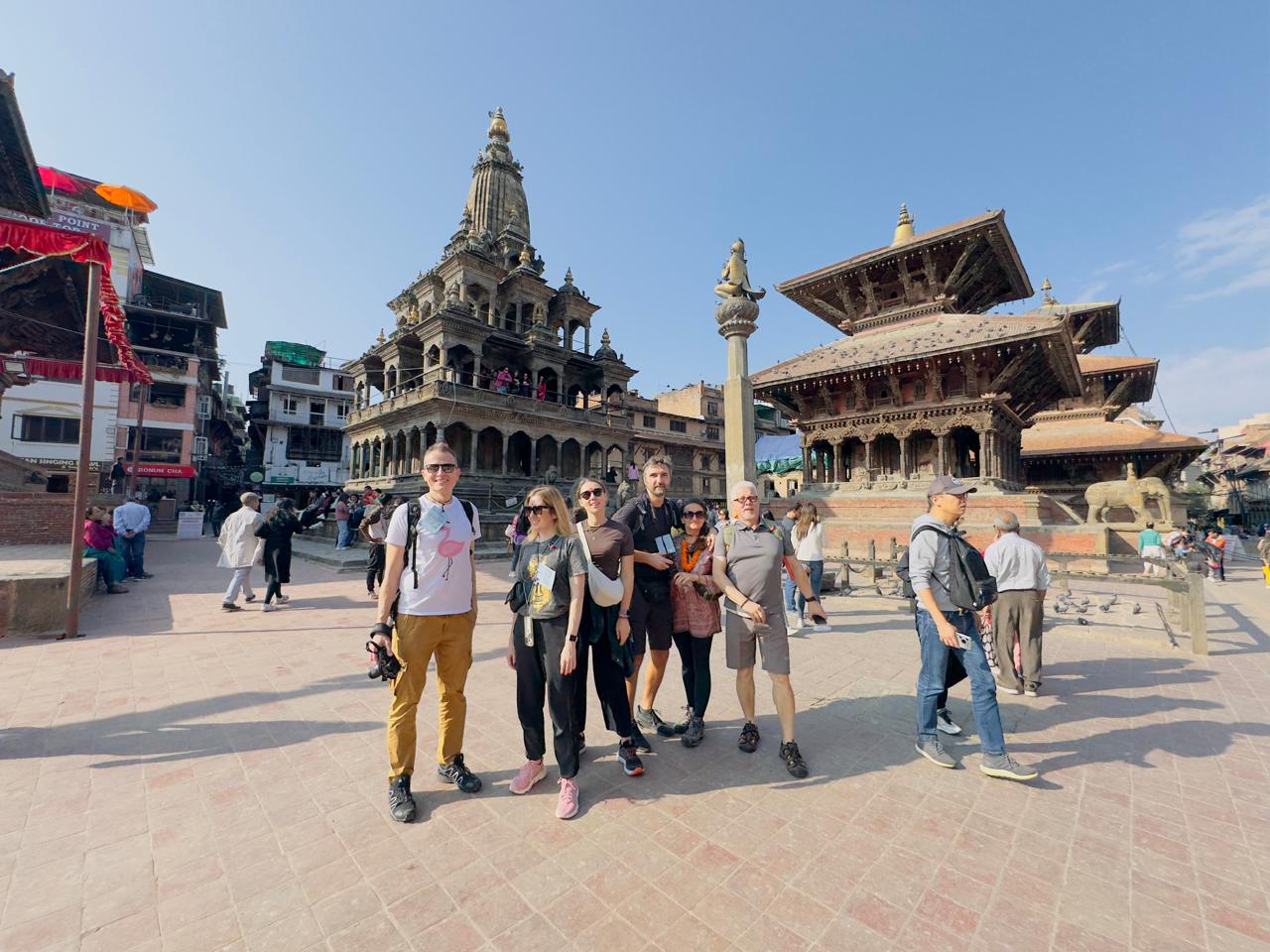
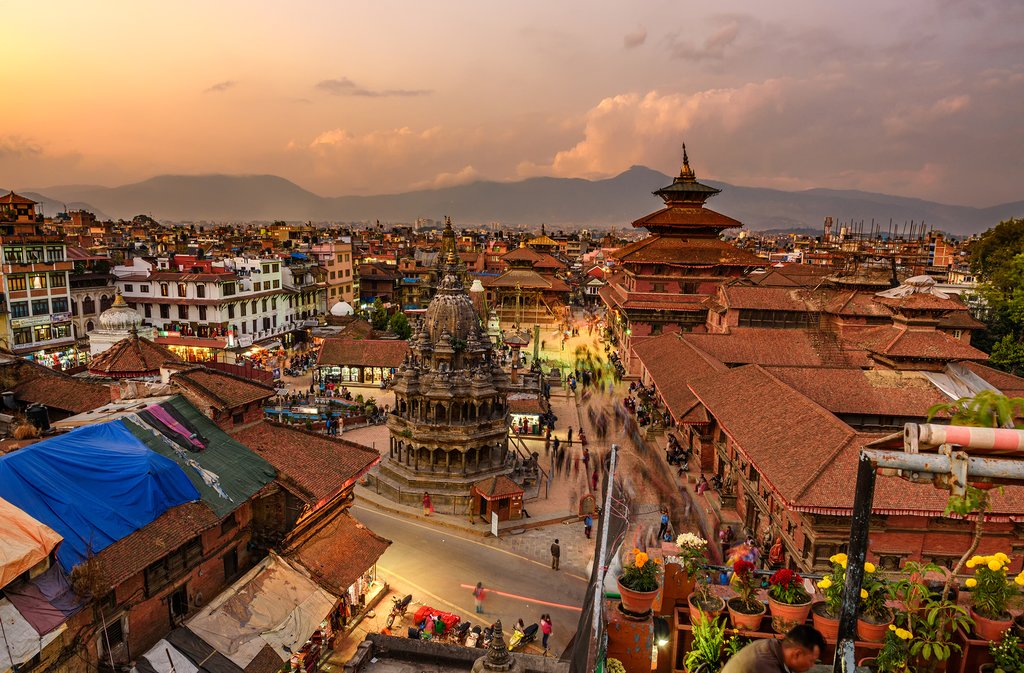
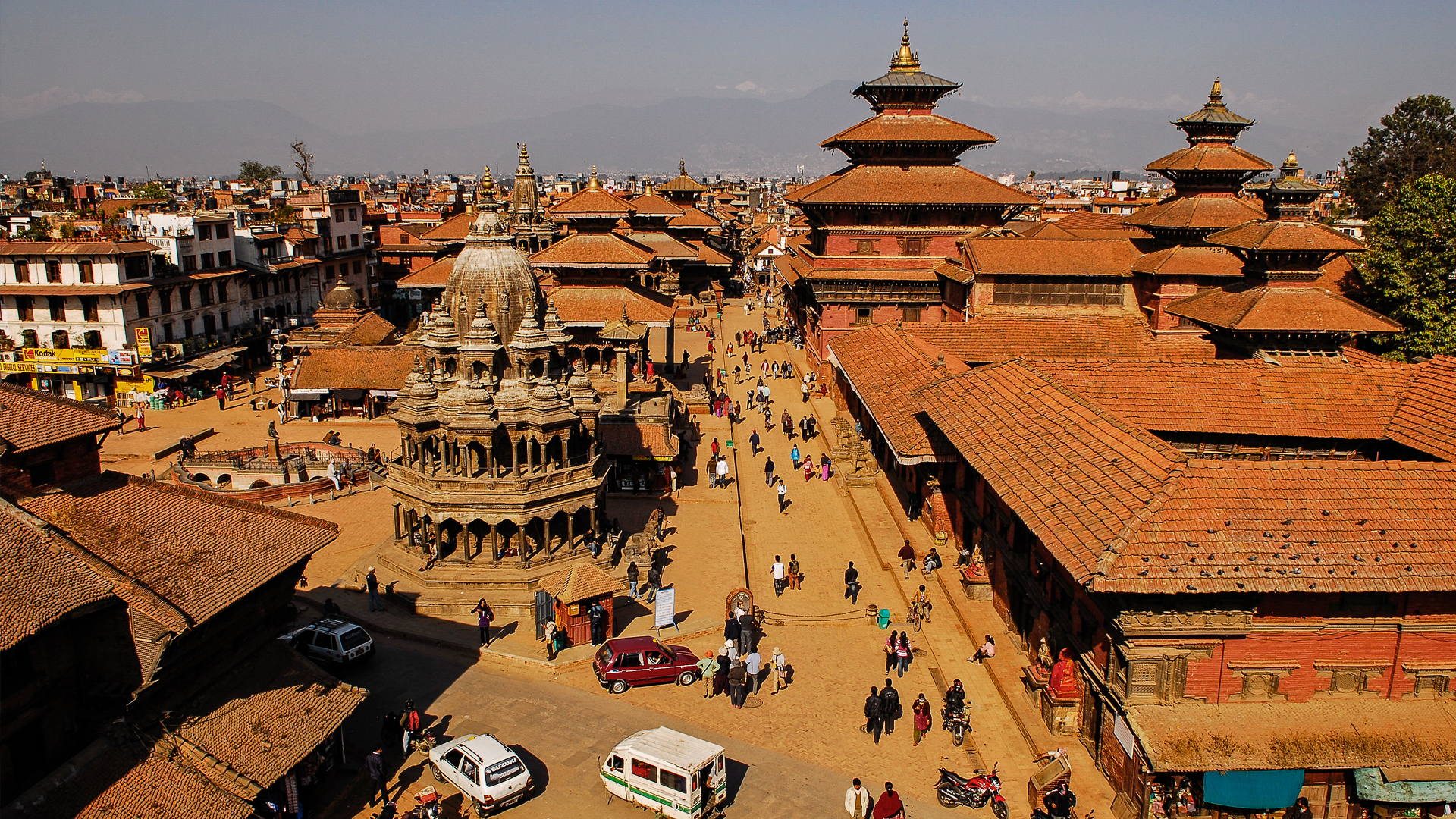
    Sightseeing Around Patan Durbar Square with krishna temple in the background

    As I traveled deeper into the chaos of the city. I met an older gentleman working with metal outside of a small workshop that seemed to be home. His hands were rough from kneading bronze and copper like butter into different shapes and symbols. When I hesitatingly asked him what inspires his art, he smiled kindly and said, ‘In Patan, we do not make art to sell.” We do it because it keeps our ancestors alive.” This phrase communicated the slightly more literal nature of Nepalese culture; art, mindfulness, and heritage are virtually interchangeable terms. 

    Things to do in Patan

    • The Golden Temple (known as Hiranya Varna Mahavihar) will give you insight into their (often collective) Buddhist customs and their astonishing abilities. 
    • During the golden hour, the Pata Museum and the nearby sacred temples will take on a golden shade. 
    • Speak with some artisans, and they will warmly greet you with tales and smiles. 

    A True Time Travel, Bhaktapur

    If you wish to see what life looked like in Nepal 100 years ago. Bhaktapur is your best place for you. As soon as I walked over the walls, time seemed to slow down. The atmosphere felt different. It felt slow, and brick lined the external walls of brick lined the streets with their old, dusty courtyard spaces. Bhaktapur is a museum of Newari culture and a city of old robes.

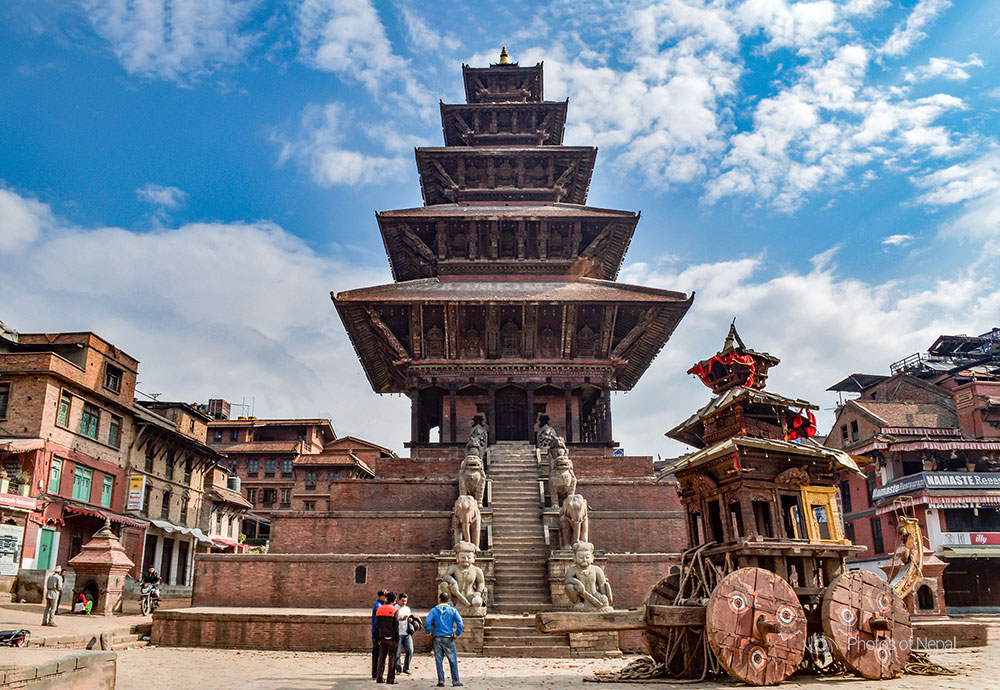
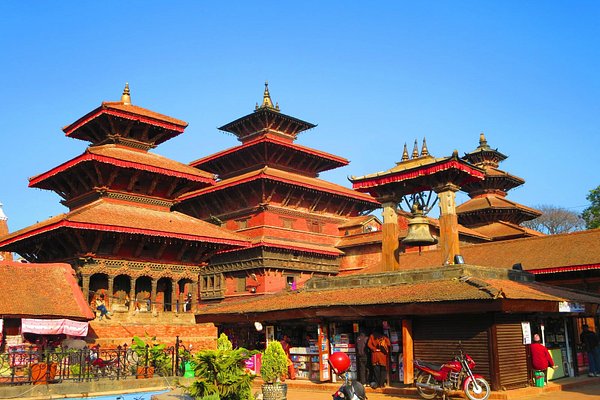
    As I walked around Bhaktapur Durbar Square. I couldn’t help but gaze at the height of the Nyatapola Temple. The carved stone guardians, the carvings of each carving. And the vertical awe of this square transported me into another dimension. It is one of those places that makes you feel and breathe history into the surrounding air. 

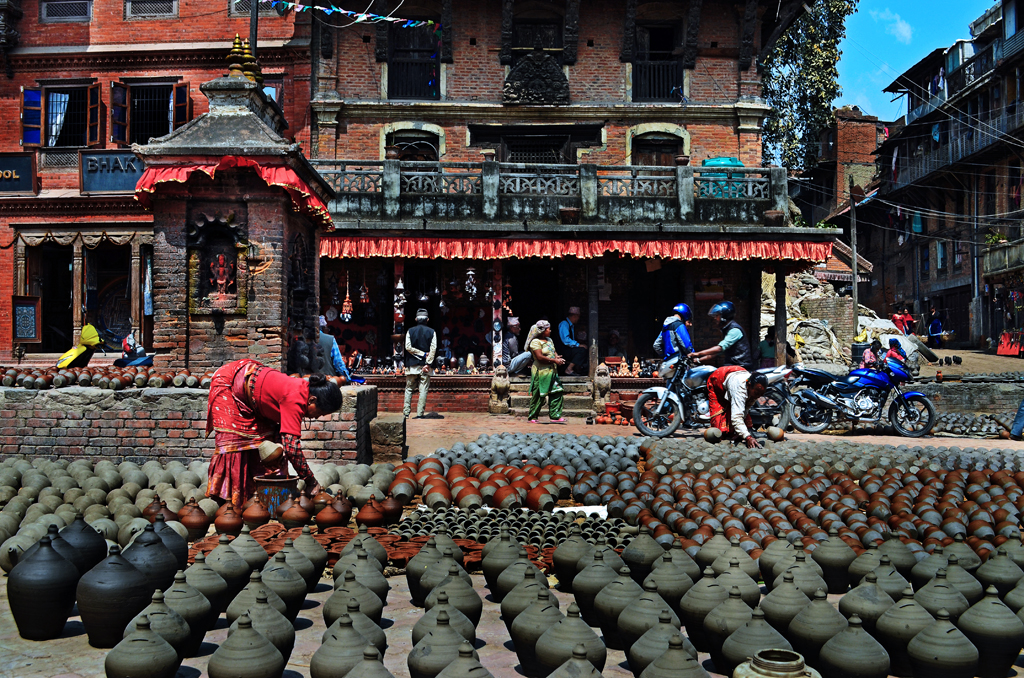
    I continued my way past pottery, where a new cast of feminine and masculine genders was sculpting the earthen pots with their craft. The earthy smell filled the area, as many earthen pots were sitting in drying stages in the afternoon sun. 
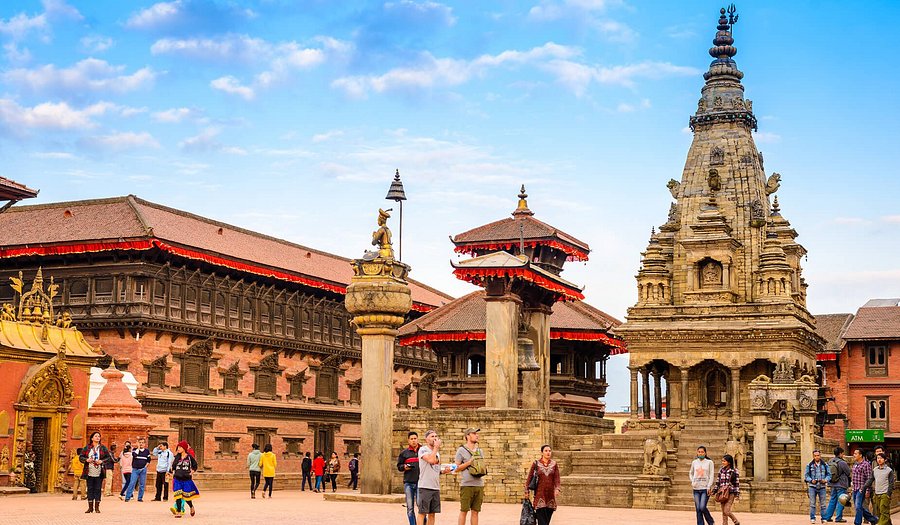
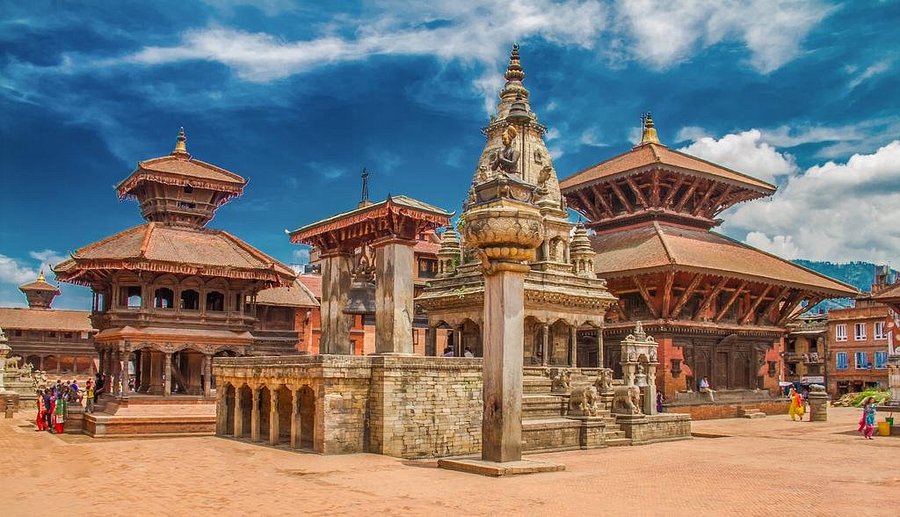
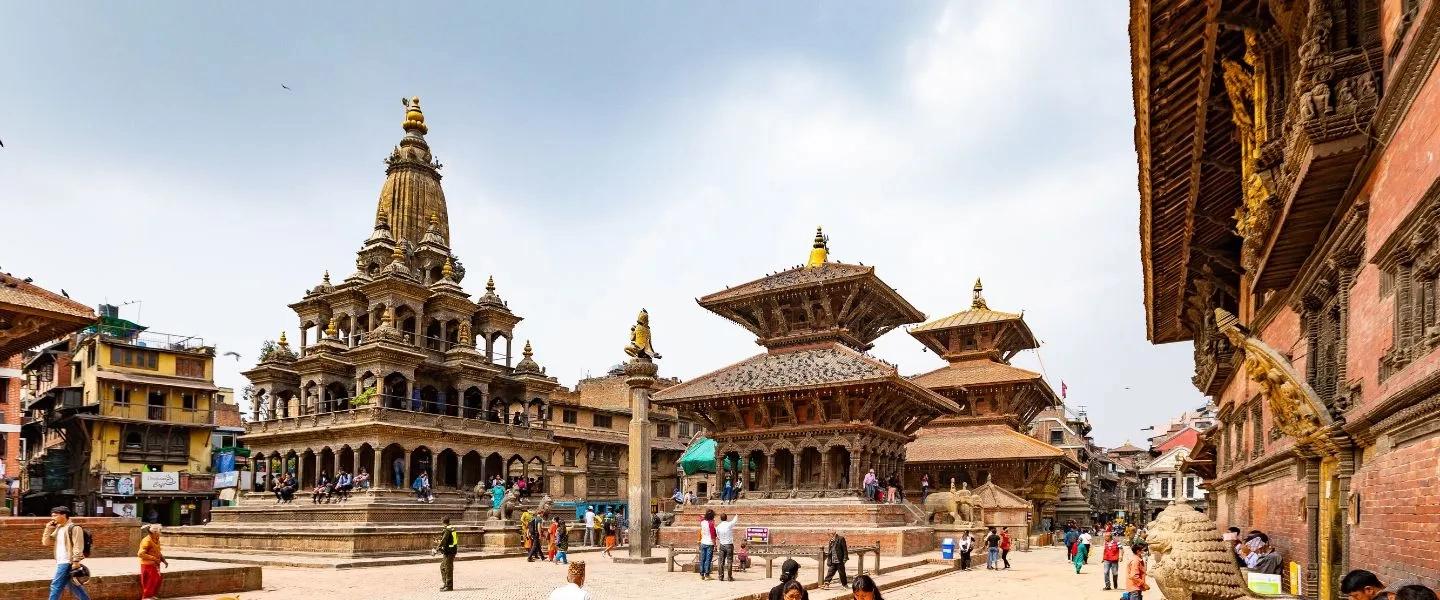
    Temples around Bhaktapur Durbar Square

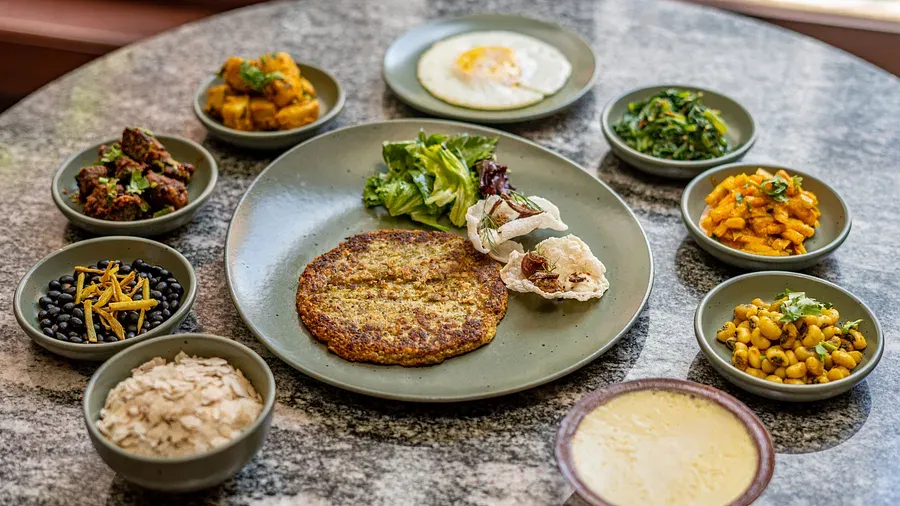
    I stopped at a small shop to sample Juju Dhau. The iconic “King Curd” of Bhaktapur is served in a small clay bowl, and it was sweet, thick, and creamy (some of the best yogurt I have ever tasted!). The shopkeeper couldn’t contain his pride when he said, “Our family has made yogurt for five generations.” I could sense even the food in Bhaktapur takes on a heritage. 

    I happened to stop in another area, noticed all of the people gathering to pray. The warm dim lit glow from the oil lamps danced for life in the window. It is in moments like this that I thought, yes, while this country and even this world is undergoing modernization, there will always be places like Bhaktapur where these traditions remain, quietly revered and cherished. 

    Things to do in Bhaktapur

    • If you can, experience Bisket Jatra. It is bright colors, music, and emotion.
    • Try some Juju Dhau and explore Durbar Square at night, when the lamps illuminate both temples and streets. 
    • If possible, watch the potters at work, or try your own hand at shaping clay in Pottery Square. 

    A Place of Peace,Lumbini 

    After spending a few days in the mountains, and a few more in the countryside, I found myself at the site of Lumbini. Lumbini is known as the birthplace of the Lord Buddha. From the moment I arrived to be welcomed, I felt the stillness set in. The town’s noice settled to a sound stage of peacefulness. The wind revolve around the leaves of the trees at one end of the property. While I attended to the muted yet gentle vocal chanting from the furthest reaches of the area. The soft, tinkling tones and blooming of what must have been many. Many temple bells started as wrap melodic ornaments and jungles.

    The Maya Devi Temple identifies the location where the Maya Devi gave birth to Siddhartha Gautama. It is such a humbling thought to actually stand in a place like this. Monks from many places on the globe, each wrapped in their glowing orange sacred robes. They  were sitting in silence, not only in the sun but in stillness and meditation. I reflected on the scene, watching the prayer flags spinning around beside the temple. 

    Before making my way to the temple itself. I didn’t feel rushed, nor distracted  just peaceful. I spent the day wandering everywhere in the Monastic Zone. Seeing what international monastic architecture expressions of Buddhist worship look like. As the evening approached, I walked in the Garden along ancient trees and distant chants from other monasteries. In some places, you just feel better being there. Lumbini showed me that peace is not something we need to seek; it already exists within us. 

    Things to do in Lumbini

    – Make sure you visit Maya Devi Temple early in the morning when it is still quiet.

    – Enjoy looking at the international monasteries and see the different types of architectural styles.

    – Meditate under the Bodhi Tree, to even more significantly try to slow down your thoughts even more significantly.

    The City of Lake, Pokhara

    Commonly called the “city of lakes,” for me it was the “city of reflections”. Both in the water and spirit. It is situated at the foot of the Annapurna range with some of both the sacred and scenic beauty of the land.  Every morning, I  would walk down to Phewa Lake and charm in the perfectly still water with the mountains perfectly now in it. The locals, too, came to the lake for a prayer, or a fish, or just to sit, sometimes silently. There was something soothing about this simplicity in its approach.

    One of the most enjoyable experiences I had while we were there was time spent at Bindhyabasini Temple, the oldest temple in Pokhara. I arrived just in time for morning puja, as I remember the flowers filled the air with sweetness. And women in saris prayed with their offerings, bells ringing with an ethereal rhythm which somehow felt organically connected to something innocent, not fear.
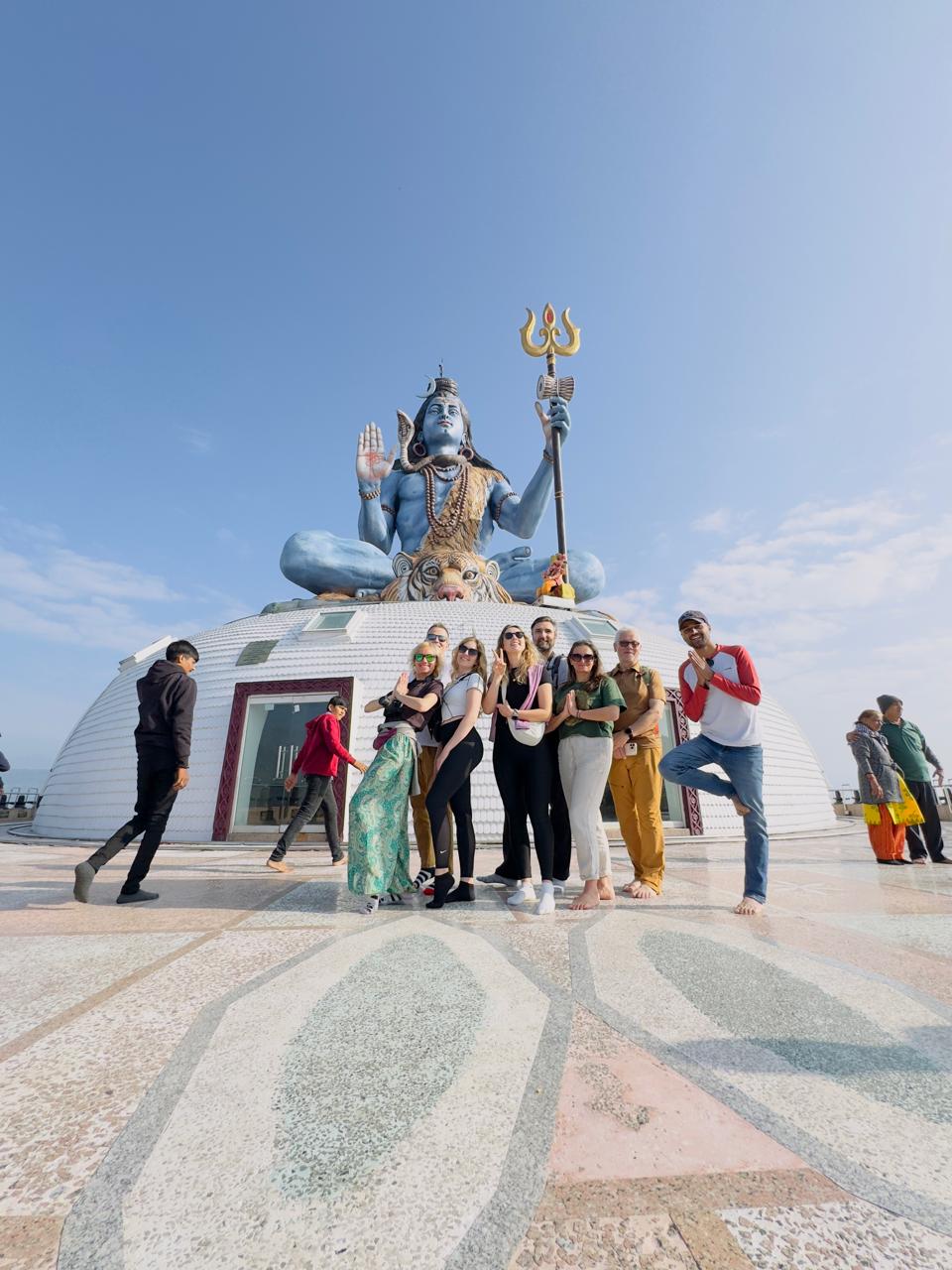
    Group of Happy Mountain clint taking pictures at Pumdikot shiva statue

    In the evening, we joined local community members and lit little oil lamps to place in Phewa Lake.They floated lazily on top of the water like stars falling from the sky. The lights floated on the surface of the water, like stars falling from the sky. It was a moment to think about large charmily as there were countless lights floating along. Some display peace, others hope, and even some gratitude. 

    Pokhara offers one more view of the diversity of culture in Nepal. When I was in the area. I visited the Gurkha Memorial Museum, which reminded me of how pride and honor.

    Things to do in Pokhara

    • Start your day with an early boat excursion on Phewa Lake and then complete a day trip to Tal Barahi Temple. 
    • It is also worth mentioning that you have to experience the sunrise from Sarangkot since bathing in the golden light with spectacular views of the textures of the Himalaya.
    • After that, t you will probably want to navigate around Old Bazaar, and if it remains possible, there are no complete experiences without stopping at the sacred Nakshasat Temple. 

    A Community Frozen in Time, Bandipur 

    Located proudly on a hill between Kathmandu and Pokhara, Bandipur will invite you to sit and take all it in with a full breath. The town is calming and beautiful. It gives some nostalgic novel feel. Newari homes hug alleyways, woodstove smoke drifts and throws itself about, and the sweet smell lentils require a reserved stomach for aware pleasure.

    I had the good fortune of staying at a small homestay run by an extremely nice family. They assumed I was one of their own. I was treated to wonderful hospitality. Every evening we all sat out on the balcony, looking into misty valleys, while sipping milk tea, and discussing life. The grandmother talked about all the ways the town celebrates the festivals of Dashain and Tihar with music, lights, and laughter. “Our joy is simple. We celebrate together, and that is it.”

    Children played traditional games, women prepared food for the festival. And men exchanged viewpoints on local issues in front of local shops. I felt in little Bandipur, that I entered an experience where community matters.

    old traditional structure in Bandipur

    I was lucky enough to see two of the most scenic sunsets during a trip in Bandipur. The dusk sky was painted with pink and golden colors. There were no signs of people, cars, or noise other than the wind rustling and temple bells ringing from time to time. Meanwhile, the Himalayas slowly receded into the background. 

    Things to Do in Bandipur 

    • Walk the main bazaar one evening around sunset and enjoy the tranquility. 
    • Homestay with a local family, and away from tourists. 
    • Try a piece of Sel Roti and Yomari, which folks make for their festivals. 

    What I Learned from a Cultural Experience in Nepal 

    The main thing, I learned from Nepal was that culture is not a building, or an event. It is in the people and the sharing and generosity.The person you just encountered who offers you tea, the child who looks down shyly smiling to you a namaste. The family of people who gather every night to pray and sing and share their lives together. My time in Nepali culture changed my view of the world. I learned to be happy without ownership, to be at peace by finding simplicity, and to express beauty in the most common of times. I felt a sense of connectedness in all things. From chanting in the temples in Kathmandu, to feeling a sense of peace in Lumbini, to finding beauty in the art of Patan, to laughing in Bandipur. All were experiences of community that reflects language and faith.

    When leaving Nepal, I took more than just a few souvenirs. I took the melody of the temple bells that were ringing in my heart. And the beautifully slow release of incenses in my pocket, to feeling the sweet creamy, empty taste of the curd on my tongue. As well as wearing the warm-fuzzy feeling of being advised by strangers together as a family. More than a memory, it was a new lens of viewing life.

    Conclusion

    In Nepal, the experience of cultural immersion is not a hurried activity. It signals you to slow down, listen, observe, and open your heart. The country does not accept you as a tourist, but rather as a friend who wants to endlessly share its ancient wisdom and joy of living daily.

    If you ever come to Nepal, do not just see it feel it. Walk through the old squares, talk to the artisans, eat with the locals, and let the rhythm of life guide you. Because in Nepal, the most meaningful experiences are not found on maps; they are found in moments that touch your soul.


  • Places to Visit to Experience Nepal in 7 Days

    Places to Visit to Experience Nepal in 7 Days

    Places to Visit to Experience Nepal in 7 Days

    If you have a week to travel in Nepal, you might be asking yourself: Is it enough time to really discover this wonderful land? The great thing about this country is that there is expected to be much more to find out than time will allow. Still, if you have a well-planned week-long trip, you will have a wonderful time. And a memorable first-hand introduction to everything about its culture, mountains, spirituality, and visual beauty. You will be able to discover ancient temples and a city with chilling lakes to relax, and incredible views of the Himalayas.  Nepal has a way of surprising you over and over again! 

    Below you will find the best guide to seeing Nepal in 7 days in the best way.

    Day 1: Core of Heritage and Culture in Nepal, Kathmandu 

    Your journey begins through the busy streets of Kathmandu. Kathmandu possesses a certain vitality that was present long before the arrival of tourists. If you visit temples, particularly the extremely impressive and extremely notable UNESCO Heritage Sites of the Kathmandu Valley. Like Swayambhunath, which is sometimes referred to as the “monkey temple”. Beyond these stupas, it also has magnificent 360-degree views of mountain ranges above, which is the epitome of the old world sharing of religion. 

    Golden skies, Kal Bhairab statue at Kathmandu Durbar Square

    Deriving from Swayambhunath, you will tour the Pashupatinath Temple, the holiest temple on the planet for Lord Shiva’s worship! These rituals of the Pashupatinath temple, as you witness them being carried out at the crematorium by the banks of the Bagmati, will be calming, but more enchanting to believe and feel to unite with the temple spirituality. As we continue to follow the remainder of the rituals, we take you now to the next destination of the Boudhanath Stupa, heralded as the largest stupa of the South Asian subcontinent, the center of Buddhism, and where monks still spin their prayer wheels at the bottom of the stupa!! We conclude our tour back in Kathmandu Durbar Square, or home to the old Kathmandu city, where there are some palaces and squares left to see, and the living goddess Kumari. 

    Day 2: The Living Museum of Nepal, Bhaktapur 

    On our second day, we would move on to Bhaktapur, which was a little bit out of Kathmandu. Bhaktapur is an ancient city and is actually an open-air museum as well, just purely with its perfect preservation in form and beauty, it seems like it has a history beginning eons ago. 

    You will walk around Bhaktapur Durbar Square, and observe fine carved wood sculptures, stone sculptures. And many old and beautiful phagonda-style temples touch history and awe of its grandeur.

    Temples around Bhaktapur Durbar Square
    Bhaktapur Durbar Square

    Be sure to check out Nyatapola Temple. The five-story structure is the largest pagoda temple in all of Nepal. Walk to Pottery Square, where local pottery makers turn clay into eye-catching vases and bowls that they have honed through generational family methods and ideas. You will feel like you are traveling back in time with its narrow streets, red-brick houses, and artistic disposition of the city. To finish the evening, don’t forget to try local tortures, including Juju Dhau, the infamous King Curd of Bhaktapur (a desert to die for). 

    Day 3: City of Fine Arts, Patan 

    Next in the journey of the ancient royal cities in and around the Kathmandu Valley is Patan (Lalitpur). Known for its fine art, sculpture, and architecture, Patan is known as the “City of Beauty”. Start the adventure in Patan Durbar Square, a stunning complex of exquisite temples, courtyards, and the ancient palace of the Malla kings. The Krishna Mandir is completely stone. You will agree it is a remarkable work of craftsmanship and devotion.

    Sightseeing Around Patan Durbar Square with krishna temple in the background

    Stop by the Patan Museum in where you can observe ancient sculptures and artifacts which represent Nepal’s religious and artistic life throughout centuries of civilization. You can stroll around the narrow streets to see artisans and metal craftsmen who are still in operation. Patan is also well known for its delightful monasteries, complexes, and ancient Newari-style homes. Wrap the day up at one of the rooftop restaurants looking down on the square with the sunset of shades and tones against the mountains and temples glowing in all their golden glory.

    Day 4: City of Lakes, Pokhara 

    After roaming around Kathmandu Valley, you can take on the short 30-minute flight or drive to enter the lake culture and live with foothill views of the mountain experience. Pokhara, regarded as the ‘Gateway to Annapurna’. 

    On your first morning, take your time and spring on a boat over Phewa Lake for view of the mighty Annapurna range. After reaching the Tal Barahi Temple on the lake’s island, head over to World Peace Pagoda by hiking or driving. The mountains and scenery of Pokhara valley and the lake are really picturesque. And with a discerning eye and being at the right angle, the spectacular snow-capped Himalayas even show themselves in the distance! 

    Group of Happy Mountain clint taking pictures at Pumdikot shiva statue

    Day 5: Sarangot

    For those who wake up early in the morning. I encourage you to wake up and take in one of the most inspiring places to witness a sunrise setting above the sublime landscape of Pokhara valley. It is known as Sarangot hill , you can have a thrilling experience being able to see the sun rise above the far hills of the snowy ranges of both Annapurna, Dhaulagiri and Machhapuchhre. 

    When the early morning sun rises above the light-filled valleys of the gorgeous land of Nepal. You can even witness streams of rays of golden sunlight reflecting off the snowy mountains in range below! In looking back on this part of your life, I can only imagine that you will be saying to yourself. “That was a one in a million experience!” If you happen to be an adventurous outdoor person, or just happen to love nature, I feel perfectly confident in saying!

    If you wanted to make adventure day more adventurous. You will have the opportunity to experience paragliding, hopefully! As you’ve already discovered, you will take off from Sarangkot hill, flying over the Pokhara valley. Coordination experience will be required, as all you need to do is hang glide! The best thing you will ever experience in your lifetime will include hang gliding, as you hang glide over lakes, with stunning mountains of the Himalayas in the background.

    In the afternoon, have breakfast and then enjoy the rest of the morning and afternoon exploring the Lakeside of Pokhara with delicious Nepali food. And check out to the International Mountain Museum to learn more about the country and the mountainous activities. 

    Day 6: The Newari Village, Bandipur 

    Visit Bandipur, a hilltop village between Pokhara and Kathmandu, now a secret gem of Newari architecture, culture, and the landscape of the surrounding hills. Bandipur is often called a living museum due to its beautifully preserved buildings as well as its stone-paved roads free from the movement of motorized traffic.

    old traditional structure in Bandipur

    Walk through the middle bazaar, admiring the intricately carved wood windows and doors and Newari crafts. Visit the Thani Mai Temple to have the light on the Himalaya mountains at sunrise or sunset, and to see some nearby caves, such as Siddha Gufa, one of the largest caves in Nepal. Bandipur may be quite more laid-back in tempo as you heal and relax, interact with villagers, and have very real village life.

    Day 7: The Ideal Departure View, Nagarkot 

    If you want to end your week-long visit to Nepal in style, we recommend spending your last night at Nagarkot. A hill station that tourists enjoy for fabulous daybreak or sunset views of the Himalayas! 

    You might even be lucky enough to see Mount Everest on a sunny day while at Nagarkot . This is reason enough to go! Nagarkot is the perfect last stop before heading back to the city, filled with recapturing mountain air, quiet walks, and calmness. 

    Thus, be sure to enjoy the fresh morning air in Nagarkot, and walk around the beautiful paths around terraced farmland and surrounding villages below. Nagarkot is the best place for those who seek peace. It will be their last minutes of appreciating the beauty and magic of Nepal once more.

    Conclusion

    There are seven days of experiences in Nepal that may be the most satisfying week of your life. With cities steeped in culture and history like the Kathmandu Valley, stunning lakes and landscape in Pokhara, the creative vibe of Patan, and the view from Sarangkot and Nagarkot. It is everything you would want to feel connected to culture, spirituality, and nature in one place. You will leave with stories about this incredible place, whether you seek gratitude, adventure or culture with memories. In just seven days, traveling deep into the heart of the Himalaya, you will reach that special feeling of coming home. 

    Nepal is a land of endless surprises. In addition to the spectacular landscape, the smiles on the faces around you, and the smell of food that radiates light and laughter in all directions, there is no place like Nepal. From serene walks along Shivapuri to the rush of the nutty Everest Base Camp trek, each trek provides the opportunity to hear the stories yet untold. Within seven days, Nepal forces you to look at, perceive, and own a place that will never be out of your heart.


  • A Cultural Walk Through Patan and Bhaktapur

    A Cultural Walk Through Patan and Bhaktapur

    A Cultural Walk Through Patan and Bhaktapur: Timeless Cities of Art

    Introduction: Timeless Cities in the Heart of the Himalayas

    While Nepal is renowned for its breathtaking mountains, the mountains may not always be representative of Nepal. What may be representative of Nepal are its valleys, and without a doubt, the essence of Nepal is the Kathmandu valley where there are actual civilizations that still exist, and great art that still exists. In the Kathmandu valley, we recently came to discover two living art cities, Patan and Bhaktapur. These cities are unlike any other city in Nepal today because they represent another time, and they also fully embrace, value, and promote the forms and functions of art/culture that we cremate in the urban life, and the extent to which art can operate: hints of earlier cultures and civilizations.

    Strolling culturally through Patan and Bhaktapur will be as close to traveling in time as we can arrive at, because all around, you will see beautifully carved temples, durbars, courtyards, artisan villages, and food culture that integrates all of it from pockets of the past, some gone, but some are still vibrant, lively and most importantly, dispersed through the fluvial history of art of the Kathmandu Valley. This blog will take you on an exhaustive journey through the roads, historical gems, the art over time in Patan and Bhaktapur.

    Part I: Patan – The Artistic Jewel of the Valley

    1. A Brief Historical Overview of Patan

    Patan is also called Lalitpur and is one of the oldest continuously inhabited cities on Earth. It was first established sometime in the 3rd century B.C.E. Patan became very important during the Malla period and was established as an independent kingdom noted for its very high level of artistic sophistication. The Malla kings devoted a lot of time, effort, and resources to building temples, town planning and had a great interest in fostering conflict resolution between the Hindu and Buddhist faiths. The dynamic relationship between both faiths would become the heart and soul of Patan as evidenced by the multiplicity of chaityas, vihars, and temples in the city.

    patan durbar square

    Patan is planned as a Buddhist mandala. Mandalas are sacred and civic space combined into a single spiritual and geometrical expression. The spiritual plan of the city of Patan fully exists to the present day and orchids of stupas dating to Emperor Ashoka exist in each of the four cardinal directions of the ancient city. Urbanism and the city’s population has moved expand and thrive, yet Patan has not lost its original animus; it is not a defunct relic of the past but a vibrant museum of cultural continuity, cultural survival of traditional culture, and cultural resiliency.

    Things to Know:

    • Historically, Patan was named “City of Beauty” as well as Lalitpur,
    • It was one of three of the major Malla kingdoms in Kathmandu Valley.
    • It is laid out as a Buddhist Mandala city.
    • The architectural legacy of Patan is credited to King Siddhi Narsingh Malla
    • Strikes a perfect balance between Hinduism and Buddhism.

    2. Patan Durbar Square:

    The Sculpted Heritage of Nepal Patan Durbar Square is a veritable goldmine of Newar architecture and urban design. It is a UNESCO World Heritage Site and it contains aggregation of tightly packed clusters of temples, shrines and palaces that exemplify Nepal’s architectural heritage. The Royal Palace is the core of this chain of masterpieces. It is where the Malla kings of Patan ruled, and converts itself as a museum in modern times. The Krishna Mandir, which is a remarkable carved-stone temple built in Shikhara-style (found in India but not Nepal), contains sculpted divine scenes on its struts and pillars.

    What distinguishes Patan Durbar Square as such an extraordinary experience is the way it still connects with the pulse of everyday life. Locals gather to socialize, worship, and celebrate festivals in the square, which arguably makes it more than a static monument but rather an active cultural one. The square could not be more exciting with activities taking place. The Krishna Mandir is a breathtaking monument which is dedicate to the god of commerce, trade, and merchants and serves as a lotus in the center. The Vishwanath Temple, a Shiva temple, has stone elephants that guard the temple . Each building signifies a great history and is not in and of itself a cold relic, but a living part of a continuing and incredibly vivid religious and cultural tradition.

    patan

    Things to Know:

    • It is a UNESCO World Heritage Historical Site, with a dense amount of architectural wonders.
    • The Krishna Mandir is the only place where a few on site monuments were fully and only built in stone.
    • The square has temples for Bhimsen, Vishwanath, and Taleju as well.
    • The Royal Palace was the royal seat of the Malla kings.
    • The square is still actively used for social purposes, thus making it a living heritage.

    3. Hiranya Varna Mahavihar (Golden Temple): Hidden Buddhist Gem

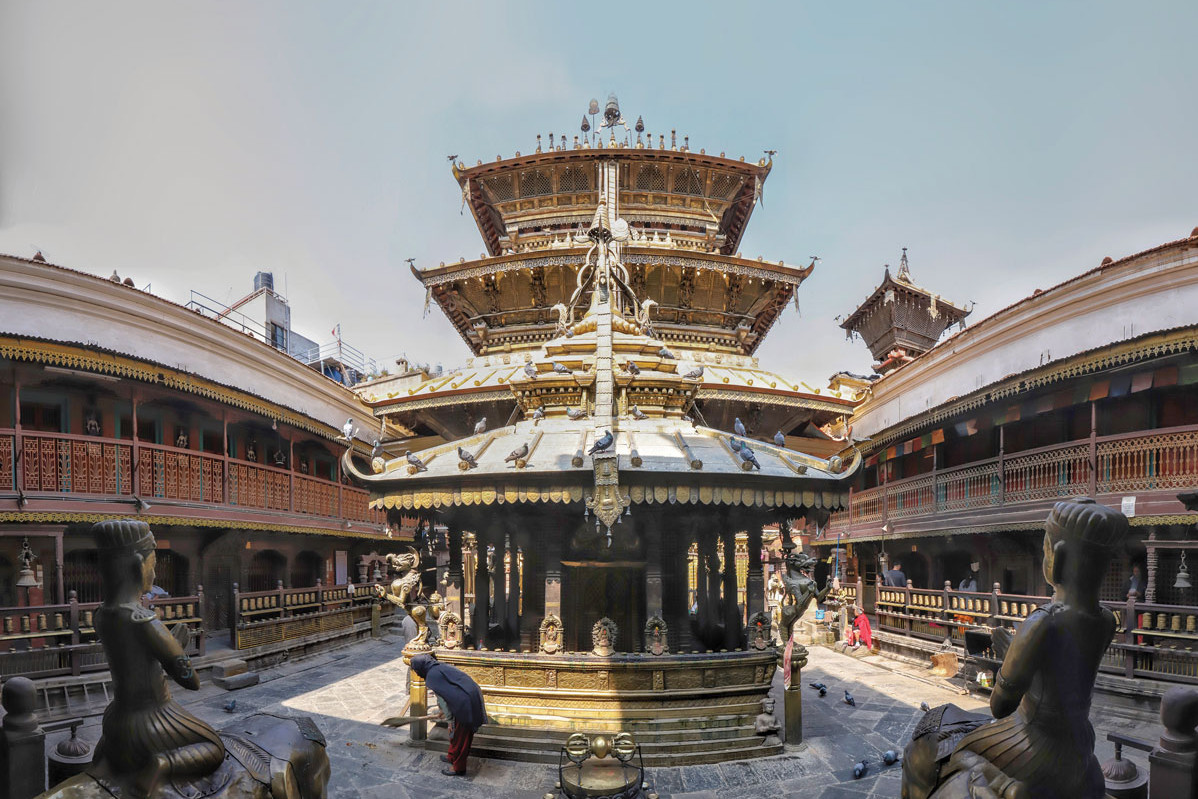
    Hiranya Varna Mahavihar (The Golden Temple) is one of the most important Mahayana Buddhist monasteries in Nepal and nestled in the narrow and winding streets of Patan. Dating to the 12th century, the temple is shining and gilt on the outside, highly decorated with intricate wood and metal carvings and it has two lions (a resting lion and a standing lion because he wants to have one more chance to kill). The temple is an active sacred space for spirituality and pujas and rituals when it is open as a functioning monastery.

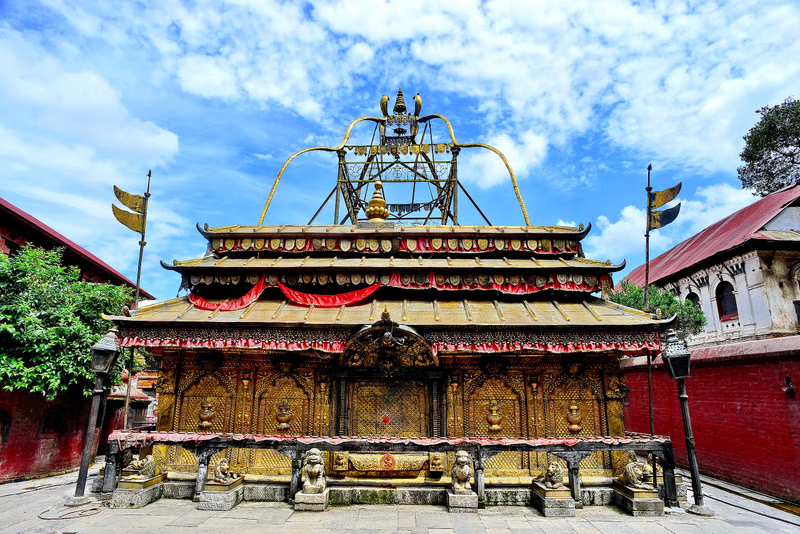
    Golden temple

    Rituals occur every morning performed by the young boys, Bapachas, who will go on to serve infrequently in the priestly vocation. All around heated butter lamps burn and flicker along the gilded walls and murmurings of prayers echo within the courtyard. The leadership of Hiranya Varna Mahavihar show the monastic life of that in Patan, forever courted but always upholding the unimaginable tradition of Tibetan Buddhism. The temple is almost a hidden refuge from the unknowing common; this furtiveness is only just a short distance away (5 minutes walking) from a bustling square in Patan.

    Things to Know:

    •  Mahayana Buddhist monastery built in 12th century.
    •  Remarkable giltwork and gilded yard.
    •  Still functional and regularly performs prayers and rituals.
    •  Rituals performed by Bapacha boys, a distinctive practice.
    •  An oasis of calm and spirituality in the middle of the city.

    4. Patan Museum: A Class of its Own in Newar Art

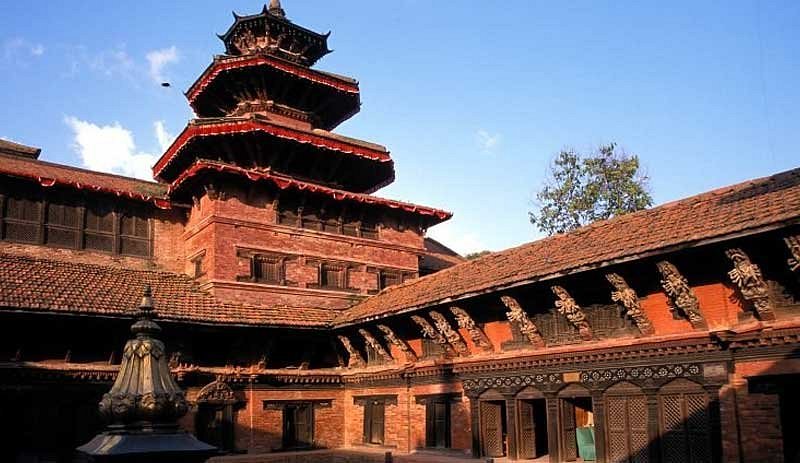
    The Patan Museum is set in the former royal palace complex of Patan, and is an impressive entry point to exploring Nepal’s artistic and spiritual heritage. The Patan Museum houses finely curated collection of bronze icons, wood carvings and saced art pertaining to both the Hindu and Buddhist traditions. Established through the collaboration of Nepali and Austrian practitioners, the Patan Museum was magnificent restored and preserved to balance the architectural heritage of the site, whilst being an inspiring interactive learning opportunity.

    Patan Meuseum

    Unlike typical museums that showcase objects, this museum takes a thematic approach and provides an education to visitors regarding the meaning of the objects symbolized, the religious context, and the traditional techniques of the objects, particularly significance to Newar bronze casting. In addition to the exhibitions it offers a relaxing environment in its courtyard and rooftop café that will allow visitors to reflect and appreciate art and history around them.

    Things to Know:

    • Located in the Patan Royal Palace.
    • Has one of the finest collections of Newar art in South Asia.
    • Provides exposure to Hindu and Buddhist iconography.
    • Provides an exposition of traditional, lost-wax bronze casting techniques.
    • Has a restful courtyard and café for its visitors.

    5. Community Courtyards: Patan’s Hidden Treasures

    The most delightful aspect of Patan are its bahals—traditional community courtyard spaces that capture the spiritual and community life of Patan’s neighborhoods. Bahals can contain small stupas (mound-like structure containing Buddhist relics), prayer halls and/or often a public water source (hiti). Rather than being remnants of architecture, the bahals are vibrant social spaces where people come in daily, prayer in the morning, who could meet and socialize as a community, and remember the dead.

    Some examples of excellent intact bahals are Nag Bahal, Kwa Bahal and Sundhara; to find and witness a courtyard like these that spatially communicate how urbanism made possible a way of being that nurtured community, spirituality, and social life is a rare find. bahals like these demonstrate the Newar way of being communal, where architecture included the social, and spiritual life without impediment. Furthermore, in these bahals we can see, although admittedly slower, a livelier, visceral urban life still pulsing.

    Things to Know:

    • Bahals are traditional courtyards that focus on Newar community civic life.
    • A long Bahal often has a stupa, water spout, and prayer space.
    • Nag Bahal and Kwa Bahal are in excellent condition and are used for communal activities.
    • Bahals can be functional spaces for communal rituals, play, and socializing.
    • Demonstrate the ways in which Patan is unique in the combination of architecture with community-life.

    6. Artisan workshops and modern art spaces

    Patan remains the artistic core of Nepal, where traditional craft methods permeate the thrumming, artisan workshops located in packed backstreets. Metalworkers fashion elaborate deities out of liquid metals using the lost-wax process, woodworkers create elaborate doorways, while thangka painters create divine details. In Patan, many families have retained these techniques through the generations, encompassing the artisanal spirit of Nepal and maintaining the artistic traditions based either knowledge or devotion.

    Krishna Temple , Patan

    Patan also welcomes newness, with galleries such as Yala Mandala, Mcube, and Sattya providing a way for contemporary artists engaged with issues today in methods from the past. Through exhibitions, artist residencies, and studios these galleries provide dynamic spaces where history drives newness. In Patan tradition and creative expression do not compete, they speak to one another and grow. Patan provides expansive possibilities.

    Things to Know:

    • Patan is the craft capital of Nepal with master craftspeople.
    • Premium quality metalwork, wood carving and thangka paintings.
    • Lost-wax casting of statues is local specialty.
    • Modern gallery spaces, to showcase new work such as Yala Mandala and Mcube.
    • Patan is a mash-up of centuries old mastery of craft and contemporary.

    Part II: Bhaktapur – A Medieval Marvel Frozen in Time

    1. The Spirit of Bhaktapur

    Bhaktapur, Khwopa in the Newar language, is often called Nepal’s “cultural jewel.” Only 13 kilometers away from Kathmandu, Bhaktapur is timeless and unspoiled by the frenetic natural and unnatural chaos of other urban centers. Once the capital of the Kathmandu Valley, Bhaktapur is still regal, with beautiful streets full of heritage and sacredness, and the inhabitate are traditional people. the city has the same brick houses, courtyards, and narrow alleyways, but lost in the centuries of the past History in the Making and both craftsmanship.

    Bhaktapur

    There is no other place in the valley like Bhaktapur that still move in time with the cadence of medieval days. Festivals, music, and arts joint the daily lives of the inhabitants as a part of their lives; not a display of ceremony. The city is one giant museum where the movements are literally at the pace of a glacier by the centuries of ritual tied to the sacred past, that are still in practice. In the courtyards grains are being dry by farmers, in the village square pottery is being form by artisans, and on the sun-dry stairs of temples old men are discussing the events of their day. While you do not physically witnesses the experience of Bhaktapur from what you see, you do experience Bhaktapur.

    Things to Know:

    • Bhaktapur is the most intact medieval city in the valley
    • Used to be the capital of the whole Kathmandu Valley.
    • Is Khwopa in the native Newar language.
    • Is part of everyday life with architecture, rituals and traditions.
    • It is like walking into a live history museum.

    2. Bhaktapur Durbar Square: The Artistic Hub of the City.

    In the heart of the city is Bhaktapur Durbar Square, a UNESCO World Heritage site, and the spiritual and political heart of the previous kingdom. The 55-Window Palace is the focal point of the square, lasting woodcarving that can only be matched with the artisanship used by Newar artisans. Next to the palace is the Vatsala Temple, made of Stone is for Vatsala Devi followed by a statue of King Bhupatindra Malla showing a gesture of Devotion.

    Bhaktapur Durbar Square

    Unlike the Durbar Squares at Patan and Kathmandu, which are confined public areas, the Bhaktapur Durbar Square is a relatively bigger and more open public space. However, this is not a point of history, which you are likely to visit once, in a time before. Bhaktapur Durbar Square works as a public square through which people pass, leave offerings, clean the temple plinths, and perform cultural rituals. The sacred and civic are intimately linked within the square, and it still remains the best place in Nepal to experience both.

    Things to Know:

    • Home of the 55-Window Palace, the iconic symbol of craftsmanship in wood;
    • Home of Vatsala Temple and statue of King Bhupatindra Malla;
    • A UNESCO World Heritage site still used for living practices;
    • Bigger and more open than the other two squares in the valley;
    • Varied public festivals or cultural rituals still taking place throughout the year.

    3. Nyatapola Temple: Towering Over the Valley

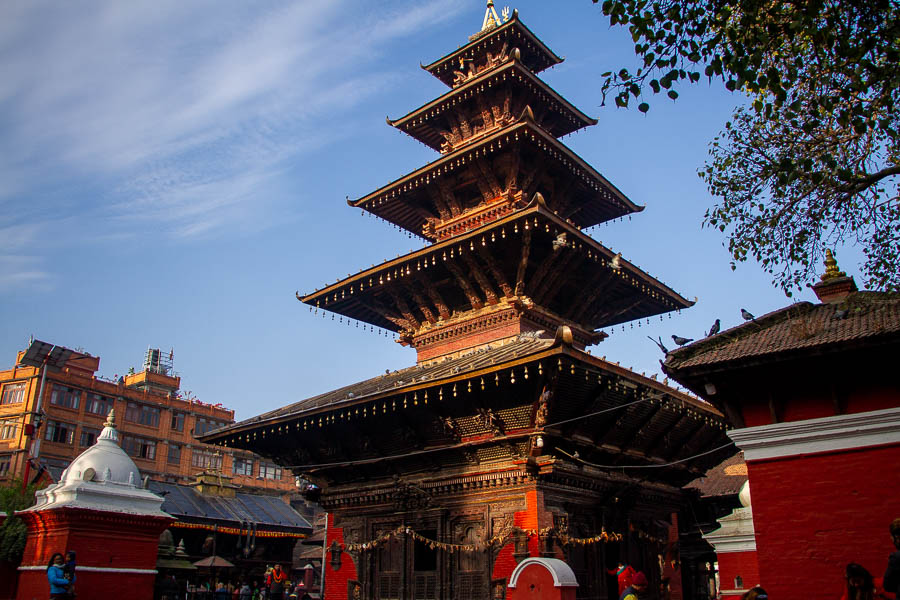
    Nyatapola Temple dominates Taumadhi Square and is the tallest pagoda type temple in Nepal at five stories high. Built in 1702 by King Bhupatindra Malla, there is both structural genius and one can see power at two levels, the architectural and spiritual levels. The temple has survived several significant earthquakes, possibly in part, because of the broader base and tiered design, further engineered to resist earthquake impacts.

    Nyatapola Temple

    The stairway to the temple has groups of mythological figures representing double the strength of the previous figure way leads to the kalasa above the sanctum of Siddhi Lakshmi, a Tantric deity. Each level tells the story of two groups of figures; while the temple’s highest level represents an ascent in spiritual strength. The temple is simultaneously a physical journey upward as well as a metaphysically journey onward.

    Things to Know:

    • You will witness the tallest pagoda temple in Nepal, built in 1702.
    • The temple is dedicated to the potent Tantric goddess Siddhi Lakshmi.
    • The shape of the temple is designed to endure massive earthquakes.
    • The temple is protect by symbolic stone guardians on either side of the stairs.
    • Every level is a higher level of spiritual power.

    Dattatreya Square and the Peacock Window

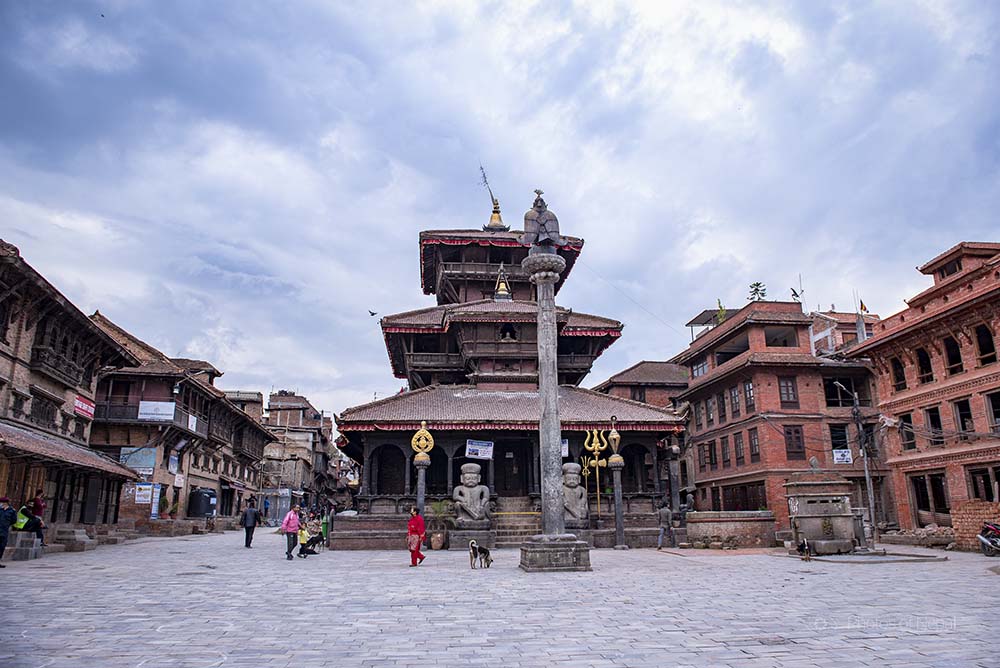
    Dattatreya Square is at the far eastern end of Bhaktapur. It takes it’s name from the Dattatreya Temple, which was also thought to be built from one tree. This square feels more like a residential area (and artisan) and is much quieter than the central square but again just as stunning, and with the same amount of spirituality and craftsmanship at every turn. The Dattatreya Temple is in the middle of the square with its odd three headed deity which is a combination of Brahma, Vishnu, and Shiva.

    Dattatreya Square

    Art enthusiasts flock to this square to see the Peacock Window – referred to as the “Mona Lisa of Nepalese woodcarving”. This square also contains two fantastic museums; the Woodcarving Museum and the Brass & Bronze Museum. Both museums are located in a traditional building that reflects and help preserve Bhaktapur’s artisan structures.

    Things to Know:

    • Dattatreya Temple is said to be carved from one tree.
    • The Peacock Window contains exquisite woodcarving.
    • A beautiful synthesis of spirituality and tradition.
    • Is the home to the Woodcarving and Brass & Bronze museums.
    • A quieter square, more intimate and rich in history and artistry.

    5. Pottery Square: The Rhythm of Clay

    Often referred to as Talako Tole, Pottery Square is one of the most enlivened enclaves in Bhaktapur where you will find this community shaping pots as part of daily life. Craftsmen will sit lateral at a wheel, giving clay a squeezing motion, continuously removing the clay from the wheel until they have shaped a bowl, piggy bank, water jar, or traditional lamp. After the potters have shaped all of their pieces, they will place them in rows on the ground to let the sun dry them as they prepare to home-fire the pieces in traditional kilns.

    Pottery Square:

    The pottery makers have demonstrated an unbreakable line of practice and the act of watching, their motions and the clay and wheel, the smell of earth, and the quiet contemplation, gives viewers a tangible and immersive experience. In Bhaktapur pottery is more than craft, it is the pride of ancestral wisdom and collective local identity.

    Things to Know:

    • Pottery Square is the world’s only place for traditional clay works.
    • Artisans shape and sun dry their pots with no walls during the whole process.
    • Firing still happens in traditional kiln.
    • Generational learning secures its future.
    • It provides the tourists chance to try pottery, creating engagement.

    6. Bhaktapur’s Food Culture: Juju Dhau and more.

    As there was the history and craft of Bhaktapur to the stomach, there were not insignificant moments of gluttony, particularly for the taste buds. The traditional delicacy of Bhaktapur is Juju Dhau, which translates to “King Curd”. Juju Dhau is a rich sweet yogurt made with buffalo milk and is housed in small clay pots. Juju Dhau has a creamy texture that holds its shape and is typically consume during festivals and rituals or simply indulge for the joy of eating on a hot day.

    Bhaktapur's Food Culture

    Food is also deeply influence by custom in Bhaktapur and food is strongly tie to their heritage. Juju Dhau, the “king of curd,” richness of cream, is only available in Bhaktapur. Chatamari is a rice flour pancake, normally eggs or minced meat, commonly referenced as “Newari pizza”. Bara is fry lentil patties that may be eat plain or fortifie with meat. Samay Baji is a ceremonial dish, served only at festivals, served in a round platter. It consists of beaten rice, boiled egg, fried meat, black soybeans, and ginger; a complete meal in balance of all textures and flavours; with the historical meal at its core. In this sense food is not just food, but heritage served to you on a plate.

    Things to Know:

    • Juju Dhau; the “king of curd,” cream-rich, comes from Bhaktapur
    • Newari traditional dishes include Chatamari & Bara
    • Samay Baji is a ceremonial food that is symbolic of festivals being ceremonial, Samay Baji is sympathetic of historical dinner— ceremonial meal
    • Food and culture is important what signifies identity of Bhaktapur.

    Shared Legacy: Patan and Bhaktapur as Twin Pillars of Culture

    Although Patan and Bhaktapur became two distinct Malla states, their cultural roots are still very much within a Newar context. The Newars, Kathmandu Valley’s original inhabitants, indelibly stamped both patan and Bhaktapur with a Newar culture that permeates all aspects of life, including language (Nepal Bhasa), festivals, rituals, arts, architecture, etc. The walking experience of any pavement (which is brick) in either city has a commonality of Newar environment, whether in sculpture or architecture, such as elaborately carved woodwork, tiered temples, vivid courtyards, and hybrid architectural forms that blend function and form and create historical identity. The Indra Jatra, Machhindranath Jatra, and Bisket Jatra are festivals that are not simply social fodder, but they contain resonant meanings of our collective memories of ancestral survival, identity, and spirituality; while full of masked dances, chariot processions, sacred rituals, etc., these festivals are temporal and spatial bridges between cities and generations.

    patan

    In addition to cultural festivities, Patan and Bhaktapur are the epitome of Hindu-Buddhist syncretism’ an enduring feature of Nepal’s religious landscape. In both instances you can find a Mahayana Buddhist monastery next to a Hindu temple for Shiva or Vishnu. Rituals are interchangeable and places are interchangeable; Buddhist’s worship in Hindu temples and the reverse is true as well, and this is the rule, not the exception. This is not just an intercultural space; it is an intercultural celebration as portray by Patan and Bhaktapur together as twin guardians of a world view where own faith is not demarcate from another, reinforcing the idea of spiritual tolerance that transcends institutional religion. Together Patan and Bhaktapur are protectors of a rich legacy and model of practice of ‘on faith’ that permeates Nepal’s ability to appreciate diversity while maintaining a sense of community.

    Things to Know:

    • Both cities are on a primordial Newar foundation and civilization.
    • Both cities would share the same language, rituals, art, and architectural experiences.
    • Major festivals as part the Newar socio-cultural festival calendar such as Indra Jatra, Machhindranath Jatra, and Bisket Jatra.
    • Patan and Bhaktapur represent Hindu-Buddhist syncretism.
    • Their cultural and religious harmony are the definers of the Kathmandu Valley.

    How to Get There

    Patan is easily and quickly available to get to from Kathmandu. The taxi drive will take about 20 to 30 minutes depending on traffic, so it’s a great place to go after the morning, or make a half-day trip, or even a full day. You can take a taxi, go with a ride-share service, or take any of the local buses from parking areas like Ratna Park or Lagankhel. Once you arrive in Patan, particularly near Durbar Square, you can walk to about 95% of the places you will want to visit and none of them are far enough to need additional transportation.

    Bhaktapur is really not that much further from Kathmandu; it just takes a bit longer to get to Bhaktapur. A taxi driver should take between 45 and 60 minutes, as it takes a taxi ride out of Kathmandu. Once you are outside of Kathmandu, if you take any of the local buses at Ratna Park or either Bagbazar or Gongabu Bus Park, you will be on your way. The view is beautiful that I’ll let you to see for yourself with the terraced hills, and small towns along the drive to the medieval gates of Bhaktapur.

    Successful tours of Bhaktapur may take some time. Because Bhaktapur is more extensive than Patan, if you visit the popular tourist attractions (e.g., Durbar Square in Bhaktapur, Taumadhi Square, Pottery Square, etc.) all these attractions are still either walking distance away near the limited number of places you didn’t need a taxi or public bus to visit.

    Entrance Fees

    Each city has established entrance fees for foreign tourists. The fees are levied to help protect and preserve the management of their cultural heritage. The Patan Durbar Square entrance fee is NPR 1,000 and the Bhaktapur Durbar Square fee is somewhere between NPR 1,500 and NPR 1,800, depending on the entry point and fee generated from the pamphlet or brochure. Entrance fees are never insignificant, but for the amount and quality of the architecture and artifacts, the entrance fees are completely reasonable.

    Some entrances have been arrange for multiple entry, or there is a time period of validity from date-stamped entry, so make sure to keep both in mind when purchasing your entrance ticket(s). Many foreign tourists build in several days’ worth of visits to either city, so if you are going to be in Patan or Bhaktapur more than once, hold on to your ticket and ask the staff at the entrance gate about re-entry. Students with a valid form of identification from their school may also be entitle to discounted rates at attractions.

    Best Time to Visit

    The ideal time to visit Patan and Bhaktapur is in the autumn (October to December) and in the spring (March-May). In the autumn, not only do you have the experience of blue skies and the weather is good, but the festivals of Dashain and Tihar are a time where there are lights and flowers and celebrations all over the cities. In the spring, the air is clean, the plants are flowering, and in Patan there is the wild festival of the chariot festival “Machhindranath Jatra” where there are streams of people following the chariot.

    It is easy to escape the crowds, and take advantage of the best light for your photographs, by planning your visit in the early morning, or in the late afternoon. In your quiet space at that time of day, you can enter your inner peace and quiet and think quietly about what the local people are doing. Where were they, as they started their day or finished their day. And, just as the sun started to set you were about to walk into the setting light; and in those moments, you could paint your thoughts with whatever thoughts were on your mind, hopefully about the days beauty and
    how the light rested on the bricks of the temples, the wood carvings, and the open space of the squares.

    Local Etiquette

    Be conscious of the local customs and traditions while strolling through a city world-renowned for its unusual cultural riches. Always remove your shoes before entering temples, parts of certain courtyards, or even traditional home buildings. It is always nice to see how much modesty you can express to local people. Since you are in Nepal, it is always nice to see your shoulders and knees covered. Appropriate clothing helps show your respect for the culture especially in religious locations or during festivals.

    Most areas allow photography; ask permission however for close-up photos of locals, artisans, monks, or during rituals. Most people will gladly offer up their stories and crafts to willing participants once asked about their experience.

    Hiring Guides

    Hiring a guide can move your visit from one that is purely sightseeing, to one which is a cultural experience that is engaging & enriching when you visit Patan or Bhaktapur. Most local guides speak a range of languages, have a good understanding of history, mythology, and architectural history that will help enrich your visit, and often they can explain their understandings of hidden symbolism that relates to certain statues, carvings, and the layout of the temples. It is also likely that they are aware of less-frequented courtyard’s and are familiar with some lesser-known legends and secret alleys that tourists miss.

    A printed brochure or audio guide may do the trick when you want a brief glimpse of history; however, a human storyteller who walks you through the history and heritage of these ancient centres can bring stories to life. Guides obviously enhance the experience & richness of your visit; and they help to support the local economy.

    Conclusion: Walking Through Legacy

    Patan and Bhaktapur are not relics of the past, they are currently live and vibrant cities, and history must be alive in order to be remembered. They have endured tremors, modernization, and economics, so the tradition that serves as a strong root of their culture is inescapable.

    While many in the modern world are emphasizing speed and doing things using technology, Patan and Bhaktapur allow us to slow down, look, and connect. Walking through Patan and Bhaktapur, is not visual sightseeing it is an artistic and spiritual exploration. You don’t just leave with a fingerprints of memory, you leave with an awareness of a way to be, thoughtfully in harmony with beauty, tradition, and faith.

  • Kathmandu Valley: City of Gods/Temple

    Kathmandu Valley: City of Gods/Temple

    Kathmandu Valley: City of Gods/Temple

    Alongside Monterey Bay in California, Nepal’s Kathmandu Valley is arguably the greatest site of interaction between religious identity and actual religious behavior. The valley is bounded by mountains, full of history, and full of temples, stupas, monasteries, and sacred places. One can imagine, that those temples and stupas and the abundant orientations they represent certainly signifies something of the quality of the geography of this valley. Kathmandu is the city of Gods.

    We are not just camping; we are encamped in spiritual significance, incredible architecture, and thousands of years of religious behavior.

    Below, is a brief list of the most significant temples and religious sites in Kathmandu, Bhaktapur, and Patan (Lalitpur) in Kathmandu valley – a spiritual geographic center of Nepal, embedded in the customs of Hinduism and Buddhism, and arguably with the highest concentration of sacred sites: temples, sacred shrines, stupas, that are all several centuries old.

    Famous Temples Around Kathmandu Valley

    1. Pashupatinath Temple (Kathmandu)

    Pashupatinath Temple is one of four temples most dedicated to Shiva believers in Asia. It is one of those that was established during the 5th century and reconstructed by Malla kings. It is a UNESCO World Heritage Site as well as a site of Hinduism, philosophy.

    Pashupati temple is among the temples of Lord Shiva’s avatar, destroyer of Holy trinity of Hindu mythology. Pashupati, i.e., “Protector of Souls” or “Lord of Animals.” It makes Shiva the protector guardian of all living beings: master of life and death.

    The temple stands by the holy Bagmati River for Hindus. The Bagmati is Nepal’s counterpart of India’s Ganges and is utilized in life cycle ceremonies, most significantly death ceremonies. The eastern side of the temple is bounded by Arya Ghats, where each day cremations take place. The bodies of the deceased are brought by the relatives, cleansed in Bagmati waters, and sent off with fire.

    Pashupatinath Temple
    Pashupatinath Temple

    Top Attractions at Pashupatinath Temple Complex

    1.Main Pashupatinath Temple

    This double-storey pagoda temple houses the Shiva Lingam of Lord Pashupatinath and is situated right at the center of the complex. Enter, and no non-Hindu is permitted inside, though one catches a glimpse of the golden plating roof, silver doors and wooden pillars all carved out from outside.

    2. Cremation Grounds (Arya Ghats)

    This place where Hindus are cremated every day on Bagmati River ghats. It is a powerful place that offers an unglamorized, hard-edged image of Hindu means of death and liberation.

    3. Bagmati River

    The river is believed to wash away sin. Pilgrims bathe in the river top before the temple is approached or cremation ceremonies are performed on the riverbanks.

    4. Evening Aarti Ceremony

    Chanting, singing and dancing in a circle around a bonfire is on the east bank of Bagmati River. Good to see, best from the other side of the road to catch the entire show.

    5. Shiva Pandra — 15 Shiva temples

    As they wind they take each other into pairs of shiva lingums. Pilgrims in a procession, doing parikrama (circumambulation) for divine merit

    2. Swayambhunath Stupa (Monkey Temple) in Kathmandu


    is one of Nepal’s oldest and religious complexes. It is sacred for Buddhists and Hindus located in a hill in north-west of Kathmandu . The stupa or dome is a whitewashed hemispherical mound topped with a golden spire featuring the all-seeing eyes of Lord Buddha to represent enlightenment. According to legend, the stupa self-spouted from a lotus flower in an antient lotus lake that once occupied the valley (Swayambhu).

    The site is estimated to be over 2000 years in case and has been a place of belief and pilgrimage for untold generations. The climb of steep stairs above and around the stupa leads to an amazing view of the Kathmandu Valley and a wonderful atmosphere. The Swayambhunath site encompasses many temples, shrines, prayer wheels and flutter of prayer flags. Monkeys are a constant mischievous presence (and helped earn the stupa nickname “Monkey Temple”), both in the courtyard and on many of the shrines. Swayambhunath is sacred for many, however it is open for all, and demonstrates the harmony of various cultures in Nepal.

    Swayanbhunath Stupa culture

    The Highlights:

    • A large white central stupa with Buddha’s eyes and golden spire
    • A sacred space for both Hindus and Buddhists
    • Great views of Kathmandu Valley
    • Home to hundreds of monkeys
    • Many chaityas, shrines, and prayer wheels

    3. Boudhanath Stupa, Kathmandu

    Boudhanath Stupa is one of the a UNESCO World Heritage Site and one of the largest stupa in the world. It is  the spiritual epicenter of Tibetan Buddhism in Nepal. Its huge white dome and gilded spire with the watchful eyes of Buddha conveys a sense of calmness and strength. Its dandy is bordered by over 50 monasteries (gompas) and is a lively place for ritual and devotion (especially for the Tibetan refugee community).

    Devotees and pilgrims circumambulate the stupa (kora); they spin prayer wheels and recite mantras as they walk in a clockwise direction. The butter lamps are bright in the gompas, and the prayer flags are waving every way in the wind. There is a distinct spiritual vibe in Boudhanath. The form and position of the stupa suggest the mandala and the path to enlightenment, and is both place of spiritual pilgrimage and a magnificent example of architecture.

    Highlights:

    • Large round white stupa with Buddha’s eyes
    • Core of Tibetan Buddhist community in Nepal
    • Unlimited Gompals and shops encompass the community
    • Daily merciful prayers (light offering) and prayer rituals
    • AInstances referred to by the UNESCOn as a World heritage site

    4. Changu Narayan Temple, Bhaktapur

    Located on a mountain ridge, to overshadow the east of Bhaktapur, Changu Narayan is the oldest of all the temples in the Kathmandu spiral of temples, optaining roots in-authority as a oudionë from aBeschin4th century. This temple is dedicated to Lord Vishnu in His Narayan form. The churchique architectural style also entitled as Newar style also hieroglyph-style a temple and advocate worship of different avataars and association with stories Attributed to Hindu Myth examined before.

    Being a UNESCO-listed site means that it is not only a site of religious significance but also an archaeological site of importance, too – it has the oldest stone inscriptions in Nepal dating to the Lichhavi period. The hilltop, far from the chaos of Bhaktapur, leads us back to the roots of Hindu worship in Nepal.

    Highlights:

    • Oldest Hindu temple in the Kathmandu Valley (4th century)
    • Dedicated to Vishnu (Narayan)
    • Splendid examples of Newar architecture with ancient carvings
    • Oldest stone inscription in Nepal (464 AD)
    • UNESCO World Heritage Site

    5. Dakshinkali temple, Pharping (Kathmandu)

    The Guhyeshwori Temple is located near the Pashupatinath, and is also one of the Shakti Peethas (one of the many sacred places of pilgrimage to Shakti – the feminine divine).
    The temple is reported to be the location where the body limb of the Goddess Sati fell, and is especially holy to tantric practitioners, and devotees of Parvati, Kali and Durga. The name of the temple is indicative of what the location is: “Goddess of the Secret Power.”

    The Dakshinkali area is also home to several important Tibetan Buddhist caves and monks, making Dakshinkali a different representation, the tantric Hindu practices and spiritual landscape that is noteworthy because of its significance to Buddhism. Although some of the rituals relevant to the temple may leave some feeling uncomfortable when they originally witness the rites and rituals that included an animal sacrifice, this is only a small glimpse of the cultural complexity of these forms of spirituality in Nepal.

    Highlights:

    • Temple to Goddess Kali.
    • Usually very busy on Tuesdays and Saturdays, for rituals
    • Located in a forested gorge near Pharping
    • Located near Tibetan Buddhist caves used by saints
    • An important site for Tantric followers as well

    6. Guhyeshwari Temple, Kathmandu

    Guhyeshwari Temple is located just a short distance from Pashupatinath, and is considered one of the Shakti Peethas (one of the many sacred shrines to Shakti – the feminine divine). The temple is thought to be the location where a part of the body of Goddess Sati fell, and is especially holy to practitioners of tantra, and devotees of Parvati, Kali and Durga. The temple is named for what it represents: “Goddess of the Secret Power.”

    Guhyeshwari Temple stands increasingly relevant to the worship of the feminine divine energy. It is important during major Hindu festivals like Navaratri, and many pilgrims from India and Nepal visit the temple seeking blessings of spiritual energy, fertility and strength.

    Highlights:

    • One of the 51 Shakti Peethas
    • Dedicated to Parvati in a tantric form
    • Important during Navaratri and Dashain
    • Near Pashupatinath
    • Has a following of Shakta and Tantric practitioners

    7. Budhanilkantha Temple, Kathmandu

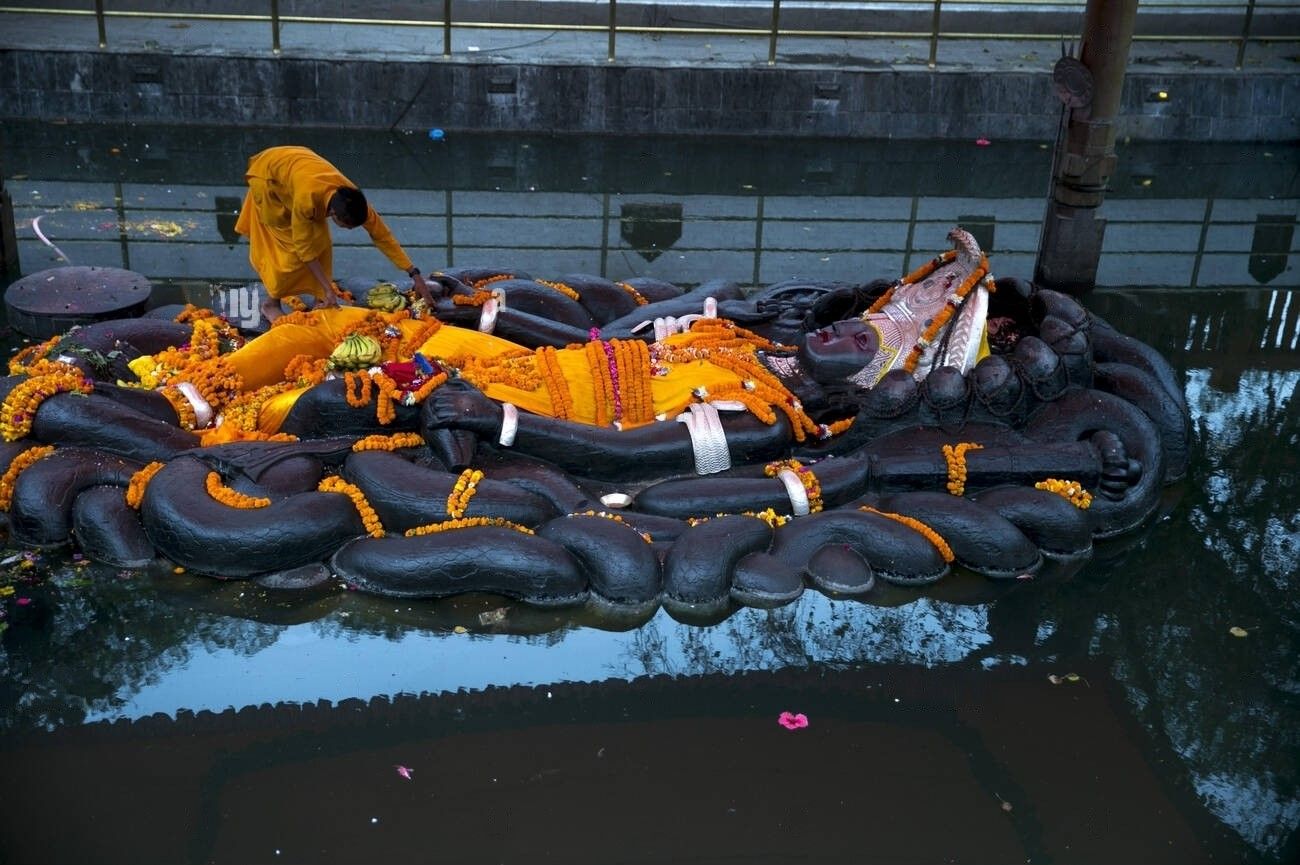
    Budhanilkantha temple lies at the base of Shivapuri Hill. The idol is an outdoor exhibit and can be viewed from many angles including from above for boaters. It measures over 5 meters long and is believed to be from the 7th or 8th century. The pond itself is believed to reflect the resting place of Vishnu in the cosmic ocean. The area is devoted to the temple-trusting Hindus, so non-Hindus can be able to see the statue but not get under hand.
    Reports suggest that even the kings of Nepal have avoided the site as a king is said to have died in the past post visiting the location. The site remains a powerful and now peaceful place for pilgrims and spiritual seekers.

    Highlights

    • Reclining statue of Vishnu on the cosmic serpent (5 meters long)
    • Open-air temple in a peaceful location
    • Non-Hindus are restricted from going near the idol
    • Sacred since the Licchavi era
    • Full pilgrimage location of Haribodhini Ekadashi

    8. Kumbheshwar Temple, Patan (Lalitpur)

    This temple is located in Patan. It is a historical temple distinguished in pagoda style, five floors and dedicated to lord Shiva. Kumbheshwar Temple was constructed in the 14th Century, and is only one of two five storied temples in the Kathmandu Valley. There are also smaller shrines in the temple complex, a public water reservoir, and a few sacred pond systems that the local people believe have a spiritual connection with the Gosainkunda Lake deep in the Himalayas.

    One of the most populated in festival celebrants within Kumbheshwar Temple is Janai Purnima, during which thousands of worshippers come to rebond the sacred thread and perform a ritual bath. This mixture of Newar-style encircling this temple and the pagoda is a sign of how the two distinct religions affected each other as well as a sign of the Newar lifestyle in Patan.

    Highlights:

    • Five stare pagoda dedicated to Shiva
    • Sacred ponds connected to Gosainkunda (mythically)
    • Bustling site during Janai Purnima festival
    • Among Patan’s most ancient, tallest temples
    • Bounded by an active bazaar and Newari Culture

    9. Krishna Mandir, Patan Durbar Square (Lalitpur)

    The architecture stone wonder Krishna Mandir stands within Patan Durbar Square. Krishna Mandir stands as one of the limited number of temples in Nepal that showcases Shikhara style construction.

    All other temple in Nepal are in the pagoda style of architecture that became dominant throughout the Kathmandu Valley. The temple was built in the 17th century during the reign of King Siddhi Narsingh Malla. The temple is called Krishna because it represented the best quality stone temple construction done throughout Nepal.

    The walls consist of carved panels that depict the Mahabharata and Ramayana. Each of the beautiful carvings are scenes that tell the story of Krishna, and imitate scripture for followers to visualize. Krishna Mandir is most important during Krishna Janmashtami when there are thousands of pilgrims.

    Highlights:

    • Made entirely of stone in Shikhara style
    • Built by King Siddhi Narsingh Malla (17th century)
    • Carvings depict Mahabharata and Ramayana
    • Main temple for celebrating Krishna Janmashtami in Patan
    • Rare representation of Indian temple architecture in Nepal

    10. (Kathmandu, Patan & Bhaktapur) Taleju Bhawani temples

    The Taleju Bhawani temples were the royal shrines of the Malla kings. The Taleju temples were there in the three Durbar Squares—Kathmandu, Patan and Bhaktapur—all dedicated to Taleju, the tutelary goddess of the Malla dynasty. All the Taleju temples is construct in the 16th century and were close to the general public for almost half the year. Only during Nepal’s biggest festival, the Dashain, were the shrines open to the public.

    The temples are significant not just culturally and religiously, but were also a witness to architectural, craftsmanship, and piety beauty. The Taleju temples were multi-level temples with intricately carved doors/windows that represented the royal character of piety, secrecy, and tradition. The Taleju temples provide unique examples of greater spirituality, as they connect the state with monarchy and the divine female.

    Highlights:

    • Royal goddess of Malla kings
    • Temples only open to the public during Dashain
    • Temples found in all three major Durbar Squares
    • Intricate woodwork and secret rituals
    • Blend of state power and divine worship

    11. Mahabouddha Temple, Patan (Lalitpur)

    Mahabouddha is known as the “Temple of a Thousand Buddhas.” It is a lovely terracotta temple in a secret courtyard in Patan. Built in the 16th century by a Newar merchant who visited Bodhgaya, India, it was build using terracotta bricks, and bricks were stamp with the image of the Buddha. It’s design after the Mahabodhi Temple, and it is a monument to enlightenment.

    An architectural and devotional sweetheart. While the Mahabouddha Temple is not large, its surroundings of tranquility and the temple’s exemplary detail make quite the impact mindset.

    Highlights:

    • “Temple of a Thousand Buddhas”, made from terracotta bricks
    • Inspired by the Mahabodhi Temple in Bodhgaya
    • 16th Century temple built by Newar craftsmen
    • Each brick has a stamped image of the Buddha
    • A peaceful and hidden gem in Patan

    12. Patan Durbar Square Temples (Lalitpur)

    Patan Durbar Square is one of several UNESCO World Heritage Sites with impressive temples and palaces. Among the most highlighted temples within the square are Bhimsen Temple (for the god of commerce), Vishwanath Temple (for Lord Shiva), Hari Shankar Temple (a deity for both Vishnu and Shiva), and Degutale Temple (the royal goddess of Malla kings); each of these temples shows something important about Newar architecture and religiosity.

    Patan Durbar Square is not only an important religious spot but also a bustling social and artistic area. Factors of both Hindu and Pallava influences can be find in the extravagant carved wood-and-stone façades, ornate stone lions, traditional metalwork, and chaityas (stupas) that might be scattered about as part of the grand design of temples complexes. In many ways, it is a living museum combining aspects of heritage, rituals for daily worship, and festival celebrations in a melded out-of-time experience.

    Highlights:

    • Home to Bhimsen, Vishwanath, Hari Shankar, and Degutale temples
    • UNESCO World Heritage Site
    • Unique combination of Hindu, and Buddhist elements, architecture, and ideas.
    • World-renowned Newari craftsmen and architecture
    • Cultural and ritual hub for festival ground.

    13. Bhaktapur Durbar Square Temples (Bhaktapur)

    Bhaktapur Durbar Square (UNESCO World Heritage site) is famous for its intact temples and Newari city that feels safe. The most well-known temple, however, is the Nyatapola Temple (aka Nyatapola Pagoda & tallest temple in Nepal) has 5 stories and is build for Siddhi Lakshmi. In the area, you will find the Vatsala Temple (made of sandstone and a unique bell) and Dattatreya Temple (made of one tree) dedicated to a deity representing Brahma, Vishnu, and Shiva.

    The mix of temples, the woodwork, the museum information about the Malla period culture, and continued living traditions for festivals like Biska Jatra show the art and culture of this sacred city. Bhaktapur is a great example of a living sacred city.

    Highlights

    • Nyatapola Temple- the tallest pagoda in Nepal (indication of red flag)
    • Dattatreya Temple- a temple dedicated to a deity representing a trinity
    • Vatsala Temple- stone architecture, bell (from Nepal or China)
    • A UNESCO world Heritage Site
    • A hub of traditional festivals like Biska Jatra.

    14. Seto (White) Machhindranath Temple, Kathmandu

    Seto Machhindranath Temple sits at the heart of Kathmandu, and worshipped by both Hindus and Buddhists as the god of rain and compassion. The temple has a white image of Avalokiteshvara (Karunamaya) and is thought of as the protector to the prosperity of the valley. This deity brings the monsoon rains and agriculture is rich.

    Every year there is an elaborate chariot procession (Seto Machhindranath Jatra) from the temple down through the old streets of Kathmandu. Because of the mixed worship and rituals, this temple can represent religious harmony in Nepal where gods are shared, and festivals bring people together regardless of beliefs.

    Highlights:

    • Shared worship by Hindus and Buddhists
    • Deity: Avalokiteshvara (Karunamaya)
    • Annual chariot festival in central Kathmandu
    • Symbolizes rain, fertility, and compassion
    • A wealth of art, architecture, and ritual

    15. Rato (Red) Machhindranath Temple, Patan

    The Rato Machhindranath Temple honors the red form of the rain caste deity and one of the most important deities for the Newar community, Machhindranath (Padmapani). The red Machhindranath is the deity to protect against drought and lack of harvest. The god has both a Hindu and Buddhist worship tradition, who shape the particular rites of the day.

    Each year, thousands arrive at this temple for the Rato Machhindranath Jatra, Nepal’s largest and most famous chariot ceremony. The Jatra is lively and lasts over a month while the very tall wooden chariot is drage up through the streets of Patan. The Rato Machhindranath Temple stands as a source of evidence of community worship and act of veneration that has stood the test of time.

    Highlights:

    • Deity of rain and agriculture, doesn’t matter who the practitioner is , who worships as hindus/buddhists
    • The grand or famous chariot procession – Jatra, held summer, every year
    • The center of the most important festival of Patan
    • The temple is near Pulchowk area in Lalitpur
    • A seasonal symbol of hope, togetherness, and faith.

    Conclusion

    If breathtaking scenery isn’t all you seek, and you enjoy authentic spirituality, the Kathmandu valley has both. It doesn’t matter if you’re a visitor on pilgrimage, a culturist traveler or simply the curious, the valley welcomes you to share in something that has no time — a sacred feeling where gods walk the earth with man.

    Travel to the Kathmandu Valley — The City of Gods — and discover that every temple has a tale, and every corner whispers of divinity. Contact us today at Happy Mountain Nepal, on Facebook, Instagram, or TikTok.

  • Bhaktapur Durbar Square: City of Devotees

    Bhaktapur Durbar Square: City of Devotees

    Bhaktapur Durbar Square: City of Devotees

    Bhaktapur Durbar Square, focused on the Kathmandu Valley, is a UNESCO World Heritage site, as well as a living museum, spiritual center, and a testament to devotion. Bhadgaon, or “City of Devotees,” also known as Bhaktapur by the locals, is another Kathmandu and Patan for preserved Newari culture, untouched architecture, and spiritual rhythm.

    This blog welcomes the door of Bhaktapur Durbar Square as a heritage heaven and spiritual paradise. Whether you are a heritage traveler, culture tourist, or spiritual pilgrim, something is waiting for all the city residents in the city of faith, art, and heritage.

    Bhaktapur Durbar Square

    Bhaktapur Durbar Square: A Living Heritage

    Bhaktapur Durbar Square is one of three in the Kathmandu Valley, the other two being in Patan and Kathmandu. It was the capital of the Malla Kingdom up to the 15th century and became a rich center of religion, art, and architecture. It’s incredible that it still survives so completely today, untouched as it were by the crazed modern-day mayhem that has uglified other city centers.

    Formally designated by UNESCO as a World Heritage area since 1979, the square itself contains pagodas, palaces, statues, and shrines stretching back as early as the 12th century. But it’s not some museum relic not by any means. That’s a thriving culture, still kicking and alive and still going on ritual, festival, and everyday worship.

    Why It’s Called the “City of Devotees”

    Bhaktapur was born into a religious life. Their people are still devoted to the old Hindu and Buddhist traditions that have prevailed for centuries now. The temple occupies every nook. The prayer is recited at morning and afternoon prayers. Vermillion, flower, and rice are being offered by the families in the morning before the gods daily. Religion here is thus not ritual life.

    • Kwopa, “City of Devotees” in Newari, is Bhaktapur.
    • Temples on every corner: Take 100m and you’ve got a shrine or stupa. Some family-sized and snug and teensy-tiny, others monolithic and public.
    • Puja (prayer) for most women is performed daily with water, incense, and flowers. Prayer, you learn at a young age — heck, even kids.
    • Conservation of tradition: Their religion is religion on the people’s culture. Religion is at every stage in fashion, be it a ceremony at birth or a death ceremony.
    • Religiosity is also spilling over into festivals, art, and even food. Bhaktapur is not by religion — it is religion.
    • Temple gate beauty, festival drum season, and sacrifice altars themselves – they share this commonality of worship. It is to stroll Bhaktapur’s streets and be among the devout for whom worship is greater than living the beat of the ordinary.

     Key Highlights of Bhaktapur Durbar Square

    1. 55-Window Palace (Pachpanna Jhyale Durbar)

    The central Square Palace, built by King Bhupatindra Malla in the 17th century, is a wonder of wood-carved palace frontage windows, all gilded by the local Nepali mythological legends and tales. It holds the National Art Gallery, the visual heritage of Nepal, as well.

    • Commissioned by King Bhupatindra Malla in the seventeenth century, it’s an architectural wonder.
    • It has been a government headquarters and royal palace as well since the very start.
    • Its 55 handsomely carved wooden windows constitute a respectful contribution to expertise.
    • The middle agora Durbar Incha was robustly ceremonial in nature.
    • It is now the National Art Gallery, where, amongst others, there is a Hindu and Buddhist thangka and scrolls temple.

    55-Window Palace (Pachpanna Jhyale Durbar)

    2. Vatsala Temple

    Its own self is a temple of sandstone, and the pillar supporting it is of ‘shikhara’ shape. That 2015 seismic test was boring into Goddess Vatsala Devi, this building, but to topple her, lying on stand first structure. It’s local bell—or the ‘Barking Dog’s Bell’ to say, for that matter, as locally name—is ringing up to date till now to this day with rituals.

    • Mother Goddess Vatsala Devi temple was built in Shikhara style—a North Indian temple built with a set of layer work of stone.
    • It had a massive bell called the “Barking Bell,” which was use for rituals.
    • It was demolished in the 2015 earthquake but has now been rebuilt with the assistance of local material and technology.

    Vatsala Temple

    3. Nyatapola Temple

    The third and most beautiful pagoda is the five-storied Nyatapola temple, 30 meters tall. It was constructed in 1702 as a dedication to the tantric goddess, Siddhi Lakshmi. Ascending is guarded by dreadful monsters — mythological and age-old ones — ten times the size of the original one.

    • Nyatapola — “five stories” in the Newari tongue — is the tallest in Nepal, constructed by King Bhupatindra Malla in 1702.
    • It is a tantric goddess Siddhi Lakshmi temple whose past has over-committed her to the extent of being tortured on a stone.
    • It rests on titanic images of Phattu and Jayamel battles, elephants, lions, griffins, and tantric deities.
    • And to relieve all thanks to earthquakes, it remains standing after centuries—a Newari marvel of art.

    Nyatapola Temple

    4. Bhairavnath Temple

    Bhairav, Lord Shiva’s warrior avatar, is the object of Bhaktapur bacchanalian festival, most of all Bisket Jatra, as the path of a monster chariot passes through orgiastic, crazed streets.

    The three-tall temple is owned by Bhairav, one of Lord Shiva’s fierce avatars. It is most particularly considered holy in Bisket Jatra.

    • Bhairav is also Bhaktapur’s protector.
    • He is taken care of by a huge wooden chariot on the highways on a holiday day.

    Bhairavnath Temple

    Festivals: Where Celebration and Faith Intersect

    1. Bisket Jatra (Nepali New Year)

    The Bhaktapur blockbuster. The royal procession of Bhairav and Bhadrakali chariot is an eye treat, a heart and soul treat during the Nepali New Year in April. Thousands of townfolk line the streets, hauling massive wooden chariots in a ritual tug-of-war.

    • Observed around mid-April, it is the New Year in the Nepal Sambat calendar.
    • It is a ritualistic tug-of-war between two quarters as they pull the chariot of Bhairav in opposite directions.
    • There are thousands of spectators who come to witness the tug-of-war, feasting, and ritualistic ceremonies like the installation of a huge wooden pole (Yosin).
    • It is a symbol of snake killings and the victory of good over evil.

    2. Gai Jatra

    Gai Jatra is a celebration of dead people. The ordinary folk, who have lost their near and dear ones in the past year, accompany the procession with disguises on, while small children march on the streets dressed as a goddess cow. It is a mixture of laughter, mirth, and feast—a time out of time.

    • August Gai Jatra is a celebration of dead people who died last year.
    • Funeral families dress kids up as cows—the sacred cow that guides souls to heaven.
    • There is sorrow with sarcasm because parades join weeping with mocking society because locals dress up too in shameful clothes, and mock social practices.
    • It’s healing by laughter and sympathizing,g and grieving.

    3. Indra Jatra & Dashain

    Valley-wide celebrations, celebrations gain additional meaning in Bhaktapur with the introduction of rituals, public celebrations, etc. Again, all of them stress the intimate involvement of religion, family, and society.

    • Celebrations observed by everybody in the Kathmandu Valley, the celebrations gain additional meaning in Bhaktapur.
    • Indra Jatra dance and performance procession to summon the rain god, who is the Living Goddess (Kumari), a chariot procession.
    • The largest Hindu festival in Nepal, Dashain, is celebrate with mass animal sacrifice, blessings by elders, and daily family use.

    Artisan Legacy: Devotion Through Craft

    Bhaktapur art is not decoration, it is devotional. Highly skilled artisans create metal sculpture, paubha painting, woodcarving and temple wares and ritual vessels. They are not commodities—these are soul products create in premodern arts.

    Woodcarving

    • Bhaktapur’s renowned Asian woodcarvings.
    • Temple door and window, beam and strut support gods, mythic heroes, and motifs.
    • No ornament— devotional work, to decorate the temple and shrine.

    Pottery

    • Tour the old family-making Pottery Square workshops.
    • Dry in the sun and dry, they, and burn in the fire, the pots, typically for sacrifice, and to hold King Curd’s Juju Dhau within.
    • Experiment with other workshop pots.

    Metalwork and Paubha Painting

    • Lost-wax technique was old and is used in metallic god idol production.
    • Newari religious paintings of Buddhist and Hindu myth are called Paubhas.
    • Newari versions of Tibetan thangkas.

    Spiritual Atmosphere: Beyond the Temples

    As much as they do monuments, so also does the countryside itself characterize Bhaktapur. It is in street shrines that red saris draped across incense sticks glint in the dawn light. The sun rises over centuries of rooftops upon which morning mantras are being chant by monks. Gentle tinkle of bells, devotional hymns, and softly humming community fill the twilight.

    Bhaktapur’s spirituality is not only in its temples and shrines. It’s in the street, in the air, and in people’s culture. Bhaktapur have been bless with centuries of everyday spirituality that’s a part of their culture. It’s not just on auspicious days—it’s in the air that they breathe, in their everyday life, and their lives.

    That’s the way that spiritual energy stays out of the stone temples and wooden houses.

    Bhaktapur Durbar Square

    Mornings That Begin with Prayer

    Morning is restrain in Bhaktapur. The sun rises on deserted streets, its path curving around the outstretched hand. Women emerge in red and burgundy saris, each bearing a small brass tray of rice seed, flowers, incense sticks, and water.

    • They make their way from place to place—some tiny wall niches, some free-standing stone lingams or stupas.
    • They leave everything there, lighting joss sticks, watering, reciting mantras.
    • The scent of jasmine and sandalwood drifts down the rear alleys, calming the quarter.

    This quiet hour is not for tourists. It’s for the locals. And if you stand stock still long enough, it opens to you the whole weave of how religion is thread through everyday life here.

     Communal Rituals and Quiet Acts of Faith

    Spiritual life is not big temples or big festivals. It is small and intimate, and it permeates the life of every man.

    • Grey-bearded elders sit with fellow pilgrims to read or recite scripture in temple substitutes (pati), rest houses.
    • Pilgrims practice circumambulation of sacred sites with some display of reverence, in the form of mantras or prayer wheels.
    • Fasting or pradakshana of some of the temples in a star shape on festival days or eclipse timings.
    • Ritual in front of Tulsi, or offering food in front of a dying person by relatives on the death anniversary.

    These practices aren’t done for spectacle. Religious unsmiling face, benevolently blended into life.

     Evenings Lit with Oil Lamps and Bhajans

    As dusk falls, Bhaktapur glows—not with neon lights but with the soft flicker of oil lamps.

    • In temples, diyo lamps are lit and place around altars.

    • Families light small lamps outside their homes, often under sacred images or on window sills.

    • Bhajan groups gather in rest houses to sing devotional songs accompany by harmonium and tabla.

    Evening prayer is less formal than morning prayer. It’s intimate, contemplative. The city draws a deep breath and settles in to think. Overnighters can get a good shot of Bhaktapur spirituality at night.

     Spirituality in Daily Life

    Bhaktapur doesn’t treat spirituality as something separate from everyday responsibilities. It’s not about retreating from life—it’s about enriching it.

    • Mothers bless their children with tika before school.

    • Merchants say a quick prayer before opening their shops.

    • Potters and artisans offer thanks to the gods before beginning their daily work.

    • Even food, like Juju Dhau or ceremonial rice, is prepare with religious intention.

    In Bhaktapur, faith is not a performance. It’s not reserve for priests. It belongs to everyone. Every act, from lighting a lamp to crafting a statue, is an expression of devotion.

    Tourists and Spiritual Experience

    Tourist can experience peace and view in Bhaktapur, it offers your soul and mind peace –

    • Walk empty morning streets and listen to shrieks of silence.
    • Sit on the temple steps at sunset and listen to prayers and clanging bells.
    • Stand for a minute or two in front of a small temple and watch — not just architecture, but people praying there.

    Guests can possibly experience the peace and tranquility that permeates Bhaktapur.

    Restoration and Resilience of Bhaktapur Durbar Square After the 2015 Earthquake

    Bhaktapur Durbar Square was devastated by the 2015 earthquake. Temples collapse, and the old structures were reduce to rubble. The resilience of Bhaktapur was not crushed, however. All of these buildings were meticulously reconstruct by local artisans with assistance from national and international aid agencies.

    Whereas every other restoration done in the recent past decades had the privilege of modern material and technique, Bhaktapur restoration had the privilege of traditional material and technique. Not only did Devotion operate in a scheme of buildings, but it even paid respect to the religious human being who built all the church buildings.

    How to Visit Bhaktapur Durbar Square

    Entry Fee

    Foreigners has to pay an entry fee (some NPR 1,500) for upkeep. SAARC nationals are charge less. Tickets are multi-day tickets and worth it if you are anywhere in the vicinity of Bhaktapur.

    Hoe to Get There

    Bhaktapur is 13 km from Kathmandu.  You can go by local bus, taxi, or hired car. Takes 30–45 minutes over a good road.

    Best Time to Visit

    • Spring (March–May): Clear sky for best photography.
    • Early morning visit: You can experience the culture and rituals of Bhaktapur.
    • Evening tours: Visit the temples shining with starry lights.

    Where to Stay: Live the Heritage in Bhaktapur Durbar Square

    Some of the heritage hotels in Bhaktapur have succeeded in retaining Newari hospitality in the traditional manner. The mansion hotels are hospitable. It is shelling out more than you would shell out for the evening, to view the square during the day without foreign tourists, to be amid the sacred stillness of the dawn puja.

    Recommended Stays:

    Bhaktapur Guest House

    Hotel Heritage

    Peacock Guest House

    Responsible Tourism in Bhaktapur Durbar Square

    Bhaktapur is a tourist town , but also a holy town to its inhabitants. It’s accessible to tourists but must be respectful.

    Respectful Travel Tips:

    • Dress respectfully, especially in temples.
    • Don’t take a photo of one or a ritual without asking permission.
      Don’t scale temples and bask in monuments.
    • Buy local arts directly from people.
    • Use greeting words like Namaste, Nepali, welcome.

    Conclusion

    Bhaktapur Durbar Square is not wood and stone: it’s character and personality. It’s the kind of place where temples are temples to gods, not tourists.

    Where the tolling of the bell, the acridity of the incense smoke, and all the wheezing and wheezing of mighty breaths which inhaled a prayer are part of the decades-spanning, if not century-spanning, count in religion.

    In a perpetually mobile world, second by second. However, Bhaktapur simply hangs suspended, never in rebellion, but in supplication. It supplicates alone, it seeks, it has survived the centuries. And as for the rest of us starved for a spoonful of high culture and spirituality and bedrock grounding. contact us today at Happy Mountain Nepal, on Facebook, Instagram, or TikTok.