Tag: Cultural Tour in Nepal

  • Nepal’s Practices: What to Do and What Not to Do During Travel

    Nepal’s Practices: What to Do and What Not to Do During Travel

    Nepal’s Practices: What to Do and What Not to Do During Travel

    Traveling to Nepal is much more than visiting a destination to check off your bucket list. It is about walking into a vibrant, living story that involves mountains, temples, and some of the warmest smiles on earth. The very air seems holy filled with the scents of incense from a temple and the sounds of children playing on rocky street corners. It is a country where nature and spirituality coexist in the most beautiful way, and every traveler is considered family. It provided you treat their culture with the same respect and love.

    Nepal’s cultural traditions means more than just good manners or etiquette. It is a way to connect. In this guide, we will examine what to do, and not do, while you are traveling in Nepal so your experience is felt, not just seen.

    1. Respect Local Culture and Religion

    In Nepal, spirituality flows through every heartbeat. You will see prayer wheels spinning, bells ringing, and devotees lighting lamps earlier than start at temples. Each and every action carries a meaning, and before you walk into any holy or non-holy site for that matter. Just take a moment to pause. Take off your shoes, take a look at the people around you, and settle into the peace.

    When walking around stupas or shrines, walk in a clockwise direction. This is in accordance with compatibility with the universe. Please do not touch statues or sacred objects closely or anything unless invited to do so. Placing your hands together in a simple “Namaste” signifies that you join them not only in their travel but their beliefs. 

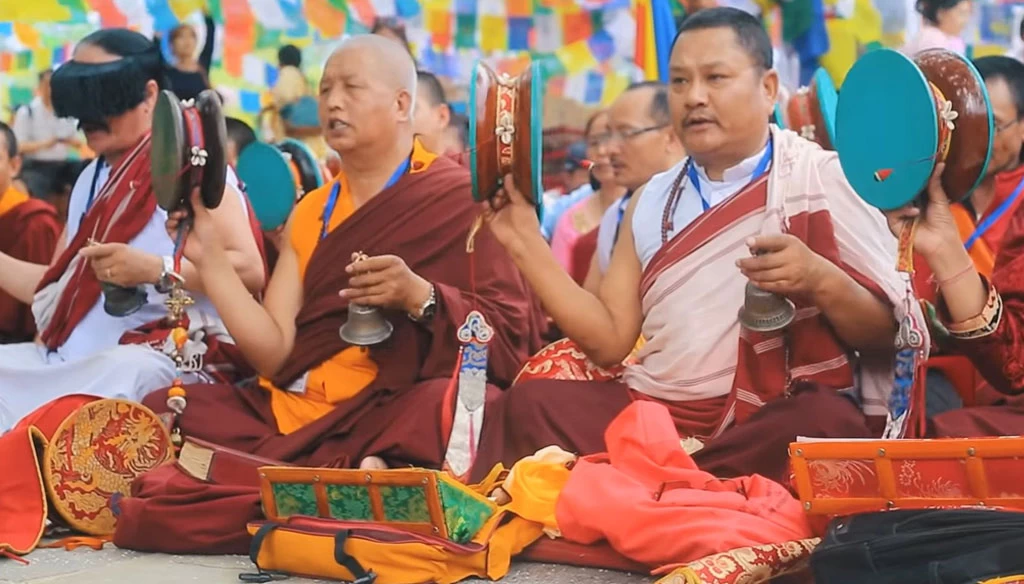
    A group of Buddhist monks in robes, holding traditional ceremonial instruments like bells and cymbals.

    Once they feel that respect, they will respond, disclosing to you. Their smiles will expand as they share their stories with you, calling you not a guest or visitor but a welcomed family member. It is the connections in those moments that travel last forever.

    2. Dress Modestly and Respectfully.

    The beauty in Nepal is beyond simply beauty, but modesty. In the villages, even the bright sun offers up a humble reminder of the quiet dignity of the people. Dressing modestly is not about limitation but simply feels right in accordance with the land and its people.

    Keep short skirts, skins, low-cut tops, and sleeveless shirts as your options. Especially in temples or simple places. A light scarf or light shawl is your best friend. It is very small to carry around, and very handy to wear if you need to. 

    When you wear respectful clothing, you will see a difference in the way that locals interact with you. Their smiles seem softer, their hellos more inviting. They see you, a person who is respectful of their lifestyle. And it will be in that very moment that you start to appreciate that travel is not about what clothes you wear. It is about what attitude you wear to show respect. 

    3. Always Ask Before You Take Photos

    The streets of Nepal are living poetry. Monks walk around in their standard red robes, women arrange marigolds, children huddle together to have some fun near stupas. Every photo is about to fly off the wooden canvas and into your heart. But first, ask. A little head gesture, a little question, “Photo lina sakchhu?” (Can I take a photo?), will make all the difference in a world where kindness is oft too easily taken for granted.

    In many parts of the globe, and especially in less urban areas. People can be shy or very calculated about being photographed. Respect their space and their privacy. There are certain places like Kumari Ghar or the inner of temples. That clearly asks you to not take photos in those areas, so please follow them. 

    When you take a moment to ask, the photos take on a new sense of emotion. They become more than just photos, they become shared moments, shared trust. With each smile you capture it will also come the warmth of permission and not intrusion. 

    4. Always Use Your Right Hand to Give or Receive

    In Nepal, the right hand is the hand of respect. Everywhere you offer money, take food from the serving station, or give or receive a gift, use your right hand exclusively and, if you want to be even more respectful, add your left hand to the gesture.

    The left hand is seen as unclean, by tradition and in terms of hygiene. It may seem trivial to you, but it is nevertheless.Locals do wherever and whenever they instinctively do it. It may seem like a little thing on your part, but it would mean something with respect to your awareness and consideration.

    And so it became that you would always reciprocate the smile and say, “We see you smiling.” I love this part of travel. That moment of connecting with our humanity without words.

    5. Respect for Food and Food Cultures

    Food in Nepal is considered as LOVE on a plate! No matter if it is a hot steaming dal bhat on a mountainside, or momo’s pulled apart at a street stall, food is so much more than just food. Food is kindness, prepared with care! 

    When food is offered, please even if you are not hungry, take a small amount. But it is important not to refuse to eat completely. Even if you say you are full, as this is considered rude. Please do not take from someone else’s plate. Food offered from another’s plate is considered “impure.” When possible, if you can eat with your right hand, please do; it is a magical way to connect with their culture! 

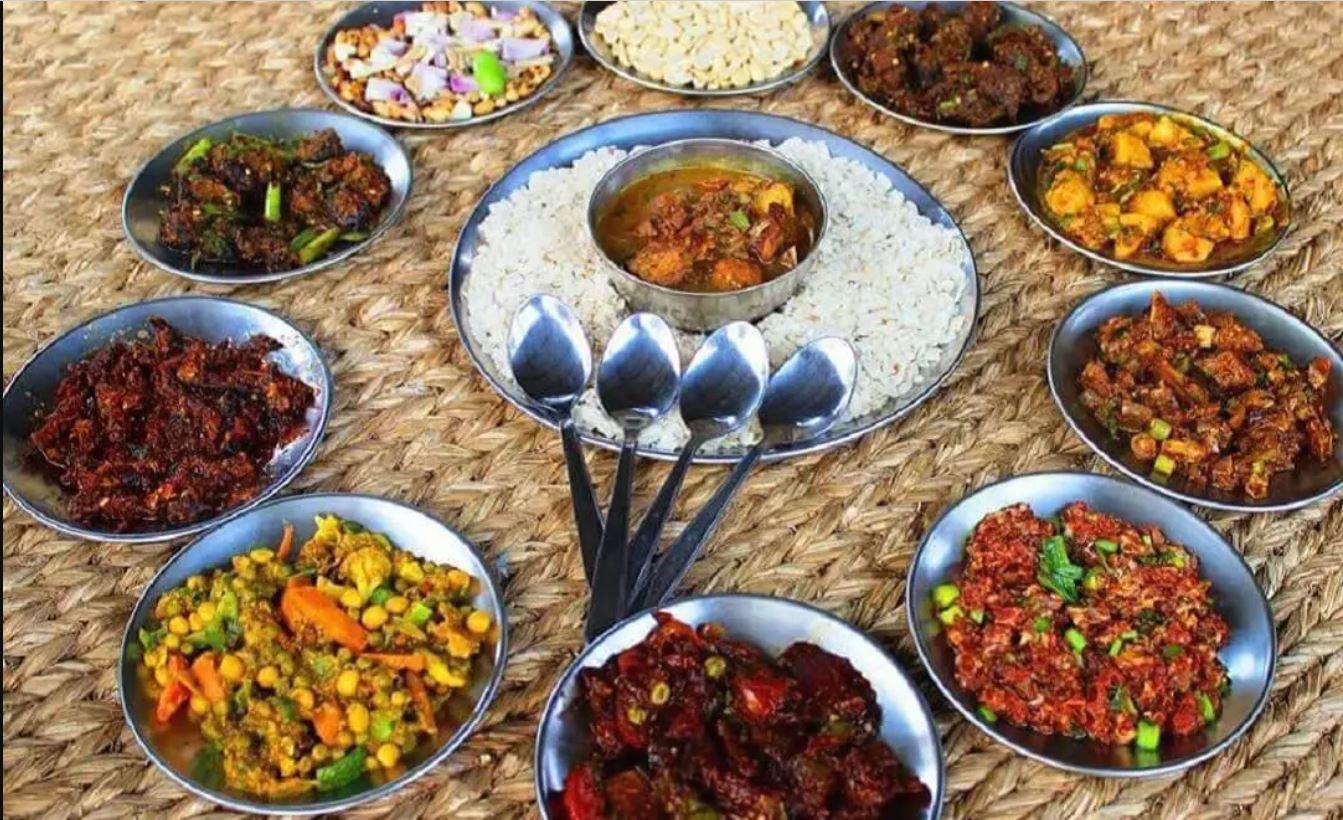
    Newari dish called samaya baji is showcases on the picture.dishes arranged on a woven mat. The main focus is a large metal plate containing a mound of white rice and a small bowl of curry. Surrounding this central dish are several smaller metal bowls, each filled with a different type of food, including what appears to be various curries, stir-fried vegetables, and other savory items.
    Newari Set

    Finally, after finishing your meal, to simply say “Mitho cha!” meaning delicious, it puts a huge smile on their face and a laugh, as gratitude is universal! Every meal is a story of kindness and connection!

    6. Care for the Environment

    The Himalayas represent more than a physical range of mountains or an awesome natural landscape. Every trail, every river, every forest has its own layer of sacredness. When you walk in, you are not just walking. You are walking in a continuity of prayers, a continuum of generations’ prayers.

    Do not leave litter, do not bring in plastic bottles or plastic bags. Or anything that will contribute to our own rubbish. Bring your own bottle and take your rubbish with you. And, be aware of the silence of nature. Do not play loud music or do anything to disrupt the space, the environment or the wildlife.

    There is also something fundamentally respect for the travel experience every time. You leave a space cleaner than you found it, which is a way of honoring the spirit of Nepal. You are saying thank you again, not with words but with an action. This is how the core of truly respecting the travel experience takes form.

    7. Learn a Few Words of Nepali

    Nothing opens your heart like language. Sometimes it is the simplest “Namaste” or “Dhanyabad” that creates smiles you cannot articulate. The local population observes how people are far more inclined to love and respect you. As you make an effort to speak their language. This shows natural humility and genuine curiosity. A simple phrase like “Sanchai hunuhunchha?” (How are you?) or “Ramro cha!” (It’s good!) goes a long way. The effort you put into speaking is what is most important.

    Conversing in their words pulls down the barriers of conversational exchange, transitioning conversations into friendships. The moment you no longer see the sights and sounds, but rather, see the soul, the journey becomes: Soulseeing. 

    8. Avoid Public Displays of Affection

    While love is universal, how that love is displayed changes in each culture. In Nepal, love is quiet and tender, typically expressed through care and not touch. Holding hands is fine, however, kissing or hugging in public may make others uncomfortable.

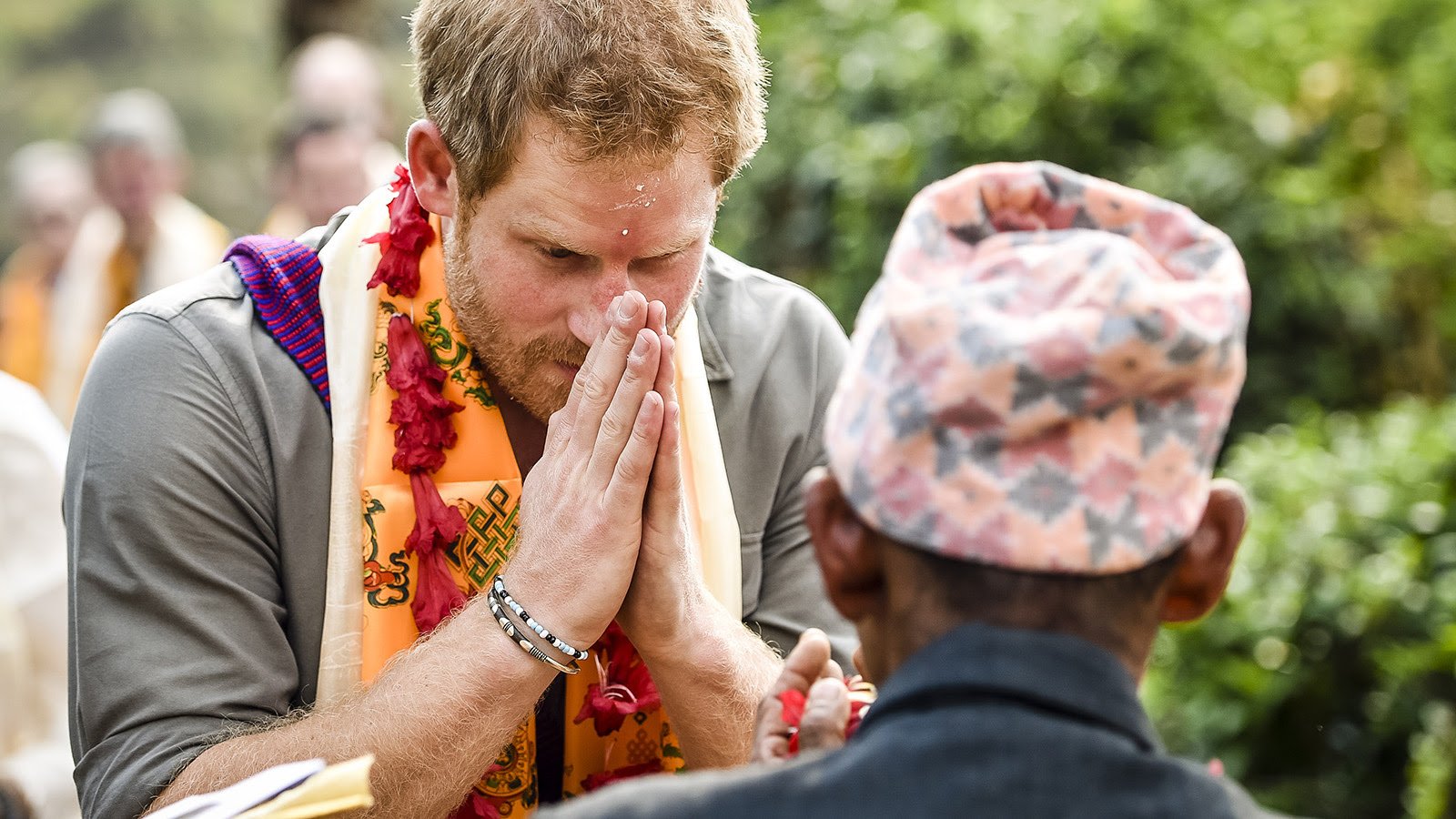
    The image is of a bearded Prince Harry wearing a patterned scarf and prayer beads, with his hands in a prayer/namaste gesture, interacting with a person in a traditional Nepali topi. It appears to be taken during his visit to Nepal.

    This is not a limitation, but an example of cultural grace. In this culture, private affection is kept private, and by adhering to this principle, you will smoothly integrate yourself into the culture at large. When you respect this aspect of the culture, you can move around Nepal with grace – perceived as a traveler who understands the heart of the culture. 

    9. Don’t Point Your Feet at People or Holy Objects 

    Feet are often considered lowly in Nepal, even small. They are the lowest part of your body, so pointing them toward someone, or even a deity, or to something sacred is considered disrespectful. 

    When you sit, especially on the floor, sit and pull your feet under you or let them point outward. If your foot touches someone accidentally, you will simply state “Sorry” or slightly otherwise bow. 

    These slight behaviors may seem to you as small things, but it says a lot about what kind of traveler you ar.

    10. The Skipping of Complaining and Comparing.

    Nepal has its own timelines that are slower, easier, and more heartwarming. While you are traveling, there may be bumps on the road, outages affecting power, and delays. Instead of berating the situation, take a breath and let patience guide you. It is all part of your narrative.

    The next time your bus stops unexpectedly for no good reason. Or worse yet breaks down on the highway, get out to look around. If the electricity goes out, take a moment to gaze upon the stars they are super bright here. 

    You will notice as you travel in Nepal, that perfection is not important. Perfection is easily masked in the imperfect places that tend to be beautiful. Once you stop comparing, and even begin to feel slightly provoked to give up all hope. The land will begin to gently reveal itself to you. 

    11. Always Ask Before You Enter a Home or Temple

    In Nepal, we refer to our homes and temples as sacred duties. You should never enter either without permission. If there is no door, you should ask still. Many times the inner shrine of the temple is limited to Hindus only.

    In moments of doubt, simply smile and inquire politely, “Can I enter?” Most will appreciate your politeness, and to the extent they can assist you they will do so.. The respect you give is your passageway to genuine experiences; natives will remember you not just as a traveler. But as a fellow human being who had genuine concern. 

    12. Honor the Monks and Nuns

    When you see monks in saffron robes or nuns sitting silently be humble to. Remember you are in the presence of devotion. Do not touch them. Speak softly and refrain from interrupting them during prayer time. If you want to give a gift of donation or charitable just give your gift with both hands and a quiet “Dhanyabad”.

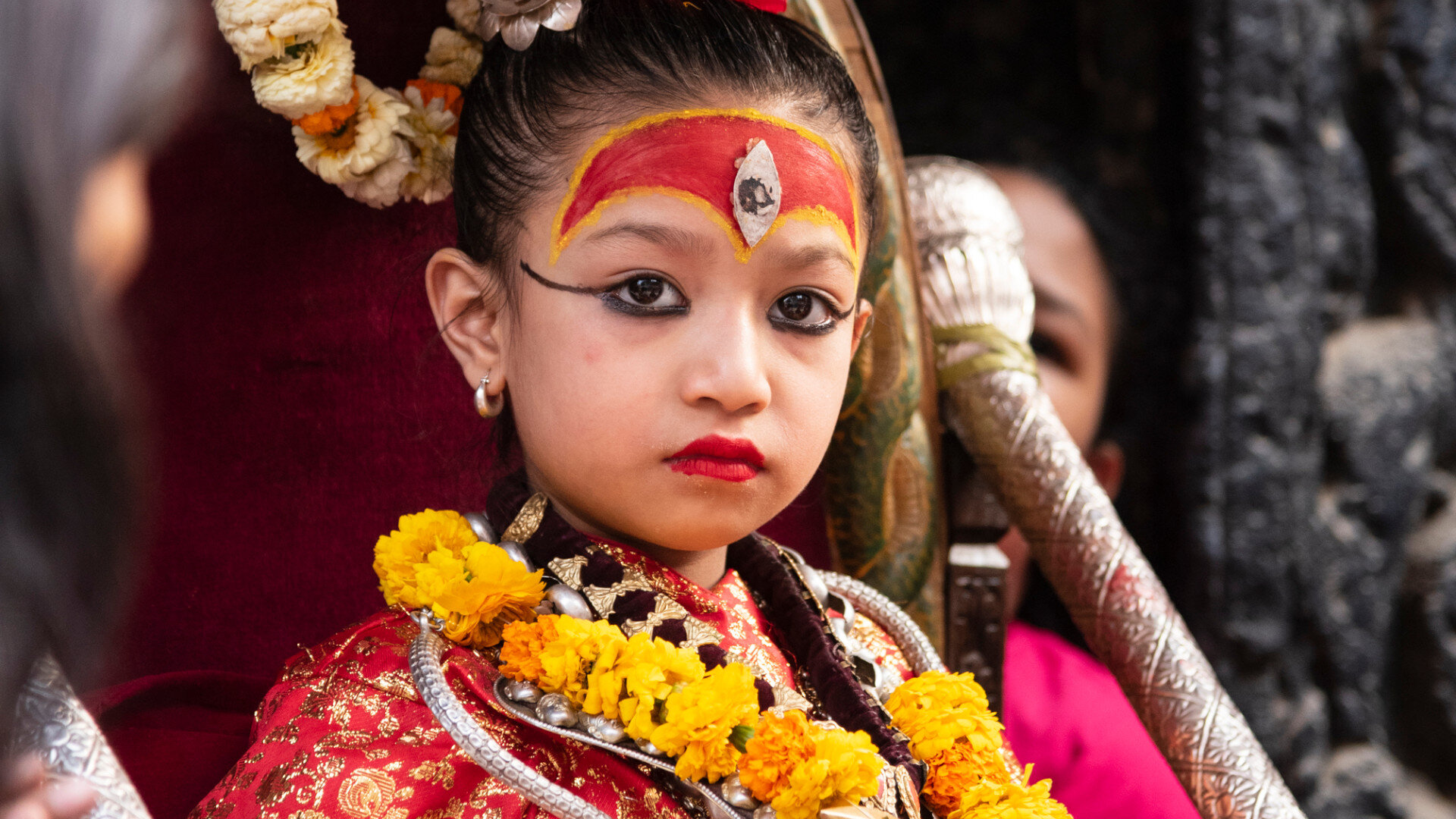
    A portrait of a young kumari girl in ornate traditional costume, headdress, and ceremonial makeup, displayed on a blog editing scree

    The experience of their calmness will astonish you. In those short interactions you will feel unnamable [or, feel] Something that goes beyond words, something that may grant lasting peace back to you home.

    13. Bargain Respectfully, Not Tactically

    Markets in Nepal are a truly remarkable explosion of color and life. Everywhere you go in a market. You will find people bargaining. You have to see it as a dance, not a sport. Smile at people, laugh with them, enjoy the jokes. Give a fair price, and appreciate the love and labor that went into the handmade wealth being sold. 

    A few rupees do not mean much to you. But they may mean a meal for someone else. When you give a fair price, you support households, and in turn support families and communities. As long as you shop respectfully and kindly. You can be confident that the items you purchase not only belong to the world of beauty and treatment but also to the gratitude of someone’s family. 

    14. Respect Festival and Ceremony

    Festivals in Nepal are just pure joy, music and dance and color and devotion. Dashain, Tihar, Holi, are not just festivals, they are sacred traditions. As you take part, watch for a moment before you engage.

    Do not block the procession of a celebration or touch something sacred unless permission was given. If someone offers you tika, or flowers, kindly graciously accept with your right hand as you lower your head. To experience these instances has a magical quality to it.  You may feel this pulse of Nepal, the spirituality, its people, and their love of life.

    Conclusion

    Visiting places in Nepal is not just travel but a journey into the heart. Each gesture of respect, kind word, and deliberate step unlocks portals not marked on a digital or paper map. Take action because you are respectful and want to create a bond between you and this sacred land of gods and mountains. When you travel with an open heart, you will not only be accepted by Nepal, you will be one with them for a lifetime.


  • Solo Travel in Nepal: Everything You Need to Know in 2025

    Solo Travel in Nepal: Everything You Need to Know in 2025

    Solo Travel in Nepal: Everything You Need to Know in 2025

    If you are looking for an independent traveler’s adventure that is packed with amazing nature, grounded in heritage, and reflective and conclusive self-discovery, then perhaps Nepal awaits you. Running from China to India, Nepal is not only the home of the world’s highest mountains.  It has, a place of calmness, spiritual peace, warm and hospitable people and countless cherished experiences – all in a welcoming and safe environment for a solo traveler to explore.
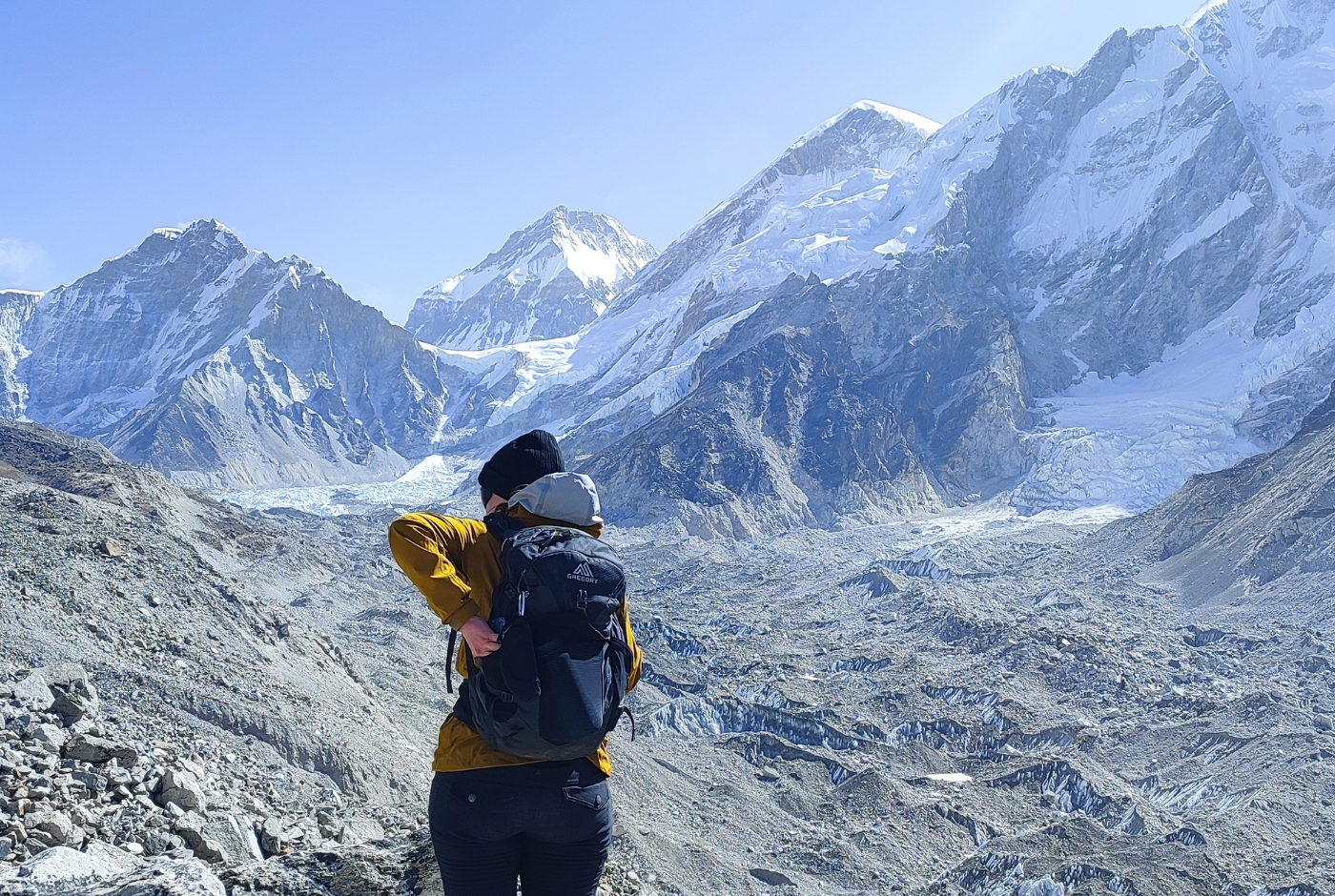
    solo travel

    In this blog we will explore why you will enjoy not only an experience of safe travel but also a fulfilling and life-changing experience, when travelling as a solo traveler in Nepal. Whether trekking the Himalayas, learning to meditate in old monasteries, exploring ancient cities and temples, or embarking upon your own solo experience in Nepal – every solo adventure in Nepal is special and unique!!

    Why is Nepal a good country for a solo traveler?

    There are many reasons why it is a great Country for a solo traveler but there is a fabulous combination of love and safety for an individual independent traveler:

    1. Low Crime Rate Against Travelers

    Compared to other travel destinations, Nepal has a relatively low crime rate in general, and particularly for travelers. Violent crime against travelers is very rare, and petty theft against travelers is certainly less common than other countries. The police and the local people will also take care of the tourists—especially solo travelers—so you will never be nervous at any time, whether walking the streets of Kathmandu or in a village at altitude. This means that Nepal is an outstanding destination to go to solo as a first-time traveler, or to travel alone if you just want to feel secure while traveling. However, I would not recommend a solo trip to Pokhara Lake.

    2. Well-Travelled and Well-Marked Trekking Routes

    From Everest Base Camp to the Annapurna Circuit, Nepal has some of the most recognised trekking routes in the world and among the best-marked trails in the world. The views are unrivalled, and they have refined their teahouse system with guides, porters, and trekking agencies so that everything is very smooth and easy for solo travellers. You can trek alone, or join a small group, and you will always find it easy to follow some established marked path, have an excellent map, or see like minded travellers going in the same direction as you.
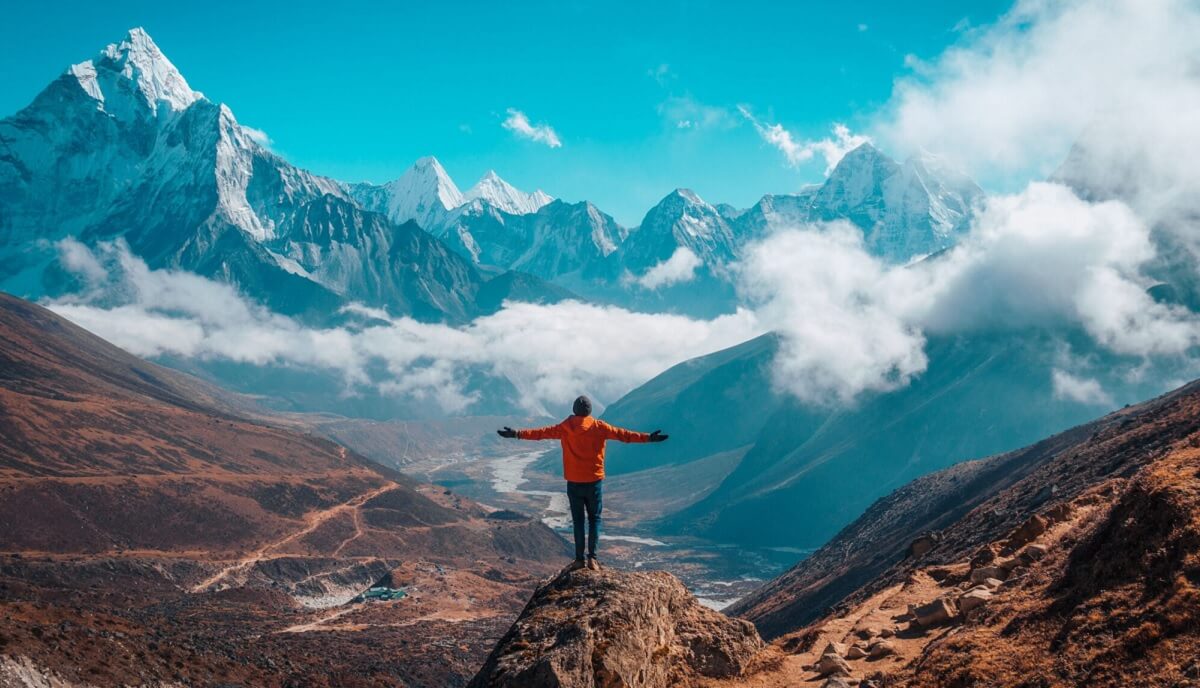
    solo

    3. Rich Culture and History

    Independent travel never shortchanges the experience, and Nepal’s ancient tradition and culture is overflowing with experience. Nepal has it all, from the extremely ancient temples of Bhaktapur and Patan to the environment of Lumbini, the birthplace of the Lord Buddha. The rich, multi-cultured, and complicated sets of festivals, ancient culture, and religious ceremonies offer you depth, sense, and an actual worth-while travel experience as an independent traveler.

    4. Cheap Travel Costs

    Nepal is another low-cost travel destination in Asia. Travelers will have the opportunity to eat in restaurants, stay in guesthouses, and travel via public transportation that will not cost nearly as much as in a western country or even another South Asian travel destination! Therefore solo travelers really get the best bang for their buck in a value sort of way because solo travelers will be able to spend a comparatively small amount but still participate in everything from adventure sports to cultural tours!

    5. Attentive and Friendly Locals

    The people of Nepal will make most solo travelers feel at ease. Since the Nepali local people who are warm, welcoming and helpful for many so every time a traveler has a question for directions, information and generally a nice chat, the Nepali people are willing to help travelers!  Many Nepalis speak broken English, especially in touristy areas which help facilitate interaction and fun interaction! Like their many accusations, and good-naturedness is heartwarming and hypnotic, and a solo journey quickly turns into a heartfelt human experience.

    Regardless of whether you heard the mountains calling you, peace and tranquility in ancient temples, or the playful spirit of finding yourself in a foreign land, Nepal shows you have absolutely everything a solo traveler could want for a safe, friendly, adventurous, affordable and soulful experience!

    Is Solo Travel in Nepal Safe?

    Safety is a major concern for any traveler – solo or not – and rightfully so. Fortunately, Nepal is one of the safest countries for tourists when compared to many other South Asian countries, even solo women travelers.

    Trekking Safety

    Nepal boasts some of the world’s most famous trekkings routes such as Everest base camp, Annapurna circuit, and the Langtang Valley. Trekking without a guide is allowed in Nepal but you should always consider hiring a licensed guide or even a licensed porter especially if it is high altitude or more remote locations. Not only for safety but for cultural experience and community whilst you are trekking.

    Travel Safety Tips for Nepal
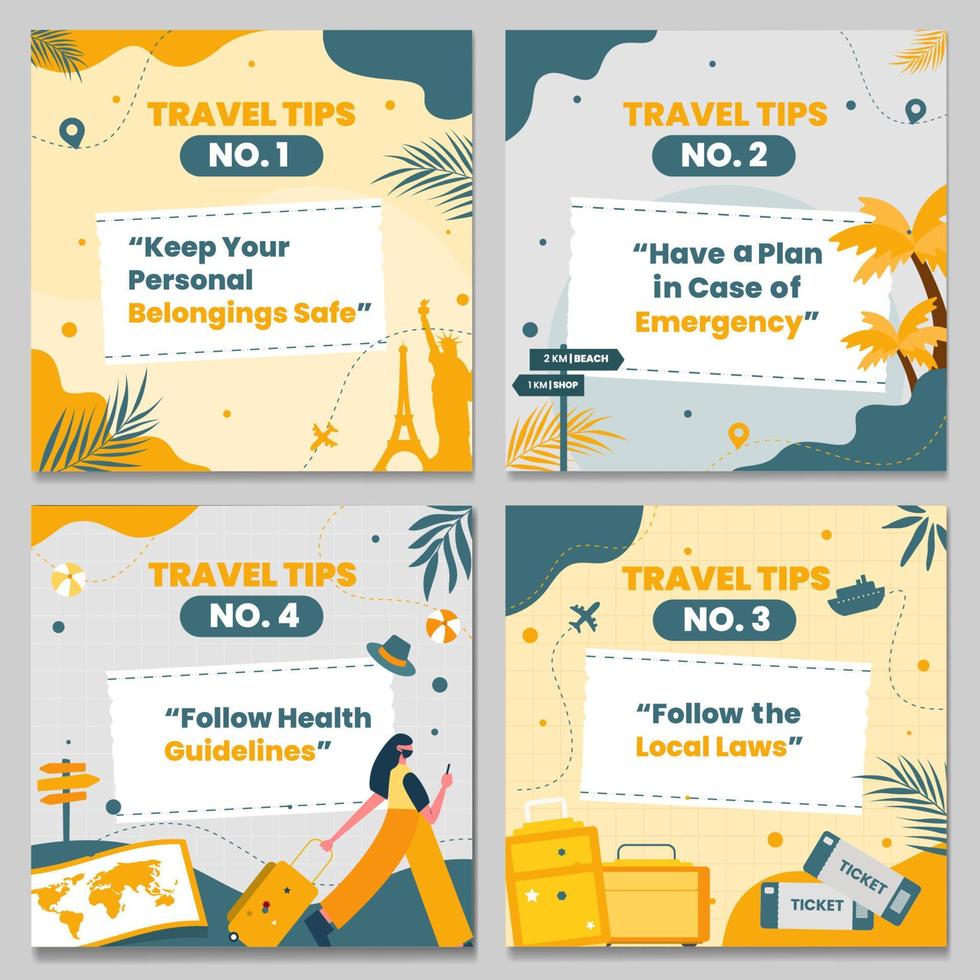
    solo travel tips

    1. Don’t Walk Alone at Night, Especially in Low-Lit Areas

    Nepal is relatively safe, but ideally try and not walk alone at night. It would be better to stick to well lit areas in the tourist areas, but in quieter neighborhoods you can be vulnerable to petty theft/could become lost. Ideally you should stick to main roads and think about returning to your accommodation before dark.

    2. Keep Copies of Your Passport and Visa

    Keep photocopies of your passport, visa, and any travel/tourism insurance documents on a reasonably frequent basis. Also, Keep the originals safe in your hotel (with a safe if they have one). If you lose your passport it will be easier to prove who you are if you have the copies of your identification wherever you are on trek, or after being stopped by police.

    3. TIMS card registration for treks

    If you are hiking or trekking, be sure to get a TIMS (Trekkers’ Information Management System) card. It is a simple step that can provide authorities with a log of your route. This will help the authorities locate you in case of any natural disaster or medical emergency. This is just a great, easy precaution for any leisure or solo hikers.

    4. Use registered transport

    While stationed in either Kathmandu of Pokhara, always book registered taxis or use ride sharing apps. You can also call your hotel/guesthouse to arrange transport for you, but do not hail random public transports and get in them – especially at night. This is just to prevent any scams or unsafe situations.

    5. Be Careful with Food and Water

    Street food can be very tempting and is part of the experience of the country you are visiting. Just make sure the food looks hot and clean. Obviously you will not be able to drink tap water, so either carry purification tablets, make sure you have a filtration bottle, or buy bottled water that sells it sealed. This will help you to avoid stomach issues and help you to stay healthy when you travel.

    Top Experiences for Solo Travelers in Nepal

    Trekking is the main reason that many people harness the freedom which comes with solo travel in Nepal. You can enjoy discovering trails which are perfect for your own level of challenge while also meeting other adventurers in this relatively safe country!
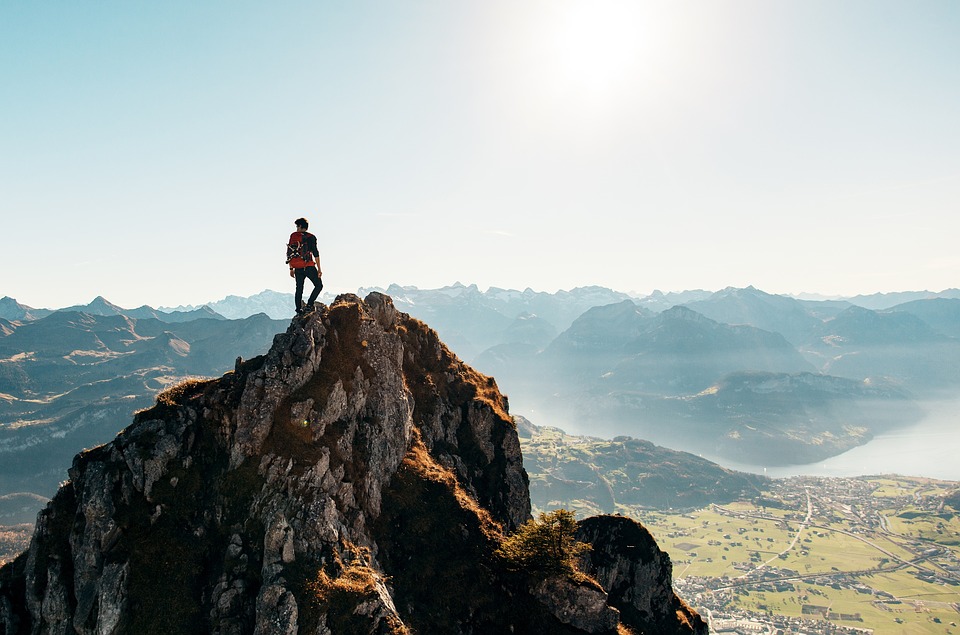
    solo trek

    1. Trekking Through the Himalayas

    Everest Base Camp Trek Everest Base Camp Trek is a once in a lifetime spiritual, physical, life and cultural leap. EBC is 5,364 meters (17,598 ft) high and is around the highest mass on earth 8,848.86 m (29,031.7 ft) mountain mass Mount Everest. With every step there lies another step closer to a mythological mountain range, century-old monasteries, hundred year-old villages and a soul-trek experience that you cannot brush off your soul.

      • Rhododendron and pine forest hide Lukla and Phakding villages,
      • Suspension bridges spanning high above glacier-fed rivers,
      • Yaks and alpine grasslands at Dingboche and Lobuche,
      • Rock moraines and snow ridges on the way to Gorak Shep and EBC.
      • Every bend in the trail, a new panorama, a new peak, another rest stop, and just soak it all up.

    2. Annapurna Circuit

    Annapurna Circuit Trek is the world’s most popular and fulfilling trekking trail that provides trekkers with the pleasure of an enchanting mingling of virgin nature, cultural heritage, and a sit-on-the-edge-of-your-seat adventure. Being at the core of the Himalayas, the trek is a trek from start to finish, whereby you would be able to observe the emerald valleys, meadows of alpine forest, and snow-white peak mountains, and also undergo the different traditions of the inhabitants. A seasoned trekker and also an amateur trekker taking it through an adventure trail, there is something for all at the Annapurna Circuit.

    3. Poon Hill

    Poon Hill trek! This is a great and popular trek through the Annapurna region that has a perfect combination of stunning scenery, fascinating villages, vibrant local culture and stunning mountain views over a relatively  short trek time. When compared to some of Nepal’s long arduous treks, the Poon Hill Trek (Ghorepani Ghandruk) is actually quite short.

    • Usually completing in 4 to 6 days, this trek is great for;
    • Novice or first-time trekkers
    • Families or travellers with limited time
    • Anyone wanting a great Himalayan experience that is more leisurely or easier

    4. Langtang Valley

    Langtang Valley Trek  provides a fantastic experience of much of Nepal’s off-the-grid, probably one of the most remote places in Nepal. Leaving the Kathmandu area with its great city surrounded by rural, untouched even in the still of it rural backgrounds, amazing high altitude landscapes, diverse culture, and fantastic serenity of Nepal’s most established treks; hence getting the best of both worlds. For experienced trekkers and beginner trekkers, the Langtang Valley Trek will remain with you.

    Langtang National Park is extremely diversified. You encounter various fauna and flora while trekking, and all of them are endangered species.

    1. Wildlife- Langtang National Park is inhabited by some of the wildlife, in the form of a cozy little family of animals, or at least the Himalayan tahr (mountain goat), the shy but fortunate little family of red pandas, and the Himalayan black bear.
    2. Flora- Flora- It is also beautiful. In addition to the rhododendron woods that you will be walking through, you’ll walk by magnolia trees, juniper, and other vegetation of the alpine variety.
    3. Glaciers and Icefalls- Glaciers and Icefalls – When trekking down from Kyanjin Gompa, you will probably be visualizing and gazing upon sufficient glaciers and icefalls to admire nature in all of her raw beauty.
    4. Solo-ability – You can choose your own pace, take breaks when you want, and decide on situations obligations spontaneously.

    2. Kathmandu Valley Experiences

    To describe Kathmandu as a sensory overload is a compliment; in the most positive sense. You have so many different aspects of the city; the crowding city streets, ancient temples, and artistic traditions. This city is surely unmatched.
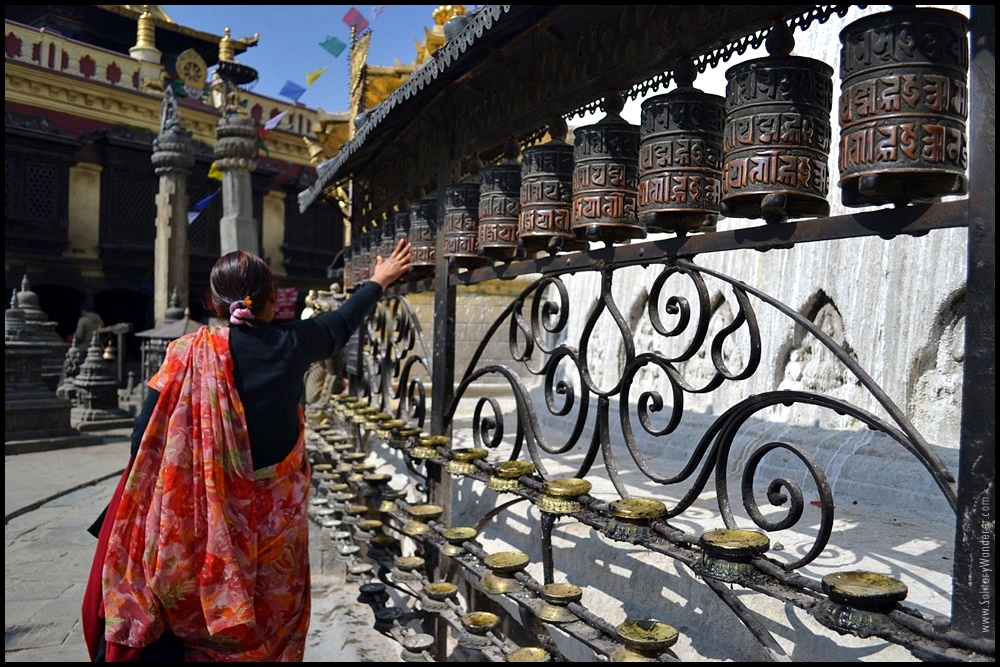
    solo kathmandu

    1. Swayambhunath 

    Atop a hill in the northwestern corner of Kathmandu, Nepal, is this most sacred and oldest Malla complex of Hindu and Buddhist devotion. The white middle stupa and all-seeing eyes of the Buddha and the golden finial of enlightenment represent enlightenment. Different clusters of small shrines, chaityas, and temples are scattered here and there on the grounds to represent centuries of human spirituality.

    Key Highlights:

    • Home of one of the earliest stupas of Nepal (over 2,000 years old)
    • The all-seeing eyes of Buddha symbolize awareness.
    • A perfect panoramic range of Kathmandu Valley

    2. Pashupatinath Temple

    With all the sanctity that has been bestowed upon it, Pashupatinath is Nepal’s most sacred Hindu temple on the river Bagmati in Kathmandu. Pashupatinath temple is Lord Shiva’s temple and a massive 500 or even larger temple, monuments, and ashrams. With a golden roof and silver gates being engineering wonders, the temple is only open to Hindus.

    Key Points:

    • Nepal’s most sacred Hindu temple
    • A temple in which Lord Shiva is worshipped
    • Open cremation is performed on the river ghats.
    • Mad crowd during Maha Shivaratri

    3. Boudhanath Stupa

    Boudhanath  is a Tibetan Buddhist sacred site complex (one of five in all of Nepal) just north of the country’s capital, Kathmandu. The stupa’s huge white dome, with a spire and Buddha’s eyes looking back at you would put a sense of calm and mystique into any traveler. Monks and supporters walk in the opposite direction around the stupa while chanting mantras and spinning prayer wheels.

    Highlights:

    • Largest stupa in Nepal
    • Center of Tibetan Buddhist culture
    • Prayer wheels circumambulation path
    • Surrounded by shops and monasteries

    4. Patan and Bhaktapur

    Patan Durbar Square  in the central part of Lalitpur City (Formerly known as Patan) and is famous for it’s preserved dudch (durbar) complex, shrines and temples. Although it was established as a learning and artistic center by the Malla kings. Bhaktapur Durbar Square is Nepal’s most preserved medieval town. 13 km from Nepalese capital city Kathmandu, formerly a kingdom overawing the latter, stands Bhaktapur today. Emerging from such archeological splendors as 55-Window Palace, Golden Gate, and Vatsala Temple, cobble-road thoroughfares, buildings a hundred years old, and colorful town courtyards

    Highlights:

    • Krishna Mandir: constructed all of stone,
    • Patan Museum: with faith paintings,
    • Centre for Newar art and architecture,
    • Golden Gate: finest example of repousse metalwork
    • Lively community of craftspeople

    Solo Perk:  Get lost in the narrow streets, go for a walking tour, or sip some tea and read a fantastic book at a rooftop cafe.

    3. Spiritual and Wellness Retreats

    More than a place for physical adventure, Nepal is also a spiritual place and a destination for all kinds of seekers from all over the world.
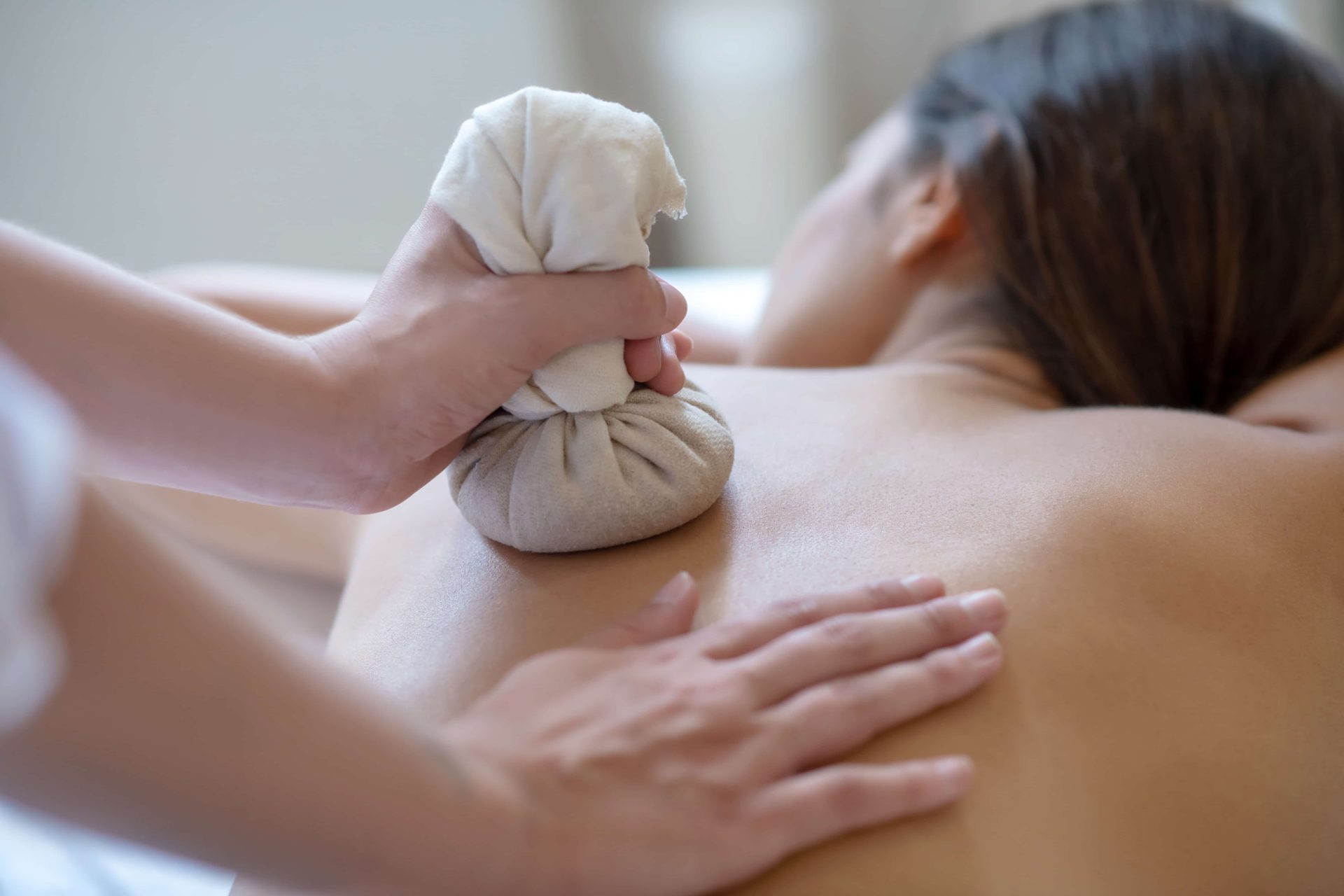
    ayurveda


    1. Yoga and Meditation Retreats

    Nepal has a world-wide, noticeable reputation for yoga and meditation retreats in such places as Pokhara, Kathmandu and of course Lumbini, the birthplace of Buddha. Many retreat programs offer schedules with various programs including, different opportunities to participate in yoga asanas (postures), mindfulness and breath control practice, spiritual philosophy, or a combination of programs depending availability. It doesn’t matter what level of experience you may have, in either, yoga, meditation or mindfulness practice the inviting atmosphere of complete tranquility allows you to disconnect from the stressors of everyday life, release, relax, pursue finding peace of mind, learn more about who you are as a person and settle into enjoying the view of the surrounding Himalayan mountains.

    2. Monastery Stays

    For a truly distinct and intense spiritual experience, travelers can stay at Tibetan Buddhist monasteries (the most frequent, Kopan Monastery, is in Kathmandu and has guest accommodations). Staying at a monastery can be an opportunity of a lifetime to immerse yourself in Buddhist philosophy and teachings by the monks who have dedicated their lives to practicing there; you will also have an experience of chanting, meditation and teachings during your stay in a tranquil setting.
    Guests are permitted to participate in some of the rituals/activities of the monastery, as well as have space to themselves to reflect and be immersed in and interact with a foreign culture within a spiritual context.

    3. Sound Healing and Reiki Workshops

    Participation in sound healing and Reiki workshops has grown more in local hotspots of Thamel in Kathmandu and Lakeside in Pkohara. All these holistic therapies are directed towards more body energy alignment in a healthier way by therapeutic sound waves or hands-on energy healing modalities. These are done by well-qualified practitioners. The Phoenix stress relief, relaxation, and emotional healing benefits of Reiki and sound healing, and the wider spiritual and wellness terrains of Nepal, were the ideal fit.
    Solo Perk: Reflect, reconnect, and restart your life, daily yoga and quiet time

    4. National Parks and Animals

    For independent travelers who prefer the nature experience off the mountains, jungle safaris and wildlife sightings of unusual animals in Nepal’s national parks are the draws.

    Elephant riding

    1. Chitwan National Park

    It is Nepal’s first national park and a UNESCO World Heritage site. Wildlife is your coffee and Chitwan’s lowlands are your cup of tea, then Chitwan is a wildlife paradise and will excite you to bits. It shelters endangered animals such as one-horned rhinoceros, Bengal tigers, Asian elephants and more than 500 bird species. Jungle safaris, boat tours, and cultural exchange with indigenous Tharu villagers will offer lots of chances to see one of South Asia’s world-famous wildlife conservation sites.

    2. Bardiya National Park

    If you are looking for a more out of the way and authentic jungle trip, Bardiya National Park in western Nepal has the same wilderness, remoteness, and isolation as other wildlife parks in Nepal but a fraction of the tourists. You would have a better chance of seeing a Bengal tiger here and engaging with wild elephants, gharials, and swamp deer in their own wild habitat. The wilderness in Bardiya National Park is breathtaking and it provides a wonderful option for a traveler in search of an idyllic off-the-beaten-path travel experience, guided jungle trekking, river safari options, and connecting with the many biodiversity of Nepal’s wilderness.

    Solo Perk: Safaris travel groups are readily available and commonly consist of other single travelers.

    5. Pokhara – Solo Traveler’s Paradise

    Pokhara is perhaps Nepal’s most laid-back and picturesque city. Framed by lakes and mountains, it’s the perfect place to relax.

    • Boating at Phewa Lake
    • Hike to World Peace Pagoda
    • Live music and cafes in Lakeside neighborhood
    • Paragliding and zip-lining for adventure-seekers

    Alone Perk: There is serenity around that gives room for journaling, contemplation, and welcoming nice faces across the world.

    Best time to travel in Nepal solo

    Spring (March–May): Warm days, rhododendron flowers in bloom, clear mountain views.

    Autumn (September–November): The peak trekking season, with crisp clear skies, and festivals.

    Winter (December–February): Colder but with less tourists (great time for cultural travel).

    Monsoon (June–August): Lush but slippery trails and rain.

    Tip: If you want better weather and fewer tourists, go in early December or late February.

    How to budget for solo travel in Nepal

    The beauty of traveling in Nepal solo is the budget and comfort level you can achieve and still get the experience you want. Whether you’re looking for a shoestring budget or comfortable mid-range or luxurious trip, there is some level of travel to suit every type of traveler in Nepal.

    As a budget traveler, on average expect to spend about $25 – $40 per day, often including accommodation in a shared room in a hostel, local food like dal bhat, and transportation on local buses. Trekking on a budget is easy in Nepal, with low-cost accommodation in teahouses, along with a low-cost trekking permit.
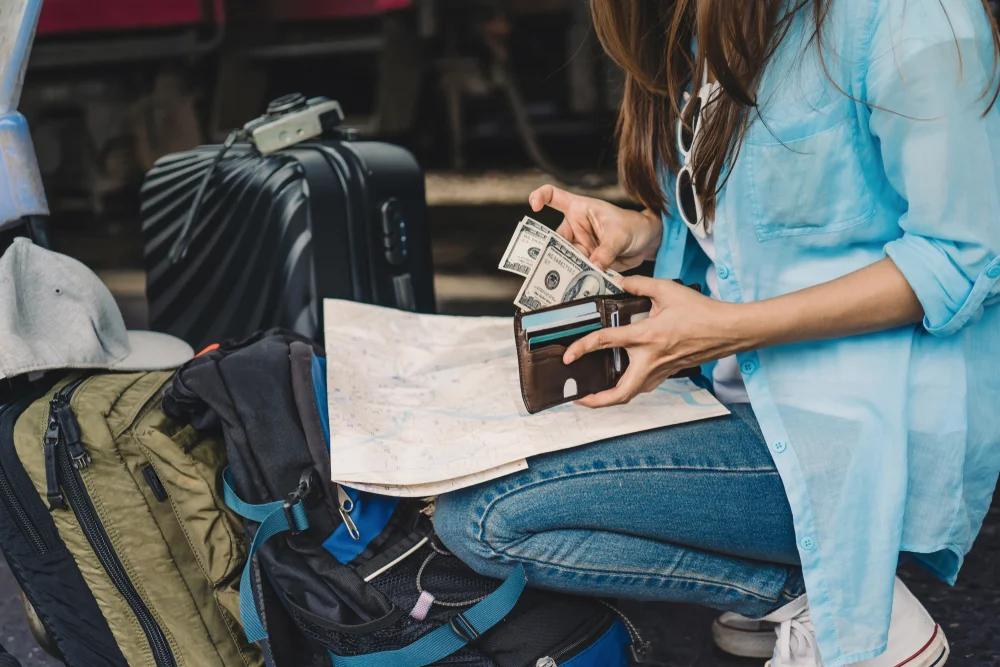
    For basic travelers, budgeting $50–$100 per day means there was some room for flexibility in planning your day. You could have stayed in nice rooms at some quirky boutique hotels or guesthouses, mix of local and western meals, and even domestic flights to places like Pokhara, or Lukla.

    This budget also beat the price of renting a transportation for guided day trips, or entry to cultural sites. If you decide to go luxury experience budget for at least $150 per day, which may include staying at something you might call an up-market resort, chartering a private helicopter ride into the Himalayas, hiring private guides, or eating gourmet meals.

    If travelling solo, you can benefit from long-term stay discounts. Most hostels, guesthouses, and Airbnb hosts offer reduced pricing for staying for the week or the month. In addition, wherever possible, accommodations should be able to help pair solo travelers with guides, porters, or other tourists at half the expense on treks and tours. If you plan ahead, travel in Nepal a solo traveller could be reasonably affordable and still quite rewarding travel experiences. You can get full value from every rupee spent.

    Meeting People as a Solo Traveler in Nepal

    One of the best parts of solo travel in Nepal is that meeting people is easy. Whether you’re hiking the mountains or traversing the busy city streets, Nepal will bring you in contact with a variety of people. Even if you arrive solo, there’s a good chance you will leave with friendships and stories created with other travelers as well as local people.

    Stay in hostels and guesthouses.

    Nepal’s hostels and budget guesthouses, particularly in places like Kathmandu and Pokhara or along the major trekking routes, are commonly filled with solo travelers from every corner of the world. Most of these places have a communal lounge, rooftop café, or even a group tour, which allows solo travelers to easily connect and potentially create travel buddies. It’s common for people to be communicating, organizing options, or making trek plans after a simple breakfast conversation.

    Meeting People on Trekking Trails

    Trekking in Nepal can be a surprisingly social thing to do. Whether you are hiking the Annapurna Circuit or heading to Everest Base Camp, you will pass through tea houses and meet fellow hikers as you travel along the trail. Most of the time meals are served at long communal tables, and evenings at the teahouses can be filled with stories, laughter, and conversations shared over warm cups of tea. You can even meet solo travelers who ultimately walk together as small groups and rely on each other for support along the trail.

    Participate in Workshops and Classes

    There is a plethora of classes and workshops in Nepal to participate in that will bring people together with similar interests. You could take a course in traditional Nepali cooking, attend some yoga or meditation with a monk in a monastery, take thangka painting lessons, or participate in community handicrafts. Each of these activities provides you with a meaningful experience and leads to networking and friendships with fellow travelers or local people.

    Volunteer in Local Communities

    Volunteering in Nepal; whether it is at one of the NGOs, schools, or even rural health posts is a great way to connect with local people and with other international volunteers. You will be part of a team, assisting in encouraging social change and developing a better understanding and appreciation of Nepali culture. Relationship and connection created by volunteering tend to go deeper than small talk, and leave lasting impacts on both sides.

    Stay in Community Homestays

    For a truly authentic and social experience, consider staying in community-run homestays in villages like Panauti, Bandipur, or the hills of Ilam. You’ll live with local families, join them for meals, and learn about their traditions and daily routines. These homestays offer not just accommodation, but heartfelt connections and cultural immersion that’s hard to find elsewhere.

    In Nepal, solo travel doesn’t mean being lonely—it often opens the door to richer, more spontaneous human connections that make your journey even more unforgettable.
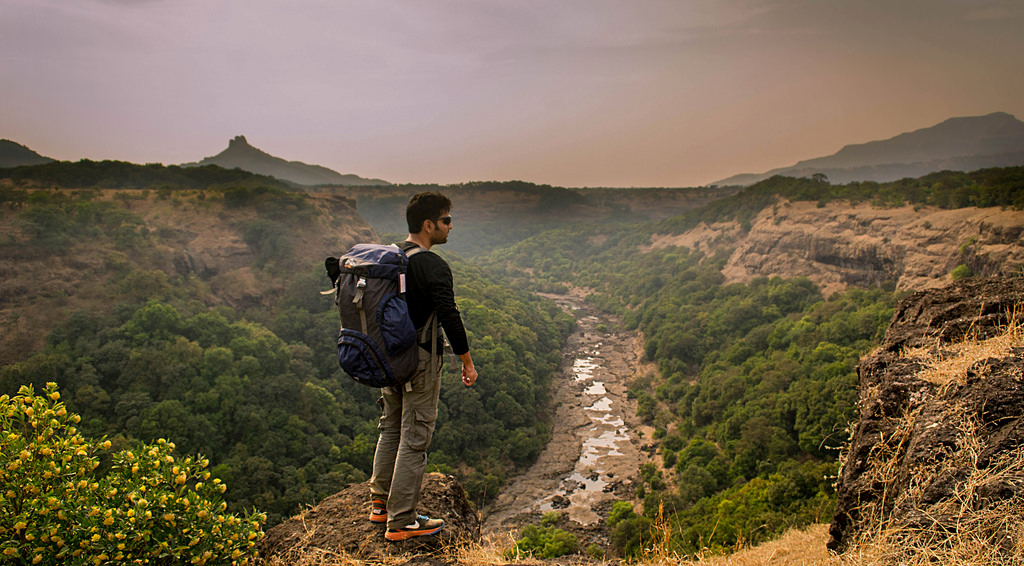
    solo traveller

    Advice for Traveling Females Solo in Nepal

    Traveling as a female solo traveler in Nepal can be safe, but it is still smart to take precautions. Here are some tips for traveling wisely:

    • Dress modestly (especially in the countryside or religious places)
    • Avoid isolated areas at night
    • Stay in accommodations that have good reviews
    • Trust your intuition and ask locals when in doubt
    • Look into joining female-led trekking groups or hiring a female guide

    Bonus Tips: Nepal is home to tons of women-centered travel agencies, homestays, and retreats. Many work with local women to empower the already amazing Nepali women. Giving back to them makes your trip more fulfilling.

    Conclusion: Nepal Will Change You—for the Better

    Solo travel in Nepal isn’t just a vacation. It’s a journey of self-discovery, growth, and connection—with nature, people, and yourself. You’ll come for the mountains but stay for the meaning. Whether you’re looking to disconnect from stress or reconnect with purpose, Nepal opens its heart to you.

    From spiritual retreats to thrilling adventures, quiet sunrises to colorful festivals, Nepal offers an experience that is safe, rewarding, and truly life-changing. Contact us today at Happy Mountain Nepal, on Facebook, Instagram, or TikTok.

  • Only in Nepal-You won’t find other places in the world

    Only in Nepal-You won’t find other places in the world

     Only in Nepal-You won’t find other places in the world

    Nepal is a small and broad nation located between India and China. It contains a nature, culture, and spiritual traditions that are unmatched. It is also home to traditional ways and amazing traditions within some of the most magnificent beauty you will ever see; you will notice that even in the same space you will see some of the most subtle, staggering, haunting, exeeding extraordinary beauty that you could ever imagine. The adventures unique to Nepal are extraordinary.

    1. Home to Mount Everest: The Roof of the World

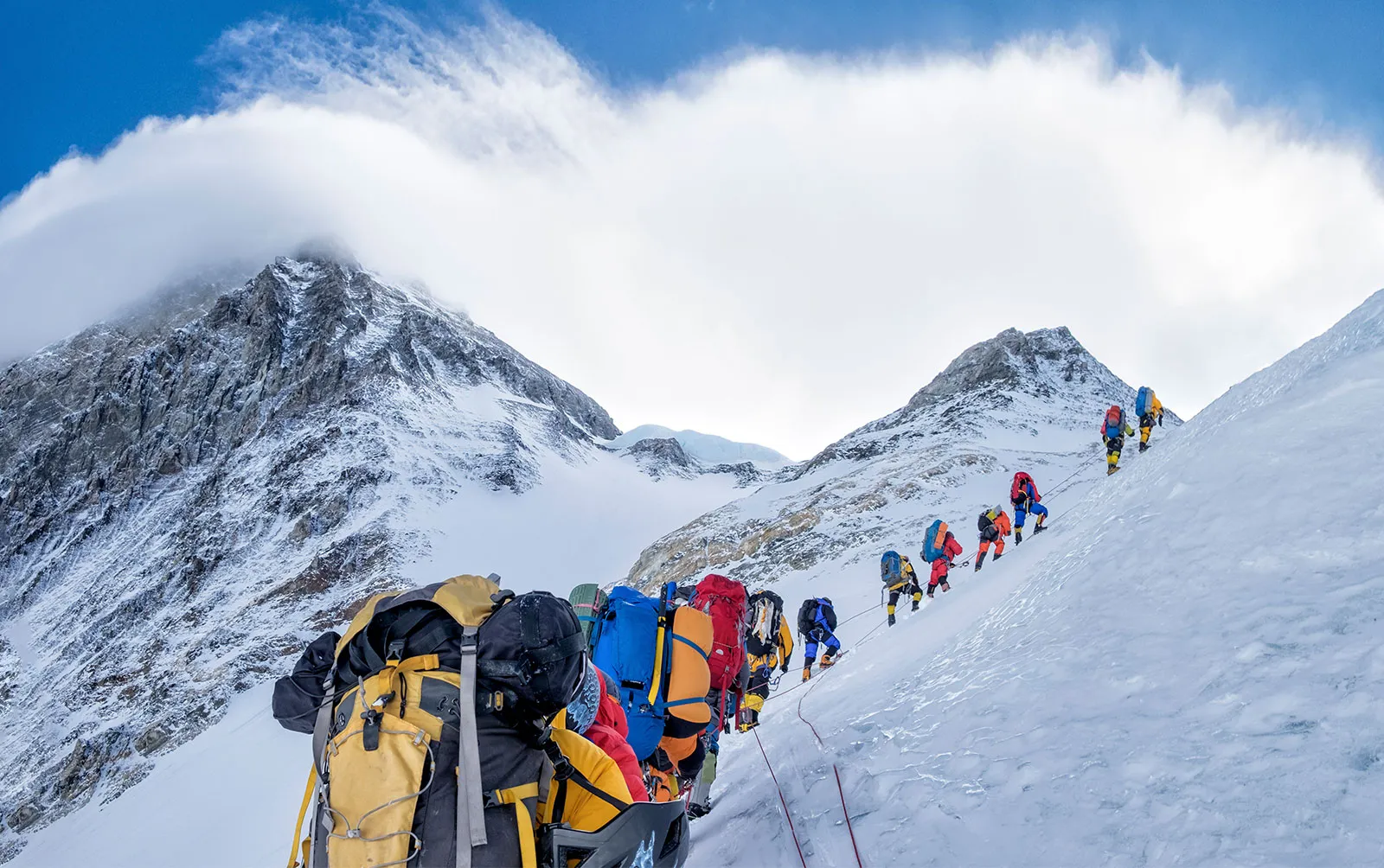
    You will witness the grand skyline of the elevations rise over the horizon. The incredible view from Kala Patthar near Everest to the south face is the best. When you reach Everest Base Camp you will be able to view the Khumbu Icefall, the dangerous zone for climbers heading toward the summit.

    Above the records, there are multiple cultural meanings to Everest in Nepal known as “Sagarmatha” and “Chomolungma” in Tibet. As long as there have been climbers, trekkers, and adventurers, there has been the highest mass of land drawing people to the highest point on earth. Being up close and personal with Everest touches on the humanity of man and the power of nature.

    only in nepal mount everest


    Everest Base Camp Trek will forever be a spiritual, physical, life, and cultural quantum leap in your life. At 5,364 meters (17,598 feet), Everest Base Camp sits around the highest mass on earth, Mount Everest (8,848.86 meters / 29,031.7 feet). Each step closer is trekking on mythological mountain ranges, one hundred-year-old monasteries, old villages from one hundred years ago, and a soul-trek experience that will never leave your memory.

     2. The Living Goddess Kumari

    A Sacred Tradition of Kathmandu valley in Nepal, the country of older religion and spirituality, is also the home of the world’s strangest living ritualthe Kumari goddess, or Living Goddess. The flesh-and-blood embodiment of earth womanhood, the Kumari is an early-teen girl who must endure a stringent ordeal of selection and also be deified in crown ceremonies, celebration, and everyday living.

    kumari- only in nepal

    The everyday life of the living goddess, the Kumari, of Nepal is unsettled by ritual purity, complete isolation, and flawlessly symbolic religious significance. With her selection as early as the age of 2–5 years old, the Kumari says goodbye to the birth home and begins her goddess life at the Kumari Ghar (goddess house), the ritual house in Kathmandu Durbar Square. The Kumari’s role is symbolic in and of itself, as the devotees consider that Taleju (the goddess she incarnates) is present in her body.

    3. Birthplace of Lord Buddha

    Right in the middle of the peaceful plains of southern Nepal,  Lumbini is way more than history-it’s a spiritual thing. Utterly sacred, considered to be the birthplace of Siddhartha Gautama, it calls travelers and pilgrims alike to ponder over his life and teaching. It is also one of the  UNESCO World Heritage Sites 

    Mayadevi temple

    The Mayadevi Temple: Lumbini

    The Mayadevi Temple lies right at the center of Lumbini – a rather modest edifice with great relevance. It shows the very spot where Buddha was born. This temple also enshrines the Marker Stone, considered sacred as it shows the very spot where Siddhartha entered this world.

    Peaceful Meditation

    Lumbini is not a sightseeing place; it’s a place where one has stopped and reflected upon. Meditating in the calm Peace Garden, taking gentle strides along the silent canal crossing inside the complex gleaming white World Peace Pagoda represents harmony and brotherliness.

    4. Diverse Festivals All Year Round

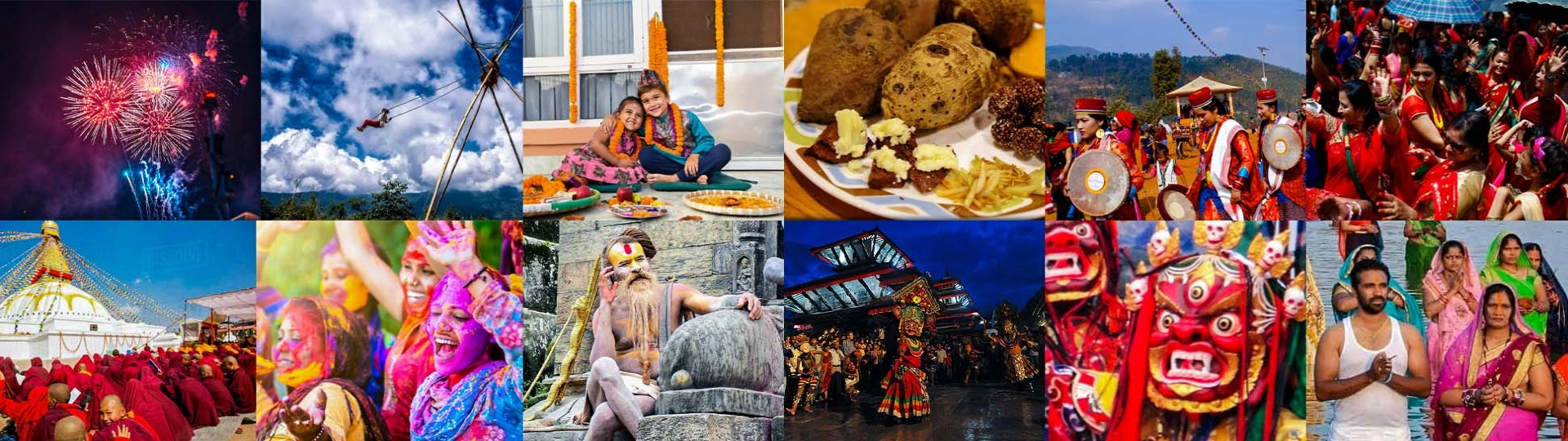
    Dashain, Tihar, Holi, Indra Jatra, and Teej festivals are a few examples from a very long list of colourful festivals celebrating the important festivals of both the religions of Hinduism and Buddhism. An experience that is part of the identity for both individuals and visitors to Nepal.

    A few festivals are mentioned below:

    Dashain

    Dashain the biggest Hindu festival in Nepal, celebrates the annual triumph of Goddess Durga over evil. families gather receiving blessings from each elder relative, and share a celebratory meal. Homes are adorned with jamara (barley grass), and handmade kites fly in the sky!

    Tihar

    Tihar is also called the festival of lights honors crows, dogs, and cows (in that order) on different days. Itis filled with oil lamps illuminating houses and decorative patterns of colours powder (rangoli) creating a beautiful, ceremonial festival culminating Tihar with Bhai Tika marking the love between brothers and sisters is one of the major events.

    Holi

    Holi is the colourful festival that celebrates spring, victory over evil, and the joy of life. It is a very vibrant festival and the festival of colours where, in the spirit of good will, people throw lots of coloured powder as well as water, into it all! There is so much sound and laughter on the street.

    Indra Jatra

    Indra Jatra slowed down in action when it mostly became a festival in the Kathmandu city regions to worship the rain god Indra. It was a blending of tradition dancing, masked dancing, and procession, alongside the living goddess Kumatronck Kumari. It was a great festival of spirit, music, lights, and thousands of people.

    Teej

    Teej is primarily a festival of women, ule, that have been officially married or not, fast and pray for a good husband. After fasting and praying, women wear bright red saris to symbolize the Goddesses, sing religious songs, and dance. It was a testament to devotion, sisterhood, the comidas, and the empowerment of Nepali women.

    5. World-Class Trekking Routes

    Nepal is a trekker’s nirvana. Nepal has stunning scenery, snow-covered mountains, and a huge range of cultural treks. There is a trek for everyone and every need, from a short scenic stroll to a four week trek through undiscovered wilderness.

    Everest_Base_Camp_Trek

    1. Everest Base Camp Trekking

    Everest Base Camp Trek is the king of Nepal treks. The trek begins with a Himalayan flight to Lukla and climbs through picturesque color villages like Namche Bazaar and Tengboche. The trek is a distinctive cultural trek of the Himalayas with overnight stops only in the old monasteries and Buddhist chortens along the trek.

    2. Langtang Valley Trekking

    Langtang Valley Trekking, a day trip to Kathmandu, is a glacial stream alpine gem and genuine mix of Tamang and Tibetan traditions. The trek gradually climbs the banks of the Langtang River, to the dense forests of pine, bamboo and rhododendron, before revealing incredible views of rolling lush alpine grasslands.

    3. Ghorepani Poon Hill Trekking

    Ghorepani Poon Hill Trekking is Ideal and short for the tight budgeter and the first-time trekker. But with plenty of fine scenery. From near Pokhara itself. Just south of Nayapul, it winds its way up through a fine rhododendron forest and the Gurung and Magar villages

    4. Gokyo Lakes Trekking

    A serene day trekking from Everest Base Camp, the Gokyo Lakes Trek is a glacier valley trekking to a chain of blue turquoise lakes beneath some of the world’s highest mountains. The Lukla trek is all that happens in an EBC tour before trekking to Dole and Machhermo.

    5. Mardi Himal Trekking

    Delightful and short trekking to Mardi Himal Base Camp on virgin ridge and forest. After Annapurna Base Camp trek, the trek is less populated by humans and a peaceful and calm trekking experience. The trek runs smoothly with good pace from 1,000 meters well above 4,000 meters

    6. The Chitwan Jungle Safari

    It is the first national park in Nepal established in 1973 . It is located in the hilly geographic region of southern Nepal, in the subtropical lowland, with vast grasslands and woods with rivers interspersed. Chitwan National Park stretches to about 932 sq.km.

    Chitwan National Park: A Wildlife Safari Adventure

    Some of the safari options available in Chitwan include the following:

    Jeep Safaris: This has got the highest popularity as this will help you to explore large areas of the park and watch wildlife in style. Elephant Safaris: Probably one of the most traditional ways of looking for the rhino, tiger, and other animals. These offer a vantage view on how the park looks like but the recent years, people have raised several concerns on the animal rights aspect of these tourism.
    Canoe Rides: It is a gentle chance to spy on the aquatic animals that inhabit the park and these are crocodiles, freshwater dolphins and birds. Nature Walks: Peculiar guided nature walks with the help of specialist offer a wide range of chances of gaining more extended knowledge of flora and fauna which can be observed as the trails are located within the territory of the given forest area.

    7. The Unique Blend of Religions

    In Nepal, Hinduism and Buddhism coexist in a manner which is extraordinary in its peacefulness that permeates the culture of this place and the people – lives – beliefs – and arts. It is extraordinary to see the tranquil coexistence of these two religions, which in conjunction with their shared festivals and intertwined traditions, would appear to have harmony amongst their belief systems and practices.

    It is extraordinary! We can see the way the two religions coexist in practice and belief, even in the case of their mutual merging, from two key sites. This unique fusion produces a culture, that is deeply rooted in the collective identity of Nepal.

    8. Traditional Handicrafts and Art

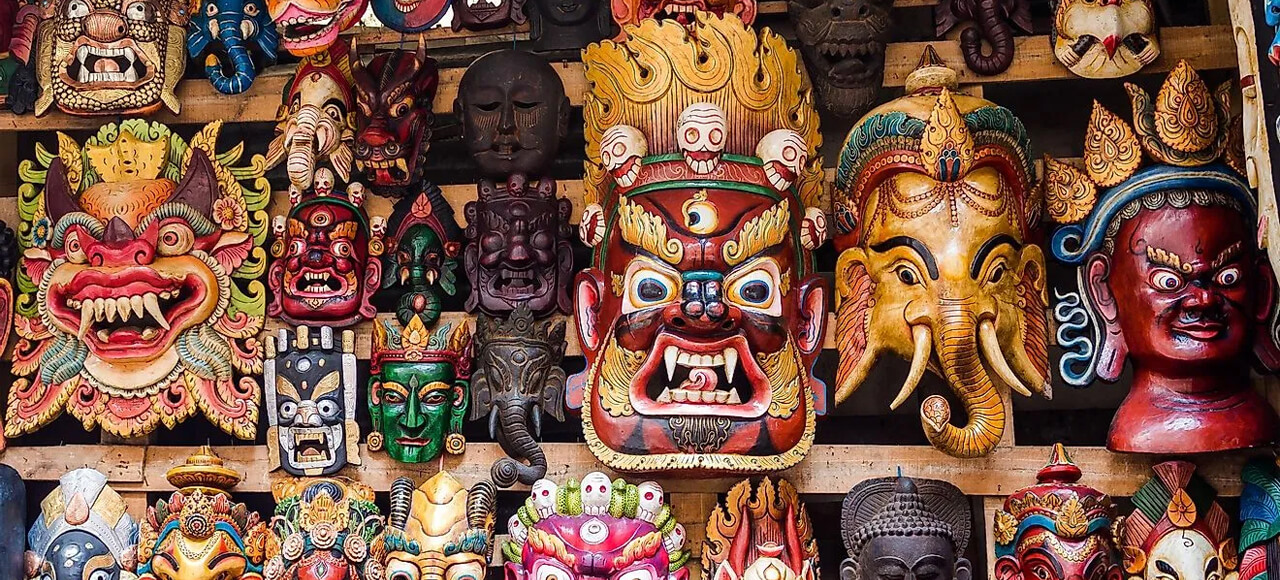
    Nepal is famous for handicraft and souviners.Nepal’s holy Nepalese culture and Himalayas also hold within them Nepalese crafts heritage’s that of. Nepalese crafts are scripting Nepalese history, the Nepalese tradition, and the Nepalese religion. Hand-painted Thangkas to Pashminas colors, rainbowed colors such as, pomp tastefully created one of each single is scripting a new page in Nepalese art history.


    Thangka Paintings: Sacred Hndicraft Buddhist Art

    Rarely replaceable thangkas are owned by Buddhists and Nepal Tibetans. Devotion and fidelity, rather than beautiful supernatural religious image painting, brush, and decoration. 1,000 years ago would make them beautiful to serve as portable temples by monks and pilgrims. Gods, mandalas, and supernatural mythologies to religion and meditation handbook to meditators in the meditation room, spiritual masters, and thangka rituals.

     The Unexplored Luxury Handicraft of Himalayan Wool

    Nepali Pashmina or “soft gold” is the softest and finest natural yarn on the entire globe. “Pashmina” is awarded as a name of excellence which had been reserved in Persian title “Pashm” or soft wool. Chyangra Himalayan hill goats shed undercoat so that they yield Pashmina fabric.

    Newar Traditional Wood Carving Handicraft Art

    4th-9th century AD Nepali golden Lichhavis’ is wood carvings. Nepali wooden ornamental palace, temple, and house replica model style patterned Nepali is Kathmandu Valley’s fantasy Newars. The Nepali wooden carvings appear not to be useless but there is a reason behind it. The beauty and elegance of the wood carvings can feel by going to nearly all the ancient temples and houses.

    Metal Statues and Handicraft

    Master bronzes contemporaries in Nepal are to be find in India, Tibet, and China. Not the master craftsman who would consent to persuade to sell to him a Buddhist or Hindu god purchased to sell again to Tibetan monasteries. It’s lost-wax from the technological perspective.

    9. Adventure Sports Paradise

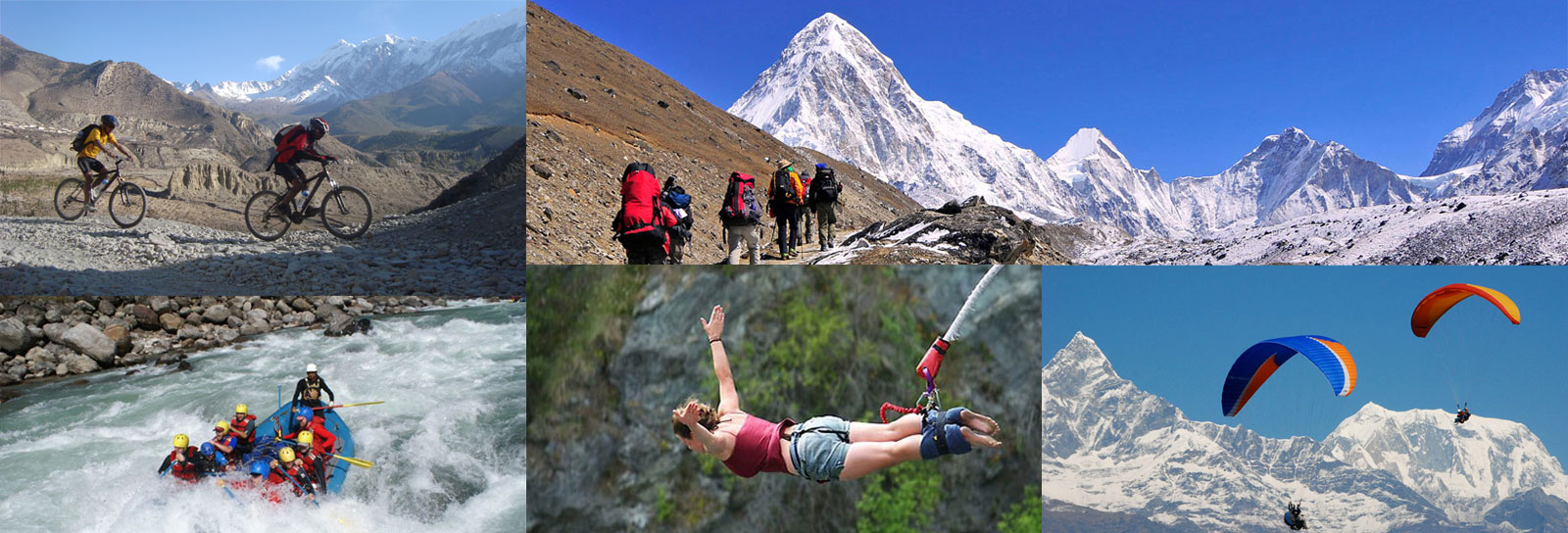
    Activities beyond trekking seems like unbelievable.  Nepal is one of the luckiest countries to have world renowned Treks. But these Himalayan gems are not solely for the trekkers and hikers, although they are a hiker’s paradise. Nepal is the gateway to a decade of adventure at any level with incredible landscape and culture and adrenaline

    Paragliding

    While paragliding in Nepal is not something that will just briefly thrill you with the incredible high vantage point of some of the most stunning terrains on the planet from valleys and rivers to majestic mountain ranges. Nepal is truly a fantastic way to appreciate the beauty of the Himalayas from a different angle altogether. It gives the most spectacular scenery:

    Jungle Safari

    From most of the mountain range categorized as part of the Himalayas, south lower grounds are employed in a great density of forests that are infested with wild animals. The jungles are a contrasting experience to the mountain settings in the sense that they provide. Covering about 15,000 square kilometers, Nepal has nine national parks, four wildlife reserves, and three conservation areas.

    Top National Parks for Safari

    • Chitwan National Park: This is a UNESCO World Heritage Site that boasts of Bengal tigers, one-horned rhinos, and a lot more species of birds.
    • Bardia National Park: It is less crowded and more pristine, offering a chance to spot elusive tigers and elephants.

    Rafting 

    Fed by Himalayan glacial meltwaters, Nepal has some of the most beautiful and thrilling-water rivers on earth. Thus, Nepal is an ideal place for white-water rafting.The country has it all, from peaceful floats to raging rapids. The rafting was quite safe for beginners to do with the support of experts and reliable equipment. Rafting is possible year-round, but the best seasons are September to early December and March to early June.

    Ice Climbing

    Nepal offers a wide range of ice climbing challenges to suit beginners and experienced ones. Ice Climbing In Nepal is only possible from around November to March when waterfalls and gorges become hard and tough to be perfect for climbing. The popular spots for ice climbing in Nepal are Mount Everest, Langtang, Rolwaling, and the Annapurna region.

    Ziplining

    You will be able to ride to one of the world’s tallest and longest zip lines (about 600 m high with a distance of 1.8 Km). Zipline is perfect for those people who crave excitement. You could also get to view a panoramic view of mountains and forests. Zipline was first introduced in Pokhara, the lake city.

    Trekking

    Embark on a journey of discovery in Nepal—Trek through the majestic mountains, lush landscapes, charming villages, and serene monasteries. Traverse through the ancient trails, witness awe-inspiring sunrises and sunsets, as well as explore the rich cultural heritage sites. You can discover the hidden waterfalls, lakes, and diverse flora and fauna. Nepal offers an amazing blend of culture, nature, and adventure, making it the perfect destination for trekkers.

    10. The Warmth of Nepali Hospitality

    One of the outstanding things about traveling to Nepal is the true kindness and hospitality of the people. In Nepal the tradition of hospitality is strong and it’s not uncommon for Nepalis to welcome guests into their lives with open hearts and to treat them like a type of divine blessing. This is expressed in the saying “Atithi Devo Bhava” (Guest is God). It doesn’t matter if you stay in a hotel in the heart of a city, or a homestay in a remote village, you will be greeted with warm smiles, tea and real kindness. Often it seems strangers go out of their way to welcome you to Nepal to make you feel safe, respected and appreciated.

    only in nepal

    The kindness and warmth, which is so typical in Nepal, comes from the diverse cultural and religious traditions that have in common, but also appreciate, community, compassion and respect of others. Because of this many aspects of a travelers experience, being shared meals together, or sharing a few stories and invitations into family celebrations, are an ideal opportunity for travelers to participate in the rich culture of Nepal. The kindness and warmth of hospitality will make an impression, and it is not uncommon for first time visitors to Nepal to be friends for life.

    Conclusion: Experience the Uniqueness of Nepal

    Big mountains to little traditions, Nepal is an unparalleled adventure, wherever you are on the Nepal experience you are doing something no place else in the world offers. Maybe you are looking for a spiritual awakening; maybe you are looking for jaw-dropping adventure, perhaps you are out to discover all that would encompass something entirely different. No matter what, Nepal has so much to offer. It is experience; experience of a lifetime, a lifetime that has never and can never be replicated on this earth again. Contact us today at Happy Mountain Nepal, on Facebook, Instagram, or TikTok .


  • Bisket Jatra: A Spring Festival

    Bisket Jatra: A Spring Festival

    Bisket Jatra: A Spring Festival

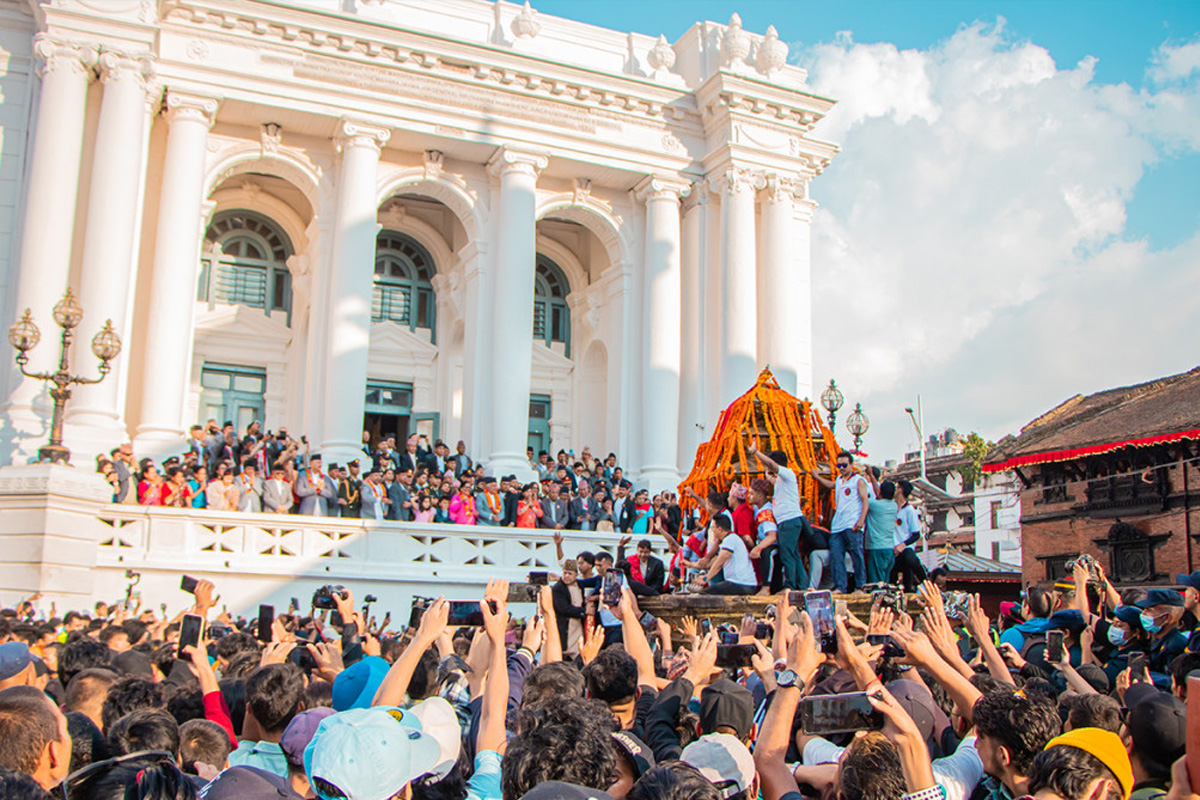
    Nepals holiest and most cherished festival is royal, adventurous Bisket fest. A magnificent festival is celebrated every year in Bhaktapur, medieval city of Kathmandu Valley, as Nepals New Year. By showing Nepal glorious culture and tradition with Nepalis people enthusiasm. Wild and adventurous chariot processions are regular attractions making Bisket Jatra a religious, colorful and proud festival. It is one of Bhaktapurs most popular festivals, which welcomes numerous locals and visitors.

    bisket jatra

    What is Bisket Jatra?

    Bisket Jatra is the great Nepalese New Year festival (normally observe in April). It is highly popular in Bhaktapur, and it symbolizes the advent of spring, which, in this time, signifies thriving, fertility, and rebirth. The Festival fully appropriates the city religious culture, the components of the chariot pull, ritual, and syntheses of religious, and traditional popular uses.

    It is a carnival of respect and a festival. The carnival because it involves everyone. The festival is one of the means through which the citizens of Bhaktapur are able to reclaim their very ancient tradition and renegotiate their connections with their goddesses and gods. The festival, this so civilized and so brutal festival, is proof of people’s passion, joy, and continuation.

    Origins and History of Bisket Jatra

    Bisket Jatra is not lacking in its own myth and legend. There are myths regarding how the festival was initially celebrate during the 15th-century reign of King Jagat Jyoti Malla, the most prevalent among all of them. The king initially introduced the festival as religious worship of gods and Hindus (Hindu gods) and, secondly, for a good harvest next year, as per the legend.
    >
    Another myth claims the festival was being celebrated for goddess Bhadrakali and god Bhairab, two of Bhaktapur’s most important religion gods. “Bisket” is said to have come from the Nepali word “Biska” meaning “to pull”. Chariot pulling, the prime responsibility of the festival. The spiritual and cultural origins of the festival are centuries old, but the festival over the centuries has evolved into a wild, drunk fest.

    Bisket Jatra Major Highlights

    1. Chariot Procession

    The most thrilling aspect of Bisket Jatra is the gigantic wooden chariots of certain gods or goddesses. The chariots are very large and well designed with nicely crafted, paint, and flag. The gods like Bhairab, Bhadrakali, and other gods that the people of Bhaktapur believe in are mounted on the chariots.

    bisket jatra

    Chariot 

    Construction and Architecture

    These Chariots are HUGE work with wooden wheels up to 20 feet in Diameter. They also have metal reinforcement inside, so they are very heavy and cumbersome. These chariots are decorated with carvings and even woodwork ornamentation with very delicate designs upon them, with sometimes flags and shiny embellishments above them. One of the chariots is drawn by an enormously large number of men with very strong ropes.

    The Tug-of-War

     The most rousing of all festival sports events is a tug-of-war competition where athletes try to pull the chariots to some point. Those committed to Bhairab and Bhadrakali and to the representative party groups of all four quarters in Bhaktapur are those largely held dear. The tug-of-war is far from pacifistic; one likes teams invoking menacing hymns and mantras while rehearsing chants to intimidate rivals. The task is not so much one of brawn, but of strategy and co-ordination.

    2.Ceremonial and Ritualistic Events

    To pray for the protection and success of the procession, a series of religious rituals are performed just before the chariot is dragged. The priests chant mantras, pay obeisance to gods and call them people’s blessings. Lighting ritual lights (diyas), obeisance with sacred offerings (fruits and flowers) and chanting of mantras are among some of the rituals traditionally performed. These are reminders of religious about the religious aspect of the festival and its relation with Nepalese Hinduism.

    Sacrificial Rituals: 

    Sacrifices are made at times to pacify the gods so that one can bestow blessings. And if Bhairab, tantrum-throwing scared god. Animal sacrifice, i.e. goats or chickens, as per the ritual as per the belief that the people can be protect by the gods.

    Cultural Performances:

     Apart from the rituals, the Bhaktapur streets are filled with music, song, and dance performances of folk nature. Traditional attire with vibrant colors is worn by the people, and drums, flutes, and other musical instruments are heard. The “Khil,” a traditional folk dance performed at Bisket Jatra, is one of the most popular traditional dances you can see where dancers dance in rhythm in circles.

    3. The Role of Community and Rivalry

    The biggest strength of Bisket Jatra is that it instills a sense of community during the festival. The neighbors and the families, even those distant relatives, all converge to assist in celebrating the festival. Each neighborhood, or rather each community, in a community setting owns one of the chariots, and each has a competition which is tough but at its core friendly.

    Pulling is a game and the teams will do anything to pull their team to the front position. There are teams that use mastered skills in attempting to outsmart the opposing team, while others use brute strength and endurance in attempting to pull heavy wagons through the narrow alleys. During pulling events, there is such pushing, yelling and even pulling in the opposite direction that this event would break up competing teams. It is truly worth watching.

    4. The Role of Bhaktapur’s Architecture and Landscape

    The festival is concentrated in Bhaktapur, in the old Durbar Square and narrow surrounding streets, which are lined with centuries-old temples, statues and palaces. The winding and narrow roads and the century-old buildings would give the festival a new dimension. The chariots are moving on the road, and there are accidents that can occur, but even that is part of the surprise element of the festival. The geometry and architecture of Bhaktapur give the perfect setting to the festival, and there‘s even a cultural element to it.

    5. The Energy and Excitement

    Bisket Jatra is a festival unto itself — uninhibited, crazy, mad. The roads are filled with onlookers as well as those taking part in it, and it’s a time of passion and excitement. The euphoria post the worship ritual is a ritualistic structure along with the celebratory function itself, wherein the devotees congregate not only to worship their gods and goddesses but even for the sake of company.

    The festivities stretch on for days and vary by town: Everyone has their day to party. The clinking sound of movement, the bitterness of the mob, the eyelid–searing brashness of the carriages are an assault on the senses, Bisket Jatra. It is a vortex of energy that sweeps over all who are in its vicinity who are lucky enough to be close to it, from pounding drums to screams of the crowds.

    6.The Impact on Tourism

    With time, Bisket Jatra has provedto be one of the interesting tourism arts and the tourists from aroundthe world start coming to the city. Bhaktapur itselfisapopular tourist destination among tourists who understandarchitecture and history, but Bisket Jatra provides an opportunity fortouriststoexperience the city‘sheritage in its mostprimitiveway. The procession of the chariot, the rituals, and the insanenessbut thrilling experience of it is somuch a part that tourists never miss seeing it.
    >
    Tourists 
    come to Bhaktapur forseeing the festival but for the historic temples, the pottery squares, and the Newari architecture of the town too. The local economy is sustainedtoa large extent by the tourists, and restaurants, hotels, and shops receive good business.

    Importance of Bisket Jatra for Newari People

    Cultural Significance

    Bisket Jatra holds immense cultural importance for the Newar community in Nepal, especially in the town of Bhaktapur and the surrounding regions. It marks the Nepali New Year and is celebrate with great enthusiasm and devotion.

    Social Unity and Community Bonding

    The festival fosters a sense of unity among the Newar people. It is a time when families, friends, and neighbors come together to celebrate. The preparation for the Jatra, including making the chariots and organizing the event, encourages teamwork and strengthens social bonds.

    Traditional Practices and Rituals

    Bisket Jatra is famous for its lively and spirited chariot races, where massive wooden chariots, drawn by enthusiastic crowds, race through the streets. The event involves various traditional rituals, including the worship of the deities, singing of devotional songs, and performing dances.

    Economic Impact

    While the religious and cultural significance is central, Bisket Jatra also has an economic impact, especially in tourism. It attracts thousands of domestic and international visitors, boosting local businesses, markets, and hospitality services.

    Preservation of Heritage

    For the Newar people, Bisket Jatra is more than just a celebration; it’s a means of preserving their heritage. The event allows the community to showcase traditional Newar craftsmanship, clothing, music, and cuisine.

    Conclusion

    Bisket Jatra is a unique celebration that offers a glimpse into the heart of Bhaktapur’s rich cultural heritage. From the spectacular chariot processions to the religious rituals and the community-centered spirit, the festival exemplifies. Nepal’s rich history, vibrant traditions, and deep spirituality. For those who witness it, Bisket Jatra is an unforgettable experience that underscores the resilience, unity, and joy of the people of Bhaktapur. Whether as a local or a tourist, participating in the festival’s excitement is a chance to immerse oneself in the living culture of Nepal. Contact us today at Happy Mountain Nepal, Facebook, Instagram, or TikTok. 
    FAQs

    1.When does Bisket Jatra falls?

    Bisket Jatra is mid-May every year on Nepali New Year.

    2. Where is Bisket Jatra celebrate?

    It is observe all over Bhaktapur, a UNESCO World Heritage City, in the Kathmandu Valley.

    3. What does the chariot represent?

    A chariot symbolizes the divine and belongs to either a goddess or god, i.e., Bhairab or Bhadrakali.

    4. Can tourists help pull the chariots?

    Tourist onlookers are the only ones, perhaps, who can observe, and participating in the ritual pulling of the chariots is otherwise reserve for locals.

    5. Are they performing rituals during the festival?

    Yes, religious offerings, prayers, and sacrifices are offer prior to pulling the chariots.

    6.For how many days is Bisket Jatra celebrate?

    Bisket Jatra is celebrat for a number of days with different communities celebrating on different days.

    7. What do you need to know before you attend Bisket Jatra?

    You need to be ready to roar and throng and kick up dust during the time of the festival. It is advise not to go close to the chariot processions.

    8. Is Bisket Jatra a religious origin?

    Yes, the festival has strong connections with Hindu religious orthodoxy, and piety and ritual are the very essence of the social festival.

    9. What to eat while shopping at Bisket Jatra?

    Cheap Nepali food like Newari specialty momo, sel roti and sukumari can be enjoy on the street during the festival.


  • Cultural Experiences in Nepal That Kids Will Love

    Cultural Experiences in Nepal That Kids Will Love

    Cultural Experiences in Nepal That Kids Will Love

    Nepal, the country renowned for natural beauty and cultural richness, is children’s and family entertainment paradise. Nepal is a country of countless cultural activities as enriching as they are enjoyable for travelers traveling with children. With its living festivals, archaeological sites, heritage crafts, and wildlife activities, Nepal is a country where children can experience history, culture, and nature in an enjoyable as well as enriching manner. A few of the top Nepal cultural activities for kids that are being highlighted in this blog, along with a short guide on how the same can be blended together for kids to have learning and fun experiences, follows:.

    1. Kathmandu Durbar Square

    Kathmandu Durbar Square is the cultural and historical hub of the Nepalese capital. The Nepalese royal palace, temples, courtyard, and museum of life are all included in the square. Drama on the street, paintings, and wooden souvenirs entertain the children. Handicraft and food street shops inside the complex of the square can be visited as well, and thus it is only logical that the tour avails itself of such facilities. Kumari Living Goddess revealing her face peeking from behind the palace window is ideal for kids who never stay still. Parents and kids learn about the life of Nepalese kings when they visit Hanuman Dhoka Palace. Parents and kids watch guides reading about old kings and facts about kings. Art, history, and living all rolled into one amuses kids at Kathmandu Durbar Square.

    Highlights

    • Hanuman Dhoka Palace: Historical, a palace with many royal myths.
    • Living Goddess Kumari: Catch a glimpse of a “real” “goddess” in her window.
    • Local Markets: Handicrafts and paintings of locals, along with street artists, occupy the crowded square.
    • Temple Exploration: Very ancient Nepalese Hindu and Buddhist architecture temples.

    Kathmandu Durbar Square

    2. Pashupatinath Temple

    Its holiest Hindu temple, Pashupatinath, lies along river Bagmati. It’s a great cultural exposure for kids too as a pilgrims’ site. Temple campuses are littered with immaculately dressed sadhus (Hindu holy men) in exquisite attire designed using ash and bead smudges. Moreover, kids can see odd Hindu rituals and oblations to deities by pilgrims. Cremation ghats, ritual performed on funeral, considerate but Nepalese culture respecting. They can sit in temple complexes watching naughty naughty monkeys. Miniature temples and Hindu mythical gods’ statues are seen in temple complexes. An opportunity to listen to old mantras and songs, healing natures. Hand-on experience by children with Hindu religion and tradition.

    Highlights

    • Sadhus: Spiritual men with face-painted colors and wearing traditional attires.
    • Wildlife and Monkeys: Monkeys are moving freely in the temple.
    • Hindu Rituals: Hindu prayer ritual, fire ritual, and cultural ritual.
    • Cremation Ghats: A glimpse of Nepal’s death culture (for older children).

    Pashupatinath Temple

    3. Bhaktapur Durbar Square

    Bhaktapur Durbar Square is Nepal’s finest preserved medieval city and a World Heritage site by UNESCO. First, you can open courtyards and temple carvings create living museum-like environment. The children can view the Golden Gate and 55-Window Palace looming over them. Live demonstrations of Bhaktapur pottery allow the children to craft their own pottery. The square is less touristic than that of Kathmandu, providing a chance for the families to unwind in a serene atmosphere. Street stores have in-house-made masks, puppets, and refreshments that would absolutely delight the kids. Historical touch is lent to the metropolis by the statues and antique stone water fountains as well. The tour of Bhaktapur is children’s tour concerning Nepalese paintings and history.

    Highlights:

    • Golden Gate: Exquisite gate with pleasant carvings.
    • Pottery Making: Practical experience of creating pot and model from clay.
    • 55-Window Palace: It is one of the relatively well-preserved non-regular plan palaces.
    • Cultural Snacks: Trying new foods such as yomari and king curd.

    Bhaktapur Durbar Square

    Why Kids Will Love It:

    Bhaktapur is like a real-life museum, where kids can roam freely, interact with locals, and explore unique sites like the Batsala Temple and the famous 55-Window Palace. The relaxed atmosphere allows children to take in Nepal’s medieval culture at their own pace.

    4. Pokhara and the Lakeside Experience (Cultural Place)

    Pokhara is resort town famous for picturesque lakes, hill top view, and family outing deserving. Picturesque family outing is Phewa Lake island boat tour of Tal Barahi Temple. Nepal mountaineering classes are kid friendly. Bat Cave and Gupteshwor Cave are kids playground for family outing at International Mountain Museum. Water gushing from caves is also viewed by tourists to Davis Falls. Town along the lake banks with handicrafts, record stalls, and souvenir shops. Moreover, children can have panoramic view from top hills in scenery-bound landscape to all the tourists in Pokhara.

    cultural Pokhara and the Lakeside Experience

    Highlights:

    • Boating on Phewa Lake: Picturesque boat ride among picturesque scenery.
    • International Mountain Museum: Nepal’s mountains and hills are abounding with knowledge-base and learning centers.
    • Caves and Waterfalls: Guided waterfall tours and spectacular underground caves.
    • Lakeside Walks: Unwind and peaceful atmosphere with shopping, music, and sweets.

    The combination of cultural experiences, outdoor adventures, and stunning landscapes makes Pokhara an exciting destination for kids. Whether it’s boating on the lake or visiting natural wonders, there is no shortage of activities that will keep young travelers entertained.

    5. Chitwan National Park: A Wildlife Safari Adventure

    Kids jungle hike in Nepal Terai region of Chitwan National Park. Kids can do jeep safari for wild deer, rhino, even for Bengal tiger sighting. Canoe ride on Rapti River with crocodile and bird viewing during tour for kids. For instance, Tharu Cultural Show night is their own spice descend local life. Elephant Breeding Centre is sole centre where elephant calves are brought there for kids’ sightseeing along with conservation. Furthermore, Chitwan is adventure and nature heaven for kids. Nature walk, nature guiding, gives children’s perspective regarding plant and animal world. Package tour-adventure vacation trip makes

    Highlights:

    • Jeep Safari: Rhinoceros, deer, and tiger safari.
    • Canoeing: Quiet boat journey to view the crocodiles and the remaining of the soundest-unusual-naming birds.
    • Elephant Breeding Center: Accommodates the elephants and their upkeep.
    • Tharu Cultural Show: Performance of music and dance.

    Chitwan National Park: A Wildlife Safari cultural Adventure

    Why Kids Will Love It:

    Chitwan National Park offers a perfect combination of wildlife, adventure, and education. The excitement of spotting rare animals and exploring the jungle will create lasting memories for children.

    6. Lumbini: Birthplace of Buddha

    Nepal is famous for handicraft culture, and therefore craft workshop is a great cultural activity for kids. Kids learn Thangka painting, Buddhist folk art, in Kathmandu and Bhaktapur. Additionally, pottery workshop at Bhaktapur lets the kids shape the clay and paint their own ceramics themselves. Families can try learning Mithila art in Janakpur, which is most well-known for color and design sophistication. Particularly, these workshops are hands-on, so Nepalese handicraft becomes part of the lives of children as well that is internationally accepted. They will be guided to children by the hand of professional artists and their handicraft will be done out of the building with them. It is certainly a good piece of cultural craft.

    Highlights

    • Thangka Painting: Thangka Painting is traditional painting as per Buddhist tradition in rich vivid colors.
    • Pottery Making: A handicraft session in which the designing and shaping of the clay designs are carried out.
    • Mithila Painting: Kids can learn a Nepal Terai-based traditional painting art.
    • Take-Home Artwork: The artwork can be taken home by the kids.

    cultural

    Why Kids Will Love It:

    Lumbini offers a peaceful and educational experience for kids. The beautiful gardens, historic sites, and the opportunity to learn about Buddhism make it a meaningful stop for families seeking cultural enrichment.

    7. Traditional Nepali Craft Workshops

    Nepal is famous for handicraft culture, and craft workshop is a great cultural activity for children. The children are learning Thangka painting, Buddhist folk art in Kathmandu and Bhaktapur. The pottery workshop in Bhaktapur provides the opportunity to the children to shape the mud and make their own pottery independently. Children can acquire the Mithila art in Janakpur, which is best known for finesse of colour and design. They are working workshops, and therefore Nepalese handicraft becomes a part of children too which the world embraces. Children can learn about professional artists and their handicraft will be taken out of the complex with them. Particularly, it is a cultural-craft work so beautiful.

    Highlights

    • Thangka Painting: Thangka Painting is conventional painting derived from Buddhist heritage in luscious vivid colors.
    • Pottery Making: A handicraft process in which modeling and designing the designs in the clay is done.
    • Mithila Painting: The kids can be trained in a conventional Nepal Terai-based painting craft.
    • Take-Home Artwork: The painting is taken home by the kids.

    cultural

    Why Kids Will Love It:

    Craft workshops offer a tactile and creative experience that allows children to engage with Nepali culture in a fun and interactive way. These activities also serve as great souvenirs of their time in Nepal.

    Conclusion

    In conclusion, Nepal offers a combination of nature and culture activities that are fun and educational for children. With trekking in the old temples, interaction with the animals, or old crafts, something is offered to every young adventure-seeker. Moreover, the country’s multi-cultural palaces and history place it at a perfect position as the best vacation spot for that family trip to be the point of conversation everywhere. Families, with a bit of planning and an open mind, can get the best out of what Nepal has to offer and show children a world of magic and wonder.

    FAQs

    1. When is the best time to travel to Nepal with kids?

    Spring (March to May) and autumn (September to November) are the best times to travel to Nepal with kids. It is good weather, and the period is most appropriate for adventure outdoor activities.

    2. Is Nepal kid-friendly?

    Yes, Nepal overall is family-friendly. But better safe than sorry and take precautions anyway, e.g., avoid crowds and get children to drink plenty of water and rest in the shade.

    3. Can kids trek in Nepal?

    Yes, nearly all the treks in Nepal are family-friendly. Children can do short ones like the Ghorepani Poon Hill trek, and even family tours are possible.

    4. Are there kid-friendly accommodations in Nepal?

    Nepal is child-friendly, and there are some family resort and hotel facilities available, particularly in tourist cities like Pokhara, Kathmandu, and Chitwan. They are mostly made up of children’s amenities and activities.

    5. What cultural activity is the best for children?

    Kathmandu Durbar Square visit, Kumari (Living Goddess) watching, or Chitwan Elephant Breeding Center visit is informative and fun activity for kids.

    6.  Are Nepali culture festivals enjoyable for kids?

    Yes, indeed, because Nepal celebrates very large colorful festivals, i.e., Dashain and Tihar, with colorful processions, songs, and dances. Festivals are heaven for a child due to the festive atmosphere.

    7. What do kids typically eat in Nepal?

    Children will like Nepalese cuisine like momos (dumplings), daal bhat (lentil soup and rice), and sel roti (Nepali doughnut). There are restaurants serving international cuisine, e.g., Western food.

    8. Can children enter the temples of Nepal?

    Yes, children can enter most of Nepal’s temples, e.g., Pashupatinath and Swayambhunath (Monkey Temple). It is a good idea to give children cultural decorum of entering religious sites.

    9. What are children interested in doing outside in Nepal?

    Nepalese children outdoors enjoy a jungle safari at Chitwan as well as boating on Phewa Lake in Pokhara, and visiting nearby waterfalls and caves.

    10. How can I organize a Nepal family vacation?

    While traveling with children, wear travel-friendly child clothing, carry medicines with you, carry water in abundance to stay hydrated, and prepare for long travel days. Acclimatize your children beforehand with Nepalese culture and traditions too.