When I updated my arrival in Kathmandu, I already mentioned how taken I was by the beautiful chaos of the streets, the bright, colorful (and prayer flags), the temples, and yet one thing was still forgotten on my mind, and that was that I needed to get to Mt. Everest. Like many explorers and adventurers who have come before, I had a long-distance trek that included trekking to Everest Base Camp, but I ran out of time. That was when Everest Mountain Flight caught my eye. An opportunity to fly over the highest mountain range in under 60 minutes. With only my own thoughts to interrupt me, I booked the trip. This is my diary entry back that morning, what I experienced, what I saw, and why I think it was worth every single second.
Waking up to a dream
It began when my alarm clock went off at 5:00 AM in Kathmandu. Once I was out of bed, I still had a mix of excitement and sleepiness. The taxi ride to Tribhuvan International Airport created quasi-quiet before the chaos. The city was still waking up when I got there.
When I got in line for check-in, I was standing beside a small group of travelers and couples, who and I would assume, they just settled out of their own parties of friends.You could almost feel it. We were headed to Everest.
After a few minutes, we were led out onto a little airplane. One you would not normally see at home. A 16-seat airplane with a window for (almost) every seat. I remember telling myself it was an airplane, no, it’s a portal to a different world.
Departing the Valley
It didn’t take long for the city of Kathmandu to begin diminishing behind us after leaving the runway. The assortment of temples, rooftops, and dusty streets started to fade away into colorful designs and patterns underneath. And within a few minutes, we began to see the snow-capped peaks of the Himalayas.
The stewardess(a woman who is employed to look after the passengers on a ship or aircraft) passed around a laminated map of the mountains around us. The peaks Everest, Lhotse, Makalu, and Cho Oyu jumped off the map. They seemed surreal to me now, mountains I had only laid eyes on previously in a book or documentary. Now I was in an airplane, flying to my upcoming adventure. The sun gradually rose, lighting up the mountains. Clouds tumbled behind us, and for that moment, I truly felt as though I’d left the Earth.
Looking into the face of Everest,
We were on the flight, and the pilot came on the speaker, if you look out of the left side of the plane, you can see Everest.” I put my forehead on the cold glass, and there it was, Mt. Everest.
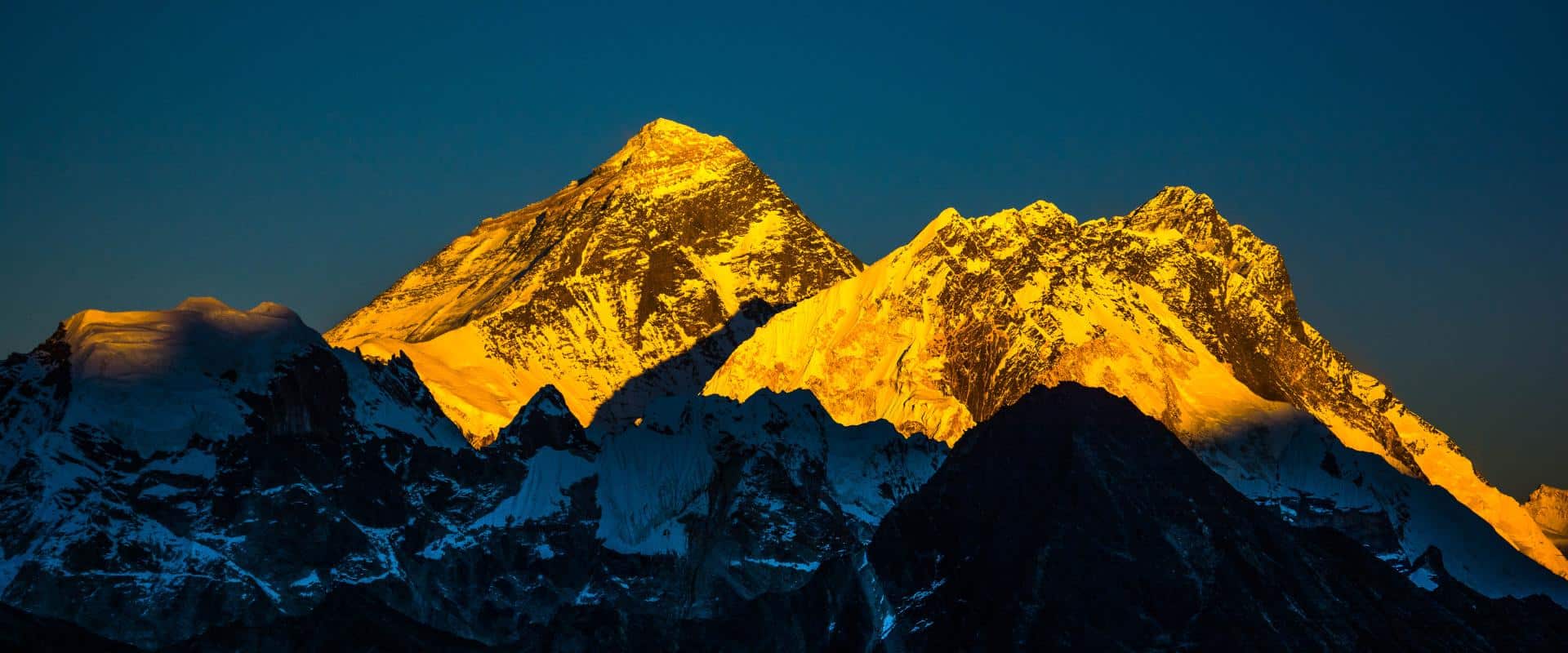
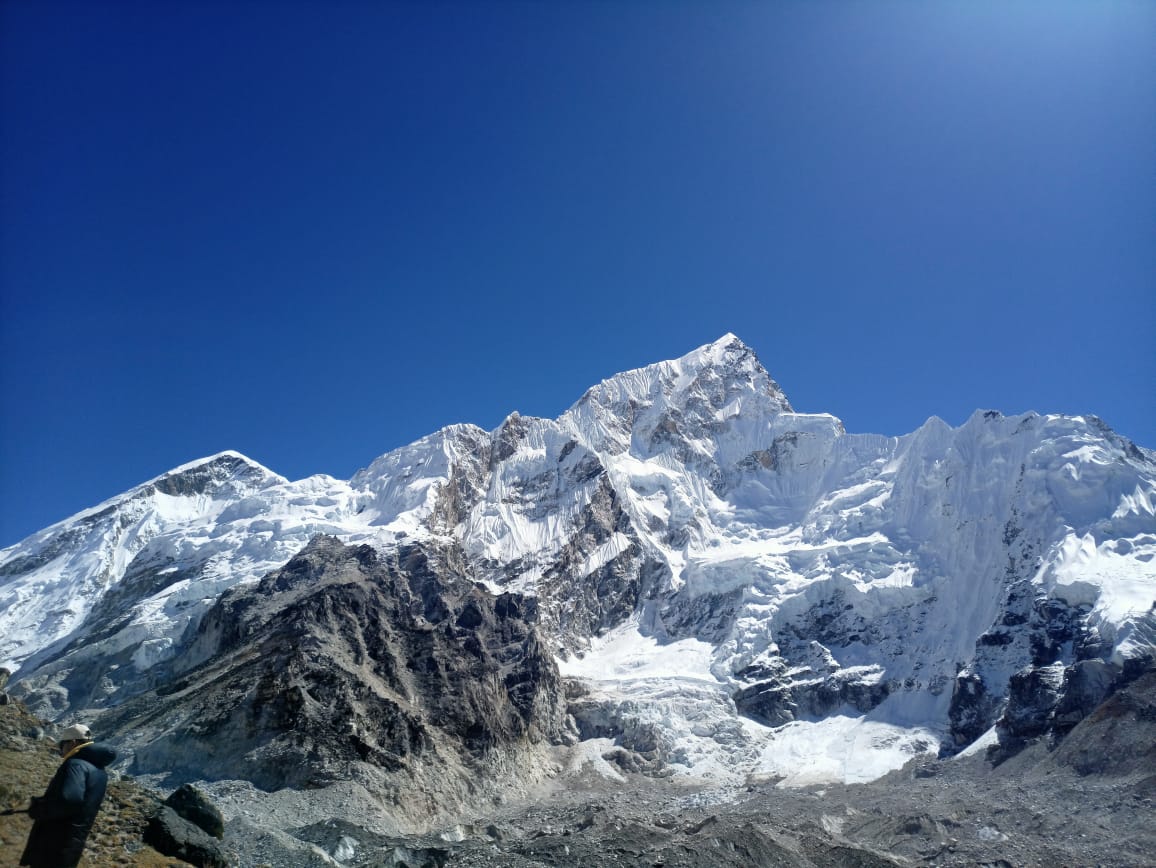
At first, even at that distance, it didn’t appear to be any larger than any of the other peaks – but after looking at it long enough, it became apparent to me that it was traditionally higher than the other peaks and held itself quietly dominant over everything else around it. Everest was capped with the recognizable pyramid peak, sparkling in the morning light. My chest tightened – I felt unexpected awe. I felt disbelief. I felt grateful.
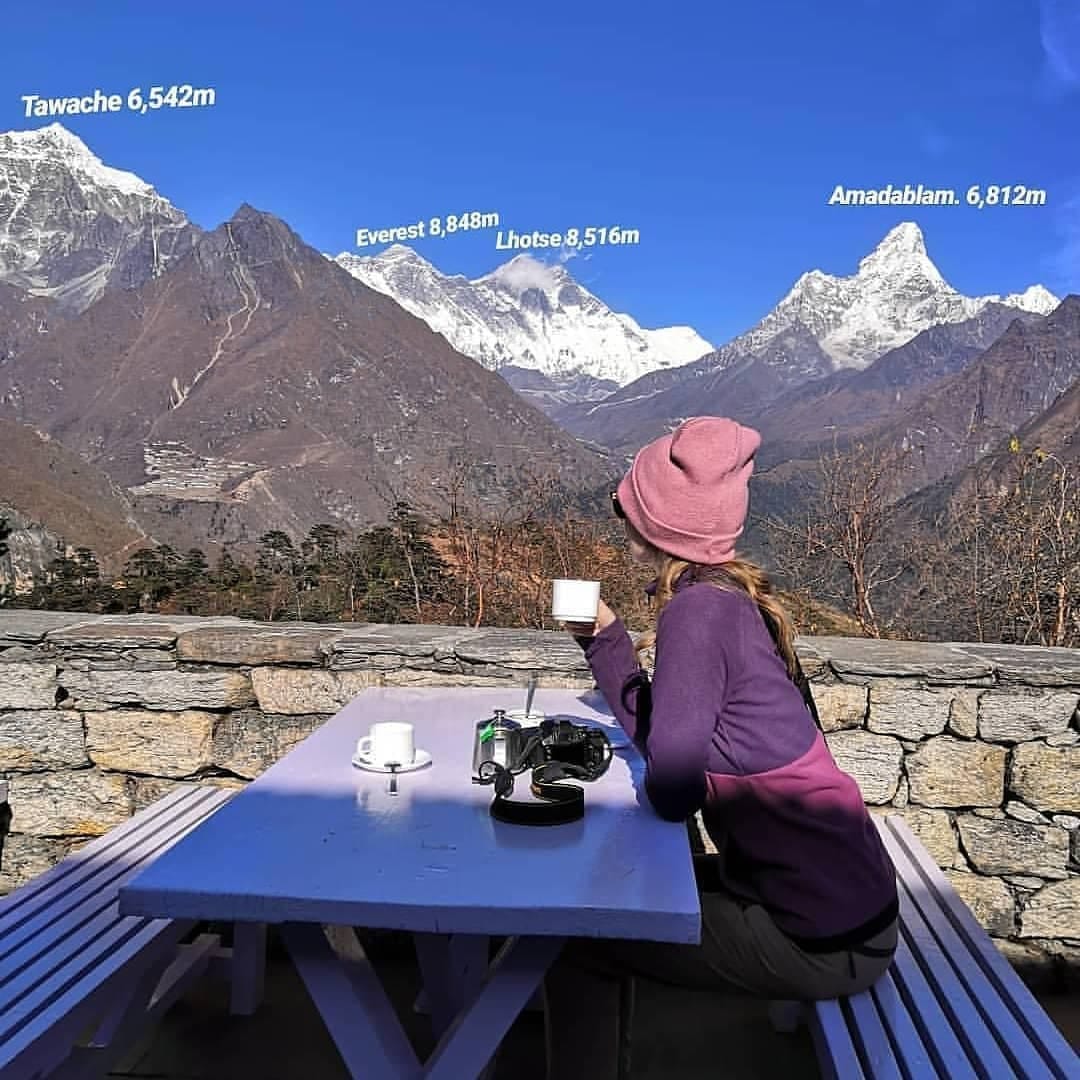
The flight attendant gently touched me on the shoulder and invited me to enter the cockpit. I carefully climbed up and stood behind the pilots as they effortlessly glided through the clouds. It was a very intense experience from this view with a full 360-degree aspect of the tallest mountains in the world. Everest was center stage on the horizon, with Lhotse and Nuptse at its sides, and off to the side, a charming Makalu looking elegant as well.
I attempted to snap pictures of the site; however, the view was not the same as the experience in my eyes. After a minute or two, I finally decided to put my camera down and just enjoy it.
More Than Everest
The neat part about the flight to Everest is that the flight is more than just Everest. I saw Cho Oyu, the Turquoise Goddess, shining brightly in blues. Makalu stood sharp like a pyramid of ice. Gosaithan (Shishapangma) lay long, wide, and viewable beneath a mass of snow. The glaciers below us resembled silver-colored rivers wading through valleys.
Each peak seemed to have a singular story to tell, and I felt like I should whisper their names to myself like a little prayer.
Back to Kathmandu
Almost an hour afterwards, we began to circle. I took one last long pause over the mountains. Everest was behind me, formally, but I still had that first glimpse in my chest.
Then, as we dipped down into Kathmandu Valley, the city slowly emerged. The contrast was almost unbelievable from the pristine, sacred Himalayas, back to the chaos of city streets. All in barely an hour.
As soon as we touched down, the airline gave me a certificate of flight. Just a slip of paper, but somehow felt more like a badge of memory.
Was It Worth the Cost?
The ticket cost around $200 USD – quite a bit for one hour of flying. However, to tell you the truth, it was worth every single penny. I experienced a view of the highest mountain in the world and did not have to hike for weeks to see it. I experienced something few people ever will. I came home with not just photographs, but the memory of an experience I will tell stories of forever. Some may say that it is simply a tourist destination, but for me, I had a spiritual moment with one of nature’s great landmarks.
What I Learned (and Recommendations For You)
Based on my experience, some things I would recommend to anyone who is considering this flight are:
Go in the fall or spring – the clear blue skies make all the difference.
Book as far in advance as possible – the flights fill quickly, especially during peak seasons.
Sit on the left side of the plane first – better views of mountains on the way there and back.
Don’t hurry to take too many pictures – get a few and then just appreciate being there.
Be prepared for delays – the weather rules everything in the Himalayas.
Beyond the Flight
The day didn’t finish at the airport. Still high from the flight, I spent the rest of my afternoon starting to explore Kathmandu. The Boudhanath Stupa was a good place, where I lit a butter lamp and silently thanked the universe for allowing me to see Everest. I then had an amazing hot cup of masala tea in Thamel, mentally watching the mountain views in my mind like a private movie only I could play.
Final Thoughts
A flight to the top of Everest is not an adventure – it is a humbling reminder of how we are all comparatively small in the failing of nature yet so lucky to see it. If you ever end up in Nepal and don’t have time to do a longer trek, do it! Have the flight. Let Everest greet you from the mountain view.
As I finish my journal entry from that morning, one sentence keeps replaying in my head:
I did not ascend Everest; rather, Everest ascended in me.
Everest Base Camp Trek: What You Need to Know Before You Go
The trip to Everest Base Camp (EBC) is not just any travel opportunity; it will be an epic journey of a life time. You will experience the trek as you live the adventure of Tenzing Norgay and Sir Edmund Hillary as they experienced the culture, traditions, and incredible views of Khumbu region of Nepal. Whether this is your first trek to altitude or you are just in the process of ticking EBC trail off as an adventure, it is useful to know what to expect and how to prepare.
The trek will test your endurance, patience and all round ability to adapt to the adventures that the trails present. You will be trekking for approximately 12 to 14 days and each day will be at least 13 – 15 km round trip. From climbing altitude sickness to travel at the right time of year, this guide is intended to provide you ideas on a few of the challenging but great things about the trip, and hopefully help your journey be a life changing experience along the way.
Why Geared is for Everest Base Camp:
One of the more popular trek destinations, Everest Base Camp offers plenty of trails with an assortment of travelers, wildlife lovers, travel photographers, and those who enjoy the travel ignite culture and transparency. It is a series of events that you will, hopefully, get to walk away bearing the weight of Mount Everest (8848.86 m) and view the tallest peaks of the Himalayas.
1. A Physical and Mental Challenge
The trek will test your endurance, patience and allroundabilitytoadapttotheadventuresthatthetrailspresent. You will be trekking for approximately 12 to 14 days and each day will be at least 13 – 15 km round trip. And each day you will hike farther and higher than the previous day while living off limited resources and in cold temperatures for at least 10 hours per day. This trek will take you out of your zone of comfort – but that is the fun of it!
2. Amazing Natural Beauty
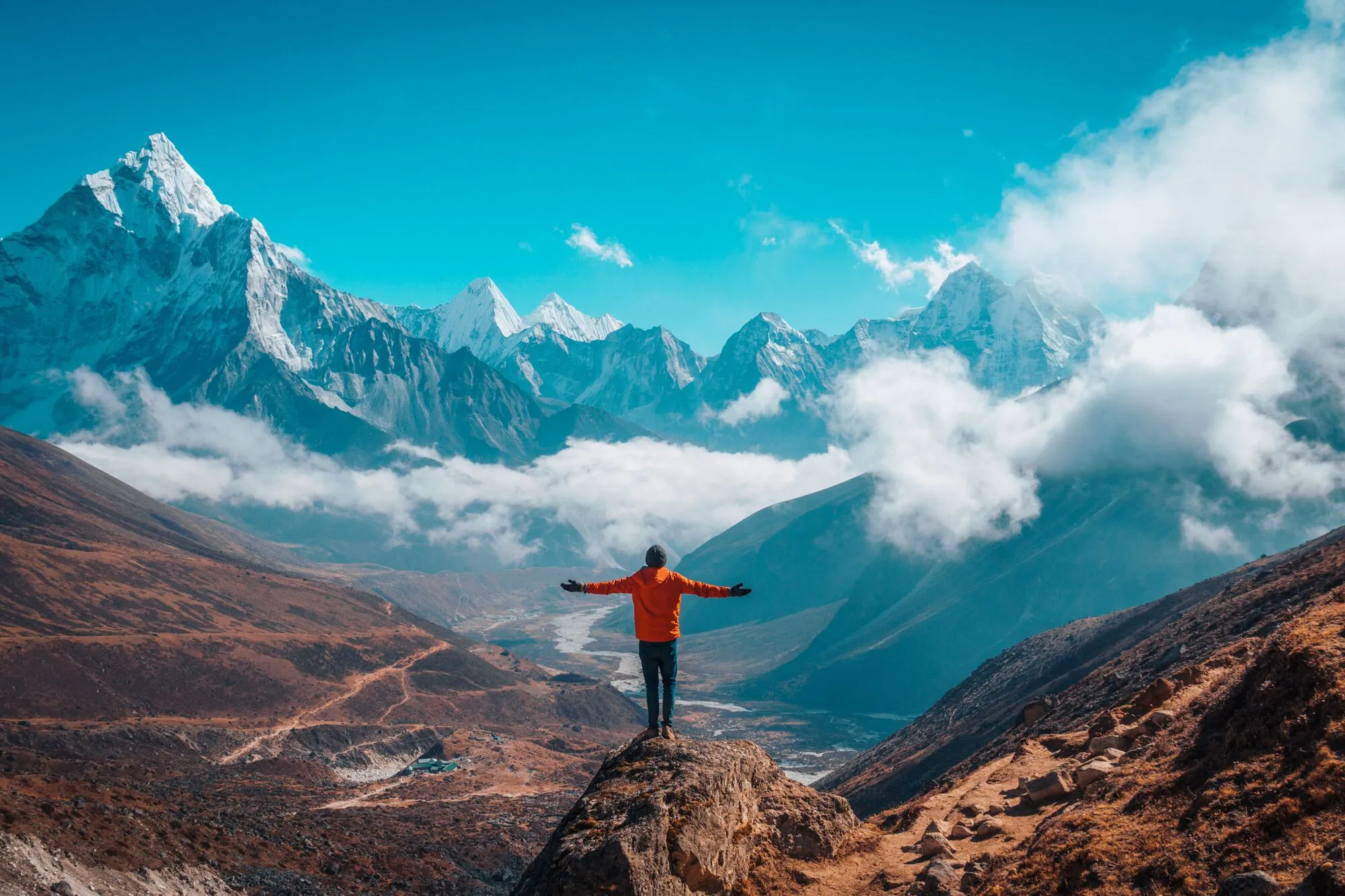
Thick pine forests, frozen rivers, and wind-blown moraine at the base camp – each day of this trek will present you and your group with breathtaking views of the landscape. Each day of the trek you will have the opportunity to see the peaks of Ama Dablam, Lhotse, Nuptse, and Thamserku (and depending on your trek route) views of Everest peeking through at some point as well.
3. Culture and Spiritual Heritage
You will get to experience historic villages such as Namche Bazaar, Pangboche, and Tengboche – all villages that has become known for their incredible mountaineering characteristics and guardians of Buddhist culture and traditions. You will not only get to visit monasteries, spin prayer wheels, and walk around mani stones with Tibetan inscriptions and prayers.
Best Time to Trek to Everest Base Camp
The region is notorious for unpredictable weather patterns, therefore deciding on which season to travel has an important consideration in terms of if your trekking adventure will be successful or not.
Spring (March – May):
Spring is listed as one of the best trekking seasons of the year, and weather conditions are mild. During the daytime, the temperature will be a nice 10°C to 20°C at the lower altitudes. The lower altitude area you trek during the spring will have an explosion of colour, when the rhododendrons bloom. In general, you’ll usually have excellent visibility, which translates into lots of great picture taking opportunities and splendid mountain views.
Autumn (September – November):
The autumn season begins after the end of the monsoon. The autumn season has the weather conditions for trekking in best and clearest skies. Even if it might be a little chilly, you will enjoy the view of the mountains, which will be breath-taking! And the timing will be culturally relevant to be in Nepal as you will see some local cultural practices and immerse yourself in some local celebrations (Dashain and Tihar) that will surely enrich your experience.
Winter (December – February):
If you are thinking about trekking in the winter months, this can be a wonderful time of year to have a quieter trek you’ll encounter limited or no crowds. Depending on your trek and ascent that first day, social distancing it can snow enough to eliminate areas of your trek.
Based on the possible elevation you will be walking, you can expect a few days where temperature will be below -20 °C.
Monsoon Season (June to August):
Monsoon season is the only season where most people can pretty successfully avoid since this is the muck and the rain, and visibility can be an issue. However, for those tired of winter, lower elevation areas like the lower Solu area are green and stunning.
Fitness and Physical Preparation:
Do I need to be Super Fit? No! The EBC trek is not technical and does not require any mountaineer experience, however some level of physical endurance and resilience isrequired.
Overall moderate fitness is sufficient for 99% of the population, but if you pace yourself, and acclimatize alittlemoregradually you should be well.
Cardiovascular Training: Running, brisk walking, swimming (also a great no-impact conditioning activity), and stationary cycling are all great ways to build up your endurance.
Stair Climbing: Great to build up the legs and simulate mountain terrain.
Hiking Practice: Go on trips in your local area, carrying a loaded backpack to replicate the real conditions on trail.
Strength Training: Focused primarily on Legs (squats and lunges), your core (planks) and shoulders (this is particularly important for carrying a daypak).
Flexibility: Add in some yoga or stretching. This will also help with the risk of injury.
Altitude and Acclimatization
On the trek to Everest Base Camp, you will go above 5,000m which will mean the oxygen levels will be at, or less than half, of what you would normally experience at sea-level. Acute mountain sickness (AMS) is serious and you should never ignore symptoms of AMS.
Common symptoms of AMS:
a headache that won’t go away
nausea and/or vomiting
no appetite
your head feeling fuzzy or dizzy
disturbed sleep
Treatment and tips to prevent or lessen AMS:
Take it easy: your itinerary should have planned accommodation for rests and acclimatization days.
Hydration: drink 3-4 liters of water a day
Don’t drink alcohol! alcohol dehydrates you,
Know your limits: if you start to feel like you have AMS, you need to descend immediately.
Medications: medications such as Diamox will be helpful but always check with your doctor before using medications.
There are two acclimatization stops, one being Namche Bazaar (3,440m) and Dingboche (4,410m). Those acclimatization stops ; during acclimatization in July, we will rest for two days then hike higher to acclimatize, we will want to sleep in Namche & Dingboche and hike lower alt
Permits You Will Need
If you are trekking to Everest Base Camp you will need to obtain the below listed permits:
1. Khumbu Pasang Lhamu Rural Municipality Permit
Cost: NPR 2000 – 2500
Available to be picked up in either Lukla or Monjo
2. Sagarmatha National Park Entrance Permit
Costs: NPR 3000 (foreigners)
Available to be picked up in Kathmandu or Monjo
3. TIMS Card (This can be optional in some cases)
TIMS (Trekkers’ Information Management System) will also help with safety tracking.
Usually ruled out on package and guided treks in the Everest region.
Don’t forget to provide your passport and copies for verification and check-points.**
Guided Trek and Independent Trek
Guided Trek:
For beginners, or people who prefer a little less stress. Majority of packages tend to have:
-Experienced guide
-Porter ( Up to 15-20 kg)
-Accommodation
-Permits and domestic flights
You can benefit from local knowledge, language, and cultural education. Guides also can spot early signs of AMS and help in emergencies on the trail.
Independent Trekking:
This route requires more planning on your part for routes, lodges and permits.
More affordable on budget but more risk if you are inexperienced.
There is a new permit regulation in Nepal (2023 on) in which solo trekkers are required to hire a guide in instances throughout the trekking area, including the whole of Everest.
Everest Base Camp Trek Packing List
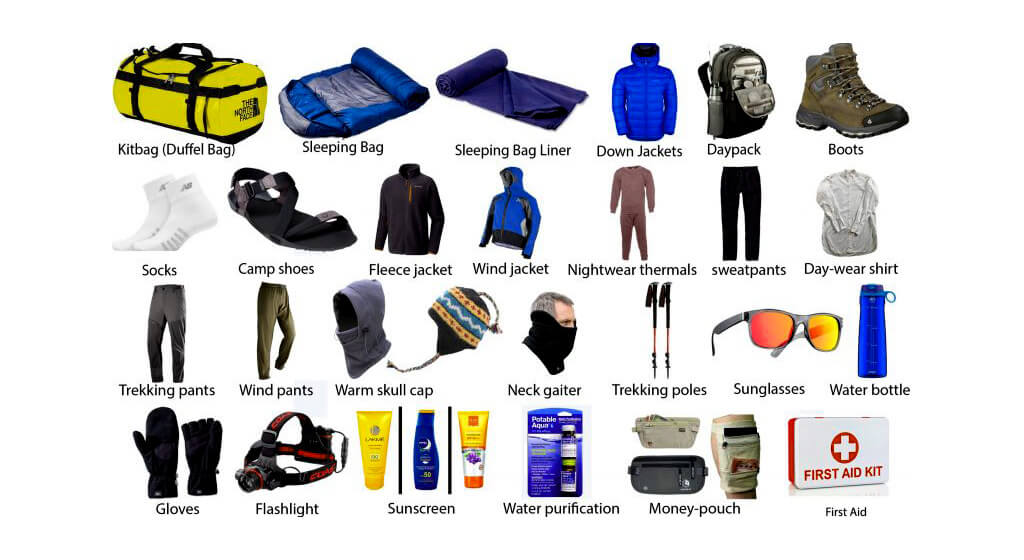
You’re probably going to be on the lighter side of packing! Expect to go through weather that includes snow and/or rain, and/or high winds. Unless you do some/all of the trek with a porter, you will carry your own gear.
The list below is a general list to help with your packing.
Clothing
Base-layers ( tops and bottoms, thermal)
Mid-layer insulation (fleece)
Down or synthetic puffy
Waterproof shell and/or windbreak shell
Trekking pants ( 2 pair)
Gloves (inner and outer)
Warm hat and sun hat
Hiking socks (4-5 pair)
Gaiters (for snow/mud optional)
Equipment
Hiking boots (waterproof but broken in; not new)
Sleeping bag( -10 Celsius rated or less)
Trekking poles
Daypack – ( 25-35 litre)
Hydration system(bottles/ bladder)
Headlamp
Sunglasses (UV protection)
Miscellaneous
Sunscreen (SPF 30+)
SPF lip balm
Bathroom kit and personal items
Quick drying light towel
Snacks while trekking ( energy bars , nuts)
Power bank to recharge
Basic first aid kit
Photocopy of you passport, permits and travel insurance.
Sample Itinerary: 12–14 Days
Here’s a popular itinerary:
Day 1: Fly to Lukla (2,840m), trek to Phakding (2,610m)
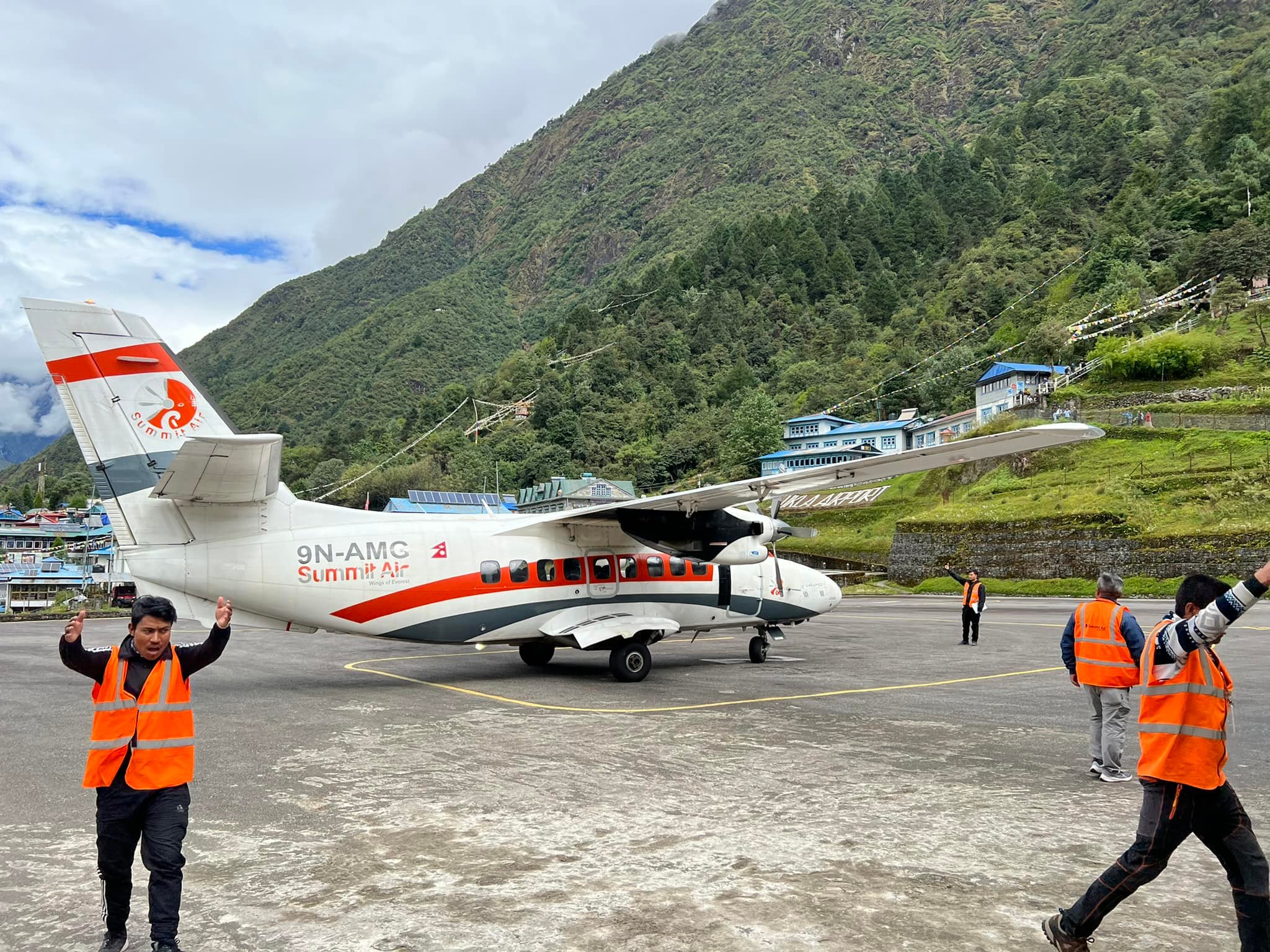
Your adventure begins as you board the flight from Kathmandu to Lukla – the most iconic mountain airport in the world – and you’re off on the plane on the golden sky runway. The trek from Lukla starts with lots of downhill walking to Phakding village, the first day is mostly a ease into down hill so your body slowly understands the mountain environment.
Day 2: Trek to Namche Bazaar (3,440m)
To day’s ascent will be fairly gradual, with some significant elevation, as you start to climb up through the Rhododendron forests and crossing suspension bridges, as well as continuing to hurry forward because you are now finally on the trail you may feel like you have gone back in time to the capital market cities that are alive with vibrant markets, restaurants and pubs, and full of trekkers. The trek to Namche Bazaar is well received by hikers, and will be the overnight acclimatization point and for that most trekkers will acclimatize here, before their onward journey up the Khumbu.
Day 3: Acclimatization day (hike to Everest View Hotel or Khumjung)
Rest and acclimatize with a short hike to Everest View Hotel, or the traditional village Khumjung. While you will climb some relatively steep elevation again to assist with acclimatization, the critical highlight will be the view of the vast mountain range that surrounds you with the magnificent Everest and her neighboring giants. This trek is probably the most scenic of the trek.
Day 4: Trek to Tengboche (3860m)
The trail gets steeper as we go through forests and fields toward Tengboche that is famous for its monastery. Tengboche has a strong spiritual energy to it and the views at this location are unbelievable with Everest and Ama Dablam and the other surrounding peaks. Again, if you want to immerse yourself into culture, I can see this as a great spot to have some quiet time and reflection.
Day 5: Trek to Dingboche (4410m)
The trek through dry valleys to Dingboche is different with many stone bridges to cross. By this stage you can see the difference in how high we have gone as well, this scenery is rugged with dry valleys. Dingboche is a good break in the climb, you will feel like you are in a higher mountain region and should be getting the feel of acclimatizing to the high mountains.
Day 6: Acclimatization hike to Nagarjun Hill (5100m)
The hike up to Nagarjun Hill, should be a good, hard day in which you will all be aided in the acclimatization. The views are worth the effort, it is amazing to see the mountains and to see the glaciers, and the overall surrounding area. On return to Dingboche, you will have time to rest and recover before we buildbackupwithour next elevation after the mellow namcheplace.
Day 7: Trek to Lobuche (4,940m)
The trek over rocky pathways and glacial moraines,crossingmountain terrain, will lead you to Lobuche,withdesolation in stark faceandthepeakssignallingyour arrival to Everest. Thelodges here aren‘tmuch but theyare livable, and you willbegladforthem,asyouwillberesting for the climb ahead.
Day 8: Trek to Gorak Shep, hike to Everest Base Camp (5,364m)
Youwillwalk to Gorak Shep, having the last conveniences before heading to Everest Base Camp and themostfamousBaseCamp.Youwillgetanexcitementstanding at the base of Everest, and the peaks and glaciers will make the thrill more. After quite a bit of exploring you return to Gorak Shep for an overnight.
Day 9: Climb Kala Patthar (5,545m), descend to Pheriche
Climb to Kala Patthar (5,544 m) and descend to Pheriche.
The early morning climb of Kala Patthar, has the best panorama for the sun rise that includes Everest and the Himalaya. So absorb the view and the experience and after the full and tiring day walk you descend to a lower altitude forthenightin Pheriche village,whereitwillbetimeto rest and recovery. This day isamixtureof sightseeing and recovery.
Days 10-12: Return to Lukla
The return journey is the same trail down hill from Namche bazaar and Phakding back to Lukla.The descent is much quicker (but don’t get complacent because your legs are tired). The return gives you an opportunity to reflect on your trek over the last few days as well as experience the changes of the landscape while descending.
Day 13: Fly back to Kathmandu
The flight back to Kathmandu offers some great views of the mountains as you descend back into the city completing your trek. There is also a possibility of having lots of fun in this lively atmosphere to celebrate and commemorate your trek. This would also be a great opportunity for you to do some sightseeing or resting after a long trek.
Accommodation and Food
You’ll stay in teahouses, which are basic mountain lodges. Expect:
Accommodation
It will be teahouse accommodation provided on the Everest Base Camp trek, that is a basic mountain lodge, managed by a local family. The lodges will generally include twin-share rooms with thin mattresses and basic bedding. The rooms are quite basic, and heating is generally absent so a sleeping bag is essential. The facilities are variable in terms of conditions in accordance to the location. Higher up you go, less comfortable and more basic the lodge will be.
Toilet Facilities
There will be toilet facilities, normally shared toilets; you may see squat toilets or western toilets depend on the location. Hot water is often limited or may be an extra charge especially at the higher altitude. Some lodges will provide solar showers, while others will use a gas heating systems. It would be wise to carry biodegradable toilet paper and hand sanitizer as they may be hard to come by. Hygiene standards can also highly variable so being prepare will create less discomfort.
Like many teahouses across the Himalayas, all teahouses have a communal dining space. Trekkers will come to areas where they will sit, and possibly spend their evenings, in communal dining spaces featuring either wood-based or yak-dung based stoves to provide heat to the room, or just general warmth in the cold evenings or high altitude trekkers. Such warmth in the dining areas of teahouses create intimate parts of a trek, which can help facilitate reminiscence of the trek; shared experiences; friendship; and warmth by the fire place. However, in some places where trekking is done at a high altitude, heating may not always be available, and wearing warm clothing in the evening may be important. The dining or communal areas in teahouses typically have WiFi, so this is an area of social, food service and most insulated service.
Food
The most common and staple food on the trail is generally called Dal Bhat; a mixture of steamed rice, lentil soup or dhal, and vegetable curry. This food source is nutritionally low-energy and protein efficient. Other common foods include noodle dishes, fried rice, porridge, egg dishes (like omelets or any kind of fried egg), basic soup, and everything else variants of these. Much of the food on the trail is vegetarian; although some teahouse owners will accompany lentils and rice with meat when meat is available. Food is generally prepared freshly every day, and it is recommended to have an open mind, be culturally appropriate, and that trekkers should think about food as simple and hearty, not gourmet. Snacks through things like energy bars usually add a little more fuel.
Costs and Extras
Prices for lodging and meals tend to go up with altitude because of the difficulty associated with moving goods uphill. Wi-Fi, hot showers, the ability to charge your devices, etc. are all things you most likely will have to pay for, which can range from a few hundred if you’re lucky, to over a thousand Nepalese rupees. Carrying enough cash is important as the likelihood of digital payments is lower the higher you go past Namche Bazaar. It is a good idea to budget for these extras to have an enjoyable trekking experience.
Connectivity and Electricity
Electricity is available in most villages, but you’ll have to pay anywhere from NPR 200–500 to charge your devices.
Some teahouses have Wi-Fi, but expect it to be slow. You can purchase Everest Link cards in some shops.
SIM Cards: Ncell has the best coverage in the Khumbu, but expect spotty service.
Travel Insurance: Essential!
Always have travel insurance that includes high altitude travel. Your travel insurance needs to include:
Coverage to 6,000m elevation
Most standard travel insurance policies exclude high altitude trekking so be sure your plan has coverage that specifies elevations to at least 6,000 meters. Mount Everest Base Camp sits at an elevation of 5,364m but there are side hikes like Kala Patthar that go up even higher. You want to make sure you have this clause otherwise any potential claim related to altitude travel will likely be denied. Read the policy before you buy.
Emergency helicopter evacuation.
In case of altitudes sickness, injury, or severe illness, helicopter evacuation may be the quickest way to get down from the mountain. In these situations, helicopter evacuation may also be the only way to get down from the mountain safely. Emergency helicopter flights can start at several thousand dollars and, if you are uninsured, must be paid in advance before they will fly you off the mountain. If you have the correct insurance, it can ensure you are quickly taken to a hospital without worrying about the financial burden. It is an absolute must for travels in the Himalayas.
Medical costs
You will encounter health threats with trekking in remote areas, whether they are altitude, food-, or injury-related. Your insurance should provide coverage for a hospital stay, doctors, medication, and any treatment required in Nepal and back home when back home. Even a minimum level of treatment could turn into a hefty bill if you are without insurance. Ensure they cover emergency medical treatment without limitations.
Trip interruption/delay
It’s very common with flights to and from Lukla that they are delayed and/or cancelled due to bad weather when traveling to Lukla. You could get stuck in Lukla for days! Travel insurance that covers interruption/ delay provides you with the ability to claim extra costs incurred (due to lodging, meals, and connections missed). It also covers if your trek ends sooner than planned due to unexpected illness or emergencies. In this case, this insurance offers you the peace of mind in knowing your investment made for the trip is not a complete loss.
Baggage loss
It’s unfortunate to lose your bags; such as your checked luggage, trekking gear, or your important travel documents, as it can derail your plans. Insurance that covers baggage loss or theft can help you negate the fact you have to replace the essentials you lost like boots, jackets, sleeping bags; and in Kathmandu you can do that. Most baggage insurance policies also cover delayed baggage, and that’s a good deal because you can buy the temporary replacements, for example, it’s possible to travel with rental gear in Nepal – which is one way to reduce your overall pack weight. If you are being informed that your bags – and travel itinerary is delayed, be sure to file a report with the airline or lodge.
Respect Local Culture
While trekking in the Khumbu area, it is important that you observe culture and Buddhism. When greeting people you will say”Namaste” and slightly bow your head, as this is a culturally appropriate way to show you respect. You will go around stupas, chortens, and mani walls in the clockwise direction. You will be asked to take off your shoes when entering a monastery, or local home. Full consent to take photographs of a person or monk and photographs during a religious event is always preferred in order to be respectful. All of this shows cultural sensibility and consideration for local customs.
Final Tips Before You Go
Book flights to Lukla
In advance, especially if everyone is traveling during the busy seasons. Lukla is one of the busiest mountain airports in Nepal, and flights fill quickly during the spring and autumn draw the biggest crowds. I recommend booking early (to a guarantee your travel dates). It is also not uncommon for flights to be delayed or canceled, so be ready to confirm your tickets in advance.
Bring some Nepali rupees
there are no ATMs after Namche Bazaar. Once you leave Namche, there are no working ATMs or banking services along the trek so every expense (tea-houses, food, Wi-Fi, charging, etc.) must be paid in cash. Bring enough Nepali rupees to cover your trek and extras, as well.
Have a plan for flex time in case one of the trips is disrupted.
All of the flights to and from Lukla are totally dependent on weather and weather can change in moments. Many trekkers find themselves with unplanned delays in Lukla (or Kathmandu) so build in 1-2 extra buffer days into your trip – just so you don’t risk missing an international flight or other important plans.
Get in the mindset of “slow and steady.”
This is not a race and speeding things up could present dangers.
If you speed things up you could get altitude sickness which could be more severe and life threatening. If your trip itinerary has acclimatisation days built into your plan please stick to and take it seriously.
Be flexible and open
Your plan may change depending on the weather, your body or the trail.
There could be unexpected snow, illness or the trail conditions may result in a change in timelines. Being flexible and having a positive mindset will serve you well on the mountain. Remember getting to base camp is the journey but remember to appreciate every moment along the journey!
Conclusion
The Everest Base Camp trek combines challenge, beauty, and spirituality, which produce a never-before experienced, unique adventure. It is easy to experience the trek as a box-ticking endeavor, it is so much more than a box-ticking exercise. It’s about connecting at a deeper level to this natural world, to yourself, and to the people you will encounter along the way, in the Himalayas. If you prepare properly and have the right mindset, you will return to your home refreshed, humbled, and with a pack full of stories to share for the rest of your life. Contact us today at Happy Mountain Nepal, on Facebook, Instagram, or TikTok.
Everest Base Camp Trek is a once-in-a-lifetime spiritual, physical, life, and cultural quantum leap. EBC is 5,364 meters (17,598 ft) high and is located around the highest mass on earth, Mount Everest (8,848.86 m / 29,031.7 ft). With each step, you are closer to trekking on top of mythological mountain ranges, century-old monasteries, hundred-year-old Sherpa villages, and a soul-trek experience that you cannot wipe away from your memory.
Why Everest Base Camp Trek Is a Lifetime Experience
1. Get close to Mount Everest
Being at EBC is being and standing in the shadow of the world’s highest- a position where you can only dare to have the audacity to assert and check off your bucket list, together with all the other adventure-seeking travelers from across the globe. You’re not on Everest, but where the Everest giants of Mount Everest are, like sunrises on the great ridges, is heavenly. Walking the EBC trail by yourself takes you, by legend, as close as it gets to the Mount Everest summit view and mythic Kala Patthar (5,545 meters), quite possibly the best view of Everest you’ll ever have the good fortune to witness.
2. Sherpa Culture and Spiritual Immersion
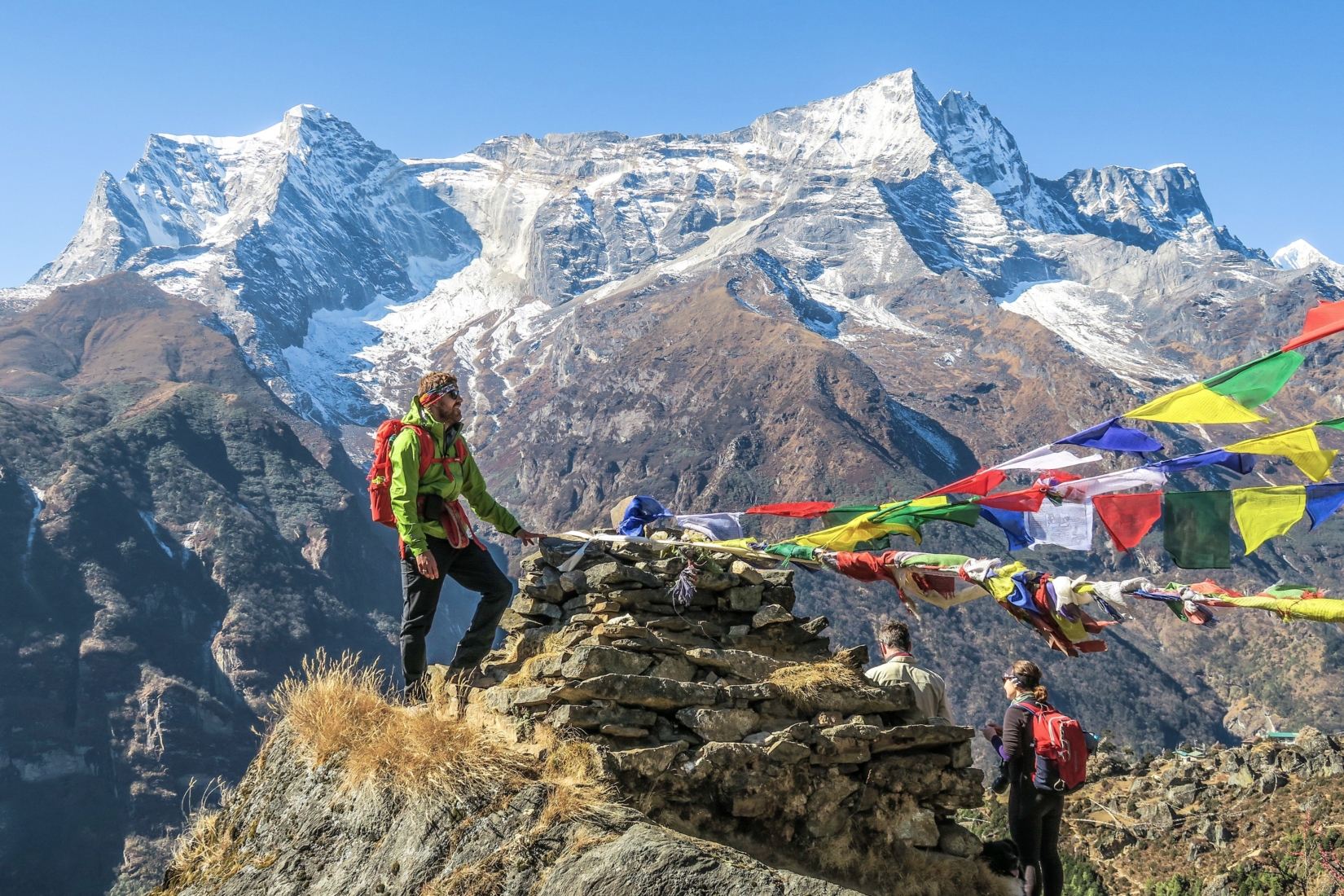
You’ll meet Sherpa villagers of the Khumbu: tough Himalayan folk with highly developed mountaineering prowess, boundless hospitality, and first-rate survival skills. You’ll trek through the villages of Namche Bazaar, the villages of Tengboche, and the villages of Pheriche, all with their multicolored prayer flags flapping in the breeze, all scattered with found along the trails like spinning prayer wheels, all topped on ridges with stupas.
At Tengboche Monastery (3,867 m), you will pray with chanting monks within sacred walls, and dark Ama Dablam and the other great white giants – a spiritual experience in the true spirit of your trek.
3. Varied and Breathtaking Landscapes
We trek through varied Himalayan scenery:
Rhododendron and pine forest hide Lukla and Phakding villages,
Suspension bridges spanning high above glacier-fed rivers,
Yaks and alpine grasslands at Dingboche and Lobuche,
Rock moraines and snow ridges on the way to Gorak Shep and EBC.
Every bend in the trail, a new panorama, a new peak, another rest stop, and just soak it all up.
4. A True Physical and Mental Challenge
It’s not a holiday- it’s a test. You’ll be trekking 5-7 hours every day, trekking all day, a nd cold and tired all day. But it is in the challenge that we get tough. To even get to Base Camp is such a great feeling and sense of achievement. It’s a test of your endurance, your determination, and your sense of accomplishment.
Everest Base Camp trek route
Day 1: Fly to Lukla and Trek to Phakding
It starts with a pounding mountain flight to Lukla, a small cliff airport that is perched at a height of 2,840 meters. It’s a 30-40-minute roller coaster ride, and you don’t even get the sensation that you’re flying over the Himalayas. The trek starts here, and you walk from the pine forest and small Sherpa villages step by step. You further trek to Phakding at an altitude of 2,610 meters. You see many stone chortens, stupas, and prayer flags waving in the wind along the path.
Day 2: Namche Bazaar to Phakding
A different evening sees you once again on the trail side of the banks of Dudh Kosi.
You trek on suspension bridges, mega suspension bridges, such as some of the following: the Hillary Suspension Bridge, which has the questionable honor of having had a string of accidents, including a helicopter crash landing.
You enter the Sagarmatha National Park at Monjo, where they check your trekking permit. The path climbs but it’s the final two hours of tough and steep walking to the wealthy Sherpa town, Namche Bazaar, at 3,440m. If the day is clear, you get your first view of Mount Everest. There are shops, bakeries, equipment stores, and mountain views to be had at Namche.
Day 3: Acclimatization Day at Namche Bazaar
To avoid high altitude sickness, you will take an entire day’s rest in Namche.
Not idling about, but a quick walk around so that your body is conditioned and taking the most scenic trek to Everest View Hotel (3,880 meters) with sunrise over Everest, Lhotse and Ama Dablam, or the walk to Khunde and Khumjung village home of the Hillary School and monastery which contains a Yeti scalp preserved.
You can stroll around the Namche evening bazaars, visit the Sherpa museum, or just sit and have tea and look across the valley.
Day 4: Trek Tengboche to Namche Bazaar.
The mountain trail starts after departing Namche because from here, one has a good view of Everest, Nuptse, and beautiful Ama Dablam.
This is a tuning pair of hours of valley and mountain, then steeply downwards to the Dudh Kosi River and upwards again sharply through pine and rhododendron forest to Tengboche (3,867 meters).
This quaint, spiritual village contains the famous Tengboche Monastery, the biggest monastery in the Khumbu valley.
It lies on massive slopes, a sacred and serene place where you become a part of a prayer ceremony and achieve some peace of mind.
Day 5: Tengboche to Dingboche trek
Descend from Tengboche along the forest to Debuche and further down to Imja Khola on a rickety bridge and then to Pangboche, which is the highest permanent settlement in the area. Further, a more Alpine and open country with wider valleys towards Dingboche (4,410m), a windy town with white tops of mountains in the distance. And Dingboche is fine too, “post summer valley,” and it’s beautiful, and a pleasant rest to acclimatize.
Day 6: Acclimatization Day at Dingboche
Having a day of full acclimatization allows your body time to adapt to the altitude.
Most trekkers visit Nagarjun Hill (5,100m), an exhausting but well worth the climb with really stunning views of Makalu, Island Peak, and the valleys below. An alternate is a side trip to Chhukung and glacier sightseeing, and a climbing path. Dingboche is a pleasant spot, few sun-dried teahouses and ga good location between the massive peaks of Ama Dablam and Lhotse. Dingboche is a relief.
Day 7: Lobuche trek from Dingboche
You will gradual ascent up the Imja Valley. The rocky path continues upwards, ascending, ascending through dry but breathtaking alpine desert. When we traverse over to the other side of Dughla (Thukla), the path steepens even more, and we will be along the ridge with memorials to the climbers who didn’t return from Mt. Everest. The squalor of this path is made worthwhile by the sight. We ascend the rocky path to Lobuche (4,940 meters), a small glacial town at the foot of giants Nuptse and Pumori.
Day 8: Gorak Shep to Everest Base Camp
The last day will likely be the most exciting day of the trek.
Take a brief hike to Gorak Shep (5,164m), the final village on your trek to Base Camp, and abandon your loads in order to hike upstream along the lateral moraine of the Khumbu Glacier.
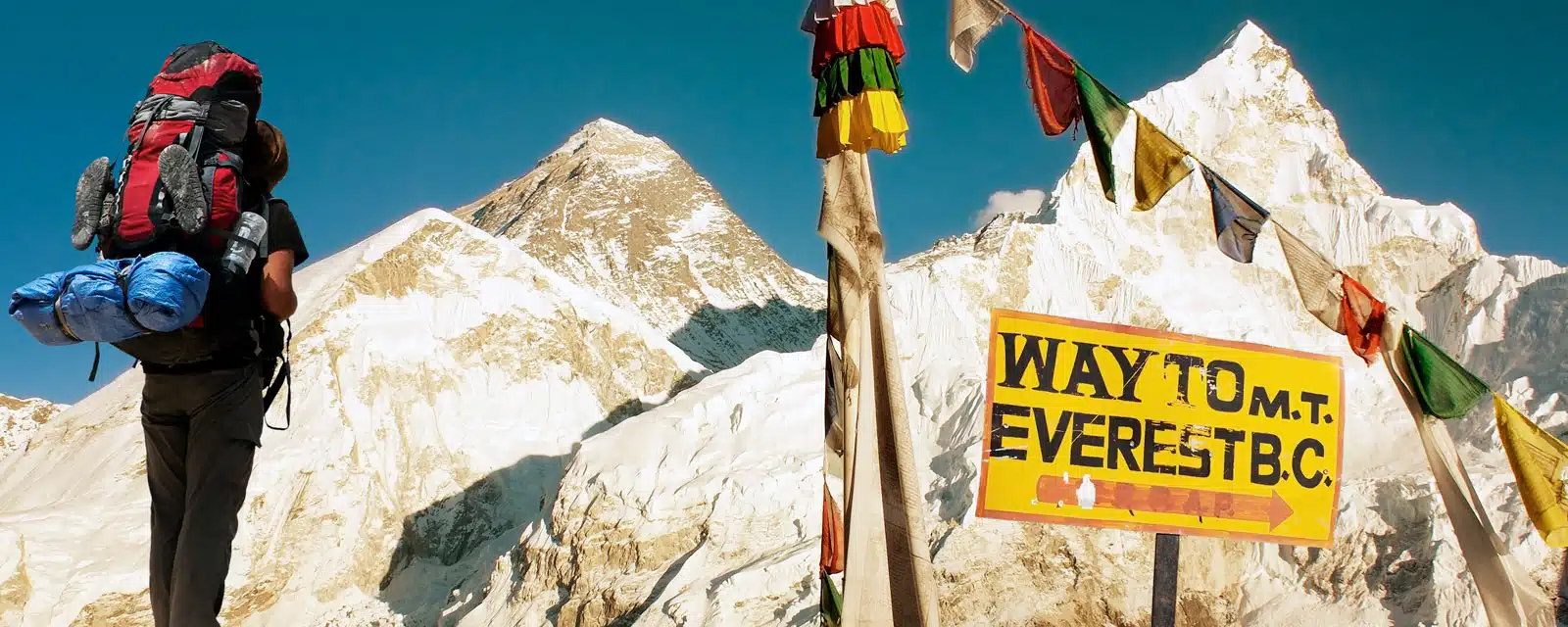
The path is rocky and slippery with boulders and snow to overcome. A grinding willpower will finally reward Everest Base Camp (5,364 meters), an unearthly emotional peak. The base camp is encircled by prayer flags, tents (during season), and the huge Khumbu Icefall. Stop and take in the view for a while, then go down again to Gorak Shep for the night.
Day 9: Ascending Kala Patthar and back to Pheriche.
Early morning ascent to the summit of Kala Patthar (5,545 meters) for sunrise. The summit offers the best and unobstructed view of Everest, Lhotse, Nuptse, and Pumori. Golden early morning sunbeams on the high mountains are breathtaking. Then to Gorak Shep for breakfast and begin a return journey, a trek down to Pheriche (4,280 meters). Heaven is a lower elevation, and the trek is not so draining, even with tired legs.
Day 10: Trek from Pheriche to Namche Bazaar
The hike continues to Pangboche and Tengboche village, which are very welcoming ones, but now you’re moving in the opposite direction to them, so you have an added bonus to view them on the other side. You continue your walk through the woodlands and streams and view the Himalayan flora and fauna. You take an easy hour-and-a-half-long walk or walk-and-a-half and indulge yourself at the Namche Bazaar, where you pamper yourself with a hot shower as well as a steaming cup of coffee.
Day 11: Lukla, downhill trek from Namche Bazaar
The knee-jolting downhill trek on the last day from Namche to Lukla through Monjo and Phakding needs downhill and long-distance tires. Party time at Lukla. Rather than turning it into a party time, trekkers celebrate their trek by enjoying the farewell traditional dinner with guides and porters, food and local drink, and spreading smiles and laughter.
Day 12: Flight on the way back from Lukla to Kathmandu.
You return on the last day on a morning flight from Pokhara to Kathmandu. The return flight, also, is picturesque with birds’ eye views of the trek trail behind you. You’re free the rest of the day to relax, reflect, or bask in the hospitality and coffee culture of city life in the capital. The trek is over, er but memories linger.
When to Trek to Everest Base Camp?
Spring (March – May)-: Ideal time of the year for reliable weather, clear sunshine, blooming rhododendrons, and a crystal-clear view of the high mountains.
Autumn (September – November) -: Blue sky after monsoon, and dry trails with spectacular views.
Winter (December – February)-: Near-white snowy trails, and below-zero temperature. Only for the experienced trekkers, who are not shy to trek alone.
Fitness and Training
Here it is, a step by step run through of the fitness training guide for the Everest Base Camp Trek, suitable for beginner and intermediate trekkers.
Train Minimum 2 – 3 Months Prior
1. Begin training at least 8 – 12 weeks.
Pre-trek. If you are not fit, there is a good chance that you will need to start earlier. The aim is to build and bank endurance and strength, topped up in growing quantities. By establishing a routine and consistent exercise regimen, you will physically condition your body for stresses and reduce injury on the trek.
2. Cardio
No matter what cardio you perform, it will strengthen your heart and lungs so that your body will be better at using oxygen, which at high altitude is a major factor.
Running builds legs and leg muscles.
Cycling is low-impact but great for endurance.
Swimming builds lung capacity and is non-impact.
Do 3–4 times a week and build up time and intensity as your fitness level builds. Attempt to do it in steady-state cardio but also attempt to fit in some hill repeats if possible.
3. Heavy Pack Backpacking
This is not merely walking on the treadmill with a heavy pack! Your hips, back, and shoulders will adapt to bear the load for hours: 5–10 kg.
Practice wearing a pack, or with water packed in. Add weight and duration walking gradually. Practice uphill and downhill walking, such as on actual walking trails.
4. Leg and Core Strengthening Exercises
You’ll be ascending steep rocky paths when you hike. Your legs must be conditioned. Squats, lunges, step-ups, and calf raises will all condition climbing muscles up and down.
You require a strong core (lower back, abs, glutes, obliques) to assist in supporting your posture and balance while backpacking. Do planks, bridges, and twists 2-3 times a week.
This will not only prepare your upper body to bear your pack but also ease the pressure off your back and give stability when walking on rocky ground
The largest part of the cost of Everest Base Camp trek logistics is the flight from Lukla to Kathmandu. It’s a short but essential flight because Lukla is where the Everest region access begins. Return airfare will be $300 to $400. Flights also change with the season with higher months to trek, October and November being peak seasons. Flight duration is approximately 30 minutes but depends on weather and therefore can be delayed or even canceled. Since it’s a long flight and possibilities of interruptions are extremely high, it is better to stay an extra day in Kathmandu in case of a delay.
2. Permits $50–$60
You will require a series of permits to trek in the Everest region, which are obligatory.
They are two of the bigger ones, and they are Sagarmatha National Park Permit and TIMS card. They are the guarantee of monitored and secure access to trekking paths. The Sagarmatha National Park Permit is around $30, and the TIMS card is around $10 to $20. The two passes total around $50 to $60. These passes can be readily purchased before the trek in Kathmandu, or at the first settlements along the trail. It’s just part of having had your trek arranged and being regulation-friendly required.
3. Guide and Porter $300–$500
Although not obligatory, most visitors find it well worth the expense to have a guide and/or porter to help make the trekking experience all the more worth the while.
A guide costs $20-$30 a day and a porter costs $10-$20 a day, agency and season based. Guide and porter for 12–14-day trek will cost $300-$500. A guide who knows the trail, knows the culture, and is sensitive to altitude is worth every penny. Porter service will pack up your bags, removing some of the physical effort of the hike from your shoulders, especially where there is climbing or descending to reach it. These services are typically well worth the extra convenience and security.
4. Accommodation (12–14 days) $150–$250
The accommodation on Everest Base Camp trek is usually in teahouses and the rooms are plain but clean. The accommodation for a 12–14 day trek is usually between $150 and $250. It is lower towards the lower section of the trek and the higher you ascend where accommodations are scarce. The rooms in teahouses are plain but with shared toilets and hot and dry. Additional privacy is provided by en-suite bathroom rooms at additional cost. The same accommodation in Kathmandu is the same price, but if you would like more comfort at the start and end of the trekking, more costly accommodation is possible.
5. Food and Drink $200–$300
Trail food and drinks are also a considerable cost. You will be consuming at least three meals—dinner, lunch, and breakfast—and snacks and drinks to get you through on the trail. Lower-grade trail food costs $5–$7 a meal, but the higher up you climb, the more expensive it is since there is a logistical problem with food transport up to higher elevation. 12–14 days’ worth of food and fluids costs $200–$300.
Oatmeal or bread makes up most of breakfast, and lunch and dinner consist mostly of local food such as dal bhat, noodle, or momo. Tea, bottled water, and snacks are expensive, especially having to eat at higher elevations.
6. Miscellaneous (Wi-Fi, Showers) $50–$100
Aside from the outrageous trekking fee, there are a couple others you will be paying along the way on the trek. They do have Wi-Fi in a few of the teahouses, but it’s extremely slow and it will be $2 to $5 per hour. Even a shower that’s hot will cost you money and will typically cost you $2 to $5 per shower.
All of these will be costly on the way while trekking and will usually cost you $50 to $100. Other trekkers also purchase other foodstuffs, drinks, or souvenirs on the way while trekking, so it is always better to carry some money with you. The need for these little luxuries is one of the reasons why the total cost of the trekking but can be what will make it worthwhile.
Conclusion
The Everest Base Camp Trek is not just about the destination—it’s about the transformation along the way. It’s about pushing your limits, connecting with the mountains, and immersing yourself in one of the world’s most spiritually rich and naturally stunning landscapes.
Whether you’re seeking a personal milestone, a cultural journey, or the adventure of a lifetime, the Everest Base Camp Trek delivers an experience that lingers in your soul forever. Contact us today at Happy Mountain Nepal, on Facebook, Instagram, or TikTok.
When one hears about trail of Nepal, Mount Everest, Annapurna Circuit, or highways in Kathmandu with autos driving on them. How adorable as they are, they simply don’t make up Nepal. On the contrary are villages, unvisited territory, ancient silk routes, and cultural treasures that are horribly under-touristed. Those are Nepal’s off-the-beaten-path locations where genuine adventure, serenity, and authenticity abound.
Whatever your price — adventure seeker, culture enthusiast, or recluse discoverer, these off-road attractions will take you to a Nepal no traveler ever sees.
Why Explore Underrated Destinations in Nepal?
Nepal is mountains, yes, but much more. It’s lovely everywhere — from the mystical ambiance of ancient temples to unexplored forests and throbbing local life. The beauty of traveling off-the-beaten-spots is that you get:
Less crowded comparativly and less of tourist-like situations
Enjoy interacting with locals.
Reduced transportation expenses for tourists visiting places on the map of visitors
Morally sound practice of tourism in the interests of rural economies
1. Rara Lake – An Alpine Hidden Trail Paradise
Nepal’s Rara Lake Nepal’s largest lake, Rara Lake, is situated in remote western district Mugu of northwest Nepal and is the ultimate tranquil. Its pristine Rara National Park engulfs it, an alpine lake rising to 3,000 meters in elevation and shifting colors in sympathy with the transforming sky above in its irretrievably clear water. It is Himalayan flora and fauna of the region — red pandas, musk deer, and Himalayan monals — and heaven for nature trekking tourists. Rara trekking consists of hill village trekking in forest and hillside landscapes isolated from the modern world.
As lovely as it is, Rara is one of Nepal’s off-the-beaten-path places due to the fact that it is so off the beaten path, and there is no infrastructure. Either a flight from home to Talcha Airport or a trek of several days, pure magic though. But for those thrill-seekers who can work up a sweat, Rara Lake provides solitude and peace that’s simply unbeatable, people. Its tranquil ambiance, lush fauna, and unspoiled natural beauty are some of Nepal’s best secrets.
Just two hours from Kathmandu, Kalinchowk is a picturesque hill station in Dolakha district. Kalinchowk is approximately 3,800m above sea level and a stunning hilltop with panoramic view of the Himalayas, close to the Gaurishankar and Langtang range. The Sacred religious pilgrimage temple Kalinchowk Bhagwati Temple, Temple of Lord Shiva, is at the hilltop and attracts tourists and pilgrims. Kalinchowk is a snow wonderland with snowfall short treks and easy skiing, which welcomes tourists.
Though near the capital, Kalinchowk is out of the foreign tourist trail. Its peak has been opened to the tourists by way of a cable car, yet local tourists too visit there increasingly. But being out of the favorites list of foreign tourists guarantees that its sanctity too remains intact. Kalinchowk is a fine off-the-beaten-path religious and nature tourism destination with religious significance, skiing during winters, and stunning Himalayan views.
3. Tansen – Historic Hill Trail Town
Ancient Tansen hill town is the cultural hub of the district, situated atop the Mahabharat Range. Tranquil Newari architecture, cobblestone and local bazaar stalls and bazaars and Tansen is an intriguing mix of nature, history and culture. ‘Srinagar Hill’ offers a clear view of the Himalayas and Terai Plains. Nepal also boasts one of its most iconic monuments in the Rani Mahal, a palace situated on the banks of the Kali Gandaki River and affectionately known as the Taj Mahal of Nepal.
What sets Tansen apart is that it has managed to maintain its handicraft and culture. Locally manufactured dhaka cloth which is worn in Nepali clothing is made in bulk by trained artisans. Unlike some of the larger towns like Pokhara, Tansen is not filled with tourists, but it does have its tranquil quality, historic buildings, and deep cultural heritage that makes for a haunting. Just what you’ll want if you want to keep things simple and peaceful.
4. Bardia National Park: The Rally of Wildlife Trail
Nature274lovers274’s off-the-beaten-path haven for the279 who do not want to be part of the touristy throngs of the relatively unvisited Chitwan274 Bardia National Park274 of283 western Nepal273 is the003 backwater. The park is made up of over 900 square kilometers of thick jungle, grassland, and riverine forest. This is where some of WesternNepall’s most-perilous and best-endemic residents, like the Royal Bengal tiger, Asian elephant, one-horned rhinoceros, and gharial crocodile, live. From jeep safari, jungle trek, to canoeing, great options enable you to see parks and wildcied up cions.
What Bardai Provides is its unpolished, slow, natural and commercial offerings. It is less visited by tourists, and wildlife viewing is less touristy and more in-your-face than Chitwan. Homestay stay with local food and cultural living in the vicinity of the Tharu villages is available too. For those willing to experience real ecotourism and look beyond the crowds, Bardai is one of the best and lesser-known wildlife destinations in Nepal.
5. Ilam Trail – Tea Capital of Nepal
Nepal’s remote eastern Ilam is a terrestrial paradise of green tea plantations, foggy hills, and serene landscapes. Just so is Ilam, the tea belt capital of Nepal, as geography and climate-wise so is Darjeeling. Its visitors can trek on green tea plantations, view its processing factories and savor hot cup of organic tea with best view of rolling green hill tops. It is as colorful, i.e., rhododendron plantation, birds and heavenly lakes like Mai Pokhari.
Ilam otherwise remains off the foreign tourist’s radar for all of these senses, but largely because one can’t get there from Kathmandu. But with improved road links and air links into Bhadrapur’s foreign hometown, it has been accessible. Ilam is not all tea—it’s remoteness, serenity and Nepali hospitality at its best. It’s best for anyone who wants to relax in the hills and experience the religious and agrarian life of eastern Nepal.
6. Dhorpatan –Nepal’s Only Hunting Reserve Trail
Dhorpatan, between the Myagdi, Rukum, and Baglung districts in the high Himalayan valley, is Nepal’s sole hunting reserve. Trophy hunting is forbidden and controlled, but the magic of Dhorpatan lies in the fact that it isn’t. The landscape is a mosaic of white mountains, forest, and alpine grassland. Blue sheep, Himalayan tahr, and even snow leopards are seen by trekkers on the boulder-strewn ground up here.
It’s seriously off the map for most trekkers, and that’s why it’s so unexplored. The Dhorpatan Trek is perfect for wild and intrepid trekkers who will not mind trekking virgin trekking paths and traversing remote mountain villages and experience the virgin face of the Himalayas. As this is such a back-of-beyond area, it doesn’t have many facilities, and one must be self-sufficient. But the reward — pristine wildness, breathtaking vistas and untouched mountain heritage — is worth the journey.
7. Khaptad National Park – Pilgrim’s Paradise Trail
Khaptad National Park: Far away in Nepal’s remote far-western valleys, it is a nature and spirituality retreat. It is blessed with divine lakes, tranquil meadows, and pine forests, which are also consecrated to meditation sage Khaptad Baba, who meditated here. Pilgrims are received by Khaptad Baba Ashram and Pathetic welcome shrine on full moon and perform ceremonies lakeside. The park is home to more than 270 birds and more than 200 medicinal plant species.
Its natural landscape is ideal for nature therapy and yoga retreat, meditation. It is virgin and non-commercial, therefore never disturbed and always serene. Khaptad is spiritual journey and nature travel experience. Spring and autumn seasons are ideal to visit when the meadows are red wildflower-covered.
8. Sailung – Land of 100 Hilly Trail
Sailung literally where 100 hills are situated on the border of Dolakha-Ramechhap. The summit at 3,146 meters offers a 360-degree panorama of the Himalayas from Everest to Dhaulagiri. Clouds create an ocean around the landscape at sunrise, hills upon hills wave-like rolling and rolling. It is a land of legend and myth peopled by myth born of Buddhist and Hindu mythological tales.
Sailung is near Kathmandu but not a resort and thus an ideal place for quiet trekking and cultural holidays.
There are Sherpa and Tamang villages around which are even more secluded in way of life and religion. Homestays are resort hotels offering an experience of rural Nepali life. Sailung is the best-keptsecret for people who enjoy staying away from the tourist crowds and the view uncluttered.
9. Chepang Hills Trail – Special Cultural Trail
Chepang Hills Trek is immersion into Nepal’s most isolated and least-accessed indigenous group, the Chepang. A walk through cinematic mid-hills countryside in Chitwan and Dhading, with rumors of a community on the edge of the sublime and living on traditional farm and forest economies, this is a trek as much devoted to culture as it is to altitude, and one that keeps the visitor involved with village life, story, and authentic hospitality.
Very few foreign visitors reach this trail, and thus it is an ideal model of community-based tourism. Home-cooked food, prepared in the family kitchen with home materials and household equipment and locally-operated homestays are purely natural. Traveling to the Chepang Hills gives you a sense of helping in sustainable development while walking through a forward-looking culture that is dying out quickly. Those fellow travelers who like to be bound without any limitation will surely fall in love.
10. Rukum and Rolpa- The Guerrilla Trail Country
Maoist rebellion swept the districts of Rukum and Rolpa for a decade across mid-western Nepal. The districts of Rukum are serene and now accessible to trekkers via the Guerrilla Trek, following the routes taken by Maoist guerrillas. The trek is winding its way through obscure villages, rolling green hills, jungles, and ancient archaeological sites, offering nature and living history. It’s a war story retold by local guides, not usually spoken outside Nepal.
These are ethnically rich and home to the Magar ethnic community that boasts great culture, music, and hospitable individuals. Guests however stay overnight in the most primitive of homestays and lodges en-route. If you happen to be a kind of history lover or inquiry-visitor seeking a highly challenging out-of-beaten tracks rewardting trek in the true meaning, not the method applied of trekking. That has got some teaching of a way out, an actual experience through village people that are at direct interaction. End.
Off-the-Beaten Path Trails in Nepal: Hints
Roofless Travel – Less in the hinterlands, no fancy new gadgets. Bring what you need to bring and harden up.
Get cultured – Nepali rural cultures are typically conservative. When you travel overseas sans als, you’ll need to get dressed appropriately and pack a few burgers.
Use Local Guides — they enrich the experience, lead you around, and put your dollars back into the community.
Travel SmarT Way – Reduce your plastics, make eco-friendly lodging choices and buy local.
Conclusion: Trek Nepal Off The Tourist Trail
Nepal is Everest and Annapurna — peaks that have drawn generations of explorers and mountaineers — but it’s more than that. It’s cliché magic — peaks sprawled across roofs and emerald valleys, living present and ancient past, highs and lows. Nepal’s less touristy vacation spots are not choices — they are, in the best possible way, true Nepal.
If you do it differently, you’re spending the tourist dollar, you’re supporting the local culture and you have a better holiday.contact us today at Happy Mountain Nepal, on Facebook, Instagram, or TikTok.
FAQs
1. What are the most underrated trails in Nepal?
Some of them are the undiscovered jewels of Rara Lake, Kalinchowk, Tansen, Bardia National Park, Ilam, Dhorpatan Hunting Reserve, Khaptad National Park, Sailung, Chepang Hills and Guerrilla Trail of Rukum and Rolpa.
2. What are some off the beaten track in Nepal?
They provide genuine cultural engagement, fewer crowds, beautiful natural scenery and the opportunity to support rural economies through sustainable tourism.
3. Is it safe to travel to remote areas of Nepal?
Generally safe, particularly with a local guide. But many rural areas are still short on medical facilities and infrastructure, so your best bet is to travel with some basic medical supplies with you and communicate your plans in advance.
4. Are there any special permissions needed to visit places like Rara Lake or Dhorpatan?
Yes, there are specific locations where you’d be required to obtain an entry permit, such as at Dhorpatan (huntfields related to jaunts) and Rara Lake (within a national park). This can be arranged with local tour operators or the Nepal Tourism Board.
5. When is the best time to visit these hidden gems in Nepal?
March–May and September–November are the peak months for trekking and for clear mountain views. As a result, bluechip of the snow in the winter for the visitors in the kalinchowk and on the contrary the summer has been a truthfully ethnic for stay in the remote area due to the mesmerizing monsoon rains.
6. Is it open and available for the starters or just for the mature trekkers?
(The list goes on — Kalinchowk, Tansen, Ilam — most accessible to itinerant travelers.) [UPDATE: I was later informed that the Dhorpatan or the Guerrilla Trail required more trekking experience and physical stamina.]
7. Are there accommodation and dining facilities at these locations?
Yes, but most of the time, you’ll be in simple lodges or homestays. Food is typically local Nepali fare. Be alert in the forests, where there are hardly any facilities.
8. What about far-flung villages and tribal regions?
Yes, provided that you are visiting responsibly and support local economies staying in homestays, using local guides and sustainable means. It’s a win-win for the local culture and for visitors.
9. How to go to Bardia, Ilam or Sailung?
Bardia: Fly to Nepalgunj + 2–3 hour drive
Ilam: Must fly to Bhadrapur + 2-3 hr drive
Sailung: Drive from Kathmandu to Mude, then short trek
10.Will I need to pay someone to guide me around locally on these trips?
Highly recommended. After all, gliding through the hard stuff and rolling on with perspectives and stories to make your trip worth it isn’t the only reason to book local guides: Your travel dollars will hit the ground, no not just passed through but anchored.
For most trekkers and mountaineers, Everest Base Camp is considered the ultimate fulfillment of a lifetime of desires; however, even though reaching this spot at 5,364 meters or 17,598 feet is an accomplishment in itself, one should always realize what awaits him or her in terms of accommodation and food for those going on this EBC adventure. This comprehensive guide takes you through everything from where you will sleep to what you will eat at Everest Base Camp.
Accommodation at Everest Base Camp
Before discussing Base Camp itself, it’s worth noting that most trekkers experience a variety of accommodations at Everest Base Camp. These basic but comfortable lodges serve as important acclimatization stops and offer insights into what to expect higher up.
1.Tea House
Teahouses are the small guesthouses offering primary facilities along the route to the trekkers. These are also referred to as “lodge accommodations.” The main building, in most places, is usually consisted of the dining room, kitchen, and a common area. In addition to this, teahouses have rooms for sleeping. Teahouses vary from place to place based on comfort and different altitude and locations of the trail.
Tea House Features:
Dining area: This is, in fact, the hub of the tea house, where trekkers usually get hot meals, snacks, and drinks. This is also a time to socialize with other trekkers, share experiences, and at times catch up on news.
Accommodation: The rooms are small, with two to three beds that you often have to share with your co-trekkers. It contains a minimalist bedding facility, generally having one blanket; for trekking to the higher altitude, however, travelers are recommended to take a sleeping bag to ensure their personal comfort levels.
Toilets: Bathroom and showers generally have a common basis. Especially concerning altitudes, a hot shower isn’t guaranteed because hotels don’t necessarily facilitate the related supplies towards the height’s increase.
Electricity & Charging: Most of the teahouses have electricity, but usually it is available only for limited time in a day and is mostly harnessed through solar panel or small generator. Charging the devices may be possible although it comes along with an extra price.
Advantages of Staying in Tea Houses:
In the tea houses, there is ample opportunity to meet other fellow trekkers and share stories and experiences.
The accommodation in tea houses means exposure to the culture of the locals, Sherpa, because most of them are managed by Sherpa families themselves.
Tea houses dot the route of EBC and, as such, can be accessed rather easily even in places quite far away from the nearest urban towns. They provide a place of safe rest.
A day of exhaustive trek, the only source of food, warm, and a teahouse act as shelter amidst a cold, hard environment.
2. Expedition Tents:
Expedition tents are specialty design and high-performance tents for mountaineering and trekking at extreme altitudes. They bear all kinds of hardships that the mountain may throw-including fighting strong winds, extremely low temperatures, and snowfall-with the purpose of assuring climbers and trekkers a good night during their expedition.
Features of Expedition Tents:
The tents are designed to hold up very strongly against very poor weather conditions linked with high-altitude expeditions. This involves durable and weather-resistant fabrics that can resist high winds and snow load, and reinforced poles for added stability.
The tents are able to retain the insulated body heat inside the tent as much as possible. In this category, some expedition tents are designed with multiple layers to create an air gap that can insulate from extreme cold.
Although they are insulated, they have ventilation so that air could pass inside the tent for lesser condensation.
Most expedition tents are small; they normally fit two to four people. Larger ones for base camps are available that accommodate groups of climbers or trekkers.
Advantages of Expedition Tents:
Tents allow the trekkers to be much more mobile and independent than the teahouses do, which in turn enables the campers to enjoy the place that no one else would have visited.
Tent camping is usually a lot more private compared to teahouses, for the reason that you may even share rooms in the teahouses with other trekkers as well.
The expedition tent allows using of equipment being taken along actually. It permits self-sufficiency but needs additional preparation and exhaustion.
Food and Nutrition at Base Camp
Basic factors such as food and nutrition are quite important on this hike, as these are essential in helping an individual retain back energy and stamina, including general health during the process of ascending to the highest altitude. Here, the kind of food available on the way, mostly from teahouses to base camp, helps your body respond to the demands of trekking and altitude challenges.
More about nutrition on the Everest Base Camp-
1. Food Along the Everest Base Camp Trek – The Teahouses
Teahouses line your route offering all kinds of food that is targeted at giving the trekkers calories, water and all the important nutrients that are necessary to maintain energy for the long hours of walking. Common Foods Available in Tea Houses:
1.Dal Bhat (Lentil Soup and Rice):
It is basically taken for lunch or dinner, one of the staple foods in Nepal. Dal consists of lentil soup, boiled with spices, and is always served with rice, also called bhat. It is full of proteins and carbohydrates, which provide endurance during trekking.
2. Momos-Dumplings:
Momos are one of the popular snacks or light meals consisting of a dumpling wrapper with the filling of vegetables, meat, or cheese inside. Steaming and frying have different effects, though both have their nutritious value in pretty amount as carbohydrates, fats, and proteins. Momos are high-calorie food and are easily digestible hence they are very good for trekkers who require quick snacks.
3.Tibetan Bread:
This round, fried bread is generally taken as breakfast. It is served with butter, jam or cheese. Its rich in carbohydrates and gives instant energy. Tibetan bread helps replace energy stores, particularly in the morning when trekkers need fuel for the day ahead.
4.Pasta, Noodles, and Fried Rice:
These provide high-energy carbohydrates and are sometimes served with vegetables, meats, or eggs. These are filling and easy to digest. Pasta and noodles: These are great sources of quick energy; hence, very suitable for long trekking days.
5. Omelets and Porridge:
Omelets made from eggs, vegetables, and cheese are a great source of proteins and healthy fats, while porridge is warm and easily digestible carbohydrate. Both are good for breakfast because they would give energy throughout the morning.
6. Soups:
Soups are prepared from vegetables, noodles, or meat and are comfortably taken during cold weather; such soups are a ready form of carbohydrates, proteins, and vitamins in no time. The soup will rehydrate the body, warm up the body.
7. Snacks:
It is very common to find energy bars, nuts, dried fruits, and chocolate in the teahouses; these will enable the consumption of a huge number of calories and micronutrients from just one small package, which is important to reinvest during the trek.
8. Hydration:
The most offered drinks are tea, coffee, hot chocolate, and sometimes herbal teas to start the processes of hydrating and warming up the trekkers.
2. Food at Everest Base Camp
Accommodation turns out super basic while reaching to the base camp, and so is the food, basically prepared in the expedition tents or temporary dining tents erected by climb teams. Food commonly available in base camp:
High-Calorie, Protein-Rich Foods: The extreme conditions in base camp require high-calorie meals for maintenance. Food is similar to those in teahouses but with more emphasis on protein and carbohydrates to fuel the body for both the trek and the high-altitude environment.
Hot Meals: The route for the trek should provide hot, heavy meals to keep one warm and adequately energized to walk. A normal meal could include dal bhat, pasta, and stews.
Energy Snacks: Along with your main meals, energy bars, chocolates, nuts, and dried fruits will also be provided as energizers to keep your energy level up throughout the intervals of your meal uptakes.
Hydration: At the base camp, hydration is necessary as the dry air dehydrates you in amazingly short intervals. Hot tea, coffee, and electrolyte drinks are allowed. Boiled water is provided, but most trekkers use water purification tablets just to make sure it can be drunk.
3. Special Diets and Preferences
The menus mostly cater to vegetarian, vegan, and gluten-free needs at the tea houses and the base camp kitchen. This may not be possible at higher altitudes. Therefore, pre-ordering of such special diets before is important, whereby the teahouse owners will in turn make such plans since certain individuals trek with them for special reasons related to health conditions or allergy reactions.
Practical Tips for Base Camp Life
1. Personal Food Recommendations
Some of the recommendation for trekkers to bring along are:
Energy gels and bars,
Electrolyte powder,
Vitamin supplements,
Comfort foods for difficult days.
2. Accommodation Tips
Tips to make your accommodation more comfortable and cozier:
Bring a quality sleeping bag rated for extreme cold,
For extra warmth you can bring a sleeping bag liner,
Pack a good quality sleeping pad,
Consider bringing a small pillow,
Keep electronics in sleeping bag at night to preserve batteries.
3. Cultural Considerations
It is essential for the trekkers to understand the local customs and tradition. It allows for meaningful and deeper connection with the people and their culture. So,
Respect mealtimes,
Follow camp protocols,
Participate in community activities,
Learn basic Nepali phrases,
Show appreciation to kitchen staff.
4. Waste Management
Base Camp follows strict environmental principles to minimize its impact on the environment. These principles include:
Pack-in, pack-out policies
Waste segregation
Composting when possible
Regular cleanup initiatives
Cooperation between expeditions for waste removal
5. Sustainable Practices
Modern base camps increasingly emphasize sustainability and comfort. These camps are designed to minimize their environmental impact while providing a comfortable and functional space for climbers and trekkers. Some of the key features of modern base camps include:
Solar power usage
Minimal packaging
Local food sourcing where possible
Water conservation
Leave No Trace principles
Conclusion
Life at the Everest Base Camp differs in that the basic life blends with sophisticated systems to support man’s survival in extreme altitudes. Basic and not always up to city standards of conditions of accommodation and food developed such a system which keeps nourishing human bodies with intensive and variable intake for high demanding altitude trekking or climbing. If you are planning for Everest Base Camp, book your package from Happy Mountain Nepal for a hassle-free travel.
FAQs
1. What type of accommodation can I expect on the Everest Base Camp trek?
You can expect to stay in teahouses or expedition tents. Teahouses are basic guesthouses along the route, while expedition tents are used by climbers at higher altitudes.
2. What are the facilities like in teahouses?
Teahouses have a dining area, shared bedrooms with minimal bedding, common toilets, and limited electricity. Some may charge extra for device charging.
3. Can I expect hot showers?
Hot showers are not always available, especially at higher altitudes. Some teahouses may provide hot showers, but they might be limited due to water heating difficulties at high altitudes.
4. What kind of food is available along the Everest Base Camp trek?
The teahouses offer a variety of foods like dal bhat (lentil soup with rice), momos (dumplings), Tibetan bread, noodles, pasta, omelets, and soups. They provide energy-dense foods to support the strenuous trek.
5. Are there vegetarian or vegan food options?
Yes, vegetarian and vegan options are available at teahouses. However, it’s advisable to pre-order special diets to ensure availability, especially at higher altitudes.
6. What should I bring for food?
Consider bringing energy gels, bars, electrolyte powders, and vitamins for extra energy and hydration during the trek.