Tag: Festival in Nepal

  • Mha Puja and Bhaitika Celebration in Nepal

    Mha Puja and Bhaitika Celebration in Nepal

    My Mha Puja and Bhaitika Celebration in Nepal as an International Traveller

    When I first traveled to Nepal, I had no idea how beautiful a festival could be. I knew Tihar was the festival of lights, but I didn’t quite understand that it was. Until I was immersed and enjoying the event. Entering this amazing festival truly felt like a dream was brought to life filled with warmth, colors, and love. It was so much more than lighting lamps; it was lighting the soul – feeling so honored to remember Mha Puja and Bhaitika is something I will never forget.
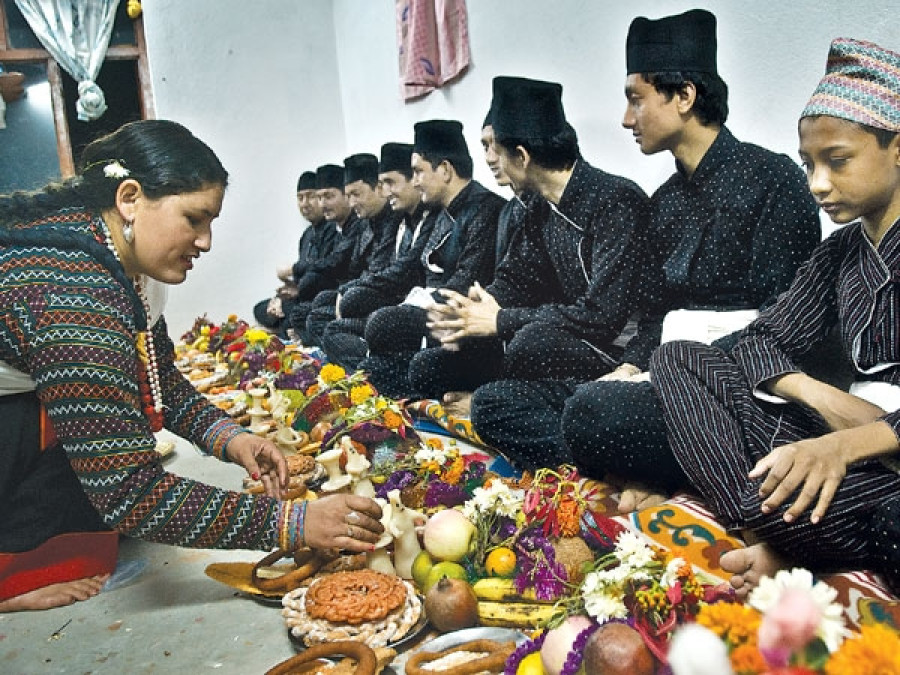
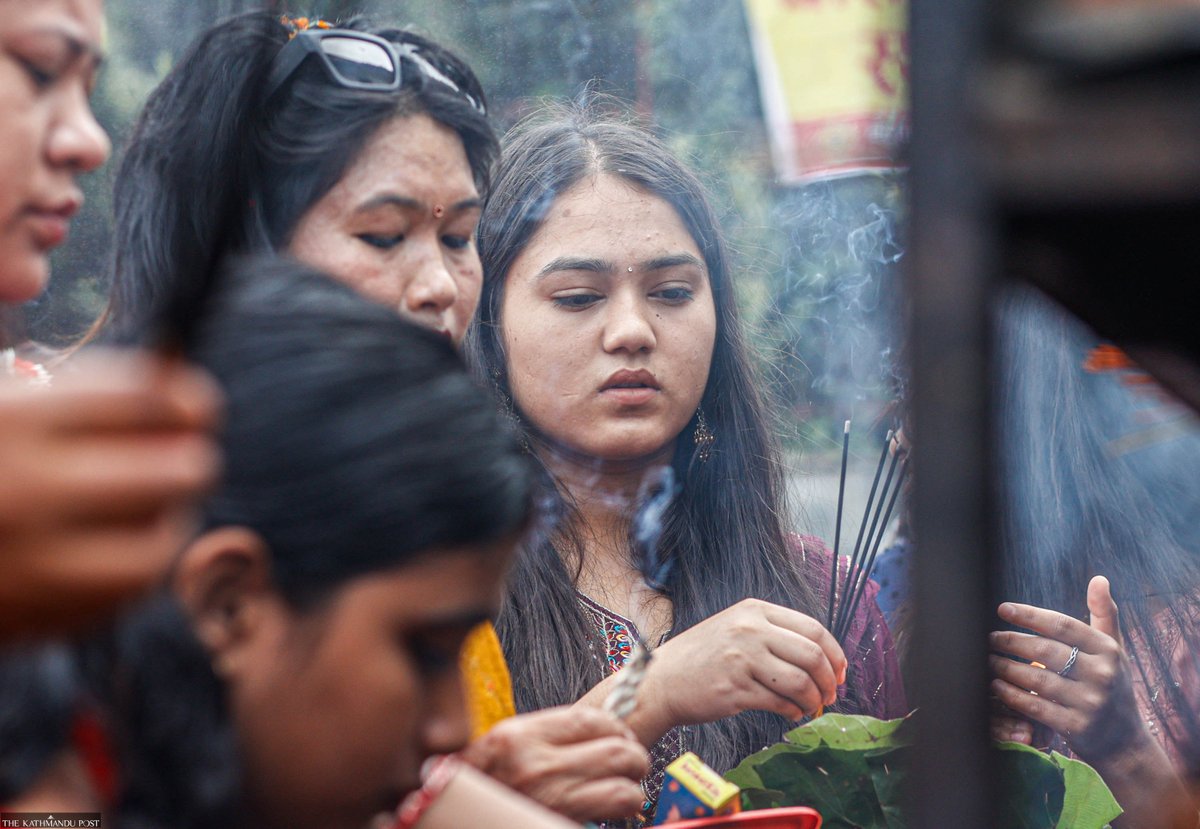
    Mha puja  ceremony where several people, some in traditional clothing, are sitting on the floor around a large arrangement of food offerings and other items. The person in the foreground is reaching for something in the arrangement.

    Celebration That Feels Like Home

    Tihar is spread over five wonderful days in Nepal; with each day having its purpose and each day celebrated praying an animal or a deity. You can literally feel the joy and celebration from the moment. You step onto the street, with each house glowing with thousands of tiny lights and a marigold garland. Everyone smiled to the beat of traditional music.

    I remember strolling through a small lane in Patan, where children were coloring lovely mandalas on the road. Throughout the indoor community environment, the easygoing atmosphere of incense blended in with the scent of sel roti cooking. They were very hospitable and invited me to join their festival. At that point I felt no loneliness, no outsider.  

    Of the 5 days of Tihar, two of the experiences were distinctly Nepalese experiences: Mha Puja, which is an honoring of yourself/soul; and Bhaitika, which is honoring the love between your brother and sister.  

    Mha Puja

    On the fourth day of Tihar, I was welcomed to the home of a Newar family in Patan. To participate in Mha Puja (Mha Puja), and I did not know what to expect. However, as I walked into the courtyard of the home, I did feel a little more comfortable. The ground of the courtyard was beautifully covered with rice mandalas of each family member representing their spirit, and with small oil lamps glowing. It was traditional, and shining so much!

    I was gently asked to sit in front of my own mandala. The family explained that Mha means “self,” and Puja meaning “to worship.” It was a ritual of passage of my own honoring. Something I never had before; a reminder to honor the divine that lies within each of us. I felt tears sting my eyes as the elder woman of the family placed a small tika upon my forehead. And lit the little lamp in front of my mandala.
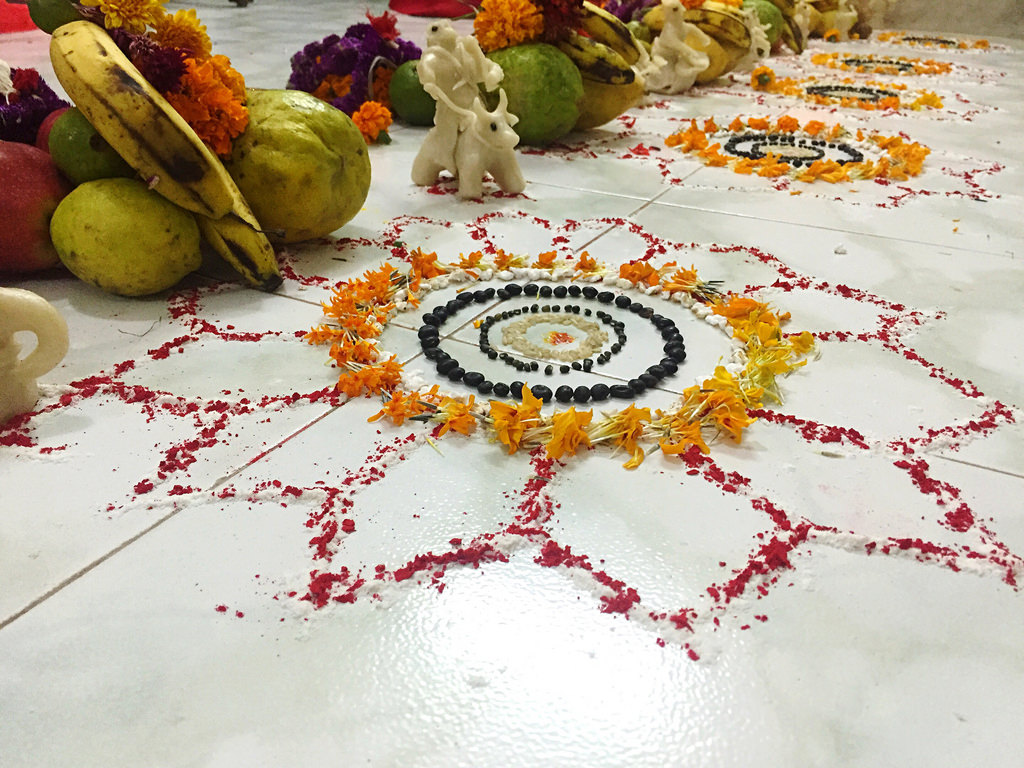
    a picture of a rangoli or mandala on a white floor. The decoration is made with red powder, yellow marigold flowers, and black seeds. In the background of the picture on the screen, there are fruits, including guavas and bananas, and more marigold flowers.

    I intended to tackle on something that was incredibly simple, but so meaningful. While the world teaches us to love others, what I experienced was to love oneself. For the first time in years, I felt I made a connection with myself. That flickering light was not only in front of me, but also in me. That evening while eating food, conversing and laughing with the family. I started to see that spirituality in Nepal was about so much more than that you gods and temples, and puja. It was about the human spirit and the still peace.

    Bhaitika

    The fifth day of Tihar is called Bhaitika, which started the next morning. I had heard Bhaitika was the most emotional day of the festival and indeed it was. A friend I met during my time in Nepal, asked me if I wanted to go with her to do the ceremony with her brother who lives in Bhaktapur. When I got there, her house was beautiful with flowers and lights and decorations. In the center of the room was a mandap with many offerings of foods, fruits, sweets and garlands.

    Once her brother sat down in front of her and the entire room went silent. She placed a colorful tika on his forehead with great love in her eyes. Each color of the tika represented blessings and protection, receiving garlands, food and presents, special love and there was red, yellow, orange, green, blue, violet and white in the tika. 
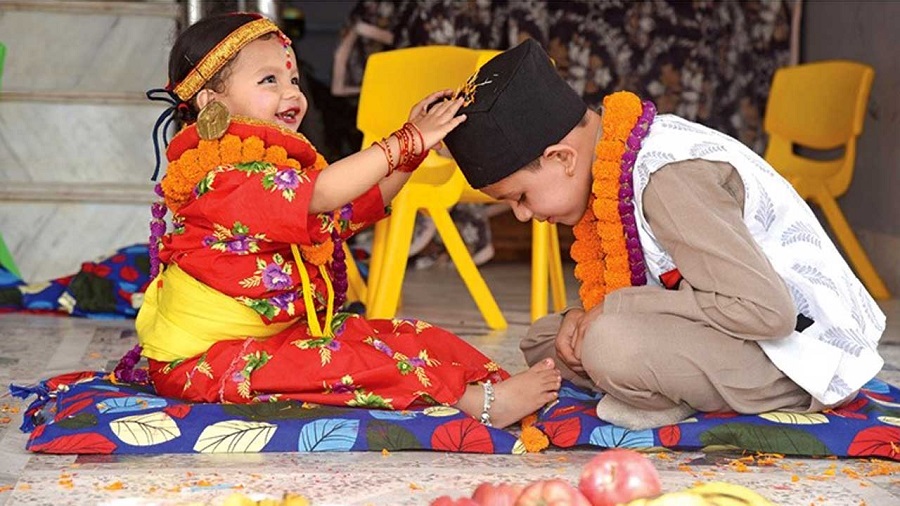
    young boy and girl in traditional celebrating Bhaitika.Nepali attire, both wearing marigold garlands. The girl, in a red and orange dress, is smiling and has her hand on the boy's head. The boy is wearing a white vest, brown pants, and a black Dhaka Topi.

    In the exact moment she was also saying a prayer for her brother’s long life. After that she brought her brother’s hands together, made a small prayer bow, placed his thoughts on her feet, and presented her gifts. The depth and connection felt so genuine and clear, I felt sad and tearful inside, even though I do not belong to their family in blood. 

    When the sister noticed me sitting quietly watching, she made eye contact with me and said, “This is for the love of siblings today. But it is also about the things that are special and people in our life.” I remembered what she said, because at that moment I remembered that family does not have to mean biological. Sometimes family is reserved for those hearts, that choose to care and love one another.

    Eventually, they placed a tika on my forehead. They requested me to sit with them; they presented to me fruits and sweets, and proclaimed, “Now you are part of us.” I beamed with joy and felt tears welling in my eyes. As,i had arrived in Nepal as a visitor, but that day I was no longer a tourist. I belonged. 

    Tihar: A Festivity of Learning to be Grateful

    Through Mha Puja and Bhaitika I began to understand what Tihar was about, the celebration of each and every relationship. It begins with Kaag Tihar, a day to feed crows, the messengers of the gods. Then it is Kukur Tihar, dedicated to honoring and worshiping dogs for their loyalty to humans and love. Then there is Gai Tihar, recognizing cows and their role in sustaining life. After Gai Tihar is Mha Puja, a day to worship oneself; then Bhaitika, love from brother to sister. 

    Every day teaches you. It teaches you how to be grateful for each moment, how to honor the life of every living beings and notice divinity all around you. It is not merely a religious festival from an ancient culture; it is how you should live. 

    As I looked around the city that night that sparkled with a thousand lamps, I understood how beautifully the Nepali embrace light: not merely as light but as enlightement. Each diya whispered that even in darkness there are always things to be grateful for.

    What to Experience in Tihar in Nepal

    If you happen to be in Nepal during Tihar, this is an experience not to miss! It occurs anywhere from late October to early November and there is so much to see and do. 
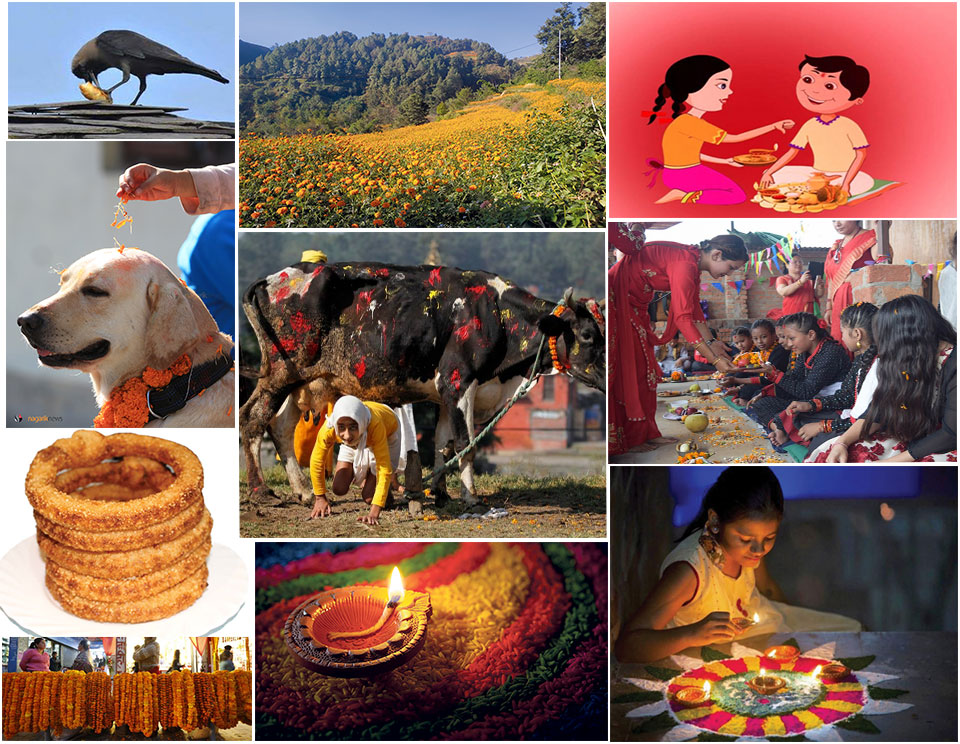
    This scene is part of the Tihar festival, which is celebrated in Nepal. Tihar is a five-day festival of lights, where different days are dedicated to honoring various animals. The third day, known as Gai Tihar, is dedicated to the worship of cows, which are considered sacred in Hinduism and are seen as a symbol of the goddess of wealth, Lakshmi.

    1. Access Family Time 

    Nepali families are incredibly hospitable! If you find the opportunity to be a guest in a family’s home please do. This will be your favorite part of your trip. 

    2. Explore Old Heritage Towns

    Patan, Bhaktapur and Kathmandu are alive and personified living museums; lights in every courtyard, flowers everywhere and music in the streets. 

    3. Bolster Your Traditional Food Experiences 

    Tihar is also that time when sel roti, anarsa, laddu and sweets made for you by mom or grandma literally also symbolize love and sharing.

    4. Respect the Practices

     Please always take off your shoes before entering the holy space, and always walk quietly while making pictures. Even something small shows such respect does wonders for expressing deep faith.

    5. Bring Your Own Diya

     Even if you are not at home, just lighting a little lamp will make you feel apart of something eternal. It is not just a flame; it is a wishing that floats and speaks to the universe.  

    A Journey That Changed Me For Life

     As I sat by my window reflecting on my time in Nepal coming to an end. Watching the last of the Tihar lights glimmer in the late evening sky. I was surrounded by the laughter, incense, and the memories of the tika on my forehead.

    Mha Puja taught me that self-love is sacred and Bhaitika taught me while love knows no bounds. Together they reminded me the holidays are not about tradition but a feeling, a connection to the way light can come into our lives through every person we meet.

    I came to Nepal to see its beauty, but I left feeling it in my heart. The kindness of the people, the depth of their culture, and the warmth of their traditions changed the way I see the world.Tihar is not only a festival that lights the streets of Nepal. It is a festival that lights the soul.

     

  • My Teej Experience as an Unmarried Girl in Nepal

    My Teej Experience as an Unmarried Girl in Nepal

    My Teej Experience as an Unmarried Girl in Nepal

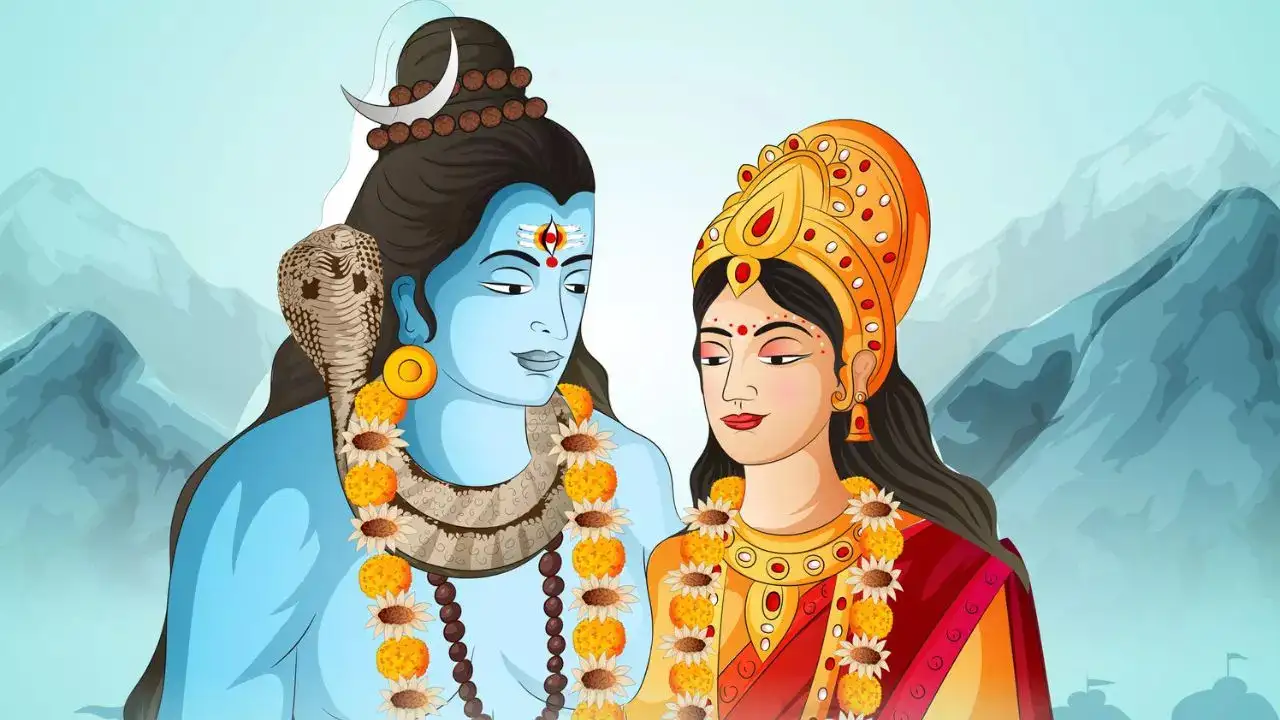
    From the time I was a little kid, living in Nepal, I had festivals that brought color and meaning to my life. While different festivals have their own significance and beauty, one festival has a special place in my heart: Teej! I am now married; as a young, unmarried girl, I was not fasting for a husband, but I have always participated in every ritual since it’s part of culture, discipline, and about honoring women. This year, my Teej was quite the adventure! I prayed, I fasted, I danced, and made so many special memories that I will never forget. 

    I woke up early in the morning feeling excited about all the experiences that would happen that day. After bathing, I wore a bright red saree I had shopped for days before. I layered on green and red bangles, placed some tika on my forehead, and put on my simple necklace and earrings. The mirror showed not just me but the spirit of Teej. Throughout the entire preparations, my mother and I collected pure flowers, fruits, a few mystical puja diya, and of course, made our way to the temple, all the while capturing pictures with my cousins.

    There were women everywhere in gorgeous red attire – all making their way to the temple for a similar serious intention. I joined the line at the Shiva temple. I had my offerings. The temple smelled wonderful incense flowed freely. Bells rang up ahead and devotional songs was somewhere in the distance. When it was finally my turn, I bowed my head in front of Lord Shiva, placed flowers down, and decorated a diya with a flame. I closed my eyes and prayed- not for marriage but for love, peace, and strength in my life. I was proud to be among so many women, intertwined in a strong tradition.

    Once our tour to the temple was over, my fast began in earnest. It was a nirjala vrat- no food or water.At first, I wasn’t anticipating this to be too tough, but by noon, my stomach started to feel dehydrated, and my thirst proved to bring discomfort. It was easy to remind myself that fasting is not just a physical thing; it is also about willpower. Therefore devotion to the fast itself. I felt incredibly lucky to be supported by my cousins, aunts, and friends who were also fasting on Teej – they kept me positive. We swapped stories, laughed, and temporarily forgot about being hungry in each other’s company


    By late afternoon, the low tone had cleared and was now a time of celebration. I found myself with a group of women in a courtyard, with the madal drum steadily beating. Teej songs filled the air, songs of love, songs of challenges and struggles for women, and songs of extraordinary joy. I started dancing. By that point, I had been gifted my gleaming saree and bangles, and my feet were moving independently of my thoughts. I had almost forgotten that I was fasting. The music, the laughter, and the connection of all the women dancing together somehow energized me with new life.

    As the sun started to sink lower in the sky. I walked home for evening puja to again offer my prayers to Lord Shiva as a family unit. I sat in silence and reflected on the day’s events; on the hunger, the prayers, the dancing, and the laughter. When it was time for the puja to begin, I also had my first sip of water for the day. It was the sweetest blessing. Though I had not eaten for a day. When I had some fruit and a very light meal, it tasted more satisfying than any meal I might have imagined as a feast.

    As I lay in bed that night, tired but pleased. I began to sort out what Teej really means for me. It is so much more than fasting; it is a different embodiment of empowerment, keeping a community, and trust. I see where I gain value as an unmarried girl, not because I am expecting my future husband. But because it allows me to reclaim my roots. The women in my own family, and the generations of women who have practiced this tradition. Every Teej, I get to experience the joy of putting on red, singing in song, dancing with friends, and going to temples. I feel a sense of pride in the larger community. I see Teej as celebrating womanhood, resilience, and having fun together.


  • Gaijatra & Janai Purnima in Nepal: The Day I Lived Two Festivals at Once

    Gaijatra & Janai Purnima in Nepal: The Day I Lived Two Festivals at Once

    Gaijatra & Janai Purnima in Nepal: The Day I Lived Two Festivals at Once

    It felt truly incredible to experience the magic of Gaijatra & Janai Purnima in Nepal this year. I honestly could not believe that Gaijatra & Janai Purnima would take place on the same day! It seemed the city was prepping for a cosmic heartbeat, one with gaiety & chaos, and the other with dignity and grace. I had no sense that the day would stay with me forever.

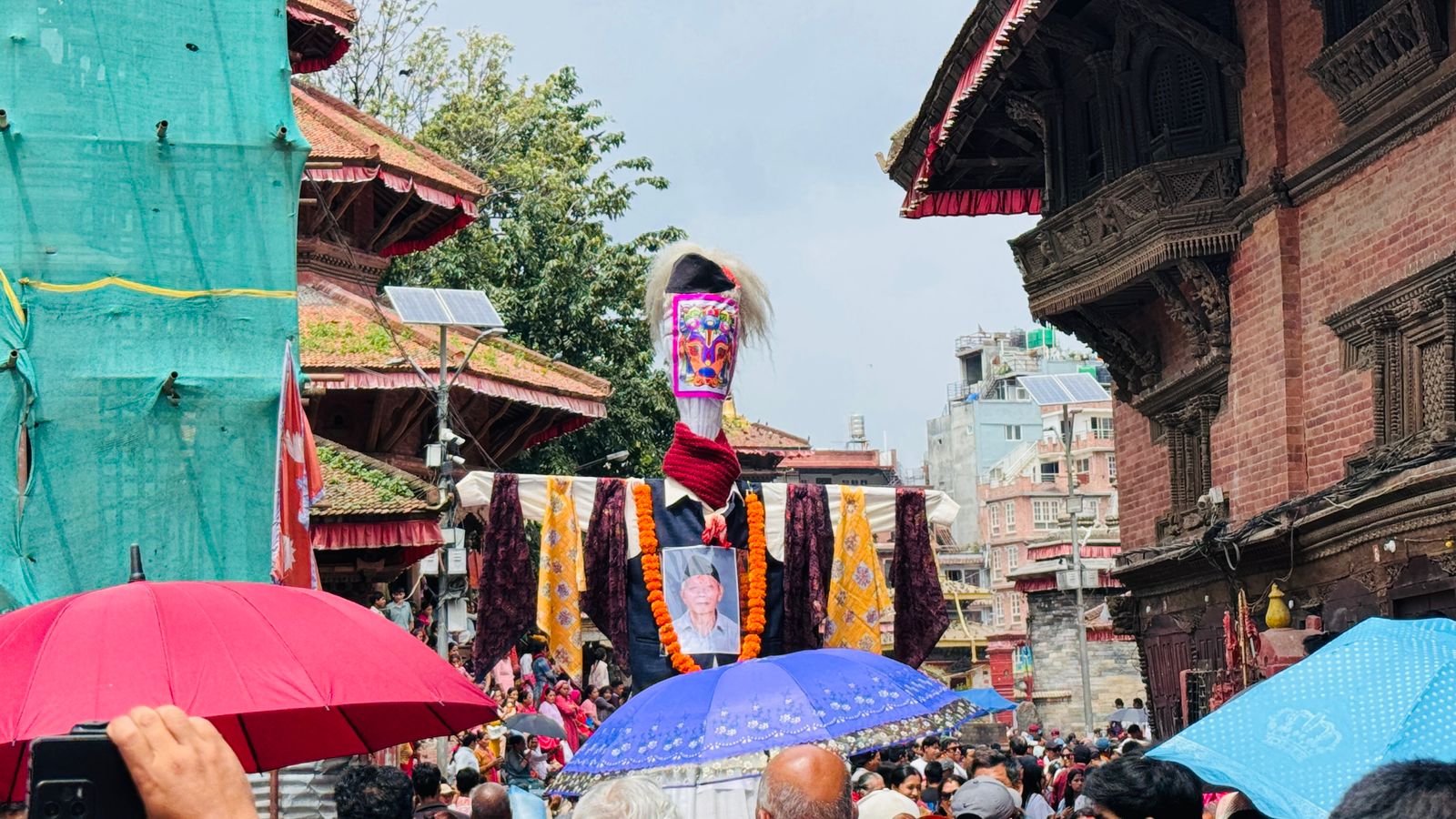
    A vibrant, vertical shot of a bustling street scene in what appears to be an old town or temple complex, possibly in Nepal, with traditional architecture, and a crowd of people during gaijatra

    Morning- Gaijatra in Bhaktapur

    I flowed into Bhaktapur Durbar Square shortly after the sun’s rays peeked over the horizon, and the light was soft and golden. Rain earlier had darkened and slicked the bricks, their earthy surface emanating soaked ink and incense. The bigger magic was in the people. Gaijatra, also referred to as the “Festival of Cows.” It is a day to remember those who have died in the past year. Families lead cows or dressed kids down the street in the belief that to have a holy cow walk helps a spirit’s journey to the afterlife.

    The streets were already alive with motion. Drummers banged on large dha drums with regularity, flutes trilled bright melodies that intertwined with the smells and sounds, and laughter was all around.  Children burst into little clusters with faces painted and colorful robes. Women reached over, carving wooden railings of balconies to dismiss rice and flowers on walking processions.

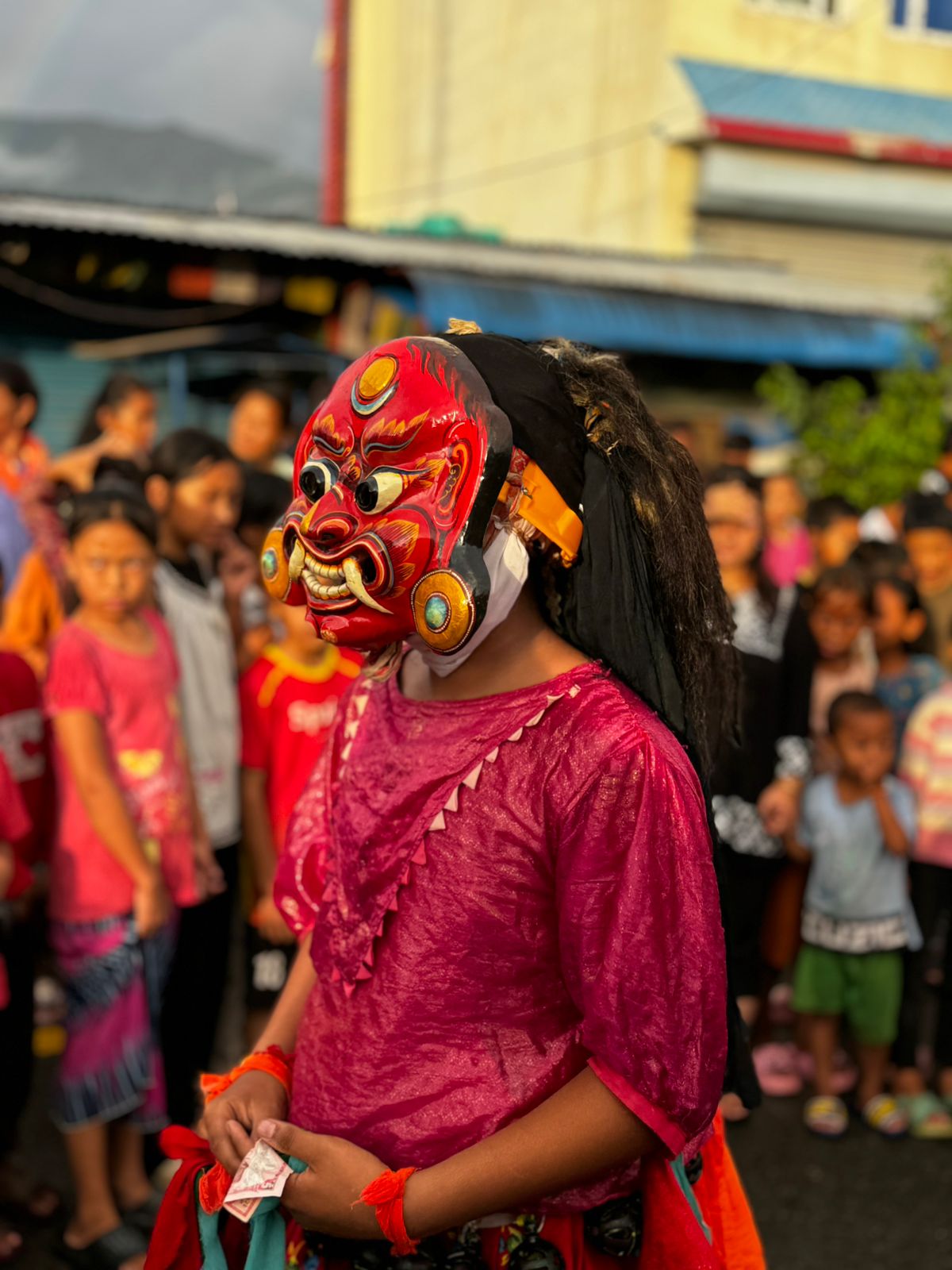
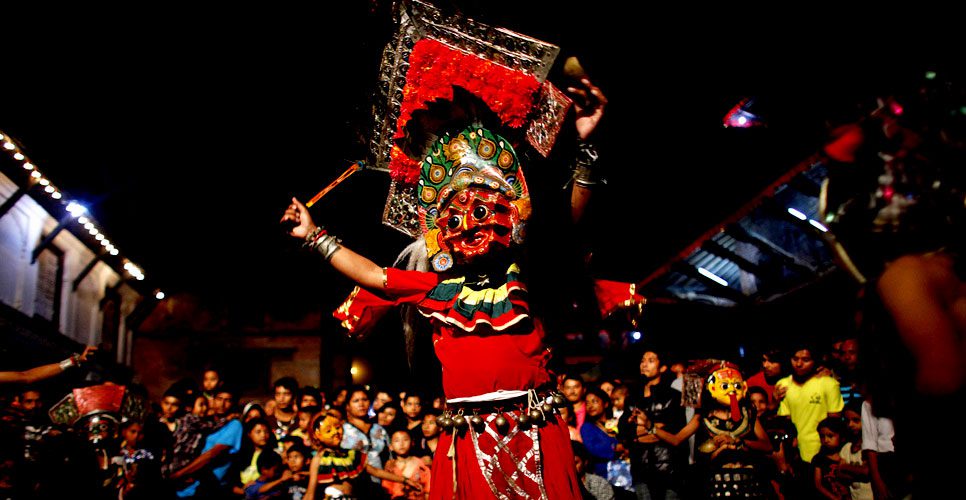
    "A person in a red traditional costume and an elaborate, fierce-looking red mask with large ears and black feather-like adornments stands amidst a crowd of people, likely during a festival or cultural event in Nepal, Gai Jatra."

    I paused to watch a group of young boys dressed as gods with faces painted gold and blue, their crowns slightly awry on their heads. They struck poses for photos and basked in all the attention. Over by a family, a cow beautifully decorated with fresh marigolds and shiny red cloth was led by the family, and calmly observed the chaos around it. I learned later that if there is no cow in the home, a child is dressed up as a cow, ensuring that every parted soul is still properly sent to heaven.

    At that point, a little girl in a yellow sari ran up and tugged my sleeve and pulled me into a quiet courtyard. There, an old woman was sitting, her deep red sari matched the flowers on her brass plate. Without saying a word, she placed a tika on my forehead, and her warm hands pressed down.

    She invited me in when she saw how wet I was. It was a small room that smelled of wood smoke and cardamom tea. She poured me a cup, which warmed me. The sweetness comforted me in a way similar to being comfy warm on a cold day. Then it struck me that Gaijatra was not just a time to remember the dead but to act for the living; to make them smile and love them through generosity.

    I wanted to give her something important, so I pulled out my MP3 player. I went to my main system and made a disc for her of the more popular Nepali folk songs according to her listening tastes, which I offered her. She took it as if it were a treasure. Right then, in a tiny kitchen with rain pouring outside, the sound of some distant festival music on the radio. I realized I had entered a tiny but rich space that was the very core of Gaijatra with joy that comes from memory, and memory that lives through joy.

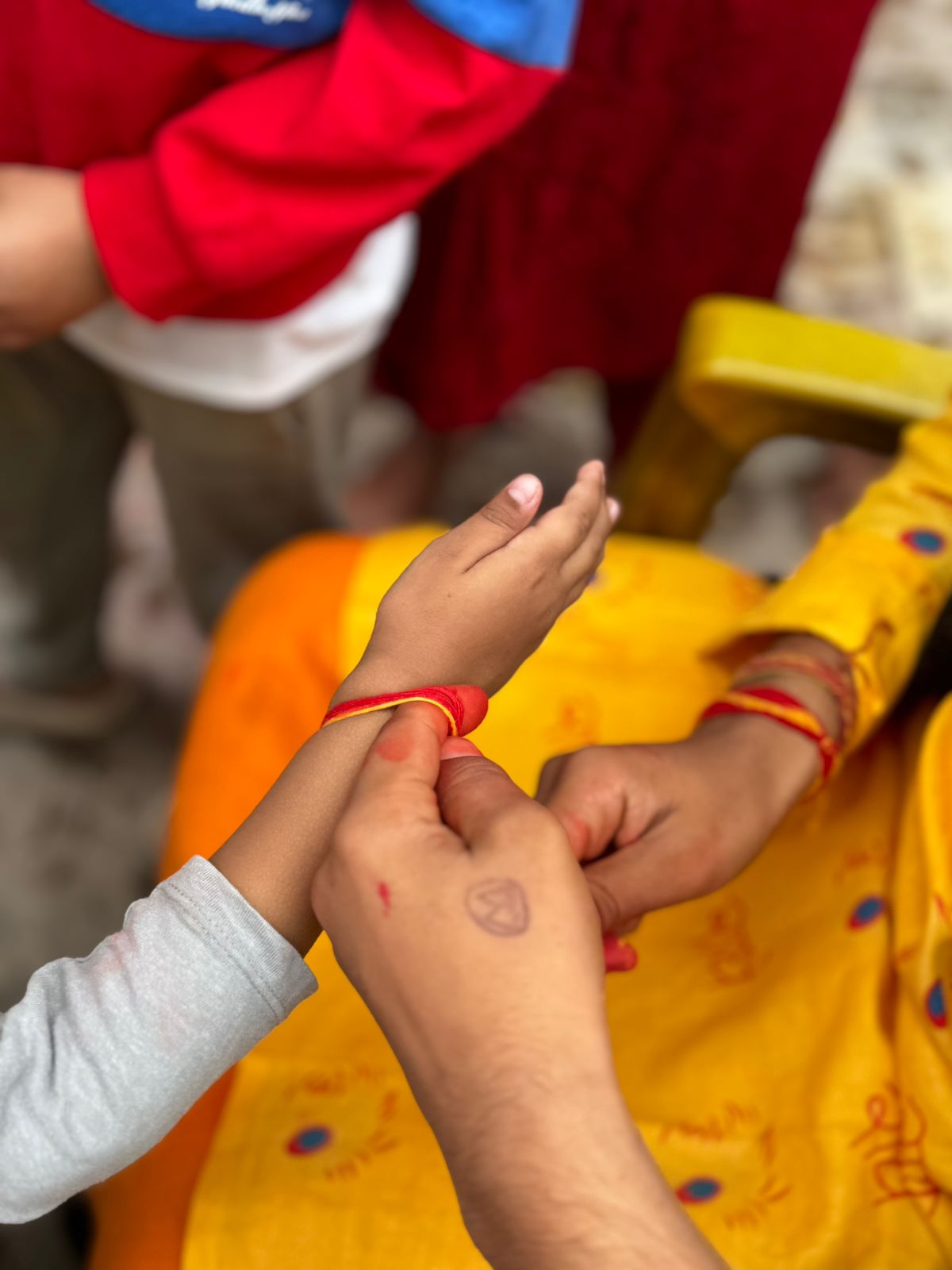
    Upon completion of my travels in Bhaktapur. I arrived at Pashupatinath Temple, the focal point of spirituality for thousands of people in Kathmandu. Janai Purnima is a day for Hindu males to memorialize and transition their sacred thread. A janai, one representing purity and responsibility. Everyone, men, women, and children, can wear a Raksha Bandhan, a wrist thread made of cotton that has red and yellow and is intended for good protection.

    The temple at Pashupatinath was busy, but a different busy from the one in Bhaktapur, it was noticeably quieter with funny chants. The Bagmati river was flowing very slowly and poorly reflected the heavy, dark clouds that were raining into it. Pilgrims were going into bubbling waters to bathe, clambering out shivering, and smiling. The air was thick and rich with the aromas of burning ghee lamps, marijuana, and sandalwood.

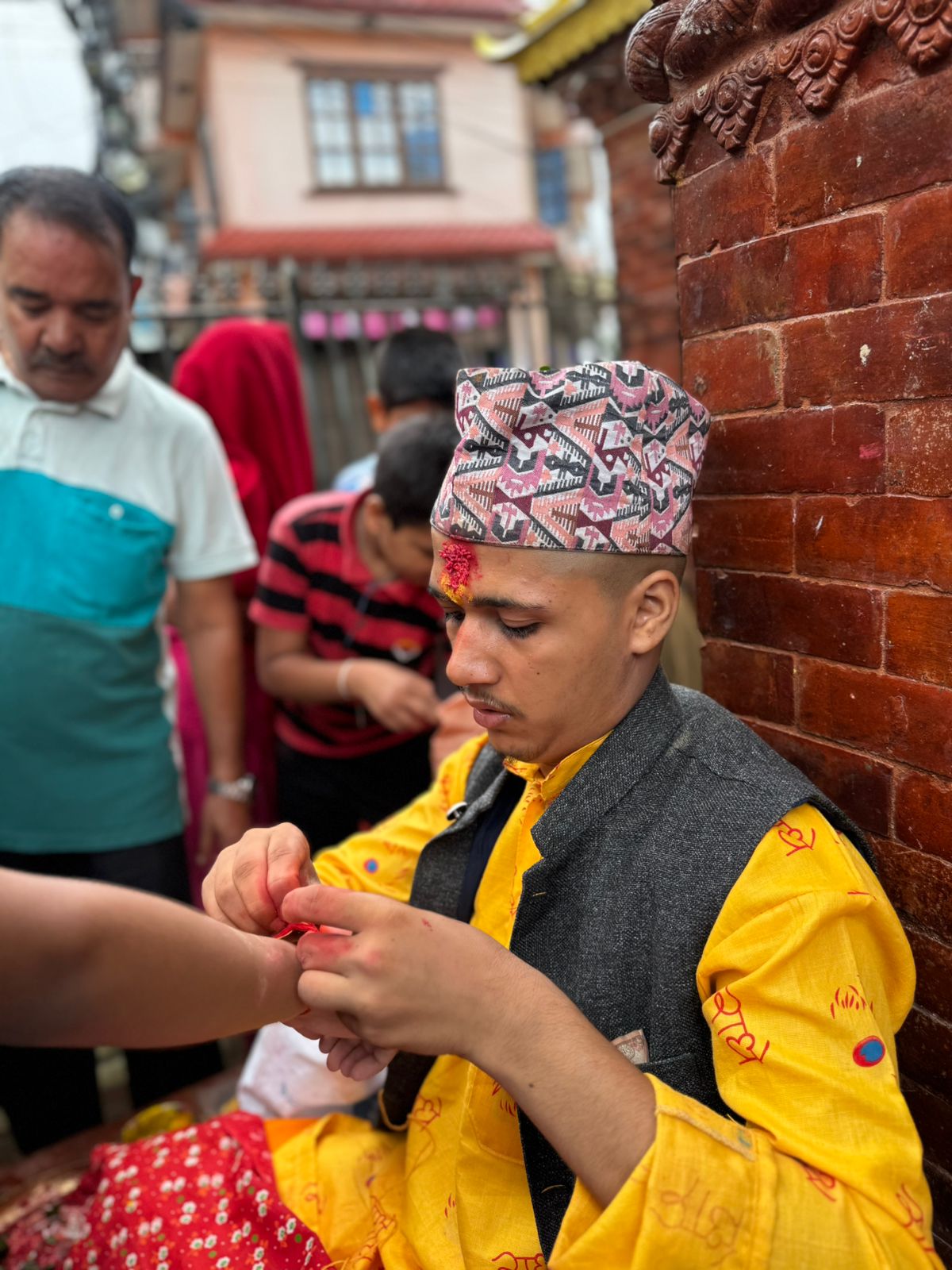
    A man in traditional Nepalese attire, including a Dhaka topi and a yellow and black vest over a yellow shirt, is having a sacred thread or bracelet tied around his wrist by another person in a ceremonial setting

    Long lines of priests sat cross-legged, working quickly with their hands to tie their threads and mutter blessings. There were men clothed in white material retying their sacred thread. A ritual that has existed for centuries. I watched a father help his young son tie the boy’s first thread.  The father’s voice was gentle and proud.

    A young priest motioned for me to come over. I sat before him and was enveloped by the sound of chants and bells. He tied the raksha bandhan around my right wrist. I felt an odd calmness inside, as if this thread was not merely a blessing for protection, but it was also the necessary quietness for me to belong to the moment in this place.

    I thought about how only hours earlier I had experienced Gaijatra’s joy and laughter. Now I was sitting in the calm, sacred embrace of Janai Purnima. It was as if the two festivals were telling me something together.  Life is about the balance between the joy of celebrating and the quietude of remembering, a duality of celebration and reflection.

    Evening — Threads and Connections

    As daylight faded, the temple’s courtyards shimmered with hundreds of oil lamps brightening the evening. I had just gotten ready to leave, but I stopped at a chatpate stall where a man was tossing puffed rice, with chili, onion, and coriander, with his arms flying all over the place in making this mess. A woman beside me took some from her paper cone and offered me some. My mouth was on fire, so we both recoiled and laughed at how spicy it was. She told me she had come from Dolakha just for Janai Purnima. Before I left, she stuffed a small package of roasted soybeans in my hand. “For your journey,” she said.

    having a sacred thread or bracelet tied around his wrist by another person in a ceremonial setting

    That night, when I arrived home and looked in a mirror. I still had the red tika from Gaijatra on my forehead. The thread of protection that was Janai Purnima on my wrist, and a package of soybeans in my backpack from a random person.

    I did not just “see” two festivals that day. But “felt” them. I walked their streets, drank their tea, wore their blessing,s and laughed with their people.

    Two festivals, one heart.

    Gaijatra taught me that in sadness there can be laughter, there can be song, and there can be joy. Not to forget, but to remember in love, because it was love that was lost. Janai Purnima taught me that protection is not always walls or weapons . Sometimes it is a thread, a prayer, or the kindness of a stranger. I am so glad Happy Mountain Nepal made my journey so beautiful.


  • Festivals in Nepal: When to Visit for Cultural Experiences

    Festivals in Nepal: When to Visit for Cultural Experiences

     Festivals in Nepal: When to Visit for Cultural Experiences

    Nepal is a wonderfully diverse country with authentic traditions, and spiritual vitality that permeates the entire country, but it is also a country with hundreds of vibrant festivals that illustrate the spiritual and cultural diversity of Nepal. Between energetic forms of ancient Hindu worship and similarly energetic celebrations of the return of buddahood in Tibetan Buddhism, there is something wildly something going on every month of the year in Nepal. Therefore the best way to identify your next travels is to base your trip around the main festivals within Nepal. Thus, the best way to identify your next travels is to organize your trip around the major festivals within Nepal.

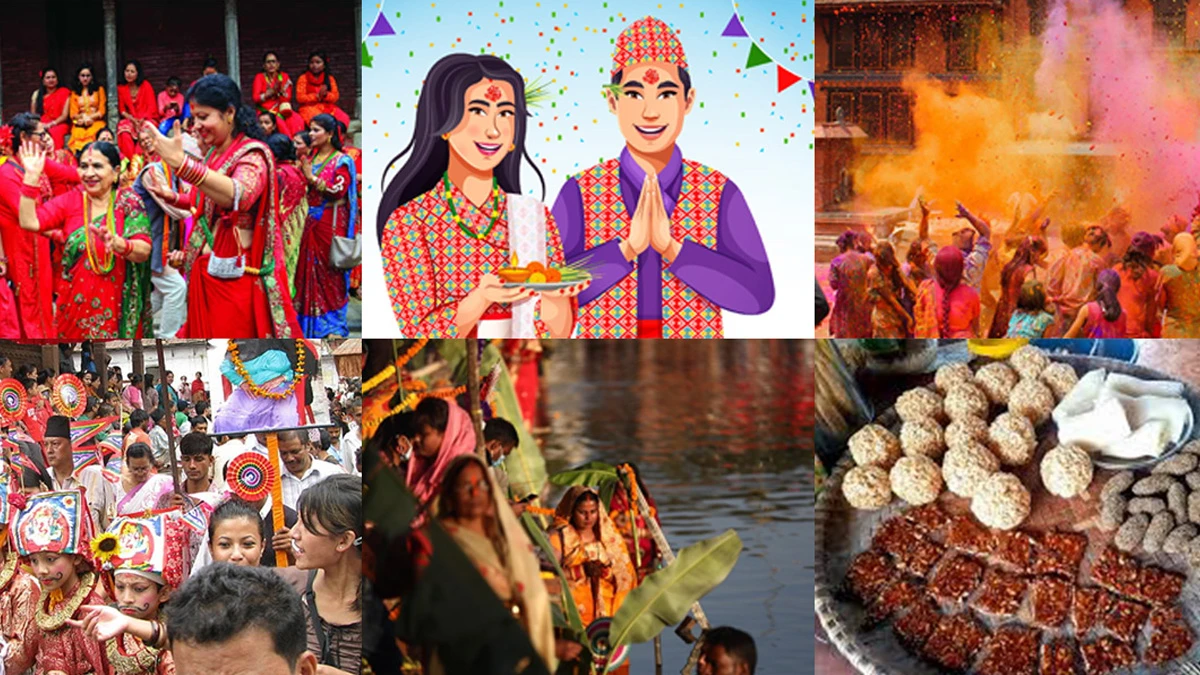
    people celebrating festival like teej, dashin, holi, mage sangrati in a grid

    In this blog, we will assist you in identifying what the major festivals in Nepal are and when they happen, what they entail, and how to put together a trip to be part of them.

     What Is It Like To Travel To Nepal In The Midst Of Festival Season?

    Being in a festival in Nepal is not simply being in a ‘parade’ or ‘temple ritual’, but being part of it. Being shoulder to shoulder and walking in rhythm with the locals, experiencing the crush of the events, tasting local sweets during Tihar Festival, these experiences connect you to the culture, the heritage and the hospitality of Nepal.

    Key reasons to visit during festivals:

    People cebrating gaijatra in bhaktapur

    Authentic community involvement

    Festivals provide an authentic opportunity to appreciate what Neplai people do day to day, and the practices that inform everyday life. You will witness practices and rituals that are several hundred and thousands of years old, being done with customary pride. Festivals also afford you the chance to involve yourself with local folks when they are actively jubilant and most enthusiastic. The breadth of experience you will achieve from a festival is not comparable to tours which typically have a sightseeing-oriented agenda.

    Incredible visuals

    In addition to socially and culturally immersing yourself in a festival, there are also visual spectacles provided in the form of the amazing architecture, bespoke costuming, and fantastic parades. There are incredible visuals to capture in every direction whether it be the masked dancers of Indra Jatra or candlelit temples during Tihar. These experiences generate dynamic, unique, and culturally relevant visuals. For photographers or content creators, you will find an infinite heap of rich visual and experiential inspiration.

    Traditional food, music, and dance

    During festivals, there are special foods that you normally do not get to eat on an everyday basis – sel roti during Tihar or yomari during Yomari Punhi. There is music and dancing in the streets: folk drumming, dancing, and traditional Newari music. These are sensory events that deepen your knowledge of different ethnic cultures of Nepal. It is a feast for not only your stomach but also your spirit.

    Local and traditional festivals

    A hands-on opportunity to learn about Hinduism and Buddhism Festivals are religious traditions with their roots in the spiritual context of Nepal. A festival provides a chance to understand rituals, deities, legends, and sacred practices of both Hinduism and Buddhism. When you see puja, prayer, and symbolic practices, you can understand how those practices embody those beliefs. Festivals are a cultural learning experience disguised as celebration and participation.

    More colorful and exciting in towns and cities

    The color and energy generated by festivals comes alive in towns and villages and even remote mountain villages. There is huge presence of colorful lights, flowers, and mandalas! Amidst it all, people are all wearing traditional ethnic clothing. There are millions of collective identities in expressions of happiness and celebration wherever you find yourself adding color to every location!

    Major Festivals in Nepal

    1. Dashain (September–October) – the biggest Hindu festival in Nepal!

    Dashain is the longest and most important festival to celebrate in Nepal representing the victory of good over evil. Itis a 15 day festival with significance each day, culminating the festival on the tenth day (purnima) with Elders applying tika and blessed jamara to younger members of their families. The Dashain holiday is dedicated to worshipping Goddess Durga, who is also recognized as Goddess of power and protection, cleaning the home, and purchasing new clothes and gifts in order to reassemble with family on this special occasion!

    There are fairs in all public squares, you will see traditional bamboo swings built in many villages. People fly kites wherever they are in the country to enhance the celebrations! Animal sacrifices are still held at a few temples to maintain historical customs; a remarkable opportunity to experience the honest rituals and demonstrate family closeness is presented as most of the population shuts down for Dashain!

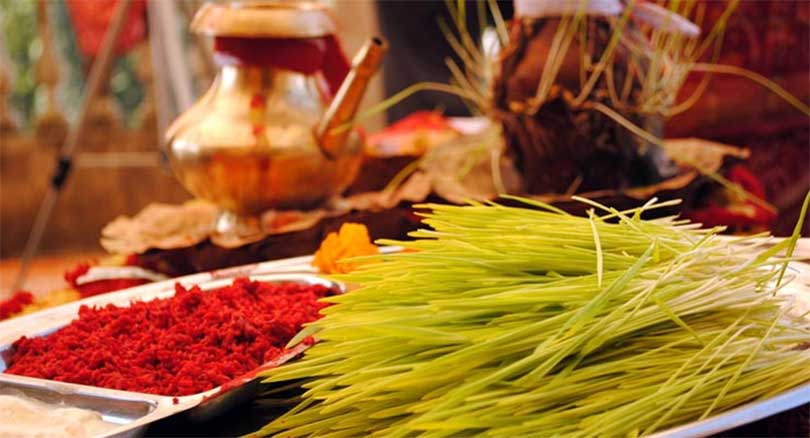
    Tika and jamara during dashin

    Key Takeaways:

    • Festivals in Kathmandu and the surrounding areas of Nepal,
    • Are massive festivals and celebrations,
    • with kites, swings, and feasting!
    • Best Experience in: Kathmandu, Bhaktapur, or in rural villages for the traditional experience.

    2. Tihar (October-November) – Festival of Lights and Animals.

    Tihar is a colorful festival that pairs the spiritual with the visual, and is hard to miss with all that defines the five days. Every day has a different being that is honored: crows, dogs, cows, oxen, and ends with brothers. Houses are adorned with special decorations of oil lamps, candles, and rangolis (colored pattern made with flour, rice, colored sand, or flower) to Laxmi, goddess of wealth, at her Laxmi Puja.

    The final day we celebrate Bhai Tika, the love between siblings, where sisters put the tika and blessings garland on the brothers. Children sing Deusi-Bhailo folk songs to their neighborhoods, and everyone adorns their houses joyously with gaiety and song in appreciation of the season. With the lamps and sound of song in the air…Tihar is undoubtedly one of the most popular holidays in Nepal.

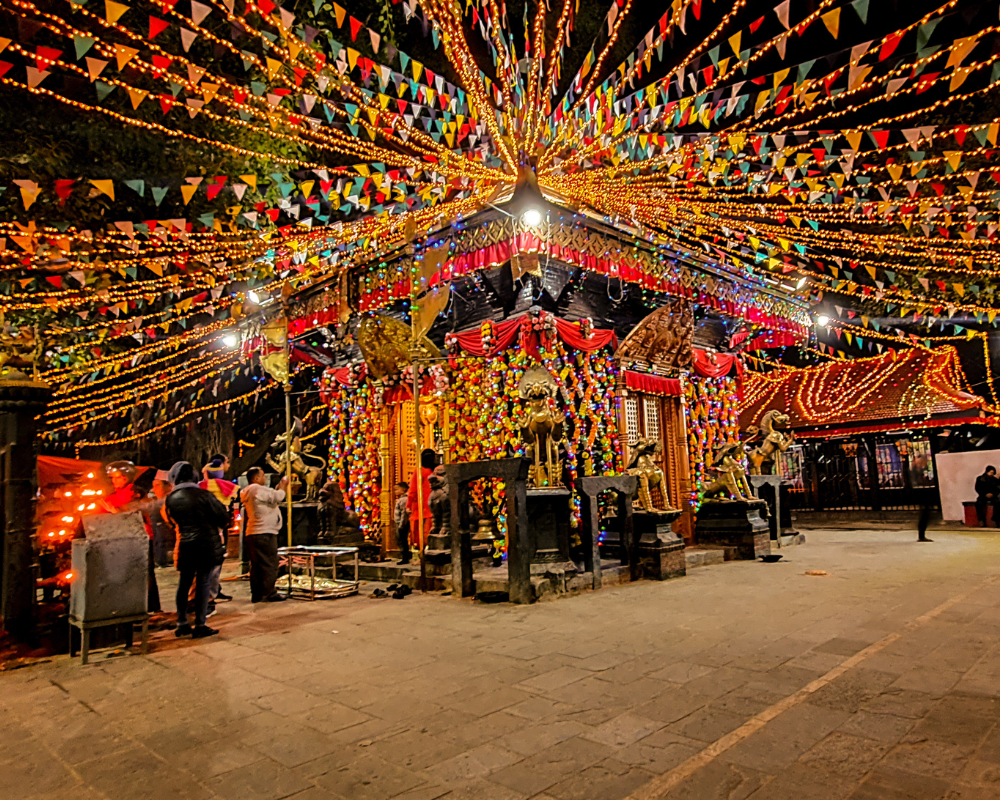
    Maitidevi temple decorated with lights and flowers during tihar

    Main Attractions:

    • Entire towns lit up in lights
    • Laxmi Puja rites
    • Traditional Deusi Bhailo singing and dancing
    • Best Place to Experience: Kathmandu, Pokhara, and minor towns for authentic home celebrations

    3. Holi (March) – Festival of Colors

    Holi is a chaotic outpouring of color and energy which celebrates the end of winter and the arrival of spring. Initially a Hindu festival recognized with the tales of Lord Krishna and His relationship with Prahlad, it has turned into a happy public holiday since. People will splash each other with colored powder and water, dance in the streets, and blast loud music.

    Its a weeklong opportunity for togetherness, where social hierarchies collapse into a big party atmosphere. There are many friendly/welcoming open spaces where tourists can access to take part in Holi, particularly in Basantapur in Kathmandu or Lakeside in Pokhara. Although it is mostly a fun time, there also is a spiritual message of love, forgiveness, and new beginnings.

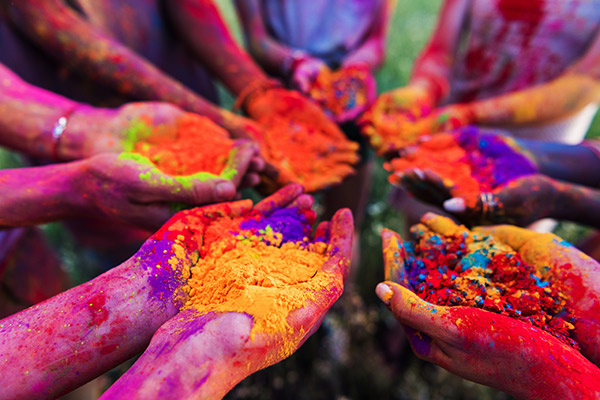
    People's hand full oof different colour during holi

    Key Highlights:

    • Colorful Powder Splashing and Water Balloon Fighting
    • Singing, Dancing and Street Processions – Public Parade
    • Inclusive – For Tourists Too!
    • Best Place to Enjoy: Kathmandu (next to Basantapur), Pokhara, and Terai Regions.

    4. Indra Jatra (August–September) – Kathmandu’s Most Vibrant Street Festival

    Indra Jatra is a vibrant eight-day festival of the Newar people and occurs mostly in and around Kathmandu. It is a celebration of Indra the King of Heaven and Rain God and is an opportunity to experience a taste of the culture of this region. The festivities start with the raising of a ceremonial wooden pole (Yosin) and continue with performances of masked dancers such as Majipa Lakhey that represent the guardian dieties.

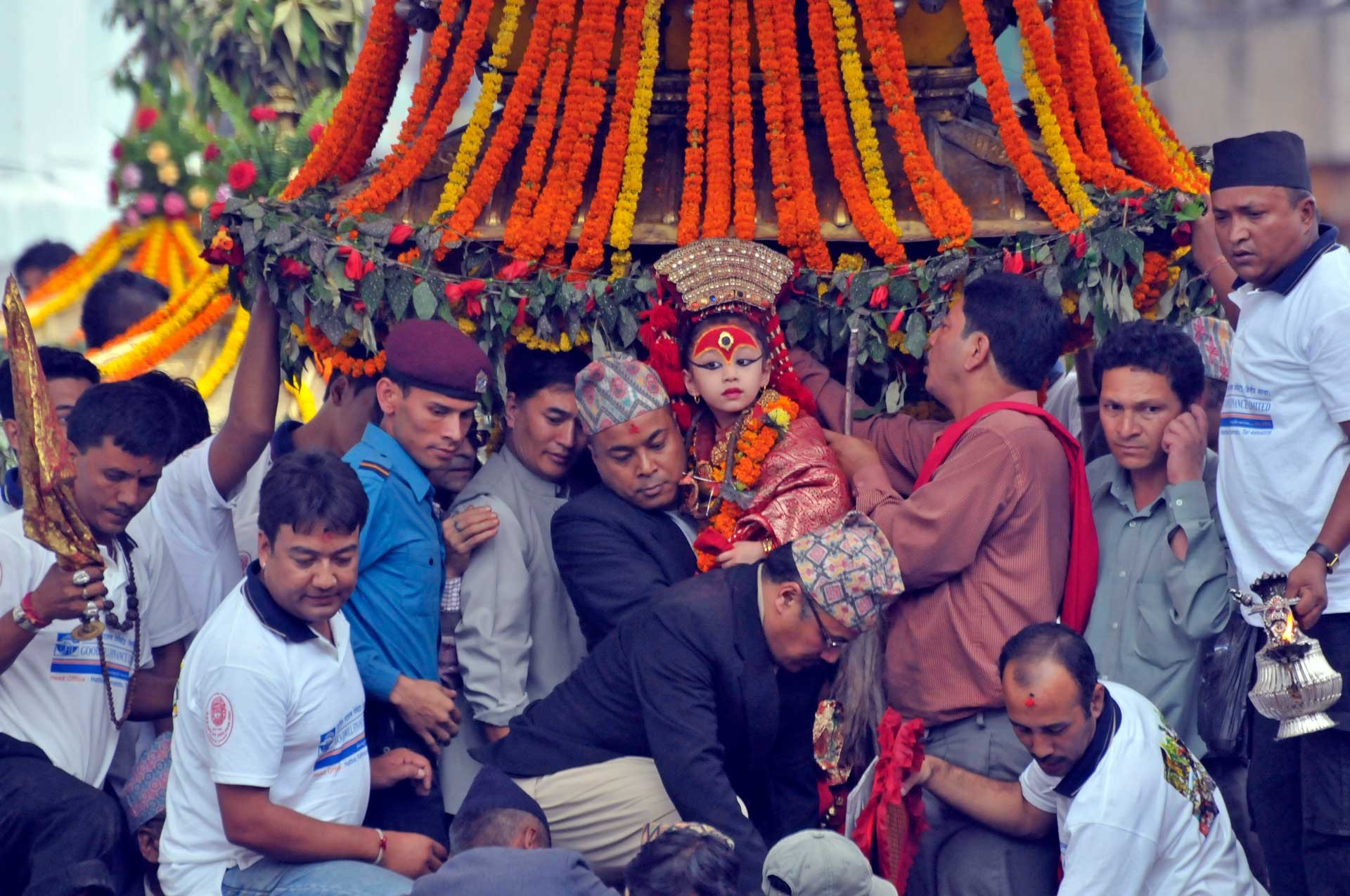
    Perhaps the most popular event of the festival is the chariot procession of the Living Goddess Kumari through the ancient streets of Kathmandu Durbar Square. From stone spouts there is a steady supply of local beer, crowds of many thousands gather to watch, and there is a atmosphere of complete celebration and religious devotion that makes it an unforgettably rich experience.

    Kumari during indrajatra

    Top Highlights:

    • The Mijpa Lakhey and all other mask dances
    • The Kumari’s chariot procession
    • The beer flowing from traditional spouts in Basantapur
    • Artistic Attraction: Kathmandu Durbar Square

    5. Buddha Jayanti (April–May) – Celebrating the Birth of Lord Buddha

    Buddha Jayanti is a quiet, relaxed and somewhat spiritual event. It marks the birth, enlightenment and nirvana of Lord Buddha. It is a day largely for Buddhist communities, and it is a day of remembrance, characterized by peaceful prayer, offerings and experiencing perhaps the most meditative of rambles with monks chanting their sacred texts, or devotees lighting butter lamps at temples and stupas.

    Buddhists from near and far journey to sacred Buddhist sites, whether it is in Lumbini (Buddha’s birthplace), or locally in Kathmandu at Swayambhunath or Boudhanath. The atmosphere is some-what solemn, reverent and peaceful – it an ideal opportunity to get a glimpse into a little sliver of Nepal’s Buddhist culture, whilst learning about Buddha’s message of peace and compassion.

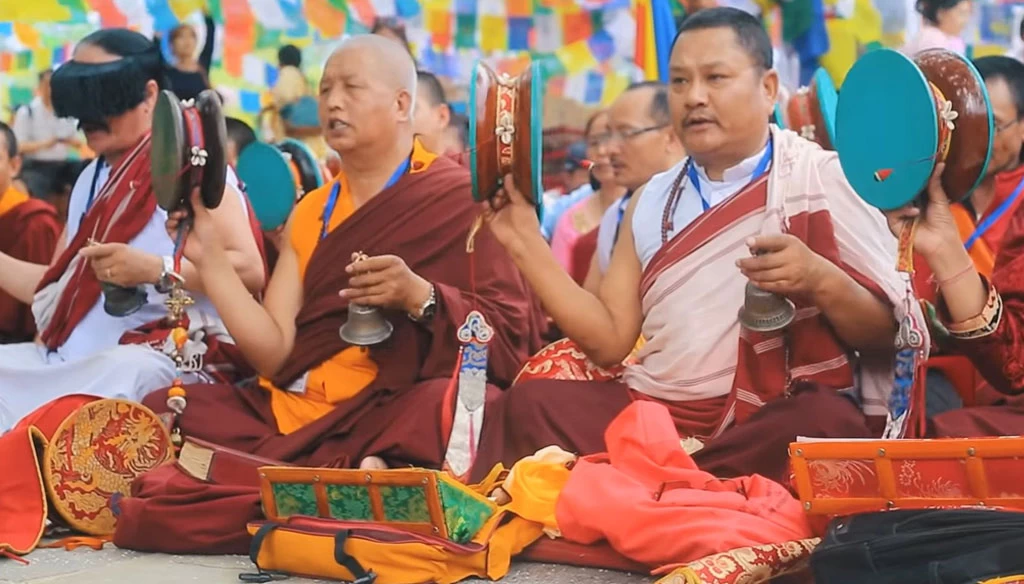
    Monk chanting during Buddha Jayanti

    Key Highlights Include:

    • Prayer ceremonies and offerings of butter lamps
    • Chanting of Buddhist scriptures
    • Pilgrimages to sacred places of Buddhism
    • Best Places: Lumbini, Swayambhunath (monkey temple), Boudhanath Stupa

    6. Teej (August-September)- Fasting and Dancing Women´s Festival

    Teej is a large festival for women which is a marriage homage to devoted women and woman power. Nepali women wear long spacey red saris, and in many cases, congregate at a temple like Pashupatinath and sing devotional prayers. Most women attending the festival will be fasting for the day to pray for auspiciousness and marital happiness for those that are married or a prayer for a future husband to enjoy good health.

    Women will have a Dars or a special ceremonial meal before they begin their fast. Throughout the festival of Teej the temple courtyards are full of singing and traditional praying/dancing from all parts of Nepal. It is a colourful expression of sisterhood and love and the most photogenic and happiest festival you can experience in all of Nepal.

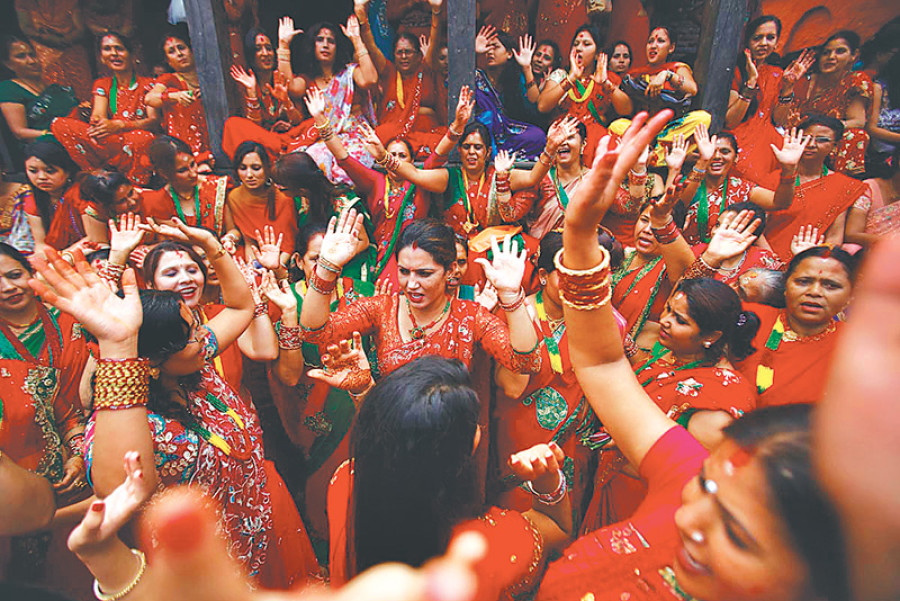
    Women dancing during teej celebration

    Main Highlights:

    • A female driven procession and dance party
    • Pashupatinath Temple packed with women
    • Cycling unique feast (Dar) and rituals
    • Place to celebrate: Pashupatinath Temple Kathmandu

    7. Maghe Sankranti (January) – Harvest – Solstice Festival

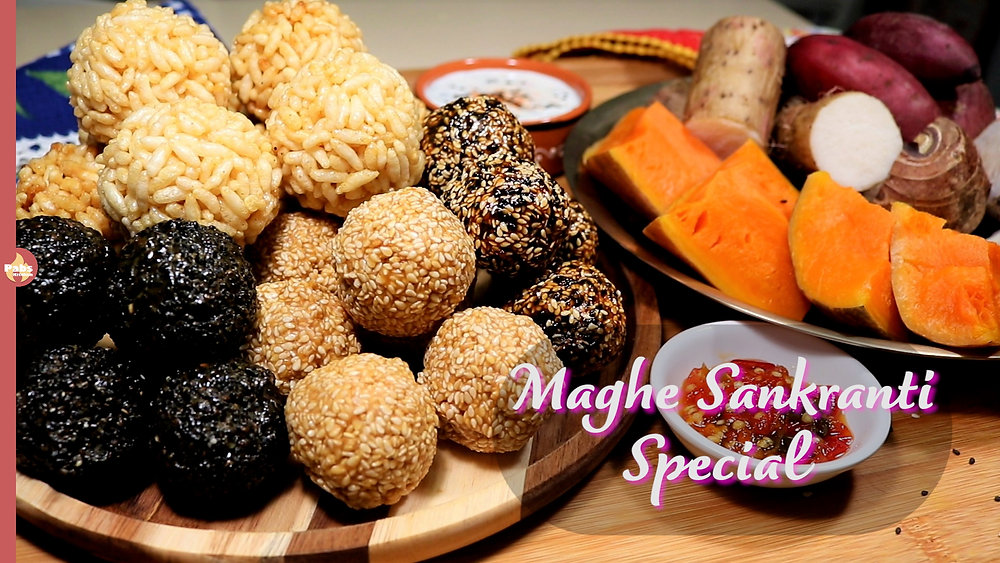
    Traditional Maghe Sankranti definitions center around the sun moving to the northern hemisphere for longer, warmer days. Families wake up very early to bathe in holly rivers. Then they gather and eat seasonally available sweet food: sesame sweets (til ko ladoo) with molasses, yams, and ghee.

    Daily trips happened to sacred confluences, like Devghat, and many will bathe to worship gods maximum health and wellbeing. The nature of Maghe Sankranti is the end point of relative renewal and calming reflection – especially compared to the very loud, riotously large festivals in Nepal.

    Til ko ladoo and sweet potato as a main dish for celebrating maghrsagrati

    Main Attractions:

    • Pilgrimages to river confluences (Devghat, etc.)
    • Sacred bathing Homemade traditional foods
    • Best Place to Experience: Devghat, Chitwan, or village locally

    8. Gai Jatra (August)

    Festival of Cows and Laughter Gai Jatra, or the “festival of cows and laughter”, is one of Nepal’s most distinctive festivals as it combines the concept of memory and humour. Families who have lost loved ones in the past year join the parade by leading a cow, or young child dressed as a cow, and guide the soul onward. It is a healing tradition that transforms grief into a celebration. The streets of Bhaktapur, Patan, and Kathmandu are filled with comedic sketches, parody raps, and traditional instruments. This festival physically illustrates joy and togetherness through laughter-based celebrations with lively entertainment. Gai Jatra plays a significant role in helping the community express sadness through humour and community support, which makes it very emotional, and incredibly funny and uniquely cultural.

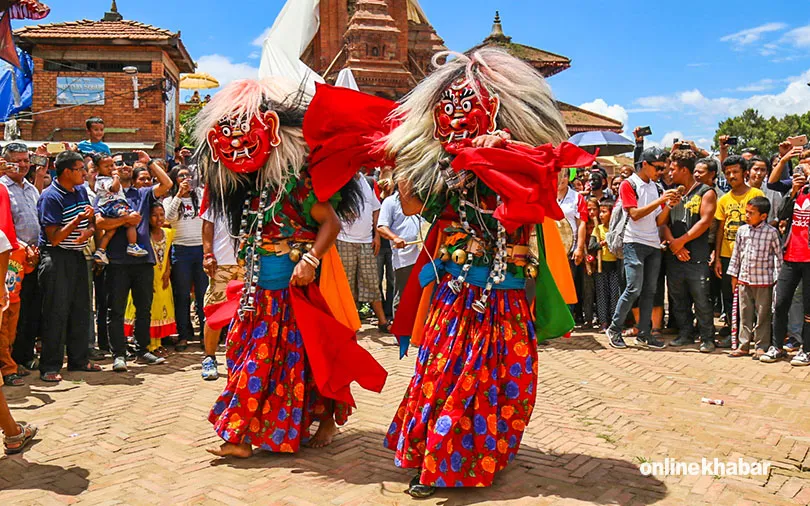
    Mask Dancer dancing Gaijatra

    Main Attractions:

    • Street parades with traditional acts and hilarious sketches
    • Processions of cows (or children in cow costumes)
    • Satirical performances with laughter
    • Best Viewing Places: Bhaktapur, Patan and Kathmandu

    Advice for Festivals in Nepal

    • Book early: Flights and hotels are booked quickly for the blockbuster festivals of Dashian and Tihar
    • Dress appropriately: Dress conservatively, remove your shoes or sandals in temples
    • Ask first: Always ask before taking pictures especially for sacred rituals or family occasions
    • Be respectful: Be respectful when you participate and follow local etiquette
    • Stay longer: Nepal is huge and has usually lots of rituals on many days of the festival

    Festival Calendar Summary (Quick Reference)

    Month Festival
    January Maghe Sankranti
    March Holi
    April – May Buddha Jayanti
    August Gai Jatra,
    September Dashain
    October Tihar
    August Teej
    August Indra Jatra

    Final Thoughts: The Best Times to Visit Nepal for Cultural Festivals

    Although Nepal is a unique destination at all times, August to November is the best time to visit for cultural festivals, so you are going to be in for an Awesome experience! There is a festival literally every week during these three months and the clear skies and onset of the trekking season could not be better!

    Whatever your preference; whether you are attracted to the spiritual vibe of Buddha Jayanti or the explosion of colours and energy of Holi, being able to participate and witness at least one festival in Nepal will allow for a much greater understanding of Nepal’s heart and soul. Therefore, time your visit to fall within one of these extraordinary occasions, and walk away with experiences and memories to last a lifetime.If you are planning to visit Nepal then contact us today at Happy Mountain Nepal, Facebook, Instagram, or TikTok. 

  • Holi: Nepal’s Festival of Colours

    Holi: Nepal’s Festival of Colours

    Holi: Nepal’s Festival of Colours

    The freest and most colorful Nepalese festival Holi welcomes the spring with fraternity, festivity, and freshness. A festival in which men and women cross their social and cultural boundaries and become close to each other by binding themselves and enjoying the frenzy of colored water, music, and dance. Holi festival ignores the festival of brotherhood with a sense of belongingness and invites the whole world to ecstasy and time-eternal friendship.

    holi

    History and Significance of Holi

    Holi is a mythological Hindu festival and victory of good over evil. The two most popularly known Holi stories exist, and those are Prahlad and Holika. Prahlad was one of the disciples of Vishnu and brother to demon king Hiranyakashipu, who he wanted to be adore. He never committed his evil acts, when his fire-immortal aunt Holika attempted to burn him alive by casting him into the fire. He remained unharmed by all the piety and burned Holika in the fire. This is the triumph of good over evil, which has been kept in mind during the celebration of Holi.

    It was not only a religious celebration but a welcome celebration because the spring season since there was prosperity and hope. It was harvesting season for the farmer and therefore the fertility of nature. During holi color time  one can witness the colored face of the fertility of nature.

    Holi is being celebrated in all of Nepal but here, everywhere, hill and Terai have not been differentiated in celebrating. It has two days duration and hill towns like Pokhara and Kathmandu are celebrating the first day of Holi while celebration of the second day is underway in the Terai towns.

    holi

    Holi in Hill Region

    Amidst the busy city of Kathmandu, Basantapur Durbar Square is painted as well. Residents and international visitors observe the day get paint by color paint, traditional music, and dance festivals. Tourist destination Thamel is celebrate by the Holi festival in music and dance colors until midnight.

    Pokhara, one-star lake, and Holi is celebrate differently. Phewa Lake Festival and lake festival, live show, and celebration are being celebrated. Adventure enthusiasts celebrate Holi paragliding, which is a memory to cherish for a lifetime.

    Holi in Terai Region

    Terai Holi is longer and more than in the hills. Nepalgunj, Janakpur, and Birgunj are centers of music, dance, and culture. Even water is wasted more in Terai where others get bucketfuls and water pistols. It is a ritual culture where traditional dance is danced.

    Tourism and Holi

    The festival of Holi in Nepal is the welcome of the peak tourists, and tourists from all over the world come to the destination.

    The tourists organize the tour in such a way that they consider the festival so that they will be able to enjoy the festival in some or the other form. Even tourist locations like Basantapur, Thamel, and Lakeside Pokhara also celebrate Holi independently so that the tourists who are here may play and enjoy without any restrictions. As the villages are rural villages and traditional ones, even homestay is arrange under which the tourists have a chance to stay in a village and local fairs.

    The best part of Holi is the unfiltered joy and unity it brings. Unlike other festivals with formal rituals, Holi is about breaking barriers—social, religious, and generational. The color play, the music and dance, and the carefree spirit make it unique.

    holi

    Best Parts of Holi 

    1. Playing with Colors

    • They are shower with Gulal (color powder) and people spray painted colors of water among friends.
    • Pichkaris (water guns) and balloons leaving a rainbow shiny red color on the roads are party starter items.
    • Playing around, running around, playing colors literally party day.

    2. Music, Dance & Celebrations

    • Croaking of Bollywood Holi songs is on thudding loudspeakers and dhol (drums) is the beat.
    • They sit sideways in thousands and paint one another, their faces radiating beaming smiles.
    • Special events with DJs and live music attract crowds in cities.

    3. Food & Beverages at Holi

    • Gujiya (sweet dumpling), thandai (saffron flavored, saffron-cardamom-clove flavored, cardamom clove-flavored milkshake without or with shot of bhang), and the rest of all the other traditional old sweets cannot be the same without them.
    • Spicy-hot street food like kachoris, samosas, jalebis come in on food stalls.

    4. Smashing Barriers & Strengthening Ties

    • Holi is a day when differences dissolve—strangers hug, old feuds are forgotten, and everyone is equal under a layer of color.
    • Elders bless the younger generation, and communities come together.

    5. Evening Gatherings

    • Humans tidy up from the day’s gang war bash, doll up in new attire, and socialize with kin and friends.
    • Sweet nights and snuggly conversation are the order of the day.

    The best part of it is its spontaneity and inclusiveness—whether you’re a child, an elder, a local, or a tourist, you get swept up in its joy.

    Traditional Food and Drinks

    Even the cuisine is casual in Holi. Relatives make sweets and snacks to eat. The most common sweets are:

    – Gujiya: sweet bread filled with sweet khoya (milk solids) in flaky form and fruits.

    – Puri and Malpuwa: Fried sugar syrup-coated bread, fried pancake sugar syrup-coated.

    – Sel-roti: Nepalese ring sweet rice bread.

    – Bhang: Cannabis drink, which is taken in very small amounts as festive.

    Safety Precautions

    Holi is a festival and would thus have to do so with caution. The following would make the celebration of the festival safe:

    • Wearing old clothes or colored clothes so stains would just not have been an issue.
    • Anoint one’s body and hair so that colors can easily be wash out.
    • Employ plant or herbal dyes so that one’s skin is not injure.
    • Take lots of water and less of bhang or liquor.
    • Dance in the open with close friends in such a way that one becomes secure.

    Conclusion

    Nepali Holi is neither a festival but, in fact, acceptance of society, culture, and life, and a rejection of life too. In the peaceful streets of Kathmandu, the peaceful lakes of Pokhara, or Terai town city cities, Holi gets loving people together and connect by love. Holi is a Nepali and a foreigner’s celebration beyond any ray of doubt objectionable and foreign. It’s one tradition that is an effective Nepali cultural heritage.

    If you wish to witnessed this experience please do not hesitate to contact us at Happy Mountain Nepal Pvt Ltd


  • Cultural Experiences in Nepal That Kids Will Love

    Cultural Experiences in Nepal That Kids Will Love

    Cultural Experiences in Nepal That Kids Will Love

    Nepal, the country renowned for natural beauty and cultural richness, is children’s and family entertainment paradise. Nepal is a country of countless cultural activities as enriching as they are enjoyable for travelers traveling with children. With its living festivals, archaeological sites, heritage crafts, and wildlife activities, Nepal is a country where children can experience history, culture, and nature in an enjoyable as well as enriching manner. A few of the top Nepal cultural activities for kids that are being highlighted in this blog, along with a short guide on how the same can be blended together for kids to have learning and fun experiences, follows:.

    1. Kathmandu Durbar Square

    Kathmandu Durbar Square is the cultural and historical hub of the Nepalese capital. The Nepalese royal palace, temples, courtyard, and museum of life are all included in the square. Drama on the street, paintings, and wooden souvenirs entertain the children. Handicraft and food street shops inside the complex of the square can be visited as well, and thus it is only logical that the tour avails itself of such facilities. Kumari Living Goddess revealing her face peeking from behind the palace window is ideal for kids who never stay still. Parents and kids learn about the life of Nepalese kings when they visit Hanuman Dhoka Palace. Parents and kids watch guides reading about old kings and facts about kings. Art, history, and living all rolled into one amuses kids at Kathmandu Durbar Square.

    Highlights

    • Hanuman Dhoka Palace: Historical, a palace with many royal myths.
    • Living Goddess Kumari: Catch a glimpse of a “real” “goddess” in her window.
    • Local Markets: Handicrafts and paintings of locals, along with street artists, occupy the crowded square.
    • Temple Exploration: Very ancient Nepalese Hindu and Buddhist architecture temples.

    Kathmandu Durbar Square

    2. Pashupatinath Temple

    Its holiest Hindu temple, Pashupatinath, lies along river Bagmati. It’s a great cultural exposure for kids too as a pilgrims’ site. Temple campuses are littered with immaculately dressed sadhus (Hindu holy men) in exquisite attire designed using ash and bead smudges. Moreover, kids can see odd Hindu rituals and oblations to deities by pilgrims. Cremation ghats, ritual performed on funeral, considerate but Nepalese culture respecting. They can sit in temple complexes watching naughty naughty monkeys. Miniature temples and Hindu mythical gods’ statues are seen in temple complexes. An opportunity to listen to old mantras and songs, healing natures. Hand-on experience by children with Hindu religion and tradition.

    Highlights

    • Sadhus: Spiritual men with face-painted colors and wearing traditional attires.
    • Wildlife and Monkeys: Monkeys are moving freely in the temple.
    • Hindu Rituals: Hindu prayer ritual, fire ritual, and cultural ritual.
    • Cremation Ghats: A glimpse of Nepal’s death culture (for older children).

    Pashupatinath Temple

    3. Bhaktapur Durbar Square

    Bhaktapur Durbar Square is Nepal’s finest preserved medieval city and a World Heritage site by UNESCO. First, you can open courtyards and temple carvings create living museum-like environment. The children can view the Golden Gate and 55-Window Palace looming over them. Live demonstrations of Bhaktapur pottery allow the children to craft their own pottery. The square is less touristic than that of Kathmandu, providing a chance for the families to unwind in a serene atmosphere. Street stores have in-house-made masks, puppets, and refreshments that would absolutely delight the kids. Historical touch is lent to the metropolis by the statues and antique stone water fountains as well. The tour of Bhaktapur is children’s tour concerning Nepalese paintings and history.

    Highlights:

    • Golden Gate: Exquisite gate with pleasant carvings.
    • Pottery Making: Practical experience of creating pot and model from clay.
    • 55-Window Palace: It is one of the relatively well-preserved non-regular plan palaces.
    • Cultural Snacks: Trying new foods such as yomari and king curd.

    Bhaktapur Durbar Square

    Why Kids Will Love It:

    Bhaktapur is like a real-life museum, where kids can roam freely, interact with locals, and explore unique sites like the Batsala Temple and the famous 55-Window Palace. The relaxed atmosphere allows children to take in Nepal’s medieval culture at their own pace.

    4. Pokhara and the Lakeside Experience (Cultural Place)

    Pokhara is resort town famous for picturesque lakes, hill top view, and family outing deserving. Picturesque family outing is Phewa Lake island boat tour of Tal Barahi Temple. Nepal mountaineering classes are kid friendly. Bat Cave and Gupteshwor Cave are kids playground for family outing at International Mountain Museum. Water gushing from caves is also viewed by tourists to Davis Falls. Town along the lake banks with handicrafts, record stalls, and souvenir shops. Moreover, children can have panoramic view from top hills in scenery-bound landscape to all the tourists in Pokhara.

    cultural Pokhara and the Lakeside Experience

    Highlights:

    • Boating on Phewa Lake: Picturesque boat ride among picturesque scenery.
    • International Mountain Museum: Nepal’s mountains and hills are abounding with knowledge-base and learning centers.
    • Caves and Waterfalls: Guided waterfall tours and spectacular underground caves.
    • Lakeside Walks: Unwind and peaceful atmosphere with shopping, music, and sweets.

    The combination of cultural experiences, outdoor adventures, and stunning landscapes makes Pokhara an exciting destination for kids. Whether it’s boating on the lake or visiting natural wonders, there is no shortage of activities that will keep young travelers entertained.

    5. Chitwan National Park: A Wildlife Safari Adventure

    Kids jungle hike in Nepal Terai region of Chitwan National Park. Kids can do jeep safari for wild deer, rhino, even for Bengal tiger sighting. Canoe ride on Rapti River with crocodile and bird viewing during tour for kids. For instance, Tharu Cultural Show night is their own spice descend local life. Elephant Breeding Centre is sole centre where elephant calves are brought there for kids’ sightseeing along with conservation. Furthermore, Chitwan is adventure and nature heaven for kids. Nature walk, nature guiding, gives children’s perspective regarding plant and animal world. Package tour-adventure vacation trip makes

    Highlights:

    • Jeep Safari: Rhinoceros, deer, and tiger safari.
    • Canoeing: Quiet boat journey to view the crocodiles and the remaining of the soundest-unusual-naming birds.
    • Elephant Breeding Center: Accommodates the elephants and their upkeep.
    • Tharu Cultural Show: Performance of music and dance.

    Chitwan National Park: A Wildlife Safari cultural Adventure

    Why Kids Will Love It:

    Chitwan National Park offers a perfect combination of wildlife, adventure, and education. The excitement of spotting rare animals and exploring the jungle will create lasting memories for children.

    6. Lumbini: Birthplace of Buddha

    Nepal is famous for handicraft culture, and therefore craft workshop is a great cultural activity for kids. Kids learn Thangka painting, Buddhist folk art, in Kathmandu and Bhaktapur. Additionally, pottery workshop at Bhaktapur lets the kids shape the clay and paint their own ceramics themselves. Families can try learning Mithila art in Janakpur, which is most well-known for color and design sophistication. Particularly, these workshops are hands-on, so Nepalese handicraft becomes part of the lives of children as well that is internationally accepted. They will be guided to children by the hand of professional artists and their handicraft will be done out of the building with them. It is certainly a good piece of cultural craft.

    Highlights

    • Thangka Painting: Thangka Painting is traditional painting as per Buddhist tradition in rich vivid colors.
    • Pottery Making: A handicraft session in which the designing and shaping of the clay designs are carried out.
    • Mithila Painting: Kids can learn a Nepal Terai-based traditional painting art.
    • Take-Home Artwork: The artwork can be taken home by the kids.

    cultural

    Why Kids Will Love It:

    Lumbini offers a peaceful and educational experience for kids. The beautiful gardens, historic sites, and the opportunity to learn about Buddhism make it a meaningful stop for families seeking cultural enrichment.

    7. Traditional Nepali Craft Workshops

    Nepal is famous for handicraft culture, and craft workshop is a great cultural activity for children. The children are learning Thangka painting, Buddhist folk art in Kathmandu and Bhaktapur. The pottery workshop in Bhaktapur provides the opportunity to the children to shape the mud and make their own pottery independently. Children can acquire the Mithila art in Janakpur, which is best known for finesse of colour and design. They are working workshops, and therefore Nepalese handicraft becomes a part of children too which the world embraces. Children can learn about professional artists and their handicraft will be taken out of the complex with them. Particularly, it is a cultural-craft work so beautiful.

    Highlights

    • Thangka Painting: Thangka Painting is conventional painting derived from Buddhist heritage in luscious vivid colors.
    • Pottery Making: A handicraft process in which modeling and designing the designs in the clay is done.
    • Mithila Painting: The kids can be trained in a conventional Nepal Terai-based painting craft.
    • Take-Home Artwork: The painting is taken home by the kids.

    cultural

    Why Kids Will Love It:

    Craft workshops offer a tactile and creative experience that allows children to engage with Nepali culture in a fun and interactive way. These activities also serve as great souvenirs of their time in Nepal.

    Conclusion

    In conclusion, Nepal offers a combination of nature and culture activities that are fun and educational for children. With trekking in the old temples, interaction with the animals, or old crafts, something is offered to every young adventure-seeker. Moreover, the country’s multi-cultural palaces and history place it at a perfect position as the best vacation spot for that family trip to be the point of conversation everywhere. Families, with a bit of planning and an open mind, can get the best out of what Nepal has to offer and show children a world of magic and wonder.

    FAQs

    1. When is the best time to travel to Nepal with kids?

    Spring (March to May) and autumn (September to November) are the best times to travel to Nepal with kids. It is good weather, and the period is most appropriate for adventure outdoor activities.

    2. Is Nepal kid-friendly?

    Yes, Nepal overall is family-friendly. But better safe than sorry and take precautions anyway, e.g., avoid crowds and get children to drink plenty of water and rest in the shade.

    3. Can kids trek in Nepal?

    Yes, nearly all the treks in Nepal are family-friendly. Children can do short ones like the Ghorepani Poon Hill trek, and even family tours are possible.

    4. Are there kid-friendly accommodations in Nepal?

    Nepal is child-friendly, and there are some family resort and hotel facilities available, particularly in tourist cities like Pokhara, Kathmandu, and Chitwan. They are mostly made up of children’s amenities and activities.

    5. What cultural activity is the best for children?

    Kathmandu Durbar Square visit, Kumari (Living Goddess) watching, or Chitwan Elephant Breeding Center visit is informative and fun activity for kids.

    6.  Are Nepali culture festivals enjoyable for kids?

    Yes, indeed, because Nepal celebrates very large colorful festivals, i.e., Dashain and Tihar, with colorful processions, songs, and dances. Festivals are heaven for a child due to the festive atmosphere.

    7. What do kids typically eat in Nepal?

    Children will like Nepalese cuisine like momos (dumplings), daal bhat (lentil soup and rice), and sel roti (Nepali doughnut). There are restaurants serving international cuisine, e.g., Western food.

    8. Can children enter the temples of Nepal?

    Yes, children can enter most of Nepal’s temples, e.g., Pashupatinath and Swayambhunath (Monkey Temple). It is a good idea to give children cultural decorum of entering religious sites.

    9. What are children interested in doing outside in Nepal?

    Nepalese children outdoors enjoy a jungle safari at Chitwan as well as boating on Phewa Lake in Pokhara, and visiting nearby waterfalls and caves.

    10. How can I organize a Nepal family vacation?

    While traveling with children, wear travel-friendly child clothing, carry medicines with you, carry water in abundance to stay hydrated, and prepare for long travel days. Acclimatize your children beforehand with Nepalese culture and traditions too.