Tag: Gokyo Lake Trek

  • Tips for Solo Trekking or Budget Travel on the Gokyo Lakes Trek

    Tips for Solo Trekking or Budget Travel on the Gokyo Lakes Trek

    Tips for Solo Trekking or Budget Travel on the Gokyo Lakes Trek

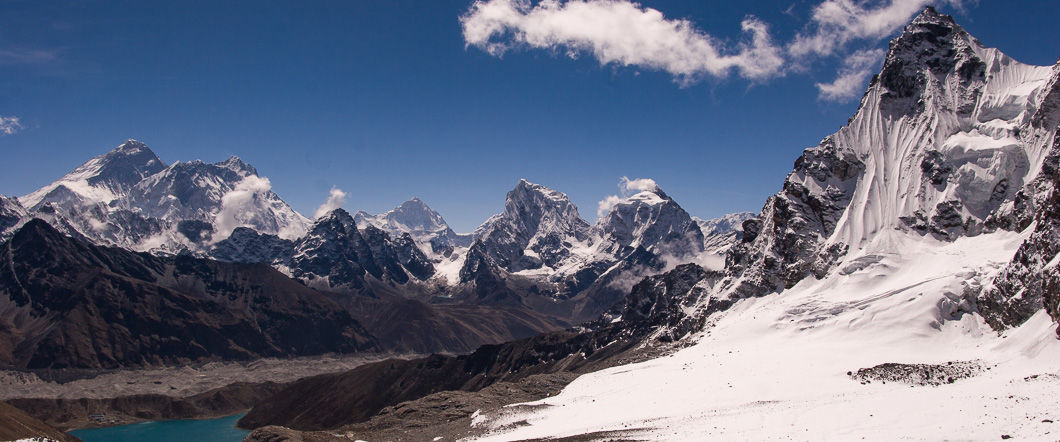
    The Gokyo Lakes Trek offers an extremely stunning high-altitude trek with glacial lakes, lovely Sherpa villages, and expansive view of the Himalayan mountains. The trek is in the Everest region and takes you the extremely sacred Gokyo Lakes (4,700-5,000 m) and the famous viewpoint of Gokyo Ri (5,357 m). From where you can have one of the best views of Everest, Lhotse, Makalu, and Cho Oyu.

     In comparison to the Everest Base Camp route, the Gokyo Lakes trek route is significantly and quite a lot quieter with far fewer people. It allows you for some privacy and deeper thought. This is well suited to the traveler who is significantly looking for peace, beauty of nature, and an ultimate self-discovery experience. It is also very much a budget trek with some planning ahead! This guide will provide you everything you need to know for your trek, whether you will be an independent trekker for the first time or want to experience the Himalayas without paying extra. This is a few of the important tips we grant you travelling own your own/a budget, on the Gokyo Lake Trek.

    1. Why Choose Gokyo Lakes for Solo or Budget Trekking

    Let’s look at the particulars that make the Gokyo Lakes Trek well suited for a self-supported/inexpensive trekker.

    Less Crowded, More Relaxed

    While the Everest Base Camp trek is very popular and has many trekkers, Gokyo provides you with fewer trekkers. This means you will find even quieter trails, teahouses with fewer visitors, and a surprising amount of solitude to fully enjoy the landscape. If you are a solo traveler who wants reflection time or to enjoy a calm atmosphere, this is a huge benefit.

    Inexpensive Places to Sleep and Eat

    There are plenty of teahouses and lodges that are affordable. You will find a clean bed space, a home-cooked meal and/or warm drink to enjoy for not much. Additional, the competition between lodges keeps them fair priced, especially during the shoulder seasons.

    Safe and Clearly Marked Path

    You will be walking the Gokyo path which goes through established Sherpa villages such as Namche Bazaar, Dole, Machhermo and Gokyo. There are signs for the places you stay and signs to find your way. This also provides a variety of options for tamed lodging with a rustic feel.

    Views Too Great To Pass Up For the Cost

    You can get to Gokyo Ri for equally impressive panoramic views of 360-degree views, including the mountains without the frustration and large crowds of travelling to base camp.

    2. Planning Your Gokyo Lakes Trek

    Planning is necessary for trekking alone economically and safely. Here is how to prepare your trip.

    Choosing Seasons

    The best seasons to trek are:

    Spring (March- May): Nature comes fully alive with blooming flowers (rhododendrons), numerous animal and insect activity, and nice days.

    Autumn (September – November): This season has the potential to see the best mountain views, more settled temperatures, and good visibility.

    Do not trek during the monsoon (June – August) due to slippery paths and leeches; also do not trek the winter season (December- February) because with high passes comes snow.

    Permits to Trek

    You will need 2 permits to trek:

    • Sagarmatha National Park Entry Permit – NPR 3000 (foreigner price)
    • Khumbu Pasang Lhamu Rural Municipality Permit – NPR 2000

    Both permits can be purchased in Lukla or Monjo, therefore avoid purchasing before departing/ purchasing in advance on route, to Kathmandu.

    3. Budget: How much are you going to need to spend?

    Whether you are trekking with a group or solo. The cost of trekking in the Everest region is based on how you want to plan your trip, and how comfortable you would like to be. For example, if you are completing the 10-12 day Gokyo trek, here is an approximate budget, in USD, of what you could expect to spend. 

    A round-trip flight from Kathmandu to Lukla will run approximately $200 to $250, and trekking permits will cost approximately $40.

     Plan on spending around $25 to $35 a day on daily food and accommodation costs. This all depends on your dining and living arrangements, of course. 

    If you hired a guide to trek with you, you would pay approximately $25 to $35 per day, if you plan to hire a porter to carry your gear/pack there is a charge for their services as well. 
    On average, independent trekkers spend about $20 per day on food and accommodation, and expect around $30 to $50. For other miscellaneous items (Wi-Fi, hot showers, charging electronics) in total. Your overall costs for backpacking / independent trekking could range from $400 to $600 total (not including costs of a guide / porter) or potentially, $700 to $900 total (scenarios with a guide and a porter are included in this estimate).

    Money Saving Tips

    • Bring your own Nepali Rupees (cash), ATMS often don’t work above Namche.
    • Bring some snacks, tea bags, & a reusable water bottle. You’ll save money.
    • Share rooms with other trekkers & or IAM snacks with others – potentially cheaper.
    • Do not stay at lodges that are high end and pretentious. Stick with basic teahouses that are authentic, cheap, and cozy.

    4.  Solo Trekkers or Trekker on a Budget Important Packing

    Packing correctly allows you to save money and most importantly to say safe. You do not have to have expensive gear – travelling smart is more important.

    Packing your essential clothing for Gokyo Trek

    It is important to pack your clothing smartly to ensure that you are warm, dry, and comfortable while computing the unpredictable weather of the Everest region.

    Begin with a quick drying base layer, which will help dry away any moisture while keeping you warm. Layer a fleece, down jacket for insulation. Especially a windproof outer shell to protect against cold winds or light snow.

     Pair a warm hat and gloves for high altitude mornings and evenings, depending on the conditions. Consider trekking pants and shorts depending on the temperature on the trail. Pack 3–4 pairs of wool socks to prevent blisters and keep your feet dry over the course of the trek. While on the subject of feet, investing in lightweight hiking shoes provides ample support over long treks, and sandals can be comfortable as you rest at anytime including at a teahouse.

    Trekking Gear Checklist

    Bringing the right gear can help ensure your trekking is both safe and smooth. A sleeping bag rated for between -10°C to -15°C will ensure you stay warm. Trekking poles can provide stability on steep or uneven trails. A headlamp with batteries is for early starts or dark teahouse rooms. A power bank or portable charger can come in handy to ensure you don’t run out of battery life. 

    Water purification tablets or a water filter besides pack water purification tablets ensure you have clean drinking water. Carry first aid kit, a basic first aid kit to take care of minor injuries and ensure the rest of your trek is constant. 

    Although high altitude usually translates into less UV rays than at a lower elevation, high altitude. UV rays are still strong, so be sure to pack sunscreen and sunglasses to protect yourself from the high altitude UV rays. Especially if you’re going to be trekking during the hottest climate during the time of year that you’re trekking, you’re going to want that sunscreen!

    c. Tip for Saving Money on Gear 

    If you want to save on money, consider renting larger items (sleeping bags, down jackets, etc) in Thamel area of Kathmandu instead of buying them. Thamel has lots of trustworthy shops that provide trekking gear at rental prices and is an easy choice for a budget travelling packing light.

    EBC & Gokyo Valley Trek
    EBC & Gokyo Valley Trek

    5. Safety Tips If You Are Trekking Solo 

    Trekking in the Himalayas alone is once-in-a lifetime expreience. But you need to be careful. Here’s how to do that:

    a. Acclimatize Slowly – The biggest risk is altitude sickness. Practice the “Climb high and sleep low.” Take proper rest days in Namche Bazaar, and don’t skip acclimization days. 

    b. Stay Connected – Buy an Ncell or Namaste SIM card in Kathmandu. Many places to stay offer Wi-Fi for a small fee. Let your lodge owner know which trek you plan to do next.

    c. Use GPS or Offline Maps – Apps like maps.me or AllTrails will show the entire Gokyo route offline. Also, take a paper map as well.

    d. Don’t Trek After Dark- Always arrive at your next village before night falls. The trails in the Himalayas can become slippery and hard to follow in the dark.

    e Be Aware of Weather Changes- The weather can change quickly in the mountains, so be prepared. Bring rain gear, check the forecast, and if you have bad weather, feel free to hang out in the lodge safety before speed.

    Hiring A Guide / Trekking On Your

    You can trek alone without a guide, which is perfectly acceptable and reasonable. You can do the Gokyo route without a guide. Consider your comfort level.

    Trekking Without A Guide

    You probably have a superior experience if you’re an experienced trekker who enjoys being by yourself.  The trails are well marked, and for the most part, many guesthouses will direct you to the next, as long as you ask politely.

    If you trek without a guide you can save about $250–$400 overall.

    Trekking With A Guide

    If you’re a first-time solo traveler, you probably want to hire a guide.  A guide with you will help maximize your experience through planning for altitude, handling language barriers, and navigating. Independent guides go for about $25–$30/day. You can find a recommendation in Kathmandu or Lukla.

    Porters

    If you don’t want to carry a heavy backpack, you can rent a porter for the trek. Porters can lift 20–25 kg, which is an easier load than you. Plus they should be getting around $20/day plus a tip if deserved. You could arrange for a porter through the guide directly, which helps assure your money stays with a local.

    7. Affordable Food and Lodging Tips

    Gokyo’s true attraction is the teahouse trekking. Each stop is a friendly welcome, local food, and basic accommodation. Below is how you can continue to trek at little cost realizable with some comforts of home.

    Food Tips

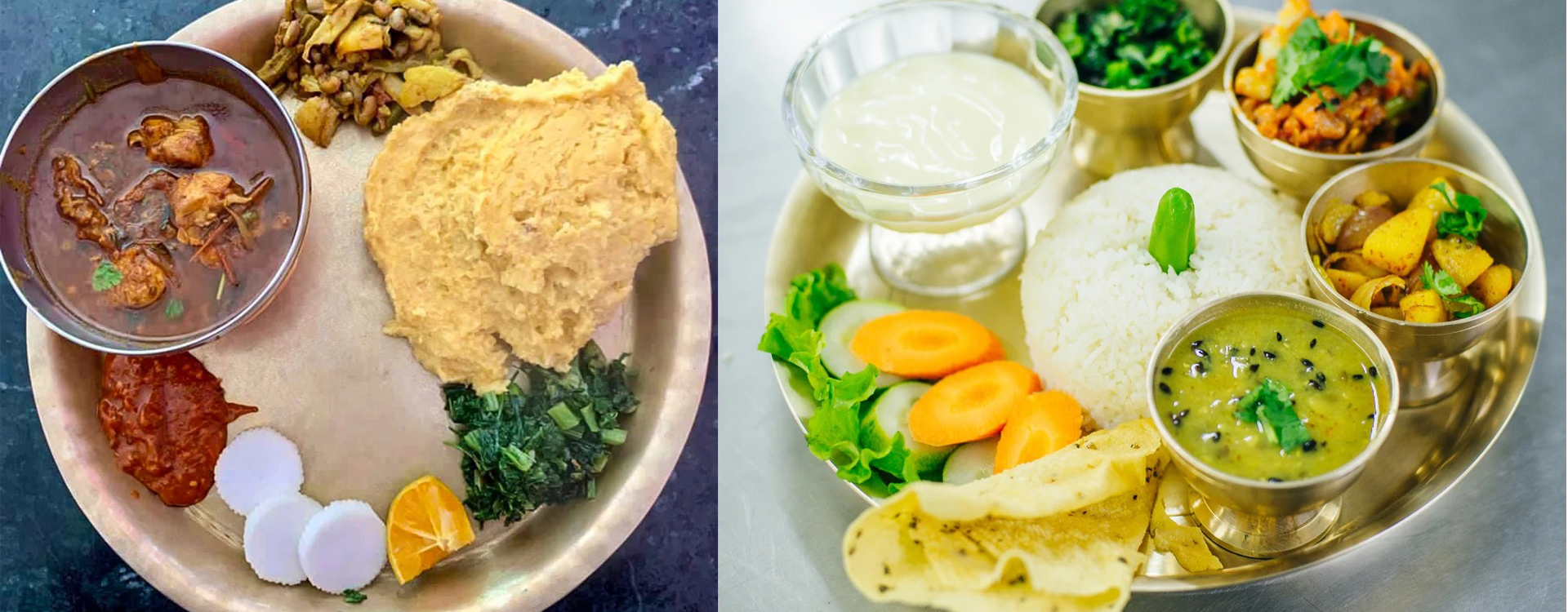
    • Just eat Dal Bhat (rice, lentils and vegetables), it is filling, nutritious, and they will keep serving it to you.
    • Do not eat meat, especially at that altitude; both quality/price can be questionable, and the meat was dragged uphill by porters.
    • Bring instant coffee, oatmeal, or chocolate bars with you from Kathmandu.
    • Buy boiled water from the teahouse instead of buying bottled water (better for you and likely cheaper).
    Accommodations Tips

    Very basic accommodations (2 beds with some blankets) range from ,500 – 1,000 NPR/night.

    If you have dinner and breakfast at the lodge, many will waive or significantly reduce the lodging costs.

    A sleeping bag is also a good insulation layer in your tent.

    If you want to pay less for accommodation, book early in the high seasons (Oct – Nov).

    8. Meeting People and Staying Social as a Solo Trekker

    Solo trekking doesn’t equal having to be alone. The Gokyo route has just about everything that can offer connection with other trekkers. 

    Eat in common dining rooms: Teahouses have welcoming dining rooms where trekkers gather and chat over a cup of tea. 

    Take small groups out for a day’s walking: Many solo trekkers unofficially group up on the trail to have company. 

    Learn a few phrases in Nepali: Typical examples are “Namaste” or “Dhanyabad” which means thank you.

    Talk to the locals: The Sherpa people are friendly, more than happy to share stories and cultural experiences. 

    9. Budget Extensions & Alternatives

    If you’re traveling on a longer trip, or want some diversity to your trip, here are some budget options: 

    Go to Renjo La Pass: (5,360 m)- From Gokyo cross Renjo La for spectacular views of Everest, then descend to Thame and Namche. This pass is one of the most beautiful, but is not too crowded.  

    Combine it with Everest base camp: If you have three to four extra days, and still have energy, you could extend your trek to Everest Base Camp, by way of Cho La Pass. 

    Explore some Hidden Villages: As a low-cost option, you could spend extra days in Phortse or Dole, depending on your itinerary. They are remote, authentic Sherpa villages with very few trekkers and inexpensive teahouses. 

    10. Responsible Budget Trekking: Eco and Ethical Tips

    Taking a trip for an affordable price does not have to come with the cost of further damaging the fragile Himalayan environment. Adopting these eco-friendly practices: 

    • Plastic bottles are to be discarded: Always have a water filter or purification tablets on your person.
    • Requiring the use of reusable gear: Try to eliminate or reduce the amount of single-use items. 
    • Respecting the local culture: Always asked before taking a photo of someone whether they are a local villager or a religious site. 
    • Try to shop at local businesses: Wherever you can, buy snacks or crafts from the villages instead of imported items. 
    • Leave no rubbish behind: Cross-pack out anything that you pack into the trip.
    • Every Rupee spent wisely helps the local economy and is one step further towards protecting this area for future trekkers.

    11. Emotional & Spiritual side of a solo trek

    Doing a solo trek through Gokyo is not just an adventure in the physical domain. It is an emotional experience. The silence of the lakes, the breadth of the mountains, and the cadence of each footstrike teaches mindfulness, patience and strengthens the spirit.

    The image of a prayer flag swaying in the winds marks your awakening to the sound of Sherpa children laughing and sunsets illuminating Everest. The quiet has provided time to contemplate, rejuvenate and reconnect with yourself, only the vast and powerful Himalayas can do that.

    Conclusion

    The Gokyo Lakes trek illustrates that with creativity and planning one has the potential for incredible adventure without cost or group.  Thus, with planning, forethought and an open heart. You can trek this amazing trail independently, safely, comfortably and with a purpose.  You will cross suspension bridges, say “hello” to yaks along narrow trails. When you will stand on Gokyo Ri while the sun rises over the world’s tallest peaks. Every moment you earned, every view is a snapshot in your memory that is framed forever. At Gokyo, it is more than landscapes that are new, more importantly, it is about you, discovering you. 


  • An Emotional Journey to Gokyo Lake, Nepal

    An Emotional Journey to Gokyo Lake, Nepal

    My Heart Belongs to the Himalayas: An Emotional Journey to Gokyo Lake, Nepal

    There are destinations that shift your understanding of the world. And, there are places that shape your being. For me, Nepal is that place. Every time I go, I don’t feel like I’m traveling to Nepal. I feel like I’m going home, and not to a house or a particular city, but to a sensation. A sensation that lies deep within your soul. I have covered a great number of mountain trails. But none has shaped me more than the trek to Gokyo Lake. It wasn’t just about a trip for a destination, it was about waking up a part of me I didn’t realize was missing. 

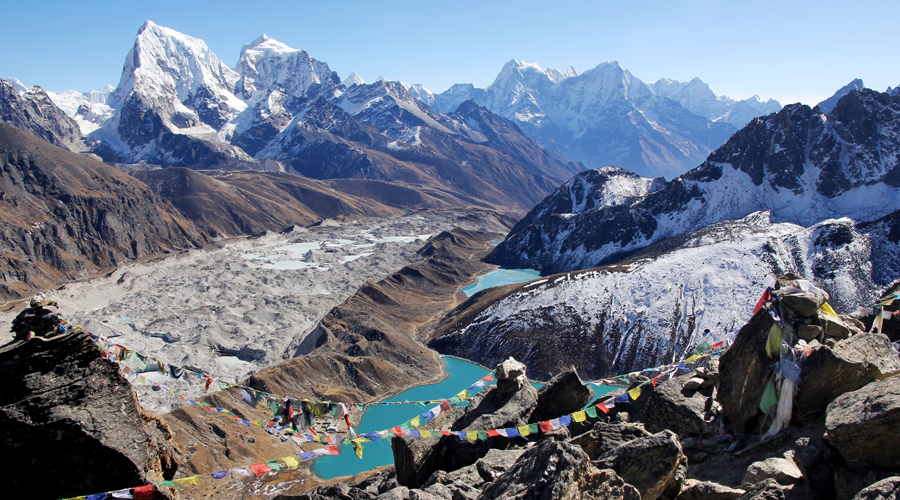
    on a rocky cliff overlooking a vibrant turquoise Gokyo lake, with a rugged mountain range and glacier visible in the background.

    The Melody of the Mountains

     When I arrived in Kathmandu, the air was thick with the smell of incense and dust. Prayer flags were fluttering off rooftops and a light ringing sound of a bell was ringing in the distance. The chaos of the city felt alive. But I could feel the Himalayas silently calling me: sweetly, softly, and felt like a call I couldn’t ignore. The trip to Lukla was exciting and humbling. As I flew over the snow-covered ridges of the Himalayas and landed at a tiny little runway. I observed what lay ahead winding beyond a few houses and through trails, suspension bridges, and large white objects in the distance. 

    And my heart raced not because I was scared, but I was amazed. The trek began, and with each footstep.I felt more flooded in the noise of my existence spread away. The higher I go, the less noise, powerfully I might define noise, resonated in my universe. The air was thin, the rivers were loud, and my mind was clear. Life feels raw, and felt alive. 

    The First View of Gokyo

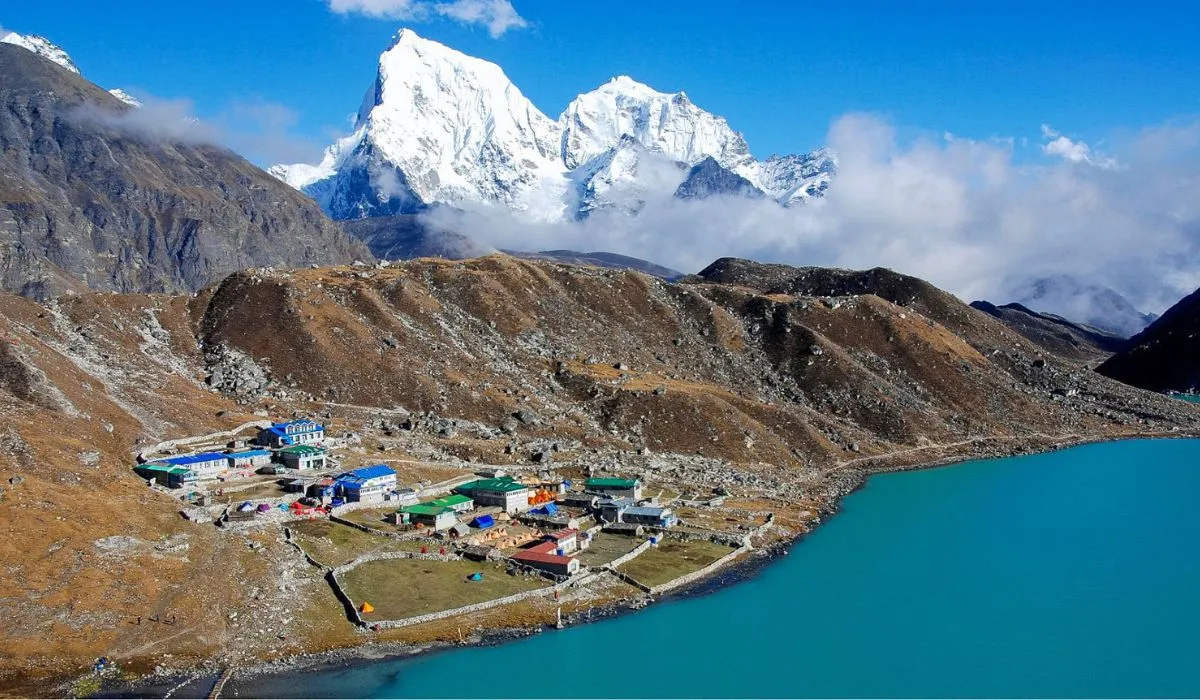
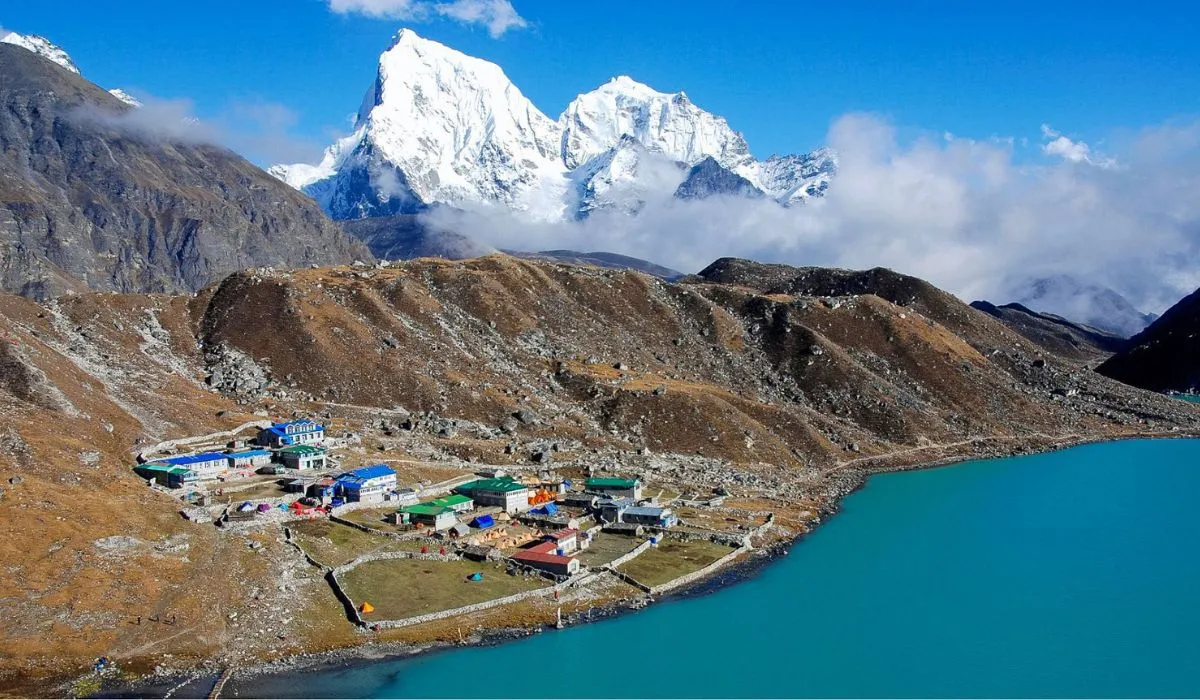
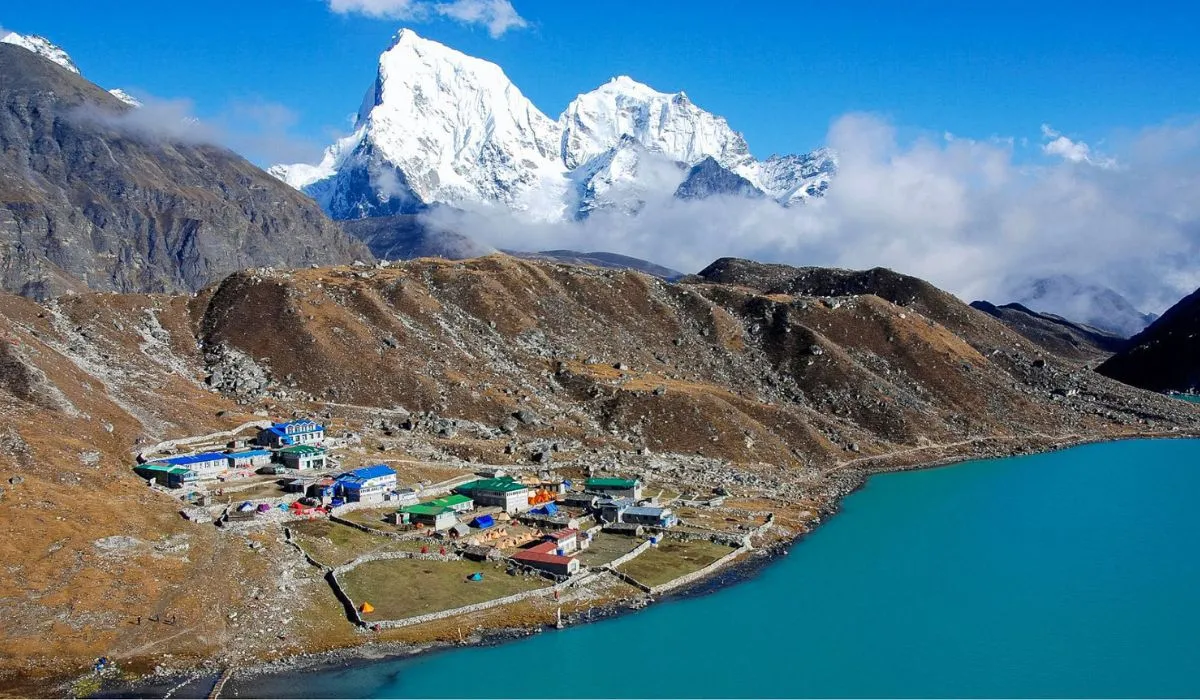
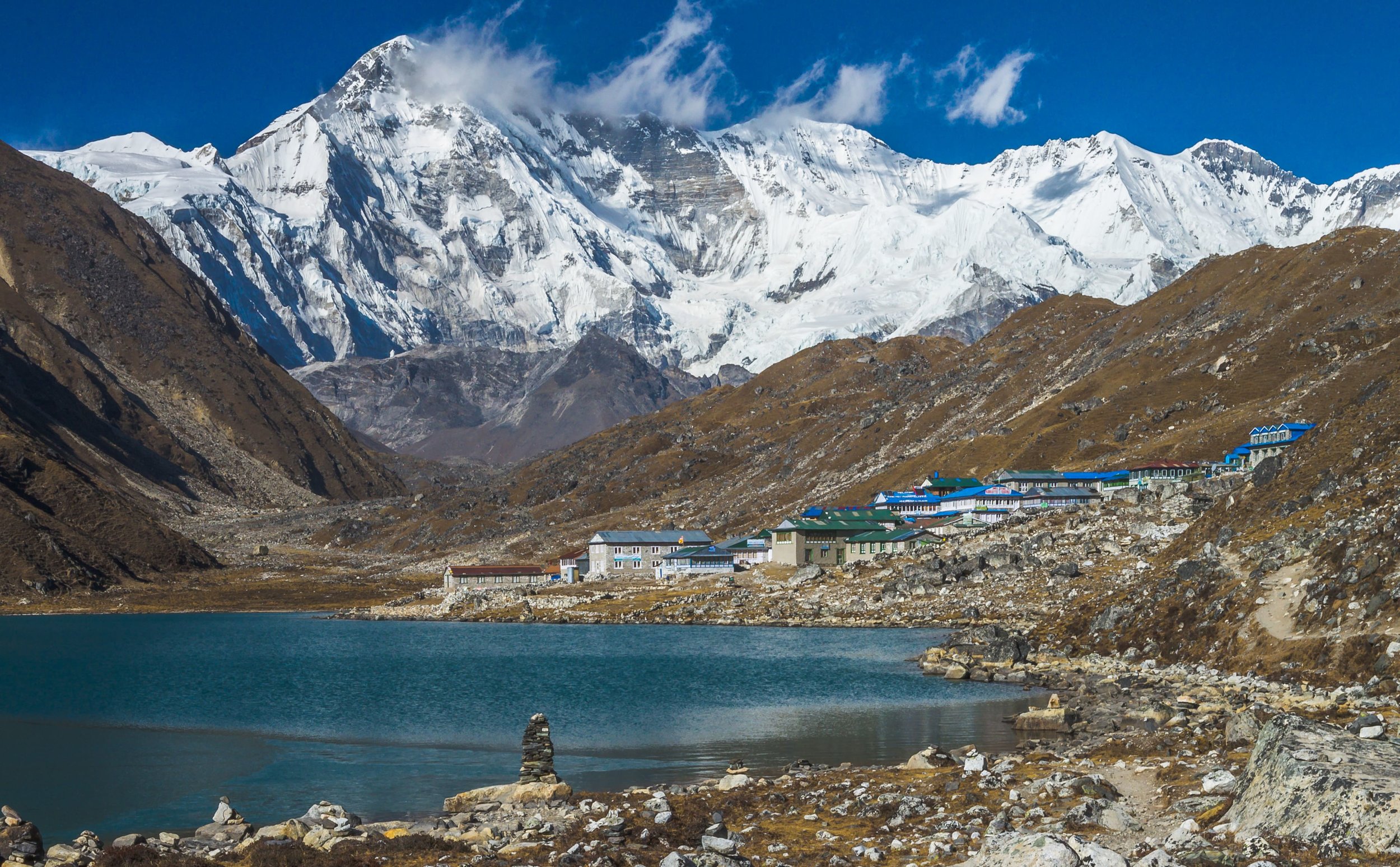
     After several days of hiking through rhododendron forests, prayer walls, and sleepy little villages, I reached Gokyo Valley. And then there it was, Gokyo Lake. The color of dreams and miracles! It was a blue so pure you wouldn’t believe it if you saw it upon the Earth. The mountains almost seemed to cradle it, like silent guardians, Cho Oyu shimmering on the horizon, gleaming in the sunlight, and clouds participating lazily in the distance. 

    A soft breeze moved the prayer flags in gentle motions, and nature hummed its most gentle song. I stood at the edge of the world.I had never seenthis  beauty before. But this was something deeper. I felt tears welling in my eyes, the type that blooms when your heart is unable to express the feeling. 

    Trekker enjoying jump shot & Gokyo Lake & Gokyo Valley in the Background
    Gokyo Lake

    Nights Underneath a Thousand Stars 

    That night I spent in a small teahouse on the lake. The wall creaked in wooden soft tones, and the scent of firewood and tea filled the air. Outside the stars awoke counting and sparkling, huge and undeniably beautiful. I had never seen a sky so vast and breathtaking. I sat and looked out the window long after everyone had gone into sleep. The only sounds were the gentle wind sweeping the frozen lake. I began to think of all I had left behind – noise, deadlines, expectations, and how little any of it mattered to me here.

    The Painful Goodbye

    It was a little harder to say goodbye to Gokyo than I have expected. Time and time again, my eye was drawn to the dancing light on the surface of the lake. To the flags spreading in a gentle wind. I never wanted to leave, I remember, I wanted to stay and stop time and take that peace back home with me.

    But mountains educate you in their own way. They reveal beauty to you and then let you know that everything Months on, I still dream of Gokyo. Every once in a while during a hectic day, I close my eyes and find myself back here: by the lake, the wind on my face, mountains standing quiet and timeless.

    Nepal taught me that peace is not a place on the map. It is something inside you that awaits your remembrance. And on occasion you must tread through thin air, over towering bridges, and to the heart of the Himalayas in search of it. Gokyo changed me. It’s a reminder that silence can be damn beautiful, stillness can mend your wounds. And most of the time the quietest instances in life tend to leave us at a loss for words. 


  • An Emotional Journey to Gokyo Lake, Nepal

    An Emotional Journey to Gokyo Lake, Nepal

    My Heart Belongs to the Himalayas: An Emotional Journey to Gokyo Lake, Nepal

    There are destinations that shift your understanding of the world. And, there are places that shape your being. For me, Nepal is that place. Every time I go, I don’t feel like I’m traveling to Nepal. I feel like I’m going home, and not to a house or a particular city, but to a sensation. A sensation that lies deep within your soul. I have covered a great number of mountain trails. But none has shaped me more than the trek to Gokyo Lake. It wasn’t just about a trip for a destination, it was about waking up a part of me I didn’t realize was missing. 

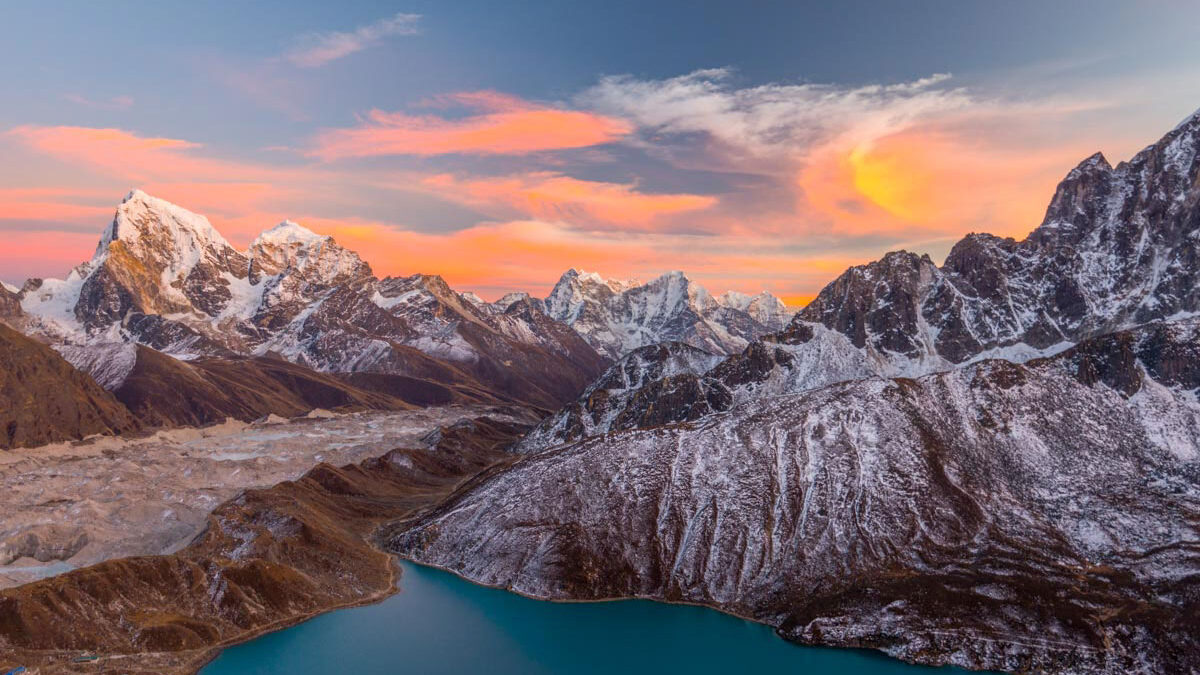
    Sunrise from gokyo lake. Gokyo lake in the middle mountain range around.

    The Melody of the Mountains

     When I arrived in Kathmandu, the air was thick with the smell of incense and dust. Prayer flags were fluttering off rooftops and a light ringing sound of a bell was ringing in the distance. The chaos of the city felt alive. But I could feel the Himalayas silently calling me: sweetly, softly, and felt like a call I couldn’t ignore. The trip to Lukla was exciting and humbling. As I flew over the snow-covered ridges of the Himalayas and landed at a tiny little runway. I observed what lay ahead winding beyond a few houses and through trails, suspension bridges, and large white objects in the distance. 

    And my heart raced not because I was scared, but I was amazed. The trek began, and with each footstep.I felt more flooded in the noise of my existence spread away. The higher I go, the less noise, powerfully I might define noise, resonated in my universe. The air was thin, the rivers were loud, and my mind was clear. Life feels raw, and felt alive. 

    The First View of Gokyo

     After several days of hiking through rhododendron forests, prayer walls, and sleepy little villages, I reached Gokyo Valley. And then there it was, Gokyo Lake. The color of dreams and miracles! It was a blue so pure you wouldn’t believe it if you saw it upon the Earth. The mountains almost seemed to cradle it, like silent guardians, Cho Oyu shimmering on the horizon, gleaming in the sunlight, and clouds participating lazily in the distance. 

    A soft breeze moved the prayer flags in gentle motions, and nature hummed its most gentle song. I stood at the edge of the world.I had never seenthis  beauty before. But this was something deeper. I felt tears welling in my eyes, the type that blooms when your heart is unable to express the feeling. 

    Trekker enjoying jump shot & Gokyo Lake & Gokyo Valley in the Background

    Nights Underneath a Thousand Stars 

    That night I spent in a small teahouse on the lake. The wall creaked in wooden soft tones, and the scent of firewood and tea filled the air. Outside the stars awoke counting and sparkling, huge and undeniably beautiful. I had never seen a sky so vast and breathtaking. I sat and looked out the window long after everyone had gone into sleep. The only sounds were the gentle wind sweeping the frozen lake. I began to think of all I had left behind – noise, deadlines, expectations, and how little any of it mattered to me here.

    The Painful Goodbye

    It was a little harder to say goodbye to Gokyo than I have expected. Time and time again, my eye was drawn to the dancing light on the surface of the lake. To the flags spreading in a gentle wind. I never wanted to leave, I remember, I wanted to stay and stop time and take that peace back home with me.

    But mountains educate you in their own way. They reveal beauty to you and then let you know that everything Months on, I still dream of Gokyo. Every once in a while during a hectic day, I close my eyes and find myself back here: by the lake, the wind on my face, mountains standing quiet and timeless.

    Nepal taught me that peace is not a place on the map. It is something inside you that awaits your remembrance. And on occasion you must tread through thin air, over towering bridges, and to the heart of the Himalayas in search of it. Gokyo changed me. It’s a reminder that silence can be damn beautiful, stillness can mend your wounds. And most of the time the quietest instances in life tend to leave us at a loss for words. 


  • Day-by-Day Itinerary for Gokyo Lake Trek

    Day-by-Day Itinerary for Gokyo Lake Trek

    Detailed Day-by-Day Itinerary for Gokyo Lake Trek

    Trekking to Gokyo Lake is not only about reaching a destination. It is about experiencing Nepal’s Himalayan culture, landscapes, and rhythm of life one step at a time. Below is a complete day-by-day breakdown of the classic Gokyo Lake trek route. It begins from Kathmandu and ends in Lukla. This 12-day itinerary includes travel, acclimatization, and exploration days to make your journey safe, enjoyable, and deeply rewarding.

    Day 1: Fly from Kathmandu to Lukla (2,860m) and Trek to Phakding (2,610m)

    On the first day, you will be starting your trip in the early morning to Gokyo Lake. You will enjoy your 30-minute flight from Kathmandu Airport to Lukla Airport (Tenzing-Hillary Airport). On the flight, you can enjoy scenes of the amazing mountains such as Langtang, Gauri Shankar and Everest on a clear day. 

    You will land on that small mountain runway at Lukla. The feelings of  thrill and excitement will be in 50/50 range. At Lukla, you will meet your guide and porter. You can eat a healthy breakfast, arrange your gear, and discuss about the items you will be needing for the trek. The trail is an uphill trek, which will gently switch to (downhill) through pine forest, suspension bridges over Dudh Koshi River. 

    You will pass other villages – Chheplung and Ghat, prayer wheels, mani walls. And go for a walk for 3-4 hours to Phakding, a small quiet riverside village in the arms of green hills. You will end your day here in a teahouse that has comfortable rooms and where you can prepare to climb even higher.

    Day 2: Trek from Phakding to Namche Bazaar (3,440m)

    After breakfast, you will be heading towards north, following the Dudh Koshi river. During this section along the river, You will cross several suspension bridges, including the Hillary Bridge, which has an exposed position hanging above the river gorge. The joy of this section is the trail rolls in and out like swing , winding through large pine and rhododendrons. After a while, you will be treated to your first glance at Thamserku (6623m).

     You will be taking a brief stop at Monjo, where you will arrive at the entrance gate into Sagarmatha National Park. Your trekking permits will be checked and registered there. The trail will continue after passing through the park entrance. The trail continues to climb in a gradual uprise until you reach Jorsalle, the final village before Namche.

     The final section from Jorsalle to Namche is of two hours to the trading town of Namche Bazaar, the center of trekking in the Khumbu region. If weather permits, this is the most exciting sections of the trek as you will have your first view of Mount Everest from a distance. Namche is a vibrant and quaint village, with shops, cafes, bakeries, and a small museum.

    Day 3: Acclimatization Day at Namche Bazaar (3,440m)

    On the third day, you have be careful about acclimation and allow the body to adjust to the rising altitudes. Typically it is a rest day. A short walk to some local places and viewpoints will also allow the body to get used to the thinner oxygen found at higher altitudes. Most trekkers take this day to do a side hike to the Everest View Hotel which is at 3,880m. And enjoy breathtaking views of Everest, Lhotse, Ama Dablam and other peaks.

    While enjoying this day in Namche. You can stop by for shopping, getting coffee or checking out the Museum that is in Namche. This will be your chance to learn history of mountaineering in the Everest Region. This enjoyable day will set you up to continue your climb to higher altitudes!

    Day 4: Trek from Namche Bazaar to Dole (4,200m)

    As you leave Namche, the path climbs sharply to Kyangjuma. Here you can find a great views of Ama Dablam, Thamserku, and Khumbila. And from this you will head in the direction of Gokyo, and not Everest Base Camp, as the trails diverge. The route to Everest heads east towards Tengboche, but you will  take a left at the trail fork. 

    As you go down, you’ll pass through rhododendron forests and arrive at Phortse Thanga.A small village next to the river. After a quick break, you will begin to climb upwards through birch and juniper forests until arriving in Dole. Dole is beautiful village located high on a hillside overlooking brilliant views of the valley below. 

    Now you will see more alpinetrees, yaks grazing and it’s a much quieter and feel of remoteness with fewer trekkers.

    Day 5: Trek from Dole to Machhermo (4,470m)

    Although you’ll be hiking only short distances today. You will be trekking into the high-altitude wilderness. This day will proceed through the Dudh Koshi Valley on a gradual uphill climb, with views of Cho Oyu (8,188), the world’s 6th highest mountain, in the background. You will also pass through a few small villages, including Lhabarma and Luza.You will be witnessing stone houses and yak. Since it is harder to breathe at altitude, take your time and remember to drink lots of water.

    You should reach Machhermo in the early afternoon. Machhermo is a small village on the edge of some rocky hills. This village is well known as one of the areas in Nepal where the yeti has been spotted. There is also a health post in the village and if you are interested in altitude sickness you can talk to the staff. The rest of the day is free for relaxing and doing short acclimatization walks.

    Day 6: Trek from Machhermo to Gokyo (4,790m)

    Today is one of the most exciting days on this trek as you climb toward Gokyo Lake. The trail consists of a long continual ascent through rocky trails and glacial streams. Before you know it and once you have ascended a bit, you will see the first of the Gokyo Lakes sparkling and glimmering in the sunlight.

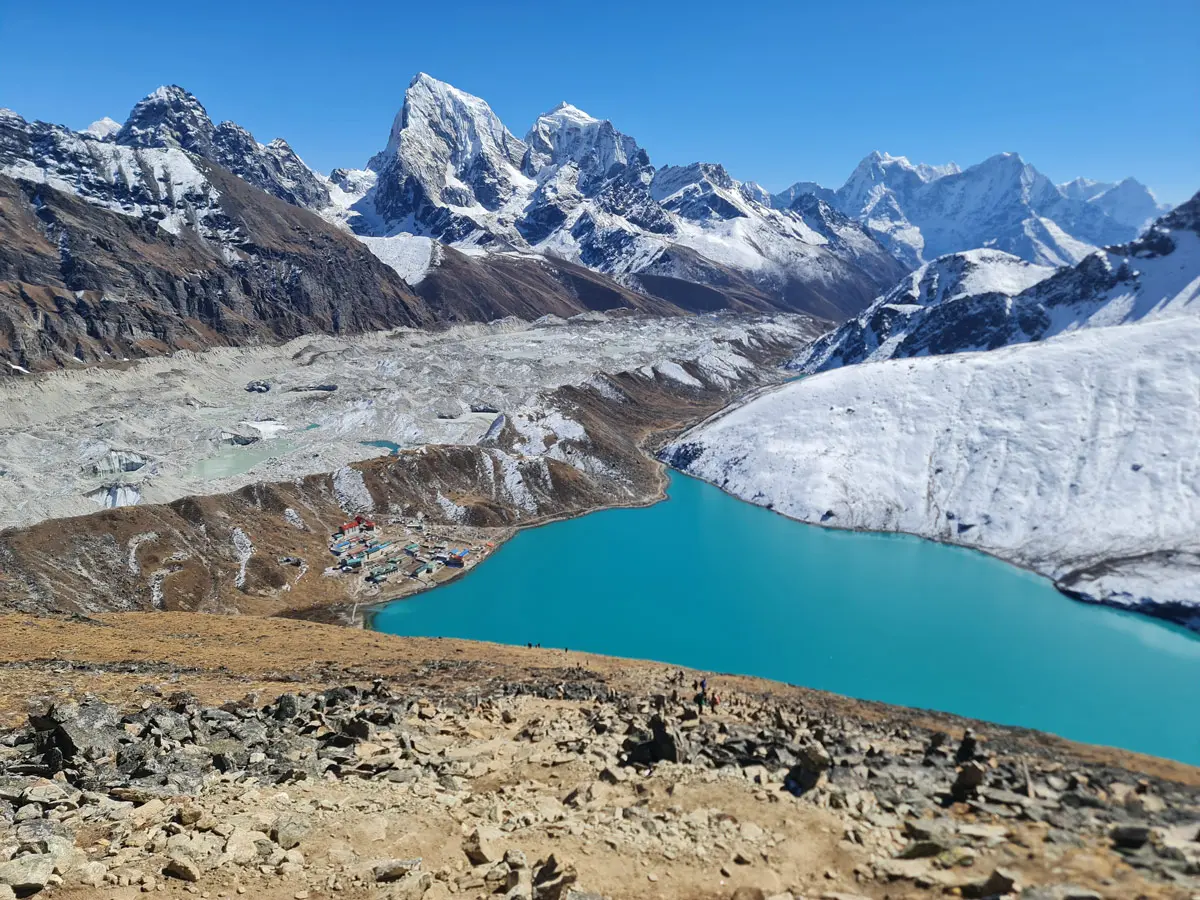
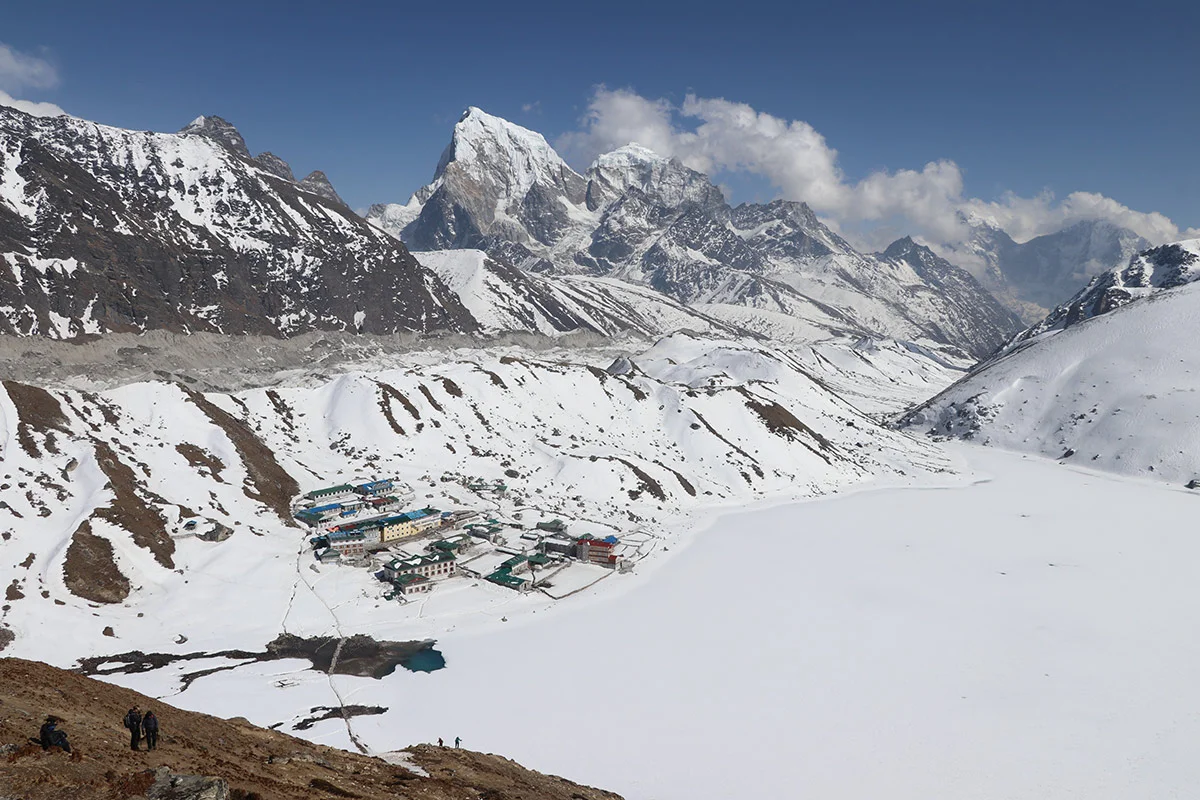
    With a small bridge crossing the Dudh Koshi. Firstly, you will see Longpongo Lake (4690m).And followed closely by Taboche Tsho (4710m) surrounded by sheer walls of mountains. As you continue up the trail. The biggest of the lakes, Dudh Pokhari (4790m), will greet you once again surrounded by impressive glacier peaks with covered by snow. Right next to the lake sits a little village of Gokyo, where you will stay for the next 2 nights. 

    The feeling when you step into this space feels almost unreal. The bright blue-green colors of the water, the cool wind of the valley, and the natural peacefulness / atmosphere will stay in your memories. In the evening is you can explore or walk the shoreline or return to the teahouse and enjoy looking eastward seeing Cho Oyu tower over everything that is around.

    Day 7: Hike to Gokyo Ri (5,357m) and Explore Gokyo Lakes

    Today will be one of the hardest and likely the most rewarding of the trek. You will be waking up early today (around 4 or 5 am), and you will be hiking up to Gokyo Ri (5,357m) . The highest elevation you will reach on the trek! The climb is steep and the two hour and can be tough. But it is definitely worth every step once you are at the top.

    At the top you will 360 view! You can witness Mt Everest (8,848m), Lhotse (8,516m), Makalu (8,463m) and Cho Oyu (8,188m). Four of the six highest peaks in the world! You will have views over the Gokyo Lakes and Ngozumpa Glacier, the longest glacier in the world!

    After the climb, you can return to the village of Gokyo, and if you have a little time in the afternoon. You can walk to the lake, walk up to the glacial ridge.

    Day 8: Trek from Gokyo to Dole (4,200m)

    Following a  slow morning, you’ll begin to descend back down towards Dole. The route has you follow the same trail and with the descent. You will have another viewpoint of the mountains and valleys up in the previous days. The sight of Cho Oyu and Thamserku is still beautiful in every respect the way.

    You’ll pass by Machhermo again, where you can stop to have tea or lunch. And then continue down towards Dole. The descent is much more manageable on your lungs. As your body starts to feel a sense of rejuvenation with more oxygen. Spend the evening relaxing with food and conversation in your own teahouse.

    Day 9: Trek from Dole to Namche Bazaar (3,440m)

    Today you’ll make your way back to the bustling village of Namche Bazaar. The trail begins with a steep downhill section to Phortse Thanga, crossing the river, and then climbs up to the less steep Mong La Pass with great views of Khumbu Valley. The walk then continues with a gentler descent back into Namche. After multiple days spent at very small villages, getting back to Namche feels very close to an urban feel with hot showers, bakeries, and Wi-Fi. Once back in Namche, you can spend some time enjoying either a hot meal or coffee while enjoying the street life of Namche.

    Day 10: Trek from Namche Bazaar to Lukla (2,860m)

    The trek ends with a lengthy descent towards the lower valley. We will cross the Dudh Kosi numerous times, passing around the little villages of Monjo and Phakding. Before completing a uphill trek to Lunka. You will experiences and memories as we retrace our steps through the same villages, with the same prayer wheels and same bridges. After reaching Lukla, you will be time to relax, enjoy some time with your fellow trekkers. And celebrate your, and your team’s amazing Gokyo journey.

    Day 11: Fly Back to Kathmandu (1,400m)

    You can take your flight from Lukla to Kathmandu  early in the morning. If it is a clear day for flying, you willl have one more chance to see the beautiful Himalayas above you until you land. When you land, you will be taken to your hotel where you could relax, shower, and enjoy being back to the comforts of city life.

    Most trekkers use this day to relax, do some shopping for souvenirs in Thamel, or have a Nepali dinner to celebrate their trek.

    Final Reflection

    This 11-day Gokyo Lake trek trip itinerary is for those who wish to experience a combination of adventure, beauty and culture. Each day was a new landscape, a new challenge and a new connection with the Himalaya. If you are seeking an experience with equal scenic rewards to the Everest Base Camp trek, but not in popular tourist trails, then this trek is for you. Contact us today at Happy Mountain Nepal, on Facebook, Instagram, or TikTok .

  • Gokyo Lake: A Queen of the Himalayas

    Gokyo Lake: A Queen of the Himalayas

    Gokyo Lake: A Queen of the Himalayas

    Introduction

    High in Khumbu, at the altitude of thin air and jangly prayer flags moving in slow-motions, is Gokyo Lake-one of the most beautiful alpine destinations in the world. But it is not just one lake. There are six glacial-fed turquoise lakes, each stunning to behold, at and above the height of 4700 meters (15,400 feet) above sea level, surrounded by the tallest giants of the Himilayas, most notably Cho Oyu, the world’s sixth tallest mountain; and the massive Ngozumpa Glacier, Nepal’s longest glacier.

    Gokyo Lake

    Gokyo is somewhat of an underdog, despite its extraordinary beauty. The Gokyo trek sees far less traffic than the Everest Base Camp trek, and thus has less noisy lodges, and a far less crowded experience overall. To see the reflection of the mountains in the perfectly still water, the tranquil village of Gokyo, and the holiness of the lakes to Hindus and Buddists (both) makes being in Gokyo special, and worthwhile of the title Queen of the Himalayas.

    Where is Gokyo Lake?

    Gokyo Lakes are located deep in Simogma, in Sagarmatha National Park, a protected area in eastern Nepal is a UNESCO World Heritage Site, which is rich in biodiversity, home to Mount Everest and many of the highest peaks in the Himalaya.

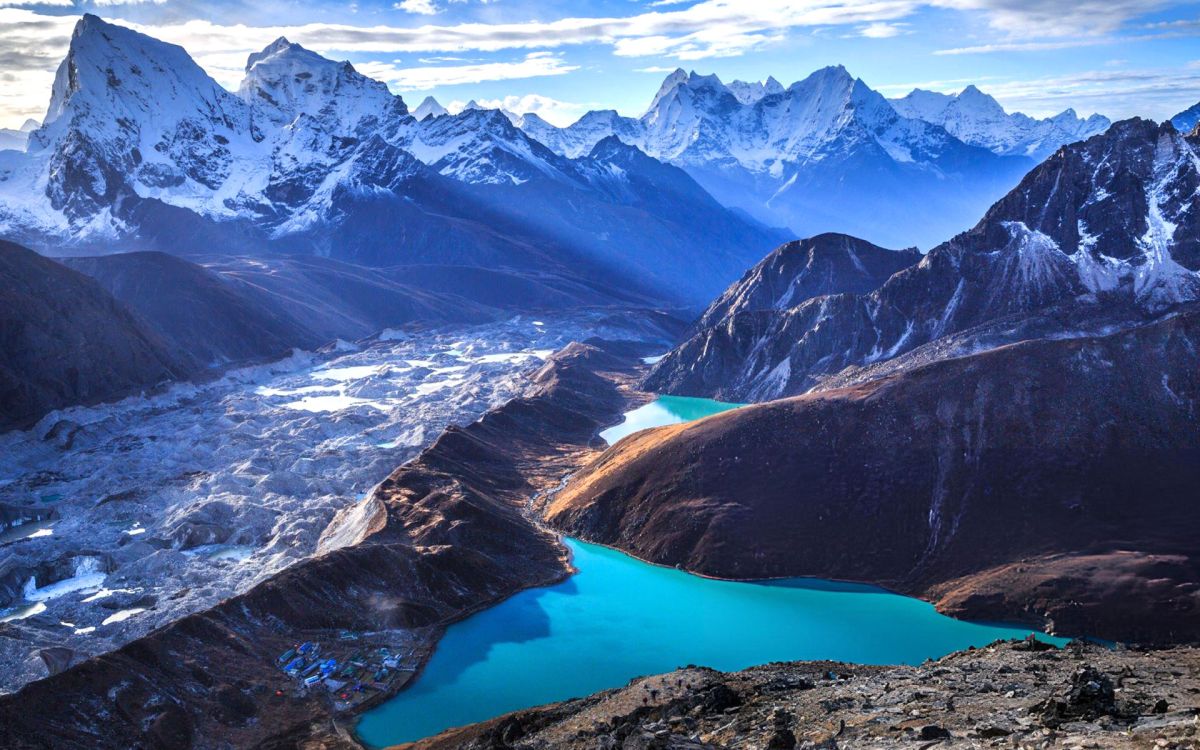
    Of the six lakes, the most famous is Dudh Pokhari, which is adjacent to Gokyo Village, at an astounding 4,790 meters (15,715 feet) above sea level. Dudh Pokhari means “Milk Lake”. It is glacial lake, so it has a milky-blue color to it.

    The lakes are fed with meltwater from surrounding glaciers, including the enormous Ngozumpa Glacier, and are in fact part of the highest freshwater lake system in the world. These lakes are sacred and pristine–not just geologically– also spiritually important– people travel from all over the world to visit the lakes as pilgrims and trekkers.

    Why is Gokyo Lake Called the Queen of the Himalayas?

    Gokyo Lake

    The name “Queen of the Himalayas” fits Gokyo Lake for several reasons:

    Mesmerizing Beauty:

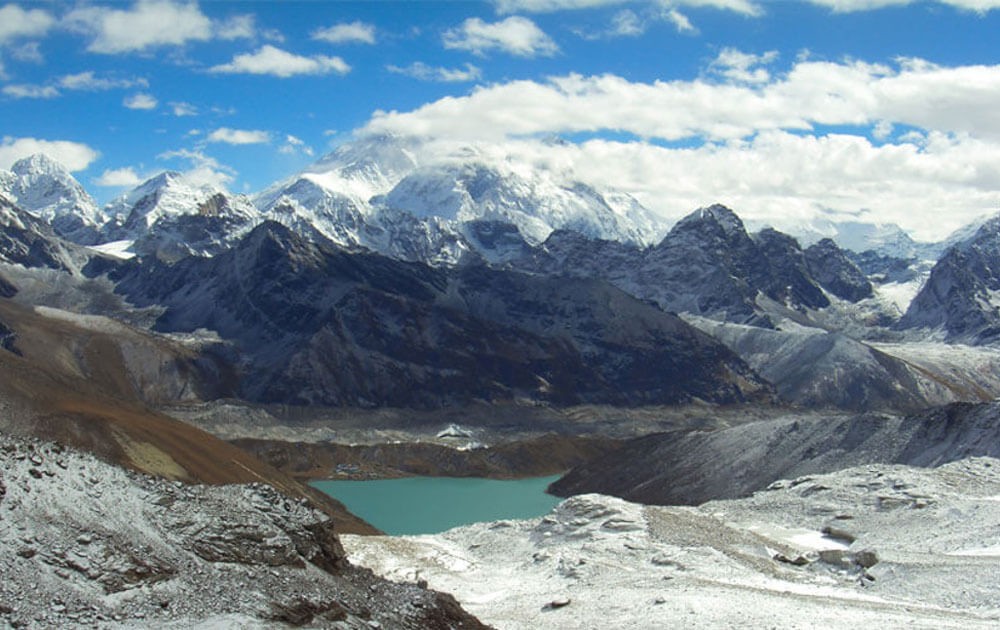
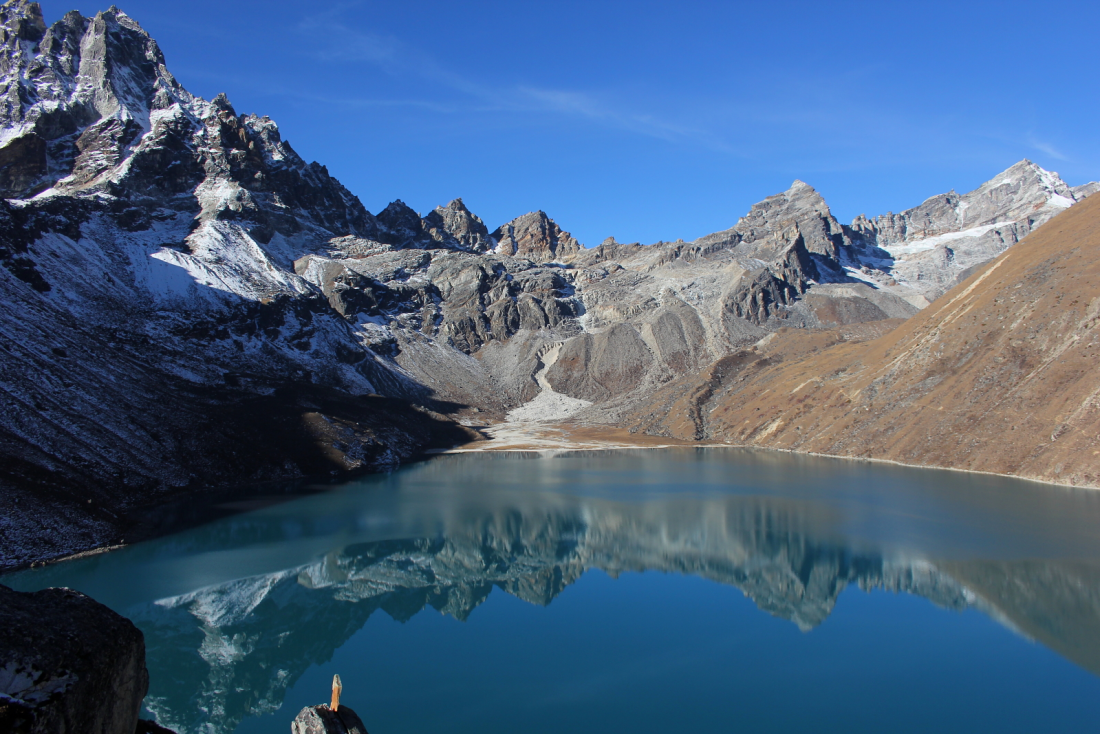
    Gokyo Lake receives its royal name in part of its magnificent beauty. The emerald blue water reflects some of the highest peaks in the world, not least of all, Everest, Lhotse and Makalu. The sight of Gokyo Lake´s breathtakingly grand landscape can certainly hypnotize you. On a clear day, it is so perfectly clear and vivid, you can visualize the mountains floating on the lake.  Surrounded by ridges dusted with snow, glacial river valleys and dramatic sky colors Gokyo is possibly one (if not the one) most stunning and serene landscapes throughout the entire Himalayas.

    Sacred Significance:

    However, Gokyo still means more than just beauty. Gokyo is sacred with both Hindus and Buddhists holding it in high regard, as it is said the lakes are the home of holy male and female deities. Hundreds of pilgrims, chasing cleanliness and blessings, trek to this high altitude lake to wash in the freezing lakes on the annual festival called Janai Purnima. The spiritual meaning of Gokyo Lake adds to its collective identity as a place of pilgrimage and importance in culture, beyond being simply visual beauty on a trek.

    Less-Crowded Serenity:

    Trekkers on this route receive the rewards of calm landscapes, peaceful villages, pristine nature, and no tourists. Trekking through this less traveled path naturally enhances a spiritual and emotional connection with the Himalayas—giving Gokyo the feeling of a hidden royal sanctuary—indeed earning the name “Queen of the Himalayas”.

    The Gokyo Trek: An Alternative to Everest Base Camp

    For people looking for almost as stunning a trek in the Everest region but not as well-travelled, the Gokyo Valley Trek is a perfect option.

    Renjo La Views

    Crossing the Renjo La Pass (5,360 M) on the Gokyo trail is one of the most exciting moments. This high mountain pass will provide fantastic sweeping views of the whole Everest Region and four of the World’s highest peaks, Mt. Everest, Cho Oyu, Lhotse and Makalu. The climb is hard and strenuous, it is a long, steep uphill path with switchbacks and rocks, which certainly makes it slow and painfully tiring, however, definitely worth it.

    Renjo La Views

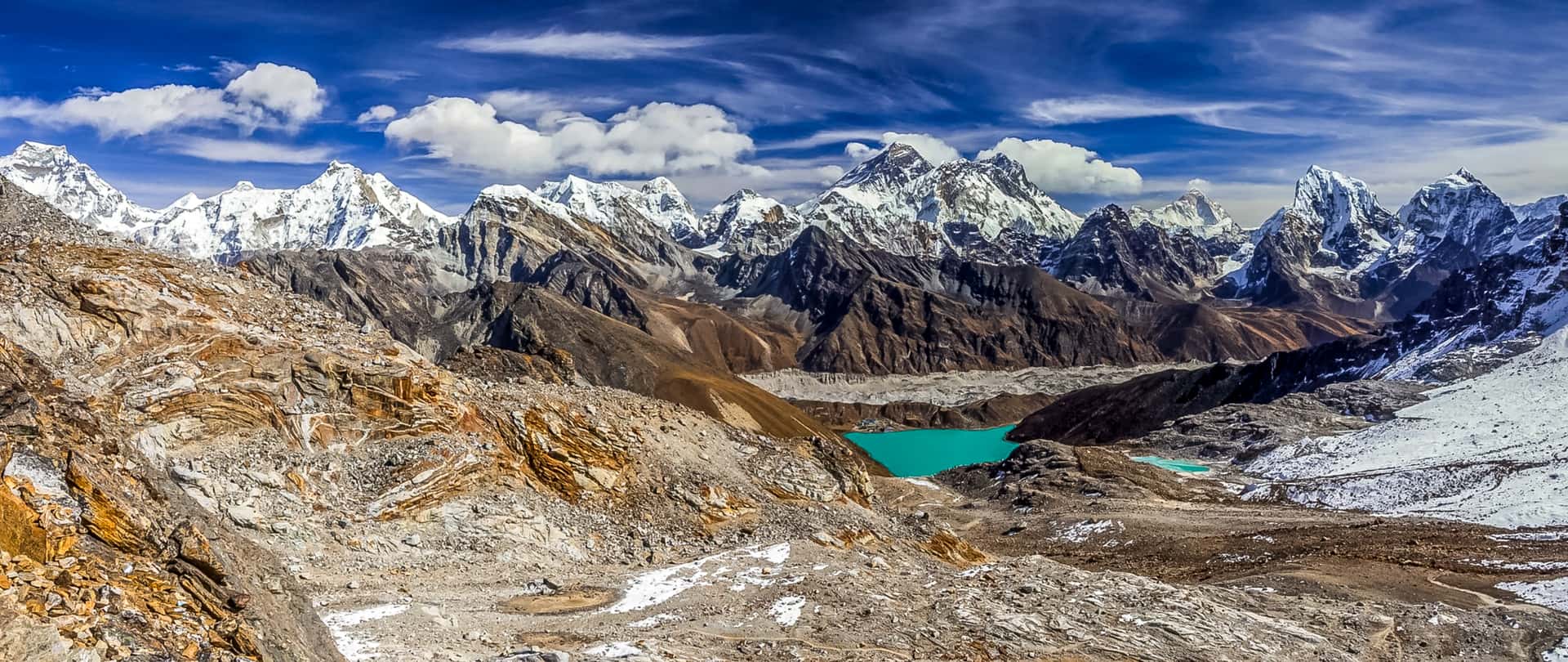
    Once at the summit of Renjo La, the Gokyo Valley is clearly visible below, surrounded by towering peaks, blue turquoise lakes, and, the view is that stunning. The masterful Himalayan scene looks painted by numbers. The route is quieter than the main EBC route, so the massive scenery is even more enhanced by the solitude and grandeur, making this a perfect place to take photos and reflect, or sit still and feel nature breathe around you.

    Gokyo Ri Summit

    Gokyo Ri is a trekking peak, at 5,357 meters, it is the highest non-technical viewing peak, or trekking peak, in the Everest region and it is also higher than Everest Base Camp.
    Gokyo Ri Summit

    The summit itself is well worth the hike! The panoramic experience at the top gives trekkers an unobstructed view of everything to a full 360 degrees; you get an outstanding view of Mount Everest, the Ngozumpa Glacier, and, quite fantastically, the entire chain of Gokyo Lakes below. It gives you one of the best views out there in the Himalayas, and it is also a wonderful quiet alternative to the crowds at Kala Patthar looking from that viewpoint.

    Ngozumpa Glacier Travels

    The Ngozumpa Glacier is the longest glacier in Nepal at 36 km long and flows from Cho Oyu down into the Gokyo Valley. Trekking next to or across the glacier is like walking on a river of frozen rock and ice. The surface is rough and is consistently loaded with movement, which is dissected by crevasses, ice cliffs and streams of meltwater separating the glacier’s snow and ice.

    Ngozumpa Glacier Travels

    For all trekkers in the area, the drama of the Ngozumpa glacier is incredible to behold with the tranquility of the lakes, and contrasts the beauty of the forms currently being carved out of the landscape by the forces of nature in the Himalayas. It’s a tad wondrous that as (and because of) climate change, the blessings of enhanced peril are setting up the conditions for glaciers to crack apart, people can still view the indulging scene of the glacier and lakes not just as something visually stunning, but also as an experience reinforcing the fragility of the much larger world we live within.

    Gokyo Lakes: Sunrise

    The Gokyo Lake system contains six main glacial lakes that differ in size, color, and character, and are considered to be among the world’s highest freshwater lakes. The lakes are located at multiple levels along the valley, and while each lake is stunning, at some level they all get converted to a hidden Himalayan paradise when trekking from one to the next – with each lake providing a different perspective of the surrounding peaks.

    Gokyo Lakes: Sunrise

    The lakes are draped in magic at sunrise and sunset when the transfixed light melds the canvas of the sky into oranges and pinks and the cyan water mirrors the snowy summits above.

    Whether it is appreciating the first rays of sun on the peaks in silence, or enjoying that last golden wash of colorful light across the lake, each of those moments were both visual and spiritual. Trekkers will comment on how it was one of their most peaceful and beautiful moments and how it collectively ranks in their best moments during their time in the Himalaya.

    Best Time to Visit Gokyo Lake

    The prime trekking time to get to Gokyo Lake:

    • Spring (March to May) – warm temps, new rhododendron bloom, typically clear skies and – Fall
    • (September to November) – fair views, comfortable trek temps – basically considered moderate. As well, you have to eliminate the rainy season
    • (June to August) and deep winter
    • (December to February) conditions – lots of snow, risk of being slippery, or the snow will be blocking your path due to space.

    Route to Gokyo Lake

    General outline to Gokyo Lake prospects The following is a general route, to get to the start destination of Gokyo: –

    1. Fly to Lukla from Kathmandu (30 minutes)

    The trek to Gokyo is started with an exciting mountain flight to Lukla from Kathmandu – a small village in the Everest Region (2860 m). The flight takes only thirty minutes but gives stunning views of the Himalayas from above, and a hair raising approach to the Tenzing-Hillary Airport (the world’s most adventurous airstrip). Most treks in the Everest region start from Lukla, so it is normal that either trek will either start in Lukla whether trek to Gokyo or Everest Base Camp.

    2. Trek from Lukla to Phakding (2,610m)

    The trek from Lukla to Phakding is a gentle downhill trek, which takes 3 – 4 hours.You will pass through forests of pine trees, and several small villages, and cross several suspension bridge spanning the Dugh Koshi River. This will be a good day of acclimatization with relatively easy walking. You will begin to feel the altitude and hopefully begin the process of your body acclimatizing to a higher elevation.

    3. Phakding to Namche Bazaar (3,440m)

    This part of the trek will progressively be slightly harder, but it is so rewarding and an expected active walking time of about 5 – 6 hours. You will be hiking through Monjo, and then enter Sagarmatha National Park, where you will encounter suspension bridges to cross, some steep section including switchbacks, and eventually arrive in Namche Bazaar, the largest village on the trek. Namche Bazaar is a good cultural and logistical hub and so most trekkers tend to take an additional acclimatization day here. 

    4. Namche Bazaar to Dole (4,200m)

    From Namche you will divert from the Everest Base Camp trail and continue to the less widely followed side of Gokyo Valley – Dole. This portion of the trek takes approximately 5–6. This route features views of Ama Dablam, Thamserku and other peaks of the Himalayas and allows you to pass through Kyangjuma and Mong La, a small hilltop village, which you will go over and start your descent slightly before the ascent to Dole.

    5. Dole to Machhermo (4,470m)

    This portion of the trek is steadily uphill too, but only requires 4–5 hours. It is more open and alpine here, so the low vegetation and views are fantastic. It is worth noting that you may even come across some musk deer or Himalayan birds. Machhermo is a quiet spot with only a few lodges and is commonly used as yet another acclimatization halt before pushing to higher elevations.

    6. Machhermo to Gokyo (4,790m)

    The final climb to Gokyo Village should take approximately 4–5 hours and as with the preceding sections, the scenery is stunning. As you continue on the trail, you will be exposed to many smaller lakes before arriving at Dudh Pokhari, the third and most well-known of the Gokyo Lakes. Gokyo has so many peaks around you, and you have so many directions to explore – a high-altitude paradise. You may decide to scale Gokyo Ri, or you can head west to check out the other lakes even further north.

    Gokyo: What will happen in 2025

    Gokyo in 2025, after most people on the planet had the unwanted experience of the negative impacts of COVID-19, and more importantly, the restart of the tourism sector in Nepal, one could expect trekking trails like Gokyo to welcome new domestic and international adventures safely, in some refurbished lodging, and with a much greater consciousness about sustainable travel. In 2025 will still be a terrific destination for nature lovers and off-the-beaten-path trekkers who want lovely views of the Himalaya without the typical tour-rific Everest Base Camp experience.The trails will be better maintained, with more signage, followed rubbish bins, and better designated safer pathways.

    The local communities have received better training on eco-tourism and hospitality, especially in the Gokyo Valley, which translates into a better standard of service in the teahouses and lodges. Lesser accommodation options will have cleaner rooms, more frequently (or consecutively) offer solar hot showers, will offer wi-fi, and will now offer menu options specifically using ingredients sourced from locals in an eco friendly approach.

    Tips for Gokyo Trekkers in 2025

    To make the most of your trip to Gokyo in 2025, here are some practical and essential tips:

    Book Your Flights to Lukla in Advance:

    There is a very limited number of seats available on flights from Kathmandu to Lukla, and this small number does not change with demand. It is best to try and book your tickets in advance, especially in the spring and autumn months when trekking traffic is high. Some flights are now being diverted to Ramechhap Airport which is about a 4 hour drive from Kathmandu so you will want to get your flights booked in advance and plan your schedule accordingly.

    Hire a Local Guide or Porter:

    The Gokyo trek is a teahouse trek meaning it is possible to do it solo but we strongly recommend employing a licensed local guide or porter. A local guide or porter can be instrumental to your experience through cultural knowledge, route finding, and safety. Additionally, it is best to utilize as many locals as possible when participating in a trekking holiday in a new and strange country.

    Take Some Altitude Medication and Water Purification Tablets:

    Since Gokyo is above 4,700m, acute mountain sickness (AMS) can be a possible challenge. Bring altitude medication (Diamox), and make sure you have time for proper acclimatization. In high-rise areas, there will be very limited safe drinking water, so be sure to plan on taking some water purification tablets or a portable water filter to prevent getting sick and to help limit the consumption of plastic bottles!

    Where to Stay on the Gokyo Lake Trek

    The Gokyo Lake trek has a number of tea house choices along the trail to allow trekkers with the basic, modest options to rest, eat and recover from a long day of trekking. The lodges are run by local families, and, are a critical element to the Himalayan Trekking experience, providing lodging, service, hospitality and basic meals with incredible views.

    1. Lukla (2,860m)

    As the first and last stop of the trek, there are many lodges and hotels options available in Lukla related to amenities and standard compared to the higher altitude stops. Some lodging offers private rooms which have attached bathroom, wi-fi, and hot showers.
    Recommended for: The arrival night or last night before flying back to Kathmandu.

    2. Phakding (2,610m)

    Phakding is a frequent first-night stop for acclimatization and scenic as well. There are number of tea houses that provide warmth along the Dudh Koshi river. The lodges are simple, but clean with warm dining halls and local food.
    Recommended for: A light first day of trekking after flying into Lukla.

    3. Namche Bazaar (3,440m)

    Namche is the biggest town in the Khumbu region. This is where you will have the most options for lodges along the Gokyo route. You will find bakeries, gear–shops,portal cafés, as well striped shirt next.star hotel.rolo radio and meals with good wi–fi. Namche Top Tip: Make sure you relax and acclimatize in Namche! Recommended for: Resting and acclimatizing (1–2 nights)

    4. Dole (4,200m)

    Dole is much smaller, much quieter than Namche, and is where trekkers first start to feel the essence of being remote on the trail. Lodges were also simpler in Dole but hearty meals and warm beds were assured. The bathrooms will be shared and will have a common area heated with a yak dung stove. Recommended for: Overnight stay, on the ascent to Gokyo.

    5. Machhermo (4,470m)

    Machhermo is a nice place to visit that can be utilized as an acclimatization stop. The tea houses have basic accommodation with warmth and hospitality. You’ll find that the tea houses embrace a feel of the mountain with rustic charm. It’s a nice place to stop and recuperate before you take on Gokyo.
    Recommended for: Safe adjustment to altitude before you reach Gokyo.

    6. Gokyo Village (4,790m)

    Gokyo itself has some tea houses beside Dudh Pokhari (the 3rd lake). Accommodation is much more limited in Gokyo, so it is good to arrange a booking in peak times. Rooms are bare bones. This doesn’t leave a lot of room for amenities. A few have limited solar and Wi-Fi, but the prettiest part is the turquoise lakes and high peaks.
    Recommended for: base camp to further explore Gokyo Ri, other lakes, and rest days.

    What to Expect in Tea Houses

    1. Basic Twin-share Rooms with Beds, Pillows, and Blankets

    Each tea house has twin-share rooms for two single beds. Twin-share rooms are the basic and utilitarian option. The room itself is made of stone or wood and has functional but thin mattresses and warm blankets. Each bed comes with a pillow, fitted sheet, and quilt. Trekkers are reminded in strong terms to bring a warm sleeping bag. As trekkers will be sleeping in cold temperatures at the higher altitudes. Since the tea house rooms usually do not have any heating. You may encounter very cold nights, especially at altitudes above 4,000 m. Although tea houses do not inventory many bedding items such as extra blankets, many have extra blankets available, free of charge, if a trekker asks.

    2. Shared Sickrooms (Sometimes outdoors)

    The bathroom situation in tea houses is formal or shared. It  is usually means that everyone is using the same bathroom, so expect systemic personal hygiene.. Depending on the personal hygiene option in lower regions, such as Namche Bazaar or Lukla. Toilet facilities are usually western-style toilets and hot showers (solar or gas) were available throughout the lower range.

    3. Foods

    As for the menu of local and international meals on -site. Tea houses have a surprisingly large food menu, especially in lower altitude villages. You will see items like hearty and filling.

    • Dal Bhat (rices, lentils, and vegetables) – a traditional and nutritious meal, and typically they offer free refills.
    • Noodles, fried rice, pasta, soupes. Momos (Nepali dumplings).
    • Eggs, pancakes, and toast. Drinks include tea, coffee, hot chocolate, and lemon ginger honey.

    Tips for Staying:

    • Always have cash (Nepal rupees) as payments.
    • Carry a good sleeping bag if you want warmth above 4,000m
    • Eating where you sleep is paying respect to the lodge owners by giving them a meal.
    • Book ahead in peak season March–May, September – November, if trekking.

    Conclusion: A Crown Jewel in the Himalayas

    Gokyo Lake is more than a trek; it is an experience which reaches to the heart and soul. It is both spiritual, a magnificent high Himalaya view and pristine wilderness nature. It truly lives up to its meaning Queen of the Himalayas. The awe inspiring Gokyo Lake trek of January 2025, will create an experience, for all lovers of nature. Contact us today at Happy Mountain Nepal, on Facebook, Instagram, or TikTok .


  • Three Passes in Everest: Ideal for Adventure Photography

    Three Passes in Everest: Ideal for Adventure Photography

    Three Passes in Everest: Ideal for Adventure Photography

    Nepal’s Three Passes Everest trek is an experience of a lifetime for dedicated trekkers and photographers and offers some of the world’s most breathtaking scenery in the highest mountain range on earth, unspoiled beauty, alpine severity, and living cultures. Whether you’re an adventurer looking for your next high or photographer looking for real awe-inspiring landscapes, the Three Passes trek is one you’ll never forget.

    Here, in this blog, we will be discussing why the Three Passes trek is a non-typical adventure photography experience compared to the rest of the treks of the region, why the trek is unique, how and when to do it as much as best time and, tips on how to make it happen for you along the way.

    Three Passes Trek

    What is the Three Passes Trek?

    Three Passes trek is a high altitude trekking tour in Nepal with three high mountain pass crossings of the Everest region, i.e., Kongma La (5,535m / 18,159ft), Cho La (5,420m / 17,782ft) and Renjo La (5,340m / 17,520ft). The trek is one of the most satisfying but challenging treks of the country, apart from providing the trekkers with stunning views of Mount Everest, Lhotse, Makalu and other peaks, also provides pristine landscape of the Khumbu valley.

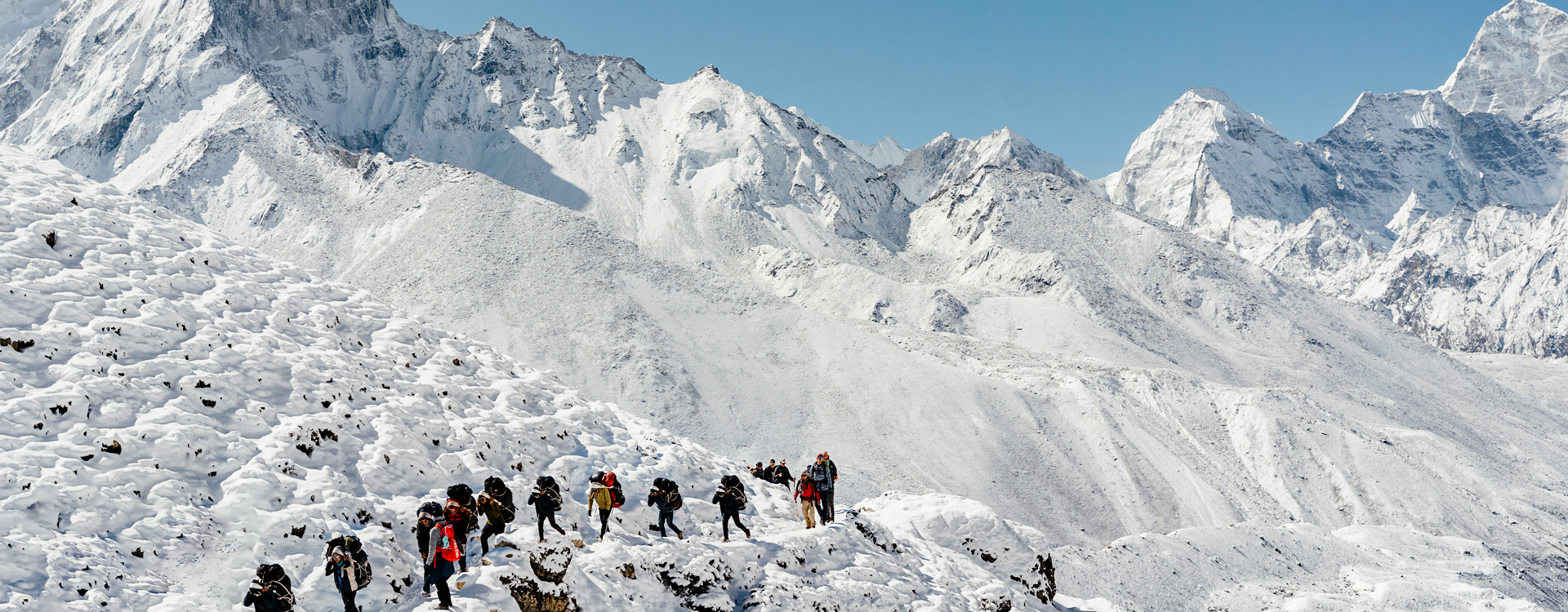
    It is longer and more challenging than the standard camp (EBC) trek and requires greater physical conditioning and technical expertise. It is of 18-22 days depending on the route followed and is marked by trekking on challenging trails such as glaciers, rocky ridges, and snow passes.

    Below is a very brief overview of each of the three passes of the Three Passes trek:

    1. Kongma La (5,535 m / 18,159 ft)

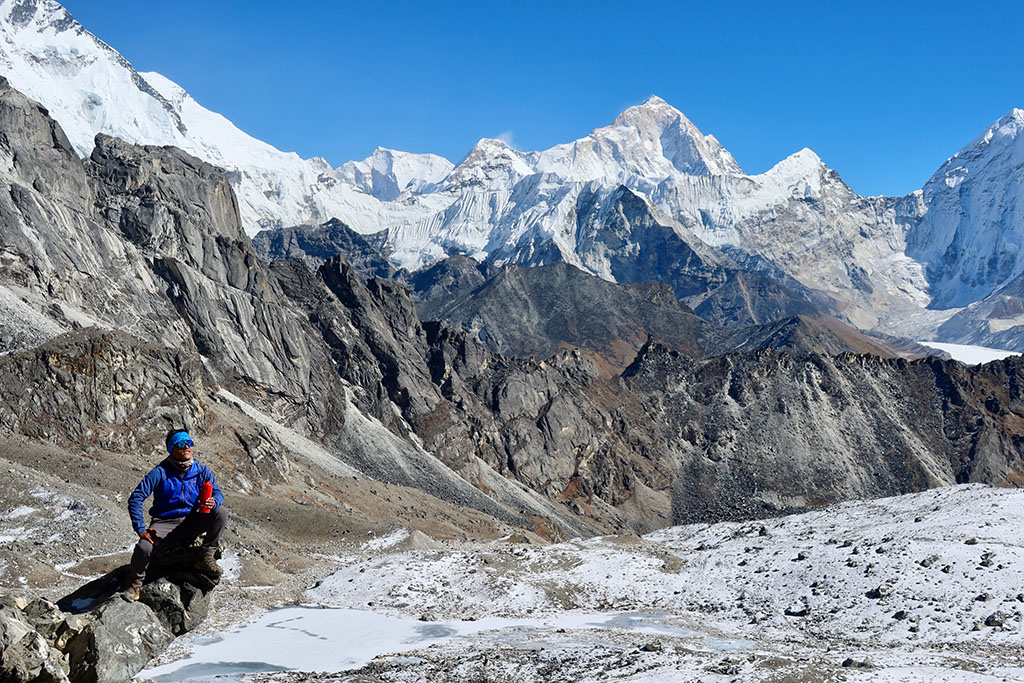
    The Kongma La is the highest trekking pass and provides one of the most challenging but gratifying experiences for trekking adventure seekers. It is a steep and rocky pass situated between the Lobuche and Chhukung valleys and demands physical stamina as well as technical know-how, particularly in winter or spring when snowfall accumulation renders the route even more challenging to climb. Kongma La ascent is walking on rock trails, loose scree, and snow, but once the top is achieved, the scenery is ispicture-perfectlyy stunning. Panoramic vistas of Everest, Lhotse, Nuptse, and other neighboring peaks from the summit are a photographer’s delight to capture outstanding high-altitude photographs. Climbing the summit of Kongma La is tiring, but the thrill of doing this pass is indescribable. The trek to the pass is a great trek and one of the most stunning mountain views on the entire trek.

    1. Kongma La (5,535 m / 18,159 ft)

    The climb down from the pass to the other side to Chhukung is half a day and has great photographic opportunities of eroded Khumbu landscape, its snowy peaks, and alpine landscape. As the pass is very high, the trek itself also provides very good photography opportunities of glaciers, saw-tooth ridges, and glacial valleys off the beaten track in the lower and tourist areas of the nation.

    2. Cho La (5,420 meters / 17,782 feet).

    The second of the Three Passes trek, Cho La, is also possibly the most challenging trek physically, as it involves steep slopes, rock faces, and ice plateaus. It is not far from Gokyo and Dzongla, and Cho La serves as a crucial connector between the region of the Everest Base Camp and Gokyo Valley. The route to Cho La is dangerous, especially in spring or winter when the trail can be covered with snow and therefore even more risky to walk on. The way down is also dangerous, with some of it done by ice walking and loose scree handled very carefully.But for those who make it through the Cho La, some of the most breathtaking scenery in the Everest Region awaits.

    Cho La (5,420 meters / 17,782 feet).

    Cho La has some very dramatic moments of theatre to be filmed on celluloid. Climbers are transported over the pass on alpine-sized ice, rock face, and lakes, with occasional glimpses of Everest, Lhotse, and other grand ridges in the vicinity. The second half of the day provides an open landscape that is ideal for wider shots, where you can capture not only the summit of the mountain but also an unbroken wilderness view below. Blue-green lakes and the tranquility of the Gokyo Valley are even more awe-inspiring after having struggled to cross the pass. Landscape and isolation of Cho La are two of the most rewarding passes to capture on this whole trek.

    3. Renjo La (5,340m / 17,520ft)

    The last of the last of the Three Passes trek, Renjo La, lies between Thame and Gokyo. The shortest of the three, but perilous in itself by virtue of how high it is and the awful weather. The walk to Renjo La provides stunning panorama shots of Everest, Makalu, Lhotse, and Cho Oyu, and the chance to capture the Gokyo Lakes, which mirror the snow-topped peaks surrounding them. The path to the pass is half rock-studded and steep, but also the least crowded of the three passes, so a less crowded, more personal trekking experience.

    Renjo La (5,340m / 17,520ft)

    Renjo La contains some of the finest photographs on trek, particularly of Gokyo Valley and Gokyo Lakes. The pass itself offers a great view with a panorama out over the Khumbu countryside. On a good day, you can take a photo of the entire grandeur of Everest and the surrounding peaks from Renjo La, and it is a photographer’s paradise. Renjo La is also beautiful with views of surrounding valleys and hills, and less people conditions than on the more crowded trails near Namche Bazaar and Everest Base Camp. Renjo La is therefore a perfect spot to capture high-altitude landscape shots with fewer trekkers in the scene, which a very coveted by nature and adventure photographers.

    They provide a wonderful impression of each pass, terrain, obstruction, and photo stop it offers.

    Three Passes Trek perfect for Adventure Photography

    Three Passes Trek

    1. Breathtaking Mountain Sceneries

    As you go through the passes, you are treated to unparalleled scenery of the world’s highest mountains. Mt Everest, Lhotse, Makalu, and Cho Oyu provide the background for some of the finest landscape photography opportunities in the world. Rock peaks, snow-capped glaciers, valleys, and alpine forests provide you with more than enough subjects to photograph.

    Best Photo Spots: Show Everest’s size, Lhotse’s ominous ridges, and Makalu’s appealing uniqueness from a wealth of diverse perspectives on the hike. Sunrise and sunset on these giants are magnificent in the warm light.

    2. High-Altitude Lakes and Glaciers

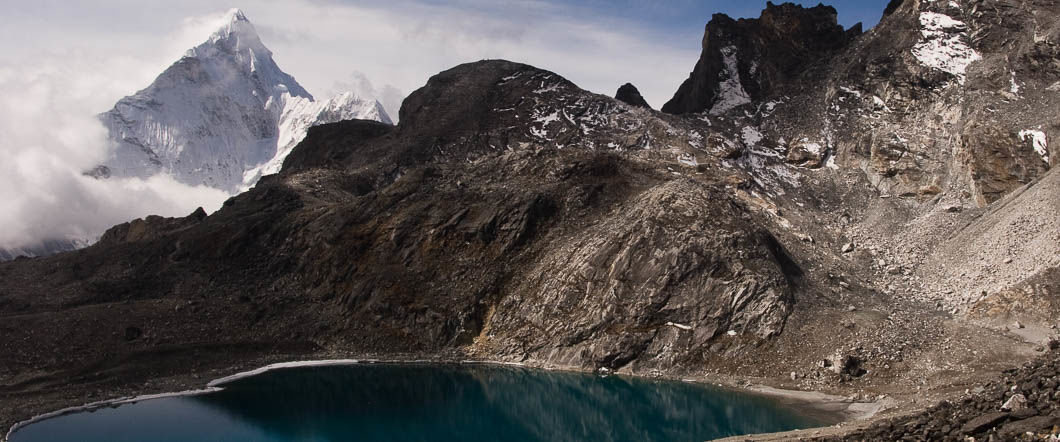
    Your walk comes across a series of high-altitude lakes like the Gokyo Lakes reflected by white capped mountains lining them in glittering crystal clear shine. Mirror calm lakes are ideal for pan photography to bracket a reflection shot with sky and even mountains. Ngozumpa Glacier-longest glacier of Khumba valley is another location to try and freeze peaceful nature.
    Best Camera Moments: morning photo of Gokyo Lakes if there won’t be any ripples on the lakes’ water, and reflection of about peaks can’t be evaded. Even the glacier has still another unique job to accomplish, it provides a good view of ice and a good landscape!

    3. Sherpa culture and Villages, something special

    You will be required to trek through remote Sherpa villages like Namche Bazaar, Dingboche, and Lobuche, where you might want to capture Sherpa culture and Sherpa life experiences in your camera. Villages are made up of reddish-brick-colored villages, Buddhist monasteries, and reddish-brick-colored prayer flags, with the appearance of blowing and billowing over hills’ slopes.
    Best photography scenes: Sherpa villagers dressed in their traditional attire, later used prayer wheels, and monks in local monasteries. Rich culture and hostile high-altitude environments: great photogenic dramas.

    Three Passes Trek

    4. Challenging and Diverse Terrain

    The Three Passes trek is so varied that there will never be room enough to cover it all. Mountain ridge and climbs, glacial lakes, grassy meadows, rhododendron forest – at every turn on the trek we were constantly discovering new ways of composing a photo! The ice trails/suspension bridge walk just enhances the drama of the photos.

    Best Shots: Position the trekkers in front of such titans, small suspension bridges over giant canyons, and small ridges on a monolith, a ridgeline sequence of mountains.

    5. Flora and Fauna

    Khumbu is also full of Fauna and Flora, such as the Himalayan Tahr species, snow leopard, vultures, pheasants, musk deer, etc. Flora is in large numbers, grazing over the alpine grassland, junipers, and rhododendron bushes, all of which are plentiful, having more than enough wildflowers during spring and filling your picture with more than enough colors.

    Three Passes Trek

    Best Time to Visit the Three Passes Trek for Photography

    The most favorable time of the year to visit for the Three Passes trek photoshoot is pre-monsoon (spring) and post-monsoon (autumn):

    Spring (March to May): Weather is ideal to capture the colorful flowers of the region. There are flowers in bloom, and the air is fresh with expansive hill views. Spring is very hot, and the trek is full of trekkers.
    Autumn (September to November): Blue sky and fresh air, great light, and visibility for perfect photography. Fewer rains are also experience during autumn, so it is less probable that your mountain photos will get clouded.

    Equipment for Adventure Trekking Photography of the Three Passes

    You need good equipment in order to capture the grandeur of the Everest landscape. Some of the must-have equipment to carry along is explain below:

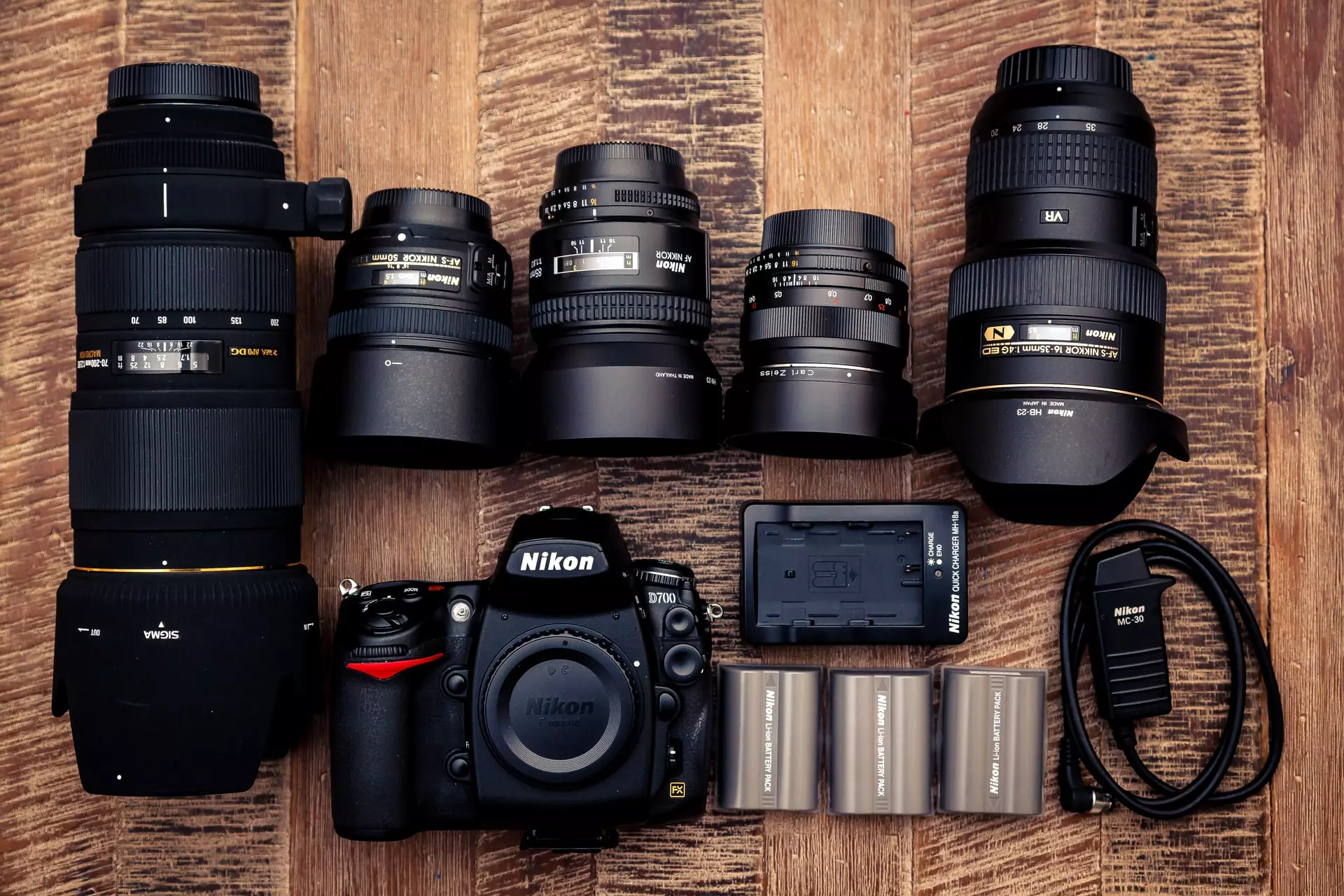
    1. Camera Equipment

    • DSLR or Mirrorless Camera: Offers higher quality images and more flexibility per shot type.
    • Wide-Angle Lens (16-35mm or 24-70mm): Excellent for capturing sweeping wide scenes, mountain landscapes, and panos.
    • Telephoto Lens (70-200mm or 100-400mm): Excellent for capturing distant wildlife shots or for flying around distant summits.
    • Tripod: A travel tripod will help in capturing long-exposure shots during dawn and dusk.
    • Extra Batteries and Memory Cards: Cold batteries drain quickly, so carry plenty of spares. Carry as many memory cards as it will take to hold all your photos.

    Camera Equipment

    2. Protective Camera Gear

    Camera Rain Cover: Dry and snow-free glacier hiking or brief snowstorms.
    Lens Cleaning Kit: Dust and moisture accumulate quickly in the Himalayan environment, and so a clean lens equals tack-sharp photography.

    3. Drones (Optional)

    The drone can capture the scenery of great mountains and valleys from a higher altitude, having unobstructed vision of the area. Make sure to take note of what is regulate locally, provided it is about operating drones, and adhere to all of them.

    Photography Tips for the Three Passes Trek

    Three Passes Trek

    Photograph At Golden Hours

    Soft warm light at dawn and sunset—the golden hours—add depth, contrast, and a touch of magic to mountain landscapes. Golden hours in the Everest range give the ideal light to capture white peaks golden and pink against dark dark blue sky. Dawnlight also gives bluer heavens and less haze, ideal to put Everest and his friends in top condition.

    Use a Polarizer Filter

    Polarizing filter is a great piece of equipment for serious photography, particularly when outdoors in snowy or reflective weather like in the Himalayas. Not only does it stop glare on water, snow, and wet rock but improves the color of your landscape photo’s color so that it looks more vivid. Darkens the sky and contrasts the sky so your photos result in lighter and darker in color without needing post-processing.

    Watch the Details.

    Other than panoramas, detail tells your travel story. Tightly cropped rock and ice, whirligig prayer wheels, or snow prints are all details so small, butthey provide variety and credibility to your video. Close-ups are what make the intimacy as well as the respite from the grandeur of wide shots.

    Be Patient and Attentive

    Light in Everestland changes, and your moment-in-time shot is already there waiting to be snap. Clouds will shroud a summit for a brief instant and lift once more; shafts of light will transform an uninteresting second otherwise into that of magic. Having the location provides one with the leeway to wait and react to the moments that exist briefly to allow one to present them as spontaneous and real.

    Be Respectful of Local Culture

    Local people and the people of the Everest region must be respect and photographed politely. First, permission must be ask before photographing a person, and, by all means, must not go inside anyone’s home or religious places. Sherpa culture is respectful and polite, and being respectful is a guaranteed method of gaining trust and authenticity in images.

    Three Passes Trek

    Conclusion

    The Three Passes trek not only requires a lot from the trekkers, but also is heaven for adventure photographers. Its highest points at high altitudes, its high-altitude lake, its Sherpa village, and the diversity of landscapes transform the Everest region into a treasure house full of endless possibilities for photographers to have the best. And if you visited there at its right time of year, bag in hand and gear, and if you sat patiently out waiting for some good photographs, then you would have been able to imagine its magnificence and beauty.

    Take your kit bag, fill your camera, and go capture some photos of the most beautiful landscapes of the world! Contact us today at Happy Mountain Nepal, on Facebook, Instagram, or TikTok