Tag: Holi

  • Festivals in Nepal: When to Visit for Cultural Experiences

    Festivals in Nepal: When to Visit for Cultural Experiences

     Festivals in Nepal: When to Visit for Cultural Experiences

    Nepal is a wonderfully diverse country with authentic traditions, and spiritual vitality that permeates the entire country, but it is also a country with hundreds of vibrant festivals that illustrate the spiritual and cultural diversity of Nepal. Between energetic forms of ancient Hindu worship and similarly energetic celebrations of the return of buddahood in Tibetan Buddhism, there is something wildly something going on every month of the year in Nepal. Therefore the best way to identify your next travels is to base your trip around the main festivals within Nepal. Thus, the best way to identify your next travels is to organize your trip around the major festivals within Nepal.
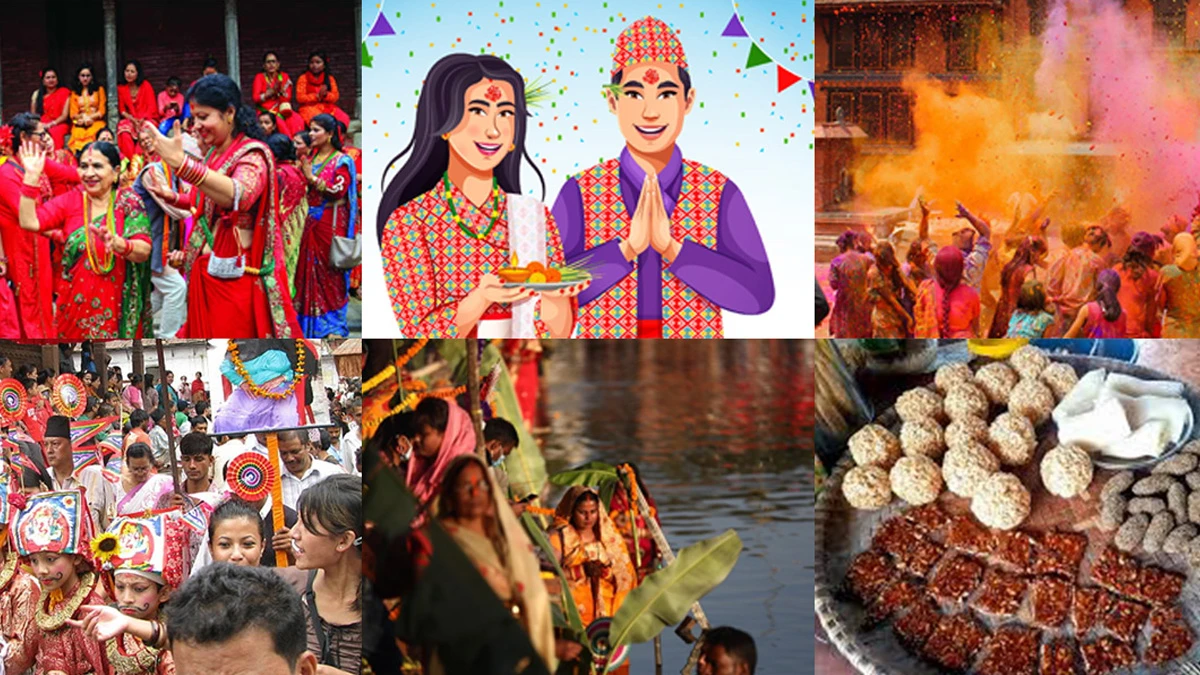
    people celebrating festival like teej, dashin, holi, mage sangrati in a grid

    In this blog, we will assist you in identifying what the major festivals in Nepal are and when they happen, what they entail, and how to put together a trip to be part of them.

     What Is It Like To Travel To Nepal In The Midst Of Festival Season?

    Being in a festival in Nepal is not simply being in a ‘parade’ or ‘temple ritual’, but being part of it. Being shoulder to shoulder and walking in rhythm with the locals, experiencing the crush of the events, tasting local sweets during Tihar Festival, these experiences connect you to the culture, the heritage and the hospitality of Nepal.

    Key reasons to visit during festivals:
    People cebrating gaijatra in bhaktapur

    Authentic community involvement

    Festivals provide an authentic opportunity to appreciate what Neplai people do day to day, and the practices that inform everyday life. You will witness practices and rituals that are several hundred and thousands of years old, being done with customary pride. Festivals also afford you the chance to involve yourself with local folks when they are actively jubilant and most enthusiastic. The breadth of experience you will achieve from a festival is not comparable to tours which typically have a sightseeing-oriented agenda.

    Incredible visuals

    In addition to socially and culturally immersing yourself in a festival, there are also visual spectacles provided in the form of the amazing architecture, bespoke costuming, and fantastic parades. There are incredible visuals to capture in every direction whether it be the masked dancers of Indra Jatra or candlelit temples during Tihar. These experiences generate dynamic, unique, and culturally relevant visuals. For photographers or content creators, you will find an infinite heap of rich visual and experiential inspiration.

    Traditional food, music, and dance

    During festivals, there are special foods that you normally do not get to eat on an everyday basis – sel roti during Tihar or yomari during Yomari Punhi. There is music and dancing in the streets: folk drumming, dancing, and traditional Newari music. These are sensory events that deepen your knowledge of different ethnic cultures of Nepal. It is a feast for not only your stomach but also your spirit.

    Local and traditional festivals

    A hands-on opportunity to learn about Hinduism and Buddhism Festivals are religious traditions with their roots in the spiritual context of Nepal. A festival provides a chance to understand rituals, deities, legends, and sacred practices of both Hinduism and Buddhism. When you see puja, prayer, and symbolic practices, you can understand how those practices embody those beliefs. Festivals are a cultural learning experience disguised as celebration and participation.

    More colorful and exciting in towns and cities

    The color and energy generated by festivals comes alive in towns and villages and even remote mountain villages. There is huge presence of colorful lights, flowers, and mandalas! Amidst it all, people are all wearing traditional ethnic clothing. There are millions of collective identities in expressions of happiness and celebration wherever you find yourself adding color to every location!

    Major Festivals in Nepal

    1. Dashain (September–October) – the biggest Hindu festival in Nepal!

    Dashain is the longest and most important festival to celebrate in Nepal representing the victory of good over evil. Itis a 15 day festival with significance each day, culminating the festival on the tenth day (purnima) with Elders applying tika and blessed jamara to younger members of their families. The Dashain holiday is dedicated to worshipping Goddess Durga, who is also recognized as Goddess of power and protection, cleaning the home, and purchasing new clothes and gifts in order to reassemble with family on this special occasion!

    There are fairs in all public squares, you will see traditional bamboo swings built in many villages. People fly kites wherever they are in the country to enhance the celebrations! Animal sacrifices are still held at a few temples to maintain historical customs; a remarkable opportunity to experience the honest rituals and demonstrate family closeness is presented as most of the population shuts down for Dashain!
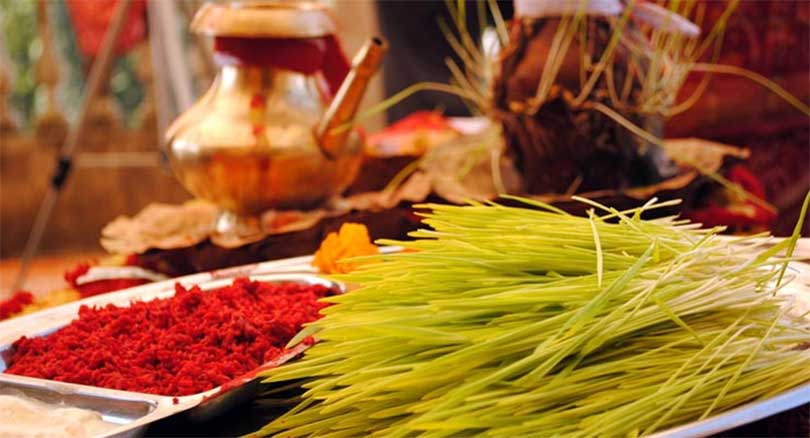
    Tika and jamara during dashin

    Key Takeaways:

    • Festivals in Kathmandu and the surrounding areas of Nepal,
    • Are massive festivals and celebrations,
    • with kites, swings, and feasting!
    • Best Experience in: Kathmandu, Bhaktapur, or in rural villages for the traditional experience.

    2. Tihar (October-November) – Festival of Lights and Animals.

    Tihar is a colorful festival that pairs the spiritual with the visual, and is hard to miss with all that defines the five days. Every day has a different being that is honored: crows, dogs, cows, oxen, and ends with brothers. Houses are adorned with special decorations of oil lamps, candles, and rangolis (colored pattern made with flour, rice, colored sand, or flower) to Laxmi, goddess of wealth, at her Laxmi Puja.

    The final day we celebrate Bhai Tika, the love between siblings, where sisters put the tika and blessings garland on the brothers. Children sing Deusi-Bhailo folk songs to their neighborhoods, and everyone adorns their houses joyously with gaiety and song in appreciation of the season. With the lamps and sound of song in the air…Tihar is undoubtedly one of the most popular holidays in Nepal.
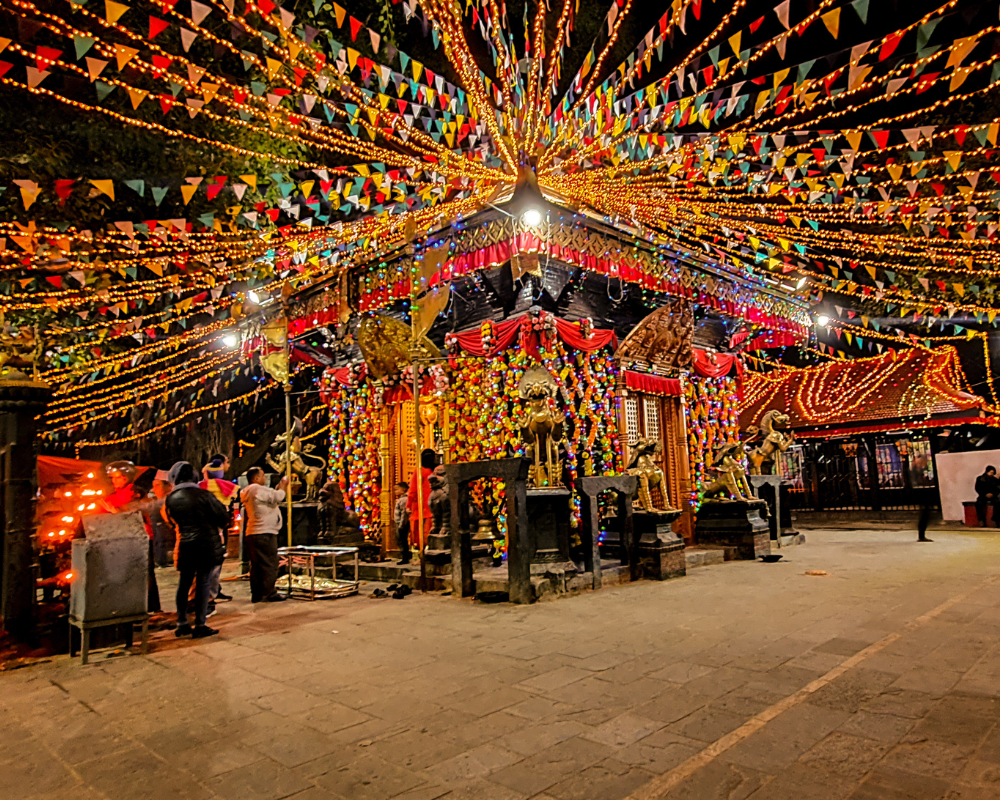
    Maitidevi temple decorated with lights and flowers during tihar

    Main Attractions:

    • Entire towns lit up in lights
    • Laxmi Puja rites
    • Traditional Deusi Bhailo singing and dancing
    • Best Place to Experience: Kathmandu, Pokhara, and minor towns for authentic home celebrations

    3. Holi (March) – Festival of Colors

    Holi is a chaotic outpouring of color and energy which celebrates the end of winter and the arrival of spring. Initially a Hindu festival recognized with the tales of Lord Krishna and His relationship with Prahlad, it has turned into a happy public holiday since. People will splash each other with colored powder and water, dance in the streets, and blast loud music.

    Its a weeklong opportunity for togetherness, where social hierarchies collapse into a big party atmosphere. There are many friendly/welcoming open spaces where tourists can access to take part in Holi, particularly in Basantapur in Kathmandu or Lakeside in Pokhara. Although it is mostly a fun time, there also is a spiritual message of love, forgiveness, and new beginnings.
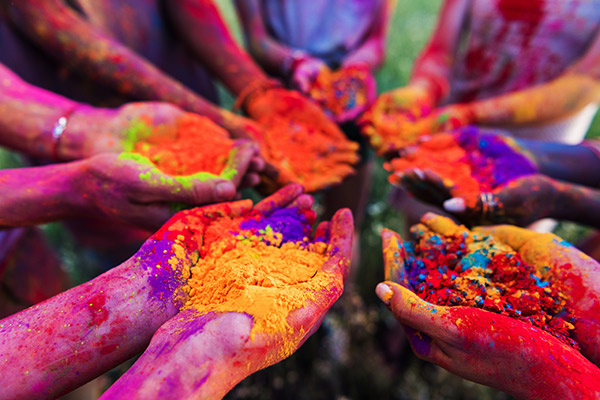
    People's hand full oof different colour during holi

    Key Highlights:

    • Colorful Powder Splashing and Water Balloon Fighting
    • Singing, Dancing and Street Processions – Public Parade
    • Inclusive – For Tourists Too!
    • Best Place to Enjoy: Kathmandu (next to Basantapur), Pokhara, and Terai Regions.

    4. Indra Jatra (August–September) – Kathmandu’s Most Vibrant Street Festival

    Indra Jatra is a vibrant eight-day festival of the Newar people and occurs mostly in and around Kathmandu. It is a celebration of Indra the King of Heaven and Rain God and is an opportunity to experience a taste of the culture of this region. The festivities start with the raising of a ceremonial wooden pole (Yosin) and continue with performances of masked dancers such as Majipa Lakhey that represent the guardian dieties.

    Perhaps the most popular event of the festival is the chariot procession of the Living Goddess Kumari through the ancient streets of Kathmandu Durbar Square. From stone spouts there is a steady supply of local beer, crowds of many thousands gather to watch, and there is a atmosphere of complete celebration and religious devotion that makes it an unforgettably rich experience.
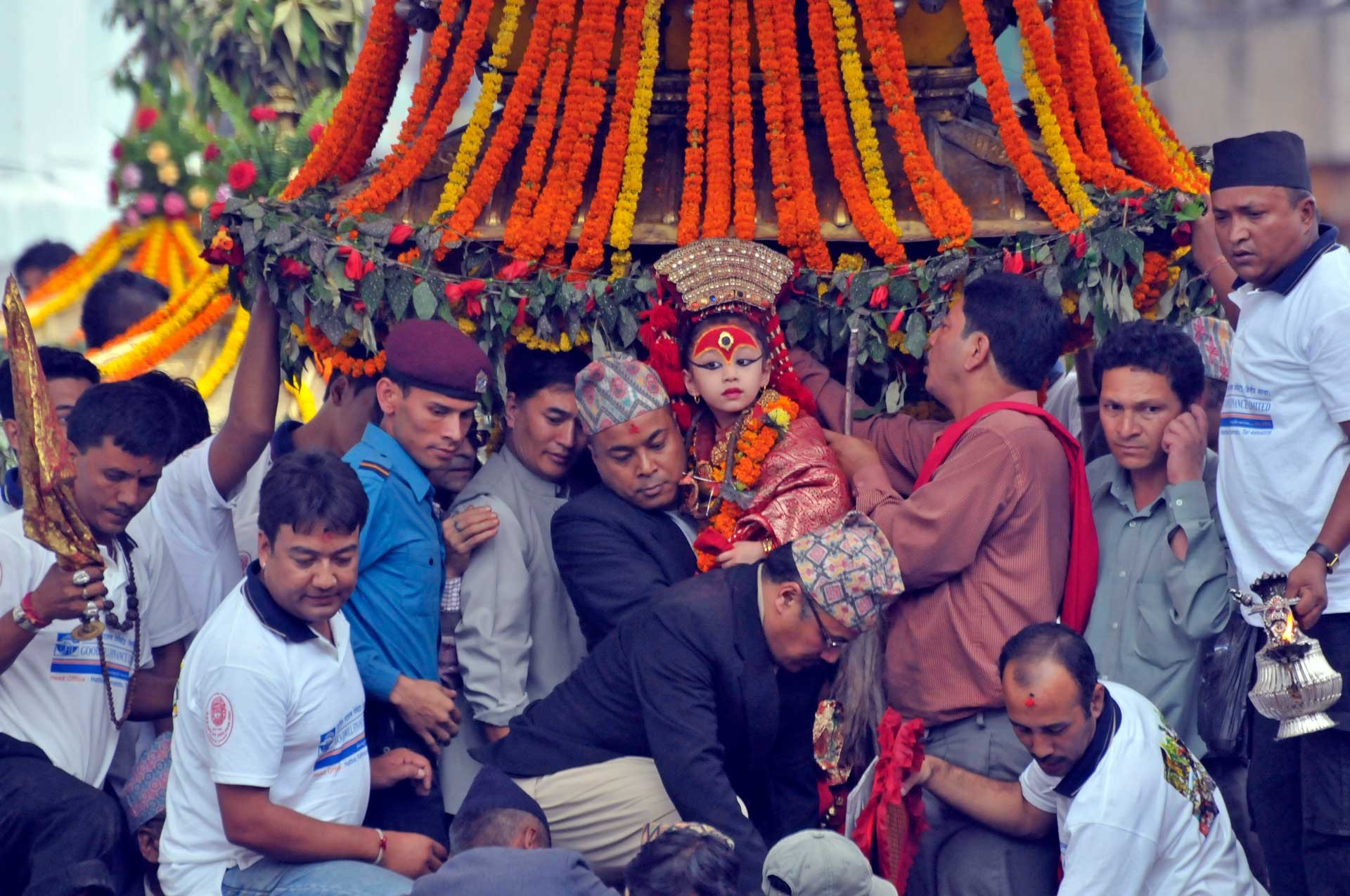
    Kumari during indrajatra

    Top Highlights:

    • The Mijpa Lakhey and all other mask dances
    • The Kumari’s chariot procession
    • The beer flowing from traditional spouts in Basantapur
    • Artistic Attraction: Kathmandu Durbar Square

    5. Buddha Jayanti (April–May) – Celebrating the Birth of Lord Buddha

    Buddha Jayanti is a quiet, relaxed and somewhat spiritual event. It marks the birth, enlightenment and nirvana of Lord Buddha. It is a day largely for Buddhist communities, and it is a day of remembrance, characterized by peaceful prayer, offerings and experiencing perhaps the most meditative of rambles with monks chanting their sacred texts, or devotees lighting butter lamps at temples and stupas.

    Buddhists from near and far journey to sacred Buddhist sites, whether it is in Lumbini (Buddha’s birthplace), or locally in Kathmandu at Swayambhunath or Boudhanath. The atmosphere is some-what solemn, reverent and peaceful – it an ideal opportunity to get a glimpse into a little sliver of Nepal’s Buddhist culture, whilst learning about Buddha’s message of peace and compassion.
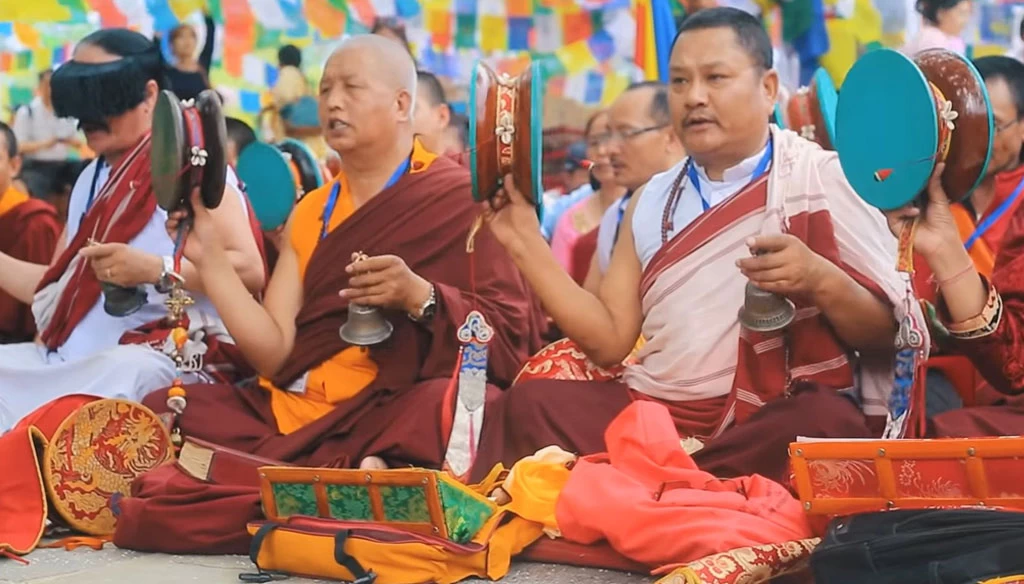
    Monk chanting during Buddha Jayanti

    Key Highlights Include:

    • Prayer ceremonies and offerings of butter lamps
    • Chanting of Buddhist scriptures
    • Pilgrimages to sacred places of Buddhism
    • Best Places: Lumbini, Swayambhunath (monkey temple), Boudhanath Stupa

    6. Teej (August-September)- Fasting and Dancing Women´s Festival

    Teej is a large festival for women which is a marriage homage to devoted women and woman power. Nepali women wear long spacey red saris, and in many cases, congregate at a temple like Pashupatinath and sing devotional prayers. Most women attending the festival will be fasting for the day to pray for auspiciousness and marital happiness for those that are married or a prayer for a future husband to enjoy good health.

    Women will have a Dars or a special ceremonial meal before they begin their fast. Throughout the festival of Teej the temple courtyards are full of singing and traditional praying/dancing from all parts of Nepal. It is a colourful expression of sisterhood and love and the most photogenic and happiest festival you can experience in all of Nepal.
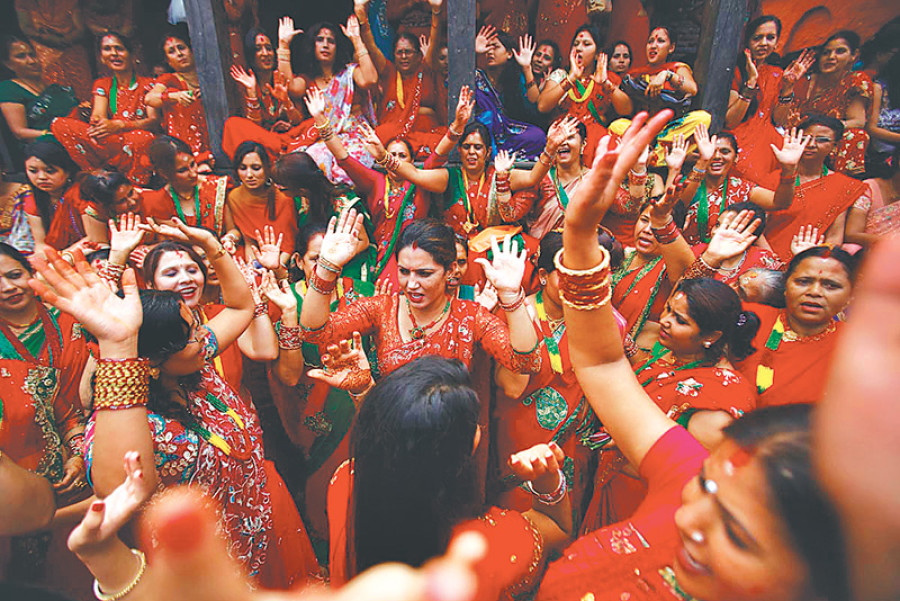
    Women dancing during teej celebration

    Main Highlights:

    • A female driven procession and dance party
    • Pashupatinath Temple packed with women
    • Cycling unique feast (Dar) and rituals
    • Place to celebrate: Pashupatinath Temple Kathmandu

    7. Maghe Sankranti (January) – Harvest – Solstice Festival

    Traditional Maghe Sankranti definitions center around the sun moving to the northern hemisphere for longer, warmer days. Families wake up very early to bathe in holly rivers. Then they gather and eat seasonally available sweet food: sesame sweets (til ko ladoo) with molasses, yams, and ghee.

    Daily trips happened to sacred confluences, like Devghat, and many will bathe to worship gods maximum health and wellbeing. The nature of Maghe Sankranti is the end point of relative renewal and calming reflection – especially compared to the very loud, riotously large festivals in Nepal.
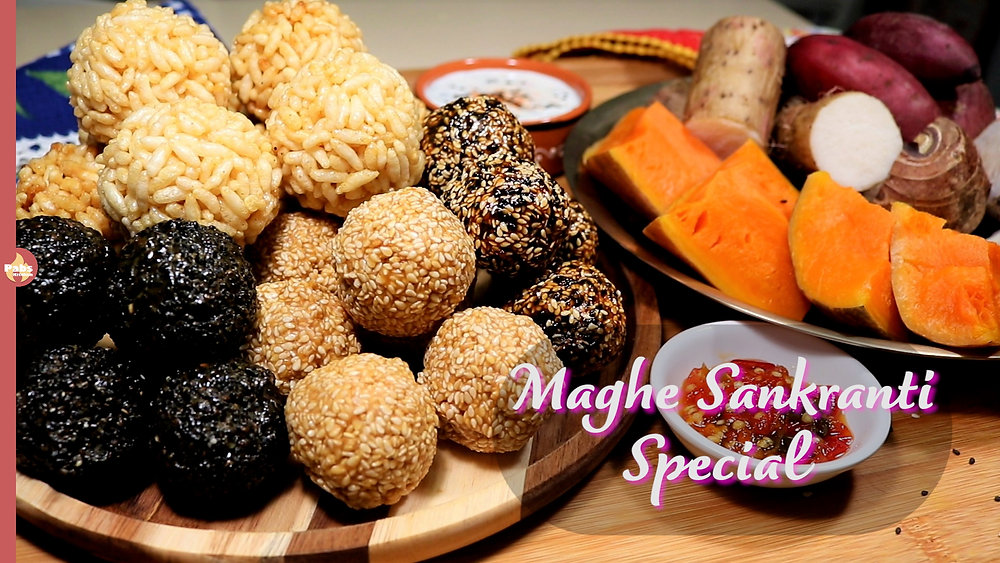
    Til ko ladoo and sweet potato as a main dish for celebrating maghrsagrati

    Main Attractions:

    • Pilgrimages to river confluences (Devghat, etc.)
    • Sacred bathing Homemade traditional foods
    • Best Place to Experience: Devghat, Chitwan, or village locally

    8. Gai Jatra (August)

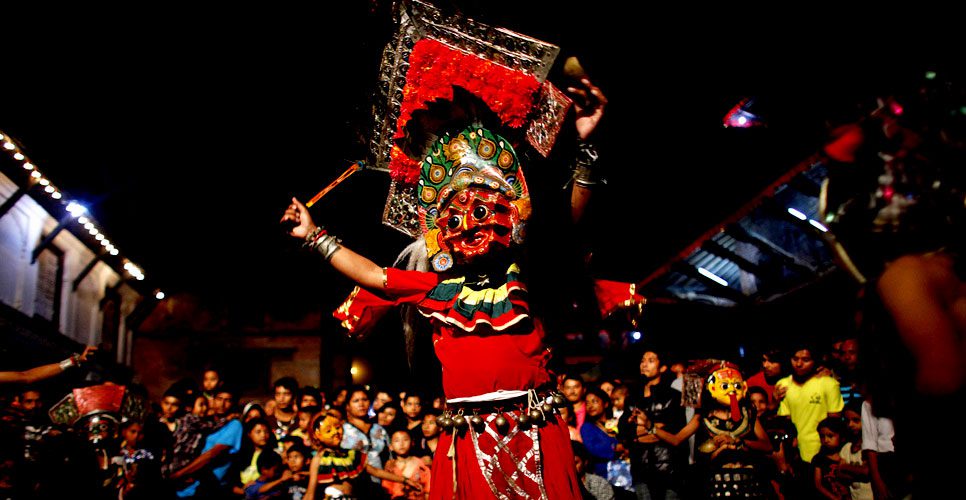
    Festival of Cows and Laughter Gai Jatra, or the “festival of cows and laughter”, is one of Nepal’s most distinctive festivals as it combines the concept of memory and humour. Families who have lost loved ones in the past year join the parade by leading a cow, or young child dressed as a cow, and guide the soul onward. It is a healing tradition that transforms grief into a celebration. The streets of Bhaktapur, Patan, and Kathmandu are filled with comedic sketches, parody raps, and traditional instruments. This festival physically illustrates joy and togetherness through laughter-based celebrations with lively entertainment. Gai Jatra plays a significant role in helping the community express sadness through humour and community support, which makes it very emotional, and incredibly funny and uniquely cultural.
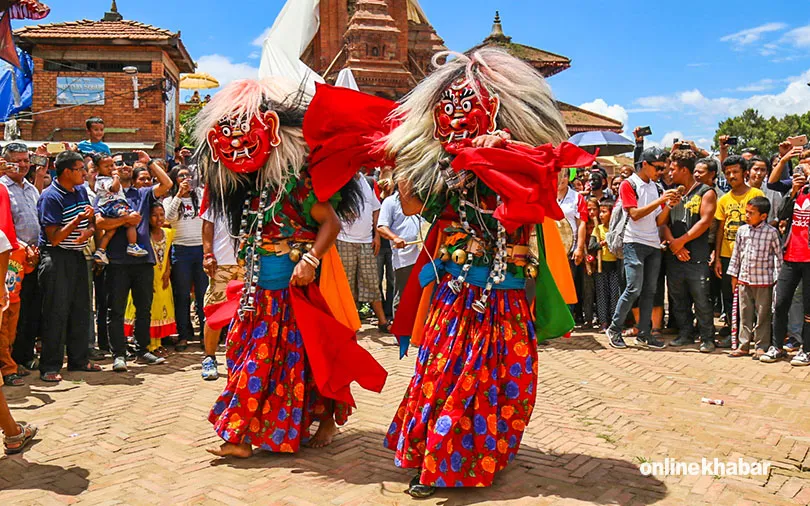
    Mask Dancer dancing Gaijatra

    Main Attractions:

    • Street parades with traditional acts and hilarious sketches
    • Processions of cows (or children in cow costumes)
    • Satirical performances with laughter
    • Best Viewing Places: Bhaktapur, Patan and Kathmandu

    Advice for Festivals in Nepal

    • Book early: Flights and hotels are booked quickly for the blockbuster festivals of Dashian and Tihar
    • Dress appropriately: Dress conservatively, remove your shoes or sandals in temples
    • Ask first: Always ask before taking pictures especially for sacred rituals or family occasions
    • Be respectful: Be respectful when you participate and follow local etiquette
    • Stay longer: Nepal is huge and has usually lots of rituals on many days of the festival

    Festival Calendar Summary (Quick Reference)

    Month Festival
    January Maghe Sankranti
    March Holi
    April – May Buddha Jayanti
    August Gai Jatra,
    September Dashain
    October Tihar
    August Teej
    August Indra Jatra

    Final Thoughts: The Best Times to Visit Nepal for Cultural Festivals

    Although Nepal is a unique destination at all times, August to November is the best time to visit for cultural festivals, so you are going to be in for an Awesome experience! There is a festival literally every week during these three months and the clear skies and onset of the trekking season could not be better!

    Whatever your preference; whether you are attracted to the spiritual vibe of Buddha Jayanti or the explosion of colours and energy of Holi, being able to participate and witness at least one festival in Nepal will allow for a much greater understanding of Nepal’s heart and soul. Therefore, time your visit to fall within one of these extraordinary occasions, and walk away with experiences and memories to last a lifetime.If you are planning to visit Nepal then contact us today at Happy Mountain Nepal, Facebook, Instagram, or TikTok. 

  • Best Places to Celebrate New Year in Nepal

    Best Places to Celebrate New Year in Nepal

    Best Places to Celebrate New Year in Nepal

    Nepali New Year or Bikram Sambat New Year is Nepalese holiday time and festival. Mid-April is the best time. At that time, one can see the beautiful culture and landscape of Nepal. For religious practice or adventure, celebration, one can see them there now.

    The last month of the year also will be gone, and all of us are going to enjoy a great New Year. Since the new year has started, certainly you must be welcoming it with happiness and cheerfulness. Therefore, if already you are already in Nepal or intend to go to Nepal on holidays, then you would be prepared to have information regarding the tallest, most visited destinations where you would wish to greet the Nepali New Year.

    Therefore, we have presented this article to you by which you will have an idea about celebrating New Year in Nepal.

    1. Kathmandu – The Heart of Festivals

    Kathmandu Valley is Nepal’s spiritual and cultural centre. Its political, religious, and cultural capital shifted over time for over 2,000 years. Charming with the magnificence of the Himalayas, it is now a potpourri of tribal religion, Hinduism, and Buddhism. The valley-temples above and the stunning palaces are testimonials to its chequered and golden past.

    Kathmandu city, the capital of Nepal, never sleeps, but Night life goes in full swing in Kathmandu during New Year time. Party is going strong in the city during New year time, and the best two places where people can party are Thamel and Basantapur.

    Thamel, the urban tourist hub of the city, will be a street party of a whole world’s night during New Year’s night. It will be a street party, a live concert and dance, and a party, Nepali. There will be restaurants, pubs, and cafes with international food as well as Nepali to munch on so that one will be having his or her belly full. There will be shops selling souvenirs too, and Kathmandu days will be more than one can possibly need.

    In Basantapur, outside the boundaries of the old town square, you’re in for the past. Buckle up for a jerky countdown to midnight with firecrackers illuminating the sky. For street food, you’re in for steaming local delicacies greeted by vignettes of festival.

    For a serene start to the new year, visit Pashupatinath Temple and Boudhanath Stupa where people pray and meditate. They are where there are peaceful rituals happening to welcome a peaceful new year.

    Kathmandu in new year

    Why Visit?

    • Experience the celebration vibe of Thamel and Basantapur.
    • Experience the peace vibe of Pashupatinath Temple and Boudhanath Stupa.
    • Experience the crazy blend of music, cuisine, crackers, and culture.

    2. Bhaktapur Durbar Square – A Culture Fest

    Bhaktapur Durbar Square is the best ward and World Heritage of Nepal. It has the most elegant square with the best woodcarvings, temples, and palaces. It has rich ancient history and architecture here also. You will enjoy Bisket Jatra fest on New Year’s Day here. There are numerous temples, good palaces, and good monuments with the typical architectural styles of the Newari people in this city.

    Besides that, earlier this was a royal palace and has been declared a heritage site nowadays. Therefore, there are numerous tourists visiting this square to have fun and view the good Newari architecture. Bisket Jatra is world-renowned for humongous chariot parades, sacrifice rituals, and blood-curdling tug-of-war among teams, too. The very energetic and vibrant new year’s festival, the celebration is full of thousands of locals and visitors that fill its grounds.

    Apart from the Jatra, visitors catch a glimpse of cultural activity, folk dance, and other local delicacies, which are the icing on the cake.

    Bhaktapur in new year

    Why Visit

    • Perplexed by the fanfare of Bisket Jatra, Nepal’s cultural heritage festival.
    • Relax in venerable courtyards, temples, and palaces.
    • In a peaceful, multi-hued atmosphere with cultural events and desserts.
    • Chances to view artistic monuments, wood carvings, and rock statues.

    3. Pokhara – Scenic Retreat

    Pokhara is internationally famous because of its natural wonder, calm lakes, white mountains, and serene surroundings in general. The city has the perfect mixture of recreation and adventure, so much so that the tourists like holiday here doesn’t have the entire lifetime of theirs to do in order to enjoy themselves during the New Year’s.

    Pokhara is Nepal’s most scenic and most popular city. It is also well-placed in Nepal and has been bestowed with the label of a compulsory halt in the tourist holiday itinerary to enjoy nature, adventure, and culture all at one. Regardless of what the reason for your visit is – as adventure-freak, nature-spy, or peace-seeker – Pokhara has everything. Relax and get a bird’s eye view over the majestic Pokhara landscape on a New Year’s trip that will leave your breath gone for good.

    You shall be flying over Phewa Lake and snapping from the rim of observation ranges such as the Mt. Annapurna Range. Or if you’re among those who like to spend a quiet and peaceful New Year’s Eve in winter, boating at Lakeside will be just too perfect for you, and the lakeside cafe and restaurant atmosphere where you spend your New Year’s Eve to live music, food, and all that warmth and coziness. Go for a hike to Sarangkot, a nearby hill, to watch the sunrise on New Year’s Day and have a bird’s eye view of the Himalayas in the distance. It is the best place to view bygone years during sunrise time.

    Pokhara in new year

    Why Visit

    • Bird’s eye view of hill and lake.
    • Paragliding, boating, adventure sport.
    • Live band and cultural show New Year party at Lakeside. Live band and cultural show New Year party at Lakeside

    4. Chitwan National Park – Nature and Wildlife

    Without a doubt the most stunning park to visit in Nepal on a wildlife tour, Chitwan National Park is where you ring in a New Year holiday amidst the new flavor of nature and wildlife. Among the very few that belong to the one-horned rhinoceros to Bengal tiger class, some are safeguarded by the national park authorities of the country. The journey to the destination is a ride into being surrounded by the natural splendor amidst the jungle.

    It’s a jungle safari which you are undertaking here, where you trek through the jungle cover and grassland of the park in an attempt to sight deer, rhinos, and birds. Elephant ride and canoeing in the river are the most sought-after activities as well.

    Amidst all this Tharu subtlety of culture, ethnic dance, local food, and salutations, New Year’s Eve night is a night to be enjoyed warmly by most of the resorts in and around and in the vicinity in the context of bonfires, midnight fireworks in the starry night sky, and live band.

    Chitwan National Park

    Why Visit?

    • Feel never-before wildlife on a jungle safari.
    • Canoeing, bird-watching, and other sporting activities.
    • Enjoy Tharu dance and culture, sing and celebrate.

    5. Nagarkot – Himalayan Sunrise

    Nagarkot is a hill resort and within easy access from Kathmandu city and world famous to see the Himalayas from end to end. The peaceful atmosphere has one of the most beautiful places to see a sunrise in Nepal and thus an even more beautiful place to welcome the new year in serene environment.

    You can spend your New Year’s Eve while trekking on Nagarkar’s scenic trekking trails, watching the then gone year behind nature’s curtain. Sun set, it can greet with sunrise bursting first in Himalayan snowy white snow-brocaded summits, over serene and countryside landscape.

    For those who are looking for the place that is far from hustlle of the city  Nagarkot is a secluded retreat from city din, ideal for peaceful contemplative love.

    Nagarkot

    Why Visit

    • Be the witness to the most gorgeous sunrise of Nepal’s Himalayas.
    • Experience the leisurely walks and peaceful times of contemplation with nature.
    • Break out of city frenzy to a tranquil mind.

    6. Namche Bazaar – World’s Highest High-Altitude Party

    The world’s highest high-altitude is Namche Bazaar, the capital town of Mount Everest. There are several new year parties here in the form of music genres, Sherpa cultural shows, and local cuisine.

    It’s a small hill village, you will be greeted and treated highly respectfully warmly where there will be a chance to see climbers and those who finished the Everest portion right in front of your eyes. There will be quietness, a hill celebration of a new year and the nature landscape of the giant top of Mount Everest.

    Namche Bazaar

    Why Visit

    • Ring in a New Year under the breathtaking beauty of the mountains in the lap of the Himalayas.
    • Surrounded by Sherpa culture, cuisine, and music in the arms of nature.
    • Ring in a peaceful, hippie New Year amidst Everest’s majesty.

    7. Bandipur – A Blend of Culture and Nature

    Off-the-tourist Newar hill station Bandipur is thus a scenic village retreat with which to ring in new year. Cobblestone urban town streets and ancient buildings actually connote by-gone grandeur but refuge in metropolitan wild dinning is deaf to ear-pummelling din.

    In case it’s not transfer season, you can unwind at your host family house and occupy space in your room. Enjoy a hot meal with host family and get absorbed in your place’s history and culture. Flights get costly, but places battle hard heat and tough competition.Eventhe most simple itineraries provide experiences to cherish, where all have a say in your life. Or to Nepal’s biggest cave, Siddha Cave, or trek to viewpoint points of breathtaking high-altitude scenery.

    Bandipur

    Why Visit?

    • The owners also run Relish stylishly equipped hillside hideaway.
    • Trek to Siddha Cave and other vantage points.
    • Watch the serene undisturbed Newar village.

    8. Gosainkunda – Holy Monastery Tour Spot

    If you are looking for the peaceful gateway this New Year’s. This holiday trekking is the best option for yoy as this trek are accessible for trekking visitors to the sacred alpine lake Gosainkunda inside Langtang National Park. Gosainkunda Lakes are a challenge, yet very worth attaining to reach due to the gorgeous, sacred surroundings.

    Camping near lake on New Year’s Eve night beneath starry skies on campfire, partying and gossiping day-and-night at night amongst friends. New Year’s Day at scenic viewpoint well above the lake and faraway snow-covered ranges, romantic beginning of the year.

    Gosaikunda Lake Trek:

    Why Visit?

    • Sacred Himalayan Lake high-altitude trekking.
    • Begin the new year in peaceful, off-beat tourist spot.
    • Surrounded by great mountains landscape with divine atmosphere.

    Conclusion

    Nepal is a multicultural country and New Year is greeted almost everywhere. From the dust of Kathmandu to lake city Pokhara peace, from cultural city Bandipur to Namche Bazaar peace, there is new and old start of the year in Nepal. As the midnight starts, let Himalayan wind blow the old and bring the new.

    Warmest New Year’s wishes to all the friends and family. If you maybe need the best place to start the celebrations of this New Year,Contact us today at Happy Mountain Nepal, Facebook, Instagram, or TikTok. 

    FAQs 

    1. When is Nepali New Year?

    Nepali New Year (Bikram Sambat New Year) is in mid-April, as per the Bikram Sambat calendar.

    2.Where in Nepal can one celebrate New Year to one’s heart’s content?

    Kathmandu (Thamel, Basantapur), Bhaktapur Durbar Square, Pokhara, Chitwan National Park, Nagarkot, Namche Bazaar, Bandipur, and Gosainkunda are the most appropriate places.

    3. Why is Kathmandu a good New Year destination?

    Thamel and Basantapur offer street party, cultural dance, and live music, while Pashupatinath and Boudhanath offer peaceful rituals.

    4. What is so special about Bhaktapur’s Bisket Jatra?

    It is a colorful cultural festival with chariot processions, tug-of-war, and traditional Newari festivities.

    5. Is Pokhara a good place for New Year’s Eve?

    Yes, it has lakeside parties, paragliding, live music, and good views of the Annapurna Range.

    6. Can I spend New Year at a peaceful destination of Nepal?

    Yes, Nagarkot, Bandipur, and Gosainkunda are peaceful places with good sunrise points.

    7. What are the adventure activities I can do on New Year in Nepal?

    A few among them are paragliding, trekking, jungle safari, canoeing, and hiking.

    8. Why is New Year in Namche Bazaar special?

    It’s the highest altitude celebration point, Sherpa culture, Everest view, and peaceful environment.

    9. Is New Year in Nepal ideal for families?

    Yes, temple tours, cultural tours, and scenic tours are offered to families in Bhaktapur and Bandipur.

    10.How do I organize a New Year trip to Nepal?

    Tour operators such as Happy Mountain Nepal can be called or activities and hotels reserved online.