Tag: kongde

  • Why Is Kongde View Point Nepal’s Best Trekking Route?

    Why Is Kongde View Point Nepal’s Best Trekking Route?

    Why Is Kongde View Point Nepal’s Best Trekking Route?

    Nepal is famous for its numerous and unique trekking lines including the famously publish Everest Base Camp (EBC) route It is possibly the most famous trekking route of them all And the stunning Annapurna Circuit, perhaps the most beautiful trek anywhere. It is settled away from the famous routes and is a little-known secret in the far reaches of the Himalayas. That is starting to gain popularity amongst advenced trekkers, photographers and the adventure, the Kongde View Point Trek.

     Kongde lies at a breathtaking altitude of 4,250 meters, and offers arguably the most panoramic And all of the mighty Khumbu region of Nepal in a singular view that classic treks like EBC cannot.  Despite being somewhat close to Lukla, Kongde View Point is still a hidden gem of a trek. It is whereone experiences the opportunity to take in the best views of not just Everest But also Lhotse, Nuptse, Ama Dablam, Thamserku, Khumbila, and the entire Dudh Koshi Valley, without bumping shoulders with other trekkers encountered on classic trekking routes. The Kongde View Point Trek is likely where you will discover peace and incredible, unspoiled Himalayan beauty. With every step, you may converse with the mountains. 
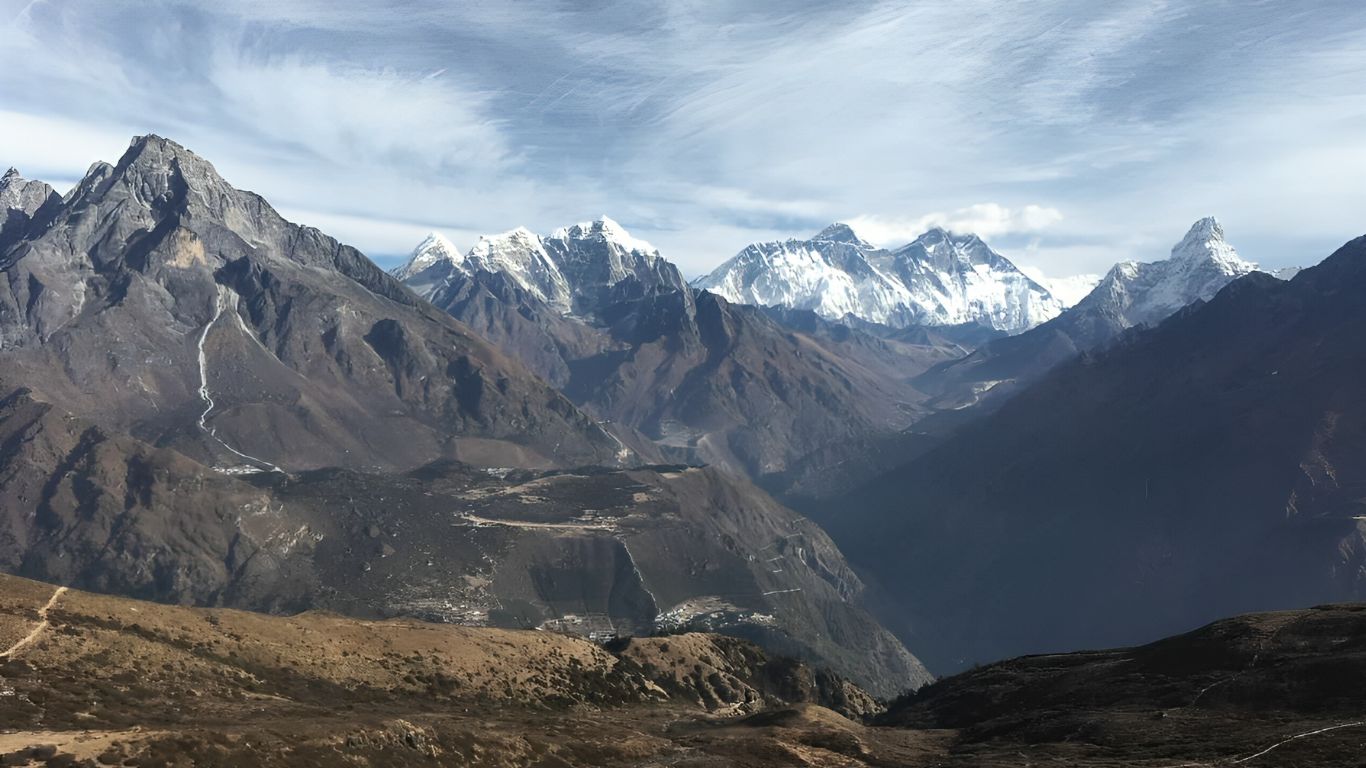
    The Kongde Ri (also known as Kwangde Ri) mountain in the Himalayas of eastern Nepal is a technically challenging peak to climb, but offers spectacular panoramic views of surrounding mountains including Mount Everest, Lhotse, Makalu, and Ama Dablam.

    In this blog, we will explore in detail why Kongde View Point Trek is becoming Nepal’s walking route, and a trek you will definitely remember if you are seeking something out of the ordinary.

    A View You Can’t Find Anywhere in the Everest Region 

    When it comes to trekking routes in the Everest region, there are many options that offer some view of the tallest mountains. But none can compare to the Kongde View Point which boasts the most impressive unobstructed view and provides a gem of a bird’s-eye view. As if each of the major peaks convened just for you. EBC for example has trekkers taking multiple days to walk to simply see a glimpse of the mountains compared to Kongde View Point which grants the entire 180 degree Himalayan view and gets right to work on both angles without a lot of effort to see it. 

    From the view point, Everest speaks looks mesmerizing while Lhotse and Nuptse looks the iconic three-peak horizon of the Khumbu landscape.To the east is Ama Dablam also dubbed the peak of the Himalayas. 

    A Short Yet Highly Rewarding Trek

    One reason so many trekkers choose Kongde is in the least time, it offers the best rewards. While many of the high-altitude treks in the Everest region last 10-14 days, depending on your pace. You can complete the trek to the Kongde View Point in 4-6 days.  This trek to Kongde is a perfect choice for those with a limited schedule or just wishing for a lighter trip to trek. Additionally, the trek to Kongde starts in Lukla, which is a common way into Everest, but the trail is a different path that sees far less foot traffic than the classic EBC trek. 

    Since this trek takes less time to complete, it’s just a better trek for those trekkers who are just starting out that are looking to experience the glory of the Himalayas, without a long multi-week adventure. Even with the less time commitment that these shorter treks require, it does still reward you with the hard work of trekking, and the steep ascent to Kongde. This combination of some accessibility, with physical exertion is where the true magic lies. 
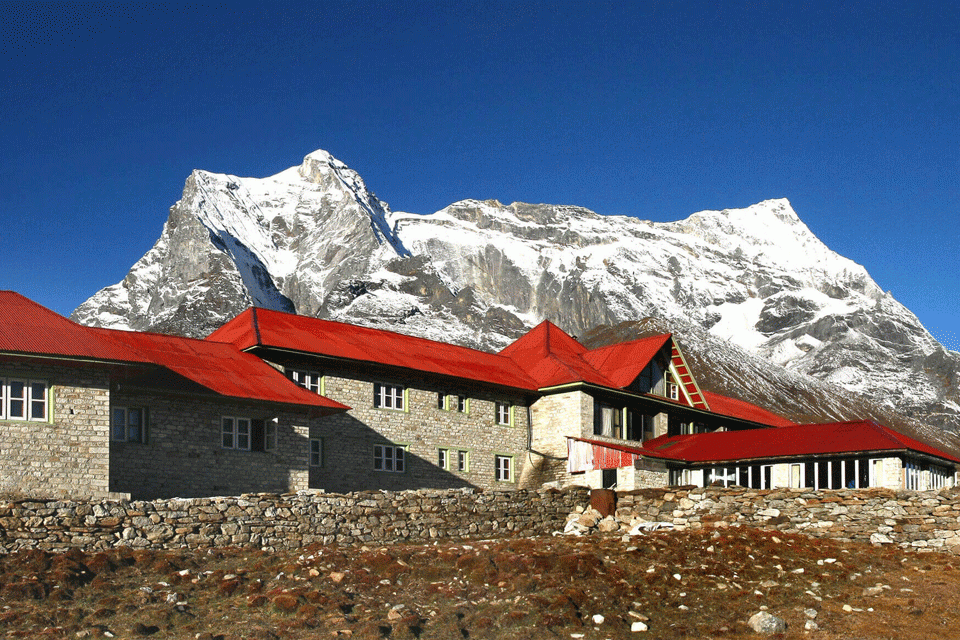
    a stone building, likely a tea house or lodge, in a high-altitude, mountainous region, typical of the kongde trek. The visible snow-capped peak suggests an altitude of several thousand meters above sea level.

    Less Tourists, Less Crowded Way

    The EBC trail is probably the busiest trek you will ever go on at peak action times. With trails filled with trekkers moving at a snail’s pace. The yak’s heavy load, and a full tea house stop it will feel more like a social gathering than a relaxing adventure. While for many trekkers this is part of the adventure; for trekkers in search of quiet, solitude, and a keen sense of connection to nature, Kongde is paradise.

    Even after your arrival, you will continue to find customs that were part of the everyday lives of the local peoples for many generations prior to your arrival. In this way, the trekker will witness and experience Sherpa resilience, as well as Sherpa connection to the mountains and climbing history of the Himalayas.It is a unique remoteness that adds to the beauty, and it allows you to fully experience nature.

    The remoteness of Kongde is one of the primary reasons why adventurers consider Nepal’s best hidden trekking route.

    The Ideal Fusion of Nature, Adventure, and Sherpa Culture 

    The Kongde region is also close to many historic villages allowing trekkers to have the real cultural experience. Phakding, Toktok, Rimijung, Thame, and Monjo villages are full of culture, tradition, spirituality, and the spiritual welcoming nature of the Khumbu.

    You can visit monasteries and turn prayer wheels attached to the mountainside on your trek. Along these trails we will walk through diverse trees and shrubbery- rhododendron trees, pine and juniper, birch, and many others. As we trek, we will have opportunities to glimpse some ‘pieces of the pie’ of musk deer, Himalayan monals, yaks, or blue sheep at different points along our way. We will also find ourselves in more open scenery going from forest, to alpine pastures, to ultimately breathtaking views over the rocky ridgeline of the Khumbu as we begin to climb higher.

    In the end it is this blend of nature, adventure, and culture that make the Kongde area so special.
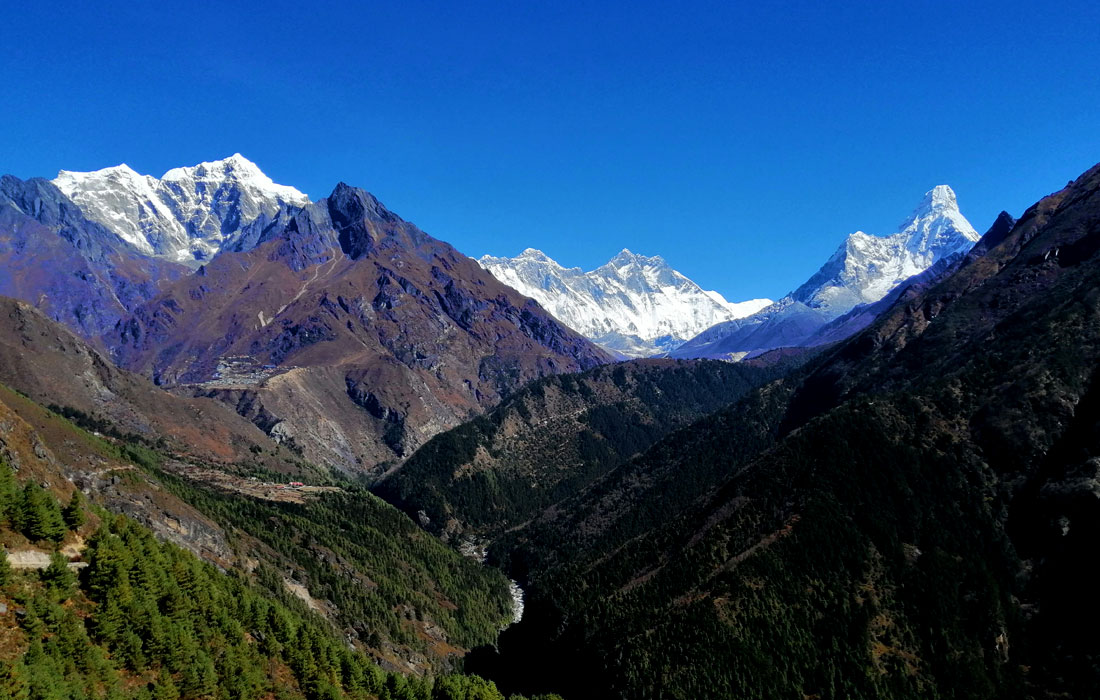
    The image on the screen is likely a photograph of the Kongde Ri mountain and surrounding peaks in the Himalayas of eastern Nepal.

    One of the Best Sunrises and Sunsets in Nepal

    The sunrise at Kongde View Point is magical. Witnessing the sun rise, each mountain begins to fill with light and glow one by one. First, the sharp edges of Ama Dablam are kissed with sunlight and glow orange. Soon thereafter, Everest rises and reveals itself in golden splendor. The snow capped spires begin to take on a surreal aspect as the morning sky shifts from light pink, to bright red, to clear blue.

    The sunsets are equally magnificent in another way. As they illuminate the mountains making them glow with deep golden light behind the shadow stretching along the Dudh Koshi valley as the sun sinks below higher peaks.Many photographers suggest Kongde is one of the best locations in the entire Everest region for golden hour due to its high location and relatively flat horizon. For photographers, the sunrise alone is worth the trek to Kongde. 

    The Chance to stay at One of the Highest Luxury Lodges 

    The Yeti Mountain Home Kongde is around 4,250 meters. In addition, it is one of the highest luxury lodges in Nepal. Staying here is like being in paradise. With panoramic windows, warm rooms, wonderful food, and an incredible view of Everest from the dining room. Trekkers that stay a night here often say one of the most surreal experiences of their lives is sipping tea while giant clouds float in between the serrated peaks of the epic high Himalaya. Because the lodge is right at the ridge you do not have to walk much to get to the view, so it is very easy for photographers to get up at sunrise, a bench for setting up photographer gear is only 15 or 20 meters away. 

    There are basic teahouses along the trail for trekking, but Kongde’s luxury has its spin on the adventure.

    A Physically Challenging Yet Achievable Trek

    Kongde is a less lengthy trek than EBC, but as is the case with any trek. It should not be a stroll in the woods. The ascent from Toktok to Kongde is steep and will take effort. Trekkers of general fitness may find it difficult, but doable. In fact, it is the effort that makes it more rewarding, as every step upward brings you closer to view the Himalayas.

    Because this trek takes trekkers up to over 4130 meters (13,548 feet) in altitude, altitude considerations are important. If you walk slowly, drink decent water, and hike at the pace of the guide. Then you can be rewarded with a trek while keeping safe. The other great part of this trek is that you do not have to suffer for this reward as long as you will get to the view points much quicker than treks like EBC/Gokyo.

    It is a nice balance of difficulty and rewards that makes it so products like the trek to Kongde are appropriate to most levels of trekkers.

    The Kongde Ri (also known as Kwangde Ri) mountain in the Himalayas of eastern Nepal is a technically challenging peak to climb, but offers spectacular panoramic views of surrounding mountains including Mount Everest, Lhotse, Makalu, and Ama Dablam.

    A Route for Beginners, Covers Photography Travel

    Kongde, has become popular with photographers, travel film makers and content creators. The ridge provides dramatic angles of views, unlimited valleys, and lighting conditions can be stunning throughout the day.

    However, beginners like the trek’s walkability. As it allows for time to enjoy high-altitude trekking without having to commit to over a week of travelling or wildly unpredictable weather. The track is easily accessible to teahouses, has secure paths, and has short distances between stops.

    Whether you are an adventure photographer, a social media traveler, or other first-time hikers in the Himalayas, Kongde surpasses expectations. 

    A Hidden Gem of Himalayan Trekking

    What makes Kongde the best trekking route in Nepal is its specific ability to feel the essence of an Everest-region experience. It is a peaceful, and unbelievably visually stunning experience. The trek has it all: mountain views, cultural richness, adventure of trekking, forests, wildness, rivers, and loving hospitality from the locals All without the crowds or multiple weeks of travel. 

    Trekking visitors state that their Kongde experience was “Everest Base Camp in fast forward, but with even better views.” The isolation, sense of solitude on the trails, and breathtaking panoramic views all add together to create a different kind of profound and life-affirming adventure.

    Kongde still exists as a haven in a world where tourism is expandingly popular and the iconic trails and vistas are more crowded every year. Kongde is a place you can stop in silence and truly hear the heart of the Himalayas. 

    Conclusion

    Kongde View Point is not simply a destination; it is a full sensory and emotional experience. Kongde reinvents what it can feel like to trek in the Everest region. It  offers a a trek that is raw, tranquil, visually spectacular and has profound meaning. Whether your trek is for adventure, photography, relaxing, culture or simply for fun, Kongde offers it all. 

    If you are searching for a trekking route that offers spectacular views for the shortest time with fewer people, greater authenticity, built-in meaning and most importantly maximum emotional impact, then the Kongde View Point trail is the best trekking route in Nepal for 2025/ 2026 and years to come.

  • Reasons for Choosing Kongde Instead of Everest Base Camp

    Reasons for Choosing Kongde Instead of Everest Base Camp

    Reasons for Choosing Kongde Instead of the Classic Everest Base Camp Trek

    For most people, when one doctor refers to the trek in Nepal the full on and famous Everest Base Camp (EBC) trek. With good reason, the trek to Everest Base Camp was featured in the movie, “The Summit,” and provides great scenery and takes you to the base of the highest mountain on the planet. 

    Enter the Kongde Route

    Most people would call the Kongde trek the “hidden gem” of the Khumbu region. The Kongde trek is lower in altitude than EBC, quieter than EBC. It has more views than EBC, and provides a more luxurious experience than EBC. The Kongde trek as the name suggests is a stunning and spectacular trek for trekkers looking for an alternative to Everest Base Camp with great Himalayan scenery and culture. It is simply a beautiful trek if you are looking for an alternative trek to Everest Base Camp with a different view of the majestic Himalayan scenery and culture. Real elevation exhaustion and far too many fellow trekkers is part of the classic trek at Everest Base Camp.

    a stone building, likely a tea house or lodge, in a high-altitude, mountainous region, typical of the kongde trek. The visible snow-capped peak suggests an altitude of several thousand meters above sea level.

     In this lengthy and detailed multi-pageblog, we will unpack why the Kongde Route is worth a high rank on your Nepal trekking to-do list, while also comparing elements of both the Kongde Route and Everest Base Camp landscape, cultural experience, comfort, sustainability, and overall trip experience.

    1. All View Over the Everest Range 

    The Kongde renaissance route has one thing your Everest Base Camp trek will not have:  the 360-degree all-machine view of Everest range at the Kongde Ri viewpoint (4,250 meters). Trekkers in this area of elevation with lofty views could see Everest (8,848m), Lhotse (8,516m), Ama Dablam (6,812m), Thamserku, Makalu (8,481m), and Cho Oyu (8,201m) all in the same view. While EBC trek takes you closer to the base of Everest, many have told me that the peak is often hidden by ridges and weather conditions. However, “Kongde” has the clearance of many remarkable -far better than expected. The mountains are organized side by side and on the morning or any sunset the mountains. It can be seen glowing gold while the sky behind is a deep blue!

    For photographers or landscape lovers, Kongde has arguably the best possible viewpoint in the Himalayas and in Nepal as well. It has allure as a natural observation deck that many do not get to see!

     2. Quiet Trails, Less people

    The classic Everest Base Camp trek receives a minimum of thousands of trekkers from every point of the globe at least once a year. Whether in the peak season (March – June and September – October), or in the shoulder season. EBC would look into penalizing in a fit back in 2023 again fall in shortage when company you will never be short of trekkers to camp for a minute.

    From Lukla to Namche Bazzer and beyond the foot traffic may be well over a couple hundred in a given day with trekkers, porters and yaks everywhere you turn. There are those who may call this part of the charm of a iconic trek, but, after walking from the trekker lodges and considerably above base elevation, there were simply too many people for too long, to consider you were on a peaceful quiet time on the trail. 

    The Kongde Route has a radically different vibe. Each year, few trekkers venture out and head towards Kongde. So you will likely have the trek largely to yourself. The forests will be quieter, the villages more authentic and you will see uninterrupted views. 

    The wonderful level of seclusion you will enjoy, provides a bond with nature. You will hear the prayer flags flapping, the leaves of the rhododendron, and the roaring Dudh Koshi River in the distance, without a hundred other trekkers as background noise. If you want solitude, mindfulness, and immersion, Kongde is the trek. 

    3. Shorter, Easier Yet Just as Rewarding.

    One of the best things about the Kongde trek is the fact that just about anyone can do it in a short amount of time. The classic trek to Everest Base Camp is an average of 12 – 14 days, which entails moving high up into altitude. With long days of trekking, those on this trek will be tested even on the most seasoned trekkers. 

    Another option is the Kongde route, which in your timeline can be done in a time frame of 6-8 days. Although it won’t be as lengthy as about 10 days, that is equivalent to experiences, with Sherpas families living in their villages, hiking alpine forests, and the magnificent mountains, with opportunities to partake. The trek will usually proceed with an exhilarating flight from Kathmandu to Lukla, then you hike from Phakding to Namche Bazaar, then to Thame, and Kongde.

    On this route you will trek below 4300 m, which should provide some comfort in terms of altitude sickness. While you trek you can absolutely relax and enjoy the comforts of the magical Himalayas all around you. If this is your first time to Nepal, you will find this great trip. If you don’t have much time, or if you just wanted a short moderate trek with the best value and satisfaction. 

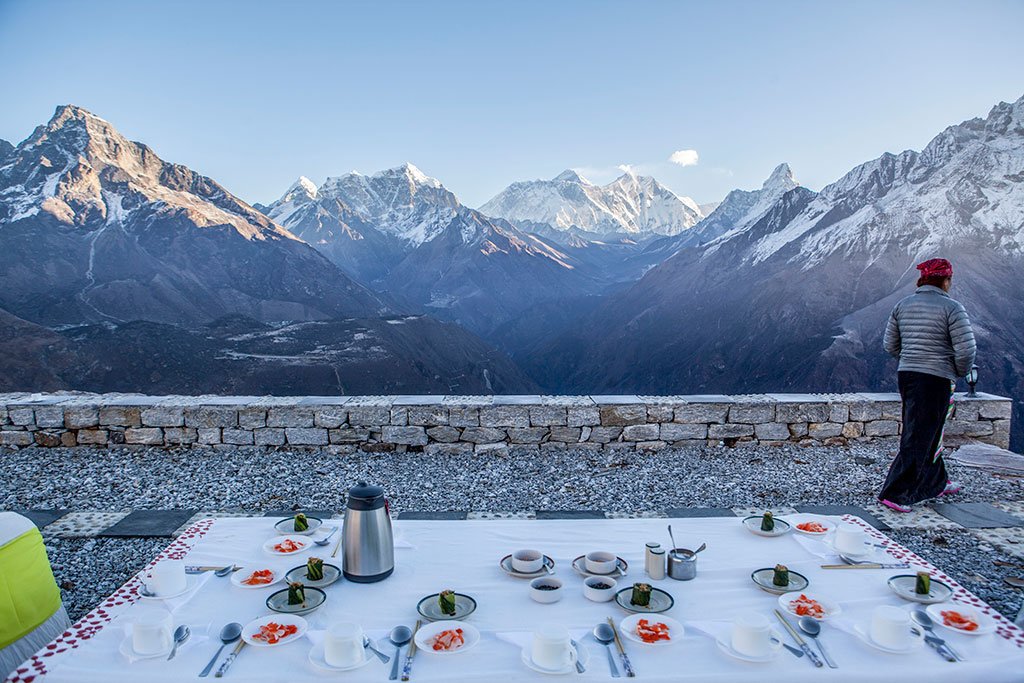
    Breakfast table in the foreground and majestic, snow-capped kondge mountains in the background, is visually similar to locations found in the Himalayas, specifically around areas like the Annapurna Base Camp, Ladakh, and Uttarakhand.

    4. Luxury deep in the Himalayas

    Although the EBC has teahouses that are comfortable to basic, most of the time they are rustic, functional, and not luxury. Though at some places, such as the Kongde region, we have Yeti Mountain Home Kongde, which is one of the best high-end lodges in the Everest region!

    Nestled deep in the Dudh Koshi Valley, the Yeti Mountain Home offers modern conveniences at over 4,000 meters, with stunning views. Each room has its own private balcony and view of Everest, comfortable interiors, and conveniences up to Western standards. Iced coffee, or a meal sourcing from the area, while you can see the rays of sunshine touching the top of Everest from the dining room of a comfortable, cozy lodge in the Himalayas–it isn’t so bad, right?! This is the combination of convenience and adventure we love about the Kongde trek. A classic trek, designed for the nature enthusiast who can’t wait to sleep in a bed at the end of the day, ogie that wants to return to the comforts of home.

    5. Authentic Sherpa Culture

    A notable aspect of trekking in the Everest region is the way of life of the Sherpa peoples. The main trekking route will take travelers through the main Sherpa villages of Namche Bazaar, Tengboche, and Dingboche. All of which have been affected by tourism commercially, and all of which have cafes, bakeries, and shops for tourists to buy souvenirs. The Kongde Route takes trekkers around less commercially influenced Sherpa communities, including Thame, Toktok and Kongde village itself.

    You can witness unrefined traditions and lifestyles in Khumbu. You will see people farming in the fields. Hear the sounds of the ancient monasteries having their monks chant throughout the day. Visit local tea in the late afternoon with Sherpa families, who have grown up in Khumbu for generations, if not hundreds of years.

    If you want to, you can stop by Thame, and stop by Thame Monastery. One of the oldest monasteries in the Khumbu and an important monastery established for over 300 years. Thame has produced several well-known climbers, including Apa Sherpa, who holds the most summits of Everest record of all time. On the Kongde route, you will experience the most authentic way of living for the Sherpas, that has not been commercialized along the typical trek of the Khumbu. 

    6. Less Altitude Stress – More Comfort (more pleasure) 

    A reason that trekkers take the Kongde Route, is the extra altitude gain than to Everest base camp trek.To compare the Kongde trek against the Everest base camp trek, the maximum height for Kongde is about 4250 meters, while the Everest base camp maximum is 5364 meters (not including the 5545 meters). 

    Offering more than 1000 meters of altitude difference minimizes some of the risk of Acute Mountain Sickness. You will be able to hike at ease, enjoy the views, and have peaceful nights with stunning mountain range views.

    Thus, the Kongde Route works well for:

    •  Families with teenagers or older family members.
    •  First-time trekkers who want to trek longer in the Himalayas, safely.
    •  People who don’t want to trek at very high altitudes.
    •  This will allow you to enjoy the spirit of the Everest experience, while making it much easier for you to avoid the complication of both high altitude trekking and the complication of acclimatizing.

    The Kongde Ri (also known as Kwangde Ri) mountain in the Himalayas of eastern Nepal is a technically challenging peak to climb, but offers spectacular panoramic views of surrounding mountains including Mount Everest, Lhotse, Makalu, and Ama Dablam.

    7. Photographically Unparalleled Scenery

    The Kongde Route is a photographer’s dream. From the view point at Kongde Ri, you get sweeping and uninterrupted views of Everest and all of the peaks along the way. You will see nowhere else.

    In contrast to EBC, you can see Everest, but only at the view point and surrounding ridges obstruct your view since your are in a valley at Kongde you will see beautiful unobstructed views of the peaks.

    In the morning golden and orange hues cover the peaks, and in the evening crimson and violet colors sweep across the rugged mountain range. You’ll have crisp air with dramatic light and no shortage of opportunnities for unique falsely view perspectives photo perspectives.

    You’ll also be able to capture:   

    • Stone wall traditional Sherpa houses with prayer flags. 
    • Forest trails with gorgeous rhododendron blossoms (in the spring).
    • The turquoise Dudh Koshi River lazily flows below. 
    • Night skies full of stars with the Milky Way slightly eclipsing Everest.
    • Whether you are a professional photographer, or just a casual-shutterbug, Kongde will offer shots/images that will remain in your heart and intuition for life. 

    8. Ideal for the Off-the-Beaten-Path Adventurer

    The Kongde Route is intended for those who would choose exploration over the mainstream.It is not whether there is a popular route or not. It is about finding a new hidden beauty of the Himalayas.

    Along the way, you can take short side trips. Such as visiting the Thame monastery, checking out the local yak pastures, or hiking up to nearby viewpoints to gain different perspectives on the Everest range.  

    You may even see climbers practicing for their expeditions because Thame and the surrounding areas are famous for Sherpa climbers. It is in these locations that you will hear about Everest ascents and experience the region’s spirit, culture, and faith.  If you have already trekked the classic EBC, the Kongde route will provide you a unique and newer path to the same legendary mountains you trekked on the EBC.

    9. Environmental Sustainability and responsible trekking.

    Tourism is one of the major keystones of the Khumbu economy. However, the density of visitors on the Everest Base Camp (EBC) trek is beginning to have scientific impacts in terms of waste disposal, trail erosion, and deforestation.The Kongde Route, being a considerably lesser-traveled trek, gives trekkers an option for a more sustainable trek in that its hostels, such as Yeti Mountain Home, strive for sustainability in:

    – Solar heated and lit accommodations

    – Waste recycling

    – Eating based on local food and materials

    By trekking to Kongde, trekkers are engaging in responsible tourism that preserves the sensitive ecosystem of the Himalayan environment by minimizing their impact on the environment, and positively contributing to the local community members who rely on the small scale sustainable tourism experience.

    10. Balanced Itinerary of Adventure, Culture and Comfort

    Undoubtedly the Kongde trek gives you a best-of-both-worlds experience. You have the adventure of being up in the altitude, learning a new culture, and your accommodation will be comfortable each evening. Each day you wake up on the trek you will experience something new and different- swinging bridges over roaring rivers, walking through woods of pine trees, visiting monasteries and then back to the lodge for hot meals while looking at the mountains in the evening sky.

    The trek is adventurous enough that you feel an accomplishment but easy going enough that you can take in every second without worries.  A trek that is adventurous but still easy going opens up to levels of experience from the very experienced to the lay person wanting a trek into the Himalayas that was simple but memorable. 

    When is the ideal time to hike the Kongde trail? 

    Spring (March to May) or Autumn (September to November) provides the best opportunity to trek the Kongde trail in Nepal in its prime trekking season. 

    Each of the trekking seasons has its own beauty and offers a different experience, while other months can very much add beauty, strife, or serenity depending on whether you want something unique to trek. 

    Spring (March to May)

    In spring, the hills come alive with bright reddish blooms of rhododendrons, magnolias, and alpine flowers along the trails making it perfect for photographers and it is stunning. The temperature ranges from a relatively mild 10 degrees C to 20 degrees C at low altitude and there are clear skies, often featuring the best views of peaks including Everest, Ama Dablam, Thamserku, and others. If you want warm days, busy trails and incredible scenery among all the different shades of green – then Spring is for you. 

    Autumn (September to November) 

    There are many people who argue that Autumn is the best hiking season in and around the Kongde Trail in the Everest region of Nepal. After the monsoon rain, it will be fresh air, cool temperature and no dust!Visibility is at incredible prospects, and the weather is fairly stable except for normal atmospheric conditions. Days can have very pleasant warm temperatures with nights being cool and refreshing. While great weather will bring many more fellow hikers on the Kongde Trail, the mountain views and golden landscape are worth the extra hikers.

    Given the changing of the seasons, and the implied notion of adventure, if you are looking for an off-the-beaten-path experience, an option for you would be to travel in the winter months if your schedule allows. The winter season will provide you with an opportunity to travel on a calmer and generally opportune hike.

    The image on the screen is likely a photograph of the Kongde Ri mountain and surrounding peaks in the Himalayas of eastern Nepal.

    Winter months (December to February) 

    Winter travel is a completely different, but equally satisfying venture. Little to no trekkers on the trail, breathtaking scenery with sunny skies, and a quietness you cannot find at other times of the year. Just know that at night when the cold snap can dip below freezing temperatures especially high above the ground at the 3000 meters mark (10,000 feet). If you want peace and quiet you will have a phenomenal opportunity to see the beauty of the stillness of the mountains!

    Monsoon Months (June to August) – Best Not to Trek

    The heavy rains that accompany summer monsoon season will create slippery and muddy trails, blocked views as the mountains will be covered in low clouds, and an issue of leeches in some of the lower forested region of the trek. Flights to and from Lukla or flights into Tenzing–Hillary Airport will be delayed due to poor visibility. Unless you are an experienced trekker who is flexible with travel, do not attempt to trek the Kongde Route in the monsoon months.

    Permits needed to Trek the Kongde Trek

    To trek in the Kongde region, which is a part of the Everest region, you will need two permits as outlined below:

    Sagarmatha National Park Entry Permit

    This permit allows you to enter the national park and the protected area around Mt. Everest.

    You can obtain this permit in Kathmandu (Tourism Board Office, Bhrikutimandap) or at the entrance gate of the park in Monjo.

    Cost: NPR 3,000 per person for foreigners; NPR 1,500 for SAARC nationals.

    Khumbu Pasang Lhamu Rural Municipality Entry Permit

    This is a local government permit and replaces the older TIMS card for the Everest area.

    You can obtain this permit at the Municipality Office in Lukla or at the entry checkpoint in Monjo.

    Cost: NPR 2,000 per person.

    Be sure that you take both permits, as checkpoints can be seen along the route.

    Conclusion

    The Everest Base Camp trek can be called a classic as an adventurer’s rite of passage all over the world. But Kongde is something really special: a quiet, panoramic, cultural experience, epitomising the Himalayas, without the rush, the crowds or the altitude. It’s ideal for trekkers who want to escape the bustle, photographers who want amazing views, and visitors who want an authentic experience, with comfort and style.

     The Kongde trek is one of the best alternatives to Everest with shorter timelines, lower difficulty levels and amazing scenery. 

    So, if you are going to plan your next trip in the Himalayas, avoid the crowds and let Kongde’s near empty trails, and golden peaks, redefine what adventure and trekking in the Everest region means.