Tag: Kumari

  • The Living Goddess of Kathmandu: Who is Kumari?
    The Living Goddess of Kathmandu: Who is Kumari?

    The Living Goddess of Kathmandu: Who is Kumari?

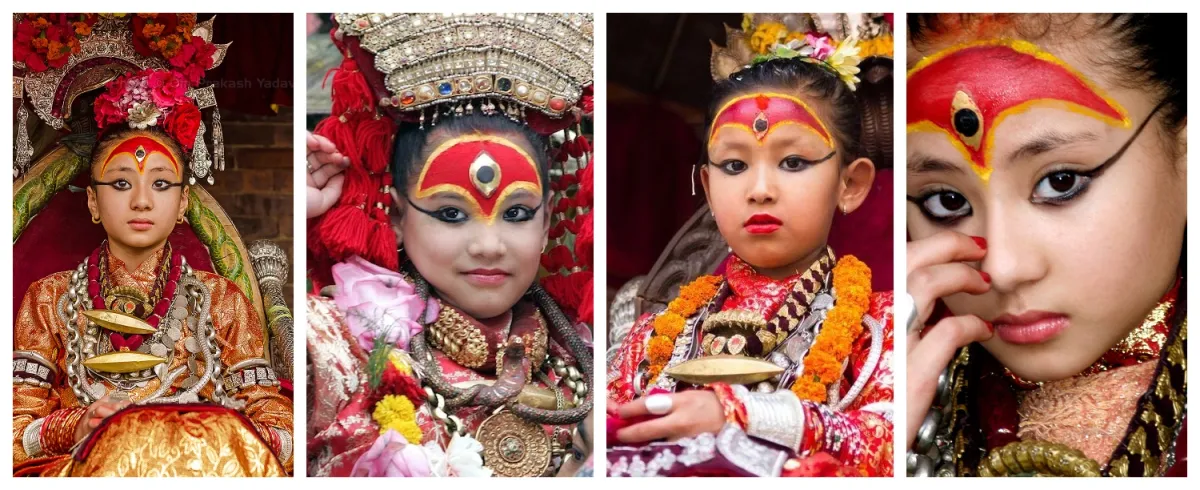
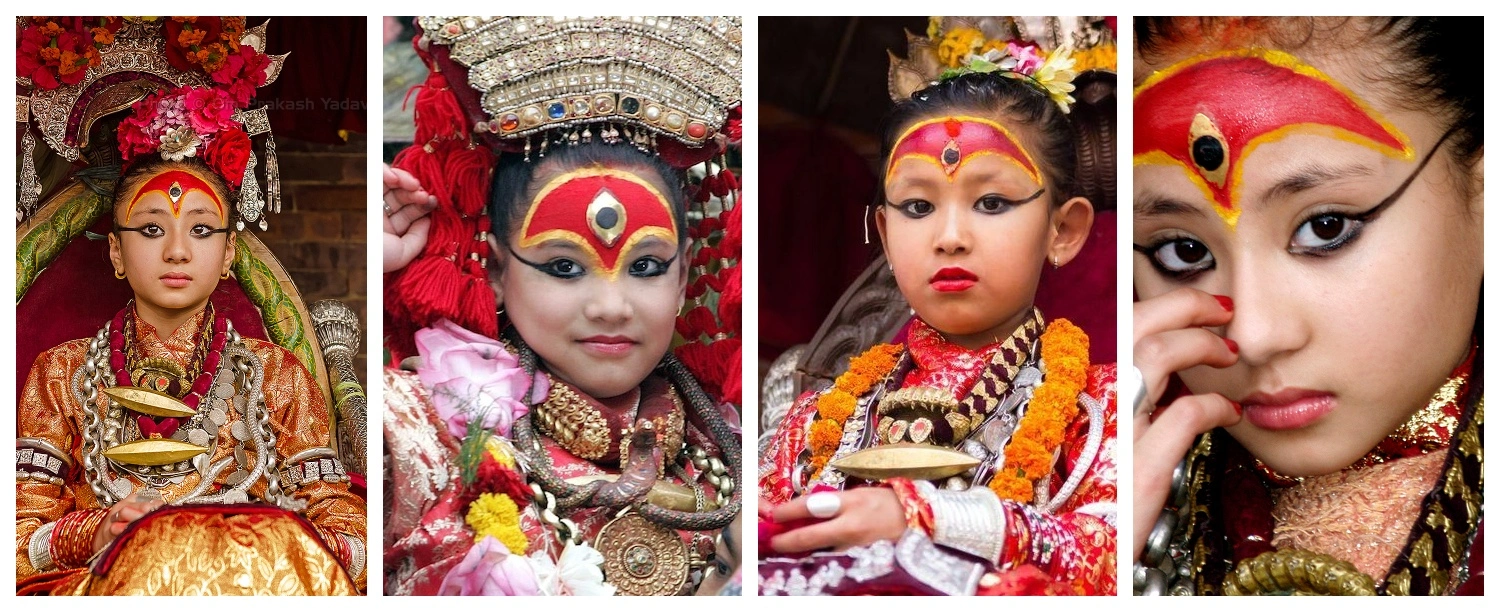
    Four different Kumari of Nepal
    Kumari- The Living Goddess

    In the beautiful and sacred streets of Kathmandu, an ancient and sacred rite of passage is alive and well, a rite that blends much of Hinduism and Buddhism into what is perhaps the most unusual form of living religion in the world. At the center of this rite is a prepubescent girl who is worshipped as an image of the divine feminine energy. Kumari, the Living Goddess of Kathmandu, is at the center of this living religion.

    The Kumari is worshipped by both Hindus and Buddhists, revered by kings and commoners alike, and celebrated in great festivals. She is more than a mechanism of worship, she is a living god, and is a prophet in both the spiritual, cultural and political realm. But who is the Kumari? How is she selected? What is her life like behind the closed doors of the Kumari Ghar (Kumari Palace) ? In this blog, we will examine the origins, rituals, challenges, and evolving role of the Kumari in Nepalese society.

    Understanding the Kumari: A Living Deity Among Us

    The origin of the word “Kumari” is Sanskrit, meaning “virgin”, or “unmarried girl”. Culturally, a Kumari represents a human form of the goddess Taleju, a powerful form of the Hindu goddess Durga. A Kumari is chosen from the Newar community of the valley specifically, from the Shakya or Bajracharya clans of the Kathmandu valley and believed to be divine until she reaches menarche.

    The Kumari tradition is fascinating because it (explicitly) combines spiritual devotion and lived experience. In proportional terms, for most cultures, it functions as human beings worship their gods through temples, statues, or images. In Nepal, the goddess lives with her people. she blesses, she smiles, as even a political ceremony as a revered font of wisdom and protection.

    Historical Origins of the Tradition

    The tradition of Living Goddess dates back hundreds of years, to the reign of King Jayaprakash Malla, during the mid-18th Century. Malla is considered the last of the Malla kings in Kathmandu. Legend has it that the goddess Taleju came to Malla every night, to roll dice with him and to talk about the affairs of the kingdom. One night, the king touched himself inappropriately and the goddess Taleju went away angry. Before she left, however, she told the king that he would find her spirit—in all her divine qualities, in a young girl from the Shakya community.

    Since then, the practice has been done by every king and, for now, the government of the republic has also continued the tradition. The tradition continued for centuries, without a break, through an extraordinary series of political changes of Kathmandu, including the end of the monarchy in 2008. The tradition is an important component of Nepali national identity and cultural heritage.

    The Criteria for Becoming a Kumari

    The Kumari selection process is formally robust and rich in symbolism. Only girls from either the Shakya or Bajracharya families that follow the Newar Buddhist line can be candidates. These families are goldsmith caste as per the caste system in Nepal. The children must be in good health and must demonstrate no physical or mental defects. She must also be blemish-free and absent of marks including moles or blemishes. Her horoscope must also be valid as a Kumari to that of the nation’s ruler or protector.

    In addition to being blemish free, the Kumari should demonstrate courage, calm, and fearlessness. One of the most known tests in the Kumari selection process is the Bhairav test. The girls are taken in to a darkened room with severed heads of the animals that had been sacrificed for Dashain. The girls are watched for how they react to the frightening sight and sounds. The girl that remains closest to calm is the girl who has the fearless disposition of the goddess and passes the test.
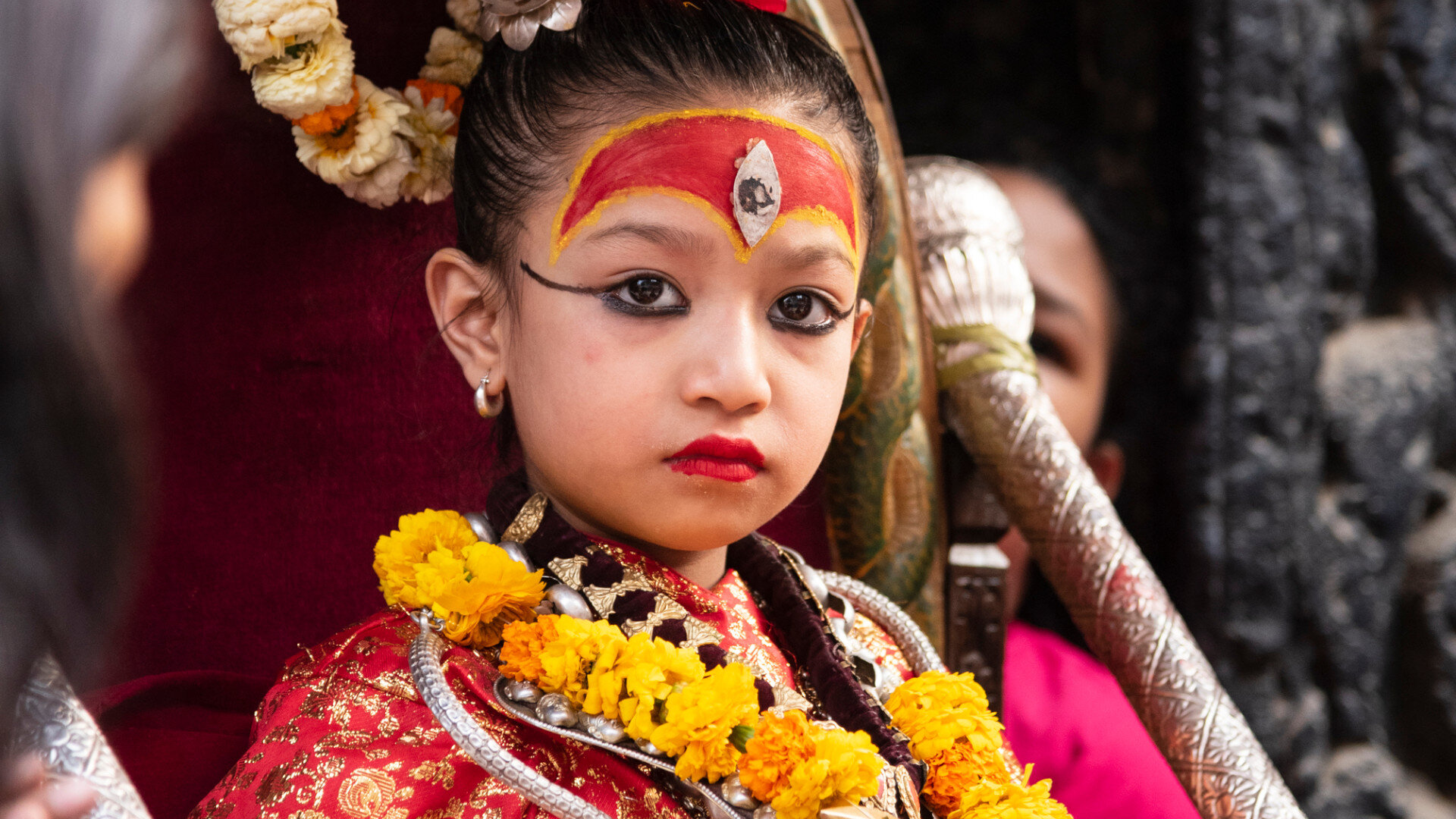
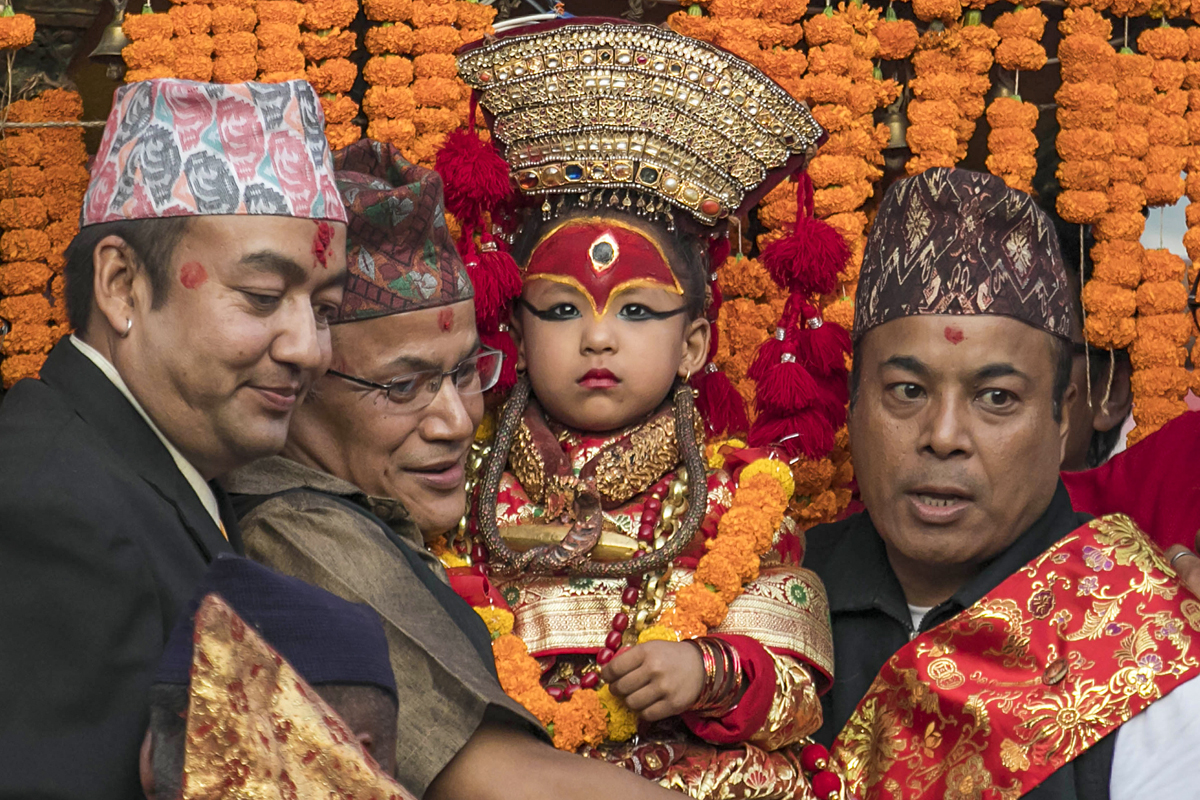
    Kumari seen during celebration
    Kumari

    After the girl is selected, she will go through a purification process and then be ceremonially installed in the Kumari Ghar inside Kathmandu Durbar Square.

    Life Inside the Kumari Ghar

    The Kumari lives in a sweet three-story red-brick palace from the 1700’s. The palace, Kumari Ghar, has elaborate wood-carved windows and holy courtyards. The building is a UNESCO World Heritage Site and draws thousands of tourists and pilgrims every year.

    George Taylor noticed forty worshippers lingering in the hall outside the kumari’s chambers waiting for letters indicating they were to worship the girl. All villagers regard the kumari as a living God. This girl is a traveling goddess who metes out feminist justice. But she is confined to a palace and defined by her holiness in ways that prevent movement and fragility. The girl is treated like a deity, waited on by caretakers, priests, and attendants. She never puts her feet on the ground to preserve her holiness. Whenever she leaves her area, she is carried by the attendants (from courtyard to courtyard) in a palanquin or special seat.

    In practicing an honor and divine role, the Kumari is so worshipped and holy, it places her in a kind of silence. While the Kumari is worshipped by thousands (if not more), no one will be hearing or recording their actual experiences with her around which she establishes relationships. As the Kumari, she receives private schooling in the palace chapel, but every aspect of her life is restricted to the palace with limited contact granted with the outside world. Family visits welcomed, of course, must follow rules, traditions, and schedules of ritual.

    Even though the Kumari is treated as sacred, she is a child; she plays, giggles, and learns, but watched by tradition. Her childhood is sheltered and circumscribed to a certain extent; she is a goddess but a girl, and she lives in a world with obligations that would be overwhelming for most adults.

    Public festivals and appearances

    The Kumari never makes a public appearance, and when she does, the city is imbued with energy. One of the biggest appearances is during Indra Jatra, a Hindu festival in honor of rain god Indra that happens every September in Kathmandu. Indra Jatra is a week-long celebration of the monsoon season’s culmination. The Kumari is taken in a chariot ornamentally decorated with hues through the streets of the old city, preceded by music, dance, and the devotees dressed in romantic attire who create a sea of devotees encircling the Kumari.

    Besides Indra Jatra, the Kumari is seen also during dhamaka festivals of Dashain, Tihar, Kumar Shashthi, and Basantapur Jatra. She is taken to other temples and royal palaces in these festivals and her visit is a sheltering sign of good fortune and prosperity. Even nowadays, now if a political leader is about to inaugurate an event of state, or a national issue, they will seek the blessings of the Kumari.
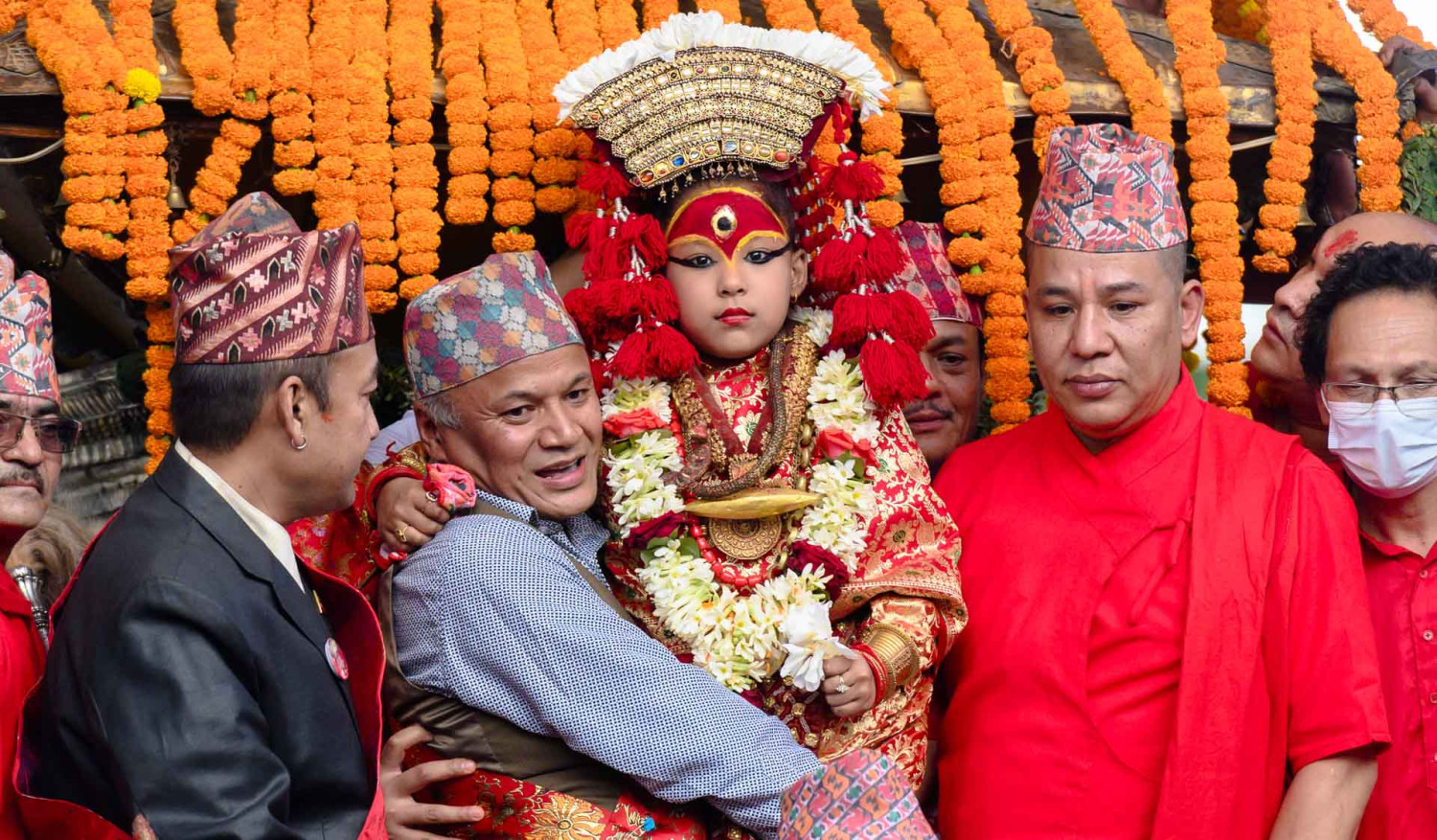
    Kumari During Indrajatra festival Infront of Chariot
    Kumari

    The Kumari embodies Shakti. To grasp Shakti, we must pierce rituals, and gaze in the direction of symbolism. Shakti is feminine divine energy in Hindu and Buddhist thought. While gods who are typically male are embodied as warriors and sages (e.g., Shiva). The Kumari actualizes power through stillness, innocence, and divine cleanliness. The Kumari also symbolizes continuity and equilibrium.

    Life After the Kumari Reign

    When the Kumari realizes puberty, typically about the age of twelve or thirteen, she is thought to lose her divine status. Her first menstruation is regarded as a definitive sign that the goddess Taleju has left her body. The Kumari then returns to her family and lives life again as a simple person.

    Returning to normal life is not always so easy. The Kumari experienced years of isolation at the palace, revered as a goddess by the public. She is taken care of daily needs by caretakers. Transitioning back to being a student and socializing with friends. Along with the responsibilities of being a human again, can be confusing and difficult.
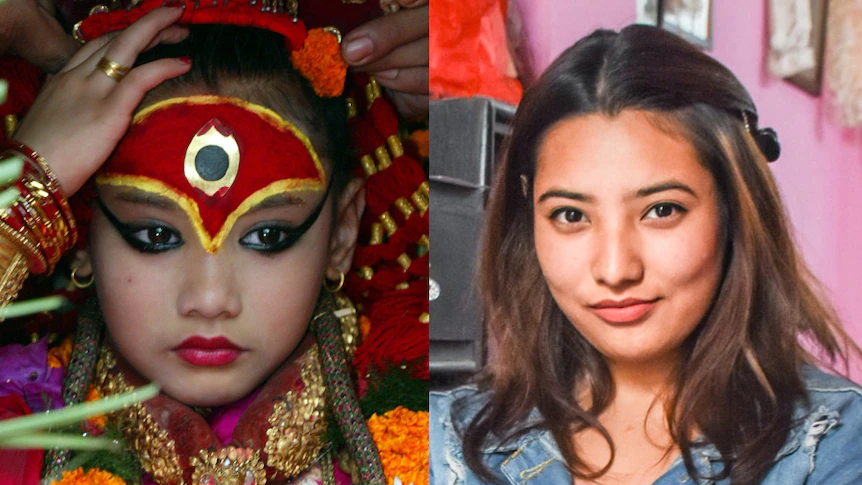
    life after being Kumari
    Kumari

    In traditional beliefs, marrying a former Kumari is said to bring the husband bad luck, and luckily this superstition is beginning to wane. Many former Kumari’s have gone on to lead happy and fulfilling lives with postgraduate education, employment, and even marriages.

    To assist former Kumari’s in the reintroduction process, the government and social organizations have now attempted to bridge the gap between tradition and modernized life. Educational scholarships, psychological counselling, and community outreach have helped former Kumari’s assimilate back into society.

    The Tradition in Modern Society

    As political and social aspects of Nepal progress, the Kumari tradition attracts scrutiny as well. There are critics of the Kumari tradition who argue that taking young girls away from their peers and isolating them from society and possible friendships could violate their rights. Human rights activists raise questions of the impact it has on education, emotional development, and future opportunities for former Kumaris.

    Reforms have been introduced to address these issues. Contemporary Kumaris received permission to attend real educational schooling inside Kumari Ghar. Where they could also use computers and the internet. Health care, emotional well-being and career-planning services are now a component of the support system for former Kumaris.

    Despite these discussions, the vast majority of Nepalis will always respect the Kumari. For Nepalis the Kumari is a representation of life, spirituality and connection to the divine plane. Through the Kumari, Nepalis will remember their traditions, large and small, and the fabric of culture that is Nepal.

    Visiting the Kumari Ghar in Kathmandu

    If you’re planning a trip to Nepal, take time to visit the Kumari Ghar at Kathmandu Durbar Square. The Kumari Ghar is considered a holy palace deep in the historical center of Kathmandu. It is only sometimes open to the public, in designated time slots.

    Although photographing the Kumari is forbidden. The first ever sight of even a small amount of her presence can be, there is a spine-tingling quality. It represent a very spiritual moment. Visitors should expect to remain hush, attired fittingly. They should make all attempts to act formally and respectably when approaching the palace.

    Local guides offer more insight on the history of Kumari Ghar. The royal architecture of the palace and the unique ceremonies that take place there. The Kumari Ghar is not simply a ‘tick it off’ from the tourist check list. It is a cultural immersion into the heartbeat of the living cultural heritage of Nepal.

    Final Reflections: A Living Link to Nepal’s Spiritual Identity

    The Kumari is not a typical girl in a festive dress. She is the bridge between earthly and divine, an intangible manifestation of the deep spirituality and heritage of Nepal. Her existence is absurd to the modern world yet imagined in the heart of a rapidly urbanising and globalising metropolis.

    In every blessing, in every moment of stillness behind the magnificent windows of her palace. The Kumari teaches us the nature of tradition. The depth of cultural commitment, and the majesty of believing in something larger than ourselves.

    While the world continues to change, Nepal is committed to continue displaying its living goddess. By doing so, Nepal is committed to maintaining one of the most remarkable living spiritual traditions on Earth.

  • Kumari Culture : A Sacred Tradition of Kathmandu valley in Nepal

    Kumari Culture : A Sacred Tradition of Kathmandu valley in Nepal

    Kumari Culture : A Sacred Tradition of Kathmandu valley in Nepal, the country of older religion and spirituality, is also the home of the world’s strangest living ritualthe Kumari goddess, or Living Goddess. The flesh-and-blood embodiment of earth womanhood, the Kumari is an early-teen girl who must endure a stringent ordeal of selection and also be deified in crown ceremonies, celebration, and everyday living.

    Not only has this magical tradition attracted cultural tourists, but also anthropologists. But under the sacred image lies a more profound, at times chilling, reality—one that challenges deep questions concerning children’s rights; children’s shaping and social resocialization; tradition and modernity conflict.

    Here in this blog we sketch out the Kumari culture of Nepal fairly broadly: its origins; rituals; festivals; tourist participation; and some of the ethical issues it raises. If you are planning a cultural tour of Kathmandu or if you simply wish to be aware, you may wish to refer to this as a handbook to one of the last cultures on earth of live goddesses.

    Different Ex Kumari From Kumari Ghar
    Kumari The Living Goddess in Nepal

    The Origins of the Kumari Culture

    Kumari tradition has its roots very deep into the past, to even the initial part of the 17th century, when it was the era of the Malla dynasty. Among all Hindu and Buddhist religions, the Kumari began from the cult of Taleju Bhawani and the Tantric goddess. It is said to trace back a very long way after it is said once upon a time that King Jayaprakash Malla lost a game of chance to Taleju in bed.

    When this was made known, Taleju took an oath of revenge to the King that she would only come back as a girl child of the Shakya or Bajracharya caste, the Kathmandu Newar Buddhists. This resulted in a trend toward the cult of adoration of a girl of a very young age as the true incarnation of Taleju. Kumari culture, developed over centuries, is a blend of religious devotion, royalty, and Newar culture within an ascending spiritual experience.

    How a Living Goddess is Chosen

    Being a Kumari is not an ordinary job; it is an occult and spirituality-laden hiring process, and involves astrologers, priests, and royal advisors.


    The selection is ideal; the bride-to-be must be of the Shakya or Bajracharya caste, have a virgin body, and also must have some of the goddess like qualities of the “32 perfections of a goddess.” They have such physical characteristics as “eye,” “deer’s legs,” and “lion-like chest.” The last step in the selection process is a spine-chilling initiation ceremony called the Kal ratri test, in which the candidates are taken to a black room packed with animal skulls and ritual blood, and the girl who never shuts her eyes is thought to have Taleju’s innocent soul.

    After the selection, Kumari is removed from the world to live at the Kumari Ghar, goddess palace in Kathmandu Durbar Square, and becomes adjusted to goddess life.

    The Daily Life of the Living Goddess

    The everyday life of the living goddess, the Kumari, of Nepal is unsettled by ritual purity, complete isolation, and flawlessly symbolic religious significance. With her selection as early as the age of 2–5 years old, the Kumari says goodbye to the birth home and begins her goddess life at the Kumari Ghar (goddess house), the ritual house in Kathmandu Durbar Square. The Kumari’s role is symbolic in and of itself, as the devotees consider that Taleju (the goddess she incarnates) is present in her body.

    Ritual Purity and Elemental Prohibitions

    The Kumari is regarded as a pure vessel of divine energy. For each desire uttered to her, the utmost precautions are taken to ensure her purity:

    Never touch the ground: Outside palace grounds, she never gets to touch the ground with her feet. She is handled by her servants/her servants will carry her, or carried in a palanquin, especially if there are celebrations. This is possibly because touching the ground would get in the way of her life as a goddess.

    None but the elect can touch her: her personal servants, nursemaids, and priests can approach to invoke ritual. Anyone who touches her in a presumptuous manner or without proper means and ritual purity is presumptuous towards the goddess.

    Outer appearances count: She appears every day in ritual red attire with ritual cosmetics such as agni chakchuu (the eye of fire) on her forehead and golden traditional ornaments. These are not adornments, but to remind us of the goddess every day.

    She’s worshipped daily and offered:

    The Kumari is revered and offered puja nearly daily by priests, caretakers, and visitors. There is a daily morning ceremony at the Kumari Palace.

    She is first attended to by her caretakers (Chitaidar and the other assistants) to bathe, dress, and eat (vegetarian and offered with full ritual cleanliness).

    On her birthday, pilgrims who visit the Kumari palace visit daily and pray and give offerings. She silently sits on her throne for the day as groups of people half-bow and give offerings or make other offerings to her, quietly looking in her direction. People believe that she can foretell the future by gazing at her or rid them of evil fortune.

    In sheer devotion of worship and respect, priests come to her every day to recite mantras and perform religious rituals on her behalf, and as other divine blessings to her, ordaining the Kumari as sacred.

    Kumari is Taken out to the Palace for Royal ceremony
    Kumari Getting ready for the possession

    Public Activities: Festivals and Chariot Processions

    The Kumari has comparatively little public activity. The most visible public activity is during Indra Jatra, one of the biggest festivals in Kathmandu:

    • Indra Jatra’s Kumari is brought out in a high, elaborately decorated wooden chariot and paraded before Kathmandu’s streets.
    • She blesses the King (by tradition), government officials, and thousands of ordinary people who have come for a glimpse of her.
    • The people gaze with keen eyes at her behavior at such processions, and if she is lucky enough to be quiet and calm it is a very auspicious sign for the year.
    • Dashain, Kumaripuja, and Navaratri are some of the significant occasions. The Kumari can visit such festivals in a bid to become involved in special rites, to bathe Tika, and/or to receive state visits.

    Education, Loneliness, and Emotional Consequences

    In the best of all worlds a goddess, her most basic human needs are assail time and again: “Education, Loneliness, and Emotional Consequences”

    Education: Her education has been restricting according to the traditional norms. She has been educated with restricted education in the palace without any possibility of attending normal schools. The Nepalese government and NGOs have attempted their best during the recent past to provide home schooling such as reading, writing, mathematics, and social studies for Kumaris.

    Social life: She is not permitting a normal social life, i.e., play or play sport, or indulge in childhood joys. Even going out twice or thrice to meet relations is not permitted, and her “friends” are orderlies and some, old Kumaris if they happen to drop in.

    Psychological impacts: While there are accounts of earlier Kumaris of the psychological misery they experience as isolate, identity-crisis-stricken, and realizing that they would then have to learn new coping mechanisms no longer goddess, effortless healthy emotional transition from goddess to mere girl hurts and confounds without professional psychological support.

    Though deified, worshipped, and symbolically invested in culture, Kumari exists in a life tightly circumscribed, segregated, and predetermined. A god or goddess, the child remains human child who will be forced to exist in impossible expectation and limitations.

    For all such excursions into equilibrium to Kumari life, in the form of additional education, health breaks from time to time, and more family time for the Kumari, Kumari life is rich tapestry of restraint, ritual, and respect.

    Life After Retirement: Mortal Rather Than Goddess

    • A Kumari retires upon blood being pushed into circulation by coincidence or menstruation. She is then nothing but an ordinary citizen – at least on paper if not in fact.
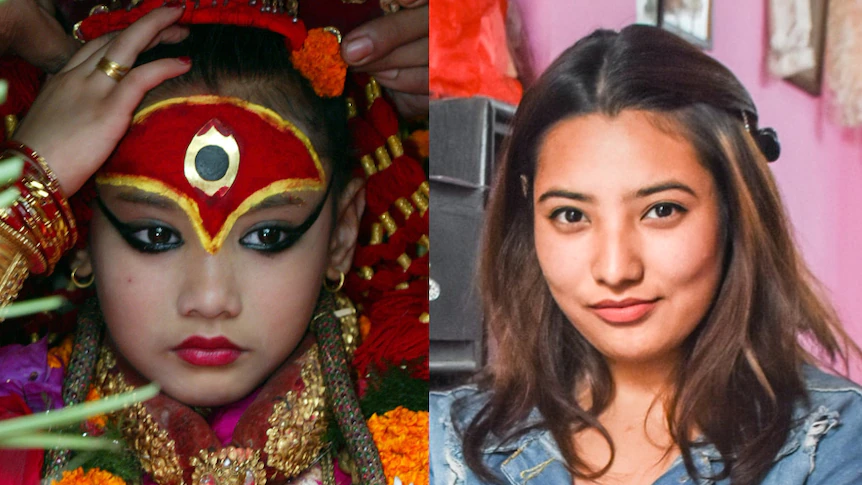
    • The majority of the ex-Kumaris are emotionally traumatized, stunned, and identity-crisis-ridden. Even marriage with an ex-Kumari was a sorrowful wedding, thus their alienation as Kumari. Although that is receding now its psychological impact cannot be erased.
    • A couple of the former Kumari have spoken out, most recently suggesting better education, better mental health and transition arrangements at retirement.
    When she was Kumari & Now
    Then & Now

    Tourist Experience: How to Gaze Respectfully Experience Kumari Culture

    Thoughtful travelers will discover that a meeting with the Kumari will be one of those magical once-in-a-lifetime experiences. Kumari Ghar in Kathmandu Durbar Square is open, and the goddess can be seen by anyone at some points during the day.

    Some ethical encounter tips are:

    • Respect: Soft clothes, no flash, and muted.
    • Don’t make her a spectacle: Attend the meeting as you would any sacred ritual/tradition.
    •  Responsible tourism: Support considerate guides/agencies/friends in adjusting to cultural rituals.
    • Timing is everything: Remember Indra Jatra (September) is the optimal time to spot Kumari in public.

    Major Events Where you will catch a glimpse of Kumari

    1. Indra Jatra

    Her most public manifestation is Indra Jatra. Indra Jatra is the Hindu celebration of god Indra. Kumari is street borne on Kathmandu streets by golden carriage, and pilgrims who are thousands stand in line to be blessed by her.

    2. Dashain

    The Kumari is not part of general, everyday Dashain rituals but her devotees do fill the Kumari in dress during Dashain and feel that they can receive her blessings.

    3. Kartik Nach and other local jatras

    In addition to Dashain and Indra Jatra, there are numerous small festivals in and surrounding the Kathmandu Valley where one sees performance of the Kumari demonstrate how much a part of Newar daily life Kumari is.

    The Dark Side: Psychological and Ethical Issues of Kumari

    Despite Kumari culture being very much a part of Nepal’s culture, there are certain issues raise by some psychologists and certain human rights groups. Some of the major issues are explain below.

    Yes. Below are the detailed descriptions of each of the darker side elements of the Kumari tradition, two paragraphs each about each side regarding creating more awareness and cultural sensitivity.

    1. Loss of Childhood

    While the Kumari is revered, her life is otherwise describe as a loss of childhood. Once she is select, according to age, she is taken from school, from a typical child life, to be adopt at Kumari Ghar and live there in extremely disciplined religious living; she won’t have a chance to play, not the type most kids are allowed to play, she won’t have the opportunity to have regular school (once more, whatever Kumari Ghar that might be) and she won’t even be allow to mingle with children just the same.

    Her existence is dominated by religious ceremonies, rituals, and disciplining of her soul every day. Although she would be worshiped devoutly and with reverence, her life and self would be cult devotion-oriented instead of being hers. This detachment from everyday social life denies Kumaris valuable developmental experiences. In the lack of peer attachment, play, and informal learning settings, the Kumari is denied basic social and emotional learning.

    Even with education reforms which have allowed Kumaris to receive some private tutoring more and more, these are additions to an end education and social curriculum. What became of childhood as a little girl, with fantasy, discovery and innocence, to be replace by exclusion and seriousness in a package, to say nothing of God-ordained standards of perfection.

    2. Psychological Consequences for Kumari

    Divinity in childhood’s early years may lead to sudden identity change. Kumaris are never refer to as anything but a goddess by the adults that surround them, treat like doll children by adults and shield from the customary contact of people. Their attain role is strip from them when they enter menopause. Goddess to zero role reversal could be disastrous. All of the Kumaris have also declare that they have been depress, bewilder, and left behind in attempting to re-acclimate back (re-enter back) into a completely new world that previously was completely absorb in what it means to be a Kumari but now looks at them from a distance. Human rights defenders and psychologists think that such a broad closure without retaining the mental health center in their jurisdiction. It would subject children to psychological traumas, which would take centuries to be forget.

    The very same young woman who formerly reigned in the genuine adoration. For instance, five hundred a day on an altar (i.e., not scraped off a pail) might now be compell to hustle to be a friend, learning in a schoolroom, or even talking with and participating with individuals other than on her altar; i.e., people without a pedestal. The confusion created by idealizing worldly and vice versa without therapeutic working through or effort towards correcting the individual later in life actually soils their adulthood. This is only one instance of religious worship and devotion in the journey to psychological development. Tension yet to be smooth out of Nepalese culture neatly.

    3. Gender and Social-Relations of Kumari

    The Kumari tradition bestows divinity, and the accompanying taboos, only on prepubescent girls. The status works to create girls as vessels of divine innocence, provided. They are not disturbing by bodily maturation (i.e., menstruation.) Teenage girls, carrying the stigma of bodily maturation, are not fit to vessels for the goddess and need to be expell forthwith.

    That is, Kumari practice preserves the cultural notion of menstruation as unclean, and a culturally constructed assumption that girls are useful because they can complete a restricted biological equation.

    And lastly, the scrutiny required in the “32 perfections” a Kumari needs to possess (for instance, clean complexion, smooth face, and straight body lines). It adds another frightening layer of gender messaging. The ideology that parts of a girl’s body need to be cultivate transmits wider social messages of beauty ideal and expectation unfairly placed upon women. The Kumari is worth it for an instant, but she is something to cuddle in one’s arms. Her value in her appearance, her chastity, and her silence. And then there is also the problem of how valuable a girl is not only in a practice, but in Nepal society.

    4. Choice and Consent of Kumari

    One of one of the bigger ethical problems with the Kumari practice is the problem of consent.

    The children to be Kumari are usually below the age of five and are usually not in a position to be capable of understanding. To ascribe agency to the role that they are to assume. Parents, astrologers, and older male religious officials usually have the privilege of deciding themselves. Usually on the basis of religious merit, or social status.

    Though occasionally in research this much privilege can be for a family. This child herself is not consult over whether she wants to be a living goddess or not. This removal of her agency has permanent repercussions. Whilst Kumari’s life is guard and respect, it is also govern. She has to be able to walk under guard, be able to wear clothes as desired or decide as desired. Kumari’s status of living god has been establish by other people’s whims and fancies. It is of moral importance in terms of autonomy and human rights. In the context of ongoing controversy about individual freedom and child protection. In order to establish such status-altering identification on a child against her wishes is questionable in itself. It is done under the guise of religious law which renders the fact acceptable.

    5. Ethical vs. Cultural Tourism Conflict

    Most visitors who visit to gawk and stare at the Kumari are amaze by the experience. But they’re also conflict: is it appropriate to “stare” at a child in a highly symbolic context. But without being aware that she might be losing her psychological well-being and agency to the experience? Tourists, of course, will view the Kumari as part of a photo opportunity or cultural curiosity and not as a sacred one or child in an exploitative manner.

    The tourist industry can add to the Kumari site only another level of tourist mystique. Generally provides little background, sensationalizes, and insensitive to controversy of experience. The more Nepal opens up via travel, the only thing that “authentic experience” demand will drown out the concern of cultural appropriation or ethical tourism. For responsible tourism, mere presence is not enough. Responsible tourism calls for awareness, sensitivity, empathy, and reflective enactment of practice toward an understanding of participants’ respect and dignity, above all children.

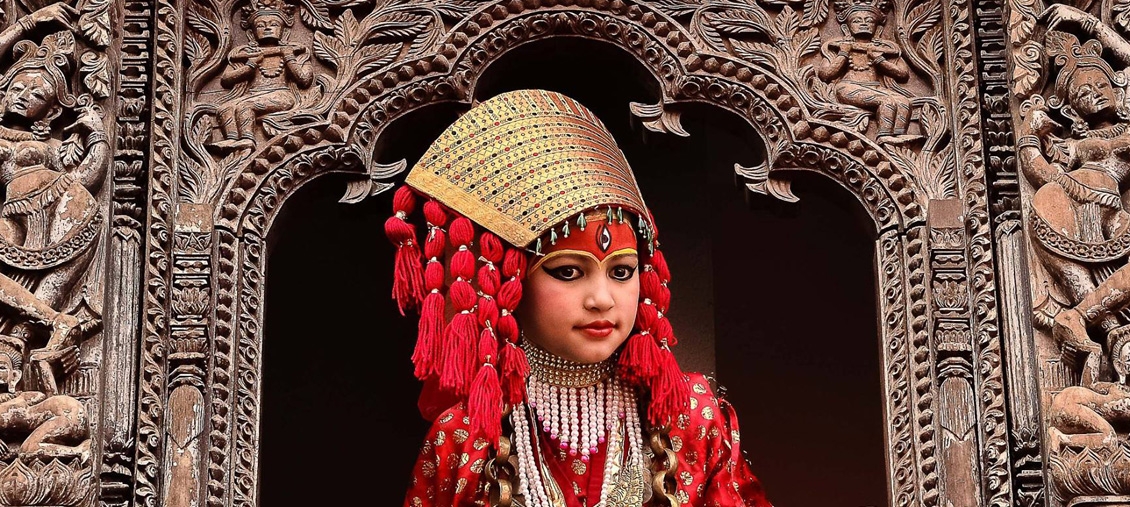
    living goddess kumari giving blessing from window
    Nepal’s living goddess, Kumari

    Voices of Change: Changing from Within For Kumari

    Following criticisms, the government of Nepal and Kumari guardians have started co-opting changes:

    Education: Kumaris are now taught privately and most of them pursue further studies (post-retirement) under government scholarship.
    Legal Rights: Kumaris will also receive scholarships from the state and legal rights under Nepalese law.
    Advocacy: Former Kumaris such as Rashmila Shakya are penning memoirs today. They do public talks to advocate for change on the basis of it being a tradition practice.

    It’s slow, but change and its middle path solution to preserving heritage for the good of humankind.

    Taking a Summary stand in favor of Ethical Travelers

    Nepal’s Kumari practice is progressive religion, of royal blood, and dynamic. It is with scandals and controversies, but you are part of the process of communicating royal interactions. Raising royal questions, and in continuing the tradition to evolve and mature as a living institution to relate to humanity.

    Tips for a Quick Trip:

    • Go September to September to witness Indra Jatra.
    • Visit Kumari Ghar at Kathmandu.
    • Employ cultural studies professionals.
    • Do not commodify the Kumari as spectacle.
    • Get locals involve and ask them how they are doing education reform.

    Conclusion

    The Kumari practice is one wonderful window into the religious life of Nepal, thus combining old royalty, religion, and ritual. But it is a new era and so should be our way of thinking about worshipping, guarding, and idolizing.

    For considerate visitors, seeing Kumari is not just a cultural ceremony. But a reflective process with the meeting point of religion, identity, and change. If you are planning to visit Nepal or visit kumari, Contact us today at Happy Mountain Nepal, on Facebook, Instagram, or TikTok