
Mardi Himal Trek: Short & Sweet Trek Near Pokhara
If you like a Himalayan trek with nice mountain scenery but not too many tough, hard, difficult days in the higher hills, then the Mardi Himal Trek is your trek! Mardi Himal Trek in Nepal’s Annapurna region is a quiet trek but a trek with independent walking on the trail, stunning views of the Annapurna Himalayas, and a feeling like one is completely alone in the hills. Since the Mardi Himal Trek is relatively new for all the trekkers, the view of this trek is stunning. The view includes Mardi Himal (5,587m), Machapuchare (Fishtail), Annapurna South, and Hiunchuli.
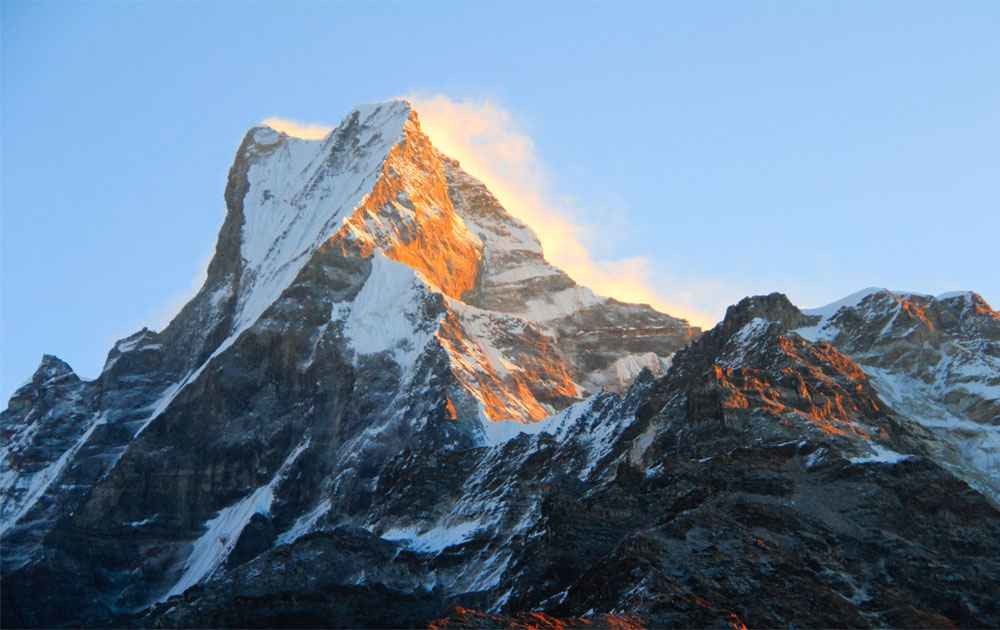
Mardi Himal ascent is a wonderful and satisfying sanctuary from Pokhara, Nepal’s lake district, and the departure of many of Nepal’s renowned treks. Mardi Himal provides an ideal experience for novice climbers as well as seasoned mountaineers who would prefer it off the beaten track and a peaceful trek.
Why Hike to Mardi Himal?
Mardi Himal is simple; it’s unique because it’s not easily accessible, in a virgin region of the world where there are less tourists. You won’t have to deal with so many tourists at Annapurna Base Camp or Everest Base Camp, and that equals less craziness, more real human interaction and more harmony with nature.
Key points are:
- Panoramic ridge-line trek with panoramic views of the surrounding peaks
- Rhododendron forests and alpine high grassland at high altitude
- Leisurely teahouse trek without any tourist trail crowd
- Recommended highly as a short trek (4-6 days) from Pokhara
- Moderate level of difficulty – ideal for first timers with good physical fitness.
Location and Accessibility
The trek starts a couple of hours’ drive from Pokhara; hence this is one of the most accessible treks in Nepal. Timings, all the treks start from Kande or Phedi, whichever and theya reachable within an hour by private cars or local buses.
It is so near to you that you don’t need flying and long buses to access the trek, so the trekkers can stay near the hills for more hours than the drive.
Itinerary for Mardi Himal Trek
The following is a representative example of 5 trekking itinerary of the Mardi Himal Trek:
Day 1: Pokhara – Kande – Deurali (2,100m)
Trek Time: 4-5 hours
Highlights: Walking in the forest, ridge view, village views
Description
Your trek begins with a short 1-hour, stunningly beautiful drive from Pokhara to Kande. Scenic drive through hills, villages, and paddy fields. Then from Kand (1,770m), you trek directly by ascent to the Australian Camp (2,050m), where you can pause for a couple of minutes and admire the sight of the Manaslu and Annapurna ranges in the distance in a natural, panoramic-colour landscape.
This, trek along cobblestone roads and rhododendron forests to Pothana (1,950m), where you also receive your trekking permits. Another short trek, and you arrive in Deurali, a ridge forest village with wonderful views of Dhaulagiri, Annapurna South, and Machapuchare (Fishtail). Teahouse overnight at Deurali.
Day 2: Deurali – Forest Camp (2600m)
Trek Time: 6-7 hours
Highlights: remote forest, untried terrain, less crowded track
Description:
This new trek is the multi-direction path of a more populated Annapurna Base Camp trekking trail and continues in this manner towards the East side of Mardi Himal, trekking through dense and quiet oak, maple, hemlock, and rhododendron forest. Hereby, by trekking, you experience a feeling of solitude of trekking in a back-in-time manner with fewer tourists and a green-dense birds’ life.
It’s a quiet, unyielding climb of moss-shrouded trees and even forest dells. It’s cold and spooky to catch a glimpse here the further down you go! Forest Camp (or Kokar) is a few dozen teahouses in a clearing of wooded landscape. Mountain Views here are a treat, but the peacefulness, the warm flame glow of teahouse fires, and the soft forest breeze made this one-nighter an insider’s tip.Forest Camp overnight stay.
Day 3: Low Camp to High Camp Trek (3,550m)
Trek Time: 6-7 Hours
Highlight: Good Machapuchare Views first time, Ridgelines, High Alpine Panorama.
Description:
You leave mysterious, green, dense jungle, trek to Low Camp (3,050m), where your views begin to open up and the majestic, towering mountains begin to be visible. The view of the Machapuchare (Fishtail) panorama at Low Camp is immense. And from far back of Low Camp, the trail ascends on a series of grassy ridges to High Camp; here you’re now in roughly inverted conditions when you climb: spindly alpine scrub of patches is over snaky jungle green, exposed ridges and plenty of scenery in mountains.
High Camp is beneath Mardi Himal Viewpoint, and we can view Annapurna South, Hiunchuli, and Machapuchare with colors due to sunset from High Camp. The teahouses are not fancy at High Camp (we are up high, anyway), but good views and a decent meal make up for it. It is a good place to acclimate and stay at High Camp.
Day 4: Mardi Himal Viewpoint (4,200m) – Siding or Low Camp: 1,850m
Trek time: 7–8 hours
Key Features: Sunrise at Viewpoint, breathtaking mountain faces, an awfully long, steep drop
Explanation
The trek highlight today. Dawn—or even earlier—your early departure gets you underway with the hope of catching sunrise at Viewpoint Mardi Himal (4,200m). The rock, your steep downhill is secure, but there are dangers on the trek, as you now find yourself below a ridge between white peaks. By the time you reach the top, you’ll be stunned by the 360° view. Mardi Himal rises rough and giant above you, and Machapuchare is impossibly near—you feel you could reach out and touch it.
Then you have the view from the top before beginning the return ascent down to High Camp for breakfast and the arduous re-ascent upwards. Trekkers will more traditionally make the journey back to Low Camp or Siding Village on a longer, longer route through forest and small Gurung villages. Siding Village, option two, is much more cultural with homestays and time to explore these irrigated fields and emerald, green hills. Overnight at Low Camp or Siding, depending on your time and energy.
Day 5: Siding – Lumre – Pokhara
Trek Time: 3–4 hours walking + 2 hours transport
Key Highlights: Village life, fields, and easy walking
Description:
The final day is an easy downhill walk-through farmland, rice paddies, and villages. You will pass through traditional Gurung villages, buffalo sheds, and children playing. The return walk from Lumre is straightforward and easy and the time to relax and enjoy the trek. A jeep or hired car will be waiting for the return journey from Lumre to Pokhara.

Trail Experience
Terrain: Ridge walking, rock hopping, and some forest tracks
Weather: Spring flowers from March to May, and sunny weather from September to November are perhaps the best times
Altitude: Highest point at around 4200,m which means that your chances of suffering altitude sickness are minimal
Accommodation: Teahouses with basic rooms, local food, and friendly service
And with so many paths, you cannot just sit amidst locals, watch yaks grazing along the mountain ridge, and hear the wind whistling rather than the voice of the crowd.
The Scenic Reward in Mardi Trek
1. Stunning Close-Up Views of Machapuchare (Fishtail Mountain)
One of the highlights of the Mardi Himal Trek is probably one of the highlights of being so close to Machapuchare, or Fishtail Mountain, as it is popularly referred to because of its 2 distinct twin summits. The unclimbed and holy 6,993-meter-high mountain towers over the landscape for most of the trek. Among Nepal’s most stunning are the vistas from High Camp and especially Mardi Viewpoint. Pinky and golden rimmed blueness mountains alive in early morning and late afternoon sun, so close to the reach they feel, a marvel to behold, and worth a Trip of a Lifetime.
2. Walk Along a High Mountain Ridge
And though your gorge hike crossing the river-spanned by a slope, is a counterpoint, Mardi Himal is a ridge line hiking challenge trek throughout. Your walking squad will enjoy 360-degree viewpoints – a rock gorge sloping precipitously away into something unimaginable within one horizon, and white-tipped peaks rising to jut out aggressively. The Badal Danda to High Camp ridge trek is the pearl of the entire trek. Open trail scenery offers total abandonment in the midst of panoramic mountain views. Unbroken but exhilarating experience and destination.
3. Quiet Trails & Less Crowded Route
Mardi Himal is a less-crowded trail for a person who seeks sheer wilderness and solitude without even a glimpse of Annapurna Base Camp or Everest trekkers. The trek was popular in recent years but poorly planned, off-the-beaten-path, and serene environments, secondary to trekking tourism. You can hike for days and never encounter another group of tourists, particularly during shoulder peak season. Physical space solitude benefit offers sufficient space for nature and culture immersion that is vibrant. The hike is an ideal challenge for hiking, photography, or even daydreaming.
4. Rich Biodiversity in Rhododendron Forests
Trek time is spent hiking beneath gigantic rhododendron forests, oaks, maples, and moss trees!
While traversing through the spring season (March-April), your rainbow steps would cover tramping above blooming red, pink, and white shades of rhododendrons. Flora and fauna in the Himalaya, including the Danphe (national bird of Nepal), langurs, and other wildlife, inhabit the forests. The terrain is conducive for visualizing fairy-tale, storybook ages in the early half of the trek. It is an easy, pleasant walking climate to acclimate you.

5. Authentic Teahouse Experience in Mardi Trek
Mardi Himal teahouses are Nepali in character and less “touristy” than open trails.
They are locally constructed home lodges with basic accommodation, hot food, and warm hospitality.
Well-cooked and well-prepared dal bhat, fried rice, and ginger tea, with a smile. In the evening, you would be invited to sit around the fire and chat with the host or other travelers. Such a lack of form is all part of the attraction, and you can receive loads of Nepali hospitality at human as well as food level, not always necessarily on the menu. It’s homey, simple, and it’s worth skipping.
6. Mardi Trek Viewpoint (4,200m)
Trekking elevation is how much higher it is to get to in order to try to climb up to the Mardi Himal Viewpoint, the stunning 4,200 meters. Panoramic sight of summits like Machapuchare, Annapurna South, Hiunchuli, and far, far in the distance, the Dhaulagiri summit, whose peak always seems ever so slightly just out of reach in shape, not unlike Everest. Sunrise in the Himalayas is one never to forget. Altitude achievement is within the grasp of any prospective trekker without the necessity for technical climbing equipment. The trek stands at the threshold of being a climb up, but the payoff is just too enchanting.
7. Short, Accessible, Yet Rewarding Trek
What Mardi Himal is actually about is that it is short, but with such great drama happening in the Himalayas. The trek is quite easily accomplished in 5 – 7 days and is best suited to short trekkers. The trek is also relatively short driving distance from Pokhara and does not entail serious acclimatizing or high-altitude gear. It contains everything from cresting alpine ridges, great mountain vistas, forest, and cultural villages. This trek provides you with everything that you’d like to achieve from a Nepalese trekker’s vacation without traveling to more demanding treks.
8. Cultural Insight into Gurung Villages
The downhill trek goes through typical Gurung villages like Siding, Lwan, and Landruk. Both villages will give you some idea of country village life, where houses consist of stone houses with a few tiers of farm terracing built around the house, and the surrounding villagers have a very high percentage of friendly residents. Most of the natives will have farmhouses with animals, and some even have homestays or teahouses where you can overnight. You are able to see the natives in their natural surroundings, living in harmony with nature, share some meals, and receive welcoming treatment from the natives. The return journey gives you a peaceful end to your trek with an added experience from viewing local culture.

Budget and Cost Breakdown of Mardi Trek
The Mardi Himal Trek is also budget-friendly compared to other high-altitude treks. Here’s a general breakdown:
1. Permits
Annapurna Conservation Area Permit (ACAP) and Trekkers’ Information Management System (TIMS) card are two official government climbing permits to summit Mardi Himal. They may be reserved at the government representative (s) or at the Nepal Tourism Board in Pokhara and Kathmandu. ACAP will be USD 30. The TIMS card will be USD 20. Both can be made possible by splitting the cost between protection and conservation by keeping an eye on the trekkers during the trekking season. Both these permits, person-wise, will be USD 50 to accept whoever is arriving from outside the trek, and to welcome them to the trek.
2. Accommodation
You will be staying in extremely basic teahouses while on the Mardi Himal Trek. They are very basic mountain teahouses with twin beds and blankets, and shared toilet facilities. The accommodation is very basic but clean and cozy. Bed arrangements in the teahouses range from USD 5–USD 10 a night, depending on the season and altitude. You’re shelling out USD 30–40 altogether for sleeping, on a 4-day trek. Some teahouses will give you free accommodation for the night if you eat all meals there.
3. Food and Drinks
Trek food is nutritious, but it costs more as you ascend higher. Dal bhat (lentils and rice) and noodles will be served to you as lunch and dinner options, which will be ladled over with soups, momos (dumplings), and porridge. Breakfast would cost you USD 4-6, lunch USD 5-7, and dinner USD 6-8. Hot beverages like tea, coffee, or ginger lemon honey tea will cost you USD 1-3 per serving. Snacks or water bottles would be extra. On average, you would spend something like USD 15-25 a day, so your whole trek would cost you USD 75-125. It is cheaper and gives you most of the calories to eat the local food, such as dal bhat.
4. Guide and Porter
You can trek to Mardi Himal on your own; however, it is recommended that you hire a guide and/or porter to accompany you for advice, safety, and cultural exchange. A registered guide will cost you USD 25-30 per day, and a porter (who will carry up to 20kg) will cost you USD 20-25 per day. Your guide and porter for a 5-day trek will cost you USD 225-275. If you are traveling in a group, you can split the expenses. Your guide will be with you along the trail, book your lodging, and apprise you of some useful facts regarding the hills and geography, and you can let the porters carry your packs while you trek on your own.
5. Transport
The trek begins at Kande and ends at Lumre or Siding, either of which you can conveniently access from Pokhara. The cost will be approximately USD 15–20 by taxi or jeep ride from Kande to Pokhara and vice versa. You can take jeepneys or jeeps in a shared ride at a lower price if you don’t mind spending too much. The cost of the round trip to ride back will typically be USD 30–4,0, depending on the type of vehicle needed and how good you are at bargaining.
6. Miscellaneous Expenses in Mardi Trek
You will not have many expenses to incur, which together will be some money. You will spend USD 1-2 on the electricity bill for charging your devices in teahouses; Wi-Fi (if available), USD 1-3. Toilet, snack, drinks, and a village souvenir will be some extra expenses. Don’t forget to add tips to the list. Guides and porters will cost between USD 20-40 combined, depending on the service and the number of groups. Another USD 30-50 odds and ends will come close to what is a reasonable expense to swallow, appalling but inevitable cost.
Total Estimated Cost
The total cost of the Mardi Himal Trek is going to be quite different depending on whether (or not) you will be in a position to cope with a porter and a guide. And if you are hanging by your nails at being entirely independent, then your cost is going to be in the ballpark of USD 250-300, and that’s for accommodation, dining, permits, and transportation. And with a guide and a porter, that’s at most USD 500-600. But Mardi Himal is still a shoestring trek, as it is, with some excellent mountain scenery interspersed with some reality-to-life cultural interaction.

What to Keep in Mind for a Mardi Trek
Keep your items light-:
- Layering, rain shells, and sunscreen are essentials.
- Pack a water filter or purification tablets.
- Don’t hurry on a brief hike to get used to and enjoy the panorama.
- Respect the local culture, Ask before you click, and follow teahouse etiquette.
- Using a guide will be most effective if out of season or backpacking alone.
Who Should Do Mardi Trek?
- Freshers seeking a simple walk in the Himalayas
- Busy tourists who lack the time for that complete Himalayan experience
- Families or groups with a regular level of fitness
- Trekkers seeking an off-the-beaten-tourist-road, remote trek
Conclusion
Mardi Himal Trek bypasses Everest or Annapurna Base Camp elevation but why do you have to do it all. Enjoy peaceful Himalayan trekking in limited time. Scenic landscape, bypassed trails, and popularity of culture – Mardi Hills is certainly among Nepal’s nice short treks.
So if you are in Pokhara yearning for the Himalaya but don’t have a fortnight to spare, this trek will do more than adequately. It’s short, it is beautiful, and it will be in your memory forever. Contact us today at Happy Mountain Nepal, Facebook, Instagram, or TikTok.


