Tag: retreat

  • Sound Healing and Wellness Retreats in Nepal’s Mountains

    Sound Healing and Wellness Retreats in Nepal’s Mountains

    Sound Healing and Wellness Retreats in Nepal’s Mountains

    Introduction: The Healing Power of the Himalayas

    Nepal is surrounded by majestic Himalayan peaks and a vibrant cultural heritage of South Asia — is so much more than a trekking destination. It is now becoming a new wellness paradise for those looking for holistic healing and spiritual awakening. The healing mountain air, sacred spiritual locations, and dense authentic traditions can easily bring you to a state of wellness and sound healing.

    Wellness tourism has blossomed in Nepal as an alternative to the ceaseless districtions of the modern world. These wellness retreats in Nepal are not holidays, they are inward exploring journeys. Each retreat holds the ages of wisdom and all of that attunement of vibrational healing modality. Whether you are healing from being burned out, processing trauma, or simply taking a break – the Nepalese mountains bring you vibrant and breathtaking experiences that benefit your body, mind and spirit.
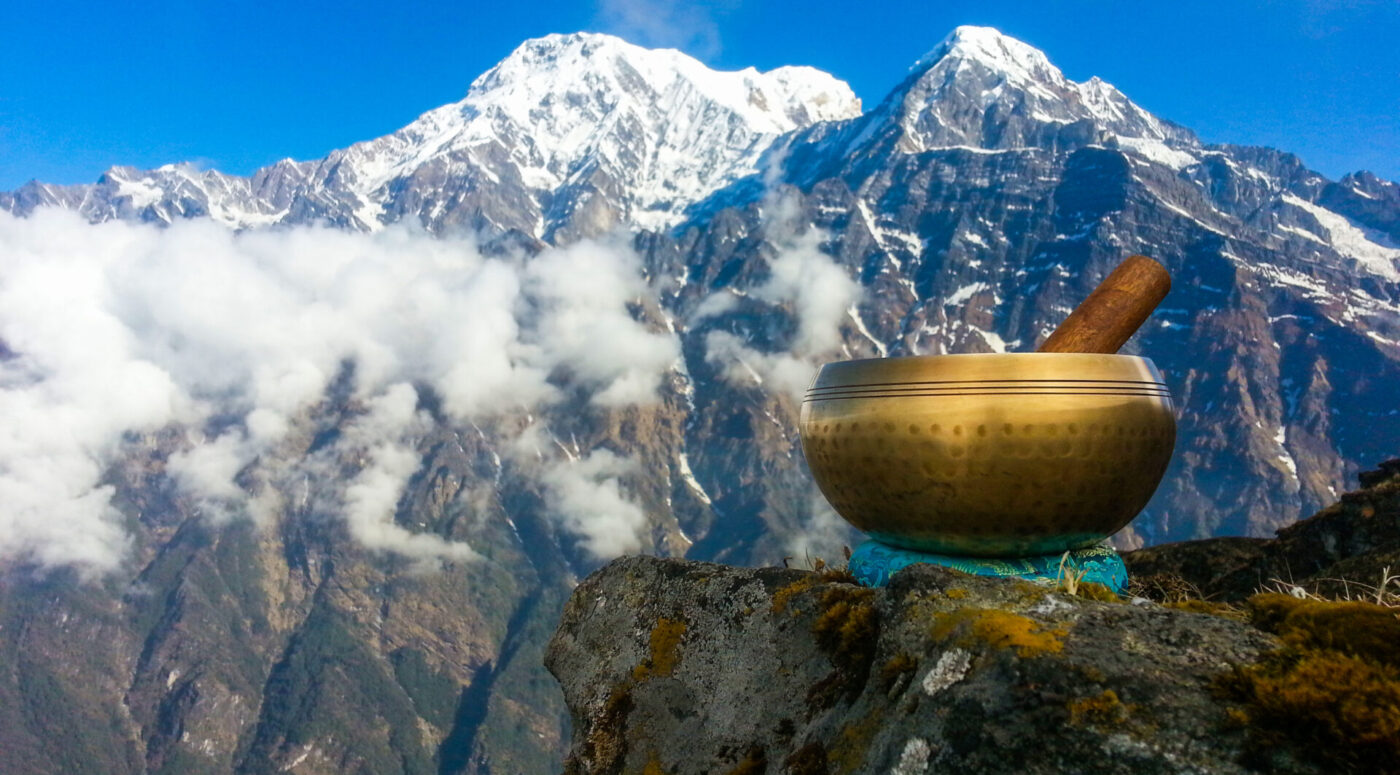
    A brass singing bowl with a wooden mallet resting inside, positioned on a rocky outcrop overlooking a majestic mountain range with clouds in the sky, displayed within a digital editing interface

    Understanding Sound Healing: Ancient Vibration, Modern Wellness

    Sound healing is one type of therapy that has been in practice for thousands of years; artists have explored sound in many ways- from the Aboriginal people and their didgeridoos in Australia to the Gregorian chants in the European tradition. In Nepal, sound healing is represented through traditional Himalayan singing bowls (also known as Tibetan bowls) that are made from 7 sacred metals that correspond with the 7 chakras or energy center of the body.

    The bowls vibrate (don’t worry, you won’t drop them) and create tangible resonating tones and harmonic overtones when struck or circled with a mallet. While the known effects of the vibrations can assist the physical and emotional trauma and can:

    • Stimulate the parasympathetic nervous system
    • Decrease stress and anxiety
    • Balance energy fields (auras and chakras)
    • Facilitate and deepen meditation and focus
    • Heighten awareness when an emotional release occurs and create space for processing emotional trauma.

    With all of the benefits of sound healing, it is one modality of an expansive spectrum of complementary modalities such as yoga, breath work, ayurvedic practice, and reiki – to provide a holistic whole-being.

    Why Nepal Is the Perfect Destination for Sound Healing Retreats

    1. A Landscape Rich in Spirituality

    Nepal is home of the Buddha (the historical founder of Buddhism) with innumerable shrines to both Hindu and Buddhist pilgrims. The mountains here are not just geographical Earthly features – they are embodiments of the living spirit. You can sense the spirit once you are settled anywhere in the mountain, in the mountain’s Buddhist monastery, in a village doing a healing circle, etc.

    Monk’s, sages and yogis have come to the Himalayas for enlightenment for centuries, that continues now with wellness retreats in various formats, importing ancient traditions while blending with modern wellness practices.

    2. Masters of Healing and Ancestral Traditions

    Any sound healing retreat in Nepal is primarily run by ‘local practitioners’, – i.e. someone who has studied in one of the many traditional forms of Eastern healing. As can be imagined, these local practitioners along with their practices, almost entirely depend on an archaic practices passed down from their ancestors generations ago, sometimes supplementing with some current practices to give extra substantiate to their uniquely authentic practices of sound healing. The chants from the Tibetan monks during portions of the retreat, the local shamans connecting us with the earth in their rituals with drums and inviting us into ritual for sound healing were magnificent with the sound variation alone.

    Moreover, the majority of retreats will invite international facilitators to visit from the Peaceful non disciplinary tradition of Retreats in order to illustrate how to facilitate healing, with techniques such as, crystal bowl therapy, energy psychology, and guided sound journeys. The East/West integration in healing techniques is an attractive aspect of Nepal’s wellness experiences.
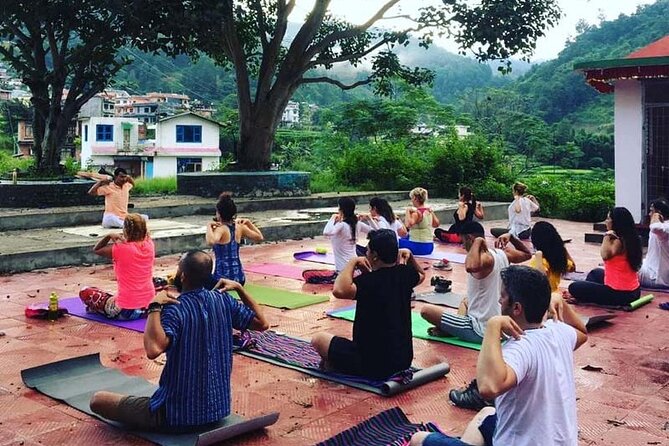
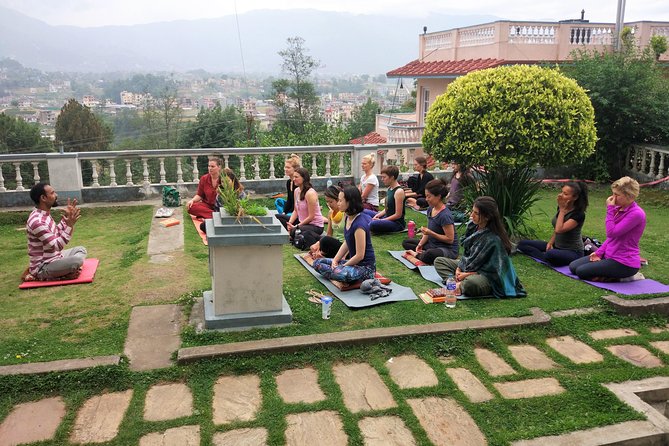
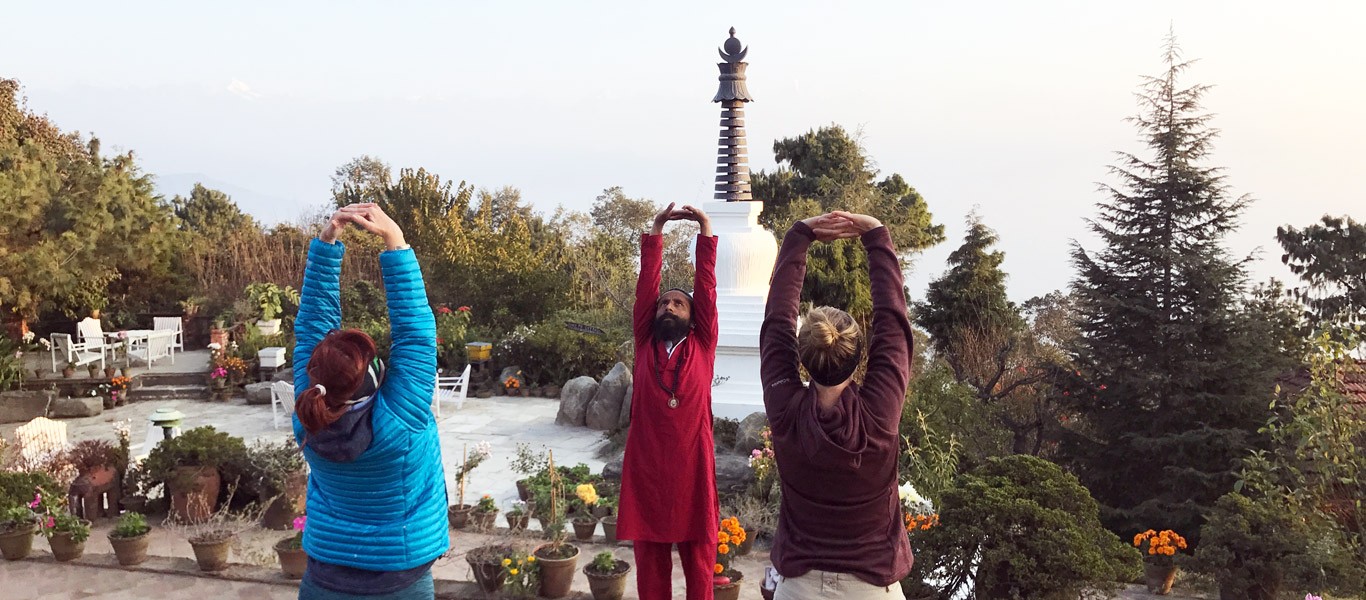
    A group of people practicing yoga outdoors in Nepal, with mountains and a village in the background, illustrating Nepal's wellness experiences

    3. Retreats and Nature

    Nature enhances healing, and Nepal has plenty of nature. Most retreat centers are established in beautiful forested valleys, on quiet ridges with unobstructed views, away from pollution, near rivers and waterfalls. The sounds of nature – birds, the wind blowing through the pines, bugs humming in the grasses, weaves beautifully into the healing of instruments.

    You will awake to Himalayan sunrises, meditate to nature sound, wake up sound, sleep to the stars, and connections alone to nature will deepen your healing experience.

    Top Destinations for Wellness and Sound Healing in Nepal

    Pokhara: The Healing Heart of the Himalayas

    As the most beautiful and peaceful city in Nepal, Pokhara is the ideal location to heal and reflect. Nestled between the Annapurna mountain range and graciously surrounding Phewa Lake, Pokhara combines a serene natural landscape with the uplifting vibe of spiritual energy that one can often feel when they are close to nature. Several wellness retreats in Pokhara are more than holistic and healing modalities, as many include outside excursions, such as hiking or horseback riding, along with therapeutic practices, such as sound baths and movement therapy classes-like yoga. Pokhara and all that it embodies has become a favorite for the influx of international wellness travel.

    All inclusive retreats in Pokhara may include a holistic package with: Ayurvedic treatments; nature walks; chakra healing exercises; guided meditation; and a complete and nutritious vegetarian diet. And with the 360 degree views of Machhapuchhre (Fishtail Mountain) and amazing sounds of water and forest, everywhere you look is as healing as the environment itself.
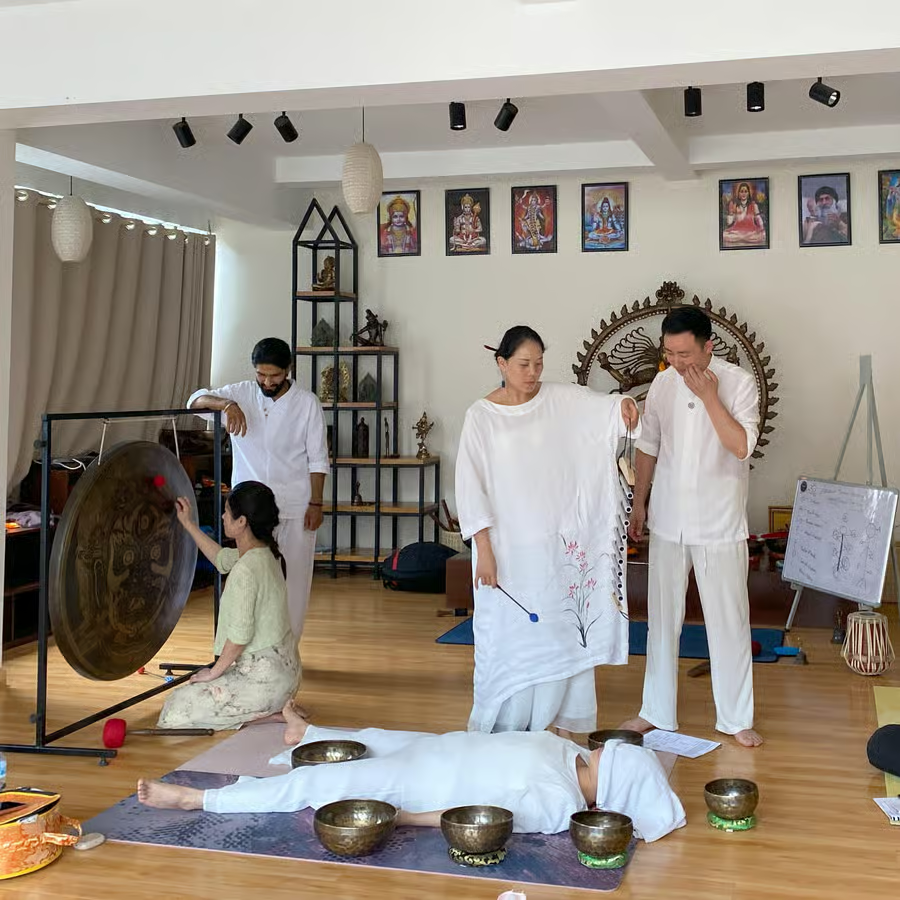
    A group of people practicing sound healing process wearing white gown

    Major Highlights Offered by Pokhara Retreats:

    • the comfort of lakeside yoga and sound healing excursion
    • meditation and connecting with the Himalayans during sunrise
    • initiating mediative practices by receiving Reiki, chakra balancing, or Ayurvedic therapy
    • enjoy the peace of boat rides, wild sets in nature, soaking in the best teachings to learned in “real-time”
    • ideal for either beginner or practiced persons

    Kathmandu Valley: Tradition and Transformation

    With the most history and sacred sites in the country, the Kathmandu Valley is the cultural center of Nepal. Although it is urban and busy it has many wellness havens tucked into and surrounded by temples and monasteries. There are retreat centers located in the districts of Boudhanath, Pharping and Patan, which focus on Tibetan and Newari culture, and sound healing using local rituals and mantras.

    Kathmandu allows wellness-seekers to access ancient wisdom in a modern metropolis. The current new wave of retreat experiences include- meditation under prayer flags, energy balancing with singing bowls, and mindfulness walks through temple complexes in the Kathmandu Valley. A retreat in Kathmandu is best for a short-term retreat or for someone wishing to experience healing practices with cultural immersion.
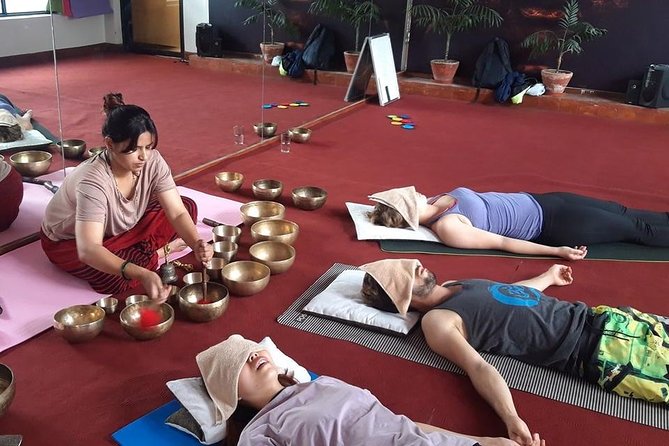
    People participating in a sound bath or meditation session with singing bowls, seen from a laptop screen displaying a content management system interface

    Major Highlights of Retreats in Kathmandu Valley:

    • Access to sacred sites such as Boudhanath and Swayambhunath
    • Tibetan singing bowl therapy and chanting workshops
    • Short-term or weekend retreats
    • Integrate Buddhist and Hindu rituals
    • Urban tranquillity with a sense of spirit.

    Nagarkot and Dhulikhel: Mountain Escapes Near the Capital

    Remarkably our triangle-shaped oasis north of Kathmandu lies beautiful hill-stations of Nagarkot and Dhulikhel that offer dramatic views of the Himalayas and minutes away from the forest. These open spaces are well suited for feeling in tune with yourself and the wilderness without having to go very far from Kathmandu. Both Nagarkot and Dhulikhel wellness retreats take consideration when selecting modalities of therapy, they try to select eco-style therapy and therapies that celebrate nature. Such as forest bathing and herbal remedies….

    Wellness resorts either offer luxurious accommodations, but typically are in lush eco-style communal wellness resorts and take advantage of the beauty of nature (oxymoron While one resorts is reviewed as eco-style, it is also a luxury resort). Visitors can have an experience of sunrise meditations, organic meals, and share in in-setting as far as important contributing to the persons well-being (usually through sound therapy).These experiences are excellent for the intended purpose of digital detoxification, silence retreats, and stress relieving holiday.
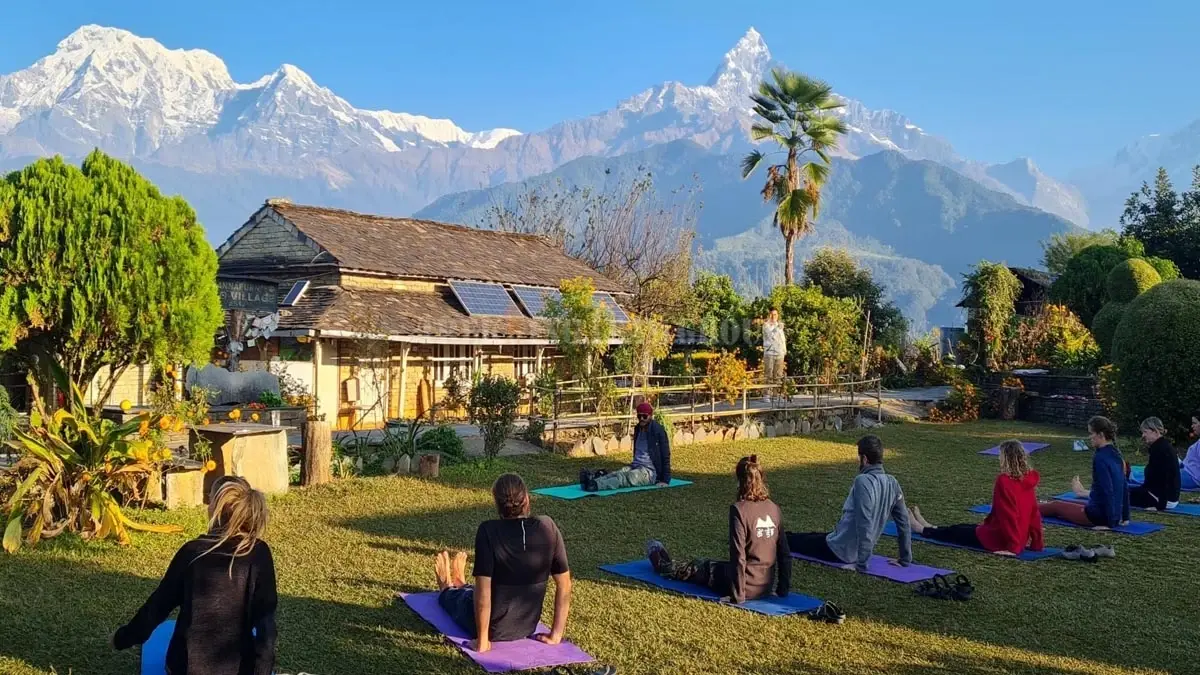
    A group of people practicing yoga outdoors in Nepal, with mountains and a village in the background

    Main Highlights of  Nagarkot and Dhulikhel are :

    • Dramatic views of the Everest and Langtang areas.
    • Practices of eco-resorts.
    • Daybeds outdoors for yoga/sound bath meditations.
    • Forest walking, wilderness meditation.
    • Minutes outside of Kathmandu.

    Lumbini: Birthplace of the Buddha

    Lumbini is perhaps the most spiritually significant location in all of Nepal. It is known worldwide as the birthplace of the Lord Buddha. Visitors often describe the space as tranquil, with the presence of monasteries and Bodhi trees and because of that, the surroundings are conducive to the state of tranquility that engenders real meditation and deep inner healing. To be clear, retreats in Lumbini often use silence, mindfulness, and some tenets of Buddhist philosophy.

    Retreats advertised as such in Lumbini usually allow participants to practice some sound healing while incorporating silent sitting, walking meditation and Dharma talks. The spirituality of Lumbini adds weight to your practice and experience, making it not only unique but also transforming or a new state of being for serious seekers.
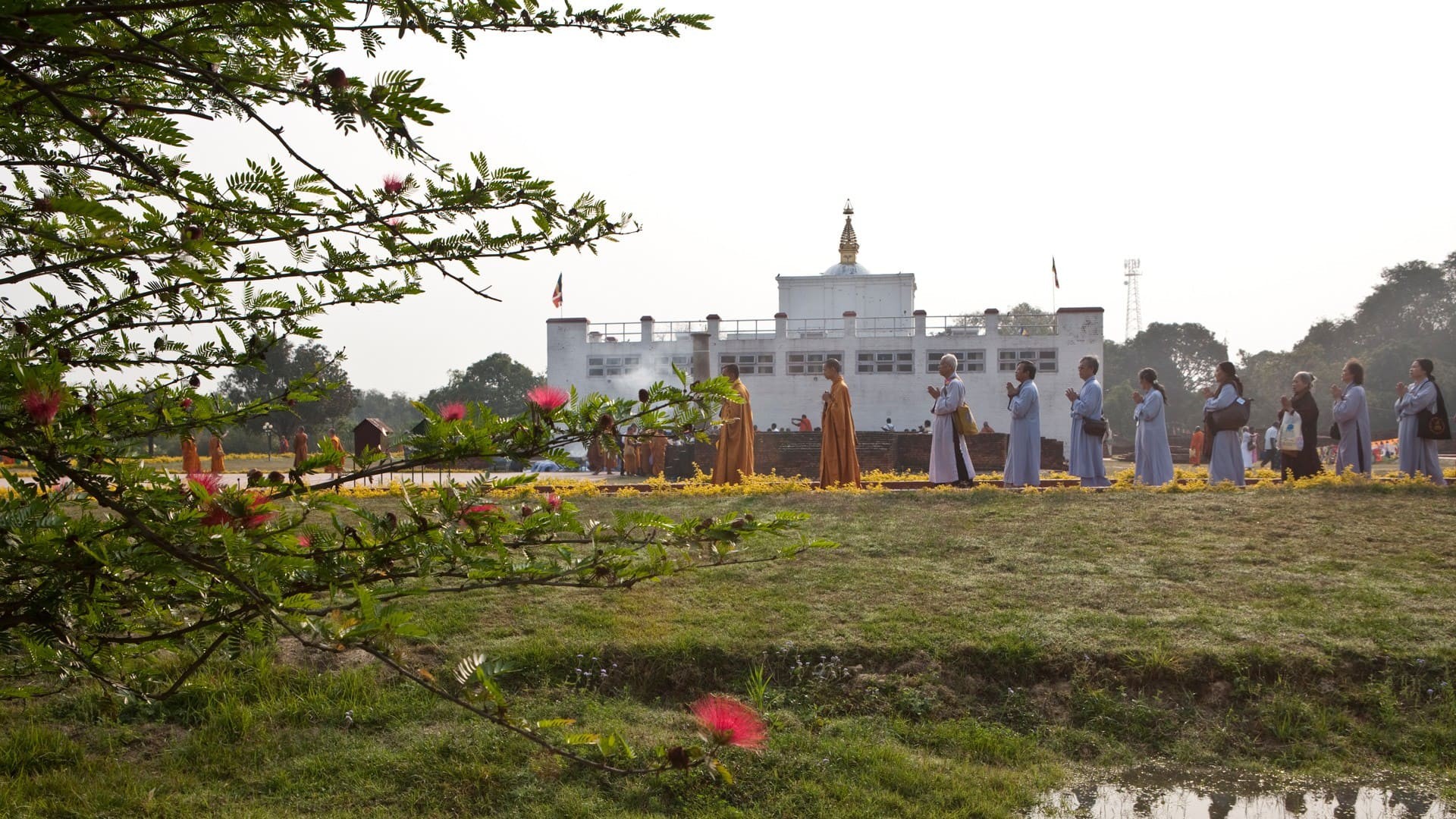
    monks or devotees in robes, are gathered outdoors near a white temple-like structure with a golden spire, surrounded by a field of green grass and yellow flowers in lumbini

    Major Highlights of Lumbini Retreats:

    • Surrounded by an assortment of monasteries from countries around the world
    • Strong emphasis on Buddhist teachings and deep silence
    • Sound healing with the Tibetan bowl while being mindful
    • Minimalist lifestyle to facilitate deep thinking
    • Sacred atmosphere that invites the unexpected and spiritual breakthroughs

    Namobuddha: A Hidden Spiritual Gem

    Namobuddha, located just outside Dhulikhel, may not ring many bells for the average person but is one of the most holy Buddhist pilgrimage sites in Nepal. The locality is beautiful with forested hills and gorgeous views of the Himalayas. It has a serene and spiritual atmosphere, making it an excellent opportunity for a thorough wellness retreat experience with the authenticity of a real Tibetan Buddhist monastery and monks attached.

    The majority of the wellness centers in Namobuddha offer an experiential-based retreat in the Tibetan Buddhist tradition. Retreats will have some form of sound-healing, Tibetan yoga, mantra chanting, and engaging with nature, all to some degree, as part of their daily activities. Most remains Tibetan, across the amazing countryside, you are free to take part in sunrise, community offerings, and contemplative walking included to the local area.
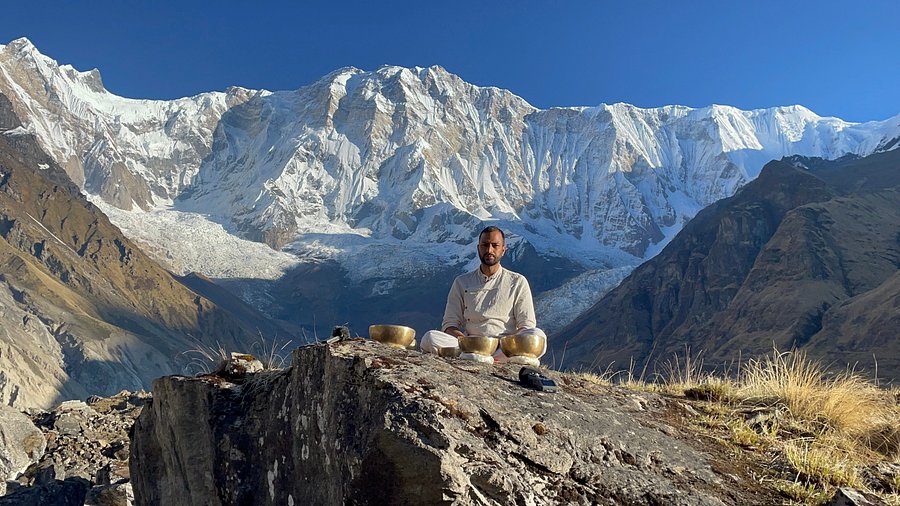
    man practicing bowl sound heal therapy Infront of himalayas

    Some Major Highlights of the Namobuddha retreats:

    • Cultural immersion, through Tibetan Buddhist activities
    • Daily chanting ceremonies in the morning and evening
    • Retreats with eco-centres attached to monasteries
    • In some retreat facilities, there may also be the possibility to stay for extended silent retreat stays
    • The remoteness and quietness of the locals, makes this a haven for serious seekers

    What You’ll Experience in a Typical Sound Healing Retreat
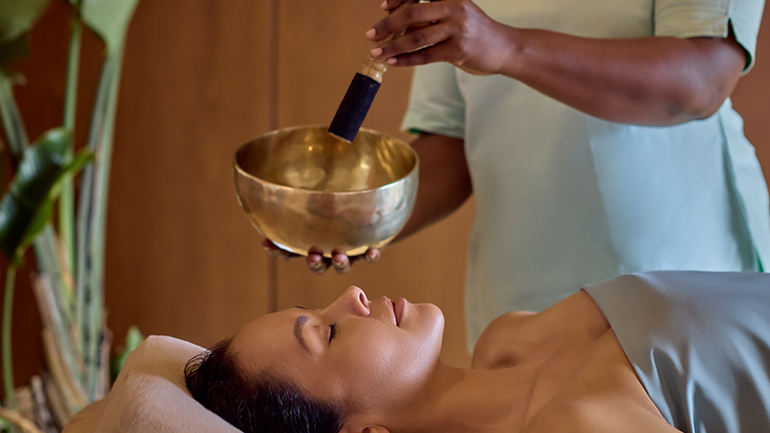
    Typical Sound Healing Retreat

    1. Daily Sound Bath Experiences

    What is sound bath? Sound bath is an immersive experience whereby the participant rests upon the ground/floor while a practitioner plays the sound of singing bowls, chimes gongs and/or tuning forks to allow for sensations of deep vibration which create relaxation, emotional release and alignment of energy. The healing process occurs throughout the entire body.

    2. Yoga and meditation practice

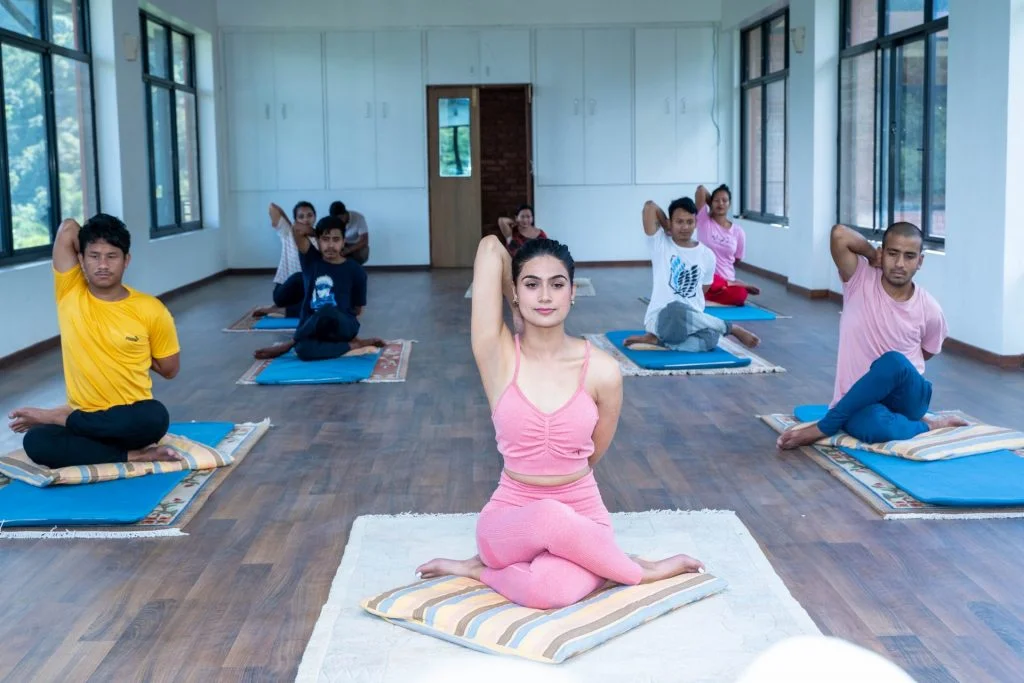
    Most retreats will typically be led in Hatha, Vinyasa or Yin yoga as the base practice, which allows individuals loosen their bodies to gain better access to healing at a deeper level. In addition to yoga, guided meditation, breath (pranayama), body scanning throughout will be methods for enhancing self awareness and quieting the mind offered by the guide/practitioner.
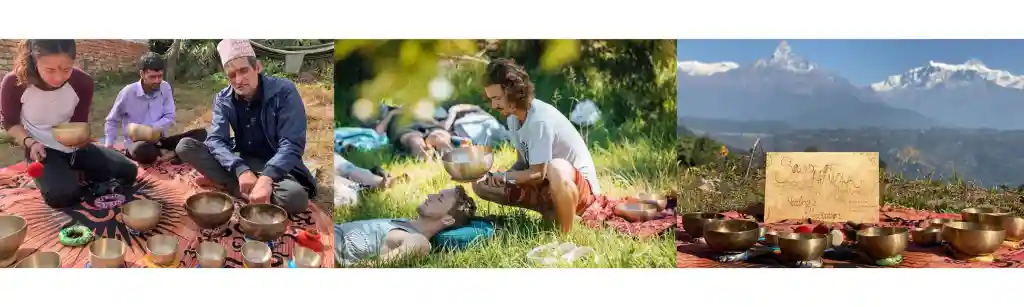
    people practicing Daily different Sound Bath Experiences

    3. Holistic Healing Therapies

    In addition to a sound healing experience, you will also probably have the opportunity to explore other healing therapeutic modalities such as: Reiki or energy healing, Ayurvedic massage and detox, pendulum or dowsing chakra diagnoses, herbal steam baths or a detox diet to cleanse and rejuvenate the body.

    In addition to sound healing, you may also have access to:

    • Reiki or energy work
    • Ayurvedic massage and cleansing/detox experience
    • Chakra diagnostics using pendulums or dowsing
    • Herbal steam baths or cleansing programs

    4. Group Circles and Sharing

    Many retreats have group circles where the group gathers to journal, share feelings, and set personal intentions. Group circles can provide connection, healing just through the group experience, and a sense of community.

    5. Engaging with Nature, and Sacred Rituals

    Nature-based practices, such as silent walks in the forest, mandala drawing, fire ceremonies, and visiting local temples or monasteries are common at retreats, and help connect the partcipant to the rhythms of Mother earth, and enhance the sacredness of the work they are doing on their healing journey.
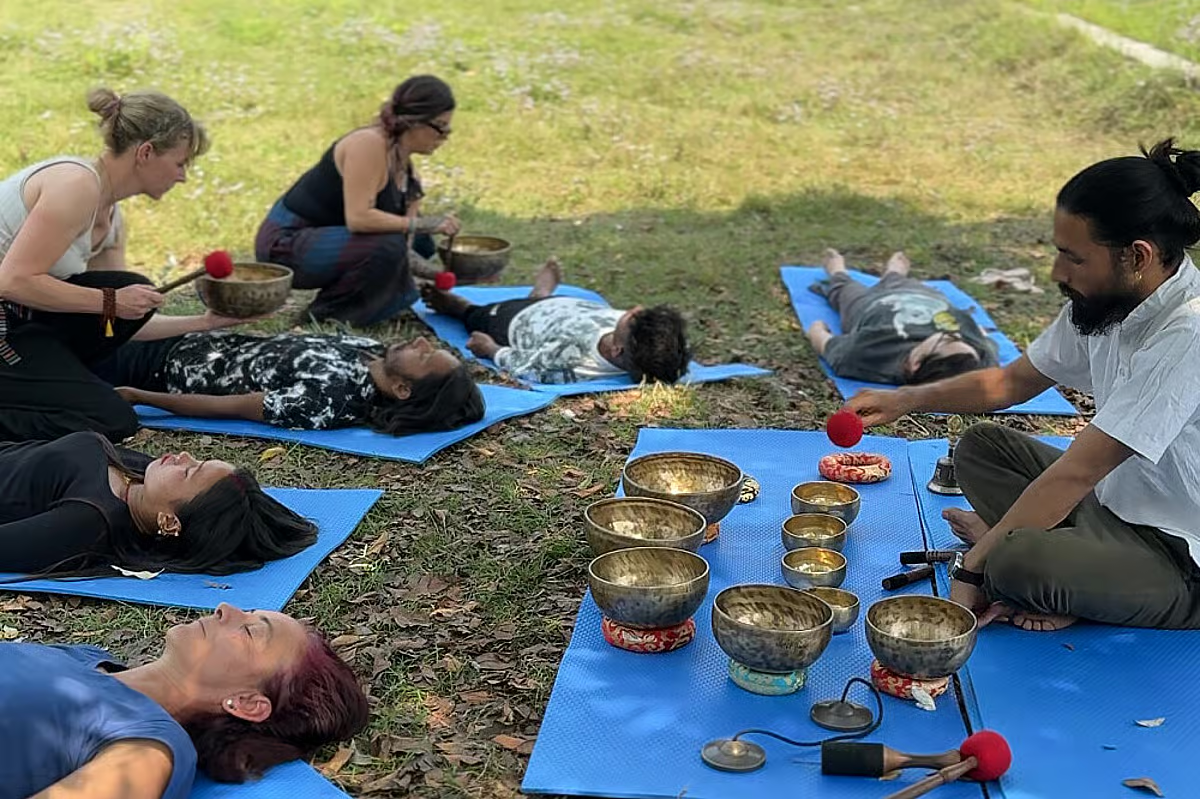
    A group of people are participating in a sound bath or meditation session outdoors, lying on yoga mats with various singing bowls placed around them

    Other similar practices might include:

    • Walks in nature – in silence
    • Mandala drawing
    • Fire ceremonies, moon rituals
    • Visiting temples and monasteries

    These rituals allow for depth and enhance the sacredness of the healing process.

    When to Go: Best Time for Sound Healing Retreats in Nepal

    Spring: (March to May): Warm, flowers blooming, perfect for mountain viewing. Great for outdoor meditations and gentle hikes. Autumn: (September to November): Clear skies, fresh air. The time of year when the most retreats and pilgrimages occur. Winter: (December to February): Cooler temperatures – especially with higher elevations – therefore better for inward-focused silent retreats or indoor retreats. Avoid Monsoon: (June to August) The rains can be heavy, impacting trekking travel and possibly causing cancellations. However, when you are on retreat in places such as Kathmandu or Pokhara your retreat could continue with indoor sessions.

    Choosing the Right Retreat for You

    To make the most of your healing journey, consider these tips:

    1. Identify Your Intention

    Do you have trauma to recover from, or looking for spiritual awakening, or just wanting to recharge? Your intention will help you decide.

    2. Look for Facilitators

    Look for reviews, testimonials, or introductory videos and certifications in sound healing or yoga therapy.

    3. Location

    If you like nature then go Pokhara, or Nagarkot. If you want something more spiritual then go to Lumbini or Namobuddha.

    4. Cost and Time Commitment

    You can expect to pay anywhere from $30–$100/day including meals and stay. Most retreats are set up for either 3, 7, and 14 day stays, plus options for weekends or intensive 21-day resets.

    5. Check what is provided at the retreat

    Some yoga centers focus only on sound therapy and others also offer yoga, nutrition and super spiritual education, so pick what you need.
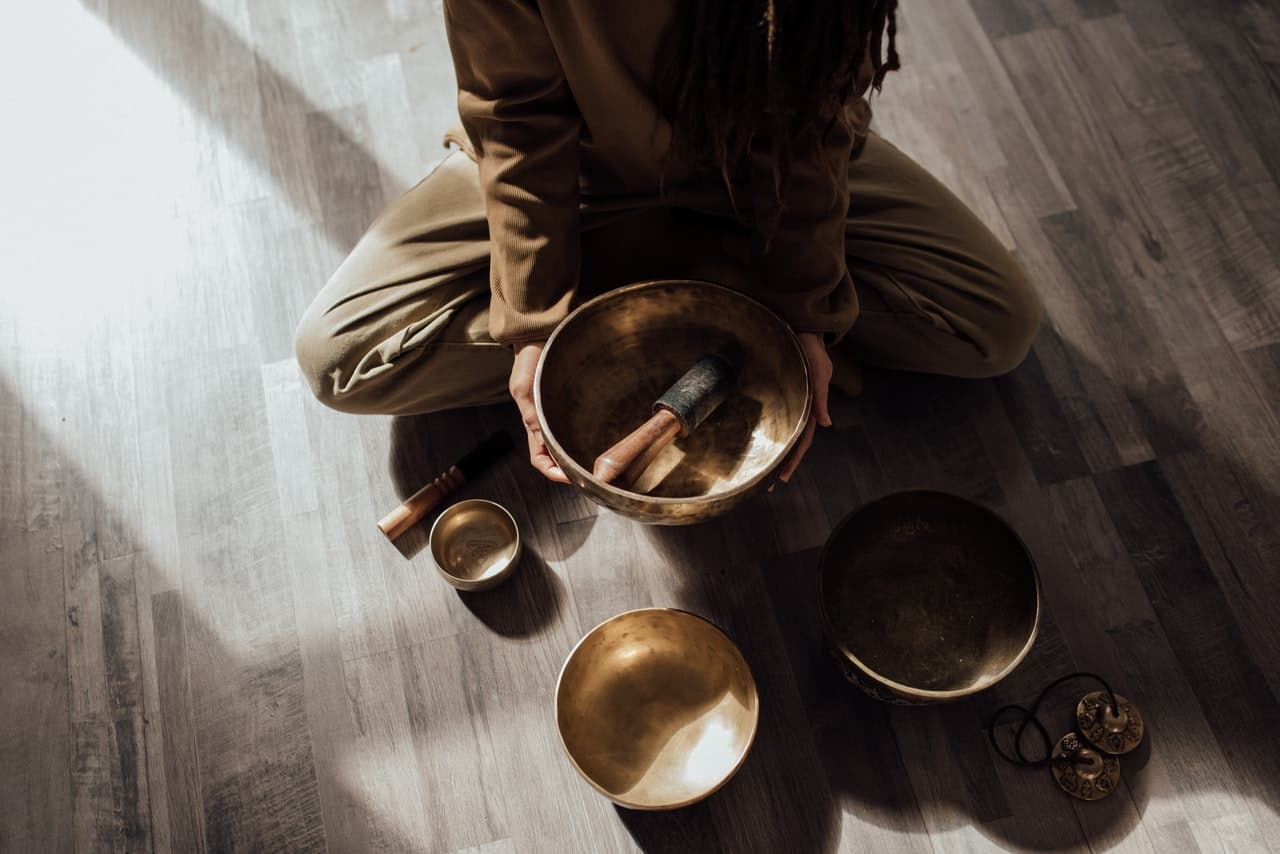
    Engaging with Nature, and Sacred Rituals

     Conclusion

    Answer the Call of the Mountains Nepal’s sound healing and wellness retreats facilitate more than just unwinding. They facilitate transformation. Amidst sacred vibrations, mindful movement, and connection to nature, you will reconnect with parts of yourself long buried under stress and habit. Whether you wish to reset, heal, or just be still, the Himalayas call. Allow them invoke your journey back home to yourself. Contact us today at Happy Mountain Nepal, Facebook, Instagram, or TikTok. 

    FAQs

    1. Who is sound healing available to?

    Yes, Sound healing is non-invasive and non-threatening so if you have serious epilepsy or mental health issues you might want to consult your doctor.

    2. Do I need yoga or meditation experience?

    No, Most retreats have accommodations for beginners and they invite everyone regardless of experience.

    3. Can I go by myself or do I need to come with somebody?

    Yes,Nepal is safe to travel alone. Many participants come by themselves particularly to invest in personal development and clarity.

    4. Are the retreats in English?

    Yes,Most retreats cater to international travellers and will likely conduct their retreat in English.

    5. Can I have time to explore Nepal outside of the retreat?

    Yes, Most programs will allow free time or you could plan some trekking or local tours prior to or at the end of your retreat.

  • Ayurveda Retreat in Nepal: 8 Transformative Wellness

    Ayurveda Retreat in Nepal: 8 Transformative Wellness

    Ayurveda Retreat in Nepal: 8 Transformative Wellness

    Ayurveda Retreat in Nepal, with its lovely hills and the lovely Himalayas, is a health crusaders’ paradise and heaven for trekkers too. Firmly secured by a good amount of spirituality and the naturality of innocence, there are Ayurvedic spas with the countryside’s old-fashioned tradition of cleansing habits and lifestyle, with disdain. Do you require a reboot body, calming the mind, or a whole-body healing process? All these Ayurveda retreats provide, ranging from Panchakarma cleansings, yoga retreats, to spiritual cleansing. These are the top eight of them.

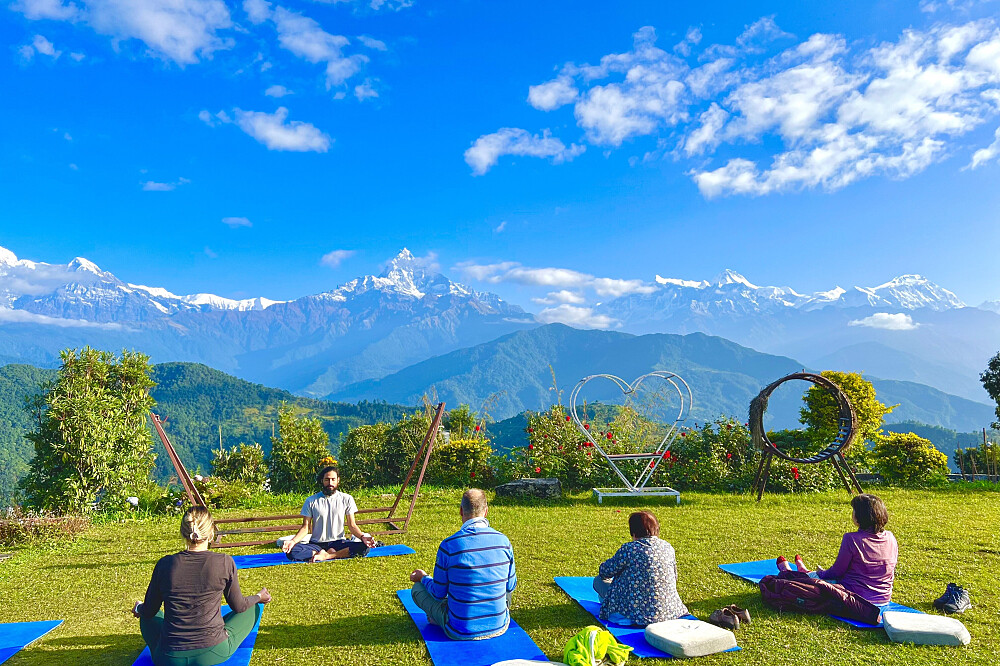
    Morning yoga with Annapurna Himalayas in the Background at Astham
    Morning, Yoga & Annapurna

    What Is an Ayurveda Retreat?

    An Ayurveda retreat is a tranquil spa retreat that is the distillation of the very, very old Indian natural healing system studied everywhere in India and known (ayurveda /aɪ.əˈreɪ.və/) as “the science of life.”
    They’re full-fledged treatment centers and not just assisting you in aligning your body, mind, and spirit, but, more crucially, to your body, or dosha (Vata, Pitta, or Kapha), treatment program, diet program, and life coaching. You’re not only healed at an Ayurveda resort but are also given their “holistic healing environment” that attempts to balance your inner energies. Whatever stress, illness-inducing chronics, burn-outs, or good old’ city-life detoxing your problem is, the retreat offers something for you that will involve:

    • Fully trained Ayurvedic physician consultations.
    • Herbal therapies like oil massage (Abhyanga), steam bath, and Shirodhara.
    • Detox cleansing treatments (i.e., Panchakarma).
    • Ayurveda herb and spice diet and dosa-style.
    • Morning mind and body yoga and evening meditations.
    • Ayurveda and conscious living workshops.
    • They are usually done in peaceful natural places (hill or forest, or river) where natural power places the healing process within a brief time span.
    • It is usually days or weeks, based on your way and purpose.

    Specifically, an Ayurveda retreat is not holidaying; it is concentrated transformation of health, clarity, and consciousness.

    Importance of an Ayurvedic Retreat

    Chronic stress, awful diets, couch potato lifestyle, and mind burnout are conditions all too common to any of us who live this fast-forward lifestyle we’re experiencing. Science can definitely treat disease, but an Ayurvedic retreat is all about treating the disease cause, consciousness, and self-overlayering. An Ayurvedic retreat can’t be replicated—you’re treated from head to toes, body, mind, heart, and soul, your way.

    Here’s why Ayurvedic retreats are so important:

    1. Ayurvedic Source of Healing

    Forget all else because therapy only heals the symptom on its own, and nothing else. Ayurveda heals the why you have what you have. And in doing so, it is personalized to you, it gets the therapists working in the direction of finding your dosha imbalance and towards forming habits that will let your inner balance drip down to you. And this produces actual and physical healing in the long run.

    2. Whole Person Cleansing (Panchakarma: Theory)

    The best of the best of all Ayurveda spas is panchakarma – the elegant detox treatment. Cleans deepest body tissue of toxic substances, renews, and cleanses internal organs. Panchakarma has an effect on physiology only but even virility and mental clarity are achieved through it.

    3. Stress elimination and mental clarity

    Ayurvedic treatments. Meditation and yoga are the crème de la crème to calm down the nervous system. Treatments like Shirodhara (anointing of the head) calm down the patients, and one can simply blow it away. Insomnia, depression, and anxiety. All our visitors. Those who have been residing in our house for many numbers of years are departing. With. Clarity. Of. Thoughts. and. lightness in the world. Of. Emotions.

    4. Re-setting of lifestyle and diet

    Ayurveda also covers dinacharya and ritucharya. Visitors are taught what to eat, and how to eat, live their natural rhythm at the retreat, and therefore are in the position to prevent future illness, and conserve energy.

    5. Personal Care and Education

    Retreats don’t cure you—logically, they wake you up. You can select your body type, your mind, and your support network. You alone are accountable for your health and well-being after the retreat.

    6. Spiritual Reconnection

    Most retreats are based in serene rural locations, and solitude is permitted so that quiet reflection and contemplation become possible. Nature chanting, presence, writing, and walking heal a battered self from daily life.

    7. Natural and Safe Healing

    Ayurvedic treatment and operations involve herbal medicine, oil, and non-surgical treatment. This makes the process non-poisonous, gentle, and Repellent to all none of all such patients requiring surgery or chemicals as an alternative.

    In summery

    An Ayurvedic retreat is not a flight from life but waking up to you. A refuge where you may heal, learn, and be reborn. Suffering from illness, burnout, or do you simply wish to become more alive in body and spirit, then here you will find the skills, nurturing loving energy, and love care to return to life whole, balanced, and energized.

    Top 8 Ayurveda Retreats in Nepal

    1. Nepal Ayurveda Home – Kathmandu

    Nepal Ayurveda Home is a warm health retreat in the midst of Kathmandu’s Thamel bustle. Our retreat is Ayurveda and yoga therapy conducted by registered yoga therapists and experienced therapists. Our Center personally customizes the treatment and care that we provide person to person to each and every one of our guests according to his or her own dosha and diagnosis, so it is a personalized experience every time for every guest. They all go through purging or eliminating problems or tension, but leave with new life energy and balance to proceed further on the path of life.

    All the patients are treated without any difficulty at all. Guests are spoiled and pampered with rooftop yoga, fresh organic fruits, and healing. Overnight to finish the 21-day Panchakarma detox, all are treated on a holistic basis. Peaceful, yet easily accessible Centre makes Nepal Ayurveda Home tourists’ first choice.

    1. Nepal Ayurveda Home

    Source- Google

    Major Attractions:

    • Ayurvedic consultations according to their own requirement
    • Full Panchakarma program detoxes
    • Morning Yoga and meditation
    • Organic Ayurvedic food
    • The nature surrounding and the rooftop atmosphere
    • Ayurveda and self-healing workshops

    2. Nepal Yoga Home – Kathmandu

    Nepal Yoga Home in peaceful Nagarjun Forest is ideal for you if you wish to witness the miracle of yoga and Ayurveda as a gateway to your inner world. The retreat employs time-tested methods of healing and morning yoga practice so that you actually get cured. The therapy is three to 21 days with Panchakarma, ayurveda massage therapy, and yogic breathing exercise. You are welcome to the serene ambiance with the soft chirping of birds amidst leaves and the silence of the nearby hills of Kathmandu.

    You also get a chance for consultation with medical men of doctors who personally plan your treatment, yoga plan, and wellness plan for wellness. All the patients come in pain, pulled or tired, and leave with a sense of genuine inner peace and mental serenity.

    2. Nepal Yoga Home – Kathmandu

    Source- Google

    Major Attractions:

    •  10-day Ayurveda and yoga holidays
    • Morning and evening yoga practice
    • Shivapuri jungle view offers a peaceful ambience.
    • Panchakarma treatment & cleansing
    • Yogic lifestyle seminar
    • Peaceful nature retreat

    3. Moksha Ayurveda & Panchakarma Center – Kathmandu

    Moksha Ayurveda is a class apart from the others in that it is an extension of the traditional Panchakarma treatments that bestow a well-relaxed environments to the entire healing process. The resort, being the lone one with customary decades of expertise in running Ayurveda, provides inexpensive and specific treatment to seriously ill patients as well as stressed or gastrointestinal disease-afflicted patients.

    Where other spas offer the newest health fads, but with the real deal at Ayurvedic medicines, diet counseling, and herbal supplements. In the capable hands of Ayurvedic physicians, who diagnose the cause of imbalance and heal it in a natural way. Sterile, sanitized, and cozy setting.

    Major Attractions:

    • Panchakarma therapy treatment packages for extended periods
    • Ayurvedic herbal oil treatments during massage
    • Dosha-oriented health counseling
    • Soothing, clinical setting for inner recovery
    • Holistic herbalism and nutrition
    • Going beyond sickness by sustained wellness

    4. Ayurveda Health Home – Kathmandu

    Ayurveda Health Home is Nepal’s classiest ayurvedic health home with a homey built for treatment in its entire complex. It enjoys a massive reputation since 2001 for soothing, considerate healing with added comfort. Individualized care at the center is centered on the individual, individually tailored for the individual’s individual disease, for detoxification, regeneration, and disease management as per traditional Ayurveda principles. Special Programs Special Packages for Special Offers.

    It’s in the inner Kathmandu residential area, in a peaceful, calm, homely environment. It’s two days to week’s relaxation. Ayurvedic dietetics, integral health check-up, soft yoga class, and meditation teaching class are all that the package includes. Ayurveda Health Home would be an appropriate substitute for the one who has so much healing or rehabilitating to be done in a clean, hygienic, professional environment in a healing loving environment.

    4. Ayurveda Health Home – Kathmandu

    Source- Google

    Major Attractions:

    • Heritage of higher luxury quality care
    • Classic Panchakarma retreat in a clean, modern environment
    • Expert Ayurvedic doctors and other spa experts
    • Healthy vegetarian lunches lovingly prepared specially according to your own individualized dosha.
    • Serene, peaceful garden ambiance, perfect for sleep and relaxation
    • Specially designed to respond to lifestyle disease care and pain elimination

    5. Himalayan Yoga & Ayurveda Retreat – Kathmandu

    Located at the center of the Himalayas’ grandeur, it’s like a body-mind rejuvenation retreat that is equipped with Ayurveda, meditation, and yoga. Far from city-smog filled Kathmandu, picture yourself driving into refreshing mountain air, breathtaking sceneries, and peaceful spiritual environment.

    The retreat will be balanced body and mind with yoga-sanctified surroundings. Ayurvedic cuisine, yogic practice, herbal therapy, and meditation sessions are regular services. The service staff is mannered, polite, and extremely professional; besides this, fresh starters can begin the practice, professional practitioner yogis can execute it, and disease/stress patients can do the same as well.

    5. Himalayan Yoga & Ayurveda Retreat – Kathmandu

    Source- Google

    Major Attractions:

    •  Himalayan countryside scenery and walking tours.
    • Herbal oil Ayurveda treatment from nature itself.
    • Evening yoga and morning meditation sessions.
    • Herbal tea ceremony and detox diet therapy.
    • Mindfulness, breath, and wellness training sessions.
    • Nature creation and peaceful space.

    6. Arogya Nepal – Kathmandu (Ayurveda Retreat)

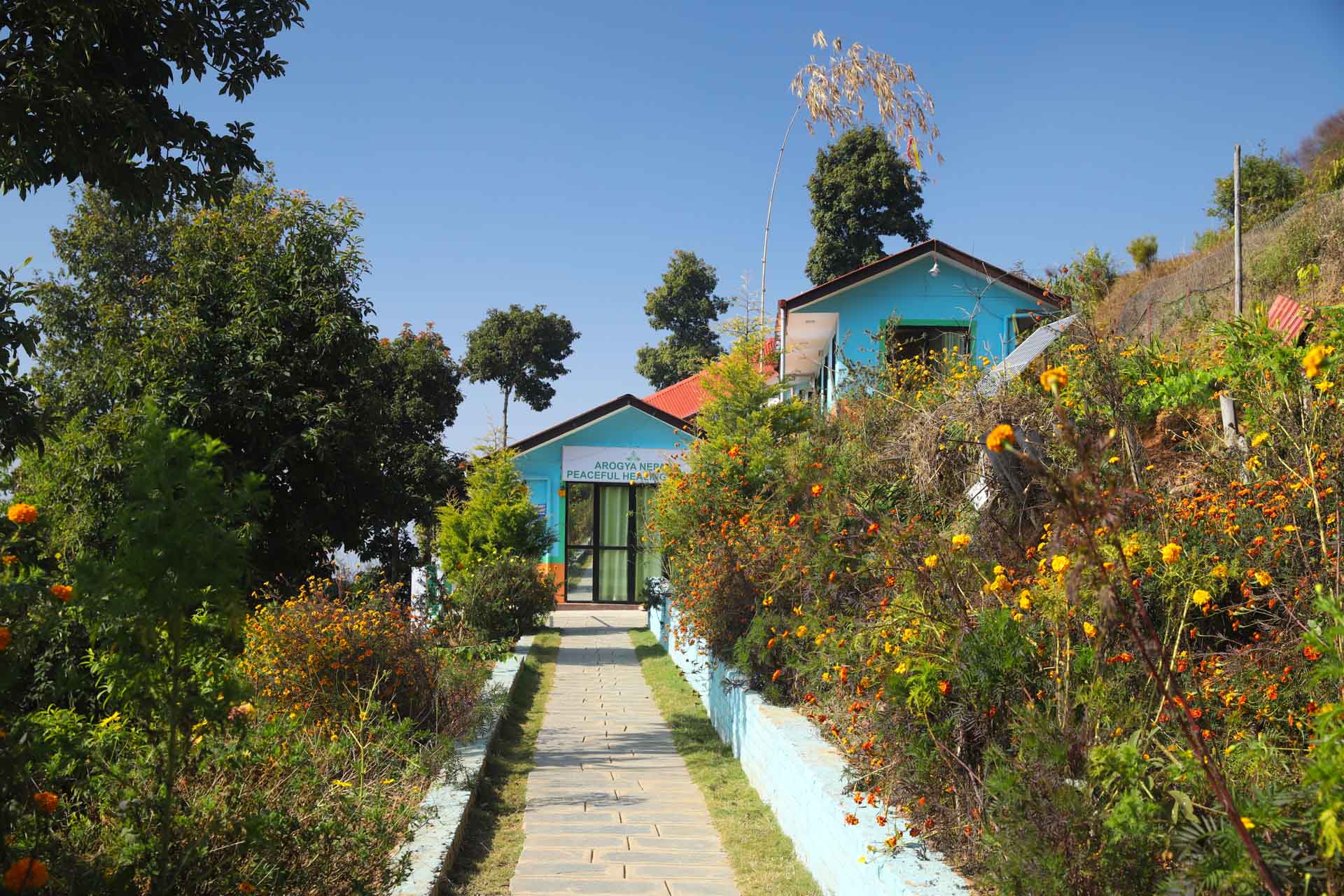
    Arogya Nepal advises merging the depth and richness of the heritage of traditional healing culture and services with the health and well-being of modern times. A is privileged to practice an integrative mode of Ayurveda, yoga, naturopathy, and sound healing through which it is able to give the best of traditional healing to clients. Arogya programs integrate body and mind, from stress management and anxiety disorder to hormonal acclimatization and low immunity.

    All the guests are handled professionally and where words and treatment to transform to life, detoxification, Ayurvedic treatment, and to making life to life. Arogya retreats are ideal for the people who are to be cured, rejuvenated, or upgraded to a better condition without force or indulgence. Because of the need for peace and tranquility, betterment can progress on the way to cure and development.

    Arogya Nepal – Kathmandu

    Source- Google

    Major Attractions:

    • Sound breathing and healing therapy
    • Stomach maintenance, insomnia, and anxiety
    • Locally sourced organic spice menu
    • Nature remedy-based purification plan

    7. Shanti Yoga Ashram – Kathmandu

    Shanti Yoga Ashram is less retreat and more yogic center, although the spirit is the central thing. They do adhere to the classical yoga traditional school, but they blend that with Ayurvedic body, mind, and spirit methods and teachings. The ashram itself is in rural countryside on the outskirts of Kathmandu, and there is a pleasant local village community atmosphere with some of the sacred rituals still preserved.

    The day is filled with morning yoga practice, Ayurvedic dieting like one would do in a normal ashram, karma yoga (unselfish work), and Vedic philosophy study. Some of the Ayurveda is a script diet, massage, and tea. It is absolutely a wonderful ashram for one who needs to create a more interiorized yoga and spiritual life; it’s for someone who wants to experience a full cleanse of body and spirit.

    Source- Google

    Major Attractions:

    • Vedic philosophy and classical yoga practice

    • Ayurveda grooming and herbalism

    • Sattvic vegetarian food

    • Spiritual fire puja, mantra, and ritual

    • Yoga and Ayurveda philosophy class

    • Simple living and community silence

    8. Osho Divine Zone – Kathmandu

    Osho Divine Zone provides Osho’s meditation method combined with Ayurvedic therapy and exercises to eliminate the physical issues on the path to emotional liberation and mental cleanliness. Its dynamic meditations are combined with Ayurveda detox, diet balance, and diet sensitivity.

    Anticipate inner work with silent days, chakra meditations, herbals, and journaling. The property’s energy embraces change with open arms, and staff guide guests into healing and self-knowledge. It is an ideal center for spiritual seekers and mental quick fixes.

    8. Osho Divine Zone – Kathmandu

    Source- Google

    Major Attractions:

    •  Osho’s active and silent meditation methods
    • Ayurvedic treatments with personalized herbal treatment
    • Inner work and emotional release weekends
    • Discerning detox diets and fast ceremonies
    • Natural surroundings, in secluded locations with peace gardens
    • Offer group awareness and consciousness courses.

    Why Choose an Ayurveda Retreat in Nepal?

    Attending a Nepalese Ayurveda retreat isn’t about herbal massage or cleansing, it’s about submerging yourself in a culture that honors balance, harmony, and healing. Nepal is a special country where Ayurveda can be reborn. There is a time-honored, tradition-based integrative wellness based on Vedic heritage and people attuned to the calming, rejuvenating energies of the Himalayas. There is synergy of healing modality and spiritual purpose to a peak here, and so is the optimal site for actual transformation—body, mind, spirit.

    ayurveda

    Source- Google

    1. A Unique Fusion of Ancient Wisdom and Natural Healing

    Nepal shares deep cultural and spiritual ties with India, the homeland of Ayurveda, with its eating and cultural practices, but behaves otherwise as far as complete cure is involved. Practically, the majority of the retreats are run by therapists who have studied Ayurveda.

    Thus, you arrive at the total healing of the entire body. If you are having digestive disorders, stress, sleep disorders, endocrine disorders, or simply need reinvigoration, you can be treated by the retreat as per your body constitution (dosha) and life.

    2. The Power of the Himalayas: Healing Through Nature

    Nature is Nepal’s greatest attraction. The fresh mountain air, spring water, lush green grassy forests, and the clearness of mind are all great signs of healing. The Himalayas are an East philosophy spiritual energy spot that will cleanse your aura and concentrate your mind. Contrary to wellness resorts that are smack in the heart of city centers and/or central business districts, the majority of Nepal’s Ayurvedic resorts are situated in secluded hills or isolated forests where one can find isolation from the noise and chaos of daily existence.

    3. Personalized Healing

    Nepalese Ayurveda is not something you purchase from a supermarket, it is bespoke. You will receive a complete health consultation before your treatment, such as pulse, dosha, life lifestyle. Practitioners make all bespoke from getting your body types, disease, diet regimen, herbal medicine, massage, yoga practice, and meditation practice. Eventually, these bespoke and you will be better served in the long term than solving the issue for the short term.

    4. Affordability Without Compromising Authenticity

    Nepal offers some of the lowest prices in the world, lower than spas in the West or even Indian luxury Ayurvedic spas—but without sacrifice in terms of authenticity and quality. Most of these centers are still family-run or community-run, where love for healing and service was never forgotten, but never commercially hybridized either. Discovering Ayurvedic retreat facilities in Nepal makes it progressively feasible for more and more individuals to become capable of utilizing Ayurveda with the very high cost factor eliminated.

    5. Integration of Yoga, Meditation, and Spiritual Practice of Ayurveda

    All of the retreats in Nepal combine an ayurvedic practice with Vedic and Himalayan-sourced meditation and classic yoga practices for the development of body-mind relationship consciousness.

    The practice is borrowed from Vedic and Himalayan traditions rather than from the therapy practice, at least to a large extent, for the asana. When you visit the retreat, you will be fortunate if you are indulged in mantra chanting, silent sitting meditation, breathing practice (pranyama), and even a spirituality and philosophy workshop, all purpose of calming the mind, emotionally constructing, and achieving self-realization.

    Tips Before You Book an Ayurveda Retreat

    Choosing an Ayurveda retreat in Nepal is not a luxury—it’s a return to your natural state of balance and health. In a world overwhelmed by fast fixes and synthetic solutions, Nepal offers an authentic, time-tested path to well-being that heals from the inside out.

    Yoga Practicing at Yoga Home
    Yoga Practice

    Source- Google

    1. Choose a retreat based on your personal goal.

    Some may be cleansing the body on a physical level; others, chronic pain management; some, stress relief only; and others, healing on an emotional level. You choose one which is appropriate to your purpose: some are Panchakarma detox only, some are for preparing the mind for mental clarity, spiritual growth, or wellness.

    2. Check and find out where the practitioner is trained.

    You need to ensure that the Ayurvedic doctor and therapists are competent and were trained by an institute that is well-known. Also, check if medical consultation is being provided in the wellness centre you choose and not treatment with a “spa” type of setting, i.e., massage.

    3. Look for customized treatment plans. 

    Ayurveda is, by definition, purpose-made and custom-made because it takes into account the attendee’s dosha. You may be able to purchase a “standard package,” but genuine centers will be deciding your dosha so that they can create a plan for you specifically.

    4. Understand program duration.

    Recognize that the real Panchakarma cleansing or any real Ayurvedic treatment is not meant to heal the body in a few weeks’ time. Treatments themselves are best utilize as a healing therapy for 14 -21 days. And although there is some merit in staying for shorter durations of time, with lots of rest and healthy offerings at best you can reduce the toxic load in your system but not hours and minutes for true healing!

    5. Prepare mindfully.

    When you go out to pack your bags, please pack some loose, comfy clothes, a journal that you can take outdoors to record your experience, any medication that would be prescribed by a doctor, and only your heart. Pack all distractions along! These exercises are called a retreat for a reason and must be approached with intention and an openness to being fully present in the experience.

    Conclusion of Ayurveda Retreat

    A sojourn in a Nepalese Ayurveda resort is so, so much more than a vacation; it is a return to health and harmony, to yourself. In a world that is addicted to quick fixes and man-made intervention, Nepal provides a genuine, time-tested alternative to healing, beyond culture and man-made intervention, and addressing your health from the inside out. If you want to know more about a retreat, you can read this blog. Contact us today at Happy Mountain Nepal on Facebook, Instagram, or TikTok

  • Nepal’s Best Destinations for Meditation Retreats.

    Nepal’s Best Destinations for Meditation Retreats.

    Nepal’s Best Destinations for Meditation Retreats.

    The Softest mountain vista’ Nepal, ‘the most sacred pilgrim soul’s Nepal technically in the strictest sense of the term has been and is the soul homelands to soul pilgrims as has been and is to be for spiritual renewal and spiritual enlightenment Nepal is your destination point to choose on what you can cleanse your body, soothe your mind, and heal your soul.
    In our new behind-the-scenes travel series, we take you along to Nepal’s top yoga and meditation retreats, where to go, how dou even know where to look for the right type of retreats, and how to make it happen. Roll out the mat, pack the duffel, and off to Nepal for the soul.

    Why Nepal for Yoga and Meditation?

    In trying to provide you with some idea of what real retreats are, let us take the case of how Nepal is a very good example when it comes to yoga and meditation retreats in the whole world.

    1. Spiritual Heritage

    Nepal is Lord Buddha birthplace, great dedicated Buddhist missionary birthplace, and spirituality heritage birthplace. It is revealing very ancient temples, monasteries, and spirituality centers which are centuries-old earth and spirituality center. The  eternal energy welcomes an individual who is on spiritual path to a very long long time. This is such a beautiful destination for yoga study and meditation.

    2. Nature Beauty

    Himalayan mountains capped with snow, Nepali hills, peaceful lakes, and paddy fields are developing peaceful and quiet meditation and yoga retreats. Lush grasslands can greet the mind with open arms alongside the babbling streams in sunlight.

    3. Nepali Hospitality

    Nepalis are humanitarian human beings, open-hearted and liberal, and philanthropist retreatants heart-opening to loving-kindness and selfless life and gala charity and good-wishing.

    4. Affordability

    And yet, quality touristy things could not possibly befall yoga and meditation retreats cheap but non-quality retreats, Nepal simply never offers cheap but quality. Nepal is hence cheap to accommodate any worst-at-all-solution to all such price-conscious travel as well as luxury retreat-spender.

    Sweat Deals to Attend Yoga and Meditation Retreat in Nepal

    1. Kathmandu Valley: Spiritual Heart of Nepal

    meditation Retreats in kppaban

    Nepal rolling hills countryside with holiest Nepal monasteries and temples. rolling hills countryside turn multicolored rainbow valley, melting pot and melting pot of yesteryear world, yoga and meditation retreat idyllic paradise.This valley alone is popular for its assortment of heritage and tourists are privileged to view some of the best temples, palaces, and monuments in the South Asia region. The promenade of memory in this protected territory proved to be an almost perfect copy of historical traditions, architectural and other aspects of the people of the given country of Nepal.

    Kathmandu valley is one of those places that by each corner of it one can hear many stories. Kathmandu Valley temples, palaces makes them unique. It is now time to talk more about the Kathmandu Valley-

    • Venerable monasteries and stupas, peaceful serene atmosphere where one sits just and so does Nepal’s culture just goes on.
    • Peaceful Buddhist meditation retreat spot or Buddhist monastery yoga. Practice centers
    • Kopan Monastery: senior monk level advanced level course retreat in serene hill top complexes.
    • Pashupatinath Temple: sacred most serene Hindu temple, particularly when it is performing morning and evening puja.
    • Boudhanath Stupa: largest in the world great stupa, chariots to meditation practice through mantra recitation and turn prayer wheel.

    Retreat Options

    • Practice-based awareness practice awareness relaxation retreat.
    • Culture-dependent learning and practice-based yoga and meditation retreat.

    2. Pokhara: City of Peace Meditation Retreats

    pokhara retreats

    Pokhara is heaven on earth for the young travelers who would also want to wake up there. The serene town has another hike to keep the kids busy and surprise them with a breathtaking view. Phewa Lake is not avoided, and on its left side in the rent-paying line is the paddled boat or rowboat to hire to paddle out across it in a tour-of-reflection type of way in order to see the shadow of Himalayas. World Peace Pagoda, which is reached by boat with perhaps the hike trail rising in steps and no flat ground at the end of the trail, is a lakeshore walk with rolling hill shadows in between.

    It is, peace city, nature city, Namaste, beneath peaceful lakeside of Phewa Lake so peaceful and overshadowed by granite peaks of Annapurna mountains. Peaceful and quiet nature of city here is yogic and meditation paradise. So peaceful and so expansive in nature of city offers human being plenty of space to spread arms with innocence and space to recover in nature.

    Highlights

    • Phewa Lake: Serene place to brood with reflection view of hills as the back of the lake.
    • World Peace Pagoda: Bird’s eye view of Himalayas and Pokhara and peace so profound to meditate.
    • Begnas Lake: Serene weekend destination with serene ambiance, stunning place to meditate with even a single human soul not detected previously at all.
    • Health centers offer all kinds of yoga, meditation, and Ayurveda to radiate positive energy.

    Retreat Activities

    • Ayurveda and yoga retreat with body and well-being.
    • Nature walk with nature retreat in peace and meditation by the lake.

    3. Lumbini: Birthplace of Lord Buddha


    Birthplace of Lord Buddha Siddhartha Gautama The location is a school of Buddhism as well as a school of spirituality.
    Ancient monasteries and home serenity garden where the very last thing in your mind is peace in the atmosphere and to live here and meditate is a paradise.

    Tourists and pilgrims from the ends of the universe visit this nation on a pilgrim’s journey in the universe with the hope of blessing the whole universe with a prayer as a way of purifying the universe and gaining an inner light of the self within. Sanitation-air of the peace of the nation provides the pilgrims with a nation where they can attain their philosophy and Buddhism-illuminism in life.

    Highlight

    • Maya Devi Temple: Buddha’s birth, serene gardens and ancient ruins amidst nature.
    • Lumbini Monastic Zone: World monastery on grounds of Buddhist theology, everyone’s idea of God.
    • Lumbini Peace Park: Serene park in compound where daily work and meditation is done.

    Retreat Options

    • Peace sensitivity course Vipassana meditation retreat.
    • Loving-kindness practice and organizational seminar Buddhist meditation retreat.

    4. Nagarkot: Serene Mountain Retreats

    yoga retreat

    Nagarkot, serene hill haven within one’s day’s journey from the capital. Let the family take them to the excitement of hill weather and Himalayan vistas. The most justifiable time of the trek is early morning when early morning sun inscribes fairytale magic on maiden peaks to whosoever is deserving. The family may get up early morning and see it with their own eyes through the hotel window or from whichever of the vantage points is accessible in the place. Even Mount Everest can be seen in the horizon on a clear early morning dawn.

    Mid-hill residence of Nagarkot, serene vacation haven of Kathmandu Valley famous for Himalayas bird’s eye view landscape. Its serene hilltop beauty and village are yogic and meditative too. Curving which actually so beautiful as well as artistically sketched autumn sky above snow capped mountains as well as several meditator of photography world by eye-to-eye with nature as well as serene by rotating practisers’ face around.

    Highlights

    • Sunrise and Sunset Panoramic View: Panoramic view of Himalayas of Mount Everest as scenic view for meditation.
    • Nagarkot Panoramic Walking Trail: Panoramic scenic walking trail with scenic view for walking meditation and meditative walk.
    • Peaceful Environment: Pollution-free peaceful environment to relax and attain spiritual growth.

    Retreat Centers:

    • Himalayan sunrise meditation and yoga retreats well planned.
    • peaceful meditation retreats for mindfulness and contemplation.

    5. Rara Lake: The Hidden Gem

    Nepal’s deepest and remotest, Rara Lake, is emerald monolithic hill virgin paradise. Away from city center, virgin paradise is experienced by someone ready to experience touch of depth of being nature. Hill wind and crystal water energize environment in which one reaches the height of meditation and self-realization. Rara Lake solitude so enjoy nature and thus a calm land and thus a perfect site for daily spiritual practice.

    Highlights

    • Unspoiled Nature Scenic Landscapes: Panoramic hill, forest, and virgin maiden Rara Lake landscape.
    • Peaceful Places: Untroubled abode of peace from man and recent war.
    • Wild Nature and Animals: Multicausal sanctuary with room for contemplative jungle stroll and wildlife-safari sightseeing.

    Retreat Center:

    • Nature retreat retreat with lake-front contemplation and forest-spotted wood yoga.
    • Weekend virgin nature small-group meditations.

    6. Dhulikhel: The Scenic Meditation Retreats

    Dhulikhel heritage hill resort and north Kathmandu hill resort town renowned for Himalayan scenery and heritage. Heritage temple, rural quietness, and village stroll provide yogic meditation and serene ambiance to meditation. Plane weather and Nepali culture providing luxury ambiance to rest and reflection.

    Highlights

    • Panoramic Scenic Hill View: Panoramic view of Langtang, Ganesh Himal, and even Mt. Everest view in scenic sunrise.
    • Sacred Temples and Monasteries: Contemplative peace retreat of peaceful Narayan Temple, and Kali Temple.
    • Quiet Places: Remote religious peace town of peaceful.

    Retreat Activities:

    • Contemplative peace on one side, eyeball to eyeball with inter-culture diversity on other side.
    • Feed-seed solitude individual retreats with inner peace bent and religious self re-shaping.

    These are the best locations for yoga and meditation retreats, Kathmandu city valley, serene lakeside Pokhara, or secluded Rara Lake. They are nature-friendly, mind-friendly, and culture-friendly to be used as the gateway to hidden peace and exploration.

    Types of Yoga and Meditation Retreats in Nepal

    Nepal provides all types of yoga and meditation retreats in any shape and size and can be designed as per all the details and specifications. The most sought-after among them are:

    1. Classical Yoga Retreats

    Man prescribes classical yogas like Hatha, Ashtanga, and Vinyasa yoga. Pranayama (breath control), meditation, and way of life classes, and yoga philosophy and way of life classes to the students.

    2. Meditation Retreats

    They use meditation retreats to guide your meditation and might use Vipassana meditations, Zen meditation, and mindfulness. They use silence and solitude.

    3. Yoga and Ayurveda Retreats

    Practice and utilization of wholism practice and utilization of yoga therapy practice and utilization of Ayurveda practice and utilization and administration administration is wholistic in wholistic wholistic philosophy of wholistic healthiness and happiness practice. Ayurvedic massage, Ayurvedic consultation, and purification of the client are practiced.

    4. Nature Immersion Retreats

    Nature retreat is to replicate nature in open air nature yoga, nature meditation in nature, walking, trekking, and bird watching in open air nature.

    5. Silent Retreats

    Silent retreat is for a person who is ready to do meditation without speaking a single word from his/her mouth.

    Volunteers do not say a word during the whole duration of the retreat except the final one to relish at the end of the retreat, and it is enough for a human being so that he/she can think and focus on things.

    6. Buddhist Meditation Retreats

    They are held in Buddhist monasteries and include Buddhist philosophy, Buddhist meditation course, and practice on a daily basis.

    Tips on How to Make the Best Choice

    Because there are so many of them, perfection for a Nepal yoga and meditation retreat is not always achievable. Some of what you are about to read will allow you to make your best choice for you:

    1. Know What You Need

    Know what you need before you decide. Do you need more relaxation class, some meditation or more yoga? Whatever it will be to give you a best tailor-made-to-your-need retreat

    2. Know Where You Are

    Large, giant amounts of yoga and meditation retreats, too, exist and one and each and every and single one of them is unique. Your city plaza, serene lake retreat, or mountain rugged hideaway is yours.

    3. Determine the Schedule

    Other retreats same timetable style, i.e., blank day-long sitting or open session. Attempt to attempt getting some balance of retreat and subject to complete body state.

    4. Examine Teachers

    Retreat quality will largely depend on teacher experience and qualification. Examine teacher experience and qualification so that they are experienced and known or otherwise.

    5. Examine Reviews

    Open comments in class, accommodation, and reviewing retreats must be considered. If remarked upon, then understand it is not going to happen.

    6. Compare Prices

    Nepal yoga and meditation retreats do not have to be an expensive affair outside Ridiculously overpriced way too expensive retreats. Wake up and awaken your sense.

    Conclusion

    In conclusion, Nepal is divine godly heritage, godly nature wisdom, open to originals is where one can take yoga and meditation retreat. Original practice, peace within or healing body and soul, but your need, in Nepal there are several possibilities to bring in.

    From Nepal’s spiritual hub, Kathmandu Valley, to resort town-lake shores of Pokhara, from ancient birthplace of Buddha-Lumbini to monasteries of monastery-hill-location towns of Nagarkot and Dhulikhel hills, Nepal is your yoga and meditation destination. Open your heart and the world, then, and Nepal’s spiritual odyssey awaits. Body, mind, spirit are your treasures. Contact us today at Happy Mountain Nepal, Facebook, Instagram, or TikTok. 

    FAQs

    1.Why visit Nepal for yoga and meditation retreat?

    Nepal is very well known for its cultural heritage, spiritual scene, and peaceful locations that are best suited for meditation and yoga. It has been blessed with old monasteries, divine temples, and far-off retreat centers.

    2.What are the different kinds of yoga and meditation retreats in Nepal?

    Nepal provides traditional yoga retreats, meditation retreats, Ayurveda-style retreats, silent retreats, nature retreats, and Buddhist meditation retreats at monasteries.

    3. Where are Nepal’s best yoga and meditation retreats?

    The best of them are Kathmandu Valley, Pokhara, Lumbini, Nagarkot, Rara Lake, and Dhulikhel. Each of them is distinct in some sort of natural beauty, culture, and serenity.

    4. How expensive are Nepal’s yoga and meditation retreats?

    They are time, location, and luxury. Budget retreats cost $200 a week, and more than $1,500 luxury retreats.

    5. Do I need to be yogi master or meditation master in order to go for a retreat?

    No, it is best for beginners, yogis, and meditators in the majority of the retreats. Even some of the retreats provide experience and qualification certificates.

    6. When do I attend a retreat in Nepal?

    Spring month (March to May) and autumn month (September to November) ideal season when weather is pleasant and Himalayan view is nice.

    7. What do I bring on a Nepal yoga and meditation retreat?

    Loose, casual yoga attire, meditation cushion or yoga mat, refillable water bottle, light weight layering to acclimatize to weather changes, bare essentials toilettte.

    8. Nepali trekking for a yoga retreat appropriate?

    Yes, you have trekking possibilities in the Himalayas at some of the retreats, and you can combine yoga and meditation with activities.

    9. How do I choose the best Nepal yoga and meditation retreat?

    Bear in mind your intention, destination, where you wish to go, practice, teachers qualifications, reviews, and cost. Comparison will enable you to make the best choice.

  • Find Your Inner Peace: Trekking and Spirituality in Nepal

    Find Your Inner Peace: Trekking and Spirituality in Nepal

    Find Your Inner Peace: Trekking and Spirituality in Nepal

    Introduction

    Nepal, the Himalayan kingdom, is not only a trekker’s paradise but also a place full of nature and spirituality. It is a spiritual sanctuary where ancient monasteries, meditation caves, and natural wonders all coexist to provide a serene environment in which to find inner peace and spiritual enlightenment. Whether your goal is to test the body to its limits or enlighten the spirit, trekking in Nepal is an adventure which will leave a lasting mark on your life.

    The Connection Between Trekking and Spirituality

    Spirituality and trekking are synonymous. Walking in the beautiful nature, listening to nature speak, and among human beings could be your thinking time that arrives in the shape of an epiphany. Trekking hard can be your trial time, and Nepali monasteries and temple locations being religious places provide introspection and contemplation to you.

    Sacred Trekking Routes in Nepal

    1. Everest Base Camp Trek with a Spirituality Touch

    Everest Base Camp (EBC) is not a trek but a most sacred trek. Trekkers are walking to the stunning Khumbu valley while walking on sacred Buddhist terrain, i.e., eroded chortens, mani stones covered with mantras, and prayer wheels. Wind-blown prayer flags painted red, blue, yellow, green, and white sanctify the trail, carrying prayers to deities.

    Trek’s most holy religious pilgrimage location is the largest monastery in the region, Tengboche Monastery. Born also at mid-air elevation at 3,867 meters, the monastery offers Everest view finest with a peaceful ambiance in which to contemplate. Chanting monks, scent of wafting incense sticks, and butter lamps add a divine taste to the religious environment.

    Everest Base Camp and Spirituality Touch

    Why Everest Base Camp is a Spirituality Trek:

    • Tengboche Monastery, Buddhist monastery for meditation and studies.
    • The mani stones, prayer wheels, and banners assume sacred meanings thus.
    • Mountaintop solitude triggers self-reflection and awareness.
    • Survived by being taken care of by Buddhist monks and Sherpa villagers.
    • The hike is physically exhausting but results in mental sharpness and rejuvenation.

    Everest Base Camp trek begins at Lukla, the small hill resort town accessed through a short flight from Kathmandu. The hike goes through Phakding and on to Namche Bazaar, the busy Sherpa town where a halfway rest is being done. The hike goes through Tengboche, famous for the Tengboche Monastery, and moves on to Dingboche, Lobuche, and onwards to Everest Base Camp. Summer ascent of Kala Patthar with the backdrop of Everest is another choice in between to beautify the trek.

    2. Annapurna Circuit and Muktinath Temple

    Annapurna Circuit is globally renowned for landscape diversity, cultural diversity, and spirituality. The trek familiarizes us with acclimatization with Hindu and Buddhist villages and ignites a blend of spirituality belief that nowhere else in the entire world exists except here. Muktinath Temple continues to be the center of the trek and the highest pilgrim temple of Buddhists and Hindus.

    Muktinath is the title given for an ointment, in which the devout ones are cleansed by 108 waterspouts of sacred water. The previous flame was burning within the temple itself, as the natural gas power, and is a symbolic one in function as the lord’s. White-hilled scenery surrounding the temple complex offers the scenery which begets serene contemplation and searching of the soul.

    muktinath

    Why Annapurna Circuit is a Spirituality Trek:

    • Muktinath Temple is a place of religious cleansing and enlightenment.
    • By their side, Buddhist stupas and Hindu temples.
    • Multi-ethnic cultural influence helps to illuminate Hindu and Buddhist tradition.
    • Nature of Himalayas is enough to bring about sensitivity and tranquility.
    • Guided meditation sessions in the trekking trail of monastery.

    The trek starts from Besisahar, Marsyangdi River, green valley, village. The climbs are through Chame, Pisang, and Manang acclimatization is well taken care of. Trek to Thorong La Pass (5,416m), the highest point of the trekking trail, then down to Muktinath, holy pilgrim town of religious significance. Trek from Jomsom and Tatopani to Pokhara.

    3. Langtang Valley and Kyanjin Gompa

    Langtang Valley, “Valley of Glaciers,” is a serene nation of brutally tolerant Tibetan Buddhist mysticism. The trek is laid out to see, rolling through pretty Tamang villages, green forest, and across sheer breathtaking alpine vistas before finally arriving at the final Kyanjin Gompa, old Buddhist gompa at 3,870 meters.

    Kyanjin Gompa is a holy temple where the trekkers get a chance to study a course of meditation and experience a typical Buddhist life. Holiness and purity of the temple and off-the-beaten-path wilderness make it one of the best destinations where one can experience inner peace and one of the best treks where one can experience inner peace.

    Langtang Valley and Kyanjin Gompa

    Why Langtang Valley is a Spirituality Trek:

    • Kyanjin Gompa is a meditation and prayer site.
    • Tibetan religion and ritual again enhance the religious life.
    • It possesses a quiet atmosphere that beckons serenity and stillness.
    • Less-traveled trails offer seclusion and greater reflection.
    • Homestay hospitality is genuine spiritual communion.

    Langtang Valley trek begins with motor drive to Syabrubesi, the gate for Langtang National Park. Trek along to Langtang River and green forest to Tamang village such as Lama Hotel and Langtang Village. Langtang Valley tour concludes at Kyanjin Gompa, the ancient monastic village surrounded by the adjacent snow-white mountains. Short trek to Kyanjin Ri provides bird’s eye view of the valley with room for meditation.

    4. Upper Mustang: The Forbidden Kingdom

    Upper Mustang is Nepal’s holiest trekking region. Remote kingdom and governed by its Tibetan heritage. Therefore, it boasts ancient monasteries, isolated caves, and walled city of Lo Manthang. Treks there are time treks because the country and its people are as if in decades past.

    The area is replete with meditation caves and monasteries, including the Rangbyung Cave where Guru Rinpoche had meditated. Lo Manthang Tiji Festival is an extremely old Buddhist cleansing of the world and vanquishing of evil spirits. The untouched, unspoiled beauty of Upper Mustang is a spiritual trek as well that gives the trek leaders the out-of-this-world mix of nature and spirituality.

    Upper Mustang: The Forbidden Kingdom

    Why Upper Mustang is a Spirituality Trek:

    • Lo Manthang is centuries of Buddhist history old.
    • Most sacred monasteries and safest caves are where one meditates.
    • The Tiji Festival is reserved for significant Buddhist rituals.
    • Solitude of the trek allows unbridled spiritual practice,.
    • The theater scene is seriously worth it.

    It begins from Jomsom, where one gets flown briefly from Pokhara. The trekkers follow the path of the Kali Gandaki River along the town of Kagbeni, Mustang’s gateway. The trek entails one passing through Chele, Ghami, and Tsarang to reach Lo Manthang, the walled city of the past and Mustang’s cultural hub. The ancient monasteries, villages in hidden caves, and hamlets of yesterday are being traced. The trail route is along a direct road from where short cuts can be made to bypass going via Chhoser Cave Monasteries.

    5. Manaslu Circuit and Pungyen Gompa

    Manaslu Circuit trek is a less-traveled trekking adventure circumambulating the eighth-highest peak of the world, Mt. Manaslu. The trek gives us a chance to meet less-traveled traditional Tibetan Buddhist villages, ancient monasteries, and spiritual sites and it’s a less-traveled spiritual trek. The most spiritual part of this trek is Pungyen Gompa, less-traveled monastery, and gives us a beautiful white Manaslu peak view.

    Pungyen Gompa stands at 4,065 meters and consists of a Buddhist monk monastery with sitting monks in meditation. The monastery was formerly reported to be burning by villagers who had previously complained about not being able to climb Manaslu but bears witness to mankind’s belief towards the mountain in attempting to still be able to guard these mountains. Overnight camping of trekkers here, and meditation can be arranged to enable individual meditation, and see Himalayan beauty all at one location.

    Manaslu Circuit and Pungyen Gompa

    Why Manaslu Circuit is a Spirituality Trek:

    • Pungyen Gompa has a personal meditation hermitage.
    • The trek goes through isolated Tibetan Buddhist villages with plain architecture monasteries.
    • Manaslu is a spiritual peak to human mind.
    • Isolated off-the-beaten-path trek is an invitation to contemplation.
    • Challenging high pass, Larkya La (5,160m), is a test of patience and attention.

    Manaslu Circuit Trek begins from Soti Khola and treks along Budhi Gandaki River valley on forest trails, suspension bridges, and rice terraces. Treks to Jagat, Deng, Namrung, and Samagaon where side trek to Pungyen Gompa is possible. Treks from Larkya La Pass to Bhimtang and Dharapani and concludes at Besisahar.

    6. Helambu Trek and Guru Rinpoche’s Meditation Caves

    Helambu Trek is short and simple trek to Helambu Valley of north Kathmandu Nepal. This Valley is very unique Tibetian cultural heritage left by Helambu’s Hyolmo villagers. Few of the ancient Buddhist monasteries, mani walls, and prayer wheels add rich religious flavor to the trekking trail.

    Helambu all holy sites are meditation caves of great Buddhist master Padmasambhava (Guru Rinpoche), great Tibet Vajrayana Buddhism spreader. Inner tranquility and alertness destination sites are Tarkeghyang and Melamchi Gaon cliff caves.

    Helambu Trek


    Why Helambu Trek is Spirituality Trek:

    • Guru Rinpoche meditation caves are of utmost sanctity.
    • Trek goes through divine monasteries like Tarkeghyang Monastery.
    • Helambu serene surroundings are destination for meditation and reflection at individual level.
    • The reason that there is orthodox style chortens and prayer flags is to establish a religious atmosphere.
    • Due to proximity to Kathmandu, as it is in middle location, it is easily accessible refuge land for the religious.

    Helambu Trek starts from Sundarijal in northward direction to Shivapuri National Park to ascend to Chisapani, Kutumsang, and Tharepati to conclude at sacred villages of Tarkeghyang and Melamchi Gaon. Helambu Trek offers bird’s eye view of Langtang Lirung, picturesque forest, and monasteries in real sense to conclude at Melchhi Pul Bazaar.

    7. Gosaikunda Lake Trek: The Sacred Himalayan Pilgrimage

    Gosaikunda is a religious high-altitude lake at 4,380 meters in Langtang sacred valley, which is considered sacred by both Hindus and Buddhists. It was created by God Shiva himself when he threw his Trident at the hill to relieve himself of heat after he swallowed poison. Gosaikunda is visited by thousands of pilgrims every year during the Janai Purnima festival for holy baths in the icy cold lake waters, which are believed to wash away sin and free the self. The trekking team is also blessed with very sacred scenery here with snow peaks, lakes, and Buddhist stupas. Trek route also climbs to Shin Gompa, quite an older monastery, where the trekker is instructed in meditation and blessed to see Buddhist ritual.

    Gosaikunda Lake Trek:

    Why Gosaikunda Lake is a Spirituality Trek:

    • The pilgrims believe the lake to be the miracle of Lord Shiva.
    • The pilgrims believe sin to be washed away by taking a dip in the lake.
    • Buddhist monasteries and stupas along the trekking trail so that they can be used as stopover and resting point.
    • Peaceful placed lake offers room for the peace to seep in.

    Himalayan surrounding nature does whatever it can to impart a religious ambiance to the trekking.
    Gosaikunda trek begins at Dhunche and goes up to Deurali, Chandanbari (Shin Gompa), Lauribina Pass to reach Gosaikunda lake. The pilgrims may go back by the same path or even to Helambu, two pilgrimages at the price of a single trek.

    Spiritual Practices Along the Trekking Trails

    • Meditation and Mindfulness: The most sought-after trails pass through monasteries where the trekkers are invited by the monks to sit in for meditation with them.
    • Prayer Flags and Wheels: Morning prayer wheels and prayer flags and evening prayer wheels and prayer flags are inner bliss practices.
    • Yogic Practices: Yogic exercises such as yoga and pranayama are provided by some trekking resorts and lodges on pilgrims’ route as an optional add-on to sacred tour.
    • Local Rituals and Festivals: Pilgrim-based travel to commemorate the very same festival such as the Mani Rimdu festival of Everest or the Tiji festival of Mustang, trekking becomes a ritual.

    Best Time for a Spiritual Trek in Nepal

    March and May and September and November are suitable months of trekking tourism and pilgrimage in Nepal. Weather best, climate at its best, and opportunity also greatest to experience traditional religious ritual and festival celebration in the region of trek in these months.

    Conclusion

    In conclusion, Nepal trek is not holiday, it is pilgrimage. Speak to it in the spiritual winds of the Himalayas, the gentle hush of a ancient monastery, or the serene silence of a nature trail. Nepal has something in your heart that is just one-of-a-ken. Scarf on shoulders, into mountain stillness, and walk on a path which heals body and soul. If you are planning for spiritual trekking contact us today at Happy Mountain Nepal, Facebook, Instagram, or TikTok. 

    FAQs

    1. Why is Nepal a spiritual trekking destination?

    Nepal is ringed by ancient monasteries, caves of meditation, and sacred Hindu and Buddhist sites. Its peaceful Himalayas, peaceful scenery, and dominating spirituality are the perfect blend for meditation, reflection, and spiritual awakening.

    2. What is Nepal’s most spiritual trek?

    All the treks are spiritually enriching, but Annapurna Circuit (due to Muktinath Temple), Everest Base Camp (due to Tengboche Monastery), and Upper Mustang (Lo Manthang monasteries and meditation caves) are some of the most spiritually enriching.

    3. Are there any monasteries along the trekking trails where I can meditate?

    Yes, there are a few monasteries which provide accommodation to the trekkers and educate them in meditation. There are some of the trekking places such as Tengboche Monastery (Everest), Kyanjin Gompa (Langtang), and Pungyen Gompa (Manaslu), where the trekkers can learn the lesson of meditation at serene places.

    4. What is the best time for a spiritual trek in Nepal?

    The most suitable months are spring (March–May) and autumn (September–November) when the weather is pleasant, the climate is comfortable, and cultural festivals are more likely to be organized. These are the most suitable months for silent meditation and divine seclusion.

    5. Is there any festival when I can visit on my trek?

    Yes, almost all the important religious festivals in Nepal take place during the trekking periods. Among some of the notable festivals in which the trekkers are free to participate include the Tiji Festival in Upper Mustang, Mani Rimdu of the Everest, and Janai Purnima in Gosaikunda.

    6. Is previous experience while trekking compulsory in order to embark on a spiritual trek in Nepal?

    No, never. Treks like Helambu Trek or Gosaikunda Lake Trek are highly possible and can be done even by a beginner. But treks like Everest Base Camp and Annapurna Circuit require good health and acclimatization.

    7. Is yoga possible on trekking trails?

    Yes, yoga and pranayama (control of breathing) classes are available in all trekkers’ lodges and spiritual retreat homes on treks. Annapurna and Langtang treks also offer the provision of yoga retreats.

    8. What are Nepal trekking permits?

    TIMS card and national park or conservation area entry permit are obligatory for all the treks. Special Government of Nepal permits are also necessary for restricted areas for trekking, i.e., Upper Mustang and Manaslu.

    9. Do I possess a guidebook to book a spiritual trek?

    You do possess a guide who you must accompany, especially if you must study religion, Hinduism, and Buddhism from the locals. Guides are always meditation masters who guide you about the culture while you’re venturing out for sightseeing.

    10. What do I take along with me for a spiritual trek in Nepal?

    In addition to the trekking equipment one would use day-to-day, add meditation clothes, a reflection journal, an offering prayer flag, meditation incense, and a Buddhist or Hindu theory textbook as a method of adding greater spirituality to the journey.