Tag: Tilicho Lake Trek

  • Tilicho Lake Trek: Touch the Highest Lake on Earth

    Tilicho Lake Trek: Touch the Highest Lake on Earth

    Tilicho Lake Trek: Touch the Highest Lake on Earth

    Introduction

    The Tilicho Lake Trek is a breathtaking journey into the heart of the Annapurna region of Nepal, offering trekkers a chance to witness one of the world’s most stunning alpine lakes. At an astounding elevation of 4,919 meters (16,138 feet), Tilicho Lake is recognized as the highest lake of its size in the world. Surrounded by the majestic peaks of the Annapurna and Nilgiri ranges, this trek is perfect for adventure seekers and nature lovers looking to explore untouched Himalayan beauty.
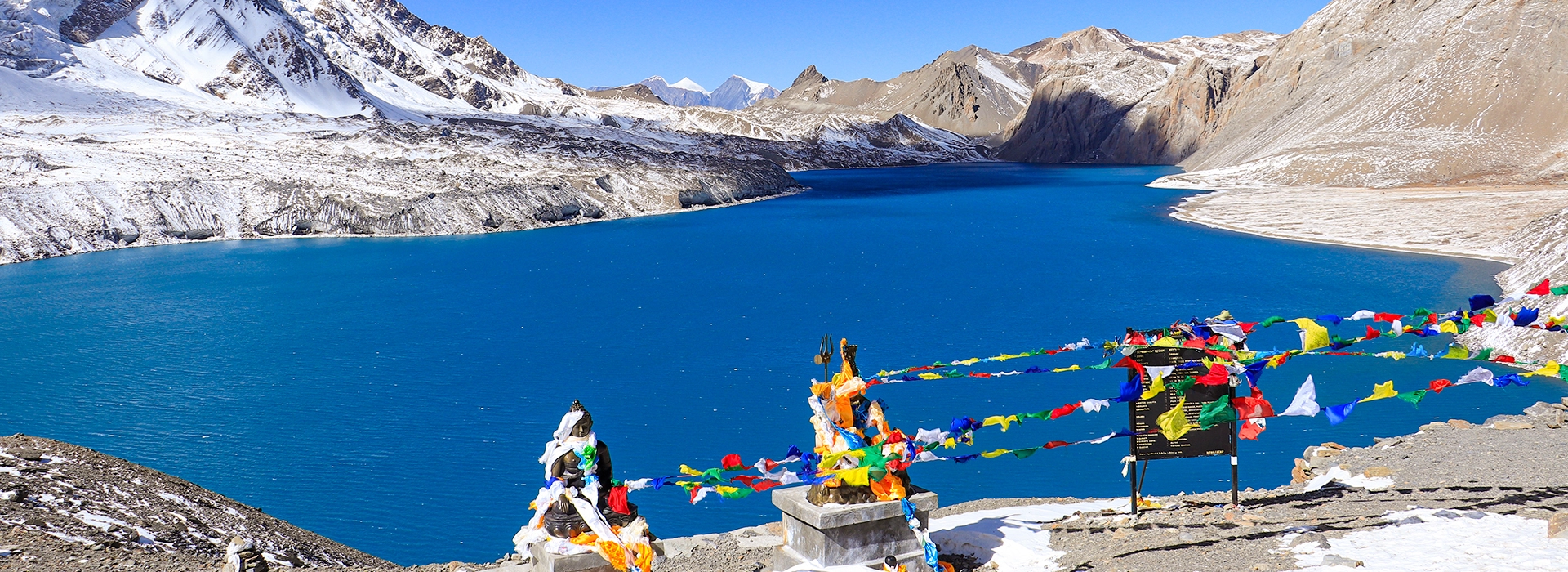
    Tilicho Lake, blue water & Buddha statue from Tilicho Pass
    Tilicho Lake from Tilicho Pass

    Source- Google

    Why Choose the Tilicho Lake Trek?

    1. World’s Highest Lake

    It is situated at an altitude of 4,919 meters (16,138 feet), the highest in the entire world. It is created by the alpine glaciers surrounding Tilicho Peak’s meltwater. The scenery with the background of the beautifully turquoise-blue colored water of the lake against snow-white peaks and worn-down cliffs is simply breathtaking. It is a physical and spiritual vacation area for some of the trekkers. It is paradise for trekkers, home for those seeking solitude, a wonder of nature, and one of the most challenging places on earth. Tilicho Lake is reached with determination. The trek increases altitude gradually as it passes through even drier ground and thinner air. The reward, however, is well worth it.

    2. Diverse Landscapes of Tilicho Lake

    One of the Tilicho Lake attractions is that the scenery never becomes monotonous. The ascent begins in lower Annapurna on turning and switchback tracks through green subtropical jungle rimmed by rice terraces and waterfalls cascading down mountain slopes. Climbers continue, and the terrain begins to change: fir and pine will eventually predominate before the landscape goes on to include bare hills and cliff faces. And again, yet further on, too, when trekking inflicts on a land of arctic type, the latter gains country changes a new, desecrated by snowfields, glacier-valleys and ridges of ice-wrime on ultimate advance to country of lakes. A variety of choices scarcely ever furnished by a single trek is supplied by diverse climatic zones, conditions, and territories.

    Each of these environmental niches along the way is different, with its pros and cons. Such topographic change is not a skin-deep phenomenon but quantifiable in terms of degrees of temperature, elevation, leaf and canopy cover, and even village culture in between. From emerald green sloping hill sides lined with spring blooms of rhododendron to Tilicho’s high-altitude desolate, barren, extraterrestrial-looking valley scenery, there is no scenery on this trekking path. But scenery lovers will have the trail revealing a different landscape each day, with the trekkers experiencing a different environment each day of the trek, as it progresses.
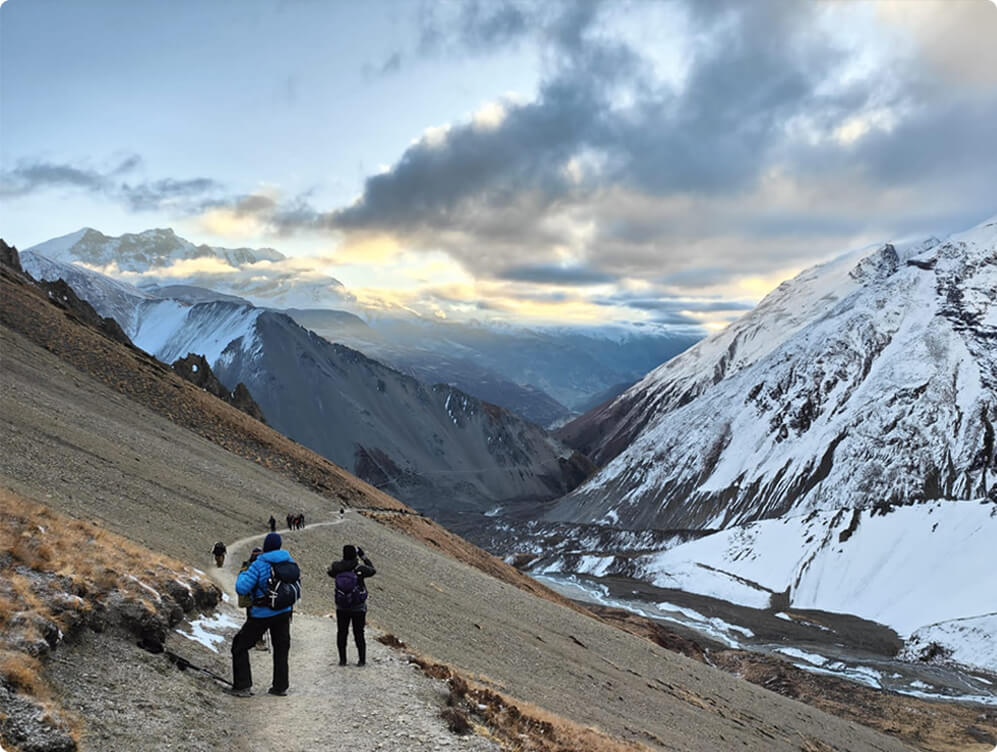
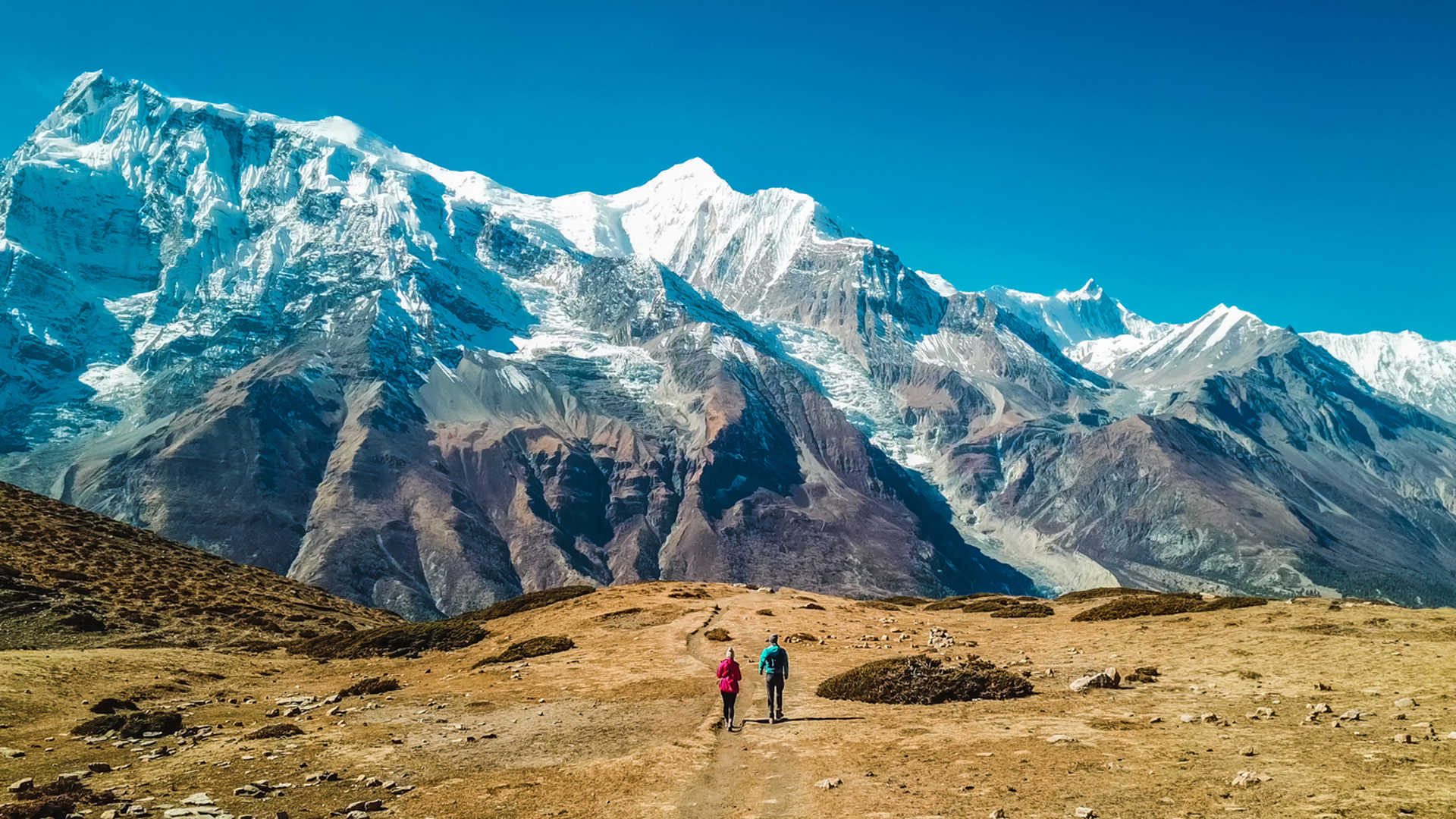
    Khangsar Valley seen from on the way to Tilicho Lake
    Trail towards Tilicho Lake

    Source- Google

    3. Cultural Immersion of Tilicho Lake 

    Scenery is only one of what makes up the Tilicho Lake Trek trekking destination trek through Manangi and Gurung, and Thakali culture village. Trekkers pass through Manangi and Gurung, and Thakali villages (all of Manang District), each with its own kind of tradition, language, clothing, and building style (and quite often some blend of these!). Though certainly off the tourist trail, they are said to be open and even to possess rich Buddhist and Hindu heritage. Prayer flags, spinning prayer wheels, ancient monasteries, and stone memorials are all part of a spiritual journey superimposed on the natural splendor of the trek.

    The path near the teahouses permits people to observe daily Nepali activities. The meals are standard Nepali food, mainly dal bhat, as well as discussions with area residents cover farming, mountain living, or the old commercial road to Tibet. A cultural experience became a great memory from the trek for many people. The joining of deep cultural experiences and the thrill of height makes trekking hard for the body, plus difficult for the mind and emotions too.
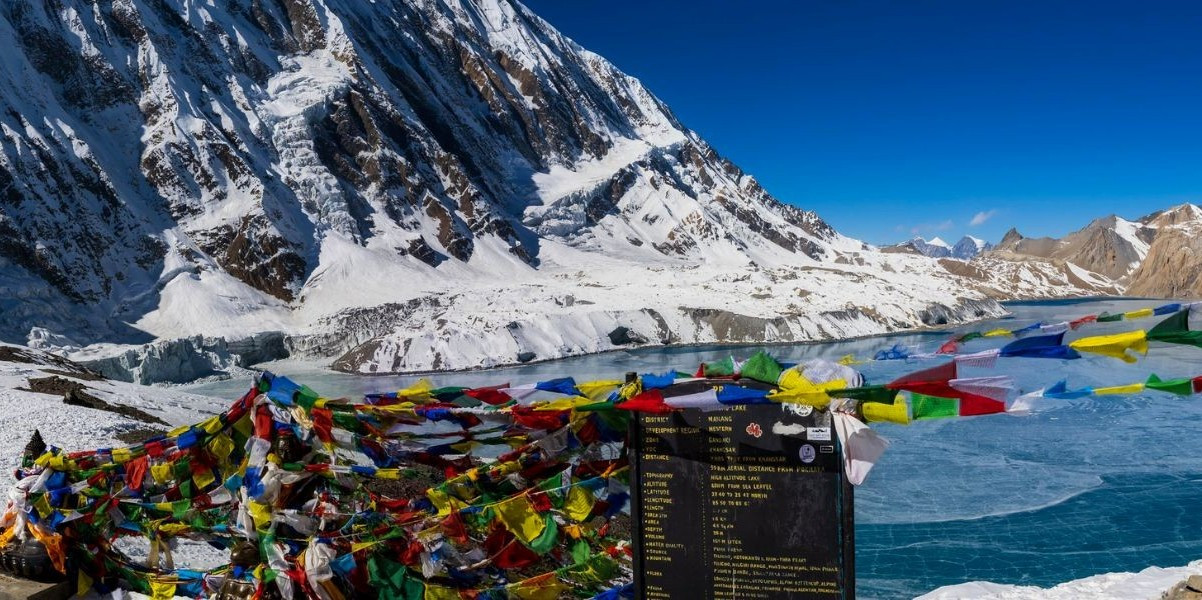
    Tilicho lakewith lots of prayers flags at Tilicho Pass
    Tilicho Lake

    4. Wildlife and Biodiversity in Tilicho Lake

    About the environment around Tilicho Lake, it looks tough, but it contains many living organisms. People trekking can view many kinds of plants and animals because they travel through different weather zones. Individuals trekking in low places are in an area having numerous birds, butterflies next to small mammals. When people trek higher, wildlife becomes harder to spot, but some common kinds, the Himalayan native, blue sheep, Himalayan tahr, in addition to marmots, can be found.

    The region also gives benefits to birdwatchers. Himalayan monal, Nepal’s national bird, snow pigeons, as well as lammergeiers, fly above. The shifting areas for living hold different kinds of plants. Junipers, alpine shrubs next to medicinal herbs grow there. Conservation steps in the Annapurna Conservation Area help in the protection of this fragile environment. Because of this, it is a good path for those who love nature. For hikers, an understanding of an area that is sensitive to changes in nature and full of life makes the trip more meaningful. This joins travel with an understanding of the environment.

    5. Unmatched Photography Opportunities in Tilicho Lake

    The Tilicho Lake Trek is good for those who take pictures. It allows people to record both grand views and personal times related to culture. Each turn in the path presents something different. High mountains like Annapurna II, Tilicho Peak, in addition to Gangapurna, rise from the ground against bright skies. Large valleys come into view below hanging ice and old piles of dirt and rocks. The first parts of the day and the last parts of the day cover the mountains in bright light. This makes images that look too good to be true. The lake itself has a smooth surface, which shows snow-covered tops. It is one of the best places to take pictures in the mountains.

    The trek has culture in the pictures. Prayer wheels turn in mountain winds, monks sing in monasteries, people pick crops along with yaks travel small paths. Each of these times tells a story. For those who look closely, the Tilicho Lake Trek has stories told through pictures. If you are a paid worker with a nice camera or someone who travels with a smartphone, the many subjects cause your camera to stay in your hand. The subjects include mountains, animals, people, as well as light. The journey can be seen as much as felt.

    Trek Itinerary of Tilicho Lake

    The journey usually requires 12 to 18 days. It starts at Besisahar. It goes up through diverse weather patterns toward Manang, then it shifts toward Tilicho Base Camp and the lake. Travelers can go back on the same path. They can proceed over the Mesokanto La Pass, at 5,099m, to get to Jomsom. The difficulty of the trek is between medium and hard. Correct adjustment to the altitude at Manang is important. March to May and September to November are the superior times for the trek. The weather is consistent, also the sky is clear.
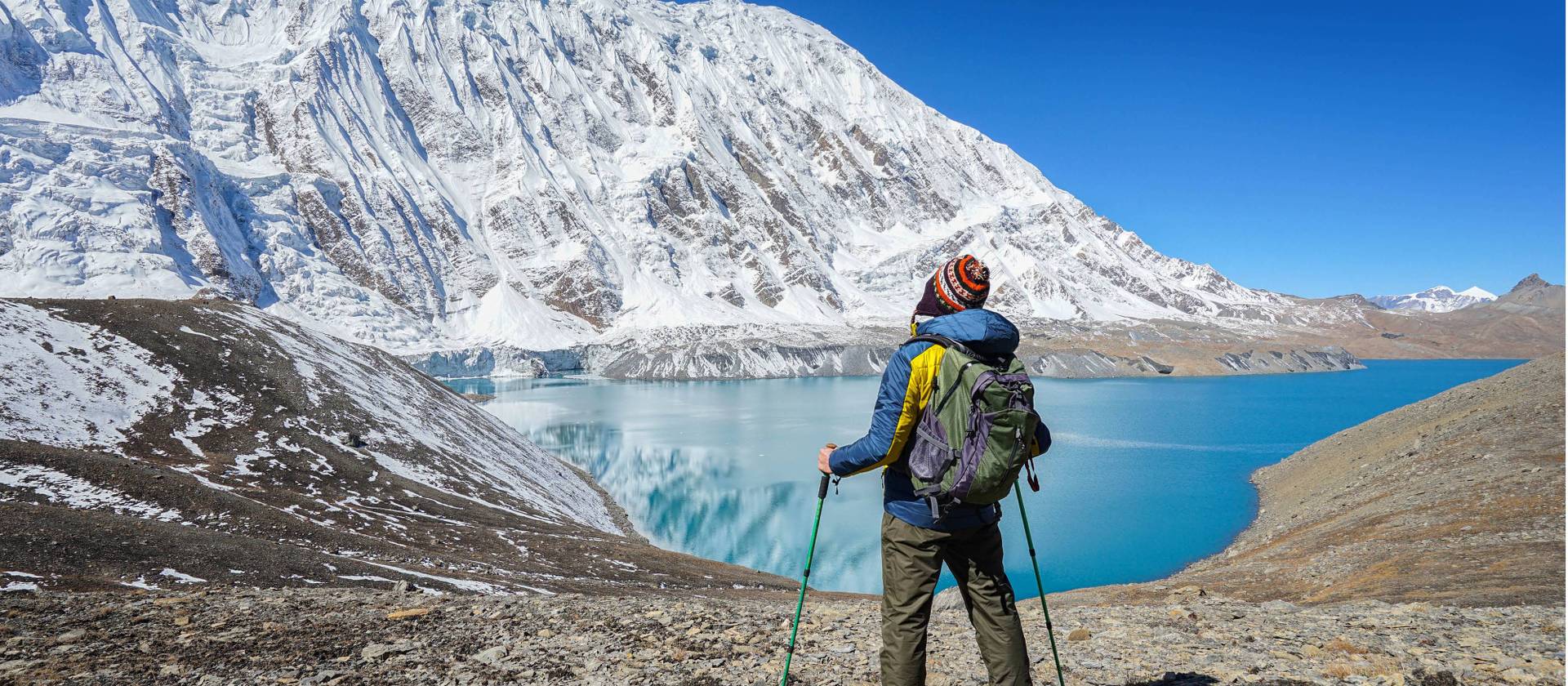
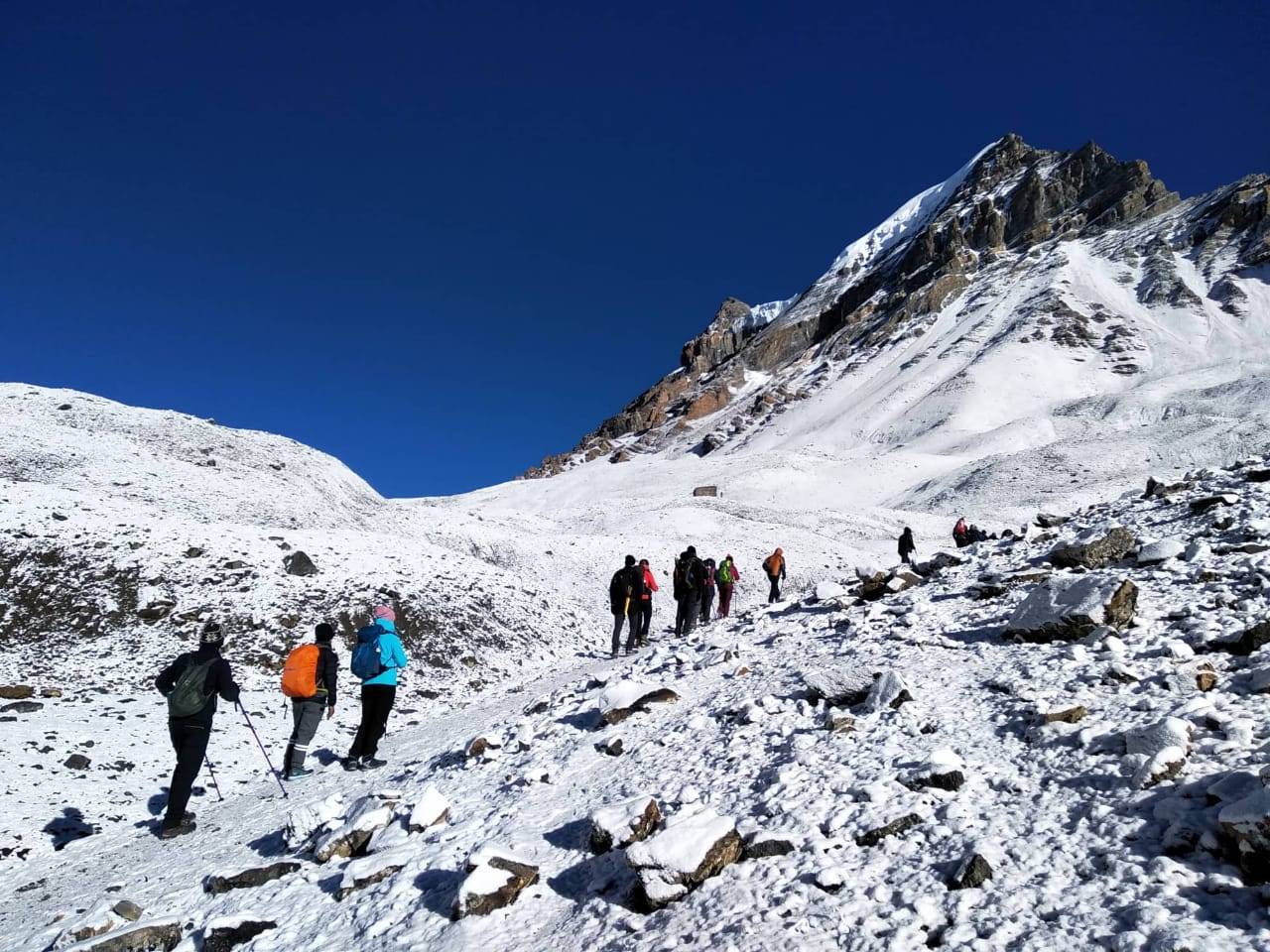
    Tilicho Lake the highest lake on earth
    Happy Mountain Clint Standing by the Tilicho Lake


    Detailed Itinerary Overview

    Day 1: Drive from Kathmandu to Besisahar (760m)

    The Annapurna region begins at Besisahar. The drive from Kathmandu to Besisahar starts the trek. The trip needs 6 to 8 hours, as traffic and road conditions influence the length. Hills with steps, rivers as well and country towns appear.

    Day 2: Drive to Chame (2,670m) or trek via Jagat and Dharapani

    A number of travelers take a jeep to Chame from Besisahar. Others start the trek at Jagat and Dharapani. The route goes past thick woods, water coming off cliffs next to little places to live. This part shows gorges that make a big impression besides the Marsyangdi River. The river is followed for days.

    Day 3: Trek from Chame to Pisang (3,200m)

    The path goes onward through thick forests that are pine forests. It goes beside dramatic walls of stone cliffs. Pisang comes after crossing a hanging bridge. Pisang is a town. The dry mountainous ground starts there.

    Day 4: Trek from Pisang to Manang (3,540m)

    Today, we have an option between the low and high road. The high road is more difficult but has incredible scenery of the Annapurna range and takes us through the lovely village of Ghyaru. Manang village is big with shops, bakeries, internet, and many teahouses.

    Day 5: Acclimatization Day in Manang

    It is an acclimatization day at high altitude. Trekkers typically take side trips to Gangapurna Lake, Ice Lake (Kicho Tal), or to the nearby monastery. Manang can also be utilized as a resupply point before proceeding to the less-traveled Tilicho trek.

    Day 6: Trek from Manang to Shree Kharka (4,050m)

    The trail then diverges from the Annapurna Circuit and heads for Tilicho Lake. The landscape continues to become more barren and dramatic as it moves further from the treeline. There is then the peaceful place of Shree Kharka with some teahouses and stunning mountain vistas.

    Day 7: Trek to Tilicho Base Camp (4,150m)

    The trail section is also equated with having steep pathways and slide regions, hence it’s best to hike carefully. The track gets more rugged and uneven, and the isolation of the trail is experienced as one gets to the base camp in the valley of the boulders.

    Day 8: Visit Tilicho Lake (4,919m) and return to Base Camp or Shree Kharka

    Set out early today as it is normally clear in the morning. The steep ascent leads to the stunning Tilicho Lake, with turquoise water lying quietly at the base of the mountain giants. Look about and take photos before descending to Tilicho Base Camp or higher still to Shree Kharka for overnight camping.

    Day 9–10: Return to Manang or Cross Mesokanto La Pass (Optional Advanced Route)

    More experienced and well-prepared trekkers can press on through the further, more strenuous, and occasionally snowed-in Mesokanto La Pass. This takes you to Jomsom, where you can either fly back to Pokhara. Alternatively, return to Manang and rejoin the classic Annapurna Circuit for a more manageable descent.

    Day 11–14: Trek to Jomsom or exit via other lower routes

    If coming back from Manang, trekkers may proceed to Yak Kharka and Thorong La Pass. Alternatively, they can descend to Chame and Besisahar, before heading back to Pokhara. In case those are taking the Mesokanto La route, they will stop in Khangsar or Yak Kharka for the night to arrive at Jomsom, a windy town with air connections to Pokhara.

    Tilicho Lake Trek Difficulty and Preparation

    The trek is rated moderate to difficult mostly because of altitude and terrain. Acclimatizing to the altitude is critical to avoid altitude sickness. Trekking experience is an advantage, but not necessary. A good level of fitness, mental preparation, and gear are necessary.
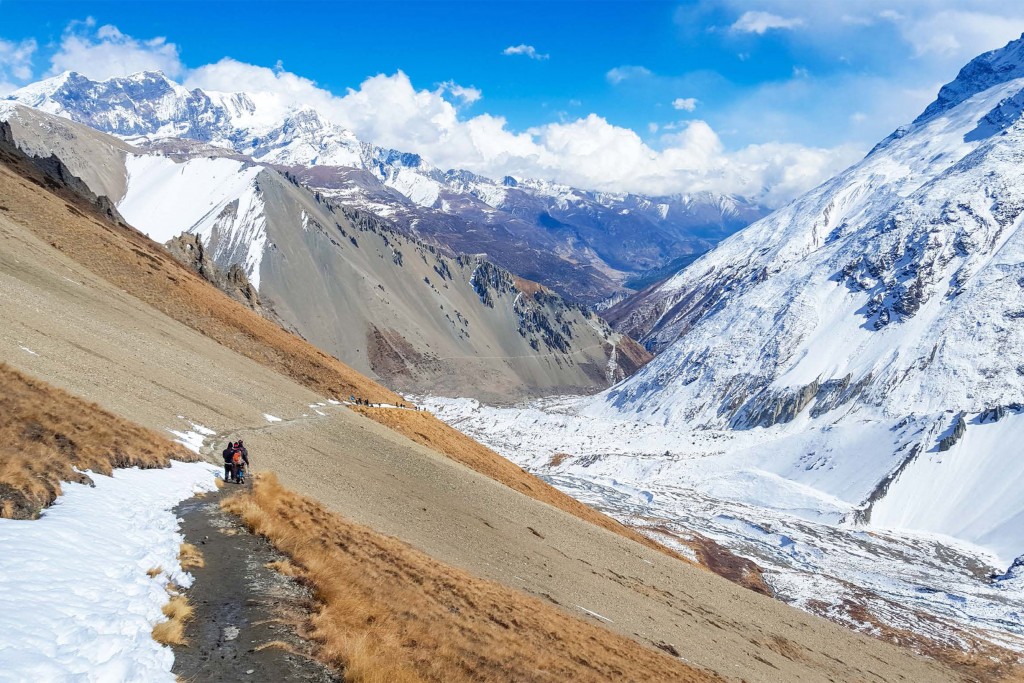
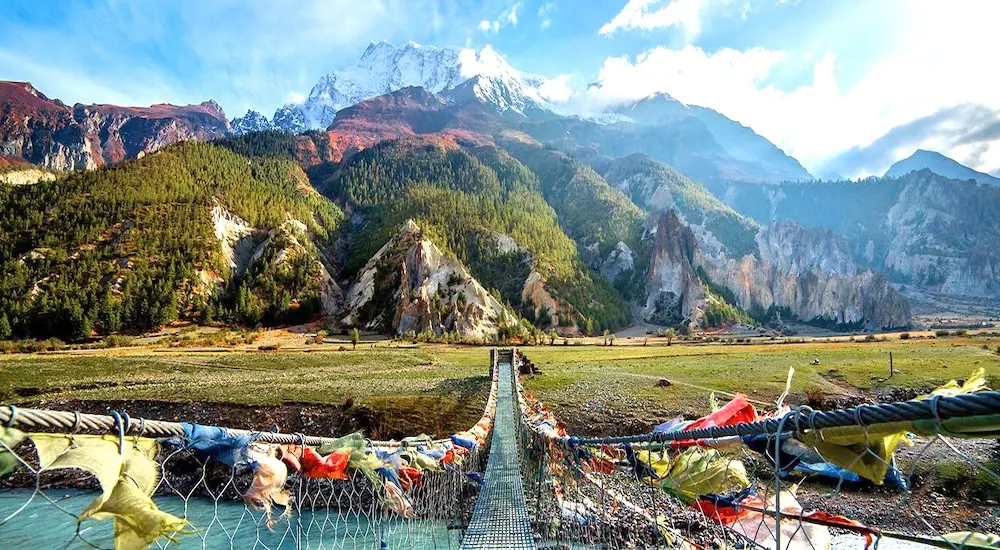
    Trail to Tilicho Lake & Annapurna Himalayas
    Beautiful Trail on the way to Tilicho Lake

    Preparation Suggestions:

    • Train with cardio and strength equipment exercise for 1-2 months ahead of time.
    • Bring an altitude illness medication, like Diamox.
    • Dress in layers to allow for temperature changes.
    • Hire a licensed guide or porter for navigation and support.

    Permits and Regulations

    Trekkers must get:

    • Annapurna Conservation Area Permit (ACAP)
    • TIMS Card (Trekkers’ Information Management System)

    These can be obtained through registered trekking agencies or Nepal Tourism Board offices located in either Kathmandu or Pokhara.

    Accommodation in Tilich Lake

    1. Teahouses and Lodges

    Accommodation options on the Tilicho Lake Trek are primarily teahouses and small lodges. These are available at most larger stops and are more or less comfortable depending on the height and location. Lower altitude lodges will be well equipped, but higher ones are more basic and simpler.

    2. Room Facilities

    Rooms usually offer twin bed configurations, basic bedding, and shared or connected washrooms at lower altitudes. Accommodation in teahouses doesn’t have heating, and if you are trekking at the greater height, then you definitely should carry with you also a good sleeping bag. It’s basic but adequate just for sleeping after a full day’s hike.

    3. Mountain Hospitality

    It’s further notion that the teahouses are often operated by local families, which helps cultivate a warm, friendly environment. They also function as social centers where trekkers of various nationalities meet.

    Food in Tilicho Lake

    Traditional Nepali Meals

    A classic dish is dal bhat, consisting of rice with lentil soup and vegetables which trekkers can expect. It is a balanced diet; it provides energy and usually comes in the way of plates and dishes with bottomless pits which is made for the perfect lunch fuel of tough trekking days.

    Variety of Options in Tilich Lake

    In other foods, have noodles & soup, momo (dumplings), fried rice, pancake, and Tibetan bread in menus. Eggs are one step up, and in slightly more advanced villages you can get pasta, toast or even a hunk of basic pizza. There is more choice in the lower villages, but it declines as you go higher up.

    Additional Amenities:

    There should be boiled/filtered drinking water available but it is recommended to bring your own purification tablets or a filter bottle. Some teahouses (but mainly in lower elevations) have hot showers and phone charging available as well as a free Wi-Fi. Of course, as you keep climbing on top these amenities become limited so don’t forget to plan that ahead.

    Timing Your Great Trek to Tilicho Lake

    The best times to go:

    Warm season (March – May): The rhododendrons and nice blue sky.

    Autumn (September – November) has at least clear skies, good visibility of mountains, and cool, moderate temperatures.

    Do not go during the monsoon season (June – August) because there will be landslides, slippery trails, and definitely a lot of trackable dirt, also desert. If you can avoid winter (December – March), unless you are an adept, truly experienced trekker.
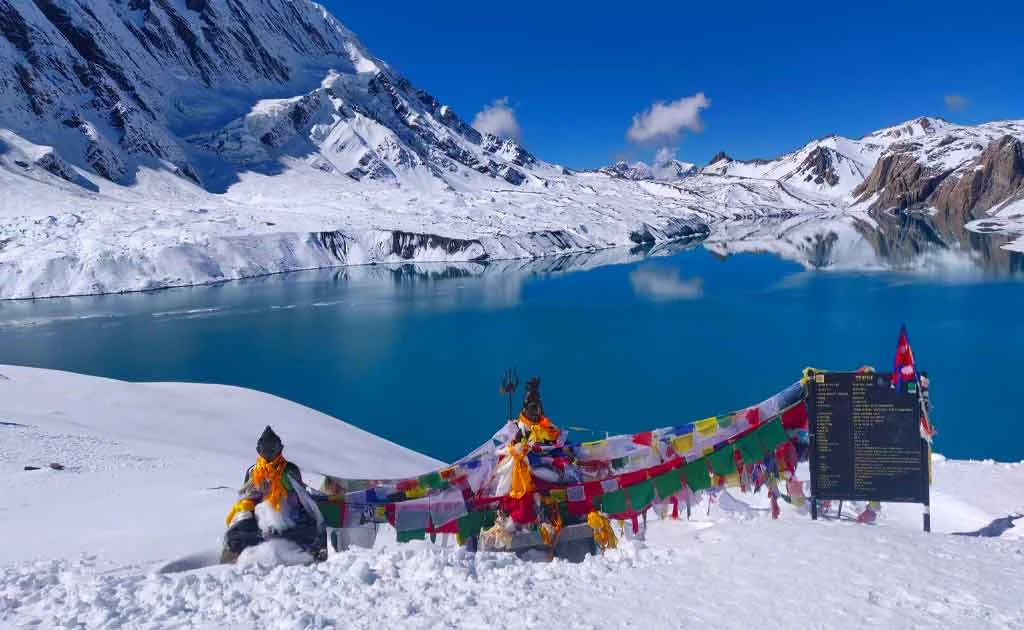
    Tilicho Lake in winter season
    Stunning Tilicho Lake with the statue of lord Buddha

    HERE ARE SOME GOOD SUSTAINABILITY TIPS FOR TREKKERS

    • Bring your own bottles and avoid plastics or single-use plastics.
    • Follow the local customary way, as you should use eco-friendly trekking agencies.
    • I will pay for the tip if you pack out only dry “natural” trash.

    Conclusion

    The Tilicho Lake Trek it is not only a high-altitude trek, it is a caress on the soul of Himalaya. With every single step you take there is magic – from the tiny villages, snowy paths and their green lake waters. Don’t start being a seasoned hiker or a wishful lover of them, it is most definitely guaranteed to be an adventure of a lifetime.

    READY TO TOUCH THE HIGHEST LAKE IN THE WORLD – Tilicho Lake! Contact us today at Happy Mountain Nepal, on Facebook, Instagram, or TikTok

  • Annapurna Circuit Trek

    Annapurna Circuit Trek

    Annapurna Circuit Trek is the world’s most popular and fulfilling trekking trail that provides trekkers with the pleasure of an enchanting mingling of virgin nature, cultural heritage, and a sit-on-the-edge-of-your-seat adventure. Being at the core of the Himalayas, the trek is a trek from start to finish, whereby you would be able to observe the emerald valleys, meadows of alpine forest, and snow-white peak mountains, and also undergo the different traditions of the inhabitants. A seasoned trekker and also an amateur trekker taking it through an adventure trail, there is something for all at the Annapurna Circuit.

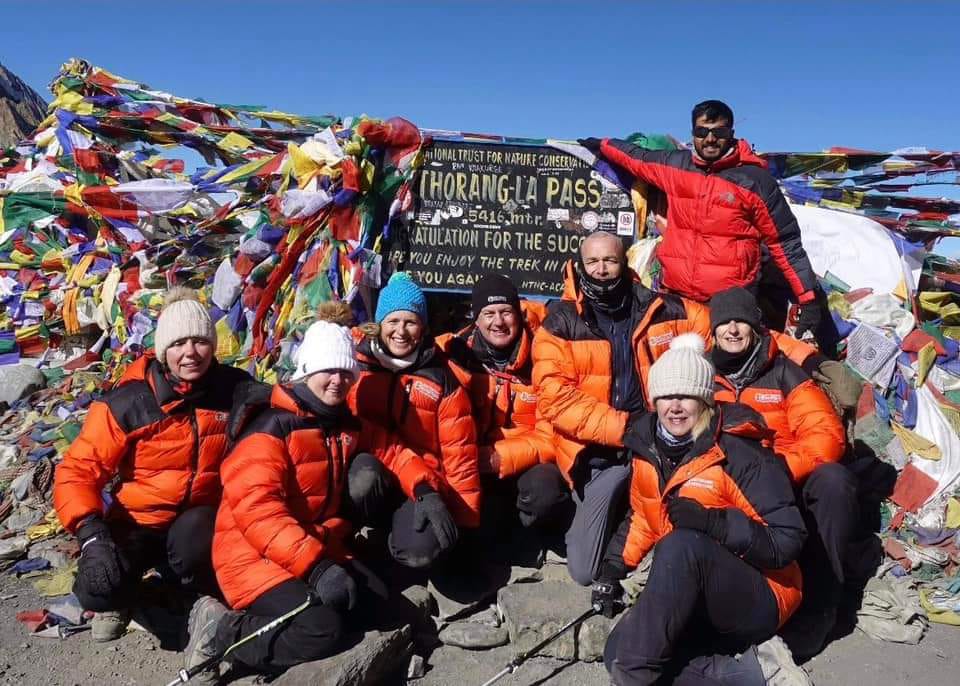
    Thorang la Pass
    Annapurna Circuit trekking in Nepa;l


    Description of the Annapurna Circuit Trek

    Annapurna Circuit Trek, or simply referred to as the “classic trek,” is approximately 160 to 230 kilometers long, depending on the trek route, and starts at low Annapurna foothills and ascends as high as Thorong La Pass (5,416 meters).

    The hike is around 12-21 days in duration and varies from subtropical jungle through to alpine grass and rough dry land on the other side of the pass. The tourists would have the opportunity to view villages, monasteries, and people leading conventional lives of Gurung, Thakali, and Manangi tribes on their way.

    A Varied Landscape Trek

    Annapurna Circuit Trek is a reward-risk, varied landscape trek. Trek begins in middle of the valley at dark green dense subtropical oak and rhododendron forest. With rising altitude, the terrain has been sculpted into extraterrestrial beauty of alpine grassland, glacial brook, and bare boulders. Gradient from low to high altitude is progressive, and trekkers have luxury of acclimatization.

    Lower Annapurna

    The trekking route begins from Syange and Besisahar villages. Subtropical forests and wildlife make up this region. The trek presents smiling, warm villagers with tended fields and verdure too. Acclimatization for trekking in the Himalayas is offered by the lower part of the trek with a view of Machapuchare and Annapurna ranges in this range.

    Manang Valley

    The climbers continue climbing and climbing, and they arrive at Manang Valley. It is encircled by the Annapurna II, III, and IV mountains themselves and hence it is a resting spot as such. The climbers rest here for two days of acclimatization so that they would not be disturbed by mountain sickness. The local stone houses of the region and the Buddhist monasteries show most of the religiosity and culture of the region.

    annapurna

    Thorong La Pass

    The trekker’s trinity holy, Thorong La Pass itself at 5,416m, is challenging but exhilarating to get to. The view from the top is breathtaking, with he rolling sweep of the immediate Himalayan ridges. Snow-capped Annapurna peaks and the Tibetan Plateau in the distance are the trekker’s Eldorado in pursuit of the pass.

    Jomsom & Muktinath

    Blowing snow, freezing. Trekking to Jomsom and Muktinath through Thorong La Pass. Shelled by ruthless Tibetan soldiers, Buddhist temples, stupas, prayer flags, and monasteries. Buddhists and Hindus have both consecrated Muktinath as a holy place holy place and one single temple was built in memory of Lord Vishnu. Muktinath’s serene religious scene is a serene peak to the Annapurna Circuit Trek.

    Immersive Cultural Experience in the Trek

    The natural landscape of the Annapurna Circuit is the most spectacular attraction, yet the experience of culture one gets while trekking there is equally invaluable. Trek leads through a series of villages and hamlets to be passed and meet the inhabitants and experience their life and culture.

    Ethnic Diversity:

    Annapurna region is ethnically rich with the Gurung, Thakali, and Manangi population. They have a unique language, culture, and way of life. Rural life like Ghandruk with stone houses and wooden ornamental temples that represent Gurung society, but Thakali food is exotic cuisine with fewer reliance on dal bhat and momos.

    Hindu and Buddhist influence:

    Buddhist prayer flags, stupas, and monasteries are scattered along the Annapurna Circuit, with a powerful presence being experienced in Manang and Muktinath. Apart from providing it with its beauty, there is the radiance of the traditional geographic Hindu and Buddhist cultural gems from one location to another. Then there is the Muktinath Temple at Muktinath, a holy pilgrim temple shared by Buddhists and Hindus, where pilgrims are purified by 108 spouts of water as they undergo a purification ritual.

    Local Food:

    Local Nepalese food of the region is most accessible by staying within the trek itself. Treks’ teahouses are located within villages where local food is eaten. Dal bhat (lentil soup and rice) is standard fare, then noodle soups, momos (steamed dumplings), and Tibetan bread. Trek food tastes bland but healthy and gives the trekker plenty of vigor for the day’s trek ahead.

    Adventure and Thrills: Thorong La Pass Crossing

    The crowning glory of the Annapurna Circuit Trek is Thorong La Pass, a pass at high altitude, owing to having notoriously volatile attitude, owing to its legendary climatic conditions. Overcoming the past is an achievement owed to sheer persistence and tenacity.

    The Ascent:

    The Ascent to Thorong La Pass is a most exhausting, lengthy exercise, either from the High Camp or from the Yak Kharka region. The most dangerous part of trekking people try to complete it in the morning so that they don’t have to run the risk of being blown up by gusts in the afternoons, and also have enough time to return.

    The Descent:

    Downhill descent to Muktinath is achieved after trekkers have reached the top once and for all, and steep and rocky in some places slopes slope downwards. Steep descent becomes possible from higher altitudes, and relief of trekkers is felt mainly after lower altitudes are reached.

    Acclimatization and Altitude:

    Acclimatization is essential to avoid altitude sickness. Trekkers must allow for additional days of acclimatization at a higher altitude before ascending to Thorong La. Ascent based on altitude and rest days will make the trek safer and more enjoyable.

    Optimum Trekking Time to Annapurna Circuit

    The trek to Annapurna Circuit can be accomplished throughout the year, though the best time for arranging this trek is either during the spring season from March to May or the fall from September to November. They are the times for guaranteed weather, blue sky, and an excellent view of the mountains. Rhododendron forests laden with pink-blossomed flowers make a bonus trip feature in the spring. In fall, one is offered fair weather, with a nice cool climate perfect for the trek.

    Total Cost Breakdown

    1. Permits

    You will also have to carry two significant permits with you while you walk along the Annapurna Circuit: the Annapurna Conservation Area Permit (ACAP) and the Trekkers’ Information Management System (TIMS) card. The ACAP will cost approximately NPR 3,000 (or USD 25) and goes towards the conservation of the Annapurna area. The TIMS card, which is compulsory for every trekker, costs approximately NPR 1,000 (USD 8) and is utilize for the trekkers’ records in the area for administrative and safety purposes. The cards can be bought at Pokhara or Kathmandu and are compulsory for any trek in the Annapurna area. The cards cost approximately NPR 4,000 (USD 33), a minor but unavoidable cost of the trek.

    2. Transport

    It is a good idea to also arrange transport from and to the Annapurna area. Your trek starts in Kathmandu, and you travel to Pokhara by tourist bus. Bus prices are NPR 1,000–1,500 (USD 8–12) depending on the agency and class. From Pokhara, you travel by bus or jeep to Besisah, where your trek starts. The price will be NPR 200–300 (USD 2–3). For extra comfort or in case of limited time, private transport services, i.e., jeep, can be rent at NPR 5,000–10,000 (USD 40–80) per day. Part of air travel from Pokhara to Jomsom is also utilize for trekking and can be rented for one way at NPR 4,000–6,000 (USD 35–50). Transport cost on average will vary by mode of transport from NPR 5,000 to 15,000 (USD 40–120).

    3. Accommodation

    The accommodation along the Annapurna Circuit is typically in tea houses or guesthouses. On the lower-altitude parts like Besisahar and Syange, the guesthouse accommodation will be between NPR 300 to 700 (USD 3–6) per night. The higher one climbs to places like Manang and Thorong Phedi, the price rises to NPR 500 to 1,000 (USD 4–9) per night because of fewer facilities. Tea houses are very basic in terms of accommodation, i.e., a bed, boarding, and food, but more expensive at high altitudes as logistics are complicate. Accommodation for a 14–21-day trek usually costs NPR 5,000–15,000 (USD 40–120), depending on how many days you trek and what standard of accommodation you use.

    annapurna

    4. Food

    Food is provide by the tea houses during the Annapurna Circuit, which is include in the trekking package. The most common foods are breakfast, lunch, and dinner in the price of total trekkers’ cost. The breakfast is usually NPR 300 to NPR 500 (USD 3–4) and includes foods like porridge, eggs, and bread. Lunch and dinner are also affordable at NPR 400 to NPR 800 (USD 4–7) per session. Where the altitude is higher, i.e., Manang and Thorong Phedi, there is less added cost since locals are distant and there is more operating cost on tea houses. You would be charge NPR 10,000–20,000 (USD 85–170) for food for a 14 to 21-day trek, depending on what one eats for lunch and dinner, and how many snacks and drinks are consume.

    5. Guide and Porter (Optional but Highly Recommended)

    One can hike solo without a guide and a porter, but one should hire one since there are several benefits, including navigating along the trail, carrying heavy backpacks, and receiving geographical and cultural insights. Guide fee would be NPR 2,500–4,500 (USD 20–40) daily, and porter fee would be NPR 2,000–3,500 (USD 17–30) daily. To have a guide and porter is convenient during trekking without weariness and, secondly, for safety, particularly during remote trekking or high-altitude treks. Guide and porter can cost between NPR 63,000-120,000 (USD 540-1,020) for a 1a 4 21-day trek, depending on the duration of trekking and the services included.

    6. Equipment and Gear

    You will need the right equipment to undertake the Annapurna Circuit, i.e., the right trekking shoes, good clothes, a good sleeping bag, a daypack, etc. New equipment can be bought for NPR 5,000 to NPR 15,000 (USD 40–130) based on quality and brand. Or one could opt for rentals if buying equipment is not an option. Day hire of trekking gear such as jackets and sleeping bags is NPR 200 to NPR 500 (USD 2–5) per day. Equipment purchase or hire varies from NPR 5,000 to NPR 20,000 (USD 40–170) depending on preference and duration of the trek.

    7. Miscellaneous Expenses

    You will have to spend some extra miscellaneous expenses on hot showers, gadget recharging, and internet. Hot showers and bath facilities will be provided in tea houses for NPR 100 to 500 (USD 1–4), mostly at higher elevations. Mobile phone, camera, or equipment charging is usually provided for NPR 100 to 500 per hour (USD 1–4). Internet facility is also provided in some tea houses for NPR 200 to 500 per hour (USD 2–5). Tea and coffee are also available on the trek at NPR 100 to NPR 400 (USD 1–4) per unit. The rest adds up, and the trekkers would pay NPR 5,000 to NPR 10,000 (USD 40–85) for the trekking services.

    8. Contingencies and Miscellaneous Expense

    Disasters do not occur, but the unthinkable also has to be consider. Emergency helicopter evacuation, in case of need, would be NPR 30,000 to NPR 100,000 (USD 250–850) depending on gravity and location. Additionally, insurance of NPR 5,000 to NPR 10,000 (USD 40–85) in a bundled package covering normal insurance for medical, evacuation, and delayed baggage is recommend.

     What to Expect: Tips from the Trekkers

    Physical Condition

    Whether the majority of the trekkers are physically fit enough to complete the Annapurna Circuit Trek or not, it will always be in one’s best interest to stay fit. Keeping fitness at a peak level by doing day-to-day exercises like cardio and strength exercises will get you accustom to physical stress.

    Permits

    Trekkers will need an Annapurna Conservation Area Permit (ACAP) and a Trekker’s Information Management System (TIMS) card to trek there. Permits are easily available in Pokhara or Kathmandu.

    Gear

    Proper trekking gear ensures the trek is comfortable and safe. Warm dressing (and in summer too), good treks, reasonable sleeping bags, and a daypack are require. Don’t miss additional clothing for climatic changes from the lowland heat to the high Himalaya cold.

    Porters and Guides

    You don’t necessarily have to trek the Annapurna Circuit with a guide or a porter, but it would be more fulfilling if you have one. Guides can provide some useful information on the geology and culture of the region, and porters can carry your large pack so that you’ll trek more easily.

    Conclusion

    Embark on the Annapurna Circuit Trek for an adventure that will challenge, inspire, and leave you with memories that last a lifetime. Annapurna — peaks that have drawn generations of explorers and mountaineers but it’s more than that. Nepal’s less touristy vacation spots are not choices they are, in the best possible way, true Nepal.

    If you do it differently, you’re spending the tourist dollar, you’re supporting the local culture and you have a better holiday. Contact us today at Happy Mountain Nepal, on Facebook, Instagram, or TikTok
    FAQs

    1. How long does it take to do the Annapurna Circuit Trek?

    The trek would last around 12 to 21 days depending on the route, pace, and acclimatization days. Others cut short by jeep or by half flying the trail.

    2. When is the Annapurna Circuit highest?

    The highest is Thorong La Pass, 5,416 meters (17,769 ft). It is among the highest trekking passes on the planet and one of the high points of the trek.

    3. Do I need a permit to complete the Annapurna Circuit Trek?

    Yes, two permits are need:

    Annapurna Conservation Area Permit (ACAP) – NPR 3,000

    Trekkers’ Information Management System (TIMS) Card – NPR 1,000
    Both can be purchase in Kathmandu or Pokhara.

    4. When to undertake the Annapurna Circuit Trek?

    Best seasons:

    Spring (March to May) – Pleasant weather, rhododendron flowers.

    Autumn (September to November) – Stable weather, best scenery.

    5. Is the trek difficult?

    Moderate to difficult, mainly due to altitude. Proper acclimatization, physical fitness, and preparation are require for a safe and successful trek.

    6. Can beginner trekkers undertake the Annapurna Circuit Trek?

    Yes, even foreigners are allow to do the trek if they are fit, have enough acclimatization days. Even engage the services of a guide or porter to join them.

    7. What kind of facilities?

    Facilities are in guesthouses or teahouses with twin beds and simple rooms, and shared toilets. The more primitive the facilities are, the nearer you are to a higher altitude.

    8. What kind of food do you serve on the trek?

    You’ll find Nepali, Tibetan, and straight Western cuisine, with dal bhat, noodle soup, momos, and Tibetan bread the norm. Food is simple but energy-rich and vegetarian-centered.

    9. Can I trek on my own?

    Independent trekking is permit, but strongly suggested that you contract the services of a trained guide and/or porter for safety reasons, particularly at high altitudes and in secluded areas.

    10. What do I take along on the trek?

    The fundamentals are:

    Hiking boots, insulated coats, windbreakers that won’t let rain in

    Backpack, sleeping bag, water purification tablets

    First aid kit, energy bars, headlamp, and sunscreen
    Good light, weather-resistant packing for all conditions is the key.