Tag: Tilicho Lake Trekking

  • Tilicho Lake Trek: Touch the Highest Lake on Earth

    Tilicho Lake Trek: Touch the Highest Lake on Earth

    Tilicho Lake Trek: Touch the Highest Lake on Earth

    Introduction

    The Tilicho Lake Trek is a breathtaking journey into the heart of the Annapurna region of Nepal, offering trekkers a chance to witness one of the world’s most stunning alpine lakes. At an astounding elevation of 4,919 meters (16,138 feet), Tilicho Lake is recognized as the highest lake of its size in the world. Surrounded by the majestic peaks of the Annapurna and Nilgiri ranges, this trek is perfect for adventure seekers and nature lovers looking to explore untouched Himalayan beauty.
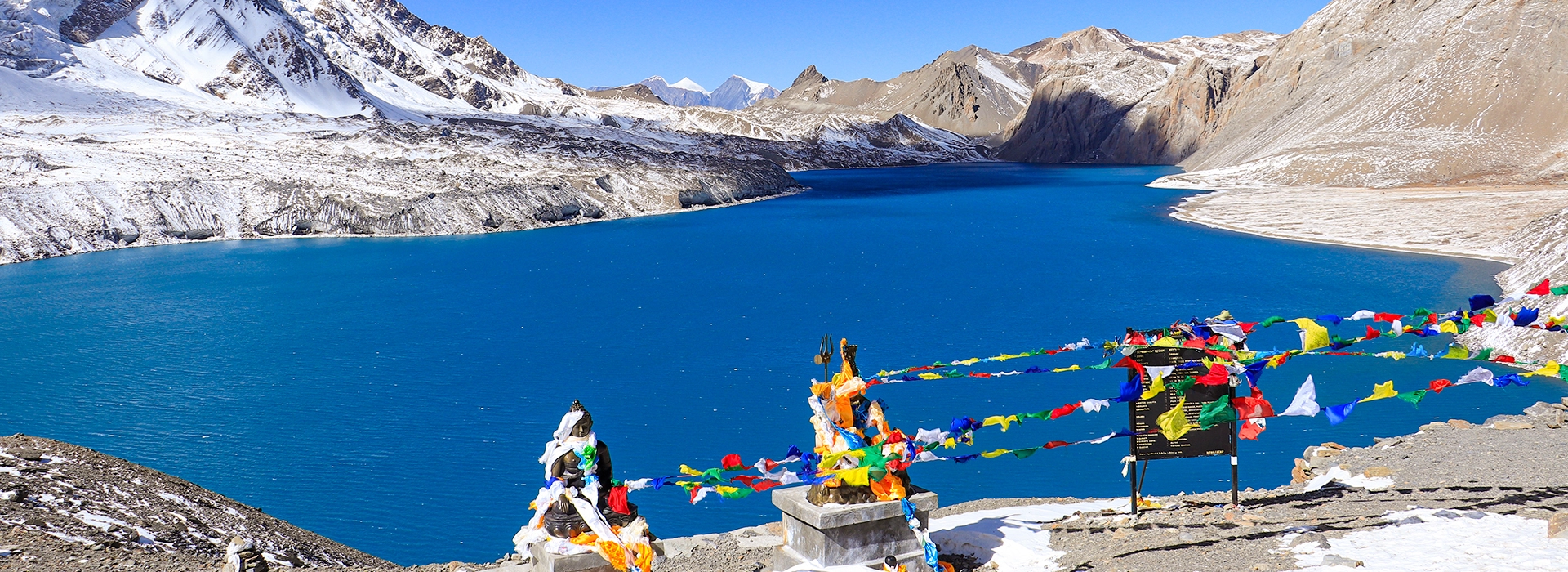
    Tilicho Lake, blue water & Buddha statue from Tilicho Pass
    Tilicho Lake from Tilicho Pass

    Source- Google

    Why Choose the Tilicho Lake Trek?

    1. World’s Highest Lake

    It is situated at an altitude of 4,919 meters (16,138 feet), the highest in the entire world. It is created by the alpine glaciers surrounding Tilicho Peak’s meltwater. The scenery with the background of the beautifully turquoise-blue colored water of the lake against snow-white peaks and worn-down cliffs is simply breathtaking. It is a physical and spiritual vacation area for some of the trekkers. It is paradise for trekkers, home for those seeking solitude, a wonder of nature, and one of the most challenging places on earth. Tilicho Lake is reached with determination. The trek increases altitude gradually as it passes through even drier ground and thinner air. The reward, however, is well worth it.

    2. Diverse Landscapes of Tilicho Lake

    One of the Tilicho Lake attractions is that the scenery never becomes monotonous. The ascent begins in lower Annapurna on turning and switchback tracks through green subtropical jungle rimmed by rice terraces and waterfalls cascading down mountain slopes. Climbers continue, and the terrain begins to change: fir and pine will eventually predominate before the landscape goes on to include bare hills and cliff faces. And again, yet further on, too, when trekking inflicts on a land of arctic type, the latter gains country changes a new, desecrated by snowfields, glacier-valleys and ridges of ice-wrime on ultimate advance to country of lakes. A variety of choices scarcely ever furnished by a single trek is supplied by diverse climatic zones, conditions, and territories.

    Each of these environmental niches along the way is different, with its pros and cons. Such topographic change is not a skin-deep phenomenon but quantifiable in terms of degrees of temperature, elevation, leaf and canopy cover, and even village culture in between. From emerald green sloping hill sides lined with spring blooms of rhododendron to Tilicho’s high-altitude desolate, barren, extraterrestrial-looking valley scenery, there is no scenery on this trekking path. But scenery lovers will have the trail revealing a different landscape each day, with the trekkers experiencing a different environment each day of the trek, as it progresses.
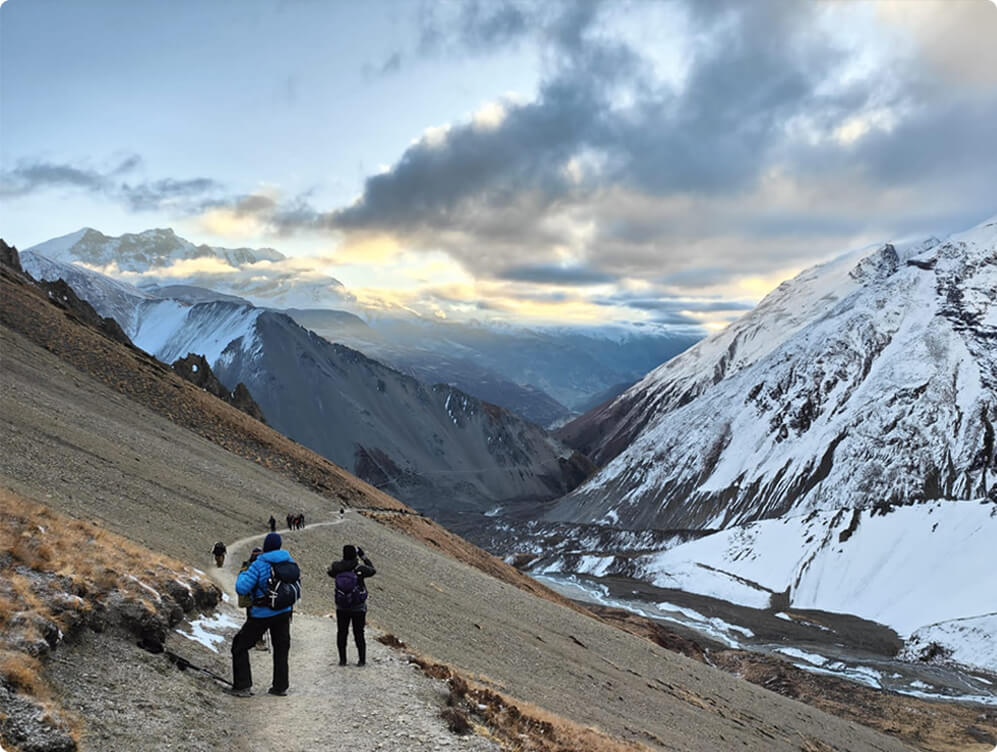
    Khangsar Valley seen from on the way to Tilicho Lake
    Trail towards Tilicho Lake

    Source- Google

    3. Cultural Immersion of Tilicho Lake 

    Scenery is only one of what makes up the Tilicho Lake Trek trekking destination trek through Manangi and Gurung, and Thakali culture village. Trekkers pass through Manangi and Gurung, and Thakali villages (all of Manang District), each with its own kind of tradition, language, clothing, and building style (and quite often some blend of these!). Though certainly off the tourist trail, they are said to be open and even to possess rich Buddhist and Hindu heritage. Prayer flags, spinning prayer wheels, ancient monasteries, and stone memorials are all part of a spiritual journey superimposed on the natural splendor of the trek.

    The path near the teahouses permits people to observe daily Nepali activities. The meals are standard Nepali food, mainly dal bhat, as well as discussions with area residents cover farming, mountain living, or the old commercial road to Tibet. A cultural experience became a great memory from the trek for many people. The joining of deep cultural experiences and the thrill of height makes trekking hard for the body, plus difficult for the mind and emotions too.
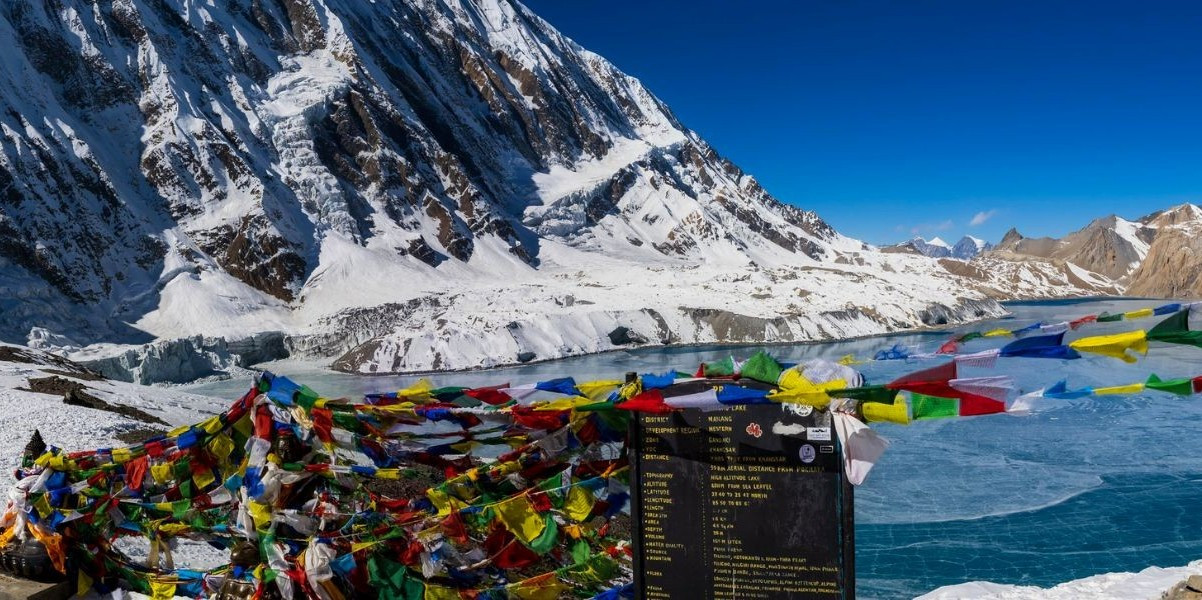
    Tilicho lakewith lots of prayers flags at Tilicho Pass
    Tilicho Lake

    4. Wildlife and Biodiversity in Tilicho Lake

    About the environment around Tilicho Lake, it looks tough, but it contains many living organisms. People trekking can view many kinds of plants and animals because they travel through different weather zones. Individuals trekking in low places are in an area having numerous birds, butterflies next to small mammals. When people trek higher, wildlife becomes harder to spot, but some common kinds, the Himalayan native, blue sheep, Himalayan tahr, in addition to marmots, can be found.

    The region also gives benefits to birdwatchers. Himalayan monal, Nepal’s national bird, snow pigeons, as well as lammergeiers, fly above. The shifting areas for living hold different kinds of plants. Junipers, alpine shrubs next to medicinal herbs grow there. Conservation steps in the Annapurna Conservation Area help in the protection of this fragile environment. Because of this, it is a good path for those who love nature. For hikers, an understanding of an area that is sensitive to changes in nature and full of life makes the trip more meaningful. This joins travel with an understanding of the environment.

    5. Unmatched Photography Opportunities in Tilicho Lake

    The Tilicho Lake Trek is good for those who take pictures. It allows people to record both grand views and personal times related to culture. Each turn in the path presents something different. High mountains like Annapurna II, Tilicho Peak, in addition to Gangapurna, rise from the ground against bright skies. Large valleys come into view below hanging ice and old piles of dirt and rocks. The first parts of the day and the last parts of the day cover the mountains in bright light. This makes images that look too good to be true. The lake itself has a smooth surface, which shows snow-covered tops. It is one of the best places to take pictures in the mountains.

    The trek has culture in the pictures. Prayer wheels turn in mountain winds, monks sing in monasteries, people pick crops along with yaks travel small paths. Each of these times tells a story. For those who look closely, the Tilicho Lake Trek has stories told through pictures. If you are a paid worker with a nice camera or someone who travels with a smartphone, the many subjects cause your camera to stay in your hand. The subjects include mountains, animals, people, as well as light. The journey can be seen as much as felt.

    Trek Itinerary of Tilicho Lake

    The journey usually requires 12 to 18 days. It starts at Besisahar. It goes up through diverse weather patterns toward Manang, then it shifts toward Tilicho Base Camp and the lake. Travelers can go back on the same path. They can proceed over the Mesokanto La Pass, at 5,099m, to get to Jomsom. The difficulty of the trek is between medium and hard. Correct adjustment to the altitude at Manang is important. March to May and September to November are the superior times for the trek. The weather is consistent, also the sky is clear.
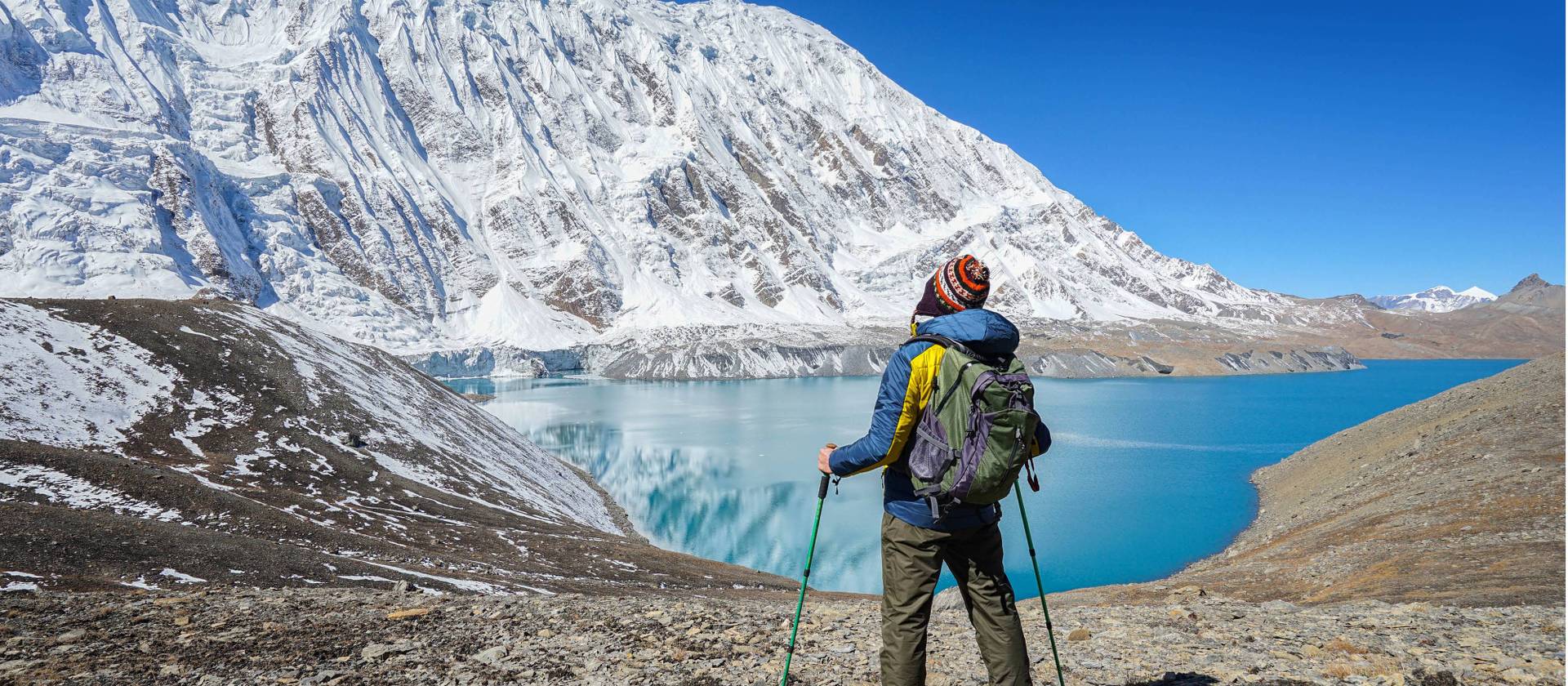
    Tilicho Lake the highest lake on earth
    Happy Mountain Clint Standing by the Tilicho Lake


    Detailed Itinerary Overview

    Day 1: Drive from Kathmandu to Besisahar (760m)

    The Annapurna region begins at Besisahar. The drive from Kathmandu to Besisahar starts the trek. The trip needs 6 to 8 hours, as traffic and road conditions influence the length. Hills with steps, rivers as well and country towns appear.

    Day 2: Drive to Chame (2,670m) or trek via Jagat and Dharapani

    A number of travelers take a jeep to Chame from Besisahar. Others start the trek at Jagat and Dharapani. The route goes past thick woods, water coming off cliffs next to little places to live. This part shows gorges that make a big impression besides the Marsyangdi River. The river is followed for days.

    Day 3: Trek from Chame to Pisang (3,200m)

    The path goes onward through thick forests that are pine forests. It goes beside dramatic walls of stone cliffs. Pisang comes after crossing a hanging bridge. Pisang is a town. The dry mountainous ground starts there.

    Day 4: Trek from Pisang to Manang (3,540m)

    Today, we have an option between the low and high road. The high road is more difficult but has incredible scenery of the Annapurna range and takes us through the lovely village of Ghyaru. Manang village is big with shops, bakeries, internet, and many teahouses.

    Day 5: Acclimatization Day in Manang

    It is an acclimatization day at high altitude. Trekkers typically take side trips to Gangapurna Lake, Ice Lake (Kicho Tal), or to the nearby monastery. Manang can also be utilized as a resupply point before proceeding to the less-traveled Tilicho trek.

    Day 6: Trek from Manang to Shree Kharka (4,050m)

    The trail then diverges from the Annapurna Circuit and heads for Tilicho Lake. The landscape continues to become more barren and dramatic as it moves further from the treeline. There is then the peaceful place of Shree Kharka with some teahouses and stunning mountain vistas.

    Day 7: Trek to Tilicho Base Camp (4,150m)

    The trail section is also equated with having steep pathways and slide regions, hence it’s best to hike carefully. The track gets more rugged and uneven, and the isolation of the trail is experienced as one gets to the base camp in the valley of the boulders.

    Day 8: Visit Tilicho Lake (4,919m) and return to Base Camp or Shree Kharka

    Set out early today as it is normally clear in the morning. The steep ascent leads to the stunning Tilicho Lake, with turquoise water lying quietly at the base of the mountain giants. Look about and take photos before descending to Tilicho Base Camp or higher still to Shree Kharka for overnight camping.

    Day 9–10: Return to Manang or Cross Mesokanto La Pass (Optional Advanced Route)

    More experienced and well-prepared trekkers can press on through the further, more strenuous, and occasionally snowed-in Mesokanto La Pass. This takes you to Jomsom, where you can either fly back to Pokhara. Alternatively, return to Manang and rejoin the classic Annapurna Circuit for a more manageable descent.

    Day 11–14: Trek to Jomsom or exit via other lower routes

    If coming back from Manang, trekkers may proceed to Yak Kharka and Thorong La Pass. Alternatively, they can descend to Chame and Besisahar, before heading back to Pokhara. In case those are taking the Mesokanto La route, they will stop in Khangsar or Yak Kharka for the night to arrive at Jomsom, a windy town with air connections to Pokhara.

    Tilicho Lake Trek Difficulty and Preparation

    The trek is rated moderate to difficult mostly because of altitude and terrain. Acclimatizing to the altitude is critical to avoid altitude sickness. Trekking experience is an advantage, but not necessary. A good level of fitness, mental preparation, and gear are necessary.
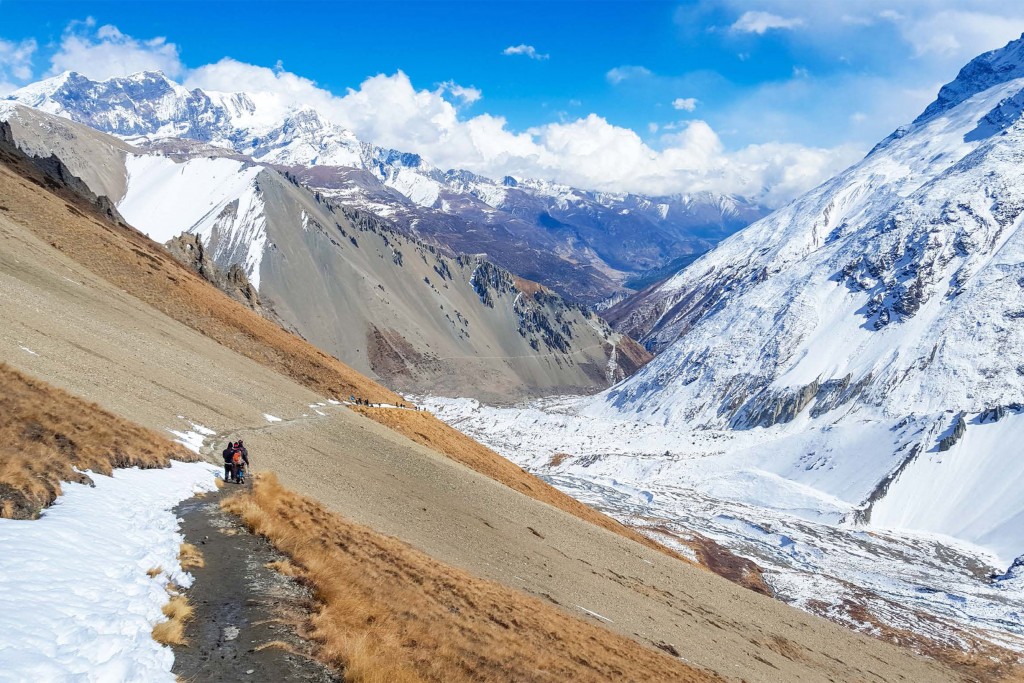
    Trail to Tilicho Lake & Annapurna Himalayas
    Beautiful Trail on the way to Tilicho Lake

    Preparation Suggestions:

    • Train with cardio and strength equipment exercise for 1-2 months ahead of time.
    • Bring an altitude illness medication, like Diamox.
    • Dress in layers to allow for temperature changes.
    • Hire a licensed guide or porter for navigation and support.

    Permits and Regulations

    Trekkers must get:

    • Annapurna Conservation Area Permit (ACAP)
    • TIMS Card (Trekkers’ Information Management System)

    These can be obtained through registered trekking agencies or Nepal Tourism Board offices located in either Kathmandu or Pokhara.

    Accommodation in Tilich Lake

    1. Teahouses and Lodges

    Accommodation options on the Tilicho Lake Trek are primarily teahouses and small lodges. These are available at most larger stops and are more or less comfortable depending on the height and location. Lower altitude lodges will be well equipped, but higher ones are more basic and simpler.

    2. Room Facilities

    Rooms usually offer twin bed configurations, basic bedding, and shared or connected washrooms at lower altitudes. Accommodation in teahouses doesn’t have heating, and if you are trekking at the greater height, then you definitely should carry with you also a good sleeping bag. It’s basic but adequate just for sleeping after a full day’s hike.

    3. Mountain Hospitality

    It’s further notion that the teahouses are often operated by local families, which helps cultivate a warm, friendly environment. They also function as social centers where trekkers of various nationalities meet.

    Food in Tilicho Lake

    Traditional Nepali Meals

    A classic dish is dal bhat, consisting of rice with lentil soup and vegetables which trekkers can expect. It is a balanced diet; it provides energy and usually comes in the way of plates and dishes with bottomless pits which is made for the perfect lunch fuel of tough trekking days.

    Variety of Options in Tilich Lake

    In other foods, have noodles & soup, momo (dumplings), fried rice, pancake, and Tibetan bread in menus. Eggs are one step up, and in slightly more advanced villages you can get pasta, toast or even a hunk of basic pizza. There is more choice in the lower villages, but it declines as you go higher up.

    Additional Amenities:

    There should be boiled/filtered drinking water available but it is recommended to bring your own purification tablets or a filter bottle. Some teahouses (but mainly in lower elevations) have hot showers and phone charging available as well as a free Wi-Fi. Of course, as you keep climbing on top these amenities become limited so don’t forget to plan that ahead.

    Timing Your Great Trek to Tilicho Lake

    The best times to go:

    Warm season (March – May): The rhododendrons and nice blue sky.

    Autumn (September – November) has at least clear skies, good visibility of mountains, and cool, moderate temperatures.

    Do not go during the monsoon season (June – August) because there will be landslides, slippery trails, and definitely a lot of trackable dirt, also desert. If you can avoid winter (December – March), unless you are an adept, truly experienced trekker.
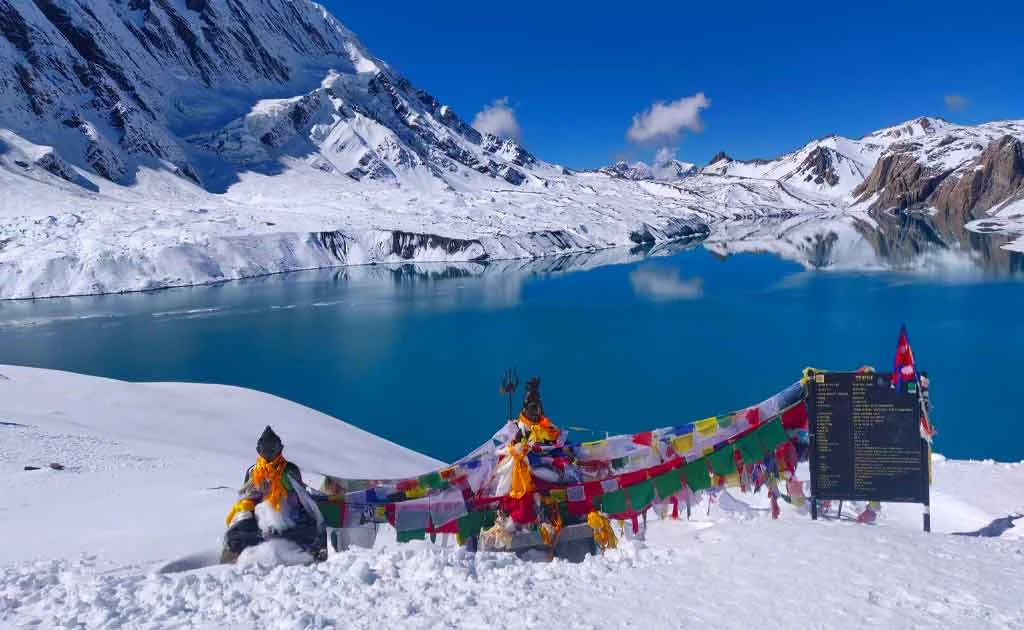
    Tilicho Lake in winter season
    Stunning Tilicho Lake with the statue of lord Buddha

    HERE ARE SOME GOOD SUSTAINABILITY TIPS FOR TREKKERS

    • Bring your own bottles and avoid plastics or single-use plastics.
    • Follow the local customary way, as you should use eco-friendly trekking agencies.
    • I will pay for the tip if you pack out only dry “natural” trash.

    Conclusion

    The Tilicho Lake Trek it is not only a high-altitude trek, it is a caress on the soul of Himalaya. With every single step you take there is magic – from the tiny villages, snowy paths and their green lake waters. Don’t start being a seasoned hiker or a wishful lover of them, it is most definitely guaranteed to be an adventure of a lifetime.

    READY TO TOUCH THE HIGHEST LAKE IN THE WORLD – Tilicho Lake! Contact us today at Happy Mountain Nepal, on Facebook, Instagram, or TikTok

  • Annapurna in Luxury: The Most Comfortable Way to Trek in Nepal

    Annapurna in Luxury: The Most Comfortable Way to Trek in Nepal

    Annapurna in Luxury:Comfortable Way to Trek in Nepal

    Annapurna in luxury is the uppermost highest Annapurna range has been one of the most popular holiday spots on this earth for the world’s trekking fraternity. Its scenery in literally white-capped mountains and heritage have rendered it extremely likely the world’s most utilized trekking ground. But some find the conventional trekking vacation in Nepal somewhat more easy-going. In fact, the entire rough trails, rural lodges and moods of the landscape are not for the weak-willed.

    For those tourists who want to enjoy the adventure and scenery of the Annapurna region without compromising comfort, luxury trekking is the answer. Luxury trekking marries the adventure of a Himalayan excursion with five-star amenities, first-class service and logistically improved facilities. That’s how you should Trek Nepal by if you want the same breathtaking natural beauty, rich culture, and musing atmosphere of Annapurna but in a more comfort-laden and indulgent adventure.

    annapurna

    This blog will set out the most opulent method of treks at Annapurna and why in the near future the whole option of travel with additional shades of luxury feel to it is being offered.

    Why Choose Luxury Trekking in Annapurna?

    For most visitors, trekking is the focus of the Nepalese visit. It is a chance for closeness and closeness with Himalayan majesty, to interact with villagers in remote villages, and a chance to test one’s physical limit. On normal treks, however, tourists camp with less luxury. Altitude/mountain camping with less day of pushy physical manual activity is not vacation for most travelers. And don’t even get me started on the grimy grub and organisational nightmare of hauling your equipment from peak to peak, or employing porters if that certain kind of the adventure, that removes from having your holiday become less of a badge of honour for an excess of debauchery.

    Luxury trekking is the answer to all such concerns in a rightfully deserved perfect combination of comfort, luxury, and adventure. Your health and comfort are not sacrificed either and you get to enjoy the actual charm of Annapurna scenery.

    1. Luxurious Accommodations and Comfortable Stays

    You have series of various kinds of accommodations that you get to experience while you indulge in Annapurna luxury trek. luxury trekking has among the best lodges in the area.  You sleep in big, carpeted bedrooms with heated floors, down mattresses and high–thread-count sheets — luxuries that experienced trekkers can only dream about. They all share bathrooms with hot showers, a luxury not found in the most remote and hilly areas.
    >(The Annapurna Lodge, Tirshuli Lodge and Dhaulagiri Lodge) 
    just to mention the most remote Annapurna lodges offer both the best and the best. Apart from making them comfortable themselves, the hotels and lodges also offer the best arrangement which gives the visitor a good view of the breathtaking annapurna mountains and your visit will never be forgotten.


    2. Gourmet Dining and Refreshing Drinks

    The second and more interesting part of Annapurna luxury trekking is food. The usual trek fodder can be passable home cooking like dal bhat (lentil and rice soup) or momos (dumplings), which can be fantastically bland. Luxury treks, on the other hand, entail gourmet quality food, along with professional chefs to cook it. They are fruits and vegetables; locally, freshly grown so not only are you being supplied with energy which will be need for your expedition but also a flavor of culture filled food of Nepal.

    Luxury treks — and the food that accompanies them — are typically packaged in high Nepalese-to-foreign food ratios. Whether it’s a breakfast of eggs, pancakes, and fruits, lunch of roasted meat, raw vegetables, and soup, or whatever else it is, you have more than enough to pick from in order to feed your body and pamper your tongue. The night then can be relished on other delicacies such as fresh vegetable curries that are prepared to gourmet quality with international varieties or even thick and creamy desserts. The food is just awesome on luxury treks, letting you get a glimpse of the Himalayas with every meal!

    For the wine and cocktail connoisseurs, with Annapurna luxury lodges and the likes, you could sip on various drinks and enjoy it post a day’s walk. Yes, it is the luxury Nepal trekking experience to enjoy a glass of chilled wine when the sun hides over Annapurna peaks

    3. Personalized Services and Expert Guides

    Luxury trekking is all about your experience. During your trek, you will have your own guide and a team of back office people who are expert in their jobs to take care of you so that each and every thing about your trek is in the right hands. From the second you arrive, your guide will lead you on the trails, addressing any and all questions you have; ensuring that you have a good time, while also ensuring that you remain safe.

    Luxury trekking guides will also have insider knowledge on the local wildlife and vegetation, as well as the local culture so you will be fed juicy tidbits of history and culture of the area. They’re also trained first responders in wilderness first aid and adept at addressing any of the problems that can arise during your trek. The second luxury trekking benefit is logistics is not a burden as your guide, staff and porters will handle everything for you. You just have to be worry-free to just have fun and enjoy the scenery views and the challenge of attempting trek without having to at all think or to organize the trek yourself.

    Luxury trekking staff also handles all the behind-the-scenes arrangements for you, such as booking your travel, taking charge of your luggage and plotting your itinerary. It allows you to do worry-free trekking without having to care about the common logistic issues.

    4. Scenic Helicopter Rides and Flights

    If you want to elevate your experience, luxury trekking in Annapurna often includes scenic helicopter flights and rides. Helicopter flights offer excellent views of the Annapurna, Machapuchare and Dhaulagiri mountains. No more days of pounding along bumpy roads, just so you can be in a location that you can get somewhere. you can fly to or from some of the major sites of the region.

    Helicopter flights are an adventurous means of flying over the high-altitude topography of Annapurna. No need to walk to the Annapurna Base Camp (ABC) . You can take a helicopter from Pokhara to the Annapurna Base Camp, a day-and-a-half (or more) of walking to get there . The flights provide magnificent bird’s-eye views of the entire Annapurna massif.

    Many of the pricier trekking tours include helicopter evacuation in the event of an illness, but this is yet another luxury and safety aspect of your trek. If time is one luxury in short supply, opt for a sightseeing flight to one of the viewing spots, such as Poon Hill, and gaze at the beauty of the region from bird’s-eye level without having to trek there.

    5. Wellness and Relaxation on the Trail

    Relaxation and bliss are two of the greatest things about Annapurna luxury trekking. Trekking is actually tiring and will be a blessing in itself for luxury trekkers to relax and recharge some comfort. Wellness facilities like yoga classes, spa and massage are provided in all of the luxury lodges to relax you.

    These camps are for a body and mind rejuvenation that will leave you feeling refreshed and ready to face the second half of the trek. There is a meditation or mindfulness session, so that you relax and just enjoy the peaceful surroundings.  At the end of the day for trekking, pamper yourself to a hot tub bath or massage in a lodge with a view of the Annapurna range. These small things are it that make luxury trekking with a priceless experience.

    6. Luxury Trekking Routes in Annapurna

    Annapurna does have some of the trekking routes for the luxury trekkers- that introduce a New experience of the combination of luxury and adventure. Some of the most popular trails are:


    Annapurna Sanctuary Trek:

    You trek here via forest, farm fields with terracing and far away villages to inner rim of Annapurna sanctuary. Several comfort camps where you camp on route allow you to see nice Annapurna South, Machapuchare (Fishtail) and other mountains.

    Annapurna Circuit trekking trail:

    Quite possibly the most spectacular trekking region in the world, the Annapurna Circuit offers breathtaking scenery to suit every taste, from subtropical rainforest to desert in mountain trekking. Treks here of high standard comprise stays in comfortable top-class lodges with some of the finest Himalayans views available.

    Ghorepani Poon Hill Trek:

    Short trek with bird’s eye view of Annapurna range & best suited for the enthusiasts who are looking for a short trek but without sacrificing comfort. Ideal choice for professionals with hectic work schedules and the trek can be undertaken with luxury lodge.


    7.Is luxury trekking for budget travelers worth the cost?

    Annapurna trekking luxury is, of course, expensive in relation to standard trekking. But if comfort, greater service, and hassle-free over everything else is what you desire, then most definitely it is worth it. Luxury trekking is indulging in cake and getting cake as well—sampling a little bit of the Himalayas, with all advantages and comfort of the luxury holiday. Balance is the essence.
    >
    Less physical 
    effort, sound sleep at nights, quality food and quality amenities are certain other amenities offered by luxury trekking which are all part of such a consideration while traveling in comfort. “Most trekkings or trekkers must pass through Annapurna region if they want to do their archetype trek, so the benefit of viewing a close by the region without having to go through the not so convenient trek is invaluable.”

    Conclusion

    Luxury trekking Annapurna is the trip you need to take. You get the opportunity to view the location in luxury from the evenings spent in five-star hotels. You can enjoy the fine dine, professional guiding facility use the helicopter usage to come down and also the service.  Contact us today at Happy Mountain Nepal, Facebook, Instagram, or TikTok. 

    FAQS

    1.What is Luxury trekking in Annapurna?

    Annapurna luxury trekking offers the thrill of trekking a simultaneously with luxuries such as luxurious accommodation, fine dining, well-trained guides and focus on process. A luxury Annapurna trek allows one to indulge in nature in comfort.

    2. What are theLuxury Accommodation on an Annapurna Trek?

    Luxury treks are through luxury lodges with heater facilities in the rooms  and beautiful views of surrounding mountains. Lodges are much more comfortable and relaxing than usual tea houses.

    3.Do the luxury trekking packages have meals?

    Yes, they do eat, no question, and anything from plain Nepalese to upscale foreign fare, and they prepare it up from locally bought provisions. The lodges even offer haute cuisine and multi-course dinners.

    4. Is luxury trekking for beginners?

    Luxury trekking may be advised for beginners. Luxury trekking offers you the autonomy to walk in the way you want, with competent guides and porters alongside you, ready to meet you on the path of the trek. For beginners, the added comfort and luxury are also to be attempted.

    5. Will there be a chance for a helicopter flight on the trek?

    And so, as it turns out, the luxury trekking holidays actually do include helicopter flights over the Annapurna countryside. The holidays even include helicopter transfers between and from major locations.

    6.Is a luxury trek in Annapurna suitable for medical care?

    Yes, some of the luxury lodges offer health therapies . Such as  spa, yoga classes and massages to relax and rejuvenate after a trekking day. Some of them also offer meditation or mindfulness classes as well.

    7. How physically demanding is a luxury trek in Annapurna?

    Luxury trekking is not nearly as physically demanding as normal treks. It’s still a question of hiking across rock-strewn ground. But you do it at your own speed, with professional guides pampering your comfort and security along the way.

    8. How does luxury trekking differ from conventional trekking?

    Luxury trekking offers you the finest of the services, personal care, and comfort on your journey. The luxury tread offers with spacious rooms, good food and  guides and porters.

    9. What is the Cost of Luxury Trekking in Annapurna?

    Luxury trekking is more expensive than the regular trekking tour. Due to luxury amenities offered. The  level of luxury but expect to pay for the convenience and extra comfort.

    10. How Can I Book Luxurious Trekking Tour in Annapurna?

    You may go for professional trekking companies that provide you luxury trekking tours. Choose the highly rated ones, read reviews. Make sure the trip timings are appropriate based on your level of experience and comfort.