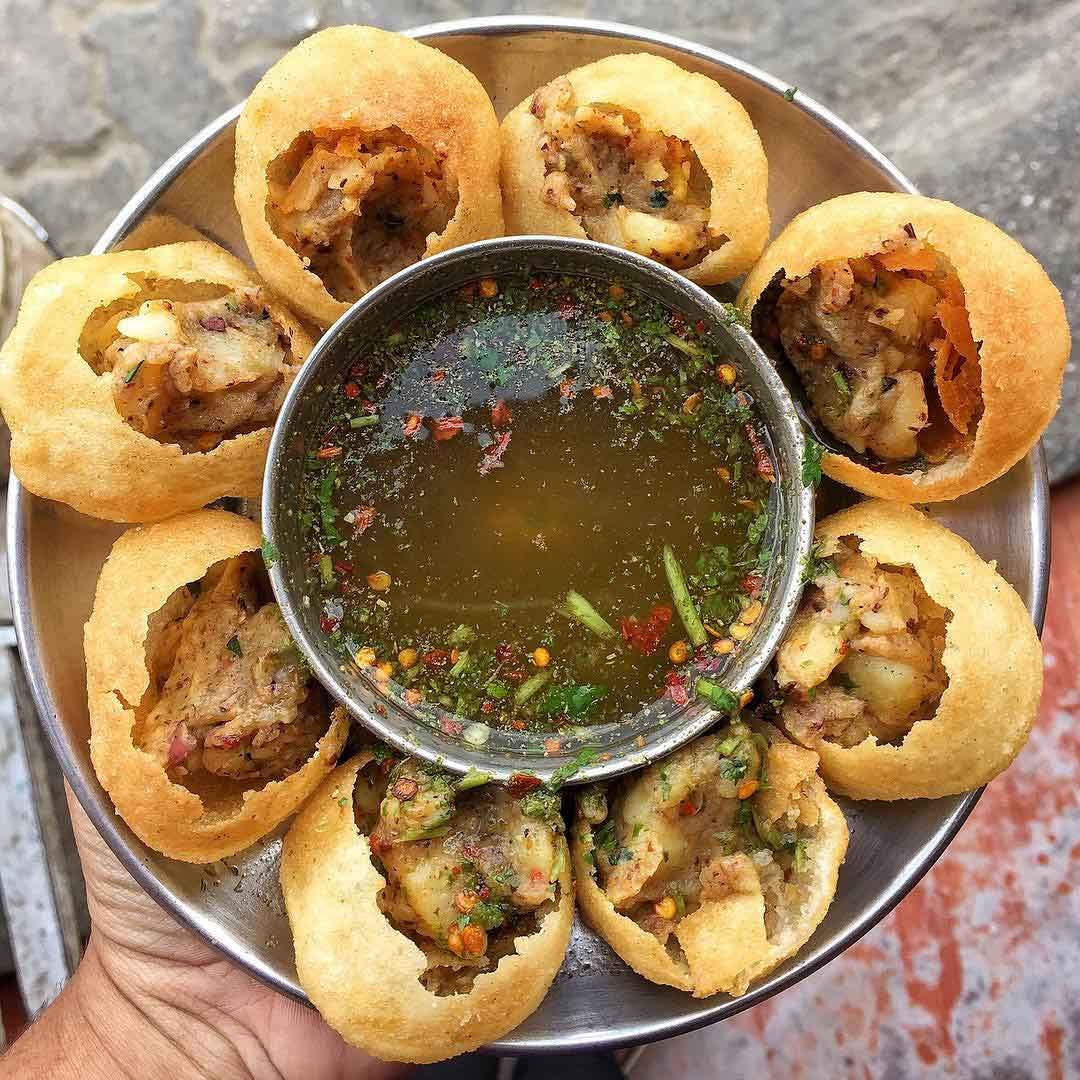
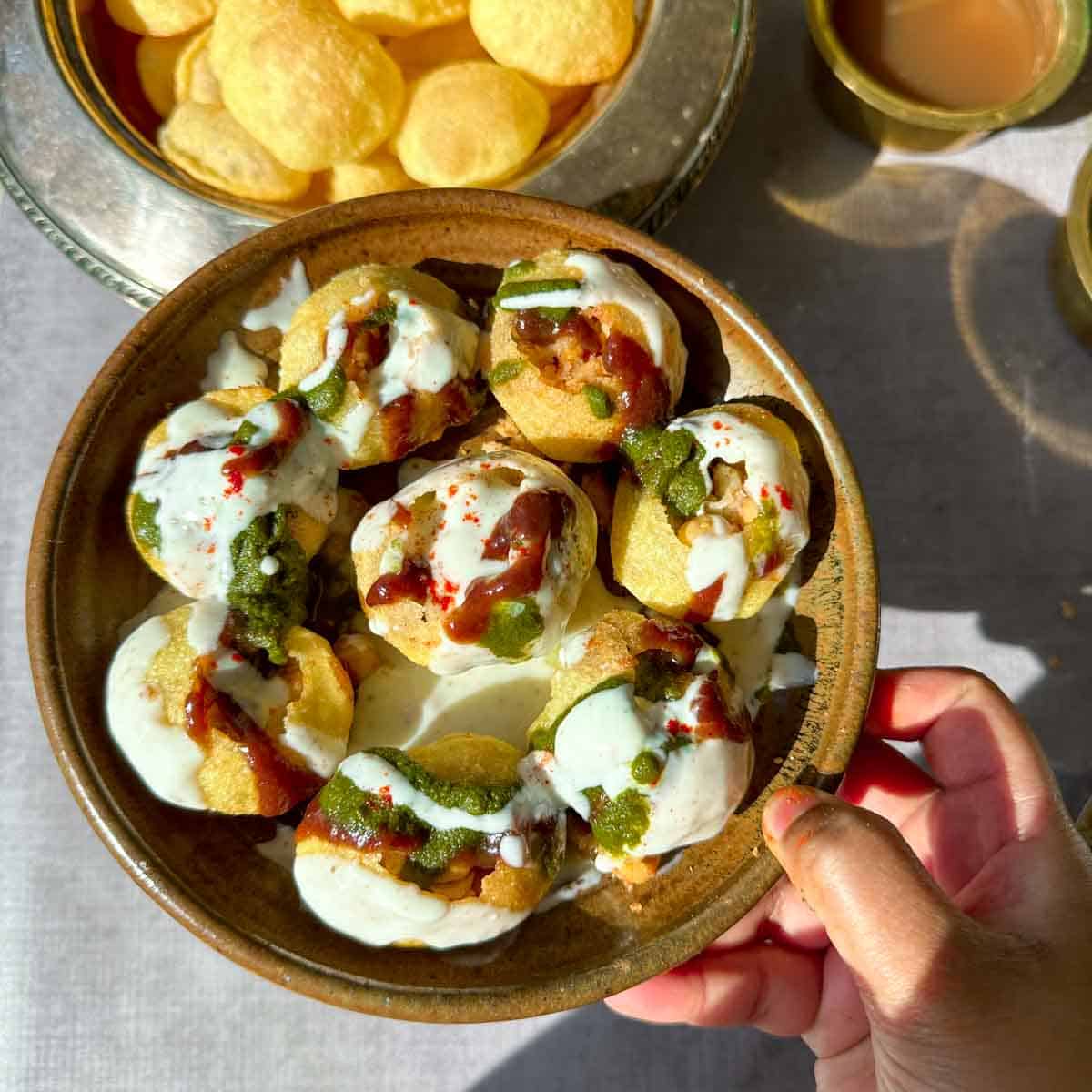
In the ever-bustling city of Kathmandu. It’s nearly impossible to pass by the sound of little steel bowls clanging together. And not stop for a crowd shooting around a little cart that has caught everyone’s attention. Generally, it is here at these little carts, where everyone is excited, waiting for the cart to serve some Panipuri. It is one of Nepal’s most famous street food styles. The air is thick with the aroma of spicy water and some fresh chutney. You cannot help but take a step closer, even if you haven’t realized your feet have stopped!
The first time I sat down (more like lost control of my will) to experience Panipuri in Nepal was much more of an experience than I had anticipated. I thought I would be waiting for my turn like any other vendor. But I was walking with students, other workers on their lunch breaks. And of course, the random bystander watching like a science experiment. The vendor was moving quickly, popping the top off of each round puri. Stuffing in mashed spiced potatoes with chickpeas and onions, dipping it with mint-flavored water, and handing it off to the next person in line. By the time this guy pressed a puri into my hand, I had barely a second to prepare!
Taking that first bite was like magic and simultaneously crunchy, spicy, sour, and cool. The puri would melt in my mouth, absorbing all the other flavors that just doesn’t happen in food. I was making a mess, but no one cared. People were biting into their own puris. Even pausing only a second to wipe the tears from their eyes before grabbing the next. This is what makes Panipuri the best because it is a meal, but it is also an experience.
And the richness of the experience was also coming from the environment that was developing around the stall. Everyone was strangers to each other, but smiles were being exchanged and possibly a few laughs, definitely because of the spice. One group of friends was counting the number of puris they could eat, while a mother was giving her little one a non-spicy version as if it were the most tender gesture; all of this was happening, and at that point, we felt like a small festival was taking place on the road with Panipuri as the star of the show.
In Nepal, panipuri has moved beyond just food to become a whole collective identity. Panipuri will serve you well whether it’s a fast snack after work, or a stop at the stand while you are shopping for hours. There is boundless connection and warmth spreading from a puri of flavored water (liquid) that everyone who eats panipuri recalls.
When I reflect on the experience of street food in Nepal, panipuri is the first image that comes to my mind; it’s not just the flavor, it’s the laughter, the tears from the spiciness of the food, the brief moments of conversation as time stands still, and the simple joy of being at the corner of a busy street with a plate of paper in hand; that makes the panipuri experience special… which is why panipuri is classic street food you cannot miss in Nepal.
The Nepalese cuisines are all about that unique combination of flavor, texture, and ingredients from the rich cultural and geographical diversities in Nepal. Busy streets bustling with energy or quaint mountain villages – Nepali food courses have many tales to speak on tradition, family, and history. Be it the curious traveler or an avid foodie, let us take you in for a tour around different ones that shall be tried alongside the local delicacies, including even the weirdest of the Newari Khaja delicacy.
1. Dal Bhat -The Heart of Nepalese Cuisine
Traditionally, Dal Bhat was considered the staple meal of Nepal. It was just this very humble, satisfying meal of lentil soup, which they call dal with steamed rice or bhat. Then come all the varieties of side dishes with it, usually pickles, vegetables, and one source of protein,suchas chicken, fish, or mutton. The flavor differs from region to region, but generally speaking, the spices used give richness to the dal, including turmeric, cumin, and coriander. Generally, Dal Bhat is served at lunch or dinner time and forms the base of the standard Nepalese meal.
Source- Google
2. Momo – Nepalese Dumplings
Momos areone of the favorite snacks or street foods that feature in Nepal; these originatedfrom Tibet. It consistsmainly of the steamed or fried dumplings that are filled with minced meat-m-uffalo, chicken, pork, or vegetables,along with aromatic spices. The dough is tender while firm at the same time; these dumplings go very well with spicy dipping made of tomato and chilly. Momos are consumable for anytime part of the day, hence stand as excellent options for breakfast, lunch or a light evening snack.
Source- Google
3. Sel Roti – Nepalese Rice Donut
Among all varieties of traditional Nepalese sweets, Sel Roti is prepared for festivals and special occasions. They are rice doughnuts, ring-shaped innature,witha crispy exterior and soft inside. The usual ingredients that are used in the dough include rice flour, sugar, milk, and cardamom to give it a nice flavor. Sweets are more savory; therefore, during Dashain or Tihar, it is given especially with tea.
Source- Google
4. Newari Khaja – A Feast of Flavor
Newari is one of those few select and colourful eating traditions that take origin from the Newar inhabitants of the Kathmandu Valley. The utmost excellent way in which one may enjoy Newari food is via Newari Khaja, containing a few tiny dishes on a single plate – just right for any individual who likes variety and complexity in their meal.
Source- Google
The Newari Khaja generally includes :
Swa(chiura/bitten rice: This is the base of the meal, eaten with different types of curries and snacks.
Chhoila: These meats are marinate in mustard oil, garlic, and herbs and then grilled.
Yomari: Sweet dumpling made from steaming rice dough and filled with jaggery and sesame seeds. Sweet, to contrast all the savories.
Bhoye: This is small pieces of meat or lentils cooked in spices, and prepared as a side dish.
Achar: Spicy pickles of vegetables like radish or tomato add hot and sour flavors that balance the richness of the meal.
Generally, Juju Dhau is combine with Newari Khaja, really great ways to close it. From sharp pickle to soft meat, a combination of texture and flavors, and it usually has a food climax for visitors coming to Nepal.
5. Thukpa – Hearty Nepali Soup
Thukpa isthekindof noodle soup variety that gainedimmensepopularity primarilyamong the people residing in the cold regions of Nepal. Thismay easily be attributedtoits blend ofboth Chinese and Tibetan cuisine,whereinonefindsmixing noodles with vegetables and meat dueto flavorings. This makes the day hotter and more exciting,even during a cold periodoftime,whilemakingthe process a joyful thing. The momos are always spicier or bland in taste or most of the time serve along with the momos which would give whole stomach.
Source- Google
6. Aloo Tama – Potato and Bamboo Shoot Curry
One of the most popular Nepali dishes,AlooTama is prepared with a perfect blend of potatoes and bamboo shoots. Bamboo shoots are added togetherwith the combinedflavor of sour tama. Black-eyed peas are mixed with cumin, fenugreek leaves, and turmeric;it enhances the comfort food in taste and fragrance. Beingthe comfort food,it is requiredtobe present with either rice or roti for any one who loves traditional Nepalese flavors.
Source- Google
7. Chatamari – Nepalese Rice Crepe
Chatamari is a rice crepe and has been more popularly termed as “Nepali pizza.” It generally contains minced meat, vegetables, and eggs as toppings. Common in Newari cuisine at festivals and special occasions, it is generally crispy at the base and, with flavored toppings, goes well for snacking or as a wholesome meal.
Source- Google
8. Gundruk – Fermented Leafy Greens
Gundruk is a fermented categoryof leafy green vegetablesunder traditional Nepalese food. Most leaves used are those of mustard or spinach. This recipe is quite renowned as a side dish among people, mainly in the countryside, because of its sour and tangy taste. It mostly comes as soup or as salad. It is good, healthy food toconsume at meals, particularly during winters when fresh vegetables are not available.
Source- Google
9. Chiya – Nepali Tea
No food experience in Nepal is complete without a cup of chiya-the traditional Nepali tea. People make Nepali tea with black tea, milk, sugar and spices it with cardamom, ginger, cinnamon, thus a heating beverage is enjoyed all the day. Also, Tea stalls happen to be all over Nepal. Additionally sipping chiya with friends or family is one of the aspects of Nepalee social time.
10. Lassi – Yogurt Drink
Lassi is very popular during summer in Nepal. It is a mixture of yoghurtand waterwiththeadditionofspiciness,like sweet andsalty,fromfruits suchas mango or lime with sugar and honey. Sinceeaten after ingested spicy dishesoffoodwhichcomforts your tongue by soothingatthe glass it every sip coverswithinyourmoutha sweet feelingsensation.
Source- Google
Conclusion
The fragrance of Nepalese food is ever there, and each form of food is saying something about the culture and history of this land. Starting from heavy Dal Bhat to delicious Newari Khaja-the varieties can just water any mouth. No customers go out empty stomachs from roadside or from four-star restaurants in Nepal either. So next time, when in Nepal, do make a point to explore the dishes and indulge yourself into the very authentic taste of the Himalayas.
FAQs
1. What is Dal Bhat?
Dal Bhat basically is the Nepalese meal consisting of a lentil soup known as dal and steamed rice known as bhat, often served with other food items like pickles, vegetables, chicken, and mutton.
2. What are momos in Nepali cuisine?
Momos are a kind of dumpling with minced meat or vegetables inside the wrapper, mostly steamed and fried pieces with spicy dipping sauces. Momos is one of the most favorite snacks, even lunch/dinner items throughout Nepal.
3. What is Newari Khaja?
Newari Khaja is one variety of authentic Newari platter that consists of small items such as Swa or bitten rice, Chhoila or grilled spiced meat, Yomari or sweet dumpling, and Achar or spicy pickles-all combined into one flavor and texture combination.
4. How is Thukpa different from other soups?
Thukpa is a kind of noodle soup with vegetables, meat, and spices inside, influenced by both Chinese and Tibet cuisines. This is quite heavy food for cold conditions and is mainly taken with momos.
5. What is Sel Roti?
Sel Roti is a traditional Nepali rice donut with a crispy outer layer and a soft, chewy inside, typically served during festivals and special occasions, enjoyed with tea or as a sweet snack.
6. What is Gundruk and how is it use in Nepali cuisine?
This delicacy is sour and sour due to the fermentedleafy greens, mostly mustard or spinach. They are mainly used in soups or salads for nutrition, mainly in winter seasons.
7. What is Chatamari, and why is it call “Nepali pizza”?
Chatamari is a rice crêpe to which locals add minced meat, vegetables, and eggs as toppings. Locals callit “Nepali pizza” because of its resemblance to pizza and also because of the savory toppings associated with that particular dish. It is a staple in the Newari cuisine.
8. How is Aloo Tama prepare?
Aloo Tama is a curry made with potatoes and bamboo shoots, flavored with spices like cumin, fenugreek, and turmeric. It’s a sour and aromatic dish commonly served with rice or roti.
9. What is Lassi, and when is it consume?
Lassi is a refreshing yogurt-based drink, either sweet or salty, often flavored with fruits like mango or lime. It’s a popular summer beverage, ideal for cooling down after spicy meals.
10. What makes Nepali tea (chiya) unique?
Nepali tea is made from black tea leaves, milk, sugar, and spices like cardamom, ginger, and cinnamon. It’s a warming, flavorful beverage that’s enjoyed throughout the day and an essential part of the Nepali social experience.