Tag: UNESCO

  • UNESCO World Heritage Sites: Highest Density in the World

    UNESCO World Heritage Sites: Highest Density in the World

    UNESCO World Heritage Sites: Highest Density in the World

    And if everything in nature is in balance, then culture and history itself is in balance, and there simply are some countries more precious than others. Is not Nepal one of them with the highest UNESCO World Heritage sites in the world? Himajan beauty gives the nearest estimation to the most concentrated dose of such beauty with so-called ultimate respect to all of the human mankind to be good and close to one another.

    We will explain in this blog why are the UNESCO World Heritage Sites unique, why is Nepal unique, and more about those incredible sites.

    Mountain city & jungle view
    Langtang, Bouddha & Chitwan

    What Is a UNESCO World Heritage Site?

    There are some locations on our planet that have been marked by UNESCO, one of the United Nations Educational, Scientific and Cultural Organizations, as World Heritage Sites. This can be monuments or cultural, scientific, historical, or natural sites of significance. They are not for use or enjoyment today, but for preservation for generations in the future.

    They fall into three categories:

    • Culture: Historic structures, cities, buildings, or traditions.
    • Nature: Geography, geology, or environment.
    • Mixed: Both culture and nature.

    Why Nepal ranks second with highest number of UNESCO Sites in the world

    Nepal is a small country, but inside the small country there’s amazing diversity. It has ancient cities, sacred temples, and high-altitude mountain parks, so Nepal is an open museum. Nepal has ten World Heritage Sites in the UNESCO list, and eight of them are within 60 kilometers of the Kathmandu Valley. There’s one of the most densely populated cultural areas of.

    The 10 UNESCO World Heritage Sites of Nepal

    1. Kathmandu Durbar Square

    Palaces of Shah kings and subsequently Malla kings, Kathmandu Durbar Square or Hanuman Dhoka Palace Complex is right in the center of olden Kathmandu. Containing only a palace complex, temples, courtyards, and statues, the square is an architectural marvel with Newar architecture in the form of latticework windows, wood carvings adorned with decoration, and tiered pagodas. Politically and culturally as well, Kathmandu Valley seat of government, coronation and celebration were here.

    Even though this complex has also been affected by the 2015 earthquake, there is no single damaged building or, worse even, a single casualty in this complex. Kumari Ghar (Palace of Living Goddess), Hanuman Dhoka Museum, and Taleju Temple are some of the world-famous places within this complex. This complex is also decorated with Hindu as well as Buddhist elements, so not only an ancient complex, an ever-lasting culture center too.

    Golden sky with Kal Bhairav statue & Kathmandu Durbar Square
    Kathmandu Durbar Square

    Key Points:

    • Palace of Shah and Malla monarchs,
    • House of Living Goddess Kumari,
    • Newar style of construction similar to woodcarvings,
    • Has traditional festivals such as Indra Jatra,
    • Is located in the center of Kathmandu.

    2. Patan Durbar Square

    Patan Durbar Square is located in the middle of Lalitpur city, previously known as Patan. It is renowned for having extremely well-preserved palace complexes, temples, and shrines. Although it was established as a learning and artistic center by the Malla kings, it is decorated with plenty of carvings, metal, and stone carvings. Among them, the most popular one is Krishna Mandir, which had been constructed completely of stone in Shikhara style.

    The square is also home to the Patan Museum, South Asia’s premier Hindu and Buddhist art museum. It’s a city of artisans, and artisans make handicrafts in family workshops where ancient crafts still exist. The city isn’t modernized yet, though, and still has a clean eternal sort of quality timeless past and timeless present.

    Patan Durbar Square view with temples
    Patan Durbar Square

    Highlights:

    • Krishna Mandir: constructed all of stone,
    • Patan Museum: with faith paintings,
    • Centre for Newar art and architecture,
    • Some pagoda and Shikhara-type temples,
    • Fewer tourists than Kathmandu.

    3. Bhaktapur Durbar Square

    Bhaktapur Durbar Square is Nepal’s most preserved medieval town. 13 km from Nepalese capital city Kathmandu, formerly a kingdom overawing the latter, stands Bhaktapur today. Emerging from such archeological splendors as 55-Window Palace, Golden Gate, and Vatsala Temple, cobble-road thoroughfares, buildings a hundred years old, and colorful town courtyards preserve within themselves an ever-eternal-world glory that whisks you back in the 15th century.

    Bhaktapur is renowned for its weaving and pottery, and traditional practice remains retained till date. Reconstruction of buildings even post-2015’s earthquake was undertaken to provide the city with an identical old look. Bhaktapur is distinctive not just due to monuments but also due to heritage.

    night view of Pyatapola at Bhaktapur Durbar Square
    Nyatapola Temple


    Major Points:

    • 55-Window Palace with façade decoration
    • Golden Gate: finest example of repousse metalwork
    • Lively community of craftspeople
    • Medieval Newar urban planning
    • Organizes the big composite festivals such as Bisket Jatra.

    4. Swayambhunath Stupa (Monkey Temple)

    Atop a hill in the northwestern corner of Kathmandu, Nepal, is this most sacred and oldest Malla complex of Hindu and Buddhist devotion. The white middle stupa and all-seeing eyes of the Buddha and the golden finial of enlightenment represent enlightenment. Different clusters of small shrines, chaityas, and temples are scattered here and there on the grounds to represent centuries of human spirituality.

    The hilltop gives a bird’s eye view of the Kathmandu Valley, and the complex is everyone’s delight, both for the tourists and the locals. Smell-running monkeys are the delight of the complex. The combination of Swayambhunath architecture and spirituality is proof of Nepalese diversity.

    Swyambhu & Harati Ajima seen in Swyambhunath temple
    Swyambhunath

    Key Highlights:

    • One of the earliest stupas of Nepal, more than 2,000 years old)
    • All-knowing eyes of the Buddha reflect awareness.
    • Panoramic view of Kathmandu Valley
    • Sacred to Hindus and Buddhists
    • Nickname because ofthe resident monkey colony

    5. Boudhanath Stupa

    Boudhanath is the largest and most significant stupa on the planet. It’s a Tibetan Buddhist sacred spiritual complex, located north of the capital city of Kathmandu. The gigantic white dome, surmounted by a gold spire and Buddha eyes that seem to be staring back at you, exudes an aura of serenity and mysticism. Monks and pilgrims walk the other direction around the stupa, chanting mantras and spinning prayer wheels.

    It’s surrounded by Tibetan monasteries and bazaars, and the area is mostly Tibetan. It’s especially crowded during Buddhist holidays like Buddha Jayanti and Losar. Boudhanath is a vibrant spiritual community and shrine, and is full daily with thousands of pilgrims.

    Bouddhanath Stupa
    Bouddha Stupa

    Highlights:

    • Largest stupa in Nepal
    • Center of Tibetan Buddhist culture
    • Prayer wheels circumambulation path
    • Surrounded by shops and monasteries
    • Hollow, but is a center of meditation quietly

    6. Pashupatinath Temple

    With all the sanctity that has been bestowed upon it, Pashupatinath is Nepal’s most sacred Hindu temple on the river Bagmati in Kathmandu. Pashupatinath temple is Lord Shiva’s temple and a massive 500 or even larger temple, monuments, and ashrams. With a golden roof and silver gates being engineering wonders, the temple is only open to Hindus.

    It is also one of the humongous cremation grounds where open funeral ritual takes place every day. All of this in accordance with Hindu cycle of birth and death. Thousands throng there during Maha Shivaratri and one of the largest celebrations of the country.

    Pashupatinath Temple view from bagmati ghat
    Pashupatinath

    Key Points:

    • Nepal’s most sacred Hindu temple
    • A temple in which Lord Shiva is worshipped
    • Open cremation is performed on the river ghats.
    • Mad crowd during Maha Shivaratri
    • Green blend of art, ritual, and religion.

    7. Changu Narayan Temple

    Changu Narayan temple is Nepal’s oldest extant Hindu temple, located on the hillside which hangs over Bhaktapur. The temple is itself a temple to Vishnu and was constructed during the 4th century. The temple precinct includes some of the carvings from wood and stone which are some of the best of the remaining Nepalese artwork from an early period. Though the temple is very ancient, it is an active center for worship.

    The village that is nearby also provides a first-hand Newar village experience. As it is not as touristy as some of the other heritage sites, the site is a wonderful one for those who require some peace contemplation. It also provides lovely views over the greens and valley.

    oldest Changunarayan temple
    Changunarayan


    Key Highlights:

    • Oldest surviving Hindu temple in Nepal
    • Votive temple of Vishnu (as Narayan)
    • Well-carved and inscribed fine stones
    • Quiet village atmosphere
    • Good view of Kathmandu Valley

    8. Birth place of Lord Buddha in Lumbini

    Original Buddha birthplace is situated in Nepali plains, southern region. Real birthplace it is, but holy pond, Ashoka Pillar are available rather the real birthplace being tranquil Maya Devi Temple and hence the sense of spiritual experience.

    It is appears to be divided into East (Theravada) and West (Mahayana) with overseas monasteries. Pilgrims come to meditate, study, and bask in silent reflection. Lumbini is not only an ancient site; it’s a throne of peace and divine non-violence.

    Mayadevi Temple in Lumbini
    Lumbini

    Highlights:

    • Birthplace of Buddha (623 BCE)
    • Maya Devi Temple and sacred pond
    • Ashoka Pillar with historical visit record inscription
    • International monastic zone
    • Declared world pilgrimage site

    9. Sagarmatha National Park

    Sagarmatha National Park borders Nepal in the east and includes Mount Everest, or Sagarmatha as the locals call it. It is 1,148 square kilometers of rugged mountains, gorges, glaciers, and backcountry. It is a UNESCO natural heritage site because it includes huge diversity and cultural landscape.

    The. Sherpa people, the park. is dotted with monasteries, prayer flags, and Everest. trails. Snow leopards and Himalayan tahrs give way to wild forest dwellers. Nature beauty and religious warmth are the charm of trekking here.

    visitors at Everest Base Camp
    Everest Base Camp

    Main Features:

    • It is one of the home of Mount Everest.
    • Rare Himalayan flora and fauna species
    • Sherpa people and Buddhist monasteries
    • Evergreen trekking landscape
    • UNESCO Natural World Heritage Site

    10. Chitwan National Park

    The Chitwan National Park is Nepal’s initial subtropical lowland national park. It is best known for being wonderfully varied and containing threatened species such as the one-horned rhinoceros, Bengal tiger, and gharial crocodile. Rivers, grasslands, and sal forest infested with population comprise the park.

    Jeep safari, canoeing, and bird watching facilities are available among others. Cultural tours within and beyond the region are also available in Tharu village community locations in the region on community-based tourism conditions. An eco and wildlife success story.

    safari activities in green chitwan national park
    Safari at Chitwan National Park

    Key points

    • Green one-horned rhino and Bengal tiger
    • Nepal’s first and only national park since 1973
    • Jungle safaris and canoeing trips are run
    • A UNESCO Natural World Heritage Site
    • Abundant in the culture of the indigenous Tharu people

    Travel Tips for Visiting UNESCO Sites in Nepal

    1. Plan

    Nepal’s UNESCO sites are one after the other and just a few minutes’ drive from each other, so if you can plan your days in this manner, you can cover Kathmandu Durbar Square, Patan Durbar Square, Bhaktapur Durbar Square, Swayambhunath, Boudhanath, Pashupatinath, and Changu Narayan within two or three days.

    2. Dress modestly

    Dress modestly when visiting religious and spiritual centers such as temples and stupas, i.e.: cover shoulders, chest, and legs. The exposing of one’s body is not appropriate in these cultures and results in unintended offense. Visitors generally remove shoes when walking around temple complexes, while avoiding some areas off-limits to non-Hindus and photography.

    3. Employ a local guide

    A local guide whom you employ in the destination where you will be visiting is able to bring depth of insight to your cultural and historical knowledge of the sites. You cannot gain the insight from viewing the sites yourself that a guide can provide from an explanation of symbolic temple imagery, local myth, and heritage. A local guide will also help the local economy and can make your experience in your travel better.

    4. Be Responsible

    Ecotourism will help maintain Nepal’s heritage for the generations to come. Do not throw litter, use a water bottle and refill wherever and whenever possible, and wherever possible, travel with locals. Be considerate of local religious customs, request permission before photographing a person, and purchase handicrafts to generate income for the locals.

    Conclusion

    Nepal is compact and a World Heritage tapestry like nowhere else. Icy Everest peaks, serene Lumbini plains, each site relates a story of human heritage, spiritual enlightenment, and oneness with the universe.

    Being a cross-cultural, authentic, and discovery-focused traveler, the World Heritage Sites of Nepal offer something you won’t find elsewhere—a complete package in a compact, tight bundle. Contact us today at Happy Mountain Nepal, on Facebook, Instagram, or TikTok


  • Kathmandu Durbar Square: The Royal Heart of Nepal’s Capital

    Kathmandu Durbar Square: The Royal Heart of Nepal’s Capital

    Kathmandu Durbar Square: The Royal Heart of Nepal’s Capital

    Kathmandu Durbar Square (Hanuman Dhoka Durbar Square) is the glory of Newar architecture, like grand pagoda temples of Asian pagoda architecture. An architecture piece, house of habitation, rewritten by magic of Malla kings, mystique of Newar artisans, into social and religious fabric of Kathmandu Valley as the living garden of a god. Navel of Kathmandu, put on UNESCO World Heritage, no less imposing part of Malla prior of Nepalese art.

    Whatever that is beautifully crafted wooden windows or ancient temples centuries old, brimming with ritual prayer, every square inch of Durbar Square speaks of the past. Whether you are a historian, religious individual, or a visitor, Kathmandu Durbar Square is something that will never let you go, which is actually a stamp of prosperity and glory of Kathmandu.

    Kathmandu Durbar Square

    A Brief History of Kathmandu Durbar Square

    The Kathmandu Durbar Square was formerly the palace of the Malla king and later a Shah dynasty palace. It was formerly a political and administrative, religious, and cultural hub of Kathmandu Valley. “Durbar” is a Nepali term for royal palace, and hence the square was designated as the complex of the royal palace takes up the square.

    The square itself dates back to the 3rd century, although the buildings that enclose the square are between the 12th and the 18th centuries, when they were built by the Malla dynasty. Kathmandu was established as a city by the Malla kings as a city of scholars, saints, and artists.

    As the whole of Nepal was unified in the 18th century by King Prithvi Narayan Shah, the square was already occupied by the royal palace until the royal family moved from the old palace to the new palace at Narayanhiti in the 20th century.

    Key Attractions Within Kathmandu Durbar Square

    Kathmandu Durbar Square is a palace complex, temple, and courtyards with the best examples of traditional Newar architecture. The highlights are as below:

    1. Hanuman Dhoka Palace

    Hanuman Dhoka Palace, the palace at the center of Kathmandu Durbar Square, was once a Malla and Shah dynasty royal palace. It is defended by a red-clad monkey god, Hanuman, grasping a mace, a 17th-century palace sentry. Within the complex, reaches courtyards, temples, and public reception halls. Nasal Chowk, the main court, goes right up to the center with its beautiful woodwork and old-world grace. Here, traditionally, the coronation is conducted, and royal proclamations are made.

    hanumandhoka

    The palace complex holds museums in which Nepalese monarchical history and remains, in addition to portraits, are showcased. Old palaces belonging to kings and queens are now turned into galleries where Nepal’s monarchical past is exhibited. Despite the damage from the 2015 earthquake to the palace, its development in some way ensures that it remains a center for cultural prestige. To walk down its high corridors is to be inexorably pulled back over the centuries, in the softly falling step of imperial foot.

    2. Kumari Ghar – House of the Living Goddess

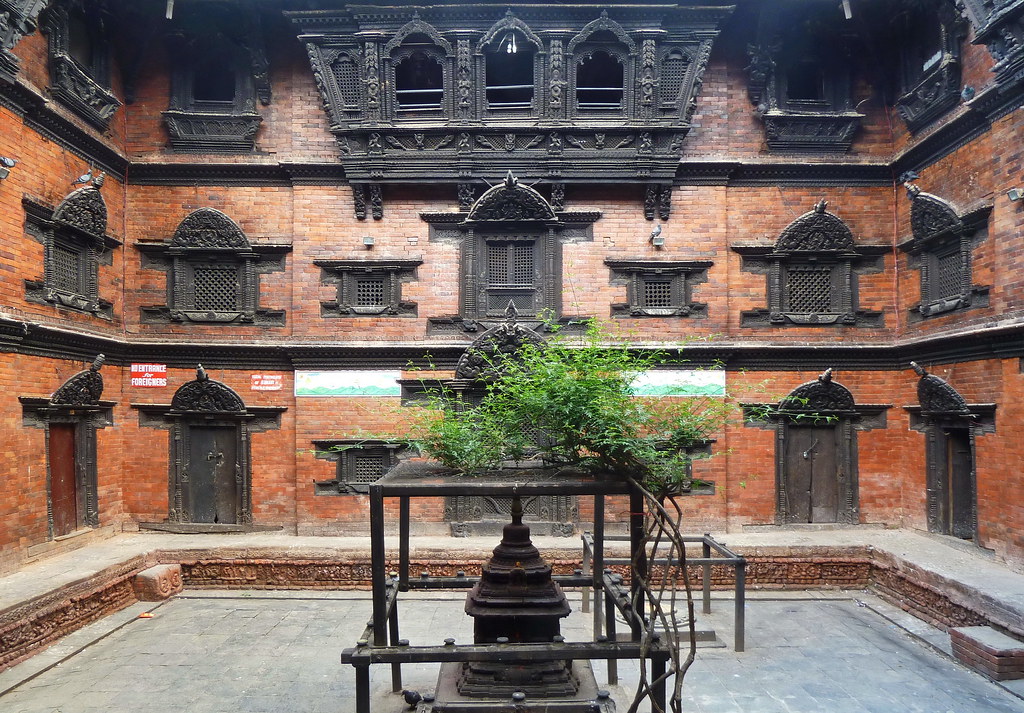
    Inside resides a girl child declared to be the incarnation of the living goddess Taleju. The building itself is typical of the Newari tradition of building dating from the 18th century and is adorned with highly sophisticated door and window wood carvings. The building sits on the south edge of Durbar Square and is distinguished by reddish-brick facing and latticework-paned windows. Nepalese religiousness was built in Nepalese of Nepal and continues alive in religious and cultural practice throughout the Kathmandu Valley. Kumari are selected by an arduous and tried system involving astrology, physical wholeness, and a series of symbolic tests.


    She is also seen peeking through her window to bless pilgrims and tourists at some points in time, a fleeting glimpse of un-demonstrated sacredness for pilgrims and tourists. The Kumari stays in the palace until she is a teenager and is replaced by a new Kumari. Supernatural perfection but sordid material life of Nepal’s ordinary way of life, with gods and men dominating the ordinary way of life, is the palace itself.

    3. Taleju Temple

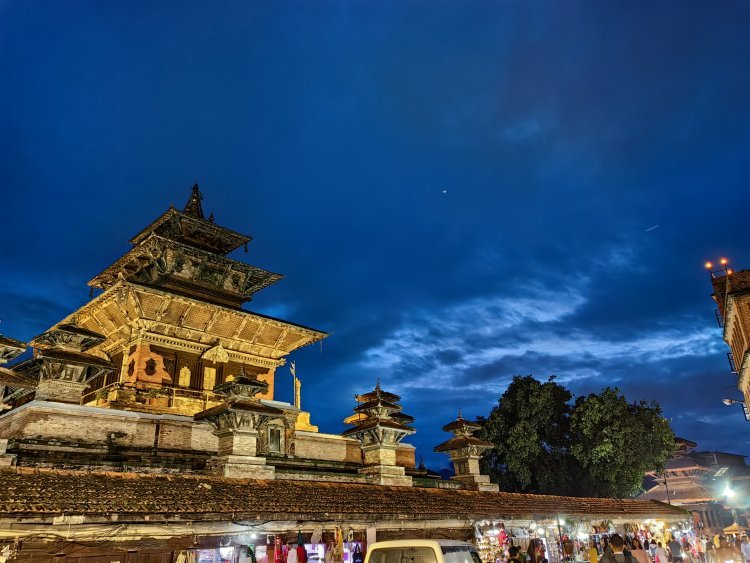
    Taleju Temple is the most holy and tallest building of Kathmandu Durbar Square. It was constructed by King Mahendra Malla in 1564. It is the Taleju Bhawani, a royal goddess Malla dynasty family temple. A three-storied pagoda-type temple complex, plain but huge, emerges on a 12-step platform. The temple is cut off from the world and can be seen only once a year at the Dashin festival. It also maintains the mystic and mystique of the temple in that era. Isolation has kept it so because it remains sacred.

    Taleju Temple

    Its lion statuary, gold finials, and mysterious interior befit the presence of the divine. Taleju Bhawani is to watch over the valley, and consecration gives medieval chiefs’ leadership a divine virtue. The temple itself — brilliant, glittering — is a witness to proportion in art and religion. Worth a visit, to see Nepali Times’ mix of religion and politics.

    4. Jagannath Temple

    Jagannath Temple is another great ancient temple of Kathmandu Durbar Square, built during the 16th century during the reign of King Mahendra Malla. Tiny as small as ginormous Taleju Temple, Jagannath Temple is lovely due to the lovely wood carvings. The Struts of Temple are renown for lovely ornamentation with erotic sculptures, a sign of old Tantric religion and rituals performed when worshiping fertility and cosmic power.

    These statues represent not just religion but also Newar free-associative notions in art. The statues, according to the analysts, were suppose to drive away demons and guarantee propagation, a profane theme of the primitive Hindu and Buddhist mind. Weathering and erosion wear are the only exterior features on the Jagannath Temple, which is otherwise a great specimen of the Newars’ woodworking and religious iconography. It was gold to the photographer and the artist as it is an unsettling yet contextually culturally represented picture.

    5. Basantapur Tower and the Nine-Storey Palace

    The Nine-Storey Palace or Basantapur Tower was the highest building at that time in Kathmandu.

    The Hanuman Dhoka Palace complex tower provided a bird’s-eye view of the entire Kathmandu Valley. It was both a watch tower and an indication of a king’s status and power. This is a union of the two schools of architecture under its outward brick outer face, chiselled-out ornamentations for windows, open verandas, and all of Nepal’s heaven-kingly heritage. It got a lot damaged in the 2015 earthquake and lost half its life.

    It has already been rebuilt, and the same old methods are being employed to rebuild it to its former heights. Rebuilt, it will once more be a peak where the tourists will gaze down upon Kathmandu from its summit. Towering and towering, it was an icon of the city and its masters. Even in ruins, it is a colossal witness to power and engineering prowess.

    6. Mahendreshwar Temple

    Mahendreshwar Temple occupies the most advanced position on the front face of Hanuman Dhoka Palace, but you’d likely just walk by it unaware if you didn’t know it existed; it is so easy to overlook. It is, however, one of the more frequented temples in the square: a morning and evening puja ceremony, and a steady trickle of pilgrims. Another Shiva temple of the same white-stone high-standard architecture, not pagoda-shaped temples like others. Burnt butter candles, flower shower, and temple bell ringing for good luck are daily local practices here. A relatively younger temple than some of the square’s temples, Mahendreshwar has the same hold over the locals’ belief system.

    It is not a monument but a living temple, and humility is one moment of quiet in the sea of pomp within Durbar Square. Incense scent, the ring of the bell, pilgrimage throng, and such a peaceful natural environment render your pilgrimage well worth it. It is a world-eye-opener reminder that Kathmandu Durbar Square remains to date a living temple.

    Cultural Significance

    Kathmandu Durbar Square is not only old but also a public square where religion and culture flourish. There are Indra Jatra, Kumari Jatra, and Dashain, these beautiful festivals, which are celebrate here all year round. Thousands of foreign tourists come here every year, and besides animal sacrifice to the gods, chariot processions and mask dances.

    This is where the folk music and folk dance can be perform, peddling the traditional handicraft, and other such activities which existed for centuries. The culture was present there in the church, and the extent to which the church happens to be a proof of the culture.


    Restoration After Earthquake 2015

    The earthquake of April 2015 was ruinous, and it brought down close to all the monuments of Kathmandu Durbar Square crashing down. The temples collapsed, statues toppled, and century-old monuments burst into fragments. But the resolve of the Nepalese and the world sympathy it elicited kindled an unprecedented campaign of restoration.

    Reconstruction, spearheaded by the Department of Archaeology and in collaboration with UNESCO and other multinationals, sought to reconcile form and integrity. Master craftsmen used ancient techniques and materials to restore ruined sites, and life again throbbed within the square.

    kathmandu durbar square

    Best Time to Visit Kathmandu Durbar Square

    The square is open throughout the year, but spring and autumn are the high season, when the weather is pleasant and the festival is going on in full swing. September to November is good weather, and great Indra Jatra and Dashain festivals.

    Late morning is best for photographing, and the quietness of the surroundings is prior to tourists. Evening is the public space of the square when people walk around, in such an open and natural environment.

    Entry Fees and Opening Hours

    Admission fees and opening hours

    Time: 24 hours a day from sunrise to sunset daily. Entrance Fee:

    SAARC countries: NPR 150

    Foreigners: NPR 1000

    Nepalese: Free

    Tickets at the gate and a guided tour for a small extra fee.

    Travel Tips in Kathmandu Durbar Square

    Dress modestly: It’s a Sacred Ground. Cover your knees and shoulders with clothes.

    Hire a Local Guide: As a present, you get all the added layers of history and significance of the monuments, and a guide is priceless.

    Respect the Kumari Tradition: No photo of the living goddess.

    Support Local Enterprises: Purchasing souvenirs from local artisans will help keep ancient traditions alive.

    Be aware of pickpockets: As with any tourist spot, having your valuables in your possession is advisable.

    How to Get to Kathmandu Durbar Square

    Kathmandu Durbar Square is in the Basantapur district, the city center. It is a rickshaw or walking distance from Thamel, Kathmandu’s tourist hub.

    30–45 minutes taxi, depending on traffic, from Tribhuvan International Airport.

    Sights Nearby

    It is a great place to start the day to visit some of the other major sights of the Kathmandu Valley:

    Swayambhunath (Monkey Temple) – 20 minutes, old stupa with valley view.
    Patan Durbar Square – Another World Heritage site with a temple and palace complex, 30 minutes away.
    Pashupatinath Temple – One of the world’s most sacred Hindu temples, 40 40-minute taxi ride from the square.
    Thamel – Commercial center famous for shopping, dining, and nightlife.

    Why Kathmandu Durbar Square Needs to Be on Your Travel List

    Architectural Magnificence: The merge of Newari art and ancient architecture is nowhere else combine in a single location.
    Spiritual Vibrancy: The square is teeming with prayers, worship, and life, so no tourist trap here.
    Cultural Uniqueness: It’s the gateway to the heart of Kathmandu through artisans’ bazaars and cultural festivals.
    Photography Heaven: Each photo op is camera perfect — temple skylines, ancient wood carvings, or people living life.
    Living History: Not a museum, anything but static and lifeless; it’s a living, pulsing part of the city, full of heritage.

    Final Thoughts

    The Kathmandu Durbar Square is a region allowing the young generation to meet the old one. This is as evident from its temples, palaces and the women of Thailand, whose cultures remain almost unchanged to this present day. Being the richest source of Nepali history, culture and spiritualism the valley proved to be a storehouse for deeper understanding.

    Therefore, it is impossible to avoid the fact that the Kathmandu Durbar Square is captivating to tourists. They range from ancient courtyards of the Darbar Squares; every nook and corner of the valley has some fantastic feature to offer. Contact us today at Happy Mountain Nepal, Facebook, Instagram, or TikTok.