Tag: Welness

  • Solo Travel in Nepal: Everything You Need to Know in 2025

    Solo Travel in Nepal: Everything You Need to Know in 2025

    Solo Travel in Nepal: Everything You Need to Know in 2025

    If you are looking for an independent traveler’s adventure that is packed with amazing nature, grounded in heritage, and reflective and conclusive self-discovery, then perhaps Nepal awaits you. Running from China to India, Nepal is not only the home of the world’s highest mountains.  It has, a place of calmness, spiritual peace, warm and hospitable people and countless cherished experiences – all in a welcoming and safe environment for a solo traveler to explore.
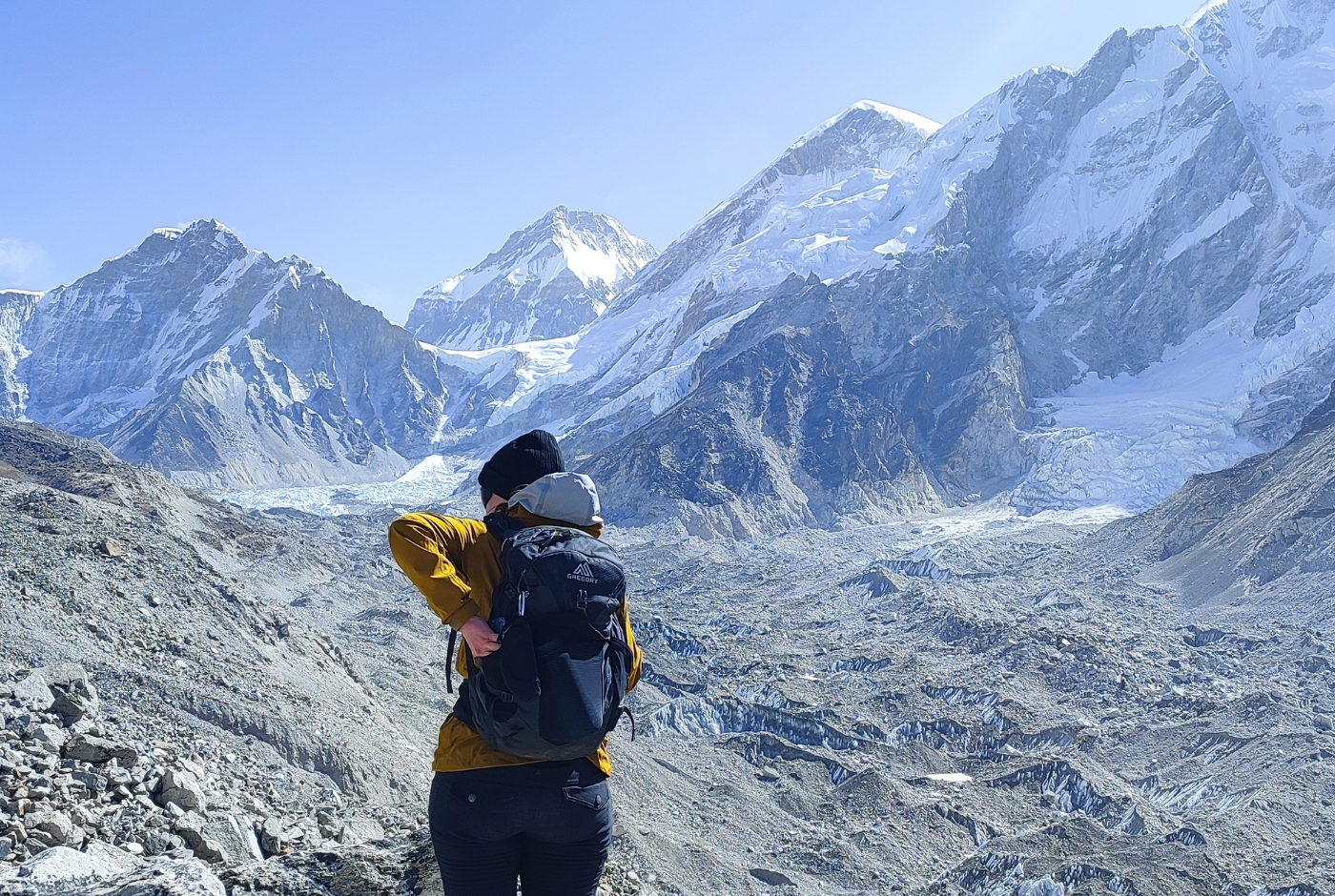
    solo travel

    In this blog we will explore why you will enjoy not only an experience of safe travel but also a fulfilling and life-changing experience, when travelling as a solo traveler in Nepal. Whether trekking the Himalayas, learning to meditate in old monasteries, exploring ancient cities and temples, or embarking upon your own solo experience in Nepal – every solo adventure in Nepal is special and unique!!

    Why is Nepal a good country for a solo traveler?

    There are many reasons why it is a great Country for a solo traveler but there is a fabulous combination of love and safety for an individual independent traveler:

    1. Low Crime Rate Against Travelers

    Compared to other travel destinations, Nepal has a relatively low crime rate in general, and particularly for travelers. Violent crime against travelers is very rare, and petty theft against travelers is certainly less common than other countries. The police and the local people will also take care of the tourists—especially solo travelers—so you will never be nervous at any time, whether walking the streets of Kathmandu or in a village at altitude. This means that Nepal is an outstanding destination to go to solo as a first-time traveler, or to travel alone if you just want to feel secure while traveling. However, I would not recommend a solo trip to Pokhara Lake.

    2. Well-Travelled and Well-Marked Trekking Routes

    From Everest Base Camp to the Annapurna Circuit, Nepal has some of the most recognised trekking routes in the world and among the best-marked trails in the world. The views are unrivalled, and they have refined their teahouse system with guides, porters, and trekking agencies so that everything is very smooth and easy for solo travellers. You can trek alone, or join a small group, and you will always find it easy to follow some established marked path, have an excellent map, or see like minded travellers going in the same direction as you.
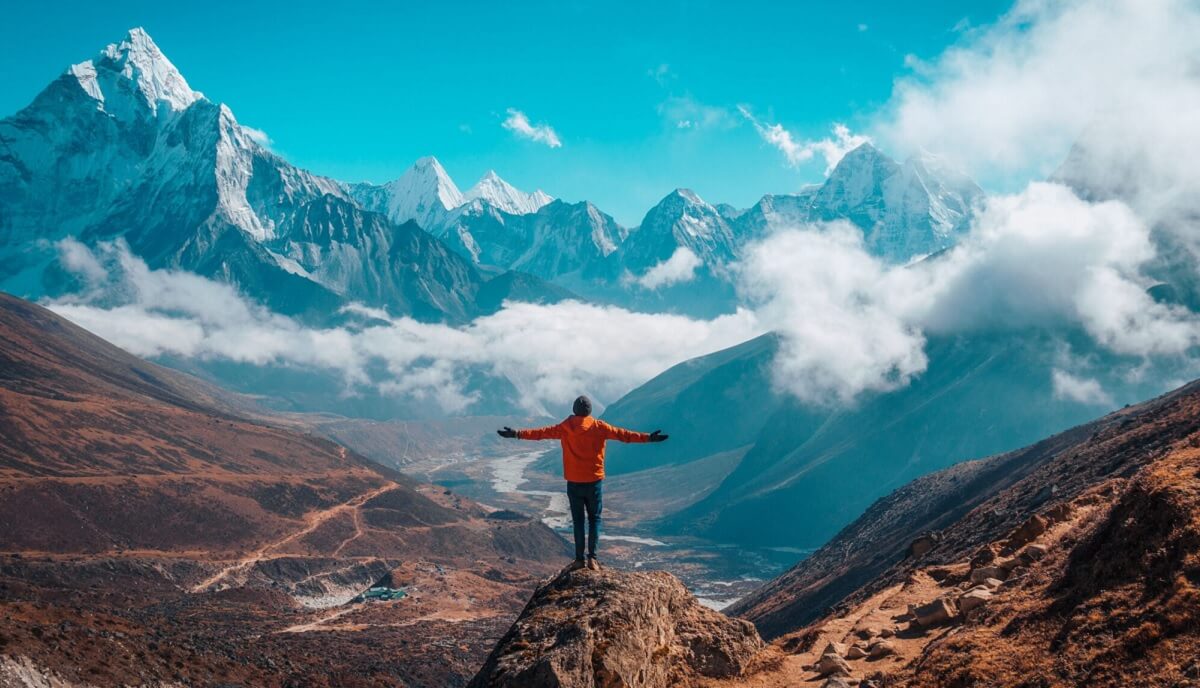
    solo

    3. Rich Culture and History

    Independent travel never shortchanges the experience, and Nepal’s ancient tradition and culture is overflowing with experience. Nepal has it all, from the extremely ancient temples of Bhaktapur and Patan to the environment of Lumbini, the birthplace of the Lord Buddha. The rich, multi-cultured, and complicated sets of festivals, ancient culture, and religious ceremonies offer you depth, sense, and an actual worth-while travel experience as an independent traveler.

    4. Cheap Travel Costs

    Nepal is another low-cost travel destination in Asia. Travelers will have the opportunity to eat in restaurants, stay in guesthouses, and travel via public transportation that will not cost nearly as much as in a western country or even another South Asian travel destination! Therefore solo travelers really get the best bang for their buck in a value sort of way because solo travelers will be able to spend a comparatively small amount but still participate in everything from adventure sports to cultural tours!

    5. Attentive and Friendly Locals

    The people of Nepal will make most solo travelers feel at ease. Since the Nepali local people who are warm, welcoming and helpful for many so every time a traveler has a question for directions, information and generally a nice chat, the Nepali people are willing to help travelers!  Many Nepalis speak broken English, especially in touristy areas which help facilitate interaction and fun interaction! Like their many accusations, and good-naturedness is heartwarming and hypnotic, and a solo journey quickly turns into a heartfelt human experience.

    Regardless of whether you heard the mountains calling you, peace and tranquility in ancient temples, or the playful spirit of finding yourself in a foreign land, Nepal shows you have absolutely everything a solo traveler could want for a safe, friendly, adventurous, affordable and soulful experience!

    Is Solo Travel in Nepal Safe?

    Safety is a major concern for any traveler – solo or not – and rightfully so. Fortunately, Nepal is one of the safest countries for tourists when compared to many other South Asian countries, even solo women travelers.

    Trekking Safety

    Nepal boasts some of the world’s most famous trekkings routes such as Everest base camp, Annapurna circuit, and the Langtang Valley. Trekking without a guide is allowed in Nepal but you should always consider hiring a licensed guide or even a licensed porter especially if it is high altitude or more remote locations. Not only for safety but for cultural experience and community whilst you are trekking.

    Travel Safety Tips for Nepal
    solo travel tips

    1. Don’t Walk Alone at Night, Especially in Low-Lit Areas

    Nepal is relatively safe, but ideally try and not walk alone at night. It would be better to stick to well lit areas in the tourist areas, but in quieter neighborhoods you can be vulnerable to petty theft/could become lost. Ideally you should stick to main roads and think about returning to your accommodation before dark.

    2. Keep Copies of Your Passport and Visa

    Keep photocopies of your passport, visa, and any travel/tourism insurance documents on a reasonably frequent basis. Also, Keep the originals safe in your hotel (with a safe if they have one). If you lose your passport it will be easier to prove who you are if you have the copies of your identification wherever you are on trek, or after being stopped by police.

    3. TIMS card registration for treks

    If you are hiking or trekking, be sure to get a TIMS (Trekkers’ Information Management System) card. It is a simple step that can provide authorities with a log of your route. This will help the authorities locate you in case of any natural disaster or medical emergency. This is just a great, easy precaution for any leisure or solo hikers.

    4. Use registered transport

    While stationed in either Kathmandu of Pokhara, always book registered taxis or use ride sharing apps. You can also call your hotel/guesthouse to arrange transport for you, but do not hail random public transports and get in them – especially at night. This is just to prevent any scams or unsafe situations.

    5. Be Careful with Food and Water

    Street food can be very tempting and is part of the experience of the country you are visiting. Just make sure the food looks hot and clean. Obviously you will not be able to drink tap water, so either carry purification tablets, make sure you have a filtration bottle, or buy bottled water that sells it sealed. This will help you to avoid stomach issues and help you to stay healthy when you travel.

    Top Experiences for Solo Travelers in Nepal

    Trekking is the main reason that many people harness the freedom which comes with solo travel in Nepal. You can enjoy discovering trails which are perfect for your own level of challenge while also meeting other adventurers in this relatively safe country!
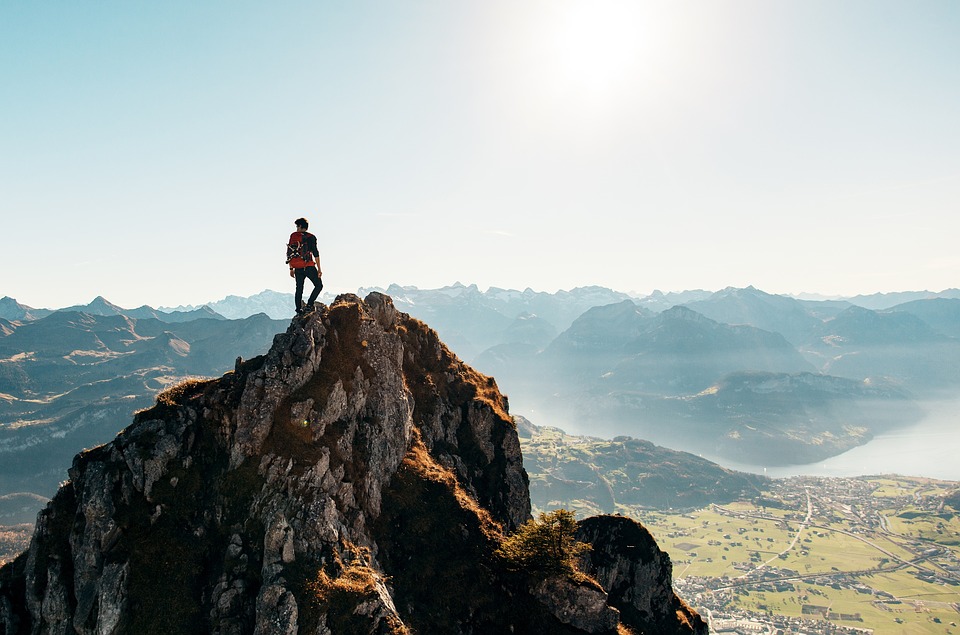
    solo trek

    1. Trekking Through the Himalayas

    Everest Base Camp Trek Everest Base Camp Trek is a once in a lifetime spiritual, physical, life and cultural leap. EBC is 5,364 meters (17,598 ft) high and is around the highest mass on earth 8,848.86 m (29,031.7 ft) mountain mass Mount Everest. With every step there lies another step closer to a mythological mountain range, century-old monasteries, hundred year-old villages and a soul-trek experience that you cannot brush off your soul.

      • Rhododendron and pine forest hide Lukla and Phakding villages,
      • Suspension bridges spanning high above glacier-fed rivers,
      • Yaks and alpine grasslands at Dingboche and Lobuche,
      • Rock moraines and snow ridges on the way to Gorak Shep and EBC.
      • Every bend in the trail, a new panorama, a new peak, another rest stop, and just soak it all up.

    2. Annapurna Circuit

    Annapurna Circuit Trek is the world’s most popular and fulfilling trekking trail that provides trekkers with the pleasure of an enchanting mingling of virgin nature, cultural heritage, and a sit-on-the-edge-of-your-seat adventure. Being at the core of the Himalayas, the trek is a trek from start to finish, whereby you would be able to observe the emerald valleys, meadows of alpine forest, and snow-white peak mountains, and also undergo the different traditions of the inhabitants. A seasoned trekker and also an amateur trekker taking it through an adventure trail, there is something for all at the Annapurna Circuit.

    3. Poon Hill

    Poon Hill trek! This is a great and popular trek through the Annapurna region that has a perfect combination of stunning scenery, fascinating villages, vibrant local culture and stunning mountain views over a relatively  short trek time. When compared to some of Nepal’s long arduous treks, the Poon Hill Trek (Ghorepani Ghandruk) is actually quite short.

    • Usually completing in 4 to 6 days, this trek is great for;
    • Novice or first-time trekkers
    • Families or travellers with limited time
    • Anyone wanting a great Himalayan experience that is more leisurely or easier

    4. Langtang Valley

    Langtang Valley Trek  provides a fantastic experience of much of Nepal’s off-the-grid, probably one of the most remote places in Nepal. Leaving the Kathmandu area with its great city surrounded by rural, untouched even in the still of it rural backgrounds, amazing high altitude landscapes, diverse culture, and fantastic serenity of Nepal’s most established treks; hence getting the best of both worlds. For experienced trekkers and beginner trekkers, the Langtang Valley Trek will remain with you.

    Langtang National Park is extremely diversified. You encounter various fauna and flora while trekking, and all of them are endangered species.

    1. Wildlife- Langtang National Park is inhabited by some of the wildlife, in the form of a cozy little family of animals, or at least the Himalayan tahr (mountain goat), the shy but fortunate little family of red pandas, and the Himalayan black bear.
    2. Flora- Flora- It is also beautiful. In addition to the rhododendron woods that you will be walking through, you’ll walk by magnolia trees, juniper, and other vegetation of the alpine variety.
    3. Glaciers and Icefalls- Glaciers and Icefalls – When trekking down from Kyanjin Gompa, you will probably be visualizing and gazing upon sufficient glaciers and icefalls to admire nature in all of her raw beauty.
    4. Solo-ability – You can choose your own pace, take breaks when you want, and decide on situations obligations spontaneously.

    2. Kathmandu Valley Experiences

    To describe Kathmandu as a sensory overload is a compliment; in the most positive sense. You have so many different aspects of the city; the crowding city streets, ancient temples, and artistic traditions. This city is surely unmatched.
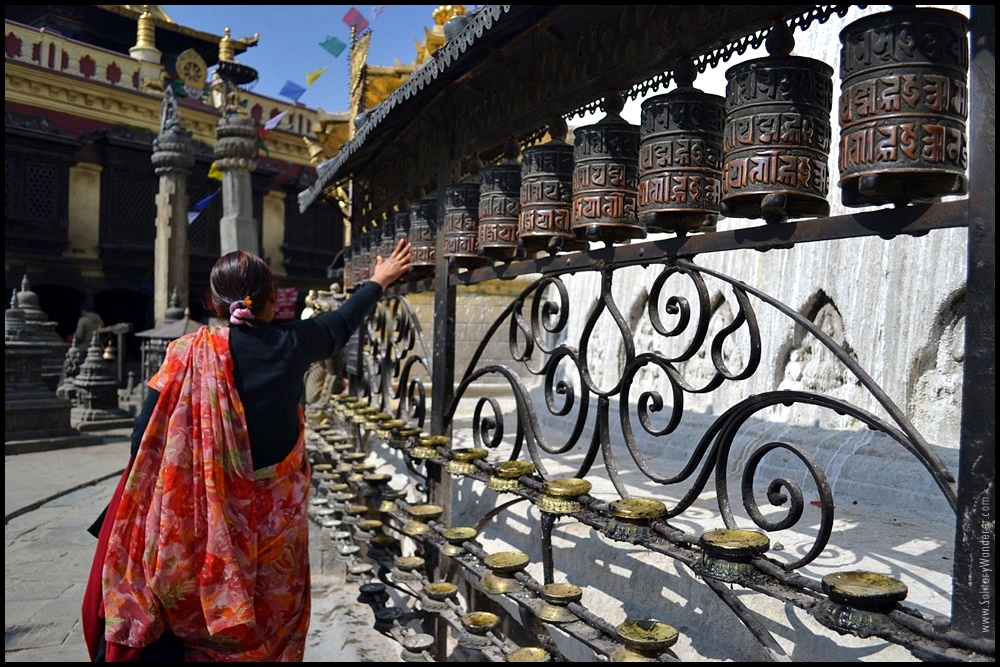
    solo kathmandu

    1. Swayambhunath 

    Atop a hill in the northwestern corner of Kathmandu, Nepal, is this most sacred and oldest Malla complex of Hindu and Buddhist devotion. The white middle stupa and all-seeing eyes of the Buddha and the golden finial of enlightenment represent enlightenment. Different clusters of small shrines, chaityas, and temples are scattered here and there on the grounds to represent centuries of human spirituality.

    Key Highlights:

    • Home of one of the earliest stupas of Nepal (over 2,000 years old)
    • The all-seeing eyes of Buddha symbolize awareness.
    • A perfect panoramic range of Kathmandu Valley

    2. Pashupatinath Temple

    With all the sanctity that has been bestowed upon it, Pashupatinath is Nepal’s most sacred Hindu temple on the river Bagmati in Kathmandu. Pashupatinath temple is Lord Shiva’s temple and a massive 500 or even larger temple, monuments, and ashrams. With a golden roof and silver gates being engineering wonders, the temple is only open to Hindus.

    Key Points:

    • Nepal’s most sacred Hindu temple
    • A temple in which Lord Shiva is worshipped
    • Open cremation is performed on the river ghats.
    • Mad crowd during Maha Shivaratri

    3. Boudhanath Stupa

    Boudhanath  is a Tibetan Buddhist sacred site complex (one of five in all of Nepal) just north of the country’s capital, Kathmandu. The stupa’s huge white dome, with a spire and Buddha’s eyes looking back at you would put a sense of calm and mystique into any traveler. Monks and supporters walk in the opposite direction around the stupa while chanting mantras and spinning prayer wheels.

    Highlights:

    • Largest stupa in Nepal
    • Center of Tibetan Buddhist culture
    • Prayer wheels circumambulation path
    • Surrounded by shops and monasteries

    4. Patan and Bhaktapur

    Patan Durbar Square  in the central part of Lalitpur City (Formerly known as Patan) and is famous for it’s preserved dudch (durbar) complex, shrines and temples. Although it was established as a learning and artistic center by the Malla kings. Bhaktapur Durbar Square is Nepal’s most preserved medieval town. 13 km from Nepalese capital city Kathmandu, formerly a kingdom overawing the latter, stands Bhaktapur today. Emerging from such archeological splendors as 55-Window Palace, Golden Gate, and Vatsala Temple, cobble-road thoroughfares, buildings a hundred years old, and colorful town courtyards

    Highlights:

    • Krishna Mandir: constructed all of stone,
    • Patan Museum: with faith paintings,
    • Centre for Newar art and architecture,
    • Golden Gate: finest example of repousse metalwork
    • Lively community of craftspeople

    Solo Perk:  Get lost in the narrow streets, go for a walking tour, or sip some tea and read a fantastic book at a rooftop cafe.

    3. Spiritual and Wellness Retreats

    More than a place for physical adventure, Nepal is also a spiritual place and a destination for all kinds of seekers from all over the world.
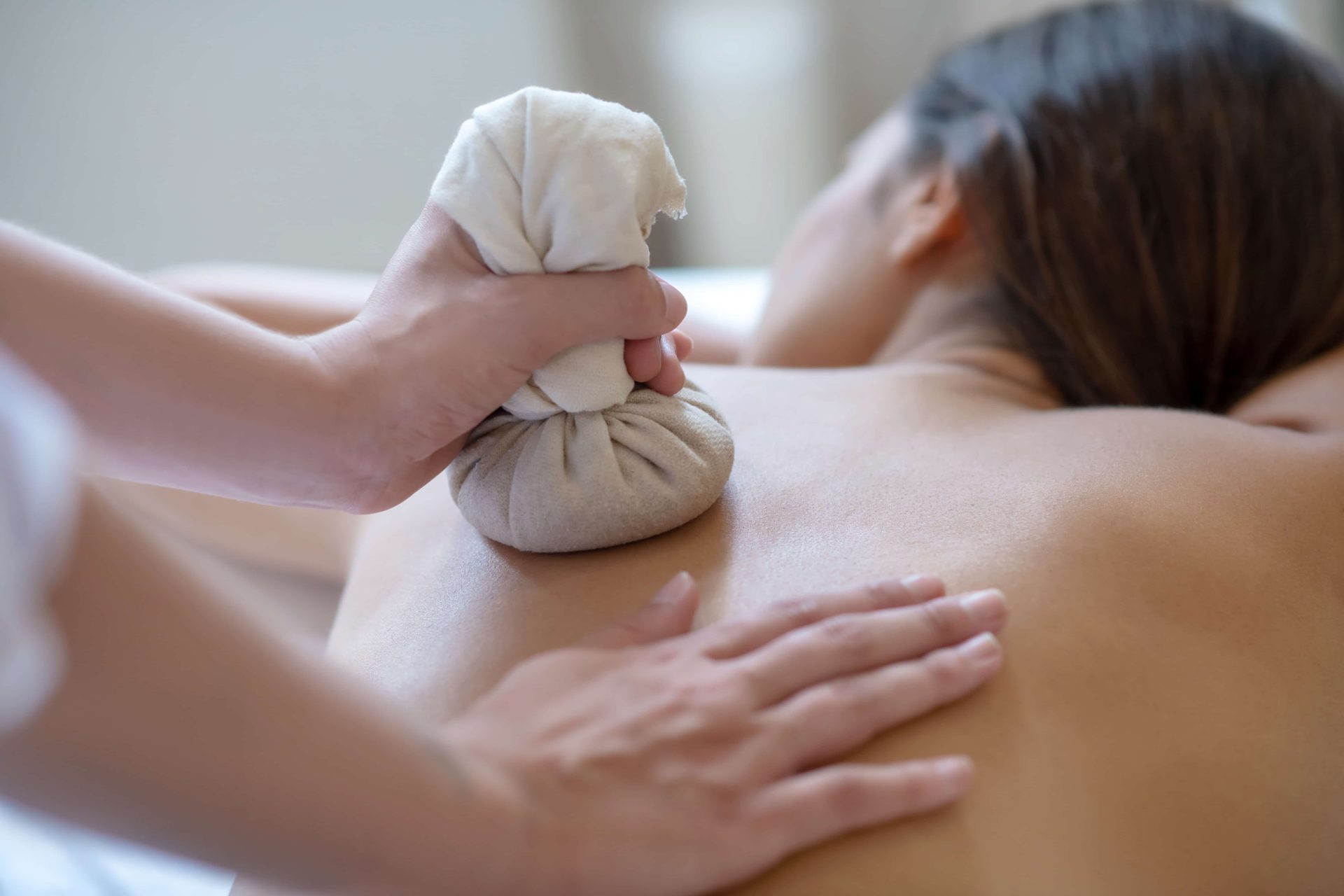
    ayurveda


    1. Yoga and Meditation Retreats

    Nepal has a world-wide, noticeable reputation for yoga and meditation retreats in such places as Pokhara, Kathmandu and of course Lumbini, the birthplace of Buddha. Many retreat programs offer schedules with various programs including, different opportunities to participate in yoga asanas (postures), mindfulness and breath control practice, spiritual philosophy, or a combination of programs depending availability. It doesn’t matter what level of experience you may have, in either, yoga, meditation or mindfulness practice the inviting atmosphere of complete tranquility allows you to disconnect from the stressors of everyday life, release, relax, pursue finding peace of mind, learn more about who you are as a person and settle into enjoying the view of the surrounding Himalayan mountains.

    2. Monastery Stays

    For a truly distinct and intense spiritual experience, travelers can stay at Tibetan Buddhist monasteries (the most frequent, Kopan Monastery, is in Kathmandu and has guest accommodations). Staying at a monastery can be an opportunity of a lifetime to immerse yourself in Buddhist philosophy and teachings by the monks who have dedicated their lives to practicing there; you will also have an experience of chanting, meditation and teachings during your stay in a tranquil setting.
    Guests are permitted to participate in some of the rituals/activities of the monastery, as well as have space to themselves to reflect and be immersed in and interact with a foreign culture within a spiritual context.

    3. Sound Healing and Reiki Workshops

    Participation in sound healing and Reiki workshops has grown more in local hotspots of Thamel in Kathmandu and Lakeside in Pkohara. All these holistic therapies are directed towards more body energy alignment in a healthier way by therapeutic sound waves or hands-on energy healing modalities. These are done by well-qualified practitioners. The Phoenix stress relief, relaxation, and emotional healing benefits of Reiki and sound healing, and the wider spiritual and wellness terrains of Nepal, were the ideal fit.
    Solo Perk: Reflect, reconnect, and restart your life, daily yoga and quiet time

    4. National Parks and Animals

    For independent travelers who prefer the nature experience off the mountains, jungle safaris and wildlife sightings of unusual animals in Nepal’s national parks are the draws.

    Elephant riding

    1. Chitwan National Park

    It is Nepal’s first national park and a UNESCO World Heritage site. Wildlife is your coffee and Chitwan’s lowlands are your cup of tea, then Chitwan is a wildlife paradise and will excite you to bits. It shelters endangered animals such as one-horned rhinoceros, Bengal tigers, Asian elephants and more than 500 bird species. Jungle safaris, boat tours, and cultural exchange with indigenous Tharu villagers will offer lots of chances to see one of South Asia’s world-famous wildlife conservation sites.

    2. Bardiya National Park

    If you are looking for a more out of the way and authentic jungle trip, Bardiya National Park in western Nepal has the same wilderness, remoteness, and isolation as other wildlife parks in Nepal but a fraction of the tourists. You would have a better chance of seeing a Bengal tiger here and engaging with wild elephants, gharials, and swamp deer in their own wild habitat. The wilderness in Bardiya National Park is breathtaking and it provides a wonderful option for a traveler in search of an idyllic off-the-beaten-path travel experience, guided jungle trekking, river safari options, and connecting with the many biodiversity of Nepal’s wilderness.

    Solo Perk: Safaris travel groups are readily available and commonly consist of other single travelers.

    5. Pokhara – Solo Traveler’s Paradise

    Pokhara is perhaps Nepal’s most laid-back and picturesque city. Framed by lakes and mountains, it’s the perfect place to relax.

    • Boating at Phewa Lake
    • Hike to World Peace Pagoda
    • Live music and cafes in Lakeside neighborhood
    • Paragliding and zip-lining for adventure-seekers

    Alone Perk: There is serenity around that gives room for journaling, contemplation, and welcoming nice faces across the world.

    Best time to travel in Nepal solo

    Spring (March–May): Warm days, rhododendron flowers in bloom, clear mountain views.

    Autumn (September–November): The peak trekking season, with crisp clear skies, and festivals.

    Winter (December–February): Colder but with less tourists (great time for cultural travel).

    Monsoon (June–August): Lush but slippery trails and rain.

    Tip: If you want better weather and fewer tourists, go in early December or late February.

    How to budget for solo travel in Nepal

    The beauty of traveling in Nepal solo is the budget and comfort level you can achieve and still get the experience you want. Whether you’re looking for a shoestring budget or comfortable mid-range or luxurious trip, there is some level of travel to suit every type of traveler in Nepal.

    As a budget traveler, on average expect to spend about $25 – $40 per day, often including accommodation in a shared room in a hostel, local food like dal bhat, and transportation on local buses. Trekking on a budget is easy in Nepal, with low-cost accommodation in teahouses, along with a low-cost trekking permit.
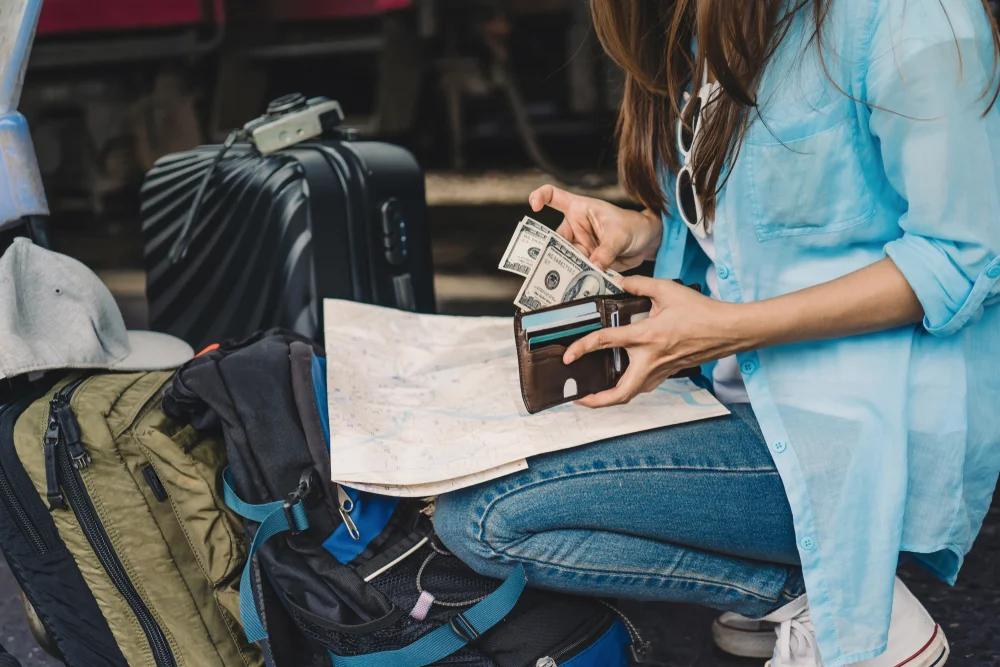
    For basic travelers, budgeting $50–$100 per day means there was some room for flexibility in planning your day. You could have stayed in nice rooms at some quirky boutique hotels or guesthouses, mix of local and western meals, and even domestic flights to places like Pokhara, or Lukla.

    This budget also beat the price of renting a transportation for guided day trips, or entry to cultural sites. If you decide to go luxury experience budget for at least $150 per day, which may include staying at something you might call an up-market resort, chartering a private helicopter ride into the Himalayas, hiring private guides, or eating gourmet meals.

    If travelling solo, you can benefit from long-term stay discounts. Most hostels, guesthouses, and Airbnb hosts offer reduced pricing for staying for the week or the month. In addition, wherever possible, accommodations should be able to help pair solo travelers with guides, porters, or other tourists at half the expense on treks and tours. If you plan ahead, travel in Nepal a solo traveller could be reasonably affordable and still quite rewarding travel experiences. You can get full value from every rupee spent.

    Meeting People as a Solo Traveler in Nepal

    One of the best parts of solo travel in Nepal is that meeting people is easy. Whether you’re hiking the mountains or traversing the busy city streets, Nepal will bring you in contact with a variety of people. Even if you arrive solo, there’s a good chance you will leave with friendships and stories created with other travelers as well as local people.

    Stay in hostels and guesthouses.

    Nepal’s hostels and budget guesthouses, particularly in places like Kathmandu and Pokhara or along the major trekking routes, are commonly filled with solo travelers from every corner of the world. Most of these places have a communal lounge, rooftop café, or even a group tour, which allows solo travelers to easily connect and potentially create travel buddies. It’s common for people to be communicating, organizing options, or making trek plans after a simple breakfast conversation.

    Meeting People on Trekking Trails

    Trekking in Nepal can be a surprisingly social thing to do. Whether you are hiking the Annapurna Circuit or heading to Everest Base Camp, you will pass through tea houses and meet fellow hikers as you travel along the trail. Most of the time meals are served at long communal tables, and evenings at the teahouses can be filled with stories, laughter, and conversations shared over warm cups of tea. You can even meet solo travelers who ultimately walk together as small groups and rely on each other for support along the trail.

    Participate in Workshops and Classes

    There is a plethora of classes and workshops in Nepal to participate in that will bring people together with similar interests. You could take a course in traditional Nepali cooking, attend some yoga or meditation with a monk in a monastery, take thangka painting lessons, or participate in community handicrafts. Each of these activities provides you with a meaningful experience and leads to networking and friendships with fellow travelers or local people.

    Volunteer in Local Communities

    Volunteering in Nepal; whether it is at one of the NGOs, schools, or even rural health posts is a great way to connect with local people and with other international volunteers. You will be part of a team, assisting in encouraging social change and developing a better understanding and appreciation of Nepali culture. Relationship and connection created by volunteering tend to go deeper than small talk, and leave lasting impacts on both sides.

    Stay in Community Homestays

    For a truly authentic and social experience, consider staying in community-run homestays in villages like Panauti, Bandipur, or the hills of Ilam. You’ll live with local families, join them for meals, and learn about their traditions and daily routines. These homestays offer not just accommodation, but heartfelt connections and cultural immersion that’s hard to find elsewhere.

    In Nepal, solo travel doesn’t mean being lonely—it often opens the door to richer, more spontaneous human connections that make your journey even more unforgettable.
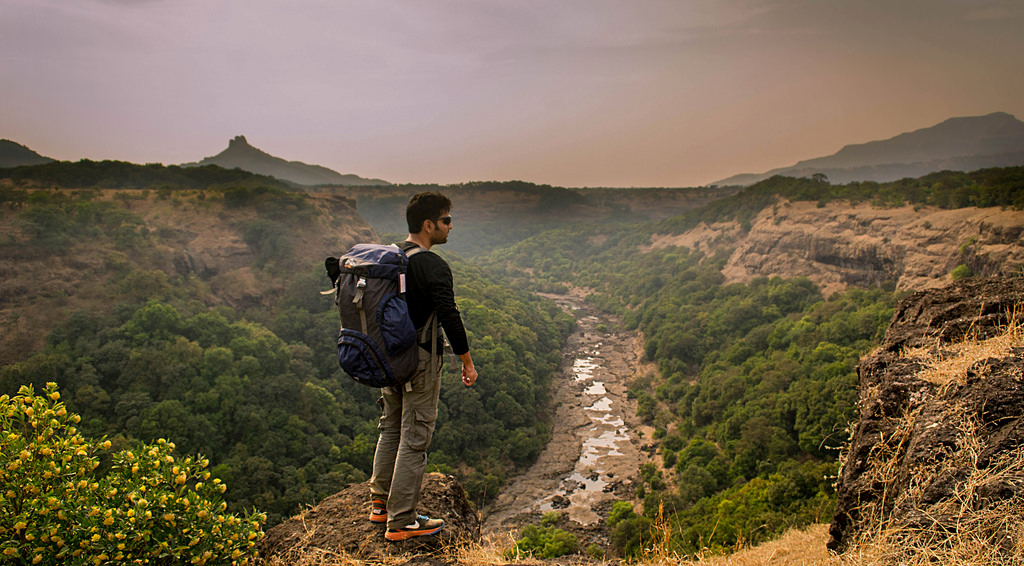
    solo traveller

    Advice for Traveling Females Solo in Nepal

    Traveling as a female solo traveler in Nepal can be safe, but it is still smart to take precautions. Here are some tips for traveling wisely:

    • Dress modestly (especially in the countryside or religious places)
    • Avoid isolated areas at night
    • Stay in accommodations that have good reviews
    • Trust your intuition and ask locals when in doubt
    • Look into joining female-led trekking groups or hiring a female guide

    Bonus Tips: Nepal is home to tons of women-centered travel agencies, homestays, and retreats. Many work with local women to empower the already amazing Nepali women. Giving back to them makes your trip more fulfilling.

    Conclusion: Nepal Will Change You—for the Better

    Solo travel in Nepal isn’t just a vacation. It’s a journey of self-discovery, growth, and connection—with nature, people, and yourself. You’ll come for the mountains but stay for the meaning. Whether you’re looking to disconnect from stress or reconnect with purpose, Nepal opens its heart to you.

    From spiritual retreats to thrilling adventures, quiet sunrises to colorful festivals, Nepal offers an experience that is safe, rewarding, and truly life-changing. Contact us today at Happy Mountain Nepal, on Facebook, Instagram, or TikTok.

  • Adventure and Relaxation: Combining Trekking with Yoga in Nepal

    Adventure and Relaxation: Combining Trekking with Yoga in Nepal

    Adventure and Relaxation: Combining Trekking with Yoga in Nepal

    Nepal, home to the towering Himalayas, offers more than just thrilling trekking adventures. Nepal holds a lot more in store for all of us than a shiver-causing trekking adventure. Just incidentally, it’s also a yoga and meditation heaven, so that any tourist looking for some physical thrills along with some spiritually rejuvenating time will feel right at home there. Nepal trekking and yoga give tourists a chance to indulge in the scenic splendor while at the same time replenishing the mind, body and soul.

    trekking

    Why Trekking with Yoga?

    Physical Power Development

    Altitude trekking requires energy, receptiveness, and persistence. Yoga, it is found, conditions the body conditionally for the level of flexibility, balance, and lung capacity of such conditions. Yoga pre- and post-trek can be less muscle-straining and can help you heal faster.

    Enabling Spiritual Experience

    Nepal is rich in religion, with Buddhist monasteries and Hindu temples bordering its paths. Gold yoga meditating on hills brings the sole mountain exposure for trekkers to be nature and self romantics.

    Relax: Staying relaxed leads to clarity of mind.

    Yoga exercise and breathing relaxation classes soothe stress are clear thinker. Trekking made your body tense and yoga eased your body and trekking became pleasurable. These are the reasons why yoga is utilized for trekking in Nepal.

    Best Trekking Routes for Yoga Retreats

    1. Everest Base Camp Yoga Trek

    Everest Base Camp (EBC) Yoga Trek is a trek that takes the visitor to the summit of remote America with Get’s panoramic view of Mount Everest and other Himalayas. It begins with flying to Lukla by air and trekking on scenic hills of Sagarmatha National Park. The trek winds through Sherpa villages, monasteries and rhododendron forests. Tour destination highlights are to go Everest Base Camp (5,364m) and Kala Patthar sunrise (5,545m) to see the best of Nepal.

    One of the benefits of high trekking yoga is greater perseverance and probably strength. Nan: Thin high mountain air frightens but replaced with yoga breathing pranayama. With shutter eyes meditation in picturesque places like Tengboche Monastery divine snap, morning stretches readying another boulder day mountain climber trekker. Weather of Himalaya makes it best location for yoga trek.

    Why It’s Perfect for Yoga Trekking:

    • The mountain breathing exercise — prana means “breath” in Sanskrit — is useful for acclimatization.
    • Remote monasteries are great places to meditate in.
    • These sweeping views refresh the mind and provide refuge.
    • Yoga also gives exercise and flexibility that relieve tension on the body.

    2. Annapurna Base Camp Yoga Trek

    ABC Yoga Trekking is full trekking in both rice terraces and big grass land of Annapurna region with ice plateau. Treks start from Pokhara and end at lovely walking to Gurung village, bamboo forest and waterfall Trekkers climb towards Annapurna Base Camp (4,130m), that rewards him with endless panoramic views of Annapurna I, Machapuchare and Hiunchuli.

    The parallel yogis have favorable training, almost perfect balance very low altitude alongside as well as crossed trekking ways. Your dawn of Annapurna Himalayas that you would enjoy from Poon Hill (and even base camp perhaps) with yoga in the mornings. Also less altitude sickness and tranquil surroundings help open the chest when meditating and relaxation full breathe bubbles. Yoga trekking is one of the most spiritual body and soul experience and the trekking is one of the best destinations to enjoy the adventure and the renaissance.

    Why Is It So Perfect for Yoga Trekking

    • It was a yoga practice that could only be up to the best altitudes well we need both of them.
    • The hot spring to ease the muscles.
    • Stunning sunrise yoga sessions at Poon Hill.
    • Rich cultural experiences with warm hospitality.

    3. Langtang Valley Yoga Trekking

    Langtang Valley Yoga Trek is hiking to faraway paradise and divine spiritual abode. From Syabrubesi, the path runs through forest, yak grazing alpine meadow, and old Tamang villages. Continue on the Langtang River trail prior to arriving Kyanjin Gompa (3,870m) — a sacred Buddhist monastery encircled by dazzling white peaks. The valley is said to provide the breathtaking beauty, fewer visitors and perfect spot for a peaceful holiday, the best as a meditation camp.

    Doing yoga is extremely challenging in Langtang Valley because of the serenity of the place, that is to make you strong from the inside, and apart from that, you will also need to concentrate. Kyanjin Gompa meditation, the trekkers’ illusion that they feel they are all in their own bubble with Langtang Lirung. Good observation skills will do; the energy level will be kept on the even mode with some (wind) energy in lungs. The fresh mountain air and silence of the Langtang region is an ideal location to recharge you this weekend.

    Why It’s Ideal for Yoga Travelers

    • Millions are visitors visit here, so perfect in silent meditation.
    • Kyanjin Gompa offers a peaceful atmosphere for yoga practice.
    • Leisurely, good pace for meditative movement
    • Not very high altitude, so ideal for beginners

    4. Poon Hill Yoga Trekking

    Poon Hill Yoga Trek, the short and panoramic Annapurna region trek well known for the best sunrise view over the green dense leaves. The trekking trail begins from Nayapul where the trekking trail extends from village to village such as Ghorepani and Ghandruk. It is the first early morning trekking when sunrise conceals slowly behind the Dhaulagiri and Annapurna ranges from your starting point to Poon Hill (3,210m) It’s an easy trekking on good, asphalted road and medium height so even the beginner will have fun.

    Poon Hill trek is an added advantage due to movement & awareness: yoga. Sunrise tour, morning of Poon Hill, sun salutations to welcome the sun, body energy, and soul. The enjoyment does not stop yet while combining the vision of mountain greens and nature an organic retreat-like peace for relaxation and meditation. Well, this trek is yoga’s best-kept secret since this trek is all about adventure exposure, culture exposure, and physical fitness.

    Why It’s Ideal for Yoga Travelers

    • Yoga class at Poon Hill at sunrise.
    • Peaceful, ideal for meditation.
    • Nature for more higher consciousness and relaxation, in a scenically diversified environment.
    • Low enough to be able to practice yoga without frills.

    5. Manaslu Circuit Yoga Trekking

    Manaslu Circuit Yoga Trek is the second-best option to Everest and Annapurna trekking regions and one of the less-trekked off-the-beaten-path adventure treks. Less-treaded Manaslu Circuit trek encircles Mt. Manaslu (8,163m), the 8th highest mountain in the world. The trek starts at Soti Khola and passes through forest, suspension bridges and high-altitude Tibetan villages. The trek is renowned for Larkya La Pass (5,106m) crossing with Himlung Himal, Cheo Himal and Annapurna II Panaroma.

    Nature yoga here builds physical as well as mental resilience. Peaceful peacetime trails give visitors an opportunity to be present, and morning yoga practice builds flexibilities for the days of trekking ahead. Alpine mountain scenery is perfect for Pranayama, which gets visitors accustomed to Lower Oxygen. Meditation at Sama Gaon and Samdo monasteries gives a spiritual flavor, so the trek is a great combination of adventure and tranquility.

    Why It Is Ideal for Trekking With Yoga

    • Off the track and peaceful, ideal for meditation.
    • Tibetan Buddhist monasteries add a complement to the spiritual practice.
    • Apart from religious practice are Tibetan Buddhist monasteries.
    • Pranayama and acclimatization to altitude.


    6. Upper Mustang Yoga Trek

    What they experience: Upper Mustang Yoga Trek provides visitors a chance to witness the ancient kingdom of Mustang, or the “Last Forbidden Kingdom.” The arid desert-like terrain is contrast to Nepal’s more conventional green treks. Trekking starts in Jomsom and circles around the Kali Gandaki River to Mustang’s walled city, Lo Manthang. Trekkers will witness cave monasteries, isolated Tibetan villages and stunning views of Nilgiri and Dhaulagiri.

    This is one of the ways in which the individuals practicing yoga to seek seclusion and cultural immersion. These are open spaces where it is distraction-free meditation sites. Due to the fact that the destination has the way of living of Buddhist individuals, practicing the yoga becomes very easy and one is able to meditate in the ancient monasteries. Not Everest or Annapurna high, but we have a gentle practice of yoga, not subjected to extreme cold. The combination of spiritual energy, untamed nature and aware. A trekking makes the Upper Mustang a true haven for yoga.

    Why It’s Perfect for Yoga Trekking

    • Remote and peaceful, perfect for intense meditation.
    • Path to Spirituality: Tibetan  Buddhist lifestyle.
    • Less effort, perfect for traditional yoga approach.
    • Majestic witness and inspiring inner peace and awareness.

    7. Rara Lake Yoga Trek

    Rara lake yoga trek is shortest trek of Karnali region. This trek is a trek to Nepal’s largest and most stunning lake, Rara lake. You begin trekking from Jumla and eventually reach the lake at 2,990m after trekking past Pine forest, grassland and village settlements. As the ring landscape of the lake is probably the most serene environment of the lake landscape, whatever snow top melted into the ice crystal clear waters of the lake forms an inspiring serene landscape. In contrast to most of the other similar such busy walked trekking routes newly built, Rara actually exists and is the kind one would desire in case silence and serenity are needed.

    Rara Lake is serene retreat with its tranquil water and beautiful scenery, ideal for yoga and meditation. A little bit of space to reflect at least. Hidden away with low hitta bekr withoeing some of natue’s heaven: and they have not fullenkk. Body rejuvenator lake yoga in the morning and meditation under the night sky have us embracing nature. Ideal for one seeking off grid living with high power.

    Why It’s Perfect for Yoga Trekking

    • Yoga Retreat is a less populated, isolated place for Yoga and meditation.
    • Beautiful refractions of hills — morning yoga on the lake bed.
    • Quiet walk to shallow altitudes for shallow deep breathing and relaxation.
    • Ideally suited for an individual in need of deep isolation and refurbishing of his faculties.

    What To Do On A Yoga Trek

    • Keep in mind :  Move through the day & Rest and Replenish during the night.
    • Breathwork and Meditation: The conscious slow and incremental breathing practice through the body between each step acclimatizes the trekker at high altitude.
    • Medical: If you have any chronic or medical condition, always consult your doctor and then plan your trip to avoid disappointments.
    • Wellness on There: Yoga sets and back, climbs to something special Massage.

    Top Yoga Trekking Tips To Enjoy Yoga During Trekking

    • Light Packing: Light yoga mat, only essentials in clothes — very light packing.
    • Hydration: Never want to be a statistic with altitude disease, so hydrated lots of water in small bits.
    • Go Slow: Allow your body to adjust to the altitude and embrace the slower pace.
    • Take It Easy: Walk & do it on its own speed and give its time to get acclimatized with high altitude thin air & don’t even try going for a suicidal & overdo it & give the leisurely speed a chance to enjoy for what it worths.

    Conclusion

    Combining trekking with yoga in Nepal offers a holistic travel experience, balancing physical adventure with mental relaxation. Whether you seek the thrill of Everest or the tranquility of Langtang, Nepal provides the perfect setting to rejuvenate both body and soul. Are you ready to give this holiday of a lifetime what it’s worth? Book your yoga trek today! Contact us today at Happy Mountain Nepal, Facebook, Instagram, or TikTok. 

    FAQs

    1. What is Nepal yoga trek?

    Yoga trek is a mixture of daily meditations and yoga with hiking through the beautiful natures of Nepal. It is the mindfulness and awareness along with physical endurance.

    2. What are the benefits of combining a trek with yoga?

    Yoga helps get you flexible, toned and breathing, making trekking a piece of cake. Yoga also reduce muscle soreness, and aid the recovery process, and accentuate mental state, so trekking is a piece of cake.

    3. Do I need to have an existing practice of yoga or trekking?

    No experience is necessary. Yoga trek: Novice, intermediate, veteran trekkers and yogis can join yoga trek as yoga instructors and guides accommodate so that classes suit varying levels of fitness.

    4. When is t best sasons to go for a Nepal Yoga Trek?

    The prime seasons are spring (March-May), and autumn (September-November). Backed with beautiful weather, clear blue skies and excellent trekking and outdoor yoga conditions.

    5. What do I carry on a yoga trek?

    A light yoga mat, trekking comfortable equipment, warm wear, good walking shoes, sleeping bag, water bottle, sunblock, and head torch.

    6. Do I have any worry about altitude sickness on a yoga trek?

    Some treks are at very high altitudes and thus require acclimatization. Yoga Pranayama can help in oxygenate and acclimatise at the high altitude.

    7. What type of accommodation can I expect?

    Most yoga treks provide tea houses, lodges or tent camps. They provide only basic facilities, i.e., beds and blankets as well as plain food, whereas luxury yoga retreats offer more comforts.

    8. Do you have vegetarian or vegan choice?

    Yes and in fact, most trekking trails have vegetarian/vegan options as well. Nepalese food also contains a rich quantity of plant food which include lentils, rice and green vegetables.

    9. How challenging is a yoga trek?

    It varies from trek to trek. Some treks are not difficult such as Poon Hill and some are a bit more stamina requiring such as Everest Base Camp. If a person does yoga daily, then he/she will be flexible and will have good stamina.

    10. How to book a yoga trek in Nepal?

    Almost all the trekking agencies offer yoga trekking tours. A booking can be done online in a reliable company or services of a Nepali guide can be taken for a private tour.

  • Healing in the Himalayas: Wellness Retreat and Spas in Nepal

    Healing in the Himalayas: Wellness Retreat and Spas in Nepal

    Healing in the Himalayas: Nepal’s Spas and Wellness Retreats

    Nepal, lying below the rolling Himalayas, is heaven not only for travelers and trekkers but also a peaceful retreat. Nepal’s soul, nature, and peaceful surroundings possess everything anybody could ever hope to make them the ultimate in the spa and wellness vacation haven. Cleansing the body, healing the spirit, or seeking one’s self, Nepal offers a combination of modern and traditional wellness therapies to everyone.

    Here in this article, we are going to be speaking to you about how spas and wellness retreats revitalize you to well-being in Nepal, taking you to know more about the ancient healing arts being practiced here, and taking you to some of Nepal’s best spas and retreats where you can go ahead and pamper yourself to a well-deserved relaxing treatment.

    Why Nepal is Ideal for Wellness Retreats

    1. The Himalayan Energy
    Himalayas are pilgrims’ pilgrimage abstract, peace and power and not hills. Mountain air, gentle gurgle of water oozing out of springs, and sunset so are a tranquil divine abode. All Nepal wellness retreats are between hills and away from city life confusion and chaos and noise and din. One becomes sensitive to nature as such here.

    2. Traditional Healing Cultures
    Nepal has the world’s oldest healing sciences of Ayurveda, Yoga, and Meditation. They were never broken ever before in the history of the world and have been practiced uninterruptedly hitherto on titanic gigantic scales. Ayurveda, for instance, is a miracle to impart head head-dominant body, mind, and spirit to this last stage of the world’s purity through natural healing, diet regimen, and habit correction. Yoga and meditation, but they create harmony and psychic peace. 3. Cultural Diversity and Hospitality

    3. Nepalis are friendly and hospitable.

    The spa and wellness resort clients will be treated in such a way that they will feel at home so that they can take their homes along with them and feel like sitting in the living room, comfortable and peaceful and at home. Fourth, Nepal’s cultural diversity is another advantage of a feel-good factor, tradition, and traditional Nepalese rituals to get in most of the spas and resorts. 4. Affordable Luxury It is the other world luxury well-being spa and luxury well-being health spa to enjoy luxury well-being at cost and Nepal luxury well-being at affordable price within your budget. It thus holds the promise of being a cheap spin vacation for the aforementioned holiday-maker who will unwind and perfect it without spending all his fortune.

    Nepal’s Traditional Healing Arts

    1. Ayurveda

    Ayurveda, the “science of life,” is an extremely ancient global system of world health. It was developed and used in India but is used today in Nepal where there are extremely contemporary spa resorts. It is a three-doshic system of regulation by equilibrium through the use of diet, medicine, and regimen.

    2. Yoga and Meditation

    Two of the treatments that are used in Nepal culture of wellness are yoga and meditation. Meditation is practiced in an attempt to purify the good mood and psychic, while yoga is practiced for rebirth of the body in a way that the body is renewed with an array of abilities. Yoga and meditation courses are provided in all of the retreats in Nepal, which is normally done in peaceful resorts either in the morning or afternoon.

    3. Tibetan Healing Modalities

    Because of its proximity to Tibet, it has also been blessed with the inclusion of Tibetan healing therapy in its spas. It encompasses some of its treatments like Tibetan massage, herbalism, and Tibetan energy healing treatment like Reiki. Tibetan healing is not a treatment or treatment program but rebalancing to the flow of energy within the stream of energy in the body for the purpose of maintaining health.

    4. Natural Hot Springs

    There are natural hot springs in Nepal, and there also exist some of the healing hot springs. The hot water comforts the muscle spasms, settles the blood, and cleanses the body off its toxins. It is a part of the wellness retreat program in most of all the spas.

    Top Wellness Retreat and Spas in Nepal

    1. Dwarika’s Resort – Dhulikhel

    Dwarika’s Resort Dhulikhel is paradise where luxury is wellness in Nepal. Heritage resort home is a hoof of Nepalese heritage in the form of spread and diffused luxury and sophistication that characterizes this new world. The resort provides ultimate wellness by providing yoga, meditation, and Ayurveda treatments that pamper the body and soul. The resort itself is surround by greens and Himalayas so unrealistically, unbelievably tall that it is quiet and still and thus the ideal home away from city din. It’s among the amenities of Dwarika’s Resort the scopic infinity pool with scopic panoramic view of Himalayas.

    The mind quiets by gazing at hills in their entirety with panoramic views as one unwinds with guided meditation or Ayurvedic massage. The resort will also have natural health foods, where the customers will have the choice to get their food digest by foods, which will be cultivate from their closest local sources, i.e., organic sources. In spa therapy or even the meditation class, Dwarika’s Resort is a spa for the whole person where one has an opportunity to be in a setting designed by nature, a setting second to none in beauty in attempting to de-stress and relax.

    Highlights

    • Himalayan Panoramas Scenic: The guests have an opportunity to view very scenic Himalayas, and where would it look more scenic than at the infinity pool.
    • Ayurvedic Sessions: One can feel the Ayurvedic treatment working towards being fit and fine from the massage sessions or detox diet.
    • Yoga and Meditation: The resort guests practice yoga and meditation daily as a stress-reducing method and as a means of being one with nature.
    • Wellness Cuisine: Fresh vegetables and fruits that are locally produce within the resort complex are serve here since wellness also means wellness cuisine.
    • Nepalese Architecture: The architecture of the resort is a fusion of luxury contemporanity and the erstwhile Nepalese architecture retained both aesthetically as well as culturally.

    retreat

    2. Shree Ayurveda & Yoga Retreat – Pokhara

    Shree Ayurveda & Yoga Retreat is a place with a deep focus on ayurvedic and is located in Pokhara. It is a resort town where one can feel the healing culture of the locals in the serene environment.It offers customized packages of wellness in the form of individual requirements of each guest. Its full wellness program includes meditation classes, Panchakarma detox treatment energy, and yoga classes.

    The peaceful environment of Himalayan foothill resort is a source of deep healing where the body and mind of the guest are refresh. The most common personal trait of this retreat is to be located on the bank of Phewa Lake, whose lake water cleanse the self naturally through the guests. The experts of the retreat suggest the yoga and meditation classes and a healthy life in the serene ambiance. If learning is your requirement, learn something or learn — detox, de-stress, or self-discovery — the retreat introduces one to nature’s healing arms.

    Highlights:

    • Panchakarma Detox: Resort-style detox of the Panchakarma type, the ancient Ayurvedic art of detox.
    • Ayurvedic Counselling: Personal one-to-one counselling by Ayurvedic consultants to introduce the guest to the art of healthy living.
    • Facility to Phewa Lake: Hydrotherapy luxury and godly beauty of lake peace.
    • Yoga and Meditation: Morning and evening yoga and meditation in harmony with the body and the spirit.
    • Wellness Programs: Natural therapy treatments such as Ayurvedic therapy and massage are offer for the rejuvenation of the guest’s mind and body.

    retreat
    3. The Farm at Malpi – Kavre

    Farm Malpi at Kavre is a nature-spa-earth life retreat dedicate to the wellness of the entire person. It is in serene, green, fertile surroundings, the retreat is all about getting back to nature. You can  imbibing organic farming methods, yoga practice, and meditation practice. The visitors can adopt the serene, meditative lifestyle by embracing farm routine, eating cooked organic food, and following strict meditation. The serene ambiance of the retreat center is sure to melt the heart of digital detox and healing touch with nature. The other great thing about Malpi Farm is that it is an eco-resort. They are also organizing workshops where they learn about the philosophy of an organic farm and permaculture through environmentally friendly methods.

    Nature yoga and nature walk are also being organize by the retreat so that the guests can be bless with the healing power of nature. Conscious living philosophy is the entire philosophy of The Farm at Malpi and hence it is an excellent apt wellness resort for all the individuals who want his body and soul to breathe anew and be environmentally friendly.

    Highlights

    • Organic Farming Workshops: The visitors are indulge in the luxury of green farm philosophy and a pinch of an organic farming workshop.
    • Nature Treks: Kavre Hills are perfect nature treks and the perfect way of getting the guests relax and stress-free.
    • Ecological Living Habits: Ecological living habits and permaculture are of utmost importance particularly at the retreat where maximum safety precautions are adhere to in a way as will have an environment-friendly ambiance.
    • Yoga & Awareness: A session of yoga and morning meditation is done under a session which is held in a way in which the guests are direct towards centric life and complete health.
    • Farm Fresh Fruits – Newly Grounded Nature: Fresh, farm-grown fruits are serve to complement the guests to receive nature along with medical treatment.

    4. Himalayan Yoga and Retreat Academy – Nagarkot

    Himalayan Yoga Academy is situate on a hill top strategically opposite Nagarkot. The academy is a center to offer practice of upper-level yoga. The academy is intensive yoga classes from ground floor level to upper-level classes, which are in high demand by yoga students. Yoga classes, Ayurveda massage therapy, and wellness counseling are offer in yoga. Also, physical flexibility and awareness of the mind are offer to the guests. The organization in the peaceful setting of the Himalayas is engage in self-realization and a spiritual quest. The most appealing aspect of residence in the complex would be that it is closest to the school where sunset and sunrise move over hills in a scenic backdrop. Tranquility is suitable for wayward contemplation and thinking. Besides yoga, life coaching is also done in the retreat  on a daily basis.

    For the tourists who look for a week’s wellness retreat or yoga transformational program, Himalayan Yoga Academy is an inspiring self-transcendence retreat.

    Highlights

    • Himalayan Scenic Beauty: Situated at the hilltop, the academy provides Himalayan view to the tourists during their morning and evening time.
    • Short- and Medium-term Yoga Programs: It provides beginners to advanced yogis short- and medium-term yoga programs.
    • Ayurvedic Therapy: Our visitors are being provided Ayurvedic therapy with their yoga session and overall.
    • Meditation & Mindfulness: Meditation is being done in-house to calm our guests and guide them to a state of balance.
    • Wellness Counselling: Individual well-being counselling is being offered to our guests. In order to construct their lifestyle and well-being prior to their arrival and during stay at our resort.

    retreat

    5. Tara Spa and Retreat, Hyatt Regency – Kathmandu

    For Kathmandu city wellness experience, there is Hyatt Regency’s Tara Spa, a high-tech, minimalist haven. Blending new therapy with the Nepalese ancient art of healing, the spa is anything but bor-ing. Spa goers can indulge in aromatherapy, hot stone therapy, and herbal massage that melts tension and restores well-being. The spa offers the best of nature therapy, trained therapists, and luxurious atmosphere to be the perfect mix for city wellness seekers.

    Among all the world’s leading spas, there is this one spa that stands out in providing a combination of indigenous Nepalese treatment, Nepalese local herbs, and oils.
    Beginning with deep tissue massage and relaxing afterwards with calming aromatherapy treatment, the clients relax to their maximum. Hyatt Regency spa tranquillity keeps the clients distant from city life stress memory for a lifetime and feels totally refreshed. Tara Spa is the one where one must try augmented well-being treatment without compromising any of the facility in Kathmandu.

    Highlights:

    • Nepalese Therapeutic Techniques: Nepalese therapeutic techniques are also offer at Tara Spa, and traditional Nepalese herbs and oils are used.
    • Treatment: Hot stone therapy, aromatherapy therapy, and herbal massage are provided to treat the body and soul.
    • Serious Ambiance: The spa is located in luxury hotel Hyatt Regency. Customers can look forward to being pamper to luxuries in a hi-tech and serene ambiance.
    • Professional Therapists: Professional therapists and wellbeing consultants are available around the spa who offer personalized treatment and consultancy.

    retreat

    Tips for Choosing the Best Wellness Retreat in Nepal

    1. Know what you need: Do you need stress relief, body cleansing, or serious practice of yoga? If you know what you need, then you will be drawn to a retreat that would be most suitable for you.

    2. Mental reminder where the retreat is: Mental reminder where the retreat is and whether you would like it to be in the same location. Do you want it to be in the middle of mountains, rivers, or forests?

    3. Wellness activity: Watch what kind of wellness activity the retreat is offering. If they offer any activity or another one which you would like to do.

    4. Read Reviews: Everything which the other tourists who have already been there in person have written will amaze you on how lovely the retreat is and what else the tourists had to suffer.

    5. Ensure duration: Nepalese wellness retreat is two weeks or longer duration long even. Choose the stay duration which can be comfortable for you.

    Conclusion

    Nepal’s untouched natural green country, therapeutic cultural heritage, and peaceful environment are the perfect destination to build spas and resorts. To each body, mind, or soul seeking peaceful body, mind, or soul. Nepalese spas are sanctuary of body, mind, or soul to achieve wellness. From five-star spa Kathmandu to Himalaya secret retreats, there is something for each type of tourist to this mysterious world.
    So, if you’re ready to embark on a journey of healing and self-discovery, pack your bags and head to Nepal. The Himalayas are calling, and your path to wellness awaits. Contact us today at Happy Mountain Nepal, Facebook, Instagram, or TikTok. 

     FAQs

    1. Why are Nepal wellness retreat becoming popular?

    Nepal is the perfect mix of nature, ancient healing, and peaceful ambience that serves as a prime destination to de-stress, relax, and find oneself once again.

    2. What is Nepal wellness retreat treatment?

    The Nepal wellness retreat provides Ayurveda, yoga, meditation, Tibetan healing treatment, detox therapy, herbal therapies, and hot spring therapy.

    3. Are Nepal wellness retreat economical?

    Yes, even Nepal offers all sorts of wellness retreats ranging from luxury resorts to budget retreats so that everyone can buy them.

    4. What is Ayurveda, and how is it used in Nepal?

    Ayurveda is a very ancient healing process which means balancing the body through natural processes, diet, and lifestyle. Ayurvedic massage, cleansing, and personal health counseling are offered in Nepalese retreats.

    5. Do I have to be a yoga or meditation student to go on a retreat?

    No, beginners to advanced students are all welcome to most retreats, and there will always be classes for guests to continue their practice with instruction.

    6. Can I do well-being retreat in Nepal as a solo traveler?

    Yes, some Nepal wellness centers have vacancies for solo travelers where they have the friendly, warm, and tranquil environment to rejuvenate and recreate themselves time and again.

    7. How long can one stay in a Nepal wellness retreat for weeks or days?

    The length of time spent at the retreat is from days to weeks. It is based on how deep you want the healing or the transformation to be.

    8. Is Nepal wellness retreat safe for foreign tourists?

    Yes, Nepal is a very hospitable and safe nation. Foreign tourists can easily visit all the wellness retreats with all the luxurious and safe amenities.

    9. What is Panchakarma detox therapy, and do they provide it in Nepal?

    Panchakarma is detoxification therapy which is utilized in Ayurveda for cleansing the body of toxins. It is easily available at Ayurvedic resort spas in Nepal.

    10. What is the ideal time to visit a wellness retreat in Nepal?

    It is more favorable during spring (March to May) and autumn (September to November) when the weather is amiable with clear skies and mild temperatures conducive to outdoor excursions.


  • Nepal’s Best Destinations for Meditation Retreats.

    Nepal’s Best Destinations for Meditation Retreats.

    Nepal’s Best Destinations for Meditation Retreats.

    The Softest mountain vista’ Nepal, ‘the most sacred pilgrim soul’s Nepal technically in the strictest sense of the term has been and is the soul homelands to soul pilgrims as has been and is to be for spiritual renewal and spiritual enlightenment Nepal is your destination point to choose on what you can cleanse your body, soothe your mind, and heal your soul.
    In our new behind-the-scenes travel series, we take you along to Nepal’s top yoga and meditation retreats, where to go, how dou even know where to look for the right type of retreats, and how to make it happen. Roll out the mat, pack the duffel, and off to Nepal for the soul.

    Why Nepal for Yoga and Meditation?

    In trying to provide you with some idea of what real retreats are, let us take the case of how Nepal is a very good example when it comes to yoga and meditation retreats in the whole world.

    1. Spiritual Heritage

    Nepal is Lord Buddha birthplace, great dedicated Buddhist missionary birthplace, and spirituality heritage birthplace. It is revealing very ancient temples, monasteries, and spirituality centers which are centuries-old earth and spirituality center. The  eternal energy welcomes an individual who is on spiritual path to a very long long time. This is such a beautiful destination for yoga study and meditation.

    2. Nature Beauty

    Himalayan mountains capped with snow, Nepali hills, peaceful lakes, and paddy fields are developing peaceful and quiet meditation and yoga retreats. Lush grasslands can greet the mind with open arms alongside the babbling streams in sunlight.

    3. Nepali Hospitality

    Nepalis are humanitarian human beings, open-hearted and liberal, and philanthropist retreatants heart-opening to loving-kindness and selfless life and gala charity and good-wishing.

    4. Affordability

    And yet, quality touristy things could not possibly befall yoga and meditation retreats cheap but non-quality retreats, Nepal simply never offers cheap but quality. Nepal is hence cheap to accommodate any worst-at-all-solution to all such price-conscious travel as well as luxury retreat-spender.

    Sweat Deals to Attend Yoga and Meditation Retreat in Nepal

    1. Kathmandu Valley: Spiritual Heart of Nepal

    meditation Retreats in kppaban

    Nepal rolling hills countryside with holiest Nepal monasteries and temples. rolling hills countryside turn multicolored rainbow valley, melting pot and melting pot of yesteryear world, yoga and meditation retreat idyllic paradise.This valley alone is popular for its assortment of heritage and tourists are privileged to view some of the best temples, palaces, and monuments in the South Asia region. The promenade of memory in this protected territory proved to be an almost perfect copy of historical traditions, architectural and other aspects of the people of the given country of Nepal.

    Kathmandu valley is one of those places that by each corner of it one can hear many stories. Kathmandu Valley temples, palaces makes them unique. It is now time to talk more about the Kathmandu Valley-

    • Venerable monasteries and stupas, peaceful serene atmosphere where one sits just and so does Nepal’s culture just goes on.
    • Peaceful Buddhist meditation retreat spot or Buddhist monastery yoga. Practice centers
    • Kopan Monastery: senior monk level advanced level course retreat in serene hill top complexes.
    • Pashupatinath Temple: sacred most serene Hindu temple, particularly when it is performing morning and evening puja.
    • Boudhanath Stupa: largest in the world great stupa, chariots to meditation practice through mantra recitation and turn prayer wheel.

    Retreat Options

    • Practice-based awareness practice awareness relaxation retreat.
    • Culture-dependent learning and practice-based yoga and meditation retreat.

    2. Pokhara: City of Peace Meditation Retreats

    pokhara retreats

    Pokhara is heaven on earth for the young travelers who would also want to wake up there. The serene town has another hike to keep the kids busy and surprise them with a breathtaking view. Phewa Lake is not avoided, and on its left side in the rent-paying line is the paddled boat or rowboat to hire to paddle out across it in a tour-of-reflection type of way in order to see the shadow of Himalayas. World Peace Pagoda, which is reached by boat with perhaps the hike trail rising in steps and no flat ground at the end of the trail, is a lakeshore walk with rolling hill shadows in between.

    It is, peace city, nature city, Namaste, beneath peaceful lakeside of Phewa Lake so peaceful and overshadowed by granite peaks of Annapurna mountains. Peaceful and quiet nature of city here is yogic and meditation paradise. So peaceful and so expansive in nature of city offers human being plenty of space to spread arms with innocence and space to recover in nature.

    Highlights

    • Phewa Lake: Serene place to brood with reflection view of hills as the back of the lake.
    • World Peace Pagoda: Bird’s eye view of Himalayas and Pokhara and peace so profound to meditate.
    • Begnas Lake: Serene weekend destination with serene ambiance, stunning place to meditate with even a single human soul not detected previously at all.
    • Health centers offer all kinds of yoga, meditation, and Ayurveda to radiate positive energy.

    Retreat Activities

    • Ayurveda and yoga retreat with body and well-being.
    • Nature walk with nature retreat in peace and meditation by the lake.

    3. Lumbini: Birthplace of Lord Buddha


    Birthplace of Lord Buddha Siddhartha Gautama The location is a school of Buddhism as well as a school of spirituality.
    Ancient monasteries and home serenity garden where the very last thing in your mind is peace in the atmosphere and to live here and meditate is a paradise.

    Tourists and pilgrims from the ends of the universe visit this nation on a pilgrim’s journey in the universe with the hope of blessing the whole universe with a prayer as a way of purifying the universe and gaining an inner light of the self within. Sanitation-air of the peace of the nation provides the pilgrims with a nation where they can attain their philosophy and Buddhism-illuminism in life.

    Highlight

    • Maya Devi Temple: Buddha’s birth, serene gardens and ancient ruins amidst nature.
    • Lumbini Monastic Zone: World monastery on grounds of Buddhist theology, everyone’s idea of God.
    • Lumbini Peace Park: Serene park in compound where daily work and meditation is done.

    Retreat Options

    • Peace sensitivity course Vipassana meditation retreat.
    • Loving-kindness practice and organizational seminar Buddhist meditation retreat.

    4. Nagarkot: Serene Mountain Retreats

    yoga retreat

    Nagarkot, serene hill haven within one’s day’s journey from the capital. Let the family take them to the excitement of hill weather and Himalayan vistas. The most justifiable time of the trek is early morning when early morning sun inscribes fairytale magic on maiden peaks to whosoever is deserving. The family may get up early morning and see it with their own eyes through the hotel window or from whichever of the vantage points is accessible in the place. Even Mount Everest can be seen in the horizon on a clear early morning dawn.

    Mid-hill residence of Nagarkot, serene vacation haven of Kathmandu Valley famous for Himalayas bird’s eye view landscape. Its serene hilltop beauty and village are yogic and meditative too. Curving which actually so beautiful as well as artistically sketched autumn sky above snow capped mountains as well as several meditator of photography world by eye-to-eye with nature as well as serene by rotating practisers’ face around.

    Highlights

    • Sunrise and Sunset Panoramic View: Panoramic view of Himalayas of Mount Everest as scenic view for meditation.
    • Nagarkot Panoramic Walking Trail: Panoramic scenic walking trail with scenic view for walking meditation and meditative walk.
    • Peaceful Environment: Pollution-free peaceful environment to relax and attain spiritual growth.

    Retreat Centers:

    • Himalayan sunrise meditation and yoga retreats well planned.
    • peaceful meditation retreats for mindfulness and contemplation.

    5. Rara Lake: The Hidden Gem

    Nepal’s deepest and remotest, Rara Lake, is emerald monolithic hill virgin paradise. Away from city center, virgin paradise is experienced by someone ready to experience touch of depth of being nature. Hill wind and crystal water energize environment in which one reaches the height of meditation and self-realization. Rara Lake solitude so enjoy nature and thus a calm land and thus a perfect site for daily spiritual practice.

    Highlights

    • Unspoiled Nature Scenic Landscapes: Panoramic hill, forest, and virgin maiden Rara Lake landscape.
    • Peaceful Places: Untroubled abode of peace from man and recent war.
    • Wild Nature and Animals: Multicausal sanctuary with room for contemplative jungle stroll and wildlife-safari sightseeing.

    Retreat Center:

    • Nature retreat retreat with lake-front contemplation and forest-spotted wood yoga.
    • Weekend virgin nature small-group meditations.

    6. Dhulikhel: The Scenic Meditation Retreats

    Dhulikhel heritage hill resort and north Kathmandu hill resort town renowned for Himalayan scenery and heritage. Heritage temple, rural quietness, and village stroll provide yogic meditation and serene ambiance to meditation. Plane weather and Nepali culture providing luxury ambiance to rest and reflection.

    Highlights

    • Panoramic Scenic Hill View: Panoramic view of Langtang, Ganesh Himal, and even Mt. Everest view in scenic sunrise.
    • Sacred Temples and Monasteries: Contemplative peace retreat of peaceful Narayan Temple, and Kali Temple.
    • Quiet Places: Remote religious peace town of peaceful.

    Retreat Activities:

    • Contemplative peace on one side, eyeball to eyeball with inter-culture diversity on other side.
    • Feed-seed solitude individual retreats with inner peace bent and religious self re-shaping.

    These are the best locations for yoga and meditation retreats, Kathmandu city valley, serene lakeside Pokhara, or secluded Rara Lake. They are nature-friendly, mind-friendly, and culture-friendly to be used as the gateway to hidden peace and exploration.

    Types of Yoga and Meditation Retreats in Nepal

    Nepal provides all types of yoga and meditation retreats in any shape and size and can be designed as per all the details and specifications. The most sought-after among them are:

    1. Classical Yoga Retreats

    Man prescribes classical yogas like Hatha, Ashtanga, and Vinyasa yoga. Pranayama (breath control), meditation, and way of life classes, and yoga philosophy and way of life classes to the students.

    2. Meditation Retreats

    They use meditation retreats to guide your meditation and might use Vipassana meditations, Zen meditation, and mindfulness. They use silence and solitude.

    3. Yoga and Ayurveda Retreats

    Practice and utilization of wholism practice and utilization of yoga therapy practice and utilization of Ayurveda practice and utilization and administration administration is wholistic in wholistic wholistic philosophy of wholistic healthiness and happiness practice. Ayurvedic massage, Ayurvedic consultation, and purification of the client are practiced.

    4. Nature Immersion Retreats

    Nature retreat is to replicate nature in open air nature yoga, nature meditation in nature, walking, trekking, and bird watching in open air nature.

    5. Silent Retreats

    Silent retreat is for a person who is ready to do meditation without speaking a single word from his/her mouth.

    Volunteers do not say a word during the whole duration of the retreat except the final one to relish at the end of the retreat, and it is enough for a human being so that he/she can think and focus on things.

    6. Buddhist Meditation Retreats

    They are held in Buddhist monasteries and include Buddhist philosophy, Buddhist meditation course, and practice on a daily basis.

    Tips on How to Make the Best Choice

    Because there are so many of them, perfection for a Nepal yoga and meditation retreat is not always achievable. Some of what you are about to read will allow you to make your best choice for you:

    1. Know What You Need

    Know what you need before you decide. Do you need more relaxation class, some meditation or more yoga? Whatever it will be to give you a best tailor-made-to-your-need retreat

    2. Know Where You Are

    Large, giant amounts of yoga and meditation retreats, too, exist and one and each and every and single one of them is unique. Your city plaza, serene lake retreat, or mountain rugged hideaway is yours.

    3. Determine the Schedule

    Other retreats same timetable style, i.e., blank day-long sitting or open session. Attempt to attempt getting some balance of retreat and subject to complete body state.

    4. Examine Teachers

    Retreat quality will largely depend on teacher experience and qualification. Examine teacher experience and qualification so that they are experienced and known or otherwise.

    5. Examine Reviews

    Open comments in class, accommodation, and reviewing retreats must be considered. If remarked upon, then understand it is not going to happen.

    6. Compare Prices

    Nepal yoga and meditation retreats do not have to be an expensive affair outside Ridiculously overpriced way too expensive retreats. Wake up and awaken your sense.

    Conclusion

    In conclusion, Nepal is divine godly heritage, godly nature wisdom, open to originals is where one can take yoga and meditation retreat. Original practice, peace within or healing body and soul, but your need, in Nepal there are several possibilities to bring in.

    From Nepal’s spiritual hub, Kathmandu Valley, to resort town-lake shores of Pokhara, from ancient birthplace of Buddha-Lumbini to monasteries of monastery-hill-location towns of Nagarkot and Dhulikhel hills, Nepal is your yoga and meditation destination. Open your heart and the world, then, and Nepal’s spiritual odyssey awaits. Body, mind, spirit are your treasures. Contact us today at Happy Mountain Nepal, Facebook, Instagram, or TikTok. 

    FAQs

    1.Why visit Nepal for yoga and meditation retreat?

    Nepal is very well known for its cultural heritage, spiritual scene, and peaceful locations that are best suited for meditation and yoga. It has been blessed with old monasteries, divine temples, and far-off retreat centers.

    2.What are the different kinds of yoga and meditation retreats in Nepal?

    Nepal provides traditional yoga retreats, meditation retreats, Ayurveda-style retreats, silent retreats, nature retreats, and Buddhist meditation retreats at monasteries.

    3. Where are Nepal’s best yoga and meditation retreats?

    The best of them are Kathmandu Valley, Pokhara, Lumbini, Nagarkot, Rara Lake, and Dhulikhel. Each of them is distinct in some sort of natural beauty, culture, and serenity.

    4. How expensive are Nepal’s yoga and meditation retreats?

    They are time, location, and luxury. Budget retreats cost $200 a week, and more than $1,500 luxury retreats.

    5. Do I need to be yogi master or meditation master in order to go for a retreat?

    No, it is best for beginners, yogis, and meditators in the majority of the retreats. Even some of the retreats provide experience and qualification certificates.

    6. When do I attend a retreat in Nepal?

    Spring month (March to May) and autumn month (September to November) ideal season when weather is pleasant and Himalayan view is nice.

    7. What do I bring on a Nepal yoga and meditation retreat?

    Loose, casual yoga attire, meditation cushion or yoga mat, refillable water bottle, light weight layering to acclimatize to weather changes, bare essentials toilettte.

    8. Nepali trekking for a yoga retreat appropriate?

    Yes, you have trekking possibilities in the Himalayas at some of the retreats, and you can combine yoga and meditation with activities.

    9. How do I choose the best Nepal yoga and meditation retreat?

    Bear in mind your intention, destination, where you wish to go, practice, teachers qualifications, reviews, and cost. Comparison will enable you to make the best choice.

  • Find Your Inner Peace: Trekking and Spirituality in Nepal

    Find Your Inner Peace: Trekking and Spirituality in Nepal

    Find Your Inner Peace: Trekking and Spirituality in Nepal

    Introduction

    Nepal, the Himalayan kingdom, is not only a trekker’s paradise but also a place full of nature and spirituality. It is a spiritual sanctuary where ancient monasteries, meditation caves, and natural wonders all coexist to provide a serene environment in which to find inner peace and spiritual enlightenment. Whether your goal is to test the body to its limits or enlighten the spirit, trekking in Nepal is an adventure which will leave a lasting mark on your life.

    The Connection Between Trekking and Spirituality

    Spirituality and trekking are synonymous. Walking in the beautiful nature, listening to nature speak, and among human beings could be your thinking time that arrives in the shape of an epiphany. Trekking hard can be your trial time, and Nepali monasteries and temple locations being religious places provide introspection and contemplation to you.

    Sacred Trekking Routes in Nepal

    1. Everest Base Camp Trek with a Spirituality Touch

    Everest Base Camp (EBC) is not a trek but a most sacred trek. Trekkers are walking to the stunning Khumbu valley while walking on sacred Buddhist terrain, i.e., eroded chortens, mani stones covered with mantras, and prayer wheels. Wind-blown prayer flags painted red, blue, yellow, green, and white sanctify the trail, carrying prayers to deities.

    Trek’s most holy religious pilgrimage location is the largest monastery in the region, Tengboche Monastery. Born also at mid-air elevation at 3,867 meters, the monastery offers Everest view finest with a peaceful ambiance in which to contemplate. Chanting monks, scent of wafting incense sticks, and butter lamps add a divine taste to the religious environment.

    Everest Base Camp and Spirituality Touch

    Why Everest Base Camp is a Spirituality Trek:

    • Tengboche Monastery, Buddhist monastery for meditation and studies.
    • The mani stones, prayer wheels, and banners assume sacred meanings thus.
    • Mountaintop solitude triggers self-reflection and awareness.
    • Survived by being taken care of by Buddhist monks and Sherpa villagers.
    • The hike is physically exhausting but results in mental sharpness and rejuvenation.

    Everest Base Camp trek begins at Lukla, the small hill resort town accessed through a short flight from Kathmandu. The hike goes through Phakding and on to Namche Bazaar, the busy Sherpa town where a halfway rest is being done. The hike goes through Tengboche, famous for the Tengboche Monastery, and moves on to Dingboche, Lobuche, and onwards to Everest Base Camp. Summer ascent of Kala Patthar with the backdrop of Everest is another choice in between to beautify the trek.

    2. Annapurna Circuit and Muktinath Temple

    Annapurna Circuit is globally renowned for landscape diversity, cultural diversity, and spirituality. The trek familiarizes us with acclimatization with Hindu and Buddhist villages and ignites a blend of spirituality belief that nowhere else in the entire world exists except here. Muktinath Temple continues to be the center of the trek and the highest pilgrim temple of Buddhists and Hindus.

    Muktinath is the title given for an ointment, in which the devout ones are cleansed by 108 waterspouts of sacred water. The previous flame was burning within the temple itself, as the natural gas power, and is a symbolic one in function as the lord’s. White-hilled scenery surrounding the temple complex offers the scenery which begets serene contemplation and searching of the soul.

    muktinath

    Why Annapurna Circuit is a Spirituality Trek:

    • Muktinath Temple is a place of religious cleansing and enlightenment.
    • By their side, Buddhist stupas and Hindu temples.
    • Multi-ethnic cultural influence helps to illuminate Hindu and Buddhist tradition.
    • Nature of Himalayas is enough to bring about sensitivity and tranquility.
    • Guided meditation sessions in the trekking trail of monastery.

    The trek starts from Besisahar, Marsyangdi River, green valley, village. The climbs are through Chame, Pisang, and Manang acclimatization is well taken care of. Trek to Thorong La Pass (5,416m), the highest point of the trekking trail, then down to Muktinath, holy pilgrim town of religious significance. Trek from Jomsom and Tatopani to Pokhara.

    3. Langtang Valley and Kyanjin Gompa

    Langtang Valley, “Valley of Glaciers,” is a serene nation of brutally tolerant Tibetan Buddhist mysticism. The trek is laid out to see, rolling through pretty Tamang villages, green forest, and across sheer breathtaking alpine vistas before finally arriving at the final Kyanjin Gompa, old Buddhist gompa at 3,870 meters.

    Kyanjin Gompa is a holy temple where the trekkers get a chance to study a course of meditation and experience a typical Buddhist life. Holiness and purity of the temple and off-the-beaten-path wilderness make it one of the best destinations where one can experience inner peace and one of the best treks where one can experience inner peace.

    Langtang Valley and Kyanjin Gompa

    Why Langtang Valley is a Spirituality Trek:

    • Kyanjin Gompa is a meditation and prayer site.
    • Tibetan religion and ritual again enhance the religious life.
    • It possesses a quiet atmosphere that beckons serenity and stillness.
    • Less-traveled trails offer seclusion and greater reflection.
    • Homestay hospitality is genuine spiritual communion.

    Langtang Valley trek begins with motor drive to Syabrubesi, the gate for Langtang National Park. Trek along to Langtang River and green forest to Tamang village such as Lama Hotel and Langtang Village. Langtang Valley tour concludes at Kyanjin Gompa, the ancient monastic village surrounded by the adjacent snow-white mountains. Short trek to Kyanjin Ri provides bird’s eye view of the valley with room for meditation.

    4. Upper Mustang: The Forbidden Kingdom

    Upper Mustang is Nepal’s holiest trekking region. Remote kingdom and governed by its Tibetan heritage. Therefore, it boasts ancient monasteries, isolated caves, and walled city of Lo Manthang. Treks there are time treks because the country and its people are as if in decades past.

    The area is replete with meditation caves and monasteries, including the Rangbyung Cave where Guru Rinpoche had meditated. Lo Manthang Tiji Festival is an extremely old Buddhist cleansing of the world and vanquishing of evil spirits. The untouched, unspoiled beauty of Upper Mustang is a spiritual trek as well that gives the trek leaders the out-of-this-world mix of nature and spirituality.

    Upper Mustang: The Forbidden Kingdom

    Why Upper Mustang is a Spirituality Trek:

    • Lo Manthang is centuries of Buddhist history old.
    • Most sacred monasteries and safest caves are where one meditates.
    • The Tiji Festival is reserved for significant Buddhist rituals.
    • Solitude of the trek allows unbridled spiritual practice,.
    • The theater scene is seriously worth it.

    It begins from Jomsom, where one gets flown briefly from Pokhara. The trekkers follow the path of the Kali Gandaki River along the town of Kagbeni, Mustang’s gateway. The trek entails one passing through Chele, Ghami, and Tsarang to reach Lo Manthang, the walled city of the past and Mustang’s cultural hub. The ancient monasteries, villages in hidden caves, and hamlets of yesterday are being traced. The trail route is along a direct road from where short cuts can be made to bypass going via Chhoser Cave Monasteries.

    5. Manaslu Circuit and Pungyen Gompa

    Manaslu Circuit trek is a less-traveled trekking adventure circumambulating the eighth-highest peak of the world, Mt. Manaslu. The trek gives us a chance to meet less-traveled traditional Tibetan Buddhist villages, ancient monasteries, and spiritual sites and it’s a less-traveled spiritual trek. The most spiritual part of this trek is Pungyen Gompa, less-traveled monastery, and gives us a beautiful white Manaslu peak view.

    Pungyen Gompa stands at 4,065 meters and consists of a Buddhist monk monastery with sitting monks in meditation. The monastery was formerly reported to be burning by villagers who had previously complained about not being able to climb Manaslu but bears witness to mankind’s belief towards the mountain in attempting to still be able to guard these mountains. Overnight camping of trekkers here, and meditation can be arranged to enable individual meditation, and see Himalayan beauty all at one location.

    Manaslu Circuit and Pungyen Gompa

    Why Manaslu Circuit is a Spirituality Trek:

    • Pungyen Gompa has a personal meditation hermitage.
    • The trek goes through isolated Tibetan Buddhist villages with plain architecture monasteries.
    • Manaslu is a spiritual peak to human mind.
    • Isolated off-the-beaten-path trek is an invitation to contemplation.
    • Challenging high pass, Larkya La (5,160m), is a test of patience and attention.

    Manaslu Circuit Trek begins from Soti Khola and treks along Budhi Gandaki River valley on forest trails, suspension bridges, and rice terraces. Treks to Jagat, Deng, Namrung, and Samagaon where side trek to Pungyen Gompa is possible. Treks from Larkya La Pass to Bhimtang and Dharapani and concludes at Besisahar.

    6. Helambu Trek and Guru Rinpoche’s Meditation Caves

    Helambu Trek is short and simple trek to Helambu Valley of north Kathmandu Nepal. This Valley is very unique Tibetian cultural heritage left by Helambu’s Hyolmo villagers. Few of the ancient Buddhist monasteries, mani walls, and prayer wheels add rich religious flavor to the trekking trail.

    Helambu all holy sites are meditation caves of great Buddhist master Padmasambhava (Guru Rinpoche), great Tibet Vajrayana Buddhism spreader. Inner tranquility and alertness destination sites are Tarkeghyang and Melamchi Gaon cliff caves.

    Helambu Trek


    Why Helambu Trek is Spirituality Trek:

    • Guru Rinpoche meditation caves are of utmost sanctity.
    • Trek goes through divine monasteries like Tarkeghyang Monastery.
    • Helambu serene surroundings are destination for meditation and reflection at individual level.
    • The reason that there is orthodox style chortens and prayer flags is to establish a religious atmosphere.
    • Due to proximity to Kathmandu, as it is in middle location, it is easily accessible refuge land for the religious.

    Helambu Trek starts from Sundarijal in northward direction to Shivapuri National Park to ascend to Chisapani, Kutumsang, and Tharepati to conclude at sacred villages of Tarkeghyang and Melamchi Gaon. Helambu Trek offers bird’s eye view of Langtang Lirung, picturesque forest, and monasteries in real sense to conclude at Melchhi Pul Bazaar.

    7. Gosaikunda Lake Trek: The Sacred Himalayan Pilgrimage

    Gosaikunda is a religious high-altitude lake at 4,380 meters in Langtang sacred valley, which is considered sacred by both Hindus and Buddhists. It was created by God Shiva himself when he threw his Trident at the hill to relieve himself of heat after he swallowed poison. Gosaikunda is visited by thousands of pilgrims every year during the Janai Purnima festival for holy baths in the icy cold lake waters, which are believed to wash away sin and free the self. The trekking team is also blessed with very sacred scenery here with snow peaks, lakes, and Buddhist stupas. Trek route also climbs to Shin Gompa, quite an older monastery, where the trekker is instructed in meditation and blessed to see Buddhist ritual.

    Gosaikunda Lake Trek:

    Why Gosaikunda Lake is a Spirituality Trek:

    • The pilgrims believe the lake to be the miracle of Lord Shiva.
    • The pilgrims believe sin to be washed away by taking a dip in the lake.
    • Buddhist monasteries and stupas along the trekking trail so that they can be used as stopover and resting point.
    • Peaceful placed lake offers room for the peace to seep in.

    Himalayan surrounding nature does whatever it can to impart a religious ambiance to the trekking.
    Gosaikunda trek begins at Dhunche and goes up to Deurali, Chandanbari (Shin Gompa), Lauribina Pass to reach Gosaikunda lake. The pilgrims may go back by the same path or even to Helambu, two pilgrimages at the price of a single trek.

    Spiritual Practices Along the Trekking Trails

    • Meditation and Mindfulness: The most sought-after trails pass through monasteries where the trekkers are invited by the monks to sit in for meditation with them.
    • Prayer Flags and Wheels: Morning prayer wheels and prayer flags and evening prayer wheels and prayer flags are inner bliss practices.
    • Yogic Practices: Yogic exercises such as yoga and pranayama are provided by some trekking resorts and lodges on pilgrims’ route as an optional add-on to sacred tour.
    • Local Rituals and Festivals: Pilgrim-based travel to commemorate the very same festival such as the Mani Rimdu festival of Everest or the Tiji festival of Mustang, trekking becomes a ritual.

    Best Time for a Spiritual Trek in Nepal

    March and May and September and November are suitable months of trekking tourism and pilgrimage in Nepal. Weather best, climate at its best, and opportunity also greatest to experience traditional religious ritual and festival celebration in the region of trek in these months.

    Conclusion

    In conclusion, Nepal trek is not holiday, it is pilgrimage. Speak to it in the spiritual winds of the Himalayas, the gentle hush of a ancient monastery, or the serene silence of a nature trail. Nepal has something in your heart that is just one-of-a-ken. Scarf on shoulders, into mountain stillness, and walk on a path which heals body and soul. If you are planning for spiritual trekking contact us today at Happy Mountain Nepal, Facebook, Instagram, or TikTok. 

    FAQs

    1. Why is Nepal a spiritual trekking destination?

    Nepal is ringed by ancient monasteries, caves of meditation, and sacred Hindu and Buddhist sites. Its peaceful Himalayas, peaceful scenery, and dominating spirituality are the perfect blend for meditation, reflection, and spiritual awakening.

    2. What is Nepal’s most spiritual trek?

    All the treks are spiritually enriching, but Annapurna Circuit (due to Muktinath Temple), Everest Base Camp (due to Tengboche Monastery), and Upper Mustang (Lo Manthang monasteries and meditation caves) are some of the most spiritually enriching.

    3. Are there any monasteries along the trekking trails where I can meditate?

    Yes, there are a few monasteries which provide accommodation to the trekkers and educate them in meditation. There are some of the trekking places such as Tengboche Monastery (Everest), Kyanjin Gompa (Langtang), and Pungyen Gompa (Manaslu), where the trekkers can learn the lesson of meditation at serene places.

    4. What is the best time for a spiritual trek in Nepal?

    The most suitable months are spring (March–May) and autumn (September–November) when the weather is pleasant, the climate is comfortable, and cultural festivals are more likely to be organized. These are the most suitable months for silent meditation and divine seclusion.

    5. Is there any festival when I can visit on my trek?

    Yes, almost all the important religious festivals in Nepal take place during the trekking periods. Among some of the notable festivals in which the trekkers are free to participate include the Tiji Festival in Upper Mustang, Mani Rimdu of the Everest, and Janai Purnima in Gosaikunda.

    6. Is previous experience while trekking compulsory in order to embark on a spiritual trek in Nepal?

    No, never. Treks like Helambu Trek or Gosaikunda Lake Trek are highly possible and can be done even by a beginner. But treks like Everest Base Camp and Annapurna Circuit require good health and acclimatization.

    7. Is yoga possible on trekking trails?

    Yes, yoga and pranayama (control of breathing) classes are available in all trekkers’ lodges and spiritual retreat homes on treks. Annapurna and Langtang treks also offer the provision of yoga retreats.

    8. What are Nepal trekking permits?

    TIMS card and national park or conservation area entry permit are obligatory for all the treks. Special Government of Nepal permits are also necessary for restricted areas for trekking, i.e., Upper Mustang and Manaslu.

    9. Do I possess a guidebook to book a spiritual trek?

    You do possess a guide who you must accompany, especially if you must study religion, Hinduism, and Buddhism from the locals. Guides are always meditation masters who guide you about the culture while you’re venturing out for sightseeing.

    10. What do I take along with me for a spiritual trek in Nepal?

    In addition to the trekking equipment one would use day-to-day, add meditation clothes, a reflection journal, an offering prayer flag, meditation incense, and a Buddhist or Hindu theory textbook as a method of adding greater spirituality to the journey.