Author: Happy Mountain

  • I Trekked to Everest Base Camp Before My Everest Expedition

    I Trekked to Everest Base Camp Before My Everest Expedition

    I Trekked to Everest Base Camp Before My Everest Expedition: Here Is My Experience

    Why I Decided to Trek to Everest Base Camp First

    Before starting of my Everest Expedition, I recognized that I needed much more than just physical preparation to be successful. I needed to physically experience the mountains via my own feet, to physically breathe the air at high altitude. And to truly understand what it was like to walk where the Himalayas had formed the basis of all legends.I knew that the trek to Everest Base Camp was going to provide the necessary testing ground for both.Getting Ready for the World’s Tallest Peak.

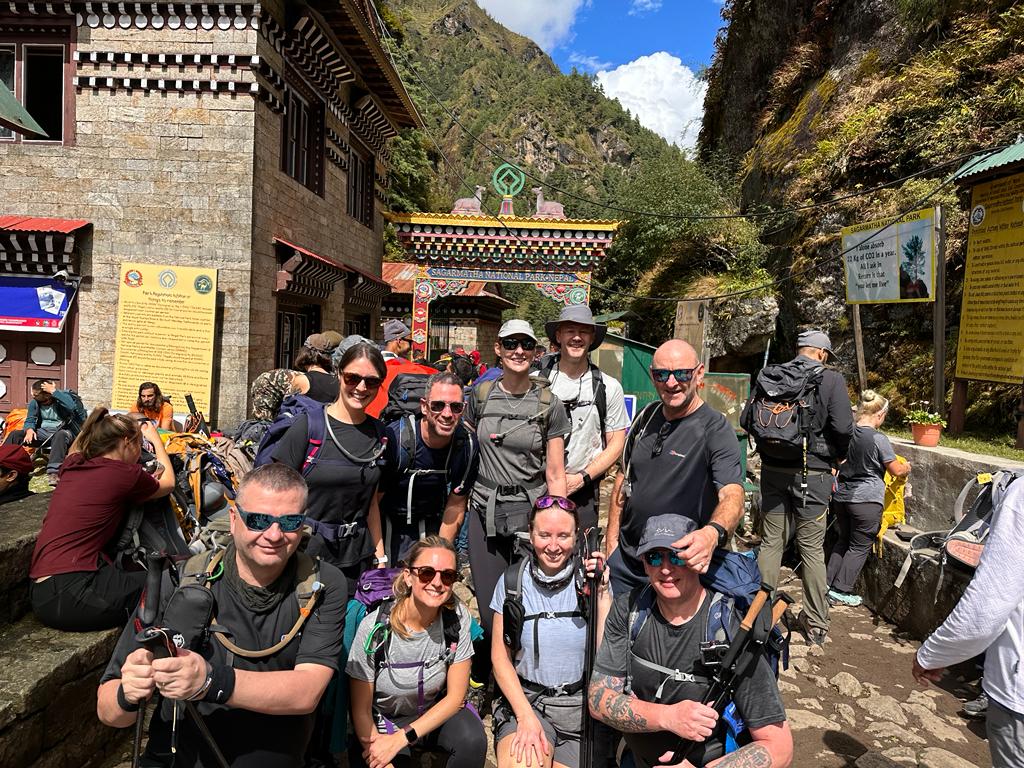
    Group photo at Phakding Before leaving for Namche Nazar

    Before I committed to actually climbing Everest. I wanted to see where my body was at physically in terms of altitude (anything above 4000m anyway). Work out how my body responded to high, high altitude and mentally prepare myself for one of the world’s biggest climbs. That is via a trekking from Nepal’s Lukla airport, the steepest in the world.

    Flying to Lukla and Into a New Dimension

    It was an adventure boarding my flight for Lukla, especially as I got closer towards my destinationmy heart was rushing. As my aircraft touched down, on final approach to Lukla. I had mixed emotions of uncertainty and emotions. The beating heart felt as if it was racing but a lot of happiness took charge with feelings of excitement. Being overwhelmed by dilemmas and loneliness. I had never experienced that kind of pressure change, not in all my days and it stole my breath. Lukla is at around 2800m (8000ft).Thus, began the journey filled with unexpected moments of amazement. The difference in the amount of oxygen available for breath became apparent as I made my way toward Phakding, my heart was beating faster than normal. It was clear at this point, this was not going to be another “normal” hike but rather my first step toward standing atop the tallest mountain in the world.

    Traveling along the Khumbu Trail is a special experience; there’s a rhythm to life when traveling between and around the peaks of the Himalayan mountains. The rhythm of the Khumbu region is to be slowly introduced. You don’t speed into the Khumbu region; you emjoy your momentum with the mountains everywhere you go in.The hike from Phakding to Namche Bazaar has brought both many lessons along the way.

     Namche Bazaar

    Having taken my first rest day on this trip, I have now made my way up to the Everest View Hotel (910 m) which is located to the north of Namche Bazaar. A combination of excitement and fear filled me the first time I saw Mount Everest. I had the feeling that Mt. Everest was checking me out before saying hello. The hikes to acclimate around Namche taught me patience; after yet another reminder that I could not rush Everest. I knew that learning this lesson early would be critical if I wanted to eventually reach the top of her peak.

    Group selfie on the way back to Lukla From Monjo

    I personally appreciate the beauty of the Tengboche Monastery, which has been built on the slopes of one of the highest peaks of the Himalayas. As well as the toll that the mountains can have on the spirit and body through their spiritual and physical demands of receiving such a gift of existence. I am inspired by the Ama Dablam due to the fact that its beauty takes my breath away, every time I see it.

    Tengboche Monastery

    Whenever I looked at it while walking, I would stop for a while to look and hold my breath. While the beauty of the Tengboche Monastery inspire me to continue on my journey. It does provide me with a sense of peace and a greater appreciation for the beauty of the surrounding vicinity, along with the sound of the monks chanting prayers.
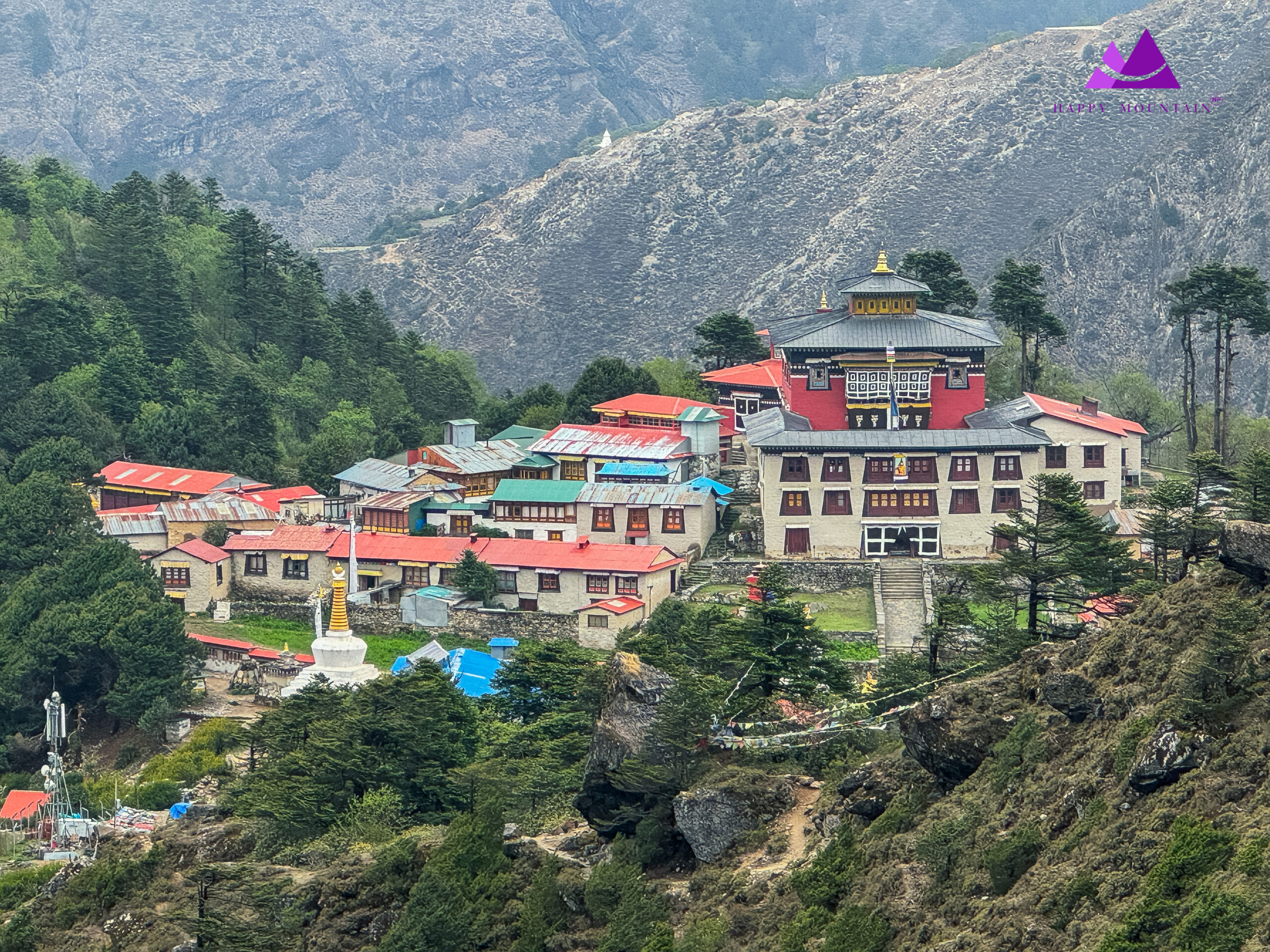
    Tengboche Monastery surroundings by hotels & Mountains

    The unique sound they created with their prayers echoing off of the stone walls of the monastery added to that atmosphere. Unfortunately, along with my many feelings and emotions came the sudden drop in temperature. An increase in wind speed, and the fact that it was much darker than I thought!

    Through my brief stay at the Tengboche Monastery, I have learned how to utilise the mountains to build my mind’s strength, for the various mental trials to come on the remainder of my trek. Once I reach Dingboche, I have drawn on the mountains to provide me with a continuous source of power.

    The experience of going from a humid, green forest that was lush with life to near-empty, stark, huge chunks of rocks. As I went up over 10000 foot peaks proved to be one of those experiences that has profoundly changed me. The temperature in the area is chilly and there is a nice breeze blowing so each time you breathe in it’s an experience to remind you how it feels to live at a higher elevation, and how difficult it is to breathe as you climb higher up each time. Every step feels like there is more weight being added to your body with every breath, and your effort to breathe against gravity.

    Dingboche

    When I first arrived in Dingboche, I experienced what it is like to be at elevation and how altitude will affect the best-trained individuals.

    At night, I could not go to sleep. I kept waking every few minutes thinking I was dying because of my inability to access the air I needed. Instead of allowing that thought to panic me, I thought of it as my way of preparing for my climb up Everest.I will train my body to be able to work in high altitude and see what I could do with it in Dingboche.

    Lobuche and the Emotional Weight of the Everest Trail

    The trek up to Lobuche gave me many feelings while walking along the trail. Along the way, you will find many unsuccessful climbers’ memorials who died while climbing Everest. This for me was so overwhelming because I felt overwhelmed by the names, the stories and the prayer flags flying in the breeze. I know the mountain could be beautiful and at the same time never forgiving since only a few people can reach the summit. Besides, I felt sad and a strong desire to do everything. I hereby promise to prepare myself out of respect for an attempt to climb Everest. As I had thought, I will more or less walk in silence when reflecting on the experiences and challenges that I would face soon as part of this expedition.

    This was paradise for all who ever dreamed of setting foot on the highest mountain in the world, the roof of the world.As I entered the parking lot of Everest Base Camp, I felt an overwhelming sense of energy surrounding me. The sound of Icefall and the colourful tents of the company climbers all added to this feeling. It was an emotionally charged moment for me to stand physically in the location of Base Camp. Until this point, I had not fully accepted that my dream of climbing to the top of Everest would actually become a reality. I would like to think that I was somewhat ready at the ‘moment’. I first entered Base Camp although I felt a bit uneasy and anxious.

    What I gained from my experience of trekking to Base Camp

    Trekking to Base Camp was not only about getting fit in the gym. But also about what you learned from your trek to Base Camp. I learned about proper acclimatisation at high altitude, proper methods of breathing at high altitude. And what I needed to plan ahead how to maintain my pace on the way from the summit of high altitude back to base on my way down.
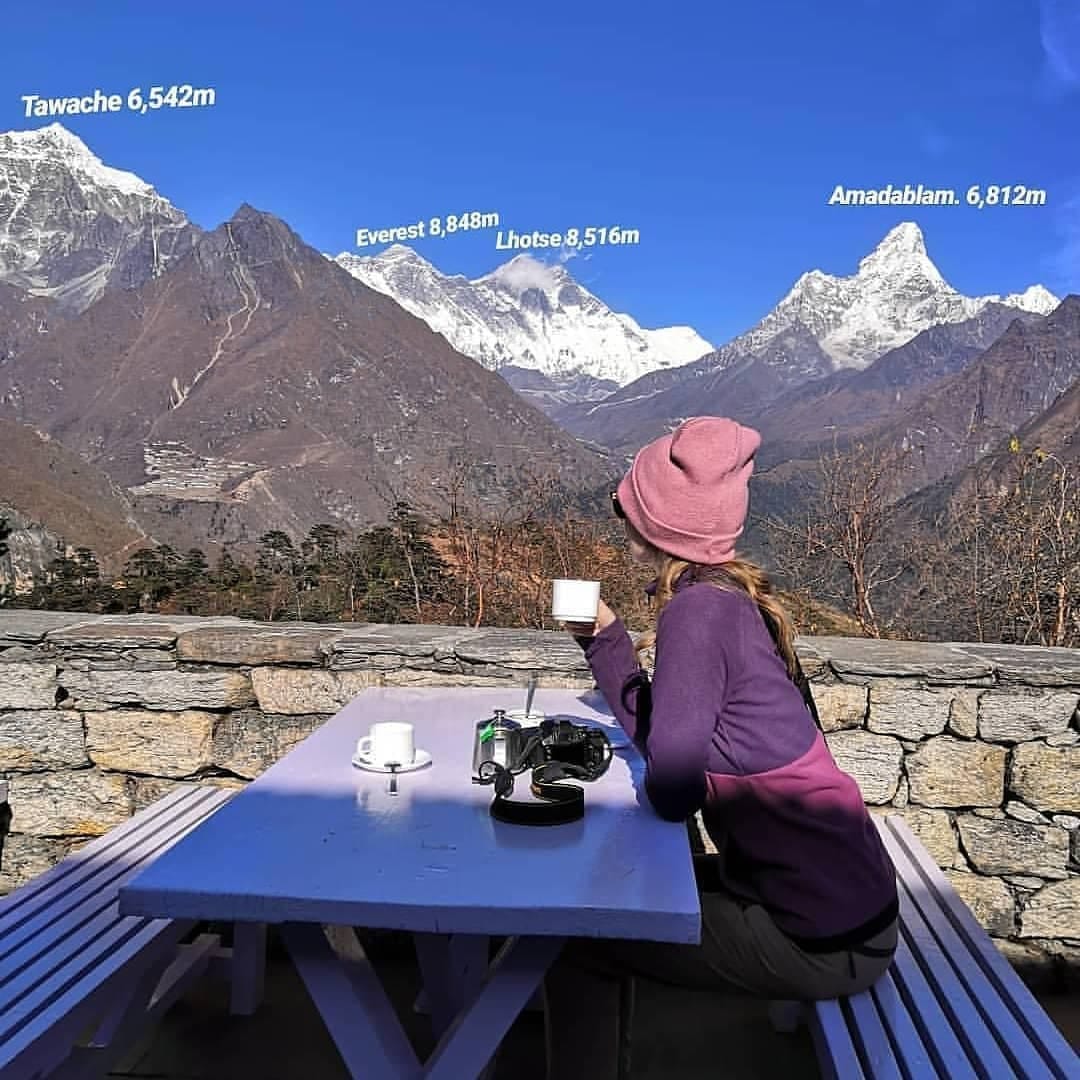
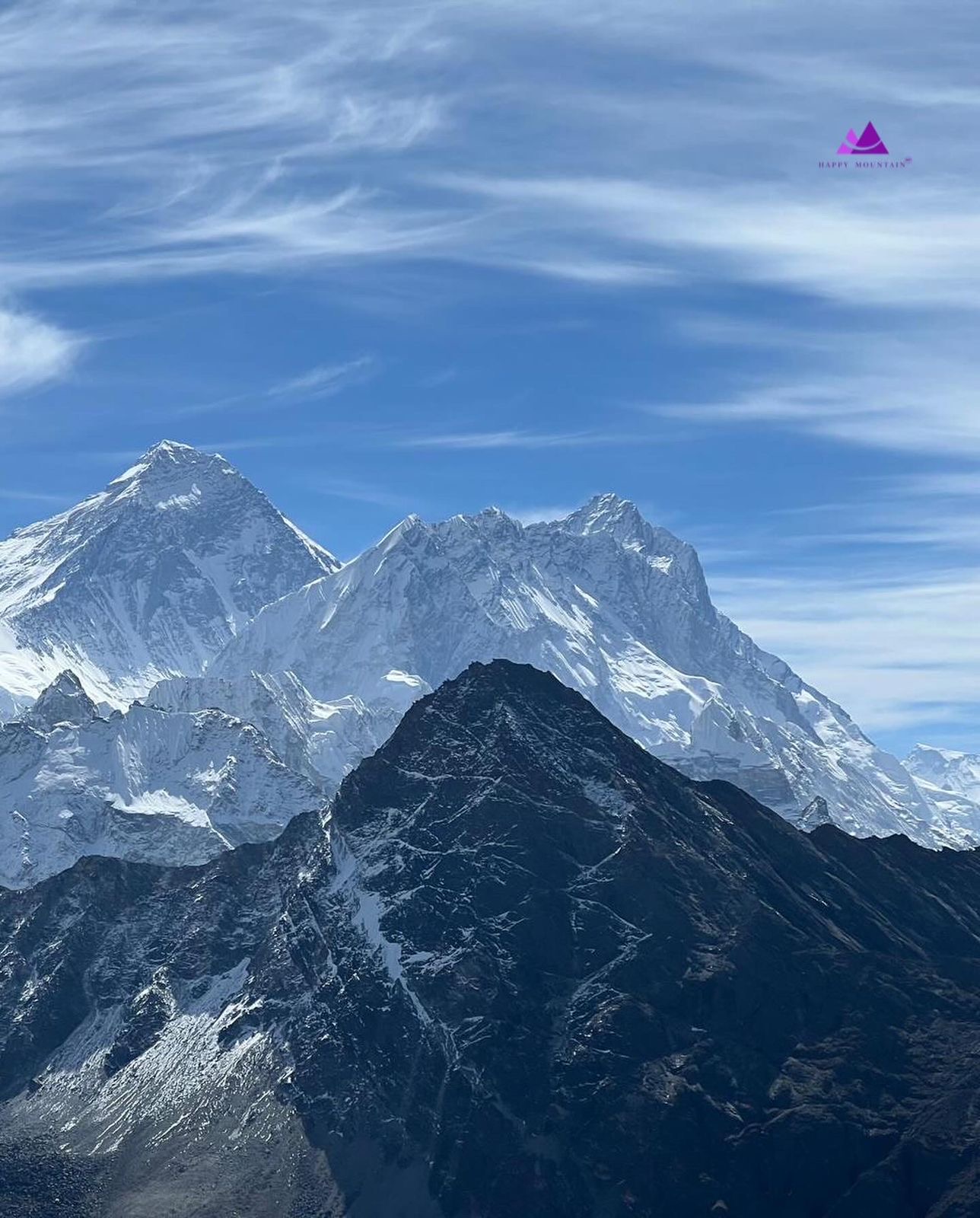
    Coffee at Everest View hotel with the view of Everest. Lhotse, nuptse & surrounding himalayas
    Everest View Hotel

    Additionally, this trek opened my eyes to the various ways that climbers manage the intense mental strain that comes with climbing Everest. Through this trek, I also developed a much deeper bond with my Sherpas and built teamwork. I had also gained firsthand knowledge about how to travel over very rough terrain. To appreciate the unpredictable weather patterns that can occur in the area of Mount Everest. By completing my trek back to base camp. I felt that I had developed a very strong base for my upcoming summit attempt. In terms of both my physical and mental fitness. While I know that the summit will take much more effort than the trek to base camp did. I have now established a very good foundation upon which to build my summit attempt.

    Returning with a New Perspective

    When I walked back to Base Camp. I was a lighter person due to what had happened to me during my journey back home from Base Camp. I was able to return with much more clarity and respect for the mountains. Along with a much better understanding of what was about to come. Each village appeared so much different from the sight of a future Everest Climber. Each view becoming much more valuable because it is seen from a climber’s point of view. This trek also helped strengthen my spirit, among other things. The journey to Everest Base Camp (EBC) is not only an important preparation step for climbers. But also a transformative experience for everyone involved. I returned to my hometown of Lukla to feel fully prepared for the challenges that awaited me after reaching the tallest point in the world.

    Conclusion

    I believe the trek to Everest Base Camp (EBC) is an excellent stepping stone for any beginner climber. Those who plans on trying to reach the top of Everest at some point in his or her life. It is a fantastic way to mentally prepare for climbing. And it also serves to physically prepare your body for the summit. By doing this trek you have a great deal of time to get a true understanding of why you are there and what you wish to accomplish on your journey to the summit. You will also develop a personal connection to the mountain. 

    Anyone who has ever considered trying to climb Mount Everest. Or has ever felt the heartbeat of the mountains, will experience a life-changing adventure. Climbing Mount Everest will not only give you the opportunity to see some of the most magnificent landscapes in the world. But it will also give you a greater understanding and mental clarity of your own personal journey. You will have a unique story to share with family and friends.

     

  • How Not to Enjoy Nar Phu Trekking

    How Not to Enjoy Nar Phu Trekking

    How Not to Enjoy Nar Phu Trekking: A Detailed Guide to the Mistakes You Should Avoid

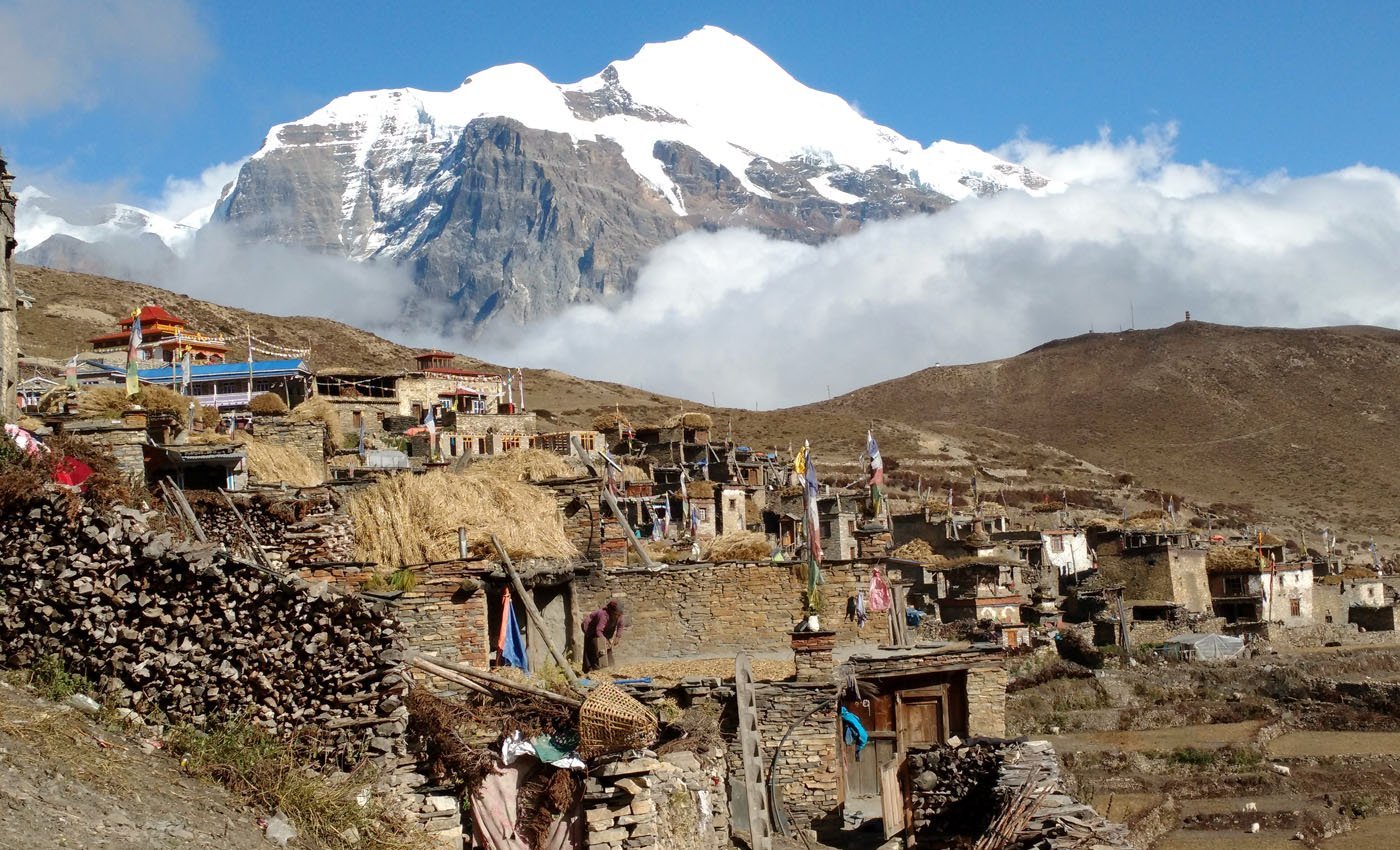
    Nar Phu Valley is an untouched and inaccessible part of Nepal’s Annapurna, bordering Tibet. It had no visits by trekkers until 2002, but it presents a virgin Himalaya scene, ultra-rich Tibetan heritage, and medieval villages that remain suspended in animation. Nepal’s Nar Phu Valley trekking is an incredible way to find ancient Himalayan culture and treks through landscapes that appear to be blessed naturally.

     Everest and Annapurna may be the well-trod paths but Nar Phu is a trek for those serious about an original and raw experience with culture in remote locations, high-altitude trekking in wilderness with real Himalayan hospitality that involves no tourists and fancy teahouses, just the real beauty of the mountains.

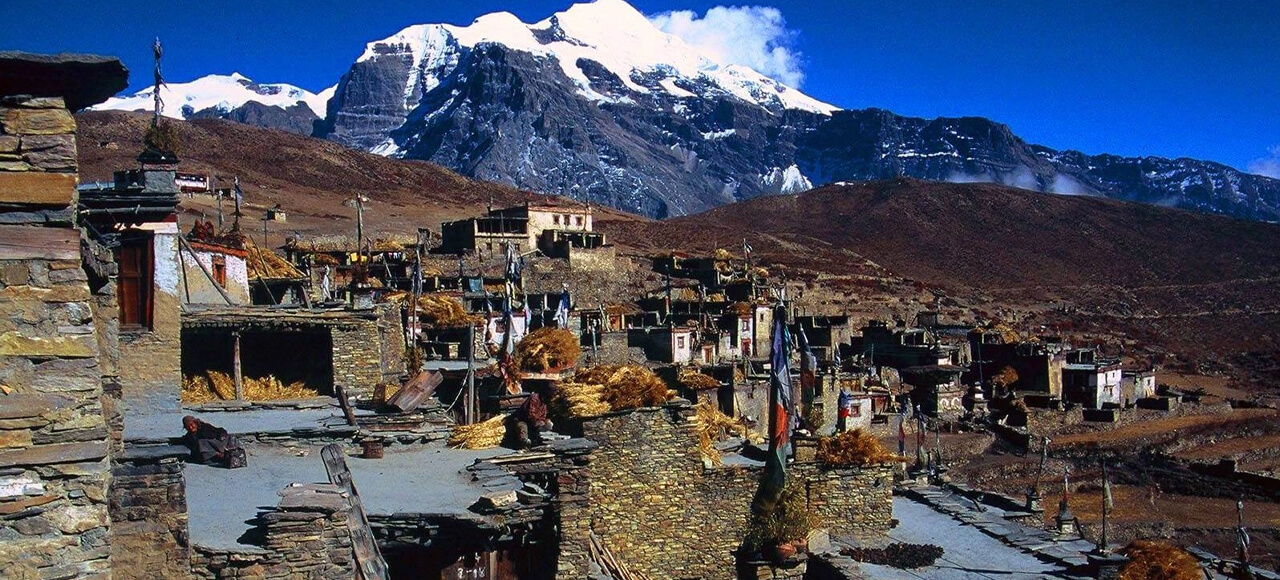
    Nar Village & Mountain in the Background

    The trek features the mythical Kang La Pass (5,320m), medieval Tibetan towns, and ancient gompas (rock-hanging monasteries). Adventure and culture with excellent view of Annapurna II, Gangapurna, Tilicho Peak, etc.

    The Nar Phu Valley Trek is of 12 to 15 days duration. The length of the trek is the distance of the trek in and out of the trailhead, the time you spend overnight at a higher elevation for multi-days, nights in cultural villages, some multiple high passes to cross over 2 or 3 days, etc. I would say to not rush. 

    To have a successful trek. In this blog,  we will try to explain, some of the major thing to avoid during Nar Phu Valley trek:

    1. Underestimating the Remote Terrain

    If you go into this area mentally prepared for the tough terrain and expect to see smooth trails and have plenty of resting points or tea houses along the way. You are in for a surprise at how quickly your emotions will change to frustration. Many individuals who trek to Nar Phu are often unprepared for the remoteness of the area and can easily be overwhelmed and panic when they find out there isn’t much infrastructure in the Himalayas. To support their needs and instead end up spending the majority of their time trying to maintain some level of mental stability while navigating through what should have been a relaxing getaway from the stresses of everyday living in the Himalayas.

    If you are not physically fit and trained to acclimate your body to elevations above 4,000m. It can ruin your experience while trekking in Nar Phu. The terrain goes from approximately 2,500m to above 4,000m very quickly and thus requires some level of physical fitness. In order to endure the high altitude terrain while maintaining a steady pace and a controlled method of acclimatizing to the altitude conditions. If you start the trek thinking altitude sickness is something that doesn’t happen often and that your body will magically acclimatize to the conditions with little to no effort on your part you will likely suffer from some combination of headaches, nausea, breathlessness, or possibly an emergency evacuation due to altitude sickness.

    If you’re competing against your body while hiking, instead of enjoying the beautiful views along the way. The experience becomes more of a “survival mission” rather than an experience you can immerse yourself in. Not preparing your legs, lungs, and endurance level will certainly make each step feel more difficult, and be a longer time (for you) between stops.

    2. Going Trekking at the Wrong times and Experiencing Severe Weather

    Usually when you go on a trekking trip to Nar Phu during a time that is not the best time of the year for a trek. You are likely to deal with unpredictable weather conditions such as snow storms, muddy and slippery trails, landslides, or very cold and uncomfortable nights. The Monsoon season also has its share of leeches, muddy and slippery trails, and hazy views. Winter is also a time of year in this region, and thus, many of the higher mountain passes are going to be covered with deadly snow or ice (making them unsafe to cross).


    If you don’t do your due research on the potential forecast before going on your trek during these particular months or seasons, your experience will probably have been terrible. Due to extreme discomfort, as well as the additional risk factors associated with this.

    Nar Village with the Happy Mountain Nepal Team
    Nar Phu Valley Trekking in Nepal

    3. Ignoring the Cultural Sensitivity of Nar and Phu Villages

    The Nar Phu area is culturally Tibetan, and is very spiritual and traditional. One way to ruin your trek in this area is to go against the traditions and local customs. If you’re going to walk into a monastery without having permission, take pictures of the locals without asking them first, or not following the local dress code.You are going to be an outcast in this close-knit community. If you don’t take the time to understand the cultural differences between trekkers and local peoples, the connection that you should have there. And the ability to create warm memories will be replaced with awkward and/or hostile experiences.

     The culture of a region can be experienced through the people, their customs and traditions, as well as their ways of living. If you do not appreciate these aspects, then your experience will not be complete to the fullest extent.

    3. Carrying the Wrong Gear 

    The clothing/gear you select has the largest effect on the amount of pleasure/suffering (and endurance).You will encounter on your trek through Nar Phu. For example, if your shoes are too small. If you only bring a very lightweight jacket to use at night because the temperatures in the Himalayas drop well below freezing, or if you forget critical pieces of gear such as gloves, trekking poles or waterproof jackets. You are going to have a rather unpleasant experience on your trek through this region.

    Using cheap or lower-quality outdoor equipment will usually result in various forms of discomfort for trekkers including: becoming cold at night; losing your grip on rugged trails; developing blisters that make moving difficult; etc. When comfort is sacrifice in a trek turns into an artificial struggle. And it takes away from the overall enjoyment factor of the adventure.

    Usually, mistakes related to equipment are small decisions, which can lead to very large degrees of discomfort through the Nar Phu valley, making it seem much worse than it actually is.

    4. Not Hiring a Guide and Getting Lost or Confused

    Additionally, because Nar Phu is not as clearly marked as many of the more popular trekking areas. There are times when trekkers may find that they have lost their way due not only to lack of proper signage or information. But also due to the fact there are no reputable guides available to provide assistance to them should they require assistance in navigating safely through this very remote area of Nepal. As many just assume that they can navigate their way through the Nar Phu area without having any prior knowledge prior to embarking on the trek. 

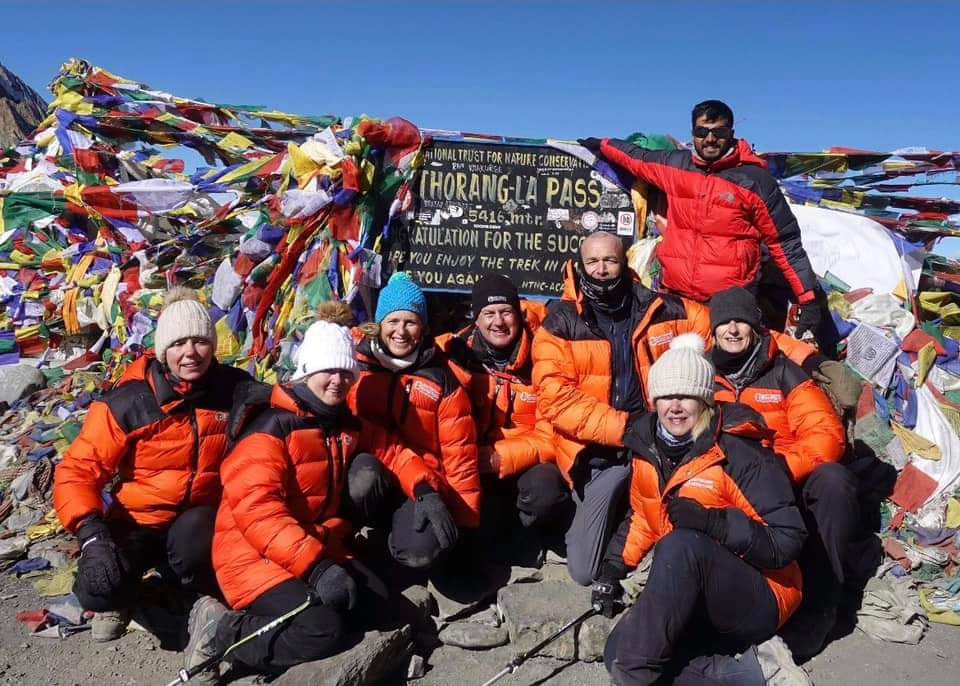
    This Photo was taken on the top of Kangla Pass (5320m) during the Nar Phu Trekking in las November. you can clearly see the sign of Kangla, Beautiful Landscape with Happy Mountain Nepal Banner!!
    Kang-La Pass (5320m)

    They generally will fail to see the opportunities to gain cultural knowledge; the history of the monasteries; pacing their physical limitations with respect to altitude, etc. Those who do decide to trek alone and encounter issues are confronted with the stark reality of being totally isolated from others and not having any means to obtain help if they do require assistance. A recommendation I would strongly suggest is to use a professional guide for the Nar Phu trek. It would be the single best way to avoid turning an amazing trip into a nightmare.

    5. Expecting Luxury and Modern Comforts

    The Nar-Phu region is not a luxurious trekking destination. The tea houses are typically very simple, the food is not gourmet, and it can get quite chilly at night. If you are going on this trek for the hot showers every night, heating in your room, Wi-Fi and/or an abundance of Western cuisine choices, you will be disappoint. 

    When you trek through the Himalayan valleys (Nar Phu Valley, for example), you’ll likely do so in a rush, distracting you from experiencing everything that this beautiful new landscape has to offer (and how truly unique it is), as well as depleting your energy when you’re trying to navigate these mountains. If you’re unable to properly adjust your body/mind to the pace of this area, your entire experience could feel overwhelming.

    6. Not Being Mentally Ready for Silence

    If you love nature and solitude, Nar Phu is perfect for you. The trails are peaceful, the villages are small and there is no sign of civilization (if that’s important to you). There will be no tourists, active nightlife nor regular social interaction while traveling through this area; as such, if you expect to have these experiences, you will feel lonely and anxious throughout the entirety of your trip. 

    Phu Village: The Fortified Village

    Most people underestimate just how remote feeling Nar Phu can be the long periods of time spend between villages can create an overwhelming sense of isolation without a proper mental preparation for the trip. If your mind is not prepare for silence, it will become uncomfortable instead of comforting. As a result, if you are not mentally prepare. Your mind may interpret silence to be an empty feeling rather than a calming, relaxing experience, making your journey very draining, instead of invigorating.

    Conclusion

    Nar Phu Valley is certainly one of the premier trekking destinations within Nepal, but it does call for diligent preparation along with respect, time and the right mindset. Knowing how not to enjoy your trek, gives you a clear path as to what not to do on your journey. Thereby allowing you to approach this experience with realistic expectations, and preparation that are prepare and think with mindfulness.

    Understanding the region’s terrain, weather, culture, and rhythm can help ensure that you’ll have some of the best experiences trekking in the Himalayas on the Nar Phu Trek. Serous trekkers should avoid the errors outlined in this guide, and make their way through Nar Phu as a memorable adventure, not one that is more difficult than it needs to be.


  • Best Place to Celebrate New Year 2026 in Nepal

    Best Place to Celebrate New Year 2026 in Nepal

    Best Place to Celebrate New Year 2026 in Nepal: The Ultimate Guide to Festive, Scenic & Memorable Destinations

    Nepal’s New Year 2026 will be one of those things you will not soon forget, for its colours, its vibrancy, its spiritual escape-ability, its beauty and more. The weather will be cool and probably cold on winter nights. In fact, the last week of December is the festival experience throughout all of Nepal, as every street and road way is lined with lights. And surrounded by music as it captures the essence of festival spirit for visitors and locals alike. Whether you like the crazy night of lots of concerts and fireworks in a street party, or a quiet New Year morning experience watching the sun rise over the white caps of the Himalayas. There will be something there for everyone in the experience of New Year in Nepal. 

    This guide is intended to help you think about places to go for New Year 2026 in Nepal with length and details of each place. For those that want to escape a city vibe or for those that want to escape a quiet New Year experience. This will be all you need in the thought and planning for the New Year trip to Nepal. 

    1. Most Energetic New Year Street Party in Nepal – Thamel, Kathmandu

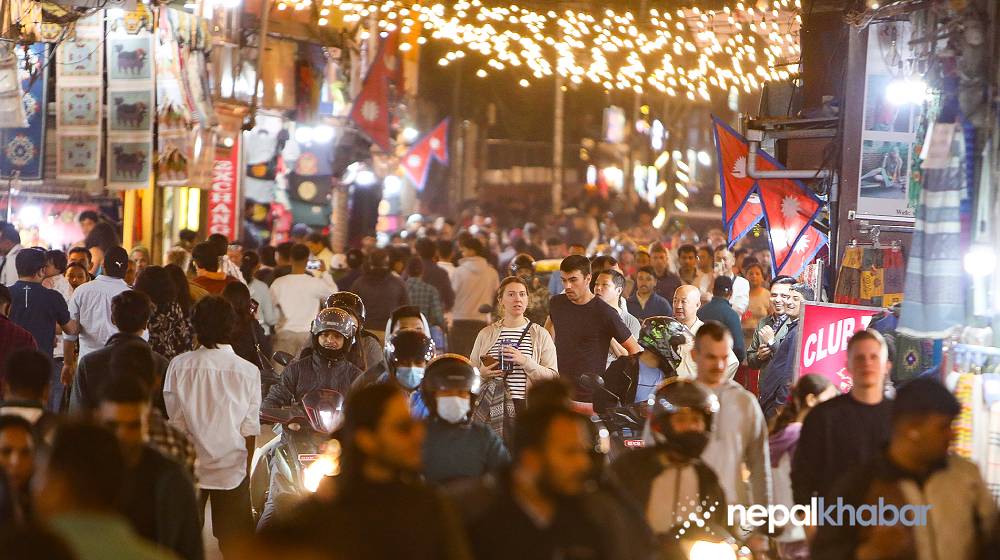
    Thamel might quite possibly be the most exciting nightlife area of Kathmandu, which will become even more exciting when the new year arrives. For the New Year 2026 partying in Thamel takes on one extreme outdoor street party. With thousands of people who have converged on this small city, from around the world, to celebrate. 

    people walking in the street, dim lights around thamel.,Cozy evening

    The streets are full of color, cafes set up chairs outside, international bands perform live, and DJs keep the party atmosphere alive well into the night. As midnight approaches the energy builds to a strong climax, leading to the certain conclusion we know we all have just had the perfect night in Thamel, for the New Year 2026. 

    One of the iconic parts of celebrating New years is the overall culture of celebrating the street party festival. Nearly all major roads are closed to non-stroller traffic, and one is free to walk around, dance, take photos, and eat from dozens of pop-up kiosks serving food.

    Restaurants also offer New Year dinners, themed cocktails, and party packages. From individuals to groups to couples, there are a myriad of upscale pubs, lounges and rooftop parties bursting with people from all over the world.

    The countdown in Thamel is an experience within itself. Fireworks light the sky above Kathmandu, people are laughing, yelling, screaming and cheering and the partying goes on until long after midnight! If you’re looking for the high-energy, youthful, cool international experience with lights and music and nightlife.Thamel is one of many venues to bring in New Years 2026 in Nepal.

    2. Lakeside Pokhara 

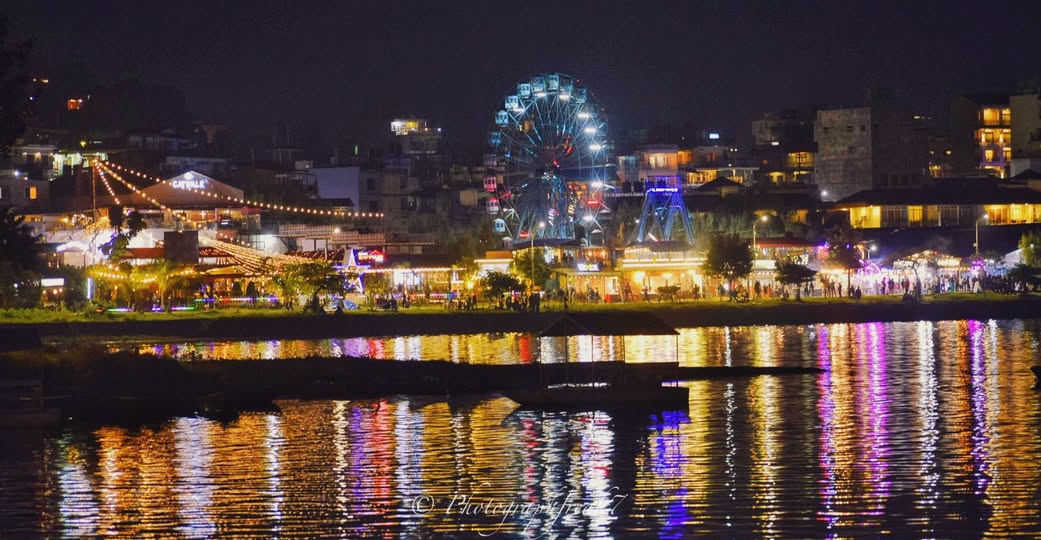
    Given its stunning natural beauty potential, Pokhara may be the most beautiful place in Nepal, and New Year’s Eve. Experience in Pokhara is one of the beauty for sure. The lakeside area will glow with lights and beautifully decorated and all will be carrying a festive vibe around that area as well. The vast calm lake will reflect the city lights, and with the beautiful snow capped Himalayas as a backdrop, it literally looks like you are living in the coolest movie scene!

    New Years in Pokhara is special as local Nepali traditions will blend with travelers to feast, relax, and celebrate. On New Year’s Eve night Lakeside will be filled with music and booths with food and festival items. Many hotels and restaurants host gala dinners, have rooftop parties, or cultural performances. It is a relaxed respite after the overwhelming crowds of Kathmandu that retains enough of an essence of a festival. Lakeside is a mixed hang out for couples, families, and groups as they enjoy the New Year spirit under the night sky.

    Light around lakeside pokhara refecting over phewa lake


    The best part is waking up to sunrise on New Year in Pokhara. The alarm clock will be set for January 1st, and will always be worth it to wake up early, and make your way to Sarangkot (or the Peace Pagoda) to catch the sunrise over the Annapurna and Machhapuchhre mountains (assuming you have clear weather). There is something refreshing, meaningful, and motivating to be present to see the first sunrise of 2026, or whatever the New Year may be, in Pokhara. For travelers who seek a decent balance of beauty, romance, tranquility and celebrating in the atmosphere of New Year’s, you would be hard-pressed to find a better destination than Pokhara.

    3. Peaceful Mountain Destination – Nagarkot . 

    If you are a traveler trying to get away from the hubbub of partying and the road noise. There is a New Year celebration happening in the mountains. Nagarkot, which is only about an hour from Kathmandu, known in Nepal as a popular sunrise view location. It is a peaceful and warm refuge for travelers who want to celebrate the new year in peace and warmth. As well as the beauty of views that Nagarkot offers, and return to a little romance. New Year celebrations will be going on with various hotels/resorts hosting New Year. Celebrations to welcome the new year, a simple, low-key celebration, but meaningful experiences are included. 

    Fire at the pool, light acoustic music, cultural dance shows and buffet dinners keep warm and entertained. Rather than the loud noise of nightlife. You will be surrounded by soft candle lights, fresh mountain breezes and winter fog. The coolness of weather only extends the magic of the night bonfire and tranquil atmosphere. It is ideal for couples and families to enjoy a cozy and casual end of the year experience.

    4. A Unique Blend of Wildlife, Culture & Celebration -Chitwan 

    Chitwan presents one of the most unique new year experiences in Nepal for individuals wanting to combine celebration with nature and culture. Unlike the nightlife of the towns or adventuring the mountains. Chitwan has a relatively warm tropical environment, even for the end of December. Some hotels and resorts might have some specials for the riverside area. So, new years could even be a sort of semi-adventurous outdoor activity experience, and also a relaxation activity. 

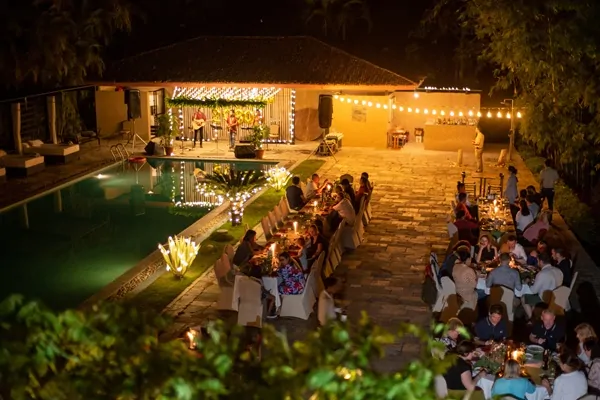
    group of people having group dinner

    Most resorts have gala dinners with BBQ beef or chicken buffets, cocktail parties, and cultural shows with the local Tharu community. An example of a popular program for many guests is the Tharu stick dance around the fire. This program gives guests a fun way to engage with the cultural heritage. Families with children enjoy Chitwan too because all the entertainment is “safe,” fun, and enjoyable for all ages. Additionally, the beautiful outdoor weather is enjoyable compared to many cold towns or mountain ranges in southwest Asia or further away.

    As long as the sun is shining tourists can go on canyon safaris, canoe rides, bird-watching excursions, or visit an elephant sanctuary. As you enjoy the sunset on the Rapti River in your last evening of the year, the tempo is sure to relax you just for an instant to get ready for the festive evening awaiting you. Chitwan would perhaps be one of the best places to spend New Year 2026 in Nepal. You have the adventure during the day and the cultural festival in the evening. 

    5. Lumbini – A Spiritual, Peaceful, and Meaningful Start to 2026

    Lumbini is one of the New Year Experiences in Nepal offering the most spiritual and reflective experience. As the birthplace of Lord Buddha, it symbolizes peace, calmness, and reflection. It offers an entirely different experience compared to the busy city parties.Furthermore, the beautiful outdoor weather is more enjoyable than cooler towns or mountain ranges in south west Asia or further afield.

    For tourists who aren’t very open to violent sun, you can experience canyon safaris, canoe rides, bird watching tours, and/or sometimes even visit an elephant sanctuary, and more.As people wander the sacred gardens, monasteries, and meditation centers in the crisp winter evening. We are blessed with an atmosphere of purity and calmness. Many monasteries offer chanting, praying, and silent candlelight observances on New Year’s Eve. These meaningful shared observances let visitors enter into the new year with inner silence rather than crowds and noise. It is a great way to connect to oneself and make positive intentions for the new year. 

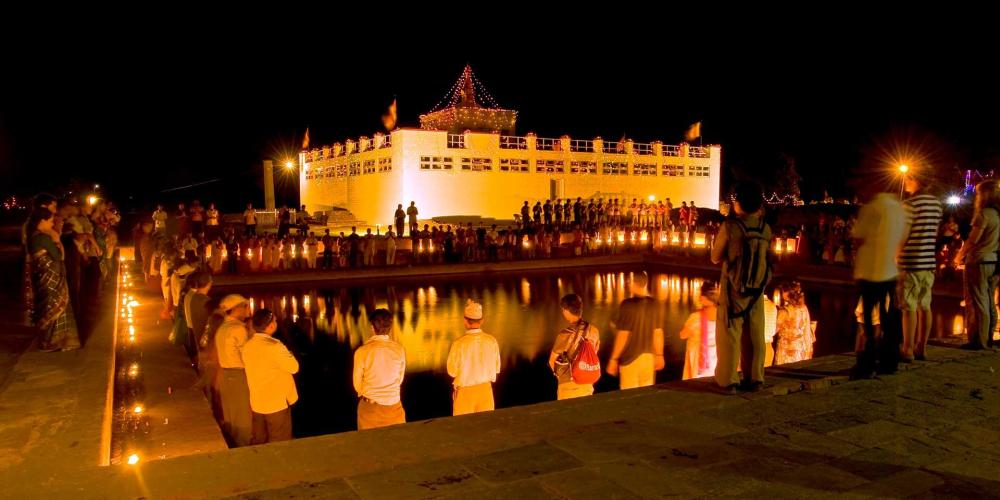
    people praying around mayadevi temple

    New Year’s Day’s first light in Lumbini is especially magical. As the soft light streamed through the Maya Devi Garden, we heard the bells ringing to offer a call to prayer. Monks walked with intention around the paths that inspire our next step. Celebrating the New Year in Lumbini is not focused on entertainment. The overall goal is mental clarity, spiritual energy, and emotional healing. You can have a soulful start to 2026 as you desire, Lumbini is your destination.

    6. Dhulikhel – Luxury, Comfort & Himalayan Calm

    Dhulikhel is a unique and luxurious place to spend New Year’s. Boutique hotels and infinity pools or wellness spa resorts with loads of charm and the best views of the Himalayas – Dhulikhel is stylish and peaceful. Countless high-end resorts have their own unique take on the New Year’s package. It typically offers comfortable live music, gourmet dining experiences, authentic spa treatments, and casual socializing around a bonfire while enjoying the serenity of the night sky.

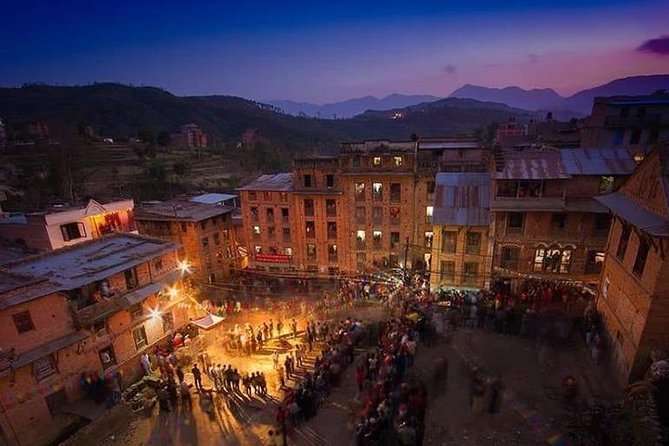
    people celebrating somekind of festival all together, different colour light around old houses

    New Year’s Eve in Dhulikhel is classy, relaxingly slow-paced, and peaceful. You do not go out partying with thousands of people on busy city streets in Dhulikhel. You are sitting around a warm indoor atmosphere listening to small acoustic music, and relaxing while taking in the views of the nearby mountains. Both couples and individuals enjoy the serenity of the village scenery. Unlike the extremely busy nightlife, with loads of people, typically accompanying city nightlife. The cool winter air and calm vibes together increase the peace, relaxation, and chilled atmosphere.

    The sunrise of January 1st in Dhulikhel is something travelers never forget. The Himalayan peaks including Gauri Shankar, Dorje Lakpa, and even parts of the Everest range glow in golden sunlight as the new year begins.

    7. Bandipur – Timeless Newari Charm & Quiet Festivities

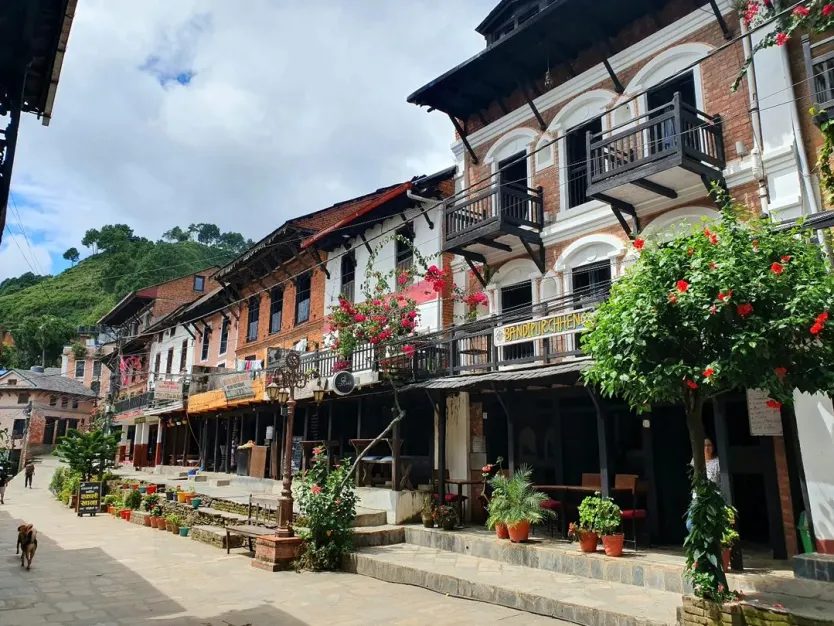
    Bandipur is a jewel of a hilltop town which embodies a picturesque, nostalgic setting to ring in the New Year. It is a relaxed place where culture emanates from the peace and tidiness. As if you had stepped into the past. Bandipur’s dependence on traditional Newari architecture, cobblestoned streets, wooden balconies, and friendly locals, makes it a pleasant place for a private celebration. Most modest events begin to occur during the evening of the New Year’s. Locals from the community perform music, small gatherings emerge, warm cafes breathe welcome, and locally owned guest houses serve holiday dinners before 12:00 midnight arrives.

    the old classical newari building with green plants

    The same charm that keeps Bandipur from being lively and chaotic. It is the intimate kind of meal, or forgettable experience. This makes it a lovely place for couples, families, or adventurers, seeking a good conversation, slow evening, and quiet sights.

    On the first morning of 2026, beautiful viewpoints of the sunrise await a short walk from Bandipur. What a peaceful way to embrace the New Year while watching the sun set across the land.

    8. Butwal & Bhairahawa – Lively City Celebrations of the Western Terai

    For travelers to western Nepal, Butwal and Bhairahawa offer exciting and modern-style New Year happenings. The two towns are growing quickly in the areas of nightlife, entertainment, and hospitality that appeal to young people. With its mild, winter climate, the Terai region offers much more outdoor dining comfortably, rooftop events, and street celebrations than Kathmandu or Pokhara.

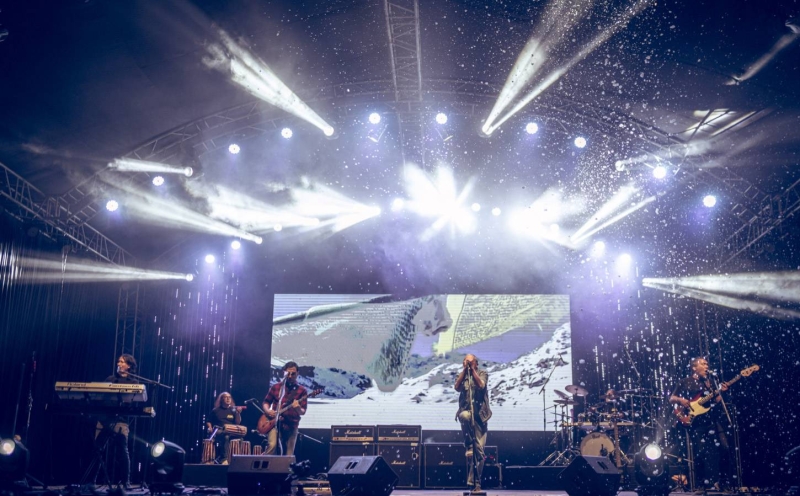
     Restaurants, lounges, and hotels, both cities exclusive countdown parties, concerts, and DJ’s up until midnight. Shopping malls and public areas initiate special new year’s happenings for the whole atmosphere to feel festive. The towns become a spectacle of lights and music and people gathering for late-night eating and celebrations. The energy generated by residents and travelers is alive and active without heavy crowds.
    concerts, light  around the stage. Oe man singing and other 3 man using musical instrument

     In addition, Bhairahawa gives the visitor an easy connection to Lumbini, which provides an opportunity for revelers to enjoy a party on New Year’s Eve, and then spend New Year’s Day in the calm atmosphere of spirituality. So, fun meets meaning because Butwal and Bhairahawa are both uniquely distinct destinations in western Nepal for bringing in the New Year 2026.

    Conclusion

    You can find a plethora of New Year events in Nepal, from bustling nightlife districts to tranquil mountain lodges to spiritual shrines. If you’re searching for a purely party atmosphere that is energetic, crowded, and has pounding music, Thamel is a good choice. And the streets will be filled with parties and other celebrations to welcome in 2026. If you would rather have a beautiful lake, and a terrific romantic vibe, then Pokhara is a perfect New Year destination.
     If you are looking for a peaceful morning and to watch the sunrise over the Himalayas, then Nagarkot or Dhulikhel could provide such an experience for the first day of 2026. Travelors who want to combine their joy of wildlife and culture will feel at home in Chitwan and surely enjoy adventure and local flair. If you desire spiritual quiet, then Lumbini is just the spot. If you want timeless culture and engaging heritage towns to wrap you with warmth and nostalgia, then Bandipur is for you. Finally, if you long for a celebration feel that is more around 2023 with lots of lights, organized events, fun nightlife, Butwal and Bhairahawa will be good too.No matter where your travels in Nepal take you, you will surely appreciate and appreciate time in welcoming in the New Year, 2026.

  • Why Is Kongde View Point Nepal’s Best Trekking Route?

    Why Is Kongde View Point Nepal’s Best Trekking Route?

    Why Is Kongde View Point Nepal’s Best Trekking Route?

    Nepal is famous for its numerous and unique trekking lines including the famously publish Everest Base Camp (EBC) route It is possibly the most famous trekking route of them all And the stunning Annapurna Circuit, perhaps the most beautiful trek anywhere. It is settled away from the famous routes and is a little-known secret in the far reaches of the Himalayas. That is starting to gain popularity amongst advenced trekkers, photographers and the adventure, the Kongde View Point Trek.

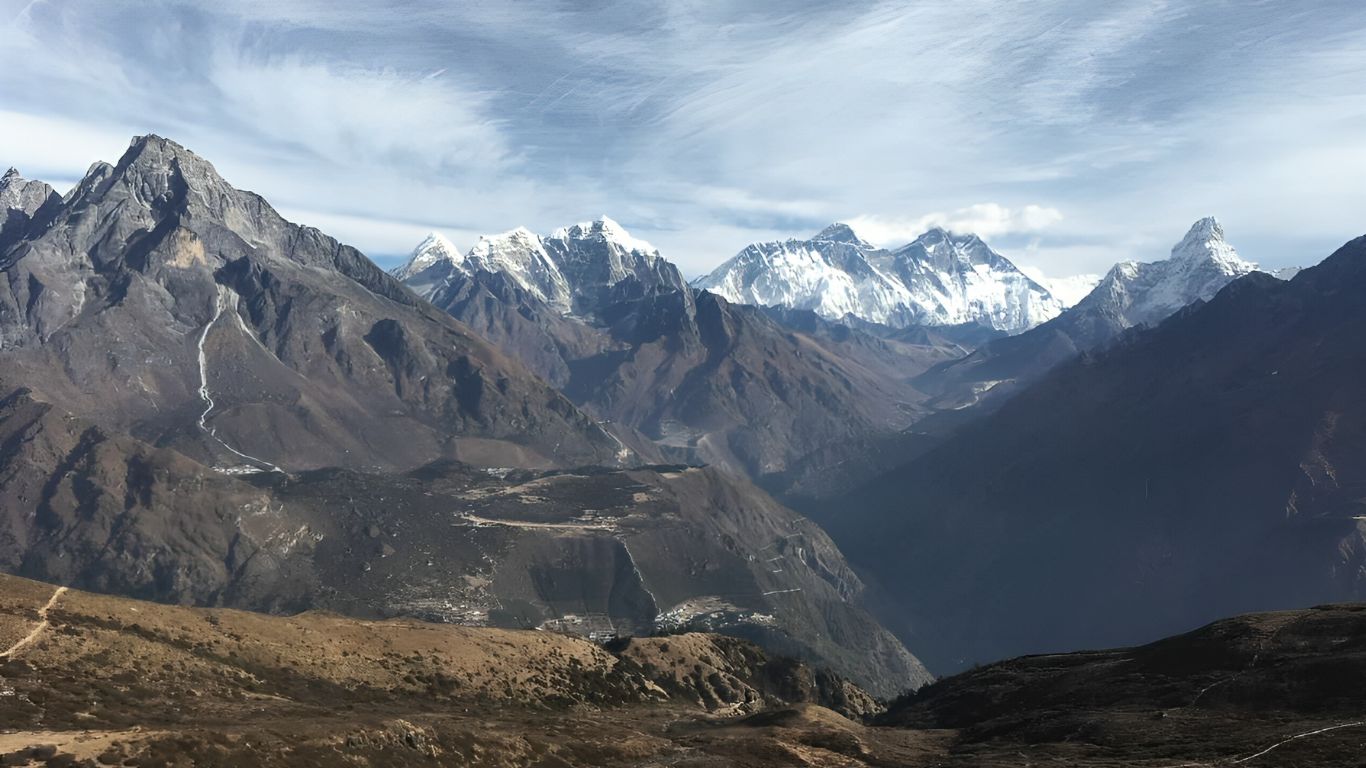
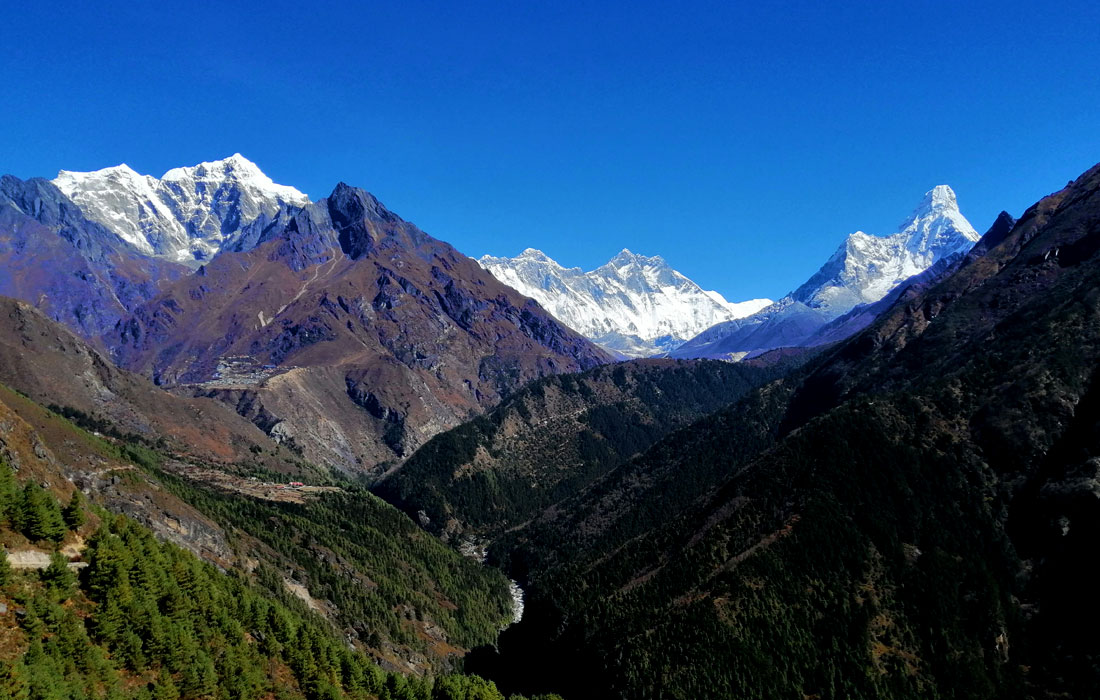
     Kongde lies at a breathtaking altitude of 4,250 meters, and offers arguably the most panoramic And all of the mighty Khumbu region of Nepal in a singular view that classic treks like EBC cannot.  Despite being somewhat close to Lukla, Kongde View Point is still a hidden gem of a trek. It is whereone experiences the opportunity to take in the best views of not just Everest But also Lhotse, Nuptse, Ama Dablam, Thamserku, Khumbila, and the entire Dudh Koshi Valley, without bumping shoulders with other trekkers encountered on classic trekking routes. The Kongde View Point Trek is likely where you will discover peace and incredible, unspoiled Himalayan beauty. With every step, you may converse with the mountains. 

    The Kongde Ri (also known as Kwangde Ri) mountain in the Himalayas of eastern Nepal is a technically challenging peak to climb, but offers spectacular panoramic views of surrounding mountains including Mount Everest, Lhotse, Makalu, and Ama Dablam.

    In this blog, we will explore in detail why Kongde View Point Trek is becoming Nepal’s walking route, and a trek you will definitely remember if you are seeking something out of the ordinary.

    A View You Can’t Find Anywhere in the Everest Region 

    When it comes to trekking routes in the Everest region, there are many options that offer some view of the tallest mountains. But none can compare to the Kongde View Point which boasts the most impressive unobstructed view and provides a gem of a bird’s-eye view. As if each of the major peaks convened just for you. EBC for example has trekkers taking multiple days to walk to simply see a glimpse of the mountains compared to Kongde View Point which grants the entire 180 degree Himalayan view and gets right to work on both angles without a lot of effort to see it. 

    From the view point, Everest speaks looks mesmerizing while Lhotse and Nuptse looks the iconic three-peak horizon of the Khumbu landscape.To the east is Ama Dablam also dubbed the peak of the Himalayas. 

    A Short Yet Highly Rewarding Trek

    One reason so many trekkers choose Kongde is in the least time, it offers the best rewards. While many of the high-altitude treks in the Everest region last 10-14 days, depending on your pace. You can complete the trek to the Kongde View Point in 4-6 days.  This trek to Kongde is a perfect choice for those with a limited schedule or just wishing for a lighter trip to trek. Additionally, the trek to Kongde starts in Lukla, which is a common way into Everest, but the trail is a different path that sees far less foot traffic than the classic EBC trek. 

    Since this trek takes less time to complete, it’s just a better trek for those trekkers who are just starting out that are looking to experience the glory of the Himalayas, without a long multi-week adventure. Even with the less time commitment that these shorter treks require, it does still reward you with the hard work of trekking, and the steep ascent to Kongde. This combination of some accessibility, with physical exertion is where the true magic lies. 

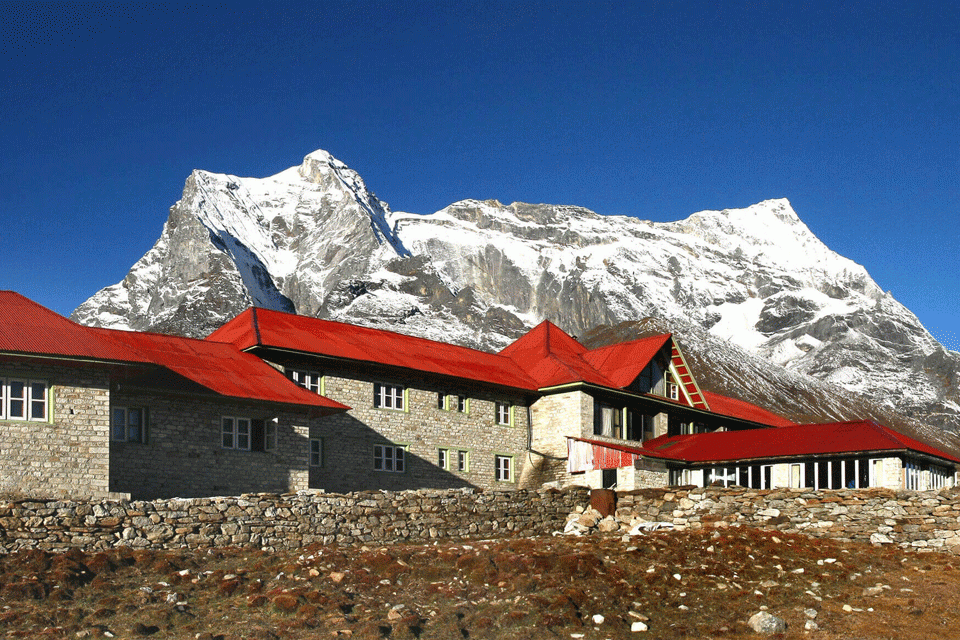
    a stone building, likely a tea house or lodge, in a high-altitude, mountainous region, typical of the kongde trek. The visible snow-capped peak suggests an altitude of several thousand meters above sea level.

    Less Tourists, Less Crowded Way

    The EBC trail is probably the busiest trek you will ever go on at peak action times. With trails filled with trekkers moving at a snail’s pace. The yak’s heavy load, and a full tea house stop it will feel more like a social gathering than a relaxing adventure. While for many trekkers this is part of the adventure; for trekkers in search of quiet, solitude, and a keen sense of connection to nature, Kongde is paradise.

    Even after your arrival, you will continue to find customs that were part of the everyday lives of the local peoples for many generations prior to your arrival. In this way, the trekker will witness and experience Sherpa resilience, as well as Sherpa connection to the mountains and climbing history of the Himalayas.It is a unique remoteness that adds to the beauty, and it allows you to fully experience nature.

    The remoteness of Kongde is one of the primary reasons why adventurers consider Nepal’s best hidden trekking route.

    The Ideal Fusion of Nature, Adventure, and Sherpa Culture 

    The Kongde region is also close to many historic villages allowing trekkers to have the real cultural experience. Phakding, Toktok, Rimijung, Thame, and Monjo villages are full of culture, tradition, spirituality, and the spiritual welcoming nature of the Khumbu.

    You can visit monasteries and turn prayer wheels attached to the mountainside on your trek. Along these trails we will walk through diverse trees and shrubbery- rhododendron trees, pine and juniper, birch, and many others. As we trek, we will have opportunities to glimpse some ‘pieces of the pie’ of musk deer, Himalayan monals, yaks, or blue sheep at different points along our way. We will also find ourselves in more open scenery going from forest, to alpine pastures, to ultimately breathtaking views over the rocky ridgeline of the Khumbu as we begin to climb higher.

    In the end it is this blend of nature, adventure, and culture that make the Kongde area so special.

    The image on the screen is likely a photograph of the Kongde Ri mountain and surrounding peaks in the Himalayas of eastern Nepal.

    One of the Best Sunrises and Sunsets in Nepal

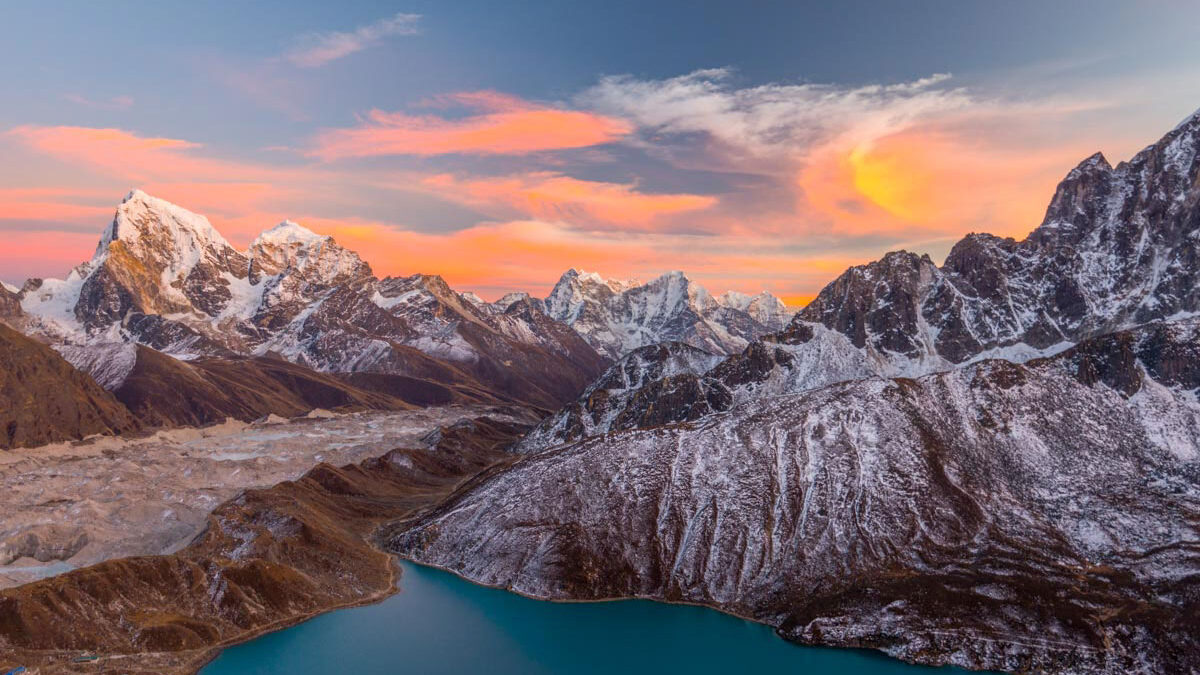
    The sunrise at Kongde View Point is magical. Witnessing the sun rise, each mountain begins to fill with light and glow one by one. First, the sharp edges of Ama Dablam are kissed with sunlight and glow orange. Soon thereafter, Everest rises and reveals itself in golden splendor. The snow capped spires begin to take on a surreal aspect as the morning sky shifts from light pink, to bright red, to clear blue.

    The sunsets are equally magnificent in another way. As they illuminate the mountains making them glow with deep golden light behind the shadow stretching along the Dudh Koshi valley as the sun sinks below higher peaks.Many photographers suggest Kongde is one of the best locations in the entire Everest region for golden hour due to its high location and relatively flat horizon. For photographers, the sunrise alone is worth the trek to Kongde. 

    The Chance to stay at One of the Highest Luxury Lodges 

    The Yeti Mountain Home Kongde is around 4,250 meters. In addition, it is one of the highest luxury lodges in Nepal. Staying here is like being in paradise. With panoramic windows, warm rooms, wonderful food, and an incredible view of Everest from the dining room. Trekkers that stay a night here often say one of the most surreal experiences of their lives is sipping tea while giant clouds float in between the serrated peaks of the epic high Himalaya. Because the lodge is right at the ridge you do not have to walk much to get to the view, so it is very easy for photographers to get up at sunrise, a bench for setting up photographer gear is only 15 or 20 meters away. 

    There are basic teahouses along the trail for trekking, but Kongde’s luxury has its spin on the adventure.

    A Physically Challenging Yet Achievable Trek

    Kongde is a less lengthy trek than EBC, but as is the case with any trek. It should not be a stroll in the woods. The ascent from Toktok to Kongde is steep and will take effort. Trekkers of general fitness may find it difficult, but doable. In fact, it is the effort that makes it more rewarding, as every step upward brings you closer to view the Himalayas.

    Because this trek takes trekkers up to over 4130 meters (13,548 feet) in altitude, altitude considerations are important. If you walk slowly, drink decent water, and hike at the pace of the guide. Then you can be rewarded with a trek while keeping safe. The other great part of this trek is that you do not have to suffer for this reward as long as you will get to the view points much quicker than treks like EBC/Gokyo.

    It is a nice balance of difficulty and rewards that makes it so products like the trek to Kongde are appropriate to most levels of trekkers.

    The Kongde Ri (also known as Kwangde Ri) mountain in the Himalayas of eastern Nepal is a technically challenging peak to climb, but offers spectacular panoramic views of surrounding mountains including Mount Everest, Lhotse, Makalu, and Ama Dablam.

    A Route for Beginners, Covers Photography Travel

    Kongde, has become popular with photographers, travel film makers and content creators. The ridge provides dramatic angles of views, unlimited valleys, and lighting conditions can be stunning throughout the day.

    However, beginners like the trek’s walkability. As it allows for time to enjoy high-altitude trekking without having to commit to over a week of travelling or wildly unpredictable weather. The track is easily accessible to teahouses, has secure paths, and has short distances between stops.

    Whether you are an adventure photographer, a social media traveler, or other first-time hikers in the Himalayas, Kongde surpasses expectations. 

    A Hidden Gem of Himalayan Trekking

    What makes Kongde the best trekking route in Nepal is its specific ability to feel the essence of an Everest-region experience. It is a peaceful, and unbelievably visually stunning experience. The trek has it all: mountain views, cultural richness, adventure of trekking, forests, wildness, rivers, and loving hospitality from the locals All without the crowds or multiple weeks of travel. 

    Trekking visitors state that their Kongde experience was “Everest Base Camp in fast forward, but with even better views.” The isolation, sense of solitude on the trails, and breathtaking panoramic views all add together to create a different kind of profound and life-affirming adventure.

    Kongde still exists as a haven in a world where tourism is expandingly popular and the iconic trails and vistas are more crowded every year. Kongde is a place you can stop in silence and truly hear the heart of the Himalayas. 

    Conclusion

    Kongde View Point is not simply a destination; it is a full sensory and emotional experience. Kongde reinvents what it can feel like to trek in the Everest region. It  offers a a trek that is raw, tranquil, visually spectacular and has profound meaning. Whether your trek is for adventure, photography, relaxing, culture or simply for fun, Kongde offers it all. 

    If you are searching for a trekking route that offers spectacular views for the shortest time with fewer people, greater authenticity, built-in meaning and most importantly maximum emotional impact, then the Kongde View Point trail is the best trekking route in Nepal for 2025/ 2026 and years to come.

  • Reasons for Choosing Kongde Instead of Everest Base Camp

    Reasons for Choosing Kongde Instead of Everest Base Camp

    Reasons for Choosing Kongde Instead of the Classic Everest Base Camp Trek

    For most people, when one doctor refers to the trek in Nepal the full on and famous Everest Base Camp (EBC) trek. With good reason, the trek to Everest Base Camp was featured in the movie, “The Summit,” and provides great scenery and takes you to the base of the highest mountain on the planet. 

    Enter the Kongde Route

    Most people would call the Kongde trek the “hidden gem” of the Khumbu region. The Kongde trek is lower in altitude than EBC, quieter than EBC. It has more views than EBC, and provides a more luxurious experience than EBC. The Kongde trek as the name suggests is a stunning and spectacular trek for trekkers looking for an alternative to Everest Base Camp with great Himalayan scenery and culture. It is simply a beautiful trek if you are looking for an alternative trek to Everest Base Camp with a different view of the majestic Himalayan scenery and culture. Real elevation exhaustion and far too many fellow trekkers is part of the classic trek at Everest Base Camp.

    a stone building, likely a tea house or lodge, in a high-altitude, mountainous region, typical of the kongde trek. The visible snow-capped peak suggests an altitude of several thousand meters above sea level.

     In this lengthy and detailed multi-pageblog, we will unpack why the Kongde Route is worth a high rank on your Nepal trekking to-do list, while also comparing elements of both the Kongde Route and Everest Base Camp landscape, cultural experience, comfort, sustainability, and overall trip experience.

    1. All View Over the Everest Range 

    The Kongde renaissance route has one thing your Everest Base Camp trek will not have:  the 360-degree all-machine view of Everest range at the Kongde Ri viewpoint (4,250 meters). Trekkers in this area of elevation with lofty views could see Everest (8,848m), Lhotse (8,516m), Ama Dablam (6,812m), Thamserku, Makalu (8,481m), and Cho Oyu (8,201m) all in the same view. While EBC trek takes you closer to the base of Everest, many have told me that the peak is often hidden by ridges and weather conditions. However, “Kongde” has the clearance of many remarkable -far better than expected. The mountains are organized side by side and on the morning or any sunset the mountains. It can be seen glowing gold while the sky behind is a deep blue!

    For photographers or landscape lovers, Kongde has arguably the best possible viewpoint in the Himalayas and in Nepal as well. It has allure as a natural observation deck that many do not get to see!

     2. Quiet Trails, Less people

    The classic Everest Base Camp trek receives a minimum of thousands of trekkers from every point of the globe at least once a year. Whether in the peak season (March – June and September – October), or in the shoulder season. EBC would look into penalizing in a fit back in 2023 again fall in shortage when company you will never be short of trekkers to camp for a minute.

    From Lukla to Namche Bazzer and beyond the foot traffic may be well over a couple hundred in a given day with trekkers, porters and yaks everywhere you turn. There are those who may call this part of the charm of a iconic trek, but, after walking from the trekker lodges and considerably above base elevation, there were simply too many people for too long, to consider you were on a peaceful quiet time on the trail. 

    The Kongde Route has a radically different vibe. Each year, few trekkers venture out and head towards Kongde. So you will likely have the trek largely to yourself. The forests will be quieter, the villages more authentic and you will see uninterrupted views. 

    The wonderful level of seclusion you will enjoy, provides a bond with nature. You will hear the prayer flags flapping, the leaves of the rhododendron, and the roaring Dudh Koshi River in the distance, without a hundred other trekkers as background noise. If you want solitude, mindfulness, and immersion, Kongde is the trek. 

    3. Shorter, Easier Yet Just as Rewarding.

    One of the best things about the Kongde trek is the fact that just about anyone can do it in a short amount of time. The classic trek to Everest Base Camp is an average of 12 – 14 days, which entails moving high up into altitude. With long days of trekking, those on this trek will be tested even on the most seasoned trekkers. 

    Another option is the Kongde route, which in your timeline can be done in a time frame of 6-8 days. Although it won’t be as lengthy as about 10 days, that is equivalent to experiences, with Sherpas families living in their villages, hiking alpine forests, and the magnificent mountains, with opportunities to partake. The trek will usually proceed with an exhilarating flight from Kathmandu to Lukla, then you hike from Phakding to Namche Bazaar, then to Thame, and Kongde.

    On this route you will trek below 4300 m, which should provide some comfort in terms of altitude sickness. While you trek you can absolutely relax and enjoy the comforts of the magical Himalayas all around you. If this is your first time to Nepal, you will find this great trip. If you don’t have much time, or if you just wanted a short moderate trek with the best value and satisfaction. 

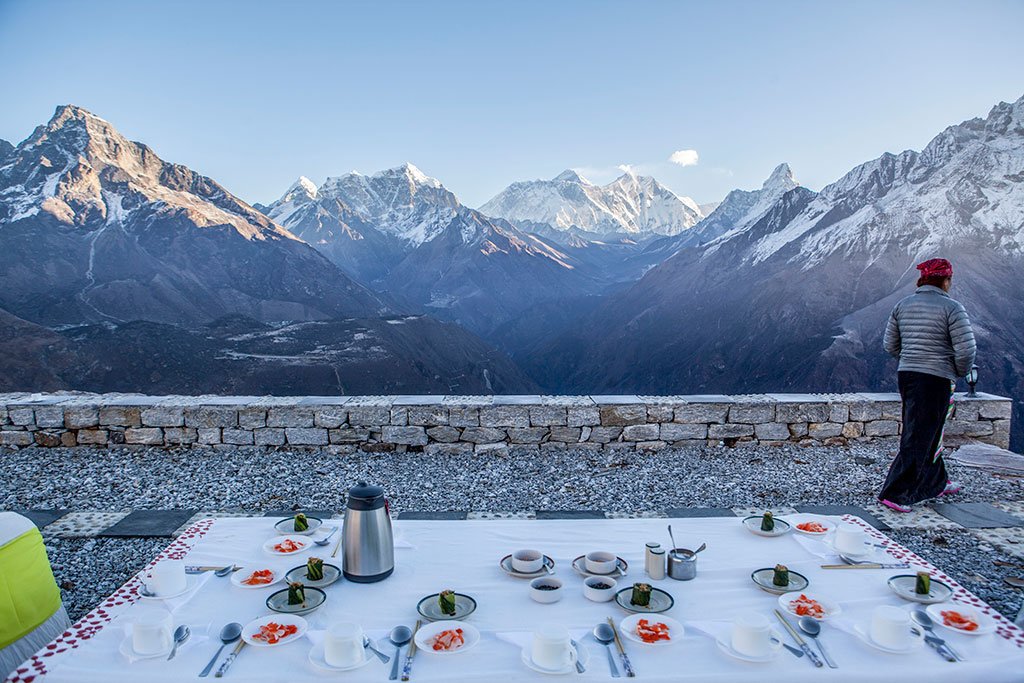
    Breakfast table in the foreground and majestic, snow-capped kondge mountains in the background, is visually similar to locations found in the Himalayas, specifically around areas like the Annapurna Base Camp, Ladakh, and Uttarakhand.

    4. Luxury deep in the Himalayas

    Although the EBC has teahouses that are comfortable to basic, most of the time they are rustic, functional, and not luxury. Though at some places, such as the Kongde region, we have Yeti Mountain Home Kongde, which is one of the best high-end lodges in the Everest region!

    Nestled deep in the Dudh Koshi Valley, the Yeti Mountain Home offers modern conveniences at over 4,000 meters, with stunning views. Each room has its own private balcony and view of Everest, comfortable interiors, and conveniences up to Western standards. Iced coffee, or a meal sourcing from the area, while you can see the rays of sunshine touching the top of Everest from the dining room of a comfortable, cozy lodge in the Himalayas–it isn’t so bad, right?! This is the combination of convenience and adventure we love about the Kongde trek. A classic trek, designed for the nature enthusiast who can’t wait to sleep in a bed at the end of the day, ogie that wants to return to the comforts of home.

    5. Authentic Sherpa Culture

    A notable aspect of trekking in the Everest region is the way of life of the Sherpa peoples. The main trekking route will take travelers through the main Sherpa villages of Namche Bazaar, Tengboche, and Dingboche. All of which have been affected by tourism commercially, and all of which have cafes, bakeries, and shops for tourists to buy souvenirs. The Kongde Route takes trekkers around less commercially influenced Sherpa communities, including Thame, Toktok and Kongde village itself.

    You can witness unrefined traditions and lifestyles in Khumbu. You will see people farming in the fields. Hear the sounds of the ancient monasteries having their monks chant throughout the day. Visit local tea in the late afternoon with Sherpa families, who have grown up in Khumbu for generations, if not hundreds of years.

    If you want to, you can stop by Thame, and stop by Thame Monastery. One of the oldest monasteries in the Khumbu and an important monastery established for over 300 years. Thame has produced several well-known climbers, including Apa Sherpa, who holds the most summits of Everest record of all time. On the Kongde route, you will experience the most authentic way of living for the Sherpas, that has not been commercialized along the typical trek of the Khumbu. 

    6. Less Altitude Stress – More Comfort (more pleasure) 

    A reason that trekkers take the Kongde Route, is the extra altitude gain than to Everest base camp trek.To compare the Kongde trek against the Everest base camp trek, the maximum height for Kongde is about 4250 meters, while the Everest base camp maximum is 5364 meters (not including the 5545 meters). 

    Offering more than 1000 meters of altitude difference minimizes some of the risk of Acute Mountain Sickness. You will be able to hike at ease, enjoy the views, and have peaceful nights with stunning mountain range views.

    Thus, the Kongde Route works well for:

    •  Families with teenagers or older family members.
    •  First-time trekkers who want to trek longer in the Himalayas, safely.
    •  People who don’t want to trek at very high altitudes.
    •  This will allow you to enjoy the spirit of the Everest experience, while making it much easier for you to avoid the complication of both high altitude trekking and the complication of acclimatizing.

    The Kongde Ri (also known as Kwangde Ri) mountain in the Himalayas of eastern Nepal is a technically challenging peak to climb, but offers spectacular panoramic views of surrounding mountains including Mount Everest, Lhotse, Makalu, and Ama Dablam.

    7. Photographically Unparalleled Scenery

    The Kongde Route is a photographer’s dream. From the view point at Kongde Ri, you get sweeping and uninterrupted views of Everest and all of the peaks along the way. You will see nowhere else.

    In contrast to EBC, you can see Everest, but only at the view point and surrounding ridges obstruct your view since your are in a valley at Kongde you will see beautiful unobstructed views of the peaks.

    In the morning golden and orange hues cover the peaks, and in the evening crimson and violet colors sweep across the rugged mountain range. You’ll have crisp air with dramatic light and no shortage of opportunnities for unique falsely view perspectives photo perspectives.

    You’ll also be able to capture:   

    • Stone wall traditional Sherpa houses with prayer flags. 
    • Forest trails with gorgeous rhododendron blossoms (in the spring).
    • The turquoise Dudh Koshi River lazily flows below. 
    • Night skies full of stars with the Milky Way slightly eclipsing Everest.
    • Whether you are a professional photographer, or just a casual-shutterbug, Kongde will offer shots/images that will remain in your heart and intuition for life. 

    8. Ideal for the Off-the-Beaten-Path Adventurer

    The Kongde Route is intended for those who would choose exploration over the mainstream.It is not whether there is a popular route or not. It is about finding a new hidden beauty of the Himalayas.

    Along the way, you can take short side trips. Such as visiting the Thame monastery, checking out the local yak pastures, or hiking up to nearby viewpoints to gain different perspectives on the Everest range.  

    You may even see climbers practicing for their expeditions because Thame and the surrounding areas are famous for Sherpa climbers. It is in these locations that you will hear about Everest ascents and experience the region’s spirit, culture, and faith.  If you have already trekked the classic EBC, the Kongde route will provide you a unique and newer path to the same legendary mountains you trekked on the EBC.

    9. Environmental Sustainability and responsible trekking.

    Tourism is one of the major keystones of the Khumbu economy. However, the density of visitors on the Everest Base Camp (EBC) trek is beginning to have scientific impacts in terms of waste disposal, trail erosion, and deforestation.The Kongde Route, being a considerably lesser-traveled trek, gives trekkers an option for a more sustainable trek in that its hostels, such as Yeti Mountain Home, strive for sustainability in:

    – Solar heated and lit accommodations

    – Waste recycling

    – Eating based on local food and materials

    By trekking to Kongde, trekkers are engaging in responsible tourism that preserves the sensitive ecosystem of the Himalayan environment by minimizing their impact on the environment, and positively contributing to the local community members who rely on the small scale sustainable tourism experience.

    10. Balanced Itinerary of Adventure, Culture and Comfort

    Undoubtedly the Kongde trek gives you a best-of-both-worlds experience. You have the adventure of being up in the altitude, learning a new culture, and your accommodation will be comfortable each evening. Each day you wake up on the trek you will experience something new and different- swinging bridges over roaring rivers, walking through woods of pine trees, visiting monasteries and then back to the lodge for hot meals while looking at the mountains in the evening sky.

    The trek is adventurous enough that you feel an accomplishment but easy going enough that you can take in every second without worries.  A trek that is adventurous but still easy going opens up to levels of experience from the very experienced to the lay person wanting a trek into the Himalayas that was simple but memorable. 

    When is the ideal time to hike the Kongde trail? 

    Spring (March to May) or Autumn (September to November) provides the best opportunity to trek the Kongde trail in Nepal in its prime trekking season. 

    Each of the trekking seasons has its own beauty and offers a different experience, while other months can very much add beauty, strife, or serenity depending on whether you want something unique to trek. 

    Spring (March to May)

    In spring, the hills come alive with bright reddish blooms of rhododendrons, magnolias, and alpine flowers along the trails making it perfect for photographers and it is stunning. The temperature ranges from a relatively mild 10 degrees C to 20 degrees C at low altitude and there are clear skies, often featuring the best views of peaks including Everest, Ama Dablam, Thamserku, and others. If you want warm days, busy trails and incredible scenery among all the different shades of green – then Spring is for you. 

    Autumn (September to November) 

    There are many people who argue that Autumn is the best hiking season in and around the Kongde Trail in the Everest region of Nepal. After the monsoon rain, it will be fresh air, cool temperature and no dust!Visibility is at incredible prospects, and the weather is fairly stable except for normal atmospheric conditions. Days can have very pleasant warm temperatures with nights being cool and refreshing. While great weather will bring many more fellow hikers on the Kongde Trail, the mountain views and golden landscape are worth the extra hikers.

    Given the changing of the seasons, and the implied notion of adventure, if you are looking for an off-the-beaten-path experience, an option for you would be to travel in the winter months if your schedule allows. The winter season will provide you with an opportunity to travel on a calmer and generally opportune hike.

    The image on the screen is likely a photograph of the Kongde Ri mountain and surrounding peaks in the Himalayas of eastern Nepal.

    Winter months (December to February) 

    Winter travel is a completely different, but equally satisfying venture. Little to no trekkers on the trail, breathtaking scenery with sunny skies, and a quietness you cannot find at other times of the year. Just know that at night when the cold snap can dip below freezing temperatures especially high above the ground at the 3000 meters mark (10,000 feet). If you want peace and quiet you will have a phenomenal opportunity to see the beauty of the stillness of the mountains!

    Monsoon Months (June to August) – Best Not to Trek

    The heavy rains that accompany summer monsoon season will create slippery and muddy trails, blocked views as the mountains will be covered in low clouds, and an issue of leeches in some of the lower forested region of the trek. Flights to and from Lukla or flights into Tenzing–Hillary Airport will be delayed due to poor visibility. Unless you are an experienced trekker who is flexible with travel, do not attempt to trek the Kongde Route in the monsoon months.

    Permits needed to Trek the Kongde Trek

    To trek in the Kongde region, which is a part of the Everest region, you will need two permits as outlined below:

    Sagarmatha National Park Entry Permit

    This permit allows you to enter the national park and the protected area around Mt. Everest.

    You can obtain this permit in Kathmandu (Tourism Board Office, Bhrikutimandap) or at the entrance gate of the park in Monjo.

    Cost: NPR 3,000 per person for foreigners; NPR 1,500 for SAARC nationals.

    Khumbu Pasang Lhamu Rural Municipality Entry Permit

    This is a local government permit and replaces the older TIMS card for the Everest area.

    You can obtain this permit at the Municipality Office in Lukla or at the entry checkpoint in Monjo.

    Cost: NPR 2,000 per person.

    Be sure that you take both permits, as checkpoints can be seen along the route.

    Conclusion

    The Everest Base Camp trek can be called a classic as an adventurer’s rite of passage all over the world. But Kongde is something really special: a quiet, panoramic, cultural experience, epitomising the Himalayas, without the rush, the crowds or the altitude. It’s ideal for trekkers who want to escape the bustle, photographers who want amazing views, and visitors who want an authentic experience, with comfort and style.

     The Kongde trek is one of the best alternatives to Everest with shorter timelines, lower difficulty levels and amazing scenery. 

    So, if you are going to plan your next trip in the Himalayas, avoid the crowds and let Kongde’s near empty trails, and golden peaks, redefine what adventure and trekking in the Everest region means.

  • Cultural Insights:Villages, Festivals, and Around Gokyo Lake

    Cultural Insights:Villages, Festivals, and Around Gokyo Lake

    Cultural Insights: Sherpa Villages, Religious Festivals, and Local Traditions Around Gokyo Lake

    In the heart of the Himalayas, Gokyo Lake is a beautiful turquoise glacial lake wrapped away in old pathways. Miles of higher elevation snow capped peaks. Many trekkers are drawn to this area simply because of the stunning landscape. But the wonderful part of Gokyo is all about trekking through Sherpa culture, and watching their unique intention and way of life in a really remote place.

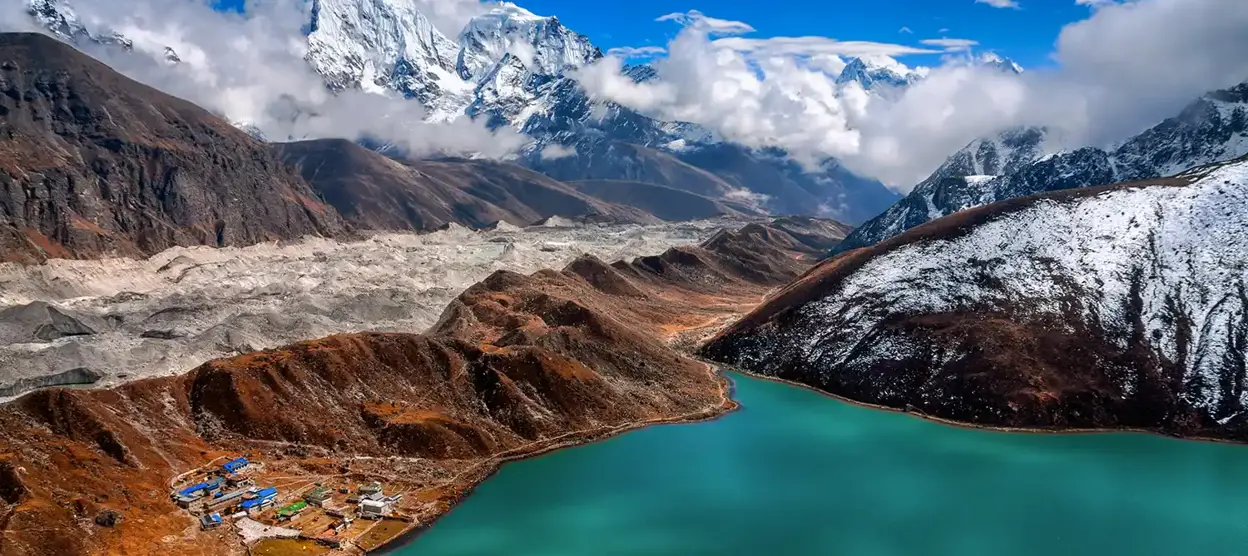
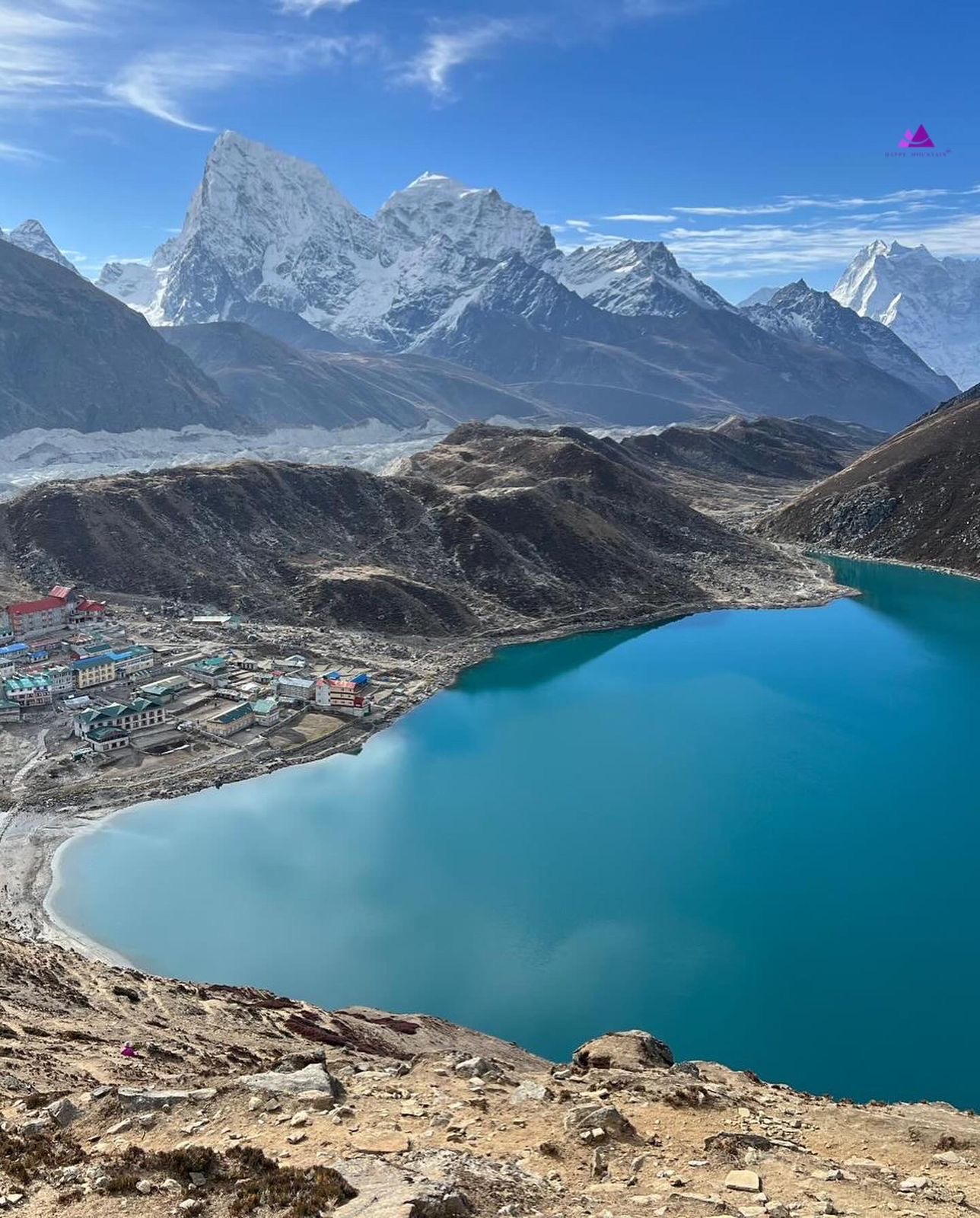
    on a rocky cliff overlooking a vibrant turquoise Gokyo lake, with a rugged mountain range and glacier visible in the background.


    From the warm and friendly hospitality in villages to the inspiring chanting of Buddhist monks in a monastery. Gokyo gives us the opportunity to experience the heart and soul of Sherpa life. Sherpa culture, including their customs, festivals, beliefs, and rituals, roots. The life of the mountains along with the experience of being in the Himalayas geographical and physical images and courage. In this blog, you will visit some of the Sherpa villages just outside Gokyo Lake to explore their spiritual festivals and ceremonials collectively. As well as traditions and aspects of Sherpa life in this amazing corner of Nepal.

    1. Guardians of the Himalayas, Sherpa

    Sherpas are likely the most well-known mountain community. They migrated from Tibet to the Khumbu area of Nepal. And now, they are settled in the Gokyo Valley and upper Everest area. The name Sherpa is derived from Shar-wa, meaning “the Eastern people.” The Sherpa have maintained their culture based solely on Tibetan Buddhism. They respect all living things, and a unique social structure partly based on communalism and sharing.

    The Sherpa are noted for their unmatched climbing ability, as well as their ability to fsurvive at very high altitudes. However, recently the Sherpas have become known as elite climbers and trekkers. They are also cliff farmer, artisans, and guardians of divine mountains. Their lives exist in a practical and sustainable structure with spirituality alive. And  living at 4000-5000 meters has a meaning that is simple, and yet not simple.

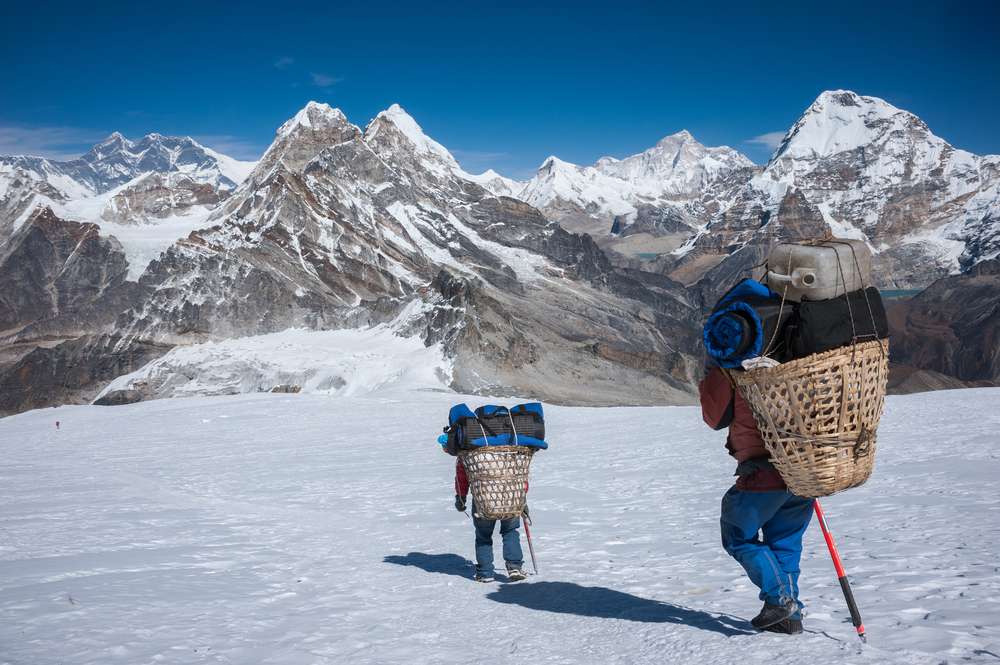
    captures porters, likely Sherpas, carrying heavy loads using traditional baskets with headstraps (known as doko in Nepal) while trekking in a high-altitude mountain region, most likely the Himalayas or Karakoram range.


    2. Sherpa Villages Along Gokyo Lake

    The Gokyo is a part of Sagarmatha National Parl. It is one of the UNESCO World Heritage site for its geographic and mountainous culture of richness. While trekking the Gokyo Valley trail, there are a few special Sherpa villages that have remained as ancient as their history:

    a. Namche Bazaar (3,440 m)

    High in the heart of the Himalayas, Gokyo Lake is a beautiful glacial lake tucked away in old pathways and continuous miles of higher elevation snow capped peaks. Many trekkers are attracted to this area simply because of the stunning landscape. But the wonderful part of Gokyo is all about trekking through Sherpa culture, and watching their unique intention and way of life in a really remote place.

    Namche is a fantastic place to experience Sherpa culture as well. The Sherpa Cultures Museum displays traditional dresses, farming implements, and articles from the first climbs to Everest. The museum provides a glimpse into Sherpa history and how their ways of life have changed over the years.  On Saturdays, the locals gather together in the market, to trade goods, and share stories and conversation. This is so fun to witness, with the village covered in stall after stall of fresh groceries.

    b. Dole and Machhermo: Quiet Mountain Villages

    As you make your way up the trail to Gokyo you will come to the quiet villages of Dole (4,200 m) and Machhermo (4,470 m). While not as small a Namche, Dole and Machhermo are smaller and quiet. They offer more of the intimate experience of time spent together with Sherpa village life.

    In this region, the livelihoods of its people are based on farming and yak husbandry. Potato and barley crops cling to the hill slopes, pasture is available for yak herding. The source of food for the high Himalayas for generations past. At night, the hum of spinning prayer wheels melds with the sound of voices in kitchen fires. Machhermo has special keeping in local myths. According to Sherpa legend, this was the location of the yeti sighting many yearsago. The elders, in the freezing cold of night, relay the history of the “mountain man.” 

    c. Gokyo Village (4,790 m)

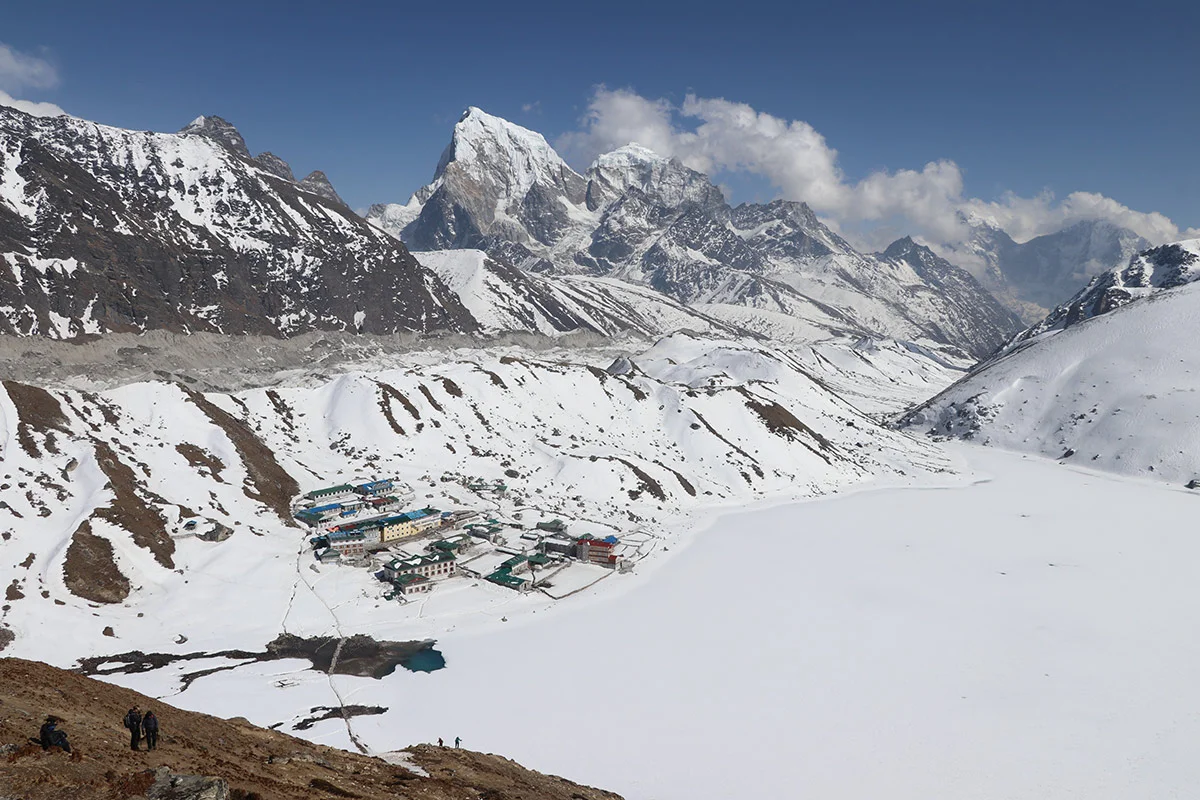
    It is situated next to the third and largest of the Gokyo lakes. Gokyo Village is one of the most beautiful high-altitude villages in Nepal (it’s a bit remote yet peaceful and spiritual). Gokyo is surrounded by sacred lakes and Gokyo Ri (5,357 m) guards the small village. Within Gokyo there exists a prayer wheel, a small Buddhist monestary, and stupas (chortens). There is no doubt that the Sherpa of Gokyo have considerable respect for the lakes. They consider the lakes to be home to the Nagas, serpent deities tasked with ensuring the lakes remain a source of pure water.

    During Janai Purnima,hundreds of pilgrims come to the lakes, often from the Khumbu region, but also noticeably from India and Tibet. To bathe, pray, and perform their rituals for purification and protection. 

    3. Spiritual Life: Buddhism in the Gokyo Region

    Tibetan Buddhism forms the spiritual basis of Sherpa life. They carry the weight of the teachings of Guru Rinpoche (Padmasambhava), and possessing qualities of both the Nyingma and Gelug schools.  Each settlement in the Gokyo Valley is marked with the visible aspects of Tibetan Buddhism such as reading sacred mantras and each village has a small monastery (gompa). 

    Often, we see prayer flags flying in the wind representing the way peace and compassion. They  are spread in the mountains, and are regarded as cleansing (the wind carrying the travelers’ prayer requests to all beings). They believe it brings peace and well-being to the lives of humanity and nature. 

    Inside, monks can be observed spinning prayer wheels, singing sutras (the written prayers). Trekkers passing are also welcome to drop in and join in the “spirit” of the time during silent meditation, offering butter lamps, or simply listening to the entrancing rhythm of the chant.

    vertical photograph of a high-altitude mountain landscape, likely in the Himalayas, featuring a turquoise lake and a small settlement. It appears to show a popular trekking destination, potentially around the Annapurna region of Nepal.

    Tengboche Monastery is recognized as one of the most important monasteries in the region, located along the trekking path to Everest Base Camp. Although the path does not lead directly to Gokyo, Tengboche is significant to the spiritual life of the Khumbu Sherpas. Many villagers from Gokyo take any chance they can get to visit Tengboche, especially during festivals.  

    4. Religious Festivals of Gokyo Lake  

    Sherpa festivals are fun and colorful expressions of faith and community. Sherpa calendars are based on the lunar calendar from Tibet and festivals are distinguished by dance, music, and ritual that connect the spiritual to the “secular world.” 

    We will only mention a couple of the more important religious festivals occurring around the villages surrounding Gokyo Lake.

    a. Mani Rimdu Festival   

    Mani Rimdu is frequently regarded as one of the most sacred of all Sherpa festivals. It is normally celebrated at the Tengboche Monastery. Although there are also celebrations at the monasteries of Thame and Chiwong. Mani Rimdu is typically held in either October or November, and serves as a marker for the end of monsoon and the beginning of climbing season. 

    Monks perform a masked dance that illustrates the victory of good over evil. While the village lets in local Sherpas the community gathers for a blessing. The festival takes place over several days, and includes prayers, music, and dances that refer to the teachings of Buddhism. Even though the Gokyo villagers will have to travel to Tengboche to participate. The residents of Gokyo have built much anticipation around this event. 

    b. The Dumji festival

    This festival takes place in almost every Sherpa village surrounding Gokyo. Dumji gives tribute to the Guru Rinpoche the founder of Tibetan Buddhism. As it is a family based commitment and offering of gratitude. This festival also consists of masked dances or chams, sharing of local food, and locally offering to the local god.

    c. Lhosar 

     The only other significant event throughout the Khumbu area is Lhosar (the new year celebration in the Tibetan culture). Lhosar is celebrated either in February or March, and each year brings about the new lunar year.

    Residences are organized up and decorated with vibrant prayer flags. Families cooks particular meal, one being guthuk (a noodle soup featuring ingredients that are meaningful). The monasteries hold a prayer service asking for peace and good luck. Villagers mix, wish well, exchange gifts, and a butter lamp (ghee lamp) with their neighbors. Families assemble in the Gokyo and pray for blessing in the upcoming year. 

    d. Janai Purnima and Gokyo Lake Pilgrimage

    Every year in August, the full moon, and for Janai Purnima or Raksha Bandhan. Gokyo Lake is one of the sacred places for pilgrimage. Thousands of Hindu and Buddhist pilgrims make their way to the renowned lakes to get into the cold, icy water, some coming from as far as Nepal. 

    Many pilgrims believe that to immerse themselves in the holy, cold lakes will clean your sins and the gods will bless them in the process. 

    Monks, priests, and experienced leaders will provide a service on the lake. They bring flowers and incense, and chant prayers. The memorial memories for Sherpas signify a renewed relationship with the elements of nature and divine power through spiritual energies from the sacred lakes where the bodies of divine residence.

    5. Local Customs and Traditions

    The people of Gokyo Valley lead their lives in harmony with nature and with the Buddhist principle and value of balance and compassion. The following are a few of the important values and customs that create Sherpa lives: 

    a. Community and hospitality

    Sherpas have a reputation for hospitality. Guests are usually greeted with a cup of butter tea (su cha) or salt tea made with yak butter and yak milk. The open hearth in homes and lodges is often the center of warmth and conversation. 

    Collaboration is an important value referred to as “Nawa” in Sherpa society. Villagers work together as a community in agriculture, assisting one another during both planting and harvesting seasons. In addition, villages share village resources to create trails, construct monasteries, and build schools. 

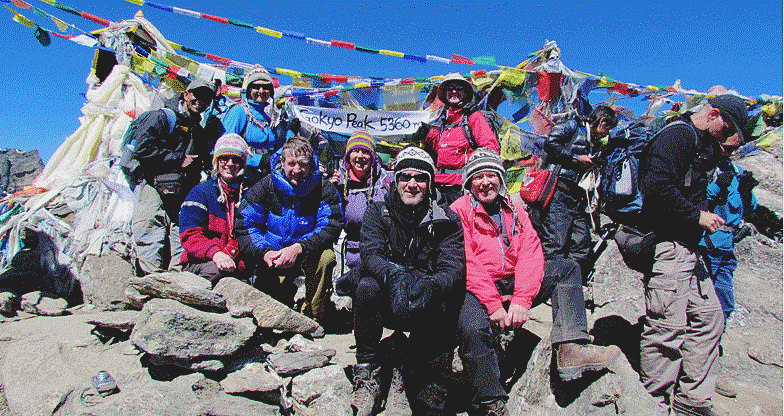
    The image shows a group of people posing for a photo on a mountain peak, identified by text on a small flag

    b. Yak herding and the mountain economy

    Yaks are a key pillar of durability of life at high altitude. They provide milk, butter, and wool, and they are heavily relied on as pack animals to carry goods over the mountain passes. For example, during the summer, Sherpa herders will walk-on foot to their yaks to high pastures. In the winter, when the crowd return to lower elevations with the yaks.

    On your journey, you will likely see yaks of various colors traversing the landscape carrying goods between villages. This aspect of lifestyle reflects a fascinating duality of human beings and nature in the Himalayas.

    c. Housing and Villages

    Sherpa homes are typically made of local stone, possess wooden roofs, and feature small windows to keep in the warmth. Most homes contain a prayer altar room where the family carries out their daily prayers and burns a butter lamp. Villages are generally built around monasteries. Since living spiritually is an important lifestyle when living as a community. 

    Along the trails, prayer walls (mani walls). We can found with the words Om Mani Padme Hum written on them. Trekkers should always walk to the left of these walls; this too is a nod to Buddhist practice.

    d. Food and Life

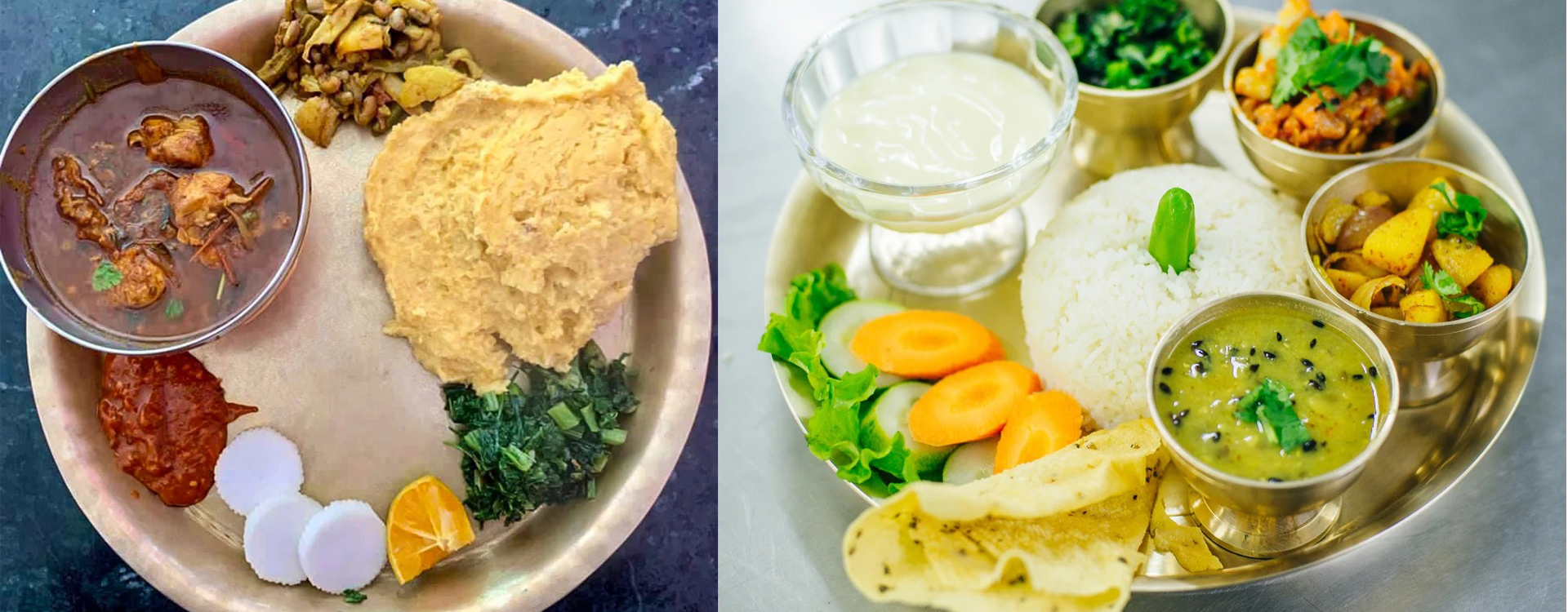
    Typically, Sherpa meals are simple and easy to digest, Under the premise of providing energy to trekkers in a cold mountain environment. Sherpa dishes include dal bhat (lentils and rice), shyakpa (Sherpa stew), momo (dumplings), and tsampa (toasted barley flour).

    Butter tea and chang (local barley beer) are commonplace in social gatherings and ceremonies. Friends and family often share a meal together, under the Sherpa tradition of generosity and shared time.

    6. Preserving Culture in a Changing World

    In recent decades, the trend of trekking and visiting Gokyo has drastically changed the region. The positive aspect of this change is that it created opportunity for the economy. However, Sherpa community continues to make efforts to protect their cultural identity and avoid the consequences faced from the effects on their environment. The central villages of Gokyo have lodges and monasteries which promote eco-tourism activities. They promote waste management, and respect for local customs and traditions. 

    Younger generations are getting much more involved to help preserve their cultural belief through education, music, and local crafts. Trekkers can also contribute. Just the way in which they observe their behavior, or by being respectful and learning a simple greeting in Nepali, encourages interaction with locals and a sense of pride in their heritage. Properly dressing near monasteries, shopping from local stores, just to name a few small changes allows the community to walk the fine line between culture and progress. 

    The image shows a group of four hikers on a high-altitude trek, likely in the Himalayas. They appear to be resting by a bright blue mountain lake

    Cultural Awareness for Trekkers

    If you are planning to travel to Gokyo Lake, here are some ways to show cultural respect and connect with the Sherpa community in meaningful ways:

    • Always walk clockwise around chortens and mani walls.
    • If you are going to take a photo of someone, or take a photo inside a monastery, be sure to ask permission.
    • Always remove your shoes before entering a religious building or a person’s home.
    • Do not touch prayer flags or religious items with your feet.
    • Learn a few phrases in Sherpa or Nepali! Just saying “Tashi Delek” (hello, good luck) can open many doors.
    • Support local lodges and shops to help support the community.

    Conclusion

    A visit to Gokyo Lake is about more than simply stunning water and snowcapped peaks. It is an experience of stepping into a world where spirituality, nature, and community are tightlylinked.

    The Sherpa villages, their religious festivals, and local customs surrounding. Gokyo represent a lifestyle that has been practiced for centuries And is based on simplicity, faith for the mountains. Each smile, each prayer flag, and each butter lamp tell endless stories in representation of walk of life, peace, and harmony, in one of the highest inhabited places on the planet.

    It doesn’t matter if you are a trekker, a pilgrim, or just a traveler. Gokyo’s invitation is more than seeing the beauty. It is understanding the heart, which is a living culture, which makes the Himalayas truly timeless.


  • Tips for Solo Trekking or Budget Travel on the Gokyo Lakes Trek

    Tips for Solo Trekking or Budget Travel on the Gokyo Lakes Trek

    Tips for Solo Trekking or Budget Travel on the Gokyo Lakes Trek

    The Gokyo Lakes Trek offers an extremely stunning high-altitude trek with glacial lakes, lovely Sherpa villages, and expansive view of the Himalayan mountains. The trek is in the Everest region and takes you the extremely sacred Gokyo Lakes (4,700-5,000 m) and the famous viewpoint of Gokyo Ri (5,357 m). From where you can have one of the best views of Everest, Lhotse, Makalu, and Cho Oyu.

     In comparison to the Everest Base Camp route, the Gokyo Lakes trek route is significantly and quite a lot quieter with far fewer people. It allows you for some privacy and deeper thought. This is well suited to the traveler who is significantly looking for peace, beauty of nature, and an ultimate self-discovery experience. It is also very much a budget trek with some planning ahead! This guide will provide you everything you need to know for your trek, whether you will be an independent trekker for the first time or want to experience the Himalayas without paying extra. This is a few of the important tips we grant you travelling own your own/a budget, on the Gokyo Lake Trek.

    1. Why Choose Gokyo Lakes for Solo or Budget Trekking

    Let’s look at the particulars that make the Gokyo Lakes Trek well suited for a self-supported/inexpensive trekker.

    Less Crowded, More Relaxed

    While the Everest Base Camp trek is very popular and has many trekkers, Gokyo provides you with fewer trekkers. This means you will find even quieter trails, teahouses with fewer visitors, and a surprising amount of solitude to fully enjoy the landscape. If you are a solo traveler who wants reflection time or to enjoy a calm atmosphere, this is a huge benefit.

    Inexpensive Places to Sleep and Eat

    There are plenty of teahouses and lodges that are affordable. You will find a clean bed space, a home-cooked meal and/or warm drink to enjoy for not much. Additional, the competition between lodges keeps them fair priced, especially during the shoulder seasons.

    Safe and Clearly Marked Path

    You will be walking the Gokyo path which goes through established Sherpa villages such as Namche Bazaar, Dole, Machhermo and Gokyo. There are signs for the places you stay and signs to find your way. This also provides a variety of options for tamed lodging with a rustic feel.

    Views Too Great To Pass Up For the Cost

    You can get to Gokyo Ri for equally impressive panoramic views of 360-degree views, including the mountains without the frustration and large crowds of travelling to base camp.

    2. Planning Your Gokyo Lakes Trek

    Planning is necessary for trekking alone economically and safely. Here is how to prepare your trip.

    Choosing Seasons

    The best seasons to trek are:

    Spring (March- May): Nature comes fully alive with blooming flowers (rhododendrons), numerous animal and insect activity, and nice days.

    Autumn (September – November): This season has the potential to see the best mountain views, more settled temperatures, and good visibility.

    Do not trek during the monsoon (June – August) due to slippery paths and leeches; also do not trek the winter season (December- February) because with high passes comes snow.

    Permits to Trek

    You will need 2 permits to trek:

    • Sagarmatha National Park Entry Permit – NPR 3000 (foreigner price)
    • Khumbu Pasang Lhamu Rural Municipality Permit – NPR 2000

    Both permits can be purchased in Lukla or Monjo, therefore avoid purchasing before departing/ purchasing in advance on route, to Kathmandu.

    3. Budget: How much are you going to need to spend?

    Whether you are trekking with a group or solo. The cost of trekking in the Everest region is based on how you want to plan your trip, and how comfortable you would like to be. For example, if you are completing the 10-12 day Gokyo trek, here is an approximate budget, in USD, of what you could expect to spend. 

    A round-trip flight from Kathmandu to Lukla will run approximately $200 to $250, and trekking permits will cost approximately $40.

     Plan on spending around $25 to $35 a day on daily food and accommodation costs. This all depends on your dining and living arrangements, of course. 

    If you hired a guide to trek with you, you would pay approximately $25 to $35 per day, if you plan to hire a porter to carry your gear/pack there is a charge for their services as well. 

    On average, independent trekkers spend about $20 per day on food and accommodation, and expect around $30 to $50. For other miscellaneous items (Wi-Fi, hot showers, charging electronics) in total. Your overall costs for backpacking / independent trekking could range from $400 to $600 total (not including costs of a guide / porter) or potentially, $700 to $900 total (scenarios with a guide and a porter are included in this estimate).

    Money Saving Tips

    • Bring your own Nepali Rupees (cash), ATMS often don’t work above Namche.
    • Bring some snacks, tea bags, & a reusable water bottle. You’ll save money.
    • Share rooms with other trekkers & or IAM snacks with others – potentially cheaper.
    • Do not stay at lodges that are high end and pretentious. Stick with basic teahouses that are authentic, cheap, and cozy.

    4.  Solo Trekkers or Trekker on a Budget Important Packing

    Packing correctly allows you to save money and most importantly to say safe. You do not have to have expensive gear – travelling smart is more important.

    Packing your essential clothing for Gokyo Trek

    It is important to pack your clothing smartly to ensure that you are warm, dry, and comfortable while computing the unpredictable weather of the Everest region.

    Begin with a quick drying base layer, which will help dry away any moisture while keeping you warm. Layer a fleece, down jacket for insulation. Especially a windproof outer shell to protect against cold winds or light snow.

     Pair a warm hat and gloves for high altitude mornings and evenings, depending on the conditions. Consider trekking pants and shorts depending on the temperature on the trail. Pack 3–4 pairs of wool socks to prevent blisters and keep your feet dry over the course of the trek. While on the subject of feet, investing in lightweight hiking shoes provides ample support over long treks, and sandals can be comfortable as you rest at anytime including at a teahouse.

    Trekking Gear Checklist

    Bringing the right gear can help ensure your trekking is both safe and smooth. A sleeping bag rated for between -10°C to -15°C will ensure you stay warm. Trekking poles can provide stability on steep or uneven trails. A headlamp with batteries is for early starts or dark teahouse rooms. A power bank or portable charger can come in handy to ensure you don’t run out of battery life. 

    Water purification tablets or a water filter besides pack water purification tablets ensure you have clean drinking water. Carry first aid kit, a basic first aid kit to take care of minor injuries and ensure the rest of your trek is constant. 

    Although high altitude usually translates into less UV rays than at a lower elevation, high altitude. UV rays are still strong, so be sure to pack sunscreen and sunglasses to protect yourself from the high altitude UV rays. Especially if you’re going to be trekking during the hottest climate during the time of year that you’re trekking, you’re going to want that sunscreen!

    c. Tip for Saving Money on Gear 

    If you want to save on money, consider renting larger items (sleeping bags, down jackets, etc) in Thamel area of Kathmandu instead of buying them. Thamel has lots of trustworthy shops that provide trekking gear at rental prices and is an easy choice for a budget travelling packing light.

    EBC & Gokyo Valley Trek
    EBC & Gokyo Valley Trek

    5. Safety Tips If You Are Trekking Solo 

    Trekking in the Himalayas alone is once-in-a lifetime expreience. But you need to be careful. Here’s how to do that:

    a. Acclimatize Slowly – The biggest risk is altitude sickness. Practice the “Climb high and sleep low.” Take proper rest days in Namche Bazaar, and don’t skip acclimization days. 

    b. Stay Connected – Buy an Ncell or Namaste SIM card in Kathmandu. Many places to stay offer Wi-Fi for a small fee. Let your lodge owner know which trek you plan to do next.

    c. Use GPS or Offline Maps – Apps like maps.me or AllTrails will show the entire Gokyo route offline. Also, take a paper map as well.

    d. Don’t Trek After Dark- Always arrive at your next village before night falls. The trails in the Himalayas can become slippery and hard to follow in the dark.

    e Be Aware of Weather Changes- The weather can change quickly in the mountains, so be prepared. Bring rain gear, check the forecast, and if you have bad weather, feel free to hang out in the lodge safety before speed.

    Hiring A Guide / Trekking On Your

    You can trek alone without a guide, which is perfectly acceptable and reasonable. You can do the Gokyo route without a guide. Consider your comfort level.

    Trekking Without A Guide

    You probably have a superior experience if you’re an experienced trekker who enjoys being by yourself.  The trails are well marked, and for the most part, many guesthouses will direct you to the next, as long as you ask politely.

    If you trek without a guide you can save about $250–$400 overall.

    Trekking With A Guide

    If you’re a first-time solo traveler, you probably want to hire a guide.  A guide with you will help maximize your experience through planning for altitude, handling language barriers, and navigating. Independent guides go for about $25–$30/day. You can find a recommendation in Kathmandu or Lukla.

    Porters

    If you don’t want to carry a heavy backpack, you can rent a porter for the trek. Porters can lift 20–25 kg, which is an easier load than you. Plus they should be getting around $20/day plus a tip if deserved. You could arrange for a porter through the guide directly, which helps assure your money stays with a local.

    7. Affordable Food and Lodging Tips

    Gokyo’s true attraction is the teahouse trekking. Each stop is a friendly welcome, local food, and basic accommodation. Below is how you can continue to trek at little cost realizable with some comforts of home.

    Food Tips

    • Just eat Dal Bhat (rice, lentils and vegetables), it is filling, nutritious, and they will keep serving it to you.
    • Do not eat meat, especially at that altitude; both quality/price can be questionable, and the meat was dragged uphill by porters.
    • Bring instant coffee, oatmeal, or chocolate bars with you from Kathmandu.
    • Buy boiled water from the teahouse instead of buying bottled water (better for you and likely cheaper).

    Accommodations Tips

    Very basic accommodations (2 beds with some blankets) range from ,500 – 1,000 NPR/night.

    If you have dinner and breakfast at the lodge, many will waive or significantly reduce the lodging costs.

    A sleeping bag is also a good insulation layer in your tent.

    If you want to pay less for accommodation, book early in the high seasons (Oct – Nov).

    8. Meeting People and Staying Social as a Solo Trekker

    Solo trekking doesn’t equal having to be alone. The Gokyo route has just about everything that can offer connection with other trekkers. 

    Eat in common dining rooms: Teahouses have welcoming dining rooms where trekkers gather and chat over a cup of tea. 

    Take small groups out for a day’s walking: Many solo trekkers unofficially group up on the trail to have company. 

    Learn a few phrases in Nepali: Typical examples are “Namaste” or “Dhanyabad” which means thank you.

    Talk to the locals: The Sherpa people are friendly, more than happy to share stories and cultural experiences. 

    9. Budget Extensions & Alternatives

    If you’re traveling on a longer trip, or want some diversity to your trip, here are some budget options: 

    Go to Renjo La Pass: (5,360 m)- From Gokyo cross Renjo La for spectacular views of Everest, then descend to Thame and Namche. This pass is one of the most beautiful, but is not too crowded.  

    Combine it with Everest base camp: If you have three to four extra days, and still have energy, you could extend your trek to Everest Base Camp, by way of Cho La Pass. 

    Explore some Hidden Villages: As a low-cost option, you could spend extra days in Phortse or Dole, depending on your itinerary. They are remote, authentic Sherpa villages with very few trekkers and inexpensive teahouses. 

    10. Responsible Budget Trekking: Eco and Ethical Tips

    Taking a trip for an affordable price does not have to come with the cost of further damaging the fragile Himalayan environment. Adopting these eco-friendly practices: 

    • Plastic bottles are to be discarded: Always have a water filter or purification tablets on your person.
    • Requiring the use of reusable gear: Try to eliminate or reduce the amount of single-use items. 
    • Respecting the local culture: Always asked before taking a photo of someone whether they are a local villager or a religious site. 
    • Try to shop at local businesses: Wherever you can, buy snacks or crafts from the villages instead of imported items. 
    • Leave no rubbish behind: Cross-pack out anything that you pack into the trip.
    • Every Rupee spent wisely helps the local economy and is one step further towards protecting this area for future trekkers.

    11. Emotional & Spiritual side of a solo trek

    Doing a solo trek through Gokyo is not just an adventure in the physical domain. It is an emotional experience. The silence of the lakes, the breadth of the mountains, and the cadence of each footstrike teaches mindfulness, patience and strengthens the spirit.

    The image of a prayer flag swaying in the winds marks your awakening to the sound of Sherpa children laughing and sunsets illuminating Everest. The quiet has provided time to contemplate, rejuvenate and reconnect with yourself, only the vast and powerful Himalayas can do that.

    Conclusion

    The Gokyo Lakes trek illustrates that with creativity and planning one has the potential for incredible adventure without cost or group.  Thus, with planning, forethought and an open heart. You can trek this amazing trail independently, safely, comfortably and with a purpose.  You will cross suspension bridges, say “hello” to yaks along narrow trails. When you will stand on Gokyo Ri while the sun rises over the world’s tallest peaks. Every moment you earned, every view is a snapshot in your memory that is framed forever. At Gokyo, it is more than landscapes that are new, more importantly, it is about you, discovering you. 


  • How to Reach Gokyo Lake: A Complete Travel Guide for 2025

    How to Reach Gokyo Lake: A Complete Travel Guide for 2025

    How to Reach Gokyo Lake: A Complete Travel Guide for 2025

    The Gokyo Lake is heart of the Everest region which is located at approximately 4,790 m (15,720 ft). This lake is surrounded by massive mountains, ancient villages, and gigantic ice rivers. Gokyo is a shrine of the highest Hindu pilgrimage site. Gokyo Lake is perfect for trekkers searching for peace and adventure away from the base camp. 

    To reach the shore of this glacial blue lake will require trekkers to make their way across. Reaching Gokyo Lake will be an adventure all on its own! In this blog, we explain how to get to Gokyo in great detail in this guide, including flight options, trekking options, permits. 

    A small village sits on the shore of a vibrant turquoise Gokyo lake, surrounded by a rugged, dry landscape and large, snow-capped mountains under a blue sky.

    Understanding the Location of Gokyo Lake

    Gokyo Lake is  UNESCO World Heritage site located in the Solukhumbu District of Nepal. Sagarmatha National Park is home to the most iconic mountain, Mount Everest. As well as famous Sherpa villages. The Gokyo Lakes are a series of six glacial lakes located close together. They are fed by melting ice from the Ngozumpa Glacier. The largest glacier in the Himalayas. The Gokyo Lake that sees the most tourist foot traffic is Dudh Pokhari Lake. It is situated right next to the picturesque village of Gokyo. 

    Because it is in a remote area at a high elevation and a trekking/nature experience. It is very nice but once again there is the link to the logistics of trekking, and a fitness level to consider. Just to state the clear again. The only way to reach the Gokyo Lakes is by helicopter or on foot. Since there is no public road accessible by vehicle or foot.  It is simply not accessible by ground other than trekking to get to the Gokyo Lakes from Lukla where you fly into.

    The Classic Route to Gokyo Lake via Lukla

    The most popular way to access Gokyo Lake is flight from Kathmandu to the Lukla airport. And then trek for a short distance for the best mountain views in the world. Lukla’s altitude is 2860 meters, and the site of one of the most famous airports in the world. The flight is about 30-35 minutes, and travelers gets the best views of the Himalaya. Once you land in Lukla and get off the plane, the real fun begins.

    You will walk down to the charming village of Phakding to rest. And spend the first night of your trek. The next day you will walk down the trail alongside the Dudh Koshi River. You will be  flowing through more beautiful pine and rhododendron forests, crossing many suspension bridges. You will reach  to Namche Bazaar, the famous capital of the Khumbhu region.

    Namche​‍​‌‍​‍‌ Village is at 3,440 meters, and it is the perfect day to acclimatize. It is a mountain town that feels alive because of the combination of bakeries, coffee shops, and hiking gear shops, together with the view of Everest and Ama Dablam. The extra day’s acclimatization here allows the body to slowly adapt to less oxygen, and also one gets to visit the Everest view hotel. It is the Sherpa museum, and more sites here. 

    After a rest day, the track then separates from the Everest Base Camp route at Namche and moves to Dole, Machhermo and finally to Gokyo village in the north direction. The entire environment shifts as one travels higher, and trees and replaced with alpine grasslands and loose stone walls and peaks covered with snow. The trek doesn’t necessarily feature similar views every day. One travels from loud rivers in lower Khumbu to the silent upper valley. After trekking for about 10 to 12 days, the shining Gokyo Lake lay in front of one’s eyes. The blue water reflecting the white Himalayan peaks seemed a present for every step taken.

    The Gokyo and Everest Base Camp Trek Combined.

    For the most adventurous people who wants to combine the Gokyo and Everest Base Camp Treks to see both lakes. This adventure connects two world-famous trekking destinations in the Himalayas. Gokyo Lakes and Everest Base Camp involves the Cho La Pass. This pass at 5,420m is more accessible. It is perfectly suited for trekkers and not climbers. The common start for your journey will be a flight to Lukla and going further through Namche Bazaar. After a visit to Gokyo and its lakes. You will go further by joining the visitor of the Gokyo Lakes via the icy Cho La Pass. And resuming the “traditional” EBC tour. While walking on snow, rock, and glacial terrain can be technically and physically difficult. It is such an amazing view and one that ensures at least a plate full of treasure.

    From Khumbu Valley altitude, the trail leads onto Dzongla and Lobuche. And finally to Gorakshep, the final settlement before Everest Base Camp. And the good news, if one is fit enough to hike up Kala Patthar (5,545m). The best place for close-up views of Mount Everest, and then take the same route down to Lukla. This combined traverse is generally around 16 to 18 days walking and is great for trekkers who wish to experience the still beauty of Gokyo within the historic stepping stones towards Everest.

    The Traditional Jiri to Gokyo Route

    The development of the Lukla airport completely changed the trekking and climbing activities in the area. As it is the first step of the journey easier for a great number of the tourists. The small town of Jiri, which is 190 kilometers east of Kathmandu. It is the base for the hikers and mountaineers. This way, which was taken by Sir Edmund Hillary and Tenzing Norgay during their Everest expedition in 1953. It is regarded as the classic access to Everest.

    The journey that begins at Jiri is quite an experience from the start. The trail passes by many terraced farms, dense forest, and the sites of village. This trails gives you idea of the cultural and agricultural heartland of Nepal. After Bhandar, Sete, Junbesi, and Nunthala, you will get to the main trail to Everest at Phakding. Mount Everest can be reached this way but it will demand quite a good physical fitness and a longer time. The drawback here is that acclimatization is done slowly and people will get a glimpse of the traditional lifestyle in Nepal. It is out of the usual commercial trekking routes. The Jiri route is less frequented and more tranquil. It is utterly rewarding for those who adore travel experiences that are not just real but also profoundly cultural.

    Helicopter Tour to Gokyo Lake

    In case you’re very busy or just want to have a luxurious experience instead of hiking. A helicopter tour to Gokyo Lake is a remarkable event that you will never forget. Flights by helicopter generally go out from Kathmandu or Lukla. And take the route pass through the majestic Himalayas and the landscape below them. In just a few hours, you can view some of the most famous mountains in the world Everest, Lhotse, Makalu, and Cho Oyu. And the shining Gokyo Lakes down.

    The majority of the trips incorporate a minor stop close to the lake. In order to give the tourists a chance to come out, take pictures, and get the feel of the beautiful view. The whole journey usually takes about three to four hours. It varies from USD 1000 to 1500 per person based on it being a private or shared flight. The option is a great one for capturing moments, luxury seekers, and those who cannot trek for health or time reasons. 

    Although it may not have the physical challenge and immersive experience of hiking, the helicopter ride gives the traveler an exclusive view of the Himalayas that is hard to compare with any other method of transport. It is therefore the combination of intimacy with nature and comfort that one gets from the helicopter ride. 

    Gokyo Lakes: Sunrise

    Permits Required for Gokyo Lake Trek

    When you trek through the Gokyo region. You will need to get two permits:

    The first is a Sagarmatha National Park Entry Permit, which costs NPR 3,000 (about US$25) for foreigners. You can buy at the Nepal Tourism Board office located in Kathmandu. Or at the entrance checkpoint of the park at Monjo village.

    The second document you will need obtain is the Khumbu Pasang Lhamu Rural Municipality Permit. It costs NPR 2,000 (about US$17). This permit goes towards supporting local development and conservation projects, and can be obtained in Lukla or Monjo as well.

     It is very important to keep both permits on your person for the duration of your trek, as they will both be checked along the way at random intervals.If you are trekking through a registered trekking agency. The agency generally will take care of the all permit paper work for you

    Best Time to Visit Gokyo Lake

    Best time to go: The optimal time to come to Gokyo Lake is a question of what kind of experience you expect. The two major trekking seasons in Nepal, as it has already been stated, are 

    Spring from March to May and Autumn from September to November. It’s typically fantastic from both. Most cases the weather is wonderful, the sky is just clear. Spring has ideal temperatures and the route is set against the blooming rhododendrons. But autumn is generally considered the finest trekking season since the sky is crystal clear after the monsoon has ended. The temperatures are still excellent, and you can stick to a trail lined with trekkers on the way from all over the globe.

    Winter (December to February) should only be selected. If you prefer quiet and less populated trips on completely snow-covered routes. Nights are freezing cold and tourism services are temporarily closed in Monsoon.  It is recommended for trekkers with experience.

    Monsoon (June to August) to the trek is the most extreme time. Due to unanticipated monsoons. Even relatively low-altitude trails are wet and can become hazardous due to increased rainfall. 

    Physical Preparation and Acclimatization

    Gokyo Lake trek is generally considered moderate by most trekkers. Like most treks, the altitude defines the trek’s success. Gokyo village is just about 4,800 meters high, while Gokyo ri stands at just over 5,300 meters. 

    • Altitude sickness, also known as AMS. It is something you can only avoid by acclimatizing. For this you can begin preparing for your trek at least two months prior. 
    • You should add enough cardiovascular activities like jogging and cycling.
    • Include strength training inequalities focused on your legs and core strength. Also, make sure to stronger your stamina too. Otherwise you have to walk quite a number of hours every day and climb some steep uphill. 
    • During the trail, take it slow, drink plenty of water, and use acclimatization days to the fullest. 
    • Spend more days in places like Namche Bazaar and Machhermo and allow your body to adapt to the decreasing amounts of air.
    •  Additionally, stay away from alcoholic beverages, get enough sleep. And consult your doctor whether you can take Diamox or any other similar medicine to assist you.
    Trekker enjoying jump shot & Gokyo Lake & Gokyo Valley in the Background
    Gokyo Lake

    Accommodation and Food During the Trek

    The Gokyo route is lined with teahouses and lodges, each owned by a local Sherpa family. 

    • You can count on simple but comfy accommodations with twin-sharing rooms, wooden beds, and warm blankets. 
    • Bathrooms are common, and you can also take a hot shower for a small fee. 
    • The food is unexpectedly diverse for the location. The staple diet is Dal Bhat, a balanced blend of rice, lentil soup, and vegetables that will provide you with the energy to continue trekking. 
    • Noodles, soups, fried rice, pasta, pancakes, eggs, and potatoes are also commonly available. Food becomes progressively more expensive higher because everything must be carried up by porters or yaks. 
    • You may find a bakery or coffee shop in Namche Bazaar or much closer then Machhermo during the lower elevations. There you can enjoy a fresh pasty or a cup of Wi-Fi. 
    • In Gokyo, however, the facilities are less sophisticated and the emphasis is on warmth, comfort, and magnificent nature.

    Essential Packing Tips for the Gokyo Trek

    Packing is an art that can make or break your trek. You should bring a few warm but lightweight clothes that can be worn in layers and taken off or put on based on the temperature. Some key items consist: 

    • Carry moisture-wicking base layers, a coat or down jacket, raincoat, walking pants, mittens, a cap, and sturdy walking boots.
    •  Carry a sleeping bag that is at least-10°C as nighttime in the high Altitude get below freezing. 
    • Trekking poles will assist in steep or harsh terrain balancing. 
    • Other necessary gear consists of a headlight, glasses, sunscreen, recycling water bottles, and water purifying pills.
    •  Because ATPs are free only to Namche Bazaar, bring enough money in currency for food, lodging, and small expenditures.

    The Journey to Gokyo Lake

    Gokyo Lake Trek is not just a hike. It is a journey through one of the most beautiful places on earth. The blue waters of Dudh Pokhari under the shadow of the powerful Cho Oyu. The clinking music of yak bells in the shadow of rocky paths. The warmth of Sherpa feel at Namche adds up to an joy by your side. The regular walk down Lukla or a helicopter ride of your own. Each Gokyo walkway has its tale to tell. The way pushes you to your limits but gifts you moments of restful peace too. When you finally stand again by the showdown lakes and see the mountain extremum reflected in their surfy disturbance. You will understand that Gokyo is not just a scene. It is a feeling.


  • Why Nepal Is One of the Most Underrated Tourist Destinations

    Why Nepal Is One of the Most Underrated Tourist Destinations

    Why Nepal Is One of the Most Underrated Tourist Destinations

    When we think of travelling, most of us think about places far away from the U.S. Practically none of us think about those countries that are much more adventurers but has low travel rate. One that is located off to the side of, and in between, India and China: Nepal. This Himalayan kingdom is a huge bundle of adventure, spirituality, natural beauty, and hospitality. And more adventure, and is frequently one of the most underrated countries to travel to in the world. 

    Nepal offers so much more, in every dimension of the experience. The average traveler might expect that it will repeatedly surprise you. Majestic snow-covered peaks, historic temples, smiles of friendly hospitality. And every outdoor adventure and experience you could dream of for a very minimal cost. In just one city like Kathmandu for example, the world famous Durbar Square will provide you a place to sleep for less than $10, and food (also unbelievable) is also a very reasonable cost. 

    Bungee Jumping: Leap into Himalayan Adventure

    So, let’s set off on a more in-depth discussion of why Nepal just simply does deserve much. Much more attention, what is special about this gorgeous destination, why the time to go is now. To get the most out of everything Nepal has to offer.

    1. A Land of Natural Diversity

    Across this planet, there are very few places offering such a diverse array of nature in such a small area. Nepal diversifies from dense jungles to the tallest mountains on earth (including Mt. Everest, at 8848m. You can enjoy dry tropical forest, terraced hills of rich green valleys, and frozen alpine glaciers that can all be viewed in just a week’s time. 

    Adding to all of this are the incredible treks in the Himalayas, including Everest Base Camp Trek, the Annapurna Circuit, and the Langtang Valley. Each providing their own authentic and unique experience of Nepal and the landscape. Also in the Terai lowlands of Nepal, subtropical jungles exist with parks like Chitwan National Park and Bardia National Park. From where animals such as rhinos, elephants, crocodiles, and the rare Bengal Tiger can be viewed. 

    This diverse collection of terrain is welcoming to all types of travelers. From epic adventurers to nature-goers and everything in between. An anonymous internet user on Reddit once described in a public forum on travels in Nepal within my favorite quote ever, “The only thing Nepal doesn’t have is a coastline – everything else it has”.

    taking a Group picture at the top of Thorang La 5416m in sunny & cold day
    Top of Thorang La Pass

    2. Living Culture and Spirituality

    More than the mountains, it is the rich cultural and spiritual history of Nepal that captures the curiosity and imagination of travelers. Nepal is one of the few countries left in the world that have auspiciously combined Hinduism and Buddhism. Into the symbols, festivals, rituals, and daily lives of the people they encounter. When in Kathmandu for example, walking through the old alley ways, one passes ancient stupas, prayer wheels. Hindu shrines, and a crowd of stalls. Some stalls on one corner may have many piles of colorful spices as another stall is burning incense and chanting.

    The Kathmandu Valley contains four UNESCO WORLD HERITAGE SITES. Pashupatinath Temple, Boudhanath Stupa, Swayambhunath (Monkey Temple), and ancient cities of Patan and Bhaktapur. Each with a history more than a thousand years in the making. None of these sites embody the artistry of elaborate woodcarving, or a sizable number of pagoda temples, or number of festivals than the Newar people. 

    If you are willing to look outside the city life, then the life above in the mountain villages offers life with a degree of retreat. One can enjoy ancient lifestyle. Every ethnicity, like Sherpas in Solukhumbu, or Gurungs in Annapurna, have their own customsor foods to mix it up! Many travelers don’t just call Nepal a destination. For many travelers, Nepal is a spiritual experience in which travelers feed their hearts and souls!

    3. Nepal’s Wildlife and Natural Wonders

    Although many consider Nepal a mountain country. It is also known for animals, ecosystems, and biodiversity. In southern Nepal, the Terai, there are national parks, offering beautiful parks, and are known for a wild jungle safari for an excellent experience of the jungle.

     Chitwan National Park and Bardia National Park also offer park safaris while visiting endangered species, such as the one-horned rhinoceros, Royal Bengal tiger, Asian elephant, and hundreds of species of birds while on safari in a jeep and crossing the reservation are. 

    In land to mid-hill areas of Nepal, areas are known for beautiful waterfalls, lakes, and terraced fields, for example Phewa Lake in Pokhara (mid-hill area) offers a lake view of the mountains of the Annapurna range.

    Rara Lake in western Nepal is nice and clean of tourists.This is what makes Nepal special; it offers a dual character. A mountain paradise with biodiversity for eco-tourism and/or adventure.

    Group Photo Taken at Monjo check point to farewell the Himalayas
    Goodbyes at Monjo Check-Post

    4. Adventure Activities

    Nepal is the ideal location for outdoor adventure. While Nepal is known internationally as a trekking destination. Trekking is only the beginning you can fly down the Trishuli or Bhote Koshi by rafting. Paragliding in Pokhara, bungee jump over raging gorges, zip line, rock climb, mountain bike. Or fly ultra-light in the foothills of the Himalayas. 

    What is also so appealing and easy about recreating Nepal as a travel destination is simply the ease of access. You do not have to be a professional mountaineer to enjoy the majestic beauty of the Nepalese landscape. And fun activities are available to even the weakest fitness enthusiast with desire. Whether you are on a hike or trying to make the most of each adventure to base camp experience. There is no question that a variety of difficult adventure can accommodate your fitness level.

    Nepal is an attraction of beauty and affordable pricing for both experienced travel or seeking diversions to those novices. It is the Adventure Capital of South Asia for good reason.

    5. Affordable and Traveler-Friendly

    Although Nepal provides world-class experiences, it is surprisingly affordable relative to other destinations. Nightly accommodation options range from family-run guesthouses to boutique hotels and luxury lodges. Street food is delicious and cheap, and local transport or trekking services are affordable.

    For example, you’ll find a day’s expenses, including meals, accommodation, and activities in Nepal, will usually amount to a fraction of the costs you would incur in traveling to Switzerland or Japan. Backpackers can travel comfortably for $30–$40 a day, while similar levels of comfort become moderately priced for mid-level travelers.

    A traveler on Reddit put it well: “Nepal really gives you more for less — culture, adventure, and lifelong experiences, all without breaking your bank.’ Affordability is one of the key reasons Nepal deserves a higher profile in the world of travel.

    6. Authentic Hospitality and Genuine People

    Nepalese folks are seen as kind, hospitable, and welcoming. Wherever you go, whether it be the lively city streets of Kathmandu, or the more serene hiking trails in the Himalayas. You will always be met with relevant people smiling and saying “Namaste”.

    The country has a saying of “Atithi Devo Bhava” that roughly translates to “guests are like gods”. It is not merely a saying, but a way of being. Countless travelers visiting Nepal, report building relationships with families, guides, etc. That last long beyond their travels, and continual travel back and forth to Nepal just for the kindness that they’ve experienced.

    In a world where much of mass tourism is somewhat weak , Nepal is a place that continues to stir up and shared human connection for travelers, time and time again. Travelers depart repeatedly, finding themselves invigorated by the inspiring mountains, and genuinely welcoming people.

    Temples around Bhaktapur Durbar Square
    Bhaktapur Durbar Square

    7. A True Off-the-Beaten-Path Destination

    Nepal is still fairly far away from the mainstream tourism experience. Aside from the well-known tourist hubs of Kathmandu, Pokhara and the Everest trek, there are many entirely undiscovered jewels that await you. You’ll find numerous excursions. For example, demonstrating again the diversity of offerings found in Nepal, there are the Manaslu Circuit trek, Tsum Valley trek, Upper Mustang trek, and the Kanchenjunga region of Nepal, all of which offer purely scenic, cultural, and solitude experiences.

    This is where the very magic of Nepal rests, for travelers in search of the real deal. You’re unlikely to be scrambling for space in a crowded cafe, nor will you be spending time hunting for affordable resorts. As they simply don’t exist. Instead, you’ll have the pleasure of finding secluded monasteries, charming tea houses, and trails where the only sounds are your footsteps and the shuffle of prayer flags blowing in the wind.

    In this era of SM [social media] travel, Nepal offers a special sense of discovery and adventure.

    8. Why Nepal is Still Underrated

    With all of these incredible excursions taken, let us ask ourselves, why is Nepal still underrated? The answer to this question is that there are many reasons.

    1. Limited international promotion – Nepal like many countries, including Thailand and Bali, does not market itself as heavily or as broadly as an international tourism destination. There are many travelers that simply aren’t aware of the full menu of experience in Nepal beyond trekking.
    2. Mobility issues – Nepal is improving rapidly in infrastructure, but still has problems with roads, slow travel, and possibly power availability in some regions. This might make travel uncertain, but also contributes to the adventure.
    3. Perception gap – Some people think of Nepal only as a mountaineering destination or as a poor country. They miss the beauty of the culture, cuisine, and people. We need to change this perception.
    4. Inconsistency in luxury options – Nepal is known more as an adventure culture tourists destination than as an upscale destination. However, boutique lodges and wellness retreats are growing gradually. 
    5. Political instability – Historically, there was political transition in Nepal that has shifted attitudes about travel. Nepal is now peaceful, stable, and welcoming to tourists.

    As one traveler mentioned in a reddit post, “Nepal is not lacking in things to do in Nepal. Most is lacking in marketing and the management to get it out to the world. 

    on a rocky cliff overlooking a vibrant turquoise Gokyo lake, with a rugged mountain range and glacier visible in the background.

    9. The Perfect Time to Visit Nepal

    If you’re thinking of taking a trip, then you should go to Nepal now! The tourism sector has never been stronger and more diverse. Each trekking season, it seems there are new trails, eco-lodges, and sustainable travel experiences.

    Autumn (September to November) – Good weather, clear skies, and many festivals (Tihar and Dashain)

    Spring (March to May) – Exploding rhododendrons, warm air, and excellent trekking conditions

    Winter (Decemver to February) – Low numbers of crowds and prices, with decent views at lower elevations

    Summer/Monsoon Season (June to September) – The best travel experiences can be had in the rain shadow areas, Mustang and Dolpo 

    Seasoned travelers will tell you that there are exciting experiences year-round, personally traveling for adventure, culture, or just relaxation to Nepal.

    10. A Sustainable and Ethical Travel Destination

    Nepal is fast becoming a world leader in eco-tourism and sustainable travel. Many trekking agencies and lodges are dedicated to environmental stewardship, local employment, and community tourism. In traveling to Nepal, you are participating in a rural economy!

    Supporting local guides, homestays, and Nepali-owned companies through travel not only helps the destination [the economy] but also supports the preservation of local culture and traditions. For example, organizations such as Happy Mountains Nepal are committed to offering ethical travel experiences that immerse travelers in local life and value.

    This is what makes visiting Nepal a meaningful and enrichingly impactful travel experience and these are the things that travelers today are looking for in travel.

    Clints getting Trip completion certificate & Gifts from Happy Mountain Nepal
    Clints getting Trip completion certificate & Giftsl

     Conclusion

    What makes Nepal one of the most undervalued destinations globally is that it offers the world mountains, jungles, temples, wildlife, adventure and soul at a reasonable price and a warmth of home.

    Nepal may not have the advertising budget of travel capitols, although what it has in spades is authenticity, variety and spirit. For those seeking genuine travel as opposed to staged luxury, Nepal is not a place, it is a revelation.

    The next time you plan your travel, look beyond the ordinary. Come to Nepal and see why once travelers almost always return.