Author: Happy Mountain

  • Gokyo Lakes vs Everest Base Camp Trek: Which Is Right for You?

    Gokyo Lakes vs Everest Base Camp Trek: Which Is Right for You?

    Gokyo Lakes vs Everest Base Camp Trek: Which Himalayan Adventure Is Right for You?

    When people think of trekking in Nepal. There’s one name that quickly comes to mind Everest Base Camp (EBC). The highest mountain on the planet stands with giants Lhotse, Nuptse, and Ama Dablam. Behind them and is the #1 bucket list adventure that symbolize the essence of being in the Himalayas. 

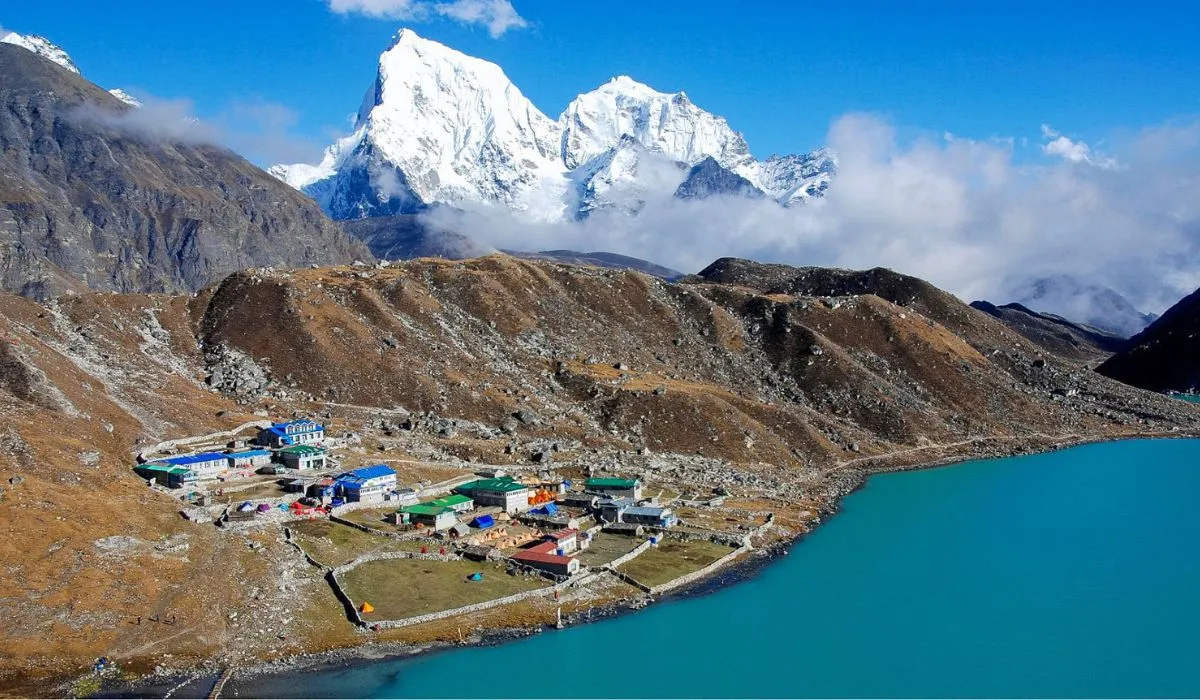
    Before the famous EBC trek, there is another trek just as beautiful, the Gokyo Lakes Trek. The Gokyo Lakes Trek is a quieter, more scenic experience. As we can see,  incredible turquoise blue lakes and has an view of Everest in 180 degrees, which many travelers feel is better than from Base Camp.
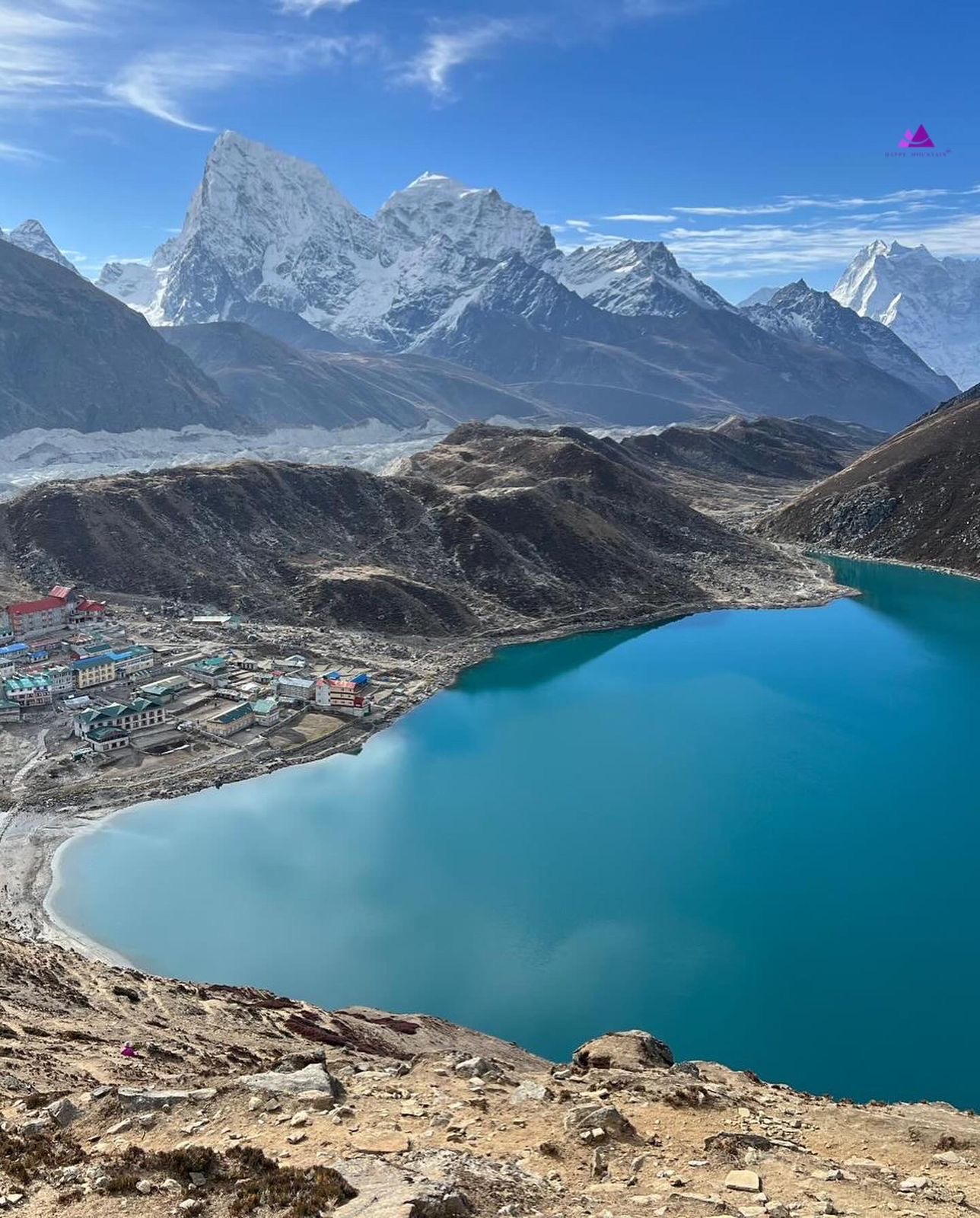
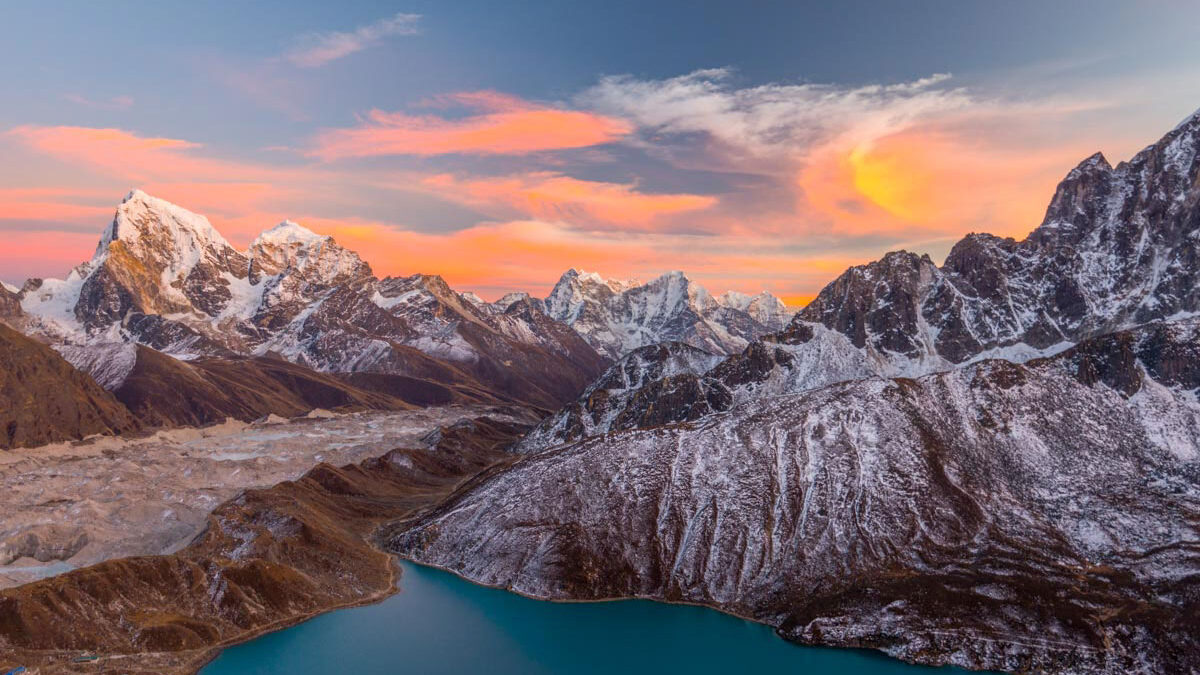
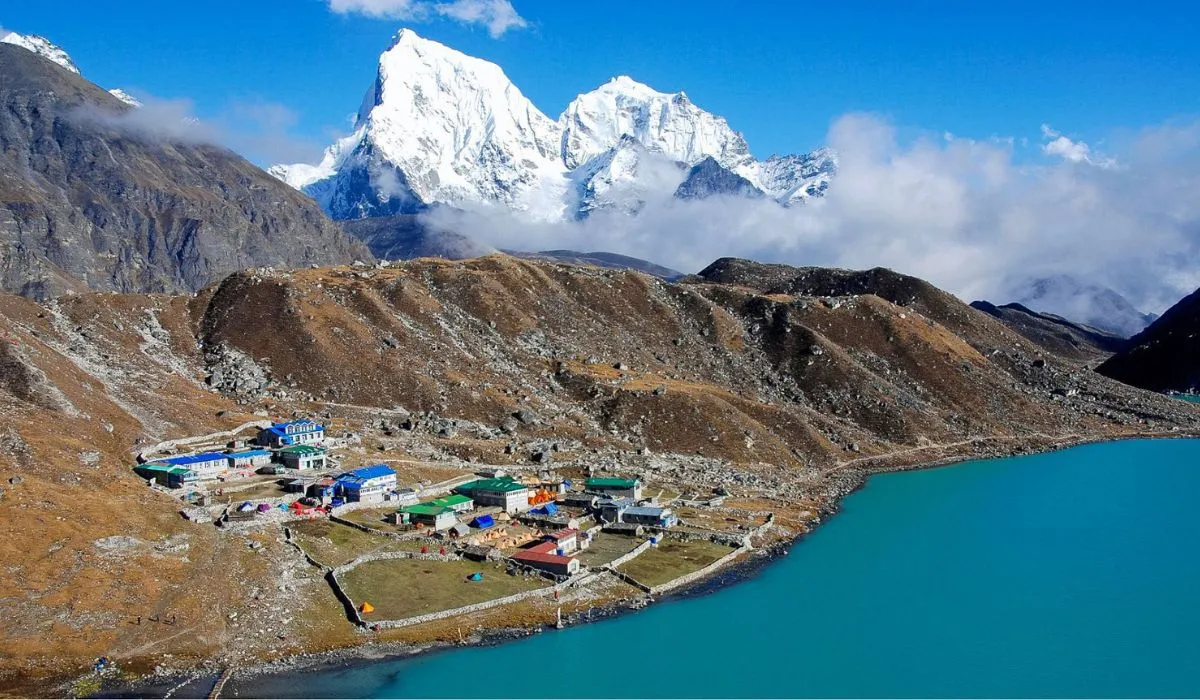
    A small village sits on the shore of a vibrant turquoise Gokyo lake, surrounded by a rugged, dry landscape and large, snow-capped mountains under a blue sky.

    So, is it Gokyo Lakes or Everest Base Camp? Both treks are incredible in their own right; just another experience. Here we will compare the two treks so you can determine what is best for your travel aspirations, interests, and trekking style. 

    1 Route Overview and Duration of both Trek.

    Both treks begin the same way a once in a lifetime mountain flight from Kathamdnu (or Ramechhap) to Lukla, the “gateway” to the Everest region. From here, trekkers tour through the beautiful Sherpa villages. Through rhododendron forests, across high suspension bridges over the flowing Dudh Koshi River and finally, arrive at Namche Bazaar, the busy Sherpa capital.

    Here at Namche, there is a split in the trails. The Everest Base Camp Trek trekkers continue to trek along the main Khumbu Valley through Tengboche, Dingboche, and Lobuche until they reach Everest Base Camp and famous viewpoint, Kala Patthar (5,545 m).

    The Gokyo Lakes trek, steps west at Kyangjuma, to consider the route less traveled. Gokyo Valley is known for its glaciers lakes, and positioning for grand mountain reflections.

    Everest Base Camp Trek:

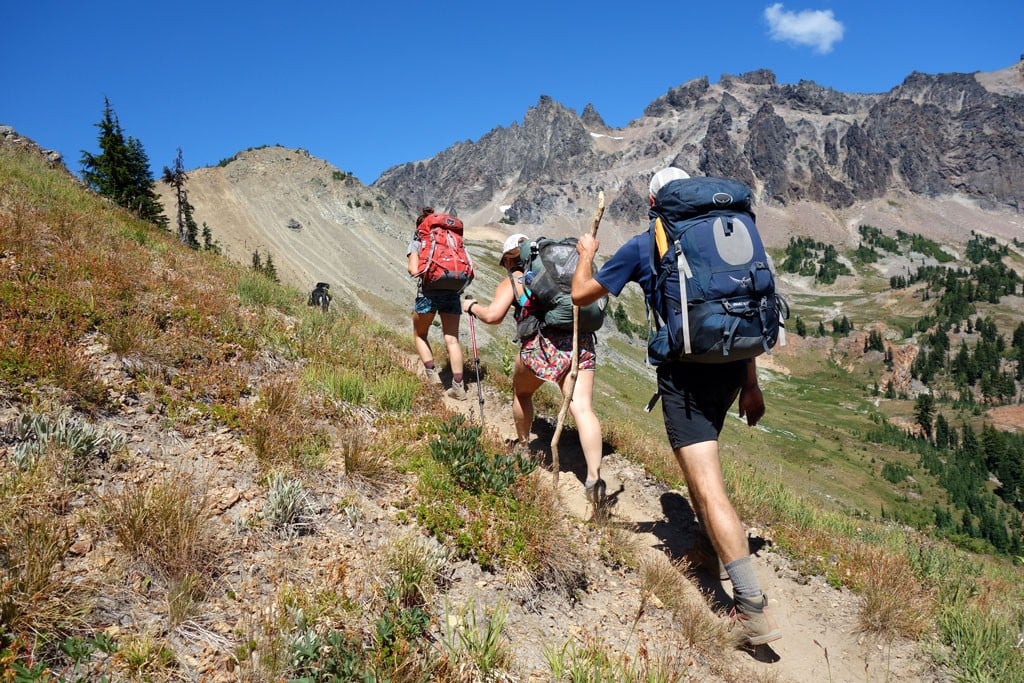
    Trekkers walking with trekking stick, bag towards everest base camp

    Duration: 12-14 days

    Distance: About 130 km round trip

    Highest altitude: Kala Patthar (5,545 m)

    Route type: out-and-back (same trail in and out)

    Gokyo Lakes trek:

    Duration: 13-16 days

    Distance: About 135 km loop

    Highest altitude: Gokyo Ri (5,367 m)

    Route type: circular (return via a different route, often crossing the Cho La pass)

    2. Scenery and Highlights

    Everest Base Camp

    The journey to Everest Base Camp traverses the Khumbu Valley. It is full of spectacular glaciers, forests of pine, and villages perched in the mountains. Gorgeous views of Ama Dablam, Lhotse, Nuptse, and Mount Everest itself are featured along the journey. The spiritual center of the trek is the Tengboche Monastery. Most trekkers stop here  for a blessing before heading onward and upwards. The main attraction of trekking to Everest Base Camp (5,364 m) where climbers of Everest start their climb. While you can’t see the summit of Everest from Base Camp, the icefall and towering peaks will leave you indisbelief. The next morning, most trekkers will walk up to Kala Patthar a rocky viewpoint with views of Everest appearing golden in the morning sun. 

    In contrast, the Gokyo Lakes Trek is a different trek altogether. This portion of the trek features more remote villages like Dole and Machhermo before reaching the Gokyo Valley. Some of the highlights of the Gokyo Valley  include six glacial lakes fed by the Ngozumpa Glacier, the largest glacier in Nepal.

    3. Difficulty and Acclimatization

    Both treks are moderately difficult, and it is the altitude that really challenges the trekker on either route. Since proper acclimatization and gradual ascent are recommended to avoid AMS (, Acute Mountain Sickness ) due to both exceeding 5,000 meters. There is more continuous climbing on the EBC trek, including several steep rise through rocky terrain and high winds as you approach Lobuche and Gorakshep.

    The Gokyo Trek is usually at a more leisurely rate of ascent, but by adding Cho La Pass into the itinerary, one should expect a long climb over snow and rock at high altitude.

    Which Is Harder?

    EBC Trek: More popular, direct, yet more physically demanding since one has to make long hikes every day.

    Gokyo Trek: It is slightly longer and higher in parts, with few steep climbs prior to the Cho La Pass.

    The standard trek route to Everest Base Camp is usually taken by most trekkers. But if you have already gained some high-altitude trekking experience and want something off the beaten track. Then Gokyo Lakes offers just that ideal blend of challenge and serenity.

    4. Accommodation and Facilities 

    Among the treks in Nepal, the Everest Base Camp route enjoys probably the best infrastructure: there are plenty of tea houses, bakeries, Wi-Fi spots, and even hot showers available almost everywhere. Places such as Namche Bazaar and Dingboche will surprise you with the comforts they offer in the altitude. 
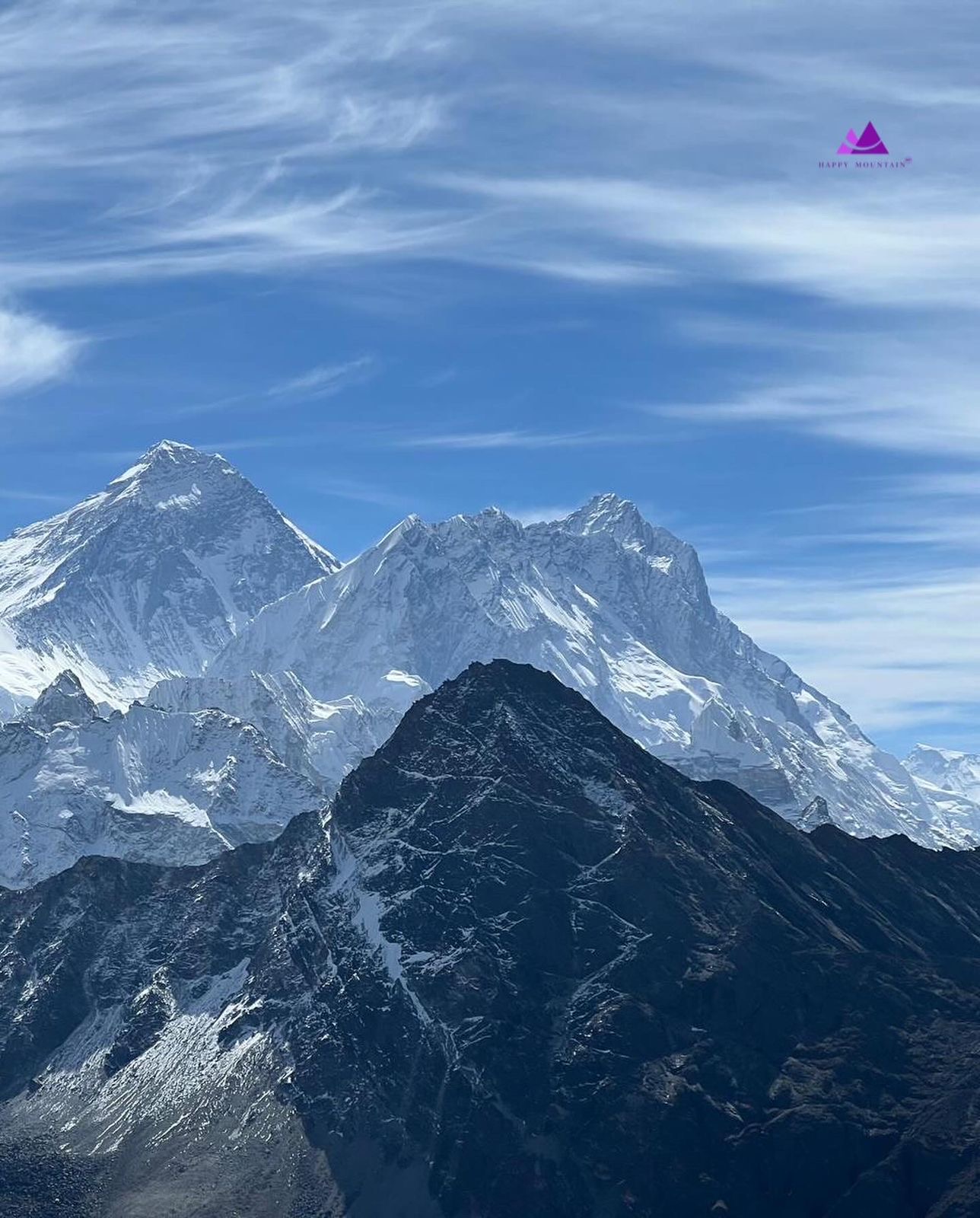
    Gokyo Ri peak view on the way to gokyo trek

    In contrast, the Gokyo Valley is less commercialized-the lodges are simpler. The food options are fewer and the trail has a more remote feeling to it. But that is one of the many things trekkers just love about this part of the country. Fewer crowds and quieter make for a more authentic Himalayan experience. If you join both routes across the Cho La Pass, you will notice that facilities between Thagnak and Dzongla are limited due to higher elevation and remoteness. 

    5. Culture and Sherpa Life 

    Both offer immense insight into the culture of the Sherpa people. But the EBC trail goes through villages that are more populated, allowing one to appreciate how tourism and traditional life. You’ll encounter colorful prayer flags, mani walls (religious structures built with stones inscribed with the mantra “Om Mani Padme Hum“), and Buddhist monasteries that reflect the spiritual heart of the Khumbu region. 

    The Gokyo Valley, takes one around smaller settlements and more conventional communities. Life here  is less touched by tourism. It’s quieter and more peaceful. This gives trekkers a better opportunity to interact with locals and understand mountain traditions passed down for generations.

    6. Cost Comparison

    A standard-cost Everest Base Camp (EBC) trek will likely cost you between USD 1,200 and USD 1,800, depending on the package, guide, and time spent on the trek.  This will normally include domestic flying, food, lodgings, permits, and a guide/porter.

    The cost of the trek to the Gokyo Lakes is usually slightly more between USD 1,300 and USD 1,900. It is mainly due to the modestly longer duration and limited/less accessible lodgings.  If you prove to add the Cho La Pass crossing or if you combine both routes, the price may increase beyond USD 1,900. 

    That said, both treks can “budgeted” successfully and independently if you are experienced with navigation, and altitude.

    7. Optimal Times to Trek: 

    Spring (March through May) is the best time for both EBC and Gokyo Lakes trekking. Rhododendron flowers will be blooming. The weather will become clear, while the slopes of Everest will glow in the blue sky. Autumn (September to November) is the historic peak trekking season when both the weather remains stable, and mountain views are ultra-clear.

    Winter trekking (December to February) has fewer trekkers on a more secluded trail, however be aware this can be at a cost. The temperature when trekking during the day can be significantly below freezing. The Cho La Pass is often closed due to heavy snowfalls. During winter, making this option more difficult. The monsoon (June to August) is generally avoided due to rain, leeches, visibility, plus thick cloud meaning you can’t see surrounding mountains.

    Group photo at Phakding Before leaving for Namche Nazar
    Group Photo Taken at Phakding Hotel

    8. Crowds and Atmosphere: 

    Gokyo Lakes is the easiest option for the most solitude. On the EBC route trekkers are likely to be join hundreds of other trekkers per day in peak season. While Gokyo route has a smaller number of trekkers on any given day. While trekking you likely will find yourself walking through the valley in complete silence, only hearing the wind and yak bells in your surroundings.

    That said, the liveliness of the EBC trail is part of what makes it charming. Meeting other trekkers from all around the world, sharing stories around the fireplace of a cozy lodge, and feeling the excitement of everyone going to the same storied outcome, creates its own spirit of friendship.

    9. The Views: Which Are Better?

    It’s tough to say one trek is more beautiful than the other. It really depends on what’s most important to you. 

    Everest Base Camp Trek: Certainly brings a sense of accomplishment. You are at the foot of Everest and in the same location where climbers begin their ascent from.

    Gokyo Lakes Trek: Certainly has the best panoramic view of Everest and the surrounding peaks from Gokyo Ri. Blueness of lakes, snowy fields and distant enormous giants pure Himalayan magic. 

    If your overall aim is to be at the foot of Everest, take EBC. If your aim is to see Everest at its most photogenic, and potentially the best view, take Gokyo Lakes.

    Trekker enjoying jump shot & Gokyo Lake & Gokyo Valley in the Background
    Gokyo Lake

    10. Can You Do Both Treks?

    Absolutely, yes many experienced trekkers have! The Everest Base Camp trek with Gokyo Lakes and Cho La Pass trek is one of Nepal’s most rewarding treks. Because it means you will experience the best of both worlds: the peacefulness of Gokyo Valley and the panorama of Everest Base Camp.

    The combined trek is usually completed in 17-20 days with the adventure of crossing the high and icy Cho La Pass from Thagnak (near Gokyo) to Dzongla (from the EBC side). It is more difficult but offers unmatched variety in terms of landscape range, culture, adventure, etc.

    Conclusion

    Both the Gokyo Lakes Trek and Everest Base Camp trek offer experiences to last a lifetime. The EBC trek completes the dream being under the world’s tallest peak. The Gokyo Lakes Trek and calm provide space for reflection literally and spiritually  in one of the most beautiful corners of the Himalayas.

    If you are looking for the classic adventure and excitement of a trip to an iconic and historical destination in the Himalayas. You will be attract toward the Everest Base Camp (EBC). If you would rather something more low-key, focused parties, and without the crowd noise while also recognizing lakes and world-classview. And ultimately more peace of mind Gokyo Lakes trek is likely to “steal” for you.

    Regardless, the experience in the Khumbu region of Nepal. It  is not about arriving at a location or particular place it showcases the strength we find. The moments of serenity, and the awe that we experience, or at least try to experience at every step we take in the Khumbu region of Nepal. Contact us today at Happy Mountain Nepal, on Facebook, Instagram, or TikTok .


  • An Emotional Journey to Gokyo Lake, Nepal

    An Emotional Journey to Gokyo Lake, Nepal

    My Heart Belongs to the Himalayas: An Emotional Journey to Gokyo Lake, Nepal

    There are destinations that shift your understanding of the world. And, there are places that shape your being. For me, Nepal is that place. Every time I go, I don’t feel like I’m traveling to Nepal. I feel like I’m going home, and not to a house or a particular city, but to a sensation. A sensation that lies deep within your soul. I have covered a great number of mountain trails. But none has shaped me more than the trek to Gokyo Lake. It wasn’t just about a trip for a destination, it was about waking up a part of me I didn’t realize was missing. 

    on a rocky cliff overlooking a vibrant turquoise Gokyo lake, with a rugged mountain range and glacier visible in the background.

    The Melody of the Mountains

     When I arrived in Kathmandu, the air was thick with the smell of incense and dust. Prayer flags were fluttering off rooftops and a light ringing sound of a bell was ringing in the distance. The chaos of the city felt alive. But I could feel the Himalayas silently calling me: sweetly, softly, and felt like a call I couldn’t ignore. The trip to Lukla was exciting and humbling. As I flew over the snow-covered ridges of the Himalayas and landed at a tiny little runway. I observed what lay ahead winding beyond a few houses and through trails, suspension bridges, and large white objects in the distance. 

    And my heart raced not because I was scared, but I was amazed. The trek began, and with each footstep.I felt more flooded in the noise of my existence spread away. The higher I go, the less noise, powerfully I might define noise, resonated in my universe. The air was thin, the rivers were loud, and my mind was clear. Life feels raw, and felt alive. 

    The First View of Gokyo

     After several days of hiking through rhododendron forests, prayer walls, and sleepy little villages, I reached Gokyo Valley. And then there it was, Gokyo Lake. The color of dreams and miracles! It was a blue so pure you wouldn’t believe it if you saw it upon the Earth. The mountains almost seemed to cradle it, like silent guardians, Cho Oyu shimmering on the horizon, gleaming in the sunlight, and clouds participating lazily in the distance. 

    A soft breeze moved the prayer flags in gentle motions, and nature hummed its most gentle song. I stood at the edge of the world.I had never seenthis  beauty before. But this was something deeper. I felt tears welling in my eyes, the type that blooms when your heart is unable to express the feeling. 

    Trekker enjoying jump shot & Gokyo Lake & Gokyo Valley in the Background
    Gokyo Lake

    Nights Underneath a Thousand Stars 

    That night I spent in a small teahouse on the lake. The wall creaked in wooden soft tones, and the scent of firewood and tea filled the air. Outside the stars awoke counting and sparkling, huge and undeniably beautiful. I had never seen a sky so vast and breathtaking. I sat and looked out the window long after everyone had gone into sleep. The only sounds were the gentle wind sweeping the frozen lake. I began to think of all I had left behind – noise, deadlines, expectations, and how little any of it mattered to me here.

    The Painful Goodbye

    It was a little harder to say goodbye to Gokyo than I have expected. Time and time again, my eye was drawn to the dancing light on the surface of the lake. To the flags spreading in a gentle wind. I never wanted to leave, I remember, I wanted to stay and stop time and take that peace back home with me.

    But mountains educate you in their own way. They reveal beauty to you and then let you know that everything Months on, I still dream of Gokyo. Every once in a while during a hectic day, I close my eyes and find myself back here: by the lake, the wind on my face, mountains standing quiet and timeless.

    Nepal taught me that peace is not a place on the map. It is something inside you that awaits your remembrance. And on occasion you must tread through thin air, over towering bridges, and to the heart of the Himalayas in search of it. Gokyo changed me. It’s a reminder that silence can be damn beautiful, stillness can mend your wounds. And most of the time the quietest instances in life tend to leave us at a loss for words. 


  • What Most Travel Agencies Focus On and How We’re Different

    What Most Travel Agencies Focus On and How We’re Different

    What Most Travel Agencies Focus On and How We’re Different

    Over the seven years I have worked with over thousand of clients in the tourism industry. I have noticed one thing: the majority of travel agencies are in the business of selling packages rather than experiences. The focus of many agencies is selling as many packages as they can in a month, rather than considering how travelers will remember each trip. Travelers see ads for “Everest Base Camp in 10 Days,” or “Pokhara-Kathmandu Tour Package,” but ordinarily they don’t have an understanding of what the traveler wants to feel, learn, or experience. At Happy Mountain Nepal, we don’t look at the bus with the number of seats that are filled, or how many bookings there are, but we listen first. We ask what part of an itinerary excites you most, the tranquility of mountains, the cities, or the ambiance of remote villages.

    We then design your trip around your preferences. Each journey is tailored to match your personality and pace, ensuring that when you return home. You don’t just bring photos you bring stories that stay with you for life.

    Clints taking group picture just next to Apple farm at Bhartang village

    1. Price Wars vs. Quality and Value

    It is well-known that many tour companies compete exclusively on price. The market is flooded with advertisements that read “Lowest Price Guaranteed” and “Book Now for the Cheapest Deal.” While this may sound good in theory, lower prices often come with hidden concessions in the form of sloppy hotels. Inexperienced guides, and hasty itineraries that offer little chance to appreciate the true beauty of Nepal. A race to the bottom in terms of price is quickly turning travel into a transaction rather than an experience.

    While we don’t expect to be the cheapest here at Happy Mountain Nepal, we do promise you great value. Every rupee you pay goes to making sure that you have the utmost comfort, safety, and genuine local experiences.

     Our guests on Tripadvisor often review how they were treated (often our guides), a guest wrote, “We did some sightseeing in Kathmandu with Mr. Rey, he was always so friendly and helpful, and made our experience unforgettable.” That’s the kind of detail and care that we are. We want to provide real value not just price.

    2. Dependence on Automation

    Due to the digital age in which we live, many agencies have turned to using automated booking systems, chatbots, and other similar technologies. Although technology speeds up the process, it may make experiences feel a bit more distant or cold. You can arrange your trip with the click of a few buttons. However, when you arrive and realize that you are simply a figure on a spreadsheet, that is where most agencies fail to make the emotional connection. They forget that the world of travel is about people and not just places. 

    At Happy Mountain Nepal, we try to blend the technology with personal human interaction. Yes, you can book online, but you will always have a real person walking you through every step of the way. From your first contact and inquiry to the last goodbye at the airport. We believe that fostering relationships with travelers is important and makes the difference in the overall travel experience. Many of our guests express that traveling with Happy Mountain Nepal gave them the feel of exploring Nepal with friends not a tour company. That human interaction the sense of connected, that is something that you cannot automate. 

    3. Following the Same Routes Instead of Finding New Ones

    You will find every agency presenting the same few itineraries: Everest Base Camp or Annapurna Circuit or Chitwan Jungle Safari or Pokhara City Tour. While great places to travel, Nepal offers so much more than those well-developed options your agency selected for you. Many agencies do not pursue other itineraries or create custom experiences, as it takes planning and experience with the additional costs. As a result, travelers miss experiences in the many cultural villages, the quieter trails, and meeting locals.

    Here at Happy Mountain Nepal, we pride ourselves in breaking that system. Happy Mountain Nepal provides travelers with options that most agencies would overlook. Whether it is the quiet monastery in Helambu, a home stay in the Tsum Valley, or to watch the sunrise from the top of Pikey Peak. We all want our guests to travel in Nepal beyond the postcard. Our guides are locals who know the places we visit  they can share more than routes but real stories. 

    The traditions, and feelings that we experience during the journey. When you travel with Happy Mountain Nepal, it is more than going to a place to look. It is connecting with the real Nepal.

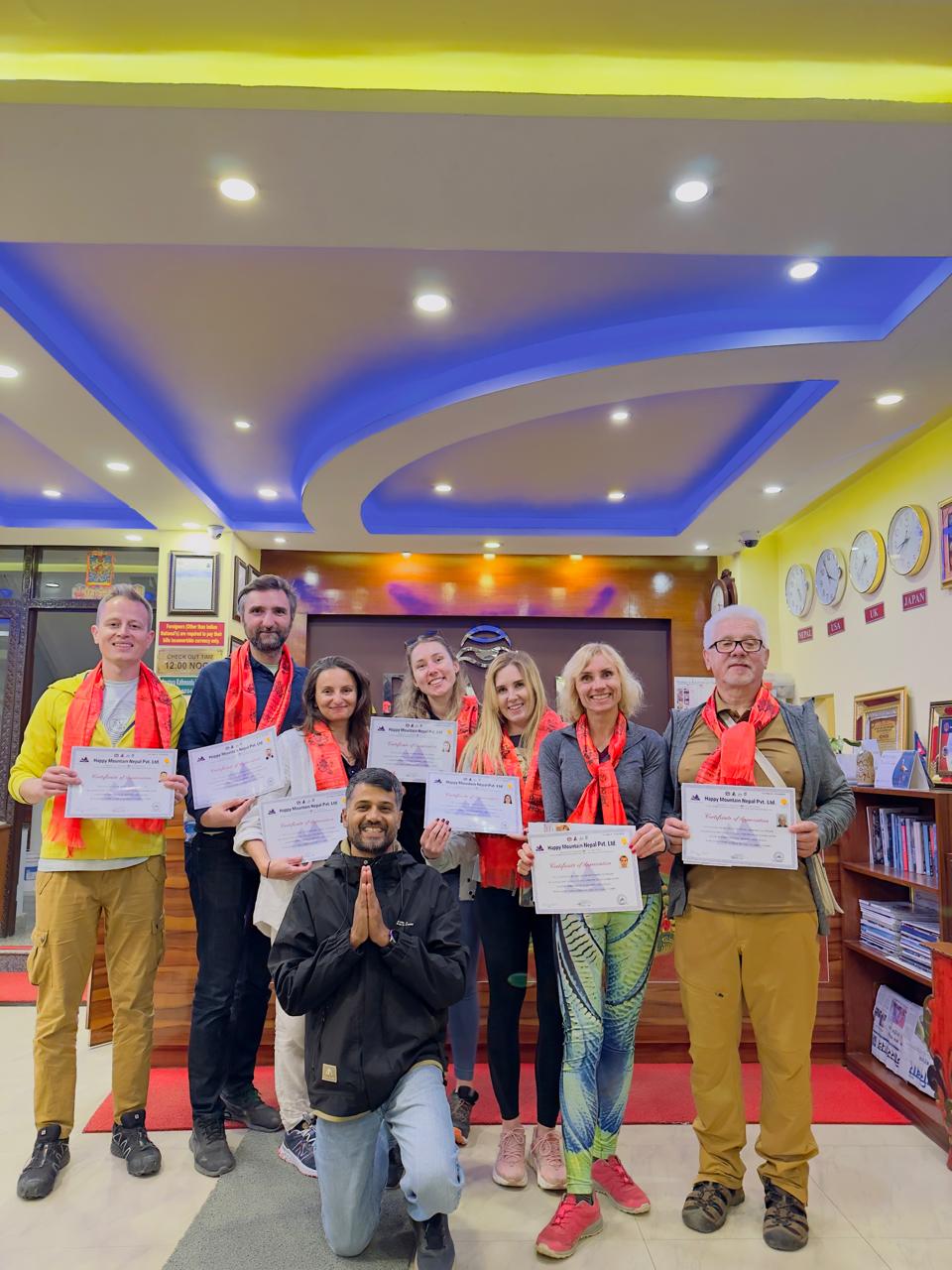
    Clints getting Trip completion certificate & Gifts from Happy Mountain Nepal

    4. Promoting the Destination vs. Experiencing the Journey

    A lot of travel businesses today are consumed with, “creating the perfect Instagram moment.” It is more of a focus on marketing than on the experience itself. The professionally staged images, shiny websites, and influencer social media posts might be engaging to view. But perhaps the product being sold is merely an image and not real. The heart of travel gets lost between the hashtags and filters.

    At Happy Mountain Nepal, we think the best marketing is a real smile and a sincere review. Moments are not staged they are created through care, hospitality, and attention to detail. Many of our guests have said their visit to us was, “real, emotional, and heartwarming.” 

    One traveler even wrote on Tripadvisor, “Everything was perfectly organized, and our guide made us feel like family.” This is the kind of feedback we value. Because in the end, travel is not about how it looks via the web it is about how it feels.

    5. What our travelers say

    Nothing captures a travel company better than the words of their travelers. Our travelers’ sincere reviews on Tripadvisor exemplify the trust and happiness we have built up over time. 

    One traveler wrote, “I had an incredible experience with Happy Mountain Nepal. The team was professional, caring, and always ready to assist thank goodness. I never felt unsafe or uncomfortable throughout the entire journey.”

    Another traveler said, “Our guide was exceptionally knowledgeable and friendly. We never felt like clients, we felt like family.” 

    These sincere words compel us to continue improving and providing the love and individual care that describe who we are. At Happy Mountain Nepal, everyone is a traveler, and every trip is a collective adventure  full of discovery, laughter, and connection.

    Final Thoughts

    When it comes to trip planning. Most travel companies excel at selling packages, lowering prices, and automating their systems to accommodate a high volume of travelers. We do the opposite, we provide experiences that feel individual, warm, and impossible to forget. With a background in tourism and marketing, I’ve learned one simple thing authenticity lasts.

    At Happy Mountain Nepal, we don’t just plan trips. We build relationships, share stories. We make sure each traveler experiences Nepal the way it is supposed to be experienced. From the heart, and not just a travel plan. You can contact us at Happy Mountain Nepal, on Facebook, Instagram, or TikTok.


  • Life and Nature Around Gokyo Valley

    Life and Nature Around Gokyo Valley

    Life and Nature Around Gokyo Valley: Exploring the Wild Side of the Himalayas

    Nepal’s majestic Himalayas is perhaps one of the most beautiful places in the world, Gokyo Valley. With bright blue lakes, high peaks, and stunning ice fields. Gokyo is also home to wildlife, plants, and their own mountain ecosystems that are specially adapted to endure one of the world’s toughest environments. 

    However, Gokyo’s bluish lakes and stunning support are so much more than simply visual beauty. These lakes burst with life birds fly overhead, yaks graze in alpine meadows, and snow leopards hang out on the rocky slopes. Nature here balances biological life with height, climate, and people’s relationships to wildlife over time as a living ecology. 

    Gokyo Lakes: Sunrise

    In this blog we  will see the wildlife, their habits, plants, and ecological processes in Gokyo valley. You will see how the environment is one of the unique and spectacular natural areas of Nepal.

    1. The Nature Wonder in Khumbu, Gokyo Valley

    Gokyo Valley is located inside Sagarmatha National Park, which was established in 1976 as a World Heritage site to preserve the fragile ecology of the Himalayas. The valley lies in the Solukhumbu District of northeastern Nepal. Extending from Namche Bazaar to Gokyo Village at 4,790 meters and further up to Gokyo Ri at 5,357 meters and the Ngozumpa Glacier, the longest glacier in the Himalayas.

    Gokyo is primarily known for a chain of six glacial lakes reputed to be the highest freshwater lake system in the world. These lakes are not only beautiful but also help in maintaining a range of flora and fauna unique to cold, thin-air environments. The pristine ecosystem around these lakes plays an important role in maintaining biodiversity in this region and regulating hydrology.

    2. The Himalayan Landscape: From Forests to Glaciers

    The Gokyo Valley is a living classroom of nature, offering an incredible range of ecological zones within a relatively short vertical distance. Trekkers ascend from Lukla-2,860 m to Gokyo across a series of changing habitats, from lush forest to alpine tundra to icy moraines.

    a. Lower Forest Zone (2,800 – 3,500 m)

    The lower parts of the valley, around Lukla and Namche Bazaar. It has a cool and moist climate where there are well-developed, dense forests. Dominant species in this zone include rhododendron, pine, fir, and birch. In spring-between March and May-forests of rhododendron bloom into color, painting the hillsides in shades of pink, red, and white. This spectacular bloom brings in nectar-feeding birds and is one of the sights while trekking in Nepal.

    b. Subalpine Zone (3,500 – 4,200 m)

    It opens up as one goes upwards, with shrubs giving place to juniper bushes along the route to Dole and Machhermo. Growth is relatively sparse here, though hardy plants like dwarf rhododendron and barberry mark these dry stretches. It is also a prime grazing land for yaks, which feed on alpine grasses and ensure a good livelihood for the locals, who are Sherpas.

    c. Alpine Zone (Above 4,200 m) 

    Beyond Machhermo, trees all but disappear, replaced by mosses, lichens, and cushion plants clasping to rocks and glacial soils. The air is thinner, the temperature lower, and the wind stronger-yet life persists. This apparently barren terrain supports snow leopard, Himalayan tahr, and small rodents adapted to the cold.

    3. Wildlife Around Gokyo Valley

    Though Gokyo Valley has difficult conditions,we will be able to see and find animals more than we could think. From the largest terrestrial mammals to the small-to-large vibrant birds, Gokyo and its surrounding area have emphasized the biodiversity of the valleys with extreme elevation and seasonal variability over millions of years.


    A. Mammals of Gokyo Valley

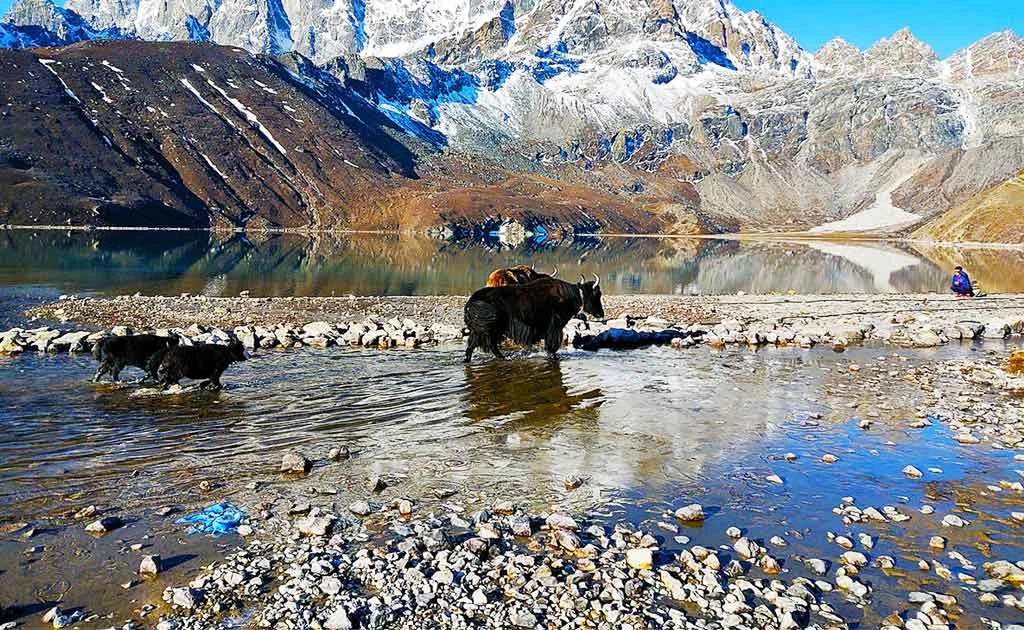
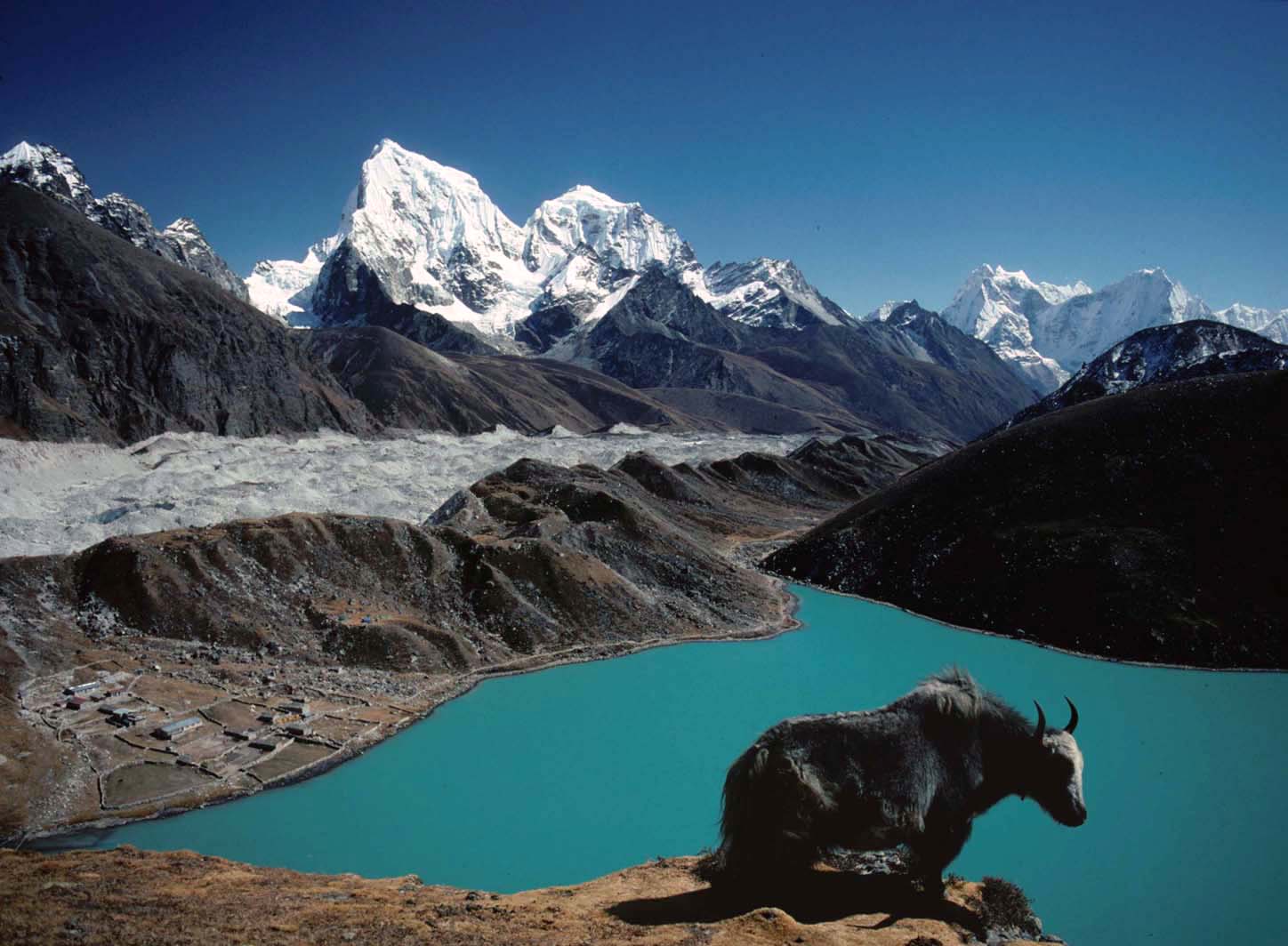
    A black yak stands on a rocky cliff overlooking a vibrant turquoise Gokyo lake, with a rugged mountain range and glacier visible in the background.


    a. Snow Leopard (Panthera uncia)

    The snow leopard is the most beautiful and iconic predator found in the Himalayas and stealthily uses steep cliffs and rocky ridges above 3500 meters. They are seldom encountered by trekkers, however they leave evidence of their presence in the form of tracks, scat, and/or cache of prey remains in areas around Gokyo and the Cho La Pass. The snow leopard is primarily a predator of Himalayan tahr, musk deer, and blue sheep.

    b. Himalayan Tahr (Hemitragus jemlahicus)

    The Himalayan tahr is a close relative of the wild goat and is very commonly seen feeding on steep rocky slopes of Gokyo Valley. Males are identified as some of the most conspicuous fauna of the region due to their long thick fur coat and curved horns. Tahr are an important part of the alpine ecosystem both as a grazer and continue to be part of the diet of larger predators of the region.

    C. Musk Deer (Moschus chrysogaster)

    The musk deer which is located in wooded areas around Dole and Phortse, is hunted for its musk gland, and as a result, becomes vulnerable for poachers. This shy animal is found alone, and it eats leaves, grasses and lichens. In Sagarmatha National Park, where some conservation measures have recently been put in place, the musk deer is beginning to increase in numbers.

    d. Himalayan Marmot (Marmota himalayana)

    These adequately-sized, social rodents inhabit burrows they build themselves and can be seen nearby Machhermo and Gokyo. Marmots are diurnal, which means that they search for food and sunbathe on rocks during the day, and sleep all night in burrows to escape low night temperatures. In the winter would-be months, marmots will hibernate for weeks to adjust to lower temperatures.

    Yak and Nak (Female Yak)

    Domesticated yaks are very significant in Sherpa life, as they provide milk, meat, wool and transportation. Wild yaks can be seen regularly in secluded spots near Gokyo Ri and Cho Oyu. Yaks are built for the thin air and cold environment and exemplify toughness in what we perceive to be cold conditions in the vast, inhospitable Himalayas.

    B. Birdlife Around Gokyo Lake

    The Gokyo Valley is a cozy, ideal location to view birds during the spring and autumn migratory seasons. Not only are there business card styles everywhere, Sagarmatha National Park is also home to over 120 birds. Some birds are from the alpine trilogy; others are only present for brief visits.

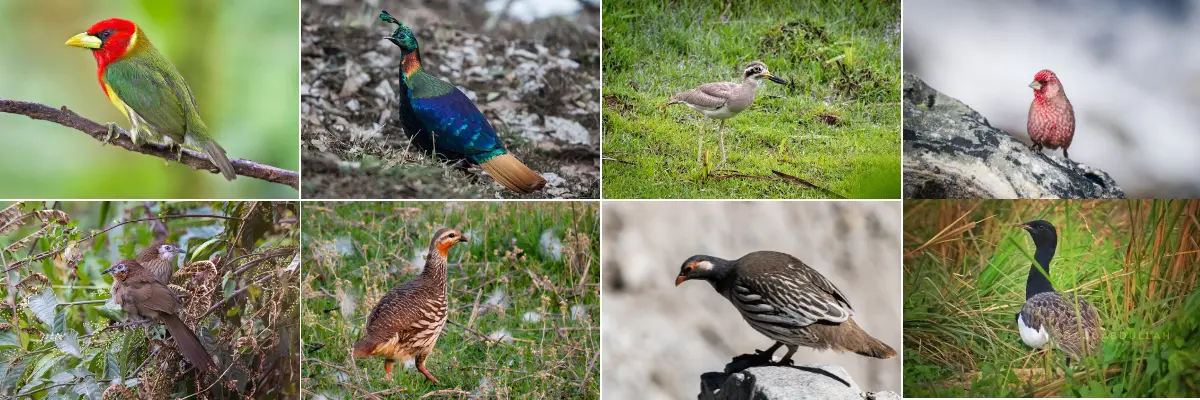
    The image is a collage of photographs of several different bird species, primarily from the pheasant and partridge family. The birds include the Himalayan Snowcock, a colorful bird often found in the mountains of Nepal

    Himalayan Monal (Danphe)

    The Himalayan Monal, also Nepal’s national bird. It is a stunning pheasant because of its collection that has such vivid feather colors shining in the sun. The males are quite stunning in particular, showing off bright blue, green, and copper colors on the fore. You can almost always find Himalayan Monals around forests a few minutes from Dole and Machhermo.

    Snow Pigeon

    The peaceful gray and white pigeon is typically found in monasteries or rocky cliffs and is omnivorous, eating grasses, flowers, and small seeds. They now have even been observed much higher than 4000 m.

    Yellow-Billed Cough: 

    These interesting black birds, identifiable by their bright yellow bills, will be seen flying about Gokyo Village and above you on the adjacent hills and ridges. These birds are mostly curious and social, and will almost follow you going up, while they wait for you to inadvertently drop some type of food.

    Grandala and Blue-Fronted Redstart: 

    In these colorful birds, you will encounter small patches of blue and orange among the gray side of the Himalayan hillside, where they are feeding casually on insects and berries from the rocks and bushes bordering the lakes.

    Ruddy Shelduck and Migratory Ducks: 

    The Gokyo lakes provide a refreshing breeding/fallout zone for migratory waterfowl (e.g., ruddy shelducks, bar headed geese, or common coots) from Tibet and central Asia that summer on the lakes. The Gokyo Lakes is positioned as the main breeding zone for these waterfowl (or the waterfowl will) spring and summer months build and use small adaptable islands climbing on and using the islands along the escape route, and opportunistic species usually the only true structure for other species along the way with gaps in habitats and distance in retention of diet among the birds.

    4. Flora and Vegetation Around Gokyo

    When I saw the varieties of plants, i couldnt believe my eyes. You will be amazed. You will find a diversity of plant growth on the slopes. Vegetation grows rapidly and vigorously, however, it changes substantially with elevation, temperature, and moisture. The conditions create many microhabitats. 

    1.Forests and Shrubs

    In lower elevations, the forests are primarily composed of rhododendron (Nepal’s national flower), juniper, birch, and pine trees. These trees provide refuge for musk deer and nesting sites for multiple bird species including cuckoos and ashy-throated warblers. The rhododendron, particularly, is stunning in the spring and the meadows around the rhododendron make for the best trails of the entire trek as they look like natural gardens. 

    2.Alpine Meadows

    Once you surpass the 4,000 meter elevation range, you will find meadows where blue poppies, edelweiss, and primulas thrive as a results of the short, summer season. These intense plants have deftly adapted to strong ultraviolet radiation and very cool nights while exposed to wind everything is happening all at once. 

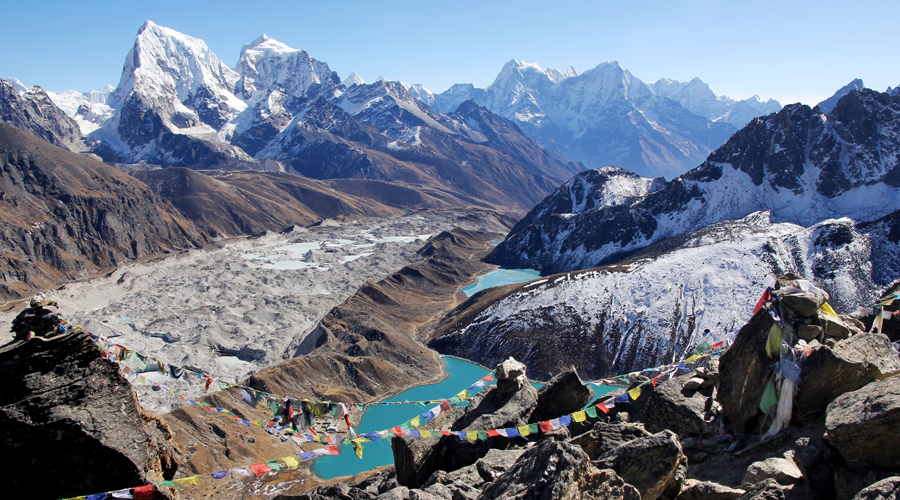
    A  rocky cliff overlooking a vibrant turquoise Gokyo lake, with a rugged mountain range and glacier visible in the background.

    3. Medicinal Plants

    The Khumbu region also has medicinals with a strong traditional Himalayan medical base (Amchi) including; jatamansi, rhododendron anthopogon, and Artemisia being three examples of higher prescriptions of herbs with considerable known medicinal potential who also have sustainable resource harvest techniques as practiced by the local people.

    4. Glacial Flora

    Close to Gokyo and the Ngozumpa Glacier, hardiness plants (mosses, lichens, and saxifrages) can growing upon bare rock. These plants are Pioneer species – over the decades and even centuries they will transform rock into a soil profile which will support plant life in future years. 

    5. The Role of Lakes and Glaciers in the Ecosystem

    Wow, the six lakes of Gokyo, including Thonak Cho, Gokyo Cho and Gyazumpa Cho, are not just aesthetically beautiful, they form an incredible ecosystem of high-elevation wetlands, being fed by glacial melt-water from Cho Oyu (8,188 m) and surrounding peaks.

    The lakes contain some rare fish species and are host to migratory birds. They also serve in regulating the flow of water into the Dudh Koshi River system, contributing to sustain local communities and agriculture downstream.

    Alongside is the Ngozumpa Glacier, itself over 36 kilometers long; which is also the largest glacier in the Himalayas. The glacier serves as a water reservoir, as well as an indicator of climate change.

    The alterations in glacier size and melting rates offer valuable insights on climate change and implications for Himalayan ecosystems. 

    6. Co-existence with Nature

    The Sherpa people have existed for numerous generations in harmony with nature. Their traditional beliefs melded with Buddhism and animism perceive strong connections to the mountains, lakes, and animals. Cutting trees in sacred places, or killing animals, is unacceptable for Sherpa people. 

    Many local customs protect environmental practices. For example: 

    • Yak grazing is rotated so that pastures are not overgrazed. 
    • Monasteries and local governing bodies (gombas) monitor conservation efforts. 
    • Tourist guesthouses operate as eco-tourism businesses that use solar energy and also prevent and monitor waste disposal. 
    • The Sherpa Mayelubu philosophy “respect for all living beings” is one of the bases for sustainability and principles for the Gokyo area.

    A black yak stands on a rocky cliff overlooking a vibrant turquoise Gokyo lake, with a rugged mountain range and glacier visible in the background.

    7. Conservation Efforts and Challenges

    The Gokyo ecosystem is dependent on Sagarmatha National Park for its resiliency, but several factors pose challenges to that resiliency. One of the greatest challenge is climate change, which is causing glaciers to melt faster than they ever have in history and destabilizing lakes, leading to uncertainties around water supply in the region. Climate change also compounds the pressures of tourism, which leads to excessive waste, energy demands of remote mountain communities. And the loss of wildlife habitat as trails are changed and buildings constructed.

    Fortunately, there are organizations working to challenge these pressures, including the Sagarmatha Pollution Control Committee (SPCC), and Sherpa cooperatives that are community owned and operated. These organizations oversee activities such as:

    • Waste management and recycling; 
    • Awareness-raising activities around quality guiding for trekkers; 
    • Reforestation and restricting grazing. 

    When you visit we can all support these organizations by following Leave No Trace (LNT) principles, reducing single use plastic, and complying with tradition.

    8) When to Visit Gokyo for wildlife and nature

    The best time of year to see the incredible wildlife, and amazing views of the Gokyo Valley are in the spring (March – May), and fall (September – November).

    Spring: The woods are full of floral rhododendrons and wildlife is coming alive after the winter. Birdwatching is at its prime during this seasonal shift.

    Autumn: The weather this season can fluctuate from clear to fairly clear skies and stable. The mountains can be beautiful, migratory birds have returned to the lakes, while the herders are busy preparing for winter.

    Winter (Dec–Feb): The region is snow, as many animals migrate or hibernate, but there is a quiet, frozen beauty for competent trekkers.

    Gokyo Vally along with Nagjumpa Glacier & Everest himalayan range
    Gokyo Vally along with Nagjumpa Glacier & Everest himalayan range

    9. Eco-Friendly Trekking Tips for Gokyo Valley 

    If you would like to enjoy and protect the pristine environment and wildlife of Gokyo, please consider these eco-friendly trekking tips: 

    • Stay on built trails to limit erosion and the removal of vegetation.
    •  Bring your own reusable bottles and utensils, and avoid using plastic in the wilderness.
    •  Do not engage wildlife and do not feed birds and other wildlife.
    • Honor the sacred sites adjacent to lakes and religious sites.
    • Support locally owned eco-lodges and local residents capable of serving. As guides who have undergone training and education in sustainable tourism.

    Conclusion

    Gokyo Valley is more than simply a trek, it is a journey through one of the world’s most beautiful ecosystems. The unblemished lakes, steep mountains, and the wildlife which survives among it is a reminder of nature’s power and its fragility. 

    Life persists here on the edge – but it thrives here as well, in balance between humans and nature. The Sherpa culture, yaks, and snow leopards and alpine flowers. All coexist together as the natural world appropriately maintains itself beneath towering peaks.

    To walk through Gokyo is to experience life in the clouds – pure, powerful – and incredibly beautiful.


  • An Emotional Journey to Gokyo Lake, Nepal

    An Emotional Journey to Gokyo Lake, Nepal

    My Heart Belongs to the Himalayas: An Emotional Journey to Gokyo Lake, Nepal

    There are destinations that shift your understanding of the world. And, there are places that shape your being. For me, Nepal is that place. Every time I go, I don’t feel like I’m traveling to Nepal. I feel like I’m going home, and not to a house or a particular city, but to a sensation. A sensation that lies deep within your soul. I have covered a great number of mountain trails. But none has shaped me more than the trek to Gokyo Lake. It wasn’t just about a trip for a destination, it was about waking up a part of me I didn’t realize was missing. 

    Sunrise from gokyo lake. Gokyo lake in the middle mountain range around.

    The Melody of the Mountains

     When I arrived in Kathmandu, the air was thick with the smell of incense and dust. Prayer flags were fluttering off rooftops and a light ringing sound of a bell was ringing in the distance. The chaos of the city felt alive. But I could feel the Himalayas silently calling me: sweetly, softly, and felt like a call I couldn’t ignore. The trip to Lukla was exciting and humbling. As I flew over the snow-covered ridges of the Himalayas and landed at a tiny little runway. I observed what lay ahead winding beyond a few houses and through trails, suspension bridges, and large white objects in the distance. 

    And my heart raced not because I was scared, but I was amazed. The trek began, and with each footstep.I felt more flooded in the noise of my existence spread away. The higher I go, the less noise, powerfully I might define noise, resonated in my universe. The air was thin, the rivers were loud, and my mind was clear. Life feels raw, and felt alive. 

    The First View of Gokyo

     After several days of hiking through rhododendron forests, prayer walls, and sleepy little villages, I reached Gokyo Valley. And then there it was, Gokyo Lake. The color of dreams and miracles! It was a blue so pure you wouldn’t believe it if you saw it upon the Earth. The mountains almost seemed to cradle it, like silent guardians, Cho Oyu shimmering on the horizon, gleaming in the sunlight, and clouds participating lazily in the distance. 

    A soft breeze moved the prayer flags in gentle motions, and nature hummed its most gentle song. I stood at the edge of the world.I had never seenthis  beauty before. But this was something deeper. I felt tears welling in my eyes, the type that blooms when your heart is unable to express the feeling. 

    Trekker enjoying jump shot & Gokyo Lake & Gokyo Valley in the Background

    Nights Underneath a Thousand Stars 

    That night I spent in a small teahouse on the lake. The wall creaked in wooden soft tones, and the scent of firewood and tea filled the air. Outside the stars awoke counting and sparkling, huge and undeniably beautiful. I had never seen a sky so vast and breathtaking. I sat and looked out the window long after everyone had gone into sleep. The only sounds were the gentle wind sweeping the frozen lake. I began to think of all I had left behind – noise, deadlines, expectations, and how little any of it mattered to me here.

    The Painful Goodbye

    It was a little harder to say goodbye to Gokyo than I have expected. Time and time again, my eye was drawn to the dancing light on the surface of the lake. To the flags spreading in a gentle wind. I never wanted to leave, I remember, I wanted to stay and stop time and take that peace back home with me.

    But mountains educate you in their own way. They reveal beauty to you and then let you know that everything Months on, I still dream of Gokyo. Every once in a while during a hectic day, I close my eyes and find myself back here: by the lake, the wind on my face, mountains standing quiet and timeless.

    Nepal taught me that peace is not a place on the map. It is something inside you that awaits your remembrance. And on occasion you must tread through thin air, over towering bridges, and to the heart of the Himalayas in search of it. Gokyo changed me. It’s a reminder that silence can be damn beautiful, stillness can mend your wounds. And most of the time the quietest instances in life tend to leave us at a loss for words. 


  • Common Mistakes Every Beginner Hikers Make

    Common Mistakes Every Beginner Hikers Make


    Quick Summary

    Common beginner hikers make a lot of simple mistakes:

    • Wearing inappropriate footwear (e.g., Crocs or sneakers) leads to discomfort and injury.
    • Not checking the weather forecast can leave you unprepared for rain or other conditions.
    • Underestimating the trail, some paths get narrow, slippery, or bushy unexpectedly.
    • Not packing enough water or snacks can result in dehydration or fatigue.
    • Ignoring basic gear like raincoats, proper clothing, or leech protection makes hikes miserable.
    • Lack of preparation turns manageable trails into exhausting experiences.

    Common Mistakes Every Beginner Hikers Make

    Backpacking with a buddy is no different in terms of the hike itself; it is not about the destination, it’s about the memorable and laughable journey, the pain, and the little things you share. Our hike to Tarevir started like a good dream, lush and fresh and beautiful; it felt like Mother Nature was smiling down on us. One of our friends was wearing Crocs instead of an actual hiking boot, and of course, we laughed and poked fun at him while he had a just learned perspective into the next few miles of agony caused by his opening footwear choice. Everything was a smooth zone at this point, and we had just barely started up the first steep hill and trail to Tarevir. After about half an hour, we took our first break.

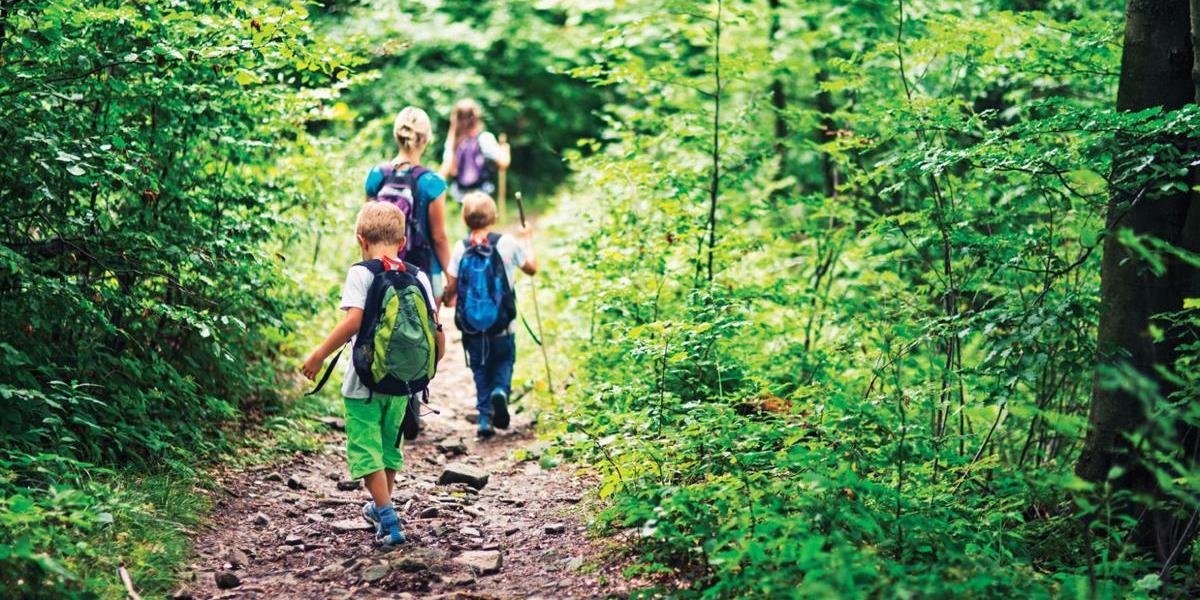
    A group of people, including several children and a dog, are hiking on a narrow dirt trail through a dense, green forest.

    We stopped right by the trail on the side, produced one of our packs, shared our bananas and chips between us (as we were years later loving, gossiping, and laughing), and during that time, we felt more warmth in our friendship than we did in our tiredness from the hike. Even as we straggled on, the greater adventure was just beginning, no stores anywhere to be found, and plenty of food with us to continue on!

     Before too long, the wide trail turned into a bushy track that could only accommodate one foot, and grass was brushing against our legs. After what felt like fifty minutes, joking, tired, sometimes out of breath, and basically feeling like we were on Man vs Wild, we finally emerged from the bushy trail into the slippery portion of the trek.

    When we finally hit a wider road, our happiness at that moment was beyond description. We took photos, stretched, and dashed towards our destination, the peaceful Ghumba, a bit more removed from the noise of city life. Just as we arrived, we were hit with heavy rain. We climbed up the slippery trail and made it to the Ghumba, where a small shop was suddenly a godsend. Chilled and soaked from the rain, we hunkered down indoors to order roti with aloo ko tarkari and hot and steaming cups of milk tea. 

    It was nice to hold the mug of tea hot in our hands, and to watch the smoke mix away into the cold. We started to talk about life while we were waiting for the food, sharing funny stories and silly dreams, and mortifying struggles that we hadn’t shared before. The rain made it better because it lengthened the time we were able to drink tea.  When the food eventually came, every morsel of roti and tarkari after a long hike uphill made it worthwhile.

    We hit the rain on the way back. Fortunately, this part of the experience, we had been a bit more prepared with raincoats and umbrellas. And again, we properly placed our steps on the slippery trail. We would all sing, laugh, hold hands, and focus on each other for each of the muddy steps.

    The ground was muddy, watery, and heavy, almost like it was a small brook trying to compete with us. The feeling underfoot was unbalanced, but we held onto each other just enough to help steady ourselves and help each other not slip, and we were laughing about how silly we must have looked. At one point, we even stopped to check our shoes for leeches, creeping up half terrified and half laughing about it. The trail may have been wet and difficult, but I think the obstacles made the memories far sweeter.

    That day was a really good learning experience for me about hiking with friends. But also some mistakes for beginners. To avoid checking the forecast in advance can actually make a trail less difficult. Not wearing appropriate footwear, such as sneakers or Crocs, can ruin a hike and make it miserable, as hiking becomes slippery and unmanageable. Not packing enough water or snacks makes you very far away from what may feel like an oasis, but may be a sign of dehydration, eventually literally burning out if you don’t drink water, or ignoring feasting meal leeches.

    hiking on a narrow dirt trail through a dense, green forest.

    Even though there could be difficulty (and certainly no instant pleasure) in being on a wet trail. At least you can temporarily escape the reality that you could not take in the vista and enjoy. The beauty of the outdoors because you have concentrated on simply walking. However, there could be a range of things you could do, in addition to the above. To enhance your experience, like wearing a raincoat, footwear that you are confident in, planning for food and water, checking the weather, avoiding slippery trails, and leeches as potential factors. In the end, you have allowed you and your hiking companions a safer, and in all likelihood, more enjoyable experience. 

    Hiking in Tarevir was more than hiking in green hills; it was laughter, it was rain, it was muddy boots. It was food to fill our bellies, and it was meaningful conversations that created bonds. The hike was a further reminder that hiking is less about the destination. It’s about the experience, the people you are experiencing with while hiking, the small complications experienced along the way, and the shared memories.

  • Day-by-Day Itinerary for Gokyo Lake Trek

    Day-by-Day Itinerary for Gokyo Lake Trek

    Detailed Day-by-Day Itinerary for Gokyo Lake Trek

    Trekking to Gokyo Lake is not only about reaching a destination. It is about experiencing Nepal’s Himalayan culture, landscapes, and rhythm of life one step at a time. Below is a complete day-by-day breakdown of the classic Gokyo Lake trek route. It begins from Kathmandu and ends in Lukla. This 12-day itinerary includes travel, acclimatization, and exploration days to make your journey safe, enjoyable, and deeply rewarding.

    Day 1: Fly from Kathmandu to Lukla (2,860m) and Trek to Phakding (2,610m)

    On the first day, you will be starting your trip in the early morning to Gokyo Lake. You will enjoy your 30-minute flight from Kathmandu Airport to Lukla Airport (Tenzing-Hillary Airport). On the flight, you can enjoy scenes of the amazing mountains such as Langtang, Gauri Shankar and Everest on a clear day. 

    You will land on that small mountain runway at Lukla. The feelings of  thrill and excitement will be in 50/50 range. At Lukla, you will meet your guide and porter. You can eat a healthy breakfast, arrange your gear, and discuss about the items you will be needing for the trek. The trail is an uphill trek, which will gently switch to (downhill) through pine forest, suspension bridges over Dudh Koshi River. 

    You will pass other villages – Chheplung and Ghat, prayer wheels, mani walls. And go for a walk for 3-4 hours to Phakding, a small quiet riverside village in the arms of green hills. You will end your day here in a teahouse that has comfortable rooms and where you can prepare to climb even higher.

    Day 2: Trek from Phakding to Namche Bazaar (3,440m)

    After breakfast, you will be heading towards north, following the Dudh Koshi river. During this section along the river, You will cross several suspension bridges, including the Hillary Bridge, which has an exposed position hanging above the river gorge. The joy of this section is the trail rolls in and out like swing , winding through large pine and rhododendrons. After a while, you will be treated to your first glance at Thamserku (6623m).

     You will be taking a brief stop at Monjo, where you will arrive at the entrance gate into Sagarmatha National Park. Your trekking permits will be checked and registered there. The trail will continue after passing through the park entrance. The trail continues to climb in a gradual uprise until you reach Jorsalle, the final village before Namche.

     The final section from Jorsalle to Namche is of two hours to the trading town of Namche Bazaar, the center of trekking in the Khumbu region. If weather permits, this is the most exciting sections of the trek as you will have your first view of Mount Everest from a distance. Namche is a vibrant and quaint village, with shops, cafes, bakeries, and a small museum.

    Day 3: Acclimatization Day at Namche Bazaar (3,440m)

    On the third day, you have be careful about acclimation and allow the body to adjust to the rising altitudes. Typically it is a rest day. A short walk to some local places and viewpoints will also allow the body to get used to the thinner oxygen found at higher altitudes. Most trekkers take this day to do a side hike to the Everest View Hotel which is at 3,880m. And enjoy breathtaking views of Everest, Lhotse, Ama Dablam and other peaks.

    While enjoying this day in Namche. You can stop by for shopping, getting coffee or checking out the Museum that is in Namche. This will be your chance to learn history of mountaineering in the Everest Region. This enjoyable day will set you up to continue your climb to higher altitudes!

    Day 4: Trek from Namche Bazaar to Dole (4,200m)

    As you leave Namche, the path climbs sharply to Kyangjuma. Here you can find a great views of Ama Dablam, Thamserku, and Khumbila. And from this you will head in the direction of Gokyo, and not Everest Base Camp, as the trails diverge. The route to Everest heads east towards Tengboche, but you will  take a left at the trail fork. 

    As you go down, you’ll pass through rhododendron forests and arrive at Phortse Thanga.A small village next to the river. After a quick break, you will begin to climb upwards through birch and juniper forests until arriving in Dole. Dole is beautiful village located high on a hillside overlooking brilliant views of the valley below. 

    Now you will see more alpinetrees, yaks grazing and it’s a much quieter and feel of remoteness with fewer trekkers.

    Day 5: Trek from Dole to Machhermo (4,470m)

    Although you’ll be hiking only short distances today. You will be trekking into the high-altitude wilderness. This day will proceed through the Dudh Koshi Valley on a gradual uphill climb, with views of Cho Oyu (8,188), the world’s 6th highest mountain, in the background. You will also pass through a few small villages, including Lhabarma and Luza.You will be witnessing stone houses and yak. Since it is harder to breathe at altitude, take your time and remember to drink lots of water.

    You should reach Machhermo in the early afternoon. Machhermo is a small village on the edge of some rocky hills. This village is well known as one of the areas in Nepal where the yeti has been spotted. There is also a health post in the village and if you are interested in altitude sickness you can talk to the staff. The rest of the day is free for relaxing and doing short acclimatization walks.

    Day 6: Trek from Machhermo to Gokyo (4,790m)

    Today is one of the most exciting days on this trek as you climb toward Gokyo Lake. The trail consists of a long continual ascent through rocky trails and glacial streams. Before you know it and once you have ascended a bit, you will see the first of the Gokyo Lakes sparkling and glimmering in the sunlight.

    With a small bridge crossing the Dudh Koshi. Firstly, you will see Longpongo Lake (4690m).And followed closely by Taboche Tsho (4710m) surrounded by sheer walls of mountains. As you continue up the trail. The biggest of the lakes, Dudh Pokhari (4790m), will greet you once again surrounded by impressive glacier peaks with covered by snow. Right next to the lake sits a little village of Gokyo, where you will stay for the next 2 nights. 

    The feeling when you step into this space feels almost unreal. The bright blue-green colors of the water, the cool wind of the valley, and the natural peacefulness / atmosphere will stay in your memories. In the evening is you can explore or walk the shoreline or return to the teahouse and enjoy looking eastward seeing Cho Oyu tower over everything that is around.

    Day 7: Hike to Gokyo Ri (5,357m) and Explore Gokyo Lakes

    Today will be one of the hardest and likely the most rewarding of the trek. You will be waking up early today (around 4 or 5 am), and you will be hiking up to Gokyo Ri (5,357m) . The highest elevation you will reach on the trek! The climb is steep and the two hour and can be tough. But it is definitely worth every step once you are at the top.

    At the top you will 360 view! You can witness Mt Everest (8,848m), Lhotse (8,516m), Makalu (8,463m) and Cho Oyu (8,188m). Four of the six highest peaks in the world! You will have views over the Gokyo Lakes and Ngozumpa Glacier, the longest glacier in the world!

    After the climb, you can return to the village of Gokyo, and if you have a little time in the afternoon. You can walk to the lake, walk up to the glacial ridge.

    Day 8: Trek from Gokyo to Dole (4,200m)

    Following a  slow morning, you’ll begin to descend back down towards Dole. The route has you follow the same trail and with the descent. You will have another viewpoint of the mountains and valleys up in the previous days. The sight of Cho Oyu and Thamserku is still beautiful in every respect the way.

    You’ll pass by Machhermo again, where you can stop to have tea or lunch. And then continue down towards Dole. The descent is much more manageable on your lungs. As your body starts to feel a sense of rejuvenation with more oxygen. Spend the evening relaxing with food and conversation in your own teahouse.

    Day 9: Trek from Dole to Namche Bazaar (3,440m)

    Today you’ll make your way back to the bustling village of Namche Bazaar. The trail begins with a steep downhill section to Phortse Thanga, crossing the river, and then climbs up to the less steep Mong La Pass with great views of Khumbu Valley. The walk then continues with a gentler descent back into Namche. After multiple days spent at very small villages, getting back to Namche feels very close to an urban feel with hot showers, bakeries, and Wi-Fi. Once back in Namche, you can spend some time enjoying either a hot meal or coffee while enjoying the street life of Namche.

    Day 10: Trek from Namche Bazaar to Lukla (2,860m)

    The trek ends with a lengthy descent towards the lower valley. We will cross the Dudh Kosi numerous times, passing around the little villages of Monjo and Phakding. Before completing a uphill trek to Lunka. You will experiences and memories as we retrace our steps through the same villages, with the same prayer wheels and same bridges. After reaching Lukla, you will be time to relax, enjoy some time with your fellow trekkers. And celebrate your, and your team’s amazing Gokyo journey.

    Day 11: Fly Back to Kathmandu (1,400m)

    You can take your flight from Lukla to Kathmandu  early in the morning. If it is a clear day for flying, you willl have one more chance to see the beautiful Himalayas above you until you land. When you land, you will be taken to your hotel where you could relax, shower, and enjoy being back to the comforts of city life.

    Most trekkers use this day to relax, do some shopping for souvenirs in Thamel, or have a Nepali dinner to celebrate their trek.

    Final Reflection

    This 11-day Gokyo Lake trek trip itinerary is for those who wish to experience a combination of adventure, beauty and culture. Each day was a new landscape, a new challenge and a new connection with the Himalaya. If you are seeking an experience with equal scenic rewards to the Everest Base Camp trek, but not in popular tourist trails, then this trek is for you. Contact us today at Happy Mountain Nepal, on Facebook, Instagram, or TikTok .
  • What acts are permitted and considered good in Nepal?

    What acts are permitted and considered good in Nepal?

    What acts are permitted and considered good in Nepal?: Travel Etiquette Guidelines from 17+ Years of Experience

    By Resham Rijam (Ray)

    Tourism Consultant / Founder and Travel Specialist at Happy Mountains Nepal /17 years of Experience /Worked with 10 Travel Agencies /Personally led 500+ Individual Travelers to Nepal.

    Welcome to Nepal

    Visiting Nepal is like being in a cultural shade that is alive. Every moment excite in a smile. Every time we receive a “Namaste,” or when we view the prayer flag. It is a space and time in history tied to culture and spirituality. Nepal has beautiful aspects of natural beauty. But what you ultimately realize is that the depth of richness is based in the people and culture.

    After working in the travel industry in Nepal for over 17 years, working with over 10 travel companies and engaging with over 500 travelers from abroad. I have realized to experience cultural decency in both Nepal and other countries. It is not just a matter of respect; it is the difference between being a visitor, and more of simply being invited in. 

    I have personally witnessed travelers have a more meaningful experience in the country when these simple requests of my travel company, Happy Mountains Nepal, were enacted, to just follow the country’s customs. For all of you, I wanted to provide simply some Do’s and Don’ts for Nepal. These are not rules, although they should be rules. But simply a connection from your heart to the heart of the country.

    DO’S in Nepal

    1. Greet People With “Namaste”

    In Nepal, greeting someone is more than just respect, it is spirited and a reciprocated act. When you press your palms together and bring your head down while saying “Namaste”. You are saying “I honor the divine in you.“ In one second, this simplicity conveys a greeting filled with warmth, respect and humility.

    While handshakes have become prevalent in the cities “Namaste“. It is the most sincere gesture of greeting and respect from a social and cultural perspective in the country. Its application is independent of local language. And it is sure to win a smile, no matter where you are in the city or the village. Whether it is to greet the monk at Swayambhunath or with the porters in Lukla. Or with a Nepali family hosting you in the mountains of a remote village.

    As a guide in the region over the years. I have observed that travelers greeting local people with “Namaste” tended to have the warmest responses. From receiving local Nepalis to tea or conversation. It is so simple yet a sincere gesture for Nepalis everywhere.

    2. Please be Respectful to Temples, Monasteries and Faith

    Nepal is a lively spiritual country in which Hinduism and Buddhism abound along. Temples, stupas and monasteries alike are not for tourism purposes. They are living, breathing worship spaces. Please be respectful of the rule of religious engagement and remember to take your shoes off. Cover your knees and shoulders, and walk around stupas & shrines in a clockwise motion. 

    While visiting temples, stupas, and monasteries. Please speak quietly, do not touch ritual objects or statues, and do not take photos unless you request permission first.Many travelers do not know that little things the traveler may not even think about. Such as standing too close to a monk during prayer. It may be too unwanted for the temple’s tradition. 

    When I was in Khathmandu visiting Swayambhunath Stupa, I saw a tourist trying to take a selfie while walking backward around the stupa. The woman, a local, politely stopped him from walking the wrong way and pointed him in the right way, explaining that people always walk clockwise as a sign of respect . The tourist smiled, nodded, and went back to the correct path. This is a small moment but it stood out to me as a reminder that respect and awareness instead of a perspective of sightseeing, is more important while visiting a place.

    3. Dress Modesty, Especially in Villages and Temples

    Although Kathmandu or Pokhara feel modern, the rest of the country is more conservative. And dressing with modesty is a way to show respect. Both to those around you and their customs. Consider during your visit, men should not wear short sleeves and wear long pants. Women should be wearing clothing that will cover their shoulders to their knees. During their visit to rural areas or a religious site. 

    Photo Taket at Chomrong village in sunny day.

    Dressing modestly is functional as well. Although bright and sunny, the weather in the mountains can be extreme. And many temples will not allow bare shoulders in those facilities. Dress respectful for short time in a village or temple, to show the Nepali people you appreciate their hospitality but also respect customs. 

    My personal experiences of traveling with Happy Mountains Nepal have shown me that dressing appropriate may impact me in conversation with people. Dressing respectfully and modestly with clothing generally gets you easier access to the conversation, be it nods, smiles. Or even blessings at the monasteries creating a beneficial environment for discussions.

    4. Always Request Permission When You Want to Take a Picture of Someone

    Nepal is a very photogenic country. However, each photo tells a story, and you nearly always need to ask for consent or permission to take a photo. When it is a landscape or monument that you can freely take a photo of. It is totally okay, but when it is a picture of someone. Especially many people, it will require you to give them their privacy and ask for their permission. It is always better to ask before taking a picture of someone. And especially in a rural village or in a religious ceremony, or picture of a monk, and of course the elderly. 

    This politeness of asking for permission to take someone’s picture could help you avoid awkward misunderstandings. With a person who might feel shy or uncomfortable or who might be willing and happy to pose for you and invite you into their house!! It is more of a human connection than merely capturing a moment. 

    For example, I took a picture once of an old woman in Ghandruk after asking her if I could take her picture. And she smiled at me and replied, “Now you take my picture with you, to your country.” This exchange based in respect was stronger than any photo. I have taken in front of any of the mountains.

    5. Do Receive Nepali Foods Nicely

    In Nepal, food, and the act of sharing it, can be seen as sacred. Meals such as dal bhat, momos, or a delicious bowl of gundruk soup signify warmth, love, and connection. If made an offer of food, it is socially accepted and respectful to take at least a small amount. As an expression of thanks and respect. The meals should be eaten with right hand only, as the left hand is considered unclean. 

    In villages, many of their foods are harvested and grown directly from family-based farms. In some way, by eating their food, you acknowledge their hard work and express appreciation for their generosity. Always eat all of the food provided, as food has more than literal/biological worth in Nepal, it also has spiritual worth.

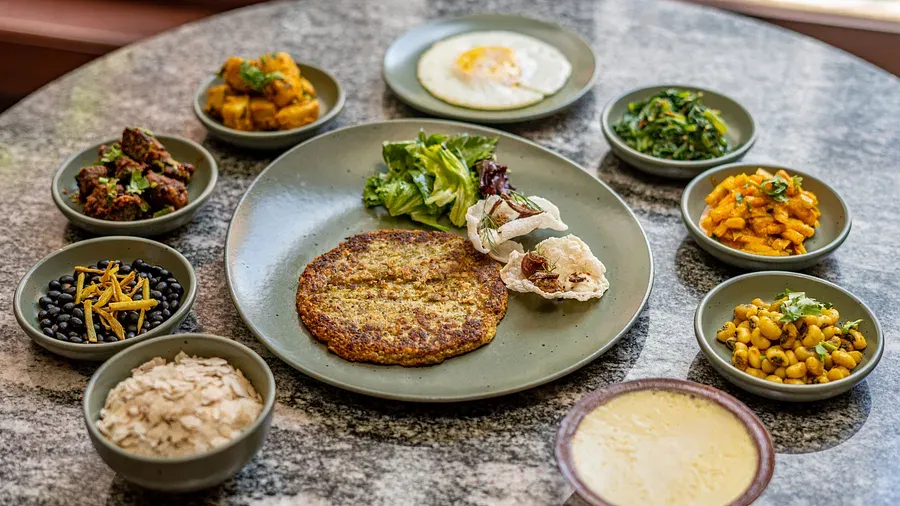
    Bhaktapur's Food Culture

    I have eaten simple, delicious, and sustain meals of dal bhat for days. After trekking through extremely remote of Nepal, served to me and my trekking group by families who had not a lot, but shared everything they had with us. I can say my experience is that, when travelers take a humble approach to food. They often develop friendships that last long after the journey.

    6. Don’t Forget to Learn Some Words in Nepali

    If you really want to up the value. Even a few words in Nepali will dramatically enhance your travel in Nepal. Words like Dhanyabad (thank you), Ramro cha (it’s nice), or Sanchai hunuhuncha? (how are you?) will connect you instantly. 

    Nepalis will appreciate you and will value you more. Even when you try (even if imperfectly) to speak the language. Speaking this is not only the reason to speak. But will generally provide a better communication experience between strangers and often will provide more hospitality.

    When I lead treks in Nepal with Happy Mountains, I try to remind trekkers to say hello to their porter, or the villagers in Nepali. The smiles you receive in return is worth more than you could know. It is evidence that language (while imperfect) connects us all.

    7. Don’t Forget Support Local Tourism and Sustainable Tourism

    Tourism is the lifeblood of Nepal so make sure its responsible tourism.  Choosing a local guide, spending the night in the family lodge, And buying goods sourced in the local community contributes to sustaining the community. 

    At Happy Mountains Nepal, we encourage sustainable, community tourism. When you spend your money in the villages directly you are not just travelling you are empowering! Spending your dollars at local businesses supports cultural traditions and enables the next generations to be able to share their traditions and cultural heritage with pride. 

    Two girls learning clay work in Bhaktapur Durbar Square

    Every rupee spent locally has a ripple effect for positive change. From the yak herder in Manang to the porter in Namche Bazaar. Responsible tourism will enable you to create a meaningful experience for both traveler and host. 

    DON’T IN NEPAL 

    1. Don’t Touch People’s Heads

    In Nepalese and Buddhist culture, the head is the sacred part of the body. Being the seat of one’s soul and spiritual energy.In a traditional sense, touching one’s head in a playful manner can be perceive as disrespectful, particularly in reference to monks, elders or children. 

    Even though this belief may seem odd or unusual to outsiders. It is a manifestation of Nepal’s deeply rooted spiritual beliefs. Respecting this opposition shows what kind of traveler you are and to some degree implies understanding local attitudes.

    During my time leading younger trekkers in monasteries. I would often share with them the importance of saying Namaste to a monk. And caution against a possible enthusiasm of a pat on the shoulder or head. 

    2. Do Not Point Your Feet at People or Religious Images 

    In the Nepalese culture, your feet are refers to the ‘lowest’ part of the body. It is associated with 

    being impure. To point your feet at someone is considered rude, even when directionally aimed near a religious person or religious image.

    When sitting in “the temple,” or even on the floor, keep your legs off to an angle or crossed inward. Do not have the soles of your feet toward someone. Do not step over someone or something considered sacred.

    I once saw a traveler sitting cross legged who, in his ignorance, pointed his soles in the both direction of a Buddha statue. The monk did not utter a word. But by his presence and body language, said everything about his discomfort. Little awareness, much respect. 

    A person capturing the photo piligrimage site in Nepal

    3. Refrain from Public Displays of Affection

    Nepal is warm and friendly in spirit yet conservative in practice. Holding hands is okay, but kissing, hugging or other overt behavior will make locals uncomfortable. Especially in rural areas. 

    Even when married, Nepalis rarely publicly display affection. This does not mean the warmth of Nepal does not exist. It instead is simply shown differently. Affection comes in the form of smiles, care, and honest hospitality.

    When I spot travelers respecting this boundary, my respect and admiration for them only grows. For locals, this means that travelers are mindful guests rather than visitors without awareness to their culture.

    4. Don’t Wear Shoes in someone’s Home or Temple

    Shoes no matter how clean, carry dust and impurity. Removing shoes in almost every Nepali home, temple, and monastery will show respect. There will often be shoes lined up at the entrance to the home or temple and you would only need to follow the hint.

    Failing to take your shoes off is one of the most strong ways of accidentally offending somebody. Even in modern apartments in Kathmandu, it seems people automatically take their shoes off when entering a household.

    Regardless I’m sure I explain to my groups, “If you see shoes outside; that is Nepal’s grumpy way of saying, bring your respect, and leave your dust behind.”

    5. Don’t disrespect sacred objects.

    When it comes to prayer wheels, tourist statues, and prayer flags. They may look decorative, but they are sacred. Do not step on, or sit on, or place items on or over the things that are religious objects or materials. Respect and take care of things that contain the traditions and the meanings of gods, saints, and faith. 

    For example, prayer flags are to be placed in a pole and never touched with one’s feet. Another example, is that prayer wheels need to be turn clockwise. And only when you are peaceful, not as if they were toys given to you for a photo prop.

    I remember one time seeing a tourist try to climb a chorten (stupa). For a photo during a trek in upper Mustang. Some locals saw this and were visibly upset. The tourist did go apologize and realized religious reverence is a real part of the Nepal travel experience.


    6. Don’t be wasteful with food, or water.

    For the villagers of high-altitude areas, food and water are precious resources. To waste either is an insult to those whom live in such severe climates.  Eat everything that has been served to you, and only take what you can eat. 

    Use a refillable bottle as opposed to a plastic bottle. Most trekking routes currently have drinking water accessible to fill bottles. At Happy Mountains Nepal, we have been working to run refillable bottle campaigns to help reduce plastic waste and protect the vulnerable ecosystem of the Himalayas. 

    illustration on dont waste food

    When travelers take into consideration the little things, they become part of the story of conservation in Nepal as opposed to conversation statistics.  

    7. Do not expect Western punctuality.

    Time in Nepal is a different experience. Travel delays, weather, and schedules all add to the experience of time in Nepal. Where in the Western World you might become frustrated, after a little patience you will find much more in that peace.

    This flow provides a wonderful experience of Nepal. Conversations at leisure, unplanned diversions, and sudden acts of kindness. Hence, the best way out would be to go slow, as it allows you time for reflection.

    I often tell my clients, “Here in Nepal, the mountains do not hurry, so neither should you.” It is not being inefficient; it reminds that life here has a speed of gratitude.

    Some of the major Cultural Etiquette

    It is cultural etiquette to practice the following tips, small acts that yield large impressions:

    • Your right hand should be used to give or accept anything, food, gifts, or money.
    • Stand if seniors enter the room. This is a style of respect.
    • Remain calm in temples or public places. Loudness is ignored.
    • Walk clockwise when passing around stupas or temples.
    • Never lose your temper; calmness commands respect.
    • Say hello to kids as well as elders.
    • Always obtain permission before entering a monastery or private courtyard.

    These gestures might seem small, but they form the true soul of cultural harmony in Nepal.

    Lessons from 17+ Years in Tourism

    After 17+ years in tourism, one truth remains: respect builds a relationship. When we act respectfully, whether with a namaste, modestly dressed, or with a warm smile. We foster trust and friendship. 

    My experience over the last 17+years guiding travelers with Happy Mountains Nepal has been one of the most rewarding.  I have worked with travelers from over 25 countries, who with their courageous decision to travel.I have chosen culture over comfort, connection over experience. 

    Nepal is a land of patience and humility. When you slow down. Listen and appreciate the experience, Nepal will always return your favor with stories, laughter. And a kind of love that you will carry with you for the rest of your life.

     About Happy Mountains Nepal

    Happy Mountains Nepal is a locally founded travel agency, dedicated to the concepts of ethical, responsible, and community based tourism. Our belief is not to simply take travelers to the mountains, but rather to bring the travelers to the people who live within the mountains.

    Holding the certificate of Achievement & ready to bid the farewell to the himalayas
    Farewell Group Photo

    With expert guides, an awareness of cultural sensitivities, and genuine interest in local populations. We facilitate sustainable, safe, and life-affirming experiences. Regardless of whether you are walking to Everest Base Camp, trekking around Annapurna. Or going on a cultural heritage experience. The message is the same: travel with heart, and travel with respect.  

    Final Thoughts from Resham Rijam (Ray)  

    Traveling in Nepal is about much more than the need for a tick on a box, or moving days along a list with milestone. It is about traveling among humanity is its most raw form. You will be stunned by the magnificent sceneries, but it will be the culture that feeds your soul. 

    After 17+ years of preparing the journey for travelers, this I can say with confidence: 

    “If you travel with respect, Nepal will give you far more than you came seeking. It won’t just provide you with mountain scenery it will provide you with yourself.” So remember the do’s and don’ts of behavior; travel with purpose. And let Nepal travel change your view of the world.


  • Cultural Immersion in Nepal

    Cultural Immersion in Nepal

    Cultural Immersion in Nepal: What I Experienced and What You Should Not Miss

    Experiencing Nepal is as if you stepped into a dynamic book. Every temple is a prayer, every mountain is an older story than time, and every smile is a warmth to your heart much like the sun. When I think of Nepal, I always carry the amazing mountains and lakes. But greater than that, are the people, the traditions, the spirituality and the love that every hour and every day is. My experience in Nepal wasn’t about sights and being part of a culture. My experience restored soft reminder of possibility. I recall the time I landed in Nepal, certainly with some thought of what I would be arriving to see.

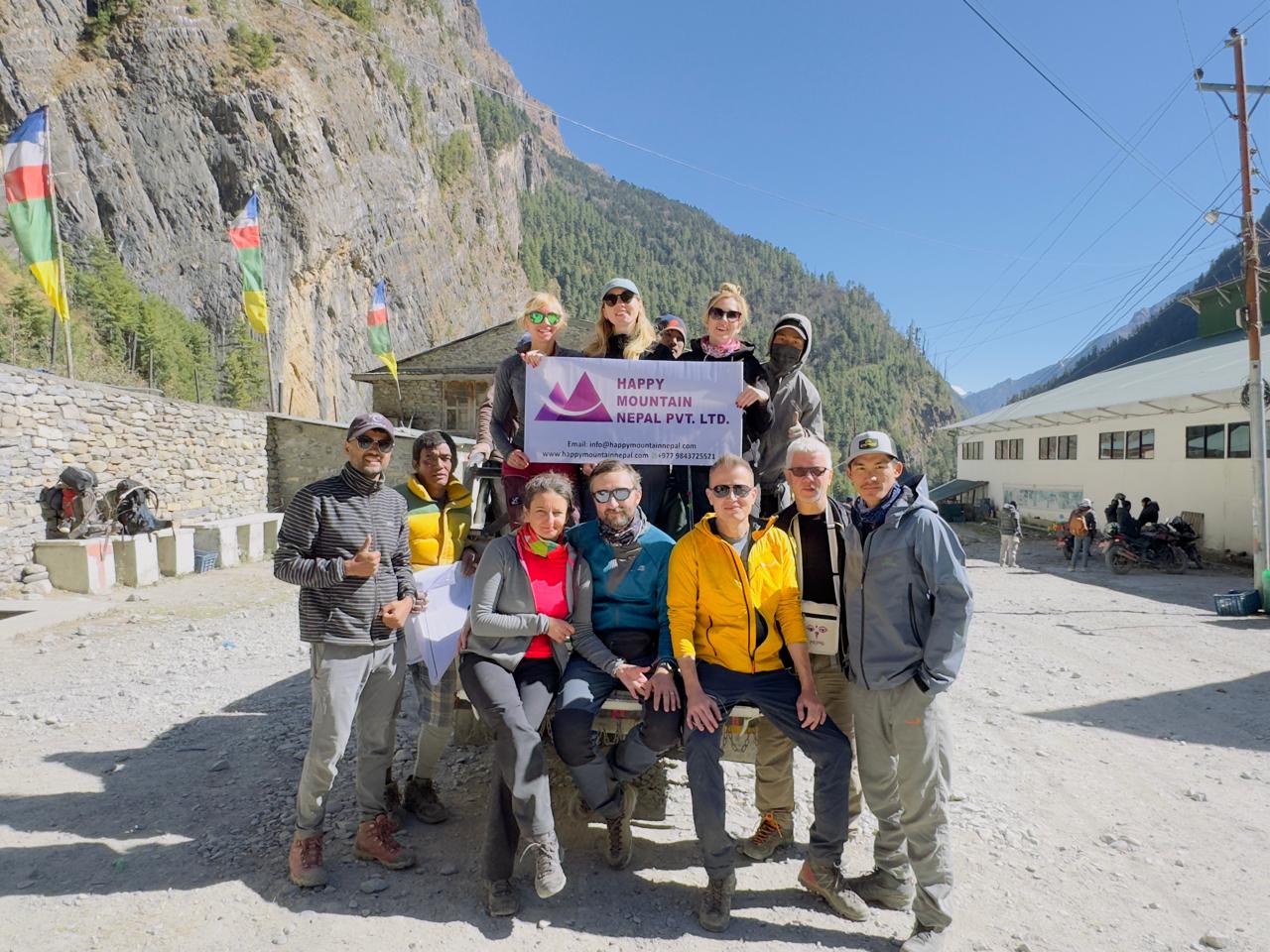
    A group of people, including five tourists and several local guides, stands together outside a small shop with colorful prayer flags and goods hanging overhead. The tourists are wearing hiking gear and holding trekking poles. The group is holding a white banner that reads "HAPPY MOUNTAIN NEPAL" with a purple logo.

    To me, my experience was not simply seeing sights of Nepal connecting with this culture. I felt a sense of relief about the endlessness of possibility. When I first arrived in Nepal, I had some sense of what I was going to see. Temples and stupas and treks. But I did not expect how it was going to touch my heart. Every day meant something; it was a ritual that had softened over generations. The act of kindness from strangers made me feel like family. The festival that infused an entire town with life. Nepal is a place that creates relationships that last forever and never leave you after. 

    First, my first impressions of Kathmandu moved from the poetic beauty of Patan, to the feeling of being in the medieval age in Lumbini. And to the epic space of views in Pokhara, and the wonderful feeling in Bandipur

    These are places that do more than show you Nepal, they take you there.

    The center of Nepal, Kathmandu

    Kathmandu is a city full of contrast next to busy traffic. And ancient temples are located right next to cafes. It can be loud, religious, colorful, and simply fantastic all at once. Each day, I could enjoy narrow back streets. And allow myself to be taken in by the sights and sounds of colorful prayer flags in the wind. The sound of a street vendor negotiating a price on a small token. And in the background, bells are ringing from somewhere far away. Many of the times when caught up by this cloud of smell was floating in from a group of tea drinkers enjoying the masala tea. 

    To begin my journey, I visited the Swayambhunath Stupa, which obviously strives to make its way into heaven. At a high elevation overlooking the valley below, proudly displaying its presence on the skyline. As I slowly made my way up the long steep stairway. I could hear prayer wheels spinning and monks chanting serious prayers. At last, I reached the top, and I could see the domed stupa structure, white, and oval-shaped. With the eyes of Buddha looking in 4 different directions.

    Golden skies, Kal Bhairab statue at Kathmandu Durbar Square

    The sun was starting to rise and as it was breaking the horizon to begin the day. It was wrapping her arms around the city of Kathmandu. In the morning cool, the prayer flags were flying in the air. Something here touched me and gave a feeling of peace and grounding in that beautiful and fragile lives are cherished as human beings. I started my trip at Swayambhunath Stupa, which clearly tries to rise up into heaven. 

    So simple, yet so powerful. Later that same evening, I attended Pashupatinath Hindu temples in Nepal. As night fell, priests were observing the ‘aarti’ night service on the Bagmati River. Around the priests were thousands of devotees, holding lamps, singing and dancing. It is an incredible sight to see people surrender everything they believe in. 

    Up high, it looks down upon the valley below and is proud of being within the skyline. After walking for a bit up the very long steep steps, I could hear prayer wheels, and monks chanting very serious prayers.Tears rolling down their chins. They prepared to raise their necks to view and to pray with joined palms. Faith here was not simply a type of expression; faith is a type of living.

    The following day, I explored Kathmandu Durbar Square. It is the old royal palace and pagoda temples still reveal the architectural beauty of Nepal. Children ran around the grounds chasing pigeons while other sat on wooden steps. Discussing politics, religion, and family. When you are in Kathmandu, there is always some form of movement. However, there is a sort of rhythm behind the noise. 

    Things to do in Kathmandu

    • Get up early and go to Swayambhunath Stupa for sunrise
    • Experience the calm of early morning prayers
    • Attend the aarti at Pashupatinath in the evening – it will be amazing
    • Visit Kathmandu Durbar Square and try local Newari food; preferably Bara and Samay Baji

    Patan: The City of Art and Soul 

    Just a short ride from Kathmandu took me to Patan, which has a feeling of being an open gallery. Known as Lalitpur, “City of Beauty,”. Patan possesses a magic with fine arts, graceful temples, and warm people. Here, tradition and creativity go hand in hand. As one can see in the images below of temples and intricate designs.

    I spent some time at Patan Durbar Square watching. The Krishna Mandir stood in the middle, surrounded by beautifully carved windows and clay-red courtyards. Every carving, every angle, is full of history. 

    Inside the Patan Museum, I sat in front of sculptures of ancient people or metal statues carved from copper made over centuries with patience and spiritual love. Each work in the museum rang with the idea of nothing being made for gain. The silence allowed me to be connected to the creators generations before me who devoted their lives to bring pieces of art to life. Not for fame, but for God. 

    Sightseeing Around Patan Durbar Square with krishna temple in the background

    As I traveled deeper into the chaos of the city. I met an older gentleman working with metal outside of a small workshop that seemed to be home. His hands were rough from kneading bronze and copper like butter into different shapes and symbols. When I hesitatingly asked him what inspires his art, he smiled kindly and said, ‘In Patan, we do not make art to sell.” We do it because it keeps our ancestors alive.” This phrase communicated the slightly more literal nature of Nepalese culture; art, mindfulness, and heritage are virtually interchangeable terms. 

    Things to do in Patan

    • The Golden Temple (known as Hiranya Varna Mahavihar) will give you insight into their (often collective) Buddhist customs and their astonishing abilities. 
    • During the golden hour, the Pata Museum and the nearby sacred temples will take on a golden shade. 
    • Speak with some artisans, and they will warmly greet you with tales and smiles. 

    A True Time Travel, Bhaktapur

    If you wish to see what life looked like in Nepal 100 years ago. Bhaktapur is your best place for you. As soon as I walked over the walls, time seemed to slow down. The atmosphere felt different. It felt slow, and brick lined the external walls of brick lined the streets with their old, dusty courtyard spaces. Bhaktapur is a museum of Newari culture and a city of old robes.

    As I walked around Bhaktapur Durbar Square. I couldn’t help but gaze at the height of the Nyatapola Temple. The carved stone guardians, the carvings of each carving. And the vertical awe of this square transported me into another dimension. It is one of those places that makes you feel and breathe history into the surrounding air. 

    I continued my way past pottery, where a new cast of feminine and masculine genders was sculpting the earthen pots with their craft. The earthy smell filled the area, as many earthen pots were sitting in drying stages in the afternoon sun. 

    Temples around Bhaktapur Durbar Square

    I stopped at a small shop to sample Juju Dhau. The iconic “King Curd” of Bhaktapur is served in a small clay bowl, and it was sweet, thick, and creamy (some of the best yogurt I have ever tasted!). The shopkeeper couldn’t contain his pride when he said, “Our family has made yogurt for five generations.” I could sense even the food in Bhaktapur takes on a heritage. 

    I happened to stop in another area, noticed all of the people gathering to pray. The warm dim lit glow from the oil lamps danced for life in the window. It is in moments like this that I thought, yes, while this country and even this world is undergoing modernization, there will always be places like Bhaktapur where these traditions remain, quietly revered and cherished. 

    Things to do in Bhaktapur

    • If you can, experience Bisket Jatra. It is bright colors, music, and emotion.
    • Try some Juju Dhau and explore Durbar Square at night, when the lamps illuminate both temples and streets. 
    • If possible, watch the potters at work, or try your own hand at shaping clay in Pottery Square. 

    A Place of Peace,Lumbini 

    After spending a few days in the mountains, and a few more in the countryside, I found myself at the site of Lumbini. Lumbini is known as the birthplace of the Lord Buddha. From the moment I arrived to be welcomed, I felt the stillness set in. The town’s noice settled to a sound stage of peacefulness. The wind revolve around the leaves of the trees at one end of the property. While I attended to the muted yet gentle vocal chanting from the furthest reaches of the area. The soft, tinkling tones and blooming of what must have been many. Many temple bells started as wrap melodic ornaments and jungles.

    The Maya Devi Temple identifies the location where the Maya Devi gave birth to Siddhartha Gautama. It is such a humbling thought to actually stand in a place like this. Monks from many places on the globe, each wrapped in their glowing orange sacred robes. They  were sitting in silence, not only in the sun but in stillness and meditation. I reflected on the scene, watching the prayer flags spinning around beside the temple. 

    Before making my way to the temple itself. I didn’t feel rushed, nor distracted  just peaceful. I spent the day wandering everywhere in the Monastic Zone. Seeing what international monastic architecture expressions of Buddhist worship look like. As the evening approached, I walked in the Garden along ancient trees and distant chants from other monasteries. In some places, you just feel better being there. Lumbini showed me that peace is not something we need to seek; it already exists within us. 

    Things to do in Lumbini

    – Make sure you visit Maya Devi Temple early in the morning when it is still quiet.

    – Enjoy looking at the international monasteries and see the different types of architectural styles.

    – Meditate under the Bodhi Tree, to even more significantly try to slow down your thoughts even more significantly.

    The City of Lake, Pokhara

    Commonly called the “city of lakes,” for me it was the “city of reflections”. Both in the water and spirit. It is situated at the foot of the Annapurna range with some of both the sacred and scenic beauty of the land.  Every morning, I  would walk down to Phewa Lake and charm in the perfectly still water with the mountains perfectly now in it. The locals, too, came to the lake for a prayer, or a fish, or just to sit, sometimes silently. There was something soothing about this simplicity in its approach.

    One of the most enjoyable experiences I had while we were there was time spent at Bindhyabasini Temple, the oldest temple in Pokhara. I arrived just in time for morning puja, as I remember the flowers filled the air with sweetness. And women in saris prayed with their offerings, bells ringing with an ethereal rhythm which somehow felt organically connected to something innocent, not fear.

    Group of Happy Mountain clint taking pictures at Pumdikot shiva statue

    In the evening, we joined local community members and lit little oil lamps to place in Phewa Lake.They floated lazily on top of the water like stars falling from the sky. The lights floated on the surface of the water, like stars falling from the sky. It was a moment to think about large charmily as there were countless lights floating along. Some display peace, others hope, and even some gratitude. 

    Pokhara offers one more view of the diversity of culture in Nepal. When I was in the area. I visited the Gurkha Memorial Museum, which reminded me of how pride and honor.

    Things to do in Pokhara

    • Start your day with an early boat excursion on Phewa Lake and then complete a day trip to Tal Barahi Temple. 
    • It is also worth mentioning that you have to experience the sunrise from Sarangkot since bathing in the golden light with spectacular views of the textures of the Himalaya.
    • After that, t you will probably want to navigate around Old Bazaar, and if it remains possible, there are no complete experiences without stopping at the sacred Nakshasat Temple. 

    A Community Frozen in Time, Bandipur 

    Located proudly on a hill between Kathmandu and Pokhara, Bandipur will invite you to sit and take all it in with a full breath. The town is calming and beautiful. It gives some nostalgic novel feel. Newari homes hug alleyways, woodstove smoke drifts and throws itself about, and the sweet smell lentils require a reserved stomach for aware pleasure.

    I had the good fortune of staying at a small homestay run by an extremely nice family. They assumed I was one of their own. I was treated to wonderful hospitality. Every evening we all sat out on the balcony, looking into misty valleys, while sipping milk tea, and discussing life. The grandmother talked about all the ways the town celebrates the festivals of Dashain and Tihar with music, lights, and laughter. “Our joy is simple. We celebrate together, and that is it.”

    Children played traditional games, women prepared food for the festival. And men exchanged viewpoints on local issues in front of local shops. I felt in little Bandipur, that I entered an experience where community matters.

    old traditional structure in Bandipur

    I was lucky enough to see two of the most scenic sunsets during a trip in Bandipur. The dusk sky was painted with pink and golden colors. There were no signs of people, cars, or noise other than the wind rustling and temple bells ringing from time to time. Meanwhile, the Himalayas slowly receded into the background. 

    Things to Do in Bandipur 

    • Walk the main bazaar one evening around sunset and enjoy the tranquility. 
    • Homestay with a local family, and away from tourists. 
    • Try a piece of Sel Roti and Yomari, which folks make for their festivals. 

    What I Learned from a Cultural Experience in Nepal 

    The main thing, I learned from Nepal was that culture is not a building, or an event. It is in the people and the sharing and generosity.The person you just encountered who offers you tea, the child who looks down shyly smiling to you a namaste. The family of people who gather every night to pray and sing and share their lives together. My time in Nepali culture changed my view of the world. I learned to be happy without ownership, to be at peace by finding simplicity, and to express beauty in the most common of times. I felt a sense of connectedness in all things. From chanting in the temples in Kathmandu, to feeling a sense of peace in Lumbini, to finding beauty in the art of Patan, to laughing in Bandipur. All were experiences of community that reflects language and faith.

    When leaving Nepal, I took more than just a few souvenirs. I took the melody of the temple bells that were ringing in my heart. And the beautifully slow release of incenses in my pocket, to feeling the sweet creamy, empty taste of the curd on my tongue. As well as wearing the warm-fuzzy feeling of being advised by strangers together as a family. More than a memory, it was a new lens of viewing life.

    Conclusion

    In Nepal, the experience of cultural immersion is not a hurried activity. It signals you to slow down, listen, observe, and open your heart. The country does not accept you as a tourist, but rather as a friend who wants to endlessly share its ancient wisdom and joy of living daily.

    If you ever come to Nepal, do not just see it feel it. Walk through the old squares, talk to the artisans, eat with the locals, and let the rhythm of life guide you. Because in Nepal, the most meaningful experiences are not found on maps; they are found in moments that touch your soul.