Author: Happy Mountain

  • How to Prepare for High-Altitude Trek.

    How to Prepare for High-Altitude Trek.

    How to Prepare for High-Altitude Trek.

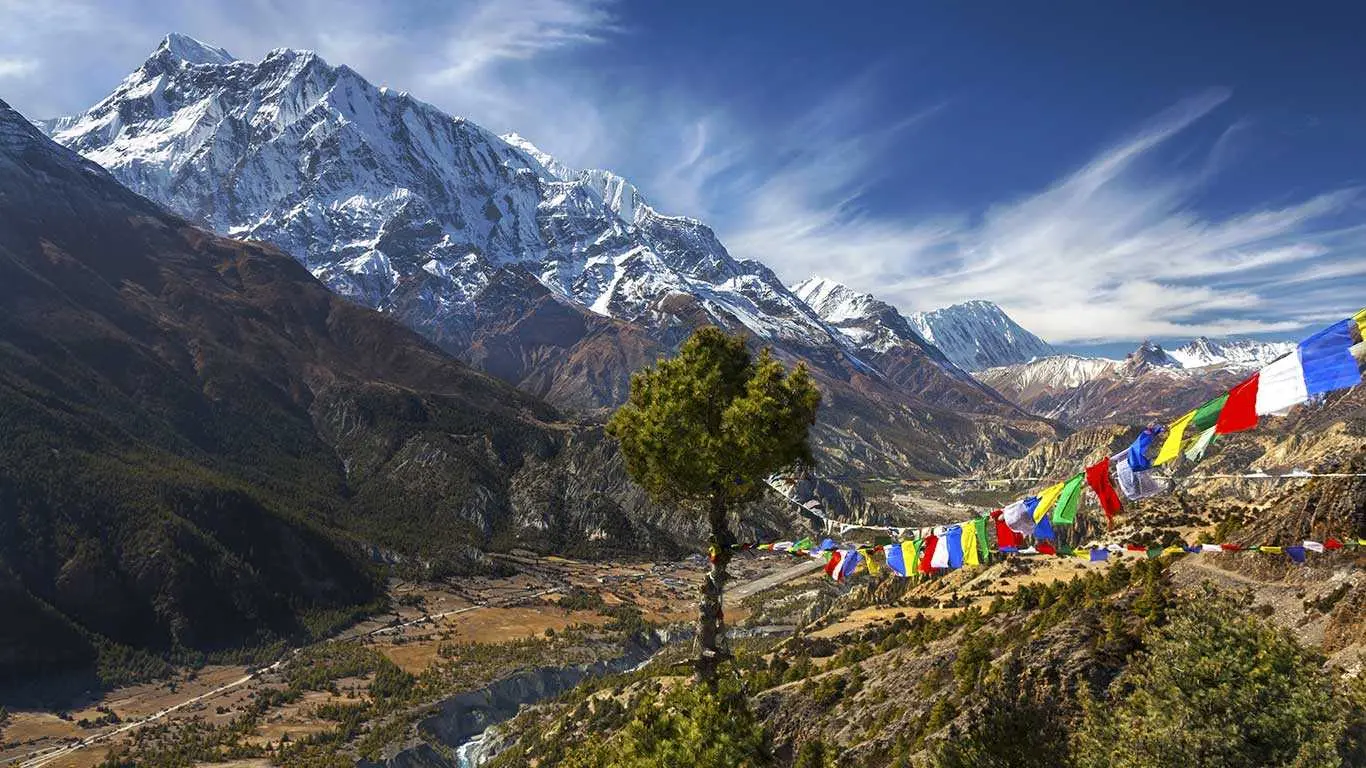
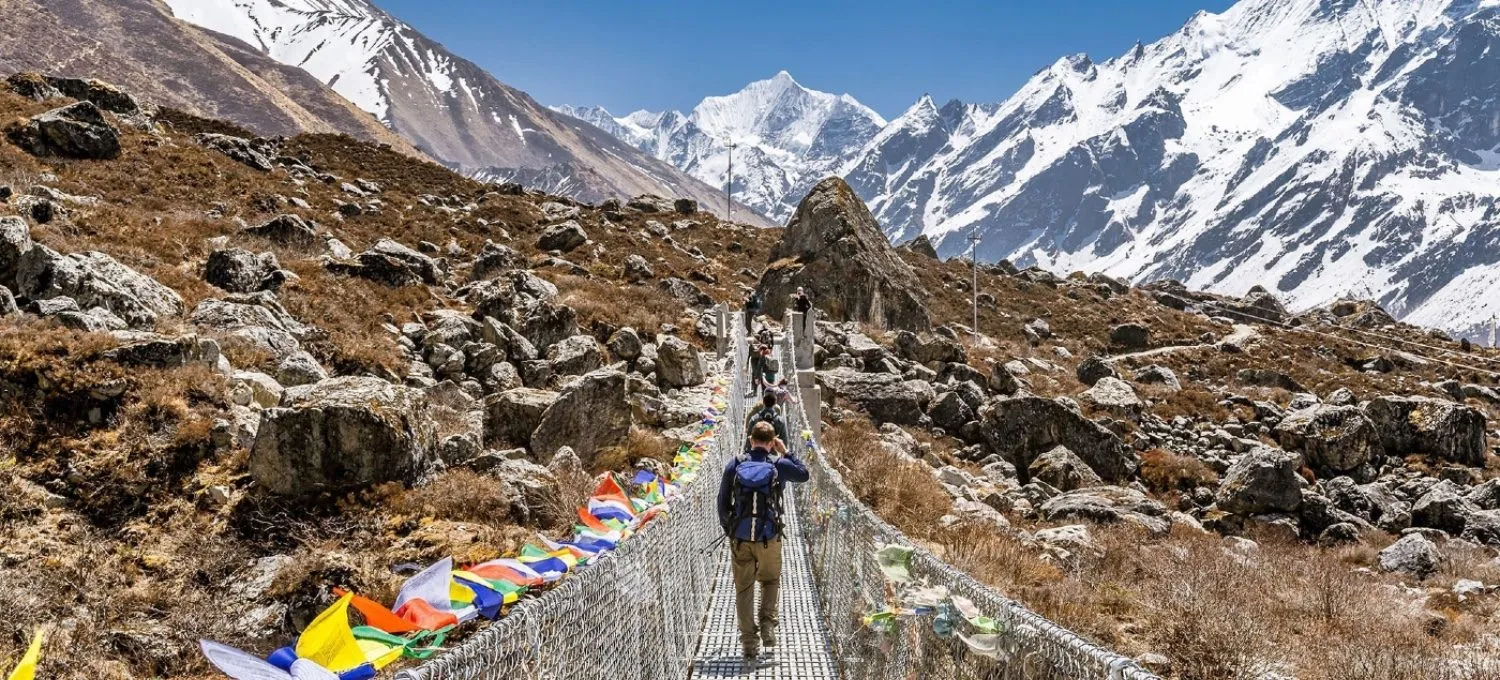
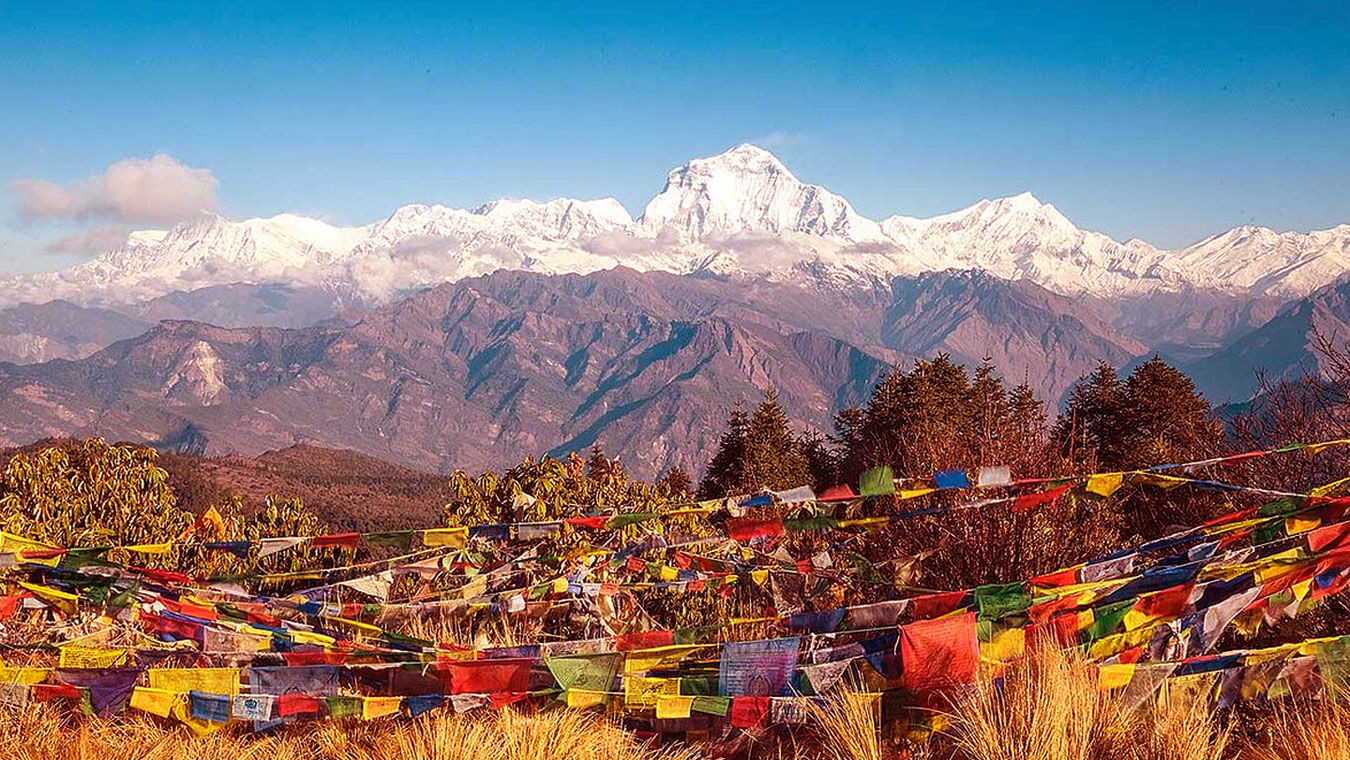
    High-altitude trek is something different in experiences-it offers the most breathtaking views and moments embedded in memory, yet with it come quite particular challenges. The organism gets used to changes in oxygen supply, temperature, and greater exertion when the altitude is growing. This involves much more than just mere physical preparation. Health and safety is something that is always given due attention.

    high altitude trek

    In this busy travel world, here are a few health tips on caution that should be undertaken while joining high-altitude adventure activities:

    1. Understanding Altitude Sickness

    Above 8,000 ft or 2,400 meters has mostly been the common risk factor among trekkers. This is a condition known as altitude sickness or AMS- Acute Mountain sickness, including symptoms such as headache, dizziness, nausea, fatigue, and shortness of breath. In order not to acquire this, one has to be aware of the risks and take the necessary precautions.

    How to Prevent It:

    • The body needs time for acclimatization; hence, ascend should be gradual. The general rule is to start with an elevation over 8,000 feet. Start to increase sleeping elevation, though never more than about 1,000 feet (300 meters) per day.
    • Drink plenty of fluids. Inadequate hydrated fluid in your body can worsen the condition of AMS.
    • Lay over in higher elevations and include rest days in your schedule when giving time to the body for acclimatization.

    2. Acclimatization is Key

    Acclimatization is a gradual process of adjustment to high altitude. In itself, acclimatization can avoid AMS and condition your body to take on physiological stresses involved with trekking.

    Tips to Acclimatize:

    • High and Sleep Low: This translates to uphill during the day, but lower down in altitude every evening to enable the body to acclimate to thin air.
    •  Be conscious of early signs of altitude sickness. When you don’t feel good, begin descending right away. Go see a doctor if necessary.

    3. Physical Preparation and Fitness

    Though acclimatization is the most important factor for a successful high-altitude trek, one’s body has to be in good trim, too. Strengthen your cardiovascular system; improve your stamina so that your body can bear the strenuous situation you will face there.

    trek


    Fitness Tips:

    • Cardio Training: Hiking, running, or cycling in aerobics are helpful in making a person gain stamina.
    • Muscle Strength: These are the most important factor for increasing your capability to carry loads on uneven and rocky terrain.
    • Flexibility and Balance: Regular stretching in respect of flexibility and balance is an important component toward succeeding on rocky and steep trails.

    4. Protection against Cold and Sun Exposure

    The trekkers who go on a high-altitude trek are usually exposed to extreme weather conditions – scorching sun and icy cold which may if the protection is not apt, lead to a number of issues such as frostbites or sunburns.

    Protection Tips:

    • Clothing Layer: Base Layers- Moisture Wicking; Insulating Mid-Layer Weatherproof Outer Layer -STAY WARM- STAY DRY.
    • Sunscreen and Shades: With the automatic altitude gain comes stronger ultraviolet rays; hence, to keep the skin healthy, one has to apply sunscreen with a high SPF and wear UV-blocking sunglasses appropriately.
    • Accessories of Warmth: One should not forget to pack some gloves, hats, and scarves that keep the extremities warm.

    5. Diet and Nutrition for High-Altitude Treks

    Your nutritional needs at high altitude differ from sea level. The body will use more calories while your appetite is lowered by changes in altitude. It is very important to have the right balance of food to take on a trek.

    Diet Tips:

    • High-Calorie Foods: Take along nutrient-dense, high-calorie snacks to maintain energy levels, such as nuts, dried fruits, energy bars, and trail mix.
    • Complex Carbohydrates: These are whole grains, oats, and vegetables and are useful to continue providing a source of energy.
    • In addition, avoid alcohol and caffeine; both can cause dehydration and exacerbate the symptoms of AMS.

    6. Hydration and Water Purification

    High altitude can be prone to faster dehydration, and the susceptibility to AMS and other health complications might become a lot greater. During your trek, it is very important to drink plenty of fluids, but equally important is ensuring the water is safe to drink.

    Hydration Tips:

    •  Always carry a water bottle or hydration system to keep water easily accessible.
    •  Always move on with the purification tablets or filtration system to treat water from streams or any other natural source.
    •  Drink water throughout the day without waiting to get thirsty.

    7. Stay Mentally Prepare

    It gets as significant for mental preparation in high altitude trekking, much like that for the physical part. Like this, extreme conditions, exhaustion, and alienation test a person’s mental strength, too. A great sense of optimism, accompanied by strong focus towards achieving a goal, shall help to pass over these boundaries.

    Mental Health Tips:

    • You will encounter harsh journeys but those are factors making you journey through them to the aim.
    • Stick with your trekking group and guide wherever possible. It would improve the communal experience of travel as well – and can cut loneliness.
    • Do some kind of relaxation method for example deep breathing that will help you reduce your stress and fatigue.

    8. Essential Medical Precautions

    High-altitude trek shouldn’t be done without being in proper health, and certain medical precautions are very important. Consultation with a healthcare provider will also contribute to avoiding altitude illnesses.

    Medical Advice:

    • All the vaccinations should be up-to-date, and your doctor shall also give recommendations on extra vaccinations that one would need while going to high altitude.
    • There are certain medical conditions for which patients need to travel with the medication always. Diamox (Acetazolamide) for Altitude Sickness-but only under the consultation of your physician.
    • Carry a general first-aid kit along, which is additionally equipped with bandages, antiseptics, pain relievers, and medications for altitude sickness.

    Conclusion

    High-altitude trek preparation is extremely serious regarding health and safety. The precautions taken by your good selves in necessary ways, getting physically and mentally ready will ensure that the chances of turning out successful in trekking safely have been immensely helped. Be it Everest Base Camp Trek or any other equally grueling itinerary; the health tips and cautionary steps proposed certainly assure of being adequately prepared to venture through the escapade and wholly absorb vistas that lie in store for a visitor at the crown of the world. Contact us today at Happy Mountain Nepal, Facebook, Instagram, or TikTok. 

     FAQs

    1. What is altitude sickness, and how can I prevent it?

    Altitude sickness, or AMS for acute mountain sickness, is what happens at over 8,000 feet (2,400 meters) elevation with headache, dizziness, nausea, and fatigue. Precautions on how to prevent it are to ascend with gradual increases, stay hydrated, and take days off for restful acclimatization.

    2. How can I acclimatize to high altitudes effectively?

    Acclimatization means going high and allowing the body to acclimatize. A good principle is going high during daytimes but then sleeping low, at much lower altitudes, during nighttime. If your body is not okay, move downhill.

    3. What physical preparation do I need for a high-altitude trek?

    Physical Conditioning: cardiovascular exercises such as hiking, running, and cycling to enhance endurance; strengthening of muscles, especially for uneven terrain; flexibility exercises to ensure good balance.

    4. How do I protect myself from cold and sun exposure during the trek?

    Multi-layered clothes to keep warm and dry. Sunscreen with high SPF and UV-blocking sunglasses to avoid the burning ultraviolet rays of the scorching sun. Not to forget gloves, hats, and scarves for warmth.

    5. What should I eat during a high-altitude trek?

    Pack food with high nutrition value and high calorie like nuts, dried fruits, energy bars, and trail mix. Stress on complex carbohydrates like whole grains, oats, and vegetables which will give you long-lasting energy.

    6. How much water should I drink during a high-altitude trek?

    Drink plenty of water throughout the day even if you are not thirsty. Bring a water bottle or hydration system and purify natural source water using purification tablets or filtration systems.

    7. How do I know if I’m experiencing altitude sickness?

    Symptoms that may develop within the first hours of arriving at high altitude are headache, dizziness, nausea, and shortness of breath. Such symptoms require immediate descension to a lower altitude and then seeing a physician if the symptoms get worse.

    8. What mental preparation is needed for high-altitude trekking?

    Mental toughness is required. The individual should not be pessimistic, but positive, with intentions for the trekking objective. Sometimes, the climate may be bad. At times, it may also be inaccessible. Teach yourself to relax and dispel tension and muscle fatigue through breathing exercises.

    9. What vaccinations do I need before going on a high-altitude trek?

    You should see a health care provider and find out you are up to date on all of your vaccinations. Other countries may have more specific vaccinations required, including typhoid, hepatitis, and rabies.

    10. What should I include in my first-aid kit for a high-altitude trek?

    Your first aid kit should be provided with bandages, antiseptics, pain relievers, medicine for altitude sickness like Diamox, and your personal medication that you might need during the trek. Always carry a basic kit with you.


  • Kailash Mansarovar Yatra :How to Physically Prepare.

    Kailash Mansarovar Yatra :How to Physically Prepare.

    Kailash Mansarovar Yatra:How to Physically Prepare.

    Kailash Mansarovar Yatra is amongst those very few pilgrimages in the world which are most rewarding spiritually and physically highly demanding in the same dimension. The Mount Kailash and Lake Mansarovar are great religious value possessions among Hindus, Buddhists, Jains, and also amongst the Bonpos. It is said that such ‘Yatra’ cleans up the soul and increases spiritual satisfaction within. However, since Yatra goes via a track which is hardly accessible and at extreme altitude, the body is to be subjected to proper training for journey safety and success.

     Kailash Mansarovar yatra

    Some of the steps that must be followed in preparation for the physical Kailash Mansarovar Yatra are as follows:

    1. Developing stamina and endurance for Kailash Mansarovar Yatra

    Many times Kailash Mansarovar Yatra does not get any time for breaks, for hours mostly on difficult situations. Building up your stamina is the key card for completing Yatra in less amount of problem, here’s how you can do it -:

    • Regular walking: Start with 3-5 kilometers per day and gradually increase up to 10-12 kilometers per day to build up your stamina.
    • Hiking and Trekking: Do some trekking in hilly or mountainous areas wherever possible; that would give you almost similar conditions as experienced during Yatra.
    • Weighted Backpack: In addition, get familiar with the use of a light backpack to simulate the weight one may have to carry along while he/she is on Yatra. This shall help the body to get accustomed to carrying the weight uphill and downhill while walking.

    2. Increase Your Cardio Fitness

    The first and foremost pre-requisite for Kailash Mansarovar Yatra is that your cardiovascular system should be healthy and strong enough to cope with the high altitude. You would need to walk uphill and uphill on uneven, steep paths at high altitudes to 19,500 ft above sea level where oxygen is scarce.

    • Aerobic Exercises:  Running, cycling, and swimming strokes are immensely useful in developing the heart and lungs. Conduct daily moderate exercises of 30 minutes 4 to 5 days a week.
    • Interval Training: It is very much needed to include HIIT in your endurance training, and people can enhance their lungs to walk at high altitudes.
    • Breathing Exercises: Deep breathing exercises make people expand their lung capacity to carry more oxygen, which is required in high-altitude areas.

    3. Strengthen your Muscles

    Kailash trekking involves uneven and rocky as well as steep parts. Muscular strength will also be required in the legs, back, and core to ensure that such a stressful journey has happened easily. This will include squats, lunges, and calf raises for the strengthening of the important keys in the legs.

    • Regular exercises of the legs will make the long walks on the rugged path easy and comfortable.
    • Core Strengthening: Planks, leg raises, and crunches. A strong core maintains balance and posture during the trek.
    • Back and Upper Body Strength: Push-ups, pull-ups, and resistance band exercises will prepare your upper body for carrying a backpack-an essential part of Yatra.

    4. Practice Walking with Altitude Simulation for Kailash Mansarovar Yatra

    While it is impossible to simulate high altitude conditions fully from your home, a few things you can do to acclimatize the body to thin air:

    • Either you can do your training where the altitude is higher or simply use an altitude mask, which reduces oxygen levels, thereby triggering this adaptation of your body to less oxygen.
    • Climbing Stairs: Regularly climbing stairs can simulate the steep ascents you’ll encounter on the Yatra. Aim to climb 10-15 flights of stairs daily.
    • Hypoxic Training: Consider using a hypoxic training mask to reduce oxygen intake during workouts. This will help your body adapt to lower oxygen levels, which can be beneficial when you’re trekking at high altitudes.

    5. Stay Hydrated and Maintain Proper Nutrition

    This would mean plenty of hydration and nutrition in abundance. Be it too hot or high altitude, or even during an intense workout without nutrition, the body can get dehydrated a bit earlier to reduce the possible improvement of the body in giving out its performance output.

    • Hydration: One has to drink much water compared to usage-amounts one used to normally, which amounts to around 3-4 liters for each day. An electrolyte tablet will keep the water dehydrated-free.
    • Balanced Diet: Take healthy foods, and consumption of diet that should include complex carbohydrates, lean proteins, and healthy fats. Intake of whole grains, nuts, fruits, vegetables, and lean meat will assist your body in giving the power of physical challenges required for traveling.
    • Avoid Junk Food: Quit junk food, sugar, and high-fat food since that may lead to a sluggish effect, putting a heavy burden on your entire energy.

    6. Acclimatize with the Weather

    Kailash Mansarovar experiences some pretty unpredictable weather conditions. The temperature may go down and change quickly, so one should get their body accustomed to the cold.

    • Exposure to Cold: Go for gradually cold-weather treks so that the body acclimatizes itself to the cold during the Yatra.
    • Layering Up: The body gets accustomed to the increasing temperature by layering up.
    • Wear moisture-sucking material as a base layer, next to the insulator layer, and on top, the waterproofing over it.

    7. Preparation of the Mind for Kailash Mansarovar Yatra

    Besides, it is not only mental toughness a person requires as preparation; yatra may get pretty exhausting as one may have to go through extreme weather conditions, high altitude problems, and walking all day long consecutively for days. Hence, it‘s very important that preparation for the same is on a mental basis.

    • Positive Visualization: Close your eyes and imagine you are doing this hike, some of the physical challenges involved in it, and how you will tackle those. The idea is to harden one’s mental set.
    • Meditation and Yoga: Meditation and yoga are excellent ways of achieving clarity of mind, correct focus, and wellness overall. They center you for any physical or emotional challenge.

    8. Consult Doctor

    First and foremost, long in advance and especially going to perform the Yatra, one should consult a doctor in case of disorder in one’s health. Ensure your cardiovascular health, lung capacity, and physical fitness are such that moving on this tiresome journey may be safe.

    9. Acclimatize Properly

    One of the major factors that should not be forgotten while on a Yatra is acclimatization to the height. You need to spend days at certain mediocre altitudes so that your body gets good enough time for adjustments before the start of the Kailash Mansarovar trek. In such cases, hence, possibilities for altitude sicknesses will be reduced.

    Conclusion:

    The Kailash Mansarovar Yatra is a once-in-a-lifetime experience-preparation, both physically and mentally. It’s finally the time when your body gets ready with proper endurance, strengthened muscles, simulation of high-altitude conditions, and a routine of hydration and nutrition for this spiritual and demanding journey physically. Remember, proper training can enhance your experience and ensure your safety, so take the time to prepare for this once-in-a-lifetime pilgrimage.

    FAQs 

    1. What is the best time to start preparing for the Kailash Mansarovar Yatra?

    One needs at least 6 months to begin a physical preparation before joining. There will be time to increase stamina and strength as well as endurance.

    2. How long do I need to walk each day to prepare for the Yatra?

    Walk 3 to 5 kilometers a day, gradually increasing to 10 to 12 kilometers a day. These will develop the stamina and endurance needed during long trekking hours for the Yatra.

    3. Which exercises will most effectively help in the Yatra?

    Cardiovascular exercises like jogging, cycling, and swimming will help in cardiovascular fitness, and squats along with lunges, plus working out in the core region, will make you prepared for staying tuned to withhold the demands coming from the trekking

    4. How should I train for the high-altitude conditions of Kailash Mansarovar?

    It is good to have altitude training-for example, hiking in higher altitudes-or using an altitude mask. This apart, regular climbing of stairs helps simulate the ascent that one encounters during Yatra.

    5.  Can one physically train for Kailash Yatra without being at a high altitude?

    Well, yes, of course-you may not be able to simulate exactly that effect while on sea level-but stair climbing, hill hiking, and an altitude mask will prepare your body for it. Besides, work on developing cardiovascular endurance and leg strength.

    6. How important is hydration and nutrition in preparing for the Yatra?

    Adequate water intake and nutrition. The quantity of water consumed should be at least 3-4 liters, with food being healthy and nutritious, including whole grains, fruits, vegetables, lean proteins, and healthy fats for energy.

    7. What is the major physical challenges during Kailash Mansarovar Yatra?

    Some major physical challenges in Kailash Mansarovar Yatra include very long walks on unmetalled and uneven ground, acclimatization of high altitude with less oxygen, cold weather conditions of Kailash Mansarovar Yatra, etc.

    8.How to avoid Altitude Sickness during the Yatra?

    Following is one of the ways to avoid altitude sickness: create some time for acclimatization. Spend a few days at intermediate altitudes before you trek up towards the summit. Keep hydrated, walk slow and all that stuff.

    9. Is it advisable to consult a doctor before preparation begins for Yatra?

    Yes, it is all over necessarily recommended that a doctor must be consulted so one knows how much fit you stand physically before considering high altitude-high altitude conditions regarding trekking to keep all problems that affect you relating either to your heart or lung system.

    10. How can I mentally prepare for the physical challenges of the Yatra?

    Mental preparation is key. Meditation, yoga, positive visualization helps and builds the mental strength of a person. With these, it will always keep an individual composed, attentive and positive with some distress moments as well that consequently will provide him with loads of confidence.

  • Best Time for Kailash Mansarovar Yatra

    Best Time for Kailash Mansarovar Yatra

    Best Time for Kailash Mansarovar Yatra

    Kailash Mansarovar yatra is the pilgrimage to be made to the destination in Tibet’s far-flung Himalayas region, Mount Kailash and Lake Mansarovar. This Kailash Mansarovar Yatra is one of the toughest but spiritually enriched tours around the globe. Kailash Mansarovar holds a spiritual importance to humans. It is the most sacred abode for the religion of Hindus and Buddhists too.

    People believe Kailash Mansarovar is the holy abode of God Shiva and Goddess Parvati. It will offer a lot of challenges to tour a mix between the physical challenges to gain spiritual rewards hence an interesting chance to experience the very significant spirituality attached with those holy places.kailash_mansarovar_yatra

    Understanding the time for the Yatra

    1. Summer (May – June)

    Advantages:

    • Mild and Pleasant weather: The average temperature in the season falls in the mid-20s Celsius, hence the weather is pleasant enough to trek and sightsee around.
    • Skies are clear and bright. It is a very good time to see spectacular views and photography of Mount Kailash and Lake Mansarovar.
    • More daylight: It allows the trekkers to have a more extended hour of trekking and sufficient time to explore & experience the destination

    Disadvantages:

    • Crowded with Pilgrims: At times, it is quite difficult to get peace and solitude, especially at places like Lake Mansarovar. You will find crowded trails.
    • Expensive prices: Transportation, accommodation, and other services are quite costly as well as scarce due to the high demand at this peak season.
    • It may bring unpredictable weather, presenting you with short episodes of rain in some places, affecting your schedule, and in some instances, bringing you some hassle as you navigate.

    2.Autumn (September – October)

    Advantages:

    • It is relatively less crowded than summer. This gives you serenity and quietness, allowing you closer ties to spirituality with the physical challenges.
    • Good weather: You might find it pleasant, comfortable, and enjoyable while not too hot and cold.
    • Scenic beauty of autumn foliage: You like the bright carpet of colors of the landscapes, which is a sight to watch.
    • Clear skies and stable weather conditions & temperature: this allows ideal conditions for photography and enjoying the scenery and natural beauty of the surroundings without having any threat or problem caused by frequent rain showers.

    Disadvantages:

    • Less daylight while traveling: Because the daylight hours are short, there is less time for trekking, sightseeing, and enjoyment of the scenic beauty compared to that of summer.
    • Some hindrance to travel: You might find lesser accessibility as the higher altitudes receive snowfall. This might hamper your plan.

    3. Winter (November-April)

    Advantage:

    • Most peaceful and least crowded time to visit: You will be truly offered a serene experience, away from the jostling peak seasons. You’ll experience the serenity accompanying the majesty of nature in the Himalayas.
    • Breathtaking winter landscapes: The white-topped mountains and ice-covered lakes are just magical in their beauty.
    • You get cheaper accommodations and other services due to the lower demand level.
    • Special opportunity to observe winter wonderland: The marvelous area of snow and ice painting, fantastic views.

    Disadvantage:

    • Extremely cold weather: Most time below freezing. Bring more clothes to feel comfortable, especially warm clothing. It’s gonna be cold, cold, and cold. And you might not be able to stand it.
    • Bad Trekking Conditions: Snow and ice conditions make it somewhat challenging to trek and, during some periods, pose a problem concerning accessibility. It will be very challenging and even dangerous.
    • Off-season; however, accommodation as well as transportation will be problematic, but the wildflowers blossom, and all is very luscious and healthy.

    4. Monsoon Season (July to August)

    Advantages:

    • Blooming wildflowers and lush greenery: Monsoon rainfalls bring the vibrant colorful landscape which makes the beauty of the region.
    • Lesser crowds: You will be offered a quieter and more private experience. It allows deeper spiritual connection.
    • Lesser Charges: During the off-season, there are less trekkers. So, there is the example of lesser charges about accommodation in comparison to peak season.

    Disadvantages:

    • Difficult Trekking: During the monsoon, the trails get wet and slippery due to heavy rainfall. It makes the process of trekking more complex and dangerous in nature.
    • Landslide risks: Heavy rainfall increases the chances of landslides, which might even disrupt your trip and cause delays. So, always better precautions beforehand and being frequently informed about the weather conditions will do the job.
    • Rain and Cloud Cover: Frequent rain and cloud cover characterize the monsoon season, obscuring views of Mount Kailash and other surrounding peaks from time to time.
    • Fewer Accommodations: Since it is the continued off-season, accommodations will be few and hard to find. These will be limited hence difficult to find.

    Tips for Choosing the Perfect Time

    The best time for the Kailash Mansarovar Yatra depends on many factors, which include personal preference, physical fitness, and budget.

    Here are some tips to help you have the right time for the trek.

    • Keep your physical fitness in mind and your tolerance against extreme conditions.

    High altitude, rugged and weathered faces may cause tough conditions while attempting to make Kailash Mansarovar Yatra. This may be an exceptionally lesser challenge or very gentle time and one who has not too good health with many ailments may select. 

    • Check the specific weather forecast.

    The Himalayas have unpredictive weather. Check and take all information about the weather conditions to identify how the whole geographical scenario can show during your desirable time. Then only a trekker can plan things beforehand for all possible consequences that may arrive.

    • Consult with experienced travel agents for personalized advice:

    Travel agents and operators can provide you with information, knowledge, and advice regarding the best time to travel to Kailash Mansarovar. Happy Mountain Nepal will be able to assist you in everything starting from itinerary planning according to your needs and preference, booking of hotels to getting permits.

    • Figure in your budget and favoured level of comfort:

    The cost of Kailash Mansarovar yatra would depend upon the time you have chosen. You may get peak tourist time, which is crowded and expensive to travel in, for off-season you get cheaper rates with limited options. Besides, if you want luxury then to choose a time when comfort is comparatively better, and crowds are less.

    Factors Influencing the Best Time

    1. Weather

    • Temperature variations: The Temperature of Kailash Mansarovar varies from time to time in a year. Spring and autumn season converses friendly temperature along with stable weather conditions. While Summers are Hot and Winters are extremely cold.
    • Precipitation patterns: Normally, the wet season is between June and September; there is heavy rain with unstable weather. It may make the roads wet and hard to pass. More importantly, there are possibilities of floods and landslides. So, dry seasons like spring and autumn are marked by stable weather conditions and are an excellent time for trekking.
    • Snowfall: These bring snowfalls along altitudes especially towards the winter and can result in road closures of some places while limiting access through others. Its risk increases because of the heavy physical exertion involved in it.

    2. Crowding

    • Peak tourist seasons: Peak tourist seasons deal mainly with the summer-spring season of June to August and autumn. Peak tourist seasons come with the tendency of crowds whereby charges for accommodation advance besides staying around the popular attractions while sacred sites come with waiting in long lines and taking photographs.
    • Off-peak seasons: This involves the monsoon period starting from March to May and winter between December and February, hence less crowded and quite peaceful for a better exploration experience. However, winters can be really challenging due to cold weather and restricted accessibility while the monsoon season brings a lot of risks regarding landslides and heavy rainfall.

    3. Religious Significance

    • Auspicious months and days: According to Hindu and Buddhist traditions, certain months and days are considered particularly auspicious for pilgrimage. You can align with these spiritually significant periods which can enhance the spiritual experience and create a more meaningful journey.
    • Festivals and celebrations: Religious Festivals amongst others, the Kailash Mansarovar Mela are more attractive. You can be trekking and enjoy the thrill of a religious festival at the same time.

    4. Government Regulations

    • Seasonal restrictions: There are places that have seasonal restrictions or special entry permits especially during the monsoon period or areas that are relatively not fully developed.
    • Permit requirements: The required permits and documents may be necessary to make the pilgrimage smooth and in order to meet the local regulations.

    The major attraction in the Kailash Mansarovar Yatra

    Kailash Mansarovar Yatra is the journey of your spirituality. The view which the pilgrims can see during traveling takes them through a few of the most unbelievable scenes in the world. Given below are some of the top places to visit during travel: 

    1. Mount Kailash:

    In Hinduism, this beautiful mountain is considered the abode of Lord Shiva. This mountain is sacred in the Bon, Buddhism and Jainism religion. Tourists attempt kora around Mt Kailash looking for a life-changing spiritual experience.

    Mount Kailash:

    2. Manasarovar Lake:

    It is a sacred lake considered to be located at an elevation of 4,590 meters above sea level. It is one of the most sacred lakes in Hinduism, Buddhism as well as Jainism. In the lake, the devotees take a sacred bath, and perform several religious rituals.

    3. Rakshastal Lake:

    It is a very salty lake and lies on the shores of Lake Manasarovar. Rakshastal is believed to be a home to evil omen and ill energies in Hinduism and Buddhism.

    4. Tirthapuri Hot Springs:

    These hot springs are natural and originate very close to Mount Kailash. It too has been referred to as a holy site in Buddhism. A tourist normally takes a dip in the hot springs and offers religious rituals to the gods.

    Tirthapuri Hot Springs:

    5. Guge Kingdom:

    Guge Kingdom is the Lost Kingdom of Tibet. This kingdom lies near Mount Kailash and has a great social and historical importance. The ruins of that kingdom are present and can be viewed by people. These ruins include sanctuaries, monasteries, and royal houses.

    6.Yam Dwar:

    Yama Dwar is also considered as “the gateway of the God of Death”. It is the commencement of the Kailash parikrama. It is one sacred spot in Hinduism. The devotees believe that crossing through this entrance cleans up all the sins and evil karma.

    7.Asthapad:

    This mountain peak is near the sacred Mount Kailash, which is associated with Hindus, Buddhists, and Jains. The lord Shiva and his consort Parvati are supposed to live here.

    Kailash Mansarovar Yatra usually leads a chance to the tourists to explore some of the teeming and most breath-taking sights of the world and take up the spiritual quest that will transform them.

    Safety measures for the Kailash Mansarovar Yatra

    Kailash Mansarovar Yatra is considered to be quite physically demanding. The following set of key safety measures would make your journey safe and successful. The safety measures, which are to be taken in account before going on Kailash Mansarovar Yatra, are as follows:

    1. Acclimatization:

    Acclimatization should be proper en-route. It is very serious to have altitude sickness problems in high-altitude Himalaya. It is much better to keep hydrated throughout the trek. Also, it is necessary to take it easy as in slow and steady.

    2. Physical fitness:

    It covers the long and hard trip round Mount Kailash. The good level of physical fitness would once again be in demand. The training and preparations for the travel at least some months in advance would be desirable.

    3. Weather Conditions:

    Weather conditions on the route may become unpredictably cruel. Garments and provisions to include proper clothes for any climate-except for rain, clothes for warm conditions as also suncreen- would be of value to carry on.

    4. Health safety measures:

    Some of the high-altitude and partly interior areas of this trek pose certain well-being risks in the form of dehydrating conditions, altitude sickness, and gastrointestinal ailments. It will be apt if basic medicines and first aid kits are being carried and basic hygiene norms, such as washing one’s hands and avoidance of uncooked or unhygienic food, are duly followed.

    5. Travel with a reputable office:

    It will be better to travel with a good tour operator that has some handling involvement with the organization of Kailash Mansarovar Yatra and can provide necessary safety and emergency arrangements.

    6. Respect the local religious traditions and customs:

    Kailash Mansarovar Yatra is basically a pilgrimage and religion, hence it is very crucial to respect and follow the customs and traditions of the local communities.

    These safety measures and precautions ensure a safe and secure Kailash Mansarovar Yatra trip of transformational spiritual and cultural experiences along the route.

    Conclusion

    In short, the best time to visit Kailash Mansarovar Yatra depends upon the individual’s preference and priorities. If a person prefers to see good weather and can bear crowds, then summer is the best time, autumn, or spring. For those for whom this yatra is essentially a peaceful and quiet atmosphere, monsoon or winter can also be preferred. Fundamentally, the best time for your yatra is the time that suits your purpose and preference. Thus, your adventure partner, Happy Mountain Nepal will prepare a tailored itinerary that will align with your preference. 

    FAQs

    1. What is Kailash Mansarovar Yatra?

    Kailash Mansarovar Yatra is a pilgrimage journey to Mount Kailash and Lake Mansarovar, located in Tibet. It is sacred to Hindus, Buddhists, and Jains, and is considered one of the most spiritually enriching yet physically challenging pilgrimages in the world.

    2. When is the best time to go for Kailash Mansarovar Yatra?

    The best time for Kailash Mansarovar Yatra is from May to June (summer), and September to October (autumn). These seasons offer mild weather, clear skies, and more manageable trekking conditions.

    3. Is Kailash Mansarovar Yatra physically demanding?

    Yes, the Yatra is physically demanding, especially due to the high altitude and rugged terrain. Proper physical fitness and acclimatization are essential for a successful journey.

    4. How long does the Kailash Mansarovar Yatra take?

    The journey typically lasts about 10 to 14 days, depending on the route and itinerary chosen. It includes both trekking and travel time to reach the sacred sites.

    5. What is the altitude of Mount Kailash and Lake Mansarovar?

    Mount Kailash stands at an altitude of 6,638 meters (21,778 feet), while Lake Mansarovar is located at 4,590 meters (15,060 feet) above sea level.

    6. Do I need a permit for Kailash Mansarovar Yatra?

    Yes, a special permit is required for both Mount Kailash and Lake Mansarovar, as they are located in Tibet. Travel permits and additional documentation need to be arranged with a tour operator.

    7. Is the Kailash Mansarovar Yatra safe?

    While the Yatra is safe for those who are physically prepared, safety measures should be followed closely, such as acclimatization, hydration, and carrying essential medicines. It’s also important to travel with a reputable tour operator for assistance in emergencies.

    8. Can I take a dip in Lake Mansarovar? Yes, it is customary for pilgrims to take a sacred dip in Lake Mansarovar for spiritual purification. The lake is considered very holy, and many devotees perform rituals at its banks.

    9. Are there any health risks during the Yatra? Some health risks include altitude sickness, dehydration, and gastrointestinal issues. It’s important to stay hydrated, acclimatize properly, and carry a basic first-aid kit. Medical check-ups are recommended before embarking on the Yatra.

    10. Can I visit Kailash Mansarovar Yatra during the monsoon season? While the monsoon season (July to August) offers fewer crowds and blooming landscapes, it also brings heavy rainfall, muddy and slippery trails, and the risk of landslides. It’s generally not the best season for the trek, though some pilgrims do choose it for a quieter experience.

  • Top Autumn Trek in Nepal: Experience the Himalayas at Their Best

    Top Autumn Trek in Nepal: Experience the Himalayas at Their Best

    Top Autumn Trek in Nepal: Experience the Himalayas at Their Best

    Autumn is the best time for trek in Nepal. During this period of September to November. This is the season during which the weather will not be cold, the skies are clear, and the Himalayas are seen under the best conditions of visibility. For all nature and adventure lovers, this is high time to be a part of some of the stunning trekking routes in the world in Nepal.

    Herein, a guide through the top Autumn treks with breathtaking views, cultural insight, and lifetime memories has been provided.

    1. Everest Base Camp Trek

    Everest Base Camp Trek: The trek has led one deep into the heart of the Khumbu section for unmatched views of the Earth’s highest peak, Mt. Everest, which is 8,848 meters above. The path passes through a stunning avenue through Sagarmatha National Park, enlisted on UNESCO’s World Heritage Site; energetic Sherpa culture; crossing suspension bridges, ancient monasteries, and picture postcard villages.

    Everest Base Camp Trek

    Major attractions:

    • Everest View: Mighty Everest close-up views amongst other towering peaks such as Lhotse, Nuptse, and Ama Dablam.
    • Kala Patthar: Sunrise and sunset panoramic viewpoint for Everest and surrounding peaks.
    • Namche Bazaar: Very lively Sherpa town markets, bakeries, and cultural museums.
    • Tengboche Monastery: The largest monastery in the Khumbu region and is famous for spiritual aura along with mountain backdrop.

    2. Annapurna Circuit Trek

    The most famous Annapurna Circuit Trek encompasses various landscapes that range from subtropical forests to arid landscapes of the Tibetan plateau. It is also a trek around the massif of Annapurna, crossing over the formidable Thorong La Pass at 5,416 m. It covers different kinds of ecosystems, rich cultural heritage, and breathtaking views of peaks such as Annapurna and Dhaulagiri along the route.

    Annapurna Circuit Trek

    Major Attractions:

    • Thorong La Pass: The highest point of the trek, one can have awesome mountain vistas from here.
      Muktinath Temple: A holy place for Hindus and Buddhists; the eternal flame is the thing most visitors head for.
    • Marshyangdi and Kali Gandaki Valleys: Two of the most beautiful river valleys with lush greenery and cascading waterfalls.
    • Local Villages: Explore Gurung, Thakali, and Tibetan-inspired villages.

    3. Langtang Valley Trek

    It is also well known as the “Valley of Glaciers”; less crowded, it offers quiet retreats. This Langtang valley of trekking is close to Kathmandu and best fits those trekkers who look for beautiful scenery along with abundant Tamang culture. This trek encompasses pristine forests, high alpine meadows, and magnificent peaks like Langtang Lirung at 7,227 meters.

    Langtang Valley

    Major Attractions:

    • Kyanjin Gompa: an isolated monastery with spectacular views besides local yak cheese.
    • Langtang National Park is a place of diverse flora and fauna, including red pandas and snow leopards.
    • Langtang Lirung Glacier: The magic glacier at the head of the valley.
    • Traditional Tamang Villages: Cultural taste through friendly people with ancient traditions.

    4. Manaslu Circuit Trek

    The Manaslu Circuit Trek takes one around Mt. Manaslu at 8,163 m, the eighth highest mountain on Earth in an adventurous fashion way out in very remote areas. Supposedly a high mountain passes, rugged trails with cultural variety; in autumn, this is considered as one of the nicer landscapes that any avid trekker would seek for.

    Manaslu Circuit

    Major Attractions:

    • Larkya La Pass: High-altitude pass with breathtaking panoramic views of snow-capped peaks.
    • Manaslu Trek: great views of the mountain, close proximity to most of the range during the hike.
    • Tsum Valley: home to one ‘hidden valley’, various ancient monasteries, and lots of Tibetan Buddhists.
    • Relatively Untouched Trails: Getting away from the maddening crowd while trekking and quieter.

    5. Ghorepani Poon Hill Trek

    Ghorepani Poon Hill Trek is a rewarding, easy short trek. The treks strike through the rhododendron forests and picturesque villages onto Poon Hill at 3,210 meters and thus present sunrise views of the ranges strikingly.

    Ghorepani Poon Hill , autumn
    Image description trekking in nepal photos

    Major attractions include:

    • Poon Hill: Generally known in the viewpoint to see the sunrise over the Himalayas.
    • Rhododendron Forests: Vibrant blooms in spring, lush green in autumn.
    • Traditional villages: Warm up with Gurung and Magar communities.
    • Birdwatching: Observe some unique Himalayan species of birds in these dense forests.

    6. Upper Mustang Trek

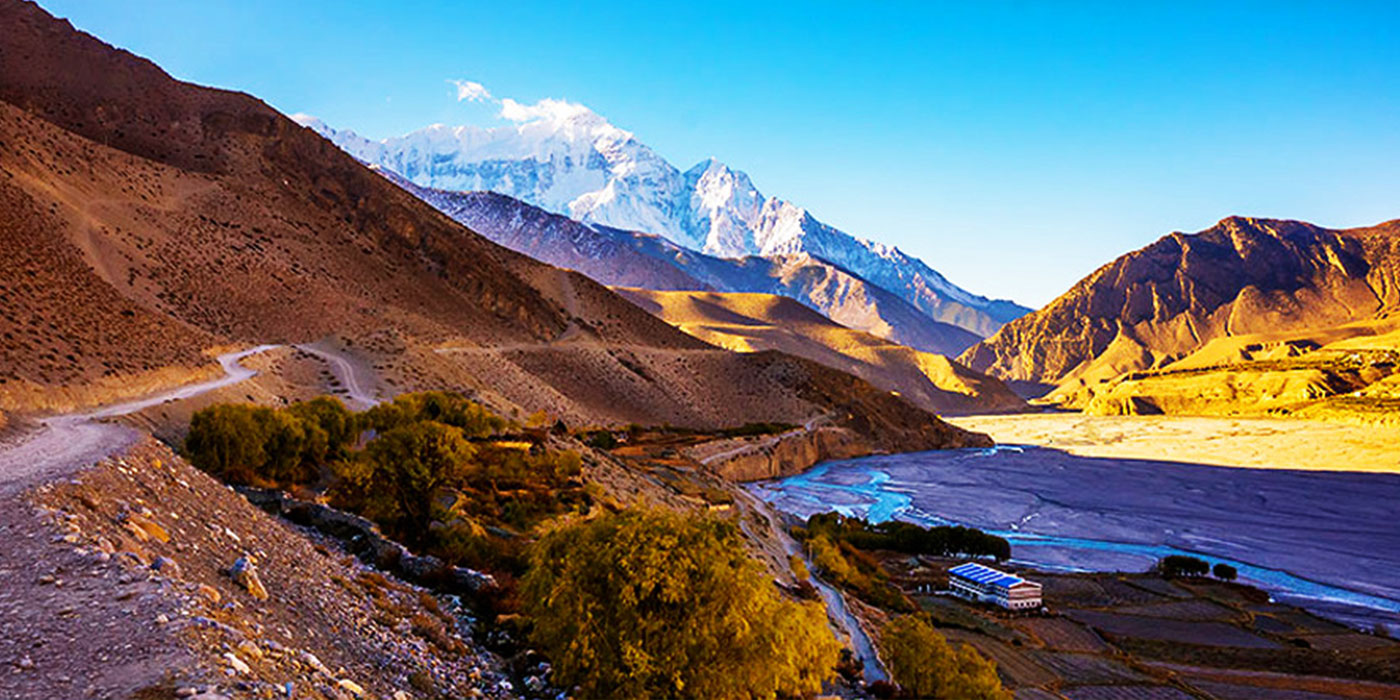
    The Upper Mustang Trek takes one into the “Forbidden Kingdom” of Mustang, a region noted for its unique landscapes and Tibetan-influenced culture. A trek route will take you through barren cliffs, ancient caves, and centuries-old monasteries. Due to its isolated location, the traditions in Lo are so well preserved and, as such, are considered one of the more valuable cultural assets.

    Upper Mustang , Autumn trek


    Major Attractions:

    • Lo Manthang: Walled city and cultural heart of Upper Mustang.
    • Chhoser Caves: Mysterious caves used for meditation and ancient habitation.
    • Tiji Festival (Seasonal): Vibrant celebration based on Tibetan Buddhism.
    • Desert-Like Landscapes: Dramatic cliffs, canyons, and red rock formations.

    7. Mardi Himal Trek

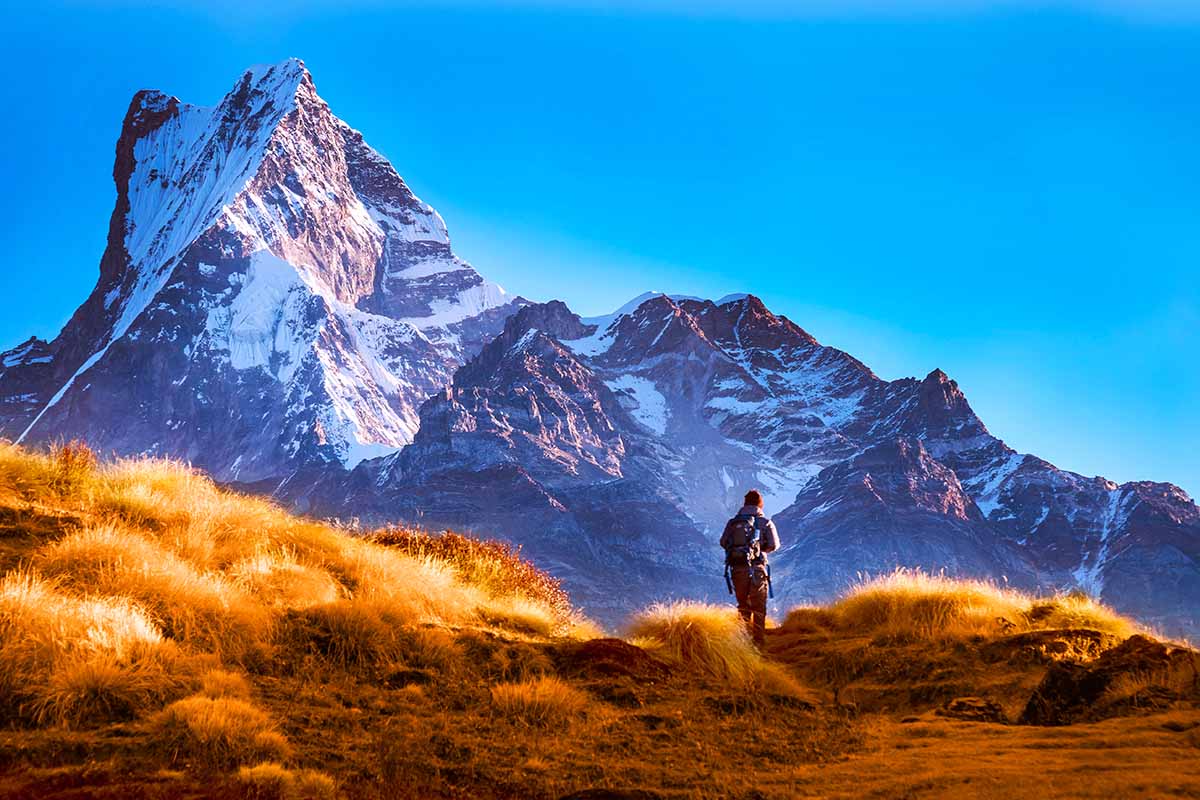
    Mardi Himal Trek is a recently developed virgin trail in the Annapurna region. It offers unprecedented close-up views of Mt. Machhapuchhre, popularly known as Fishtail, and the Annapurna range. This is a short but naturally rewarding trek with plush forests and a rugged ridge leading up to the high altitude viewpoint.

    Mardi Himal , Autumn trek

    Main Attractions:

    • Mardi Himal Base Camp: Spectacular vantage at the base of Mt. Machhapuchhre
    • Machhapuchhre Viewpoint: Spectacular close-up view of the iconic peak.
    • Hidden Trails: Experience loneliness and pristine wilderness.
    • The forest walkways crossed rhododendom and oak forests.

    Why Autumn is the Best Time for Trekking in Nepal

    •  No dust particle in the post-monsoon air provides crystal clear views of the mountains.
    • Mild Temperatures: Good weather conditions prevail; hence, one can trek for a long time without much distress.
    • You can enjoy festivals such as Dashain and Tihar adding color to your expedition.

    Tips for Autumn Trek

    Advance booking: Besides accommodation, permits and guides are to be booked well in advance if visiting during high time.

    Packing the right equipment: Clothing: to be provided in layers; Trekking boots: good pairs; Sleeping bag: very much essential.

    Acclimatization: Give time to your body to get tuned before going to challenging treks featuring high altitude.

    Respect culture: Respect the culture and continue showing respect for guiding principles in an enriching atmosphere.

    Conclusion

    Autumn treks in Nepal are the gateways to some of the most stunning landscapes and cultural experiences on Earth. Be one who has trekked many times or is just a beginner; the trail awaits. Put on your boots and backpack, and off to the ultimate adventure-the Himalayas await!

    FAQs

    1. What is the best time for trekking in Nepal?

    The best time for trekking in Nepal is autumn (September to November) when the weather is clear, skies are blue, and temperatures are mild, making it ideal for trekking.

    2. How difficult are the treks in Nepal?

    Nepal offers treks of all difficulty levels. Popular treks like Ghorepani Poon Hill are easier, while others like Everest Base Camp and Manaslu Circuit are more challenging due to altitude and terrain.

    3. Do I need a permit for trekking in Nepal?

    Yes, most trekking routes in Nepal require permits. Popular treks like the Annapurna Circuit and Everest Base Camp require ACAP and TIMS permits. Additional permits may be needed for restricted areas like Upper Mustang.

    4. What should I pack for trekking in Nepal?

    You should pack:

    • Layered clothing for varying temperatures
    • Trekking boots with good grip
    • Sleeping bag for higher altitudes
    • Sunscreen and hat for sun protection
    • Water purification tablets or water filter

    5. How long do the treks in Nepal take?

    Trek durations vary by route. For example:

    • Everest Base Camp: 12–14 days
    • Annapurna Circuit: 15–18 days
    • Ghorepani Poon Hill: 4–5 days
    • Manaslu Circuit: 14–16 days

    6. Is altitude sickness common in Nepal?

    Yes, altitude sickness can affect trekkers above 2,500 meters, especially on treks like Everest Base Camp and Annapurna Circuit. It’s important to acclimatize properly, drink plenty of water, and ascend slowly.

    7. Can I trek in Nepal without a guide?

    You can trek independently on some routes (like Ghorepani Poon Hill), but for more remote or challenging treks (like Manaslu or Upper Mustang), hiring a guide is recommended and sometimes required.

    8. What is the weather like during autumn trekking?

    Autumn offers clear skies, mild daytime temperatures (around 10–15°C), and cooler nights (around 0–5°C at higher altitudes), making it perfect for trekking. However, it can get colder as you ascend.

    9. Are there teahouses along the trekking routes?

    Yes, popular trekking routes like Everest Base Camp and Annapurna Circuit have teahouses where you can rest, eat, and sleep. They provide basic facilities like food, drinks, and simple rooms.

    10. How much does it cost to trek in Nepal?

    The cost depends on the trek. A basic budget for a trek (including permits, guide, food, and accommodation) can range from $20 to $50 per day, with additional costs for special permits in restricted areas like Upper Mustang.


  • Things To Do in Pokhara .

    Things To Do in Pokhara .

    Things To Do in Pokhara.

    Pokhara is definitely one of Nepal’s jewels, which ideally mixes tranquility, adventure, and culture in one bowl. Lying about 200 km west of Kathmandu, it is the ultimate haven for those tourists who aim at the tranquility of nature along with some adventure sports activities.

    pokhara


    Herein, a deeper look into six of the best things to do when one visits the city of Pokhara.

    1. Phewa Lake: A Haunt of Serenity

    Fewa, or Phewa Lake, is the second largest lake in Nepal and undeniably the heartbeat of Pokhara. Its shining blue waters, surrounded by lush green hills and snow-capped mountains, present an inspiring sight and are surely a photographer’s dream.

    Tal Barahi

    • Boating on Phewa Lake: You can hire brightly painted wooden boats-called dungas-or take a canoe. There are various rentals, depending on whether you paddle yourself or hire a boatman.
    • Tal Barahi Temple: At the middle of the lake, this pagoda-style two-tiered temple stands great in memory of Durga, a Hindu goddess. Since this site is accessible only by boats, it’s recommended for people on spiritual retreats.
    • Pro Tip: The timing can get you the best reflections of the Annapurna ranges on the lake during early morning and late afternoon.

    2. Sunrise in Sarangkot

    It is a small hill village 10 km away from the city of Pokhara, famous for its magnificent sunrise viewed worldwide. You can have the best sunrise experience the peaks of Annapurna, Dhaulagiri, and Machhapuchhre or Fishtail Mountain gradually turn gold as the morning sun slowly rises over the horizon.

    Sunrise in Sarangkot

    • Apart from the sunrise, Sarangkot is also a very apt place for paragliding.
    • Taking a jump from here, one is enabled to fly above the valley and witness unimaginable and amazing aerial views of the city with its surrounding beauty.
    • One can drive to or walk to the viewpoint. It’s a rather very beautiful walk from the main town, takes 2-3 hours approximately as it takes through villages and forests.

    3. World Peace Pagoda: Beacon of Tranquility

    world peace pagoda

    The Shanti Stupa or the World Peace Pagoda, atop a hill overlooking Phewa Lake, is one of the 80 peace pagodas built in different parts of the world for the motive of creating peace and harmony.

    • Architectural Beauty: Amidst all the prayer flags and greenery, it is a white dome-shaped structure for peace and unity.  From here, you can have stunning views of the Annapurna range, Phewa Lake, and the valley below.
    •  It can be reached by a short trek or the drive partway up. Most tourists love to cross Phewa Lake by boat and then trek uphill, which takes approximately an hour.
    • The best time to visit is during the late afternoon to watch the sun setting-the experience is magical.

    4. Thrilling Adventures

    Pokhara is a heaven for all those adrenaline junkies. Following are some of the best things one must do:

    • Paragliding: One of the best paragliding experiences in the world is available in Pokhara. These start at Sarangkot and end near Phewa Lake. Tandem flights with experienced pilots make this quite a safe sport even for a complete beginner.

    Thrilling Adventures, pokhara

    • Bungee Jumping: A 70-meter plunge at Hemja can be quite an experience.

    Bungee Jumping pokhara

    • Zip-Lining: One of the most extreme and longest in the world, the Pokhara Zip Flyer runs 1.8 km at a speed of 140 kph.
    • Ultralight Flights: View the Himalayas from an ultra-light flight for an unforgettable experience.

    5. Gupteshwor Cave and Davis Falls

    Gupteshwor Cave and Davis Falls are situated close to each other, these two places can be covered in one trip.

    • Davis Falls:  This is also famously known among the locals as Patale Chhango – a pretty weird waterfall that disappears into an underground tunnel. It looks fabulous during the time of the monsoon period because the volume of water is just so high.
    • Gupteshwor Cave:  It’s a limestone cave housing some beautiful rock formations and a highly regarded Shiva temple. Part of the cave leads to a viewpoint of Davis Falls from underground.
      Pro Tip: Wear comfortable shoes since the cave is slippery.

    gupteswor cave, Pokhara

    6. Plunge into Cultural Richness: Pokhara

    The cultural richness of Pokhara is as varied as its natural beauty. Following are the highlights of it:

    • Old Bazaar:  This is a crowded marketplace selling traditional Nepali handicrafts, spices, and commodities. The buildings reflect the Newari heritage of the place.
    • Bindhyabasini Temple:  Hindu temple dedicated to the goddess Bhagwati, considered a center of pilgrimage, commanding a breathtaking view of the surroundings.
    • International Mountain Museum: Understand the chronicles of mountaineering, culture of the communities living in the Himalayas, and the biodiversity of this area.

    Accommodation Alternatives in Pokhara

    Pokhara offers a perfect range wherein all categories can comfortably stay:

    • Lakeside Hotels: Ideal to stay around Phewa Lake with restaurant, shopping, and nightlife amenities around.
    • Boutique Resorts: To add some luxury, the resorts stand a little apart from the main city to give panoramic mountain vistas.
    • Budget Guesthouses: These are for backpackers, cheap, and usually homely.

    Best Time to Visit Pokhara in 2025

    Spring-March to May: This is the best time for trekking and sightseeing because of clear weather with skies, rhododendrons bloom, and comfortable temperatures.

    Autumn-September to November: The post-monsoon season offers crisp views of the mountains and pleasant weather.

    Conclusion

    It is a place that stays in one’s mind long after the journey is over. Be it tranquil lakes, cultural monuments, or a number of adventurous activities-it has got something for everybody.
    Plan your Adventure to Pokhara for 2025 and discover yourself why this city remains a frontrunner among the places to visit in Nepal. Contact us today at Happy Mountain Nepal, Facebook, Instagram, or TikTok. 

    FAQs

    1. What is the best time to visit Pokhara?

    The best time to visit Pokhara is during spring (March to May) and autumn (September to November) when the weather is clear, and the views of the Himalayas are breathtaking.

    2. How do I get to Pokhara from Kathmandu?

    You can travel to Pokhara from Kathmandu by:

    • Flight: A 25-minute domestic flight.
    • Bus: A 6–8 hour scenic drive by tourist or local bus.
    • Private Car/Jeep: More comfortable but slightly expensive.

    3. What are the must-visit attractions in Pokhara?

    • Phewa Lake & Tal Barahi Temple
    • Sarangkot for sunrise & paragliding
    • World Peace Pagoda
    • Davis Falls & Gupteshwor Cave
    • International Mountain Museum

    4. Is Pokhara good for adventure activities?

    Yes! Pokhara is Nepal’s adventure capital. You can enjoy:

    • Paragliding over the valley
    • Bungee jumping from a 70-meter platform
    • Zip-lining at high speeds
    • Ultralight flights for aerial mountain views
    • Trekking to Annapurna Base Camp or Ghorepani Poon Hill

    5. Where should I stay in Pokhara?

    • Lakeside hotels for a lively atmosphere
    • Boutique resorts for luxury and scenic views
    • Budget guesthouses for affordable stays

    6. What local foods should I try in Pokhara?

    • Dal Bhat (Nepali thali)
    • Momo (dumplings)
    • Thakali cuisine
    • Fresh fish from Phewa Lake

    7. Is Pokhara safe for tourists?

    Yes, Pokhara is considered one of the safest places in Nepal for travelers. However, basic precautions like securing valuables and avoiding isolated areas at night are advised.

    8. Can I rent a bike or scooter in Pokhara?

    Yes, bikes and scooters are available for rent at Lakeside. Rates depend on the type and duration of rental.

    9. How many days are enough for Pokhara?

    A 2-3 day trip covers major attractions, but for adventure sports and trekking, 5-7 days is ideal.

    10. Do I need a permit to visit Pokhara?

    No permit is needed for Pokhara city, but if you’re planning a trek in the Annapurna region, you’ll need TIMS and ACAP permits.


  • Everest Base Camp Trek in December

    Everest Base Camp Trek in December

    Everest Base Camp Trek in December

    The Everest Base Camp trek is a world-renowned adventure that takes you through the heart of the Khumbu region in Nepal. This iconic journey offers breathtaking views of Mount Everest and other towering peaks, immersing you in the awe-inspiring beauty of the Himalayas. You would get to experience the serene atmosphere in the Everest Base Camp in the winter. 

    everest-base_camp_in_winter

    Weather in Winter for EBC Trek

    The weather and temperature can be quite a challenge to withstand in the Everest region. The peak winter season in Nepal is usually December, January, and February. If you are well-prepared and follow proper precautions, the weather won’t affect you and the trek will be a unique experience and rewarding.

    The temperature during the daytime can be durable but the morning and night temperatures can be extremely cold and harsh. At lower elevations such as Lukla, and Namche Bazaar, the daytime temperature may range from 5 to 15°C and can be warmer but the nighttime temperatures are moderately cold and chilly. At higher elevations like Kala Patthar, EBC, the daytime temperature can be warm and moderate but the nighttime temperatures can be freezing and can lower to -20°C or even lower.

    Location Day Temperature Night Temperature
    Lukla 8°C to 12°C -5°C to 0°C
    Namche Bazaar 3°C to 8°C -8°C to 3°C
    Tengboche 2°C to 6°C -10°C to -4°C
    Dingboche -2°C to 2°C -15°C to -8°C
    Gorak Shep -6°C to 0°C -20°C to -13°C
    Everest Base Camp -3°C to -1°C -18°C to -10°C
    Kala Patthar -10°C to -5°C -26°C to 15°C

    However, Don’t think the base camp is not accessible in the winter season. With proper preparation and precaution, the Everest Base Camp trek in winter can be an amazing experience.

    Risks for trekking the EBC in Winter

    You should consider several risks that you should consider before planning your trek to Everest Base Camp during the winter season. Here are a few of the risks you should consider before your trek:

    1. Intense Cold

    One of the major concerns faced by the trekkers during winter trek is the extreme cold. The weather and temperature can be icy and harsh. Due to the extreme temperature, you may face various conditions such as frostbite and hypothermia. There is also the risk of snowstorms which makes it difficult to navigate the trail.

    2. Less availability of resources

    During the winter season, the weather conditions can make it challenging for the local people to operate lodges and treehouses at higher altitudes. Some of the teahouses may be inaccessible during the winter months due to snow and ice. So, there is less availability of accommodation. 

    3. Unpredictable climate conditions

    The Himalayan region is really unpredictable in terms of weather conditions. A pre-idea about that should be built and the weather forecast should be checked from time to time.

    4. Limited Services

    Many teahouses and lodges operate with reduced services or close completely. Due to the  cold temperature, the locals of the region descend down in the winter season:

    • Fewer accommodation options
    • Limited menu selections
    • Possible sharing of rooms with other trekkers
    • Basic heating facilities (if any)

    5. Cold-Related Health Risks

    There are several health risks that you may face due to the freezing temperature. Here are a few risk that you should be cautious about during your EBC trek in winter:

    • Frostbite risk, especially on extremities
    • Hypothermia danger during rest breaks
    • Increased respiratory issues from cold, dry air
    • Greater challenge maintaining proper hydration

    6. Extreme Temperatures

    Temperatures at higher altitudes can drop to -15°C (5°F) during the day and below -20°C (-4°F) at night. Often, the chill in the wind can make it feel much colder, especially at the more exposed points of the trail. Proper layering now becomes a survival necessity rather than one of comfort.

    7. Limited Daylight

    Winter days are significantly shorter, with only 6-7 hours of reliable daylight for trekking. This means:

    • Earlier start times are necessary
    • Less flexibility in daily schedules
    • Reduced time for photography and rest breaks
    • More time spent in cold, dark conditions

    8. Altitude sickness

    Altitude sickness is one of the major risks that every trekker can face while trying to climb high-altitude peaks. High altitude, freezing temperature, and demanding trail increase the possibility of getting this condition. In the Himalayas, as you go higher above sea level, oxygen levels decrease which might lead to altitude sickness.

    Symptoms that you may face

    • Headache
    • Fatigue
    • Trouble in Sleeping
    • Difficulty in breathing
    • Nausea
    • Loss of appetite
    • Swelling
    • Vomiting

    Precaution that you should follow 

    • Drink plenty of warm fluids and drinks
    • Take time to acclimate your body
    • Eat energy-giving and nutritious foods 
    • Avoid alcoholic drinks, smoking and caffeine
    • If you experience any kind of symptoms, descend to a lower altitude or immediately inform your guide.

    Advantages of EBC journey in Winter

    Although winter trekking can be more difficult, there are several special features and attractions. The following are some benefits of trekking during the winter:

    1. Magnificent vistas: Trekking in the winter offers breathtaking vistas of the snow-covered Himalayas, making it an incredible experience. A magical scene is created by the snow-capped peaks, glaciers, frozen lakes, snow-covered pathways, and icy waterfalls.
    2. Empty/less crowded trails: In Nepal, the winter months are regarded as the off-season for all treks. Therefore, there are less trekkers visiting the Himalayan. In the winter, there will be fewer visitors or perhaps empty trails. It also indicates that you have more time to explore freely.
    3. Better Accommodations: Since it’s the low season, there is less crowd. Hence, the chances of getting an appropriate lodging alternative will be greater.

    everest

    What to bring during the EBC trek in Winter?

    Wintertime, from December to February, might be more prepared for trekking to Everest Base Camp because of the low temperature, snowfall, and other conditions. Here are the things you may need for a safe and comfortable trek:

    1. Clothing (Layering System)

    Base Layer Moisture-Wicking & Insulating

    – Thermal top and bottom-merino wool or synthetic
    – Fleece or wool sweater


    Mid Layer
    Insulation for Warmth

    – Down or synthetic insulated jacket
    – Fleece jacket/pullovers
    – Insulated trekking pants

    Outer Layer (Windproof & Waterproof)

    – Hard-shell jacket: Gore-Tex or similar,

    – waterproof trekking pants

    Other Essentials

    – Lightweight trekking shirt and pant for lower altitudes
    – Down jacket, warm (-10°C to -20°C rating)

    2. Footwear

    • Insulated trekking boots: waterproof & warm,
    • Warm woolen socks: at least 4-5 pairs,
    • Gaiters: to avoid snow entry in boots,
    • Camp shoes for evenings at tea houses.

    3. Headwear & Handwear

    • Thermal Woolen Beanie or Fleece Hat,
    • Balaclava or Buff: to cover your face,
    • UV-protection sunglasses – to avoid snow blindness,
    • Warm gloves – inner liner and waterproof insulated gloves

    4. Personal Items

    • Sunscreen and lip balm having high SPF,
    • Moisturiser- to not let your skin get dry in the cold,
    • First aid kit with high altitude sicknesses pills, pain killers etc,
    • Water Bottles: insulated or hydration bladder,
    • Water Purification tablets or filter,
    • Energy Bars, nuts and Chocolates,
    • Wet wipes & toilet paper – as water will freeze

    5. Miscellaneous

    • Power bank – cold drains battery fast,
    • Extra camera batteries – cold drains battery fast,
    • Trekking map & guidebook,
    • Travel insurance that covers high-altitude trekking


    Is it possible to climb the Everest Base Camp in Winter?

    Yes, EBC climbing is very much possible during winter conditions, with several challenges and risks. You can go only on a climb of the EBC journey when you are well prepared under good supervision and healthy enough.

    It will be rewarding, though you can find plenty of difficulties. The freezing temperature, strong winds, and heavy snowfall will make climbing difficult at the peak. This can be considered as the best time of year to trek EBC if one wants to push through the icy tails, snowy weather, less busy routes, and lodges.

    everest base camp

    Conclusion

    Everest Base Camp Trek in Winter is exciting, incomparable, and full of unforgettable events. The landscape will be a realm of snowy terrain, icy pathways, serene environment, snow-carpeted paths-a pure paradise to imagine and venture into. Remember, winter trekking hence requires more attention in regard to pre-preparation and experience.

    While the rewards are amazing, the risks too are just as significant. Thereby, selection of a reputed trekking agent becomes an absolute necessity.Therefore, Book your trip from Happy Mountain Nepal because we will make your trip more enjoyable and hassle-free.

    FAQs

    1. Is it possible to trek to Everest Base Camp in December?

    EBC in December is doable to trek but not without the right preparation. The trekking is much colder, with more frequency in snowing times. Also, services aren’t that capable and aware as it was in its best peak of the time, although the transparency in skies due to lesser amount of trekkers gives special ambiance.

    2. How cold does it get during the EBC trek in December?

    It starts from -3°C to 8°C in lower altitude during daytime, while during nighttime the temperature may even reach below -20°C and even further lower in high-altitude villages like Gorak Shep and Kala Patthar. The chill factor of the winds will add several degrees to it.

    3. What are the biggest challenges of trekking to EBC in December?

    It gets extremely cold, especially at night. Snow-covered trails make trekking very challenging, and fewer teahouses open with limited services. Be wary of altitude sickness and frostbite. There is less daylight, allowing for only 6 to 7 hours of trekking each day.

    4. Is altitude sickness a bigger risk in winter?

    It is not dependent upon any seasons but in extreme cold or when the trekkers get exhausted; this chance of problem while acclimatization couldn’t be overlooked. Acclimatization, Hydration and gradual ascent to height

    5. Do teahouses remain open in December?

    Most teahouses remain open in big villages, though some at altitude may open depending on the weather and fewer trekkers. It’s always best to inquire about opening in advance and make inquiries to book a place whenever possible.

    6. What gear should I pack for an EBC trek in winter?

    Following winter gear essentials:

    • Clothing: thermal base layers, fleece, down jacket,
    • Trekking boots insulated and warm socks,
    • High-quality sleeping bag (-15°C to -20°C rating),
    • Waterproof gloves, hats, face protection,
    • Trekking poles for stability on icy trails

    7. Is a guide or porter necessary for the winter trek?

    While not mandatory, hiring a guide and porter is highly recommended. Guides ensure safety in harsh conditions, help navigate snowy trails, and assist with altitude sickness. Porters reduce your load, making trekking easier.

    8. What permits are required for the EBC trek?

    • Sagarmatha National Park Entry Permit-for entrance into the Everest region,
    • Khumbu Pasang Lhamu Rural Municipality Permit-replacing the TIMS card, which is a must.

    These permits can be obtained in Kathmandu or Lukla.

    9. Are flights to Lukla affected in winter?

    Yes, flights to and from Lukla become very apt to delays and cancellations with bad weather conditions, snows, and fogs. The better option, in this case, would have extra buffer days in your itinerary

    10. Why choose to trek EBC in December instead of peak seasons?

    Fewer trekkers: relatively noiseless experience. Some brilliant clear views with blue skies Unique winter landscapes with snow-clad peaks Easy availability of accommodations and personalized service to attends

  • Langtang Trek Route: A Guide to the Trail

    Langtang Trek Route: A Guide to the Trail

    Langtang Valley Trekking Route: A Guide to the Trail

    Langtang Valley represents one of the most breathtakingly thrilling trekking destinations in Nepal, offering nature, culture, and adventure to trekkers. Only a few hours’ drive from Kathmandu, Langtang is often called an unexplored paradise, blending magnificent mountain scenery, alpine forests, and ethnic villages. The Langtang Trek caters to every level-from avid trekkers to beginners.

    In this comprehensive guide, we will be laying out all that you need to know about the Langtang Valley Treke. Get ready for an unforgettable adventure!

    langtang trek

    Why Choose Langtang Trek?

    Langtang Trek is one of the most popular routes to trek in Nepal, and with good reason. Here’s why you should choose this trek:

    • This is a trek with spectacular views of snow-capped peaks, inclusive of Langtang Lirung at 7,227 meters, among many other magnificent mountains that include the Ganesh Himal and Dorje Lakpa.
    • The trek cuts through varied landscapes-from dense forests to alpine meadows and glaciers-a dream for a photographer.
      The Langtang Valley is home to the Tamang people, an ethnic group with deep Tibetan roots. You’ll have the opportunity to immerse yourself in their unique culture, interact with locals, and visit ancient monasteries like Kyanjin Gompa. This cultural aspect adds a spiritual and historical dimension to your trek.
    • Langtang Trek is considered a moderately difficult trek. It, therefore, suits trekkers with basic fitness levels well.
    • It is on a well-established route, and the trek doesn’t require any technical climbing skills; hence, it will become ideal for those seeking an accessible yet challenging adventure. Besides, proximity to Kathmandu makes it ideal for trekkers with limited time.

    langtang

    Best Time to Visit Langtang Trek

    The best season for trekking to Langtang falls in Spring and Autumn, which usually starts from March to May and September to November of the year respectively.

    • During spring there is clear atmosphere, green trails with rhododendrons in bloom; temperatures are really mild thus making it an ideal time to enjoy Langtang’s beauty.
    • During Autumn, it is considered high time for trekking in Nepal, and this period of the year falls from September to November during this time, the weather remains stable and the skies clear for views of the Himalayas.
    • Pungency essentially starts the monsoon period from June to August, which is less suitable due to the heavy rainfall that makes trails slippery and causes landslides. Winter also lasts from December to February, being cold and challenging with heavy snow, possibly restricting access.

    Langtang Trek Itinerary:  7-Day Plan

    This is a regular 7-day itinerary, though it is at your discretion since the time and other factors are dependent upon your personal decisions.

    Day 1: Kathmandu – Syabrubesi Drive

    Drive from Kathmandu to Syabrubesi, about 7-8 hours. Most of the villages and terraced fields can be seen.

    Day 2: Syabrubesi – Lama Hotel (2,480 m)

    On this day your trek follows Langtang River. The trek follows through rhododendron and bamboo forests. About 6-7 hours walking bring you to Lama Hotel.Overnight stay at Lama Hotel.

    Day 3: Lama Hotel to Langtang Village (3,430 m)

    The trek continues through a forested area, with spectacular mountain views opening up. You’ll cross several bridges and pass by waterfalls. By the end of the day, you’ll reach Langtang Village, once a vibrant settlement now rebuilt after the 2015 earthquake.

    Day 4: Trek from Langtang Village to Kyanjin Gompa (3,870 m)

    It is shorter but equally amazing; by the path in yak pasture ascensions to the breathtaking position of Kyanjin Gompa-monastery lies amidst the rim of towering peak. A little away from there, possible side hills and trails include one side day view to panorama

    Day 5 : Acclimatization/rest at Kyanjin Gompa and Hike and Kyjang Ri.

    Physiological adaptations of acclimatization are of foremost importance here. You can also start an extra day hike either to Tsergo Ri at 4,985 m, Kyanjin Ri at 4,700 m, which is offering spectacular views of Langtang Lirung and other peaks; or you may want to go around the monastery and enjoy the culture as well.

    Day 6: Kyanjin Gompa to Lama Hotel Trek

    From here, the trail traces back to Lama Hotel but this time with different views of the trail and mountain scenery. Downhill is faster but think about your knees.

    Day 7: Trek from Lama Hotel to Syabrubesi and drive back to Kathmandu

    Time flies downhill to Syabrubensi and a jeep drive to Kathmandu down to the last day. Just imagine the journey and unforgettable moments of Langtang Valley.

    weather of lantang

    Preparation and Packing Tips for Langtang Trek

    Good preparation is the way to safe and enjoyable trek. Following is a list of necessary items to be packed:

    • Clothing: clothes in layers; a moisture-wicking base layer, insulating mid-layer, waterproof outer layer. A down jacket is not to be missed for chilly evenings.
    • Footwear: Trekking boots with good ankle support, light shoes for evening wear, gaiters for snow and rain.
    • Sleeping Bag: It is recommended that one uses a sleeping bag rated for at least -10°C.
    • Personal Things: Sunscreen, hat, trekking pole, water bottle, camera, and first-aid kit.
    • Miscellaneous: Power bank, snacks, trekking maps, flashlight.

    Langtang Trek Permits and Cost

    The following are permits one will be needing for the Langtang Trek:

    • TIMS Card (Trekkers’ Information Management System): All trekkers trekking in Nepal should possess it.
    • Langtang National Park Permit: This is mandatory as you’ll be trekking through the protected area.

    As for costs, a typical Langtang Trek budget can range from $600 to $800 for a 7-day trek. This includes transportation, permits, accommodation, meals, and a guide. Additional costs for hiring a porter or upgrading to more comfortable lodging may increase the total cost.

    Safety Tips for Trek

    Although generally safe, the following is important to remember for the Langtang Trek:

    • Altitude Sickness can affect any trekker above 2,500 meters. Good acclimatization with slow ascension and good hydration is highly recommended.
    • Hiring a guide or porter will add to your experience and ensure your safety, especially for inexperienced trekkers.
    • Follow marked trails and avoid trekking alone in remote areas.
      The valley is proud of its Tibetan culture, and respect for the customs should be well regarded.
    • The following is the way one can be a responsible trekker: Respect Local Customs: Greet locals with a “Namaste” and respect their religious ways.
    • Proper disposal of waste, minimize environmental impact.
    • Support the Local Communities by buying souvenirs from local shops.

    Conclusion

    It is now a golden opportunity to explore nature, culture, and mountain majesties of Nepal. The Langtang guarantees a not-to-disappoint trip in the lifetime experiences while trekking, culture, or adventure fascinates the interest. So pack your stuff, prepare well, and here begins an adventure of a lifetime in stunning Langtang Valley, contact us today at Happy Mountain Nepal, Facebook, Instagram, or TikTok. 

     FAQs   

    1. How difficult is the Langtang Trek?
      • Langtang Trek is a moderately graded trek. Beginners with good physique can easily do this trek. No technical climbings are required; however, there are steep ascents that might be challenging.
    2. How long does the Langtang Trek take?
      • The standard length for the Langtang Trek is 7 days. However, depending on your pace and side trips, it can be modified.
    3. What is the best time for the Langtang Trek?
      • Spring (March-May) and Autumn (September-November) are the best seasons, offering clear skies and pleasant weather.
    4. Do I need a guide for the Langtang Trek?
      • While not necessarily required, I highly recommend the use of guides for both navigational and cultural insight purposes; this is equally important for personal safety, mainly if you plan on touring alone.
    5. What permits are required for the Langtang Trek?
      • You should have a TIMS Card and a Langtang National Park Entry Permit.
    6. What is the highest altitude of the Langtang Trek?
      • The highest point is Kyanjin Ri at 4,700m or Tsergo Ri at 4,985m, optional for trekkers wanting extra adventure.
    7. Is altitude sickness a concern on this trek?
      • Yes, above 2,500 m, altitude sickness can occur. Acclimatization, hydration, and gaining altitude gradually will help avoid it.
    8. What are the accommodation and food options like?
      • Accommodation and food are available through teahouses along the way; basic accommodations include dal bhat, noodles, soups, and Tibetan bread.
    9. How much does the Langtang Trek cost?
      • It costs around $600-$800. Included in the services are permits, accommodations, foods, transportation, and a guide.
    10. Is Langtang Trek safe?
    • It is, but the precautions to be taken are getting a guide for the trek, following marked trails, and checking on weather conditions for the trek.
  • Annapurna Base Camp Trek in Winter

    Annapurna Base Camp Trek in Winter

    Annapurna Base Camp Trek in Winter.

    Annapurna Base Camp Trek lies right in the middle of the most varied trekking area in Nepal. Winter changes everything between December and February. Therefore, the best time to conquer ABC this winter–which many avoid for trekking–surely awaits an unparalleled adventure right in your face. This guide will lead you through everything you need to know in order to conquer ABC this winter.

    Understanding Winter in the Annapurna Region

    winter trekking in annapurna base camp

    Winter is different in the Annapurna region of Nepal. The days more often than not are warm and pleasing with temperatures as high as 15°C (59°F) while on low altitude routes, though nighttime temperatures with height gains take a gradual descent. Many a time, the temperature has fluctuated from -10°C (14°F) or even more at base camp, mainly during nighttime. These unforeseen temperature fluctuations further create many contingencies and alternatives for the trekkers.

    Weather Conditions

    • Morning: Normal clear, no wind, cold
    • Afternoon: Some cloud build-ups
    • Evening: The temperature cools down rapidly
    • Night: Star visibility is superb but freezing
    • Precipitation: Snow at intervals, mainly above 3,000 meters
    • Visibility: Very good during clear days with some of the finest mountain views this time of year

    The Route in Winter

    1. Lower Regions (Day 1-2)

    The first couple of days of trekking from Nayapul pass through terrace fields and villages where the touch of winter is generally soft. Even though most of the stone steps and well-marked trails are pretty accessible, some parts do tend to get slippery with frosty mornings, which is fairly well worth one’s head preparation.

    2. Middle Elevations (Day 3-4)

    The higher one goes, the more different all the sceneries around Modi Khola Valley start to get. Rhododendron forests stand bare, their branches frosted in ice to form iconic scenes. Famous villages like Ghorepani, Chhomrong, and Bamboo take on a different character during winter, showing:

    • Fewer tourists translate into more genuine local experiences.
    • Traditional village activities during winter become visible.
    • Higher chance of wildlife sightings because of fewer trekkers.

    3. Upper Regions (Day 5-7)

    However, in the winter season, the last ascent to ABC from MBC poses the biggest challenges. The temperature and weather conditions may be extreme.

    • Deep snow above Deurali is possible
    • Steep sections possibly ice
    • Limited daylight means that much earlier starts are necessary
    • Temperature extremes that demand more judicious gear management

    Detailed Winter Preparations

    1. Essential Gear

    Clothing Layers:

    • Wool base layers (2 sets)
    • Fleece mid-layer
    • Down jacket
    • Waterproof outer shell
    • Insulated trekking pants
    • Waterproof pants
    • Warm hat, gloves, and buff
    • Multiple pairs of warm socks
    • Technical Equipment:
    • Crampons or micro-spikes
    • Gaiters for deep snow
    • Telescopic trekking poles with snow baskets
    • Headlamp with extra batteries
    • Emergency shelter (lightweight tent)
    • Chemical hand warmers
    • Sleeping Gear:
      • Sleeping bag (-15°C rating minimum)
      • Sleeping bag liner
      • Insulated sleeping pad

    2. Physical Preparation

    The EBC trek is quite demanding, and much preparation is expected prior to that. High altitude with demanding terrain further calls for it. Winter trekking requires superior fitness levels, and here’s what you must do prior to your EBC trek.

    • Cardiovascular training at least 3 months in advance,
    • Strength training with the main focus on legs and core,
    • Practice hiking with a full pack,
    • Cold-weather exposure training, if possible,
    • Altitude acclimatization exercises

    3. Cultural Experiences in Winter

    The EBC trek gives one a good chance to go well into the rich culture of the Sherpa people and that of the Nepali culture. In this regard, herein is an elaboration of what to expect about the cultural experiences:

    Sherpa Culture and Hospitality:

    • Warmth and Welcoming: The Sherpa people are warm and friendly, highly famous around the world for their outstanding hospitality. In the villages on this trek, you will be welcomed with warm smiles and open arms.
    • Unique Lifestyle: Witness their unique way of life adapted to the harsh Himalayan environment, including their traditional houses, and farming practices.
    • Buddhist Influence: You will encounter prayer flags, mani stones, and chortens (Buddhist shrines) throughout the EBC trek.

    Monasteries and Religious Sites:

    • Tengboche Monastery: Visit this iconic monastery, this is one of the most important places in the Khumbu region with respect to Buddhism. Serene surroundings, where one may witness daily rituals of monks.
    • Sacred Sites: Quite a fewholyspotscan be seenonthe way, whichincludes prayer wheels, stupas, and holy lakesthatshowcasethe spiritual significance of the EBC area.

    Community Interactions:

    • Tea Houses: Stay in traditional tea houses run by Sherpa families, offering a chance to interact with locals, learn about their lives, and experience their warm hospitality
    • Village Visits: Explore charming Sherpa villages like Namche Bazaar, Khumjung, and Pangboche, gaining insights into their daily life, traditions, and handicrafts.

    4. Photography Opportunities

    If you are into photography, Winter presents some great opportunities for photography that will leave you spellbound.

    • Crystal-clear mountain views
    • Snow-draped landscapes
    • Dramatic light conditions
    • Frost patterns and ice formations
    • Local life in winter
    • Wildlife in snow
    • Star photography in clear winter skies

    5. Safety and Emergency Preparedness 

    Communication:

    Particularly for EBC trekking, communication concerning safety and emergency preparedness is effective. Thus, these are a few things to think of.

    • Satellite phone 
    • Local SIM card with coverage map
    • Emergency contacts list
    • Regular check-ins with family/agency

    Medical Considerations:

    Trekking to Everest Base Camp (EBC) is a challenging adventure, but it’s important to be prepared for potential medical emergencies. Here are some key medical considerations that you can take for a safe and successful trek:

    • Extended first aid kit
    • Cold-specific medications
    • Altitude sickness prevention
    • Hypothermia awareness and treatment
    • Frostbite prevention techniques

    Weather Monitoring:

    Weather conditions are one of the most important factors for the safety and success of EBC. Snowstorms, high winds, and extreme cold can turn disastrous in a trice. The following should be kept in mind so as to reduce or avoid hazards arising from unfavorable weather conditions:

    • Daily weather updates when possible
    • Understanding mountain weather patterns
    • Recognition of dangerous conditions
    • Knowledge of safe evacuation routes

    Environmental Responsibility

    EBC trek is very important insofar as it ensures the mountain ecosystem does not get hurt, and future generations can have a go of the virgin mountain. Following is some of the environmental responsibility that has got to be understood and adapted to by the EBC trekker:

    • Proper waste management in snow conditions
    • Minimal-impact camping techniques
    • Wildlife awareness and protection
    • Support for local conservation efforts
    • Using established trails even in snow

    Conclusion

    A winter trekking to Annapurna Base Camp is not merely a physical journey but an immersion into a world few get to experience. The challenges of winter conditions are balanced by the rewards of diverse landscapes, cultural insights, and personal achievement. With proper preparation, respect for the environment, and a spirit of adventure, winter trekking in the Annapurna offers an unforgettable experience that showcases Nepal’s mountains at their most magnificent.

    For those willing to embrace the cold and challenge themselves, the winter ABC trek provides a unique perspective on one of the world’s most beautiful mountain regions. The combination of fewer tourists, crystal-clear views, and the raw beauty of snow-covered peaks creates an adventure that will remain in your memory long after the journey’s end. Your adventure Happy Mountain Nepal, will help you in every step to make your trip enjoyable.

  • Accommodation and Food During Everest Base Camp.

    Accommodation and Food During Everest Base Camp.

    Accommodation and Food During Everest Base Camp.

    For most trekkers and mountaineers, Everest Base Camp is considered the ultimate fulfillment of a lifetime of desires; however, even though reaching this spot at 5,364 meters or 17,598 feet is an accomplishment in itself, one should always realize what awaits him or her in terms of accommodation and food for those going on this EBC adventure. This comprehensive guide takes you through everything from where you will sleep to what you will eat at Everest Base Camp.

    everest base camp

    Accommodation at Everest Base Camp

    Before discussing Base Camp itself, it’s worth noting that most trekkers experience a variety of accommodations at Everest Base Camp. These basic but comfortable lodges serve as important acclimatization stops and offer insights into what to expect higher up.

    1.Tea House

    Teahouses are the small guesthouses offering primary facilities along the route to the trekkers. These are also referred to as “lodge accommodations.” The main building, in most places, is usually consisted of the dining room, kitchen, and a common area. In addition to this, teahouses have rooms for sleeping. Teahouses vary from place to place based on comfort and different altitude and locations of the trail.

    Tea House Features:

    • Dining area: This is, in fact, the hub of the tea house, where trekkers usually get hot meals, snacks, and drinks. This is also a time to socialize with other trekkers, share experiences, and at times catch up on news.
    • Accommodation: The rooms are small, with two to three beds that you often have to share with your co-trekkers. It contains a minimalist bedding facility, generally having one blanket; for trekking to the higher altitude, however, travelers are recommended to take a sleeping bag to ensure their personal comfort levels.
    • Toilets: Bathroom and showers generally have a common basis. Especially concerning altitudes, a hot shower isn’t guaranteed because hotels don’t necessarily facilitate the related supplies towards the height’s increase.
    • Electricity & Charging: Most of the teahouses have electricity, but usually it is available only for limited time in a day and is mostly harnessed through solar panel or small generator. Charging the devices may be possible although it comes along with an extra price.

    Advantages of Staying in Tea Houses:

    • In the tea houses, there is ample opportunity to meet other fellow trekkers and share stories and experiences.
    • The accommodation in tea houses means exposure to the culture of the locals, Sherpa, because most of them are managed by Sherpa families themselves.
    •  Tea houses dot the route of EBC and, as such, can be accessed rather easily even in places quite far away from the nearest urban towns. They provide a place of safe rest.
    • A day of exhaustive trek, the only source of food, warm, and a teahouse act as shelter amidst a cold, hard environment.

    2. Expedition Tents:

    Expedition tents are specialty design and high-performance tents for mountaineering and trekking at extreme altitudes. They bear all kinds of hardships that the mountain may throw-including fighting strong winds, extremely low temperatures, and snowfall-with the purpose of assuring climbers and trekkers a good night during their expedition.

    Features of Expedition Tents:

    •  The tents are designed to hold up very strongly against very poor weather conditions linked with high-altitude expeditions. This involves durable and weather-resistant fabrics that can resist high winds and snow load, and reinforced poles for added stability.
    • The tents are able to retain the insulated body heat inside the tent as much as possible. In this category, some expedition tents are designed with multiple layers to create an air gap that can insulate from extreme cold.
    •  Although they are insulated, they have ventilation so that air could pass inside the tent for lesser condensation. 
    • Most expedition tents are small; they normally fit two to four people. Larger ones for base camps are available that accommodate groups of climbers or trekkers.

    Advantages of Expedition Tents:

    • Tents allow the trekkers to be much more mobile and independent than the teahouses do, which in turn enables the campers to enjoy the place that no one else would have visited.
    •  Tent camping is usually a lot more private compared to teahouses, for the reason that you may even share rooms in the teahouses with other trekkers as well.
    •  The expedition tent allows using of equipment being taken along actually. It permits self-sufficiency but needs additional preparation and exhaustion.

    Food and Nutrition at Base Camp

    Basic factors such as food and nutrition are quite important on this hike, as these are essential in helping an individual retain back energy and stamina, including general health during the process of ascending to the highest altitude. Here, the kind of food available on the way, mostly from teahouses to base camp, helps your body respond to the demands of trekking and altitude challenges.

    More about nutrition on the Everest Base Camp-

    1. Food Along the Everest Base Camp Trek – The Teahouses

    Teahouses line your route offering all kinds of food that is targeted at giving the trekkers calories, water and all the important nutrients that are necessary to maintain energy for the long hours of walking.
    Common Foods Available in Tea Houses:

    1.Dal Bhat (Lentil Soup and Rice):

    It is basically taken for lunch or dinner, one of the staple foods in Nepal. Dal consists of lentil soup, boiled with spices, and is always served with rice, also called bhat. It is full of proteins and carbohydrates, which provide endurance during trekking.

    2. Momos-Dumplings:

    Momos are one of the popular snacks or light meals consisting of a dumpling wrapper with the filling of vegetables, meat, or cheese inside. Steaming and frying have different effects, though both have their nutritious value in pretty amount as carbohydrates, fats, and proteins. Momos are high-calorie food and are easily digestible hence they are very good for trekkers who require quick snacks.

    3.Tibetan Bread:

    This round, fried bread is generally taken as breakfast. It is served with butter, jam or cheese. Its rich in carbohydrates and gives instant energy.
    Tibetan bread helps replace energy stores, particularly in the morning when trekkers need fuel for the day ahead.

    4.Pasta, Noodles, and Fried Rice:

    These provide high-energy carbohydrates and are sometimes served with vegetables, meats, or eggs. These are filling and easy to digest.
    Pasta and noodles: These are great sources of quick energy; hence, very suitable for long trekking days.

    5. Omelets and Porridge:

    Omelets made from eggs, vegetables, and cheese are a great source of proteins and healthy fats, while porridge is warm and easily digestible carbohydrate.
    Both are good for breakfast because they would give energy throughout the morning.

    6. Soups:

    Soups are prepared from vegetables, noodles, or meat and are comfortably taken during cold weather; such soups are a ready form of carbohydrates, proteins, and vitamins in no time. The soup will rehydrate the body, warm up the body.

    7. Snacks:

    It is very common to find energy bars, nuts, dried fruits, and chocolate in the teahouses; these will enable the consumption of a huge number of calories and micronutrients from just one small package, which is important to reinvest during the trek.

    8. Hydration: 

    The most offered drinks are tea, coffee, hot chocolate, and sometimes herbal teas to start the processes of hydrating and warming up the trekkers.

    2. Food at Everest Base Camp

    Accommodation turns out super basic while reaching to the base camp, and so is the food, basically prepared in the expedition tents or temporary dining tents erected by climb teams. Food commonly available in base camp:

    • High-Calorie, Protein-Rich Foods: The extreme conditions in base camp require high-calorie meals for maintenance. Food is similar to those in teahouses but with more emphasis on protein and carbohydrates to fuel the body for both the trek and the high-altitude environment.
    • Hot Meals: The route for the trek should provide hot, heavy meals to keep one warm and adequately energized to walk. A normal meal could include dal bhat, pasta, and stews.
    • Energy Snacks: Along with your main meals, energy bars, chocolates, nuts, and dried fruits will also be provided as energizers to keep your energy level up throughout the intervals of your meal uptakes.
    • Hydration: At the base camp, hydration is necessary as the dry air dehydrates you in amazingly short intervals. Hot tea, coffee, and electrolyte drinks are allowed. Boiled water is provided, but most trekkers use water purification tablets just to make sure it can be drunk.

    3. Special Diets and Preferences

    The menus mostly cater to vegetarian, vegan, and gluten-free needs at the tea houses and the base camp kitchen. This may not be possible at higher altitudes. Therefore, pre-ordering of such special diets before is important, whereby the teahouse owners will in turn make such plans since certain individuals trek with them for special reasons related to health conditions or allergy reactions.

    Practical Tips for Base Camp Life

    1. Personal Food Recommendations

    Some of the recommendation for trekkers to bring along are:

    • Energy gels and bars,
    • Electrolyte powder,
    • Vitamin supplements,
    • Comfort foods for difficult days.

    2. Accommodation Tips

    Tips to make your accommodation more comfortable and cozier:

    • Bring a quality sleeping bag rated for extreme cold,
    • For extra warmth you can bring a sleeping bag liner,
    • Pack a good quality sleeping pad,
    • Consider bringing a small pillow,
    • Keep electronics in sleeping bag at night to preserve batteries.

    3. Cultural Considerations

    It is essential for the trekkers to understand the local customs and tradition. It allows for meaningful and deeper connection with the people and their culture. So,

    • Respect mealtimes,
    • Follow camp protocols,
    • Participate in community activities,
    • Learn basic Nepali phrases,
    • Show appreciation to kitchen staff.

    4. Waste Management

    Base Camp follows strict environmental principles to minimize its impact on the environment. These principles include:

    • Pack-in, pack-out policies
    • Waste segregation
    • Composting when possible
    • Regular cleanup initiatives
    • Cooperation between expeditions for waste removal

    5. Sustainable Practices

    Modern base camps increasingly emphasize sustainability and comfort. These camps are designed to minimize their environmental impact while providing a comfortable and functional space for climbers and trekkers. Some of the key features of modern base camps include:

    • Solar power usage
    • Minimal packaging
    • Local food sourcing where possible
    • Water conservation
    • Leave No Trace principles

    everest base camp

    Conclusion

    Life at the Everest Base Camp differs in that the basic life blends with sophisticated systems to support man’s survival in extreme altitudes. Basic and not always up to city standards of conditions of accommodation and food developed such a system which keeps nourishing human bodies with intensive and variable intake for high demanding altitude trekking or climbing. If you are planning for Everest Base Camp, book your package from Happy Mountain Nepal for a hassle-free travel.

    FAQs

    1. What type of accommodation can I expect on the Everest Base Camp trek?

    You can expect to stay in teahouses or expedition tents. Teahouses are basic guesthouses along the route, while expedition tents are used by climbers at higher altitudes.

    2. What are the facilities like in teahouses?

    Teahouses have a dining area, shared bedrooms with minimal bedding, common toilets, and limited electricity. Some may charge extra for device charging.

    3. Can I expect hot showers?

    Hot showers are not always available, especially at higher altitudes. Some teahouses may provide hot showers, but they might be limited due to water heating difficulties at high altitudes.

    4. What kind of food is available along the Everest Base Camp trek?

    The teahouses offer a variety of foods like dal bhat (lentil soup with rice), momos (dumplings), Tibetan bread, noodles, pasta, omelets, and soups. They provide energy-dense foods to support the strenuous trek.

    5. Are there vegetarian or vegan food options?

    Yes, vegetarian and vegan options are available at teahouses. However, it’s advisable to pre-order special diets to ensure availability, especially at higher altitudes.

    6. What should I bring for food?

    Consider bringing energy gels, bars, electrolyte powders, and vitamins for extra energy and hydration during the trek.