Author: Happy Mountain

  • How Can I Train for Trekking in Nepal?

    How Can I Train for Trekking in Nepal?

    How Can I Train for Trekking in Nepal?

    Trekking in Nepal is arguably one of the most gratifying experiences anywhere on earth, but it does take preparation, too! You may find yourself deciding on the Annapurna Circuit, Everest Base Camp, or taking the paths less commonly walked towards Manaslu or Dolpo. Wherever your decision takes you, your physical and psychological strength and endurance are put to the test. Preparation for your trek ahead of time matters if you plan to finish your trek with joy and to enjoy the process of trekking from start to finish. Here is a guide on how to prepare for your trek in Nepal, focusing on straightforward, practical steps that you can do months out & the trek.

    Build Your Cardiovascular Endurance.

    Of course, your cardiovascular endurance is a key to your trek prep. You may find yourself on the trails for anywhere from 5-7 hours a day, mostly from elevations of 2500-5000 meters. It is important to start to build your aerobic endurance as part of your overall fitness prep for your trek. Cardio exercises (running, biking, swimming, brisk walking) are a great source of developing your lung and heart capacity. Start with moderate training, train about three to four days a week, as you become more fit, start increasing your intensity.

    A man in athletic wear runs outdoors on a paved path lined with trees and green foliage during the day

    Hiking hills or climbing stairs will also be essential because trekking in Nepal will entail going up and down for the bulk of your time. If you live in a city, you can replicate the conditions of traversing the trekking routes while walking up stairs and carrying your backpack. Being consistent is critical, and ideally, getting in a regular cardiovascular routine at least three months prior to your trekking vacation. 

    Cardiovascular training will provide your body time to adapt to being in conditions as they occur with low available oxygen to the extent you are at a high altitude, but getting your heart and lungs accustomed to moderate-to-high levels of output will allow you to rest and enjoy the view, vs having to worry about getting back in breathing capacity.

    Strengthen Your Muscles.

    It is important to develop your legs, core, and back for trekking in Nepal. Spending hours on your feet and traversing irregular surfaces will take some strength and balance. It is best to try and incorporate some strength-building exercises in your training – squats, lunges, step-up movements, and planks are great examples of this. If you are able to do this in your training, you can then start adding some weight to the movements and work to carry a load closer to what you will carry when you go for your hike.

    Don’t forget to plan for some upper-body training while you are preparing for trekking. While trekking is a lower-body activity, there will be some weight for your arms and shoulders to carry. Simple exercises such as push-ups, pull-ups, and using some resistance to strengthen your arms are great options based on your comfort level when trekking.

    Three people, two women and one man, in sportswear, performing crunches or a similar core exercise on mats during a group fitness class,

    Lastly, include stretching to complement your strength training with flexible muscles. Flexibility helps with injury prevention on rocky terrain and helps to promote recovery once you have completed a long day of trekking.

    Practice Long Hikes

    No training schedule is really complete without including some practice hikes. Use weekends to hike the trails, hills, or parks in your area while carrying the backpack you will be using in Nepal. You can start off with shorter hikes and build to a final hike of six or more hours. This is a good way to get your body into shape and prepare for the rhythm of the actual trek itself.  

    It is also very important that you practice hikes in the gear you will be bringing with you to Nepal. Boots, trekking poles, and backpacks all feel a little different after walking for hours each day. Wearing them, carrying them, and using the trekking poles will help you avoid real discomfort or blisters when you are doing the trek; it will be beneficial if you can break them in and conform to your respective usage patterns prior to Nepal.  

    Longer hikes will help shape your ability to manage your energy, pace yourself, and stay hydrated; those learning opportunities will be with you when you are trekking in the Himalayas.

    Train at Higher Altitudes if Possible.

    For many trekkers in Nepal, the challenge is the altitude. As you gain elevation, you will notice that the air thins and the oxygen levels drop quickly, and performing tasks of any kind will tire you out. If you have mountains or altitude-type environments around your home, then the best preparation is to create a habit of hiking, so that you can acclimatize your body and lungs to less oxygen.

    You can improve your cardiovascular endurance if and when you can’t practice hiking at altitude. Some trekkers will use altitude simulator masks in preparation. But a mask will never truly mimic the cost of breathing at altitude. Being prepared for trekking is being fit and slowly acclimatizing while you are in the Nepal region.

    man in a red shirt, grey shorts, and a black hydration vest is trail running uphill on a steep, rocky mountain path with a vast, misty landscape and sky in the background.

    The more you prepare your lungs and cardiovascular system to combat the altitude gain in change and the better you will feel on the way up! 

    Moreover, maintaining stability and flexibility is important. Hiking in Nepal usually consists of narrow footpaths that have been cut into the hillside, suspension bridges, and rocky creek beds. These settings, particularly the balance aspect, are evident. Flexibility can contribute to balance, but the key is better coordination.

    Focus on Balance and Flexibility.

    Practicing yoga, pilates, and balance drills is one way to promote stability and coordination. 

    Don’t forget to also regularly stretch your muscles to have less soreness and injury, even better is to integrate hip openers and hamstring stretches, creating more mobility which will contribute to your movement across uneven terrain. 

    Additionally, with balance, you are using less energy to stay upright, meaning you will not tire as quickly, which also leads to less slipping. And in turn, all this can make for a more pleasant and safe experience.

    Train Your Mindset.

    Being physically fit is only half of what you need to prepare for trekking in Nepal. The other half is mental endurance, and it is as important as being physically fit. Hiking for an extended period, in combination with the weather, elevation, etc., can take a toll on both mental and physical ability. If you can train yourself mentally, it will certainly help you stay positive and motivated. An excellent and simple way to train this type of mental endurance is by doing mental training before and during your training hikes; for instance, at the beginning of a long hike, you already start to fatigue during your training.

    Focus on arriving at your next resting location or the next break. Rather than just stopping, continue to your next resting station. This also build mental endurance or helps you strengthen your ability to endure mentally and get through the hike, even though the end might be quite difficult. There is also meditation and breathing techniques and visualization techniques.

    An easy visualization would be to picture yourself standing in front of Mount Everest or walking in the Annapurna landscapes.  Positive visualization mental training imagery is a productive way to stay on the verge of thinking about the rewarding experience but not actually thinking about experiencing the experience itself demonstrating how to not allow hardship tremble your thought process.

    Practice with a Loaded Backpack

    Since you will be hiking with a backpack, it is recommended to train with one. Start with a light pack and then add weight gradually, until you can comfortably carry a pack that is similar to what you expect to carry to Nepal (which is usually 7-10kg, if you do not have a porter). 

    Training with your pack will help your shoulders and hips adapt in order to deal with the pressure of the pack. It will also help you with balance and figuring out the best way to pack your gear, and leverage the distribution of your weight, which makes a big impact on your comfort while trekking. 

    Practicing walking with a Loaded Backpack

    By the time you are ready to head out to Nepal, your pack should feel like a second skin, rather than a load. 

    Get Enough Rest and Recovery.

    Resting is just as big a deal as the training. Fatigue will be compounded by inadequate recovery and contribute to fatigue, increased risk of injury, and loss of motivation related to your volume of training. Ensure you plan for rest days in your training program; your joints and muscles need recovery, too! Recovery, hydration, and nutrition are three core essential parts of your training/fitness journey. Eating whole foods, rich in nutrients, and consuming enough ounces of protein, carbohydrates, and healthy fats will help you optimize and maximally use your energy!

    Recovery is the time to allow your body to recover and acclimatize to its stronger state. You allow for the opportunity for your fitness level to increase in a consistent and sustainable manner, along with being in an optimal state of readiness for your trek.

    In Conclusion,

    Training for a trek to Nepal is not only about training your physical fitness, it is about training your mind. The training should incorporate cardiovascular fitness, strength, and flexibility training, and practice hikes. Get used to your gear, train with a pack, and let your body recover! It will take both physical training and mental toughness for you to enjoy your first step into the trail of the Himalayas! 

    If you are training for an amazing trek, like Everest Base Camp, you’ll also want to check out my big blog page for more acclimatization and safety tips. 

  • Flight to the Top of Everest: What Can I Expect?

    Flight to the Top of Everest: What Can I Expect?

    Flight to the Top of Everest: What Can I Expect?

    When I updated my arrival in Kathmandu, I already mentioned how taken I was by the beautiful chaos of the streets, the bright, colorful (and prayer flags), the temples, and yet one thing was still forgotten on my mind, and that was that I needed to get to Mt. Everest. Like many explorers and adventurers who have come before, I had a long-distance trek that included trekking to Everest Base Camp, but I ran out of time. That was when Everest Mountain Flight caught my eye. An opportunity to fly over the highest mountain range in under 60 minutes. With only my own thoughts to interrupt me, I booked the trip. This is my diary entry back that morning, what I experienced, what I saw, and why I think it was worth every single second.  

    Red and white helicopter mid-air in the Himalayas, with snow-capped mountains and a clear blue sky in the background.

    Waking up to a dream

    It began when my alarm clock went off at 5:00 AM in Kathmandu. Once I was out of bed, I still had a mix of excitement and sleepiness. The taxi ride to Tribhuvan International Airport created quasi-quiet before the chaos. The city was still waking up when I got there. 

    When I got in line for check-in, I was standing beside a small group of travelers and couples, who and I would assume, they just settled out of their own parties of friends. You could almost feel it. We were headed to Everest. 

    After a few minutes, we were led out onto a little airplane. One you would not normally see at home. A 16-seat airplane with a window for (almost) every seat. I remember telling myself it was an airplane, no, it’s a portal to a different world. 

    Departing the Valley

    It didn’t take long for the city of Kathmandu to begin diminishing behind us after leaving the runway. The assortment of temples, rooftops, and dusty streets started to fade away into colorful designs and patterns underneath. And within a few minutes, we began to see the snow-capped peaks of the Himalayas. 

    The stewardess(a woman who is employed to look after the passengers on a ship or aircraft) passed around a laminated map of the mountains around us. The peaks Everest, Lhotse, Makalu, and Cho Oyu jumped off the map. They seemed surreal to me now, mountains I had only laid eyes on previously in a book or documentary. Now I was in an airplane, flying to my upcoming adventure. The sun gradually rose, lighting up the mountains. Clouds tumbled behind us, and for that moment, I truly felt as though I’d left the Earth.

    Looking into the face of Everest,

    We were on the flight, and the pilot came on the speaker, if you look out of the left side of the plane, you can see Everest.”  I put my forehead on the cold glass, and there it was, Mt. Everest. 

    At first, even at that distance, it didn’t appear to be any larger than any of the other peaks – but after looking at it long enough, it became apparent to me that it was traditionally higher than the other peaks and held itself quietly dominant over everything else around it. Everest was capped with the recognizable pyramid peak, sparkling in the morning light. My chest tightened – I felt unexpected awe. I felt disbelief. I felt grateful.

    Man posing with arms outstretched in front of a yellow helicopter with snowy Himalayan peaks and a clear blue sky in the background.

    The flight attendant gently touched me on the shoulder and invited me to enter the cockpit. I carefully climbed up and stood behind the pilots as they effortlessly glided through the clouds. It was a very intense experience from this view with a full 360-degree aspect of the tallest mountains in the world. Everest was center stage on the horizon, with Lhotse and Nuptse at its sides, and off to the side, a charming Makalu looking elegant as well.

    I attempted to snap pictures of the site; however, the view was not the same as the experience in my eyes. After a minute or two, I finally decided to put my camera down and just enjoy it.

    More Than Everest

    The neat part about the flight to Everest is that the flight is more than just Everest. I saw Cho Oyu, the Turquoise Goddess, shining brightly in blues. Makalu stood sharp like a pyramid of ice. Gosaithan (Shishapangma) lay long, wide, and viewable beneath a mass of snow. The glaciers below us resembled silver-colored rivers wading through valleys.

    Each peak seemed to have a singular story to tell, and I felt like I should whisper their names to myself like a little prayer.

    Back to Kathmandu

    Almost an hour afterwards, we began to circle. I took one last long pause over the mountains. Everest was behind me, formally, but I still had that first glimpse in my chest.

    Then, as we dipped down into Kathmandu Valley, the city slowly emerged. The contrast was almost unbelievable from the pristine, sacred Himalayas, back to the chaos of city streets. All in barely an hour.

    As soon as we touched down, the airline gave me a certificate of flight. Just a slip of paper, but somehow felt more like a badge of memory.

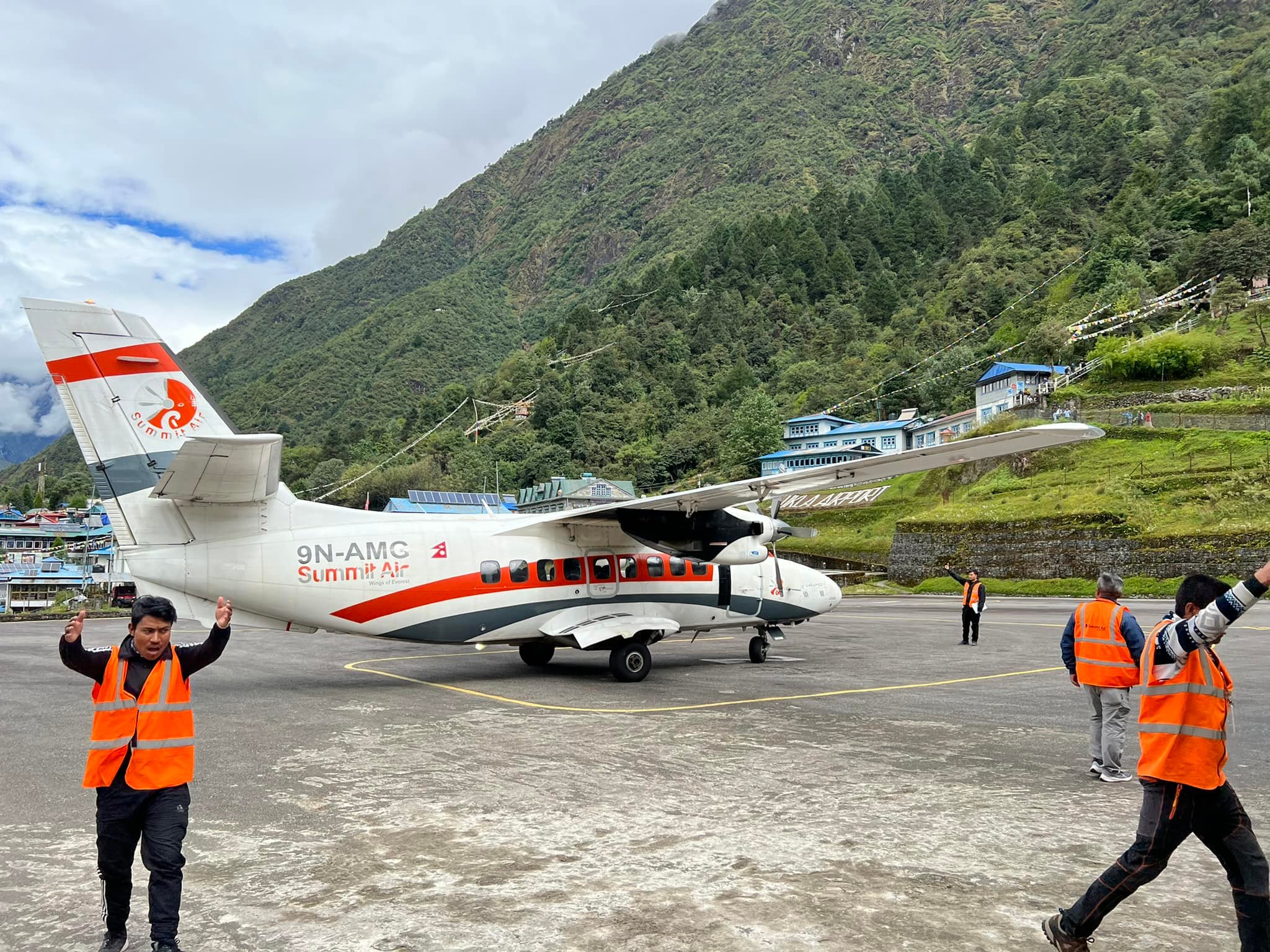
    Lukla Airport & Summit air is waiting for the passengers to on board

    Was It Worth the Cost?

    The ticket cost around $200 USD – quite a bit for one hour of flying. However, to tell you the truth, it was worth every single penny. I experienced a view of the highest mountain in the world and did not have to hike for weeks to see it. I experienced something few people ever will. I came home with not just photographs, but the memory of an experience I will tell stories of forever. Some may say that it is simply a tourist destination, but for me, I had a spiritual moment with one of nature’s great landmarks. 

    What I Learned (and Recommendations For You)

    Based on my experience, some things I would recommend to anyone who is considering this flight are:

    Go in the fall or spring – the clear blue skies make all the difference.

    Book as far in advance as possible – the flights fill quickly, especially during peak seasons.

    Sit on the left side of the plane first – better views of mountains on the way there and back.

    Don’t hurry to take too many pictures – get a few and then just appreciate being there.

    Be prepared for delays – the weather rules everything in the Himalayas.

    Beyond the Flight

    The day didn’t finish at the airport. Still high from the flight, I spent the rest of my afternoon starting to explore Kathmandu. The Boudhanath Stupa was a good place, where I lit a butter lamp and silently thanked the universe for allowing me to see Everest. I then had an amazing hot cup of masala tea in Thamel, mentally watching the mountain views in my mind like a private movie only I could play.

    Final Thoughts

    A flight to the top of Everest is not an adventure – it is a humbling reminder of how we are all comparatively small in the failing of nature yet so lucky to see it. If you ever end up in Nepal and don’t have time to do a longer trek, do it! Have the flight. Let Everest greet you from the mountain view.

    As I finish my journal entry from that morning, one sentence keeps replaying in my head:

    I did not ascend Everest; rather, Everest ascended in me. 

  • Enjoying the Street Foods of Kathmandu: What Street Food You Must Try

    Enjoying the Street Foods of Kathmandu: What Street Food You Must Try

    Enjoying the Street Foods of Kathmandu: What Street Food You Must Try

    I still remember the first time I walked through the busy alleys of Kathmandu’s Asan Bazaar. The air was filled with a mix of spices, the chatter of shopkeepers, and the sizzle of food being fried right in front of me. Kathmandu’s street food is not just about eating—it’s an experience that connects you to the city’s culture, history, and everyday life. Whether you are wandering through Thamel, exploring Patan Durbar Square, or weaving through Indra Chowk, every corner of Kathmandu seems to have something delicious waiting for you.

    The First Bite: Momos on the Streets

    No street food experience in Kathmandu is complete without momos. These juicy dumplings, stuffed with minced meat or vegetables, are steamed and served with a fiery chutney that wakes up your taste buds. I had my first plate from a small roadside stall in Thamel. The vendor handed me a steel plate of steaming hot momos, and I dipped one into the red achar—it was love at first bite. The combination of soft wrapper, flavorful filling, and spicy sauce was unforgettable. Street momos have their own charm—simple, affordable, and bursting with flavor.

    Local momo

    Chatpate: The Crunchy Chaos

    If you hear the sound of someone mixing ingredients in a steel bowl with lightning speed, chances are you’ve found a chatpate seller. Made with puffed rice, boiled potatoes, diced onions, coriander, chili, lemon juice, and secret masalas, chatpate is Kathmandu’s answer to an afternoon snack. I tried it first in Patan Durbar Square, where a vendor handed me a paper cone full of the spicy, tangy mixture. Every bite was a mix of crunch, heat, and sourness—it felt like a festival inside my mouth. Chatpate is addictive; one cone is never enough.

    Sel Roti with Achar: A Festival Flavor Anytime

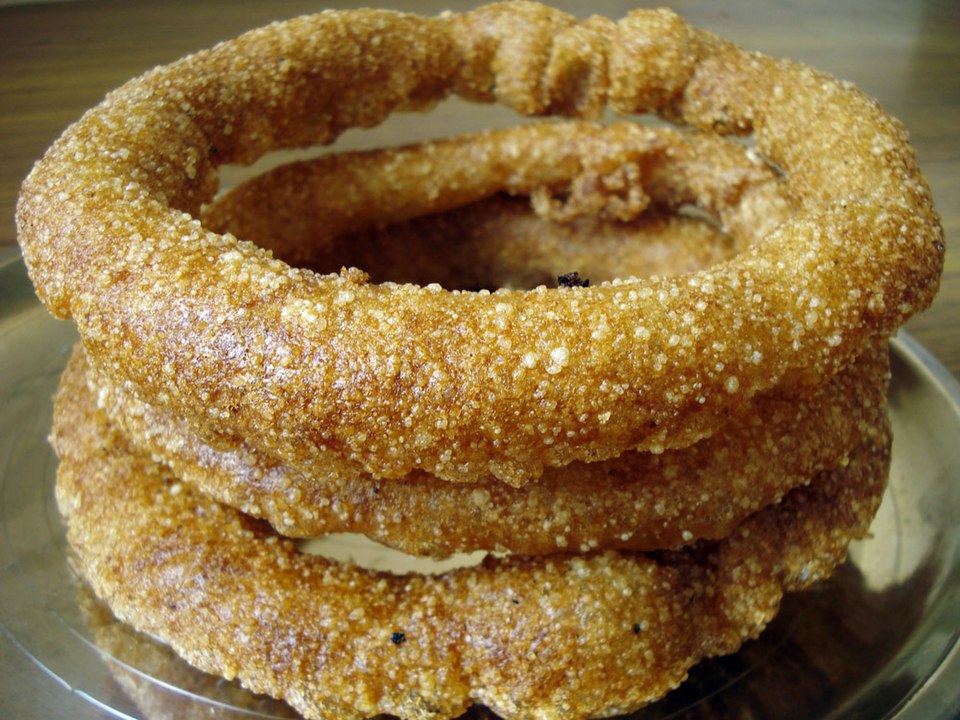
    Sel roti is usually made during festivals like Tihar, but in Kathmandu, you’ll find vendors frying these golden rice-bread rings on the street. I stopped by one such stall near Pashupatinath. The warm, crispy sel roti paired with spicy achar was comforting, almost like tasting home in a bite. Sweet yet savory, crunchy yet soft, sel roti is one of those foods that makes you feel connected to Nepal’s traditions.

    sel roti

    Laphing: A Tibetan Treat in Kathmandu

    Kathmandu is home to many Tibetan communities, and with that comes Tibetan street food. Laphing is a must-try. Cold, slippery mung bean noodles served with soy sauce, vinegar, chili, and garlic—it’s not just food; it’s a sensation. I had laphing in Boudha, sitting on a plastic stool as monks and tourists passed by. The heat of the chili combined with the cool noodles was unlike anything I had ever tasted before. If you love bold flavors, laphing will not disappoint.

    Pani Puri: Small Bites, Big Flavors

    One of the most fun street foods to eat in Kathmandu is pani puri. Small hollow puris are filled with spiced potato and dipped in tangy, flavored water before being popped whole into your mouth. I tried mine at a stall in Durbar Marg. The vendor laughed as he watched my surprised reaction to the explosion of flavors—spicy, sour, and refreshing all at once. Eating pani puri on the street is a communal experience; you stand in a circle with strangers, waiting for the vendor to hand you your next puri, one by one.

    Dahi Puri consists of crispy, hollow puri shells filled with a mixture of boiled potatoes and chickpeas, and then generously topped with sweetened yogurt (dahi), various chutneys (like sweet tamarind chutney and spicy green chutney), and garnished with sev (crispy fried gram flour noodles), and sometimes chopped onions, tomatoes, or pomegranate seeds.

    Samay Baji: A Newari Classic

    Walking through the narrow lanes of Bhaktapur, I came across a local vendor selling samay baji—a traditional Newari platter. Even though it is more commonly served in festivals and gatherings, some vendors prepare a street-style version. Beaten rice, black soybeans, spicy buffalo meat, fried eggs, and pickles—all in one plate. Each bite felt like a story of the Newars, Kathmandu’s indigenous community, passed down through generations.

    Why Kathmandu’s Street Food is Special

    What makes eating street food in Kathmandu so unique is not just the taste—it’s the atmosphere. You stand in crowded squares, share a laugh with the vendor, and watch daily life pass by. Street food here is affordable, accessible, and deeply rooted in culture. It is the city’s heartbeat, a way of connecting with locals without needing words.

    Street Foods You Must Try in Kathmandu

    • Momos – the ultimate Nepali dumpling experience
    • Chatpate – spicy puffed rice snack with a tangy twist
    • Sel Roti with Achar – festival bread you can enjoy year-round
    • Laphing – Tibetan-style chili noodles, perfect for spice lovers
    • Pani Puri – crunchy bites with a burst of flavored water
    • Samay Baji – a traditional Newari food adventure

    If you ever find yourself in Kathmandu, let your stomach guide you through the streets. Forget fancy restaurant. Sometimes the best flavors are found in a paper plate, a steel bowl, or a paper cone passed to you with a smile.

  • Death Rate on Mount Everest Climbing

    Death Rate on Mount Everest Climbing

    Death Rate on Mount Everest Climbing: The Harsh Truth Behind the World’s Tallest Peak.

    For centuries, Mount Everest has represented human determination, bravery, and dreams. Every year, innumerable climbers embark on the journey from different places in the globe to stand on the top of the highest point of the Earth, 8,848.86 meters (29,031 ft) above sea level. Unfortunately, there is a more sobering truth that is not seen in the photo from the summit .Mount Everest is one of the most dangerous places on Earth. For anyone contemplating the ultimate attempt at adventure, it is important to address the death rate of climbing Mount Everest and understand the prevalence of risk versus death rate, and the likely risk opinions. 

    Climbing high on Mount Everest

    So Just How Dangerous is Everest?

    While it may be the highest mountain in the world, Everest is not the most challenging mountaineering technical ascent. The dangers here come from its altitude, the unpredictable weather, or the harsh environments. Since the first successful ascent by Sir Edmund Hillary and Tenzing Norgay in 1953, over 330 climbers have died climbing Everest. 

    No doubt all the improvements in gear, logistics, and professionally experienced guides have made climbing Everest safer than in the past, but the death toll will still keep slowly rising annually, whilst more people continue to climb the mountain. The thin air, howling winds, cold, and icefalls, even if you are prepared, Everest is never fully achieved. 

    Death Rate Statistics on Mount Everest:

    The overall mortality rate of climbers on Mount Everest is between1%1-2%, indicating that for every 100 climbers, at least one climber will not return. While that percentage may not seem large, and it actually looks worse, when we consider that around 6000 summits of Mount Everest have been then 300 climbers will remain forever entombed on the mountain. In past years (1950s to 1990s), the death rate percentage was often much higher, approximately 4-5%.

    Despite better equipment for climbing, better communication, and better rescue skills, the annual average mortality still remains just about 1% each year.The “Death Zone” above 8,000 meters appears to be the place where the climbers die from lack of oxygen and fatigue.It is safer to climb Everest today than it ever has been, but death risk is still a very real possibility.

    Mount_Everest,_Altitudes_Of_Various_Discoveries,_The_Three_Steps,_And_Its_Summit

    Common Causes of Death on Mount Everest.

    To understand the most common causes of death on Everest is to appreciate how unpredictable the climb can be:

    1. Altitude Sickness.

    The lack of oxygen at high altitude can bring on symptoms of Acute Mountain Sickness (AMS), High Altitude Pulmonary Edema (HAPE), or High Altitude Cerebral Edema (HACE). All of which can lead to death if not treated in time.

    2. Severe Weather Conditions

    Storms can come on with little or no notice and leave climbers disoriented in a whiteout situation or freezing temperatures. Wind chills can bring temperatures to approximately -60°C, which creates a nearly impossible survival situation.

    3. Avalanches and Icefall Collapse

    The Khumbu Icefall, which is located just above Base Camp, is one of the most dangerous portions of the ascent. Blocks of ice can collapse at any moment without warning, which can bury climbers under several tons of snow and ice.

    4. Fatigue and Physical Exhaustion

    It is possible for staggering up to the summit to take longer than 12 hours and usually happens after climbers have spent up to several weeks at high altitude making the ascent. Climbers are often too fatigued and physically exhausted trying to climb their way through thin air and are too weak to attempt a descent.

    5. Falls and Accidents

    Narrow ridges, slippery ice, and unstable ropes have led to numerous falls and death particularly in the aforementioned area known as the Hillary Step or in exposed climbing areas.

    6. Delays No Traffic

    Unfortunately, overcrowding brings on an additional danger in recent years. Climbers can wait in line for hours very near the top of the summit after they have run out and do not make the move to turn back either.

    The Role of Sherpas in Safety

    Sherpas, the renowned mountain guides of Nepal, help to reduce the death rate on Everest. They place fixed ropes, deliver supplies and guide climbers safely through dangerous terrain. Though skilled in climbing and endurance, many Sherpas face serious risks because many recorded deaths have been Sherpas who sacrificed their lives helping the climbing expeditions.

    Is Climbing Everest Worth the Risk?

    For many, standing on top of the world is a dream that has persisted all their life! But the stats show tundra and high altitudes come at a cost. The actual costs are enormous. The physical toll is nothing less than risking your life. Tragically, even highly trained athletes die on the slopes of Everest.

    If all you want to do is see Everest, you don’t have to risk your life to do so.

    A Safer Way: Trek to Everest Base Camp

    The Everest Base Camp Trek (EBC) gives adventurers the opportunity to experience the spectacular scenery, Sherpas, and fabulous views in the Himalayas while not having to enter the deadly altitude of the “Death Zone.” At Everest Base Camp, you will find it is a lot higher at 5,364 m (17,598 ft) than your sleeping bag. It is not the summit at 8,848 m (29,029 ft), but it is “high” enough to be a little taste of extreme altitude traffic with consideration to going for the summit attempt.

    You will ascend green valleys, walk on a suspension bridge, travel to Namche Bazaar, and be up close with Everest, minus all the risk and danger of climbing. It is a great experience for an adventurer who wants to have an Everest experience without risking their life.

    In Conclusion

    The climbing death rate at Everest will offer humanity a sobering reminder of how nature has been, and continues to be, much greater than we are as humans. Though technology and better organization have, or at the very least should have, reduced the death rate, the reality is that Everest is still incredibly dry and treacherous.

    For many adventurers, achieving the trek to the Base Camp is a way to satisfy an adrenaline experience while being awed by Everest’s beauty and culture, and successfully preserving life. If Everest calls you, do remember: you don’t have to summit the top of the world to experience its presence and energy. Sometimes, just getting to the Base Camp is the real summit.

  • How Much to Tip a Trekking Guide in Nepal? My Experience

    How Much to Tip a Trekking Guide in Nepal? My Experience

    How Much to Tip a Trekking Guide in Nepal? My Experience

    When I first came to Nepal, one of the main things I wanted to do was to go trekking in the Himalayas. Like many travelers to Nepal who trek, I had read blogs, researched hiking gear, worried over altitude sickness, and continually asked myself one question: how much do I tip my trekking guide and my porter in Nepal? I wanted to make sure I wasn’t coming off as ungrateful or short-changing someone. I didn’t know what it meant to ‘tip fairly’. 

    After I returned from trekking, and started to talk with other trekkers and Nepali people, it became clear to me that tipping in Nepal is less about (black and white) rules and more about being common respect and appreciation, or thankfulness and cultural sensibility.

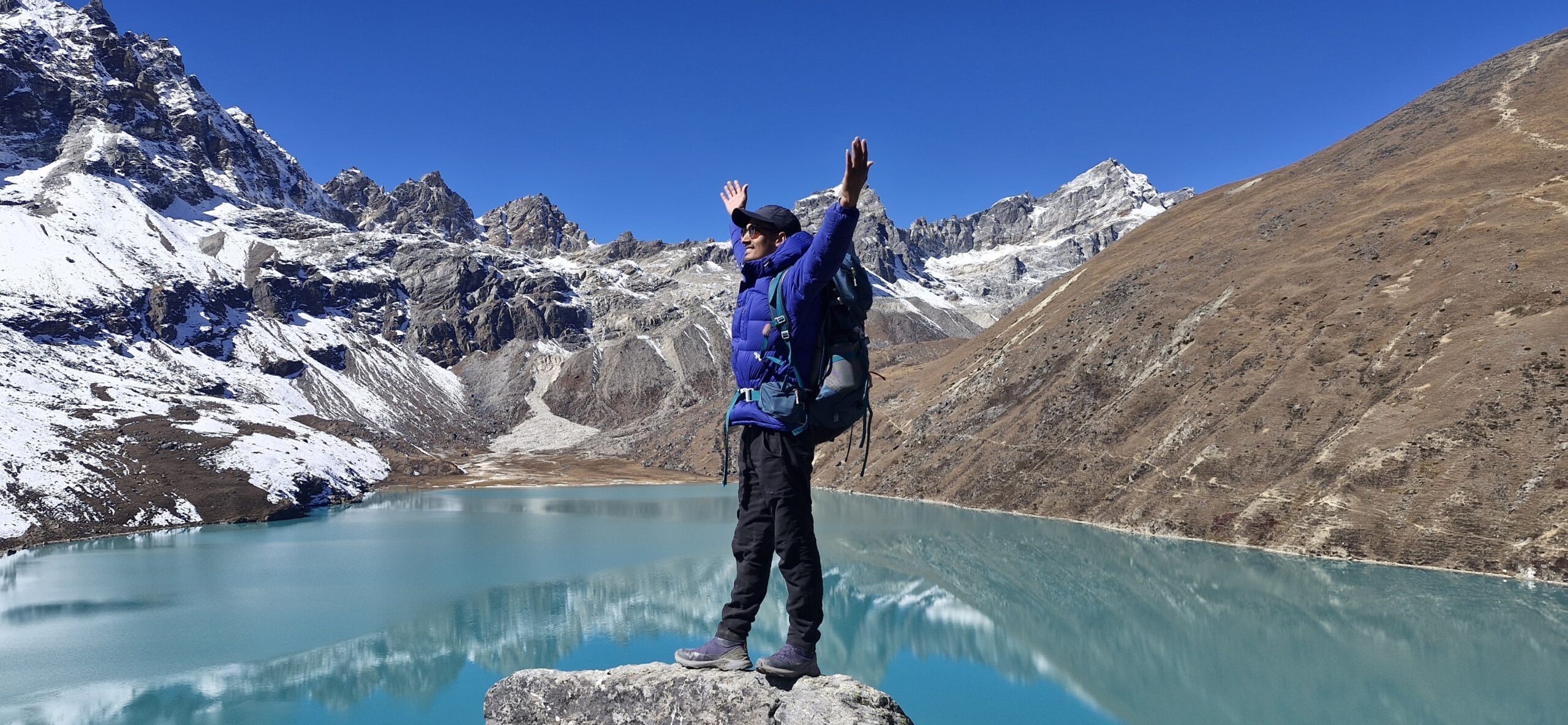
    Mr. Gokarna Thapa is admiring the Gokyo lake & Gokyo valley.
    Mr. Thapa

    My First Trekking Experience in Nepal.

    I joined an organized trek with a group to Annapurna Base Camp. Our guide, Ram, lived in a small village and had been a guide for around twelve years. Even at the very beginning of the trek, he seemed more like a caretaker than a leader of the trip, talking about the culture of the type of village we might have been in, suggesting I should drink lots of water to prevent sickness from the altitude, and carrying my bag one day when I just did not have the energy. 

    By the end of the trek, I realized that guides and porters don’t just “do their jobs”; they give you the opportunity for your entire Himalayan experience. Without guides and porters, most of us wouldn’t arrive at our destination even close to safely. This was when the conversation about tipping became very real for me. 

     So, how much to tip? 

    From what I learned in my experience (and in conversations with other trekkers and agencies later on), the range is: 

    • Guides: $8-$10 USD per day (per trekker)
    • Porters: $5-$7 USD per day (per trekker)

    While trekking as an overall group of three, at the end we agreed to each give our guide, Ram, approximately $100 for a 10-day trek we had done with him, while each porter we would give approximately $70. This seemed reasonable based on their time, commitment, physical effort, and care during our trek. 

    Keep in mind, this is only a suggestion. If your guide is especially nice to you while you are sick, or helped you to make your trek particularly special, or went above and beyond to help you, you may want to tip even more. 

    Farewell to team Nar Phu Trekking from Happy Mountain Nepal
    Farewell Nar Phu Trekking

     Cultural Context on Tipping in Nepal. 

    One thing I noticed is that tipping is not an expectation, though it is certainly appreciated in Nepal. Many trekking guides and porters rely only on the income they make in one trekking season each year to support their families; tipping is a part of that income. 

    I remember giving my envelope to our guide at the end of my trek, and it was clear that it was unexpected; his smile and emphatic dhanyabad (or thank you) demonstrated the meaning of what I had given him and what it meant. He mentioned that he would send his daughter to school with what I had given him. What a moment for me!

    My Tips for Tipping

    Plan Ahead – It is good to have a tipping budget set aside for your trip ahead of time, so you aren’t scrambling the day of the trek.

    Give as a Group – If you have a larger group, consider pooling your money together and giving it as a single envelope. It feels more organized and respectful.

    Hand It Off Personally – Don’t just leave it as a tip; hand it directly to the guide and porter. Look them in the eye and say thank you for their work.

    Factor in Effort – Did they help you when you were struggling? Did they provide you with  information and keep you safe? Let your tip indicate your feelings.

    Don’t Worry Too Much – Tipping is not about perfection; it is about gratitude. Just because you didn’t give “exactly” the suggested amount does not mean you need to feel bad.

    Final Reflection:

     Before my trekking adventure, I considered tipping just another part of the trip experience. After trekking for days in the mountains with my porter and guide, I view it as much more than a monetary value. It is about valuing the experience. These men (and often women) literally took my experience on their backs. 

    If you are trying to figure out how much to tip your trekking guide while in Nepal, you may want to reference the amount that is recommended in the guidelines, but then you have to listen to your heart. The amount you ultimately decide to give your guide at the end of the trek is the amount that you feel gives meaning to the expression of gratitude for what the guide facilitated for you in memories, safety, or happiness.

    For me, tipping was never about the money; it was simply saying thank you for helping me achieve a dream.

  • I Love Exploration, But Can’t Walk!

    I Love Exploration, But Can’t Walk!

    I Love Exploration But Can’t Walk!

    What activities can one do while visiting Nepal? When one thinks of Nepal, most people think of tough, long trekking paths with a pack and walking for a few days to reach snow-capped peaks. I pictured that too. For many years, my belief was that Nepal was a home for those with trekking, climbing, and stamina, and unwillingly, that ruled Nepal out as a possible journey. The concern to travel to a place so closely associated with trekking was genuine; if walking simply wasn’t going to happen for me, could I really experience a country steeped in trekking? 

    I learned the answer to that question is a definite yes! Nepal is not simply a land for trekkers; it is a land for all types of explorers. From the full cultural immersion of ancient squares in Kathmandu, to epic hill drives, to quiet afternoons at Pokhara lakeside, to exhilarating flights over the mountains. I learned you do not have to walk for miles to experience the magic of Nepal.

    Although this is my own experience, it reflects guidance for anyone who enjoys adventures but has some difficulty walking. Nepal has a special place for you, too! 

    crowded street scene during the Indra Jatra festival in Basantapur Durbar Square, Kathmandu, Nepal, with a large group of people in the foreground and traditional buildings with white pillars under a cloudy sky in the background.

    Kathmandu: A Place to Experience; No Trekking Allowed. 

    When I first went to Kathmandu, I was nervous; I was just worried whether I would feel excluded. My concern evaporated within just minutes of arriving in the city. Besides, you don’t even need trekking boots (or even hiking shoes) when you explore the city. The city walks you into your experience of the city. It’s a virtually living museum. 

    For instance, when I stepped into Patan Durbar Square, I just knew I was having the ultimate experience of Nepal utmost experience. No trekking experience, not even too much walking!. I will admit, even sitting at my local quiet cafe (one looking straight across from the temple) was plenty of experience. I observed the quotidian tapestry of lively events happening around me. Monks in maroon robes walked past me, shopkeepers positioned brass deities, and children chased pigeons. Every nook and cranny became active with its own experience.

    I experienced a similar situation in Bhaktapur Durbar Square, with red-brick temples standing in rows on the square that felt much like sentinels keeping the record of time. Rickshaws and taxis diluted the burden of visiting the historic sites, and the natives were always quick to provide assistance, even when walking through narrow paths. It did not take me long to figure out in Kathmandu: distance is not the true measure of exploration, but connection. 

    Scenic Drives: Roads that Replace Hiking

    In Nepal, roads in their own right are a type of adventure. One day, I took a jeep ride from Kathmandu to Nagarkot and began a trip throughout the hills, passing terraced fields and small villages unknowingly, and out of nowhere, saw the snowcapped Himalayas on the far distant skyline like a painting spread across the sky. I did not hike, although I saw the sunrise that I knew thousands of trekkers dream of seeing. 

    On another route, I drove to Dhulikhel, where the locations for temples are on rounds of small hills, and while being there, all I did was stand and look. Standing (or sitting) while looking is just as peaceful as uninterrupted gazing over the mountainous plains without minimal energy exertion from hiking. The joy of Nepal is that so many places that are remarkably picturesque can be reached by vehicle.

    Four people – two men and two women – smiling and sitting around a wooden table laden with plates of food and drinks, possibly in a restaurant or cafe with large windows in the background."

    In Pokhara, the drives further captivated me: the roads curve around Phewa Lake, then curve up towards the World Peace pagoda, all the while never losing sight of Machapuchare, the sacred “Fishtail” mountain. When in Pokhara, a taxi ride is in itself a mini-adventure, with the curves of the road constructing new scenes from nature.

    Mountain Flights: My Everest Without Trekking.

    The highlight of the entire trip for me was seeing Everest. I wasn’t seeing Everest through a postcard; I was seeing it with my own eyes.  For those unable to trek or hike down to paradise, mountain flights are a great alternative. One morning, I found myself in Kathmandu airport hopping on a small plane – the next thing I knew, minutes later, I was looking out the window at thousands of mountains, the grand sense of mean feeling towards distant massive mountains. Langtang, Gauri Shankar, and Makalu, to name just a few. 

    Then, Everest. The first mountain to emerge from the Earth, reading right from the mountain with your balance on tall hills, with the mountain glowing in the early sun. I didn’t have to trek for days; I didn’t need an oxygen tank or a local guide; just a window seat and a pair of wide-open and alert eyes to feel like I was one step closer to the heavens.

    Even better are helicopter tours that land at places trekkers would take weeks to reach. Some helicopter tours take you to Everest Base Camp or Annapurna Base Camp, or Gokyo Lakes. I remember that I had the thought that Nepal not only opened itself up to the walkers of the world, but also to daydreamers like myself.

    Pokhara: A Refuge for Gadabouts

    Pokhara became a refuge for me; unlike chaotic Kathmandu, things seemed slightly slower there, and so did I. I made Phew Lake my daily playground. Instead of circumambulating, I would hire a boatman who would row me across the still waters while I contemplated the reflection of Machapuchare on the nearby glassy lake. It was hypnotizing. It would settle in little cafes and restaurants along Phew lake for the stunning view of the sun setting & illuminating the sky with golden, violet-like tones.

    Blue and dark-colored boats reflected on golden water during sunrise or sunset, creating a serene and symmetrical scene in phewa lake
    Sunset on Phewa Lake in Pokhara, Nepal

    For a taste of thrill, I went to Mahendra Cave and Gupteshwor Cave. I was able to approach some short passages, which unveiled an intimate experience with limestone and deity-filled shrines. But what I will be left with in my long-term memory, honestly, are the small things: paragliders soaring above the valley, hearing live bands perform folk Nepali music, and having tea while mountains defined the horizon. Pokhara reminded me – you do not need to rush. Beauty comes when you slow down.

    Culture as Experience: Festivals and Workshops,

    Nepal is more than mountains. It is a culture that has a pulse on every street. Even not taking long walks, found myself in tradition.

    I took part in a pottery workshop in Bhaktapur, experience my hands in wet clay and following the guide of a local artisan. The square was bustling with energy: tourists trying to make pottery; locals negotiating prices for types of vegetables, older timers engaged in social conversations over cups of tea. Just that singular moment of molding clay felt like touching the history of Nepal.

    Festivals brought even more color. During Indra Jatra in Kathmandu, the streets overflowed with music, dance, and processions. I didn’t need to move much. Simply standing at a corner gave me a flood of sights and sounds: masked dancers leaping, drums beating, crowds cheering.

    Exploration here wasn’t measured in steps. It was measured in how much of my heart I gave to the experience.


    Accessible Experiences in Nepal.

    Here are a few of my thoughts: 

    Rickshaws in Kathmandu Valley: A great way to get around back streets without walking!

    Jeep safari at Chitwan National Park: I saw rhinos, deer, and even saw an elephant (this didn’t require walking through the jungle).

    Cable car: At least a ride on the Chandragiri Hills cable car gave me great views over the Himalaya and the Kathmandu Valley; plus, if someone is looking for the more spiritual side of Nepalism, the Manakamana Temple has a cable car that someone can spiritually/effectively experience Nepal with no hiking at all.

    Lakeside in Pokhara: You can literally just sit in one of the lakeside or waterfront cafés and eat and watch the day go by.

    Cooking classes: Learning how to make momos or dal bhat in someone’s home was an experience in and of itself in terms of culture.

    These all reiterated the suggestion that Nepal is not only for hikers, but can be experienced by anyone who wants to experience Nepal and its people within the land.

    Three people pose playfully with their arms outstretched in a mountainous outdoor setting with dry, yellowish vegetation in the foreground. One person is in the top left, one in the middle, and one in the bottom right, all positioned against a backdrop of mountains.

    Tips for Travelers Who Can’t Walk Much.

    In addition, I acquired some useful strategies that improved my experience:

    Organize transport in advance: Taxis, jeeps, and private vehicles are cheap compared to the West, so hiring them conserves energy and gets you to stunning places with ease.

    Make good decisions on accommodation: A number of hotels in Kathmandu and Pokhara now have wheelchair accessible rooms and elevators.

    Ask for assistance: Nepali people were extraordinarily kind. Whether it was getting my chair lifted, crossing the main street with me, or simply pointing me in the direction, I was never alone.

    Take regular time out: Nepal can be overwhelming with its noise and its colour. Taking time out at cafes and gardens helped to reach equilibrium.

    Think beyond trekking: Examine the festivals, cuisine, culture, and natural beauty available by road. Trekking may get all the press, but it is only one slice of the Nepali experience.

    The Soul of Nepal Beyond Walking.

    At first, I feared Nepal would exclude me. Rather, it extended a warm embrace. The mountains loomed large, the towns teemed with tales, and people shared their hearts. As a traveler we discovered that it is not measured in kilometers that your legs take you, but it is really measured in how open your heart is. 

    When I did the Everest view from the sky, when bobbled around Phewa Lake, when I molded with clay in Bhaktapur, I was exploring as well as a human can while hauling gear. Nepal taught me that exploration is not measured in distance; it is measured in meaning. 

    So, if you crave exploration and travel like I do but simply cannot walk far, do not feel shy. Nepal was awaiting you, not just for athletes, but for dreamers, culture fans, beauty lovers, and travelers who travel differently and just enjoy it just as much. 

    The mountains do not care how you came. They will welcome you no matter what.


  • Jungle Safari in Chitwan National Park

    Jungle Safari in Chitwan National Park

    Jungle Safari in Chitwan National Park: Elephants, Rhinos, and a Lot More.

    When I first learned of Chitwan National Park, it sounded like something in a nature documentary – walking in a dense sal forest, paddling in a dugout canoe down rivers, and viewing wildlife that I had only ever read about. Once I got to southern Nepal, I knew I wanted to devote some time to an adventure into the wild in Chitwan; I had no idea what to expect at all! It wound up being a wild, once-in-a-lifetime experience in Nepal that was not just another jungle safari.  

    A group of people are seen interacting playfully with a large elephant in water, with one person sitting on its back and others nearby as the elephant sprays water from its trunk.

    My Initial Introduction to Chitwan’s Wild Side 

    When I went through the gate into Chitwan National Park, it felt like I was in another world! It was warm, and earthy-smelling forest scents were coming from the hot forest, as well as some fresher-smelling scents coming from the Rapti River, just below. 

    It was unique and fitting to stay in a Tharu-style lodge in its surroundings. The next morning, after a hot breakfast, I departed in a jeep with several other visitors. Our guide was a local man who had been doing this for years, and he told us to be quiet, look around, and enjoy ourselves as the jungle definitely had a way and a power to surprise you. With birds calling overhead and the occasional noise from the bushes to watch out for, I could appreciate the tension in the air. Our ranger identified different types of deer that grazed elegantly and cautiously in the tall grasslands, their ear foraging for any sudden noise. I knew then that Chitwan was not just about the large animals but being part of the vibrant, chaotic energy of nature that felt raw.

    Meeting the Gentle Giants: Elephants.

    I’d say a highlight on safari was connecting with elephants. These massive animals have cultural importance in the area, and it felt a little strange to see them. I was delighted watching a herd casually walk up the bank of a river while their trunks swayed and they softly rolled to one another, while splashing water with their trunks, which was entertaining, while calves nestled up alongside their mothers.

    I was lucky to visit an elephant breeding center that administers conservation programs aimed at the elephant population. Observing the care and concern for the babies was basically eye-opening and emotionally moving. Plus, it reminded me that the animals living in wildlife safari resorts should not simply be as animals; they are part of an even larger ecosystem of which we should never take for granted, and I was reminded of this simply by being in the same general environment as animals. I reconsidered my appreciation for animals’ intelligence, docility, and gentle nature.

    A nail-biting experience of seeing a one-horned rhinoceros. All of my experiences were exciting, but I have to admit, seeing the one-horned rhinoceros was an experience of a lifetime. They are large animals, yet I found their movements to be oddly quiet and unearthly.

    The jeep shut off at a point where we felt the distance was safe, and we observed the rhino as it slowly ate grass and kept its distance. The sun shone bright and very clearly. The canoe ride gave me a different perspective of the park. It was not the thrill of encountering the larger animals, but rather an extended, slow meditation. I took in the rhythm of the river and the interaction of animals with the water as it gently flowed by. Both were very calming and rejuvenating.

    The Colors of Tharu Culture.

    In Chitwan, we witnessed the heavy, armor-like quality of the rhino that also gave it a prehistoric feature. In the guide, it noted Chitwan has one of the largest congregations of one-horned rhinos in the world, and is a true conservation success story for wildlife! Observing a big, powerful animal in its habitat is irreplaceable; you can’t mimic that in a zoo, or even in an educational documentary. It felt raw, it felt real and unscripted, and this was nature revealing and displaying its beauty.

    group of people are on a jeep safari, driving through tall green grass in a lush, natural environment, possibly a jungle or national park in Nepal."

    Canoe Down the Rapti River.

    The safari experience was also more than a land-based safari experience. One of my favorite experiences was going down the river called “Rapti” in a wooden canoe. The water was still and mirror-like, with short trees reflecting on the bank. Crocodiles were sunbathing on the sandy banks, and would slip into the water; they would sometimes just be purely invisible. No splash. No noises. Kingfishers were darting red, blue, and orange, and the herons were still poised, waiting for their meal.

    Nothing rounds out the full Chitwan experience until you have experienced the Tharu culture. Post-dinner one night, I had the opportunity to attend a community-based and traditional Tharu dance. And where community members expressed their culture through the use of rhythms and lyrics. The fire lights up the dancers with their traditional dress while they are dancing with sticks and singing songs. They have been passed down from generation to generation. I enjoyed a night in a Tharu homestay, and this was the icing on the cake of my trip. The hospitality, the bundyi (dhikri) and gundruk, and what felt like participation in the family dinner table chatter were experiences that will walk with me long after my stay. My time experiencing their culture, along with the safari, reminds me that Chitwan is about as much the heart of the forest as it is the culture of the people.

    Why Chitwan Safari is Truly Special.

    Looking back on my experience in Chitwan National Park, I think what truly made it a highlight was the diversity. It wasn’t just about the elephants or the rhinos. It was about being in a very thick jungle and hearing the jungle call to each other from a distance; it was watching the sun setting over the Rapti River; and it was meeting people who have lived with the jungle for centuries. The jeep safaris, canoe rides, bird watching, and throngs of people walking through villages. They are all something I take from the next day.

    Chitwan was more than a safari for me. It was stories, feelings, and moments that I will always remember. If you are going to Nepal and want to do more than stand at a viewing spot. And glance at a bunch of different mountains, then Chitwan is calling you. It is a typical adventure that tugs the sensation of thrill and the calmness of life that makes you feel alive. And connected with the earth and nature.


  • Kathmandu Heritage Tour Without Any Cash

    Kathmandu Heritage Tour Without Any Cash

    Kathmandu Heritage Tour Without Any Cash: A Real Traveler’s Guide

    Every time you visit Kathmandu, it feels like visiting a living museum. The city is dotted with temples, palaces, shrines, and courtyards that are centuries old and impart stories about kings, artisans, and deities. But what if you were interested in experiencing the heritage wonders of Kathmandu without spending a single rupee? Well, good news, you can do just that. While many UNESCO-listed heritage sites have entrance fees, the streets, alleys, and squares of Kathmandu are filled with free history, culture and living traditions. In this blog post, I’m going to explain how you can experience the heritage of Kathmandu without having to carry cash, but still experience the full magic of Kathmandu.

    Start with the Open Squares and Old Streets

    While Simrik for Kathmandu’s Durbar Square is recognized across the world, so are other neighborhoods like Indrachowk, Ason, or Thamel nearby, all of which offer similar if not better experiences of culture–for free. You don’t have to spend money to wander and admire the Newar architecture, walk around ancient chowks (courts), or observe some of the daily rituals that take place at small shrines that occupy a corner of an alley.

    A vibrant image of a Hindu temple or shrine, possibly in Nepal, showcasing intricate carvings and statues, with warm orange and red banners or decorations and a dramatic sky at sunset or sunriseIf you stroll through Ason Bazaar, you’ll find yourself among trade routes dating back centuries, spice shops and temples, such as Annapurna Ajima and Akash Bhairav. Street performances, pujas, and a variety of local gatherings animate the city in forms that are hard to put a value on – what can you pay to experience the miracles that take place in the streets? The best part is, walking through these streets won’t cost anything, however the culture and value are worth much more than an entrance fee.

    Temples to Enter for Free

    While certain major temples of the city, such as Swayambhunath or Pashupatinath, have charges present for foreigners to enter, there are countless temples disperse throughout Kathmandu that welcome all people through their premises, free of charge. Examples of temples that you are able to see without charge include the Seto Machindranath Temple in Jana Bahal, the Ashok Binayak Temple located near Durbar Square, and literally thousands of smaller neighbor shrines. You can simply walk into these temples and light an oil lamp, while taking in the atmosphere of spirituality. 

    Each temple has its own stories – some are part of the mythology surrounding the arrival of Kathmandu, while others you may see visited once a year during festivals, such as Indra Jatra or during the festival of Rato Machindranath. To visit and take in the temples costs nothing, save for your relevance and curiosity. If you are fortunate enough to get to any of the temples early in the morning you may see in reality people arriving with flowers to offer, or engaged in presenting their prayers to the deities as you catch a glimpse of the spirituality that is represented throughout the culture of daily life.

    Heritage Walks in the Alleys

    Walking is the best way to get to know Kathmandu. Strolling through alleyways like Kilagal, Thahiti, or Naradevi, you’ll come upon ancient stone water spouts (hiti), traditional Newar houses with wooden carvings, and flap your way through hidden courtyards where locals live as their ancestors. This heritage walking is absolutely free and arguably richer than a paid tour, because it shows how culture continues outside of monuments we preserve.

    Patan Durbar Square sightseeing by tourist

    One of the best free heritage trails starts in Thamel, winds its way through Kaldahra, crosses into Ason and ends at Indrachowk. You’ll pass stupas, hidden shrines to gods, traditional markets and resting houses (patis). Just be sure you are wearing sensible shoes and have an open heart.

    Festivals: Free Cultural Experiences

    If you organize your itinerary well, you will experience the energy of the festivals in Kathmandu, while spending nothing. All the festivals bring some part of heritage on the street, with traditional chariot processions, mask dances, and lights. It is remarkable to see the Living Goddess Kumari be carry along with her palanquin through Kathmandu Durbar Square in the Indra Jatra Festival. Even by paying nothing, it will be a welcome addition to your experience. 

    Regionally, local jatras (street processions) can give you a front-row seat to music, dance, and traditions that have manifested throughout the history of Kathmandu, with dancing and singing tolerating even the worst of winter. The festivals in Kathmandu turn the entire city into an impressive, living stage, offering heritage and culture in the most lively and festive form – living and free.

    prominent mountains are visible under a bright sky, suggesting a location with significant elevation. The scene captures a vibrant cultural or historical site, potentially a marketplace or a religious gathering.

    Free Views and Sacred Atmospheres

    There are no ticket fees to experience the panoramic views of the Kathmandu Valley either. You can get great perspectives of the temples and some urban life in places like Naghal and Itumbahal or by heading to the terraced courtyards right next to Hanuman Dhoka. You might even find viewpoints of the stupa by slightly walking uphill towards the direction of Swoyambhunath without passing the ticket counter.

    To take in the vibe, the best times would be either at sunrise or sunset, as you will feel the atmosphere of bells ringing, chanting, and temples drumming—and all without a single rupee in your pocket.

    Practical Tips for Visiting the Heritage Site of Kathmandu without Spending Cash

    Walk! Heritage is around every corner of Kathmandu, and walking is a good substitute for not spending as much cash—in addition, you also get something deeper.

    Also, if you want to not spend any cash, bring some snacks and drink water—bring your own reusable bottle.

    Honor the local traditions: There are numerous free temples and courtyards that are place of worship. When you are taking photos, and partaking in rituals, be respectful and take stock.

    Educate yourself about a little history: You could go on a tour with a guide and pay extra for the experience, or you could do a bit of homework online, or even talk to locals. More often than not, they are happy to share stories or their version of events at the time in question.

    Conclusion:

    By all means, a Kathmandu heritage tour needn’t cost a fortune, or cost you anything at all. The city itself is a museum, and culture exists everywhere for to observe, in the streets, in temples and everyday life. Walking through busy squares, going into shrines in neighborhoods, or simply observing processions can allow you to experience what it is like the live in Kathmandu without money.


  • Where is Mount Everest Located? Everything You Need to Know

    Where is Mount Everest Located? Everything You Need to Know

    Where is Mount Everest Located? Everything You Need to Know

    Mt. Everest is recognized as the highest mountain in the world, but it also represents adventure, spirituality, and nature. This brings us to the questio:, where is Mt. Everest? The answer can be gathered from looking at the geography, culture and the history of the Himalaya. In this blog I will clarify, what is Mt. Everest and all the names associated with Mt. Everest as a traveler take you to Mt. Everest. 

    Mount_Everest,_Altitudes_Of_Various_Discoveries,_The_Three_Steps,_And_Its_Summit


    Where is Mt. Everest Specifically

    Mt. Everest is part of the Himalaya mountain range at the border of Nepal and Tibet (an autonomous region of China). If you were to consider the slop of the mountain that face south as you approach the mountain, than that slope would associate Mt. Everest with Nepal, however if were to consider the slope of Mt. Everest that faced north, than it would associate Mt. Everest with Tibet. To be more technically detailed, if I give you Mt. Everest’s latitude and longitude you can see Mt. Everest more defined 27.9881° N latitude and 86.9250° E longitude, now you can envision where Mt. Everest is placed on a map.

    Mount Everest is located in Sagarmatha National Park in Nepal, a UNESCO World Heritage Site of unbelievably unique wildlife such as snow leopards, and red pandas, as well as Himalayan tahr. Most climbers fly into Lukla and start off acclimatizing on their trek to the summit of the mountain. This trek is also the same one to Everest Base Camp for hikers. In order to reach Mount Everest from the Tibetan side you will need to enter into the Tibet Autonomous Region. When you enter from this side you are not only entering into a completely different place, but the procedure here is more complicated as you’ll require special permits for this travel as this is more off the beaten path, less so with in the area of trekking tourism.

    So Everest does not only have a border with two sides, it has 2 different experiences: a warm trekking culture on the Nepalese side, and the mystical highland side of Tibet

    Mount Everest’s Height and Surrounding Peaks

    At an elevation of 8,849 meters (29,032 feet) above sea level, Mount Everest is the tallest mountain in the world. To clarify, it is not an entirely separate mountain; rather, it is a subset of one mountain that makes up the Mahalangur Himal sub-range of the Himalaya mountain range, which is fill with many amazing, tall, beautiful mountain peaks. The south of Mount Everest is another quite large mountain called Lhotse, which is actually the fourth tallest mountain in the world, at 8,516. 

    To the west of Everest is Nuptse at 7,861 meters, then Changtse to the north, again of Everest. All of these mountains in the neighborhood of Everest add spectacular structural views which climbers and trekkers will never forget. When trekking to base camp on that trail, those mountains seem to construct a cathedral missionary effect. By all means Everest is awe inspiring based on its sheer height, but there are scientific instructional implications because Everest rises each year due to the Indian tectonic plate continually converging upon the surface of the Eurasian tectonic plate. In lay terms, the tallest mountain in the world keeps getting taller.

    Climbing high on Mount Everest

    What Do Nepal and Tibet Call Mount Everest?

    While native English speakers refer to the peak as Mount Everest, it has more respectful names in context.

    ·   In Nepali, the mountain is called Sagarmatha, which roughly translates into “Goddess of the Sky.” This is significant because it signifies a spiritual presence of the mountain within its local context.

    ·   The Tibetan name is Chomolungma, which less literally but more readily translates to “Goddess Mother of the World,” reminding Tibetans the mountain is more than a mountain…it is a mother.

    ·   Lastly, Everest was named after Sir George Everest, the British Surveyor-General of India in the Nineteenth Century.

    Every name has a significance. For local people, descent of the mountain is a spiritual experience, and for a western explorer, it is just a geospatial phenomenon. The names provide the explorer with something for beyond the summit to recognize in the name, a worthwhile recognition.

    The Nepal Side vs. the Tibet Side

    Nepal (South Side)

    The majority of the visitors will experience Everest from the side of Nepal. Visitors usually start from Kathmandu, and after a short but exhilarating flight to Lukla Airport, often regarded as one of the world’s more adventurous airstrips, trekkers then begin the hike from Lukla through villages, suspension bridges, and alpine forests until they reach Everest Base Camp.

    The side of Nepal is known not only for the views of Everest, but also for the cultural experience. Places like Namche Bazaar give you a sample of life, and ancient monasteries still remind you that the Himalayas are as spiritual as they are physical.

    Tibet (North Side)

    The side of Tibet offers a different but equally fascinating perspective. Here you can drive all the way to North Everest Base Camp, without hiking or trekking. That said, you will need to have permits that are tightly controll by the Chinese for entry (and there are generally fewer travelers than on the Nepal side).

    The Tibetan side feels more remote: vast plains, dry landscapes, and fewer settlements. Hike or drive, it is more accessible to technically get to base camp, but the remoteness and searching for refreshments make it more of a journey where the Nepal side there are less regulations and you can learn about the culture more freely.

    Both sides reveal different personalities of Mt. Everest – when in the Nepal side it is more about adventure, community and sustainability. On the Tibetan side, it is more about isolation and spiritual landscapes.

    sent depicts a climber on the treacherous slopes of Mount Everest, the world's highest peak.

    Why Mount Everest’s Location Matters

    The significance of Mount Everest’s location is multifaceted. From a geographical perspective, it serves as a natural border between Nepal and Tibet. Spiritually, it is also an important site of worship for both groups. Economically, Mount Everest is ultimately what draws thousands of trekkers and climbers to Nepal each year and provides the largest source of tourism for the country.

    Mount Everest is also symbolic of geological power on Earth. It was create over millions of years as a result of the technical collision of the Indian plate colliding with the Eurasian plate and still rises a few millimeters each year. Geologists study the geology of Mount Everest further our understanding of how the Earth moves and the changes in climate on Earth.

    Lastly, talking about travelers and tourism, Mount Everest’s location makes it the most desirable bucket-list location.Mount Everest calls the edge of one of the most isolated, but accessible places on earth, bringing together the most amazing experience of climbing, beauty, and culture. 

    Experiencing Mount Everest: how to get there. 

    There are many ways to experience Mount Everest depending on time, budget, and ability: 

    1. Everest Base Camp Trek (Nepal) – The “classic” way to experience Everest is the 12-14 day trek around Everest Base Camp where you can walk in the footsteps of the climbers, enjoying truly spectacular views along the way. 
    2. Helicopter tour (Nepal) – If you do not have the time or desire to trek for 12-14 days, you can fly to Everest Base Camp in a helicopter, or fly by summit of Everest on the same day. 
    3. Overland Tour (Tibet) – You can drive from Lhasa across the Tibetan Plateau to visit the north side of Everest.This is a vastly different experience in terms of culture compare to the trek in Nepal.

        4.  Mountain Flight (Nepal) – If, for any reason, you do not wish to hike or climb to Everest, you can        see Everest and the other giants of the Himalayas on a sightseeing flight from Kathmandu.

    Despite which way you take to experience Everest, each option will give you a one of a kind experience, whether it was trudging through heat and sun up a treacherous, windy trail to North Base Camp, soaring across a spectacular valley in a helicopter or to yourself and group up to the overland pass way up to the north.

    FAQs about Mount Everest’s Location

    1. Does Mount Everest belong solely to Nepal?

    Not exclusively. It runs along the border between Nepal and Tibet (China). Climbers and trekkers usually access from the south (Nepal side) and the north slopes are in Tibet.

    2.  Can you see Everest in Kathmandu?

    Not directly. Kathmandu is in a valley surround by hills. Everest is located much further east, in the Khumbu region of Nepal. On certain occasions with amazing visibility conditions, it is possible to see it from some views. But, it would be a view from the sky with a scenic flight or if you trek in the Everest region.

    3.Which side is better to visit, Nepal or Tibet?

    It depends on what the visitor is interested in. Nepal offers trekking adventure experiences that allow for the opportunity for more cultural interactions, and it is easier to get to. Tibet is more of a road trip experience with not as many people, but also requires greater permit requirements. In the end the majority of tourists traveling to the Everest region, find that Nepal is better when both the cultural experience and access are factored in, for their experience.

    Final Thoughts

    So, where is Mount Everest? It is situate on the Nepal and Tibet border, associate with the title of “the highest mountain in the world.” However, with this statement, you learn more than a geographic fact. It also adds to your experience of Mount Everest being a gem of cultural, religious, germ, and geographic importance. Wherever you may experience Mount Everest, it adds to your own experience to know it is on the Nepal and Tibet border and associated geographic locations, and yet another element of the story/context of Mount Everest. Whether you are going on a trek to Everest Base Camp, going to get a flight over Everest, or getting a view of Everest from a plateau in Tibet just knowing where Everest is located also adds to your experience.