Author: Happy Mountain

  • Nepal Bhutan Tour: Journey Through the Himalayan Kingdoms

    Nepal Bhutan Tour: Journey Through the Himalayan Kingdoms

    Nepal Bhutan Tour: Journey Through the Himalayan Kingdoms

    A Nepal Bhutan holiday is very rewarding and adventurous holiday, because you will enjoy the cultural history of Nepal combined with the peaceful religious temperament of Bhutan. These two countries are together in the Himalayas yet so vastly different with the way of life, geography and the culture. A Nepal Bhutan holiday provides the ideal mix for a fascinating holiday of culture, adventure and some tranquility.

    In this blog, we aim to explain why you will definitely not regret doing a Nepal Bhutan tour, what you should do and see of the two countries, how to put the trip together, what you must not miss and offer some travel tips so you can make the most of your travels.

    Swyambhunath in Nepal & Tigers Nest in Bhutan
    Swyambhunath in Nepal on the left & Tigers Nest in Bhutan on the Right

    Source- Google

    Why Choose a Nepal Bhutan Tour?

    If you are someone, who loves Himalayan, spiritual places then Nepal Bhutan Tour should definitely be in your list. Nepal is a fantasy kingdom with its crowds and UNESCO World Heritage monasteries, and a playground of the highest peaks in the world. Bhutan is known for its Gross National Happiness , its dzongs (fortresses), and its peaceful mountain valleys.

    Top reasons to choose this combo tour

    Five story Nyatapola Temple & Tigers Nest in Bhutan
    Nyatapola in Bhaktapur & Tigers Nest on the Right

    Explore ancient temples, monasteries, and royal palaces

    Walk on ancient temples, monasteries, and royal palaces.
    There is nothing quite like enjoying the wealth of Nepal and Bhutan’s heritage by visiting both nations at once. The medieval palaces, monasteries, and royal temples tell us something about the past civilizations that existed centuries earlier. From the stunning wood-carved buildings of the Kathmandu Valley UNESCO World Heritage sites to the stunning Tiger’s Nest monastery hanging perilously, in film-buff fashion, off the side of a cliff in Bhutan, you will be surrounded by the Himalayan kingdoms’ spiritual and artistic heritage. In awe of the stunning Himalayas that sweep across two nations

    Witness the grandeur of the Himalayas in both countries.

    The tour will give you stunning scenery of the royal Himalayas of Himalayas from various positions in Nepal and Bhutan. You have your monolithic Nepalese mountains like Everest and Annapurna, and in Bhutan, you have stunning white mountain ranges like Jomolhari and the eastern Himalayas. There is no other range of mountains that can compete with the natural landscape and altitude of the world’s highest mountains when you are viewing them in two countries!

    Experience two distinct but complementary Buddhist cultures.

    Nepal and Bhutan are Buddhist countries, but they practice and interpret their religion of Buddhism in different ways. Nepal is a syncretism of Tibetan and concurrent Newar Buddhist practice overlaid with a further layering of Hinduism imposed upon it, whereas Bhutan is a culture preservation in the Tibetan Vajrayana tradition.
    This journey will enable the visitor to witness the syncretism as well as the wholeness of harmony of Himalayan spirituality.

    Experience nature-based, eco-tourism in Bhutan.

    Bhutan is the world-leader in philosophy-minded, nature-friendly, Gross National Happiness-friendly ecotourism. It’s fresh-air, pure, virgin; completely virgin landscape; and nature-awe ecotourism for not desecrating nature in as intact a state as possible and greatest respect for the nation’s culture. Tourism has left both negative and positive impressions, and your trip to Bhutan will undoubtedly be positive in the thinking of today’s world.

    Visit two countries, Nepal and Bhutan Tour in one seamless, well-managed trip

    Nepal and Bhutan tour vacation cum holiday is an efficient means of traveling to two good places at once successfully planned single vacation.

    As one can probably guess, far less total travel time will be spent than with single travel to see two widely different good places. All thanks to convenient logistics, visa arrangements, and someone else doing the heavy work of bringing you to the navel of the Himalayas while you simply unwind and drink in the raw awesomeness of the experience without needing to organize a string of trips.

    Highlights of Nepal

    Kathmandu Valley: Culture and Chaos in Harmony

    Kathmandu Valley is a compact mixture of old culture and new chaos, infinite years of tradition shattered by the never-ending syllabic rhythm of urban life. And at its center is Kathmandu, or, more specifically, Kathmandu, the capital of Nepal, with centuries of history, religion, and craft. It is possible to stroll from the towering copper gilt spires of Swayambhunath (Monkey Temple) to the holy precinct of Pashupatinath to the colorful courtyards of Kathmandu Durbar Square within a few hours. And around every corner, there are manifestations of Hinduism and Buddhism, the two world religions most visible to the naked eye on earth.

    The weathered wood carvings of the palaces and temples speak volumes of the artistry of the Newar people, the valley’s earliest inhabitants. This is no wealth behind glass; life is lived here. People light butter lamps under a Bodhi tree, chant in unison, and cry, reading accounts of festivals and parties in a ritual at once sacred, social. The city, inasmuch as it is anarchic, is a grid of structured chaos—a familiarity that is the child of ethnography. Unapologetically, the extraordinary is everywhere.

    Everywhere, in fact. Kathmandu Valley is nature’s repose on arrival in the Himalaya—no less striking a synthesis of cultures, the Valley is the experience corollary to your arrival as the gateway to the Himalayas and journey to the Nepal-Bhutan tour. What’s more, not only to be entertained, but to have a body, mind, and soul experience directed at the resolution of contrasts and deviations?

    Don’t miss:

    Swayambhunath (Monkey Temple)

    Swayambhunath (Monkey Temple) perches on a hilltop over the Kathmandu Valley, with panoramas of the valley floor and spiritual peace.

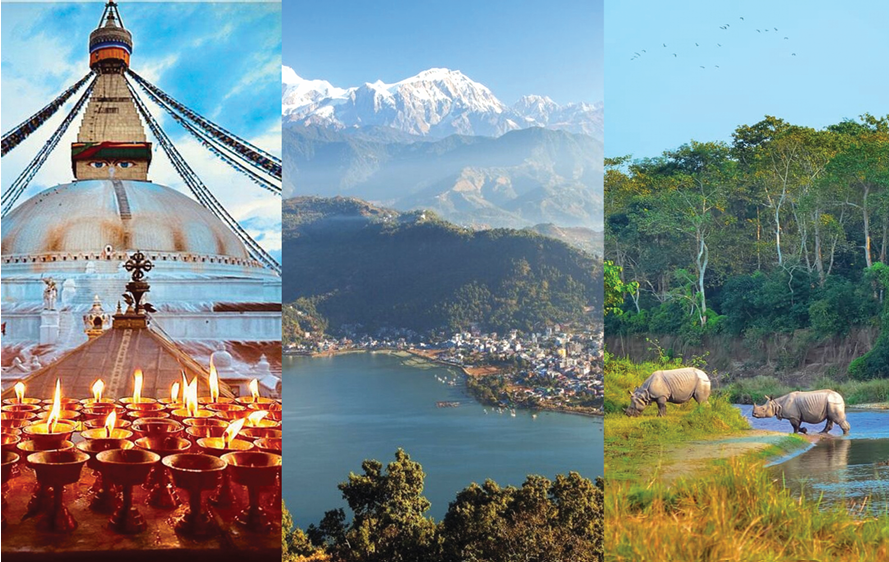
    One of Nepal’s most sacred Buddhist pilgrimage destinations, this stupa is identified by its giant white dome, gold-painted spire crowned by the Buddha’s ever-vigilant eyes, flapping prayer flags, and pilgrims spinning prayer wheels as they circumnavigate its base.

    Swayambhunath is all that one hopes a monkey temple will be, with its mischievous troop of monkeys. It’s the location, backdrop, and value that make Swayambhunath a must-visit.

    Boudhanath Stupa

    Boudhanath Stupa is among the largest Buddhist monuments and one of the most significant on the entire Asian continent, famous for its huge white dome and golden spire with the Buddha’s piercing eyes at the top. One of the ancient Nepalese trade routes goes through Boudhanath; it’s a significant Tibetan Buddhist site for centuries in Nepal and still remains so in its religious significance to pilgrims and monks today.

    You can observe Nepalese of all types walking around the stupa at the kora speed every day, which makes it surrounded by a variety of monasteries, shops, and cafes that resonate with Tibetan traditions. Boudhanath is a peaceful meditation center with a big stupa where one can see living Buddhist culture amidst a thriving society. Bhaktapur and Patan are two of the three medieval Kathmandu Valley cities and the peak of Nepali art and culture.

    Pashupatinath Temple

    Pashupatinath Temple, which is located on the bank of the holy Bagmati River, is Nepal’s most important Hindu temple and a UNESCO World Heritage site. It is an extensive temple complex dedicated to Lord Shiva and draws pilgrims and sadhus (holy men) from throughout South Asia. Perhaps the most striking and memorable aspect of the temple to many visitors is the open-air cremation ghats, where solemn Hindu funeral rituals are performed beside the rushing river. Hindus are the only visitors allowed in the shrine of the temple, but there are many other very significant details that provide many insights into Nepal’s spiritual life and the role of ceremonial death rituals and rebirth, as well as serious spiritual practice of all sorts in daily life.

    Bhaktapur and Patan

    These are two of three medieval Kathmandu Valley cities and the peak of Nepali art and culture. Bhaktapur, the “City of Devotees,” is replete with some of the finest medieval architecture, with roomy courtyards, staggeringly detailed wooden and brick carvings, especially around Bhaktapur’s Durbar Square. Patan, or Lalitpur, the “City of Fine Arts,” possesses unparalleled temples, metalwork, and the superb restoration of Patan Durbar Square. Both cities are replete with cultural and artistic riches of the Newar civilization and far more relaxed than Kathmandu’s chaos.

    Pokhara: Nature’s Playground

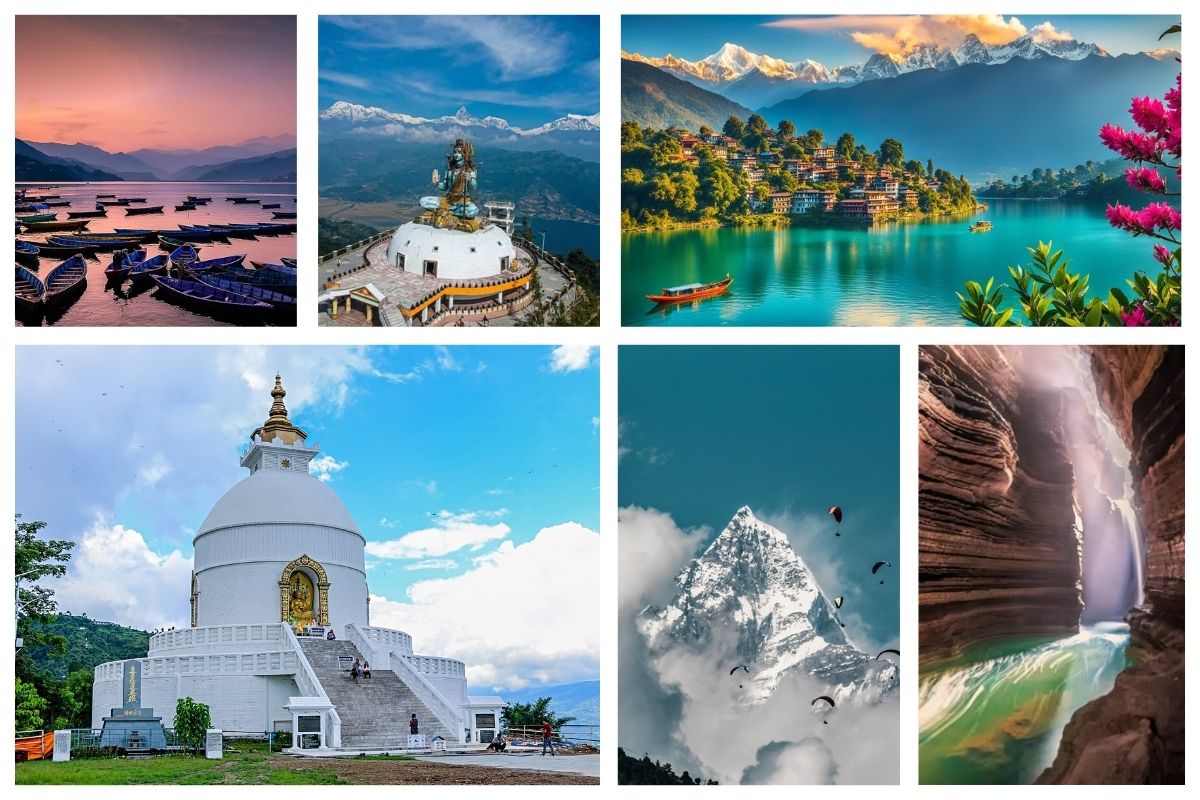
    It is a quiet and peaceful town, but not defect of adventures and nature too. Pokhara is situated on the bank of Phewa Lake, before the head of the foothills, and at one end, on one side, there are snow-capped Annapurna mountains, and on the other side is Machapuchare (Fishtail), it is a feast for the eyes. It’s an amazing sight to see the peaceful sight of the white of the Himalayas, with their blanket of snow reflected in the lake, there are motorized wooden boats, one red and one blue, floating across the lake in the morning. Pokhara is above Lakeside, as the main tourism destination, it is a windy street of boutiques, yoga halls, and boutique hotels, and overall tranquil and peaceful, so it becomes the perfect destination for tourists and travelers looking for a place to unwind and be themselves.

    In addition to being a peaceful and quiet town, Pokhara is also an adventure paradise, since it is the starting point of the famous trekking trails, including Annapurna Base Camp and Mardi Himal treks.

    Pokhara is also a paragliding, zip-lining, ultralight, and mountain biking base,a temporary adventure base, and activity center. In addition to the adventure activity center, you are also able to explore the World Peace Pagoda, Davis Falls, Gupteshwor Cave, and International Mountain Museum.

    Top activity:

    • Phewa Lake boating.
    • Paragliding in the Himalayas.
    • World Peace Pagoda.
    • Sunrise panorama in Sarangkot.
    • And if you are a nature and animal lover, then Nepal’s Terai’s Chitwan would be your first choice.

    Chitwan or Lumbini Extension

    It is home to Chitwan National Park, a world heritage site, and the most diverse area.

    Experience a jeep safari and see the one-horned rhino, Bengal tiger, and wild elephant, or experience canoeing the Rapti River and see crocodiles and some rare birds. Or you could learn about the Tharu people and the rural environment, food, dancing, and/or rural village way of life instead of trekking. Or if you are like me and wish you could wander without wasting the spirituality of your Nepal trek, then you can have a peaceful pilgrimage to Lumbini, Lord Buddha’s birthplace, another UNESCO World Heritage site.

    The site is the Holy Maya Devi Temp, where noise circa 2,500 years ago in the Southern Nepal area of Lumbini encountered history with the birth of Buddha. The shrine is enveloped by the ruins of history and the idyllic gardens that lie before the pilgrims who descend, from distances near and positioned on the globe, to experience the essence of the pilgrimage.
    Both temples take us back in time to an era of Buddhist architecture and the wonderment of the world’s religions. Lumbini takes us to time to reflect, peace, and understanding of how Buddhism came to be.

    Highlights of Bhutan

    Tigers Nest Monastery in the cliff with prayers flags
    Tigers Nest or Paro Taktsang

    Paro: Your Doorway to the Kingdom

    Paro is the first place where foreign guests see Bhutan by air. Located in a picturesque valley with the only international airport in Bhutan. Paro is an inviting entry point to experience all Bhutan has to offer. The flight descent into Paro is probably one of the most beautiful and exciting flights in the world. The views of the Himalayas when approaching Paro are panoramic. Once landing, you will see the beautiful valley with traditional local homes, eco lodge hotels, and forests of emerald and jade, and at times, snow-covered hills!

    Paro will set the tone for your adventure in Bhutan. The sacred temples, rural calmness, and beauty of Paro’s countryside culture, in contrast to its mountains and hills, represent the calm taste of Bhutan. It is only the gateway to a country; it is the showcase that has the famous cliff-side Tiger’s Nest Monastery (Taktsang), Paro Dzong, and National Museum, which are right down the road, places to visit before leaving this fabulous place. Paro is a lot more than an airport hub; it is an experience and glimpse into the Kingdom’s rich culture.

    Paro Taktsang (Tiger’s Nest Monastery)

    Sitting atop a 900-meter cliff face over Paro Valley, the Paro Taktsang is the holiest and best-known monastery in Bhutan. Founded in 1692 around a meditation cave where Guru Rinpoche (Padmasambhava) meditated, it is, by legend, a place of pilgrimage and a Bhutanese emblem of spirituality and spirituality. The trip to this monastery offers some of the best mountain scenery and also a quiet and tranquil ambiance. The visitors go there for the excellent experience of design architecture in places of worship, to experience the religious significance of the location, to see the scenic vistas, or even just to mark an important place off their bucket list. One of the holiest places for Buddhist pilgrims, Taktsang Monastery can’t be omitted by tourists and pilgrims.

    What to see/do:

    – The holy meditation cave of Guru Rinpoche
    – The beautiful cliffside structures with exquisite Bhutanese architecture
    – Paro Valley and Himalayan scenery
    – The nearby yearly celebration of the Tsechu festival
    – The scenic and demanding upward trekking path to the location

    Rinpung Dzong

    A gigantic and large religious, military, and administrative fort is the Aggrad Rinpung Dzong of Paro.
    Built during the 17th century, it is famous for its enormous walls, Bhutanese traditional architecture, and woodcarvings. It is a site where religious festivals such as Paro Tsechu are held, and the government still uses the site for office facilities, as well as uses the site for monastic activities. It is highly acclaimed by tourists for its two ancient courtyards, temples with ornate carvings, and cultural heritage. Top attractions:

    • The inner, spacious courtyard used in festivities
    • The temples and shrines housed within
    • Traditional Bhutanese fortress style of architecture
    • The Paro Tsechu festival with rituals and masked dance performances
    • Panoramic views of Paro Valley from the top of the Dzong walls

    National Museum of Bhutan

    The National Museum of Bhutan is located in the old Ta Dzong building overlooking Paro Valley. The museum is suitable for the person who wants to study Bhutanese history, culture, and art within a substantial period of time; it possesses a rich collection of ancient remains, religious and historic remains, and contemporary art among other units like traditional weapons, textile, crafts, and thangka (Buddhist paintings). The National Museum is a great collection that offers Bhutan’s religious past and folklore heritage. Besides and above this is the Ta Dzong structure itself, a historic watchtower with Paro views.

    Main Attractions:

    • Typically very good group of Buddhist paintings/thangkas
    • Exhibits pertaining to Bhutanese history and cultural artifacts
    • Demos of antique armory/weapons
    • Ta Dzong watchtower structure
    • Panoramic view of Paro Valley from museum windows

    Thimphu: Bhutan’s Capital with a Modern Twist

    Thimphu, the capital of Bhutan, is a fascinating town with time-worn customs blended with a pinch of new modernity. As the largest city in the country, but a peaceful and quiet town-like in nature, where there is an old Buddhist existence punctuated by hopes for what tomorrow will bring. Monks wearing red robes walk past fashionable cafes and boutiques, with the government offices side by side with traditional Bhutanese ones with finely carved wood and multi-colored murals. Thimphu does not have traffic lights like most capital cities, but it has traffic police, and that is why the city is special, and why the city is not crowded like other cities. Thimphu is becoming equally a new, modern political, economic, and cultural hub, but retaining a genuine contemporary lifestyle.

    There are new restaurants, new hotels, and new art classes available in the town in abundance, and embracing young residents, not to mention city tourists. One of the most applicable aspects of Thimphu (like a gigantic Buddha Dordenma statue, or the Saturday market) is one that addresses a city in motion and unfolding into transformation, but retaining its roots and established ways and tenets of spirituality and culture. Thimphu gives us a kaleidoscopic picture of how Bhutan is marching ahead and what a great and wonderful sight one country slowly slowly making its move in the 21st century, travelers have.

    Must-see attractions:

    Patan Durbar Square I Bhutan Monastery
    Nepal Tibet & Bhutan in one frame

    Buddha Dordenma

    Buddha Dordenma is the world’s highest gold-plated Sakyamuni Buddha statue, located high above the city of Thimphu (the capital of Bhutan) in the mountains. The statue itself is 54m high, which makes it among the highest statues of a Buddha in the world. The views are especially great from a sizeable part of Thimphu, and when one looks at the vast Thimphu towards the areas that are mostly architecturally contoured structures well defined in their bold contoured set, which makes large-scale exploits to the potentially cultural construct seas, it is really peaceful and beautiful.

    The statue of the Buddha also contains the little Buddha statue which is amount then – so the entire joy and peace of Bhutan is included. It has a 360 degree view of the canyons will luxuriance – so the gorgeous mountains of Bhutan with the valleys that this statue is placed over are overwhelming stunning. It is a truely remarkable spiritual venue!! Also, Buddha dornenma frequently provides the post and sponsor Buddhist resource.

     Highlights

    • little Buddha statues all around the big Buddha statue
    • large golden statue of Sakyamuni Buddha
    • prayer and meditation sites under the base of the statue
    • landscaped gardens on the property
    • far off view of Thimphu city of foot foothills of the Himalayas

    Tashichho Dzong

    In the northern part of Thimphu town is Tashichho Dzong, a monastery-fortress, the Royal Office, and the administrative and judicial center of the government. All in all, it is a pleasing combination of religious and historical structures, and the impressive administrative and religious structures of Tshichho Dzong, temples, beautiful temples, courtyards, prayer halls, and important Tashichho Dzong events each year, in particular the Thimphu Tsechu festival. Tashichho Dzong’s walls are large, white-washed walls with golden-topped roofs on the upper floors, stature of political and religious power.

    Major Attractions:

    • The King and other government departments’ chambers
    • Beautiful temples in the dzong
    • A great number of prayer rooms are laid out inside the dzong
    • The traditional dances during the annual Thimphu Tsechu
    • Some beautiful Bhutanese fort structures
    • The dzong’s well-preserved courtyards and gardens

    Folk Heritage Museum

    The Thimphu Folk Heritage Museum gives tourists a special opportunity to get acquainted with rural Bhutan. The Museum is housed in a traditional three-storey farmhouse that is very well maintained, and shows real items found in a rural Bhutanese home, such as farming tools, furniture and textiles; concerning rural life exhibited, the principles tell the story of Bhutan’s farming past, types of homes, methods, which exist and endure as important parts of Bhutan’s cultural identity. The whole experience is serene and pensive; while the aura of the capital can no longer be obtained, one can entirely be encased by the tourist work of the unfathomable.

    Highlights include:

    • the old three-storey house architectural structure actual country
    • home furniture and appliances, the contents set of pieces of agrarian and
    • Cloth weaving technology is fully evocative of Bhutanese family life from day to day
    • Adorable floral courts and courts to contemplate.

    Punakha: Valley of Fertility and Beauty

    Punakha is terrific for Natural Beauty and History.
    Highlights include:
    • Punakha Dzong – The most Beautiful fortress in Bhutan
    • Chimi Lhakhang – The Divine Madman Fertility Temple
    • Suspension Bridge – One of the longest and best in Bhutan.

    Sample 10-Day Nepal Bhutan Tour Itinerary

    Day 1–2: Kathmandu, Nepal

    Days 1–2: Kathmandu, Nepal
    An adventure is ahead of you in Kathmandu, the capital of Nepal, which has so much history and depth of spirituality. You will visit many of UNESCO’s World Heritage Sites in the Kathmandu Valley, and experience the sacred Pashupatinath Temple, where you get to experience a colourful and rich series of Hindu rituals on the banks of the Bagmati River. You will see the ancient courtyards of Kathmandu Durbar Square, surrounded by Newari architecture and palaces dating back centuries, located just seconds away. And of course, Bhaktapur and Patan, ancient cities with amazing temples, workshops of artisans, and community squares, where you will get to visit as well, experience the handmade crafts of the locals, and really get into the true cultural handicrafts of Nepal. Experiencing the fusion of spirituality and the daily hustle-and-bustle of the city is a fascinating start to Nepal.

    Day 3–4: Pokhara, Nepal

    Whether you fly into Pokhara or drive, you can’t miss the serene beauty of Pokhara, a picturesque city on Phewa Lake and surrounded by the greenery of the Annapurna Range. You could find yourself on the lake sipping coffee, floating across the lake to the lovely Tal Barahi temple, which is on a tiny island in the lake. You would soak up the creative energy that emanates from the lake, people, and environment. How you would choose to spend your mornings has already been suggested by Lamar. We will head up to Sarangkot for more amazing views of the sunrises over the snow-capped ridges of the Himalayas. For the more adventurous types, they have caves, waterfalls, and other subtle hikes all around the Pokhara valley to explore. The natural beauty here is adventurously peaceful compare to the metropolitan insanity of Kathmandu, and is refreshing for me.

    Day 5: Fly to Paro, Bhutan

    Day 5: Fly to Paro, Bhutan
    You will depart from Nepal on your flight to Paro, Bhutan. You will be astounde by the spectacular scenery of the Himalayas as they tower and fade into the sights and cultural lands of Bhutan. Once you arrive in Paro, you will transfer to Thimphu, Bhutan’s capital. Thimphu is an insight into Bhutan’s juxtaposition of traditions and modernization. After visiting some other cultural sites in the area, the afternoon will take you to Tashichho Dzong, the seat of Bhutan’s government, and then to the massive Buddha Dordenma statue, which sits high above the valley region. I think this embodies a subtle sense of place in the cultures of community, traditions, and individuality of Bhutan. You will now be situate for your engagements, retreats, exploration, and all of the natural beauty and spaces that Bhutan possesses.

    Day 6–7: Punakha and Dochula Pass

    When you have traveled east toward Punakha (the old capital city of Bhutan), and home to the majestic Punakha Dzong (where the two rivers meet), and with temples well worth a visit for their original decoration and open cloisters to give some cultural and Bacchanalian flavor to the overall religious experience in Bhutan, you may have a stop along the way at Dochula Pass, with its 108 chortens (stupas,) and with a nice view of the Himalayan mountains in the far background, and when you arrive hopefully it will clear up for you to take it all in, and at the very least you will have an opportunity to get some amazing pictures! Next, you will enjoy the lush, fertile valleys of Punakha, which may be a world apart from the place you just left in Thimphu!

    Day 8–9: Paro & Hike to Tiger’s Nest

    Having returned to Paro and ready for yet another adventure, you’ll embark on the legendary hike to Paro Taktsang or the Tiger’s Nest Monastery. This moderately challenging hike makes for some spectacular views and a bit of regret at not becoming a hiker earlier in life.

    The monastery gates open to what is both the spiritual hub of Bhutan. An iconic cultural representation of the relationship the nation has with the practice of the Buddhist faith. After finishing the hike, take in Paro Town, its traditional daily markets. The National Museum is located in the old watchtower at Ta Dzong. The local temples to engage and immerse yourself in the Bhutanese local culture. You can learn the importance of the historical events that have shaped this society.

    Day 10: Departure

    Now, complete your forward itinerary with a return flight from Paro. You will be collecting some heartbreaking trinkets from the experience of culture, nature, and spirituality in Nepal. Bhutan (and nothing sadder than memories of a past life – unless you solemnly do not intend to return). You may extend your trip according to your desires; make it a month. Go to more remote places and join in the festivals (there is some amazing food), Tory, or just enjoy. The further opportunities and strategies of Himalayan trekking and/or Bhutanese traditions.

    Best Time to Travel

    The most reliable traveling seasons for a Nepal and Bhutan tour are in the seasons of spring (March to May) and autumn (September to November), common factors among each of these seasons tend to be clear skies, mild temperatures, and holidays. In Bhutan, you may be included in the Paro Tsechu Festival (March/April; the festivals vary each year) as well as Dashain and Tihar in Nepal (October/November; the dates fluctuate from year to year).

    Travel Tips for a Seamless Nepal Bhutan Tour

    1. Visas for Nepal Bhutan Tour

    As far as Nepal is concerned, any foreigner is entitled to a visa on arrival at Tribhuvan International Airport in Kathmandu or in the border areas. Too easy, just fill in a form, pay depending on your stay, and be stamped with your visa in 5 minutes. Bhutan is strict with its visa policy as it seeks to protect its nature and culture. In order to travel to Bhutan on a tourist visa, one should plan their tour. With an approved Government Bhutanese Tour Operator. The visa will arranged by the Tour Operator. Independent free travel is restricted to tourists in Bhutan. A visa will only be issue once the Tour Operator has plan an escort tour. It has emphasize with a pre-approve itinerary from the Government of Bhutan. This is intend to promote ecologically conscious tourism and the sustainability of Bhutan’s unique heritage.

    2. Flights

    Direct flights from Tribhuvan International Airport, Kathmandu, to Paro International Airport, Bhutan’s international airport. Scenic flight operated by Bhutan Airlines and DRUK air with Himalayan scenery if the weather is favorable. The flight is brief, otherwise at the weather’s discretion, according to the mountain range. We would recommend booking your tickets in advance. Include additional time in your travel plan while traveling between Nepal and Bhutan.

    3. Currency for Nepal and Bhutan Tour

    The Nepalese Rupee (NPR) is the local currency of Nepal, and ATMs. Exchange centers are widely available in Kathmandu and Pokhara. The Bhutanese Ngultrum (BTN) is the currency of Bhutan and is pegged to the Indian Rupee. The whole expenditure for a day in Bhutan is in Indian Rupees, i.e., food and stay; 500 and 2000 bills are not normally accept. So it would be advisable to exchange the smaller denomination for it.

    Although credit cards are accept for payment by all the big hotels and stores. Money is still the queen of rural Bhutan. So it may be an idea to carry local money if you venture out of main cities.

    4. Health & Safety

    Nepal and Bhutan are also very safe to visit with little crime and friendly locals. Nevertheless, tourists must take some regular precautions such as keeping valuables in hotel safes and avoiding empty streets at night alone. Always consider purchasing a low-cost health insurance policy covering medical evacuation especially if you will be trekking or venturing in rural rural villages. For shopping, filtered or bottled water itself must be your preference, and take adequate care against altitude sickness ascending to greater heights. Be also sensitive towards local culture and tradition. Dress modestly, remove shoes when in religious sites, and don’t forget to ask for permission before taking a photograph of the local individual.

    5. Guides

    A good guide, an adopted policy of the Bhutanese licensing board, is a requirement for everyone. Your guide will take care of everything. They makes your journey a bit more pleasant by introducing you to the history, culture and religion of Bhutan. There is no necessity for a guide in Nepal. If you are trekking, on a cultural tour or where the places do not open. A good guide is an excellent way of learning, of overcoming the language problem and of having a smoother and safer journey. A guide will enhance your experience. Most tourists find that country guides provide history and stories that make your touring an absolute cultural exchange.

    Sustainable Tourism and Cultural Respect

    We will plan to trip to Bhutan and Nepal in the spirit of developing a sense of responsible tourism consciousness. Bhutan limits the number of tourists, and how often they are able to enter the country. In order to plan for caring for its environment and culture. Nepal very much promotes ecotourism and community-based tourism. Visitors will be encourage to dress appropriately.

    Final Thoughts: Nepal Bhutan Tour

    Your trip to Bhutan and Nepal is more than a vacation; it is a trip to the stunning Himalayas. The peacefulness of the monasteries in Bhutan and the thoughtful monks are commotion of the streets of Nepal, people, food, and lush countryside. And as a couple, the contrasting and complementary aspects fit beautifully together. If you want to know more about travelling places in Nepal, you can visit our website.

    The combined Nepal Bhutan trip would leave you with an even deeper admiration. It is love for both the country and the region, thus a return trip would be in order. You would be one of those tourists that just keeps returning to the region, a fan of the country. Contact us today at Happy Mountain Nepal, on Facebook, Instagram, or TikTok

  • Mohare Danda Trek: Community Trek in Nepal

    Mohare Danda Trek: Community Trek in Nepal

    Mohare Danda Trek: Community Trek in Nepal

    The Himalayas are Nepal’s home now, and tourists flock to Nepal from across the globe. Everest Base Camp or the Annapurna Circuit no longer sound like strange names. Hidden in the grimy, off-the-tourist-track areas of Nepal, the Mohore Danda Trek is a village trek, rural Nepal at its finest. For the serious adventurer looking for the highest quality experience, untint by tourism, there are not many trekking trips that can offer the solitude, cultural immersion, and Himalayan views of awe to be had on the Mohare Danda trek while also being of value to the local population.

    What makes Mohare Danda Trek special?

    By undertaking the Mohare Danda Trek, you are not merely trekking on a trail in the mountains. You are partnering with the people who inhabit the mountains. Mohare Danda was launched under the new project of “Annapurna Dhaulagiri Community Trail,” and it is designed to strengthen the community in the area. They will be lodged in village homestays. They will be provided with local traditional food. The tourists, when leaving, would definitely not recall the holiday, but the genuine hospitality of the locals, which they will have surely experienced.

    Most treks for travelers to Nepal are based on an infrastructure industry to service the trek. Mohore Dada Trek is based on community homestays and serviced by community lodges in local villages. The trek at every step is benefiting rural development and eco-tourism, and is ideal for the ethically conscious traveler.

    mohare danda

    Where Is Mohare Danda located?

    Mohare Danda, lies in western Nepal, Myagdi district. It is located between the Annapurna and Dhaulagiri ranges. The trek normally starts at Galeshwar. It is a tiny village, just a short drive from Beni city. Trekkers ascend through a sequence of varied environments, from sub-tropical forest, all the way up to the high ridges, offering trekkers sweeping panorama views of the Himalayan titans.

    Mohare Dannda reaches 3300m (10,827 ft) and is the final peak of the trek. From Dada, one enjoys magnificent views of the surrounding sister mountains: Annapurna South, Machhapuchhre (Fishtail), Dhalugiri, and Nilgiri.

    Ideal Time to Trek Mohare Danda

    The best season to hike Mohare Danda (or any segment of the Himalayas in Nepal) is Spring (March-May) and Autumn (September-November). The weather is very stable, skies are clear, and mountain views are best during the above times. Spring offers a trek with flowering rhododendrons, which are Nepal’s national flowers and fill the trek with colors of beauty. Autumn, with its beauty and uniqueness of post-monsoons and good weather of good days, is best for photography and the ‘participant’ traveler.

    Trek Duration and Route Overview of Mohare Danda

    The Mohore Danda trek is a minor trek by Himalayan trekking standards, and one can do it in 5 to 7 days. This is ideal for a timeless or fresh arrival traveler.

    Beautiful Sheep hut & Dhaulagiri in the background
    Dhaulagiri & whole range seen from Mohore Danda Trek

    Standard Itinerary

    Day 1: Drive to Galeshwor and trek to Banskharka

    It begins with a drive to Galeshwor and an easy trek to Banskharka, a typical village renowned for its orange orchard and pristine Magar culture.

    Day 2: Trek to Nangi

    The next day takes trekkers up on terracing farming and forest to Nangi village, widely recognized as an agricultural technology and community-based tourism development.

    Day 3: Nangi to Mohare Danda trek

    most scenic part of the trek and driest-most difficult terrain-wise part done, and scenery-wise. Sunrise at Mohore Dada is one of the best parts of the trek.

    Day 4: Mohare Danda to Tikot trek

    Down from the open high country to Tikot, an old Magar village.

    Day 5: Tiplyang to Tikot trek and back to Pokhara by car

    The last part of the trek finishes at Tiplyang, and the trekking party is driven by road back to Pokhara.

    The whole tour can be short or extend as one wish according to interest and physical capabilities, though the above outline provides some idea of the general terrain.

    Who Is the Trek Suitable For?

    Mohare Danda Trek is usally for serious trekking trekkers. It is not technically high grade or physical, but one with moderate physical fitness will be better place. The family, singles, and even elderly people find the trek easy but rewarding.

    Since the summit is well beneath 3,000 meters, there is no risk of altitude sickness, as can be experience on the other higher Himalayan trails. That alone makes it extremely attractive to those inexperienced with such treks or with altitude issues.

    Community Involvement: A Model of Sustainable Tourism

    One of the attractions on the Mohare Danda Trek is the model village. The villages along the trek have joined together to provide homestays, lodges, and guides. This is being invested back into community projects, health clinics, and the school.

    This local enterprise keeps the tourism industry in the hands of the locals. It also fosters ownership and pride, which is channeled in the form of interest and hospitality towards the visitors.

    It means the trekkers trekking in the mountains but doing something that leaves a direct impact on the communities along the trail.

    Culture and Traditions Along the Trail in Mohare Danda

    It travels widely in Magar and Gurung villages. They are culturally rich with music, dance, and handicrafts, for which they are popular. More room to observe the country lifestyle, food, and even join a folk festival if the tour time is not restricted by the homestay facility.

    There are cordial and welcoming individuals within this trek whose history will make your trek even more enriching. There were a few Gurkha army soldiers who were either part of the Indian or the British army among the crowd of trekkers, and their history has interesting facts that you can include on the trek.

    Accommodation and Food in Mohare Danda

    You will be occupied virtually the whole time on the Mohare Danda Trek in community-run lodges and homestays, all of which provide meals composed predominantly of locally grown vegetables and other fresh produce. The lodges are clean but simple. They tend to provide warm blankets, local architecture, and plenty of good sense of humor. Some even have extras like solar-heated showers and solar or microhydro charging.

    Lunch and dinner in the Mohare Danda Trek are made using locally found ingredients. Dal Bhat — rice, lentil soup, some vegetables of the season, and pickle — with heart and love is cultural food. Trekkers also get an opportunity to have a chance to have a chance to have millet roti or buckwheat pancakes and yogurt made in the traditional way.

    The meal is so saturated with place that you can’t describe or define it. You’re not eating off a restaurant menu, you’re having lunch, which is part of the rhythm of the day in the village.

    Mohare Danda

    The Natural Beauty of Mohare Danda

    Nature enthusiasts, be it sub-tropical forests thick with a bird-filled sky or Alpine meadows full of flowers, will be left awestruck by the variety of flora and fauna en route to Mohare Danda. Surprises are in every section of the trek.

    The most breathtaking section of the trekking route is the ridge. When the sun’s rays of the morning fall on the snow-white peaks of Dhaulagiri and Annapurna South, it is an experience that borders on the spiritual. The horizon is aflame with oranges and pinks, and time itself stands still for a few moments.

    Wildlife watching is also possible. Deer, monkeys, and other birds are seen wandering in the forests. Far from a trekkers’ jungle experience, it is icing on the cake still to be able to view Nepal’s natural gems up close.

    Challenges and Things to Keep in Mind

    Although the trek itself is quite moderate by Nepalese trek standards, it is not without issues. The trails do slope in some areas, and the weather can turn violently unpredictable in the hills. It is reasonable to be properly prepared, with good boots, suitable layers, and waterproofing.

    Elsewhere, there is no reception for mobile phones, which is welcome news if you wish to attempt some form of digital detox, but should an emergency arise that would require a bit of planning. Let someone always know what you are doing, and maybe hire the services of a local guide, not just for your protection but so that you get the most out of the experience itself.

    Water filtering pocket-sized items or water purification tablets are also recommended, as clean drinking water is not readily available everywhere.

    How to Prepare for the Trek

    Alright, so here’s the lowdown for prepping for the Mohare Danda Trek—don’t stress, you’re not training for Everest here. You don’t need to suffer through months at the gym, sweating buckets. Just walk a bit more than usual or fit in some chill cardio a few weeks ahead. Get your legs used to the whole “hey, we’re hiking a bunch” thing. That’s pretty much it.

    As for packing, keep it tight. No space for those “maybe I’ll need it” extras. The stays are on the basic side, so chuck in your must-haves: toothbrush, that ancient but trusty mini first-aid kit, and oh, bring a headlamp unless you’re cool with fumbling around in the dark. Don’t forget a reusable water bottle and stash some snacks.

    Permits? Yeah, you’ll need one, but honestly, it’s not rocket science. Hit up a local trekking agency, or sort it in Pokhara if you’d rather wing it. Mohare Danda isn’t smack in the middle of the Annapurna Conservation Area, but rules change, so double-check with someone who actually knows, like the local tourism office. Better safe than you know, totally unprepared.

     Why Choose Mohare Danda Over More Popular Routes?

    1. Fewer Tourists:

    One of the biggest benefits of doing the Mohare Danda trek is the seclusion that is offer here. To travelers who wish to do a trip in Nepal’s beautiful Himalayas but would like to divert from the mainstream tourist trail such as Poon Hill or toward the Everest Base Camp. Mohare Danda is not taint with mass tourism, in which you will be enjoying the hard-earn pleasure of the peaceful and peaceful sounds of nature without the interference of too many others around.

    The contemplative atmosphere also gives you an overdue reflective experience without fellow trekkers gossiping, munching on their lunch, or stopping to snap photos on a crowded trail. You will be treat to the birdsong and rustle of leaves as you stroll, something that you will not normally get from the more popular trails noted above. For tourists who travel for a break with some Fall-like stillness, seclusion, away from all the bluster and din of the world, Mohore Danda can very well be just the perfect hideaway.

    2. Authentic Cultural Experience

    A second appeal of the Mohore Danda trek is that it passes through some very small actual villages where local culture and traditions specific to rural environments are definitely present in the everyday life of villagers. Because the Mohore Danda trekking trail is not along the beaten track as much as other high-altitude treks in Nepal, trekking in this area is a chance for visitors to get closer to residents in a rawer and more immediate sense. Since fewer people travel on the trail, staying in homestays gives you the opportunity to spend a night in the homestays, dine with the families who own them, and engage in community activities, much more fulfilling than the more touristy ones you get on an overcrowded trekking trail. Whether it’s joining a family for dal bhat or witnessing a local festival, these moments offer a deeper understanding of the region’s heritage and lifestyle.

    3. Reduced Environmental Footprint:

    Tourism is a bane and a boon. Tourism can be misuse at any point in time and can be harmful to any ecosystem. Mohore Danda’s idea of community-based tourism instills the spirit of sustainable tourism. As long as the tourists are sensitive to the culture and environment of the host community, then the experience is a pleasure for all. Because it has fewer tourists, there are hardly any problems of littering, infrastructure development, and overall traffic that lead to erosion of paths and killing of vegetation in the area. Also, because most of the constructions are done with sustainability being the aim — ecolodges where the resource is exploit from within the community itself, etc, Mohore Danda will naturally be of much smaller ecological expense.

    Mohare Danda

    4. Cost

    Mohore Danda trek is highly economically feasible compare to other major treks such as Everest Base Camp or even Poon Hill. Since the tourists do not need to spend on permits, guides, out-of-range accommodations, and other travel and hence the trek is more affordable.

    The expense is low due to so many reasons, such as short season, it is not that much in demand, and other expenses in the form of the people themselves supplying the services. So revenues don’t reach the big trekking agencies, money stays in the communities, hence supporting the way of life, and every effort is being made to adhere to the preservation of the environment and cultural assets, and not towards destruction

    5. Short Duration:

    The Mohore Danda trek typically lasts between 4 to 6 days. It is an excellent option for those with limited time or looking for an introductory Himalayan trek. Despite its shorter length, it still offers breathtaking mountain views. Including the Annapurna and Dhaulagiri ranges, as well as rich biodiversity and meaningful cultural encounters. It’s ideal for travelers who want to experience the magic of the Himalayas without committing to a multi-week expedition.

    In essence, the Mohore Danda trek offers a holistic experience that blends nature, culture, sustainability, and community. It’s not just about reaching a destination, but about forging connections with the land, the people, and oneself.

    Conclusion: A Journey of Heart and Horizon

    The Mohore Dada Trek is more than just a scenic route through the Himalayas. It’s a window into the heart of Nepal — its people, its traditions, and its hopes for sustainable development through tourism. Whether you are a seasoned trekker or a curious traveler, this trail offers an enriching blend of natural beauty, cultural depth, and ethical travel.

    In a world where mass tourism often overshadows authenticity, Mohore Dada stands out as a quiet reminder that the best journeys are those that connect us, not just to places, but to people and purpose.

    If you’re looking for an experience that leaves a positive footprint and creates lasting memories, pack your bags and curiosity, and gear up for the trek of life lifetime – Mohore Dada Trek. Contact us today at Happy Mountain Nepal on Facebook, Instagram, or TikTok


  • Nagarjuna Hike: Your Perfect Nature Escape Near Kathmandu

    Nagarjuna Hike: Your Perfect Nature Escape Near Kathmandu

    Nagarjuna Hike: Your Perfect Nature Escape Near Kathmandu

    Walk in groups or on personal. A peaceful and calm retreat from the hard concrete city of Kathmandu, Nagarjuna Hike is a great day picnic. Nagarjuna Hike lies in Shivapuri  National Park and involves group hiking. It is single zone of thick forest of rhododendron, oak, and pine. Since the trees soaked up the sun’s heat it will leave you feeling refreshed.

    As you hike along, you are greeted by the calming sounds of small streams. Running through the accompaniment of bird songs, blended together to provide you the calmness. There is even a place where you can split your picnic and hike in two, and you can hear running water. Besides nature, even religious and spiritual identification is linked to this hike. You can see the ancient Tibetan Buddhist monasteries and rows of stupas on your way, and talk about the religious past of Nepal.

    The hike hassles right next to the large Nagarjuna Buddha Stupa before you. There, relax and breathe heavily and be surrounded by the atmosphere, and look out at breathtaking panorama views of Kathmandu Valley and far away, ancient and royal Himalayas. Nagarjuna Hike is a great mix of nature, culture, and accessibility, which makes the hike so worthwhile for locals and international visitors as well, who would love to see the peaceful wilderness so near the verge of a capital city.

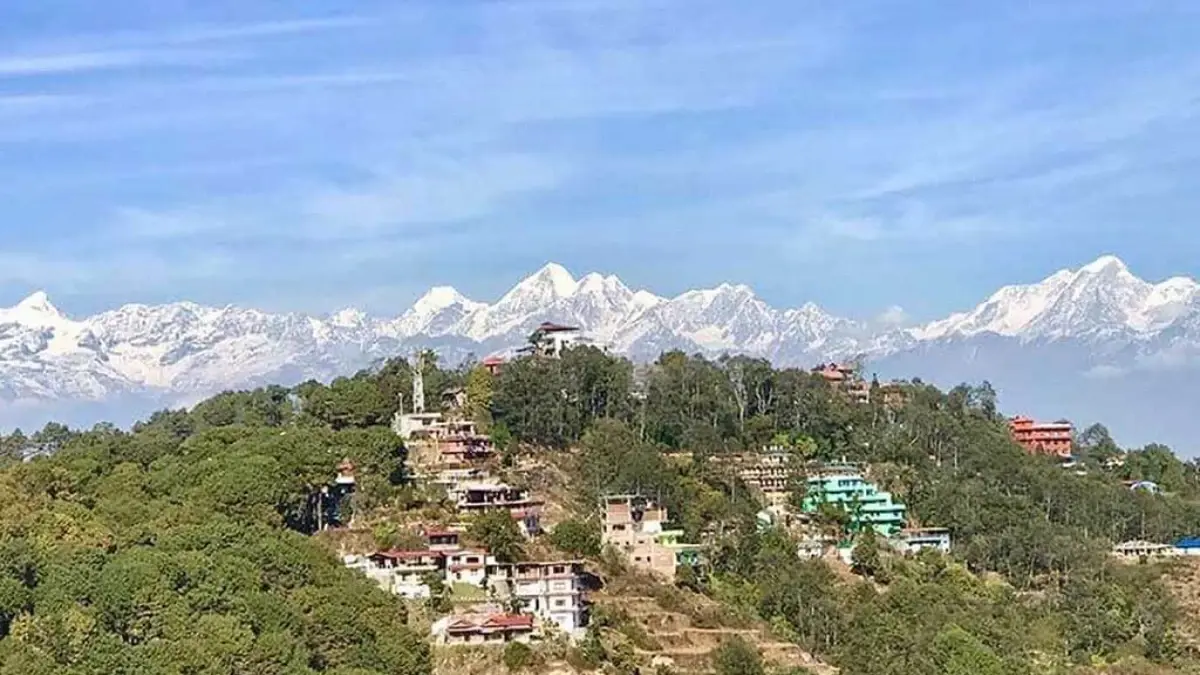
    Kathmandu Valley seen from Nagarjuna Hill & Nagarjun National Park
    Kathmandu from the top of Nagarjuna Hill.

    Why Nagarjuna Hike Should Be on Your List

    Nagarjuna Hike is a personal nature, peace, and culture trek from your doorstep in Kathmandu. The trek is an answer to Nepal’s commercially glittering and touristy treks in its hill ranges. If anything, the entire trek is to nature and tranquility, then the trail here is your destination. The hike leads you to the isolated, unspoiled forest and a gentle breeze. You have the age-old Buddhist culture, and then there is the intriguing history of how such early archetypes survived, i.e., monasteries and stupas. Good that religion and nature meet, and particularly good that they meet on the city fringe.

    The best part of the hike is being able to go visit the wonderful Nagarjuna Buddha Stupa, which is on top of the ridge line. The Stupa, a pilgrim rest stop and lookout, looks down across the valley floor below Kathmandu and far off in the distance, the line of Himalayan snow-capped mountains.

    The only reason why we call it religious scenery and serene is all the reasons why we need to create an extraordinary world where our mind and body can move freely without any obstructions. In case you have spent your day thinking about things, landscape, or perhaps had an instant where you could find some consolation, this hike is ours. Smashing Nagarjuna Hike is something and a site that every foreign tourist must experience.

    Detailed Nagarjuna Hike Itinerary

    Mountain View seen from Nagarjuna in very Clear day
    Himalayas

    Starting Point: Sundarijal

    Continue on your Nagarjuna trek, and you arrive at Sundarijal, a tiny peri-urban village at the fringes of Kathmandu. Sundarijal is a location with the most valued picnic places with natural waterfalls, cool springs, and secluded riverbanks under trees. You would meet most of the trekkers here and spend a while resting here to get some of the mountain air with the soothing sounds of rivers everywhere, before trekking on a path. The trek would begin with a gradual climb from Sundarijal to dense forest cover, where dark greens would be visible, to get a sense of the environment for a serene trek. Next to it is the trailhead with dining and a parking lot within walking distance in case you need some last-minute energizers.

    The journey from here is a bittersweet drag with a view of the surrounding hills and part of the city far down on the horizon. Natural beauty of Sundarijal on the journey is a sweet beginning to go into fresh air when you would appreciate a goodbye to city chaos and enjoy scenic drive landscape to Shivapuri Nagarjuna National Park.

    Mid-Point: Shivapuri Nagarjuna National Park

    Going north, you are in Shivapuri Nagarjuna National Park, both a national park and a land of peace and biodiversity. The dense forest of the park is composed of pine trees, with occasional cover in certain areas with rhododendron forests that bloom during the spring season. Bird watchers can see a stunning range of birds, and those who love nature can see native wildlife, such as a group of monkeys eating the forest leaves and barking deer. All your data regarding the natural gems of Nepal flows in here in this section of the trek.

    The green hue of the forest, the calming breeze, and the voice of the forest all revitalize your journey. Conservation of the park is a response to the draw of this protected natureland by conservation, and now it has become a haunted site for nature lovers and hiking enthusiasts who seek seclusion and the abundance of nature. You will be exposed to vegetation and wildlife halfway through the hike, as one of the more interesting parts of the hike.

    Cultural Highlights: Monasteries and Stupas

    The cultural scene is what makes Nagarjuna Hike unique compared to most hikes. You will pass through a series of Buddhist monasteries and ancient stupas through the hike, with lines of billowing prayer flags in red, yellow, green, blue, and white in the mountain breeze. These religious hubs offer a peaceful retreat from your journey and tell a lot about the prevalence of Buddhist culture in Nepal. People spend time in such hubs either praying or meditating or just basking in the calm of the ambience that such holiest of temples are symbolic of.

    The religious devotees and the Buddhists, as well as the photographers, will try to experiment with the nature and cultural diversity that they find themselves surrounded by. The architectural splendor and multi-hued prayer flags of the monasteries would be ideal to be captured amidst the green blanket of the thick forests. These are also to be included experiences of the trekking tour because you will be able to be part of ancient religious life and cultural practices that have been running in this area for centuries.

    Nagaraajuna Buddha Stupa: Summit

    You hike to your destination at the Nagarjuna Buddha Stupa, a broad peaceful meadow on top of a ridge summit. East-west facing stupa is draped in prayer flags and open wide undefined court. Stupa is a consecrated place to resident Buddhists and thus an oftentimes peaceful and contemplative place, ideal to unwind, meditate, and/or reflect after your hike.

    You also get a bird’s eye view of the Kathmandu valley and some of the highest mountains in the world from the stupa. Coming down the backbone is an adrenaline rush for having been able to look over at the white tops of the Himalayan. Chain of mountains in the distance on the far horizon above the green valley below. The peaceful environment and the peaceful landscape at the top is the sense of awesomeness of reaching the end of the trail.

    Return Trip

    Having experienced the top, you are welcome to return to Sundarijal with completely different eyes. There are bridge trails for those who would like to do the activity again, rejoin once more, or visit other nearest trekking places, for adventure lovers and for those who want some change and challenge.

    No matter how you return to Sundarijal or on which of the many trails you return, the trails are so well marked and well maintained.
    Choice variety renders trekking accessible to all body and time conditions. Therefore, the day-trekker and the perennial trekker will be able to tour a nature gem paradise which is emerald green in nature.

    Travel Tips for Nagarjuna Hike

    1. Best Time to Visit

    Best season to trek Nagarjuna: late fall (Oct-Nov) and early spring (Feb-Apr). Blue and clear blue skies, cold and drier; ideal weather and climate to trek. Cold weather also makes the mountain views beautiful and ideal to trek; you can enjoy nature at its best without monsoon rains and cold winters.

    2. Duration

    Nagarjuna Hike 3 to 5 hours round trip; it just depends on you, how slow you walk and how many times you stop on your way. That is an approximate time which will suit slow walkers who would like to see as much as will suit people who might like to take some time seeking temples, monasteries and view points on your way. That makes Nagarjuna hike an appropriate site for family excursions and day-treks, and thus the popularity.

    3. Difficulty Level

    Nagarjuna path is steep; ideal for beginners and family parties with children. Well-marked and kept path with steep sections in between, good exercise but not tiring. Ideal level of difficulty; gets heart rate going enough to know it’s been worthwhile but not so steep that most fitness levels won’t be able to cope, so lovely mixed mix of visitors.

    4. Gear to Bring

    To hike safely on Nagarjuna trail, wear sturdy, good trekking boots to combat the rugged trail. Carry sufficient food and water for snacks, and sun protection: i.e., hat, sun protection cream. Wear a light sweater or fleece, especially early morning and winter. You will be warm enough at rest stops and hiking in windy areas.

    5. Respect Nature

    To facilitate Nagarjuna to occur in Nature is hiking and trekking,whicht is good. Take all your trash and dispose of it, learning in the process how to leave the trail. Use maintained trails to facilitate that the ongoing local biodiversity cover remains intact, and avoid trail erosion. Walk softly, or quietly, around monasteries, in trying to respect the peaceful atmosphere. The individuals who are conducting spiritual ceremonies.

    Getting There

    Nagarjuna is ridiculously easy by bus and even by morning taxi. No finer start than Sundarijal itself as it’s the same. Walking some 30 minutes or so, traffic the only cause for distraction. As simple as this isn’t hard to locate, Nagarjuna would be ideal for us Kathmandu residents and would have a complete trek with less travel.

    What Makes Nagarjuna Hike Special?

    Shivapuri Nagarjuna National Park
    Views From Shivapuri

    Proximity to Kathmandu: Perfect for a Day Trip or Half-Day Escape

    Nagarjuna trek is one of those treks that will linger in your memory for years to come due to the convenience of reaching Kathmandu. 12 km from Kathmandu city center. A public bus or a taxi 30-to-45-minute drive to Sundarijal (hike starts). So close to any other day-long trek, a half-day motor ride will render you less hectic and more sun-bathing and back in Kathmandu before sunset! For a half or full day of entertainment and enjoyment. Nagarjuna is just the package. Access to the city has made Nagarjuna so attractive to locals and tourists alike, who want to escape the city.

    Nagarjuna isn’t such a drag and will be just part of your active lifestyle, pre-/post office, or as an impromptu weekend getaway. The moment you arrive at the hike. You may walk and become a part of nature without owing yourself an hour a week. Now that you’ll be capable of traveling back and forth, you can be happy, healthy, and in the midst of nature.

    Peaceful Environment: Less Crowded Than Popular Trekking Routes, Ideal for Solitude

    Peaceful Landscape: Less Crowded Than Other Popular Treks, Ideal For Solitude. One of Nepal’s most frequented treks, there are crowds of other trekkers, something one would necessarily have to anticipate if one would rather have another individual to share one’s trail on each bend. This Nagarjuna Trek is so peaceful even today and free of masses of tourist crowds like Nepal’s most frequented trekking routes. It’s a chance to bask in the quiet of nature without being bothered by other people. Isolation on the city fringes is never guaranteed! And along the way on foot, there’ll be quiet all around and a wide break from city madness.

    You will be engulfed by a moment of contemplation that is induced by birds’ singing. Amidst leaves, swaying leaves, and a quivering view of flying prayer pennants in the air. This tranquility is attracting the more muted reality of mountain adventure backpacking as well. Since there will be no phalanx of backpackers’ groups accompanying you, or other tourists hurrying past either side of you, you’ll be able to go around the nature and cultural landscapes with a contemplative mind. Whatever, when you go there in groups or individually, peace, that is Nagarjuna’s hallmark, will provide the healing balm which we all so desperately need in our hectic day-to-day life.

    Scenic Beauty: Lush Forests, Waterfalls, and Spectacular Mountain Views

    Nagarjuna Trail is an eye feast with a combination of landscape, nature, and seasonally altered gorgeous scenery. The trek proceeds under dense pine cover and splashy flowered rhododendron spring stretches that blanket. The trail is nearly everywhere in most scenic pink and red hues. Half a minute into the beginning, streambeds and waterfalls go hand in hand with a soft natural concert.

    Then the road ascends to colossus view vistas of Kathmandu Valley, snow-capped mountains, distant, blue skyless. The hundreds of types of the different classes of plants, water, drips drop by drop. Himalayan Mountains seem to impart more of its own beauty. From nature-lovers, photo-shooters, and beauties-seekers step by step!

    Mulkharka Village Near Sundaijal
    Village

    Cultural Heritage: Buddhist Monasteries and Old Stupas

    Nagarjuna Hike is treating us not only to beautiful natural scenery. But also, a spiritual banquet along the way in much of Nepal’s heritage. There are some Buddhist monasteries and ancient stupas along the trek. They are decorated traditionally with multi-color prayer flags blowing gently in the breeze on hilltops. These provide you with some appreciation of local religion and peaceful moments.

    calm which pervades the monasteries cannot be substituted by anything else in being. An oasis where trekking crazies would all dearly like to unwind and get surrounde by the peaceful environment. The trek is a questioning and thinking body and mind trek. It is the combination of nature and culture that distinguishes Nagarjuna from all of the Shivapuri treks, Nepal.

    Jamacho(Nagarjuna Hill top) with lots of prayer flags
    Prayers flags & Stupa on the top of Nagarjuna Hill

    Wildlife Spotting

    Why Nagarjuna exists in Shivapuri Nagarjuna National Park is that it’s one of the favourites for nature lovers. The trek goes through the forest reserves where the monkeys would certainly be at their playful best to frolic and jump from branch to branch, and even the barking deer would have space enough to run about and graze liberally beneath dense thorn bushes. Nature lovers also have a chance at their will because there are excellent numbers of beautiful singing and colourful birds that build the park’s thick canopy.

    In fact, wildlife watching gives a dash of adrenaline and additional experience to the trek, and the mountain trekkers would be surprised and closer to nature. Viewing wildlife in their native habitat gives the greatest respect to the diversity of the park and puts the highest regard on the protection and conservation of such an environment. To some, viewing the resident wildlife, close and intimate, is what makes Nagarjuna perfect for a trek.

    Conclusion

    Nagarjuna Hike is among the best nature, spirituality, and peaceful hikes in Kathmandu for travelers. You relax in no city traffic on peaceful trails, cultural scenes, and lovely Kathmandu Valley views, on a day hike. It’s just so perfect for families, friends, solo hikers, and couples. Contact us today at Happy Mountain Nepal on Facebook, Instagram, or TikTok


  • Ayurveda Retreat in Nepal: 8 Transformative Wellness

    Ayurveda Retreat in Nepal: 8 Transformative Wellness

    Ayurveda Retreat in Nepal: 8 Transformative Wellness

    Ayurveda Retreat in Nepal, with its lovely hills and the lovely Himalayas, is a health crusaders’ paradise and heaven for trekkers too. Firmly secured by a good amount of spirituality and the naturality of innocence, there are Ayurvedic spas with the countryside’s old-fashioned tradition of cleansing habits and lifestyle, with disdain. Do you require a reboot body, calming the mind, or a whole-body healing process? All these Ayurveda retreats provide, ranging from Panchakarma cleansings, yoga retreats, to spiritual cleansing. These are the top eight of them.

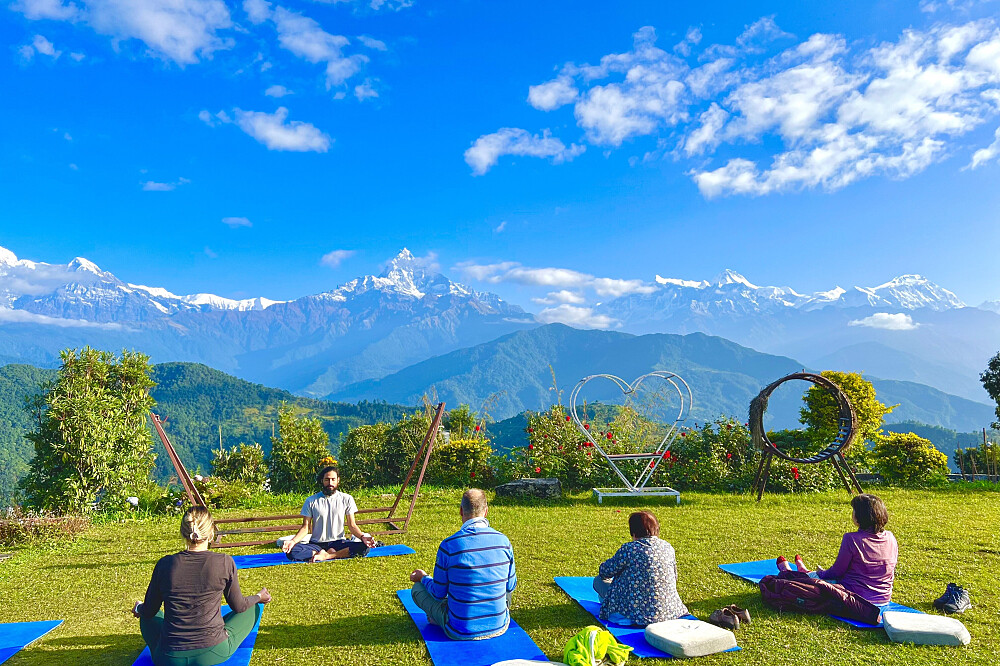
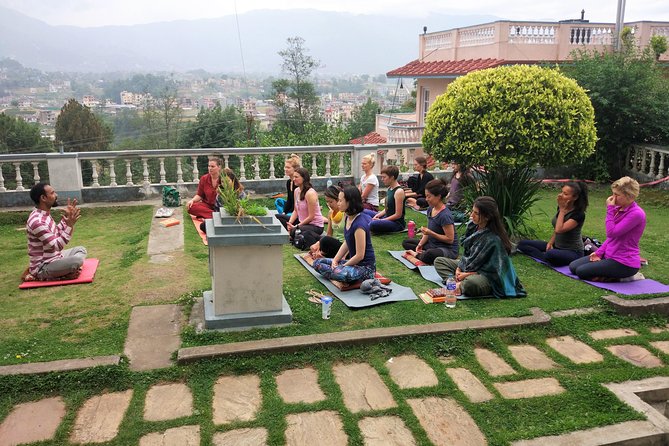
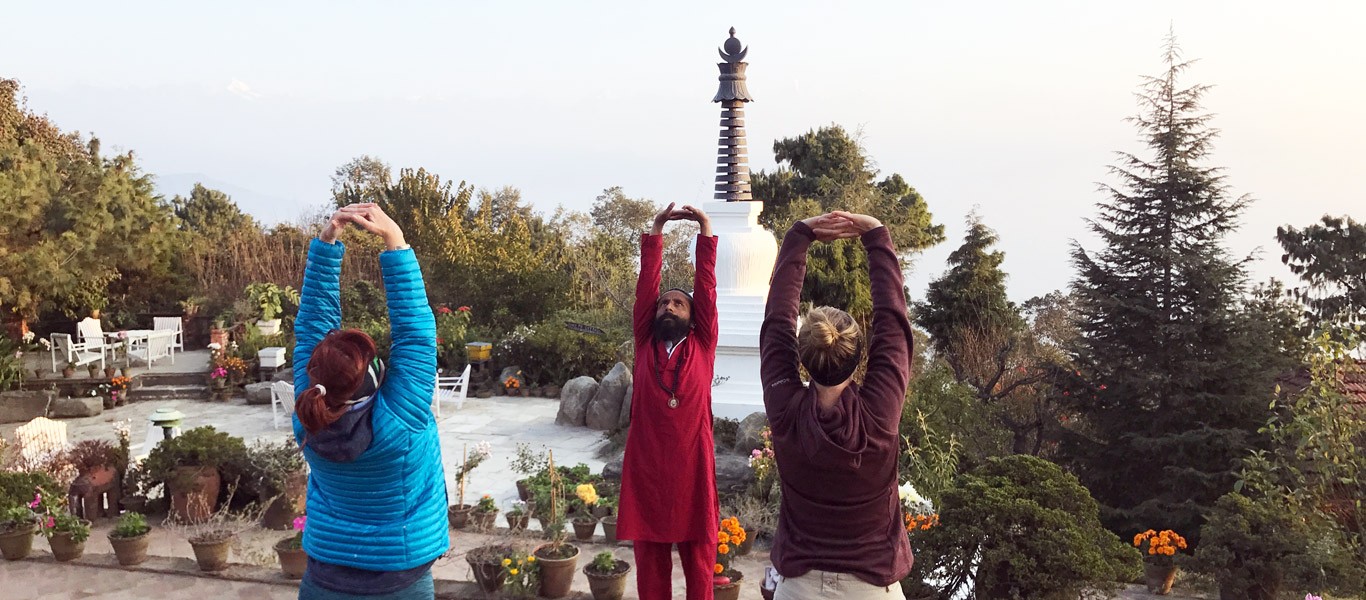
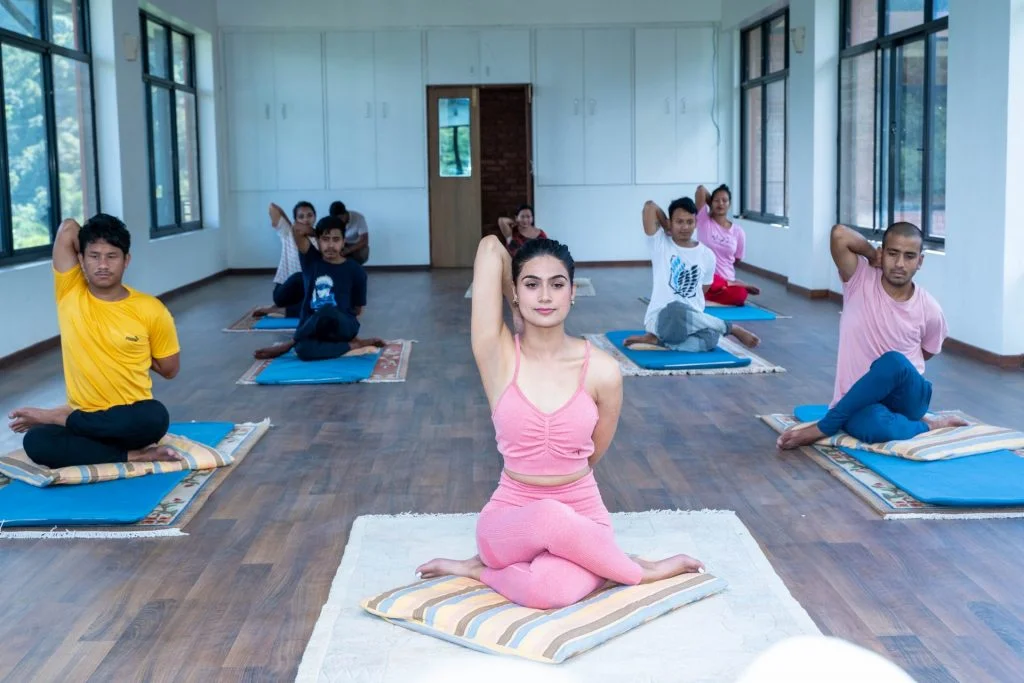
    Morning yoga with Annapurna Himalayas in the Background at Astham
    Morning, Yoga & Annapurna

    What Is an Ayurveda Retreat?

    An Ayurveda retreat is a tranquil spa retreat that is the distillation of the very, very old Indian natural healing system studied everywhere in India and known (ayurveda /aɪ.əˈreɪ.və/) as “the science of life.”
    They’re full-fledged treatment centers and not just assisting you in aligning your body, mind, and spirit, but, more crucially, to your body, or dosha (Vata, Pitta, or Kapha), treatment program, diet program, and life coaching. You’re not only healed at an Ayurveda resort but are also given their “holistic healing environment” that attempts to balance your inner energies. Whatever stress, illness-inducing chronics, burn-outs, or good old’ city-life detoxing your problem is, the retreat offers something for you that will involve:

    • Fully trained Ayurvedic physician consultations.
    • Herbal therapies like oil massage (Abhyanga), steam bath, and Shirodhara.
    • Detox cleansing treatments (i.e., Panchakarma).
    • Ayurveda herb and spice diet and dosa-style.
    • Morning mind and body yoga and evening meditations.
    • Ayurveda and conscious living workshops.
    • They are usually done in peaceful natural places (hill or forest, or river) where natural power places the healing process within a brief time span.
    • It is usually days or weeks, based on your way and purpose.

    Specifically, an Ayurveda retreat is not holidaying; it is concentrated transformation of health, clarity, and consciousness.

    Importance of an Ayurvedic Retreat

    Chronic stress, awful diets, couch potato lifestyle, and mind burnout are conditions all too common to any of us who live this fast-forward lifestyle we’re experiencing. Science can definitely treat disease, but an Ayurvedic retreat is all about treating the disease cause, consciousness, and self-overlayering. An Ayurvedic retreat can’t be replicated—you’re treated from head to toes, body, mind, heart, and soul, your way.

    Here’s why Ayurvedic retreats are so important:

    1. Ayurvedic Source of Healing

    Forget all else because therapy only heals the symptom on its own, and nothing else. Ayurveda heals the why you have what you have. And in doing so, it is personalized to you, it gets the therapists working in the direction of finding your dosha imbalance and towards forming habits that will let your inner balance drip down to you. And this produces actual and physical healing in the long run.

    2. Whole Person Cleansing (Panchakarma: Theory)

    The best of the best of all Ayurveda spas is panchakarma – the elegant detox treatment. Cleans deepest body tissue of toxic substances, renews, and cleanses internal organs. Panchakarma has an effect on physiology only but even virility and mental clarity are achieved through it.

    3. Stress elimination and mental clarity

    Ayurvedic treatments. Meditation and yoga are the crème de la crème to calm down the nervous system. Treatments like Shirodhara (anointing of the head) calm down the patients, and one can simply blow it away. Insomnia, depression, and anxiety. All our visitors. Those who have been residing in our house for many numbers of years are departing. With. Clarity. Of. Thoughts. and. lightness in the world. Of. Emotions.

    4. Re-setting of lifestyle and diet

    Ayurveda also covers dinacharya and ritucharya. Visitors are taught what to eat, and how to eat, live their natural rhythm at the retreat, and therefore are in the position to prevent future illness, and conserve energy.

    5. Personal Care and Education

    Retreats don’t cure you—logically, they wake you up. You can select your body type, your mind, and your support network. You alone are accountable for your health and well-being after the retreat.

    6. Spiritual Reconnection

    Most retreats are based in serene rural locations, and solitude is permitted so that quiet reflection and contemplation become possible. Nature chanting, presence, writing, and walking heal a battered self from daily life.

    7. Natural and Safe Healing

    Ayurvedic treatment and operations involve herbal medicine, oil, and non-surgical treatment. This makes the process non-poisonous, gentle, and Repellent to all none of all such patients requiring surgery or chemicals as an alternative.

    In summery

    An Ayurvedic retreat is not a flight from life but waking up to you. A refuge where you may heal, learn, and be reborn. Suffering from illness, burnout, or do you simply wish to become more alive in body and spirit, then here you will find the skills, nurturing loving energy, and love care to return to life whole, balanced, and energized.

    Top 8 Ayurveda Retreats in Nepal

    1. Nepal Ayurveda Home – Kathmandu

    Nepal Ayurveda Home is a warm health retreat in the midst of Kathmandu’s Thamel bustle. Our retreat is Ayurveda and yoga therapy conducted by registered yoga therapists and experienced therapists. Our Center personally customizes the treatment and care that we provide person to person to each and every one of our guests according to his or her own dosha and diagnosis, so it is a personalized experience every time for every guest. They all go through purging or eliminating problems or tension, but leave with new life energy and balance to proceed further on the path of life.

    All the patients are treated without any difficulty at all. Guests are spoiled and pampered with rooftop yoga, fresh organic fruits, and healing. Overnight to finish the 21-day Panchakarma detox, all are treated on a holistic basis. Peaceful, yet easily accessible Centre makes Nepal Ayurveda Home tourists’ first choice.

    1. Nepal Ayurveda Home

    Source- Google

    Major Attractions:

    • Ayurvedic consultations according to their own requirement
    • Full Panchakarma program detoxes
    • Morning Yoga and meditation
    • Organic Ayurvedic food
    • The nature surrounding and the rooftop atmosphere
    • Ayurveda and self-healing workshops

    2. Nepal Yoga Home – Kathmandu

    Nepal Yoga Home in peaceful Nagarjun Forest is ideal for you if you wish to witness the miracle of yoga and Ayurveda as a gateway to your inner world. The retreat employs time-tested methods of healing and morning yoga practice so that you actually get cured. The therapy is three to 21 days with Panchakarma, ayurveda massage therapy, and yogic breathing exercise. You are welcome to the serene ambiance with the soft chirping of birds amidst leaves and the silence of the nearby hills of Kathmandu.

    You also get a chance for consultation with medical men of doctors who personally plan your treatment, yoga plan, and wellness plan for wellness. All the patients come in pain, pulled or tired, and leave with a sense of genuine inner peace and mental serenity.

    2. Nepal Yoga Home – Kathmandu

    Source- Google

    Major Attractions:

    •  10-day Ayurveda and yoga holidays
    • Morning and evening yoga practice
    • Shivapuri jungle view offers a peaceful ambience.
    • Panchakarma treatment & cleansing
    • Yogic lifestyle seminar
    • Peaceful nature retreat

    3. Moksha Ayurveda & Panchakarma Center – Kathmandu

    Moksha Ayurveda is a class apart from the others in that it is an extension of the traditional Panchakarma treatments that bestow a well-relaxed environments to the entire healing process. The resort, being the lone one with customary decades of expertise in running Ayurveda, provides inexpensive and specific treatment to seriously ill patients as well as stressed or gastrointestinal disease-afflicted patients.

    Where other spas offer the newest health fads, but with the real deal at Ayurvedic medicines, diet counseling, and herbal supplements. In the capable hands of Ayurvedic physicians, who diagnose the cause of imbalance and heal it in a natural way. Sterile, sanitized, and cozy setting.

    Major Attractions:

    • Panchakarma therapy treatment packages for extended periods
    • Ayurvedic herbal oil treatments during massage
    • Dosha-oriented health counseling
    • Soothing, clinical setting for inner recovery
    • Holistic herbalism and nutrition
    • Going beyond sickness by sustained wellness

    4. Ayurveda Health Home – Kathmandu

    Ayurveda Health Home is Nepal’s classiest ayurvedic health home with a homey built for treatment in its entire complex. It enjoys a massive reputation since 2001 for soothing, considerate healing with added comfort. Individualized care at the center is centered on the individual, individually tailored for the individual’s individual disease, for detoxification, regeneration, and disease management as per traditional Ayurveda principles. Special Programs Special Packages for Special Offers.

    It’s in the inner Kathmandu residential area, in a peaceful, calm, homely environment. It’s two days to week’s relaxation. Ayurvedic dietetics, integral health check-up, soft yoga class, and meditation teaching class are all that the package includes. Ayurveda Health Home would be an appropriate substitute for the one who has so much healing or rehabilitating to be done in a clean, hygienic, professional environment in a healing loving environment.

    4. Ayurveda Health Home – Kathmandu

    Source- Google

    Major Attractions:

    • Heritage of higher luxury quality care
    • Classic Panchakarma retreat in a clean, modern environment
    • Expert Ayurvedic doctors and other spa experts
    • Healthy vegetarian lunches lovingly prepared specially according to your own individualized dosha.
    • Serene, peaceful garden ambiance, perfect for sleep and relaxation
    • Specially designed to respond to lifestyle disease care and pain elimination

    5. Himalayan Yoga & Ayurveda Retreat – Kathmandu

    Located at the center of the Himalayas’ grandeur, it’s like a body-mind rejuvenation retreat that is equipped with Ayurveda, meditation, and yoga. Far from city-smog filled Kathmandu, picture yourself driving into refreshing mountain air, breathtaking sceneries, and peaceful spiritual environment.

    The retreat will be balanced body and mind with yoga-sanctified surroundings. Ayurvedic cuisine, yogic practice, herbal therapy, and meditation sessions are regular services. The service staff is mannered, polite, and extremely professional; besides this, fresh starters can begin the practice, professional practitioner yogis can execute it, and disease/stress patients can do the same as well.

    5. Himalayan Yoga & Ayurveda Retreat – Kathmandu

    Source- Google

    Major Attractions:

    •  Himalayan countryside scenery and walking tours.
    • Herbal oil Ayurveda treatment from nature itself.
    • Evening yoga and morning meditation sessions.
    • Herbal tea ceremony and detox diet therapy.
    • Mindfulness, breath, and wellness training sessions.
    • Nature creation and peaceful space.

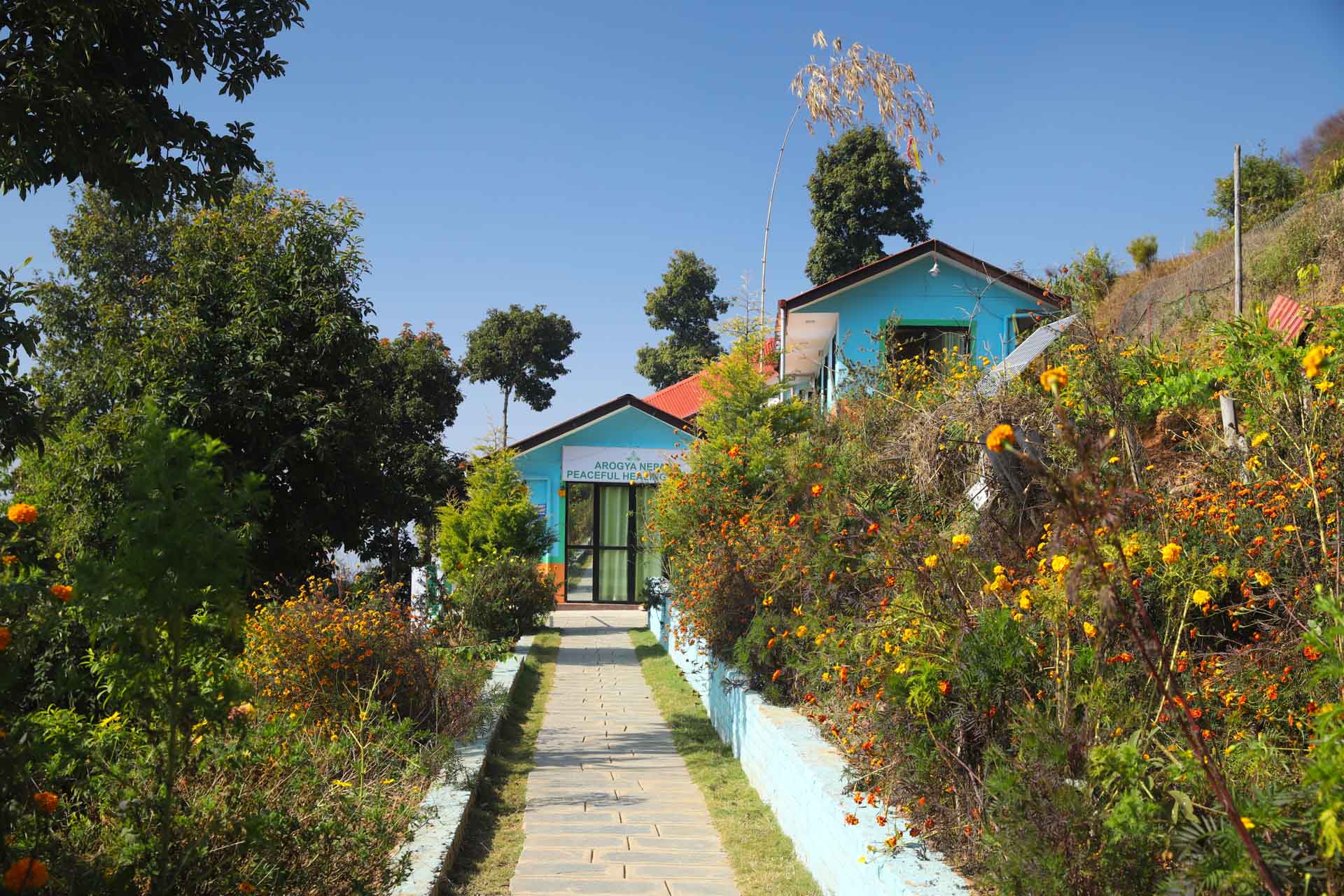
    6. Arogya Nepal – Kathmandu (Ayurveda Retreat)

    Arogya Nepal advises merging the depth and richness of the heritage of traditional healing culture and services with the health and well-being of modern times. A is privileged to practice an integrative mode of Ayurveda, yoga, naturopathy, and sound healing through which it is able to give the best of traditional healing to clients. Arogya programs integrate body and mind, from stress management and anxiety disorder to hormonal acclimatization and low immunity.

    All the guests are handled professionally and where words and treatment to transform to life, detoxification, Ayurvedic treatment, and to making life to life. Arogya retreats are ideal for the people who are to be cured, rejuvenated, or upgraded to a better condition without force or indulgence. Because of the need for peace and tranquility, betterment can progress on the way to cure and development.

    Arogya Nepal – Kathmandu

    Source- Google

    Major Attractions:

    • Sound breathing and healing therapy
    • Stomach maintenance, insomnia, and anxiety
    • Locally sourced organic spice menu
    • Nature remedy-based purification plan

    7. Shanti Yoga Ashram – Kathmandu

    Shanti Yoga Ashram is less retreat and more yogic center, although the spirit is the central thing. They do adhere to the classical yoga traditional school, but they blend that with Ayurvedic body, mind, and spirit methods and teachings. The ashram itself is in rural countryside on the outskirts of Kathmandu, and there is a pleasant local village community atmosphere with some of the sacred rituals still preserved.

    The day is filled with morning yoga practice, Ayurvedic dieting like one would do in a normal ashram, karma yoga (unselfish work), and Vedic philosophy study. Some of the Ayurveda is a script diet, massage, and tea. It is absolutely a wonderful ashram for one who needs to create a more interiorized yoga and spiritual life; it’s for someone who wants to experience a full cleanse of body and spirit.

    Source- Google

    Major Attractions:

    • Vedic philosophy and classical yoga practice

    • Ayurveda grooming and herbalism

    • Sattvic vegetarian food

    • Spiritual fire puja, mantra, and ritual

    • Yoga and Ayurveda philosophy class

    • Simple living and community silence

    8. Osho Divine Zone – Kathmandu

    Osho Divine Zone provides Osho’s meditation method combined with Ayurvedic therapy and exercises to eliminate the physical issues on the path to emotional liberation and mental cleanliness. Its dynamic meditations are combined with Ayurveda detox, diet balance, and diet sensitivity.

    Anticipate inner work with silent days, chakra meditations, herbals, and journaling. The property’s energy embraces change with open arms, and staff guide guests into healing and self-knowledge. It is an ideal center for spiritual seekers and mental quick fixes.

    8. Osho Divine Zone – Kathmandu

    Source- Google

    Major Attractions:

    •  Osho’s active and silent meditation methods
    • Ayurvedic treatments with personalized herbal treatment
    • Inner work and emotional release weekends
    • Discerning detox diets and fast ceremonies
    • Natural surroundings, in secluded locations with peace gardens
    • Offer group awareness and consciousness courses.

    Why Choose an Ayurveda Retreat in Nepal?

    Attending a Nepalese Ayurveda retreat isn’t about herbal massage or cleansing, it’s about submerging yourself in a culture that honors balance, harmony, and healing. Nepal is a special country where Ayurveda can be reborn. There is a time-honored, tradition-based integrative wellness based on Vedic heritage and people attuned to the calming, rejuvenating energies of the Himalayas. There is synergy of healing modality and spiritual purpose to a peak here, and so is the optimal site for actual transformation—body, mind, spirit.

    ayurveda

    Source- Google

    1. A Unique Fusion of Ancient Wisdom and Natural Healing

    Nepal shares deep cultural and spiritual ties with India, the homeland of Ayurveda, with its eating and cultural practices, but behaves otherwise as far as complete cure is involved. Practically, the majority of the retreats are run by therapists who have studied Ayurveda.

    Thus, you arrive at the total healing of the entire body. If you are having digestive disorders, stress, sleep disorders, endocrine disorders, or simply need reinvigoration, you can be treated by the retreat as per your body constitution (dosha) and life.

    2. The Power of the Himalayas: Healing Through Nature

    Nature is Nepal’s greatest attraction. The fresh mountain air, spring water, lush green grassy forests, and the clearness of mind are all great signs of healing. The Himalayas are an East philosophy spiritual energy spot that will cleanse your aura and concentrate your mind. Contrary to wellness resorts that are smack in the heart of city centers and/or central business districts, the majority of Nepal’s Ayurvedic resorts are situated in secluded hills or isolated forests where one can find isolation from the noise and chaos of daily existence.

    3. Personalized Healing

    Nepalese Ayurveda is not something you purchase from a supermarket, it is bespoke. You will receive a complete health consultation before your treatment, such as pulse, dosha, life lifestyle. Practitioners make all bespoke from getting your body types, disease, diet regimen, herbal medicine, massage, yoga practice, and meditation practice. Eventually, these bespoke and you will be better served in the long term than solving the issue for the short term.

    4. Affordability Without Compromising Authenticity

    Nepal offers some of the lowest prices in the world, lower than spas in the West or even Indian luxury Ayurvedic spas—but without sacrifice in terms of authenticity and quality. Most of these centers are still family-run or community-run, where love for healing and service was never forgotten, but never commercially hybridized either. Discovering Ayurvedic retreat facilities in Nepal makes it progressively feasible for more and more individuals to become capable of utilizing Ayurveda with the very high cost factor eliminated.

    5. Integration of Yoga, Meditation, and Spiritual Practice of Ayurveda

    All of the retreats in Nepal combine an ayurvedic practice with Vedic and Himalayan-sourced meditation and classic yoga practices for the development of body-mind relationship consciousness.

    The practice is borrowed from Vedic and Himalayan traditions rather than from the therapy practice, at least to a large extent, for the asana. When you visit the retreat, you will be fortunate if you are indulged in mantra chanting, silent sitting meditation, breathing practice (pranyama), and even a spirituality and philosophy workshop, all purpose of calming the mind, emotionally constructing, and achieving self-realization.

    Tips Before You Book an Ayurveda Retreat

    Choosing an Ayurveda retreat in Nepal is not a luxury—it’s a return to your natural state of balance and health. In a world overwhelmed by fast fixes and synthetic solutions, Nepal offers an authentic, time-tested path to well-being that heals from the inside out.

    Yoga Practicing at Yoga Home
    Yoga Practice

    Source- Google

    1. Choose a retreat based on your personal goal.

    Some may be cleansing the body on a physical level; others, chronic pain management; some, stress relief only; and others, healing on an emotional level. You choose one which is appropriate to your purpose: some are Panchakarma detox only, some are for preparing the mind for mental clarity, spiritual growth, or wellness.

    2. Check and find out where the practitioner is trained.

    You need to ensure that the Ayurvedic doctor and therapists are competent and were trained by an institute that is well-known. Also, check if medical consultation is being provided in the wellness centre you choose and not treatment with a “spa” type of setting, i.e., massage.

    3. Look for customized treatment plans. 

    Ayurveda is, by definition, purpose-made and custom-made because it takes into account the attendee’s dosha. You may be able to purchase a “standard package,” but genuine centers will be deciding your dosha so that they can create a plan for you specifically.

    4. Understand program duration.

    Recognize that the real Panchakarma cleansing or any real Ayurvedic treatment is not meant to heal the body in a few weeks’ time. Treatments themselves are best utilize as a healing therapy for 14 -21 days. And although there is some merit in staying for shorter durations of time, with lots of rest and healthy offerings at best you can reduce the toxic load in your system but not hours and minutes for true healing!

    5. Prepare mindfully.

    When you go out to pack your bags, please pack some loose, comfy clothes, a journal that you can take outdoors to record your experience, any medication that would be prescribed by a doctor, and only your heart. Pack all distractions along! These exercises are called a retreat for a reason and must be approached with intention and an openness to being fully present in the experience.

    Conclusion of Ayurveda Retreat

    A sojourn in a Nepalese Ayurveda resort is so, so much more than a vacation; it is a return to health and harmony, to yourself. In a world that is addicted to quick fixes and man-made intervention, Nepal provides a genuine, time-tested alternative to healing, beyond culture and man-made intervention, and addressing your health from the inside out. If you want to know more about a retreat, you can read this blog. Contact us today at Happy Mountain Nepal on Facebook, Instagram, or TikTok

  • Kathmandu Pokhara Chitwan Tour: Discover Nepal

    Kathmandu Pokhara Chitwan Tour: Discover Nepal

    Kathmandu, Pokhara, Chitwan Tour: Discover the Golden Triangle of Nepal

    As varied as Nepal’s culture is, its geography. Thousand-year-old cities and a thousand temples, peaceful lakes, and uncharted jungles for all the trekking folks here, too. Kathmandu Pokhara Chitwan Tour, or simply referred to as Nepal’s Golden Triangle, is Nepal’s gem and Nepal’s most diversified tour package. Kathmandu, Nepal’s capital city, is the destination point; Pokhara and the hills, and Chitwan National Park, are interesting short travel itineraries.

    This is the most favorable tour package for all those visitors who desire to witness the nature, culture, and wildlife of Nepal in a single tour. In this blog, we are discussing a 7-day tour package, all the attractions and activities of these three locations, and why these three locations are interdependent and can be combined and organized to create a thrilling tour in Nepal.

    kathmandu chitwan pokhara tours major highlights in the picture like Fewa Lake, Pumdikot shiva statue, Annapurna Himalayas, World Peace Stupa, Fishtaim & Devis water falls.
    Highlights of Pokhara

    Source- Google

    What Is the Kathmandu Pokhara Chitwan Tour?

    Kathmandu Pokhara Chitwan Tour is Nepal’s traditional back journey and presents the travelers with three completely different faces of Nepal. Each one generates its own individuality — city life and culture of Kathmandu, hill and scenery of Pokhara, and jungle and wildlife safari of Chitwan. The three combined offer the essence of a back journey.

    Highlights of the Kathmandu, Pokhara, Chitwan Tour are:

    1. Kathmandu – The Living Heritage City

    Kathmandu, the capital of Nepal, is a special living heritage city with ancient monuments all around. Shrines and old temples are observed in city streets, nearly in every square and corner. Kathmandu’s Durbar Square, Pashupatinath temple, a sacred Hindu temple, and Swayambhunath (the Monkey Temple) and Boudhanath, a Buddhist stupa, are heritage sites. The roads shake, the temples reach for the skies, and city sounds fight the air – chanting, clanging bells, and pilgrimages in sheer abundance. Thamel is the tourist slum, and rainbow shops and cafes’ center and cultural festivals. Kathmandu is religious and heritage saturated as well, something which will surprise the visitor amongst Nepal facts. The city tour is, therefore, an excellent idea to start your Nepalese experience.

    Kal Bhairab Statue in kathmandu durbar square with golden skies
    Kal Bhairab with Golden skies

    Source- Google

    Key attractions in Kathmandu:

    1. Kathmandu Durbar Square

    Situated in the very heart of the old city is the Kathmandu Durbar Square, one of the finest sites of the royal palaces of the Kathmandu Newar architecture and art. The temples, palaces, and courtyards of the square tell tales of the glories of the past of the kingdom, some parts of the structures having been constructed during the times of the Malla kings, the long-lost rulers of the Valley of Kathmandu. Among the most famous landmarks and monuments of the square are the gigantic Hanuman Dhoka Palace, Kumari Ghar (residence of the living goddess), and Taleju Temple. Although most of the structures were severely damaged in the record earthquake of 2015, it is still a hub of culture and spirituality deeply embedded in the city and the nation’s history and heritage, along with Nepal’s architecture and art.

    2. Swayambhunath (Monkey Temple)

    Swayambhunath (Nepali Monkey Temple) is Nepal’s and Kathmandu’s oldest and most historic sacred place, and one of the most lively.

    The Buddhist stupa temple is located on a hill, and from there, there is a great view of the Valley of Kathmandu. The white great dome, golden spire, and all-seeing eyes of the Buddha represent enlightenment. Though it’s the only religion to worship before the stupa, Hindus also pray there, and pilgrims in thousands daily have a procession lighting the butter lamps, rotating the prayer wheels, and donating a small amount of money. It is on the religious harmony backdrop amidst tabloid hysteria, so it’s a ‘hot’ place to gain enlightenment.

    3. Pashupatinath Temple

    Pashupatinath Temple is Nepal’s most sacred Hindu temple, which is dedicated to Lord Shiva in the guise of Pashupati: The animal protector.

    It looms over the Bagmati River, a holy river and center of which is a gigantic temple, ashram, and ghat complex. Pashupatinath is also renowned for its street cremation pyramids; Hindu death rites are performed daily on the Bagmati ghats. Although non-Hindus are forbidden within the temple grounds, witnessing the ceremony as part of the procession around the grounds is an excellent glimpse into Nepalese spirituality, rituals, and respect for death.
    The trip will be remembered for the next few decades.

    4. Boudhanath Stupa

    Boudhanath Stupa is one of the largest and most stunning of the stupas, as well as a Nepalese Buddhist pilgrimage, you visit in the world.

    The stupa itself is an enormous white monolithic dome topped by an enormous golden spire surmounted by the enlightened eyes of the Buddha, symbolizing loving kindness and wisdom. It is encircled by a circular square in the center of which Tibetan monasteries, shops, and restaurants are found. Buddhists pray by circumambulating clockwise around the stupa with rotating prayer wheels and mantras. It’s particularly busy on Buddhist festivals, but Boudhanath is a peaceful, if very spiritually intense, place.

    5. Thamel

    Thamel is the most popular tourist destination in Kathmandu and has everything anyone might ever want.

    It is never quiet and boasts vibrant streets lined with restaurants, shops, guesthouses, plenty of trekking shops, art galleries, music shops, and boutiques.
    It is Kathmandu’s tourist center, frequented by tourists weekly or fortnightly, and more seasoned trekking tourists constructing the Himalayas. While unlike the omnipresence of contemporary tourism, remnants too exist of older understandings of existence in temples, cloth-draped and behind doors, in local restaurants. Thamel is where live music, street life, souvenirs, and tourism in general occur.

    2. Pokhara – a tranquil Himalayan stunning nature retreat

    Pokhara is a laid-back lakeside resort town surrounded by massive Annapurna (Himalaya) mountains, and where not only is it possible to leave the madness of Kathmandu far, far behind you, it’s actually quite literally an option. It is renowned in itself for its own natural beauty, and it has the stunning Phewa Lake, which guests visiting tourists boat across as they just sit and look up in awe at the white snow-capped Machapuchare (Fishtail) mountain.

    Sunrises are stunning. Sarangkot sunrise places are a dreamer’s paradise, and in the daytime, you get a glimpse of the World Peace Pagoda, a view of the peaceful beauty of Devi’s Fall, and looking down at the world under the shadow of Gupteshwor Cave. And if one is adventurous, there is paragliding, zip-flying, and trekking through the hills of the city. Pokhara is the perfect place for relaxation, de-stressing, and soaking up the Nepalese countryside and Himalayan views.

    Fewa Lake, Pokhara Valley & World Peace stupa seen from Pumdikot Shiva Statue Pokhara.
    Fewa Lake, Pokhara Valley & World Peace stupa seen from Pumdikot Shiva Statue Pokhara.

    Source- Google

    Key Attraction

    1. Phewa Lake

    Phewa Lake is a peaceful paradise that surrounds the town with its lake shores. You can have peaceful water or stunning views of mountains; on most average days, you can promise yourself to get to catch a view of the lovely Machapuchare (Fishtail Peak) and marvel at the face of the lake.

    You can actually boat, kayak, and paddle inside the lake and even visit the Tal Barahi Temple, a small religious Hindu temple, which is revere on the boat, located in the middle of the lake. And to nature’s calmness, Phewa Lake is just that, either to view sunset at the lake boulevard or paddle quietly inside the lake.

    2. Sarangkot

    Sarangkot is the most crowded hilltop tourist spot, near the Pokhara city center. Sunset, especially on Annapurna and Dhaulagiri summits, is world-renown for being spellbinding as much as appearances go. They like to reach late night so that they could get the very first ray of sun to kiss the hill tops so that they shine as they are getting golden, light, and white.

    Not only sunrise location but also Nepal’s best paragliding location where paraglider will be flying over the lake and Pokhara and hills will be your background. Nature clad and mini adventure sport, wonder Sarangkot is viewpoint en route to Pokhara.

    3. World Peace Pagoda

    World Peace Pagoda is a stunning white, glittering stupa monument far back on a ridge in Pokhara Valley. It is construct by Japanese Buddhists as a war memorial of peace and glows with stunning 360-degree views of Phewa Lake, Pokhara city, and the Himalayas. And while the Pagoda itself is simple and room is allowed to walk and take it in, there is also fun to the extent of visiting the monument as close as you can walk, drive, or boat, and trek to the point on the ridge.

    4. Devi’s Fall and Gupteshwor Cave.

    Devi’s Fall, or Patale Chhango as it is known to locals, is a spook waterfall where the falls drop down into a gigantic underground tunnel. Devi, religiously speaking, was a guest who was unwillingly drag away, and that is refer to as the fall. Its opposite is the Gupteshwor Cave, the most visited underground cave in Nepal. Inside the cave lies a Lord Shiva temple and the breathtaking view of Devi’s Fall once more, as it leaps onto the rock below. It is myth and nature, and enigma, covering its face and presenting tourists with two but not one view.

    5. Mountain Museums

    Pokhara International Mountain Museum provides an abundance of Nepal’s mountaineering history, Himalayan culture, and natural history. History of ascending Mount Everest, display of Nepalese traditional clothing and equipment, model Himalayan Mountain landscape display, Nepalese ethnic community and way of life depictions, i.e., Sherpas, Gurungs.

    Ease of learning Nepalese mountaineering history, what it did not achieve, and what it did. There are one or two other local museums, such as the Gurkha Museum, um with some of the local and military history of the region. Always tranquil, always serene, and scenic views. You can get your city and local shoot done, or me time. Whatever you spend doing in the Pagoda or otherwise, there is that spiritual bonding and connection with nature.

    3. Chitwan – Jungle Adventures and Wildlife Wonders

    The truly sub-tropical lowland of Chitwan of Wild Nepal shelters the beautiful Chitwan National Park, a World Heritage Site, that abounds with wildlife. Tourists can also go for jeep safari or boat cruises to jungle safaris provided to them in Chitwan, which provide sites to see highly endangered animals such as the one-horned rhinoceros, Bengal tiger, sloth bear, crocodiles, and over 500 birds! One can visit the Tharu villages and Tharu on a cultural village tour and get familiar with the culture of one of the oldest members of Nepali society. And if elephant breeding camps, jungle treks, and sunset over the river are not enough, Chitwan provides the hard-and-harder tourist’s alternative for the final day of a tour.

    Rhinos at chitwan national park
    Chitwan & Rhinos

    Chitwan attractions:

    1.Jungle Safaris

    There can’t be any Chitwan vacation without traversing the Chitwan National Park jungle safari.
    That’s why we’ve reached Nepal’s subtropical jungle!

    On either a jeep safari or the quietness of a canoe tour across the peaceful Rapti River, you see animals where they are suppose to be. Chitwan National Park is a sanctuary for the near-extinct one-horned rhino and the reclusive Bengal tigers— you catch sight of sloth bears, wild elephants, and sun-basking gharials in the wetland! Such are the experiences when you hike through the grasslands and sal forests that the experience is the best, at a time when you are searching for such elusive species that it’s paradise for nature enthusiasts.

    2. Elephant Breeding Center Sauraha

    One of the breeding centers of a conservation project, the Elephant Breeding Center Sauraha is involve in breeding and conserving domesticated elephants of Nepal.

    Tourists are able to view elephants of all ages safely and responsibly, even naughty young calves. The Elephant Breeding Center not only informs tourists of the life, habitat, and social life of elephants but also the public (and tourists)about best practices in wildlife management. It’s an eye and heart experience for children and nature lovers.

    3. Bird Watching

    Apart from safe and prudent animal migration, Chitwan is a paradise for bird watching. Over 500 species of birds have been found there, and some birds within this region are simple world-famous; i.e., the kingfishers, queen of birds, hornbills, herons, and egrets.

    Some migratory birds like the Bengal florican are vagrants. They also offer some guided early morning bird walks with local naturalists, which take you to the riverbanks, wetlands, and forest edges where birds are most active. Birding is not only an explosion of color but a hair-tingling sound and spectacle too. Birding can be one that is laid back, where you just chill as an experience of unparallel biodiversity. Even a temporary halt, and the most enthusiastic bird enthusiast can’t help but long for bird watching.

    4. Tharu Culture

    Tharu Culture is a more culturally enrich and richer experience of one of the Nepalese tribal traditional ways of living. Tour of Tharu village, mud-plastered houses, wall paintings, local natural surroundings, and fruits. Cultural evening shows, some dynamo Tharu stick dance, and people’s songs educate them about their life, their history, and about culture. People all around you, people’s culture known, and off the beaten path, it is a wonderful cultural experience and a richly enriching learning experience about culture and indigenous people.

    5. Rapti River Sunrise.

    River Rapti is precisely such a lovely spot to unwind at nightfall after a day of trekking in the forest. It would be about dusk time, and hence the river would be bathed in golden sunlight as it winds its way out towards bathing pachyderms and birds descending to roost.

    It’s a relaxing cruise to unwind, and one finds peace most deeply through gigantic throngs of tourists visiting here to soak in the quiet of riverbanks or town cafes with a hot cup of local tea and peaceful, unhurried canoeing. The sort of everyday scenery in your sight becomes attuned to the body and turns out to be an otherworldly and peaceful build-up of Chitwan’s land safari.

    Suggested 7-Day Itinerary for Kathmandu Pokhara Chitwan Tour

    Day 1: Arrive in Kathmandu

    You will be greet at Tribhuvan International Airport by your guide or hotel representative. Rest if needed, and hotel transfer. Maybe walk to Thamel, the tourist hub of Kathmandu. Thamel is well serve by restaurants, cafes, shops, and even cultural sites to visit. Depending on the time, can view live cultural show in the evening with Nepali traditional dinner.

    Day 2: Kathmandu Culture Tour

    Day two starts with day guided tour of the UNESCO World Heritage Kathmandu Valley. The day starts with Swayambhunath Stupa (Monkey Temple), an old Buddhist temple where you walk among the remains of a Buddhist sacred place and are treat to sights of Kathmandu. Then, Pashupatinath Temple, Nepal’s most sacred Hindu temple, is where you can witness holy cremation before Lord Shiva and the Bagmati River. Then on to the Next Boudhanath Stupa, the world’s largest stupa and the Tibetan Buddhism capital of Nepal. And last but not least, you will visit Patan Durbar Square, such as an ancient temple, a century-old red brick, and a masterpiece.

    Day 3: Drive or Fly to Pokhara

    Fly or drive from Kathmandu to Pokhara, lake town of Phewa Lake and entry point of the Annapurna Himalayas. Drive via scenic roads (6 – 7 hours depending on road conditions) or hop on a short domestic flight (25 minutes). Check-in at your hotel and enjoy the evening strolling along Lakeside Pokhara with its relaxed cafes, earthy shops, and Phewa Lake views.

    Day 4: Pokhara Tour

    This would be looking forward to starting your day with an early morning trek to Sarangkot at about sunrise time to witness sunrise over the picturesque Annapurna, Dhaulagiri, and Machhapuchhre (Fishtail) ranges from a vantage point atop a hill overlooking Pokhara.You would have a day’s city sightseeing Pokhara city tour of Devi’s Fall, Gupteshwor Mahadev Cave, and the International Mountain Museum detailing Nepal’s mountaineering history. You may choose to boat Phewa Lake and reach the Barahi Temple island in the afternoon. If an adventure sort, there is paragliding, zip line, or even an ultralight plane flight if adventure beckons!

    Day 5: Chitwan Tour and Tharu Culture

    Drive from Pokhara to Chitwan, 5–6 hours of lowland jungle through hill country. Arrive at Chitwan and drive to your jungle lodge or an ecotel-style eco-lodge. Evening Tharu village tour and view the local aboriginal natives, and end with a Tharu cultural dance to represent music and lifestyle culture.

    Day 6: Jungle Tour of Chitwan National Park

    You will be out all day on a tour of Chitwan National Park. A World Heritage Location, Chitwan is a game park paradise. You ride out in a jeep or elephant-back safari and can spot all manner of wildlife. You will witcness one-horned rhinoceros, sloth bear, wild boar, and, if extremely fortunate, a Royal Bengal tiger. Or paddle down the Rapti River and watch for crocodiles and water birds. And then followed by an Elephant Breeding Centre tour and a half-hour jungle trek with an introduction to bird life and forest vegetation.

    Day 7: Return to Kathmandu

    You will be drive back to Kathmandu today, or fly back to Kathmandu. At Kathmandu, you can spend your last day at the capital city either shopping for souvenirs in and around Thamel, or simply relaxing before departure. Here, your Golden Triangle Tour ends with memories in your heart.

    How These Kathmandu Pokhara Chitwan Tour Connect

    Kathmandu–Pokhara–Chitwan tour is a loop experience tour of Nepal. This showcases the geographical, cultural, andexperientiale richness of Nepal in a composite way. The three places are near to each other so that one may be transform to the other in a short period of time. These are ecologically and culturally unique from each other. They may provide the tourists diversified experiences in a short period of time.

    As might be anticipate, Kathmandu to Pokhara to Chitwan starts with Kathmandu. In Nepal’s cultural capital center, royal courts and ancient temples, religious heritage, and institutions of culture are an appropriate acclimatization to Nepal’s longer culture. After a series of rounds of all the interests of Kathmandu. The tourists can fly or drive west to Pokhara. The lakeside town of peace, renowned for mountain vistas, lots of adventure sports, and simple rhythm. Following the street life of busy and congested Kathmandu. Pokhara is a state of peace, which the tourists will need to acclimate to.

    The tour takes south of Pokhara to Nepal’s jungle frontier of Chitwan, jungleland. Pokhara offers contrast to Nepal’s Terai lowland state: riverine landscape and wildlife, closed forest. As the traveler goes through the transition from Himalayan foothills to tropical jungle. He/she is struck by the diversity of Nepal’s biological diversity. The complete city tours, natural peace, and unspoil adventure.

    Each segment of the tour balances against the others. Kathmandu history and religion.Pokhara scenery and R&R, and Chitwan straight-up, no-nonsense adventure. Collectively, they provide a good but quality dose of Nepal. It is good for first-timers and for others who will get an overview of lots of things about the country in general.

    Kathmandu Pokhra Chitwan in one frame
    Bouddhanath, Lakeside Pokhara & Chitwan National Park

    Best Time for Kathmandu, Pokhara, and Chitwan tour.

    Best time for Kathmandu Pokhara Chitwan Tour is October to April. Weather and sky clear and you have green wildlife scenery in these months. Summer monsoon months June to September are and largely leech infested in Chitwan. Meanwhile May-June summer months are hot and fiery at lower altitude.

    Conclusion of Kathmandu, Pokhara, and Chitwan tour.

    Kathmandu Pokhara Chitwan Tour is a seven-day, whole circuit tour of Nepal. An experience that opens the spiritual heart of the country, unfolds its natural beauty, and invites you to pristine nature. You are in the city on a weekend getaway, honeymoon, or family vacation. The Golden Triangle Kathmandu Pokhara Chitwan Tour has diversity, relaxation, and adventure that you’ll be discussing for years to come. In case you have to view everything that can be view under one tour, then here it is! Contact us today at Happy Mountain Nepal, on Facebook, Instagram, or TikTok

  • Tilicho Lake Trek: Touch the Highest Lake on Earth

    Tilicho Lake Trek: Touch the Highest Lake on Earth

    Tilicho Lake Trek: Touch the Highest Lake on Earth

    Introduction

    The Tilicho Lake Trek is a breathtaking journey into the heart of the Annapurna region of Nepal, offering trekkers a chance to witness one of the world’s most stunning alpine lakes. At an astounding elevation of 4,919 meters (16,138 feet), Tilicho Lake is recognized as the highest lake of its size in the world. Surrounded by the majestic peaks of the Annapurna and Nilgiri ranges, this trek is perfect for adventure seekers and nature lovers looking to explore untouched Himalayan beauty.

    Tilicho Lake, blue water & Buddha statue from Tilicho Pass
    Tilicho Lake from Tilicho Pass

    Source- Google

    Why Choose the Tilicho Lake Trek?

    1. World’s Highest Lake

    It is situated at an altitude of 4,919 meters (16,138 feet), the highest in the entire world. It is created by the alpine glaciers surrounding Tilicho Peak’s meltwater. The scenery with the background of the beautifully turquoise-blue colored water of the lake against snow-white peaks and worn-down cliffs is simply breathtaking. It is a physical and spiritual vacation area for some of the trekkers. It is paradise for trekkers, home for those seeking solitude, a wonder of nature, and one of the most challenging places on earth. Tilicho Lake is reached with determination. The trek increases altitude gradually as it passes through even drier ground and thinner air. The reward, however, is well worth it.

    2. Diverse Landscapes of Tilicho Lake

    One of the Tilicho Lake attractions is that the scenery never becomes monotonous. The ascent begins in lower Annapurna on turning and switchback tracks through green subtropical jungle rimmed by rice terraces and waterfalls cascading down mountain slopes. Climbers continue, and the terrain begins to change: fir and pine will eventually predominate before the landscape goes on to include bare hills and cliff faces. And again, yet further on, too, when trekking inflicts on a land of arctic type, the latter gains country changes a new, desecrated by snowfields, glacier-valleys and ridges of ice-wrime on ultimate advance to country of lakes. A variety of choices scarcely ever furnished by a single trek is supplied by diverse climatic zones, conditions, and territories.

    Each of these environmental niches along the way is different, with its pros and cons. Such topographic change is not a skin-deep phenomenon but quantifiable in terms of degrees of temperature, elevation, leaf and canopy cover, and even village culture in between. From emerald green sloping hill sides lined with spring blooms of rhododendron to Tilicho’s high-altitude desolate, barren, extraterrestrial-looking valley scenery, there is no scenery on this trekking path. But scenery lovers will have the trail revealing a different landscape each day, with the trekkers experiencing a different environment each day of the trek, as it progresses.

    Khangsar Valley seen from on the way to Tilicho Lake
    Trail towards Tilicho Lake

    Source- Google

    3. Cultural Immersion of Tilicho Lake 

    Scenery is only one of what makes up the Tilicho Lake Trek trekking destination trek through Manangi and Gurung, and Thakali culture village. Trekkers pass through Manangi and Gurung, and Thakali villages (all of Manang District), each with its own kind of tradition, language, clothing, and building style (and quite often some blend of these!). Though certainly off the tourist trail, they are said to be open and even to possess rich Buddhist and Hindu heritage. Prayer flags, spinning prayer wheels, ancient monasteries, and stone memorials are all part of a spiritual journey superimposed on the natural splendor of the trek.

    The path near the teahouses permits people to observe daily Nepali activities. The meals are standard Nepali food, mainly dal bhat, as well as discussions with area residents cover farming, mountain living, or the old commercial road to Tibet. A cultural experience became a great memory from the trek for many people. The joining of deep cultural experiences and the thrill of height makes trekking hard for the body, plus difficult for the mind and emotions too.

    Tilicho lakewith lots of prayers flags at Tilicho Pass
    Tilicho Lake

    4. Wildlife and Biodiversity in Tilicho Lake

    About the environment around Tilicho Lake, it looks tough, but it contains many living organisms. People trekking can view many kinds of plants and animals because they travel through different weather zones. Individuals trekking in low places are in an area having numerous birds, butterflies next to small mammals. When people trek higher, wildlife becomes harder to spot, but some common kinds, the Himalayan native, blue sheep, Himalayan tahr, in addition to marmots, can be found.

    The region also gives benefits to birdwatchers. Himalayan monal, Nepal’s national bird, snow pigeons, as well as lammergeiers, fly above. The shifting areas for living hold different kinds of plants. Junipers, alpine shrubs next to medicinal herbs grow there. Conservation steps in the Annapurna Conservation Area help in the protection of this fragile environment. Because of this, it is a good path for those who love nature. For hikers, an understanding of an area that is sensitive to changes in nature and full of life makes the trip more meaningful. This joins travel with an understanding of the environment.

    5. Unmatched Photography Opportunities in Tilicho Lake

    The Tilicho Lake Trek is good for those who take pictures. It allows people to record both grand views and personal times related to culture. Each turn in the path presents something different. High mountains like Annapurna II, Tilicho Peak, in addition to Gangapurna, rise from the ground against bright skies. Large valleys come into view below hanging ice and old piles of dirt and rocks. The first parts of the day and the last parts of the day cover the mountains in bright light. This makes images that look too good to be true. The lake itself has a smooth surface, which shows snow-covered tops. It is one of the best places to take pictures in the mountains.

    The trek has culture in the pictures. Prayer wheels turn in mountain winds, monks sing in monasteries, people pick crops along with yaks travel small paths. Each of these times tells a story. For those who look closely, the Tilicho Lake Trek has stories told through pictures. If you are a paid worker with a nice camera or someone who travels with a smartphone, the many subjects cause your camera to stay in your hand. The subjects include mountains, animals, people, as well as light. The journey can be seen as much as felt.

    Trek Itinerary of Tilicho Lake

    The journey usually requires 12 to 18 days. It starts at Besisahar. It goes up through diverse weather patterns toward Manang, then it shifts toward Tilicho Base Camp and the lake. Travelers can go back on the same path. They can proceed over the Mesokanto La Pass, at 5,099m, to get to Jomsom. The difficulty of the trek is between medium and hard. Correct adjustment to the altitude at Manang is important. March to May and September to November are the superior times for the trek. The weather is consistent, also the sky is clear.

    Tilicho Lake the highest lake on earth
    Happy Mountain Clint Standing by the Tilicho Lake


    Detailed Itinerary Overview

    Day 1: Drive from Kathmandu to Besisahar (760m)

    The Annapurna region begins at Besisahar. The drive from Kathmandu to Besisahar starts the trek. The trip needs 6 to 8 hours, as traffic and road conditions influence the length. Hills with steps, rivers as well and country towns appear.

    Day 2: Drive to Chame (2,670m) or trek via Jagat and Dharapani

    A number of travelers take a jeep to Chame from Besisahar. Others start the trek at Jagat and Dharapani. The route goes past thick woods, water coming off cliffs next to little places to live. This part shows gorges that make a big impression besides the Marsyangdi River. The river is followed for days.

    Day 3: Trek from Chame to Pisang (3,200m)

    The path goes onward through thick forests that are pine forests. It goes beside dramatic walls of stone cliffs. Pisang comes after crossing a hanging bridge. Pisang is a town. The dry mountainous ground starts there.

    Day 4: Trek from Pisang to Manang (3,540m)

    Today, we have an option between the low and high road. The high road is more difficult but has incredible scenery of the Annapurna range and takes us through the lovely village of Ghyaru. Manang village is big with shops, bakeries, internet, and many teahouses.

    Day 5: Acclimatization Day in Manang

    It is an acclimatization day at high altitude. Trekkers typically take side trips to Gangapurna Lake, Ice Lake (Kicho Tal), or to the nearby monastery. Manang can also be utilized as a resupply point before proceeding to the less-traveled Tilicho trek.

    Day 6: Trek from Manang to Shree Kharka (4,050m)

    The trail then diverges from the Annapurna Circuit and heads for Tilicho Lake. The landscape continues to become more barren and dramatic as it moves further from the treeline. There is then the peaceful place of Shree Kharka with some teahouses and stunning mountain vistas.

    Day 7: Trek to Tilicho Base Camp (4,150m)

    The trail section is also equated with having steep pathways and slide regions, hence it’s best to hike carefully. The track gets more rugged and uneven, and the isolation of the trail is experienced as one gets to the base camp in the valley of the boulders.

    Day 8: Visit Tilicho Lake (4,919m) and return to Base Camp or Shree Kharka

    Set out early today as it is normally clear in the morning. The steep ascent leads to the stunning Tilicho Lake, with turquoise water lying quietly at the base of the mountain giants. Look about and take photos before descending to Tilicho Base Camp or higher still to Shree Kharka for overnight camping.

    Day 9–10: Return to Manang or Cross Mesokanto La Pass (Optional Advanced Route)

    More experienced and well-prepared trekkers can press on through the further, more strenuous, and occasionally snowed-in Mesokanto La Pass. This takes you to Jomsom, where you can either fly back to Pokhara. Alternatively, return to Manang and rejoin the classic Annapurna Circuit for a more manageable descent.

    Day 11–14: Trek to Jomsom or exit via other lower routes

    If coming back from Manang, trekkers may proceed to Yak Kharka and Thorong La Pass. Alternatively, they can descend to Chame and Besisahar, before heading back to Pokhara. In case those are taking the Mesokanto La route, they will stop in Khangsar or Yak Kharka for the night to arrive at Jomsom, a windy town with air connections to Pokhara.

    Tilicho Lake Trek Difficulty and Preparation

    The trek is rated moderate to difficult mostly because of altitude and terrain. Acclimatizing to the altitude is critical to avoid altitude sickness. Trekking experience is an advantage, but not necessary. A good level of fitness, mental preparation, and gear are necessary.

    Trail to Tilicho Lake & Annapurna Himalayas
    Beautiful Trail on the way to Tilicho Lake

    Preparation Suggestions:

    • Train with cardio and strength equipment exercise for 1-2 months ahead of time.
    • Bring an altitude illness medication, like Diamox.
    • Dress in layers to allow for temperature changes.
    • Hire a licensed guide or porter for navigation and support.

    Permits and Regulations

    Trekkers must get:

    • Annapurna Conservation Area Permit (ACAP)
    • TIMS Card (Trekkers’ Information Management System)

    These can be obtained through registered trekking agencies or Nepal Tourism Board offices located in either Kathmandu or Pokhara.

    Accommodation in Tilich Lake

    1. Teahouses and Lodges

    Accommodation options on the Tilicho Lake Trek are primarily teahouses and small lodges. These are available at most larger stops and are more or less comfortable depending on the height and location. Lower altitude lodges will be well equipped, but higher ones are more basic and simpler.

    2. Room Facilities

    Rooms usually offer twin bed configurations, basic bedding, and shared or connected washrooms at lower altitudes. Accommodation in teahouses doesn’t have heating, and if you are trekking at the greater height, then you definitely should carry with you also a good sleeping bag. It’s basic but adequate just for sleeping after a full day’s hike.

    3. Mountain Hospitality

    It’s further notion that the teahouses are often operated by local families, which helps cultivate a warm, friendly environment. They also function as social centers where trekkers of various nationalities meet.

    Food in Tilicho Lake

    Traditional Nepali Meals

    A classic dish is dal bhat, consisting of rice with lentil soup and vegetables which trekkers can expect. It is a balanced diet; it provides energy and usually comes in the way of plates and dishes with bottomless pits which is made for the perfect lunch fuel of tough trekking days.

    Variety of Options in Tilich Lake

    In other foods, have noodles & soup, momo (dumplings), fried rice, pancake, and Tibetan bread in menus. Eggs are one step up, and in slightly more advanced villages you can get pasta, toast or even a hunk of basic pizza. There is more choice in the lower villages, but it declines as you go higher up.

    Additional Amenities:

    There should be boiled/filtered drinking water available but it is recommended to bring your own purification tablets or a filter bottle. Some teahouses (but mainly in lower elevations) have hot showers and phone charging available as well as a free Wi-Fi. Of course, as you keep climbing on top these amenities become limited so don’t forget to plan that ahead.

    Timing Your Great Trek to Tilicho Lake

    The best times to go:

    Warm season (March – May): The rhododendrons and nice blue sky.

    Autumn (September – November) has at least clear skies, good visibility of mountains, and cool, moderate temperatures.

    Do not go during the monsoon season (June – August) because there will be landslides, slippery trails, and definitely a lot of trackable dirt, also desert. If you can avoid winter (December – March), unless you are an adept, truly experienced trekker.

    Tilicho Lake in winter season
    Stunning Tilicho Lake with the statue of lord Buddha

    HERE ARE SOME GOOD SUSTAINABILITY TIPS FOR TREKKERS

    • Bring your own bottles and avoid plastics or single-use plastics.
    • Follow the local customary way, as you should use eco-friendly trekking agencies.
    • I will pay for the tip if you pack out only dry “natural” trash.

    Conclusion

    The Tilicho Lake Trek it is not only a high-altitude trek, it is a caress on the soul of Himalaya. With every single step you take there is magic – from the tiny villages, snowy paths and their green lake waters. Don’t start being a seasoned hiker or a wishful lover of them, it is most definitely guaranteed to be an adventure of a lifetime.

    READY TO TOUCH THE HIGHEST LAKE IN THE WORLD – Tilicho Lake! Contact us today at Happy Mountain Nepal, on Facebook, Instagram, or TikTok

  • Nagarkot Changu Day Hiking: A Scenic Day Hike Near Kathmandu

    Nagarkot Changu Day Hiking: A Scenic Day Hike Near Kathmandu

    Nagarkot Changu Day Hiking: A Scenic Day Hike Near Kathmandu

    If you want to get a serene break from the hustle of Kathmandu and do not feel like going too far, then Nagarkot Changu Day Hiking is a great day hike. Honestly speaking, I have done lots of hikes here, but Nagarkot Changu hiking trail provides good Himalayan scenery, plants, typical Nepali village, and cultural experience in a day hike. It can also balance exercise and exploration irrespective of who you are as an individual, either nature, culture, or the thrill of thrills.

    Himalayas Seen from Nagarkot with clear Skies

    Source- Google

    Why Choose Nagarkot Changu Day Hiking?

    Nagarkot Changu hike is a moderate day hike, and it is appropriate for all fitness levels from beginner to experienced trekkers.

    You shoot some of your finest sunrise Himalayan vistas, hike some of your finest on peaceful forest roads, and gaze out over a UNESCO World Heritage skyline in one day. The trek runs along the rim of the Kathmandu Valley with stunning views of snow–covered peaks, green rice fields, and tiny and charming local villages.

    Highlights of the Nagarkot Changu Day Hike:

    Langtang Lirung seen from Nagarkot Village
    Langtang Himalayas from Nagarkot Village

    Source- Google

    1. Stunning Himalayan views (if you start early)

    The most common experience on the Nagarkot Changu trek is witnessing the sunrise from Nagarkot. If you get up early morning, you can witness the sunrise at the viewpoint, to see the first light of the sun, casting over the white Himalayas and lighting back in hues of pink and gold. You get to see a vast landscape, i.e., Mount Everest and some sleeping giants.

    While it is a divine experience to witness the break of dawn with naked eyes, if you wake up early and proceed towards Nagarkot, you have serene solitude too for photography or sitting, or meditation before the trek starts.

    2. Peaceful forest and ridge-line walking

    Nagarkot to Changu Narayan trek takes you on a piece of pure peaceful walking of gliding along rhododendron, pine and evergreen forests at high altitudes and rolling ridges. Quiet walking amidst the virtual quietness of the din of blackbirds’ calls, leaves falling off trees in the wind, or hearing leaves dropping in the forest is relief from city noise. You will also have unobstructed views of one green valley on one side, and of the Himalayan mountains on the other, along the ridge line. Treking over long stretches along the ridge line surely is an experience which not only gets etched in the mind but is quite contemplative. It wasn’t a difficult path to ascend since it is well-marked, not too steep, and you get to enjoy the path as much as possible.

    3. Insight into rural Nepalese life and traditional farming

    The more you move on the path of Nagarkot and head to the countryside villages, the more you observe the actual rural Nepalese traditional life. You get to see the farmers plowing the fields on irrigated fields, children going to school, and tiny mud-built houses. You can form an actual picture of how villagers are clean and eco-friendly. The trail follows down through small Newari and Tamang settlements, where farming is still the focus of the people’s lives. To see villagers ploughing their fields or harvesting their crops with the very same old tools as they do is to have a genuine cultural appreciation of your trekking experience.

    Trekkers
    Trekking in Nepal

    4. Visit to Changu Narayan Temple – Kathmandu Valley’s oldest Hindu temple

    The trekking end and reach the destination, stands the Changu Narayan Temple, the old beauty which rests peacefully on a hill. This temple complex is the oldest existing Hindu temple in Nepal that is still being use, dating back to around the 4th century. The temple is of Lord Vishnu and has exquisite gold and stone paint, wood and stone writings, and traditional Newari architecture.

    Changu Narayan Temple is a world heritage site, along with a regular pilgrimage site of Nepalese citizens and foreign visitors as well. Walking across the temple campus is a humble experience and testimony to Nepal’s religious history and culture.

    5. Spectacular views of Mount Everest, Langtang, Ganesh Himal, and more

    There are scenic views of the mountains during the trek. There are views of frequent peaks of the area—Everest, Langtang Lirung, Ganesh Himal, Dorje Lakpa, Gauri Shanker, etc.—on a clear day while trekking. On a ridge top and trekking, there are views of mountains surrounding with wide ranges in sight along the trek. The combination of alpine vistas and rolling hills, and the field terraces, also makes the trek a scenic and panoramic one to gaze at in photos. Panoramic views of Taruch, because of elevation, are not a commonplace, unfortunately.

    6. Changu Narayan Temple

    The final destination of visit on the trek is the Changu Narayan Temple. UNESCO’s World Heritage and Kathmandu Valley’s oldest Hindu temple, Changu Narayan Temple (4th century), is renowned for exquisite carvings made on stone, ancient inscriptions, and beautiful wood architecture as the epitome of the very beautiful Licchavi style period. The temple complex is ringed by a quaint countryside town that provides it with a serene atmosphere that carries some of the remaining vestiges of Nepal’s religious and cultural heritage. Changu Narayan is trekking through the past, and it is culturally a rewarding conclusion to the day’s trek.

    Starting Point: Sunrise in Nagarkot

    Your day starts with a morning drive early morning from Kathmandu to Nagarkot. It is a 1.5-hour drive at an altitude of 2,175m. Nagarkot is the highest survey ridge of Nepal to see the Himalayan range. If you arrive at Nagarkot early morning, then it will be wonderful because there can never be anything more beautiful than to see the first light of the sun on the white-painted mountains and mythological hills like Mount Everest, Langtang Lirung, Dorje Lakpa, Gauri Shankar, and on the count of three dozen more.

    Nagarkot sunrise is a fairy tale and pea perfect start to your trekking adventure. Then treat yourself to a warm breakfast at the hilltop hotel or resort to ready you for your second day trek. Breakfast and morning, you start downhill trekking from Nagarkot and trek via the village and forest to the ancient Changu Narayan Temple.

    Beautiful sunrise over cloud ocean & Himalayas
    Sunrise from Nagarkot

    The Hike: From Hilltops to Heritage

    Nagarkot to Changu Narayan trekking

    The distance is 12 km (7.5 miles), and for optimal good times, it may be expected to be completed within 4-5 hours of uninterrupted walking with hardly any room left for including the sometimes-necessary resting break and photo-stop along the way on the trek. From an adequately elevated point of Nagarkot (2,175 meters), the trek then goes down using forest ridges, which decide the route of a valley. The trail scene provides one with the scenic open sight of greens, white cap hill tops, and scenery along the entire trail path.

    The trail starts with sloping down pine and rhododendron forests that in normal flowers pinks and reds during the spring season. It is fresh, cool bird-song filled air on its gentle way along the trail, opening nicely, too, the gradient thermometer inches slowly along the ridge line, pausing to glance halfway at white Himalayan giants such as Langtang, Ganesh Himal, and of course, Mount Everest in sight. The trail is weather permitting. There are some parts of the trail that provide some relief and room for fantastic photographs, also wooded parts with cover provide relief.

    Closed up view of Langtang Himalayas from Nagarkot Village
    Langtang Himalayas

    Tamang and Newari villages

    There are Tamang and Newari villages with a peaceful and slow flow of time among them. You behold tile-roofed mud houses with tiles over-plastered, fluttering prayer flags, and the villagers with the day’s toil of grazing cattle, weaving, or agriculture. To be able to witness such routine glimpses of Nepal village life makes the trek an experience rather than a nature walk; it makes the journey warm and friendly with actual village life.

    The highway broadens, and you get a glimpse of cultivation fields on sloping land cultivated in an aesthetically beautiful way. The cultivation fields are sown with seasonally suitable crops such as maize, mustard, potatoes, and rice. You also get a glimpse of oxen-based cultivation by peasants, old women collecting, and children playing in open fields. There are moments when there is a tea stall or tea shop somewhere down the corner, and one has to pull over, drive there and sit back a bit, and drink a Nepali tea or snack on something, and look out into the landscape below.

    The trail is downdownhilll gradient or flat and has typical small hills, not so twisty one tires, but no legendary hill gradient where so much effort must be expend. The trail runs the entire gamut – mud path, rock stairs, puffing village trail – but no more than to a fairly reasonable fitness trekker’.

    The trek terminates at Changu Narayan Temple. The ancient temple lies on a very steep hill, and the hill gazes over the eastern edge of Kathmandu Valley. In the second half of the trek, you’d have the feeling of living in different times when you reached the old structure and peaceful village with lovely traditional stone carvings that run along the same. The final destination of your nature trek amidst sheer spirituality and culture.

    Destination: Changu Narayan Temple

    Changunarayan temple Nepals oldest capital
    Changunarayan Temple

    Source- Google

    The journey ends at the location of the old temple of Changu Narayan Temple. The Temple lies on the edge of the valley of the eastern rim and was built in the background of praying to Lord Vishnu. The Temple is the nation’s oldest surviving Hindu temple, of the 4th century.

    It is also a UNESCO World Heritage Site and is stud with stone carvings, inscriptions, and ancient Newari structures such as the Cham Shahreng Monument. It is a peaceful and spiritually invigorating culmination to the trek.

    What to Pack for the Ngarkot Day Hike


    While this is a day hike, it’s best to come prepared. Here’s a quick checklist:

    1. Good Hiking Shoes

    Hiking Gear

    Good hiking shoes are something that must be well looked after when planning a trek from Nagarkot to Changu Narayan. The trek involves muddy roads, limestone tracks, and village roads, and hence, shoes that provide good grip as well as ankle support are highly recommended. Good trail shoes not only allow one to travel farther before merely becoming tired, but also eliminate the potential for blistering and sprained ankles. You’ll be hiking back wearing other people’s shoes, even if you’re an old pro at trail hiking or even a novice, and be thankful the good shoes weren’t wasted on it – it’s safer and you’ll have fun too.

    2. Water bottle and Snacks

    One thing to remember when trekking in the first place, and when you’re trekking for 4 or 5 hours, is hydration. Try to bring a refillable bottle and refill it as much as possible, but of course, water on the trail will be limited.
    Bring light snacks such as energy bars, trail mix, or even fruits to munch on while trekking. All those little things can give you the energy with not-so-time-consuming foods. All those little things sum up can be the difference between being tired and not-rested or calm and refreshed for the rest of the day.

    3. Hat, Sunscreen, and Sunglasses.

    Sun rays will be direct at the upper levels, as air temperature is misleading. A wide, broad-brimmed hat will cast a shadow over the face and neck from the sun’s radiation. Use also high SPF sun block to prevent sunburns (exposed trail skin is most susceptible). Add a good pair of shades for eye protection from sun radiation and dust to ensure comfort and protection!

    4. Light Fleece or Jacket (mornings can be cool).

    Hiking Upper Body gear

    Mornings in Nagarkot are windy and cold during spring and fall. The initial part of the trek would be easily handle by wearing a fleece or thin jacket. You would perhaps want to carry it halfway up as the warming air temperature increases. You would like to carry something light but with good ventilation for air flow due to the heat, because they aren’t heavy to carry!

    5. Rain equipment (especially for the monsoon season)

    If you are trekking in Nepal during monsoon months (June-August), bring rain gear with you. Hill weather is extremely unpredictable, and a quick shower will catch up with you in no time. A rain jacket or poncho will dry and warm you up if you are catch in a rain shower. A rain cover for your daypack would be a great item to bring if you wish your gear to remain dry.

    6. Camera or telephone

    You will be keen to record your trip in photos, from the stunning Himalayan vistas to the rustic feel of arrival in Dalit and other villages.

    You can bring a camera or a phone with a camera as a reminder for the hike. And charge your gear fully for the hike, in case you wish to take lots of photos, bring a power bank. You’ll have to leave the experience behind and the memories that you will make in your mind.

    7. Small daypack

    The most comfortable method of carrying your hiking gear is in a lightweight, comfortable daypack. Choose one with shoulder pads and, if you like, pockets to stash things in. Your pack should be spacious enough to carry your water bottle, snacks, change of clothes, rain gear, and personal items, but not so loaded down with equipment that you wear yourself out carrying it. Having your hands free to hike also makes it easier to balance and enhances hiking enjoyment in general.

    Best Time to Go Nagarkot Changunarayan Temple

    Autumn (Sept to Nov) or Spring (Mar to May) is best time to go for the Nagarkot Changu trek. The seasons are sufficient with good weather, mild temperature, and scenic views. Even the winter season (Dec to Feb) is best suit for trekking, but mornings will be extremely cold.

    The worst season is the monsoon (Jun to Aug) because it will be wet and muddy. Otherwise, it would be fantastic, but then the view will also be luscious and richly green if mud trails do not deter you.

    Himalayas & Nagarkot Village
    Himalayas & Nagarkot Village

    How to Book the Nagarkot Hike

    You can rent this trek from a local trekking agency, hire the service of a guide or do it yourself with a map or GPS. But if you are a first-time trekker in Nepal or you wish to know about the local history and culture, then we would recommend hiring the service of a guide.

    Nagarkot Changu Day Hike package tours can be procure from tour operators in Kathmandu that cover transport, breakfast, guide, and entrance fees.

    Conclusion

    Nagarkot Changu Day Trek is a trek with Himalayan scenery and Nepali culture and centuries of history. Perfect day outing for the traveler who does not desire something from the usual Kathmandu city tour. Scenic beauty, serene paths, and historic site at Changu Narayan, the trek is one of Nepal’s best kept secrets.

    Whether time-pressed or simply looking for a day off from the wilderness, this hike will have you pining for whatever amount of magic Nepal has to offer. contact us today at Happy Mountain Nepal, on Facebook, Instagram, or TikTok.

  • Kumari Culture : A Sacred Tradition of Kathmandu valley in Nepal

    Kumari Culture : A Sacred Tradition of Kathmandu valley in Nepal

    Kumari Culture : A Sacred Tradition of Kathmandu valley in Nepal, the country of older religion and spirituality, is also the home of the world’s strangest living ritualthe Kumari goddess, or Living Goddess. The flesh-and-blood embodiment of earth womanhood, the Kumari is an early-teen girl who must endure a stringent ordeal of selection and also be deified in crown ceremonies, celebration, and everyday living.

    Not only has this magical tradition attracted cultural tourists, but also anthropologists. But under the sacred image lies a more profound, at times chilling, reality—one that challenges deep questions concerning children’s rights; children’s shaping and social resocialization; tradition and modernity conflict.

    Here in this blog we sketch out the Kumari culture of Nepal fairly broadly: its origins; rituals; festivals; tourist participation; and some of the ethical issues it raises. If you are planning a cultural tour of Kathmandu or if you simply wish to be aware, you may wish to refer to this as a handbook to one of the last cultures on earth of live goddesses.

    Different Ex Kumari From Kumari Ghar
    Kumari The Living Goddess in Nepal

    The Origins of the Kumari Culture

    Kumari tradition has its roots very deep into the past, to even the initial part of the 17th century, when it was the era of the Malla dynasty. Among all Hindu and Buddhist religions, the Kumari began from the cult of Taleju Bhawani and the Tantric goddess. It is said to trace back a very long way after it is said once upon a time that King Jayaprakash Malla lost a game of chance to Taleju in bed.

    When this was made known, Taleju took an oath of revenge to the King that she would only come back as a girl child of the Shakya or Bajracharya caste, the Kathmandu Newar Buddhists. This resulted in a trend toward the cult of adoration of a girl of a very young age as the true incarnation of Taleju. Kumari culture, developed over centuries, is a blend of religious devotion, royalty, and Newar culture within an ascending spiritual experience.

    How a Living Goddess is Chosen

    Being a Kumari is not an ordinary job; it is an occult and spirituality-laden hiring process, and involves astrologers, priests, and royal advisors.


    The selection is ideal; the bride-to-be must be of the Shakya or Bajracharya caste, have a virgin body, and also must have some of the goddess like qualities of the “32 perfections of a goddess.” They have such physical characteristics as “eye,” “deer’s legs,” and “lion-like chest.” The last step in the selection process is a spine-chilling initiation ceremony called the Kal ratri test, in which the candidates are taken to a black room packed with animal skulls and ritual blood, and the girl who never shuts her eyes is thought to have Taleju’s innocent soul.

    After the selection, Kumari is removed from the world to live at the Kumari Ghar, goddess palace in Kathmandu Durbar Square, and becomes adjusted to goddess life.

    The Daily Life of the Living Goddess

    The everyday life of the living goddess, the Kumari, of Nepal is unsettled by ritual purity, complete isolation, and flawlessly symbolic religious significance. With her selection as early as the age of 2–5 years old, the Kumari says goodbye to the birth home and begins her goddess life at the Kumari Ghar (goddess house), the ritual house in Kathmandu Durbar Square. The Kumari’s role is symbolic in and of itself, as the devotees consider that Taleju (the goddess she incarnates) is present in her body.

    Ritual Purity and Elemental Prohibitions

    The Kumari is regarded as a pure vessel of divine energy. For each desire uttered to her, the utmost precautions are taken to ensure her purity:

    Never touch the ground: Outside palace grounds, she never gets to touch the ground with her feet. She is handled by her servants/her servants will carry her, or carried in a palanquin, especially if there are celebrations. This is possibly because touching the ground would get in the way of her life as a goddess.

    None but the elect can touch her: her personal servants, nursemaids, and priests can approach to invoke ritual. Anyone who touches her in a presumptuous manner or without proper means and ritual purity is presumptuous towards the goddess.

    Outer appearances count: She appears every day in ritual red attire with ritual cosmetics such as agni chakchuu (the eye of fire) on her forehead and golden traditional ornaments. These are not adornments, but to remind us of the goddess every day.

    She’s worshipped daily and offered:

    The Kumari is revered and offered puja nearly daily by priests, caretakers, and visitors. There is a daily morning ceremony at the Kumari Palace.

    She is first attended to by her caretakers (Chitaidar and the other assistants) to bathe, dress, and eat (vegetarian and offered with full ritual cleanliness).

    On her birthday, pilgrims who visit the Kumari palace visit daily and pray and give offerings. She silently sits on her throne for the day as groups of people half-bow and give offerings or make other offerings to her, quietly looking in her direction. People believe that she can foretell the future by gazing at her or rid them of evil fortune.

    In sheer devotion of worship and respect, priests come to her every day to recite mantras and perform religious rituals on her behalf, and as other divine blessings to her, ordaining the Kumari as sacred.

    Kumari is Taken out to the Palace for Royal ceremony
    Kumari Getting ready for the possession

    Public Activities: Festivals and Chariot Processions

    The Kumari has comparatively little public activity. The most visible public activity is during Indra Jatra, one of the biggest festivals in Kathmandu:

    • Indra Jatra’s Kumari is brought out in a high, elaborately decorated wooden chariot and paraded before Kathmandu’s streets.
    • She blesses the King (by tradition), government officials, and thousands of ordinary people who have come for a glimpse of her.
    • The people gaze with keen eyes at her behavior at such processions, and if she is lucky enough to be quiet and calm it is a very auspicious sign for the year.
    • Dashain, Kumaripuja, and Navaratri are some of the significant occasions. The Kumari can visit such festivals in a bid to become involved in special rites, to bathe Tika, and/or to receive state visits.

    Education, Loneliness, and Emotional Consequences

    In the best of all worlds a goddess, her most basic human needs are assail time and again: “Education, Loneliness, and Emotional Consequences”

    Education: Her education has been restricting according to the traditional norms. She has been educated with restricted education in the palace without any possibility of attending normal schools. The Nepalese government and NGOs have attempted their best during the recent past to provide home schooling such as reading, writing, mathematics, and social studies for Kumaris.

    Social life: She is not permitting a normal social life, i.e., play or play sport, or indulge in childhood joys. Even going out twice or thrice to meet relations is not permitted, and her “friends” are orderlies and some, old Kumaris if they happen to drop in.

    Psychological impacts: While there are accounts of earlier Kumaris of the psychological misery they experience as isolate, identity-crisis-stricken, and realizing that they would then have to learn new coping mechanisms no longer goddess, effortless healthy emotional transition from goddess to mere girl hurts and confounds without professional psychological support.

    Though deified, worshipped, and symbolically invested in culture, Kumari exists in a life tightly circumscribed, segregated, and predetermined. A god or goddess, the child remains human child who will be forced to exist in impossible expectation and limitations.

    For all such excursions into equilibrium to Kumari life, in the form of additional education, health breaks from time to time, and more family time for the Kumari, Kumari life is rich tapestry of restraint, ritual, and respect.

    Life After Retirement: Mortal Rather Than Goddess

    • A Kumari retires upon blood being pushed into circulation by coincidence or menstruation. She is then nothing but an ordinary citizen – at least on paper if not in fact.
    • The majority of the ex-Kumaris are emotionally traumatized, stunned, and identity-crisis-ridden. Even marriage with an ex-Kumari was a sorrowful wedding, thus their alienation as Kumari. Although that is receding now its psychological impact cannot be erased.
    • A couple of the former Kumari have spoken out, most recently suggesting better education, better mental health and transition arrangements at retirement.
    When she was Kumari & Now
    Then & Now

    Tourist Experience: How to Gaze Respectfully Experience Kumari Culture

    Thoughtful travelers will discover that a meeting with the Kumari will be one of those magical once-in-a-lifetime experiences. Kumari Ghar in Kathmandu Durbar Square is open, and the goddess can be seen by anyone at some points during the day.

    Some ethical encounter tips are:

    • Respect: Soft clothes, no flash, and muted.
    • Don’t make her a spectacle: Attend the meeting as you would any sacred ritual/tradition.
    •  Responsible tourism: Support considerate guides/agencies/friends in adjusting to cultural rituals.
    • Timing is everything: Remember Indra Jatra (September) is the optimal time to spot Kumari in public.

    Major Events Where you will catch a glimpse of Kumari

    1. Indra Jatra

    Her most public manifestation is Indra Jatra. Indra Jatra is the Hindu celebration of god Indra. Kumari is street borne on Kathmandu streets by golden carriage, and pilgrims who are thousands stand in line to be blessed by her.

    2. Dashain

    The Kumari is not part of general, everyday Dashain rituals but her devotees do fill the Kumari in dress during Dashain and feel that they can receive her blessings.

    3. Kartik Nach and other local jatras

    In addition to Dashain and Indra Jatra, there are numerous small festivals in and surrounding the Kathmandu Valley where one sees performance of the Kumari demonstrate how much a part of Newar daily life Kumari is.

    The Dark Side: Psychological and Ethical Issues of Kumari

    Despite Kumari culture being very much a part of Nepal’s culture, there are certain issues raise by some psychologists and certain human rights groups. Some of the major issues are explain below.

    Yes. Below are the detailed descriptions of each of the darker side elements of the Kumari tradition, two paragraphs each about each side regarding creating more awareness and cultural sensitivity.

    1. Loss of Childhood

    While the Kumari is revered, her life is otherwise describe as a loss of childhood. Once she is select, according to age, she is taken from school, from a typical child life, to be adopt at Kumari Ghar and live there in extremely disciplined religious living; she won’t have a chance to play, not the type most kids are allowed to play, she won’t have the opportunity to have regular school (once more, whatever Kumari Ghar that might be) and she won’t even be allow to mingle with children just the same.

    Her existence is dominated by religious ceremonies, rituals, and disciplining of her soul every day. Although she would be worshiped devoutly and with reverence, her life and self would be cult devotion-oriented instead of being hers. This detachment from everyday social life denies Kumaris valuable developmental experiences. In the lack of peer attachment, play, and informal learning settings, the Kumari is denied basic social and emotional learning.

    Even with education reforms which have allowed Kumaris to receive some private tutoring more and more, these are additions to an end education and social curriculum. What became of childhood as a little girl, with fantasy, discovery and innocence, to be replace by exclusion and seriousness in a package, to say nothing of God-ordained standards of perfection.

    2. Psychological Consequences for Kumari

    Divinity in childhood’s early years may lead to sudden identity change. Kumaris are never refer to as anything but a goddess by the adults that surround them, treat like doll children by adults and shield from the customary contact of people. Their attain role is strip from them when they enter menopause. Goddess to zero role reversal could be disastrous. All of the Kumaris have also declare that they have been depress, bewilder, and left behind in attempting to re-acclimate back (re-enter back) into a completely new world that previously was completely absorb in what it means to be a Kumari but now looks at them from a distance. Human rights defenders and psychologists think that such a broad closure without retaining the mental health center in their jurisdiction. It would subject children to psychological traumas, which would take centuries to be forget.

    The very same young woman who formerly reigned in the genuine adoration. For instance, five hundred a day on an altar (i.e., not scraped off a pail) might now be compell to hustle to be a friend, learning in a schoolroom, or even talking with and participating with individuals other than on her altar; i.e., people without a pedestal. The confusion created by idealizing worldly and vice versa without therapeutic working through or effort towards correcting the individual later in life actually soils their adulthood. This is only one instance of religious worship and devotion in the journey to psychological development. Tension yet to be smooth out of Nepalese culture neatly.

    3. Gender and Social-Relations of Kumari

    The Kumari tradition bestows divinity, and the accompanying taboos, only on prepubescent girls. The status works to create girls as vessels of divine innocence, provided. They are not disturbing by bodily maturation (i.e., menstruation.) Teenage girls, carrying the stigma of bodily maturation, are not fit to vessels for the goddess and need to be expell forthwith.

    That is, Kumari practice preserves the cultural notion of menstruation as unclean, and a culturally constructed assumption that girls are useful because they can complete a restricted biological equation.

    And lastly, the scrutiny required in the “32 perfections” a Kumari needs to possess (for instance, clean complexion, smooth face, and straight body lines). It adds another frightening layer of gender messaging. The ideology that parts of a girl’s body need to be cultivate transmits wider social messages of beauty ideal and expectation unfairly placed upon women. The Kumari is worth it for an instant, but she is something to cuddle in one’s arms. Her value in her appearance, her chastity, and her silence. And then there is also the problem of how valuable a girl is not only in a practice, but in Nepal society.

    4. Choice and Consent of Kumari

    One of one of the bigger ethical problems with the Kumari practice is the problem of consent.

    The children to be Kumari are usually below the age of five and are usually not in a position to be capable of understanding. To ascribe agency to the role that they are to assume. Parents, astrologers, and older male religious officials usually have the privilege of deciding themselves. Usually on the basis of religious merit, or social status.

    Though occasionally in research this much privilege can be for a family. This child herself is not consult over whether she wants to be a living goddess or not. This removal of her agency has permanent repercussions. Whilst Kumari’s life is guard and respect, it is also govern. She has to be able to walk under guard, be able to wear clothes as desired or decide as desired. Kumari’s status of living god has been establish by other people’s whims and fancies. It is of moral importance in terms of autonomy and human rights. In the context of ongoing controversy about individual freedom and child protection. In order to establish such status-altering identification on a child against her wishes is questionable in itself. It is done under the guise of religious law which renders the fact acceptable.

    5. Ethical vs. Cultural Tourism Conflict

    Most visitors who visit to gawk and stare at the Kumari are amaze by the experience. But they’re also conflict: is it appropriate to “stare” at a child in a highly symbolic context. But without being aware that she might be losing her psychological well-being and agency to the experience? Tourists, of course, will view the Kumari as part of a photo opportunity or cultural curiosity and not as a sacred one or child in an exploitative manner.

    The tourist industry can add to the Kumari site only another level of tourist mystique. Generally provides little background, sensationalizes, and insensitive to controversy of experience. The more Nepal opens up via travel, the only thing that “authentic experience” demand will drown out the concern of cultural appropriation or ethical tourism. For responsible tourism, mere presence is not enough. Responsible tourism calls for awareness, sensitivity, empathy, and reflective enactment of practice toward an understanding of participants’ respect and dignity, above all children.

    living goddess kumari giving blessing from window
    Nepal’s living goddess, Kumari

    Voices of Change: Changing from Within For Kumari

    Following criticisms, the government of Nepal and Kumari guardians have started co-opting changes:

    Education: Kumaris are now taught privately and most of them pursue further studies (post-retirement) under government scholarship.
    Legal Rights: Kumaris will also receive scholarships from the state and legal rights under Nepalese law.
    Advocacy: Former Kumaris such as Rashmila Shakya are penning memoirs today. They do public talks to advocate for change on the basis of it being a tradition practice.

    It’s slow, but change and its middle path solution to preserving heritage for the good of humankind.

    Taking a Summary stand in favor of Ethical Travelers

    Nepal’s Kumari practice is progressive religion, of royal blood, and dynamic. It is with scandals and controversies, but you are part of the process of communicating royal interactions. Raising royal questions, and in continuing the tradition to evolve and mature as a living institution to relate to humanity.

    Tips for a Quick Trip:

    • Go September to September to witness Indra Jatra.
    • Visit Kumari Ghar at Kathmandu.
    • Employ cultural studies professionals.
    • Do not commodify the Kumari as spectacle.
    • Get locals involve and ask them how they are doing education reform.

    Conclusion

    The Kumari practice is one wonderful window into the religious life of Nepal, thus combining old royalty, religion, and ritual. But it is a new era and so should be our way of thinking about worshipping, guarding, and idolizing.

    For considerate visitors, seeing Kumari is not just a cultural ceremony. But a reflective process with the meeting point of religion, identity, and change. If you are planning to visit Nepal or visit kumari, Contact us today at Happy Mountain Nepal, on Facebook, Instagram, or TikTok

  • Nar Phu Valley Trek: 18 Must-See Tibetan Villages, Monasteries

    Nar Phu Valley Trek: 18 Must-See Tibetan Villages, Monasteries

    Nar Phu Valley Trek: 18 Must-See Highlights in Nepal’s Hidden Himalayan Jewel

    Nar Phu Valley Trek is a challenging and exclusive Himalayan trek as it lies in the rain shadow region of Annapurna and Manaslu range. The trek is relatively new to the world compared to other Nepal treks and offers an opportunity to experience virgin Tibetan-style culture, natural landscapes, and medieval monasteries. 

    This Photo was taken on the top of Kangla Pass (5320m) during the Nar Phu Trek with Happy Mountain Nepal Banner!!
    Kang-La Pass (5320m)


    1. Koto: Gateway to Nar Phu

    Koto is a small village in the Manang district and a major tourist destination as the Nar Phu Valley trek begins here. It is a Marsyangdi River village with beautiful views of the surrounding valleys and mountains. Koto is an entry point into inaccessible Nar Phu Valley and therefore the edge of densely populated Annapurna Circuit and Nar Phu since it is out of reach, and culturally significant to the trekking tourist excursion. It is also the spot of last contact prior to the entry of the trekkers into the Nepalese district of Annapurna Circuit, prior to transitioning to some more remote, less traveled, and inhabited region.

    Koto provides a stretch of similarity to the Annapurna in its mixture and transformation from each commerce to peace. There is an otherworldliness quite unlike that among the villages, but trekkers are able to access a few shattered guesthouses and local bars for basic amenities, but it’s so much quieter than tourist treks along the path. Koto still retains the Annapurna connection, as opposed to further along the trail later, as you descend from Nar Phu into more touristy trails.

    Thanchowk village near Koto
    Local Villages Thanchawk


    Key Highlights

    • Small village, beginning of the Nar Phu Valley trek
    • Along the Marsyangdi River, with good views of the riverside and valley countryside
    • Check point entrance to Nar Phu Valley
    • Last touch and feel of the more touristy part of the Annapurna Circuit trek
    • Sparse local shops and guesthouses for basic amenities
    • Spot ideal for acclimatization and preparation for the next trek

    2. Meta Village: High-Altitude Beauty

    Meta Village is at about 3,560 meters, the initial significant ascent of the Nar Phu Valley trek. T Village treats visitors with beautiful snow peak and stone landscape views and invites the trekkers to acquire 360-degree panorama views of the breathtaking high Himalayas around them.The climb to Meta has a scenic change in the hike. When the hikers climb, they will be climbing out of low altitude world and into a region where the cool, fresh air is considerably thinner because of the visual screens of the low alpine clubs having accreted, and mountain scenery again dominates.

    The altitude and weather also make it a good stopping place and acclimatisation point since the body starts to feel the effects of high altitude., It also gives the trekkers a chance to rest and enjoy the serenity of the atmosphere in Meta.

    The remoteness and wilderness levels begin rising very noticeably at Meta, and there are sufficient opportunities here to witness the high-altitude views characteristic of the Nar Phu Valley region.


    Key Highlights

    • Meta lies at an altitude of 3,560 meters, thereby initiating the first high ascent.
    • The panorama continues at Meta as well, now incorporating the snow-covered Himalayan summits.
    • Meta also has real Tibetan chortens that are accessible, which add cultural value to the landscape.
    • The transition from low pine forest to alpine tundra will be observed.
    • It is also a good spot to acclimate to these higher altitudes before hiking up further.

    3. Chyaku Village: A Model Tibetan Village

    Chyaku is a clean, small village along the trek route of Nar Phu Valley. The village exposes one to the life of high-altitude Tibetan village lived long years ago in such a model village. Mani walls, partially religious in nature, farming, craft and farm occupations, and yak grazing are some of the other sources of information available to the trekkers.
    Backed by a picturesque mountain landscape, Chyaku provides trekkers with a peaceful area to relax and open to a lot of culture, history, and nature of living calves and mules. Small village but worth the trekking endeavors if trekkers proceed to another destination to Kyang.

    Traditional mud roof Houses of Phu Village.
    Phu Village

    Key Highlights

    • Ancient traditional Tibetan village with yaks for grazing.
    • Mani walls and areas to observe local culture.
    • Peaceful and quiet place to observe and learn.
    • Symbolizing villagers’ piety and farm life
    • Superbculturale experience offered by the village

    4. Kyang Village

    Kyang is an even more isolated, traditional-type village further up in the Phu Valley. It is famous for its hidden history as the guerrilla base of the Khampa Tibetan warriors. It is blessed by its isolation, which creates atmosphere and aura, and offers also a dash of history to the trekkers. Kyang also allows you to see the new landscape of hills and valleys, and know more about the culture and history of the place. It is just a village, but it allows you to enjoy the past village life so long, long ago far in the distant so many years ago with the nice feeling of remoteness.

    It is also well equipped to spot wildlife across the entire region, with blue sheep or walrus grazing in close proximity. Kyang provides the view of Nepal in all its different sizes from trekking’s easily affordable price tag. Kyang provides the combination of Nar Pehu Valley trekking and heritage.

    Key Highlights

    • A typical village where Khampa resistance guerillas had made camp.
    • Kyang is old and therefore is well to study the Tibetan uprising.
    • It contains Phu valley and hill scenery.
    • Kyang is a village and thus peaceful and silent.
    • Kyang is good for trekking and wildlife.

    5. Chomocho Gufa Village: Cave Colony

    Chomocho Gufa is yet another of the unknown treasures but no less intriguing places on the Nar Phu trek. In Chomocho Gufa, cave homes typical of the region can be seen. The caves are part of the region’s history and culture as far back as to serve as a hideout and training grounds for rituals. Chomocho Gufa village consists of some residential house and is distributed in clusters in the caves. Shelter caves offer the trekker raw unadulterated wilderness of the location.

    Not only will the trekkers be staying in a cave facility, but they also will be exposed to the spiritual aspect of the caves. Experience shows that it is only a few people who even carry out some of the old religious rituals. They are isolated in solitude from other humans. Apart from barren natural scenery, serene place, and devotion, such cave shelters are one of the best-kept secrets of Nar Phu Valley trek that can deliver the true essence of spiritual experience to the divine as well as Himalayan natural scenery.

    Key Highlights

    • Famous for its natural cave shelters to pray and relax.
    • Small village of only houses surrounding the caves.
    • Spiritual and serene.
    • Opportunity to observe this area’s wild nature.
    • Hike ideal for finding solitude and exploration.
    • Gem with sense of religious and cultural significance.

    6. Gho Chorten – Holy Buddhist Shrine of Devotion

    Gho Chorten is significant holy shrine along the way to Nar Village. Rainbow-colored Buddhist mega-statue lies at crest Nar Valley gate and provides spiritual and geographical significance. Wound about with bright red and orange-colored prayer flags, and tightly cropped wooden planks, chorten is consecrated to trekkers as well as pilgrims. Chorten becomes a symbol as much of defense as religion for trekkers who move further up to restricted, out-of-bounds, and distant Nar Phu Valley.

    Other than religious worship, Gho Chorten becomes a resting point for trekkers to take a break, sit quietly and reflect, prior to making it up the way to higher Nar Village. Gho Chorten is more than a beat; it’s a cultural symbol reminding travelers of the spiritual side in the countries they travel through.

    Beautiful Gho Chorten on the wat to Nar village
    Gho Chorten

    Key Highlights

    • Sacred Buddhist shrine that represents the climb up to higher Nar Phu Valley.
    • Inscriptions carvings and prayer flags encircle it.
    • Spiritual shrine for pilgrims and trekkers alike.
    • Symbol of protection and blessings to travelers that tread over.
    • Peaceful place of contemplation and reflection.
    • Cultural symbol amidst the wilderness landscape of Nar Phu Valley.

    7. Phu Village: The Fortified Village

    At 4,250 meters, Phu Village is a small village frozen in time. The village is made up of stone cottages climbing the hillside in a Medieval fortified landscape as pretty as a picture.

    The white mountains give a dramatic backdrop to the landscape. The scenery is so rugged, you will not be trekking without acclimatization first. Phu is also a good place to sit, think, and choose whether to climb or not. Physical manifestations of ‘Tibetan’ effects on cultures left in Phu village are achieved by monasteries in the region, prayer flags, and use by locals is a combination of physical characteristics of nature, shape, and material of cultural heritage.

    View of Phu village from Phu Gate
    Phu Village

    Key Highlights

    •  Villages constructed over a pile of rocks along the hillslope
    •  Panoramas from the top of the hill over the hills
    • Closest to an ancient Buddhist gompa
    • Strong Tibetan cultural influences
    • Best acclimatization location
    • Quiet and tranquil residential location

    8. Tashi Lakhang Gumba, Phu

    Tashi Lakhang Monastery is located above Phu village and is among the best religious locations within the area for the whole Phu district, and one blessed by His Holiness the Dalai Lama, one of the oldest monasteries in the region, and is rich, long, with and full of religious heritage of the region. Trekkers are able to witness the ritual of the monk and the session of prayer and even become familiar with the underside of religion in the area.

    The peace in the air and the sacredness of the location allows the trekkers to lose themselves in the materiality of the trek and enjoy a sense of surrealists concerning the peaceful environs around the Himalayas. It is what gives you the same time-warped feeling as the trekkers have when described the peacefulness around the Himalayas.

    Tashi Lakhang Gumba monastery at Phu
    Phu Monastery

    Key Highlights

    • One of the oldest and most sacred monasteries in the region.
    • Adorned by His Holiness the Dalai Lama.
    • Living monastic complex and performing rituals to a traditional standard of refinement.
    • Panoramic views over Phu valley.
    • Sanctity and peace of the location, conducive for personal meditation.
    • Ancient, rich heritage based upon Tibetan Buddhism.

    9. Old Phu Gumba

    The Old Phu Gumba, as face-oriented towards the direction of Phu Village, is a truer name to utilize when making reference to the religious history of the region. The Old Phu Gumba was built numerous centuries ago and contains religious items and religious material of the utmost importance to local Buddhists. Although the residents thought that it was an ancient cultural landmark, the Old Phu Gumba is still an operational site where the residents continue to perform religious and spiritual rituals.

    Buddhist cultural heritage of the valley is Old Phu Gumba. The old and weathered look speaks volumes about the enormous cultural heritage of the place in the shape of murals and relics. The bygone and sacredness of Phu, its people, can be felt by the trekkers.
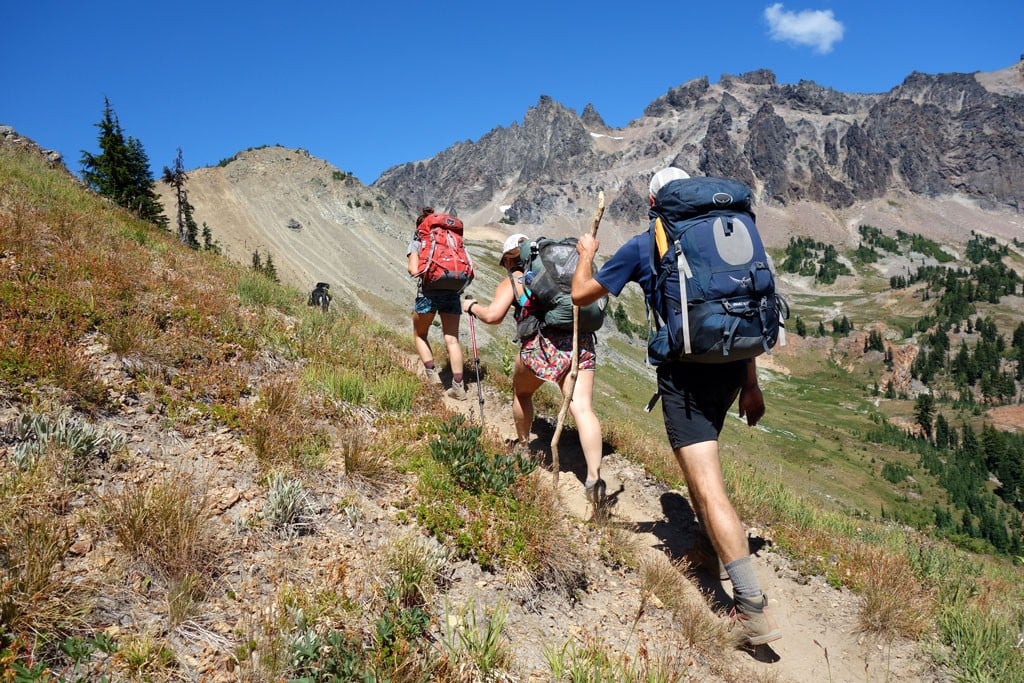
    Key Highlights

    • Ancient relics and writings.
    • Ideal place just above Phu Village.
    • Get attuned to the ancient spirituality of primitives.
    • Demolition of the edifice that has seen four centuries of history.
    • Silent site of contemplation.
    • Sense of union with valley Buddhism.

    10. Mt. Himlung Base Camp: Wonder of the Himalayas

    Despite the fact that a trekker may not be a mountaineer but someone eager to try out challenging treks, visiting the Mt. Himlung Base Camp as an add-on trek will prove to be an exciting adventure for trekkers looking to seek it out. Very easy to slot into your itinerary, save time, and highly recommended to slot into the travel calendar. The base camp is 4,900 meters north-east of the mountain with stunning close-up panoramas of Mt. Himlung, a 7,126-meter-high peak. It ascends to the summit base camp with glaciated terrain, a fairy-landscape of awe-inspiring scale in this small range of mountains.

    Mt. Himlung Base Camp is a trekking trail for Mt. Himlung trekkers but not for the adventure junkies for a trek to attain some space travel. The scenic view of Mt. Himlung Base Camp is nothing but something of a photograph, and one of the most isolated areas which are not explored, and also a spot on the map.

    Himlung Base camp with tent of climbers with snow
    Humlung Base Camp

    Key Highlights

    • Panorama of Mt. Himlung at 7,126 meters.
    • Hike glaciated terrain with a close-up panorama of the Himalayas.
    • Side trip through an unconventional and rewarding terrain.
    • Trekkers’ acclimatization trail.
    • The linear beauty of an un-promenaded alpine terrain.

    11. Nar Phedi Monastic Institute

    Nar Phedi is a small but very famous monastery school between Nar and Phu. It is a location and point of encounter of the trekkers where they rest and have hot food for an overnight halt in the remote Nar Phu Valley.

    The physical surroundings of Nar Phedi are as serene as possible. It is a far, quiet spot, between enormous Himalayas; it is where there is a beautiful monastery. Nar Phedi sleeps at night, hikes, and prays at midnight just to be in serene surroundings by itself. It is where trekking is rainy and mapped in contact with religion and human beings that envelop and cover the valley.

    Nar Phedi Monastic Institute where resident Monk
    Nar Phedi Monastery

    Key Highlights

    • Shelter and food for the trekkers.
    • Quiet and peaceful environment.
    • Evening prayer and spiritual life.
    • Unselfish hospitality and warmth of the nuns.
    • Get refuge from inclement weather.
    • A chance to witness the monastic way of life of one of their valleys firsthand.

    12. Nar Village: The Monastery Village

    Nar Village is yet another of Nar Phu Valley’s larger villages. Phu Valley has less gompas (monasteries) and hence Nar “Monastery Village” offers livelier and more vibrant religious town with Tibetan community attraction than Phu Village. It has the older high Buddhist monasteries which even now still function as full prayer centres to see the centuries-old Tibetan Buddhist routines, traditions, and rituals.

    Nar architectural conservation is of international standard with structures a few years old and built under genuine Tibetan architecture. The tradition is depicted in the form of prayer wheels, butter lamps, and holy murals sacred sacred being “sacred” symbolizing another form of magical experience embracing saved structures and praying community in tones of colored shades.
    Also called the “Monastery Village of Nar,” monasteries are filled with sign posts as a witness to thriving Buddhist culture as living itself in any conceivable form.

    Nar Village  & mountain in the background
    Nar Phu Valley Trekking in Nepal

    Key Highlights

    • High concentration of monasteries with deep religious connection.
    • Well-bLENDED Buddhist village with the vibrancy of people.
    • Well-preserved traditional Tibetan architecture in a condensed form.
    • Vibrant centers of lethal traditional ritual and ceremonies.

    13. Nar Village Guru Rinpoche Statue

    The Guru Rinpoche statue, one of the most religiously important places in Nar that is outside of the village, is a symbol of Nar’s Buddhist past. The Guru Rinpoche statue, a figure of Tibetan Buddhism’s religious founder (Padmasambhava) and Nar’s, has a sweeping view over the entire valley and was a beautiful place to sit and pray.

    One of the largest pilgrim places is that of Gurerinpoche’s and where most of the natives take their trip to pay their respect. More religious significance in scenic beauty makes a destination point a destination point tourist attraction when at Nar. That point symbolizes the statue of wisdom, compassion, and information donated by the Tibetan religion of Buddhism, hence having a peaceful site-seeing and contemplation moment when it comes to dimensions of life.

    Tashi Lakhang Gumba, Phu
    Monastery

    Key Highlights

    • Represents the founder of Tibetan Buddhism, Guru Rinpoche.
    • Has a commanding view of Nar Village and the entire valley.
    • Peaceful good place to meditate and contemplate.
    • Good view of mountains in all directions.
    • Sacred place of pilgrimage for locals.
    • Representation of Buddhist philosophy, wisdom, and compassion.

    14. Old Nar Gumba

    Old Nar Gumba is just a short walk away from Nar Village. It is an ancient monastery that survived the test of time. Old Nar Gumba also features a rich presentation of Buddhist paintings and murals, thangkas (holy paintings), and holy remains. Of particular interest here is the fact that nuns and monks reside and operate at Old Nar Gumba up to this moment – monastic standard norms and expertise exchange with trekkers and maintenance by Old Nar Gumba of way of life is offered. Old Nar Gumba’s historical importance and religious importance of the Gumba make the trek worth undertaking for travelers. The contrast between the modern day and ancient customs still being adhered to provide trekkers with a vision of Nar’s history through the religion of Buddhism. The Gumba left an impression that will be worth it to almost every trekker and every visit to Old Nar Gumba that we highly recommend you to undertake.

    Key Highlights

    • Historical monastery with spiritual relics and thangkas.
    • Sneak peek into the monastic culture of the place.
    • Soothing, peaceful ambiance for meditation.
    • Conservation of ancient traditions or sympathy towards Buddhism.
    • Cultural hub for the Nar citizens as well as trekkers that would be an interesting place to loiter for them.
    • Intellectual understanding of the spiritual rituals of the Nar citizens.

    15. Nar Gumba: Spiritual Heart of the Valley

    Nar Village’s second religious complex following above is Nar Gumba. It is an active monastery with peaceful frescoes, prayer wheels, and butter lamps. Nar Gumba is an active monastery where spiritual teachings are taught and in-resident monks and lamas disseminate Tibetan Buddhism.

    The surroundings of Nar Gumba are scenic as well, of the same quality as Nar village between two hills and down in a valley. The spiritual quiet and intent of Nar Gumba would be a memory each time.

    Key Highlights

    • Spiritual heart of valley life.
    • Pictorial frescoes, prayer wheels, and butter lamps.
    • Lively religious hub of ritual and scholarship.
    • Mountain and valley views.
    • Maintains regional religious culture and tradition.
    • Regional religious and spiritual meaning to trekkers and relativistic.

    16. Kang La Pass: Epic Himalayan Crossing

    Kang La Pass, slightly higher, 5,306 m, is relatively tough section of Nar Phu Valley Trek. It provides steep acutes climbs to the trekker. The trekkers have an opportunity to view surrounding mountains: Annapurna II, Gangapurna, and Tilicho Peak on the pass. Beauty is fully worth all the hassle to access.

    The way down from Ngawal, the back of the pass, is the same breathtaking panorama one has just seen but a tiny bit more breathtaking views of the Annapurnas. Kang La Pass is a whole Himalaya experience as much with breathtaking panoramas, savage weather, and breathtaking panoramas. Kang La’s steep climb and Kang La’s steep way down are the highlight of any trek and make the trekker feel wonderful and proud.

    Top of Kang La Pass (5,320m) with the views of surroundings Himalayas & valleys
    Kang La Pass

    Key Highlights

    • Climb the top of high pass at 5,306m or 1,813 ft.
    • Scenic view of Annapurna II, Gangapurna, and Tilicho Peak.
    • Point where Annapurna Circuit of Nar Valley converge.
    • Drive to Ngawal for beautiful Himalaya view.
    • Adventure, difficult trek to provide a real Himalayan experience.
    • Easy, pleasant, and rewarding pass.

    17. Nar-La: Off-the-Beaten-Path Adventure

    Nar-La Pass (5,400m / 17,700ft) may be one of the least-worn and most off-the-beaten-path of the Himalaya passes. Being one of the less-worn passes, it can also bring visitors peace and stillness.
    In comparison to what the other passes, with their trekking tourists numbered in hundreds, like Kang La Pass, are subjected to. It is the only pass that leads the visitors to the Mustang region, which we can turn into an off-the-beaten-track. With other trekkers trekking in Phu Valley, perhaps we would have peace of mind if fortunate. As with the trail itself usually being so demanding, trekking itself provides us with a complete panoramic view of mountains and valleys, nearly up to the top of the pass.

    The pass generally goes through we trek the Nar Phu Valley. The valley is most famous for its harsh, high-altitude conditions and rich heritage. The Nar-La Pass also offers great chances for trekkers to see and experience the rich culture of the Tibetan-influenced villagers, particularly from local monestary buildings, unique community traditions, and the country’s lush vegetation and wildlife.

    Key Highlights

    • Harsh, high-altitude conditions quietness, away from other trekkers
    • Local Himalayas’ ridges and valleys
    • Rich cultural life through the interaction of indigenous Tibetan residents
      far-flung villages, where locals maintain traditional ways of life.

    18. Teri La Pass: Gateway to the Forbidden Kingdom

    Teri La Pass (5,595m) is not only one of the most isolated passes of the Himalaya, but also among the highest passes, situated in the rugged terrain of Upper Mustang. It is highly demanded by Himalayan trekkers due to its remoteness, harshness, and scenery. Teri La Pass has a special crossing permit and logistic support needed since it is not readily accessible. Trekkers passing through Teri La also must admit that the trek is not only physically demanding in the absence of an acceptable trail, but even climatic conditions become risky, and altitude becomes hazardous. Rather than a physical expedition, traversing Teri La Pass can be termed an odyssey to the “Forbidden Kingdom” of Mustang.

    Mustang is a region that appears frozen in time. It is an experience where one gets to catch glimpses of moments of this very cultured and religious region, where Tibetan culture with very ancient traditions dominates The trekkers trek through the Teri La Pass to reach the isolated and peaceful ends of Upper Mustang and discover an unimaginable landscape which is horrific emptiness, gigantic emptiness, peaceful forms of beauty based on ancient Tibetan Buddhism.

    Mustang Valley with Nilgiri mountain

    Key Highlights

    • Home to one of the most isolated and some of the Himalayas
    • Requires a special permit and logistic support to view
    • Unparalleled beauty with snow-capped mountain ranges and boundless horizons.
    • Association as a culturally diverse Upper Mustang Region.

    Conclusion

    Nar Phu Valley Trek is not trekking—it’s a walk on living history, spiritual heritage, and sheer nature’s magic. It’s a trek on the path of ancient monasteries, secret villages, and traditional Himalayan passes, and along every step of history. It’s an adventure for someone who sees beyond mountains—an adventure to the past along a forgotten path. Contact us today at Happy Mountain Nepal, on Facebook, Instagram, or TikTok