Author: Happy Mountain

  • My Teej Experience as an Unmarried Girl in Nepal

    My Teej Experience as an Unmarried Girl in Nepal

    My Teej Experience as an Unmarried Girl in Nepal

    From the time I was a little kid, living in Nepal, I had festivals that brought color and meaning to my life. While different festivals have their own significance and beauty, one festival has a special place in my heart: Teej! I am now married; as a young, unmarried girl, I was not fasting for a husband, but I have always participated in every ritual since it’s part of culture, discipline, and about honoring women. This year, my Teej was quite the adventure! I prayed, I fasted, I danced, and made so many special memories that I will never forget. 

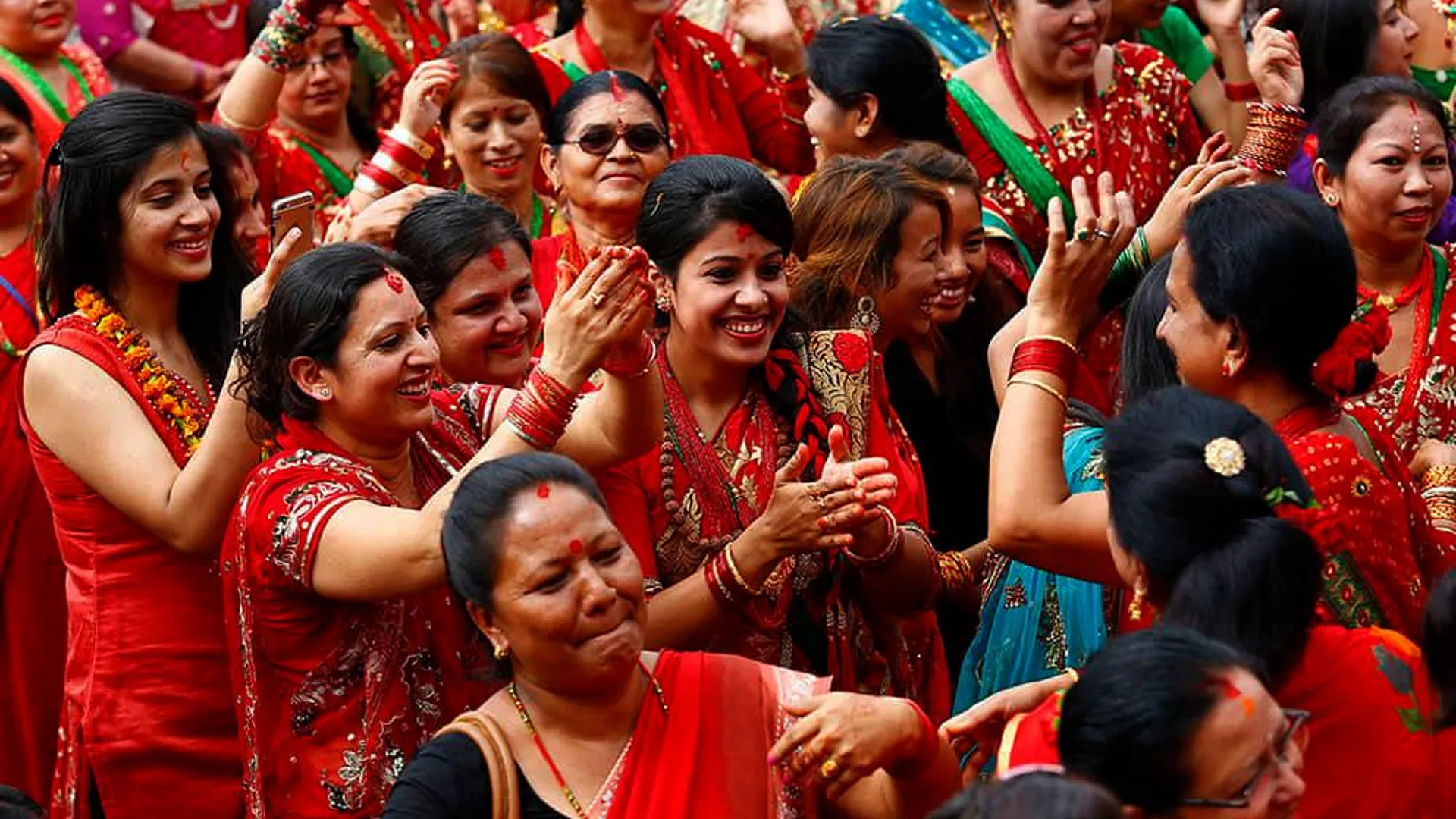
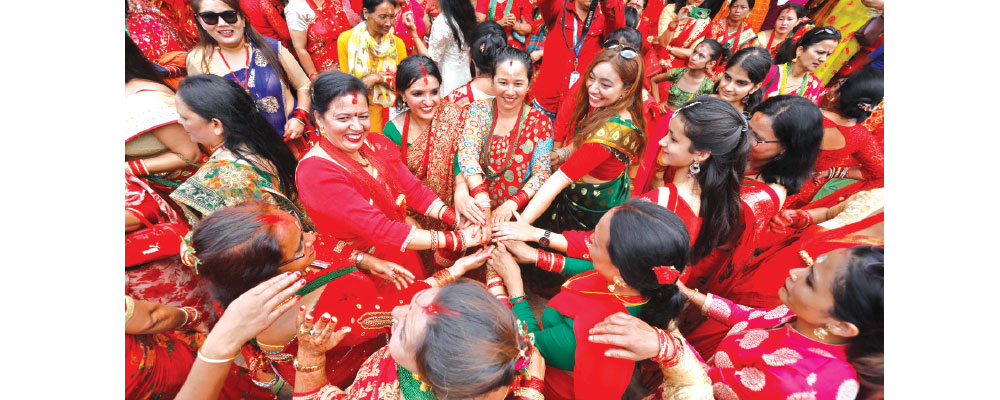
    Group of women wearing red sari and dancing

    I woke up early in the morning feeling excited about all the experiences that would happen that day. After bathing, I wore a bright red saree I had shopped for days before. I layered on green and red bangles, placed some tika on my forehead, and put on my simple necklace and earrings. The mirror showed not just me but the spirit of Teej. Throughout the entire preparations, my mother and I collected pure flowers, fruits, a few mystical puja diya. And of course, made our way to the temple, all the while capturing pictures with my cousins.

    There were women everywhere in gorgeous red attire. All making their way to the temple for a similar serious intention. I joined the line at the Shiva temple. I had my offerings. The temple smelled wonderful incense flowed freely. Bells rang up ahead and devotional songs was somewhere in the distance. When it was finally my turn, I bowed my head in front of Lord Shiva, placed flowers down, and decorated a diya with a flame. I closed my eyes and prayed- not for marriage but for love, peace, and strength in my life. I was proud to be among so many women, intertwined in a strong tradition.

    Once our tour to the temple was over, my fast began in earnest. It was a nirjala vrat- no food or water. At first, I wasn’t anticipating this to be too tough, but by noon, my stomach started to feel dehydrated, and my thirst proved to bring discomfort. It was easy to remind myself that fasting is not just a physical thing. It is also about willpower, and therefore devotion to the fast itself. I felt incredibly lucky to be supported by my cousins, aunts, and friends who were also fasting on Teej – they kept me positive. We swapped stories, laughed, and temporarily forgot about being hungry in each other’s company

    By late afternoon, the low tone had cleared and was now a time of celebration. I found myself with a group of women in a courtyard, with the madal drum steadily beating. Teej songs filled the air, songs of love, songs of challenges and struggles for women, and songs of extraordinary joy. I started dancing. By that point, I had been gifted my gleaming saree and bangles, and my feet were moving independently of my thoughts. I had almost forgotten that I was fasting. The music, the laughter, and the connection of all the women dancing together somehow energized me with new life.

    Women wearing red sari and celebrating teej in Pashupatinath temple

    As the sun started to sink lower in the sky, I walked home for evening puja to again offer my prayers to Lord Shiva as a family unit. I sat in silence and reflected on the day’s events; on the hunger, the prayers, the dancing, and the laughter. When it was time for the puja to begin, I also had my first sip of water for the day. It was the sweetest blessing. Though I had not eaten for a day, when I had some fruit and a very light meal, it tasted more satisfying than any meal I might have imagined as a feast.

    As I lay in bed that night, tired but pleased, I began to sort out what Teej really means for me. It is so much more than fasting; it is a different embodiment of empowerment, keeping a community, and trust. I see where I gain value as an unmarried girl. Not because I am expecting my future husband, but because it allows me to reclaim my roots, the women in my own family. And the generations of women who have practiced this tradition. Every Teej, I get to experience the joy of putting on red, singing in song, dancing with friends, and going to temples. I feel a sense of pride in the larger community. I see Teej as celebrating womanhood, resilience, and having fun together.


  • Experiencing the Teej Festival in Nepal

    Experiencing the Teej Festival in Nepal

    Experiencing the Teej Festival in Nepal

    At Pashupatinath, I watched as women in bright red sarees appeared with passion and energy, singing and dancing with uncontainable happiness. I watched as many of them completed fasts with deep belief and prayed together while sharing stories and meals. By evening, they broke their fast with delicious Teej treats that created a warmth and celebration all around.

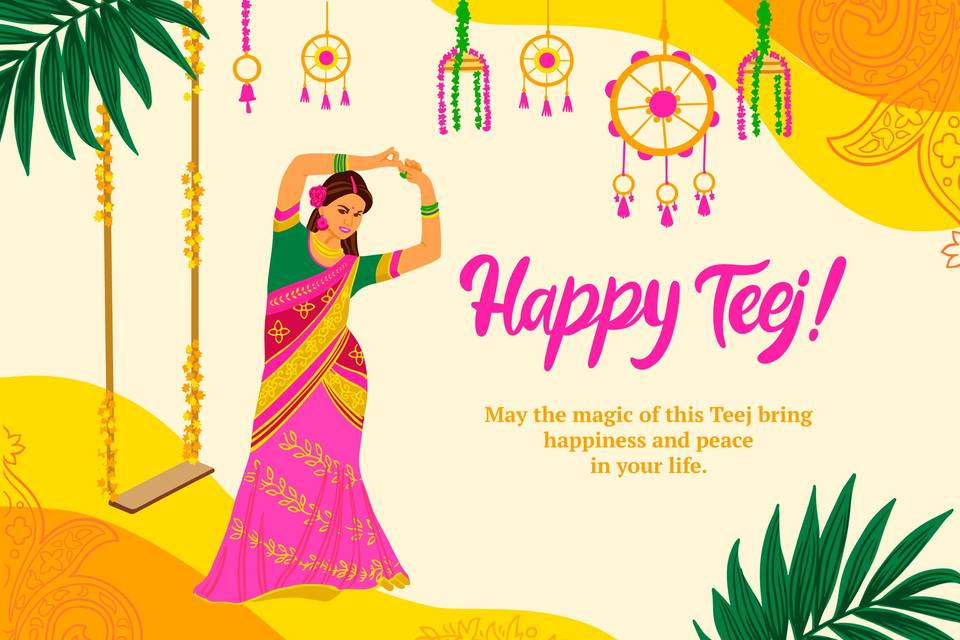
    poster wishing happy teej

    When I was in the UK, my day typically looked like many others, rushing to get the train into London, the grey sky, on route to another busy day. Life is usually full of continuous deadlines, a job, office hours, and weekends that barely allow you time to slow down to enjoy life. I feel that I am going to discover differences in Nepal. I thought that amidst the temples and quiet streets of Kathmandu, I would find some solitude to reflect. But also thought I might be able to breathe the soft silence that settled over my beautiful surroundings. I did not expect to happen upon one of the largest festivals in Nepal, the Teej Festival.

    I first remember touching on the word “Teej” from the hotel manager, who expressed some interest and said emphatically that my sole purpose of being there was to experience the festival. Honestly, I did not know what he was talking about. So I inquired further, and he proceeded to explain everything about it. Teej is one of the biggest Hindu Festivals in Nepal, and represents the day Parvati reunited with Lord Shiva after years of praying and fasting. Women observe Teej by fasting, worshiping, singing, and dancing in their colorful red sarees.

    When I heard him speak, I was fascinated and somewhat exhilarated. I thought rather naively, just let me go and see it.  The next day, I woke up to a very different city; women were out, in red saris and gold jewelry, with green bangles clanging on every step. They were spectacular, and their energy was infectious! I was swept along the shoreline with the river of women to Pashupatinath Temple, one of the holiest temples in Kathmandu.

    There were thousands of women here. Some were standing in very long lines waiting to enter for prayers, while others were dancing and singing in groups outside. They had fasted all day, with no food or water, although they didn’t seem tired. The songs danced were folk songs they had learned throughout time. The songs usually discuss love and devotion, and the burden that women experience in society. The women danced spiritedly and playfully with other women in circles, clapping and laughing with friends.  

    I learned that Teej lasts for several days. The first day is Dar Khane Din, a feast day. Women gathered to have a large feast before they started their fast. The second day is the day of fasting and worship, the real day of fasting when women pray for their husbands. If unmarried pray for a good husband. The third day is Rishi Panchami, which is the day of ritual bathing, or purification for women to seek forgiveness for anything wrong or any sin.

    women dancing during teej wearing red sari

    As I was looking around, I couldn’t help but think of life back home. Back in the UK, festivals such as music festivals seem to be somewhat of a fun event. Maybe there is a stage with some music on it, some food stalls, a nd on we go. Teej was a festival of devotion, wrapped in joy and sung with spirit and faith. It felt like both spirituality and true joyfulness. What stuck was the connection. Mothers, daughters, little girls, grandmothers, women from all walks of life, came together as women.

    They danced, they laughed, they forgot their lives. It wasn’t a festival, it was empowerment, and we were alright, together. As the sun was setting and the singers were somehow still singing and the bells were still ringing from the temple. I realised that Teej was so much more than an event I was documenting. It was a mirror. A mirror that was reflecting back all that I had forgotten about celebration. And reminded me of the importance of community. Returning home to the UK, life often feels categorized in purposeful chunks of productivity and deadlines. However, Nepal opened my mind to the idea that the joy felt from life itself can be sacred. 

    If you ever find yourselves in the beautiful country of Nepal during late August or early September. Make sure you mark a day for Teej. The streets of Kathmandu over these few days have been transform into an eruption of celebration. That is hard to do justice to with words alone. As someone from the UK experiencing TEEJ, it is undoubtedly one of my most memorable and unique experiences of the trip. It revealed to me a culture where devotion and celebration are entirely knot. Captured in a red saree, in song, in laughter. In the perseverance of women who are dancing as if they ask their prayers to be carried by every step and movement they make.


  • Best travel insurance for trekking in Nepal

    Best travel insurance for trekking in Nepal

    Best travel insurance for trekking in Nepal

    Travel insurance is your protection for unexpected situations such as a medical emergency, an accident, cancellation, or lost luggage while you trek. It is a financial safety net as you make your way into the beautiful but unsafe wilderness of Nepal.

    Reasons to Have Travel Insurance for Trekking in Nepal

    Trekking in Nepal usually involves a remote trail, a climb involves high altitudes and can be subject to unpredictable mountain weather. These all add risk to your trek since altitude sickness (HAPE/HACE), accidental injury, sudden illness, and delays due to adverse weather and a resulting trip cancellation can occur. Helicopter transport for an emergency is often outrageously costly; over $2,000 is a common amount quoted! The necessary costs without travel insurance policies can rob valuable travel money and may alter your plan despite no fault of your own.

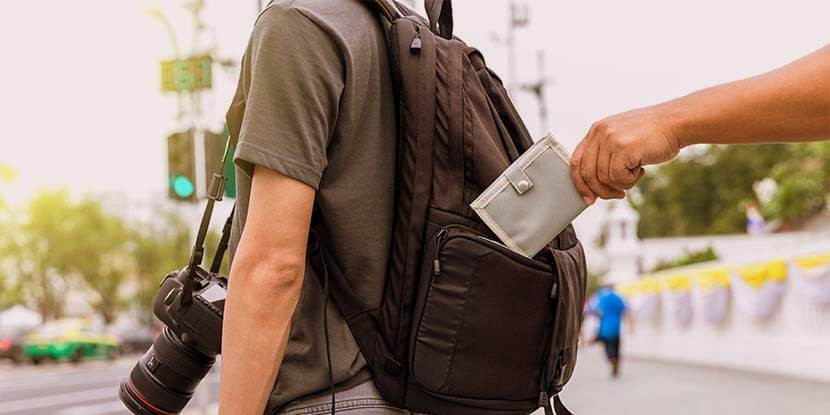
    list of things why you need travel insurance

    A good travel insurance policy is one that provides coverage for medical expenses, medical evacuations and hospital stay, interruption of trip, loss of luggage, and even repatriation in some cases. A good travel insurance policy protects your bank account and gives you a sense of leaving on a trip to the Himalayan region of the world with peace of mind. Trekking in Nepal is a travel adventure of a lifetime, but you must also know and understand the actual risks of trekking in Nepal. You must know that obtaining travel insurance is a must:

    1. High-Altitude Risks 

    Most treks like Everest Base Camp or Annapurna Circuit occur at altitudes above 4000- 5500 meters, and if you get altitude sickness (HAPE or HACE), it can be life-threatening unless you get immediate evacuation.

    2. Expensive Helicopter Evacuations

    The only urgency for getting someone to the hospital in the remote countryside is by helicopter, and this could easily cost between $2000-$5000, which will then be 100% covered by insurance.

    3. Remote Medical Care

    Medical facilities in the mountains are very basic. Should you require emergency evacuation due to illness, your insurance will allow for a more appropriate hospital in Kathmandu or even abroad.

    4. Unpredictable Weather

    Flights from Kathmandu to Lukla or Jomsom frequently get delayed or cancelled due to bad weather. A good insurance policy will reimburse you for accommodation costs and other travel costs (not without cause) while waiting for the weather to clear.

    5. Injury & Accidents

    Depending on how you are trekking, trails can be slippery, and rockfalls may occur. Even simply twisting your ankle will be enough to require an evacuation for treatment.

    6. Trip Cancellations or Interruptions

    Treks can be cut short or cancelled due to illness prior to departure, emergency issues with family, or, in rare occasions, political unrest. Insurance will reimburse you for your prepaid expenses, allowing you to reschedule your trek.

    Best Travel Insurance Options for Trekking in Nepal

    reason why you need insurance

    1. Global Rescue

    Global Rescue is one of the prominent choices for trekkers into high-altitude areas of Nepal, as it has no altitude limits. This means you are covered whether trekking to Everest Base Camp or trying to attempt peaks above 6500m. In fact, they are exclusive for priority rescues and promise you can be heli-vacuated from even the most remote areas of the Himalayas. They only conduct medical evacuations and field rescues, and in particular, are a great solution for high-risk expeditions or remote treks, especially when immediate medical access can save lives.

    2. World Nomads

    World Nomads is a popular insurer for adventure travellers around the world due to its flexible coverage and its ability to insure travellers from over 130 countries. Their plans generally cover trekking up to around 6000 meters, emergency evacuation, medical treatment, trip delays, repatriation, and lost baggage. What is different is that you can also purchase coverage mid-trip, which is unique in travel insurance.

    3. Travelex / Allianz

    Travelex and Allianz are both insurers with a strong and long history to be trusted to writ comprehensive policies that would cover medical emergencies, trip delays, and evacuations. They also may or may not have altitude limits in their standard plans, but usually have an adventure or sports upgrade which can be purchased for additional coverage for trekking at high altitudes in Nepal. They are a reasonable choice if you want an established name provider to ensure your adventure, and typically keep enough customer service staff available, including satellite coverage for trekkers. You can also purchase coverage for your entire trip in Asia or for distances beyond your trekking coverage, assuming you are trekking for fun and sport.

    4. True Traveller

    True Traveller is a UK and European-based insurance provider that specializes in adventure insurance and provides coverage for trekking up to 6,000 meters, with optional high altitudeadd-onss Their policies are fully adjustable, so you only pay for what you need, which can work for tight budgets.True Traveller’s unique offering is that it is easy to set up online with a quick online process. Making it an easy option for our European friends when insuring a trip to Nepal.

    5. Bajaj Allianz / ICICI Lombard

    Bajaj Allianz and ICICI Lombard have some of the best policies for trekkers from India. Their policies can cover trekking up to around 5,500 – 6,000 meters, helicopter evacuation, trip cancellations, etc. Since these are providers from India and only for citizens based in India, they are often somewhat less expensive than international insurers. They will often work perfectly for Indian trekkers wanting altitude coverage and evacuation coverage. When travelling to Nepal, when not having to pay more expensive foreign insurance rates.

    6. Asc360

    Asc360 is a highly reputable option for any travelers from Australia, New Zealand, and the UK, as their policies are specifically designed for adventure sports. It include trekking up to 6,000 meters, complete emergency rescue, emergency medical cover, and trip interruption cover. It has a reputation for being responsive in the event of an emergency. Invaluable for trekkers located in areas with little communication capabilities or extreme weather.

    7. Rise & Shield

    Rise & Shield insurance policies provide coverage for high-altitude (up to 6,500 meters) and extreme activities. This is one of the only options for those wishing to ensure expeditions that include trekking routes beyond the “normal” trekking areas. Their activity packs have medical and logistical support for trekkers. Mountaineers in remote areas of the Himalayas, who undertake serious trekking.

    8. Heymondo / Alpenverein

    Heymondo is a good, cheap insurance option for budget backpackers; however, they usually insure treks up to only about 4,000 meters, so they are better suited to trekking routes at low altitude, such as Ghorepani Poon Hill or Langtang Valley. Alpenverein is a European Alpine Club that provides members with insurance. Alpenverein is a good fit for European trekkers who are doing a high-altitude expedition. As they offer excellent medical cover and rescue services at a very competitive price.

    9. SafetyWing

    SafetyWing is primarily oriented towards offering travel insurance for digital nomads and long-term travellers. But does provide an adventure sports add-on that includes trekking up to 6,000 meters. They have an additional flexible way to look for travel insurance. It will let you buy, and also extend your insurance from abroad. So it may work perfectly for trekkers who are planning to combine Nepal with extended travel in Asia.

    Conclusion

    Trekking is a wonderful experience, but trekking in Nepal has risks. High-altitude outdoor adventures always have the risks of high-altitude illness, unpredictable weather below treeline can change in seconds, and high-cost rescue or unplanned evacuation can happen in isolated locations. Good travel coverage allows you to have the right to take time to recover. When your trek is done, potential help when you need it financially, and peace of mind! The main idea is to get the right policy for your route, altitude, and activities to enjoy the mountains and worry less! Contact us today at Happy Mountain Nepal, Facebook, Instagram, or TikTok. 

  • Can a helicopter land on top of Mount Everest?

    Can a helicopter land on top of Mount Everest?

    Can a helicopter land on top of Mount Everest?

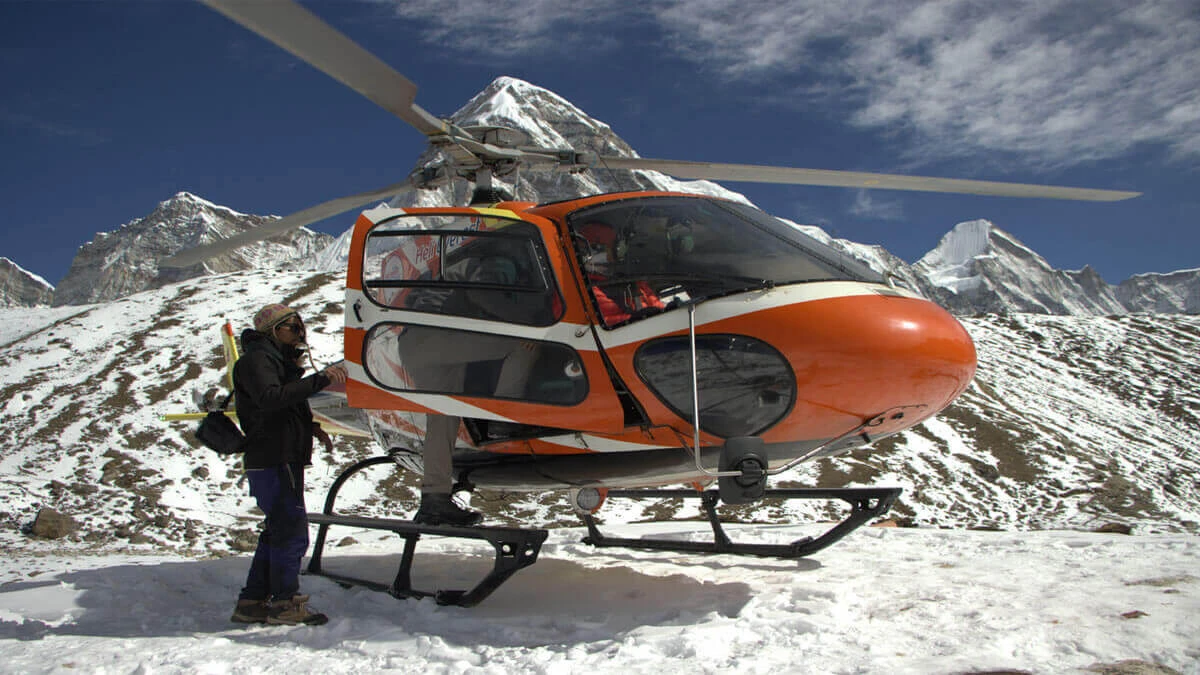
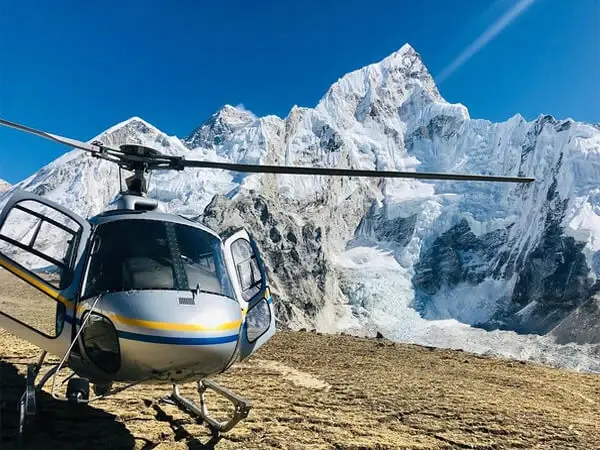
    helicopter, orange and white, is positioned on a snow-covered mountain peak with a person standing near its tail rotor, against a clear blue sky.

    Mount Everest is the highest mountain at 8848 mt (29032 ft), and it makes one wonder: can a helicopter fly to the top? Can a helicopter fly to the summit? Yes, under some special circumstances. Didier Delsalle (a French pilot) proved this was possible in 2005; however, with a number of factors at play at these extreme altitudes and thin air, engines also lose power (which is slightly problematic). When flying until landing, winds are also very predictable, which makes it much easier than trying to land in a space with winds that can change rapidly. This is why overall there is not a substantial amount of helicopter flights upside of Mount Everest Base Camp since most tourism is at the Base Camp facility, and also those rescues and supply drops that are done in the region. Ultimately, flying to the summit (and actually landing on the summit) is definitely an extremely special event, and not part and parcel to flying.

    A helicopter with blue and yellow stripes on its side is positioned in the foreground, with its open door visible. In the background, a large, snow-capped mountain range rises under a clear blue sky.

    FAQs

    1. Have any helicopters successfully landed on top of Everest? 

    Yes, Didier Delsalle successfully flew the Eurocopter AS350 to the summit of Mount Everest, and he is the only helicopter to the summit of Mount Everest in 2005. 

    2. What is the problem with flying to the summit?

    There is very thin air with lower levels of oxygen, and also, engine performance is very poor.

    3. What is the highest altitude a helicopter can fly to? 

    A helicopter typically can reach an approximate peak altitude of about 7000m (under normal conditions). The summit of Everest is 1848 m higher than the base camp altitude.

    4. Do helicopters rescue climbers on Everest?

    Yes, they rescue climbers from Base Camp, and page, where they have a viable route to fly safely.

    5. Do helicopters take climbers to the summit?

    No, that is not possible due to weight and also because of the very informed base load of 2005, with Delsalle.

    6. What helicopter landed on Everest?

    A Eurocopter AS350 B3, which was modified for the occasion.

    7. Do helicopters medically assist climbers?

    Yes, in most situations, helicopters rescue climbers from camps or from valley floors below the death zone.

  • Nepali Father’s Day: Buwaako Mukh Herne Din

    Nepali Father’s Day: Buwaako Mukh Herne Din

    Nepali Father’s Day: Buwaako Mukh Herne Din and the Stories We Carry

    son taking blessing from father on fathers day

    Father’s Day usually felt like a bit of a scramble for me back home in New York. A quick phone call (and if I had time: a card from CVS), a meal when I wasn’t pulled into the office for fourteen-hour days of work– still, those days often felt closer to duty than love. And then, somewhere along the way, I landed in Nepal for Buwaako Mukh Herne Din(Nepali Father’s Day). 

    In Nepal, it was not about buying something from Amazon or posting on social media; it was a different personal sacred. The day means “to see the face of your father,” and it struck me instantly when was the last time I looked at my father, not just a glance over FaceTime between my meetings?

    As I walked along the streets of Kathmandu on that early morning, I started to feel the streets rumble gently again. I observed families: some walking around with fresh fruit and sweets, others with garlands. Sons and daughters were walking to their father’s houses, some in the native daura suruwal or a daura kurta. The temples were busy as well. I saw sons and daughters who have lost their fathers lighting oil lamps and saying prayers. That day was heavy, but peaceful. It seemed that the city had agreed on that day to stop the normal pleasantries of life. And take a moment to honor the men who built it. 

    Children giving gift and kissing their dad

    I was meeting with a local friend who invited me to their family home in Patan. He found his dad sitting cross-legged and grinning shyly as his children prepared tika on his forehead, fruits, clothing, and a blessing. The whole thing was so intimate, no designer watches, no self-celebrating and performatively reflective socialites posting for the world audience, just presence. Watching this moment broke something inside me.

    As I sat on a chair drinking tea, it hit me whether it was the festival or a reflection. A reflection that asks me when was the last time I stop long enough to honor the man whose sacrifice made me into the person I am? Nepali Father’s Day reminded me that there are no physical money and/or grand gestures of generosity that guarantee gratitude. Gratitude is simply showing up, being there, and in your eyes. Eyes saying without speaking, I see you, I am grateful for you, I love you. And maybe that is why being here mattered. 

    I was too busy climbing all of the invisible mountains of ambition to remember to do that in New York. But today in Nepal, I finally stopped. I called my father. And for the first time in a long time, it was not a call where we spent minutes talking about what I was doing or about what was going on in our lives. It was a call full of stories, laughter, and silence on the other end that was not awkward.

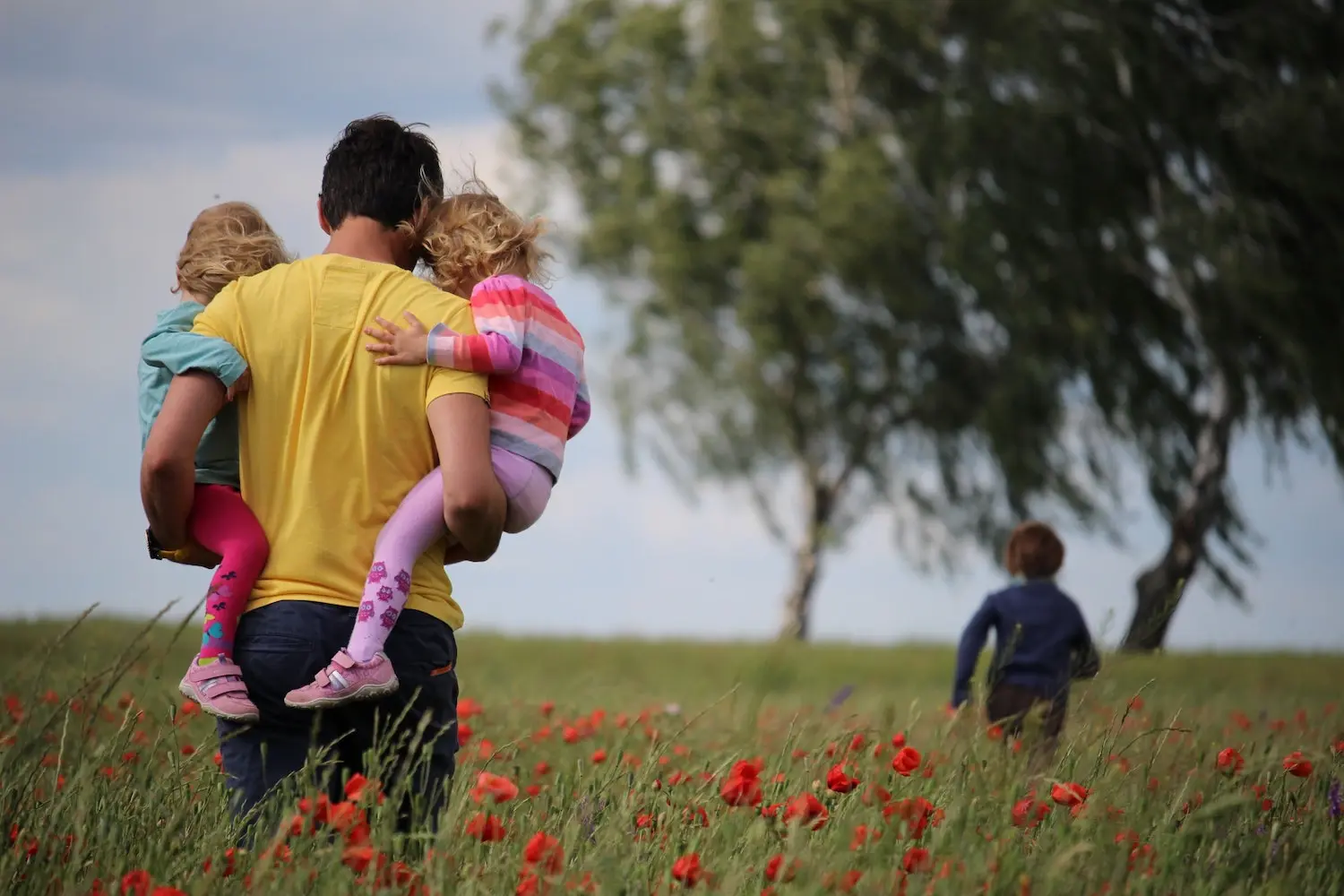
    Man carrying two children in a flower garden

    Why Nepali Father’s Day is Different

    1. Buwaako Mukh Herne Din, which occurs in August, is celebrate according to the lunar calendar.  
    2. Children honor their fathers by giving them food, clothes, blessings, and an honorable ritual ceremony. 
    3. Children whose fathers have passed away will go to a holy river and a temple. To pray for their father in order to honour them.  
    4. It’s less for commerce, more for spirituality than the Western Father’s Day.  
    5. It’s about presence, gratitude, and connection.  

    After leaving that day, I felt different. I realized it wasn’t a cultural experience; it was an education. In Nepal, Father’s Day is not about how to be a good son or a good daughter. But a return, even just for a day, to the most basic truth: fathers are living timelines, and their faces are complex memories we always forget to view. 


  • Gaijatra & Janai Purnima in Nepal: The Day I Lived Two Festivals at Once

    Gaijatra & Janai Purnima in Nepal: The Day I Lived Two Festivals at Once

    Gaijatra & Janai Purnima in Nepal: The Day I Lived Two Festivals at Once

    It felt truly incredible to experience the magic of Gaijatra & Janai Purnima in Nepal this year. I honestly could not believe that Gaijatra & Janai Purnima would take place on the same day! It seemed the city was prepping for a cosmic heartbeat, one with gaiety & chaos, and the other with dignity and grace. I had no sense that the day would stay with me forever.

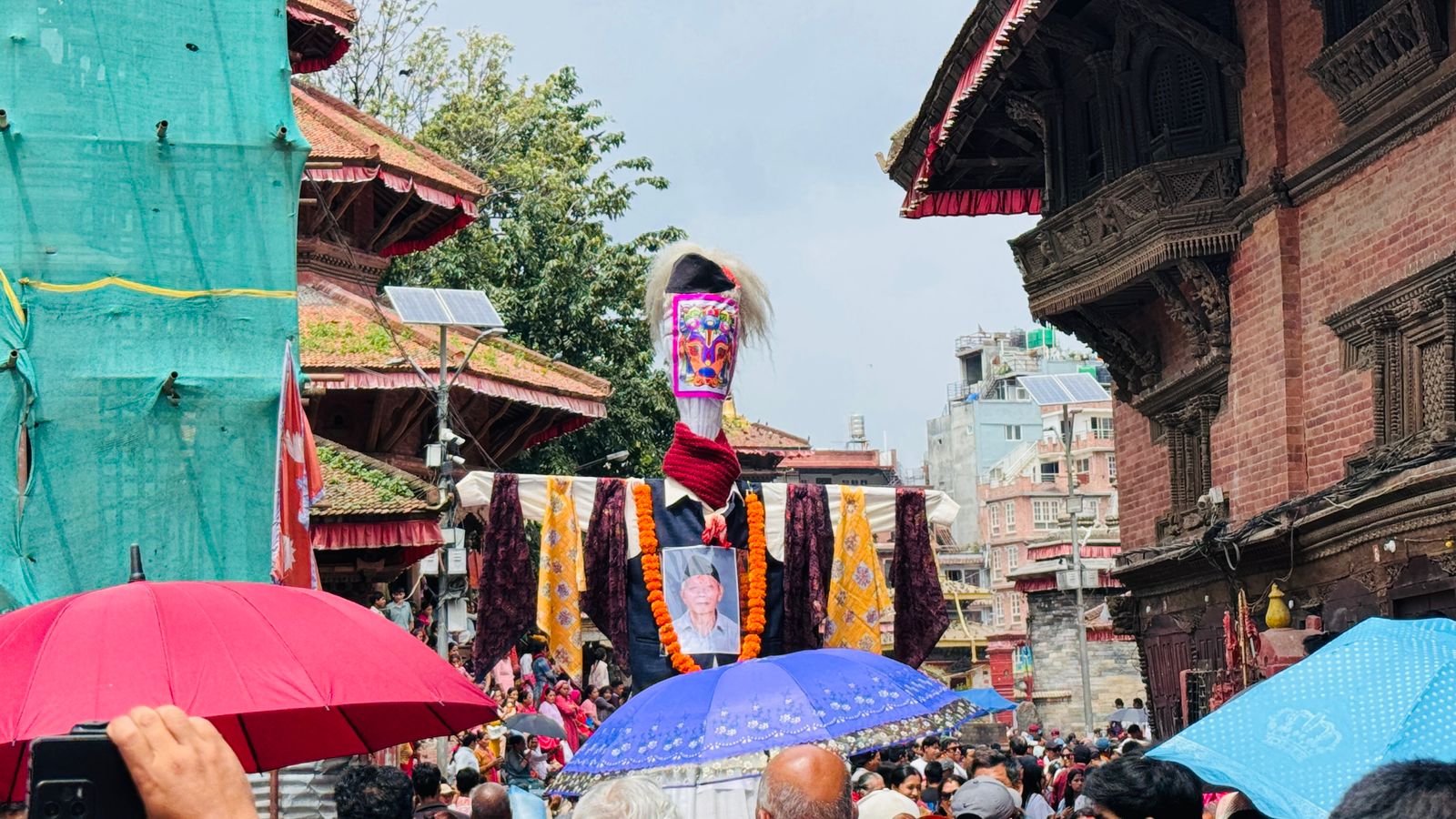
    A vibrant, vertical shot of a bustling street scene in what appears to be an old town or temple complex, possibly in Nepal, with traditional architecture, and a crowd of people during gaijatra

    Morning- Gaijatra in Bhaktapur

    I flowed into Bhaktapur Durbar Square shortly after the sun’s rays peeked over the horizon, and the light was soft and golden. Rain earlier had darkened and slicked the bricks, their earthy surface emanating soaked ink and incense. The bigger magic was in the people. Gaijatra, also referred to as the “Festival of Cows.” It is a day to remember those who have died in the past year. Families lead cows or dressed kids down the street in the belief that to have a holy cow walk helps a spirit’s journey to the afterlife.

    The streets were already alive with motion. Drummers banged on large dha drums with regularity, flutes trilled bright melodies that intertwined with the smells and sounds, and laughter was all around.  Children burst into little clusters with faces painted and colorful robes. Women reached over, carving wooden railings of balconies to dismiss rice and flowers on walking processions.

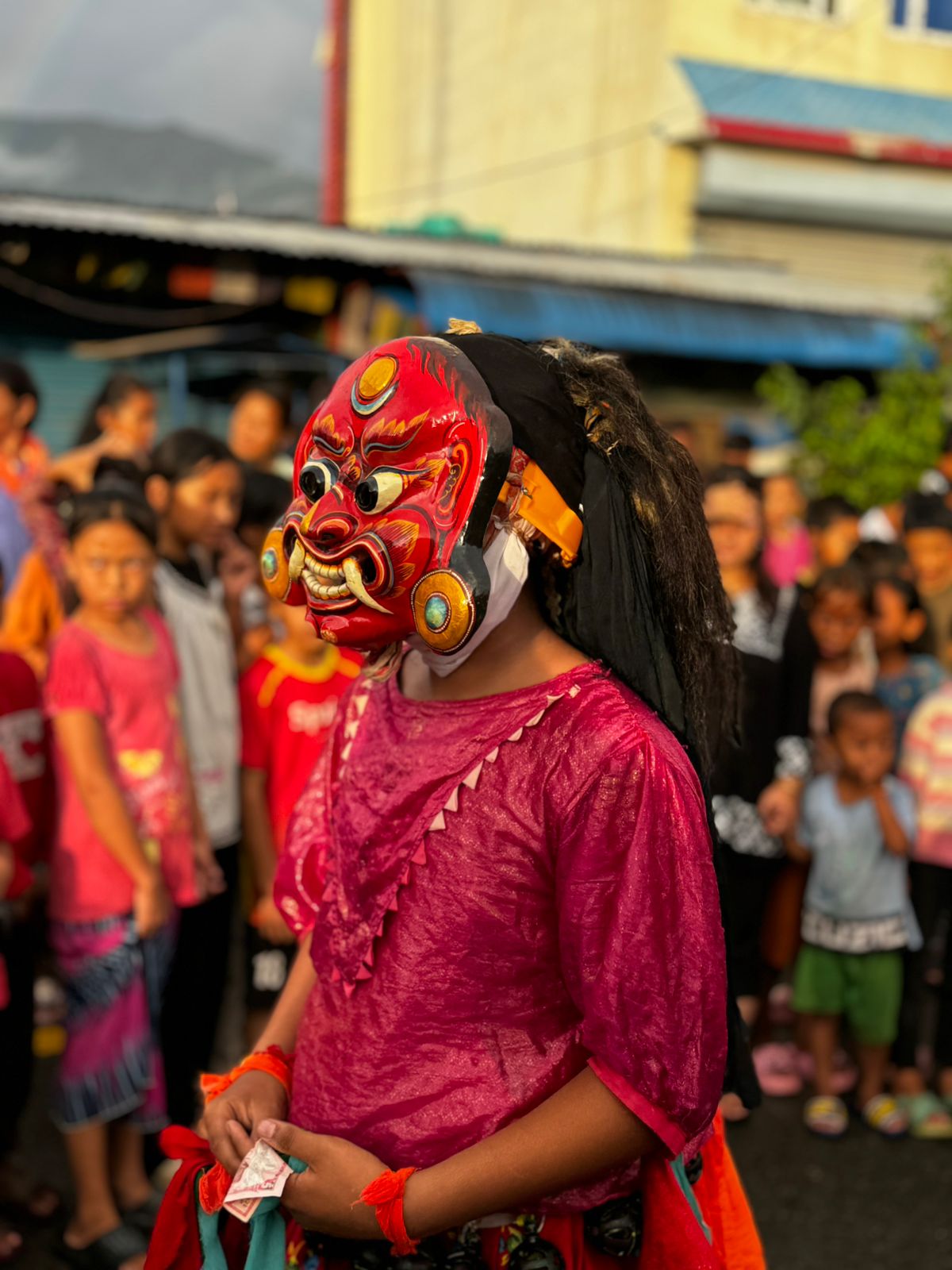
    "A person in a red traditional costume and an elaborate, fierce-looking red mask with large ears and black feather-like adornments stands amidst a crowd of people, likely during a festival or cultural event in Nepal, Gai Jatra."

    I paused to watch a group of young boys dressed as gods with faces painted gold and blue, their crowns slightly awry on their heads. They struck poses for photos and basked in all the attention. Over by a family, a cow beautifully decorated with fresh marigolds and shiny red cloth was led by the family, and calmly observed the chaos around it. I learned later that if there is no cow in the home, a child is dressed up as a cow, ensuring that every parted soul is still properly sent to heaven.

    At that point, a little girl in a yellow sari ran up and tugged my sleeve and pulled me into a quiet courtyard. There, an old woman was sitting, her deep red sari matched the flowers on her brass plate. Without saying a word, she placed a tika on my forehead, and her warm hands pressed down.

    She invited me in when she saw how wet I was. It was a small room that smelled of wood smoke and cardamom tea. She poured me a cup, which warmed me. The sweetness comforted me in a way similar to being comfy warm on a cold day. Then it struck me that Gaijatra was not just a time to remember the dead but to act for the living; to make them smile and love them through generosity.

    I wanted to give her something important, so I pulled out my MP3 player. I went to my main system and made a disc for her of the more popular Nepali folk songs according to her listening tastes, which I offered her. She took it as if it were a treasure. Right then, in a tiny kitchen with rain pouring outside, the sound of some distant festival music on the radio. I realized I had entered a tiny but rich space that was the very core of Gaijatra with joy that comes from memory, and memory that lives through joy.

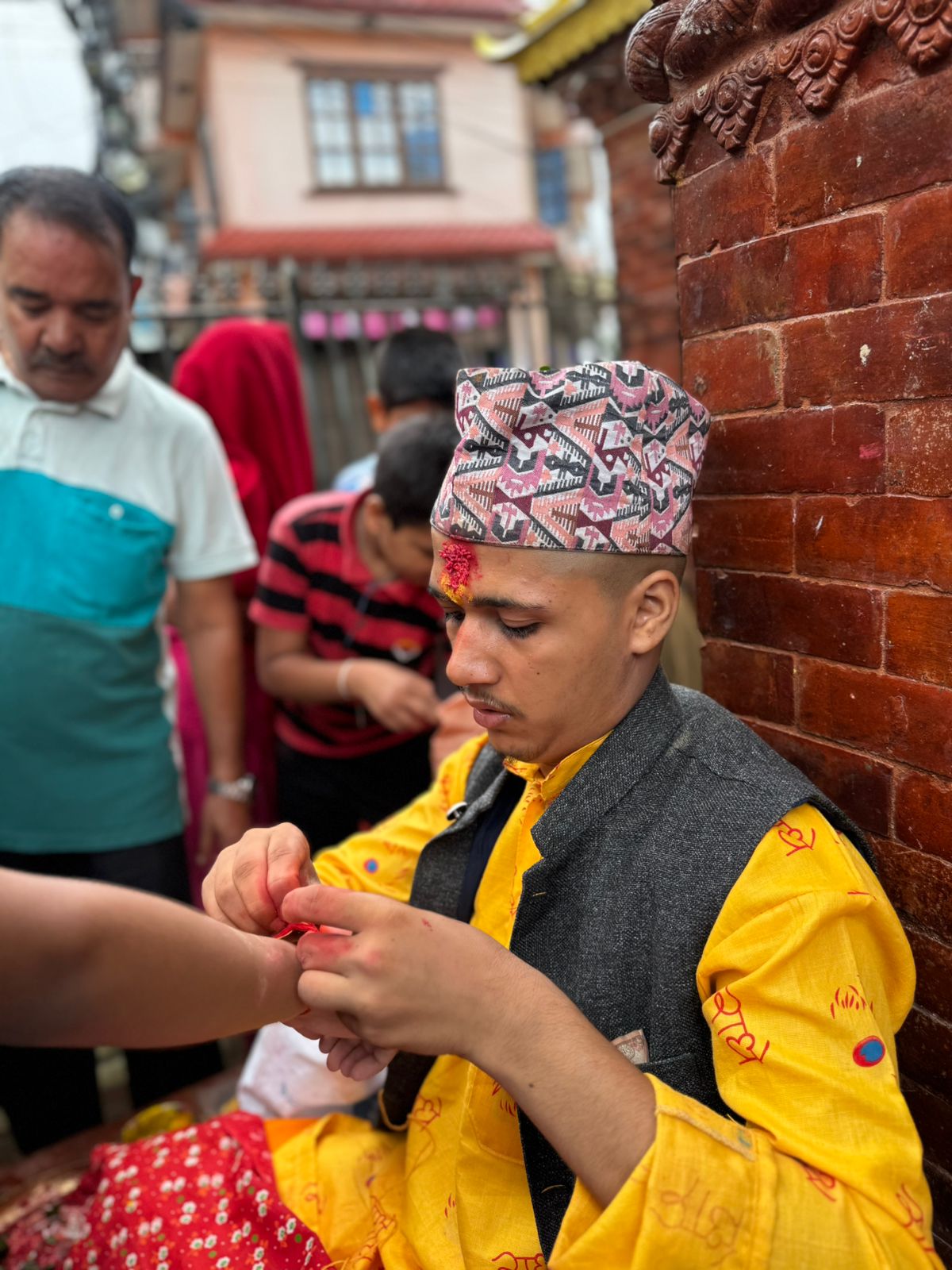
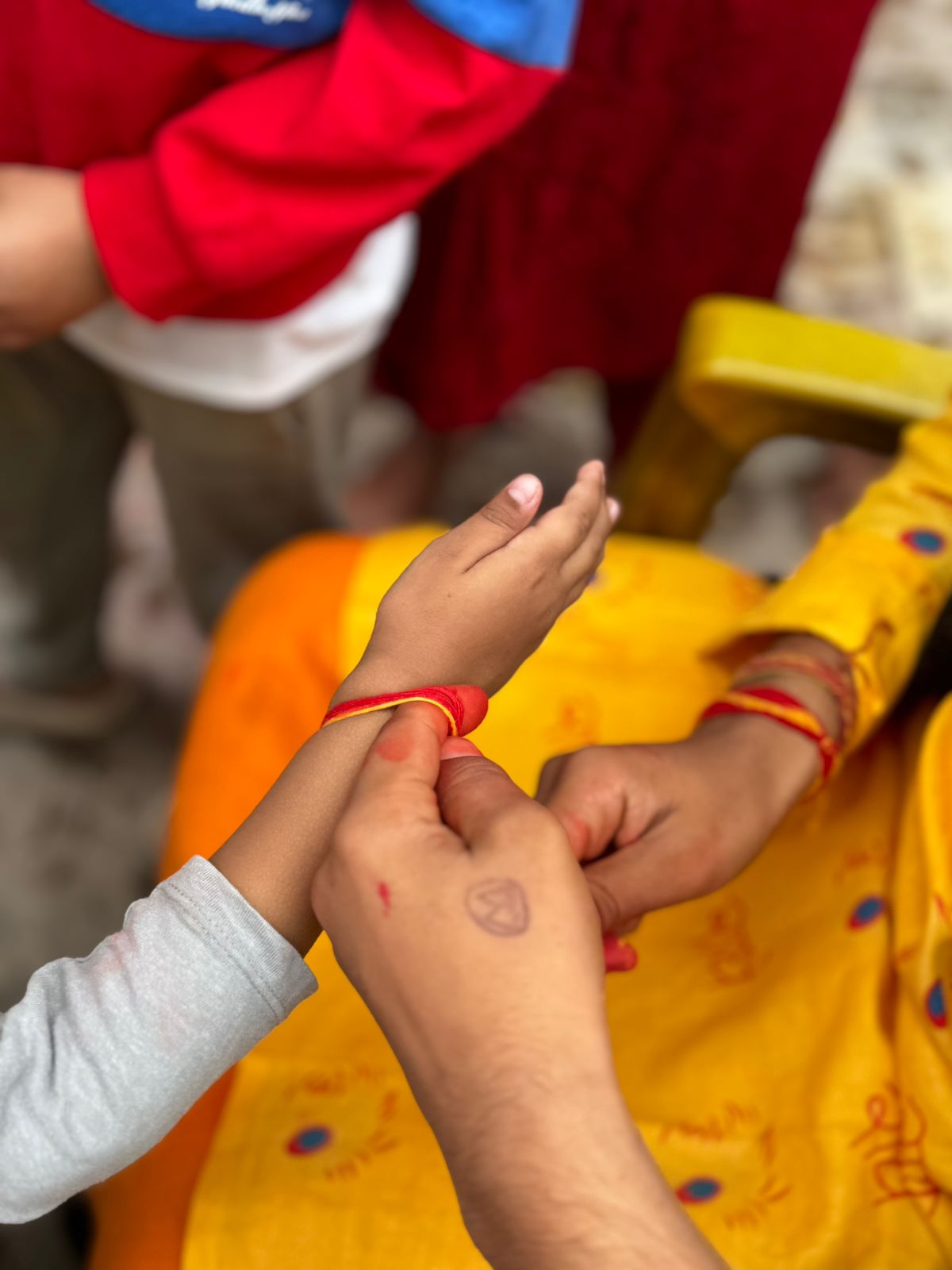
    Upon completion of my travels in Bhaktapur. I arrived at Pashupatinath Temple, the focal point of spirituality for thousands of people in Kathmandu. Janai Purnima is a day for Hindu males to memorialize and transition their sacred thread. A janai, one representing purity and responsibility. Everyone, men, women, and children, can wear a Raksha Bandhan, a wrist thread made of cotton that has red and yellow and is intended for good protection.

    The temple at Pashupatinath was busy, but a different busy from the one in Bhaktapur, it was noticeably quieter with funny chants. The Bagmati river was flowing very slowly and poorly reflected the heavy, dark clouds that were raining into it. Pilgrims were going into bubbling waters to bathe, clambering out shivering, and smiling. The air was thick and rich with the aromas of burning ghee lamps, marijuana, and sandalwood.

    A man in traditional Nepalese attire, including a Dhaka topi and a yellow and black vest over a yellow shirt, is having a sacred thread or bracelet tied around his wrist by another person in a ceremonial setting

    Long lines of priests sat cross-legged, working quickly with their hands to tie their threads and mutter blessings. There were men clothed in white material retying their sacred thread. A ritual that has existed for centuries. I watched a father help his young son tie the boy’s first thread.  The father’s voice was gentle and proud.

    A young priest motioned for me to come over. I sat before him and was enveloped by the sound of chants and bells. He tied the raksha bandhan around my right wrist. I felt an odd calmness inside, as if this thread was not merely a blessing for protection, but it was also the necessary quietness for me to belong to the moment in this place.

    I thought about how only hours earlier I had experienced Gaijatra’s joy and laughter. Now I was sitting in the calm, sacred embrace of Janai Purnima. It was as if the two festivals were telling me something together.  Life is about the balance between the joy of celebrating and the quietude of remembering, a duality of celebration and reflection.

    Evening — Threads and Connections

    As daylight faded, the temple’s courtyards shimmered with hundreds of oil lamps brightening the evening. I had just gotten ready to leave, but I stopped at a chatpate stall where a man was tossing puffed rice, with chili, onion, and coriander, with his arms flying all over the place in making this mess. A woman beside me took some from her paper cone and offered me some. My mouth was on fire, so we both recoiled and laughed at how spicy it was. She told me she had come from Dolakha just for Janai Purnima. Before I left, she stuffed a small package of roasted soybeans in my hand. “For your journey,” she said.

    having a sacred thread or bracelet tied around his wrist by another person in a ceremonial setting

    That night, when I arrived home and looked in a mirror. I still had the red tika from Gaijatra on my forehead. The thread of protection that was Janai Purnima on my wrist, and a package of soybeans in my backpack from a random person.

    I did not just “see” two festivals that day. But “felt” them. I walked their streets, drank their tea, wore their blessing,s and laughed with their people.

    Two festivals, one heart.

    Gaijatra taught me that in sadness there can be laughter, there can be song, and there can be joy. Not to forget, but to remember in love, because it was love that was lost. Janai Purnima taught me that protection is not always walls or weapons . Sometimes it is a thread, a prayer, or the kindness of a stranger. I am so glad Happy Mountain Nepal made my journey so beautiful.


  • Top 7 Treks in Nepal: From Everest Base Camp to Hidden Gems

    Top 7 Treks in Nepal: From Everest Base Camp to Hidden Gems

    Top 7 Treks in Nepal: From Everest Base Camp to Hidden Gems

    Nepal offers some of the best trekking in the world! With eight of the ten tallest peaks in the world, and trails that go through beautiful valleys, cute villages, incredible forests and stunning mountain passes. So whether you want to do a world renowned trek like Everest Base Camp, or want to get away from the crowds and explore the remoteness of the Himalayas, one thing Nepal is not short of is trekking. In this blog, we are going to discuss the top 10 treks in Nepal, from the more well known treks in the world to the most remote.

    1. Everest Base Camp Trek

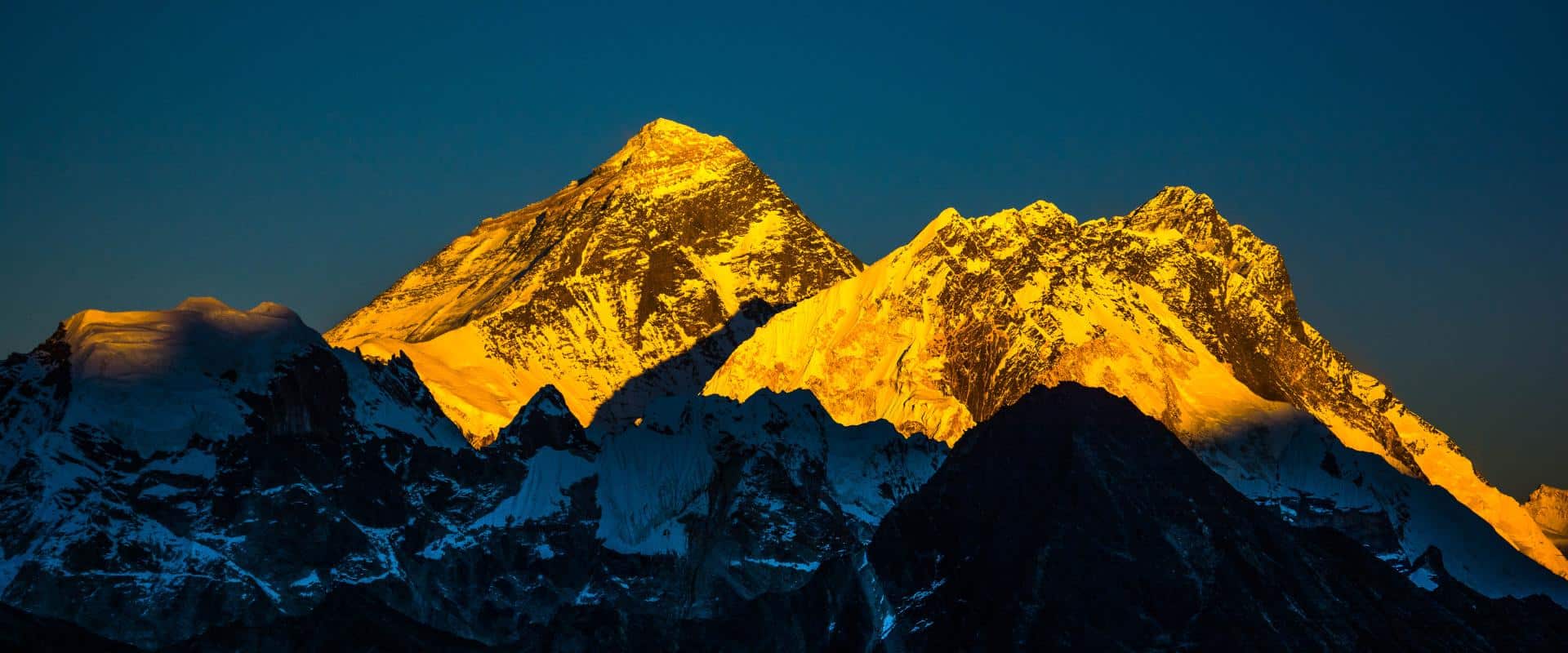
    Everest Base Camp Trek is a life-changing experience – a spiritual journey, physical and cultural growth – all in one trek. At an altitude of 5,364 meters and around the tallest mass on earth, Mount Everest, which is 8,848.86 m (29,031.7 ft), you will not be affected much by the altitude sickness. With every step you will be on top of legendary mountains, historically significant monasteries, ancient villages and an experience that will become a soul-trek experience based on the experience, that time will never fade from your memory.

    everest base camp mountain view

    Highlights

    1. Get close to Mount Everest

    Being at EBC is being and standing in the shadow of the world’s highest- a position where you can only dare to have the audacity to assert and check off your bucket list, together with all the other adventure-seeking travelers from across the globe. You’re not on Everest, but where the Everest giants of Mount Everest are, like sunrises on the great ridges, is heavenly. Walking the EBC trail by yourself takes you, by legend, as close as it gets to the Mount Everest summit view and mythic Kala Patthar (5,545 meters), quite possibly the best view of Everest you’ll ever have the good fortune to witness.

    2. Culture and Spiritual Immersion

    You’ll meet villagers of the Khumbu: tough Himalayan folk with highly developed mountaineering prowess, boundless hospitality, and first-rate survival skills. You’ll trek through the villages of Namche Bazaar, the villages of Tengboche, and the villages of Pheriche, all with their multicolored prayer flags flapping in the breeze, all scattered with found along the trails like spinning prayer wheels, all topped on ridges with stupas.

    At Tengboche Monastery (3,867 m), you will pray with chanting monks within sacred walls, and dark Ama Dablam and the other great white giants – a spiritual experience in the true spirit of your trek.

    on the way to everest base camp

    3. Varied and Breathtaking Landscapes

    We trek through varied Himalayan scenery:

    • Rhododendron and pine forest hide Lukla and Phakding villages,
    • Suspension bridges spanning high above glacier-fed rivers,
    • Yaks and alpine grasslands at Dingboche and Lobuche,
    • Rock moraines and snow ridges on the way to Gorak Shep and EBC.

    Every bend in the trail, a new panorama, a new peak, another rest stop, and just soak it all up.

    4. A True Physical and Mental Challenge

    It’s not a holiday- it’s a test. You’ll be trekking 5-7 hours every day, trekking all day, a nd cold and tired all day. But it is in the challenge that we get tough. To even get to Base Camp is such a great feeling and sense of achievement. It’s a test of your endurance, your determination, and your sense of accomplishment.

    2. Annapurna Circuit Trek

    Trekkers have a beautiful experience in knowing they are partaking in an incredible cocktail of untouched nature, cultural diversity and an absolutely belly walloping experience, all at the same time. Being at the core of the Himalayas, the trek is a trek from start to finish, whereby you would be able to observe the emerald valleys, meadows of alpine forest, and snow-white peak mountains, and also undergo the different traditions of the inhabitants. A seasoned trekker and also an amateur trekker taking it through an adventure trail, there is something for all at the Annapurna Circuit.

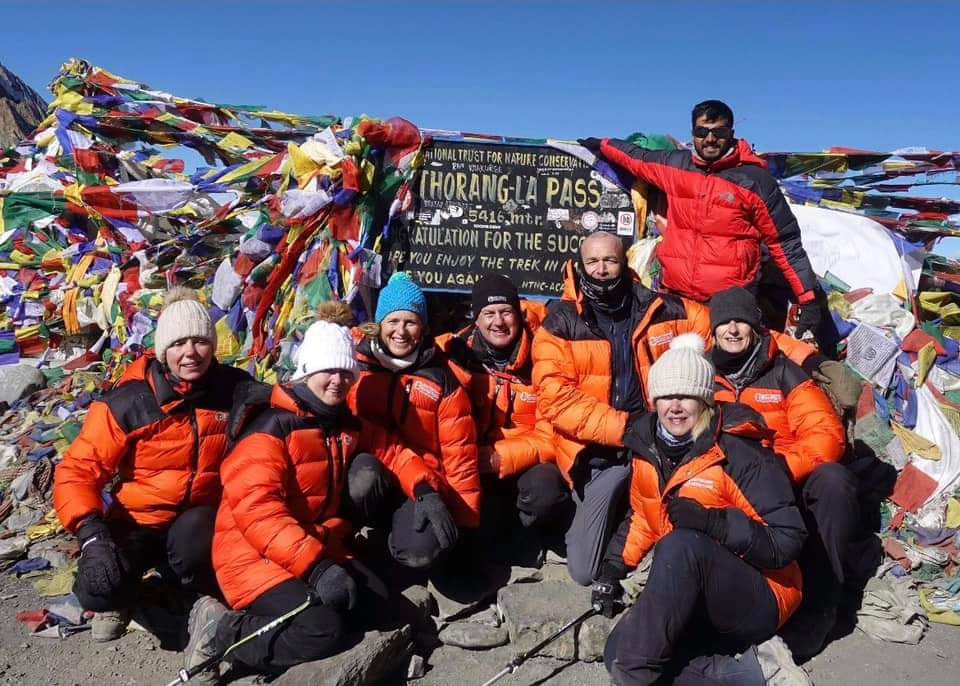
    tpurist at thorang la pass
    Top of Thorang La Pass

    Highlights

    A Varied Landscape Trek

    Annapurna Circuit Trek is a reward-risk, varied landscape trek. Trek begins in middle of the valley at dark green dense subtropical oak and rhododendron forest. With rising altitude, the terrain has been sculpted into extraterrestrial beauty of alpine grassland, glacial brook, and bare boulders. Gradient from low to high altitude is progressive, and trekkers have luxury of acclimatization.

    Immersive Cultural Experience in the Trek

    The natural landscape of the Annapurna Circuit is the most spectacular attraction, yet the experience of culture one gets while trekking there is equally invaluable. Trek leads through a series of villages and hamlets to be passed and meet the inhabitants and experience their life and culture.

    Local Food:

    Local Nepalese food of the region is most accessible by staying within the trek itself. Treks’ teahouses are located within villages where local food is eaten. Dal bhat (lentil soup and rice) is standard fare, then noodle soups, momos (steamed dumplings), and Tibetan bread. Trek food tastes bland but healthy and gives the trekker plenty of vigor for the day’s trek ahead.

    3. Manaslu Circuit Trek

    Manaslu Circuit Trek is one of the most renowned and highly-rated treks in the world. It is located in the north-central part of Nepal’s Gorkha District. The word “Manaslu” is derived from the Sanskrit word Manasa, meaning “soul” or “spirit“; thus, it is named “Mountain of the Spirit.”

    The Himalayas of Everest is about 126 kilometers (78 miles) but in a north west direction from Kathmandu, the capital of Nepal, very close to the border separating Nepal from Tibet, China. The culture and landscape share many similarities with the Tibetan plateau.
    family on the way to Manaslu Circuit trek

    Highlights

    1. Preserved Ecological Beauty

    The Manaslu stopping area is famous for its pristine untouched subtropical forest, high-alpine altitude national meadow, fascinating villages, and natural beauty all so far away from the bustling city and closeness to nature.
    In the Manaslu region, the Budhi Gandaki River flows, which is an exciting view to watch. This is the exact place where you get to see an ideal cliff and a cascading fall.  You can find one of the most thrilling suspension bridges during your trekking, which makes your tour more adventitious. Manaslu Glasier near Manaslu Base Camps, this big glacier flows down from the glaciated faces of Mount Manaslu. Due to thawing glaciers, the stream of water and ice joins and merges with Budhi Gandaki River, enriching its scenery.

    Stellar Mountain Views

    The trek to the Manaslu Circuit is to visit Mount Manaslu at 8,163 meters (26.781 feet) which is the 8th highest mountain in the world. It also allows trekkers to see some phenomenal views of snow mountain that include snowy peaks in the Himalchuli, Ganesh Himal and Annapurna ranges along the trek. The trek to the Manaslu Circuit gives trekkers many fabulous views of the many high mountains in and around the Manaslu area as well as surrounding mountain ranges.

    • The Himalchuli mountain is so close to Mount Manaslu that it can be seen throughout the trek. The Himalchuli is the second highest peak in the area, and has massive, glacier beaten ridges which is what makes it distinct.
    • Ngadi Chuli is also called Peak 29. It is a very beautiful mountain with steep, rough sides which can be seen from many places along the trail.
    • The Ganesh Himal Mountains flank the Manaslu region to the east. Many of its peaks, including Ganesh I 7,422 m and Ganesh II 7,118 m, are visible during the early parts of the trek.
    • Shringi Himal is small in size compared to other mountains but the beauty of this mountain stands out in the lower Manaslu range, especially from villages like Ghap and Namrung.

    beautiful mountain and monastires on the way toManaslu Circuit Trek Wildlife Trek

    4.Budhi Gandaki Valley

    The various picture-postcard-like villages hosting Budhi Gandaki valley epitomize the faces of culture and ways of life for the locals. Lho, Samagaun, and Jagat are typical villages typical in the Himalayas. Locals here are Gurungs and Tibetans who have maintained their culture in their houses and monasteries and practice it with great zest and zeal.

    During  our trek and stay in Budhi Gandhaki Valley you can find-

    The trekkers can travel across the terraced rice fields, through the lush valley; chances are you’ll notice that much of the area has the mountain terrain that will provide a lively contrast to the terraced fields with vibrant life during planting and harvest season.
    In Budhi Gandhaki Valley, the Tibetan influence of Tibetan Buddhism is abundant. Many of the villages extremely Tibetan, and you will also see many monasteries and prayerwheels throughout the valley

    4. Langtang Valley Trek

    The Langtang Valley trek offers distinctive access to an off the beaten track experience in Nepal. Far from Kathmandu, the trek itself is bright and remote as well as not disrupted by the masses of diversity within communities, beautiful untouched landscapes, and an escape from other trekking routes that are busier and more obvious of trekking choices in Nepal.For experienced trekkers and beginner trekkers, the Langtang Valley Trek will remain with you.

    Highlights

    Scenic Beauty: An Ever-Present Companion

    But another Langtang Valley Treking highlight is size changing landscapes. And also, you’ll be able to trek through size changing placed ecological zones as you ascend, which all differ in beauty and character.

    tourist taking pictures on the way to Langtang Valley in front of mountains

    Rhododendron Forests:

    Thickly covered rhododendron forest dominates the trail at some points, covering it throughout the route at lower altitudes. In the event of the overlap of trekking seasons in springtime (March to May), there are high chances of viewing the trees in bloom in a palette of pinks, reds, and whites covering the country in all its glory.

    Rhododendron Forests and trekkers

    Rivers and Waterfalls:

    The trail is largely river-sided, and the rivers are supplied by Langtang range’s melt-down. Cross wood suspension bridges and hear the soft tap of running waters. Whims of falling waterfalls either between or after rains provide the whole scene with a near divine appearance.

    Alpine Meadows:

    Higher still, the land is wider and is made up of alpine meadows and grass slopes with splendid scenery of the gigantic mountains. Yaks and other domesticated animals graze across the meadows, adding to the countryside character of the place even more.

    Mountain View:

    Langtang Valley is surrounded by the loftiest of the range, i.e., Langtang Lirung (7,227 m), Kimshun (6,365 m), and Ganchenpo (6,387 m). These mythic hills surround you and you on the trekking trail and step by step increasingly overshadow you before Kyanjin Gompa. From Kyanjin Ri (a famous viewpoint near Kyanjin Gompa), you gaze at the whole length of Langtang in the far horizon. Something which will make an indelible imprint on your mind.

    5. Ghorepani Poon Hill Trek

    Nepal trekking typically evokes images of demanding treks like the Everest Base Camp trek and Annapurna Circuit trek . But did you ever think that you could be enlightened to the beauty that is the Himalayas in a few short days? For 2025, no trek compares to the incredible short trek of Poon Hill humanly able which is accessible for all trekkers! In this article, we want to do all we can to hook you into having Poon Hill as a prize on your bucket list for this year!

    Poon Hill at rhododendron forst

    Poon Hill Trek Highlights

    1. The Legendary Sunrise from Poon Hill

    At 3,210 meters, Poon Hill is very well known for its iconic sunrise view and layover destination on the journey, therefore Poon Hill is one of the most trekked destinations. As the light fills the sky at Poon Hill, the first light of day appears above the world’s famous and snow covered peaks of The Himalayas, Annapurna, Dhaulagiri, Machhapuchhre (Fishtail) and Nilgiri.

    2. A Perfect Short Trek for Busy Schedules

    The Poon Hill trek is a great choice for people traveling to Nepal on a short timescale who are interested in seeing some gorgeous scenery of the Himalayas. The trek can, in total, last 4 to 5 days which means for short holidays, a quick family trip, or just a little add on to be the main focus of a bigger trip in Nepal – Poon Hill is well achievable. In addition, due to the length of the trek, it can also be a good option for you if you are considering your first trek for yourself, especially if you are not quite ready to deal with something longer or bigger.

    Whether you are traveling with family with young children, older grandparents or are traveling solo and on a timeframe, the Poon Hill trek allows you to adjust your trekking pace, whilst still having a taste of the trekking adventure of the Himalaya!

    3. Cultural Experience

    In addition to the stunning vistas, the Poon Hill trek is rich with experiences in culture. The trek itself offers to chance to visit villages, Ghorepani, Tikhedhunga, Ulleri, and Ghandruk, and engage communities who host trekkers. Not only with a meal, but traditional culture, customs, and food. Spending time with the communities allows trekkers to see people preparing for life. The daily routines of the locals, as well as their rituals and most keenly how they continue to carry on the same practices their ancestors had done for hundreds of years.

    When combination of staying in traditional teahouses and participating in local festivals or farming, converts a trek from being just a trek to an intercultural experience. For many trekkers, their experience only becomes richer after spending time with the people they meet along the way, some of which they may remember just as well as the mountains.

    6. Upper Mustang Trek

    The Upper Mustang Trek takes one into the “Forbidden Kingdom” of Mustang, a region noted for its unique landscapes and Tibetan-influenced culture. A trek route will take you through barren cliffs, ancient caves, and centuries-old monasteries. Due to its isolated location, the traditions in Lo are so well preserved and, as such, are considered one of the more valuable cultural assets.

    Upper Mustang  highway for treeking

    Highlights:

    Lo Manthang: Walled city and cultural heart of Upper Mustang

    Lo Manthang is the ancient walled capital of the former Kingdom of Mustang, with a rich cultural identity in northern Nepal’s mighty Himalayas. The medieval feel of Lo Manthang, enhanced with white-washed outer walls, alongside royal palaces, centuries-old monasteries, and skinny hallways with the every growing pool of Tibetan Buddhist mantras strongly correlated with its nomenclature. Certainly, that immunity from modern encroachment created a profound ethos for people who have emerged with customs, language, and practices heavily steeped in Tibetan culture for hundreds of years.

    Chhoser Caves

    Caves of enigma and ingenuity, containing caves for meditation and camping. A short pony trek from Lo Manthang are Chhoser, a fascinating and intricate set of man made caves that appear to have been cut from the front face of an immense tilted sandstone cliff. There are numerous levels of caves and over 40 rooms used for habitation, storage, and sacred meditation.

    Tiji Festival (Seasonal): Vibrant celebration 

    The Tiji Festival is a spectacular three-day celebration of Buddhism that occurs annually in Lo Manthang and represents the triumph of good over evil. It is thought that the Tiji Festival is based on Tibetan Buddhist mythology. The Tiji Festival consists of ritual chants and dances performed by monks of the Sakya order, and involves a series of masked dances. The Tiji Festival usually takes place in May, and displays a vigorous expression of faith, cultural identity, and community in the raw beauty of Upper Mustang, attracting local residents and visitors alike.

    7. Mardi Himal Trek

    Mardi Himal Trek in Nepal’s Annapurna region is a quiet trek but a trek with independent walking on the trail, stunning views of the Annapurna Himalayas, and a feeling like one is completely alone in the hills. Since the Mardi Himal Trek is relatively new for all the trekkers, the view of this trek is stunning. The view includes Mardi Himal (5,587m), Machapuchare (Fishtail), Annapurna South, and Hiunchuli.

    mardi himal view

    Highlights

    1. Incredible Views of Annapurna and Machapuchare

    A key highlight of the Mardi Himal Trek is the sensational views of the Annapurna range, especially Machapuchare (Fishtail) which is a sacred mountain. With each ascent, the panoramic views of the snow-capped giants like Annapurna South, Hiunchuli, and Mardi Himal itself, unfold as you follow the ridgeline trail. Many other treks are compromised by the busyness of other hikers, however here the level of peace and tranquillity of the route is unrivalled and as a longer route, if there are plan to see ridgeline views there is an immediate climbing into a view that is often a mix of seeking those peaks often in sea of inspiring golds interacting with sun rising and setting that gives one a magical experience.

    2. Off-the-beaten-path Experience

    Mardi Himal is not as well-known as more popular treks like Annapurna Base Camp or Ghorepani. It makes sense: it’s a beautiful trek for anyone who wants to escape the crowds and spend meaningful time in nature. The trail meanders away from other treks through tranquill forests, alpine pastures and Gurung villages. You will encounter fewer other trekkers, allowing for more chances to connect with people living on the trail route, and instead of a standard trekking experience, the connection will be deeper, spiritual even.

    3. Fast Paced Multi- Landform Trekking

    Mardi Himal is a short trek (usually 4–7 days), yet has enough geographical features from rhododendron forests (and moss-covered trails). To high-altitude ridges and rocky ridges barren of trees. So that you will get a full variety of landscapes in a short trek, making each day feel new and adventurous. It is a trek that embraces the scenery associated with Himalayan trekking and also does not require weeks or years of walking!

    Final Thoughts

    Nepal has many trekking trekking routes for all kinds of trekkers from bucket list. Classics like Everest Base Camp to cultural treks like Mustang and cultural Bhote routes in Helambu. For high-altitude trekkers and first time trekkers alike. These seven treks will all be valve on a trip of a lifetime in the lap of the Himalayas. If you are planning to visit Nepal then contact us today at Happy Mountain Nepal, Facebook, Instagram, or TikTok. 


  • Top Day Hikes Around Pokhara with Epic Mountain Views

    Top Day Hikes Around Pokhara with Epic Mountain Views

    Top Day Hikes Around Pokhara with Epic Mountain Views

    Often referred to as the “gateway to the Annapurna region,” Pokhara is more than a launch site for multi-day treks; it is a day-tripper’s dream destination to get the best of Himalayan views with a minimal commitment (well relatively speaking if you think of 5-6 hour day hike as minimal!). If you do not have time for such an adventure, or prefer not to commit to not a multi-day trek but you are in Pokhara, want to hike in a day with amazing mountain views while enjoying some cultural interaction and beautiful hiking trails, this is it!
    Below are my recommendations for day-hikes near and around Pokhara where you can enjoy amazing snow capped peaks of the Annapurna and Dhaulagiri range without too far from Pokhara city.

    1. Sarangkot Sunrise Hike

    Sarangkot is widely known as one of the most famous sunrise viewpoint in Nepal, which is no surprise because the sunrise hike to Sarankot has amazing view of the Annapurna and Dhauligiri ranges. The hike begins a short drivable distance from Lakeside Pokhara, and is a uphill hiking experience from Gurung villages through terraced fields and beautiful hiking trail through rural landscapes. People who wake early get a magical sunrise, repainting the snow-clad ridges of Machapuchare, Annapurna South and Dhaulagiri in warm golden colours.

    Tadapani to Poon Hill is a moderately easy walk without any technical climbing required done by able agents. Lots of people when their sunrise experiences are over walk down the mountain along a different side, through forests and unspoiled villages. Thus, it would be a great half day trip combining natural beauty, culture and mountain vistas without much time spent away from the city.
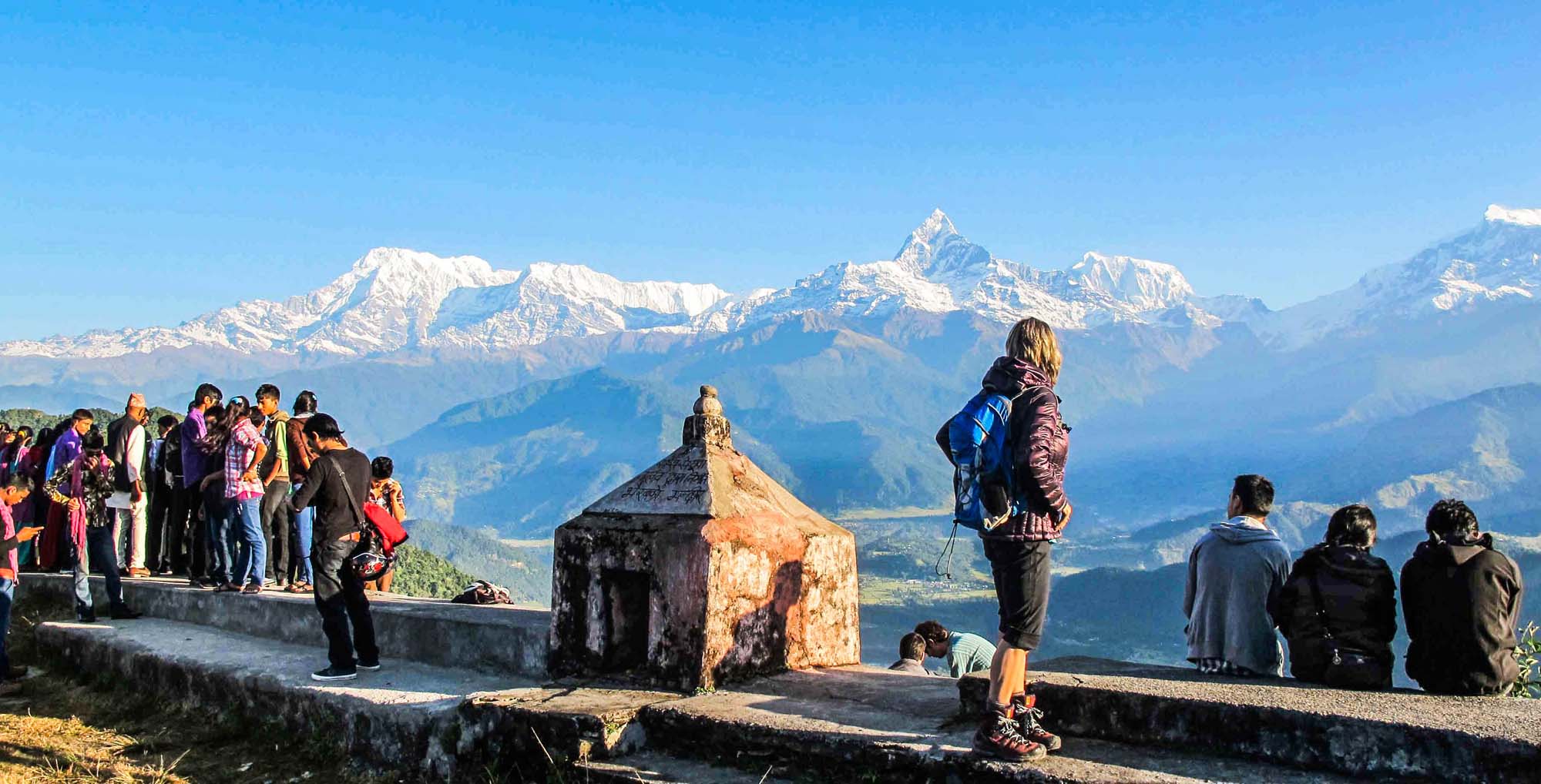
    tourist viewing the mountain on their way to Sarangkot Sunrise Hike

    Highlights:

    Close to Lakeside

    The hike begins with a taxi or local bus ride of only 20-30 mins from central Pokhara, it’s very convenient especially if you are trying to catch a sunrise trail and you need to stay on schedule. You can walk to the top and return down in time for breakfast. No long travel, no permits, just an early start and you are on your way.

    Gurung village trails

    On the trail, you walk through friendly Gurung villages. Be sure to take your camera to capture the stunning houses of stone, and the daily lives of warm-hearted people in beautiful rural settings. Moments with children waving hello, and local Gurung’s sweating in the fields provided genuine interactions even if they were brief. This was a great way to immerse yourself into trekking and the local community.

    Terraced farmland views

    The trail wanders across a wonderful, lush steppe farming hillside. The terraced farmland views are an amazing foreground for your Himalaya photos. You will certainly reflect on how the farmland changed color depending on the season – brilliant green in the growing season, and then shades of gold in the harvest season. This is such a classic image of a Nepali landscape, and will stick with you for a long time.

    Loop-back forest hike

    After sunrise, lots of hikers take the loop-back forest route to return. The loop back trail allows a different kind of descent in a forest, less people, while having shade that is sometimes completely in the shade. Depending on which direction you approached Phewa Lake from, you will have gotten to see things, like bird species, butterflies, or taken a beautiful pine scented forest-downhill path. It sums the experience nicely as a full circle, rather than another loop, and it gives your hike some variety.

    2. World Peace Pagoda hike

    The World Peace Pagoda hike covers lake cruising, forest hiking trail, and hilltop views into one of the most scenic bundles where it all begins with an easy boat ride on Phewa Lake. You boat in one way, then after looping the other side of the lake this should be an easy climb, as you go up the hill trail where you hike through shaded forest paths and make moderate climbs while observing monkeys and birds seeing small shrines between trees. Once at the top, the brilliant white stupa emerged announcing its amazing views of Pokhara Valley swooping down to Phewa Lake and the Annapurna range, of course.

    The surrounding is serene and calming and it was easy to feel the symbolism of a Buddhist shrine added to the hilltop’s spiritual experience, making it as much a spiritual journey as a beautiful scenic. You can either turn back and hike down the same way you approached or make the World Peace Pagoda hike extended as a loop, by continued to descend toward Pumdi village for a longer hike.
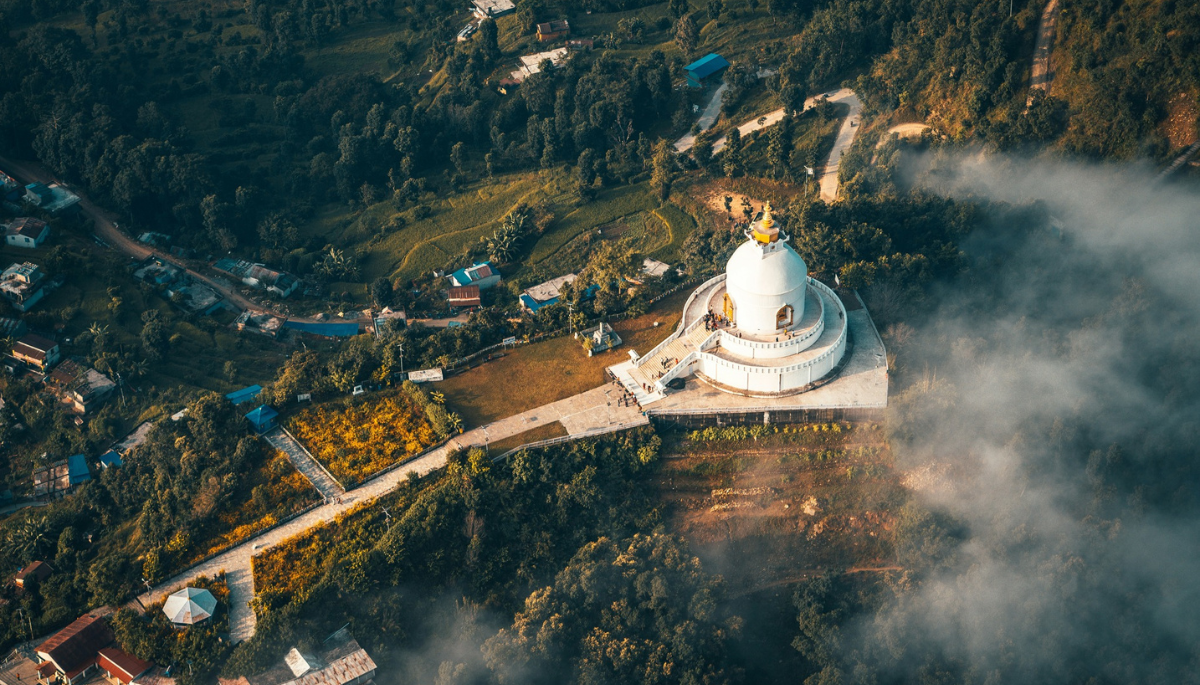
    Panoramic view of World Peace Pagoda hike

    Highlights:

    Viewpoint of Pokhara Valley

    Being at the remarkable viewpoint takes in the view of Pokhara city, Phewa Lake, and the distant snow-capped mountains above. This raised location gives you a complete view in every direction. It is to be one of the best areas to appreciate Pokhara’s geography. The view at sunrise or sunset can be especially magical.

    Boat ride across Phewa Lake.

    The hike commences with a paddle or rowing trip across Pokhara’s iconic lake. You will row past Tal Barahi Temple and beautiful waters reflecting the vast blue sky above. It is certainly a calming and beautiful prelude to your hike. Many people often say this was the highlight of their day, before beginning the trail.

    Lush forest trail with wildlife.

    The path winds up from the lake, and ascends at a steady pace through lush forest, filled with birds, butterflies, monkeys. The shade from the trees and the company of chattering birds makes this hike relatively cool and quite meditative. Occasionally, you may encounter stone steps or shrines which add a cultural component to the trail.

    Peaceful spiritual setting at the stupa

    The World Peace Pagoda is a Buddhist structure meant to promote world peace. It is a serene area for contemplation, prayer, and quiet views. Buddhist flags wave in the wind, providing color and an atmosphere of peace.

    Optional Extension to Pumdi village

    Adventurous hikers may want to hike from the pagoda on the extension to Pumdi village, creating a longer loop traversal. In doing so, you can enrich the hike with more rural, fewer people, tranquillity.
    You’ll see local homes, farm animals, and natural landscapes.

    3. Dhampus Village Hike

    Dhampus is a picturesque Gurung village set at 1,750 meters and provides one of the most accessible access points to the Annapurna area. The trek begins in Phedi (a short drive from Pokhara) follows trails through forest, ascends stone staircases, and passes terraced farming area. Throughout the trek while you gain elevation be prepared to be constantly blown away with amazing views of Machapuchare (Fishtail), Annapurna South, and Hiunchuli that join together and provide a stunning Himalayan backdrop whilst you are walking.

    This trail is good for new trekkers or trekkers short on time, who want to experience a little taste of real mountain village life. The village consists of the typical collection of stone houses, nest in cultivated fields, and is teeming with happy locals going about their daily lives. Many trekkers will simply arrive and enjoy a few calming hours in the village before retracing their steps, others will continue onto Australian (or Guarai) Camp for a day hike, or stay the night at an open air lodge in Dhampus.
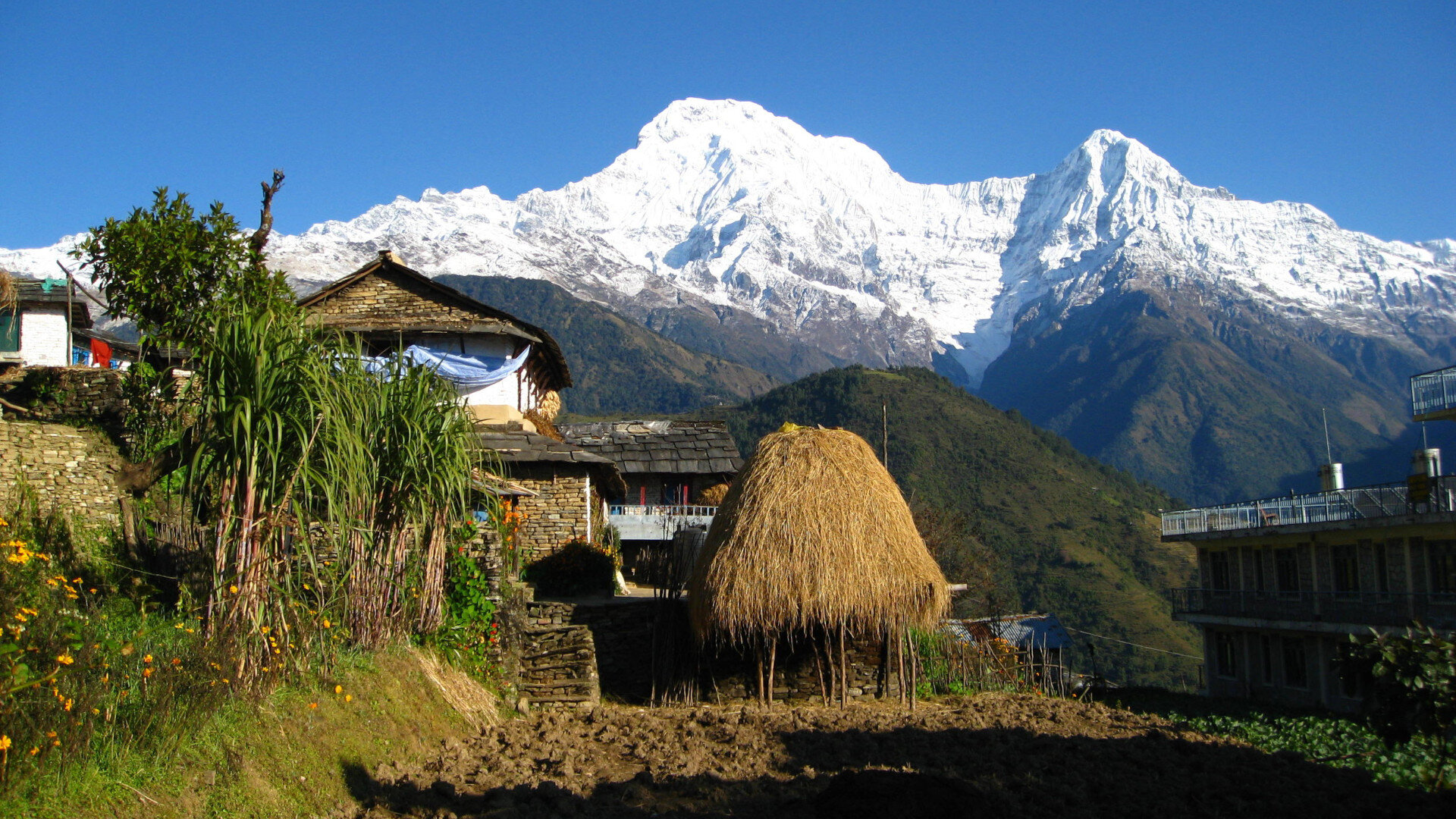
    Mountains and old traditional house in Dhampus Village

    Highlights:

    Gurung cultural experience

    Dhampus offers insight into the daily life of the Gurung people—one of Nepal’s most welcoming ethnics group. Along the trail and within the village, you will see traditional houses, women weaving, and children playing on hillside trails. The genuineness of the village’s friendliness provides a huge depth to the trek.

    Panorama mountain views

    The view of the sunrise and sunset from Dhampus is extraordinary, with the views of the entire Annapurna range glowing in pastel colors in the morning and evening. It is so nice that you could just sit and appreciate the view for hours as the clouds slowly rise and fall below the peaks.

    Terraced landscape and forest trail

    The trail takes you through beautiful subtropical forests and layered terraces of millet, rice, vegetables and more. The different patterns of farmland with their changing crops in the seasons added to the color and texture of the journey.

    4. Australian Camp Hike

    Australia Camp (2,100m) lies on a grassy hilltop looking over the Pokhara Valley. From Australia Camp you can see the Three Ranges: Annapurna, Machapuchare, and Lamjung Himal – weather permitting. The usual Australian Camp trek starts from Kande (1 hour by taxi from the Pokhara), where it climbs steadily through rhododendron forests and through some steep winding stone steps to the grassy hills of “Australia Camp” where you’ll stumble across a beautiful and open grassland.

    After making it to this amazing hilltop you’ll experience some of the best and stunning 360′ views of Himalayan skyline as well as some beautiful valleys at your feet. The open grassland will allow you to stop and rest, walk, meditate, have a packed lunch, or stay overnight in one of its few nice and comfortable lodges in the backdrop of the Himalayas. It is a great destination for kids, couples, and single travelers to explore and disconnect into nature.
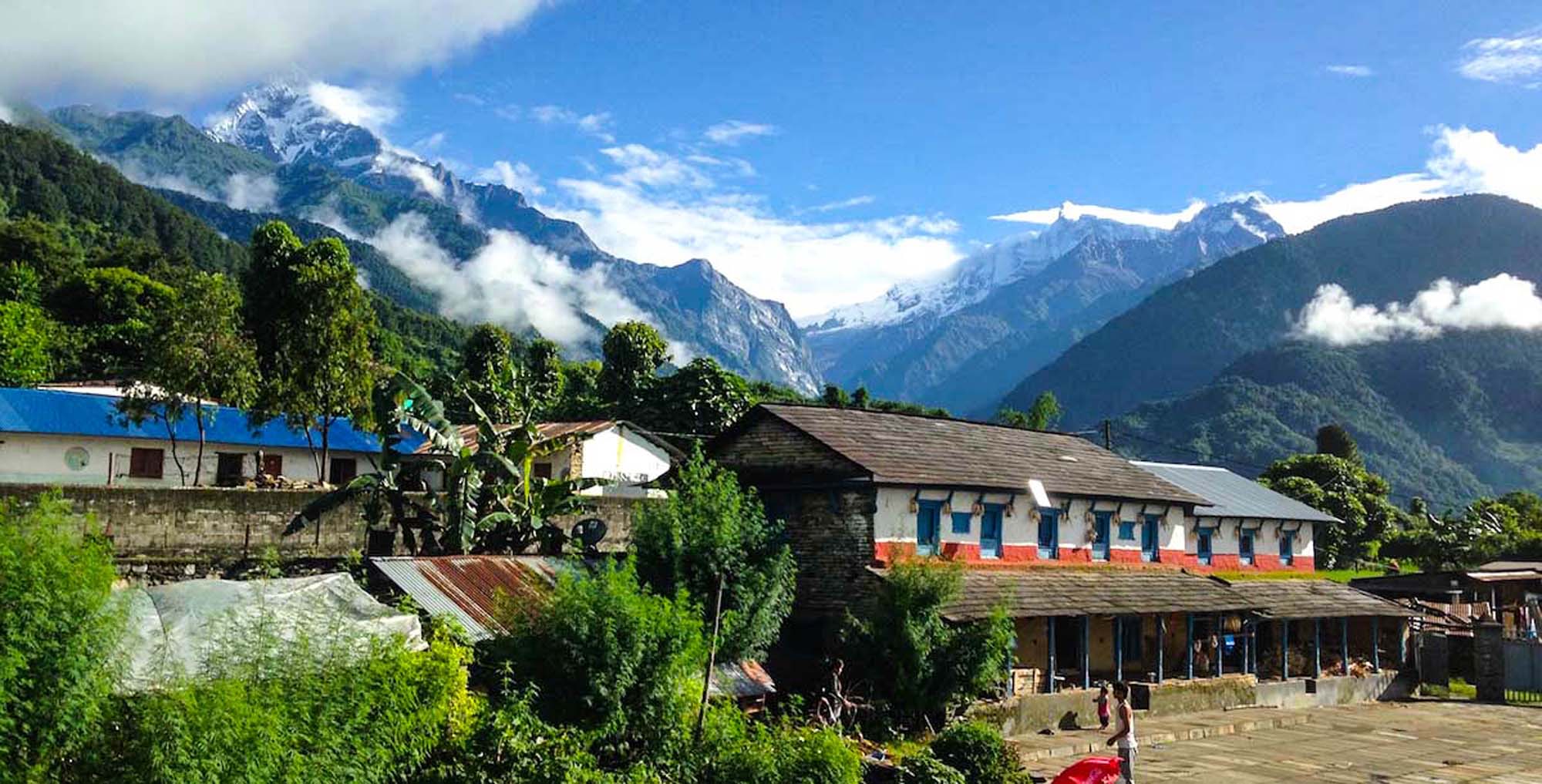
    Vibrant traditional house and village view on the way to Australian Camp Hike

    Highlights:

    Easy forest hike from Kande

    The hike is short and easy, suitable for beginners. The shady forest trail is lovely on warmer days and come spring, with rhododendrons in bloom, this trail is in full color.

    Grassy hilltop with 360 views

    Australian Camp feels like a natural amphitheater to see the Himalayas. On a clear day, an exhilarating panorama greets you as the Annapurna Massif unveils itself before your eyes. The soft grass underfoot makes it ideal to lounge about or take pictures.

    Wonderful for sunset or overnight

    Well, if your schedule allows you to, I recommend staying the night to experience the sunset and sunrise – simply enchanting! I will never forget the vibrant orange and buttery yellow shades coloring the sky above the mountains, and the peaceful embrace of the stars, from this magical hilltop.

    Tips for Day Hiking Around Pokhara

    1. Go Early: The best time mountain views are in the early morning

    The best time of day to begin your hike is in the morning. Early in the morning, specifically just after sunrise is ideal. Technically, the skies are often clearest in the morning in the Himalayas, and that’s when the views will be of Mt. Machapuchare, Annapurna, and Dhaulagiri are best. In the afternoon, skies and clouds will engulf the mountains and great views, and sometimes great photography opportunities are lost. Further, going early will often help you avoid both high temperatures from the sun in the middle of the day, and the congesting of the afternoon traffic with other hikers that you may not want to share a trail with. Enjoying a peaceful, rewarding hike on your own or with just your hiking partners will more than not just be more rewarding.

    2. Go Light: Water, snacks, sunscreen, hat, and light jacket

    These hikes are planned in single day outdoor experiences “day hikes”, so neither of us needs to carry heavy “internal pockets” of sleeping bags, tents, and cooking gear, but you do need to bring along some essentials for proper hiking. Please plan to carry not less than 1 liter of your own drinking water. You will want to have fruits, dired fruits, nuts, and/or granola bars to eat for energy.
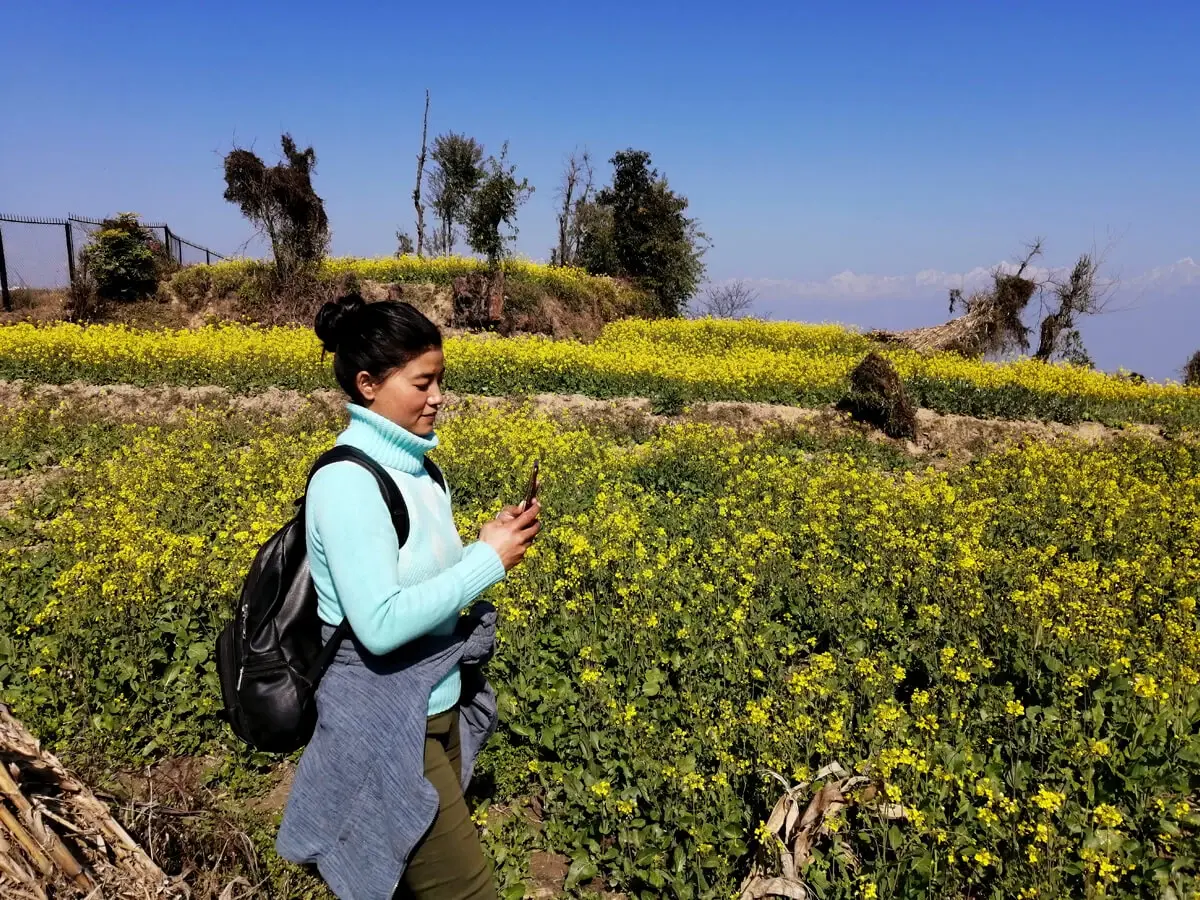
    Girl taking picture of sunflower

    3. Footwear

    Proper footwear is very important for both comfort and safety – it can be slippery on the trails Good footwear is an important component for comfort and safety especially for a hike. The trails around Pokhara can be rocky with rough stone steps or dirt path and/or wooded sections that can be muddy or slick especially during monsoons or rain. Because of this, you should wear boot type footwear with good ankle stability and midi tread soles to avoid slipping and use less energy. Light weight boots or trail runner shoes will serve you well for short to moderate hikes.

    4. Local guide (optional)

    Hiring a local guide is helping the local community and can contribute to having a cultural experience. While most day hikes around Pokhara are likely walkable independently, hiring a local guide can enhance your experience. A local guide will not only provide definitive wayfinding, but can give the context of local culture, plants/habitat, temples/religious sites, and the villages you walk through, which you might miss otherwise. In hiring a local guide you also provide direct income to the local economy, and support responsible tourism. This is a way to have deeper connections to the people and place you will encounter.

    5. Weather Check: Always check the weather forecast before you go

    Make it a habit to check the local weather conditions before heading out on your hike. Even on very short hikes, weather can change quickly and rain, wind or fog has the potential to degrade visibility, trail conditions, and your enjoyment of the hike. Obviously, it’s not wise to hike in the rain or during thunderstorms – especially in densely wooded areas or when hiking in very steep areas where you could experience landslides or have to contend with leeches. The weather creates enough uncertainty in your hike, so it is always advisable to check to be better prepared when you go out; whether to take rain gear or to shelve the hike until a sunnier day.

    Why do day hikes around Pokhara make the most sense?

    Pokhara is a unique place where the peace of nature, richness of the culture is well-balanced and highly accessible, making this one of the best locations in Nepal for scenic day hikes. Surrounded by gentle hills, beautiful panoramic ridgelines, and traditional villages, Pokhara has so many of these hikes which not only feel manageable but also very rewarding. Unlike multi doing multi-day treks where you typically need permits and porters and have complex logistics to navigate, these hikes can be done on a whim – with nothing more than a decent pair of shoes, water bottle and three or four hours of your free time.

    tourist taking picture of cloud view

    These day hikes are an excellent option for busy travelers, or travelers who may not have a lot of time, but would still like a taste of the amazing Himalayan views of Nepal. The hikes in Sarangkot, World Peace Pagoda, and the Australian Camp surround you with the views of amazing snow capped giants, the Machapuchare and Annapurna that you will be staring at within only a few hours of hiking, and not far from Pokhara. Whether it is just you, you and your kids, or you and your partner, these hikes have options, require little gear, and most importantly allow you matake part in adventure and variety and all without exhausting you.

    Great fit for different styles of travel:

    For the Time Limited Traveler

    Not all travelers do not have the luxury of spending days trekking, and that is what makes Pokhara’s day hikes so appealing. Not only can you experience a Himalayan sunrise over Pokhara, you can see temples and local villages and it only requires you to walk 2-6 hours from your accommodation. This is a good compromise to satisfy your desires to sightsee and spend time in the outdoors.

    Light Adventure Seeker

    Do you love nature but don’t want to have the experience of enduring and suffering? Day hikes can take you naturally and can be full or challenging without the excessive cardiovascular. For the most part, the elevation changes around 400m which is gradual and consistent, and trails are clearly marked so you can certainly have an element of exploration and challenge your self to the money without any consideration for your level of fitness.

    Cultural Explorer

    Most of our hikes will take you through Gurung and Magar Villages so most likely you will encounter a handful of nice locals typically happy to say hello and welcome you to their village or possibly even share a story or two. Just be prepared to see literally hundreds of prayer flags, hillside farm sprinkling, and Buddhist shrines and tons of tea houses – all of which will provide insight of people’s living traditions in an isolated rural region of Nepal.

    Nature/photography

    You may just notice the varietal colourful birds, butterflies, and wildflowers in and amongst the forests, rice terraces, and tall ridgelines. You may end up taking some fun pictures with marginally distant snow capped peaks (when they are visible) at sunset or sunrise.

    For Peace and Calmness

    These walks typically have plenty of room and quiet, and won’t be flooded with tourists in the same capacity that you may experience at every turn in Lakeside. You will find quiet places to meditate, grassy places to picnic, temples that foster quietude, all steps away from the busy Lakeside.

    Final Thoughts

    Pokhara is not just a playground for long and multi-day treks, but terrain for day hikes with unrivalled scenery. It’s almost like a day hike giving you the essence of the Himalayas without weeks of planning and acclimatizing, or different levels of trekking permits. With the sheer volume of mountains, and pristine trekking just outside the city, don’t think twice, put on your boots, grab your camera and get out there! You will be simply amazed at the mountain magic you can achieve in just one day. Contact us today at Happy Mountain Nepal, Facebook, Instagram, or TikTok. 

  • Why Tsum Valley Should Be Your Next Trekking Destination

    Why Tsum Valley Should Be Your Next Trekking Destination

    Why the Manaslu Tsum Valley Trek Should Be on Your Bucket List

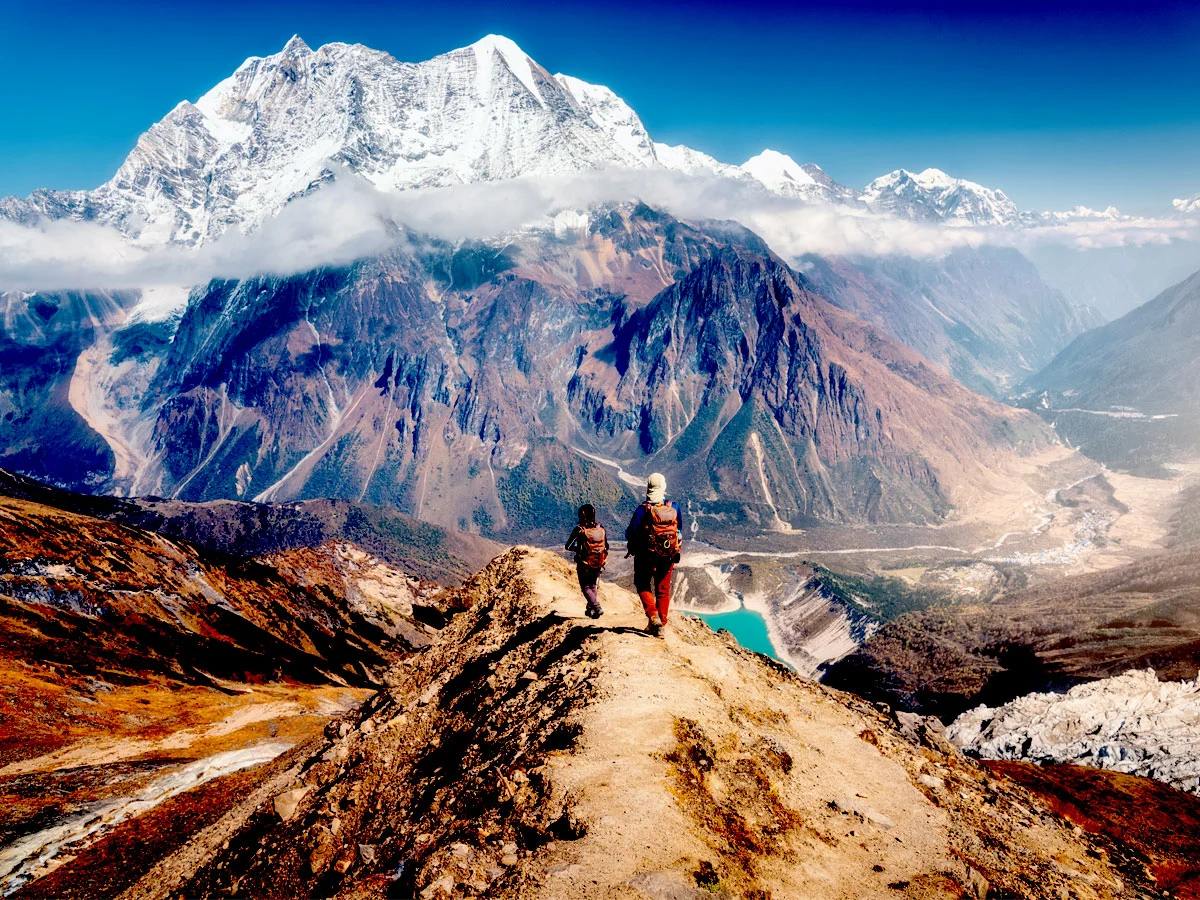
    Tsum Manaslu Overview: Tsum Manaslu is a remote valley north of the Manaslu region, a less explored area of Nepal and part of the Manaslu Conservation Area. Annapurna Circuit: A challenging journey/trip through the mountains, with breathtaking nature and deep culture of the Gandaki Province. Simply stroll around the gorge, the neighborhood arrangement of immense Himalayas, and to the world’s eighth most significant top Manaslu Mountain (8163 m).

    The Manaslu tsum region is delightful in the variety of its landscapes, from green forests and terraced fields to villages, alpine meadows, and high-desert country. The Tsum Valley where you take a chance beautiful view this virgin Tibetan culture and an enormous tiger painting style in this genuine valley the extent trekking way passes by. On one hand,d the giant of nature Ganesh Himal in between Himalchuli and on the other ridges and all there provide you decent views! The valley covers nature, the tallest peak of Manaslu which is by Ganesh Himal and Himalchuli in the same line.

    Offroad way of Tsum Valley and mountains

    Highlights:

    Manaslu Peak View Treks: Trekkers can view Mount Manaslu and other snow travel peaks in this area only on treks. The faithful are seen going about their daily life on every day of the trek; monasteries and rituals are a common sight.

    Remote beauty: The Tsum Valley is among Nepal’s most remote areas — tranquil and unspoiled

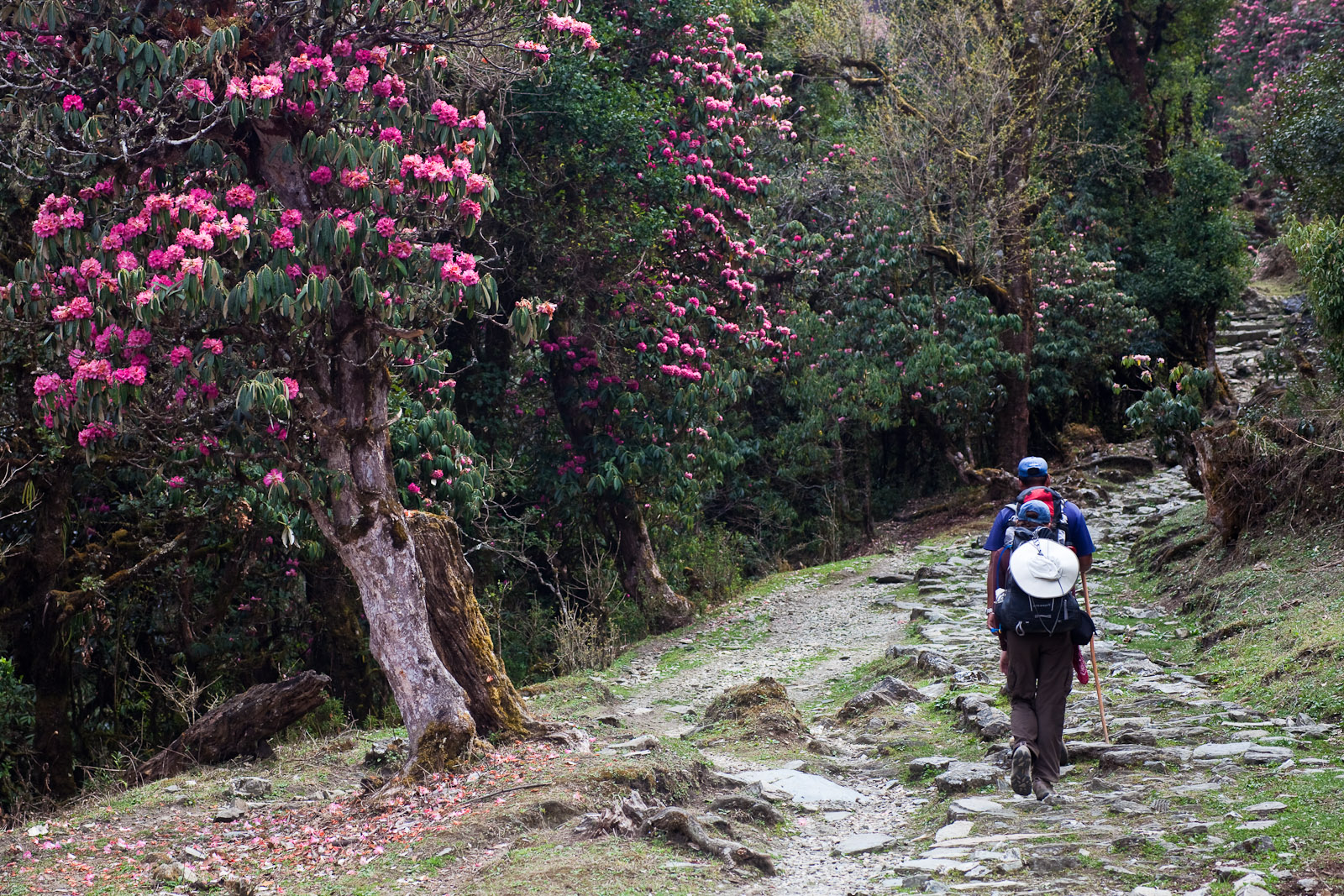
    Flora and Faun Reservoir: This region being rich in wildlife has various types of faun Himalayan tahr, snow panthers, red pandas, and flora diversity like rhododendrons and alpine flowers.

    1. Scenic Nature of Tsum Valley

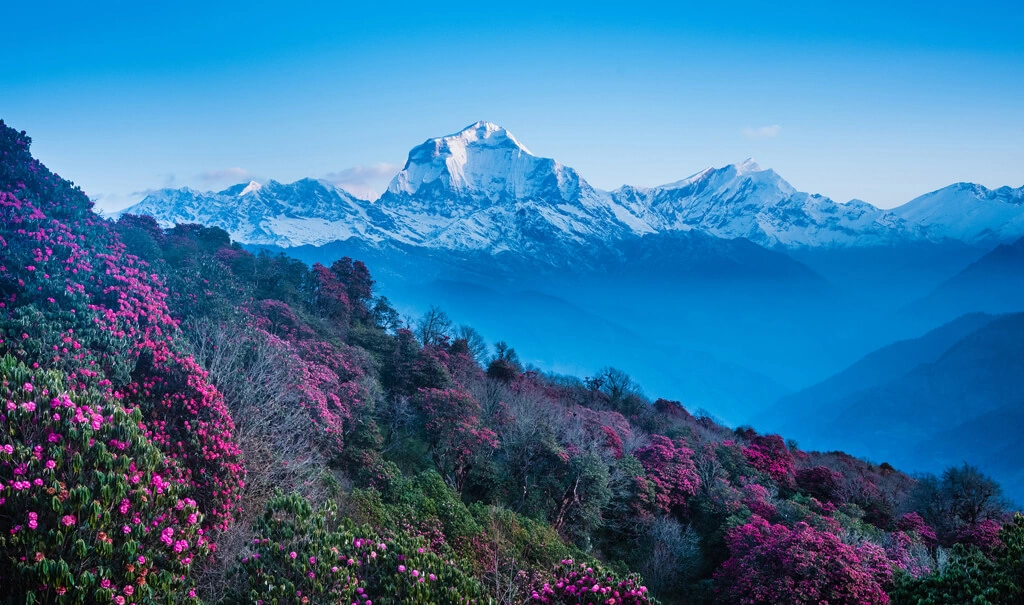
    However, nothing could be better than enjoying Manaslu Tsum Valley Trekking as you will also be getting blessed views. Greens, streams, rising bigish whitey outrages, as magic is heaped on it. dark frosted rhododendron slopes, dark green grass slopes under the grass, every walking eyes leave vision-beautiful head paintings, colors all like a spell of people.

    And, arguably, the top of the trek is the world’s eighth highest, Mount Manaslu. Before your eyes appear Ganesh Himal and Sringi Himal, Green canyons and diamond rivers entering Bird’s eye view horizon. Range of landscapes require diversity and experience to explore; A naturalists and photographers paradise;

    2. Cultural Immersion of Tsum Valley

    They are also home to Tsumbas, the carved people of the Tibetan people. As modernized, however there are some places in Nepal where still Men is in the process of nature that doesn’t have updated with modern life, Manaslu Tsum Valley Trek is one of such trekking of Nepal. The Tsumbas are Tibetan immigrants and proverbial village folk who do not feel the effects of modernity.

    As a tourist, golden treasure to explore these places are prayer wheels, stupas and one hundred years old monastery. The sacred Rachen Monastery at Mu Gompa etc. which is over a hundred years old are some ideal tourist spots. It is another local culture that tends to add the tour real zing as festival, life and traditions of the local people.

    3. Far and Less Touristy of Tsum Valley

    If you want less trekkers on your trekking then your trek is Manaslu Tsum Valley Trek. Not as small as some of the busier treks like Everest or Annapurna. And trekkers can behold the natural and cultural landscape of the region without the desecration of a mass of human bodies.

    These are trails unknown hiking to villages villages and villages which senseless looking. And there are empty pass and featureless valleys that are side-destinations nobody is going to introduce you to that you have to, and find that whole still scenics in even, scenics are themselves side-destinations of whole people travel, hikers to another from another helper. So this climbing is also for the would-be hikers with less mileage and more of the life.

    4. Challenging Terrain of Tsum Valley

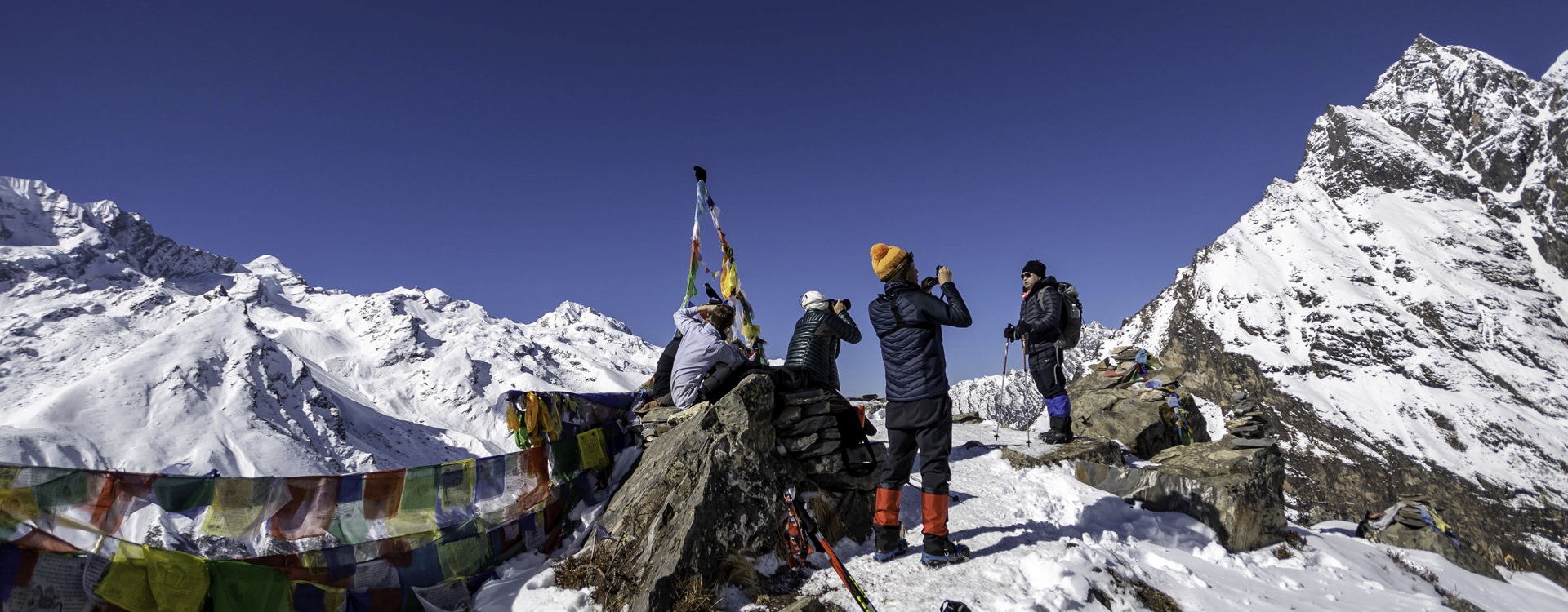
    Manaslu Tsum Valley Trek is a Strenuous- Trekking; Trekking involves several covers like tilted slopes hills, high hilltop meadow & land trail. Larak la Pass, if one of the trekking attractions, will be a test of endurance for you. Above 5,160m (16,930ft).

    Yes, the hike is tough, but you have these beautiful views around you and this fantastic sense of accomplishment. The ascent to Larkya La Pass, with stunning 360-degree views of the surrounding peaks, is one of the highlights of the trek. This trek is no picnic because the novice and seasoned trekkers wish to remain fit.

    5. Rich Spirituality of Tsum Valley

    Manaslu Tsum Valley is not a trek to a physical form. It is not allowed to locals to make this trek, monasteries aplenty that took along the way, and the entire region is spiritual in local religion. Tibetan Buddhism and Tsumba Culture practice here, and hundreds of prayer flags, stupas, and chortens will enwrap trekkers along the way.

    You go for culture And there are so many monasteries like Mu-gompa And Rachen Monastery And religion you feel, you can feel. One of the best to meditate and beauty of nature to reflect. It is an experience to come back to nature and thus your spirituality at the same time.

    6. Diverse Ecosystems of Tsum Valley

    It will lead you through some of the most beautiful landscape, from jungle to alpine meadow. The vegetation and wildlife will be completely different in terms of altitude. The map shows what low altitudes comprise (thick, frequent) coniferous forests of rhododendron, bamboo, and pine, and the more you ascend the landscape rapidly changes into alpine meadows, glacier, and white peaks in the distance.

    It is what it is that really makes the trek special is all the different kinds of ecosystems you get to walk through and all the different kinds of animals you get to see along the way such as the Himalayan tahr, training deer, and all the different kinds of bird life. These different kinds of ecosystems not only give you all these other nice differences in the trekking itself, but they add to the trekking experience and landscape.

    7. Opportunity for Adventure Activities

    Albeit, other things like rock climbing, visiting caves and people watching and buying fruits and handicrafts; adventure lovers now have an array of other activities to get into in the Manaslu region.

    And trails also limit you there, it is one of the places worth going by not just trekking up. You will move through some villages and quickly get a feel of terracing and the vegetables that are grown on top of it. This high trek is an authentic “basket” experience wanting to know about rural life, making our way up the Tsum Valley.

    8. Personal Growth and Achievement

    Manaslu Tsum Valley Trek is equal parts physical challenge, equal parts mental challenge. The actual trekking itself is a brilliant feat of body and mind, and was filled with hideously challenging ground and terrain. Emotional is when you feel while doing this thing here (and hardly a score more around the world) to reach the top of the trek at Larkya La Pass.

    Along the journey on the arm of the trail and inclement weather cohesion among agencies and crude balance. A time to disconnect from the world — to detox, reflect, and transform. The combination of adventure, culture, and personal challenge makes this trek a transformative experience.

    Best Time to Visit Tsum Valley

    The best time of year to trek in Manaslu Tsum is during spring (March – May) and fall (September – November), when the weather is usually temperate and clear. These months of the year are the best time to trek as the temperature is moderate and the sky is mostly clear when you can enjoy the views of the mountains.

    Desert and pod with the lush of cloud

    Permits Required

    Some of the permits required for trekking in the Manaslu Tsum area are:

    • Manaslu Conservation Area Permit (MCAP)
    • Annapurna Conservation Area Permit (ACAP)
    • Restricted Area Permit (RAP) for Tsum Valley (since it lies in a restricted area)

    High mountain tress and monastries

    Conclusion

    The Manaslu Tsum Valley Trek is a perfect adventure for every type of traveller— adventure seekers, cultural voyagers, spiritual seekers. Perhaps it’s the splendor of the culture this area portrays in its natural habitat that hangs the empathic of the culture or perhaps you are a person who is willing to own a devil-may-care experience during this incredible dining experience in this astounding nation that will give you the learning knowledge, and the knowledge of your lifetime protecting the reminiscences and journeys relentlessly in your psyche all through the excursion. All in all this hike has some little unique spots to see don’t miss it and it needs to on everyones hiking bucket list in many years to come.Contact us today at Happy Mountain Nepal, Facebook, Instagram, or TikTok. 
    FAQs

    1. How long is Manaslu Tsum Valley Trek?

    It is depending on acclimatization days and tour, the trek is 18–22 days long.

    2. Is any special permit is require for the trek?

    Yes, you will need:

    Read Also:b) Things To Do In Manaslu trekNepal Manaslu trekking permits

    ACAP (Annapurna Conservation Area Permit)

    Entry Permit (RAP) for Tsum Valley

    3. When to trek?

    The best times, when weather’s good and trails are open, are spring (March–May) and autumn (September–November).

    4. How challenging is the trek?

    It is a difficult trek with high passes, long daily hikes, and remote landscape. It needs good trekking experience and physical fitness.

    5. What is the summit of the hike?

    The Larkya La Pass (5,160m / 16,930ft) is the summit with 360-degree views of surrounding mountains.

    6. Is it as crowded as Everest or Annapurna?

    No, Manaslu Tsum Valley has fewer trekkers and a longer trek.

    7. Are there any facilities regarding stay?

    There are some simple tea houses and huts along the way. Facilities are few and far between, and have only the most rudimentary amenities so we recommend bringing a sleeping bag.

    8. Can I trek solo?

    No solo trekking is EXPERDING. Since it’s a restricted area, you need to travel with at least one trekker partner and a licensed guide.

    9.What are the sights on the trekking?

    You can spot snow leopards, Himalayan tahr, red pandas, musk deer and a variety of birds.

    10. Why is the trek so special?

    The trek covers Tibetan culture, spectacular hill country views, monastic Buddhism and self sufficing trekking adventure in one of Nepal’s least traveled areas.