Author: Happy Mountain

  • How to Prevent Altitude Based Sickness When Trekking EBC

    How to Prevent Altitude Based Sickness When Trekking EBC

    How to Prevent Altitude Based Sickness When Trekking Everest Base Camp

    No matter where you are in the world, trekking to Everest Base Camp is an incredible journey to experience. Walking among the shadows of the tallest peaks in the world, experiencing the villages, and viewing landscapes that appear they are out of dream are experiences that are rare, if not impossible, to have elsewhere. But all of that beauty and wonder brings with it one of the worst parts of trekking, sickness from altitude. 

    majestic view of snow-covered mountains, likely from the Karakoram range

    Altitude sickness or Acute Mountain Sickness (AMS) if we want to be more formal, can be common for trekkers traveling to Everest Base Camp, as this trek can take you to altitudes over 5,000 meters. If you are walking about the atmosphere at an altitude above 3,000 meters with thin air, reduced levels of oxygen, and more variable altitudes, your body will have a frightening and sometimes fatal response to this. 

    Fortunately, it turns out that just about all trekkers can take steps necessary to counter altitude based sickness, and can complete this world famous trek with little issue. 

    In this blog, I will try to provide a thoughtful plan on how to reduce the risk of altitude based sickness when trekking to Everest Base Camp, including practical steps you can take, recommendations to acclimatize the body before the trek, and health based aspects of life that one should consider when trekking.

    Understand What Altitude Sickness Is

    The first important thing to do to prevent altitude sickness is simply to know and understand what altitude sickness is. Altitude sickness occurs when your body reacts to the lesser oxygen level associated with elevation change, and is unable to acclimate quickly enough. At sea level, the level of saturation is approximately 21 percent oxygen, but as you go higher, especially above 3,000 meters, the oxygen saturation goes down and subsequently your lungs and body have to work harder to circulate enough oxygen to your blood and brain. 

    The signs and symptoms you may notice from altitude sickness can be mild signs with headache, dizziness, nausea, fatigue, and shortness of breath or can escalate to fluid build-up in the lungs or in the brain.  Tidier escalation symptoms are termed High Altitude Pulmonary Edema (HAPE) or High Altitude Cerebral Edema (HACE; these symptoms can even be life-threatening if unmediated.

    Once you understand this clearly, hopefully, it is easy to know how important the concept of prevention actually is.  You don’t wait until you get sick to take action, you have all these preventive interventions that you do ahead of time and during the trek to give your body gradual time to acclimatize.

    Ascend Slowly and Give Your Body Time

    The most important factor to minimize altitude sickness as you are trekking to Everest Base Camp is to ascend slowly. Your body needs time to adjust to the thinner air. If you rush your trek you will almost certainly increase your chances of developing altitude mountain sickness (AMS). A majority of standard itineraries will enable the Trek to occur over the 12 – 14 day duration, allowing for acclimatization and rest days. 

    For example, you fly into Lukla, which is at 2860 m, and the first day (which is the first day of the trek) trekkers generally walk to Phakding (which actually is almost a little below Lukla) on the first day of the trekking. Walking to a little lower altitude helps acclimatize your body to your trek. Following the Phakding part of trek, the trail typically goes upwards but a good plan also allows for acclimatization days in Namche Bazaar and Dingboche. Rest days are key days really since they allow your body to acclimatize to the altitude instead of just climbing.

    Group selfie on the way back to Lukla From Monjo
    Group Selfie with Kusum Kangaroo

    Remember: the trek to Everest Base Camp is not a race. Many that push the distance too fast, end up sick and/or unable to continue. Walking more slowly is good for your health, but more importantly, helps you to take the unbelievable scenery and experience the Sherpas’ intriguing culture.

    Acclimatization Days are Necessary

    Trek participants often ask why days of acclimatization are included if the plan is just get to Everest Base Camp. The reason is simple: acclimatization makes it possible for your body to function at high altitudes where there is less oxygen. The acclimatization days are not lost days; they are essential to completing the trek for the vast majority of trekkers.

    With Namche Bazaar (3,440 meters) as a base, you will spend two nights, rest on the second day hike, and return to sleep at Namche. The beautiful fixture of sleeping at a lower altitude is from a higher hike that day, called “climb high sleep low”. This method promotes a person’s acclimatization so that they can continue their trek, but they recover inflammation and oxygen deficiency from their body and recover at a lower elevation.

    Trekkers tend to stay at Dingboche (4,410 m) for one or two extra nights, also taking an acclimatization day hike up to Nagarjun Hill or Chhukung Ri. Despite these hike sounding difficult, they are extremely important for acclimatization to the high elevations you will very soon experience in Gorak Shep and Everest Base Camp.

    Too many trekkers simply skipped the acclimatization days. They are convinced that this will rob them of “valuable” time and will put them at an even greater risk of altitude sickness that could potentially disrupt their trek altogether. 

    Stay Hydrated

    Hydration is one of the best and simplest ways to prevent altitude sickness. At elevation, your body, when high altitudes increases respiratory rates and causes increased urination, is losing fluids. Dehydration can slow the body’s acclimatization process to low oxygen greatly increases the likelihood of developing headaches, feelings of fatigue, and symptoms of nausea.

    Hikers should drink AT LEAST three to four liters of water daily while hiking. This does not only mean water, but soup, tea, rehydration salts, etc. to supplement hydration and electrolytes. Many hikers also prefer to have reuseable water bottles or hydration bladders to sip water, rather than wait until their body is thirsty to drink enough fluids.

    Finally, hikers also should be mindful of their caffeine and alcohol intake while hiking. A small cup of tea or coffee is fine, however, it is important to be mindful of total amounts of caffeine consumed, since caffeine will dehydrate your body. Alcohol should be avoided all together, since it effects your hydration, as well as, your acclimatization. Being mindful of what is consumed, can help you avoid altitude related issues.

    Group photo at Phakding Before leaving for Namche Nazar
    Group Photo Taken at Phakding Hotel

    Feed Yourself Nutritiously and Balanced

    Food influences how your body adapts better to a greater altitude. Trekking burns lots of calories, and thus eating well allows your body to have enough energy to adapt and stay well. What you also regularly consume should be accounted for as well as what the quantity of food you eat.

    Meals that are high in carbohydrates are desirable because they are easily digested and will give you energy in every meal while your body is digesting food at altitude. Most treks you will see trekkers eating dal bhat, a local dish made of rice, lentils, and vegetables that is found throughout Nepal. This is a nutritious and filling meal that will provide good energy for the trek. 

    Heavy foods, such as oily greasy foods, are what you want to avoid; as you travel and eat at altitude it will be harder for your body to digest them. Instead, stick to soups, pasta dishes, rice dishes or vegetables. You also want to eat smaller portions compared to larger sizes, and not make your stomach work hard to digest a larger meal. If you eat a diet with balance it will generally keep your energy levels better and assist your bodies in minimizing food and energy to work effectively with the strain altitude brings.

    Recognizing Symptoms Early

    In this grand prevention of altitude sickness puzzle, one of the most important pieces is understanding how to recognize the symptoms early. Too many trekkers will brush off what they think are minor symptoms, like a very minimal headache, or a small amount of shortness of breath, telling themselves that these are acceptable and part of a normal acclimatization pattern. These symptoms are not — this is your system telling you that it is starting to struggle to acclimatize.

    Some common symptoms of altitude sickness are headaches, dizziness, nausea, loss of appetite, disturbed sleep, and general fatigue. If you feel any of these signs of altitude sickness you should not ignore them. Take the needed time to rest and hydrate. Do not go higher in altitude until you feel better. Continuing on with symptoms getting worse thinking that you are okay may lead to serious altitude sickness conditions, such as, HAPE and HACE.

    It also is important for trekkers to monitor each other. Sometimes you do not realize the changes in your own mood, behavior, or speech, however your trekking companions will. Always articulate how you are feeling with your group and your guide. Taking initiative to recognize symptoms of altitude sickness can be the difference between finishing a safe trek and finding yourself in a medical emergency.

    Use Preventive Medication Wisely

    Some trekkers find preventive medicines useful in reducing altitude sickness. Diamox (Acetazolamide), for example, may not have a direct fixing effect as much as it serves to improve your body acclimatization process. Many doctors recommend taking it the day before you reach altitude and continue taking it until acclimatization is complete. That said, medications should never be a substitute for normative acclimatization or tapering ascent while trekking. It is merely a supplemental aid. Nevertheless, consult your doctor for a visit before the trek to see if Diamox or any other preventative medicines are suitable for you. Of course, these medicines are all imperfect and have potential side effects.

    Many trekkers also use things like garlic soup or ginger tea and other herbal remedies, which are found and popular through the Everest region, to assist them with altitude acclimatization. The scientific evidence is limited, but these natural remedies could be helpful comfort measures and supportive in boosting hydration, which may indirectly assist or supplement acclimatization at altitude. 

    a sign for the Way to Mount Everest Base Camp (EBC) in the Himalayas of Nepal.

    Sleep Well and Rest Properly

    Sleep is one of the most valuable recovery tools the human body has, unfortunately, at altitude trekkers could have some trouble with sleep and may wake up throughout the night due to the thin air. Less sleep can lead to an increase in fatigue and increase your chances of altitude sickness. 

    To maximize your sleep, especially on an acclimatization night. Try to sleep early and give yourself plenty of time to sleep. Have a good quality sleeping bag, the warm you are at night the better your sleep will be, as being cold can break your sleep cycle. Avoid eating a heavy meal and anything with caffeine, including alcohol right before bed. Breathing exercises and herbal teas can also be a good way to unwind before bed. 

    Rest days are equally important. Even if you feel like you have energy, it is still important to give the body time to recover on a day of acclimatization. Or don’t overexert yourself on a long acclimatization day. Climbing at altitude requires the body to put in work. And it will take a little more rest for the body to recuperate to tackle the next climbing day.

    Listen to Your Body and Know When to Turn Back

    The mountains will always be there, but the most important thing is your health. One of the hardest choices a trekker can make is the decision to turn back when you have obvious symptoms of altitude sickness. However, usually this is the most important decision you will make. If your headache becomes debilitating. Or if you have been dizzy since you first walked into camp. If you find yourself confused, or short of breath, these are clear signs that you should descend as quickly as possible! When in doubt, consider the following. If you have headaches or dizziness that’s getting worse you should descend. If it’s anything worse than this, you *must* descend!

    Guides and porters are trained to recognize many of the symptoms of altitude sickness from previous expeditions. And although they may not say anything to you, it doesn’t mean they aren’t concerned. Trust their instincts and experience when they share with you when to descend.

    Sometimes descending even a couple hundred meters will make a huge difference in how you feel. Once your symptoms subside and you are feeling better, only then can you consider whether you can continue. Remember, the summit or the trek is never worth going without your health or your life!

    Train and Prepare Before the Trek

    An additional important aspect related to reducing the risk of altitude sickness. To be in shape prior to your arrival in Nepal. Being fit does not guarantee health. But it should help your body to more easily accomplish.

    You should begin preparing yourself (as long as it is months in advance of your trek). By doing short bursts of cardio, or weight workouts, regularly. This could be running, hiking, swimming, or cycling. You might also want to begin some strength training for your core and legs. Because that will aide you in long uphill hikes. If at all feasible, practice hiking with a pack loaded to the way you will hike on yourEverest Base Camp trek.

    This image is a digital illustration depicting a woman in activewear performing a yoga pose

    Again, as I have stated in my former writings. You will want to condition your mind for your hike. High altitude trekking is about patience, stamina, and flexibility. If you condition your body and your mind. You will give yourself the best chance of acclimatizing. And if you do this, you will have the best chance of enjoying the experience when it is required.

    Final thoughts

    EBC is a bucket list hike for so many people, and height sickness. It should never be a reason why you do not fulfill your dream. As long as you respect the potential dangers. Ascend slowly, take acclimatization seriously, drink plenty of water, eat good food, and listen to your body. You will mitigate anything related to altitude sickness.

    Remember while trekking – it is better to prevent than to treat altitude sickness. Respect the mountain, your body, and your health more than speed. You will succeed in getting up to Everest Base Camp. And enjoy making your way through one of the most incredible landscapes in the world. 


  • October To-Do List for Tourists in Kathmandu, Nepal.

    October To-Do List for Tourists in Kathmandu, Nepal.

    October To-Do List for Tourists in Kathmandu, Nepal.

    October is one of the best months to visit Kathmandu, in Nepal. With clear skies and nice weather, there’s great activity in the capital that won’t occur at any other time of year. In October, tourists are not only enjoying the best trekking season, but also getting a taste of the cultural heartbeat of Nepal. 

    If you are setting foot in Kathmandu in the month of October, here is a comprehensive October to-do list for tourists in Kathmandu to help you get the most out of your visit. 

    1. Experience Dashain : Nepal’s Major Festival

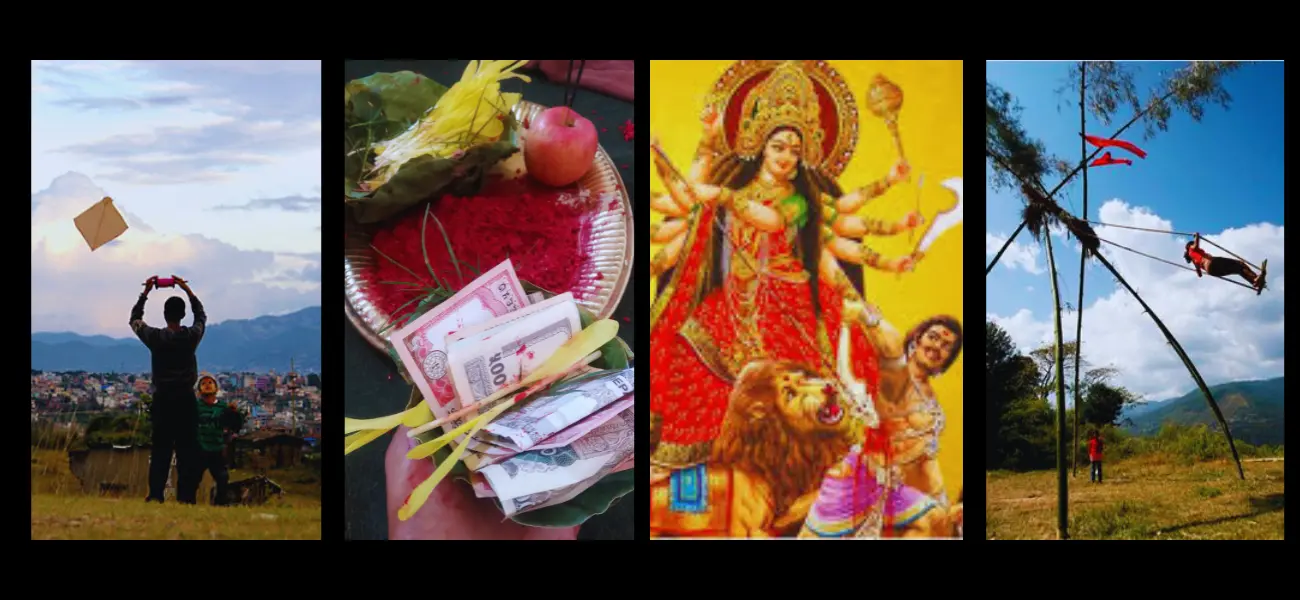
    Dashain is one of the largest festivals in Nepal and is celebrated in communities throughout the country with lots of fun, celebration, rituals, and family gatherings. It is often celebrated in October for over 15 days for the victory of the goddess Durga over evil.

    Dashain in Kathmandu is charged with excitement; the towns are full of prayer flags, children are flying kites covered in multiple colours in the clear blue skies, and all around the neighborhood, bamboo swings (ping) are set up for neighborhood children. It fills Kathmandu with great energy, and it is one of the most in-depth times that a traveler will be able to experience authentic Nepalese culture.

    This image is a vertical collage of three distinct scenes, likely related to cultural or religious practices in Nepal, particularly the Dashain festival:

    For the observer in Dashain, there is the opportunity of taking part in rituals that go deeper than simply observation, as families congregate to take part in the tika ceremony; blessings of rice, yogurt, and vermillion are placed on younger family members’ foreheads so they can receive regard, auspiciousness, and prosperity. Many households will sacrifice goats, as offerings and meals will include goat curry, beaten rice (chiura), stuffed and sweet festival items, and meat dishes. If observers enter into a household space, tourists can participate in these family gatherings by eating food, sharing stories,s and enjoying festivities. 

    Apart from family functions, the public spaces in Kathmandu, with markets in Asan and New Road, are buzzing with local families making purchases of clothes, jewelry, and festival goods. You will see many temples buzzing with worshippers praying openly and playing instruments in the courtyards. Experiencing Dashain in Kathmandu is more than just experiencing an aspect of culture; it is being part of the pulse of culture, connecting generations of Nepalese people.

    2. Experience Tihar : The Festival of Lights

    Tihar, also referred to as the Festival of Lights, is a five-day festival that is celebrated in late October each year, typically after Dashain. Each day of the celebration honors one being: crows as messengers, dogs as faithful companions, cows as holy beings, oxen for their service as working animals; and the final day is Bhai Tika, where sisters will bless their brothers with tika (a color mark) and garlands, wishing for a long life. This celebration has both a spiritual aspect, but also elements that are grand and colorful that will completely change the city. 

    Capture a moment from Bhai Tika, a significant day during the Nepali festival of Tihar, which celebrates the bond between brothers and sisters

    On Laxmi Puja, which is the third day of Tihar, the city of Kathmandu is at its most beautiful lighted state. Families will place oil lamps (diyo) outside of their home, children create colorful rangoli at the entrance with colored powder and/or flower petals, to welcome Laxmi, the goddess of wealth. The streets shimmer than sparkles with fairy lights, in celebration of all things that shine, while many businesses and shops will welcome customers with strands of marigold flowers draped from the doorframe. For the many tourists that walking on the streets of Boudhanath, Thamel or Asan Bazaar nearby, walking at night, you will see the lights around the city and within the businesses, and will feel as if the city has been blessed and sprinkled with stardust!

    There’s also a social aspect to the festival: older children sing Deusi-Bhailo, which is similar to caboling at Halloween, and roam from door to door looking for food or small gifts (monetary or otherwise). People enjoy themselves at festivals and gather with friends and families and tourists; and if you happen to be in Kathmandu for Tihar, the festival will truly offer travelers a peak into amazing displays of worship, celebration, and community in the spectacular sunset glow of evening city lights. 

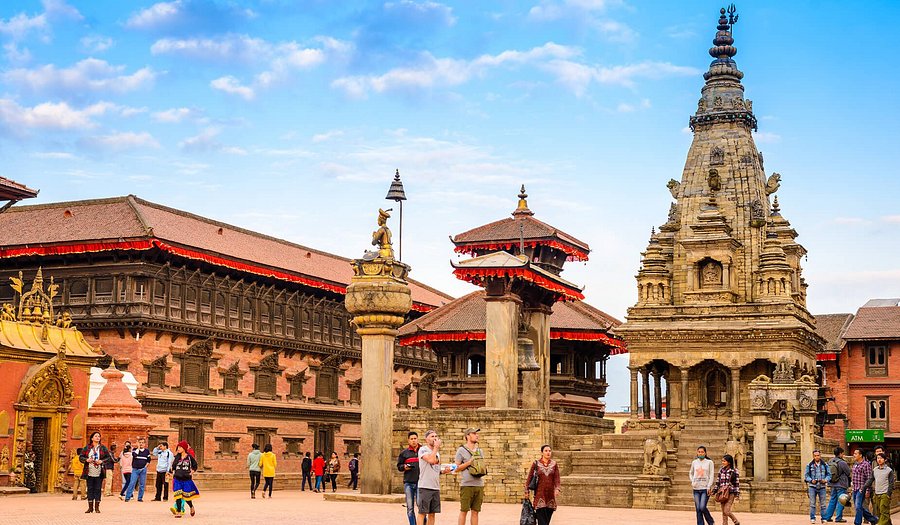
    3. Enjoy a Heritage Walk in the Durbar Squares.

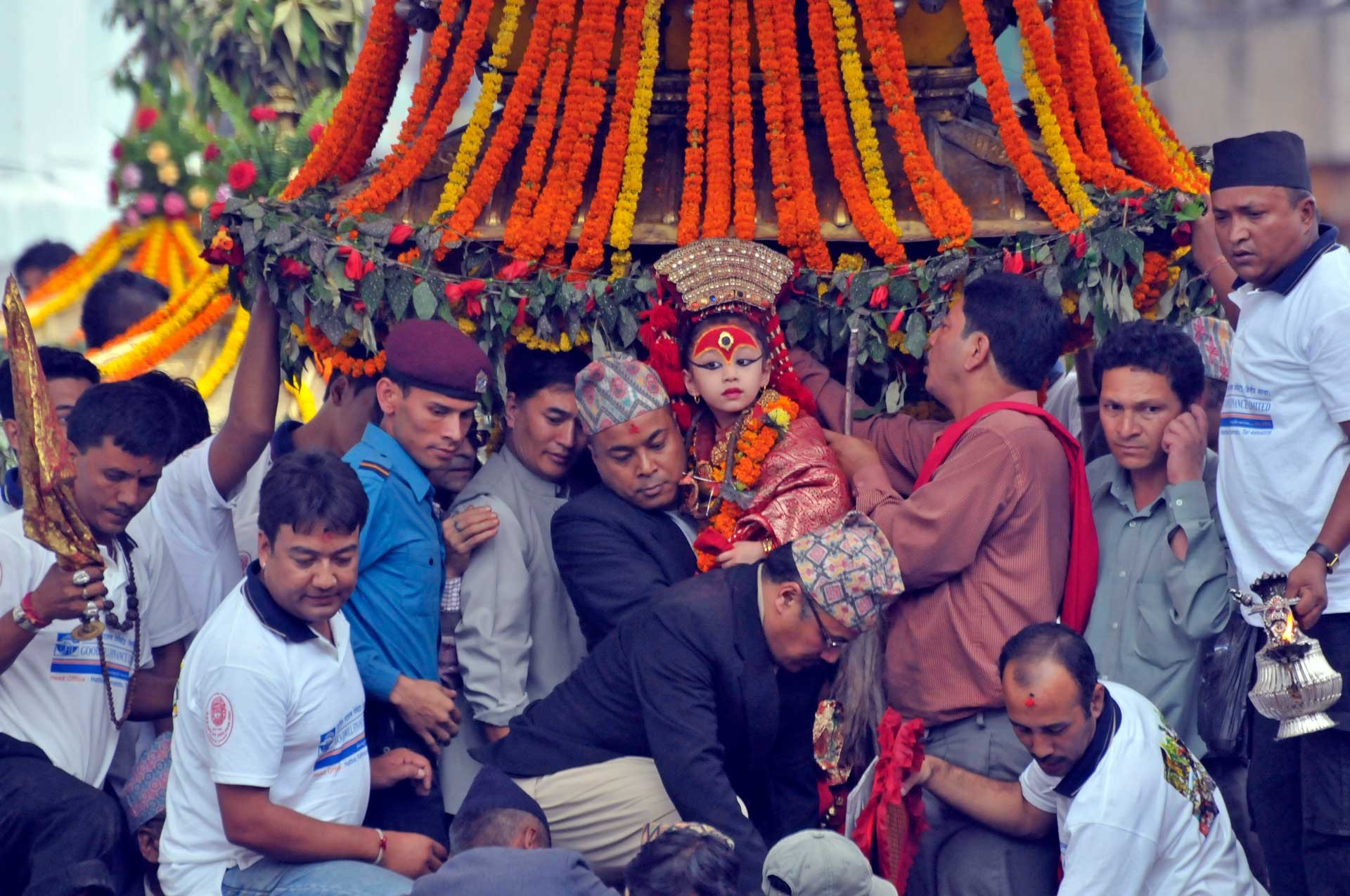
    Kathmandu Valley has 3 UNESCO World Heritage Durbar Squares (Kathmandu, Patan, and Bhaktapur). October is a fantastic time to experience these historic squares due to pleasant weather—this allows hours of wandering around ancient courtyards and temples without the difficulty of the excessive heat and early monsoon rains. The Durbar Squares are, in fact, living museums of culture and craftsmanship of the Malla kings. You’ll visit incredible sites in Kathmandu Durbar Square, including the Hanuman Dhoka palace and Kumari Ghar, the home of the living goddess, Kumari. Patan Durbar Square is another place you will visit with stunning art, carved temples, and gleaming metal work, with the bright sky in October.

    Bhaktapur Durbar Square has its character as well, you will feel as if you’ve gone back in time with its streets, pottery square, and high Nyatapola Temple. 

    vibrant, busy Durbar Square in Nepal, likely Kathmandu or Bhaktapur, showcasing the intricate architecture of the region. In the foreground, several multi-tiered, pagoda-style temples with richly carved wooden details
    Bhaktapur Durbar Square

    Being at these sites in October, during festivals, adds to the experience. You will likely observe traditional dances, processions, and rituals in the square; it is the one time when tourists experience both the cultural heritage of the site with the living heritage and culture of the area. Additionally, if you have an interest in photography, the cool light of October enhances the colors and textures of the wood, stone, mortar, at brick architecture. Meandering through and between these squares provides an experience that is so much more than sightseeing; you enter deeply into the living cultural history of the area that stretches back centuries.

    4. Enjoy Clear-Sky Mountain Flights

    October is generally considered the best month for flying from Kathmandu into the mountain regions. The weather is cooler, drier, and the skies will most likely be clear for better views. 

    While most flights are approximately an hour long, they usually depart in the morning, giving guests approximately an hour of spectacular views of Nepal’s Himalayan range. In this area are 3 of the world’s highest peaks: Everest, Lhotse, and Makalu. For many travelers, mountain flights are the best way to see the beauty of some of the world’s tallest mountains without the hassle of multi-day trekking.

    The clarity of October makes for an unforgettable experience. Everything is awakening as the snow-capped peaks turn golden with the rising sun, and there are endless incredible views in every direction. For some airlines, they even allow passengers to enter the cockpit for an unrivaled view of the flight, with both passengers and the captain seeing Everest as you continue your flight together. It is hard to describe how this will be a personal highlight of your trip. In many regards, there are no difficult hiking steps; it is simply a sense of wonder that you are able to experience.

    If you happen to be on an itinerary, a mountain flight is the easiest way to visit the Himalayas. It also provides some modifications for guests who would like to partake in some cultural elements in Kathmandu and see some of the natural beauty for which Nepal is so well known. After arriving in the capital city, you will have a memorable experience flying alongside the highest summits in the world.

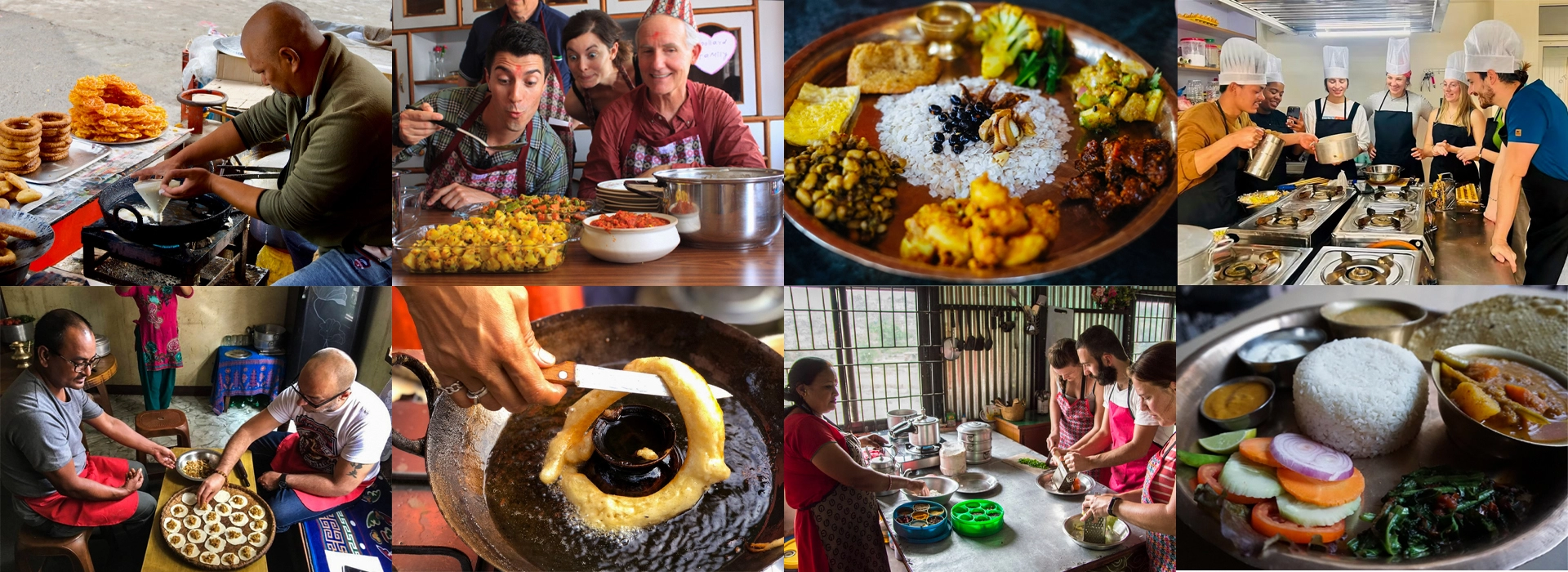
    5. Attend a Local Cooking Class

    Food is an essential component of any culture and October is a fun month in Nepal with the festival season. Local cooking classes in Kathmandu give tourists the chance not just to eat the food. But to learn to make local favorites such as momos, yomari, and sel roti. In most classes, you will get to walk to the local market with your cooking class. And purchase the freshest vegetables, spices, and grains while learning about the significance of the food.

    As you are with family during the hours of the Dashain and Tihar holidays. They will take you to enjoy large meals of goat curries, beaten rice, and sweet deserts. You will take cooking classes during your stay. It will not only explain and walk you through making each of these items for a meal. But also explain the cultural context of each food to better understand the holidays. 

    Usually, the instructor will also share a story while describing the food traditions that add layers of cultural history and understanding to each recipe. 

    Nepalese cuisine, featuring multiple smaller images of food preparation and dishes, including a traditional "Khaja set". The page also contains text describing the cultural history and food traditions associated with each recipe.

    At the end of the cooking class you will have the chance to sit down with your group. And enjoy the food you just prepared while sharing and laughing over the food. With the feel like you were there with any local family. And where the most important learning happens is not just the actual food preparation. But also the potential for your experience to bring part of the cultural food traditions home. You will possibly think back to create your own experiences. And begin recreating what you experienced in Kathmandu, when you return back to your own kitchen.

    6. Visit Swayambhunath and Boudhanath Stupas.

    For those travelers who came to see the famous Swayambhunath and Boudhanath nod temples. You cannot see either of these two sites more beautifully than in the month of October. The skies are clear, and you will be able to see the golden-gilded spire of Swayambhunath. As the stunning backdrop of the Himalayas. Visitors could then walk up the stone steps, often with prayer wheels lining the corners. Or even noticing some monkeys playing around. You will be rewarded with stunning views over the Kathmandu valley, especially in the early morning or just as the sun is going down and the Himalayas are casting cascading hues of color over the valley.

    You will experience an entirely different type of spiritual experience at Boudhanath, among the largest stupas in the world. Visitor will hear the monks chanting prayers from the corner, while devotees will be walking around the stupa with butter lamps. You may create the ambience. You will see the colourful prayer flags catching the waves in the wind. The feeling of the air, all while cooling and thick with sacredness, creates the mood perfectly in October. There is a meditative feel to the atmosphere on any side of Boudhanath. 

    Buddhist monks in traditional red robes gathered near the Boudhanath Stupa in Kathmandu, Nepal. The stupa is adorned with numerous colorful prayer flags, characteristic of Tibetan Buddhism, extending from its spire.

    Both locations are uniquely lovely at night. At Swayambhunath, you can view the twinkling lights of the city as darkness falls. At Boudhanath, the tea houses that encircle the stupa are warm and inviting, providing an enjoyable environment to sip a cup of Tibetan tea while observing your surroundings. You will feel settled in the center of Kathmandu’s spirituality after visiting these stupas in October. 

    7. Trekking Day Trips From Kathmandu.

    October is regarded as the best month for trekking in Nepal. If you do not want to go on prolonged treks to view the Himalayas, there are easier day hikes from Kathmandu to get your fix. Treks from Kathmandu to Nagarkot, Shivapuri, and Champadevi all provide stunning views for day hikes.

    The weather during October also makes hiking pleasant. Hiking trails and paths are generally dry after the monsoon season, with mostly blue skies and mild temperatures. More specifically, this weather pattern means you can hike for hours without worrying about muddy hiking paths or about being too hot. The visibility in October is also crisp and offers you the best visuals of the Himalayas when the mountains come into view.

    Day hikes are well-suited for travelers wanting to get some natural exploration as well as cultural exploration. Whether it is to view the sunrise at Nagarkot, see birds in Shivapuri National Park, or test yourself on the steeper trails of Champadevi, these shorter hikes are refreshing opportunities amidst easy access to and from Kathmandu.

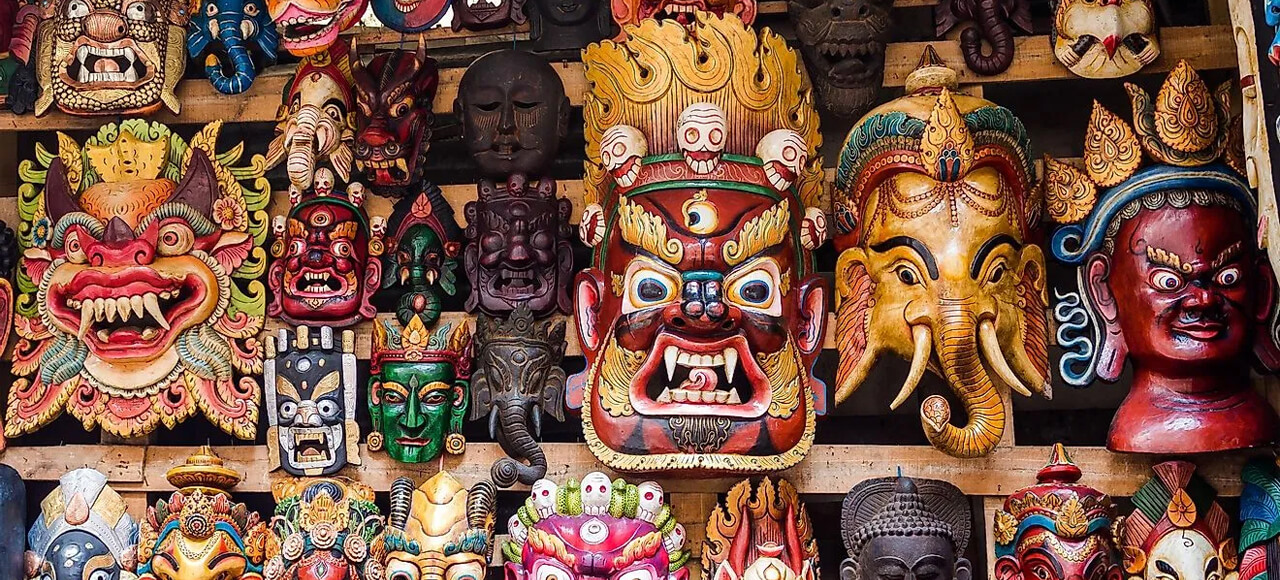
    8. Shop for Handicrafts and Festival Souvenirs

    Kathmandu is a shopper’s paradise and, with October, the markets are teeming with festive energy. For tourists, the most popular shopping place is Thamel. It is rich in trekking gear, jewelry, prayer flags, and Tibetan singing bowls. The Asan Bazaar is the oldest market in the city and the place where locals shop for spices, brassware, and decorative materials for festivals. Patan has many crafts that have been made by local artisans including thangkas, jewelry, and handwoven textiles. 

    During the festival season, markets are even more vibrant. Stalls are fill with clay diyos (lamps), marigold garlands, and small altars to make sweets with during the Tihar rituals. There are also handcrafted pashmina wraps and khukuri knives that make for great souvenirs and reflect Nepalese culture and craftsmanship. Shopping during Tihar is not just about purchasing items. But about participating in the contagious energy of the festive spirit of the city. 

    a vibrant collection of intricately carved and painted wooden masks, likely of Nepalese or Tibetan origin, densely arranged and displayed on a surface. The masks vary in size and detail, featuring stylized faces with exaggerated features such as wide eyes, bared teeth, and prominent noses, many adorned with elaborate headpieces and patterns.

    There is also the added element of bargaining in Kathmandu that is a part of the experience of shopping in local markets. Vendors expect bargaining but always with the utmost respect and friendly smile. For tourists, shopping in the markets of Kathmandu becomes an exchange of culture. As well as a transaction so that you may take home not only a unique souvenir. But a story to share behind the treasure also.

    9. Indulge in Nepali Street Food

    The street food scene in Kathmandu is at its prime in October when festivals unlock extraordinary flavours. Street vendors surrounding various temples and markets serve fresh, steaming-hot tasty snacks. From momos (dumplings), to chatpate (a spicy, puffed rice combination) to sel roti (sweet fried bread). With the evenings being relatively cool, this is a great time to walk around having a snack.

    Food itself is an occasion steeped in historical cultural contexts. Therefore, the food that you eat in October has relevance in your involvement to its cultural significance. For example, sel roti is typically made during Tihar and served with various curries. Food stores and markets fill up with sweet, festive, candy such as barfi and laddu. Street stalls surrounding Asan, Basantapur, and Boudha explode with activity. local people eat their own snacks or street food, adding to the atmosphere.

    For spacefood lovers, street food is one of the most authentic ways to connect. And get a true feeling of Kathmandu. Sharing a plate of spicy momos with local people or sipping doughy masala chiya at an active tea shop. It goes well beyond flavour, and gives you a slice of everyday Nepalese life. October only expands and enriches the experience as the snacks give a seasonal twist and variety.

    10.Take Part in Cultural Tours and Workshops

    Kathmandu has more to offer than picturesque sights; it is a city where active learning can lead you to immerse in local culture. As October is high season for tourists, many classes and workshops will be available. Pottery classes in Bhaktapur offer you a chance to learn how to form clay into bowls, and Thangka painting classes. Patan will teach you about painting the religious scrolls of Tibetan Buddhism. These opportunities are not just experiences; they are opportunities to engage with and learn about Nepali culture.

    A vibrant, slightly overhead shot captures a group of men, mostly in traditional or semi-traditional attire, resting or sleeping amidst rich floral decorations, likely during a cultural or religious ceremony in Nepal.

    In October, the festival season happens, which adds to the richness of workshops and classes. Sound healing with Tibetan singing bowls sessions in Boudhanath has a large demand. For participants looking for an experience that requires unwinding from sightseeing. These learning experiences provide tourists not just a cultural education. But also the ability to practice mindfulness and engage in an artistic activity.

    The appealing factor of the workshops and classes is the personal component. Working with local artisans allows you to learn about their story and also create something. Whether it is a painted canvas, a clay pot, or meditation or chanting. You are able to leave the experience with something much more significant than a store-bought souvenir.

    Conclusion:

    Many believe that there is no better season to go to Kathmandu, Nepal, than October. You have the festivals at least Dashain and Tihar (often celebrated in October). It is wonderful, clear visibility to enjoy the Himalayan views, and ample opportunities for cultural experiences, activities. A community vibe unique to that time of year in Nepal. Whether you are wandering the squares and heritage of Kathmandu, taking a Nepali cooking lesson, or simply looking over the city. And watching it light up with festival lights. Being in Kathmandu each October is a range of experiences you will not find anywhere else. 

    If you have been dreaming about a trip to Nepal, this is the ultimate to-do list for October. In Kathmandu, you will return home with memories that last a lifetime. Nepal is waiting with your appetite. Contact us today at Happy Mountain Nepal, on Facebook, Instagram, or TikTok .


  • Why is the Everest Base Camp Trek So Popular?

    Why is the Everest Base Camp Trek So Popular?

    Why is the Everest Base Camp Trek So Popular?

    Few adventures can rival the Everest Base Camp trek in the world today. For nearly every traveler or adventure-seeking trekker, standing at the base of the world’s highest mountain is a lifelong dream. Every year, thousands of individuals from all over the globe travel to Nepal to accomplish this arduous and rewarding journey. But what has caused the trek to Everest Base Camp to be so exceedingly popular right around the world?

    In part, it is enough to describe a combination of spectacular beauty, cultural richness, historical value, aspects of adventure, and, of course, achievement on the personal level. In thisblog, we will give you many reasons for the world-renowned trek.

    1. The Awe of Mount Everest: The Highest Mountain on Earth

    At 8,848.86 meters (29,031.7 feet), Mount Everest has always captivated the human race, and merely the idea of trekking to Base Camp at 5,364 meters (17,598 feet) and witnessing the immensity of the Great Himalayas generates electricity.

    Everest Base Camp trek is popular for its spectacular, ever-changing mountain scenery, including views of Mount Everest and other towering peaks

    Compared to summiting Everest, which requires the absolute maximum of skills, training, and resources available, simply getting to Base Camp is possible for all trekking adventure enthusiasts while experiencing an adventure in endurance and discovery that takes you steps away from the highest point on Earth. Many are telling us that once they arrived at the Base Camp and first laid eyes on Everest, the experience would never be erased from their confused memory forever. The whole undertaking is truly phenomenal and worth the effort.

    2. An alternative journey

    The journey to Everest Base Camp is more than just a mountain walk or hike. It is a test of endurance, exploration, and self-increasing personal growth. The undertaking to Base Camp and back will be a physical exam of you as a person, including stamina, patience, and spirit. The beautiful views and experiences cannot be present anywhere on the planet.

    As you make your way through the trail, you will keep being greeted by snow-covered mountains, glacial fields, rushing rivers, a nd crossing high altitude suspension bridges and stairs as you follow this historic pilgrim’s route to Base Camp for climbers, and local people, for many hundreds of years. The mixture of excitement and the beauty of hiking above the clouds is evidence that this is a once-in-a-lifetime trek to do on this planet. 

    3. Spectacular Himalaya Scenery 

    This hike provides spectacular vistas of the Himalayas. Every step that gets you closer to Everest Base Camp, hikers will be surrounded by the spectacular peaks of Lhotse, Nuptse, Ama Dablam, Thamserku, and Pumori, and of course, the spectacular Everest. Hikers will see every new day waking up to awaking, and no longer trekking through the forest trails, rhododendron, and pine, to glacier moraines, and eventually to an utterly spectacular view from above the Moraines of Base Camp.

    mountaineers climbing a snow-covered mountain in a high-altitude, rugged environment, likely in the Himalayas. The visual search results suggest it might be Mount Everest

    The trekking journey brings you so close to these colossal peaks of the Himalayas that few other treks, anywhere in the world, would deliver that experience, while still being somewhat accommodating as a trek. It is important to have a range of terrains because it makes the trek appealing, dynamic, and engaging. You will be fortunate to experience a sunrise over the snow-capped ridges, starry skies at night, and the sweeping dramas of the mountains – all wonderful opportunities for special photographs and appreciated highlights of your excursion.

    4. Rich Sherpa Culture and Hospitality

    The Trek is also very popular because of the insight into the Sherpa culture. The Sherpa community has inhabited the larger Everest region for hundreds of years and has adapted to the harsh mountain conditions. The hospitality, resilience, and spiritual presence in the mountains are great elements of the trek experience in Nepal.

    As trekkers walk along the trail, they will experience pages of the Sherpa way of life in towns such as Namche Bazaar, Tengboche, Pangboche, and Dingboche, where traditional ways of life based on farming and yak herding coexist with the trekking life. The amazing ancient monasteries, and the whole area filled with fluttering prayer flags, prayer wheels spinning, and the chants of a Buddhist monk, bring a spiritual aspect to the trek. Enjoying a shared cup of tea or listening to the experience of one who has summited Everest from a Sherpa will stick with a trekker for a lifetime.

    5. Historical and Mountaineering Significance

    From a historical perspective, the trek to Everest Base Camp almost exactly follows the same climbing route climbers – including Sir Edmund Hillary and Tenzing Norgay Sherpa – followed to reach the summit of Everest in 1953. For many, this opportunity to walk in their footsteps feels as real as “walking through time”. Trekkers will see memorials to climbers who died on the high mountains of Everest and partake in a moment of reflection and gratitude for their efforts. There is a certain fame associated with Base Camp – having been at Base Camp while climbers are preparing for their summit really gives the impression that you have been part of something iconic and historic.

    6. Accessible and Globally Famous 

    Even though you are hiking to Everest Base Camp at an altitude, it is rather uncomplicated. For a breathtaking short flight, you will likely fly into Lukla Airport, informally known as the most thrilling airstrip in the world. After that, you will walk on well-established paths, with lodging and tea houses during the trek up to Everest Base Camp.


    Since it is a prominent trekking destination, you can expect a fairly safe, well-marked trail, along with experienced Guides and Porters along the way. Once you are at Base Camp, the trek is usually somewhat easier than other treks to less developed areas, and this is particularly because it is generally safe and accessible for thousands of trekkers of all ages and fitness levels. 

    7. Tea House Trek

    In addition to the trek itself, a notable experience in Nepal trekking, particularly in the Everest region, is the “Teahouse Culture.” Here you will stay at small family-owned lodges or teahouses that provide sleeping and food, and warmth along the way. While teahouses add some comfort for trekkers, they also serve as a gathering place for culture and connection. Trekkers from near and far gather around the warmth of the hearth, trading stories, laughing, and forming strong bonds that may last a lifetime.

    Group photo at Phakding Before leaving for Namche Nazar
    Group Photo Taken at Phakding Hotel

    Food – dal bhat (lentil soup and rice), stew, and Tibetan bread. Only adds an aspect of teahouse culture and connection. The lifestyle and simplicity of teahouses in contrast to the two-dimensional scale and spectacle of the towering mountains will only enhance a pleasurable cultural experience for all trekkers.

    8.  Risk and Reward

    One of the noteworthy aspects of trekking to Everest Base Camp is the risk that way. The try of walking at high altitudes is considerable. The oxygen level is low, and the trekker experiences nighttime cold, fatigue, and steep inclines. Achievement comes with reaching Base Camp after experiencing all of the elements above.

    For most trekkers, the trek is not just physical, but an experience in self-education. Exceeding limits, learning patience, and persevering through discomfort are lessons in life that trekkers take home with them. At Base Camp, looking across the Valley at Everest, it is as if they have conquered some personal fears and abilities that they can take anywhere with them.

    9. Abundant Flora and Fauna

    The trail to Everest Base Camp is within Sagarmatha National Park, a World Heritage Site. Sagarmatha National Park conserves a diverse biological & ecological reality and educational value, and luxury to your experience of trekking.T he landscape and terrain vary as you continue along the trek to Base Camp; at base, at low altitude, it is an area of desirable lush forest with rhododendrons, junipers, and magnolias, and as you ascend, we walk through areas of alpine vegetation, witnessing rare species in the most extreme geography and climate conditions.

    As for wildlife viewing while you are away, a few species to be seen along the route are Himalayan tahr, musk deer, snow pigeons, and potentially, if you are fortunate enough, the infamous snow leopard. The unique combination of ecosystems will make this trek a lifetime experience with the unique experience of culture, adventure, and nature.

    10. An International Community of Trekkers

    One reason that the trek is so popular is its international nature. Trekkers from all over the globe incorporate the trek to Everest Base Camp , which creates a very international community of trekkers on the trail. In the teahouses, trekkers reconnect and “theros” are formed as trekkers share their suffering, play cards, and drink hot tea. Occasionall,y these even go on to form friendships that last years beyond. The trek by sharing that amazing chapter of their lives. The journey of the trek is as much about the connections shared with your fellow co-travelles, as it is about the mountains. Trekkers leave the trek with memories of the mimalayas and of new friends from around the world.  

    11. A Bucket List Dream

    For many, the Everest Base Camp trek is often an aspirational trip. To stand in the shadow of Everest is to be an explorer, to be courageous, and to have adventure. The media on Everest, with books, movies and documentaries fuels the dream for many to have this experience. 

    It becomes a personal accomplishment, a moment in time to reflect back on for a traveler, when looked back upon, they will say”I trekked to Everest Base Camp.” It is more than just “a trek,” it is an experience that separates them from all the people at home. 

    12. Year-Round Adventure

    Spring (March – May) and Fall (September – November) are typical trekking seasons for Everest Base Camp. However, this trek can be done for much of the year yet each season will taste different. Spring will have the blooms of rhododendrons and blue skies, Fall will have cool mountain views, and the winter will have empty hiking trails and summer monsoons have beauty of their own and drama. 

    The trail offers the versatility of people trekking any time of year, and the parking lot is a desired spot for people traveling from all over the world.

    Group selfie on the way back to Lukla From Monjo
    Group Selfie with Kusum Kangaroo

    13. Well-Organized Trekking Infrastructure

    For decades, the Everest Base Camp trail has formed a strong trekking framework. From well trained guides and porters, to solid rescue services and communication systems, trekkers feel at ease. The existence of bakeries in Namche Bazaar, gear shops, wi-fi zones. And even hot showers at select spots along the trail create comfort without shifting away from the adventures. The aforementioned build a bridge for the first-time trekkers and those who like to balance rugged to comfort. 

    14. Spiritual and Emotional Journey 

     Beyond the physical element of the trek, it is a spiritual journey many describe it as. The Buddhist aspect in this section, amidst large mountains, encourages much deep reflection. Many speak of it becoming a better version of themselves, away from electronic stimulation, and daily stress.

    The sounds of prayer flags flapping in the wind, the chanting of the monasteries, and the impressive features of towering mountains create an atmosphere of tranquility and deep self-reflection. This emotional connection can, in turn, add to the trek’s popularity. 

    15. Global Media Exposure

    The trek to Everest Base Camp has appeared in many documentaries, travel shows, and written accounts. All of which have lent a very credible input to its global exposure, keeping it on the front end of the conversation. As one of the greatest trekking routes in the world. Images of trekkers standing with Everest in the background have become well recognized and influence. Future trekkers and other travellers to follow in their footsteps. 

    As social media emerged, the EBC trek has now had Instagram posts and Youtube vlogs. It have continued its popularity to the point it has spread as a trend to the travelling community.

    Conclusion

    The Everest Base Camp Trek enchants us, not only because it offers the opportunity to physically travel somewhere. But the trekker can feel the experience, culture, beauty of nature, history, and to develop personally as they explore. It attracts almost everyone from the adventurer of the outdoors to the person merely wanting to taste the experience of trekking at a high altitude.

    The experience of standing at the base of Mount Everest beneath the prayer flags blowing in the cold wind. Khumbu Icefall in the background is a memory that will live on until your last breath. That is the experience we have of people returning year after year and millions of travelers to Nepal each year. For the experience of a lifetime.


  • What’s the Hardest Trek in Nepal? Personal Journey to Upper Dolpo

    What’s the Hardest Trek in Nepal? Personal Journey to Upper Dolpo

    What’s the Hardest Trek in Nepal? My Personal Journey into Upper Dolpo

    When I get asked what the hardest trek in Nepal is, I always take a moment to respond. The reality is, there are plenty of treks in Nepal that really push your body Kanchenjunga, the Great Himalayan Trail, and Upper Dolpo, all very deserving of that title. But when I think back on my own experience of trekking, the hardest trek in my opinion is Upper Dolpo, and it was not so much a trek as much as it was a battle between my body, my mind, and, at times, myself on the desire to continue. 

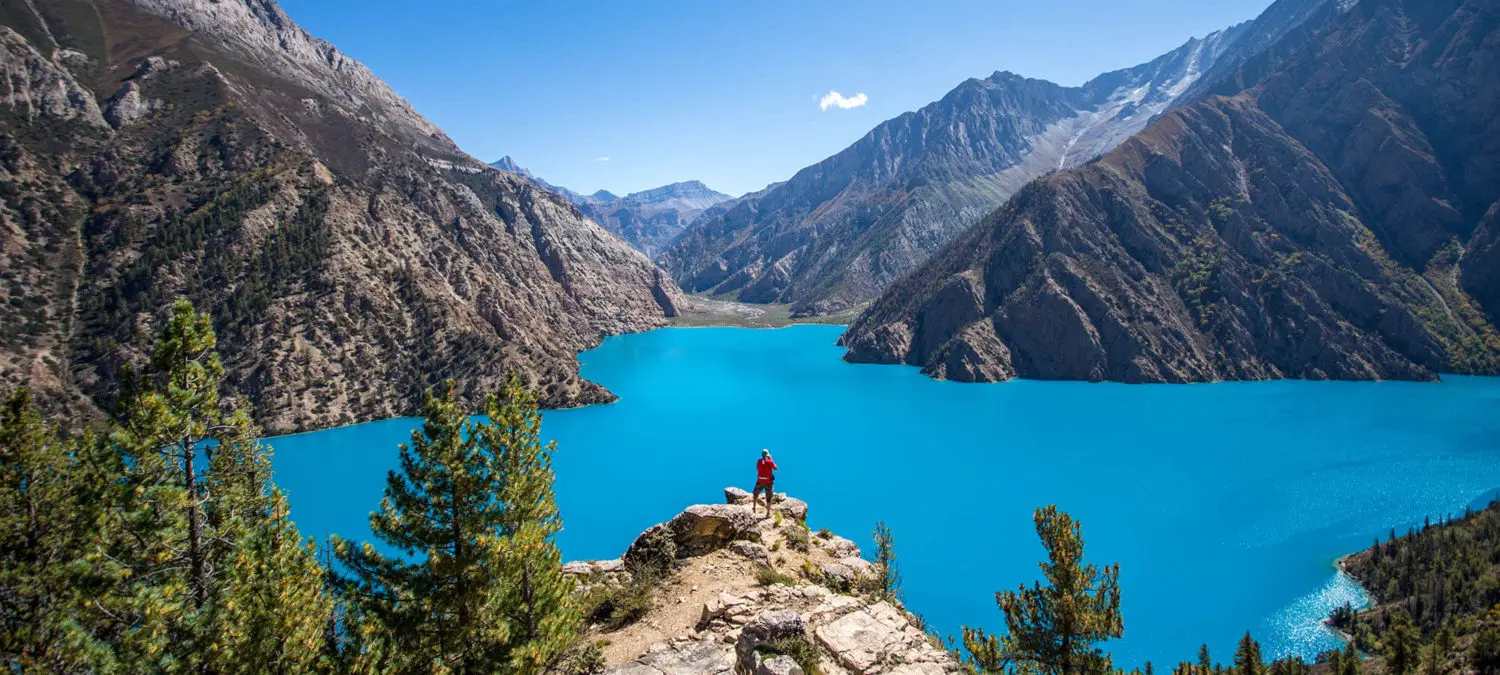
    Shey Phoksundo Lake, a stunning alpine freshwater lake located within Nepal's Shey Phoksundo National Park in the Dolpa District.

    I was expecting mountains and beauty, and instead found something much more raw. Silence so thick it was unsettling. Trails so long, it felt never-ending. Nights so cold I could not feel my fingers. But, with all this, there was something there that changed me.

    The First Steps into the Unknown.

    The feeling that I experienced when I arrived in Dolpo was something totally otherworldly. It began with flying somewhere far, then jumping into a multi-hour jeep ride up a road that seemed ready to give out at any moment. I was tired before I even started walking. But then the trail opened in front of me. There were landscapes I could not have imagined: the bare, vertical cliffs, the open valleys, yaks scratching against the wide-open sky. 

    In some ways, the first days were simple, long days of walking and moving steadily onward, but certainly nothing significant yet. I passed kids running barefoot, savoring one another’s laughter. Nurturing villagers offers butter tea, and I was met with joking smiles. It was warm and heartfelt. But somewhere deep down, I knew, the real challenges had not started yet.

    The Day That Nearly Broke Me.

    The most challenging day on the journey occurred at the Shey La Pass. The elevation is above five thousand meters, and I had been anticipating it for days. I hardly slept the night prior. My water bottle was frozen solid in the tent, and the elevation was extreme enough to make each breath of air feel like breathing through a straw.

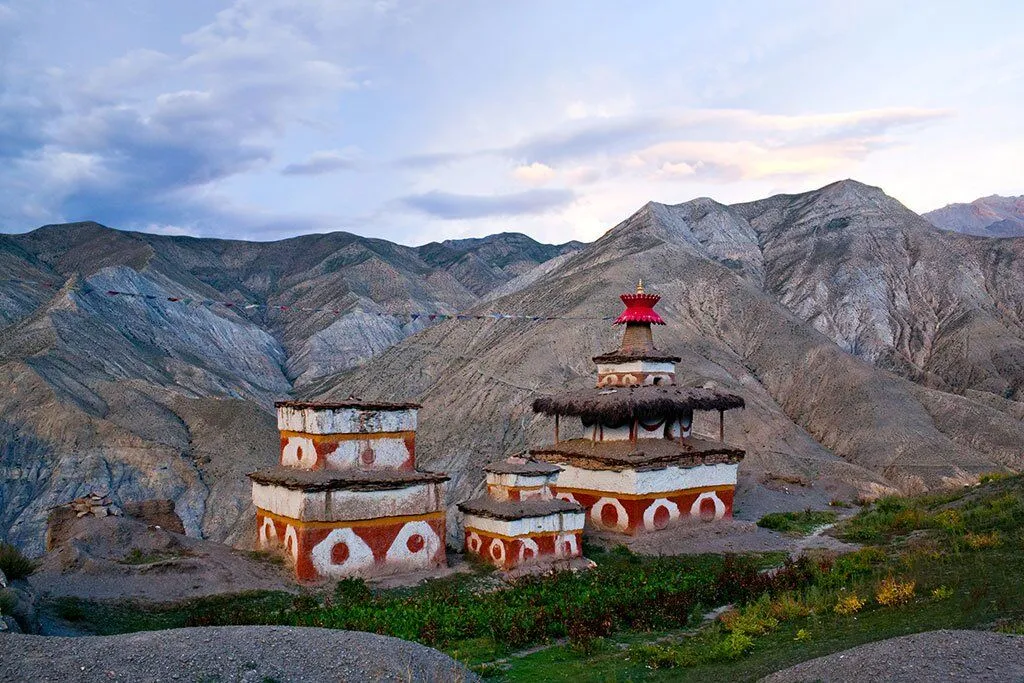
    traditional tiered chorten or monastery in the Upper Mustang region of Nepal, built into the side of a rugged, rocky mountain, with distinctive white and red/orange patterns, green foliage nearby, and another smaller structure lower down the slope.

    The sun began to rise, and we set off for the elevation. The cold felt sharp, stinging my cheeks like needles. I could hardly lift my legs because they felt quite heavy. I kept stopping to come to a halt while bent over, catching my breath as though I were running a marathon, and I would repeat that idea multiple times. Recalling each time I remember thinking: What am I doing? I could have been home in a warm, comfortable space, but here I was suffering.

    Just when I began to suffer debilitating doubts as to whether I could put one foot in front of the other, the summit appeared right in front of me: colored prayer flags flapping wildly against a backdrop of pure white snow. I stood there quivering, fatigued, yet in some sort of mixed-tragic-comedic form, I knew it was going to be “ok”. My pain, my effort, my fear, could all melt away into pure joy in a moment of complete repose. I was crying, not from sadness, but from relief and gratitude.

    It was the view that took my breath away, but it was the people who took me the furthest. The villagers of Dolpo live in what could be called some of the more unimaginable conditions on the planet, but their hearts are as open as they come. One evening, I was invite into the home of a family. We all sat around some buirs drinking hot, salty butter tea and eating the simplest of fare. The children were giggling, pointing at me, and curious about my strange attire and my juvenile attempts at Nepali.

    Their generosity made me realize something: adventure is not about conquering high mountain passes or checking destinations off your list. Its definition will always be distill down to a human experience. In those moments when I was surround by people who had so little and share so much, I felt more alive than in my busy city life. 

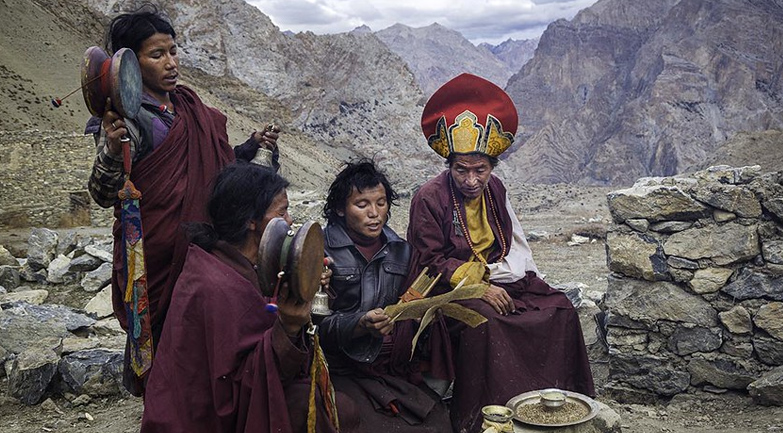
    The image likely depicts a Tibetan Buddhist ceremony or ritual taking place in the mountainous regions of the Himalayas, possibly involving monks or lamas performing a traditional religious observance.

    What Makes Dolpo So Difficult?

    It is not just the altitude (though it is uphill), and it is not only the duration (weeks of walking, with no real breaks), and not only the remoteness (knowing you will have help, if you need it, but it will take days), and not only the weather (sunshine one minute and snow the next). 

    It is a mind game. Waking up each day sore and tired, managing to talk yourself into continuing forward. No matter how hard, painful, or demanding it is, keeping on task regardless of moments when your body is simply screaming at you to stop! It feels like this is the one thing that makes Dolpo, and similar treks, so impossibly difficult.

    Why I Would Do It Again:

    You might be asking yourself why someone would want to do something like that. I asked myself that halfway up my hill. But now that I’m back home, I see why. Trekking in this way takes everything away. It pushes you out of your comfort zone and routine, and plops you into a world where each step you take, every breath you take, and every sunrise is important. 

    I learned in Dolpo what I am made of, I understand how unbelievably beautiful silence can be. I discovered that often the most challenging and dangerous trail can lead you to the most spectacular epiphanies you’ve ever had. The hardest trek in the world, in Nepal, might grind you down, but it also builds you up – in a way you never thought was achievable. That is exactly why I would do it again! Upper Dolpo is a journey of a lifetime. Contact us today at Happy Mountain Nepal, on Facebook, Instagram, or TikTok .


  • I Haven’t Been to Bhutan: What Are My Expectations?

    I Haven’t Been to Bhutan: What Are My Expectations?

    I Haven’t Been to Bhutan: What Are My Expectations?

    Bhutan, also known as the Land of the Thunder Dragon, is undeniably the most peculiar and mysterious country we have encountered in the entire Asian continent. A small country that is still immersed in tradition, spirituality, and an unusually rich natural world, and that sustains ways of life rarely seen anywhere in the world. Bhutan is on my personal list, and I am constantly filled with interest in the country. The more I read about Bhutan, the more I want to experience it.

    A stunning view of the iconic Paro Taktsang, also known as Tiger's Nest Monastery, perched precariously on a cliffside in the lush, green Paro Valley of Bhutan, with colorful Buddhist prayer flags strung in the foreground

    From monasteries to cliffs, to clean valleys of the Himalayas, to wonderfully cultural, festivals, to a philosophy where the indicator for a nation’s goal is rooted in happiness, Bhutan appears to have adventure pursuits that stretch far beyond the visual. In this blog, we are writing expectations of what I think about what might surprise me, resonate with me, and stay beyond my departure.

    1. The Warmth of Bhutanese Hospitality.

    Travelers who have traveled to Bhutan almost always refer to the friendliness and warmth of the citizens. I suspect very strongly that while the Bhutanese hospitality will be welcoming, it will also be genuine. I have been told locals will smile and welcome travelers, share stories, and encourage visitors to participate in their traditions. 

    The image appears to feature three individuals, with the prominent yellow text banner "BHUTAN" suggesting a connection to the country.

    Visitor picture Bhutan, unlike travel destinations in other areas of the world, will be much more personal to the experience. Visitors will sleep in a citizens’ guesthouse or homestay, they will eat homemade items at meals supplied by the hosts, and more importantly, they will drink butter tea and socialize without the pressure of time. Those communal experiences are atypical in today’s fast-paced world of travel, and it is precisely those experiences I think will remain when thinking back on the experience of visiting Bhutan.

    2. A Journey into Gross National Happiness 

    One of the components of Bhutan’s unique identity is the country’s idea of Gross National Happiness (GNH). Most countries have a metric; if they are measuring someone’s (or the country’s) progress, it will be GDP. However, Bhutan has placed its citizens (and the citizens’ happiness & well-being) before GDP.

    I am expecting to see this evident in the everyday life of the area during my travels—villages that prioritize harmony, policies which promote culture and the environment, and a pace of life that encourages slowness and awareness. This certainly invites travelers to step back from materialistic checklists and instead encounter elements that hold joy and meaning to us.

    3. The Iconic Tiger’s Nest Monastery.

    If one thinks of Bhutan, the first image that undoubtedly comes to mind is the awe-inspiring Paro Taktsang (Tiger’s Nest Monastery). This sacred temple looks as though it tumbled straight out of a story or movie, precariously placed on a cliff at a dizzying elevation of 3,120 meters. 


    I have not yet had the opportunity to visit, but have assumed that the hiking to the top will be an experience in itself. Historically significant and challenging indeed, depending largely on the season, traversing through pine forests with prayer flags waving in the wind throughout our journey, and stopping to take in the views that first reveal the monastery clinging, impossibly, to the rock face.

    A stunning view of the iconic Paro Taktsang, also known as Tiger's Nest Monastery, perched precariously on a cliffside in the lush, green Paro Valley of Bhutan, with colorful Buddhist prayer flags strung in the foreground Arriving at the monastery will certainly feel more like a pilgrimage than a tourist spotted landmark, visibly forcing awareness of the divination one has encountered because of the Buddhist faith of the area, all while integrated in and respecting the environment of Bhutan.

    4. Immersion in Monastic Life and Spirituality

    In Bhutan, the essence of religion as a lifestyle is centered around Buddhism. Spirituality is all around, fluttering prayer flags, spinning prayer wheels, and monks in the traditional crimson chanting, and integrating people.

    I look forward to seeing dzongs (fortress monasteries), witnessing rituals that have not changed in centuries, and, of course, observing monks debating and engaged in prayer. However, I am interested not only in observing, but also in experiencing the stillness and contemplation, the feeling of being pulled to slow down and look within myself and beyond this trip at my life and experiences while I am on this trip. 

    5. The Colors and Energy of Bhutanese Festivals

    The world has an understanding and embraces Bhutanese festivals, or Tsechus, for the ritualistic practice of color. Anticipate experiencing lots of color, music, and meaning at the festivals. The festivals in Bhutan are ‘real’ and true festivals, not like the festivals in just about all parts of the world, where festivals are primarily organized for tourists and tourism, and not to enrich a local Tradition. I assume that once I attend a festival, it will feel a bit like entering into a living tradition in a lovely outdoor space filled with happiness and reverence. 

    The mask-dancing in costuming and ritual, sometimes a sacred practice. It does not matter the schedule, region, or Tsechu; they all share in common the same defining concept—bringing the community together in devotion and celebration.

    Several masked dancers perform the sacred Cham dance in colorful traditional costumes, surrounded by a large crowd of onlookers. The dancers wear elaborate masks, some representing deities or mythical animals, and their costumes feature intricate patterns in shades of yellow, orange, red, and blue.

    6. Nature, Pure and Simple  

    Bhutan is often rated as one of the most ecologically sensitive countries. More than 70% of Bhutan is designated as forest, and the Constitution allows it to never head significantly lower than 60%. Bhutan is one of a small number of carbon-negative countries.   

    I anticipate that every trek or travel nearby, or with a local village, will be a peek into a sacred environment. The snow-capped mountains, unembellished running rivers, alpine meadows, and flower meadows in valleys will be sensory overload, and I could be close to experiencing nature at its most idyllic.  If you are someone who craves beautiful, untouched environmental spaces, this could be my night to reach the pinnacle of beauty for my journey. 

    7. Treks That Reflect Adventure and Culture 

    The giant mountains of the Himalayas support many trekking routes, but Bhutan’s trek experience feels different.  They are not just a route to summit a mountain. But a route to meet and engage in local life along the trek.  For example, the Druk Path trek, or the Snowman trek, passes through villages. Monasteries, and high mountain passes with yaks grazing nearby.  

    My preliminary Google search of trekking in Bhutan suggests to me that trekking will feel less busy, less in awe crowded, like trekking in Nepal or India. And will feel more solitary, which I am excited to explore in more of an authentic way. The combination of physically strenuous trekking and encounters with local culture. It will offer an experience that is much more than an adventure. But rather a journey of discovery. 

    8. Traditional Bhutanese Architecture

    Bhutan’s architecture is recognizable. The whitewashed walls, wooden windows with intricate carvings, and large dzongs establish locational dominance in the valleys they occupy. Unlike so many other countries, Bhutan has not rushed to build modern, glass tubes, and they have managed to preserve its cultural aesthetics. 

    I’ve concluded that it is remarkable to see that the concept of “traditional” exists in contemporary buildings. When I am ambling around Thimphu or strolling in Paro, I can’t help but feel as if I am in a live depiction of an active museum where it is living and changing to reflect the present.

    This hotel is known for its spectacular Bhutanese architecture, reflecting the traditional style found in monasteries and fortresses (dzongs) throughout Bhutan

    9. A Taste of Bhutanese Food. 

    Food is often an essential part of traveling, and the cuisine of Bhutan is considered heavy and spicy, with flavor combinations that are likely wholly new to my palate. I’m particularly looking forward to Ema Datshi (chili and cheese) since it is considered the national dish of Bhutan. I imagine my taste buds will enjoy and be horrified by a number of the flavor combinations during the trip. 

    Among other things, I will try red rice, buckwheat pancakes, butter tea (Suja), and the way people share communal dishes of food. Food can also act as a window to culture. If I was fortunate enough to experience a traditional Bhutanese meal. I can imagine that the food will exhibit some sense of resilience, practices, and hospitality.

    10. A Sense of Timelessness

    One of my greatest expectations of Bhutan is to feel like I am stepping back in time instead of feeling like it is behind, but rather it has taken a different path. At a time when most of the world is moving towards rapid modernization, Bhutan is balancing its traditions with advancements.

    I imagine I will experience days that aren’t defined by the incessant, habitual buzz of modern distractions. Days when the mountain air, monastery bells, and human connection matter. More than the speed of Wi-Fi signals or shopping mall sales. That sense of timelessness is what many travelers are looking for today. I imagine it will lead me to a profound sense of peace.

    11. Unique Travel Experience Due to Tourism Policy.

    Unlike many destinations that encourage mass tourism, Bhutan has a principled High Value, Low Impact approach to tourism. To visit Bhutan, all visitors are required to pay a Sustainable Development Fee (SDF). This fee is used to foster the preservation of the country and its development.

    I expect that this will mean fewer crowds, a better experience. Not having to deal with the hordes, and the experience being authentic. Bhutan may be a little more expensive when compared to other countries. In the region, but I appreciate paying for authenticity and sustainability.

    12. A Different Kind of Luxury

    In Bhutan, luxury is not necessarily five-star hotels (they exist). But I would like to think that it will be space, silence and authenticity. You could wake up to the view of the Himalayas, at a heritage farmhouse, or hot stone baths after a day of trekking. 

    This luxury is both simple and profound, and feels more enriching than luxury items. Bhutan has assured me of this luxury.

    A person in traditional Bhutanese attire (gho) stands on a golden balcony overlooking a traditional Bhutanese building and a green, mountainous landscape.

    Final Thoughts: The Weight of My Expectations.

    While I have yet to visit Bhutan, it is exciting to build these expectations. They shape an orientation to what will make this country distinctive. Not simply as a destination, but as a place that will present a challenge to how we live life and think.

    If my expectations are accurate, I will not just be adding a stamp to my passport when I visit Bhutan. Ideally, it will be an experience of culture and spirituality, and pure nature. Perhaps, when I go, I will actually see. Bhutan is not simply a destination, but a place to truly change as a person. If you want to know Contact us today at Happy Mountain Nepal, on Facebook, Instagram, or TikTok.

  • Is the Khukuri Making Workshop Tour for Me?

    Is the Khukuri Making Workshop Tour for Me?

    Is the Khukuri Making Workshop Tour for Me?

    A khukuri (or kukri) is more than just a knife. It is a national symbol of Nepal, a symbol of the great Gurkhas, and a cultural heritage item that has been passed down from generation to generation. Therefore, travelers to Nepal wonder whether the time spent on the workshop tour about khukuri making is worth their time. If you have ever been interested in Nepal’s history, participated in crafts, or just want to experience the culture, khukuri making may be the right experience for you. But how do you know it is for you? 

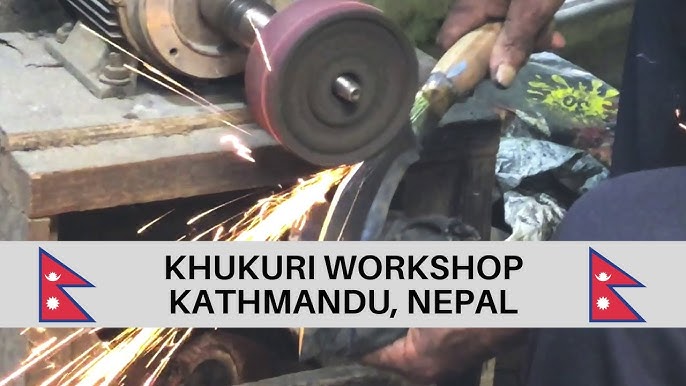
    Close-up of a blacksmith sharpening a Khukuri knife on a grinding wheel, with sparks flying in a workshop in Kathmandu, Nepal. The image also displays text indicating 'KHUKURI WORKSHOP KATHMANDU, NEPAL

    I will outline these points below so that you can decide. 

    1. You Value Hands-On Experience.

    A khukuri is not a passive experience, like a sightseeing tour. You do not just sit back and watch; you participate. You will hold raw steel; you will develop knowledge about the contemporary forge and techniques; and you will shape part of the blade under the supervision of the master craftsman.

    If you are someone who prefers to engage rather than simply observe, this workshop will add an important dimension to your experience. You leave with knowledge, sometimes skills, and, in some cases, a khukuri that you made. 

    2. You Are Interested in Nepal’s History and Culture.

    The khukuri has been a part of life in Nepal for ages. Gurkha soldiers wore it into battle, it was used at home for all sorts of chores, and it has served ceremonial purposes as well. A workshop tour offers you a personal portal into Nepal’s history – military history, cultural, and spirituality. 

     If you are a traveler like I am who goes deeper for some history or heritage experience during your travels, rather than just mountain tops or temples, this will contribute meaningfully to your trip to Nepal.

    3. You want to Support Local Artisans. 

    Most khukuri makers are in traditional blacksmith families, and their families have been working in this manner for as long as they have been alive. You are learning from them when you take a workshop, but you are also contributing to their support of a living wage.

    If you believe in sustainable tourism and want to truly send your dollars back into the community, rather than a larger corporate interest, this is the sort of tour you will want to do.

    4. You Appreciate Unique Souvenirs.

    You can buy khukuris in Thamel shops, but a khukuri that you helped to forge? That’s another level of souvenir. A khukuri is/ becomes more than a souvenir; it becomes a story; any time you saw that souvenir, you would reflect on hammering, fire, sparks, and be reminded that you were guided by the local craftsman’s hands.

    If you prefer personal and authentic versus generic trinkets, this is the workshop for you.

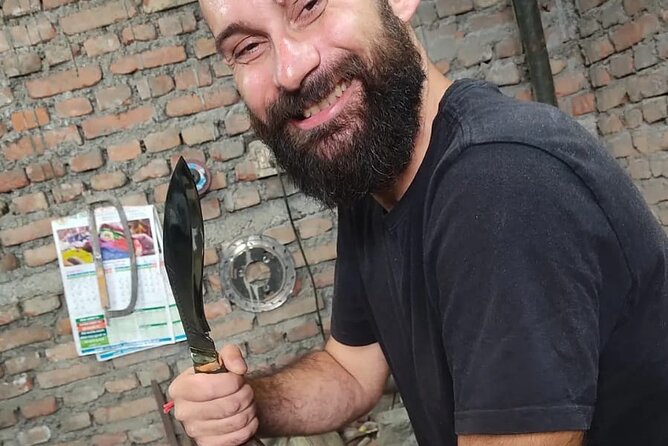
    A man with a beard holds a traditional Nepalese Khukuri knife in front of a brick wall, seen through a website's content management system interface on a computer screen

    5. You Want to Learn Traditional Making Methods

    Khukuri making is a complex process: heating the steel in coal-fired forges, hammering it, burning off scale, tempering and polishing it, and carving the handles from wood. As you watch the process and participate in this slow process, you would be engaging with a tradition that has not altered significantly in hundreds of years.

    If you love to understand craftsmanship, tools, or artisan products, then you will get a lot of satisfaction from the experience.

    6. You Want Something Other than Trekking.

    Nepal is renowned for trekking. But not everyone wants to (or can) trek for a week or more. A khukuri workshop requires no trekking shoes or high altitude. You will be grounded and culturally authentic! If you are in Nepal and not trekking, this tour is a great way to experience something memorable and still feel part of local life.

    7. You are a Hands-on Learner.

    It is one thing to learn about creating khukuris; to forge one is another. Learning by doing is the best way to lock knowledge into your memory. You will actually practice and learn the skill, from sharpening techniques to shapes of handles.

     If you learn best through practical and hands-on activities, this workshop is well-suited for your style of learning.

    8. You Enjoy Rustic, Authentic Experiences

    Khukuri workshops are not commercialize, slick performative experiences. They are often held in small blacksmith shops with open forges, soot on the ground, and a burning coal smell. Not stagecraft, but something real, raw, and genuine.

    If you are open-minded and prefer local experiences over opulence, you are likely to love the event. If you prefer immaculate workshop conditions and modern amenities, this experience is likely not for you. 

    9. You Like to Spend Time with Locals

    The workshops feature blacksmiths that are often friendly, welcoming, and thrilled to share their lifestyle. Spending time with the blacksmiths – listen to their stories, laugh with them – may be one of your most relatable, human experiences on trip. 

     If spending time with local people is one of the best parts of traveling to different countries, this workshop will definitely provide that connection. 

    Is a Khukuri Making Workshop Tour for You?

    A khukuri making workshop is not for everyone. If you prefer comfort, ease, and well-polished tourist sites, it almost certainly won’t be for you. However, if you are curious, want to get your hands dirty, and want to engage in the living heritage of Nepal, this might be one of the most memorable experiences of the trip. 

    It will be one of those experiences that is a product of engaging directly with culture, craft and a connection with the maker and in the end, it gives you more than a memory. It gives you something that you helped to create. Contact us today at Happy Mountain Nepal, Facebook, Instagram, or TikTok. 


  • Is a Pottery Workshop Tour Really Worth It?

    Is a Pottery Workshop Tour Really Worth It?

    Is a Pottery Workshop Tour Really Worth It? My Day in Bhaktapur Pottery Square

    In New York, I work for 14 hours a day, have numerous Zoom calls, and screens that glow. I came to Nepal for a break from that and to breathe, possibly find a slow meaning of too. Included trekking and nature healing in my plan. I wanted to discover a culture, something real, something to wake me differently. There I was, in Bhaktapur, walking into the famous Pottery Square.

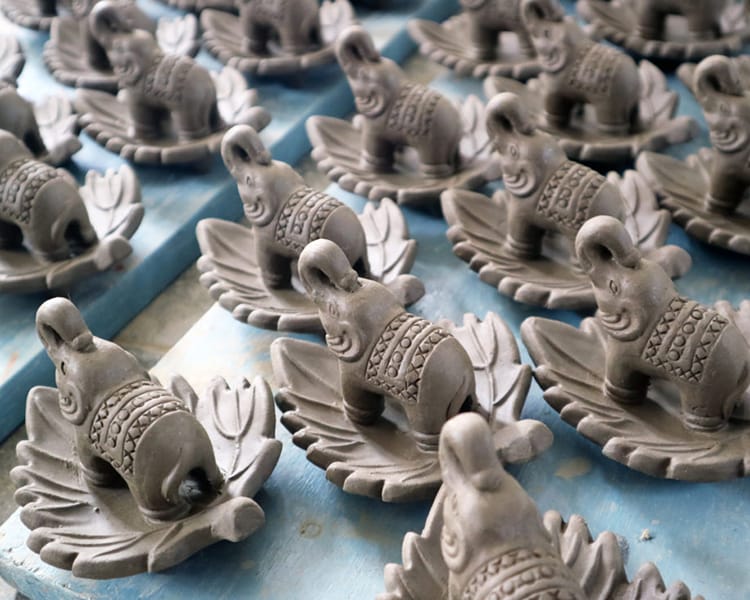
    intricately carved architectural elements, of elephant. carvings appear to depict stylized creatures or mythical figures, characterized by their detailed forms and repetitive arrangement.

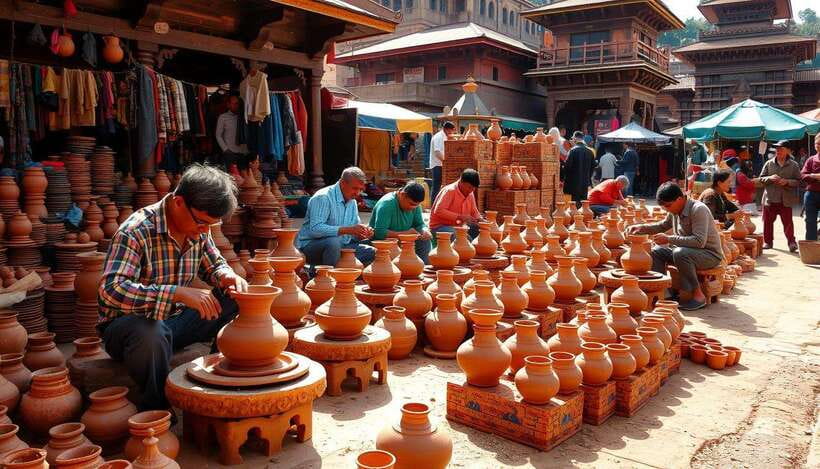
    I felt as if several hundred years had disappeared. Open courtyards held clay pots laid out in the sun, in rows of neat clay laid out to dry, and artisans on their wheels, sitting cross-legged, hands moving in swift, supple lines from daily use of the clay pots. There was no hurry, and the only things you could hear were the wheel spinning and clay forming with love taps, assuring it had not yet turned out to be either useful or useless.

     I could not take my eyes off it. And decided to attend an in-person pottery class. I thought it would be a touristy sort of thing to do, and a fun little story to take home. I didn’t think much of it until I sat down at the wheel with wet clay in my hands. My instructor, a quiet type and probably someone who has made thousands of pots, simply said to me: “Don’t force it, let it happen.” Those were easy words to say out loud, but they cut right into me. I really twisted my pot the first time, and all the clay would do was tilt and scrunch back down on itself. I nervously laugh to myself, and instead of punishing me, he merely shakes his head. It was as though he accepted my errors as part of the process.

    For the second time, I took a breath, pressed my hands down with less brute force, tried to let go of engaging the conditions to make the perfect pot, and just focused on the feel of the mold of clay. And something slowly started to surface. Maybe awkward, maybe imperfect, but it was something.

    Time ended to exist, finding myself not consumed by my tasks, dreading deadlines, or wondering what is next in my life. The only thing I was focused on was the spinning wheel in front of me and the wet clay in my hands. It was blissfully simple and almost reflective.

    Rows of freshly made terracotta pottery, including pots, vases, and other items, are laid out to dry in the sun, a traditional practice essential to the pottery-making process.

     Every time that wheel turned, I felt as though I was making myself more present. It made the square of old brick houses and pots drying around me feel like it was a quiet little universe where I had slowed the speed of time. And at the end of the day, I ended up with a bowl made of clay. Certainly, it was not a pretty bowl – it leans a little crooked on one side and is still covered in my fingerprints – but it was my bowl. And more importantly, it was a therapeutic experience.

    I always find myself using sales figures or deadlines, but this was a humbling realization of productive activities. To answer your question, was the pottery workshop in Bhaktapur worth it? A thousand times, yes. I didn’t just create a bowl; I created an opportunity for peace. I engaged with a craft that has existed in this part of the world for centuries. And I walked away with a recollection that feels heavier than any souvenir. Sometimes the most impactful journeys are not about summiting peaks. But about shaping a piece of clay in a quiet square. Under the Nepali sun, with your hands caked in dirt.


  • Panipuri: A Street Food Delicacy from Nepal

    Panipuri: A Street Food Delicacy from Nepal

    Panipuri: A Street Food Delicacy from Nepal

    In the ever-bustling city of Kathmandu. It’s nearly impossible to pass by the sound of little steel bowls clanging together. And not stop for a crowd shooting around a little cart that has caught everyone’s attention. Generally, it is here at these little carts, where everyone is excited, waiting for the cart to serve some Panipuri. It is one of Nepal’s most famous street food styles. The air is thick with the aroma of spicy water and some fresh chutney. You cannot help but take a step closer, even if you haven’t realized your feet have stopped! 

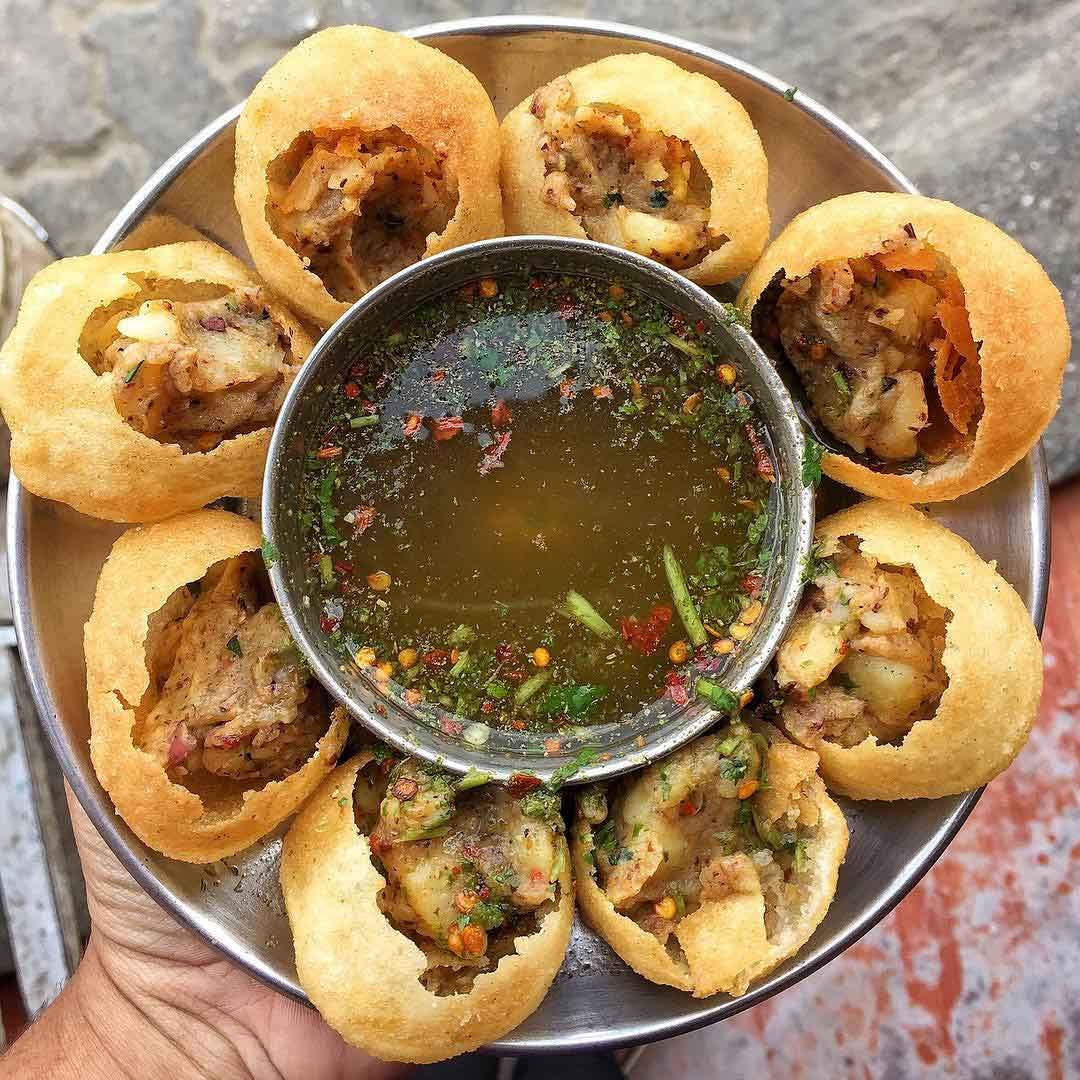
    Pani Puri, a popular street food snack from India and other parts of South Asia, also known by names such as Golgappa or Phuchka depending on the region.

    The first time I sat down (more like lost control of my will) to experience Panipuri in Nepal was much more of an experience than I had anticipated. I thought I would be waiting for my turn like any other vendor. But I was walking with students, other workers on their lunch breaks. And of course, the random bystander watching like a science experiment. The vendor was moving quickly, popping the top off of each round puri. Stuffing in mashed spiced potatoes with chickpeas and onions, dipping it with mint-flavored water, and handing it off to the next person in line. By the time this guy pressed a puri into my hand, I had barely a second to prepare!

    Taking that first bite was like magic and simultaneously crunchy, spicy, sour, and cool. The puri would melt in my mouth, absorbing all the other flavors that just doesn’t happen in food. I was making a mess, but no one cared. People were biting into their own puris. Even pausing only a second to wipe the tears from their eyes before grabbing the next. This is what makes Panipuri the best because it is a meal, but it is also an experience.

    And the richness of the experience was also coming from the environment that was developing around the stall. Everyone was strangers to each other, but smiles were being exchanged and possibly a few laughs, definitely because of the spice. One group of friends was counting the number of puris they could eat, while a mother was giving her little one a non-spicy version as if it were the most tender gesture; all of this was happening, and at that point, we felt like a small festival was taking place on the road with Panipuri as the star of the show.

    In Nepal, panipuri has moved beyond just food to become a whole collective identity. Panipuri will serve you well whether it’s a fast snack after work, or a stop at the stand while you are shopping for hours. There is boundless connection and warmth spreading from a puri of flavored water (liquid) that everyone who eats panipuri recalls. 

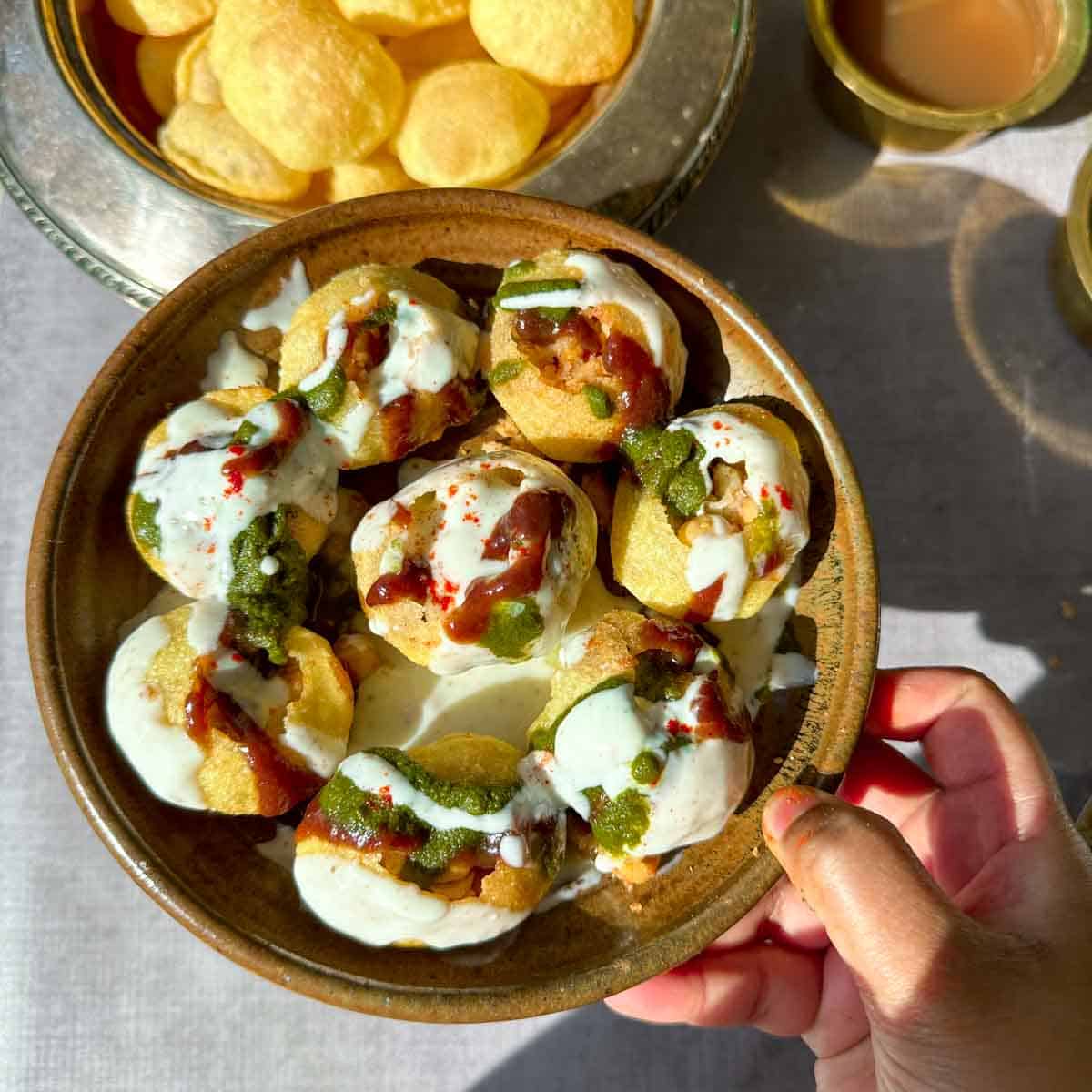
    Dahi Puri consists of crispy, hollow puri shells filled with a mixture of boiled potatoes and chickpeas, and then generously topped with sweetened yogurt (dahi), various chutneys (like sweet tamarind chutney and spicy green chutney), and garnished with sev (crispy fried gram flour noodles), and sometimes chopped onions, tomatoes, or pomegranate seeds.

    When I reflect on the experience of street food in Nepal, panipuri is the first image that comes to my mind; it’s not just the flavor, it’s the laughter, the tears from the spiciness of the food, the brief moments of conversation as time stands still, and the simple joy of being at the corner of a busy street with a plate of paper in hand; that makes the panipuri experience special… which is why panipuri is classic street food you cannot miss in Nepal.

  • Gosaikunda: Where Sins Wash Away – My Experience and People’s Belief

    Gosaikunda: Where Sins Wash Away – My Experience and People’s Belief

    Gosaikunda: Where Sins Wash Away – My Experience and People’s Belief

    There are places in this world that feel larger than we are that blend faith and nature. In such a way that you have an experience that tells you, stop, breathe, think. Gosaikunda Lake, situated in the Langtang National Park of Nepal at 4,380 meters, is such a place. For Hindus, this shining alpine lake is sacred. Many, if not all, believe a submersion of Gosaikunda’s glacial lake waters at Janai Purnima. It is believed that it free from a lifetime of sins.

    stunning high-altitude alpine lake nestled amidst towering mountains, displaying a dramatic contrast between rocky, barren slopes and snow-capped peaks. This type of landscape is characteristic of glacial valleys and high mountain regions around the world.

    Source- Google

    To me, the trek to Gosaikunda was not solely a mountain trek; it was a walk into stories and tradition, and an indication of how faith and nature can heal us in ways that are not always clear or immediate.

    Walking the Way to Gosaikunda

    Our walk commenced in the town of Dhunche (A village in Nepal), which is an appealing little town with an energetic vibe, where everyone is preparing for something: trekkers putting on boots; locals packing for the pilgrimage, and tea houses focusing on delivering food and warmth. The path begins gently through green foliage of rhododendrons, oaks, and pines before it morphs into a steep climb.

    With each step I took, there was essentially a negotiation between my fatigued legs and my heart racing at the thrill of the beauty and peace all around me. As I gained altitude, I felt more solitude. I remember how many times I had to stop along the trail, not just to catch my breath but to take in the view. The villages turned to stone huts, forests turned to rocky ridgelines (line formed along the highest points of a mountain ridge), and the valleys turned to rushing rivers that muted the sound of towns.  I will never forget how I would frequently stop to catch my breath and then pause to enjoy the view; glacier-capped peaks of the Langtang Himal and Ganesh Himal against forever clear, deep blue sky.

    When I first caught sight of Gosaikunda, it was unreal. The lake, still and so very clear, felt as if it was holding deep and ancient passages to the stories of each pilgrim who has ever offered their reverence to the lake. 

    Touching the Sacred Water 

    The air was cold, and the water was even colder, but I was captivated and wondering as I sat watching a swath of pilgrims old, young, local, and out-of-towners meeting the lake in their own respective ways. Stepping in versus plunging into the lake was different for everyone. Some prayed silently, others mumbled quietly to themselves, some were weeping quietly, and some stood rigidly still. They and their beliefs were utterly unwavering.

    high-altitude glacial lake nestled among mountains, strongly resembling scenes found in the Himalayas, particularly in Nepal.

    Source- Google

    I did not jump like the others did; I just knelt down on the shoreline and wet my right hand in the freezing cold water. I felt the shock of the cold water creep up my body, but almost instantly I felt something strange come over me if It was not just cold water; it was clearly something bigger than that. It felt like a method of purging or letting go.

    A local man told me, “Here sins are washed away by the water as well as by the journey”. He was making sense to me. The journey, the troubles, the altitude, all of it warranted the lake moment, and it was seemingly sacred.

    Why People Believe in Gosaikunda

    In myth, after drinking poison to save the world, Lord Shiva created the lake when he plunged his trident into the mountains. The water retains something of his blessings. Each year, thousands of pilgrims walk for days (sometimes barefoot) to take a dip in the lake on Janai Purnima. They believe it releases them from the burden of their past and gives them a clean slate.

    Even if you aren’t very religious, there is no way not to feel something while you are there. Being by the lake will force you to think about what you’ve done, what you currently carry, and ultimately what you want to leave behind. 

    More Than a Pilgrimage

    Certainly, Gosaikunda is not just a religious pilgrimage. It is also an adventure. Trekkers visit Gosaikunda specifically for the views of the Manaslu, Langtang Lirung, and Ganesh Himal, perhaps even catching a glimpse of Himalayan wildlife such as red panda or Himalayan thar, and experiencing the joy of tea houses along the way. 

    A large crowd of pilgrims and colorful tents line the rocky shore of a clear, high-altitude lake in a mountainous region of Nepal, likely Gosaikunda Lake during a religious festival like Janai Purnima, with reflections shimmering on the water's surface.

    Source- Google

    Hiking can be arduous, with long vertical climbs, chilly nights, and unpredictable weather; however, they all add to the experience. This is not just about walking to a lake; it is about walking into a spirituality with nature, experiencing nature in its rawest form.

    What I Brought Back

    When I departed Gosaikunda, it didn’t feel like I waved a magic wand and had my sins erased. But I felt lighter. The toll of the trail, the silence of the lake, and the collective faith of all those around me helped me see that the journey itself may sometimes be your purification.

    Maybe that’s why they call Gosaikunda the place where sins are washed away. Not only what we dunk in the cold water, but what we shed on the climb up and what we return with on the way down.